Continually Updated Clinical Reference
 
 
  All Sources     eMedicine     Medscape     Drug Reference     MEDLINE
 
eMedicine - Osteitis Pubis : Article by

Quick Find
Authors & Editors
Introduction
Clinical
Differentials
Workup
Treatment
Medication
Follow-up
Miscellaneous
Multimedia
References

Related Articles
Sacroiliac Joint Injury


Patient Education
Click here for patient education.


Author: Vincent N Disabella, DO, FAOASM, Team Physician, Student Health Service, University of Delaware

Vincent N Disabella is a member of the following medical societies: American College of Sports Medicine, American Medical Society for Sports Medicine, and American Osteopathic Association

Editors: Andrew L Sherman, MD, Assistant Professor, Departments of Neurological Surgery, Orthopedics, and Rehabilitation, University of Miami; Francisco Talavera, PharmD, PhD, Senior Pharmacy Editor, eMedicine; Jon B Whitehurst, MD, Clinical Instructor of Surgery, University of Illinois College of Medicine; Partner and Executive Board Member, Rockford Orthopedic Associates; Orthopedic Chairman, Rockford Memorial Hospital; Craig C Young, MD, Professor, Departments of Orthopedic Surgery and Community and Family Medicine, Medical Director of Sports Medicine, Sports Medicine Fellowship Director, Medical College of Wisconsin

Author and Editor Disclosure

Synonyms and related keywords: pubic instability, pubic symphysitis, pubalgia, traumatic aseptic osteitis pubis, Pierson syndrome, chondritis pubis, posttraumatic osteonecrosis of the pubis, groin pain, groin pull, groin injury

Background

Osteitis pubis is an inflammation of the pubic symphysis and surrounding muscle insertions.1, 2, 3, 4, 5 Although the exact etiology of osteitis pubis is unknown, it is most likely caused by repetitive microtrauma or shearing forces to the pubic symphysis.

In 1924, Beer described inflammation of the pubic symphysis as a result of urologic surgery. He called it an orthopedic disease sponsored by urologic surgery. In 1932, Spinelli wrote about osteitis pubis in athletes. Since that time, multiple sports-related occurrences of this condition have been reported. As shown by Alderink, sacroiliac (SI) joint motion has a very large impact on the motion about the pubic symphysis. Batt et al postulated that osteitis pubis is a result of muscle injury to the hip adductors or abdominal musculature, causing muscle spasm, which, in turn, produces increased shearing forces across the pubic symphysis.2

For excellent patient education resources, visit eMedicine's Bone, Joint, and Muscle Center, Men's Health Center, Women's Health Center, and Sports Injury Center. Also, see eMedicine's patient education article Sexually Transmitted Diseases.

Related Medscape topics:
Resource Center Exercise and Sports Medicine
Musculoskeletal Problems in the Female Athlete

Frequency

United States

The exact frequency for osteitis pubis is difficult to estimate; however, in a study performed by Lloyd-Smith et al in Canada, this condition comprised 6.3% of the 222 overuse injuries that were studied.6 In smaller studies, the incidence of osteitis pubis appears to be up to 5 times more prevalent in males than in females.

International

A study by Westlin reported that 80% of the athletes that presented to the Sports Medicine Clinic in Malmo, Sweden, had this condition.7

Functional Anatomy

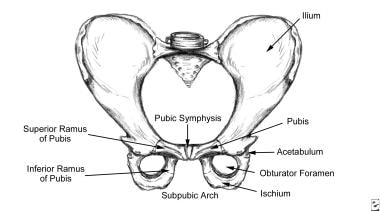
The anatomy around the pelvic girdle is quite complex. The pelvis is a ring, and any change in anatomy or applied forces to one area will be compensated throughout the ring. This simple fact makes it easier to understand why a leg-length discrepancy or SI dysfunction can greatly change the shear forces across the pubic symphysis. In addition, understanding the functions of the muscles that attach to the pubic rami is important. The hip adductors (ie, gracilis, adductor longus, adductor brevis, and adductor magnus) originate at the inferior pubic ramus.8 The pectineus and rectus abdominis muscles, along with the inguinal ligament, insert superiorly. The muscles of the peroneal floor insert posteriorly.
Sport-Specific Biomechanics

Osteitis pubis seems to be more prevalent in sports that involve running, kicking, or rapid lateral movements. Sports in which participants develop osteitis pubis more often include the following1, 3, 4, 8, 9:

  • Soccer10, 11: This sport involves a great deal of running and rapid change of direction. These movements can lead to strains of the adductor muscles, which change the forces directed on the pelvis during recovery. Kicking is another inciting motion in soccer. Many times the athlete is not well balanced when planting the foot to kick, placing a great deal of strain on the muscles stabilizing that is stabilizing him or her to perform the kick. This translates to abnormal forces across the pubic symphysis.
  • Sprinting: This activity can lead not only to repetitive microtrauma to the pelvis, but also to muscle pulls, which are common occurrences due to the rapid acceleration in sprinting. This condition, coupled with multiple repetitions, can lead to cumulative stress on the pubic symphysis.
  • Ice hockey: This sport has multiple risk factors, including the skating motion and the contact with other players and the dasher boards. Ice hockey players may sustain minor adductor strains, but the continued play and resultant changes in flexibility lead to abnormal forces across the pubic symphysis. This condition can often be aggravated by the rapid change in direction that is required in ice hockey.
  • American football2: This sport also has multiple reasons for a high rate of injury. The first factor is the amount of sprinting that is performed. The second factor is the amount of violent collisions that often lead to minor injuries, which many athletes may play through. Certain positions (eg, defensive backfield) also demand a great deal of back pedaling, with a rapid abduction of one hip to turn and run with a receiver. This motion can lead to hamstring or adductor strains, which change the muscle balance and forces across the pubic symphysis.


History

The presenting symptoms of osteitis pubis can be almost any complaint about the groin or lower abdomen.7, 8, 9, 11, 12, 13

  • Athletes complain about pain in their groin, hip, perineum, or testicle.
    • Fricker performed a study that involved Canadian and Australian athletes who had osteitis pubis.1 The author reported that 8% of the males in the study had scrotum or testicular pain.
  • Athletes often present with adductor pain or lower abdominal pain that then localizes to the pubic area. More often than not, the pain is unilateral and has been present for a few days to weeks.
  • Most of the time, the athlete's pain increases with running, kicking, or pushing off to change direction.
  • Be cautious if the athlete complains of fever, chills, or rigors with the pubic pain. Although rare in athletes who have not undergone pelvic surgery, osteomyelitis must be ruled out in these patients.3

Physical

Physical findings for osteitis pubis can vary greatly.13 Always consider the sport and chronicity that are involved.

  • Early in the disease, the athlete may complain of groin or testicular pain. The pain is often aggravated by adduction of the leg or running. Symptoms are often more unilateral.
  • Patients can also complain of lower abdominal pain, and the area over the superior pubic ramus can be tender to palpation.
  • When sacral innominate dysfunction is a cause, the athlete can have pain over one or both SI joints. This pain can often be accompanied by piriformis spasm and resultant sciatic-type pain.
  • When discrepancies of leg length are involved, the athlete may complain of hip pain in the longer limb. This can also be seen in runners who run in the same direction and who functionally have one leg that is shorter secondary to the caber of the running surface.

    A single-leg hop test can reproduce the patient's symptoms. However, the most specific test for osteitis pubis is the elicitation of tenderness over the pubic symphysis with a direct-pressure spring test. This pubic spring test has proven to be fairly specific and is very simple to perform as follows:

    • Palpate the athlete's pubic bone directly over the pubic symphysis. The athlete is often tender to touch at that point.
    • Slide your fingertips a few centimeters laterally to each side. Apply direct pressure on the pubic rami. With this pressure, the patient feels pain in the symphysis.
    • Ipsilateral pressure may be applied to see if either side produces more pain or lateral pain. If the pain is not reproduced over the pubic symphysis, other diagnoses must be entertained (eg, stress fracture, avulsion).
  • If the athlete complains of pubic pain of acute onset and presents with fever and chills, a full workup for osteomyelitis must be performed. These patients often present with an antalgic gait and often appear sick.
  • Check for inguinal hernias in all athletes with groin pain. Patients who have sports-related hernias may relate having had multiple adductor strains that never completely resolved and report that the pain is very deep upon palpation. During the hernia examination, these patients are noted as having an enlarged external inguinal ring. Tenderness is observed when the posterior wall of the canal is palpated. Coughing or performing the Valsalva maneuver exacerbates the pain.
  • Perform a gynecologic examination in affected female athletes if other symptoms are suspicious of pelvic inflammatory disease (PID).
  • If the patient's symptoms warrant, perform a rectal examination on males to rule out prostatitis.

Related eMedicine topics:
Chronic Pelvic Pain
Pelvic Fractures
Pelvic Ring Fractures
Testicular Torsion
Testicular Trauma

Related Medscape topics:
Resource Center Exercise and Sports Medicine
Resource Center Hernia
Resource Center Prostatitis
CME Global Burden of Sexually Transmitted Infections (Slides With Transcript)
CME Making Sense of the Complex: a Point of Care Approach to Managing Chronic Pelvic Pain / Interstitial Cystitis
Musculoskeletal Problems in the Female Athlete

Causes

  • The causes of osteitis pubis are multifactorial. This condition is usually caused by an abnormal shearing force across the pubic symphysis, which, as previously mentioned, can itself be caused by muscle imbalance, poor flexibility, and SI joint dysfunction. These abnormalities of pelvic biomechanicscoupled with multiple repetitions of aggravating motionscause microtrauma to the pubic symphysis, which results in inflammation and muscle spasm.
  • In the case of the athlete with a fever and osteomyelitis, Staphylococcus aureus is the most commonly cultured bacteria. Pseudomonas aeruginosa and Escherichia coli have also been reported.


Sacroiliac Joint Injury

Other Problems to Be Considered

Abdominal muscle pull
Adductor strain
Ankylosing spondylitis (rare)
Femoral neck fracture
Inguinal hernia
Osteomyelitis
Pelvic inflammatory disease
Prostatitis
Pubic stress fracture
Reiter syndrome (rare)
Sports hernia
Urinary tract infection, Female [in the Emergency Medicine section]
Urinary Tract Infection, Females [in the Infectious Diseases section]
Urinary tract infection, Male [in the Emergency Medicine section]
Urinary Tract Infection, Males [in the Infectious Diseases section]


Lab Studies

  • A complete blood cell (CBC) count level should be obtained to rule out systemic infection. The leukocyte counts should be normal; if not, infectious causes should be sought.
  • An erythrocyte sedimentation rate (ESR) should be measured to rule out possible inflammatory and rheumatologic disorders.
  • A urinalysis should be performed to rule out an etiology of a urinary tract infection (UTI) or prostatitis.
  • If the patient is febrile, perform a blood culture. Most of the time, the blood culture is negative, unless the patient presents as clinically septic. Patients with osteomyelitis will most likely have blood cultures that are positive for S aureus.

Related eMedicine topic:
Sepsis, Bacterial

Related Medscape topic:
Resource Center Sepsis: Pathophysiology and Treatment

Imaging Studies

  • Radiographs
    • Radiographs are often negative early in osteitis pubis.
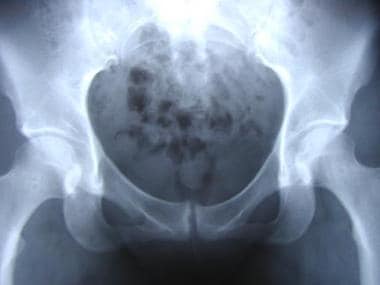
    • After a few weeks, some widening of the pubic symphysis may be seen on anteroposterior (AP) films (see Image 1).
    • As osteitis pubis progresses, sclerosis and osteolysis can be seen (see Image 1).
    • If pelvic inequity is suspected as a cause, flamingo views can expose a pubic instability.
      • In the case of osteomyelitis, bone erosions can be seen on plain films.
  • Bone scans (technetium-99m [99mTc]) or single-photon emission computerized tomography (SPECT) scans are often positive early in the disease. These studies show increased radionuclide uptake directly over the pubic symphysis or unilaterally at the pubic margin. The delayed views of the triple-phase bone scan will be conclusively positive in cases of osteitis pubis. However, as stated by Fricker, the degree of positivity or unilateral findings does not correlate well with the severity of the symptoms or the chronicity of the disease.1
  • As magnetic resonance imaging (MRI) becomes more widely used and the technology becomes more sophisticated, it is becoming a very useful study to obtain.10, 14, 15, 16 MRI is especially useful when fat suppression views are obtained; this imaging modality helps the physician distinguish between muscle, tendon, periosteal, or bony disruption. Many times, inflammation of the fibrocartilaginous disk, bone edema, and sclerosis at the pubic margins can be appreciated.

Procedures

  • In cases in which the patient is febrile but the blood cultures are negative, perform an aspiration of the pubic symphysis for cultures. This is most commonly done with the guidance of ultrasound or computed (CT) scanning.
  • Herniography may be needed in cases in which a sports hernia is a strong consideration.9

Related eMedicine topic:
Ultrasonography, Pelvic


Acute Phase

Rehabilitation Program

Physical Therapy

The acute phase of rehabilitation for osteitis pubis is sometimes a misnomer. During the acute phase, that is, when the patient presents to the physician, the symptoms may actually be acute or chronic at this point. Either way, the patient should be treated as if the onset of symptoms is acute. This is a time to help alleviate the patient's pain and to start correcting the mechanical problems that precipitated the injury. The athlete is pulled from all sporting activities during this phase.

Athletes should be evaluated for gait abnormalities, leg-length discrepancies, and somatic dysfunctions, especially of the SI joints. The physical therapist can be very active in all these evaluations. The aim of therapy in this phase is toward restoring flexibility around the pelvis and implementing modalities to control pain and inflammation. Ultrasound and electrical stimulation are often very helpful during this phase. However, ultrasound should be used cautiously if there is a possibility of infection or if there is a great deal of inflammation around the pubic symphysis. Athletes may also benefit from ice massage, if it is tolerated.

Medical Issues/Complications

During the acute phase, consider any medical reasons for the occurrence of pubic pain. Perform a blood workup and a urinalysis to rule out infectious sources. Prostatitis and PID must be treated, if present. Osteomyelitis must be treated for 4 or more weeks before aggressive therapy can begin.

Surgical Intervention

Surgery is rarely warranted, if ever, for osteitis pubis and should not be a consideration during the acute phase.

Consultations

Athletes with infectious comorbidity may need to be seen by gynecology, urology, or infectious disease physicians. If poor foot mechanics are part of the cause of the patient's condition, it is favorable to have the patient evaluated by a podiatrist for orthotics because the manufacturing process often takes a few days to weeks for fabrication of the orthotic. Sports psychology can often become involved early in rehabilitative therapy because treatment can sometimes be lengthy, with slow progression. Athletes do better if they are mentally prepared for the task at hand.

Other Treatment

During the acute phase, nonsteroidal anti-inflammatory drugs (NSAIDs) are administered for pain and inflammation therapy. In rare cases, usually when the symptoms have been present for more than 4-6 weeks, oral corticosteroids are prescribed. The author's suggested preference is a pulse dose of 40 mg/d of prednisone for 5 days or sometimes a longer tapering dose (see Medication, below).

  • The use of steroid injections is often necessary to speed recovery in athletes with osteitis pubis, but this therapy should be used with caution.17, 18 Osteitis pubis often resolves without the use of corticosteroid injections.13 If the athlete can take the time to progress without an injection, this therapy may not be warranted. The athlete, coach, and other involved persons must be informed rehabilitation can take up to 9.6 months.1
  • As shown in a study by Holt et al, it is believed that early corticosteroid injection can be beneficial.17
    • The injection should be performed after the athlete completes 1 week of stretching and rest. If the athlete is currently active in the playing season, the injection will be completed on the first visit, provided no other contraindications exist.
    • The area to be injected is shaved and cleansed with povidone iodine.
    • The injection is placed into the middle of the pubic symphysis in an AP direction. The needle is advanced approximately 1 inch until a pop is felt as the needle enters the joint. The author's suggested preference is to use a 1.5-inch 20-gauge needle with a 3-mL syringe that is filled with 1 mL each of betamethasone injectable suspension (6 mg/mL), 2% lidocaine, and 0.5% bupivacaine. Use paraben-free anesthetic so that the betamethasone does not precipitate out of the mixture.
    • Postinjection, the patient remains out of activity for 1 week.
    • Occasionally, a second or third (rare) injection is required at intervals of 2-3 weeks.
  • Manipulation can be a very valuable modality in this phase. If any SI dysfunction or pubic shearing occurs, manipulative therapy can alleviate some pain and decrease the shearing force that is created across the pubic symphysis. In addition, correcting any somatic dysfunction can often help resolve muscle spasms around the pelvic girdle and improve flexibility about the pubic symphysis.
  • In a study by Topol et al, athletes with chronic groin pain were shown to have improvement in symptoms with prolotherapy.19 The investigators injected the patients' pubic symphysis, adductor origins, and superior pubic ramus area with a 1:1 mixture of 12.5% dextrose and 0.5% lidocaine. Although this study had some limitations, it showed marked improvement of the athlete's symptoms and long-term pain relief (mean 2.8 treatments, average 17.2 mo of follow-up) and offered another possible therapy for osteitis pubis.

Recovery Phase

Rehabilitation Program

Physical Therapy

Once the patient is free of pain, strengthening therapy can begin. Exercises for the hip flexors, hip adductors, lumbar stabilizers, and abdominal muscles are started. Hamstring and quadriceps exercises are also performed, with squatting and leg presses added last due to the increased load that is used in these exercises. Stretching is performed at least daily, with flexibility as the main focus of therapy. Aquatic conditioning can also begin at this time, with the exception of frog kicking, which extensively uses the adductors. Many patients can tolerate stair-stepping machines at this time. Cycling is usually still not tolerated because of the pressure that is caused by the saddle, although some patients can tolerate a recumbent cycle. Sports-specific activities are added late in this phase, with offending motions added last.

Occupational Therapy

If the patient performs offending movements at work, proper mechanics should be taught and stressed. Occasionally, equipment modification is needed. Work-hardening programs are helpful in industrial athletes to ensure that they are ready to return to full activity.

Medical Issues/Complications

At this point in therapy, tapering the dose of any NSAID can be attempted to prevent gastrointestinal (GI) complications. This is often not possible, but the approach of using the minimal dose that is necessary for the shortest duration possible is always a good rule of thumb.

Consultations

During the recovery phase, it is often prudent to evaluate any biomechanical errors and equipment. This is a good time to work on the proper form for activities. The athlete can also use this phase to become accustomed to any new orthotic or footwear that may be instituted.

Other Treatment (Injection, manipulation, etc.)

Manipulative therapy is continued through recovery but usually at a lesser frequency. By the recovery phase, other physical therapy should be correcting the causes of the dysfunctions and thus decreasing the need for corrections.

Maintenance Phase

Rehabilitation Program

Physical Therapy

The patient's maintenance therapy must stress consistent and aggressive flexibility programs. Continuous strengthening and conditioning is a must, with muscle balance and core strength exercises as the mainstay of the maintenance program. In addition, plyometric and neuromuscular facilitation activities are very important to maintain proper mechanics and body control in the athlete.

Medical Issues/Complications

Osteitis pubis can often recur. Stressing to the athlete the importance of a solid maintenance program and proper biomechanics is a must. If an athlete has multiple setbacks or recurrences, a full rheumatologic workup must be performed.

Other Treatment

Manipulation may be needed on an occasional basis to correct any somatic dysfunctions, which can lead to an exacerbation of the symptoms of osteitis pubis.


The aim of medical intervention for osteitis pubis is toward the joint goals of decreasing inflammation and controlling pain. The major concern with all the drugs that are used is their effect on the GI tract with long-term use, including the monitoring of renal function with long-term NSAID use. Long-term use of corticosteroids has a myriad of side effects, which are beyond the scope of this article.

Related eMedicine topics:
Anabolic Steroid Use and Abuse
Epidural Steroid Injections
Toxicity, Nonsteroidal Anti-inflammatory Agents

Related Medscape topics:
Resource Center Pain Management: Advanced Approaches to Chronic Pain Management
Resource Center Pain Management: Pharmacologic Approaches

Drug Category: NSAIDs

NSAIDs are used to help reduce inflammation and pain. Multiple drugs are in this class, and every physician should be aware of the drugs in each subclass because some patients respond better to one subclass than another. A few NSAIDs are named below in order to not to belabor the wide variety of choices that are available.

Drug NameKetoprofen (Oruvail, Orudis)
DescriptionHas good anti-inflammatory properties and exceptional analgesic properties. First-line medication because of daily dosing, which helps with compliance.

Oruvail [Andrx Pharmaceuticals, Inc, Ft. Lauderdale, Fla] is available in 100- and 150-mg doses for patients who do not tolerate higher doses.

Orudis [Wyeth Pharmaceuticals, Inc, Philadelphia, Pa ] has a dosing of 75 mg tid or 50 mg qid. All doses should be taken with food.
Adult Dose200 mg PO qd
Pediatric DoseNot recommended
ContraindicationsDocumented hypersensitivity
InteractionsDecreased renal excretion of potassium and sodium when used with hydrochlorothiazide; warfarin can cause an increased bleeding risk and should not be used with ketoprofen; probenecid reduces clearance, so combination therapy is not recommended; methotrexate levels are increased by NSAIDs; lithium levels are increased by NSAIDs
PregnancyB - Fetal risk not confirmed in studies in humans but has been shown in some studies in animals
D - Fetal risk shown in humans; use only if benefits outweigh risk to fetus
PrecautionsShould not be used in patients with decreased renal function; patients with hepatic dysfunction can have worsening of hepatic enzyme levels.

Drug NameNaproxen or naproxen sodium (Naprelan, Naprosyn, Aleve, Anaprox)
DescriptionFor relief of mild to moderate pain and inflammation. Available in many dosages and delivery systems. Fairly inexpensive and has a similar therapeutic profile to other NSAIDs. An oral suspension (125 mg/mL) is available.
Adult DoseNaproxen: 375 mg or 500 mg PO bid with food

Naproxen sodium: 275 mg PO qid or 550 mg PO bid with food
Pediatric DoseOral suspension: 10 mg/kg/d divided bid
ContraindicationsDocumented hypersensitivity; can induce asthma, rhinitis, and nasal polyps
InteractionsCoadministration with aspirin increases the risk of inducing serious NSAID-related side effects; probenecid may increase the concentrations and, possibly, the toxicity of NSAIDs; may decrease the effect of hydralazine, captopril, and beta-blockers; may decrease the diuretic effects of furosemide and thiazides; closely monitor PT duration (instruct patients to watch for signs of bleeding); may increase the risk of methotrexate toxicity; phenytoin levels may be increased when administered concurrently.
PregnancyB - Fetal risk not confirmed in studies in humans but has been shown in some studies in animals
D - Fetal risk shown in humans; use only if benefits outweigh risk to fetus
PrecautionsAcute renal insufficiency, interstitial nephritis, hyperkalemia, hyponatremia, and renal papillary necrosis may occur; patients with preexisting renal disease or compromised renal perfusion risk acute renal failure; leukopenia occurs rarely, is transient, and usually returns to normal during therapy; persistent leukopenia, granulocytopenia, or thrombocytopenia warrants further evaluation and may require discontinuation of the drug.

Drug Category: Corticosteroids

Corticosteroids are some of the strongest anti-inflammatory agents available. The injectable preparations make it possible to deliver the drug directly to the affected joint in a concentrated dose, while greatly decreasing the systemic effects.

Drug NamePrednisone (Deltasone, Orasone, Meticorten, Sterapred)
DescriptionUsed in cases when the inflammation is severe and the patient has contraindications to steroid injections. Use with great caution because of systemic effects.
Adult Dose20 mg PO bid for 5-7 d
Pediatric DoseNot recommended
ContraindicationsDocumented hypersensitivity; contraindicated in the presence of viral infection, peptic ulcer disease, hepatic dysfunction, connective tissue infections, and fungal or tubercular skin infections; GI disease
InteractionsCoadministration with estrogens may decrease prednisone clearance; concurrent use with digoxin may cause digitalis toxicity secondary to hypokalemia; phenobarbital, phenytoin, and rifampin may increase the metabolism of glucocorticoids (consider increasing the maintenance dose); monitor for hypokalemia with the coadministration of diuretics.
PregnancyC - Fetal risk revealed in studies in animals but not established or not studied in humans; may use if benefits outweigh risk to fetus
PrecautionsAbrupt discontinuation of glucocorticoids may cause adrenal crisis; hyperglycemia, edema, osteonecrosis, myopathy, peptic ulcer disease, hypokalemia, osteoporosis, euphoria, psychosis, myasthenia gravis, growth suppression, and infections may occur with glucocorticoid use.

Drug NameBetamethasone (Celestone, Soluspan)
DescriptionDOC for intra-articular injections. Does not crystallize if used with paraben-free anesthetic preparations.
Adult Dose1 mL (6 mg/mL) mixed with 1 mL 2% lidocaine and 1 mL 0.5% bupivacaine
Pediatric DoseNot recommended
ContraindicationsDocumented hypersensitivity; systemic fungal infections
InteractionsEffects decrease with the coadministration of barbiturates, phenytoin, and rifampin; dexamethasone decreases the effect of salicylates and vaccines that are used for immunization
PregnancyC - Fetal risk revealed in studies in animals but not established or not studied in humans; may use if benefits outweigh risk to fetus
PrecautionsUse in pregnancy only when the benefits outweigh the risks; increases risk of multiple complications, including severe infections; monitor for adrenal insufficiency when tapering drug; abrupt discontinuation of glucocorticoids may cause adrenal crisis; hyperglycemia, edema, osteonecrosis, myopathy, peptic ulcer disease, hypokalemia, osteoporosis, euphoria, psychosis, myasthenia gravis, growth suppression, and infections are possible complications of glucocorticoid use; intra-articular injections can cause systemic effects


Return to Play

Return to play ideally occurs once the patient is pain free with all activity; however, the athlete often returns to play when there is minimal pain with the aggravating activity. This is often acceptable because the disease is usually self-limited and resolves in 6-12 months. Note, however, that although recurrence rates are as high as 25%, the athlete often experiences residual pain that does not require activity modification.2 The importance of flexibility training must be stressed for the athlete to be able to continue full activity.

Related Medscape topic:
Resource Center Exercise and Sports Medicine

Complications

Complications of osteitis pubis are minimal and few are reported. The major complication is a muscle-tendon injury of the adductor muscles due to muscle tightness. This complication is often prevented with correction of the biomechanical errors that caused the condition and flexibility training. A major complication of a misdiagnosed osteomyelitis is erosion of bone, which may take a very long time to remodel.

Prevention

Again, flexibility in athletes is the most important step toward prevention of osteitis pubis. Proper body mechanics must be stressed in athletes who participate in activities that yield a higher incidence of this condition. Aggressively treat SI dysfunction in running and skating athletes so that the pubic symphysis does not become the victim of poor pelvic mechanics. In addition, early recognition of symptoms can prevent chronic and more severe symptoms.

Related Medscape topics:
Resource Center Exercise and Sports Medicine
Resource Center Pain Management: Advanced Approaches to Chronic Pain Management
Resource Center Pain Management: Pharmacologic Approaches

Prognosis

The prognosis for osteitis pubis is very good. The condition resolves with rest in most cases. As stated by Holt et al, more aggressive therapy is often needed when the athlete refuses to modify activities or rest.17 With aggressive physical therapy and judicious use of medications, the athlete often returns to the previous level of activity.

Education

The most important information to present to athletes and coaches is the importance of flexibility training. This must become part of the athlete's daily routine. In addition, the athlete, coaches, and athletic trainers must understand that early identification and treatment of osteitis pubis are crucial.13 Any groin pull that does not resolve or show marked improvement in 5-7 days should be referred to the team physician. The entire sports medicine team needs to not only maintain a high index of suspicion, but also be thorough in the evaluation of groin pain.


Medical/Legal Pitfalls

  • The only pitfall to osteitis pubis treatment is to miss a medical condition during the evaluation (see Differentials and Other Problems to Be Considered, above). Genitourinary diagnoses are the most likely to be missed. Obtaining a thorough patient history and performing a physical examination should help the physician rule out other conditions. Ordering baseline laboratory studies and radiographs is often prudent to prevent missing these diagnoses (See Workup, above).

Related Medscape topic:
Resource Center Medical Malpractice and Legal Issues

Special Concerns

  • In the adolescent and young adult population, rule out gynecologic complications. Tubal pregnancies and PID can often present as groin or suprapubic pain, although patients with these conditions usually appear acutely ill, whereas patients with osteitis pubis do not.
  • Prostatitis in male athletes and prostate cancer in older males can rarely present with pubic pain. These conditions must be excluded on the initial clinical evaluation.

Related Medscape topics:
Resource Center Genital Herpes
Resource Center HPV and Cervical Cancer
Resource Center Women's Sexual Health


Media file 1:  Radiograph in a 19-year-old athlete who presented with a 3-week history of a groin pull that was not resolving. On clinical examination, a pubic spring test reproduced the patient's pain and a radiograph was obtained. This image shows the classic sclerosis and lysis findings of osteitis pubis around the pubic symphysis, with widening of the symphysis.
Click to see larger pictureClick to see detailView Full Size Image
Media type:  X-RAY

Media file 2:  Magnetic resonance image (MRI) from a 20-year-old National Hockey League (NHL) player who presented with a complaint of pain in his testicles, which was worse with skating and with performing off-ice plyometric conditioning. The MRI of the player's pelvis combined with his history and physical examination indicated a diagnosis of osteitis pubis.
Click to see larger pictureClick to see detailView Full Size Image
Media type:  MRI


  1. Fricker PA. Osteitis pubis. Sports Med Arthrosc Rev. 1997;5:305-12.
  2. Batt ME, McShane JM, Dillingham MF. Osteitis pubis in collegiate football players. Med Sci Sports Exerc. May 1995;27(5):629-33. [Medline].
  3. Karpos PA, Spindler KP, Pierce MA, Shull HJ Jr. Osteomyelitis of the pubic symphysis in athletes: a case report and literature review. Med Sci Sports Exerc. Apr 1995;27(4):473-9. [Medline].
  4. Sing R. Osteitis pubis in the active patient. Phys Sportsmed. 1995;23(12):67-73.
  5. Reid DC. Sports Injury Assessment and Rehabilitation. New York, NY: Churchill-Livingstone; 1992:633-9.
  6. Lloyd-Smith R, Clement DB, McKenzie DC, Taunton JE. A survey of overuse and traumatic hip and pelvic injuries in athletics. Phys Sportsmed. 1985;18(10):131-41.
  7. Westlin N. Groin pain in athletes from southern Sweden. Sports Med Arthroscopy Rev. 1997;5:280-4.
  8. Holmich P. Adductor-related groin pain in athletes. Sports Med Arthrosc Rev. 1997;5:285-91.
  9. Lynch SA, Renström PA. Groin injuries in sport: treatment strategies. Sports Med. Aug 1999;28(2):137-44. [Medline].
  10. Cunningham PM, Brennan D, O'Connell M, et al. Patterns of bone and soft-tissue injury at the symphysis pubis in soccer players: observations at MRI. AJR Am J Roentgenol. Mar 2007;188(3):W291-6. [Medline][Full Text].
  11. Gilmore J. Groin pain in the soccer athlete: fact, fiction, and treatment. Clin Sports Med. Oct 1998;17(4):787-93, vii. [Medline].
  12. Braun P, Jensen S. Hip pain - a focus on the sporting population. Aust Fam Physician. Jun 2007;36(6):406-8, 410-3. [Medline].
  13. Ruane JJ, Rossi TA. When groin pain is more than "just a strain": navigating a broad differential. Phys Sportsmed. 1998;26(4):78-103. [Full Text].
  14. Paajanen H, Hermunen H, Karonen J. Pubic magnetic resonance imaging findings in surgically and conservatively treated athletes with osteitis pubis compared to asymptomatic athletes during heavy training. Am J Sports Med. Jan 2008;36(1):117-21. [Medline].
  15. Kunduracioglu B, Yilmaz C, Yorubulut M, Kudas S. Magnetic resonance findings of osteitis pubis. J Magn Reson Imaging. Mar 2007;25(3):535-9. [Medline].
  16. Kneeland JB. MR imaging of sports injuries of the hip. Magn Reson Imaging Clin N Am. Feb 1999;7(1):105-15, viii. [Medline].
  17. Holt MA, Keene JS, Graf BK, Helwig DC. Treatment of osteitis pubis in athletes. Results of corticosteroid injections. Am J Sports Med. Sep-Oct 1995;23(5):601-6. [Medline].
  18. King JB. Treatment of osteitis pubis in athletes: results of corticosteroid injections. Am J Sports Med. Mar-Apr 1996;24(2):248. [Medline].
  19. Topol GA, Reeves KD, Hassanein KM. Efficacy of dextrose prolotherapy in elite male kicking-sport athletes with chronic groin pain. Arch Phys Med Rehabil. Apr 2005;86(4):697-702. [Medline].
  20. Radic R, Annear P. Use of pubic symphysis curettage for treatment-resistant osteitis pubis in athletes. Am J Sports Med. Jan 2008;36(1):122-8. [Medline].

Osteitis Pubis excerpt

Article Last Updated: Feb 4, 2008