You are in: eMedicine Specialties >
Sports Medicine > Spine
Lumbosacral Radiculopathy
Article Last Updated: Dec 5, 2007
AUTHOR AND EDITOR INFORMATION
Section 1 of 11
Author: Gerard A Malanga, MD, Associate Professor, Department of Physical Medicine and Rehabilitation, New Jersey Medical School; Director of Pain Management, University of Medicine and Dentistry at New Jersey, Overlook Hospital; Director of Sports Medicine, Mountainside Hospital
Gerard A Malanga is a member of the following medical societies: American Academy of Pain Medicine, American Academy of Physical Medicine and Rehabilitation, American College of Sports Medicine, North American Spine Society, and Physiatric Association of Spine, Sports and Occupational Rehabilitation
Coauthor(s):
Charles J Buttaci, DO, PT, Staff Physician, Department of Physical Medicine and Rehabilitation, Kessler Institute for Rehabilitation, University of Medicine and Dentistry of New Jersey;
Mariam Rubbani, MD, Consulting Staff, Department of Physical Medicine and Rehabilitation, Union County Orthopedic Group
Editors: Andrew D Perron, MD, Residency Director, Department of Emergency Medicine, Maine Medical Center; Francisco Talavera, PharmD, PhD, Senior Pharmacy Editor, eMedicine; Henry T Goitz, MD, Chief, Sports Medicine, Associate Professor, Department of Orthopaedic Surgery, Medical College of Ohio; Jon B Whitehurst, MD, Clinical Instructor of Surgery, University of Illinois College of Medicine; Partner and Executive Board Member, Rockford Orthopedic Associates; Orthopedic Chairman, Rockford Memorial Hospital; Craig C Young, MD, Professor, Departments of Orthopedic Surgery and Community and Family Medicine, Medical Director of Sports Medicine, Sports Medicine Fellowship Director, Medical College of Wisconsin
Author and Editor Disclosure
Synonyms and related keywords:
sciatica, herniated disc/disk, nucleus pulposus, referred leg pain, acute low back pain, chronic low back pain, LBP, lumbosacral radicular syndrome, LRS
Background
Some of the major causes of acute and chronic low back pain (LBP) are associated with radiculopathy. However, radiculopathy is not a cause of back pain; rather, nerve root impingement, disc herniation, facet arthropathy, and other conditions are causes of back pain.1, 2, 3
(See also the eMedicine articles Back Pain, Mechanical [in the Emergency Medicine section], Lumbar Disc Disease [in the Neurosurgery section], Herniated Nucleus Pulposus [in the Orthopedic Surgery section], Degenerative Lumbar Disc Disease in the Mature Athlete [in the Sports Medicine section], and Lumbar Degenerative Disk Disease, Lumbar Spondylolysis and Spondylolisthesis, and Lumbar Facet Arthropathy [in the Physical Medicine and Rehabilitation section], as well as Guidelines Issued for Management of Low Back Pain, Strategies for Evaluation and Treatment of AcuteLow Back Pain, Lumbar Spine Injuries in Athletes, Treatment of Lumbar Spinal Stenosis With a Total Posterior Arthroplasty Prosthesis: Implant Description, Surgical Technique, and a Prospective Report on 29 Patients on Medscape.)
Lumbosacral radiculopathy, like other forms of radiculopathy, results from nerve root impingement and/or inflammation that has progressed enough to cause neurologic symptoms in the areas that are supplied by the affected nerve root(s). For excellent patient education resources, visit eMedicine's Osteoporosis and Bone Health Center, Back, Ribs, Neck, and Head Center, and Back, Neck, and Head Injury Center. Also, see eMedicine's patient education articles Back Pain and Slipped Disk.
Frequency
United States
Lumbosacral radiculopathy occurs in approximately 3-5% of the population, and men and women are affected equally, although men are most commonly affected in their 40s, whereas women are most commonly affected between ages 50-60.4 Of those who have this condition, 10-25% develop symptoms that persist for more than 6 weeks.
Functional Anatomy
The anatomy of the lumbar epidural space is the key to understanding the mechanism of radiculopathic pain. The sinuvertebral nerves innervate structures in the lumbar epidural space; these nerves originate distal to the dorsal root ganglion, then run back through the intervertebral foramen to supply the arteries, venous plexi, and lymphatics. At the inner aspect of the intervertebral foramen, the sinuvertebral nerves divide into ascending and descending branches that freely communicate with corresponding branches from the segment above, from the segment below, and from the opposite side. The sinuvertebral nerve supplies the posterior longitudinal ligament, superficial annulus fibrosus, epidural blood vessels, anterior dura mater, dural sleeve, and posterior vertebral periosteum. The 2 structures capable of transmitting neuronal impulses that result in the experience of pain are the sinuvertebral nerve and the nerve root. The posterior rami of the spinal nerves supply the apophyseal joints above and below the nerve and the paraspinous muscles at multiple levels. Herniation of the intervertebral disc can cause impingement of the above neuronal structures, thus causing pain. The presence of disc material in the epidural space is thought to initially result in direct toxic injury to the nerve root by chemical mediation and then exacerbation of the ensuing intraneural and extraneural swelling, which results in venous congestion and conduction block. Notably, the size of the disc herniation has not been found to be related to the severity of the patient's pain. Pain is also believed to be mediated by inflammatory mechanisms involving substances such as phospholipase A2, nitric oxide, and prostaglandin E. These mediators are all found in the nucleus pulposus itself. Phospholipase A2 has been found in high concentrations in herniated lumbar discs; this substance acts on cell membranes to release arachidonic acid, a precursor to other prostaglandins and leukotrienes that further advance the inflammatory cascade. Additionally, leukotriene B4 and the substance thromboxane B2 have been found to have direct nociceptive stimulatory roles. From a biomechanical standpoint, the lumbar intervertebral discs are highly susceptible to herniation because they are exposed to tremendous forces, principally by the magnification of the forces that result from the lever effect of the human arm in lifting; the forces generated by the upper trunk mechanics with rotation, flexion/extension, and side-bending on the discs below; and by the vertical forces associated with the upright position. Because each intervertebral disc is a fluid system, hydraulic pressure is generated whenever a load is placed on the axial skeleton. The hydraulic pressure mechanisms then multiply the force on the annulus fibrosus of the intervertebral disc to make it 3-5 times that which is exerted on the axial skeleton.
Sport-Specific Biomechanics
Dancers are prone to both acute and chronic back problems, which develop secondary to the combination of 2 factors that are required in most dance routines: extreme physical flexibility and exposure of the spine to the extremes of its range of motion.1 Additionally, female dancers are predisposed to disc herniation secondary to the positioning that is required in certain movements, such as the pas de deux (in which excess lumbar lordosis is present), as well as the large jumps that these dancers often perform. Golfers are also very susceptible to disc disease and radiculopathy because of the repetitive torsional motion that is used in the sport.5 The golf swing can produce up to an estimated 7500 N of compressive force across L3-L4. Competitive weight lifters and football linemen have been noted to experience even larger compressive loads.
History
- The onset of symptoms in patients with lumbosacral radiculopathy is often sudden and includes LBP. Some patients state the preexisting back pain disappears when the leg pain begins.
- Sitting, coughing, or sneezing may exacerbate the pain, which travels from the buttock down to the posterior or posterolateral leg to the ankle or foot.
- Radiculopathy in roots L1-L3 refers pain to the anterior aspect of the thigh and typically does not radiate below the knee, but these levels are affected in only 5% of all disc herniations.
- When obtaining a patient's history, be alert for any red flags (ie, indicators of medical conditions that usually do not resolve on their own without management). Such red flags may imply a more complicated condition that requires further workup (eg, tumor, infection).6 The presence of fever, weight loss, or chills requires a thorough evaluation. Patient age is also a factor when looking for other possible causes of the patient's symptoms. Individuals younger than 20 years and those older than 50 years are at increased risk for more malignant causes of pain (eg, tumor, infection).
Physical
A comprehensive physical examination of a patient with acute LBP should include an in-depth evaluation of the neurologic and musculoskeletal systems. - The neurologic examination should always include an evaluation of sensation, strength, and reflexes in the lower extremities. This portion of the examination allows the examiner to detect sensory or motor deficits that may be consistent with an associated radiculopathy or cauda equina syndrome. Often, an assessment of the L5 reflex (medial hamstrings) is helpful.
(See also the eMedicine articles Cauda Equina and Conus Medullaris Syndromes [in the Neurology section], Cauda Equina Syndrome [in the Emergency Medicine section], and Cauda Equina Syndrome [in the Orthopedic Surgery section], as well as Hip-Spine Syndrome: The Effect of Total Hip Replacement Surgery on Low Back Pain in Severe Osteoarthritis of the Hip and Strategies for Evaluation and Treatment of Acute Low Back Pain on Medscape.) When differentiating between an L3 radiculopathy versus a femoral neuropathy, weakness in the hip adductors in addition to the quadriceps group would indicate an L3 radiculopathy. In an isolated femoral neuropathy, only the quadriceps group would show weakness. - Provocative maneuvers, such as the straight-leg raising test or the slump test, may provide evidence of increased dural tension, indicating underlying nerve root pathology. Attempts at pain centralization through postural changes (ie, lumbar extension) may suggest a discogenic etiology for pain and may also assist in determining the success of future treatment strategies.
- The musculoskeletal evaluation should include an assessment of the lower extremity joints, as pain referral patterns may be confused with focal peripheral involvement. For example, a patient with anterior thigh and knee pain may actually have a degenerative hip condition rather than an upper lumbar radiculopathy. By assessing lower extremity flexibility, hip rotation, muscular balance, and ligamentous stability, the evaluating physician might be alerted to the patient's predisposition toward an acute LBP episode.
- Combining the findings of the patient's history and physical examination increases the overall predictive value of the clinical evaluation process. Further diagnostic studies are indicated only upon the completion of a thorough history and physical examination and the establishment of a differential diagnosis.
Lumbosacral Disc Injuries
Thoracic Disc Injuries
Trochanteric Bursitis
Other Problems to Be Considered
Spinal Stenosis (in the Neurosurgery section) (See also the eMedicine articles Spinal Stenosis [in the Radiology section] and Spinal Stenosis and Neurogenic Claudication [in the Physical Medicine and Rehabilitation section].)
Cauda equina syndrome (See Clinical, Physical, above.)
Demyelinating conditions
Extraspinal nerve entrapment
Lateral femoral cutaneous nerve entrapment (sensory only) (See also the eMedicine articles Meralgia Paresthetica [in the Neurology section], Meralgia Paresthetica [in the Physical Medicine and Rehabilitation section], and Meralgia Paresthetica [in the Orthopedic Surgery section].)
Spondylolysis (in the Radiology section) (See also Lumbosacral Spondylolysis [in the Sports Medicine section], and Lumbar Spondylolysis and Spondylolisthesis and Lumbar Facet Arthropathy [in the Physical Medicine and Rehabilitation section].)
Imaging Studies
- Plain radiographs
- Plain radiographs are the most common type of imaging modality that is used in the workup of patients with LBP. However, radiographs have been overused; generally, plain films are not routinely necessary for most episodes of acute LBP, especially within the first 6 weeks after the onset of symptoms. Additionally, the radiographs are often unremarkable in patients who have radiculopathy that is secondary to a herniated nucleus pulposus.
- The main purpose of plain radiographs is to detect serious underlying structural pathologic conditions. Many changes seen on the radiographs of symptomatic patients are also seen in the radiographs of asymptomatic patients.
- Selective criteria can be used to improve the usefulness of plain radiographs.
- Radiographs are generally not recommended during the first month of the patient's symptoms if there are no red flags (see Clinical, History, above).
- Oblique views are rarely indicated, as they increase both the cost and radiation exposure to the patient.
- Magnetic resonance imaging (MRI)
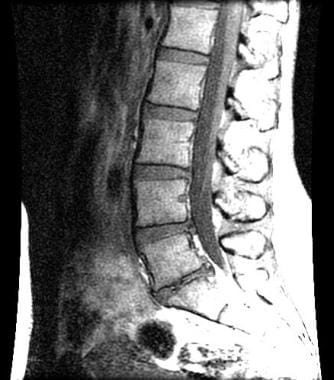
- MRI has demonstrated excellent sensitivity in the diagnosis of lumbar disc herniation and is considered the imaging study of choice for nerve root impingement. However, this preference is tempered by the prevalence of abnormal findings in asymptomatic subjects.
- The use of MRI should be reserved for selected patients, such as the following:
- Immediate MRI of the spine may be indicated in patients with progressive neurologic deficits or cauda equina syndrome, in patients with a presentation that is suggestive of malignancy, in patients with a known history or high risk of malignancy, or in cases in which there is a clinical suspicion to evaluate for a possible inflammatory disease or infection.
- MRIs are not necessary in all patients who have examination findings that are consistent with a radiculopathy; in fact, these studies should generally be reserved for those cases in which the imaging results are likely to guide treatment.
- When physical examination and electrodiagnostic findings do not indicate the exact levels of pathology in a patient who is in need of a selective nerve root block, MRI may help the physician to determine the exact level of pathology (see Other Tests, Electrodiagnosis, below).
- In the absence of red flags, many patients (even those with a classic radiculopathy) can and should be managed without an MRI, especially if these individuals are not being considered for surgery or injections. Some clinicians reserve MRI for those patients in whom the response to treatment is not as expected.
- The addition of gadolinium for the MRI study is not necessary in most cases unless the patient has had a previous surgery or there is interest in the enhancing qualities of a previously observed lesion.
- Computed tomography (CT) scanning: CT scanning of the lumbar spine provides superior anatomic imaging of the osseous structures of the spine and good resolution for cases of disc herniation. However, the sensitivity of a CT scan without myelography for detecting disc herniation is inferior to that of MRI. As with MRI, there can be a significant number of positive findings in the asymptomatic population when using CT scanning.
- Myelogram
- A myelogram involves penetration of the subarachnoid space. This study is generally not indicated in the evaluation of acute LBP.
- Generally, the myelogram is reserved as a preoperative test, often performed in conjunction with a CT scan. This provides a detailed anatomic picture, particularly of the spinal osseous elements, and the myelogram can be used to correlate examination findings and assist in preoperative planning.
- Myelograms are rarely used in the nonoperative evaluation of patients with acute LBP, except in cases in which the clinical picture supports a progressive neurologic deficit, and MRI and electromyography are nondiagnostic.
- Discography
- Discography is rarely necessary in the evaluation of acute LBP, and it is certainly not recommended within the first 3 months of treatment. Discography studies can be helpful in patients who have not had a satisfactory response to a well-coordinated rehabilitation program or who have normal or equivocal MRI findings. In such cases, discography may have some benefit in localizing a symptomatic disc as the etiology of nonradicular back pain. (See also the eMedicine article Discography.)
- A positive discogram must include a concordant pain response, which includes reproduction of the patient's symptoms upon injection of a contrast medium into a symptomatic disc, a nonpainful response upon injection of a contrast medium into control discs, and observed annular pathology on a postdiscography CT scan, if used.
- Discography is most often used before the contemplation of surgical fusion for unremitting patient pain that is due to a symptomatic internal disc disruption. Some authors have found discography followed by CT scan to be a more precise technique that may delineate discovertebral pathology with sensitivities that are similar to or better than those of MRI and CT scan/myelography.
- Discography must be used with care because a significant percentage of individuals with positive discography findings improve without surgery. In addition, individuals with underlying psychologic issues tend to overreport pain during discographic injection of the contrast medium. Nonetheless, discographic injection still remains the only quasi-objective provocative test for disc-mediated pain. CT discography has also received attention because it may be a good predictor of surgical outcome following lumbar fusion for patients with intractable back pain.
Other Tests
- Electrodiagnosis
- Electrodiagnostic studies (eg, nerve conduction studies and needle electromyography) should be considered an extension of the history and physical examination and not merely a substitute for detailed neurologic and musculoskeletal examinations. (See also the eMedicine article Physical Assessment for Electrodiagnostic Medicine.)
- These studies are helpful when the diagnosis remains unclear (eg, peroneal neuropathy vs radiculopathy) in the evaluation of patients who have limb pain or when attempting to localize the patient's symptoms to a specific nerve root level.7 Electrodiagnostic studies are also helpful for excluding other causes of sensory and motor disturbances, such as peripheral neuropathy and motor neuron disease. Additionally, these studies can provide useful prognostic information by quantifying the extent and acuity of axonal involvement in radiculopathies. (See also the eMedicine article Peroneal Mononeuropathy.)
- Performing late response tests, such as the H-reflex, can provide valuable information regarding the proximal nerve/nerve root involvement. The H-reflex is both a sensitive and specific marker for involvement of the S1 root and will be prolonged from the time of symptom onset.
- F waves, which are also used to detect abnormalities in the proximal portion of nerves, are too nonspecific to be clinically useful in the setting of radiculopathy.
- Electrodiagnostic testing is usually not necessary in a clear-cut radiculopathy or in patients with isolated mechanical low back symptoms. Furthermore, these studies do not assess the smaller myelinated and unmyelinated nerve fibers, which are typically responsible for pain transmission. (See also the eMedicine article Back Pain, Mechanical.)
- If the patient has had previous episodes of radicular symptoms or previous spinal surgery, it may be useful both from a diagnostic perspective and from a medicolegal standpoint to perform initial electrodiagnostic studies as soon as possible after the appearance of new symptoms in order to differentiate later developments from preexisting disease.
- Specific electrodiagnostic studies are as follows:
- Nerve conduction studies: Distal peripheral motor and sensory nerve conduction studies are often normal in a single-level radiculopathy.
- Needle electromyography: This technique offers a high diagnostic yield. Timing is important, and the study should be performed less than 4-6 months (but >18-21 d) from symptom onset.
- Somatosensory evoked potential studies (SSEPs): These studies are essentially of no value in the assessment of acute LBP and radiculopathy. SSEPs are not indicated unless the patient's neurologic signs and symptoms are suggestive of pathology that would indicate involvement of the somatosensory pathways.
(See also the eMedicine articles Somatosensory Evoked Potentials: General Principles, Clinical Utility of Evoked Potentials, and Somatosensory Evoked Potentials: Clinical Applications [in the Neurology section].)
Procedures
Acute Phase
Rehabilitation Program
Physical Therapy
A method that is commonly referred to as "back school" involves teaching the patient back-protection techniques (eg, proper lifting, posture awareness). A lumbar stabilization program is another useful method that physical therapists may incorporate for patients with LBP.8 The patient is instructed in various techniques to control his or her back pain, and he or she also works on strengthening the stabilizing muscles of the lumbar spine. This is actually a combination of different techniques and may involve the McKenzie exercise program (a series of repetitive lumbar spine exercises for the management of LBP). Core strengthening is advocated by many rehabilitation specialists as a means of improving muscular control around the lumbar spine to maintain functional stability.9, 10 The core muscles include the abdominals anteriorly, the paraspinals and gluteals posteriorly, the diaphragm as the roof, and the pelvic floor and hip girdle musculature as the floor. A typical program consists of a series of graded exercises that promote movement awareness and motor relearning in addition to strengthening. Soft-tissue modalities are also usually incorporated into a back pain program. These modalities involve specific manual techniques, myofascial release, or massage to improve the soft-tissue component of a patient's pain. The use of lumbar traction has long been a preferred method of treating lumbar disc problems. Lumbar traction requires approximately 1.5 times the person’s body weight to develop distraction of the vertebral bodies. However, this method can be cumbersome and time consuming; furthermore, most individuals find lumbar traction difficult to tolerate. Vertebral axial decompression (VAX-D) is a newer method that causes distraction of the vertebral bodies and probably represents a more technical version of traction. Currently, there is no evidence in the peer-reviewed literature to support this form of treatment. No significant difference in outcome has been demonstrated with traction relative to sham traction; however, greater morbidity has been demonstrated in the traction group. A limited amount of evidence supports its use. Given the effectiveness of more active treatments, traction is generally not recommended in the treatment of acute LBP. The above techniques may also be used during the recovery phase, with a lifelong home exercise program forming part of the maintenance phase.
Surgical Intervention
Most sources agree on the urgent and definitive indications for surgical intervention in patients with lumbar radiculopathy (eg, significant/severe and progressive motor deficits, cauda equina syndrome with bowel and bladder dysfunction). The 5 surgical treatment options are as follows: - Simple discectomy
- Discectomy plus fusion
- Chemonucleolysis
- Percutaneous discectomy
- Microdiscectomy
Ninety percent of patients who have surgery for lumbar disc herniation undergo discectomy alone, although the number of spinal fusion procedures has greatly increased.11 Additionally, the complication rate of simple discectomy is reported at less than 1%.
Other Treatment
Epidural steroid injections are a modality that appears promising, despite a paucity of well-designed trials of their efficacy.12, 13 A 1999 study by Abrams reported that only 13 controlled, randomized trials had been published on the use of epidural steroid injections for back pain.13
In 2000, Lutz et al demonstrated an outcome success rate of 75.4% with the use of selective nerve blocks in conjunction with oral medications and physical therapy in patients who had a herniated lumbar nucleus pulposus and radiculopathy in whom conservative therapy had not yielded positive results.14 Other investigators also found similar benefits from the procedure. Although epidural steroid injections may be performed within months to years of symptom onset, with comparable symptomatic relief, the optimal time period is 6-9 months from onset. However, the growing consensus is that this treatment is most effective in acute cases (3-6 mo post onset).15
In a 2005 review study, DePalma et al found level III (moderate) evidence supporting the use of transforaminal epidural steroid injections (TFESIs) in the treatment of lumbosacral radiculopathy.16 Six trials were analyzed in the review, and no significant complications were reported. In a 2007 report, Friedly et al investigated trends of increasing lumbosacral injections (eg, epidural steroid injections [ESIs], facet joint injections, sacroiliac joint injections, and related fluoroscopy) for LBP from 1994-2000 in the Medicare population.12 The authors reviewed Medicare Part B claims data with use of Current Procedural Technology (CPT) billing codes from the relevant period and found a 271% increase in lumbar ESIs, an increase from $24 million to $175 million of the total inflation-adjusted reimbursed costs for professionals, and almost a doubling of the costs per injection, from $115 to $227. Most clinicians agree that image-guided transforaminal epidural injections are preferred to an interlaminar or caudal approach. This technique routinely delivers medication to the anterior epidural space.
Recovery Phase
Rehabilitation Program
Physical Therapy
In the recovery phase, patients should gradually progress in their physical therapy program to continue to decrease pain and focus on functional stabilization and back safety techniques. By the end of this phase, patients should be independent in an appropriate home exercise program.
Other Treatment (Injection, manipulation, etc.)
Manipulation/mobilization
- Several studies have demonstrated the efficacy of manipulation and soft-tissue mobilization in the treatment of acute LBP; manual medicine techniques have been shown to relieve acute pain and reduce symptoms in the initial stages of treatment. The best effects are noted during the initial 1-4 weeks of therapy.
- The initial manipulation prescription should be performed once per week in conjunction with the patient's exercise program. The incorporation of patient-activated treatment, termed muscle energy, can be performed up to 2-3 times per week and should be performed in conjunction with an active exercise program.
- Regularly scheduled follow-up visits are necessary to monitor for changes in the patient's symptoms and/or physical examination findings.
- Clear-cut goals of treatment should be established at the onset of the therapy. A lack of improvement after 3-4 treatments should result in discontinuation of the manipulation, and the patient should be reassessed.
- Manual medicine treatment may be incorporated into the initial treatment of acute LBP to facilitate the patient’s active exercise program. Treating practitioners should be aware of the contraindications for manipulation, especially manipulation under anesthesia, which has been demonstrated to be a high-risk practice. Although superior patient satisfaction levels have been demonstrated among those patients who receive manipulation-based care, there is no supporting evidence for maintenance treatment once the acute pain episode has resolved.
Maintenance Phase
Rehabilitation Program
Physical Therapy
Once discharged from physical therapy, the patient will be expected to continue his or her home exercise program on a regular basis, with the understanding that the management of lumbar radiculopathy is a long-term process.
Nonsteroidal anti-inflammatory drugs (NSAIDs) are the mainstay of the initial treatment for LBP. With use of all NSAIDs, elderly patients should be monitored for gastrointestinal (GI) and renal toxicity. Pain control with acetaminophen or a suitable narcotic may be more appropriate for elderly patients. Muscle relaxant drugs are not first-line agents, but they may be considered for patients who are experiencing significant spasms. No studies have documented that these medications change the natural history of the disease. Because muscle relaxant drugs may cause drowsiness and dry mouth, the clinician may find it useful to recommend that these medications be taken at least 2 hours before bedtime.
Drug Category: Nonsteroidal anti-inflammatory agents
NSAIDs have analgesic, anti-inflammatory, and antipyretic activities. The mechanism of action of these agents is not known, but they may inhibit cyclooxygenase activity and prostaglandin synthesis. Other mechanisms may exist as well, such as inhibition of leukotriene synthesis, lysosomal enzyme release, lipoxygenase activity, neutrophil aggregation, and various cell membrane functions.
| Drug Name | Diclofenac (Voltaren, Cataflam) |
| Description | Inhibits prostaglandin synthesis by decreasing the activity of the enzyme cyclooxygenase, which in turn decreases the formation of prostaglandin precursors. |
| Adult Dose | 50 mg PO bid/tid |
| Pediatric Dose | Not established |
| Contraindications | Documented hypersensitivity; do not administer into CNS; do not administer to those at high risk of bleeding or to patients with peptic ulcer disease, recent GI bleeding or perforation, or renal insufficiency |
| Interactions | Coadministration with aspirin increases the risk of inducing serious NSAID-related side effects; probenecid may increase the concentrations and, possibly, the toxicity of NSAIDs; may decrease the effect of hydralazine, captopril, and beta-blockers; may decrease the diuretic effects of furosemide and thiazides; may increase PT duration when taking anticoagulants (instruct patients to watch for signs of bleeding); may increase the risk of methotrexate toxicity; phenytoin levels may be increased when administered concurrently |
| Pregnancy | B - Fetal risk not confirmed in studies in humans but has been shown in some studies in animals D - Fetal risk shown in humans; use only if benefits outweigh risk to fetus
|
| Precautions | Acute renal insufficiency, hyperkalemia, hyponatremia, interstitial nephritis, and renal papillary necrosis may occur; increases the risk of acute renal failure in patients with preexisting renal disease or compromised renal perfusion; low white blood cell counts occur rarely and usually return to normal in ongoing therapy; discontinuation of therapy may be necessary if leukopenia, granulocytopenia, or thrombocytopenia persists |
| Drug Name | Naproxen (Aleve, Naprelan, Naprosyn, Anaprox) |
| Description | For relief of mild to moderate pain. Inhibits inflammatory reactions and pain by decreasing the activity of cyclooxygenase, which results in a decrease of prostaglandin synthesis. |
| Adult Dose | 250-500 mg PO bid |
| Pediatric Dose | <13 kg: 2.5 mL susp PO bid 14-25 kg: 5 mL/dose 26-38 kg: 7.5 mL/dose |
| Contraindications | Documented hypersensitivity; peptic ulcer disease; recent GI bleeding or perforation; renal insufficiency |
| Interactions | Coadministration with aspirin increases the risk of inducing serious NSAID-related side effects; probenecid may increase the concentrations and, possibly, the toxicity of NSAIDs; may decrease the effect of hydralazine, captopril, and beta-blockers; may decrease the diuretic effects of furosemide and thiazides; may increase PT duration when taking anticoagulants (instruct patients to watch for signs of bleeding); may increase the risk of methotrexate toxicity; phenytoin levels may be increased when administered concurrently |
| Pregnancy | B - Fetal risk not confirmed in studies in humans but has been shown in some studies in animals D - Fetal risk shown in humans; use only if benefits outweigh risk to fetus
|
| Precautions | Acute renal insufficiency, interstitial nephritis, hyperkalemia, hyponatremia, and renal papillary necrosis may occur; patients with preexisting renal disease or compromised renal perfusion risk acute renal failure; leukopenia occurs rarely, is transient, and usually returns to normal during therapy; persistent leukopenia, granulocytopenia, or thrombocytopenia warrants further evaluation and may require discontinuation of drug |
Drug Category: Muscle relaxants
Muscle relaxant medications are used for radiculopathy that has a significant component of muscle spasm.
| Drug Name | Cyclobenzaprine (Flexeril) |
| Description | Skeletal-muscle relaxant that acts centrally and reduces motor activity of tonic somatic origins that influence both alpha- and gamma-motor neurons. Structurally related to TCAs and, thus, carries some of the same risks. |
| Adult Dose | 10 mg PO tid initially; not to exceed 60 mg/d |
| Pediatric Dose | Not established |
| Contraindications | Documented hypersensitivity; those who have taken MAOIs within last 14 d |
| Interactions | Coadministration with MAOIs and TCAs may increase toxicity; cyclobenzaprine may have additive effect when used concurrently with anticholinergics; effects of alcohol, CNS depressants, and barbiturates may be enhanced with cyclobenzaprine. |
| Pregnancy | B - Fetal risk not confirmed in studies in humans but has been shown in some studies in animals
|
| Precautions | Caution in patients with angle closure glaucoma and those with urinary hesitance |
Drug Category: Analgesics
Pain control is essential to quality patient care. Analgesics ensure patient comfort and have sedating properties, which are beneficial for patients who are in pain.
| Drug Name | Oxycodone (OxyContin) |
| Description | Indicated for the relief of moderate to severe pain. |
| Adult Dose | 10 mg PO bid initially |
| Pediatric Dose | Not established |
| Contraindications | Documented hypersensitivity; patients with significant history of respiratory depression and whose respiratory functions are not being closely monitored; severe bronchial asthma; hypercarbia, paralytic ileus |
| Interactions | Phenothiazines may antagonize analgesic effects; MAOIs, general anesthesia, CNS depressants, and TCAs may increase toxicity. |
| Pregnancy | B - Fetal risk not confirmed in studies in humans but has been shown in some studies in animals D - Fetal risk shown in humans; use only if benefits outweigh risk to fetus
|
| Precautions | Caution in the presence of COPD, emphysema, and renal insufficiency |
| Drug Name | Oxycodone and acetaminophen (Percocet, Tylox, Roxicet, Roxilox) |
| Description | Drug combination indicated for the relief of moderate to severe pain. |
| Adult Dose | 1-2 tab or cap PO q4-6h prn pain |
| Pediatric Dose | 0.05-0.15 mg/kg/dose oxycodone PO; not to exceed 5 mg/dose of oxycodone q4-6h prn |
| Contraindications | Documented hypersensitivity |
| Interactions | Phenothiazines may decrease the analgesic effects of this medication; the toxicity increases with the coadministration of CNS depressants or TCAs. |
| Pregnancy | C - Fetal risk revealed in studies in animals but not established or not studied in humans; may use if benefits outweigh risk to fetus
|
| Precautions | Duration of action may increase in elderly persons; be aware of the total daily dose of acetaminophen the patient is receiving; do not exceed 4000 mg/d; higher doses may cause liver toxicity. |
| Drug Name | Tramadol (Ultram) |
| Description | Inhibits ascending pain pathways, altering perception of and response to pain. Also inhibits reuptake of norepinephrine and serotonin. |
| Adult Dose | 50-100 mg PO q4-6h; not to exceed 400 mg/d |
| Pediatric Dose | Not established |
| Contraindications | Documented hypersensitivity; opioid-dependent patients; concurrent use of MAOI or that taken within 14 days; use of SSRIs, TCAs, opioids; acute alcohol intoxication |
| Interactions | Decreases carbamazepine effects significantly; cimetidine increases toxicity; risk of serotonin syndrome with coadministration of antidepressants |
| Pregnancy | C - Fetal risk revealed in studies in animals but not established or not studied in humans; may use if benefits outweigh risk to fetus
|
| Precautions | Can cause dizziness, nausea, constipation, sweating, pruritus; additive sedation with alcohol and TCAs; abrupt discontinuation can precipitate opioid withdrawal symptoms; adjust dose in the presence of liver disease, myxedema, hypothyroidism, hypoadrenalism; pregnancy, breast-feeding; seizure; risk of development of tolerance or dependency with extended use; swallow the extended-release product whole (do not chew, crush, or split) |
Drug Category: Anticonvulsant
Some agents in this category are used to manage pain.
| Drug Name | Gabapentin (Neurontin) |
| Description | Membrane stabilizer, a structural analogue of the inhibitory neurotransmitter gamma-aminobutyric acid (GABA), which paradoxically is thought not to exert effects on GABA receptors. Appears to exert action via the alpha(2)-delta1 and alpha(2)-delta2 auxiliary subunits of voltage-gaited calcium channels.
Used to manage pain and provide sedation in neuropathic pain.
|
| Adult Dose | 300 mg/d PO initially; gradually increase; mean dose is 2400 mg/d
|
| Pediatric Dose | Not established |
| Contraindications | Documented hypersensitivity |
| Interactions | Antacids may significantly reduce the bioavailability of gabapentin (administer at least 2 h after use of antacids); may increase norethindrone levels significantly |
| Pregnancy | C - Fetal risk revealed in studies in animals but not established or not studied in humans; may use if benefits outweigh risk to fetus
|
| Precautions | Caution in patients with severe renal disease |
Education
The patient needs to have an understanding of the likely etiology of their pain. The examination findings of patients with acute LBP can often be suggestive, although no clinical or historical findings have been found to significantly correlate with confirmed pain generators. Review the basic anatomy and biomechanics of the spine with the patient. Discuss the etiology of the patient's symptoms. Also discuss the treatment plan, including a description of the recommended imaging studies, medications, injections, and therapeutic exercises. Review proper posture, the biomechanics of the spine in the activities of daily living, and simple methods to reduce the patient's symptoms. These early and simple instructions enable the patient to become an active participant in the treatment as he or she progresses to a more comprehensive home exercise program. Patients must understand that they are making a lifelong commitment to their maintenance exercise program because the single most important risk factor for future episodes of back pain is a previous episode. Patient education should be considered an ongoing process that must be continually refined. Directed education should continue until the patient is independent in his or her maintenance exercise program.
Medical/Legal Pitfalls
- A pitfall is failure to recognize more serious medical conditions that may feature back pain.
- All red-flag symptoms must be pursued for an etiology. Symptoms such as fever, weight loss, or chills may represent a more ominous condition, such as a tumor, and must be dealt with expeditiously to yield the best chance of improving the patient's health, if not to save the patient's life.
- Failure to be aware of and to act on red flags could have serious medicolegal consequences.
- Failure to recognize cauda equina syndrome or significant motor deficits could also have legal implications.
| Media file 1:
Sagittal magnetic resonance image showing loss of intervertebral disc height at L5/S1. Herniations of the nucleus pulposus are noted at L4/5 and L5/S1. Courtesy of Barton Branstetter, MD. |
 | View Full Size Image | |
Media type: MRI
|
| Media file 2:
Discogram showing examples of an intact disc and a disrupted disc at the lumbar level. |
 | View Full Size Image | |
Media type: X-RAY
|
| Media file 3:
Magnetic resonance image demonstrating extension of the nucleus pulposus to the right paracentral region of the spinal cord. The disc is adjacent to the inflamed right L5 nerve root. Courtesy of Barton Branstetter, MD. |

 | View Full Size Image | |
Media type: MRI
|
- Bull RC, ed. Dance injuries. Handbook of Sports Injuries. Baltimore, Md: McGraw-Hill; 1999:627-8.
- Braddom RL, ed. Physical Medicine and Rehabilitation. Philadelphia, Pa: WB Saunders Co; 1996:844-6.
- Birnbaum JS. The Musculoskeletal Manual. 2nd ed. Orlando, Fla: Greene & Stratton; 1986:135.
- Tarulli AW, Raynor EM. Lumbosacral radiculopathy. Neurol Clin. May 2007;25(2):387-405. [Medline].
- Bono CM. Low-back pain in athletes. J Bone Joint Surg Am. Feb 2004;86-A(2):382-96. [Medline]. [Full Text].
- Padua L, Commodari I, Zappia M, Pazzaglia C, Tonali PA. Misdiagnosis of lumbar-sacral radiculopathy: usefulness of combination of EMG and ultrasound. Neurol Sci. Jun 2007;28(3):154-5. [Medline].
- Tsao B. The electrodiagnosis of cervical and lumbosacral radiculopathy. Neurol Clin. May 2007;25(2):473-94. [Medline].
- Barr KP, Griggs M, Cadby T. Lumbar stabilization: a review of core concepts and current literature, part 2. Am J Phys Med Rehabil. Jan 2007;86(1):72-80. [Medline].
- Willardson JM. Core stability training: applications to sports conditioning programs. J Strength Cond Res. Aug 2007;21(3):979-85. [Medline].
- Akuthota V, Nadler SF. Core strengthening. Arch Phys Med Rehabil. Mar 2004;85(3 suppl 1):S86-92. [Medline].
- Memmo PA, Nadler SF, Malanga GA. Lumbar disc herniation: a review of surgical and non-surgical indications and outcomes. J Back Musculoskelet Rehabil. 2000;14(3):79-88.
- Friedly J, Chan L, Deyo R. Increases in lumbosacral injections in the Medicare population: 1994 to 2001. Spine. Jul 15 2007;32(16):1754-60. [Medline].
- Abram SE. Treatment of lumbosacral radiculopathy with epidural steroids. Anesthesiology. Dec 1999;91(6):1937-41. [Medline].
- Lutz GE, Vad VB, Wisneski RJ. Fluoroscopic transforaminal lumbar epidural steroids: an outcome study. Arch Phys Med Rehabil. Nov 1998;79(11):1362-6. [Medline].
- Cyteval C, Fescquet N, Thomas E, et al. Predictive factors of efficacy of periradicular corticosteroid injections for lumbar radiculopathy. AJNR Am J Neuroradiol. May 2006;27(5):978-82. [Medline]. [Full Text].
- DePalma MJ, Bhargava A, Slipman CW. A critical appraisal of the evidence for selective nerve root injection in the treatment of lumbosacral radiculopathy. Arch Phys Med Rehabil. Jul 2005;86(7):1477-83. [Medline].
- Borg-Stein J, Wilkins A. Soft tissue determinants of low back pain. Curr Pain Headache Rep. Oct 2006;10(5):339-44. [Medline].
- Brown FW. Management of diskogenic pain using epidural and intrathecal steroids. Clin Orthop Relat Res. Nov-Dec 1977;129:72-8. [Medline].
- Cohen SP, Wenzell D, Hurley RW, et al. A double-blind, placebo-controlled, dose-response pilot study evaluating intradiscal etanercept in patients with chronic discogenic low back pain or lumbosacral radiculopathy. Anesthesiology. Jul 2007;107(1):99-105. [Medline].
- Dimar JR 2nd, Glassman SD, Carreon LY. Juvenile degenerative disc disease: a report of 76 cases identified by magnetic resonance imaging. Spine J. May-Jun 2007;7(3):332-7. [Medline].
- Dworkin RH, O'Connor AB, Backonja M, et al. Pharmacologic management of neuropathic pain: evidence-based recommendations. Pain. Dec 5 2007;132(3):237-51. [Medline].
- Gordon SL, Weinstein JN. A review of basic science issues in low back pain. Phys Med Rehabil Clin N Am. May 1998;9(2):323-42, vii. [Medline].
- Hyun JK, Lee JY, Lee SJ, Jeon JY. Asymmetric atrophy of multifidus muscle in patients with unilateral lumbosacral radiculopathy. Spine. Oct 1 2007;32(21):E598-602. [Medline].
- Katayama Y, Matsuyama Y, Yoshihara H, et al. Comparison of surgical outcomes between macro discectomy and micro discectomy for lumbar disc herniation: a prospective randomized study with surgery performed by the same spine surgeon. J Spinal Disord Tech. Jul 2006;19(5):344-7. [Medline].
- Kirita T, Takebayashi T, Mizuno S, et al. Electrophysiologic changes in dorsal root ganglion neurons and behavioral changes in a lumbar radiculopathy model. Spine. Jan 15 2007;32(2):E65-72. [Medline].
- Malanga GA, Nadler SF. Nonoperative treatment of low back pain. Mayo Clin Proc. Nov 1999;74(11):1135-48. [Medline].
- Morsų L, Hartvigsen J, Puggaard L, Manniche C. Nordic walking and chronic low back pain: design of a randomized clinical trial. BMC Musculoskelet Disord. 2006;7:77. [Medline]. [Full Text].
- Smeets RJ, Wade D, Hidding A, et al. The association of physical deconditioning and chronic low back pain: a hypothesis-oriented systematic review. Disabil Rehabil. Jun 15 2006;28(11):673-93. [Medline].
- van Rijn JC, Klemetso N, Reitsma JB, et al. Symptomatic and asymptomatic abnormalities in patients with lumbosacral radicular syndrome: Clinical examination compared with MRI. Clin Neurol Neurosurg. Sep 2006;108(6):553-7. [Medline].
- Yeung AT, Yeung CA. Minimally invasive techniques for the management of lumbar disc herniation. Orthop Clin North Am. Jul 2007;38(3):363-72; abstract vi. [Medline].
Lumbosacral Radiculopathy excerpt Article Last Updated: Dec 5, 2007
|