Continually Updated Clinical Reference
 
 
  All Sources     eMedicine     Medscape     Drug Reference     MEDLINE
 
eMedicine - Lateral Epicondylitis : Article by

Quick Find
Authors & Editors
Introduction
Clinical
Differentials
Workup
Treatment
Medication
Follow-up
Miscellaneous
References

Related Articles
Cervical Radiculopathy

Elbow and Forearm Overuse Injuries

Little League Elbow Syndrome

Medial Epicondylitis


Patient Education
Hand, Wrist, Elbow, and Shoulder Center

Tennis Elbow Overview

Tennis Elbow Causes

Tennis Elbow Symptoms

Tennis Elbow Treatment


Author: Bryant James Walrod, MD, Fellow in Primary Care Sports Medicine, Medical College of Wisconsin

Coauthor(s): Craig C Young, MD, Professor, Departments of Orthopedic Surgery and Community and Family Medicine, Medical Director of Sports Medicine, Sports Medicine Fellowship Director, Medical College of Wisconsin

Editors: Andrew D Perron, MD, Residency Director, Department of Emergency Medicine, Maine Medical Center; Francisco Talavera, PharmD, PhD, Senior Pharmacy Editor, eMedicine; Jon B Whitehurst, MD, Clinical Instructor of Surgery, University of Illinois College of Medicine; Partner and Executive Board Member, Rockford Orthopedic Associates; Orthopedic Chairman, Rockford Memorial Hospital; Sherwin SW Ho, MD, Associate Professor, Department of Surgery, Section of Orthopedic Surgery and Rehabilitation Medicine, University of Chicago

Author and Editor Disclosure

Synonyms and related keywords: tennis elbow, lateral elbow stress syndrome, wrist extensor tendonitis, lateral elbow overuse syndrome, elbow and forearm overuse injuries, coffee cup sign, coffee-cup sign

Background

The most common overuse syndrome is related to excessive wrist extension and commonly referred to as “tennis elbow,” but it is actually more common in non-tennis players. It is also commonly referred to as lateral epicondylitis, but this is usually a misnomer because, in general, microscopic evaluation of the tendons does not show signs of inflammation, but rather angiofibroblastic degeneration and collagen disarray. Light microscopy reveals both an excess of fibroblasts and blood vessels that are consistent with neovessels or angiogenesis.1 

The tendons are relatively hypovascular proximal to the tendon insertion. This hypovascularity may predispose the tendon to hypoxic tendon degeneration and has been implicated in the etiology of tendinopathies.2 Most typically, the primary pathology is tendinosis of the extensor carpi radialis brevis (ECRB) tendon 1-2 cm distal to its attachment on the lateral epicondyle.2, 3

For excellent patient education resources, visit eMedicine's Hand, Wrist, Elbow, and Shoulder Center. Also, see eMedicine's patient education article Tennis Elbow.

Related eMedicine topics:
Elbow and Forearm Overuse Injuries
Overuse Injury
Tendonitis

Related Medscape topics:
Resource Center Exercise and Sports Medicine
CME/CE Physical Therapy Modalities Helpful for the Family Clinician to Know
CME Tendinopathy -- From Basic Science to Treatment
CME Tendon Problems a Possible Adverse Effect of Statin Therapy

Frequency

United States

The annual incidence is 1-3% of the U.S. population. Men and women are equally affected. Typically, lateral epicondylitis affects individuals greater than age 40 years. There is usually a history of repetitive activity aggravating the extensor tendons of the forearm.

Functional Anatomy

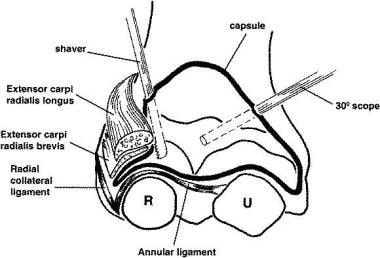
The area of maximal tenderness is usually an area just distal to the origin of the extensor muscles of the forearm at the lateral epicondyle. Most typically the ECRB is involved, but others may include the extensor carpi radialis longus (ECRL), extensor digitorum, and extensor carpi ulnaris.

The radial nerve splits into the superficial radial and posterior interosseus nerve (PIN) at the radiocapitellar joint. The PIN may become entrapped by pericapsular structures, causing radial tunnel syndrome.

Related eMedicine topics:
Hand, Nerve Compression Syndromes: Upper Extremity
Nerve Entrapment Syndromes
Radial Nerve Entrapment

Related Medscape topics:
Specialty Site Neurology & Neurosurgery
Specialty Site Orthopaedics

Sport-Specific Biomechanics

Tennis is the most common sport to cause lateral epicondylitis, but the condition can also be seen in those who play squash and badminton. Symptoms can occur after an improper backhand hitting technique, which can occur when the athlete attempts to increase power by increasing forearm force rather than relying on core, rotator cuff, and scapular power. This results in snapping the wrist with supination and irritation of the extensor tendons. Symptoms can also occur when an athlete does not get his or her feet into position and hits the ball late or with a bent elbow. The power of the hit is again generated from the forearm instead of the core. 

Other causes of extensor tendinopathy in tennis are a using new racquet, using a racquet that is strung too tightly, or using a racquet that is too heavy, as well as hitting wet or heavy balls or hitting into the wind. Another common racquet abnormality that causes lateral elbow extensor tendinosis is having a grip that is too large.  

Industrial athletes have certain occupational and leisure activities that lead to overuse injuries of the forearm wrist extensors, causing pain at the lateral epicondyle. These include carpenters, bricklayers, seamstresses and tailors, politicians (excessive handshaking), and musicians (eg, pianists, drummers). Such injuries can also be seen in individuals who perform a lot of computer work, a lot of typing, and a lot of mouse work for their occupations.


History

  • The typical age of those affected is 40 to 50 years. 
  • Patients most typically report an insidious onset, but they will often relate a history of overuse without specific trauma
  • Symptom onset generally occurs 24-72 hours after repeated wrist extension activity.
  • Delayed symptoms are probably due to microscopic tears in the tendon.
  • The patient complains of pain over the lateral elbow that worsens with activity and improves with rest. The patient will also often describe aggravating conditions such as a backhand stroke in tennis or the overuse of a screwdriver.
  • Pain may radiate down the posterior aspect of the forearm.
  • The patient can often pinpoint pain 1.5 cm distal to the origin of the ECRB.
  • Pain can vary from being mild (eg, with aggravating activities like tennis or the repeated use of a hand tool), or it can be such severe pain that simple activities like picking up and holding a coffee cup (ie, "coffee cup sign") will act as a trigger for the pain.

Physical

  • Inspection: Very rarely does one notice swelling or ecchymosis.
  • Palpation: Maximal tenderness is elicited 1-2 cm distal to the origin of the ECRB at the lateral epicondyle. 
  • Pain is increased with resisted wrist extension, with the wrist radially deviated and pronated.
  • Resisted extension of the middle finger is also painful secondary to stress placed on the ECRB tendon, as it is preferentially stressed in this position when it must contract synergistically to anchor the third metacarpal, such that extension can take place at the digits.4
  • Increased pain is noted with resisted supination and hand shaking.
  • Always examine ROM of the shoulder, elbow, and wrist on the affected side.
  • Examine ROM and test for crepitus at the radiohumeral joint of the affected limb to evaluate for radiohumeral bursitis, osteochondritis of the capitellum, or PIN entrapment.
  • If decreased ROM if noted on physical examination, consider obtaining an x-ray to further evaluate the joint.

Related eMedicine topics:
Bursitis
Humeral Capitellum Osteochondritis Dissecans

Related Medscape topics:
Resource Center Joint Disorders
Resource Center Pain Management: Pharmacologic Approaches

Causes

  • Poor general conditioning leads to fatigue of the core and shoulder muscles, which puts an overemphasis on the extensor muscles of the forearm.
  • Improper training (eg, poor positioning when striking a tennis ball)
  • Improper technique (eg, hitting a tennis ball late on the backhand)
  • Poor or improper equipment (eg, a grip that is too big or a racquet that is strung too tightly)


Cervical Radiculopathy
Elbow and Forearm Overuse Injuries
Little League Elbow Syndrome
Medial Epicondylitis

Other Problems to Be Considered

Humeral fracture
Loose body
Osteoarthritis
Osteochondritis dissecans (OCD) of the capitellum
Stress fracture


Lab Studies

  • Laboratory studies are typically not useful in the workup of lateral epicondylitis.

Related Medscape topic:
Specialty Site Lab Medicine

Imaging Studies

  • Imaging studies are rarely needed in the initial workup of lateral elbow pain.
  • Consider pain film radiologic evaluation if the patient's symptoms persist despite adequate treatment or to evaluate for osteophytes, degenerative joint disease, or OCD
  • Plain films may reveal calcification along the lateral epicondyle.
  • Consider magnetic resonance imaging (MRI), bone scanning, and/or computed tomography (CT) scanning to evaluate for OCD or stress fractures.

Related Medscape topics:
Resource Center Arthritis
Resource Center Fracture
Resource Center Rheumatoid Arthritis

Other Tests

  • A local anesthetic block may lead to symptom resolution and confirmation of the diagnosis.


There are numerous treatment options, but no one single treatment is completely effective.

Watchful waiting

Smidt et al noted a greater improvement in pain symptoms from lateral epicondylitis at 52 weeks when employing watchful waiting relative to the administration of corticosteroid injections.5 In addition, watchful waiting was about equally as effective as physiotherapy at 52 weeks. However, corticosteroid injections were significantly better than both watchful waiting and physiotherapy at 6 weeks.5  
 
Nonsteroidal Anti-inflammatory Drugs (NSAIDS)

Topical NSAIDS such as diclofenac may offer some short-term relief.6, 7 In a study with oral diclofenac, this agent improved short-term pain and function, but there was no difference noted when comparing naproxen and placebo for pain reduction in lateral epicondylitis. Corticosteroid injection demonstrated greater benefit at 4 weeks when compared with NSAIDS, but no long-term differences were seen.
 
Corticosteroid injection

One study demonstrated administering a corticosteroid injection as having superior efficacy in pain relief at 6 weeks when compared with physiotherapy that consisted of ultrasound, massage, and exercise. However, the authors noted that corticosteroid injection was not as effective as physiotherapy at 12 weeks.5 Smidt et al found that administering a corticosteroid injection decreased pain in lateral epicondylitis at 6 weeks but not beyond that period. 

In another study, when corticosteroid injection was compared with arm bracing, the use of a corticosteroid injection demonstrated decreased pain at 2 weeks, but there was no difference noted at 6 weeks.8 There was also no significant difference noted in the type of steroid that was injected.

In summary, administering a corticosteroid injection is effective in reducing pain from lateral epicondylitis in the short term, but this procedure may not be as effective in the long term. 
 
Counterforce Bracing

Counterforce braces are used in an attempt to reduce the tension forces on the wrist extensor tendons, and these orthotics may be superior to lateral epicondyle bandages in reducing resting pain.9 The brace should be applied firmly approximately 10 cm distal to the elbow joint. Use of a counterforce brace may decrease pain and increase grip strength at 3 weeks in individuals with lateral epicondylitis.10 However, some authors believe that no firm conclusions can be drawn from the use of orthotics in the treatment of lateral epicondylitis.11 Counterforce braces are possibly inferior in the treatment of lateral epicondylitis when compared with topical NSAIDS and corticosteroid injections. 
 
Extracorporeal Shock Wave Therapy (ECSWT)

There has been no significant benefit demonstrated in using ECSWT to treat patients with lateral epicondylitis.12
 
Laser Therapy

Low-level laser treatments have not been proven to be an effective method to treat patients with pain from lateral epicondylitis.13

Acupuncture

Systemic reviews and meta-analyses have demonstrated some evidence of short-term improvement in pain reduction at 2 to 8 weeks in patients suffering from lateral epicondylar pain.11, 14 However, other studies demonstrated insufficient evidence to recommend its use.7 
 
Autologous Blood

Autologous blood injections are thought to initiate an inflammatory process and promote improved healing of degenerative tissue via the relatively atraumatic injection itself or via mediators in the blood. Edwards and Calandruccio studied 28 people in whom conservative therapy had failed to resolve symptoms from their lateral epicondylitis.15 The study demonstrated 79% (22 of 28) of the patients had a reduction in pain over 9.5 months after autologous blood injection therapy.15 Most often, this occurred after only one injection. However, this study is limited as it lacked a control group. 

Another study demonstrated significantly reduced pain when treating chronic elbow tendinosis with buffered platelet rich plasma. Mishra and Pavelko evaluated 140 patients with elbow epicondylar pain; 20 patients continued to consider surgical intervention after conservative therapy failed to resolve their symptoms.16 These patients were then administered either a single percutaneous injection of platelet-rich plasma or bupivacaine (control group). At 8 weeks after therapy, the authors demonstrated a 60% pain improvement in the group who received the platelet-rich plasma compared with a 16% pain improvement in the control group.16 At 6 months and final follow-up (mean, 25.6 mo; range, 12-38 mo), the patients who had received the platelet-rich plasma continued to report significant pain reduction.
 
Botulism Toxin (BTX)

In a study by Wong et al, the authors demonstrated that an injection of BTX decreased patients' pain from lateral epicondylitis at 4-12 weeks when compared with saline injection; however, there was an increased incidence of side effects in the BTX treated group, which included digit paresis and weakness of finger extension.17 In addition, the trial was small (60 patients), most of the patients were women, and the blinding of the study may have been affected by some of the patients possibly knowing which treatment they received (4 patients experienced digit paresis and may have correctly deduced they'd received the BTX injection).

A study by Placzek et al also demonstrated improvement in painful symptoms arising from lateral epicondylitis when BTX injections were used compared with saline.18 However, another randomized controlled trial demonstrated no significant difference when comparing injections of BTX and saline in the treatment of lateral epicondylitis.19

Topical Nitrates

Topical nitrates are thought to stimulate collagen synthesis and improve healing. Paolini et al demonstrated that application of topical nitrates to be an effective method of treating pain from lateral epicondylitis.20

Acute Phase

Rehabilitation Program

Physical Therapy

Strength training, exercise, and stretching have been shown to decrease pain in patients with lateral epicondylitis.11 It is important to have the patients progress from concentric to eccentric exercises and then stress eccentric exercises when the individual is able to tolerate them. NSAID iontophoresis is also an effective method of treating pain from lateral epicondylitis, but corticosteroid iontophoresis has not been shown to be effective.11 Occupational therapy can be employed in an attempt to modify the workplace environment to eliminate aggravating activities.

Ultrasound (US) therapy has demonstrated modest pain reduction,11, 13 although US- and color Doppler-guided intratendinous injections with polidocanol in the extensor origin have shown promising clinical results,21 and there is insufficient evidence to support the use of transverse friction, soft-tissue therapy in the treatment of lateral epicondylitis.22

Recovery Phase

Surgical Intervention

Surgical intervention is only indicated after 6 months of conservative care has failed to relieve the patient's symptoms. A long-term, follow-up study (mean, 130 mo; range, 106-173 mo) of arthroscopic treatment of recalcitrant lateral epicondylitis by Baker and Baker demonstrated that arthroscopic removal of pathologic tendinosis tissue can be a successful treatment strategy in such cases.23

It is important that each case is evaluated individually, because some patients may have multiple relapses or lack progression through therapy. These patients may opt for surgery after a shorter trial of conservative care.


Medical intervention is geared toward the joint goals of decreasing inflammation and providing analgesia. The major concern with all the drugs used is their effect on the gastrointestinal (GI) tract with long-term use. Renal function must also be monitored with long-term NSAID use. Long-term corticosteroids have a myriad of side effects, which are beyond the scope of this article.

Related eMedicine topics:
Corticosteroid-Induced Myopathy
Therapeutic Injections for Pain Management
Toxicity, Nonsteroidal Anti-inflammatory Agents

Related Medscape topics:
Resource Center Adverse Drug Events Reporting
Resource Center Pain Management: Pharmacologic Approaches
CME GI Risks and Benefits of Traditional and COX-2-Selective NSAIDs

Drug Category: Nonsteroidal anti-inflammatory drugs

NSAIDs are used to help reduce inflammation and are used as analgesics. Multiple drugs are in this class and every physician should be aware of drugs in each subclass because some patients respond better to one subclass than another. A few of the medications are named not to belabor the wide variety of choices available.

Drug NameDiclofenac (Cataflam, Voltaren)
DescriptionDesignated chemically as 2-[(2,6-dichlorophenyl) amino] benzeneacetic acid, monosodium salt, with an empirical formula of C14 H10 Cl2 NO2 NA. One of a series of phenylacetic acids that has demonstrated anti-inflammatory and analgesic properties in pharmacologic studies. Believed to inhibit the enzyme cyclooxygenase, which is essential in the biosynthesis of prostaglandins. Can cause hepatotoxicity; hence, liver enzymes should be monitored in the first 8 weeks of treatment.

Rapidly absorbed; metabolism occurs in liver by demethylation, deacetylation, and glucuronide conjugation. The delayed-release, enteric-coated form is diclofenac sodium, and the immediate release form is diclofenac potassium. Has a relatively low risk for bleeding GI ulcers.
Adult Dose25 mg PO bid/tid; if well tolerated, increase by 25 or 50 mg at weekly intervals until satisfactory response is obtained or a total daily dose of 150-200 mg PO is reached; higher doses generally do not increase effectiveness

Pediatric Dose<12 years: Not established

>12 years: Administer as in adults

ContraindicationsDocumented hypersensitivity; do not administer into the CNS or give to patients with peptic ulcer disease, recent GI bleeding or perforation, renal insufficiency, and those at high risk of bleeding
InteractionsCoadministration with aspirin increases the risk of inducing serious NSAID-related side effects; probenecid may increase the concentrations and, possibly, the toxicity of NSAIDs; may decrease the effect of hydralazine, captopril, and beta-blockers; may decrease the diuretic effects of furosemide and thiazides; may increase PT duration when taking anticoagulants (instruct patients to watch for signs of bleeding); may increase the risk of methotrexate toxicity; phenytoin levels may be increased when administered concurrently
PregnancyB - Fetal risk not confirmed in studies in humans but has been shown in some studies in animals
D - Fetal risk shown in humans; use only if benefits outweigh risk to fetus
PrecautionsAcute renal insufficiency, hyperkalemia, hyponatremia, interstitial nephritis, and renal papillary necrosis may occur; increases the risk of acute renal failure in patients with preexisting renal disease or compromised renal perfusion; low white blood cell counts occur rarely, and usually return to normal in ongoing therapy; discontinuation of therapy may be necessary if there is persistent leukopenia, granulocytopenia, or thrombocytopenia

Drug NameIbuprofen (Motrin, Ibuprin)
DescriptionDOC for patients with mild to moderate pain. Inhibits inflammatory reactions and pain by decreasing prostaglandin synthesis.
Adult Dose400-600 mg PO q4-6h prn
Pediatric DoseNot usually recommended for pain control; however, often taken by adolescents in OTC form
ContraindicationsDocumented hypersensitivity to aspirin, iodides, or other NSAIDS
InteractionsProbenecid may increase the concentrations and possibly the toxicity of NSAIDs; may decrease the effect of concurrently administered loop diuretics; PT duration may increase when administered concurrently with anticoagulants; closely monitor PT duration and instruct patients to watch for signs and symptoms of bleeding; H2 antagonists and Carafate (active ingredient sucralfate) may decrease the risk of GI ulcer when administered concurrently with NSAIDs
PregnancyC - Fetal risk revealed in studies in animals but not established or not studied in humans; may use if benefits outweigh risk to fetus
D - Fetal risk shown in humans; use only if benefits outweigh risk to fetus
PrecautionsCaution in patients with renal impairment, hepatic or cardiac dysfunction, and decreased hemoglobin; monitor serum electrolytes in long-term use (>3 mo); caution in the presence of peptic ulcer disease, recent GI bleeding or perforation, renal insufficiency, and high risk of bleeding

Drug NameNaproxen and naproxen sodium (Aleve, Naprelan, Naprosyn)
DescriptionFor relief of mild to moderate pain; inhibits inflammatory reactions and pain by decreasing the activity of cyclooxygenase, which is responsible for prostaglandin synthesis.

Available in many dosages and delivery systems. Oral suspension is available at a dose of 125 mg/5 mL. Fairly inexpensive and has a similar therapeutic profile to the other NSAIDs.
Adult DoseNaproxen: 375 mg and 500 mg PO bid with food

Naproxen sodium: 275 mg PO qid or 550 mg PO bid with food
Pediatric DoseSuspension: 10 mg/kg/d PO divided bid
ContraindicationsDocumented hypersensitivity; peptic ulcer disease; recent GI bleeding or perforation; renal insufficiency
InteractionsProbenecid may increase the toxicity of NSAIDs; coadministration with ibuprofen may decrease the effects of loop diuretics; coadministration with anticoagulants may prolong PT duration (watch for signs of bleeding); NSAIDs may increase serum lithium levels and the risk of methotrexate toxicity (eg, stomatitis, bone marrow suppression, nephrotoxicity).
PregnancyB - Fetal risk not confirmed in studies in humans but has been shown in some studies in animals
D - Fetal risk shown in humans; use only if benefits outweigh risk to fetus
PrecautionsAcute renal insufficiency, interstitial nephritis, hyperkalemia, hyponatremia, and renal papillary necrosis may occur; patients with preexisting renal disease or compromised renal perfusion, risk acute renal failure; leukopenia occurs rarely, is transient, and usually returns to normal during therapy; persistent leukopenia, granulocytopenia, or thrombocytopenia warrant further evaluation and may require discontinuation of drug.

Drug Category: Cyclooxygenase 2 (COX-2) inhibitors

Although increased cost can be a negative factor, the incidence of costly and potentially fatal GI bleeds is clearly less with COX-2 inhibitors than with traditional NSAIDs. Ongoing analysis of cost avoidance of GI bleeds will further define the populations that will find COX-2 inhibitors the most beneficial.

Drug NameCelecoxib (Celebrex)
DescriptionPrimarily inhibits COX-2. COX-2 is considered an inducible isoenzyme, induced by pain and inflammatory stimuli. Inhibition of COX-1 may contribute to NSAID GI toxicity. At therapeutic concentrations, COX-1 isoenzyme is not inhibited, thus the incidence of GI toxicity, such as endoscopic peptic ulcers, bleeding ulcers, perforations, and obstructions, may be decreased when compared with nonselective NSAIDs. Seek the lowest dose for each patient.

Neutralizes circulating myelin antibodies through anti-idiotypic antibodies; downregulates proinflammatory cytokines, including INF-gamma; blocks Fc receptors on macrophages; suppresses inducer T and B cells and augments suppressor T cells; blocks complement cascade; promotes remyelination; may increase CSF IgG (10%).

Has a sulfonamide chain and is primarily dependent upon cytochrome P450 enzymes (a hepatic enzyme) for metabolism.
Adult Dose200 mg PO qd or bid
Pediatric DoseNot usually recommended for pain control
ContraindicationsDocumented hypersensitivity to aspirin, sulfa-based drugs, or other NSAIDS
InteractionsProbenecid may increase the concentrations and possibly the toxicity of NSAIDs; may decrease the effect of concurrently administered loop diuretics; PT duration may increase when administered concurrently with anticoagulants; closely monitor PT duration and instruct patients to watch for signs and symptoms of bleeding
PregnancyC - Fetal risk revealed in studies in animals but not established or not studied in humans; may use if benefits outweigh risk to fetus
PrecautionsCaution in patients with renal impairment, hepatic or cardiac dysfunction, and decreased hemoglobin values; monitor serum electrolytes in long-term use (>3 mo); caution in the presence of peptic ulcer disease, recent GI bleeding or perforation, or renal insufficiency.

Drug Category: Corticosteroids

Corticosteroids are some of the strongest anti-inflammatory agents available. The injectable preparations make it possible to deliver the drug directly to the joint in a concentrated dose while greatly decreasing the systemic effects.

Drug NameTriamcinolone acetonide (Amcort, Aristospan Intra-Articular)
DescriptionDecreases inflammation by suppressing migration of polymorphonuclear leukocytes and reversing capillary permeability.
Adult Dose2.5-40 mg (10 mg/mL or 40 mg/mL formulations) intra-articularly; repeat prn
Pediatric DoseNot established
ContraindicationsDocumented hypersensitivity; fungal, viral, and bacterial skin-infections
InteractionsCoadministration with barbiturates, phenytoin, and rifampin decreases the effects of triamcinolone.
PregnancyC - Fetal risk revealed in studies in animals but not established or not studied in humans; may use if benefits outweigh risk to fetus
PrecautionsMultiple complications including severe infections, hyperglycemia, edema, osteonecrosis, myopathy, peptic ulcer disease, hypokalemia, osteoporosis, euphoria, psychosis, myasthenia gravis, or growth suppression may occur; abrupt discontinuation of glucocorticoids may cause adrenal crisis.

Drug NameBetamethasone (Celestone Soluspan)
DescriptionAuthor's drug of choice for intra-articular injections. Preparation does not crystallize if used with paraben-free anesthetic preparations.
Adult Dose1 mL (6 mg/mL) mixed with 1 mL of 2% lidocaine and 1 mL of 0.5% Marcaine
Pediatric DoseNot established
ContraindicationsDocumented hypersensitivity; systemic fungal infections
InteractionsEffects decrease with the coadministration of barbiturates, phenytoin, and rifampin; dexamethasone decreases the effect of salicylates and vaccines used for immunization
PregnancyC - Fetal risk revealed in studies in animals but not established or not studied in humans; may use if benefits outweigh risk to fetus
PrecautionsIncreases the risk of multiple complications, including severe infections; monitor adrenal insufficiency when tapering drug; abrupt discontinuation of glucocorticoids may cause adrenal crisis; hyperglycemia, edema, osteonecrosis, myopathy, peptic ulcer disease, hypokalemia, osteoporosis, euphoria, psychosis, myasthenia gravis, growth suppression, and infections are possible complications of glucocorticoid use

Drug Category: Vasodilators

Vasodilators may stimulate collagen synthesis and improve healing. These agents may also effectively treat pain.

Drug NameNitroglycerin (Nitro-Dur)
DescriptionCauses relaxation of vascular smooth muscle by stimulating intracellular cyclic guanosine monophosphate production.

The dosages available include 0.1mg/h, 0.2mg/h, 0.3mg/h, 0.4mg/h, 0.6mg/h, 0.8mg/h per patch
Adult DoseMay cut a 0.2mg/h patch into quarters and place on the point of maximal tenderness for 24 h; the typical duration of treatment varies, but may take up to 3-4 mo
Pediatric DoseNot established
ContraindicationsDocumented hypersensitivity; severe anemia, shock, postural hypotension, head trauma closed-angle glaucoma, or cerebral hemorrhage
InteractionsAspirin may increase nitrate serum concentrations; marked symptomatic orthostatic hypotension may occur with coadministration of calcium channel blockers (dose adjustment of either agent may be necessary); vasodilating effects may be additive when coadministered with other vasodilators.
PregnancyC - Fetal risk revealed in studies in animals but not established or not studied in humans; may use if benefits outweigh risk to fetus
PrecautionsFlushing, severe headache disorder, nausea, nervousness, orthostatic hypotension, tachyarrhythmia, vomiting, erythema, skin irritation, allergic reactions, blurred vision, dermatitis due to topical drug, skin rash, xerostomia; severe hypotension, particularly with upright posture, may occur with even small doses of nitroglycerin, particularly in the elderly (use with caution); hypotension induced by nitroglycerin may be accompanied by paradoxical bradycardia and increased angina pectoris; elderly patients may be more susceptible to hypotension and may be at greater risk of falling at therapeutic doses; nitrate therapy may aggravate angina caused by hypertrophic cardiomyopathy, particularly in the elderly; aspirin may increase nitrate serum concentrations; marked symptomatic orthostatic hypotension may occur with coadministration of calcium channel blockers (dose adjustment of either agent may be necessary)

Drug Category: Neuromuscular Blocker Agent, Toxin

Neuromuscular blocker agents have been shown to decrease pain.

Drug NameBotulinum Toxin Type A (Botox)
DescriptionBotulinum neurotoxin is produced by the gram-negative anaerobic bacterium Clostridium botulinum. This agent acts by interrupting signal transmission within the peripheral and sympathetic nervous system, leaving sensory transmission intact. Botulinum toxins block acetylcholine release, causing a chemical denervation.
Adult DoseDose expressed in mouse units; many studies have used the European version of botulinum toxin called Dysport, which is 4 times stronger than the commercial preparations used in United States; the dose commonly used in studies is 60 Dysport U mixed with 0.6 mL of NaCl; inject 2-4 cm distal to the lateral epicondyle
Pediatric DoseNot indicated
ContraindicationsDocumented hypersensitivity
InteractionsCoadministration of botulinum toxin and aminoglycosides or other agents that interfere with
neuromuscular transmission (eg, curare-like nondepolarizing blockers, lincosamides, polymyxins,
quinidine, magnesium sulfate, anticholinesterases, succinylcholine chloride) should only be performed
with caution, as the effect of the toxin may be potentiated.
PregnancyC - Fetal risk revealed in studies in animals but not established or not studied in humans; may use if benefits outweigh risk to fetus
PrecautionsThe most serious adverse events reported after treatment with botulinum toxin include rare
spontaneous reports of death, sometimes associated with anaphylaxis, dysphagia, pneumonia,
and/or other significant debility; adverse events involving the cardiovascular system, including arrhythmia and myocardial infarction, some with fatal outcomes, have been reported (some patients had risk factors including preexisting cardiovascular disease); onset or recurrent seizures have also been reported in patients predisposed to these events; treat patients with diseases of the neuromuscular junction with caution because the underlying generalized weakness may be augmented, and local weakness at the injection site may be more than otherwise anticipated; unwanted weakness, nausea, fatigue, malaise, flulike symptoms, rashes, pain, edema, erythema, ecchymosis, headache, and hyperesthesia can be noted after administration of botulinum toxin.


Return to Play

Gradual return to play is recommended, with an emphasis on the patient employing improved form to avoid aggravating activities and techniques. The athlete should be able to perform pain-free ROM activities. Continued attention should be placed on a strengthening and conditioning program.

Complications

The most serious complication is complete tendon rupture. Such an injury often causes a palpable defect in the extensors, which results in weakness on attempted wrist extension. Frequently, the treatment of this complication is surgical repair.

Prevention

  • Attention to proper form and technique will decrease the risk of developing tendinosis of the lateral elbow extensor muscles.
  • Proper equipment, (ie, size and weight of racquet, size of grip, dry balls)
  • Improved conditioning, improved core strength
  • Gradual increase in intensity and duration of activity

Prognosis

Although most patients with lateral epicondylitis tend to improve in 9-18 months, they need to be made aware that successful treatment may be a prolonged course. Refractory cases may need surgical intervention.

Education

Advise the athlete on proper technique and equipment. Formal sport lessons may be beneficial to prevent individuals from acquiring bad habits.


Medical/Legal Pitfalls

  • Misdiagnosis may lead to a medical/legal pitfall.

Related Medscape topic:
Resource Center Medical Malpractice and Legal Issues

Special Concerns


  1. Alfredson H, Ohberg L, Forsgren S. Is vasculo-neural ingrowth the cause of pain in chronic Achilles tendinosis? An investigation using ultrasonography and colour Doppler, immunohistochemistry, and diagnostic injections. Knee Surg Sports Traumatol Arthrosc. Sep 2003;11(5):334-8. [Medline].
  2. Wilson JJ, Best TM. Common overuse tendon problems: a review and recommendations for treatment. Am Fam Physician. Sep 1 2005;72(5):811-8. [Medline][Full Text].
  3. Calfee RP, Patel A, DaSilva MF, Akelman E. Management of lateral epicondylitis: current concepts. J Am Acad Orthop Surg. Jan 2008;16(1):19-29. [Medline].
  4. Bell S. Elbow and arm pain. In: Brukner P, Kahn K, eds. Clinical Sports Medicine. 3rd ed. New South Wales, Australia: McGraw-Hill; 2006:293.
  5. Smidt N, van der Windt DA, Assendelft WJ, et al. Corticosteroid injections, physiotherapy, or a wait-and-see policy for lateral epicondylitis: a randomised controlled trial. Lancet. Feb 23 2002;359(9307):657-62. [Medline].
  6. Green S, Buchbinder R, Barnsley L, et al. Non-steroidal anti-inflammatory drugs (NSAIDs) for treating lateral elbow pain in adults. Cochrane Database Syst Rev. 2002;CD003686. [Medline].
  7. Assendelft W, Green S, Buchbinder R, Struijs P, Smidt N. Tennis elbow. Clin Evid. Jun 2004;1633-44. [Medline].
  8. Struijs PA, Smidt N, Arola H, et al. Orthotic devices for the treatment of tennis elbow. Cochrane Database Syst Rev. 2002;CD001821. [Medline].
  9. Altan L, Kanat E. Conservative treatment of lateral epicondylitis: comparison of two different orthotic devices. Clin Rheumatol. Mar 26 2008;epub ahead of print. [Medline].
  10. Borkholder CD, Hill VA, Fess EE. The efficacy of splinting for lateral epicondylitis: a systematic review. J Hand Ther. Apr-Jun 2004;17(2):181-99. [Medline].
  11. Bisset L, Paungmali A, Vicenzino B, Beller E. A systematic review and meta-analysis of clinical trials on physical interventions for lateral epicondylalgia. Br J Sports Med. Jul 2005;39(7):411-22; discussion 411-22. [Medline].
  12. Buchbinder R, Green SE, Youd JM, et al. Shock wave therapy for lateral elbow pain. Cochrane Database Syst Rev. Oct 19 2005;CD003524. [Medline].
  13. Smidt N, Assendelft WJ, Arola H, et al. Effectiveness of physiotherapy for lateral epicondylitis: a systematic review. Ann Med. 2003;35(1):51-62. [Medline].
  14. Ramsay DJ, Bowman MA, Greenman, PE, et al, for the NIH Consensus Panel. NIH Consensus Conference. Acupuncture. JAMA. Nov 4 1998;280(17):1518-24. [Medline].
  15. Edwards SG, Calandruccio JH. Autologous blood injections for refractory lateral epicondylitis. J Hand Surg [Am]. Mar 2003;28(2):272-8. [Medline].
  16. Mishra A, Pavelko T. Treatment of chronic elbow tendinosis with buffered platelet-rich plasma. Am J Sports Med. Nov 2006;34(11):1774-8. [Medline].
  17. Wong SM, Hui AC, Tong PY, et al. Treatment of lateral epicondylitis with botulinum toxin: a randomized, double-blind, placebo-controlled trial. Ann Intern Med. Dec 6 2005;143(11):793-7. [Medline][Full Text].
  18. Placzek R, Drescher W, Deuretzbacher G, Hempfing A, Meiss AL. Treatment of chronic radial epicondylitis with botulinum toxin A. A double-blind, placebo-controlled, randomized multicenter study. J Bone Joint Surg Am. Feb 2007;89(2):255-60. [Medline].
  19. Hayton MJ, Santini AJ, Hughes PJ, et al. Botulinum toxin injection in the treatment of tennis elbow. A double-blind, randomized, controlled, pilot study. J Bone Joint Surg Am. Mar 2005;87(3):503-7. [Medline].
  20. Paoloni JA, Appleyard RC, Nelson J, Murrell GA. Topical nitric oxide application in the treatment of chronic extensor tendinosis at the elbow: a randomized, double-blinded, placebo-controlled clinical trial. Am J Sports Med. Nov-Dec 2003;31(6):915-20. [Medline].
  21. Zeisig E, Fahlström M, Ohberg L, Alfredson H. Pain relief after intratendinous injections in patients with tennis elbow: results of a randomised study. Br J Sports Med. Apr 2008;42(4):267-71. [Medline].
  22. Brosseau L, Casimiro L, Milne S, et al. Deep transverse friction massage for treating tendinitis. Cochrane Database Syst Rev. 2002;CD003528. [Medline].
  23. Baker CL Jr, Baker CL 3rd. Long-term follow-up of arthroscopic treatment of lateral epicondylitis. Am J Sports Med. Feb 2008;36(2):254-60. [Medline].

Lateral Epicondylitis excerpt

Article Last Updated: May 28, 2008