Continually Updated Clinical Reference
 
 
  All Sources     eMedicine     Medscape     Drug Reference     MEDLINE
 
eMedicine - Cervical Facet Syndrome : Article by

Quick Find
Authors & Editors
Introduction
Clinical
Differentials
Workup
Treatment
Medication
Follow-up
Multimedia
References

Related Articles
Cervical Disc Injuries

Cervical Discogenic Pain Syndrome

Cervical Radiculopathy

Cervical Spine Sprain/Strain Injuries


Patient Education
Back, Ribs, Neck, and Head Center

Bone Health Center

Arthritis Center

Shoulder and Neck Pain Overview

Shoulder and Neck Pain Causes

Shoulder and Neck Pain Symptoms

Shoulder and Neck Pain Treatment

Neck Strain Overview

Chronic Pain


Author: Robert E Windsor, MD, FAAPMR, FAAEM, FAAPM, President and Director, Georgia Pain Physicians PC; Clinical Associate Professor, Department of Physical Medicine and Rehabilitation, Emory University

Robert E Windsor is a member of the following medical societies: American Academy of Pain Medicine, American Academy of Physical Medicine and Rehabilitation, American College of Sports Medicine, American Medical Association, International Association for the Study of Pain, Physiatric Association for Spine, Sports and Occupational Rehabilitation, and Texas Medical Association

Coauthor(s): Daniel Hankley, MD, Consulting Staff, Mission Memorial Hospital; L Anita Cone-Sullivan, MD, Consulting Staff, Resurgens Orthopedics; Frank J King, MD, Clinical Instructor, Department of Physical Medicine and Rehabilitation, Georgia Pain Physicians/Emory School of Medicine; Erik D Hiester, DO, Fellow in Interventional Pain Management, Emory Medical School/Georgia Pain Physicians

Editors: Janos P Ertl, MD, Clinical Assistant Professor, Department of Orthopedic Surgery, University of California at Davis; Director of Amputee Clinic, Chief of Orthopedic Trauma, Kaiser Hospital; Francisco Talavera, PharmD, PhD, Senior Pharmacy Editor, eMedicine; Henry T Goitz, MD, Chief, Sports Medicine, Associate Professor, Department of Orthopaedic Surgery, Medical College of Ohio; Jon Whitehurst, MD, Consulting Staff, Rockford Orthopedic Associates; Wylie D Lowery Jr, MD, Associate Professor, Department of Orthopedic Surgery, George Washington University

Author and Editor Disclosure

Synonyms and related keywords: cervical sprain, cervical spondylosis, cervical facet joint pain, chronic neck pain

Background

Neck pain is common in the general population and even more common in a chronic pain management practice. Very few reliable epidemiological studies regarding the prevalence of neck pain exist; however, a Finnish study and a Norwegian study estimated the prevalence of neck pain in the general population to be approximately 34%. Furthermore, the prevalence of chronic neck pain, defined as lasting 6 months or longer, is estimated at approximately 14% (Bovim, 1994; Makela, 1991).

In 1933, Ghormley coined the term facet syndrome to describe a constellation of symptoms associated with degenerative changes of the lumbar spine (Ghormley, 1933). Recently, the term cervical facet syndrome has appeared in the literature and implies axial pain presumably secondary to involvement of the posterior elements of the cervical spine.

Many pain generators are located in the cervical spine, including the intervertebral disks, facet joints, ligaments, muscles, and nerve roots. The facet joints recently have been found to be a possible source of neck pain, and the diagnosis of cervical facet syndrome is often one of exclusion or not considered at all. Clinical features that are often, but not always, associated with cervical facet pain include tenderness to palpation over the facet joints or paraspinal muscles, pain with cervical extension or rotation, and absent neurologic abnormalities (Fukui, 1996). Imaging studies usually are not helpful, with the exception of ruling out other sources of pain, such as fractures or tumors. Signs of cervical spondylosis, narrowing of the intervertebral foramina, osteophytes, and other degenerative changes are equally prevalent in people with and without neck pain (Friedenberg, 1963).

Frequency

United States

Aprill and Bogduk estimated the prevalence of cervical facet joint pain by reviewing the records of patients who had presented with neck pain for at least 6 months secondary to some type of injury (Aprill, 1992). These patients underwent diskography, facet joint nerve blocks, or both at the request of the referring physicians. A total of 318 patients were investigated, and 26% of the patients had at least one symptomatic facet joint. However, only 126 patients of the original study group had their facet joints investigated, and 65% of these patients had painful facet joints. Furthermore, 62% of the patients who underwent both diskography and facet joint nerve blocks had painful facet joints. This study indicated that the prevalence of cervical facet joint pain may be as low as 26% or as high as 65% depending on how aggressively it is sought.

Another large study by Manchikanti and Boswell from 2004 involved 500 patients with chronic, nonspecific spine pain. The prevalence of facet joint pain was determined using controlled comparative local anesthetic blocks with 1 % lidocaine followed by 0.25% bupivacaine. This study indicated that the prevalence of cervical facet joint pain was 55%.

It seems apparent that the cervical facet joints may be a common source of neck pain; however, there are other pain generators in the cervical spine, such as the intervertebral disks, that may be involved as well. To evaluate the contribution of the disk to neck pain, a sample of 56 patients were selected from the previous study population. This group consisted of patients who had undergone both diskography and facet joint nerve blocks at the same segment of the cervical spine as part of the diagnostic process (Bogduk, 1993). The results demonstrated that 41% of this group had a painful disk and facet joint at the same segment, and an additional 23% had a painful facet joint but not a painful disk at the same segment. Therefore, most of the sample had a painful facet joint, but there was often a painful disk at the same level. This finding is not surprising when one considers how the facet joints and disks are intimately involved in motion of the cervical spine.

Cervical facet joint pain is a common sequela of whiplash injury. Barnsley and Lord et al studied the prevalence of chronic cervical facet joint pain after whiplash injury using double-blind, controlled, diagnostic blocks of the facet joints (Barnsley, 1995). The joints were blocked randomly with either a short-acting or long-acting anesthetic, and, if complete pain relief was obtained, the joint was blocked with the other agent 2 weeks later. Of the 38 patients who completed the trial, 27 obtained complete relief from both anesthetics and longer relief from the longer acting agent. Therefore, the prevalence of this sample is 54%, making cervical facet joint pain the most common cause of chronic neck pain after whiplash injury in this population.

Lord and Barnsley et al subsequently studied the prevalence of chronic cervical facet joint pain after whiplash injury using a double-blind, placebo-controlled protocol (Lord, 1996). The sample consisted of 68 consecutive patients referred for neck pain secondary to a motor vehicle accident and greater than 3 months in duration. Those individuals with a predominant headache underwent a third occipital nerve block and were removed from the study if they received pain relief. The third occipital nerve has a cutaneous branch and a branch to the C2-C3 facet joint; therefore, patients with pain from this segment could not participate in the placebo study because they would feel the effects of the local anesthetic. The remaining 41 patients underwent diagnostic blocks with either a short-acting or a long-acting local anesthetic, followed by a second block with either normal saline or the other anesthetic, followed by a third block with the remaining agent.

Positive responders experienced complete relief with each anesthetic and no relief with the normal saline. The prevalence of cervical facet joint pain after whiplash injury was found to be 60%, and the most common levels were C2-C3 and C5-C6.

Functional Anatomy

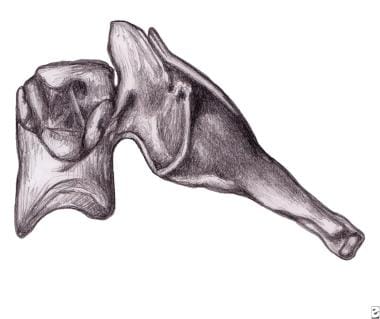
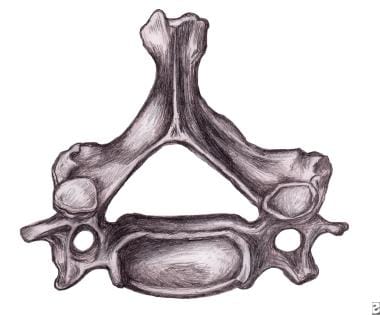
The cervical spine is made up of the first 7 vertebrae and functions to provide mobility and stability to the head, while connecting it to the relative immobile thoracic spine. The first 2 vertebral bodies are quite different from the rest of the cervical spine. The atlas, or C1, articulates superiorly with the occiput and inferiorly with the axis, or C2.

The atlas is ring-shaped and does not have a body, unlike the rest of the vertebrae. The body has become part of C2, and it is called the odontoid process, or dens. The atlas is made up of an anterior arch, a posterior arch, 2 lateral masses, and 2 transverse processes. The transverse foramen, through which the vertebral artery passes, is enclosed by the transverse process. On each lateral mass is a superior and inferior facet (zygapophyseal) joint. The superior articular facets are kidney-shaped, concave, and face upward and inward. These superior facets articulate with the occipital condyles, which face downward and outward. The relatively flat inferior articular facets face downward and inward to articulate with the superior facets of the axis.

The axis has a large vertebral body, which contains the fused remnant of the C1 body, the dens. The dens articulates with the anterior arch of the atlas via its anterior articular facet and is held in place by the transverse ligament. The axis is comprised of a vertebral body, heavy pedicles, laminae, and transverse processes, which serve as attachment points for muscles. The axis articulates with the atlas by its superior articular facets, which are convex and face upward and outward.

The remaining cervical vertebrae, C3-C7, are similar to each other but are very different from C1 and C2. They each have a vertebral body, which is concave on its superior surface and convex on its inferior surface. On the superior surfaces of the bodies are raised processes or hooks called uncinate processes, which articulate with depressed areas on the inferior aspect of the superior vertebral bodies called the echancrure or anvil. These uncovertebral joints are most noticeable near the pedicles and usually are referred to as the Joints of Luschka (Johnson, 1991). These joints are believed to be the result of degenerative changes in the annulus, which leads to fissuring in the annulus and the creation of the joint (Parke, 1989). The spinous processes of C3-C5 are usually bifid, in comparison to the spinous processes of C6 and C7, which usually are tapered.

The facet joints in the cervical spine are diarthrodial synovial joints with fibrous capsules. The joint capsules in the lower cervical spine are more lax compared to other areas of the spine to allow for gliding movements of the facets. The joints are inclined at 45° from the horizontal plane and angled 85° from the sagittal plane. This alignment helps to prevent excessive anterior translation and is important in weightbearing (Bland, 1987). The fibrous capsules are innervated by mechanoreceptors (type I, II, and III), and free nerve endings have been found in the subsynovial loose areolar and dense capsular tissues (McLain, 1994). In fact, there are more mechanoreceptors in the cervical spine than in the lumbar spine (Bogduk, 1991). This neural input from the facets may be important for proprioception and pain sensation and may modulate protective muscular reflexes that are important in preventing joint instability and degeneration.

The facet joints in the cervical spine are innervated by both the anterior and dorsal rami. The occipitoatlantal (OA) joint and atlantoaxial (AA) joint are innervated by the ventral rami of the first and second cervical spinal nerves. Two branches of the dorsal ramus of the third cervical spinal nerve innervate the C2-C3 facet joint, a communicating branch and a medial branch known as the third occipital nerve. The remaining cervical facets, C3-C4 to C7-T1, are supplied by the dorsal rami medial branches that arise one level cephalad and caudad to the joint (Dreyfus, 1993; Bogduk, 1982). Therefore, each joint from C3-C4 to C7-T1 is innervated by the medial branches above and below. These medial branches send off articular branches to the facet joints as they wrap around the waists of the articular pillars.

Intervertebral disks are located between each vertebral body caudad to the axis. The disks are comprised of 4 parts, including the nucleus pulposus in the middle, the annulus fibrosis surrounding the nucleus, and 2 end plates that are attached to the adjacent vertebral bodies. The disks are involved in cervical spine motion, stability, and weightbearing. The annular fibers are comprised of collagenous sheets called lamellae, which are oriented 65-70° from the vertical and alternate in direction with each successive sheet. Therefore, the annular fibers are prone to injury with rotation forces because only half of the lamellae are oriented to withstand the force in this direction (Bogduk, 1991). The middle and outer third of the annulus is innervated by nociceptors and phospholipase A2 has been found in the disk and may be an inflammatory mediator (Bogduk, 1988; Mendel, 1992; Franson, 1992).

Several ligaments of the cervical spine, which provide stability and proprioceptive feedback, are worth mentioning (Panjabi, 1991). The transverse ligament, the major portion of the cruciate ligament, arises from tubercles on the atlas and stretches across its anterior ring while holding the dens against the anterior arch. A synovial cavity is located between the dens and the transverse process. This ligament allows for rotation of the atlas on the dens and is responsible for stabilizing the cervical spine during flexion, extension, and lateral bending. The transverse ligament is the most important ligament in preventing abnormal anterior translation (Fielding, 1974).

The alar ligaments run from the lateral aspects of the dens to the ipsilateral medial occipital condyles and to the ipsilateral atlas. The alar ligaments limit axial rotation and side bending. If the alar ligaments are damaged, as in a whiplash injury, the joint complex becomes hypermobile, which can lead to kinking of the vertebral arteries and stimulation of the nociceptors and mechanoreceptors. This may be associated with the typical complaints of patients with whiplash injuries such as headache, neck pain, and dizziness. The alar ligaments prevent excessive lateral and rotational motions, while allowing flexion and extension.

The anterior longitudinal ligament (ALL) and the posterior longitudinal ligament (PLL) are the major stabilizers of the intervertebral joints. Both ligaments are found throughout the entire length of the spine; however, the ALL is closely adhered to the disks in comparison to the PLL, and it is not well developed in the cervical spine. The ALL becomes the anterior atlantooccipital membrane at the level of the atlas, while the PLL merges with the tectorial membrane. Both ligaments continue onto the occiput. The PLL prevents excessive flexion and distraction (Panjabi, 1993).

The supraspinous ligament, interspinous ligament, and ligamentum flavum maintain stability between the vertebral arches. The supraspinous ligament runs along the tips of the spinous processes, the interspinous ligament runs between the spinous processes, and the ligamentum flavum runs from the anterior surface of the cephalad vertebra to the posterior surface of the caudad vertebra. The interspinous ligament and especially the ligamentum flavum control for excessive flexion and anterior translation (Panjabi, 1993; White, 1990). The ligamentum flavum also connects to and reinforces the facet joint capsules on the ventral aspect. The ligamentum nuchae is the cephalad continuation of the supraspinous ligament and has a prominent role in stabilizing the cervical spine.

Sport Specific Biomechanics

The patterns of motion of C2–C7 are determined by the orientation of the facet joints, the intervertebral disks, and the uncovertebral joints. The orientation of the facet joints lead to coupling of rotation and lateral flexion. For example, as the vertebral bodies laterally flex to the left, they also rotate to the left (the spinous processes move to the right). The degree of rotation that is coupled with lateral flexion decreases in the more caudal motion segments possibly due to the difference in facet orientation in the caudal segments, which may contribute to unilateral facet joint dislocations in the lower cervical spine (Lysell, 1969).

The height of the articular process increases with caudal progression, which determines the quality of flexion and extension, and allows more gliding motion in the cephalad segments (Penning, 1989). Horizontal translation of a vertebral body more than 3.5 mm as measured on a lateral radiograph during flexion and extension is considered to be the upper limit of normal motion (White, 1975). The orientation of the facet joints alone does not determine the pattern of motion. In the lumbar spine, the pattern of motion does not change after the facets are removed, which implies that the disks and ligaments determine the pattern of motion (Rolander, 1966). Also, because of the orientation of the annular fibers in the disk, there is very little rotation in the lumbar spine (Horton, 1958). However, it is known that there is a great deal of rotation in the cervical spine. Therefore, the disks do not seem to be the primary determinant of motion in the cervical spine.

The joints of Luschka are suggested to be involved primarily in rotation and may aid in the coupling of rotation and lateral flexion (Hall, 1965). Another purpose of the joints of Luschka may be to protect the disk from injury as it ages and loses its water content. This may explain why these joints are not present at birth but develop later in childhood (Tondury, 1958).

The orientation of the OA joints allow for substantial flexion and extension (13°), less lateral flexion (8°) and rotation (10°), and minimal translation (1 mm) (Werne, 1957; Clark, 1986). The AA joints allow for axial rotation of 65°, which is 40-50% of the total cervical spine rotation, negligible lateral flexion, 10° of flexion and extension, and lateral translation of 4 mm (Werne, 1957; Henke, 1863). This degree of axial rotation can cause kinking of the vertebral arteries that run in the transverse foramina of C6 to the atlas. The contralateral artery begins to kink at 30° and the ipsilateral artery at 45° (Selecki, 1969). Consequences include nausea, vomiting, visual problems, vertigo, and stroke (Miller, 1974).

With axial rotation of the atlas on the axis, there is a coupled movement of vertical translation of the atlas, so that it is at its lowest position at the extremes of right and left rotation and at its highest position at neutral. This coupling of translation with rotation is secondary to the orientation of the facets (Hohl, 1964). The instantaneous axis of rotation (IAR) is a term used to describe the motion of one vertebral body in relation to the vertebral body below.

The IAR has been estimated at the OA joint, (Henke, 1863) the AA joint, (Werne, 1957) and in the cervical spine from C2-C3 to C6-C7 (Amevo, 1992). In the middle and lower cervical spine, the IAR has been measured for each segment from C2-C3 to C6-C7 in asymptomatic people (Amevo, 1991). In a subsequent study by Amevo in 1992, the IARs were measured in persons with neck pain, who had not received a diagnosis after examination and imaging of the cervical spine. Abnormal IARs were found in 46% of the patients and an additional 26% had marginal findings. However, the location of the abnormal motion segments did not correlate with the findings on diskography or facet joint blocks.


History

Patients with cervical facet joint syndrome often present with complaints of neck pain, headaches, and limited range of motion (ROM). The pain is described as a dull aching discomfort in the posterior neck that sometimes radiates to the shoulder or mid back regions. Patients also may report a history of a previous whiplash injury to the neck.

Physical

Clinical features that often, but not always, are associated with cervical facet pain include tenderness to palpation over the facet joints or paraspinal muscles, pain with cervical extension or rotation, and absent neurologic abnormalities. Signs of cervical spondylosis, narrowing of the intervertebral foramina, osteophytes, and other degenerative changes equally are prevalent in people with and without neck pain.

Causes

Bogduk and Marsland studied patients with neck pain without objective neurologic signs to determine if the facet joints were the primary source of their pain (Bogduk, 1988). Twenty-four consecutive patients presenting at a pain clinic with neck pain of unknown origin were entered into the study. Those with lower cervical spine pain underwent C5 and C6 medial branch blocks first. If these medial branch blocks did not provide relief, then adjacent levels were blocked until the pain was relieved. Those with upper cervical spine pain underwent third occipital nerve blocks, and then C3 and C4 medial branch blocks if necessary. Bupivacaine was used as the blocking agent and a positive response was considered total pain relief for at least 2 hours.

Fifteen patients experienced complete relief of their neck pain, and repeat blocks had the same effect. Seven of these patients underwent intra-articular facet joint blocks, corresponding to the levels determined by the medial branch blocks, which also completely relieved their pain. No clinical or radiologic features corresponded with the positive responses. This finding suggests that facet joints in the cervical spine can be a significant source of neck pain and that medial branch blocks can be used as both diagnostic and therapeutic tools in the management of this type of pain.

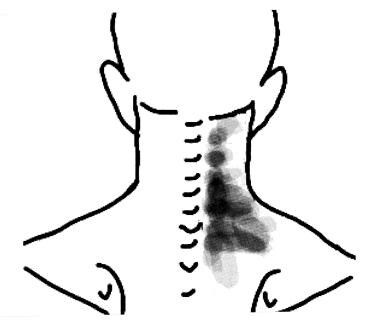
Each facet joint seems to have a particular radiation pattern upon painful stimulation. Even in subjects without neck pain, stimulation of the facet joints by injecting contrast material into the joints and distending the capsule produces neck pain in a specific pattern corresponding to the specific joint.

In a study of 5 such subjects, joint pain referral patterns were mapped out (Dwyer, 1990). The C2-C3 facet joint refers pain to the posterior upper cervical region and head, while the C3-C4 facet joint refers pain to the posterolateral cervical region without extension into the head or shoulder. The C4-C5 joint refers pain to the posterolateral middle and lower cervical region, and to the top of the shoulder. The C5-C6 joint refers pain to the posterolateral middle and primarily lower cervical spine and the top and lateral parts of the shoulder and caudally to the spine of the scapula. The C6-C7 joint refers pain to the top and lateral parts of the shoulder and extends caudally to the inferior border of the scapula.

These pain referral maps subsequently have been used to predict the segmental origin of neck pain in 10 symptomatic patients, who were referred for radiologic evaluation of possible facet joint pain (Aprill, 1990). Each of these patients was interviewed before the procedure and recorded the distribution of their pain on a diagram. These diagrams were compared with the maps previously generated from the asymptomatic subjects, and the facet joint or joints thought to be responsible for the pain patterns were predicted. Afterwards, the patients underwent diagnostic facet joint nerve blocks at the predicted levels, and the pain was completely relieved in all but one patient. This result suggests that these pain referral maps may be a powerful diagnostic tool when evaluating patients with cervical pain.

Facet joint pain referral patterns also have been documented in OA joint and the lateral AA joint. Dreyfuss studied 5 asymptomatic subjects and injected the right AA joint and the left OA joint in each participant with contrast medium to distend the capsule (Dreyfuss, 1994). The resultant pain referral patterns for the AA joints were similar and located posterior and lateral to the C1-2 segments. The patterns for the OA joints were variable and extended from the vertex of the skull to the C5 segment. Perceived pain also was greater with the OA injections compared to the AA injections. Pain referral patterns also have been documented in symptomatic patients and correspond well to those obtained from asymptomatic subjects (Star, 1992).

More recently, Fukui et al have created pain referral patterns from the OA facet joint to the C7-T1 joint (Fukui, 1996). Fukui et al studied 61 patients with neck pain and stimulated the painful joints by the following 2 methods: injection of contrast medium into the joints and electrical stimulation of the medial branches. Two separate pain referral maps were constructed, and the facet joints and their corresponding medial branches correlated relatively well.

In 2003, Windsor et al electrically stimulated the medial branches of the C3-C8 posterior primary rami with or without the third occipital nerve in 9 subjects (Windsor, 2003). This study demonstrated that the medial branch and third occipital nerve, when stimulated individually, have a separate and distinct referral pattern from the facet joint referral patterns previously mentioned. These medial branch referral maps may provide additional insight when evaluating patients with suboccipital, cervical, or shoulder girdle pain.


Cervical Disc Injuries
Cervical Discogenic Pain Syndrome
Cervical Radiculopathy
Cervical Spine Sprain/Strain Injuries


Lab Studies

  • Lab studies generally are not indicated for the diagnosis of cervical facet joint syndrome.

Imaging Studies

  • Radiographs in the neutral, flexed, and extended positions, should be obtained and the degree of movement measured.
  • Horizontal movement of one vertebral body on the next should not exceed 3.5 mm and the angular displacement of one body on the next should be less than 11°. These criteria may not always be applicable in the younger athlete, in which ligamentous laxity, may accentuate these measurements. More specifically, the normal translation of the OA joint in the sagittal plane is insignificant.
  • The C1-C2 translation is normally between 2 and 3 mm, although some authors suggest 2.5 mm for adults and 4.5 mm for children as the upper limit of normal motion. For the lower cervical segments (C2-T1), normal translation in the sagittal plane is between 2.7 mm and 3.5 mm. Ligamentous injuries, however, seem to be more common in the younger athlete (age <11 y) and located in the cephalic portion of the cervical spine; osseous and more caudally located injuries are seen in the older athlete.

Procedures

See Frequency and Causes.


Acute Phase

Rehabilitation Program

Physical Therapy

Kibler et al have defined 3 phases of rehabilitation of soft tissue injuries (Cole, 1998). The goals of the first phase are to reduce pain and inflammation, and increase the pain-free ROM. Ice is indicated during the acute phase to decrease blood flow and subsequent hemorrhage into the injured tissues, as well as reducing local edema. Application of ice also can reduce muscle spasm. Therapeutic modalities such as ultrasound and electrical stimulation may also reduce painful muscle spasms as well. Manual therapy, joint mobilization, soft tissue massage, and muscle stretching often are helpful. Passive range of motion (PROM) and then active range of motion (AROM) exercises in a pain-free range should be initiated in this phase. Finally, strengthening should begin with isometric exercises and progress to isotonic as tolerated.

Surgical Intervention

Cervical fusion should be considered with great caution and only after aggressive nonsurgical care has failed. The outcome for cervical fusion in the setting of cervical facet syndrome is significantly less favorable than for radicular pain (Wiberg, 1992; Williams, 1986). Surgical fusion should not be based on spondylotic changes on plain films of the spine, since these changes are seen in asymptomatic people as often as symptomatic people and do not correlate with neck pain (Friedenberg, 1963). In fact, cervical facet joint pain still can occur after anterior cervical fusion. This may be related to small movements in the joints or intrinsic mechanisms that are not motion dependent (Bogduk, 1998).

Other Treatment

Intra-articular facet joint injections

Moran, O’Connell, and Walsh studied joint arthrograms in a cadaveric lumbar spine. Selected facet joints were injected with methylene blue, and then the spine was divided in the sagittal plane so the epidural space could be examined. The results of this study indicated that after 1-2 mL of medium, extravasation occurs into the epidural space from the sacral to the upper lumbar area (Moran, 1988). Moran et al thought that the methylene blue may have leaked out of the facet through the superior recess, which is reinforced by the ligamentum flavum and is adjacent to the adipose surrounding the spinal nerve (Lewin, 1964).

Barnsley and Lord et al studied the efficacy of intra-articular facet joint injections for the treatment of chronic cervical facet pain after whiplash injury (Barnsley, 1994). Patients enrolled in the study had been diagnosed with a painful cervical facet joint by responding to different facet joint nerve blocks on 2 separate occasions with Xylocaine and bupivacaine and receiving a longer period of relief after the bupivacaine. After allowing time for their usual pain to return, they underwent random intra-articular facet joint injections with either bupivacaine or betamethasone. Fluoroscopy was used to ensure that there was no extravasation of contrast out of the joint capsule and into the epidural space.

The end point of the study was the return of pain to 50% of the pre-injection level. On follow up, the bupivacaine group had 3.4 days of pain relief and the betamethasone group had 3 days of pain relief. No significant difference was found between the 2 groups. The duration of pain relief from intra-articular facet joint injections is not constant among different investigators. Some studies of intra-articular joint injections report only minor relief of pain for days to weeks, (Moran, 1988; Barnsley, 1994) while others report substantial relief for weeks to months (Dory, 1983; Fairbank, 1981; Roy, 1988). Therefore, cervical facet injections are not supported by the current medical literature.

Medial branch blocks

Barnsley and Lord studied the specificity of medial branch blocks in diagnosing cervical facet pain (Barnsley, 1993). Sixteen patients with chronic neck pain underwent cervical medial branch blocks with 0.5 mL of local anesthetic and 11 patients reported pain relief. These patients subsequently underwent repeat blocks with a double-blind, controlled protocol and obtained relief again. This study indicates that blocking the medial branch is a specific way to diagnose cervical facet pain. However, the false-positive rate of single, uncontrolled blocks has been found to be relatively high at 27% (Barnsley, 1993). The sensitivity of a single uncontrolled block has been estimated to be 95%, and the specificity is 73%.

Medial branch blocks also have been performed using comparative local anesthetics (Barnsley, 1993). Patients with chronic neck pain randomly received either Xylocaine or bupivacaine during the nerve block. If the first block relieved the pain, then a second block was performed a minimum of 2 weeks later with the other agent. Forty-five of the 47 patients investigated obtained relief from the first block, and all but 1 obtained relief from the second block. Thirty-four patients (77%) correctly identified the longer acting agent.

In a related study, the sensitivity and specificity of comparative local blocks were evaluated (Lord, 1995). These were compared with placebo-controlled blocks in a randomized, double-blind trial. The sensitivity was found to be 54%, which is low and indicates that there were many false-negative results (46%). The specificity was found to be 88%, indicating that there were few false-positive results (12%). Therefore, when surgical decisions are based on the results of the medial branch blocks, placebo-controlled triple blocks are indicated.

The spread of contrast material during medial branch blocks also has been evaluated. In the previous study, it has been shown that a volume of 0.5 mL of local anesthetic injected in the location of the medial branch, followed by 0.5 mL of contrast medium does not spread far enough to affect other structures other than the intended nerve (Barnsley, 1993). At levels C3-C7, the contrast density was greatest at the needle target point and incorporated 5 mm of the medial branch. No spread of contrast occurred above or below the intended level, no spread occurred anteriorly to the ventral ramus, and no spread occurred laterally beyond the semispinalis muscle. At the C2-C3 level, the contrast was seen to wrap around the posterior aspect of the joint or travel over the lamina of C2. Therefore, this block does not anesthetize any other structures that may be a source of chronic cervical pain other than the facet joint.

Cervical medial branch blocks are technically easier to perform than intra-articular joint blocks. The medial branch is located at the waist of the articular pillar and is more readily accessible than the joint, which can be narrowed by degenerative changes. Medial branch blocks also are less risky than joint blocks. The epidural space, intervertebral foramen, and vertebral artery may be entered when attempting a joint block; these structures are not as accessible when performing a medial branch block. However, there are reported adverse effects with medial branch blocks, and transient disequilibrium and presyncope have been noted (Barnsley, 1993).

Percutaneous radiofrequency neurotomy

Radiofrequency neurotomy denervates the facet joint by coagulating the medial branch of the dorsal ramus, which denatures the proteins in the nerve (Zervas, 1972). This blocks the conduction of painful messages along the nerve to the dorsal root ganglion (DRG). However, the nerve is not destroyed since the medial branch cell bodies in the DRG are not affected. In addition, the nerve may grow back to its target facet joint after 6–9 months (depending on the radiofrequency lesion site) at which time the painful messages may again pass through the nerve to the brain if the joint remains painful. Repeating the neurotomy is an option since the medial branch appears to regrow in its anatomical path. The procedure should not be performed bilaterally at multiple segments at the same time because of increased risk of cervical muscular fatigue with activities of daily living (ADL) (McDonald, 1999).

The efficacy of radiofrequency neurotomy was evaluated in a randomized double-blind trial (Lord, 1996). Twenty-four patients with chronic neck pain secondary to motor vehicle accidents were selected. The painful facet joints were confirmed by placebo-controlled, diagnostic blocks. Then, the patients were assigned randomly to the treatment group or the control group. The treatment consisted of heating the nerve to 80°C for 90 seconds. In the control group, the temperature was maintained at 37°. It took the 12 patients in the treatment group 263 days to perceive a return of their pain of at least 50% of the preoperative level. The 12 patients in the control group perceived this in just 8 days. At 27 weeks, 1 patient in the control group and 7 in the treatment group remained pain free.

Long-term efficacy of radiofrequency neurotomy for chronic cervical pain was evaluated in 28 patients with neck pain secondary to motor vehicle accidents (McDonald, 1999). Complete relief was reported in 71% of the patients after the initial procedure. The mean duration of pain relief in this group was 422 days after the initial procedure and 219 days after a repeat procedure. If the initial procedure did not provide at least 30 days of pain relief, then the repeat procedure was a failure. Some patients maintained pain relief for years with multiple repeat procedures.

Recovery Phase

Rehabilitation Program

Physical Therapy

Patients should transition into the recovery phase of rehabilitation when they are nearly pain free. The goals of this phase are to eliminate pain and further increase ROM, strength, and neuromuscular control. Manual therapy with soft tissue massage and mobilization still may be required, but emphasis is placed on improving strength, flexibility, and neuromuscular control.

Maintenance Phase

Rehabilitation Program

Physical Therapy

Patients are ready for the final phase of rehabilitation after they have achieved full and pain-free ROM, and a significant improvement in strength. The goals of the maintenance phase are to balance strength and flexibility, and to increase endurance.


Nonsteroidal anti-inflammatory drugs (NSAIDs) are helpful in reducing pain and inflammation, and cyclo-oxygenase (COX-II) inhibitors have been introduced as options that cause less gastric irritation. Tricyclic antidepressants, such as amitriptyline and doxepin, and some antiseizure medications, such as gabapentin, carbamazepine, and divalproex, are useful in alleviating neuropathic pain. Non-narcotic and narcotic pain medications may be needed for moderate to severe pain. Muscle relaxants, such as baclofen and tizanidine, are very helpful in reducing the associated muscle spasm that often accompanies facet pain. If the patient is having problems sleeping, then a short course of a sleeping aid, such as zolpidem, temazepam, and zaleplon may be of benefit.

Drug Category: Nonsteroidal anti-inflammatory drugs

Oral NSAIDs can help decrease pain and inflammation. Various oral NSAIDs can be used and none of these holds a clear distinction as the drug of choice. Choice of NSAID is largely a matter of convenience (how frequently doses must be taken to achieve adequate analgesic and anti-inflammatory effects) and cost. NSAIDs have analgesic, anti-inflammatory, and antipyretic activities. Their mechanism of action is not known, but they may inhibit cyclo-oxygenase activity and prostaglandin synthesis. Other mechanisms may exist as well, such as inhibition of leukotriene synthesis, lysosomal enzyme release, lipoxygenase activity, neutrophil aggregation, and various cell membrane functions.

Drug NameIbuprofen (Motrin, Ibuprin)
DescriptionDOC for patients with mild to moderate pain. Inhibits inflammatory reactions and pain by decreasing prostaglandin synthesis.
Adult Dose200-400 mg PO q4-6h while symptoms persist; not to exceed 3.2 g/d
Pediatric Dose<6 months: Not established
6 months to 12 years: 4-10 mg/kg/dose PO tid/qid
>12 years: Administer as in adults
ContraindicationsDocumented hypersensitivity; peptic ulcer disease; recent GI bleeding or perforation; renal insufficiency; high risk of bleeding
InteractionsCoadministration with aspirin increases risk of inducing serious NSAID-related adverse effects; probenecid may increase concentrations and, possibly, toxicity of NSAIDs; may decrease effect of hydralazine, captopril, and beta-blockers; may decrease diuretic effects of furosemide and thiazides; may increase PT when taking anticoagulants (instruct patients to watch for signs of bleeding); may increase risk of methotrexate toxicity; phenytoin levels may be increased when administered concurrently
PregnancyB - Usually safe but benefits must outweigh the risks.
PrecautionsCategory D in third trimester of pregnancy; caution in congestive heart failure, hypertension, and decreased renal and hepatic function; caution in anticoagulation abnormalities or during anticoagulant therapy

Drug NameKetoprofen (Actron, Orudis, Oruvail)
DescriptionFor relief of mild to moderate pain and inflammation.
Small dosages initially are indicated in small and elderly patients and in those with renal or liver disease. Doses over 75 mg do not increase therapeutic effects. Administer high doses with caution and closely observe patient for response.
Adult Dose25-50 mg PO q6-8h prn; not to exceed 300 mg/d
Pediatric Dose<3 months: Not established
3 months to 12 years: 0.1-1 mg/kg PO q6-8h
>12 years: Administer as in adults
ContraindicationsDocumented hypersensitivity
InteractionsCoadministration with aspirin increases risk of inducing serious NSAID-related side effects; probenecid may increase concentrations and, possibly, toxicity of NSAIDs; may decrease effect of hydralazine, captopril, and beta-blockers; may decrease diuretic effects of furosemide and thiazides; may increase PT when taking anticoagulants (instruct patients to watch for signs of bleeding); may increase risk of methotrexate toxicity; phenytoin levels may be increased when administered concurrently
PregnancyB - Usually safe but benefits must outweigh the risks.
PrecautionsCategory D in third trimester of pregnancy; caution in congestive heart failure, hypertension, and decreased renal and hepatic function; caution in coagulation abnormalities or during anticoagulant therapy

Drug NameNaproxen (Anaprox, Naprelan, Naprosyn, Aleve)
DescriptionFor relief of mild to moderate pain; inhibits inflammatory reactions and pain by decreasing activity of cyclo-oxygenase, which results in a decrease of prostaglandin synthesis.
Adult Dose500 mg PO followed by 250 mg q6-8h; not to exceed 1.25 g/d
Pediatric Dose<2 years: Not established
>2 years: 2.5 mg/kg/dose PO; not to exceed 10 mg/kg/d
ContraindicationsDocumented hypersensitivity; peptic ulcer disease; recent GI bleeding or perforation; renal insufficiency
InteractionsCoadministration with aspirin increases risk of inducing serious NSAID-related side effects; probenecid may increase concentrations and, possibly, toxicity of NSAIDs; may decrease effect of hydralazine, captopril, and beta-blockers; may decrease diuretic effects of furosemide and thiazides; may increase PT when taking anticoagulants (instruct patients to watch for signs of bleeding); may increase risk of methotrexate toxicity; phenytoin levels may be increased when administered concurrently
PregnancyB - Usually safe but benefits must outweigh the risks.
PrecautionsCategory D in third trimester of pregnancy; acute renal insufficiency, interstitial nephritis, hyperkalemia, hyponatremia, and renal papillary necrosis may occur; patients with preexisting renal disease or compromised renal perfusion risk acute renal failure; leukopenia occurs rarely, is transient, and usually returns to normal during therapy; persistent leukopenia, granulocytopenia, or thrombocytopenia warrants further evaluation and may require discontinuation of drug

Drug Category: Cyclooxygenase (COX-2) inhibitors

Control of pain and inflammation, especially in cases of contraindication to conventional anti-inflammatories. Although increased cost can be a negative factor, the incidence of costly and potentially fatal GI bleeds is clearly less with COX-2 inhibitors than with traditional NSAIDs. Ongoing analysis of cost avoidance of GI bleeds will further define the populations that will find COX-2 inhibitors the most beneficial.

Drug NameCelecoxib (Celebrex)
DescriptionInhibits primarily COX-2. COX-2 is considered an inducible isoenzyme, induced during pain and inflammatory stimuli. Inhibition of COX-1 may contribute to NSAID GI toxicity. At therapeutic concentrations, COX-1 isoenzyme is not inhibited; thus, GI toxicity may be decreased. Seek lowest dose of celecoxib for each patient.
Adult Dose200 mg/d PO qd; alternatively, 100 mg PO bid
Pediatric DoseNot established
ContraindicationsDocumented hypersensitivity; hypersensitivity to ibuprofen or other NSAIDs, aspirin/NSAID-induced asthma
InteractionsNSAIDs may increase retention of sodium and fluid and may raise blood pressure with ACE inhibitors and diuretics; NSAIDs may especially increase the risk of bleeding (eg, gastrointestinal) among individuals already taking alcohol, aspirin, corticosteroids, heparin, and warfarin; to minimize risks of adverse effects, avoid taking multiple NSAIDs concurrently; special caution is needed in any patient on anticoagulants or systemic corticosteroids, as well as in any patient with a bleeding disorder or significant alcohol use; coadministration with fluconazole may cause increase in celecoxib plasma concentrations because of inhibition of celecoxib metabolism; coadministration of celecoxib with rifampin may decrease celecoxib plasma concentrations
PregnancyD - Unsafe in pregnancy
PrecautionsCaution with any history of GI bleed, hypertension, CHF, and elderly patients; most NSAIDs are considered class-D (unsafe) during the third trimester of pregnancy; avoid use during the third trimester of pregnancy due to potential risk of effecting closure of the ductus arteriosus; may cause fluid retention and peripheral edema; caution in compromised cardiac function, hypertension, conditions predisposing to fluid retention; severe heart failure and hyponatremia, because may deteriorate circulatory hemodynamics; NSAIDs may mask usual signs of infection; caution in the presence of existing controlled infections; evaluate symptoms and signs suggesting liver dysfunction, or in abnormal liver lab results


Return to Play

Return to play is an individualized process for athletes with cervical facet joint syndrome. No specific time frame exists for a particular injury. Safe return to play is allowed after the appropriate sport-specific rehabilitation program is completed and the athlete demonstrates full pain-free ROM and proper neutral spine posture with sport-specific activities.

Despite the extensive amount of literature regarding the surgical management of sport-related diseases of the cervical spine, there is a paucity of information concerning the indications for returning to sports after such procedures. Non-surgical traumatic diseases include sprain/strain, spear tackler's spine, and "stingers."

Ligamentous injuries should be treated and observed with great caution. Radiographs in the neutral, flexed, and extended positions should be obtained and the degree of movement measured. Horizontal movement of one vertebral body on the next should not exceed 3.5 mm and the angular displacement of one body on the next should be less than 11°. These criteria may not always be applicable in the younger athlete, in which ligamentous laxity, may accentuate these measurements. More specifically, the normal translation of the OA joint in the sagittal plane is insignificant. The C1-C2 translation is normally between 2 and 3 mm, although some authors suggest 2.5 mm for adults and 4.5 mm for children as the upper limit of normal motion.

For the lower cervical segments (C2-T1), normal translation in the sagittal plane is between 2.7 mm and 3.5 mm. Ligamentous injuries, however, seem to be more common in the younger athlete (age <11 y) and are located in the cephalic portion of the cervical spine; osseous and more caudally located injuries are seen in the older athlete.

If any evidence of ligamentous instability exists, the athlete must be placed in a rigid collar. Flexion and extension radiographs must then be obtained 2-4 weeks after the injury. If there is no evidence of progression, or a return to normal, it is unlikely that any significant injury has occurred and the athlete can most likely return safely to contact sports.

"Wryneck" may suggest articular process subluxation or even unilateral dislocation. The muscle tone may be severe enough to prevent reduction. The suspicion of wryneck requires careful investigation and diagnostic acuity. Neurologic status must be assessed before and after reduction and the neck protected for 6-8 weeks or until healing is complete.

Some authors recommend a cervical MRI if symptoms following a stinger-type injury persist for more than a few minutes and an EMG if they last longer than 2 weeks.

As a general rule, any athlete with a permanent neurologic injury should be prohibited from participating in further competition. Athletes without spinal cord injuries, and with stable fractures as evidenced by flexion-extension radiographs, should be allowed to return to their normal daily activities. Those with paresthesias or brachial plexus injuries may return to play, once their neurologic examination returns to normal and they are asymptomatic at rest and at play. Those who require a halo vest or surgical stabilization should be withdrawn from contact sports altogether. In these cases, the spine is considered to be insufficient to withstand the load and stress encountered in collision sports. Even after healing has occurred, the altered biomechanics and loss of motion in the surrounding spinal segments may produce devastating future sports-related injuries.

Education

For excellent patient education resources, visit eMedicine's Back, Ribs, Neck, and Head Center; Bone Health Center; and Arthritis Center. Also, see eMedicine's patient education articles Whiplash, Shoulder and Neck Pain, and Neck Strain, and Chronic Pain.


Media file 1:  Cervical vertebra.
Click to see larger pictureClick to see detailView Full Size Image
Media type:  Image

Media file 2:  Unilateral facet dislocation.
Click to see larger pictureClick to see detailView Full Size Image
Media type:  X-RAY

Media file 3:  Bilateral facet dislocation.
Click to see larger pictureClick to see detailView Full Size Image
Media type:  Image

Media file 4:  Cervical facet syndrome.
Click to see larger pictureClick to see detailView Full Size Image
Media type:  Image

Media file 5:  A composite drawing of the referral patterns of nine subjects derived from the minimal threshold stimulation of their right occipital nerve and C3-C8 medial branches

Click to see larger pictureClick to see detailView Full Size Image
Media type:  Image


  • Amevo B, Aprill C, Bogduk N. Abnormal instantaneous axes of rotation in patients with neck pain. Spine. Jul 1992;17(7):748-56. [Medline].
  • Amevo B, Worth D, Bogduk N. Instantaneous axes of rotation of the typical cervical motion segments. A study in normal volunteers. Clin Biomech. 1991;6:111-17.
  • Aprill C, Bogduk N. The prevalence of cervical zygapophyseal joint pain. A first approximation. Spine. 17(7):744-7. [Medline].
  • Aprill C, Dwyer A, Bogduk N. Cervical zygapophyseal joint pain patterns. II: A clinical evaluation. Spine. Jun 1990;15(6):458-61. [Medline].
  • Barnsley L, Bogduk N. Medial branch blocks are specific for the diagnosis of cervical zygapophyseal joint pain. Reg Anesth. 18(6):343-50. [Medline].
  • Barnsley L, Lord S, Bogduk N. Comparative local anaesthetic blocks in the diagnosis of cervical zygapophysial joint pain. Pain. Oct 1993;55(1):99-106. [Medline].
  • Barnsley L, Lord S, Wallis B, Bogduk N. False-positive rates of cervical zygapophysial joint blocks. Clin J Pain. Jun 1993;9(2):124-30. [Medline].
  • Barnsley L, Lord SM, Wallis BJ, Bogduk N. Lack of effect of intraarticular corticosteroids for chronic pain in the cervical zygapophyseal joints. N Engl J Med. Apr 14 1994;330(15):1047-50. [Medline].
  • Barnsley L, Lord SM, Wallis BJ, Bogduk N. The prevalence of chronic cervical zygapophysial joint pain after whiplash. Spine. 20(1):20-5; discussion 26. [Medline].
  • Bland J. Disorders of the Cervical Spine. Philadelphia, Pa: WB Saunders Co; 1987.
  • Bogduk N. The clinical anatomy of the cervical dorsal rami. Spine. Jul-Aug 1982;7(4):319-30. [Medline].
  • Bogduk N, Aprill C. On the nature of neck pain, discography and cervical zygapophysial joint blocks. Pain. Aug 1993;54(2):213-7. [Medline].
  • Bogduk N, Marsland A. The cervical zygapophysial joints as a source of neck pain. Spine. Jun 1988;13(6):610-7. [Medline].
  • Bogduk N, Twomey L. Clinical Anatomy of the Lumbar Spine. 2nd ed. 2nd ed. New York, NY: Churchill Livingstone; 1991.
  • Bogduk N, Windsor M, Inglis A. The innervation of the cervical intervertebral discs. Spine. Jan 1988;13(1):2-8. [Medline].
  • Bovim G, Schrader H, Sand T. Neck pain in the general population. Spine. Jun 15 1994;19(12):1307-9. [Medline].
  • Cantu RC, Bailes JE, Wilberger JE Jr. Guidelines for return to contact or collision sport after a cervical spine injury. Clin Sports Med. Jan 1998;17(1):137-46. [Medline].
  • Clark C, Goel V, Galles K. Kinematics of the accipito-atlanto-axial complex. In: Transaction. Cervical Spine Research Society; 1986.
  • Cole A, Farrell J, Stratton S. Functional rehabilitation of cervical spine athletic injuries. In: Kibler B, Herring S, Press J, eds. Functional Rehabilitation of Sports and Musculoskeletal Injuries. Gaithersburg: Aspen Publication; 1998:127-48.
  • Dory MA. Arthrography of the cervical facet joints. Radiology. Aug 1983;148(2):379-82. [Medline].
  • Dreyfus P. The cervical spine: Non-surgical care Presented at: The Tom Landry Sports Medicine and Research Center. Dallas, Tex: April 8, 1993.
  • Dreyfuss P, Michaelsen M, Fletcher D. Atlanto-occipital and lateral atlanto-axial joint pain patterns. Spine. May 15 1994;19(10):1125-31. [Medline].
  • Dwyer A, Aprill C, Bogduk N. Cervical zygapophyseal joint pain patterns. I: A study in normal volunteers. Spine. Jun 1990;15(6):453-7. [Medline].
  • Fairbank JC, Park WM, McCall IW, O'Brien JP. Apophyseal injection of local anesthetic as a diagnostic aid in primary low-back pain syndromes. Spine. 6(6):598-605. [Medline].
  • Fielding JW, Cochran GB, Lawsing JF 3rd, Hohl M. Tears of the transverse ligament of the atlas. A clinical and biomechanical study. J Bone Joint Surg Am. Dec 1974;56(8):1683-91. [Medline].
  • Franson RC, Saal JS, Saal JA. Human disc phospholipase A2 is inflammatory. Spine. Jun 1992;17(6 Suppl):S129-32. [Medline].
  • Friedenberg Z, Miller W. Degenerative disc disease of the cervical spine. J Bone Joint Surg. 1963;45A:1171-78.
  • Fukui S, Ohseto K, Shiotani M, Ohno K, Karasawa H, Naganuma Y, et al. Referred pain distribution of the cervical zygapophyseal joints and cervical dorsal rami. Pain. Nov 1996;68(1):79-83. [Medline].
  • Ghormley R. Low back pain with special reference to the articular facets, with presentation of an operative procedure. JAMA. 1933;101:1773-7.
  • Grob D. Surgery in the degenerative cervical spine. Spine. Dec 15 1998;23(24):2674-83. [Medline].
  • Hall M. Luschka's Joint. Vol 1. Springfield, Ill: 1965:141.
  • Henke L. Hanbuch der anatomie and mechanik der gelenke. Leipszig and Heidelberg; 1863.
  • Hohl M, Baker HR. The atlanto-axial joint. roentographic and anatomical study of normal and abnormal motion. J Bone Joint Surg Am. Dec 1964;46:1739-52. [Medline].
  • Horton WG. Further observations on the elastic mechanism of the intervertebral disc. J Bone Joint Surg Br. Aug 1958;40-B(3):552-7. [Medline].
  • Johnson R. Anatomy of the cervical spine and its related structures. In: Torg JS, ed. Athletic Injuries to the Head, Neck, and Face. 2nd ed. St Louis: Mosby-Year Book; St Louis:371-383.
  • Lewin T. Osteoarthritis in lumbar synovial joints. A morphologic study. Acta Orthop Scand. 1964;176:SUPPL 73:1-112. [Medline].
  • Lord SM, Barnsley L, Bogduk N. The utility of comparative local anesthetic blocks versus placebo-controlled blocks for the diagnosis of cervical zygapophysial joint pain. Clin J Pain. 11(3):208-13. [Medline].
  • Lord SM, Barnsley L, Wallis BJ, Bogduk N. Chronic cervical zygapophysial joint pain after whiplash. A placebo-controlled prevalence study. Spine. Aug 1 1996;21(15):1737-44; discussion 1744-5. [Medline].
  • Lord SM, Barnsley L, Wallis BJ, et al. Percutaneous radio-frequency neurotomy for chronic cervical zygapophyseal-joint pain. N Engl J Med. Dec 5 1996;335(23):1721-6. [Medline].
  • Lysell E. Motion in the cervical spine. An experimental study on autopsy specimens. Acta Orthop Scand. 1969;Suppl 123:1+. [Medline].
  • Manchikanti L, Boswell MV, Singh V, Pampati V, Damron KS, Beyer CD. Prevalence of facet joint pain in chronic spinal pain of cervical, thoracic,and lumbar regions. BMC Musculoskelet Disord. May 28 2004;5:15. [Medline].
  • McDonald GJ, Lord SM, Bogduk N. Long-term follow-up of patients treated with cervical radiofrequency neurotomy for chronic neck pain. Neurosurgery. Jul 1999;45(1):61-7; discussion 67-8. [Medline].
  • McGrory BJ, Klassen RA, Chao EY, et al. Acute fractures and dislocations of the cervical spine in children and adolescents. J Bone Joint Surg Am. Jul 1993;75(7):988-95. [Medline].
  • McLain RF. Mechanoreceptor endings in human cervical facet joints. Spine. Mar 1 1994;19(5):495-501. [Medline].
  • Mendel T, Wink CS, Zimny ML. Neural elements in human cervical intervertebral discs. Spine. Feb 1992;17(2):132-5. [Medline].
  • Miller RG, Burton R. Stroke following chiropractic manipulation of the spine. JAMA. Jul 8 1974;229(2):189-90. [Medline].
  • Moran R, O'Connell D, Walsh MG. The diagnostic value of facet joint injections. Spine. Dec 1988;13(12):1407-10. [Medline].
  • Mäkelä M, Heliövaara M, Sievers K, Impivaara O, Knekt P, Aromaa A. Prevalence, determinants, and consequences of chronic neck pain in Finland. Am J Epidemiol. Dec 1 1991;134(11):1356-67. [Medline].
  • Panjabi M, Vasavada A, White A. Cervical spine biomechanics. Seminars in Spine Surgery 1993. In: Cervical spine biomechanics. 5. 1993:10-16.
  • Panjabi MM, Oxland TR, Parks EH. Quantitative anatomy of cervical spine ligaments. Part I. Upper cervical spine. J Spinal Disord. Sep 1991;4(3):270-6. [Medline].
  • Panjabi MM, Oxland TR, Parks EH. Quantitative anatomy of cervical spine ligaments. Part II. Middle and lower cervical spine. J Spinal Disord. Sep 1991;4(3):277-85. [Medline].
  • Parke WW, Sherk HH. Normal adult anatomy. In: Sherk HH, Dunn EJ, Eismon FJ, et al, eds. The Cervical Spine. 2nd ed. Philadelphia, Pa: 1989:11-32.
  • Penning L. Functional anatomy of joints and discs. In: Sherk HH, Dunn EJ, Eismon FJ, et al, eds. The Cervical Spine. 2nd ed. Philadelphia, Pa: 1989:33-56.
  • Rolander SD. Motion of the lumbar spine with special reference to the stabilizing effectof posterior fusion. An experimental study on autopsy specimens. Acta Orthop Scand. 1966;Suppl 90:83. [Medline].
  • Roy DF, Fleury J, Fontaine SB, Dussault RG. Clinical evaluation of cervical facet joint infiltration. Can Assoc Radiol J. Jun 1988;39(2):118-20. [Medline].
  • Selecki BR. The effects of rotation of the atlas on the axis: experimental work. Med J Aust. May 17 1969;1(20):1012-5. [Medline].
  • Sherman AL, Young JL. Musculoskeletal rehabilitation and sports medicine. 1. Head and spine injuries. Arch Phys Med Rehabil. May 1999;80(5 Suppl 1):S40-9. [Medline].
  • Star MJ, Curd JG, Thorne RP. Atlantoaxial lateral mass osteoarthritis. A frequently overlooked cause of severe occipitocervical pain. Spine. Jun 1992;17(6 Suppl):S71-6. [Medline].
  • Tondury G. Entwicklungsgeschichte und fehlbildungen der halswirbelsaule. Stuttgart; 1958:87-100.
  • Weinstein SM. Assessment and rehabilitation of the athlete with a "stinger". A model for the management of noncatastrophic athletic cervical spine injury. Clin Sports Med. Jan 1998;17(1):127-35. [Medline].
  • Werne S. Studies in spontaneous atlas dislocation. Acta Orthop Scand. 1957;(Suppl 23):1-150. [Medline].
  • White A, Panjabi M. Spinal kinematics in the research status of spinal manipulative therapy. Washington, DC: Department of Health Education and Welfare; 1975.
  • White A, Panjabi M. The problem of clinical instability in the human spine: a systematic approach. In: Clinical Biomechanics of the Spine. 2nd ed. Philadelphia, Pa: JB Lippincott Co; 1990:277-378.
  • White AA, Panjabi M. Kinematics of the spine. In: Clinical Biomechanics of the Spine. 2nd ed. Lippincott-Raven; 1990:92-102.
  • Wiberg J. [Cervical disk defects. Results of surgical treatment of cervical vertebral radiculopathy]. Tidsskr Nor Laegeforen. Mar 10 1992;112(7):876-80. [Medline].
  • Williams JL, Allen MB Jr, Harkess JW. Late results of cervical discectomy and interbody fusion: some factors influencing the results. J Bone Joint Surg Am. Mar 1968;50(2):277-86. [Medline].
  • Windsor RE, Nagula D, Storm S, Overton A, Janhke S. Electrical Stimulation Induced Cervical Medial Branch referral Patterns. Pain Physician. 2003/10;6(4):411-418.
  • Zervas NT, Kuwayama A. Pathological characteristics of experimental thermal lesions. Comparison of induction heating and radiofrequency electrocoagulation. J Neurosurg. Oct 1972;37(4):418-22. [Medline].

Cervical Facet Syndrome excerpt

Article Last Updated: Apr 6, 2006