Continually Updated Clinical Reference
 
 
  All Sources     eMedicine     Medscape     Drug Reference     MEDLINE
 
eMedicine - Shoulder Dislocation : Article by

Quick Find
Authors & Editors
Introduction
Clinical
Differentials
Workup
Treatment
Medication
Follow-up
References

Related Articles
Acromioclavicular Joint Injury

Bicipital Tendonitis

Clavicular Injuries

Rotator Cuff Injury

Shoulder Dislocation

Swimmer's Shoulder


Patient Education
Breaks, Fractures, and Dislocations Center

Sports Injury Center

Shoulder Dislocation Overview

Shoulder Dislocation Symptoms

Shoulder Dislocation Treatment

Shoulder Separation Overview


Author: L Edward Seade, MD, Chief of Shoulder Service, Orthopaedic Specialists of Austin

Coauthor(s): William Jay Bryan, MD, Clinical Professor, Department of Orthopedic Surgery, Baylor University College of Medicine; Robert Josey, MD, Consulting Staff, Department of Orthopedic Surgery, Orthopaedic Specialists of Austin

Editors: Joseph P Garry, MD, Director of Sports Medicine and Sports Medicine Fellowship, Department of Family Medicine, Associate Professor of Family Medicine and Exercise & Sport Science, East Carolina University Brody School of Medicine; Francisco Talavera, PharmD, PhD, Senior Pharmacy Editor, eMedicine; Henry T Goitz, MD, Chief, Sports Medicine, Department of Orthopaedic Surgery, Associate Professor, Medical College of Ohio; Jon B Whitehurst, MD, Clinical Instructor of Surgery, University of Illinois College of Medicine; Consulting Staff, Rockford Orthopedic Associates; Craig C Young, MD, Medical Director of Sports Medicine, Sports Medicine Fellowship Director, Professor, Departments of Orthopedic Surgery and Community and Family Medicine, Medical College of Wisconsin

Author and Editor Disclosure

Synonyms and related keywords: dislocation of the glenohumeral joint, glenohumeral joint dislocation, dislocated shoulder, posterior shoulder dislocation, anterior shoulder dislocation, acromioclavicular joint injury, humerus, glenoid, glenohumeral ligaments, rotator cuff muscles, glenoid labrum, negative intra-articular pressure

Shoulder dislocations may occur from a traumatic injury or from loose capsular ligaments. Different conditions may affect the stabilizing structures of the shoulder and, thus, negatively affect patients with shoulder dislocations. 

Background

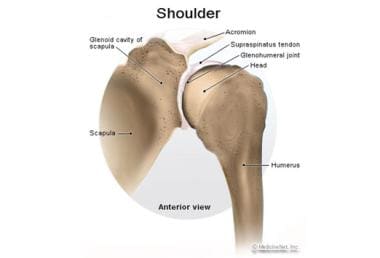
This article focuses on glenohumeral joint dislocation. While acromioclavicular (AC) joint separations are sometimes called shoulder dislocations by nonmedical persons, these are not true shoulder dislocations (see Acromioclavicular Joint Injury). Shoulder dislocations occur when the head of the humerus comes out of its socket, the glenoid.

Frequency

United States

  • The shoulder is the most common joint in the body to dislocate.


  • Although most shoulder dislocations occur anteriorly, they may also occur posteriorly, inferiorly, or anterior-superiorly.


  • Patients with a previous dislocation are more prone to redislocation.


  • Other factors that show clear correlation to redislocation are the age of the patient and concomitant rotator cuff tears and fractures of the glenoid.

    • Younger patients (teenagers and those aged 20 years) have a much higher frequency of redislocation than patients in their 50s and 60s. Many physicians believe that age is less of a predisposing risk factor for redislocation than activity level.


    • Patients who tear their rotator cuffs or fracture the glenoid during their shoulder dislocation have a higher incidence of redislocation than patients without these problems.

Functional Anatomy

Shoulder stability is maintained by the glenohumeral ligaments, the joint capsule, the rotator cuff muscles, the negative intra-articular pressure, and the bony/cartilaginous anatomy.

The main stabilizers of the shoulder joint are the ligaments and the capsule complex. Multiple ligaments are present, but the inferior glenohumeral ligament is the most important and the one most commonly injured during an anterior shoulder dislocation. The injury may be a tear of the ligament/capsule off one of its bony attachments and/or it may cause a stretch injury to these structures.

Tears in the rotator cuff muscles may also lead to shoulder instability. Four rotator cuff muscles are present in the shoulder. They are found superficial to the glenohumeral ligaments and the bones. Large tears may lead to shoulder instability, even with intact glenohumeral ligaments. Instability of the shoulder can also occur from injury to the nerves that control the shoulder muscles, specifically the axillary nerve.

Sport Specific Biomechanics

The shoulder is a very mobile joint; therefore, it is often placed in awkward positions during sports. Thus, the force from a fall or a blow may be sufficient to cause shoulder damage. If the force is strong enough, the athlete tears the ligaments/tendons, fractures the glenoid or humerus, and dislocates the shoulder.


History

Patients report a myriad of symptoms to their physician.

  • Since most dislocations happen from trauma, patients report feeling the shoulder pop out during the incident. Different shoulder positions during the dislocation tear different ligaments. Thus, trying to determine the shoulder position at the time of the injury is important. The most common dislocation is anterior. In anterior dislocation, the patients report having their arm abducted and externally rotated.


  • Ask the patient if they had to go to the emergency department to have the shoulder reduced. If they did, they should have a radiograph with it dislocated. If they did not go to the emergency department, did the patient pop the shoulder back in or did it just go back in by itself?


  • Patients with very loose joints (hyperlaxity) report feeling like their joint rolls out of the socket. These patients can usually "roll” the shoulder back in.


  • Remember that patients with previous dislocations are more apt to redislocate, so ask about any previous dislocations.


  • Some patients feel stingers or numbness run down their arm at the time of the dislocation.

Physical

The physical examination should confirm what the clinician picked up from the history of the injury.

  • If the patient has a dislocated shoulder, range of motion is poor and the patient is in a lot of pain. If the shoulder is anteriorly dislocated, the arm is in slight abduction and external rotation. In patients who are thin, the prominent humeral head can be felt anteriorly and the void can be seen posteriorly in the shoulder.


  • Posterior shoulder dislocations can be easy to miss because the patient usually keeps his or her arm in internal rotation and adduction (ie, the patient holds the arm up against his or her abdomen). In patients who are thin, the prominent head can be seen and palpated posteriorly. This diagnosis can be missed because the patient appears to only be guarding the extremity. If the proper radiographs are not obtained, the diagnosis will be missed (see Imaging Studies).


  • Performing a detailed neurovascular examination before and after the shoulder has been reduced is imperative. Injury to the axillary nerve during shoulder dislocation has been reported to be as high as 40%. 

Causes

Approximately 95% of shoulder dislocations result from a major traumatic event, and 5% result from atraumatic causes. Distinguishing the type and severity of the event is important to determine the true etiology of the dislocation. This distinction is necessary to determine the treatment. With a traumatic dislocation, the cause is obvious; however, atraumatic dislocations can result for different reasons. Ligamentous lax shoulders may dislocate with little or no trauma. Patients with lax ligaments may have 2 loose shoulders, but only 1 may be symptomatic. Congenital causes, such as excessive retroversion of the humeral head or malformation of the glenoid, can lead to instability. Neuromuscular causes, such as injury to the axillary nerve or cerebral palsy, have also been associated with shoulder instability.


Acromioclavicular Joint Injury
Bicipital Tendonitis
Clavicular Injuries
Rotator Cuff Injury
Shoulder Dislocation
Swimmer's Shoulder

Other Problems to be Considered

Glenoid labrum tear


Lab Studies

  • Lab studies are not necessary to diagnose shoulder dislocation injuries.

Imaging Studies

  • Radiographs

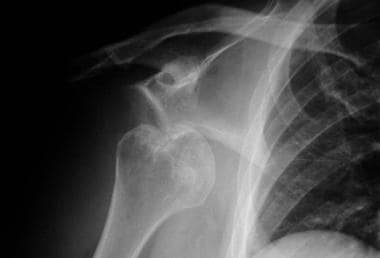
    • When dealing with instability, obtaining 2 orthogonal views of the shoulder is imperative. 


    • The author suggests routinely ordering an AP of the shoulder and an axillary lateral. If an axillary lateral cannot be obtained, then a scapular Y view may be taken in its place. If good radiographs cannot be obtained, order a CT scan. This test can be performed quickly and is not expensive.


    • Posterior shoulder dislocations can look like a normal shoulder on the AP view. If an orthogonal view radiograph is not obtained, the diagnosis may be missed.
       
  • MRI


    • Glenohumeral ligament tears can be visualized with an MRI. They are better seen with the injection of contrast into the joint prior to the MRI. The bony architecture on these studies can also be appreciated.


    • Patients older than 45 years tend to tear the rotator cuff tendons when the shoulder is dislocated. The tendons are less elastic and do not stretch out during the incident, thus tearing. Proper diagnosis is necessary to get these patients back to their preinjury status. If the patient is older than 45 years and has marked weakness in the strength testing of the rotator cuff muscles, an MRI is a great tool to assess for tears.

Procedures

  • The most important treatment of an acute shoulder dislocation is prompt reduction of the glenohumeral joint. Numerous reduction techniques have been described that can be performed after administering an intra-articular injection or putting the patient under conscious sedation. After determining the direction of the dislocation, the physician must remember that the most important aspect of reduction is relaxation of the shoulder musculature. Once reduction has been accomplished, postreduction radiographs are necessary to verify reduction.


  • Shoulder reduction techniques are as follows:

    • For the more common anterior dislocations, one of the oldest methods of reduction is the Hippocratic method, in which the physician's foot is placed in the patient's axilla while gentle longitudinal traction is applied. Internal or external rotation of the shoulder may facilitate reduction.


    • The Stimon technique involves having the patient lie prone on an examining table, allowing the affected arm to hang off the bed. Again, longitudinal traction and internal or external rotation are applied to the arm. Weights can also be added to the patient's wrist to facilitate reduction.


    • The Milch maneuver is one in which abduction and external rotation are applied to the affected extremity while the physician's thumb disengages the humeral head. This technique can also be attempted with the patient in the prone position.


    • Finally, one of the simplest maneuvers is passive forward elevation of the arm while the physician maneuvers the humeral head with the opposite hand.
       
  • Differentiating a posterior from an anterior dislocation is important because the reduction maneuvers differ. If reduction cannot be achieved with the patient under conscious sedation, general anesthesia may be needed for adequate relaxation. The patient should be in the supine position. The affected arm should be adducted with the application of gentle traction. The humeral head should be maneuvered anteriorly by the examiner's hand. The arm should not be rotated externally because humeral fracture is possible.


Acute Phase

Rehabilitation Program

Physical Therapy

In the acute phase, therapy should be limited. The arm should be immobilized in a sling and swathed for 1-3 weeks. Active or passive shoulder abduction with shoulder internal rotation is permissible, and removing the arm from the sling to work in a neutral internal-external rotation position is desirable because a neutral position may actually improve positioning of the torn anterior capsule to the glenoid. During this time, the patient should perform elbow, wrist, and hand ROM exercises.

A good adage during the first 3 weeks after a shoulder dislocation is to "keep the hand in view." While looking forward, the patient never should let his or her hand be placed in a position outside the line of vision. This instruction assures a midrange position that does not compromise apposition of the torn or stretched anterior capsular structures to the glenoid.

Surgical Intervention

The recurrence rate for shoulder instability is highly dependent on the age of the patient. Nonoperative care should be performed first before entertaining the thought of surgery. Most patients are able to rehabilitate their shoulder with rest and physical therapy. 

In patients who have recurrent shoulder instability, operative care should be highly considered. Numerous studies have shown the increased likelihood of traumatic glenohumeral arthritis in patients with multiple shoulder dislocations. Operative care may consist of both open or arthroscopic treatment of the cause of instability.

Recovery Phase

Rehabilitation Program

Physical Therapy

After the initial period of immobilization, passive ROM exercises should begin. Older patients should begin performing ROM of the shoulder after one week of immobilization because they are prone to shoulder stiffness. Passive ROM exercises should include shoulder pendulum exercises and an overhead pulley system for the shoulder. Goals for passive ROM should be 30° of external rotation and 90° of flexion for the first 3 weeks, followed by 40° of external rotation and 140° of flexion for the second 3 weeks.

The rotator cuff may have also been injured during the dislocation, so the therapist should be cognoscente of the status of the rotator cuff during the early phase of rehabilitation.

Surgical Intervention

Athletes who demonstrate symptomatic instability during guarded physical therapy should be considered for an MRI and probable arthroscopic or open anterior shoulder tissue repair.

Maintenance Phase

Rehabilitation Program

Physical Therapy

More vigorous therapy can be initiated after full passive ROM has been regained, usually after 6 weeks. Rotator cuff strengthening exercises can be initiated using rubber tubing or weights. Because the rate of redislocation is so much higher in young adults, vigorous training and strengthening should be delayed until approximately 3 months after the injury. Swimming is an ideal exercise to regain shoulder strength and should be encouraged once strengthening exercises have begun.


Shoulder dislocations are extremely painful events. If relocation is not accomplished within an hour, anesthesia via conscious sedation is necessary in the emergency department setting. Medications for this technique are not discussed in this article.

Oral narcotic analgesics are reasonable for a period of days, but prolonged use is categorically inappropriate.

Drug Category: Analgesics

Pain control is essential to quality patient care. Analgesics ensure patient comfort, promote pulmonary toilet, and have sedating properties, which are beneficial for patients who have sustained trauma. A 3- or 4-day supply of hydrocodone or similar schedule III narcotic should be provided following shoulder relocation.

Drug NameHydrocodone and acetaminophen (Lortab, Norcet, Vicodin)
DescriptionDrug combination for moderate to severe pain.
Adult Dose1-2 tab or cap PO q4-6h prn
Pediatric Dose<12 years: 10-15 mg/kg/dose acetaminophen PO q4-6h prn; not to exceed 2.6 g/d acetaminophen
>12 years: 750 mg acetaminophen PO q4h; not to exceed 10 mg hydrocodone bitartrate per dose or 5 doses/d
ContraindicationsDocumented hypersensitivity; HACE or elevated ICP
InteractionsCoadministration with phenothiazines may decrease analgesic effects; toxicity increases with CNS depressants or TCAs
PregnancyC - Safety for use during pregnancy has not been established.
PrecautionsTabs contain metabisulfite, which may cause hypersensitivity; caution in patients dependent on opiates because this substitution may result in acute opiate-withdrawal symptoms; caution in severe renal or hepatic dysfunction

Drug NameHydrocodone and ibuprofen (Vicoprofen)
DescriptionDrug combination for short-term (<10 d) relief of moderate to severe acute pain.
Adult Dose1-2 tab PO q4-6h prn; not to exceed 5 tab/d
Pediatric DoseNot established
ContraindicationsDocumented hypersensitivity; third trimester of pregnancy
InteractionsCoadministration with aspirin increases risk of inducing serious NSAID-related adverse effects; probenecid may increase concentrations and, possibly, toxicity of NSAIDs; may decrease effect of hydralazine, captopril, and beta-blockers; may decrease diuretic effects of furosemide and thiazides; monitor PT closely (instruct patients to watch for signs of bleeding); may increase risk of methotrexate toxicity; phenytoin levels may be increased when administered concurrently
PregnancyC - Safety for use during pregnancy has not been established.
PrecautionsCaution in impaired renal function, peptic ulcer disease, impaired thyroid function, asthma, hypertension, edema, heart failure, increased ICP, and erosive gastritis; duration of action may increase in elderly persons

Drug NameAcetaminophen and codeine (Tylenol With Codeine [#3])
DescriptionIndicated for mild to moderate pain.
Adult Dose30-60 mg/dose based on codeine PO q4-6h or 1-2 tab q4h; not to exceed 4 g/d of acetaminophen
Pediatric Dose0.5-1 mg/kg/dose PO based on codeine q4-6h; 10-15 mg/kg/dose based on acetaminophen; not to exceed 2.6 g/d of acetaminophen
ContraindicationsDocumented hypersensitivity
InteractionsToxicity of codeine increases with CNS depressants, TCAs, MAOIs, neuromuscular blockers, CNS depressants, phenothiazines, and narcotic analgesics
Rifampin can reduce analgesic effects of acetaminophen; coadministration with barbiturates, carbamazepine, hydantoins, and isoniazid may increase hepatotoxicity of acetaminophen
PregnancyC - Safety for use during pregnancy has not been established.
PrecautionsCaution in patients dependent on opiates because this substitution may result in acute opiate-withdrawal symptoms; caution in severe renal or hepatic dysfunction
Hepatotoxicity with acetaminophen possible in chronic alcoholism following various dose levels; severe or recurrent pain or high or continued fever may indicate a serious illness; acetaminophen is contained in many OTC products, and combined use with these products may result in cumulative acetaminophen doses and exceed recommended maximum dose

Drug Category: Nonsteroidal anti-inflammatory drugs

Have analgesic, anti-inflammatory, and antipyretic activities. Their mechanism of action is not known, but they may inhibit cyclooxygenase activity and prostaglandin synthesis. Other mechanisms also may exist, such as leukotriene synthesis inhibition, lysosomal enzyme release, lipoxygenase activity, neutrophil aggregation, and various cell membrane functions. During rehabilitation, shoulder discomfort may interfere with sleep or basic activities of daily living. Oral NSAIDs should decrease the discomfort. NSAIDs do not speed recovery and should not be used to accelerate physical therapy goals.

Drug NameIbuprofen (Motrin, Ibuprin)
DescriptionDOC for mild to moderate pain. Inhibits inflammatory reactions and pain by decreasing prostaglandin synthesis.
Adult Dose200-400 mg PO q4-6h while symptoms persist; not to exceed 3.2 g/d
Pediatric Dose<6 months: Not established
6 months to 12 years: 4-10 mg/kg/dose PO tid/qid
>12 years: Administer as in adults
ContraindicationsDocumented hypersensitivity; peptic ulcer disease, recent GI bleeding or perforation, renal insufficiency, or high risk of bleeding
InteractionsCoadministration with aspirin increases risk of inducing serious NSAID-related adverse effects; probenecid may increase concentrations and, possibly, toxicity; may decrease effect of hydralazine, captopril, and beta-blockers; may decrease diuretic effects of furosemide and thiazides; may increase PT when taking anticoagulants (instruct patients to watch for signs of bleeding); may increase risk of methotrexate toxicity; phenytoin levels may be increased when administered concurrently
PregnancyB - Usually safe but benefits must outweigh the risks.
PrecautionsCategory D in third trimester of pregnancy; caution in congestive heart failure, hypertension, and decreased renal and hepatic function; caution in coagulation abnormalities or during anticoagulant therapy

Drug NameNaproxen (Naprosyn, Anaprox, Naprelan, Aleve)
DescriptionFor mild to moderate pain. Inhibits inflammatory reactions and pain by decreasing activity of cyclooxygenase, which results in a decrease of prostaglandin synthesis.
Adult Dose500 mg PO followed by 250 mg q6-8h; not to exceed 1.25 g/d
Pediatric Dose<2 years: Not established
>2 years: 2.5 mg/kg/dose PO; not to exceed 10 mg/kg/d
ContraindicationsDocumented hypersensitivity; peptic ulcer disease; recent GI bleeding or perforation; renal insufficiency
InteractionsCoadministration with aspirin increases risk of inducing serious NSAID-related adverse effects; probenecid may increase concentrations and, possibly, toxicity; may decrease effect of hydralazine, captopril, and beta-blockers; may decrease diuretic effects of furosemide and thiazides; may increase PT when taking anticoagulants (instruct patients to watch for signs of bleeding); may increase risk of methotrexate toxicity; phenytoin levels may be increased when administered concurrently
PregnancyB - Usually safe but benefits must outweigh the risks.
PrecautionsCategory D in third trimester of pregnancy; acute renal insufficiency, interstitial nephritis, hyperkalemia, hyponatremia, and renal papillary necrosis may occur; patients with preexisting renal disease or compromised renal perfusion risk acute renal failure; leukopenia occurs rarely, is transient, and usually returns to normal during therapy; persistent leukopenia, granulocytopenia, or thrombocytopenia warrants further evaluation and may require discontinuation

Drug NameKetoprofen (Orudis, Oruvail, Actron)
DescriptionFor mild to moderate pain and inflammation. Small initial doses are indicated in small and elderly patients and in those with renal or liver disease.
Doses >75 mg do not increase therapeutic effects. Administer high doses with caution and closely observe patient for response.
Adult Dose25-50 mg PO q6-8h prn; not to exceed 300 mg/d
Pediatric Dose<3 months: Not established
3 months to 12 years: 0.1-1 mg/kg PO q6-8h
>12 years: Administer as in adults
ContraindicationsDocumented hypersensitivity
InteractionsCoadministration with aspirin increases risk of inducing serious NSAID-related adverse effects; probenecid may increase concentrations and, possibly, toxicity; may decrease effect of hydralazine, captopril, and beta-blockers; may decrease diuretic effects of furosemide and thiazides; may increase PT when taking anticoagulants (instruct patients to watch for signs of bleeding); may increase risk of methotrexate toxicity; phenytoin levels may be increased when administered concurrently
PregnancyB - Usually safe but benefits must outweigh the risks.
PrecautionsCategory D in third trimester of pregnancy; caution in congestive heart failure, hypertension, and decreased renal and hepatic function; caution in coagulation abnormalities or during anticoagulant therapy


Return to Play

Return to play is determined when full ROM and strength have been regained. Return to play is usually sooner for older adults than for younger athletes because the fear of redislocation is much lower. Usually, older adults can return to play within 3 months. With younger adults, conditioning can continue through shoulder rehabilitation; however, decisions about returning to play should be more conservative than in older adults. Again, absolute criteria are full ROM and full strength.

When determining a patient's return to competitive sports, the author uses the following criteria:    

  • Scapular stability through full ROM


  • Normal scapulohumeral rhythm


  • Full active and passive range of motion


  • Rotator cuff strength 80% of opposite side


  • Pain-free activities of daily living (ADL)

Complications

The most common complication of an acute shoulder dislocation is recurrence. This complication occurs because the capsule and surrounding ligaments are stretched and deformed during the dislocation. Age is the most important indicator for prognosis; dislocations recur in approximately 90% of teenagers.

Another common complication following dislocation is fracture. The most common type is a Hill-Sachs lesion or compression fracture of the posterior humeral head. Fractures of the proximal humerus, greater tuberosity, coracoid, and acromion have also been described.

Rotator cuff tears also commonly occur as a result of shoulder dislocations, and the frequency of this complication increases with age. This complication can be expected in 30-35% of patients aged 40 years or older. Slow progression in return to active function following dislocation in a middle-aged patient should warrant a workup for a rotator cuff tear.

Vascular injuries are rare, but they do occur, especially in older patients. Vascular injuries are more common with inferior dislocations and usually involve a branch of the axillary artery.

Nerve injuries are much more common than vascular injuries, especially with anterior or inferior dislocations. The axillary nerve is the nerve injured most often and may be crushed between the humeral head and the axillary border of the scapula or injured by traction from the humeral head. Axillary nerve injury has been reported in as many as 33% of acute anterior dislocations.

Prognosis

Age at dislocation is the most important prognostic indicator for recurrence. Younger age at initial injury increases the likelihood for future dislocation. The recurrence rate is thought to be 90% if the initial episode occurs in the teen years. In patients aged 40 years or older, the recurrence rate is 10-15%. Most redislocations occur within 2 years of the primary injury. Persons with axillary nerve injuries can be expected to recover completely within 3-6 months.

Education

Educate the patient on the importance of strength training following shoulder dislocation. The patient must understand that recurrence is possible and therapy should be used to prevent recurrence.

For excellent patient education resources, visit eMedicine's Breaks, Fractures, and Dislocations Center and Sports Injury Center. Also, see eMedicine's patient education articles, Shoulder Dislocation and Shoulder Separation.


  • Blasier RB, Guldberg RE, Rothman ED. Anterior shoulder stability: Contributions of rotator cuff forces and the capsular ligaments in a cadaver model. J Shoulder Elbow Surg. 1992;1:140-50.
  • Burkhead WZ Jr, Rockwood CA Jr. Treatment of instability of the shoulder with an exercise program. J Bone Joint Surg Am. Jul 1992;74(6):890-6. [Medline].
  • Cofield RH, Kavanagh BF, Frassica FJ. Anterior shoulder instability. Instr Course Lect. 1985;34:210-27. [Medline].
  • Hovelius L, Augustini BG, Fredin H, et al. Primary anterior dislocation of the shoulder in young patients. A ten-year prospective study. J Bone Joint Surg Am. Nov 1996;78(11):1677-84. [Medline].
  • Matsen FA, Thomas SC, Rockwood CA, eds. Anterior glenohumeral instability. In: The Shoulder. Vol 1. Philadelphia, Pa: WB Saunders Co; 1990:526-622.
  • Reeves B. Acute anterior dislocation of the shoulder. Clinical and experimental studies. Ann R Coll Surg Engl. May 1969;44(5):255-73. [Medline].
  • Schenk TJ, Brems JJ. Multidirectional instability of the shoulder: pathophysiology, diagnosis, and management. J Am Acad Orthop Surg. Jan-Feb 1998;6(1):65-72. [Medline].

Shoulder Dislocation excerpt

Article Last Updated: Nov 29, 2006