Practice Essentials
Bicycle seat neuropathy is one of the more common injuries reported by cyclists. [1, 2, 3, 4, 5] The injuries and symptoms are due to the cyclist supporting his or her body weight on a narrow seat, and they are believed to be related to either vascular or neurologic injury to the pudendal nerve. [2, 5, 6, 7, 8, 9, 10]
Signs and symptoms
The typical presentation of bicycle seat neuropathy is numbness or impotence after cycling.
See Presentation for more detail.
Diagnosis
Laboratory tests are not indicated in the diagnosis of bicycle seat neuropathy. A Doppler ultrasound study of the vascular structures may be helpful.
See Workup for more detail.
Management
The mainstay of treatment of bicycle seat neuropathy is the adjustment of the bike seat and bike position, such as tilting the nose of the seat down or lowering the seat height to relieve pressure off the perineum. Newer bicycle seats with a split nose or a center cutout may also help to reduce the prevalence of neuropathy by limiting compression on the perineal area (see the image below).
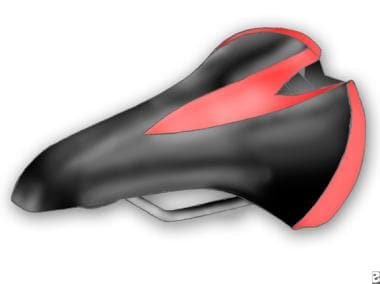 Example of a bicycle seat with a cut-away middle.
See Treatment for more detail.

Epidemiology
United States statistics
A wide frequency range has been reported for bicycle seat neuropathy, but it is believed to be underreported. The medical literature contains several case reports of reversible neuropathy [5, 9] and several retrospective studies surveying participants in long-distance cycling races and tours. [8, 11, 12]
Andersen and Bovim surveyed 260 cyclists participating in a long-distance bike tour that was 335.54 miles (540 km) in length. [8] Of responding males, 35 (22%) reported symptoms of either numbness or pain in the pudendal area. Thirty-three (21%) males reported penile numbness, with 10 (6%) male cyclists reporting symptoms that lasted longer than 1 week. In addition, 21 males (13%) reported symptoms of impotence, 11 of whom experienced symptoms for longer than 1 week, and 3 of whom reported impotence lasting longer than 1 month. [8]
Kuland and Brubaker reported that during the 1976 Bikecentennial tour, there was a 7% incidence of pudendal and/or penile numbness, but this study only surveyed 89 of 1200 participating cyclists. [11]
Weiss studied symptoms of cyclists participating in a 500-mile (804.97 km) bicycle tour. [12] Of the participating cyclists, 45% reported at least mild and transient perineal numbness; 10% reported the symptoms as severe, and 2% of the cyclists had to temporarily stop riding. Perineal numbness has also been documented in women cyclists. LaSalle et al surveyed 282 female members of a Dallas cycling club. [13] In this group, 34% of the women reported perineal numbness.
Potter et al assessed the differences between men and women with regard to bicycle saddle pressure distribution during seated cycling. [14] The authors noted that there were significant differences between the sexes in saddle loading, and these differences were especially relevant with regard to the position of the bicycle handlebar positions. In particular, the drops hand position shifted the rider's weight, such that more weight was supported on the anterior pelvic structures. [14]
Sport-Specific Biomechanics
The cause of bicycle seat neuropathy has been attributed to several different ischemic and neurologic events. Amarenco et al and Oberpenning et al hypothesized that compression of the pudendal nerve as it passes through the Alcock canal causes the condition. [9, 15] The Alcock canal is enclosed laterally by the ischial bone and medially by the fascial layer of the obturator internus muscle. The pudendal nerve exits the canal ventrally, below the symphysis pubis, and innervates the genital and perineal regions.
Oberpenning et al postulated that long-distance cycling results in the indirect transmission of pressure onto the perineal nerve within the Alcock canal. [9] Weiss and Bond separately proposed that bicycle seat neuropathy is due to temporary and transient ischemic injury to the dorsal branch of the pudendal nerve secondary to compression of the nerve between the bicycle seat and the symphysis pubis. [12, 16] Weiss also theorized that the genital branch of the genital-femoral nerve could be involved in cases in which scrotal paresthesia is reported. [12]
Bicycle seat design (eg, shape) may be the major extrinsic factor for the development of bicycle seat neuropathy. [1, 4, 6, 17, 18, 19, 20, 21] Results of computer modeling reported by Spears et al showed that wider bicycle seats that support the ischial tuberosities decrease pressure on the perineal area. [19] Other studies have also demonstrated the effect bicycle seat design has on penile blood flow [20] and penile oxygen pressure. [21]
Prognosis
The prognosis and recovery from bicycle seat neuropathy is very good. However, the rate of recovery is variable and may be influenced by the amount of time the athlete previously spent cycling.
Complications
Complications are variable and appear to be transient based upon the literature review. Cases of bicycle seat neuropathy and its resulting symptoms, such as impotence, resolve over time once the pressure is relieved from the perineal region. Case reports reveal that some cases can take more than 1 month to resolve. [1, 5, 8, 9]
Patient Education
Educate patients about the causes of the neuropathy, about the importance of a proper bike fit, and about the need for changes in seating position.
For excellent patient education resources, visit eMedicineHealth's Men's Health Center and First Aid and Injuries Center. Also, see eMedicineHealth's patient education articles, Impotence/Erectile Dysfunction, Erectile Dysfunction FAQs, and Bicycle Safety.
-
Example of a bicycle seat with a cut-away middle.