Continually Updated Clinical Reference
 
 
  All Sources     eMedicine     Medscape     Drug Reference     MEDLINE
 
eMedicine - Brain, Aneurysm : Article by

Quick Find
Authors & Editors
Introduction
Differentials
Radiograph
CT SCAN
MRI
Ultrasound
Nuclear Medicine
Angiography
Intervention
Multimedia
References

Related Articles
Brain, Arteriovenous Malformation


Patient Education
Headache Center

Brain Aneurysm Overview

Brain Aneurysm Causes

Brain Aneurysm Symptoms

Brain Aneurysm Treatment


Author: Federico C Vinas, MD, Consulting Neurosurgeon, Department of Neurological Surgery, Halifax Medical Center

Federico C Vinas is a member of the following medical societies: American Association of Neurological Surgeons, American College of Surgeons, American Medical Association, Congress of Neurological Surgeons, Florida Medical Association, and North American Spine Society

Coauthor(s): Harvey I Wilner, MD, Clinical Associate Professor, Department of Radiology, Wayne State University

Editors: Jeffrey L Creasy, MD, Associate Professor, Associate Section Head, Division of Neuroradiology, Director, Neuroradiology Fellowship, Department of Radiology, Vanderbilt University; Bernard D Coombs, MB, ChB, PhD, Consulting Staff, Department of Specialist Rehabilitation Services, Hutt Valley District Health Board, New Zealand; Robert M Krasny, MD, Consulting Staff, Department of Radiology, The Angeles Clinic and Research Institute; James G Smirniotopoulos, MD, Professor of Radiology, Neurology, and Biomedical Informatics, Chairman, Department of Radiology and Radiological Sciences, Uniformed Services University of the Health Sciences

Author and Editor Disclosure

Synonyms and related keywords: abnormal arterial dilatation, intracranial aneurysm, berry aneurysm, endovascular procedures, radiological diagnoses, Guglielmi detachable coil, GDC

Background

The word "aneurysm" comes from the Greek word aneurysma (ana meaning across, and eurys meaning broad) and denotes an abnormal dilatation of an artery. Cerebral aneurysms involve both the anterior circulation and the posterior, or vertebrobasilar, circulation. Anterior circulation aneurysms arise from the internal carotid artery or any of its branches, whereas posterior circulation aneurysms arise from the vertebral artery, basilar artery, or any of their branches.

Intracranial aneurysms are named according to the artery and/or segment of origin; for example, anterior communicating aneurysms arise from the anterior communicating artery, and posterior communicating artery aneurysms arise from the internal carotid artery near the origin of the posterior communicating artery. Intracranial aneurysms are classified into saccular and nonsaccular types, according to their shape and etiology. Nonsaccular aneurysms include atherosclerotic, fusiform, traumatic, and mycotic types. Saccular, or berry, aneurysms have several anatomic characteristics that distinguish them from other types of intracranial aneurysms. Typically, saccular aneurysms arise at a bifurcation or along a curve of the parent vessel, or they point in the direction in which flow would proceed if the curve were not present.

For excellent patient education resources, visit eMedicine's Headache Center. Also, see eMedicine's patient education article Aneurysm, Brain.

Pathophysiology

Origin of intracranial aneurysms and risk factors

Several theories attempt to explain the origin of intracranial aneurysms. Initially, a defect in the internal elastic lamina of arterial walls was postulated as the mechanism responsible for the genesis of saccular, intracranial aneurysms; however, numerous histologic and experimental studies have failed to reveal evidence that supports this theory. Currently, the most important pathogenetic factor in aneurysmal formation is considered to be an area of mural degeneration in regions of hemodynamic stress.

Many risk factors are correlated with the development of intracranial aneurysms and related aneurysmal subarachnoid hemorrhage (SAH). These factors include arterial hypertension, cigarette smoking, female sex, use of analgesics, and a genetic predisposition. Patients with connective tissue disorders, such as Marfan syndrome, Ehlers-Danlos syndrome, polycystic kidney disease, coarctation of the aorta, and intracranial arteriovenous malformations, have an increased incidence of intracranial aneurysms.

Aneurysmal size

Most intracranial aneurysms increase in size and/or rupture with time. Juvela et al reported a series of 181 unruptured aneurysms with an initial median diameter of 4 mm and a follow-up period of 13.9 years.3 In 17 of 27 patients with hemorrhage, aneurysmal size clearly increased over time. Among patients with intracranial aneurysms that were 10 mm or larger in diameter, the estimated rupture rate 7 years after diagnosis was 24%.

On the basis of findings from autopsy series and cranial magnetic resonance angiography (MRA) examinations, the prevalence of patients who have small unruptured and asymptomatic aneurysms is significant. Ruptured aneurysms are usually larger than unruptured ones, and some investigators believe that aneurysms reach a certain critical size beyond which the probability of hemorrhage increases. Aneurysmal rupture also depends on multiple factors, such as the patient's age, a history of smoking, and cocaine use. In the literature, aneurysms that are 5-10 mm are considered to be at risk for bleeding. This information is an estimated average of the findings from multiple series published between 1969 and 1999.

In a study of 181 unruptured aneurysms in 142 patients who were observed for at least 10 years, 67% of the aneurysms that ruptured were initially smaller than 6 mm.3 Among 1,092 patients who were included in the Cooperative Aneurysm Study between 1970 and 1977, the average maximum diameter of ruptured aneurysms was 8.2 mm. Thirteen percent of the ruptured aneurysms were smaller than 5 mm in diameter. Unruptured asymptomatic aneurysms were smaller than 10 mm in 94% of the cases, and the size of unruptured symptomatic aneurysms varied: 70% were 3-10 mm in diameter, and 13% were larger than 25 mm. Only 2-3% of ruptured aneurysms were giant.

Before this Cooperative Aneurysm Study, a previous Cooperative Aneurysm Study was conducted between 1958 and 1965 and included 2,349 single ruptured aneurysms. Unfortunately, the data from this study may not be completely accurate because only 24% of the patients underwent bilateral carotid and vertebral angiography.

Hundreds of reports of brain aneurysms exist. As a neurosurgeon, the author often admits patients with SAH and aneurysms of 5-7 mm to the hospital for care.

Aneurysmal multiplicity

The prevalence of aneurysmal multiplicity is generally higher in autopsy series (25-31%) than in large clinical series (15-24%). Female patients account for 60-81% of those with multiple aneurysms. The internal carotid and middle cerebral arteries seem to be prone to the formation of multiple aneurysms. In the literature, the rate of multiple aneurysms varies widely, ranging from 4% to 35%. In a series of 400 patients with intracranial aneurysms who were admitted to a hospital in the United Kingdom,  108 had multiple intracranial aneurysms. Other authors report a 20% incidence of multiple aneurysms and a 5% association with arteriovenous malformations.

A review of the literature published between 1941 and 1979 reveals that multiple aneurysms were diagnosed at angiography in 13% of the cases, with a range of 4-33%. In another series of 380 patients, the incidence of multiple intracranial aneurysms was 8.7%. In Hino et al's series of 462 patients with ruptured aneurysms, 20% had bilateral aneurysms. In a series of 494 surgically treated aneurysms, Inci reported a 35% incidence of multiple aneurysms.1

The reported incidence of multiple intracranial aneurysms is extremely variable and depends on the patient population; whether the series included surgical, radiologic, or autopsy findings; and whether the aneurysms were ruptured or unruptured. On the basis of the author's experience and the data from the literature, a general rule is that 10% of aneurysms are multiple, 10% are bilateral, and 10% involve the posterior circulation.

Complications of SAH

Complications after SAH can be divided into medical complications and neurologic ones. Although most major morbid conditions and deaths related to SAH are attributed to neurologic complications such as aneurysmal rebleeding and vasospasm, medical complications significantly contribute to morbidity in these patients and are responsible for 23% of the deaths.

Fluid and electrolyte abnormalities are relatively common in patients with SAH. Hyponatremia, which is present in 35% of patients with SAH, is probably the most common abnormality. In most patients, natriuresis results from abnormal secretion of the atrial natriuretic factor that produces urinary loss of sodium (ie, cerebral salt wasting). Clinically, hyponatremia may exacerbate alterations in the patient's level of consciousness and cause seizures and cerebral edema. Distinguishing the syndrome of inappropriate atrial natriuretic factor from the syndrome of inappropriate antidiuretic hormone secretion is important. In the former, patients are sodium depleted and hypovolemic, whereas patients with the latter are normovolemic or hypervolemic. Fluid restriction in a patient with incipient hyponatremia and hypovolemia secondary to natriuresis may be detrimental, particularly in those with cerebral vasospasm.

Arrhythmias and waveform abnormalities on electrocardiograms (ECGs) are common immediately after the hemorrhage and are likely to contribute both to the initial loss of consciousness and to the sudden death that can occur after SAH. Arrhythmias have been recorded in 91% of patients after the onset of SAH. Although these arrhythmias are usually benign, ventricular tachycardia and ventricular fibrillation can be life threatening. Serious arrhythmias are more likely to occur in patients with hypokalemia, in patients of advanced age, or in those who exhibit a prolonged QT interval; therefore, continuous ECG monitoring is recommended in all patients with SAH.

Regarding pulmonary complications, severe hypoxia may occur in the period immediately after SAH as a result of aspiration pneumonia or, less frequently, neurogenic pulmonary edema.

The most common neurologic complications in patients with SAH are rebleeding, vasospasm, and hydrocephalus. Aneurysmal rebleeding is the most serious and disabling event after SAH. The highest frequency of rebleeding, 4%, occurs the first day after SAH,  decreasing to 1.5% per day over the following 13 days. Approximately 15-20% of patients have rebleeding within 2 weeks, and 50% have rebleeding within 6 months after SAH. Mortality rates associated with rebleeding are 70-90%. Early surgical or endovascular treatment of the aneurysm eliminates the potential for rebleeding. In the first 14 days after aneurysmal SAH, angiographic vasospasm may occur in approximately 70-90% of patients. The incidence of vasospasm is correlated with the amount of blood in the subarachnoid space. Half of these patients have an ischemic stroke.

The frequency of acute hydrocephalus during the first 3 days after aneurysmal SAH is estimated to be approximately 20%; however, the reported incidence of acute hydrocephalus after SAH varies widely. Reported incidences in the literature range from 12% to 63%. In a series of 3,521 patients admitted to the hospital within 3 days of the hemorrhage, computed tomography (CT) scans obtained at admission showed hydrocephalus in 15% of cases. In another series, the incidence of acute hydrocephalus was 20%. Chronic hydrocephalus develops in 10-37% of patients who survive aneurysmal SAH. Radiologic findings that are correlated with the development of hydrocephalus include the presence of intraventricular blood and focal areas of thick layers of subarachnoid blood. A significant number of patients without intraventricular hemorrhage can have chronic symptomatic communicating hydrocephalus.

Frequency

United States

Patients with connective tissue disorders, such as Marfan syndrome, Ehlers-Danlos syndrome, polycystic kidney disease, coarctation of the aorta, and intracranial arteriovenous malformations, have an increased incidence of intracranial aneurysms.

Saccular, or berry, aneurysms are more frequent in the anterior circulation (ie, carotid circulation), whereas fusiform aneurysms are more common in the vertebrobasilar system. Overall, intracerebral aneurysms include approximately 85-95% of the aneurysms in the carotid system, with 30% of those being in the anterior communication artery–anterior cerebral artery complex, 25% being in the posterior communicating arteries, 20% being in the middle cerebral arteries, 10% being in the basilar artery, and approximately 5% being in the vertebral arteries.

International

The incidence of intracranial aneurysms is unknown because most aneurysms remain undetected until they rupture or produce neurologic deficits. Autopsy studies reveal that approximately 5% of adults have a cerebral aneurysm; however, more than 50% of aneurysms identified at postmortem examinations are asymptomatic and were previously unrecognized. More is known about the incidence of ruptured aneurysms. In Western countries, the average annual incidence of SAH is approximately 10 cases per 10,000 people.

A low incidence of intracranial arterial aneurysms has been reported in some regions, including India, Iran, and many parts of Africa.

Mortality/Morbidity

Ruptured intracranial aneurysms are associated with high morbidity and mortality rates. Approximately 10-20% of affected patients die before reaching the hospital; approximately 8% die from progressive deterioration related to the initial hemorrhage. In patients with SAH who go untreated, the risk of rebleeding is 4.1% on the first day and then 1.5% per day for the following 2 weeks. By 6 months, 50% of patients with SAH have repeated bleeding at least once. After 6 months, the risk of rebleeding stabilizes at approximately 3% per year. Without treatment, approximately 18% of patients with SAH are functional survivors at 10 years, 8% are disabled, and 74% will have died. After surgical or endovascular treatment, one third of patients with SAH achieve good functional and neurologic outcomes.

Race

There are differences in the incidence of cerebrovascular disease and intracranial aneurysm related to race and ethnicity.

  • A low incidence of intracranial arterial aneurysms has been reported in some regions, including India, Iran, and many parts of Africa.
  • An analysis of findings in 244 patients in Detroit revealed a white-to-black ratio of 2.3:1 for intracranial aneurysms; however, when only patients who had SAH and bleeding aneurysms were considered, the ratio was 1.6:1.
  • In a study by Bruno et al, the incidence of aneurysmal SAH among Hispanic residents of New Mexico was approximately 2.5 times higher than that among non-Hispanic whites; this finding suggests that berry aneurysms in Hispanics have a higher prevalence or a greater tendency to rupture.2

Sex

The patient's gender influences the prevalence of aneurysms in certain anatomic locations. In female patients, the most common aneurysmal location is the supraclinoid segment of the internal carotid artery. In male patients, the most common site of ruptured aneurysms is the anterior communicating complex, whereas the most common reported site of unruptured aneurysms is the supraclinoid carotid artery. Female patients are more likely than male patients to have aneurysms of the ophthalmic, cavernous, or posterior communicating segments of the internal carotid artery.

Age

Intracranial aneurysms are diagnosed more frequently in middle-aged patients than in other patients. Fox documented a peak incidence of symptomatic aneurysms in patients aged 30-40 years, whereas 2 cooperative studies revealed a peak in those aged 40-50 years. Intracranial aneurysms are rare in children and are more likely to be associated with vascular anomalies, trauma, infection, or systemic disease. Symptomatic aneurysms in children have a peculiar predilection for the carotid bifurcation.

Anatomy

The internal carotid artery enters the petrous portion of the temporal bone at the base of the skull through the carotid canal. Within the petrous bone, the carotid artery courses vertically and then turns horizontally at its genu to travel in an anteromedial direction, forming the carotid siphon. As the carotid artery passes above the foramen lacerum and under the gasserian ganglion, it penetrates the lateral dural ring and turns medially, forming the lateral carotid loop, to enter the cavernous sinus. In the cavernous sinus (ie, the cavernous segment), the carotid artery proceeds in a superomedial direction toward the posterior clinoid process. At the level of the posterior clinoid, the carotid artery turns forward, forming the medial loop. The meningohypophyseal trunk originates at this level. The carotid then exits the cavernous sinus and enters the subarachnoid space.

The ophthalmic segment of the internal carotid artery extends from the distal dural ring to the origin of the posterior communicating artery. This is the longest subarachnoid segment of the internal carotid artery, and it possesses 2 major bends that create areas of hemodynamic stress that predispose it to aneurysm formation. The first bend, best depicted on lateral angiographic views, occurs as the carotid artery ascends and bends sharply in a posterior direction after it penetrates the dura. The second bend, best appreciated on a dorsal or anteroposterior angiographic view, is a gentler medial-to-lateral curve that occurs as the artery courses medial to the anterior clinoid process and laterally arcs to ascend toward the bifurcation.

The ophthalmic segment has 2 major branches: the ophthalmic artery and the superior hypophyseal artery. The ophthalmic artery usually arises immediately beneath the optic nerve, and the superior hypophyseal artery arises from the medial or ventromedial surface of the carotid, below the anterior clinoid process. Ophthalmic aneurysms typically arise along the first bend of the internal carotid artery, distal to the origin of the ophthalmic artery, and project either dorsally or dorsomedially toward the optic nerve. Superior hypophyseal artery aneurysms usually arise from the inferomedial surface of the internal carotid artery and project superomedially. The posterior communicating artery originates from the posteromedial surface of the internal carotid artery and penetrates the membrane of Liliequist to join the posterior cerebral artery inside the interpeduncular cistern.

Several perforators originate from the carotid or posterior communicating artery — namely, the anterior thalamoperforating arteries. Posterior communicating aneurysms project posteriorly and slightly inferiorly.

The choroidal segment of the internal carotid artery begins at the origin of the anterior choroidal artery and ends at the carotid bifurcation. The anterior choroidal artery arises distal and lateral to the posterior communicating artery. The internal carotid artery then bifurcates into the anterior and middle cerebral arteries.

The middle cerebral artery begins at the bifurcation of the internal carotid artery and courses along the sylvian fissure. It can be divided into the following 4 segments: (1) an M1 segment located between the carotid bifurcation and the genu, (2) an M2 segment that courses over the insular surface, (3) an M3 segment that traverses the opercular surface of the sylvian fissure to reach the cortical surface, and (4) a distal M4 segment consisting of its cortical branches.

The vertebral artery enters the subarachnoid space at the cranio-occipital junction. The first branch is the posterior spinal artery, which descends into the spinal cord. The vertebral artery then courses medially and superiorly around the medulla. The most important branch is the posterior inferior cerebellar artery, which travels in a posterolateral direction, just inferior to the oliva.

The basilar artery begins at the vertebrobasilar junction and courses superiorly toward the interpeduncular fossa. The first major branch of the basilar artery is the anterior inferior cerebellar artery, which courses laterally and posteriorly to supply the inferior surface of the cerebellum. The superior cerebellar artery originates just proximal to the basilar bifurcation and courses laterally to supply the superior cerebellar hemisphere. The basilar artery terminates in the interpeduncular fossa, where it bifurcates into the posterior cerebral arteries.

The posterior cerebral artery consists of 3 segments: (1) the P1 segment, which extends from its origin at the basilar bifurcation to its junction with the posterior communicating artery and contains several posterior thalamoperforating arteries; (2) the P2 segment, which courses through the crural and ambient cisterns, serving as the origin of the anterior temporal, hippocampal, medial posterior choroidal, peduncular perforating, middle temporal, posterior temporal, and lateral posterior choroidal arteries; and (3) the P3 segment, which courses through the quadrigeminal cistern toward the calcarine fissure, where it divides into calcarine and parieto-occipital arteries.

Clinical Details

In a review of the literature, 89% of saccular intracranial aneurysms were associated with SAH, 7% were associated with a mass effect, and 4% were incidental findings. Warning signs, such as a sentinel leak or aneurysmal expansion, frequently precede aneurysmal rupture. The classic description of SAH that results from a ruptured intracranial aneurysm is a sudden and explosive headache that the patient describes as the worst headache of his or her life. Patients have different degrees of mental status change. A massive release of catecholamines accompanies SAH and, frequently, induces myocardial changes that can cause lethal arrhythmias, pulmonary edema, or heart failure.

Clinical findings in survivors of aneurysm rupture vary, depending on the origin, location, and severity of the hemorrhage. Bleeding confined to the subarachnoid space usually produces nonfocal symptoms and signs of increased intracranial pressure and meningeal irritation, including headache, confusion, photophobia, nausea, vomiting, blurred vision, nuchal rigidity, and cranial nerve palsies. Nuchal rigidity often occurs within 6-24 hours. On examination, patients may have a positive Kerning sign, which is pain in the hamstrings when they straighten their legs, and a Brudzinski sign, which is involuntary hip flexion with neck flexion.

Focal neurologic deficits are often indicative of a related ischemic infarct or mass effect from an intracranial hematoma. The type of deficit depends on the location and size of the clot, which can cause cranial neuropathies, visual field cuts, or speech deficits. Although several clinical grading scales for SAH have been proposed, the Hunt and Hess classification is used most widely. The Hunt and Hess clinical classification of SAH is as follows:  

  • Grade 1 - Headache, slight nuchal rigidity
  • Grade 2 - Cranial nerve palsy, severe headache, nuchal rigidity
  • Grade 3 - Mild focal deficit, lethargy, confusion
  • Grade 4 - Stupor, moderate-to-severe hemiparesis, early decerebrate rigidity
  • Grade 5 - Deep coma, decerebrate rigidity, moribund appearance

This clinical grading system is correlated with treatment and patient outcome. A higher Hunt and Hess grade is generally thought to be correlated with a higher incidence of vasospasm and a poorer outcome. Although the literature contains some statistics, establishing accurate percentages in relationship to the Hunt and Hess grade or the Fisher grade is difficult. Intensive medical treatment in patients with aneurysmal SAH has improved perioperative treatment and significantly improved the subsequent outcome.

Traditionally, the outlook for patients with an SAH of grade IV or V has been dismal, whereas in many series of patients with an aneurysm of Hunt and Hess grade I, II, or III, good neurologic recovery has occurred in 60-90% of patients. In addition to the Hunt and Hess grade at presentation, size and location of the aneurysm and patient age also affect surgical morbidity.

Regarding aneurysmal size, a study revealed morbidity rates of 2.3% for aneurysms smaller than 5 mm, 6.8% for aneurysms 5-15 mm, and 14% for aneurysms 16-25 mm. Morbidity rates also vary with aneurysmal location, with a 4.8% morbidity rate for posterior communicating aneurysms, 8.1% for middle cerebral artery aneurysms, 11.8% for ophthalmic aneurysms, 15.5% for anterior communicating aneurysms, and 16.8% for carotid bifurcation aneurysms. The morbidity rate is reported to be 6.5% for patients younger than 45 years, 14% for those aged 45-64 years, and 32% for patients older than 64 years.

Preferred Examination

A strong clinical suspicion of aneurysm can be validated by using several diagnostic studies, including CT, lumbar puncture, magnetic resonance imaging (MRI), and cerebral angiography. CT is typically the first diagnostic test ordered when the possibility of SAH exists. Findings on a nonenhanced CT scan can confirm subarachnoid blood in more than 90% of patients with acute SAH. Diffuse, severe SAH is seldom helpful in suggesting the specific site of the aneurysm. Localized SAH, however, can be highly indicative of the site of aneurysm rupture, as in the case of blood in the sylvian fissure caused by a rupture of a middle cerebral artery (MCA) trifurcation aneurysm or in the presence of interhemispheric blood between the anterior part of the frontal lobes caused by the rupture of an aneurysm of the anterior communicating artery.

Limitations of Techniques

In patients with diffuse SAH, CT scans may not depict the site of aneurysm rupture. In severely anemic patients with a small hemorrhage, false-negative CT findings can occur, although rarely. Small amounts of SAH may be cleared from the cerebrospinal fluid (CSF) and not be visible as areas of increased attenuation on CT scans as soon as 1 or 2 days after the initial severe headache; therefore, a nonenhanced head CT scan obtained after this time may show false-negative findings for SAH.


Brain, Arteriovenous Malformation

Other Problems to Be Considered

Thunderclap headache
Benign orgasmic cephalgia


Findings

Plain radiography is not indicated in patients with suspected aneurysm rupture.


Findings

CT is usually the initial diagnostic procedure when SAH is suspected. A good-quality nonenhanced CT scan can depict SAH in more than 90% of patients if they undergo scanning within 48 hours, depending on the location and extent of the subarachnoid blood and the time elapsed since ictus. The location of the subarachnoid blood identifies the presumed location of the ruptured aneurysm, a finding often supported by the demonstration of an aneurysm in the area of maximum clot localization or the area of the maximum amount of subarachnoid blood.

In particular, CT is useful in patients with multiple aneurysms. In addition to indicating the location of the vascular lesion, a CT scan can show unsuspected anomalies, such as a related arteriovenous malformation, intraparenchymal hematoma, or hydrocephalus. Finally, by providing a quantitative measure of the amount of blood in the subarachnoid cisterns and ventricles, the initial CT scan provides a reliable predictive index that can be used to identify patients who are likely to have a vasospasm. Most often, the Fisher grading system is used to classify SAH; this system is based on the amount of blood visible on the CT scan. The Fisher grading system is as follows:

  • Grade 1 - No subarachnoid blood detected
  • Grade 2 - Diffuse vertical layers thicker than 1 mm
  • Grade 3 - Localized clot and/or vertical layer thicker than 1 mm
  • Grade 4 - Intracerebral or intraventricular clot with diffuse or no subarachnoid blood

Degree of Confidence

Subarachnoid bleeding is demonstrated in more than 90% of patients, depending on the location and extent of the subarachnoid blood and the time elapsed since ictus.

False Positives/Negatives

Lumbar puncture is usually reserved for the screening of patients with potential sentinel bleeding or for confirming the presence of bleeding in patients who have a suggestive clinical history but negative CT findings.


Findings

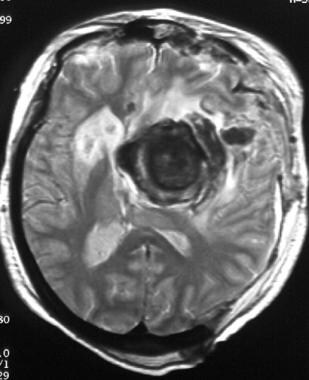
MRI can provide additional details about the regional anatomy and the size, shape, and content of an aneurysm. Most intracranial aneurysms appear as an area of flow void larger than the healthy vessels in that region. Their interior usually enhances significantly after the intravenous administration of gadolinium–diethylenetriamine penta-acetic acid. Most giant aneurysms have calcifications and an intraluminal clot, but their residual lumen may be depicted as a region of flow void. The thrombosed areas may have variable signal intensity, which represents blood products at different stages. MRIs can also depict small amounts of parenchymal blood that can surround the aneurysms; this finding indicates which of the multiple aneurysms have bled.

Gadolinium-based contrast agents (gadopentetate dimeglumine [Magnevist], gadobenate dimeglumine [MultiHance], gadodiamide [Omniscan], gadoversetamide [OptiMARK], gadoteridol [ProHance]) have recently been linked to the development of nephrogenic systemic fibrosis (NSF) or nephrogenic fibrosing dermopathy (NFD). For more information, see the eMedicine topic Nephrogenic Fibrosing Dermopathy. The disease has occurred in patients with moderate to end-stage renal disease after being given a gadolinium-based contrast agent to enhance MRI or MRA scans. As of late December 2006, the FDA had received reports of 90 such cases. Worldwide, over 200 cases have been reported, according to the FDA. NSF/NFD is a debilitating and sometimes fatal disease. Characteristics include red or dark patches on the skin; burning, itching, swelling, hardening, and tightening of the skin; yellow spots on the whites of the eyes; joint stiffness with trouble moving  or  straightening  the arms, hands, legs, or feet; pain deep in the hip bones or ribs; and muscle weakness. For more information, see the FDA Public Health Advisory or Medscape.

MRA is useful in detecting intracranial aneurysms in both symptomatic patients and asymptomatic patients. In the former, MRA is noninvasive and sensitive in testing for an aneurysm in a high-risk population (ie, patients with polycystic renal disease, those with 1 or more first-order family members with documented cerebral aneurysms). In the symptomatic patient, MRA often reveals the site of aneurysmal dilation. Of the 2 main types of MRA, time-of-flight, or in-flow, techniques are used more often than phase-sensitive, or phase-contrast, techniques. For both types of sequences, a large set of axial source images are acquired; these are then reformatted into images that appear similar to conventional angiograms. The most common method used is the maximum intensity projection (MIP) method.

Degree of Confidence

MRI alone is sensitive in the evaluation of subarachnoid and intraparenchymal hemorrhage. Small aneurysms may be missed. MRA is more sensitive to small aneurysms, and it can reliably depict lesions as small as 3-4 mm; however, for optimal sensitivity, MIP images should always be viewed in conjunction with the source images; small aneurysms can be missed if only the MIP images are reviewed. At the present time, angiography should still be considered the criterion standard for the detection of small aneurysms.


Findings

In patients with SAH, transcranial Doppler (TCD) ultrasonography is a noninvasive technique that is useful in detecting vasospasm of the intracranial arteries. Most measurements are obtained by using particular cranial windows of relatively thin bone. The most common cranial window is the transtemporal one, which is located above the zygoma. This window is used to measure velocities of the middle cerebral artery, anterior cerebral artery, distal internal carotid artery, and proximal posterior cerebral artery. The transorbital window enables measurement of the ophthalmic artery and internal carotid artery, and the suboccipital window enables measurement of the vertebral arteries and basilar artery.

In addition, TCD ultrasonography provides repeated serial measurements that may show a pattern of increasing velocities, which lead to clinical deterioration. Clinical decisions, such as the initiation and duration of hypervolemic, hypertensive therapy, can be aided by TCD.


Findings

Some giant aneurysms in the cavernous segment of the internal carotid artery may be treated with occlusion of the artery. Treatment of these lesions depends heavily on the demonstration of cerebrovascular reserve, which is the ability to tolerate temporary or permanent carotid artery occlusion. This reserve is assessed by means of an endovascular balloon occlusion test, with qualitative or quantitative cerebral blood flow measurements at single-photon emission CT (SPECT) scanning. Patients who can tolerate balloon occlusion and have no significant areas of hypoperfusion on SPECT scans are candidates for carotid occlusion.


Findings

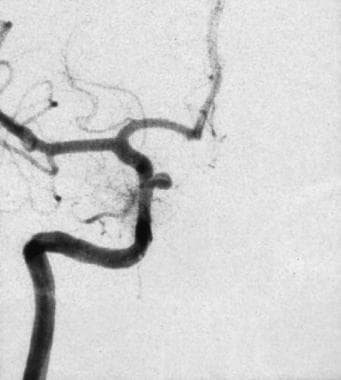
Cerebral angiography remains the definitive preoperative diagnostic tool in patients with intracranial aneurysms. Angiography can also be used to detect and evaluate aneurysmal multiplicity or other associated vascular diseases, assess collateral circulation, identify congenital anomalies, and diagnose cerebral vasospasm and aid in their treatment.

A routine angiographic examination consists of a selective 4-vessel study, including both internal carotid and both vertebral arteries. This study enables the evaluation of the cerebral circulation to determine the source of SAH and to identify other concomitant lesions that may influence the surgical plan.

Multiple views are often necessary to delineate the origin of vessels overlapping the aneurysms and the configuration of the aneurysm neck. In the anterior circulation, carotid ophthalmic aneurysms are often best seen on the lateral or 45° oblique projection. Posterior communicating and anterior choroidal aneurysms are usually well profiled on the lateral and oblique projections. Carotid bifurcation aneurysms and some middle cerebral aneurysms may warrant the use of a straight anteroposterior, or Caldwell, projection. The basal, or submental vertex (SMV), projection can help define the anatomy of middle cerebral aneurysms. In the posterior circulation, oblique projections are useful to show the basilar bifurcation, posterior inferior cerebellar aneurysms, or aneurysms of the vertebrobasilar junction. Occasionally, a straight anteroposterior view may be required to depict an aneurysm of the posterior inferior cerebellar artery.

Possible findings that can affect the patient's treatment include the presence of multiple intracranial aneurysms; areas of intracranial arterial stenoses; associated arteriovenous malformations; and anatomic variations, such as a fetal origin of a posterior cerebral artery or a persistent primitive trigeminal artery. In patients with multiple aneurysms and SAH, angiographic clues to the bleeding source include the size of the aneurysm, vessel displacements from adjacent hematomas, local vasospasm, and an irregular aneurysm contour or nipplelike protrusion on the aneurysm. The escape of contrast agent during the study is an ominous sign that indicates a repeat rupture of the aneurysm.


Endovascular balloon test occlusion with qualitative or quantitative cerebral blood flow and/or carotid artery pressure measurements have been successfully used to assess the hemodynamic risk of permanent or temporary carotid arterial occlusion. This assessment couples the 20-minute clinical occlusion test with a qualitative or quantitative test. Patients who cannot tolerate a balloon occlusion test of the internal carotid may require an extracranial-to-intracranial bypass, with subsequent reevaluation before indirect treatment can be initiated. The type of bypass is directly related to the flow deficiency.

Patients with frankly failing results during the clinical balloon occlusion test are at the greatest risk and pose the greatest challenge. Patients with an aneurysm in the cavernous sinus in whom the balloon occlusion test fails should be treated at extracranial-intracranial bypass surgery with a superficial temporal artery or a saphenous vein graft. The rate of blood flow supplied by a superficial temporal artery is 20-60 mL/min, which may not be enough to accommodate a normal blood flow of 75-120 mL/min through a middle cerebral artery. No collateral blood supply flows through the posterior and anterior communicating arteries. Higher flow rates can be expected with a saphenous vein graft bypass.

During the past decade, the endovascular treatment of intracranial aneurysms has developed extensively. The original indication, the treatment of giant unclippable intracranial aneurysms, has been extended to include small aneurysms and those that have recently ruptured. The introduction of coils and hardening materials, in addition to balloons, has extended the use of the technique to any aneurysm in the intracranial circulation. If technically feasible, surgical obliteration of a ruptured intracranial aneurysm is the procedure of choice for an aneurysm of any grade. In patients in whom direct surgical obliteration is not possible because of medical instability or the location of the aneurysm, endovascular procedures, such as thrombosis with Guglielmi detachable coils, stents, or balloon embolization, should be considered.

After the initial diagnosis of an intracerebral aneurysm, when symptoms or TCD ultrasonographic findings suggest vasospasm, repeat angiography definitively depicts the presence, severity, and location of the vasospasm and the status of the aneurysm. Therapy for the regions of narrowing can then be performed with either balloon angioplasty or an infusion of vasodilators such as papaverine.

Medical/Legal Pitfalls

  • Complications common to endovascular procedures arise during puncture. Subintimal threading of the catheter or needle may cause dissection syndromes and subsequent ischemic complications. Neck hematomas may develop, requiring termination of the procedure. Occasionally, a punctured artery develops a thrombus and requires surgery on an emergency basis. Neurologic deficits may occur during primary vessel puncture.
  • During cerebral angiography, complications include arterial dissection and delayed arterial occlusion, arterial rupture, hemorrhagic infarction, and displacement of the surgical clips from the aneurysmal necks.
  • During balloon angioplasty, ischemic complications may occur as a result of excessive occlusion times. Stenosis can also occur because the diameter of the noninflated balloon is equivalent to the vessel's diameter. In this situation, the balloon adds to ischemia of the vasospasm before dilation. Occasionally, the procedure is performed in a patient whose blood flow has been critically reduced before dilation. Only short periods of vasodilation are tolerated. The most feared complication of angioplasty is separation of the balloon from the catheter and its distal migration into the intracranial arterial tree; this most often occurs when a detachable balloon is used to occlude the aneurysm. To prevent ischemic complications, select the smallest possible balloon and catheter and firmly attach them. Perform dilations rapidly. Hemorrhagic complications occur because of rupture of the primary vessel or aneurysm.
  • Aneurysmal rupture during cerebral angiography may occur as a result of traction, maneuvers near the aneurysmal neck, or catheter misplacement in the neck of an aneurysm that increases dynamic pressures in the aneurysm. Always be prepared for a prompt open craniotomy if the aneurysm ruptures. If a thrombus obstructs the vessel, immediately use fibrinolytics, such as urokinase or tissue plasminogen.
  • A major source of complications in the direct surgical treatment of aneurysms is ischemia. Because of the critical nature of the neural structures supplied by the perforating branches, especially during the surgical treatment of posterior circulation aneurysms, occlusion of the perforating vessels typically causes dramatic symptoms. Maneuvers that ensure the identification and liberation of all perforating branches from the aneurysm sac before clip placement are of paramount importance. Inspection after clip positioning is also crucial to ensure that any proximal vessels continue to fill. Major arterial branch occlusions, although less common, have dramatic consequences as well. These problems are most often secondary to poor clip placement.
  • The morbidity and mortality rates of intraoperative rupture during the surgical treatment of intracranial aneurysms can be significant. The operating surgeon must have access to vascular control and have a practiced set of steps to avoid this complication and treat it as quickly and efficiently as possible. Techniques to reduce the incidence of intraoperative aneurysm rupture include the use of sharp dissection and complete dissection of the lesion before any attempt at clip placement. Should intraoperative rupture occur, tamponade is usually the quickest and most effective method for initial management. If tamponade fails to significantly reduce the hemorrhage, temporary arterial occlusion should be considered.
  • Cranial nerve deficits are well-recognized deficits that occur after the treatment of intracranial aneurysms. The most common cranial nerve deficit in the treatment for basilar bifurcation or posterior communicating artery aneurysms is a temporary third cranial nerve palsy that results in ptosis and ophthalmoplegia. The likely cause is surgical manipulation. Deficits are usually short lived, and most patients recover within 3 months. Other causes include injury from poor clip placement.
  • The frequency of acute hydrocephalus during the first 3 days after aneurysmal SAH is approximately 20%. The proportion of patients who have acute hydrocephalus concurrent with intraventricular hemorrhage is 35-65%. Treatment options for patients with SAH and acute hydrocephalus include observation and ventricular drainage. In patients who are asymptomatic in the early postbleeding period, observation in the presence of ventricular dilatation appears justified; approximately 1 in 3 patients have neurologic deterioration in the following few days.
  • Among other injuries, the obstruction of venous drainage is a consequence of excessive retraction or injury to the bridging veins. Obstruction can result in the development of hemorrhagic infarction.


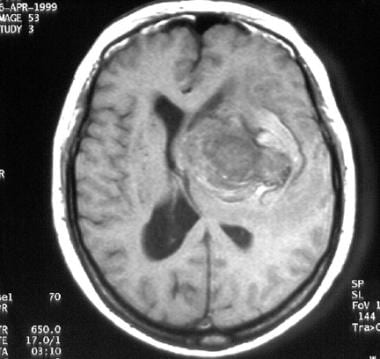
Media file 1:  T1-weighted magnetic resonance image (MRI) of a middle-aged woman with progressive headaches, aphasia, and right-sided hemiparesis. A large intracerebral mass with a significant amount of surrounding edema is depicted. The lesion is a giant internal carotid artery aneurysm.
Click to see larger pictureClick to see detailView Full Size Image
Media type:  MRI

Media file 2:  T2-weighted MRI of a middle-aged woman with progressive headaches, aphasia, and right-sided hemiparesis. The lesion is a giant internal carotid artery aneurysm. Note the flow void, the blood breakdown products within the layers of mural thrombus, and calcification within the aneurysm that produces a marked hypointense signal. Significant surrounding edema is depicted.
Click to see larger pictureClick to see detailView Full Size Image
Media type:  MRI

Media file 3:  Left oblique cerebral angiogram in a patient with multiple intracranial aneurysms shows an anterior communicating aneurysm and a middle cerebral artery aneurysm. The patient underwent a frontotemporoparietal craniotomy, during which surgical clips were placed in both lesions in one setting.
Click to see larger pictureClick to see detailView Full Size Image
Media type:  X-RAY

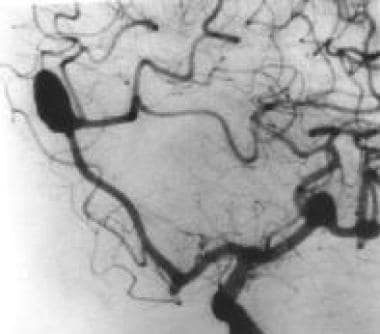
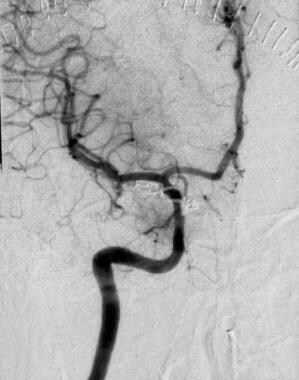
Media file 4:  Left oblique cerebral angiogram in a patient with a proximal intracranial internal carotid artery aneurysm. The surgical approach to this aneurysm requires a craniotomy with an orbitotomy and drilling of the anterior clinoid process; however, this aneurysm has a favorable neck-to-fundus ratio for endovascular coil placement.
Click to see larger pictureClick to see detailView Full Size Image
Media type:  X-RAY

Media file 5:  Image obtained after the placement of a Guglielmi detachable coil in the aneurysm. The patency of the internal carotid artery and all its branches is preserved. Contrast material does not fill the aneurysm.
Click to see larger pictureClick to see detailView Full Size Image
Media type:  X-RAY

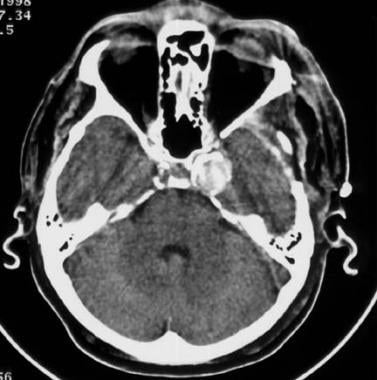
Media file 6:  Nonenhanced CT scan of a middle-aged man with headaches. The patient had a giant aneurysm of the left internal carotid artery in its intracavernous segment. This aneurysm is densely calcified and is easily depicted.
Click to see larger pictureClick to see detailView Full Size Image
Media type:  CT


  1. Inci S, Erbengi A, Ozgen T. Aneurysms of the distal anterior cerebral artery: report of 14 cases and a review of the literature. Surg Neurol. Aug 1998;50(2):130-9; discussion 139-40. [Medline].
  2. Bruno A, Carter S, Qualls C, Nolte KB. Incidence of spontaneous subarachnoid hemorrhage among Hispanics and non-Hispanic whites in New Mexico. Ethn Dis. Winter 1997;7(1):27-33. [Medline].
  3. Juvela S, Porras M, Poussa K. Natural history of unruptured intracranial aneurysms: probability of and risk factors for aneurysm rupture. J Neurosurg. Sep 2000;93(3):379-87. [Medline].
  4. Anderson GB, Steinke DE, Petruk KC, et al. Computed tomographic angiography versus digital subtraction angiography for the diagnosis and early treatment of ruptured intracranial aneurysms. Neurosurgery. Dec 1999;45(6):1315-20; discussion 1320-2. [Medline].
  5. Batjer HH. Controversies in neurosurgery: summary and perspective. Clin Neurosurg. 1999;45:205-7. [Medline].
  6. Biousse V, Newman NJ. Aneurysms and subarachnoid hemorrhage. Neurosurg Clin N Am. Oct 1999;10(4):631-51. [Medline].
  7. Black PM. Hydrocephalus and vasospasm after subarachnoid hemorrhage from ruptured intracranial aneurysms. Neurosurgery. Jan 1986;18(1):12-6. [Medline].
  8. Brown BM, Soldevilla F. MR angiography and surgery for unruptured familial intracranial aneurysms in persons with a family history of cerebral aneurysms. AJR Am J Roentgenol. Jul 1999;173(1):133-8. [Medline].
  9. Brown JH, Lustrin ES, Lev MH, et al. Reduction of aneurysm clip artifacts on CT angiograms: a technical note. AJNR Am J Neuroradiol. Apr 1999;20(4):694-6. [Medline].
  10. Carvi y Nievas MN. Poor-grade subarachnoid hemorrhage patients: the use of nimodipine and other optional treatments. Neurol Res. Oct 1999;21(7):649-52. [Medline].
  11. Ekelund A, Saveland H, Reinstrup P, Brandt L. Additional colloids have only a minor haemodilutive effect after surgery for aneurysmal subarachnoid haemorrhage. Br J Neurosurg. Aug 1999;13(4):399-404. [Medline].
  12. Ferguson GG, Peerless SJ, Drake CG. Natural history of intracranial aneurysms. N Engl J Med. Jul 9 1981;305(2):99. [Medline].
  13. Firat MM, Cekirge S, Saatci I, et al. Guglielmi detachable coil treatment of a partially thrombosed giant basilar artery aneurysm in a child. Neuroradiology. Feb 2000;42(2):142-4. [Medline].
  14. Frank EH, Horgan M. An endoscopic aneurysm clip applicator: preliminary development. Minim Invasive Neurosurg. Jun 1999;42(2):89-91. [Medline].
  15. Geevarghese SK, Powers T, Marsh JW, Pinson CW. Screening for cerebral aneurysm in patients with polycystic liver disease. South Med J. Dec 1999;92(12):1167-70. [Medline].
  16. Gruber A, Killer M, Bavinzski G, Richling B. Clinical and angiographic results of endosaccular coiling treatment of giant and very large intracranial aneurysms: a 7-year, single-center experience. Neurosurgery. Oct 1999;45(4):793-803; discussion 803-4. [Medline].
  17. Hasan D, Lindsay KW, Vermeulen M. Treatment of acute hydrocephalus after subarachnoid hemorrhage with serial lumbar puncture. Stroke. Feb 1991;22(2):190-4. [Medline].
  18. Hashimoto H, Iida J, Hironaka Y, et al. Use of spiral computerized tomography angiography in patients with subarachnoid hemorrhage in whom subtraction angiography did not reveal cerebral aneurysms. J Neurosurg. 92(2):278-83. [Medline].
  19. Heiskanen O. Risk of bleeding from unruptured aneurysm in cases with multiple intracranial aneurysms. J Neurosurg. Oct 1981;55(4):524-6. [Medline].
  20. Hemphill JC 3rd, Gress DR, Halbach VV. Endovascular therapy of traumatic injuries of the intracranial cerebral arteries. Crit Care Clin. Oct 1999;15(4):811-29. [Medline].
  21. Hutter BO, Kreitschmann-Andermahr I, Mayfrank L, et al. Functional outcome after aneurysmal subarachnoid hemorrhage. Acta Neurochir Suppl (Wien). 1999;72:157-74. [Medline].
  22. Iizuka Y, Maehara T, R. [Endovascular neurointervention for cerebral aneurysm]. Nippon Igaku Hoshasen Gakkai Zasshi. 60(3):65-70. [Medline].
  23. Inci S, Spetzler RF. Intracranial aneurysms and arterial hypertension: a review and hypothesis. Surg Neurol. Jun 2000;53(6):530-40; discussion 540-2. [Medline].
  24. Kahara VJ, Seppanen SK, Ryymin PS, et al. MR angiography with three-dimensional time-of-flight and targeted maximum-intensity-projection reconstructions in the follow-up of intracranial aneurysms embolized with Guglielmi detachable coils. AJNR Am J Neuroradiol. Sep 1999;20(8):1470-5. [Medline].
  25. Karinen P, Koivukangas P, Ohinmaa A, et al. Cost-effectiveness analysis of nimodipine treatment after aneurysmal subarachnoid hemorrhage and surgery. Neurosurgery. Oct 1999;45(4):780-4; discussion 784-5. [Medline].
  26. Kassell NF, Torner JC. Size of intracranial aneurysms. Neurosurgery. Mar 1983;12(3):291-7. [Medline].
  27. Kato M, Kaku Y, Okumura A, et al. Thrombosed unruptured cerebral aneurysm causing brain infarction followed by subarachnoid hemorrhage--case report--. Neurol Med Chir (Tokyo). Sep 2005;45(9):472-5. [Medline].
  28. Kirkpatrick PJ, McConnell RS. Screening for familial intracranial aneurysms. BMJ. Dec 11 1999;319(7224):1512-3. [Medline].
  29. Kremer C, Groden C, Hansen HC, et al. Outcome after endovascular treatment of Hunt and Hess grade IV or V aneurysms: comparison of anterior versus posterior circulation. Stroke. Dec 1999;30(12):2617-22. [Medline].
  30. Leclerc X, Lucas C, Godefroy O, et al. Preliminary experience using contrast-enhanced MR angiography to assess vertebral artery structure for the follow-up of suspected dissection. AJNR Am J Neuroradiol. Sep 1999;20(8):1482-90. [Medline].
  31. Lempert TE, Malek AM, Halbach VV, et al. Endovascular treatment of ruptured posterior circulation cerebral aneurysms. Clinical and angiographic outcomes. Stroke. Jan 2000;31(1):100-10. [Medline].
  32. Ljunggren B, Saveland H, Brandt L, Zygmunt S. Early operation and overall outcome in aneurysmal subarachnoid hemorrhage. J Neurosurg. Apr 1985;62(4):547-51. [Medline].
  33. Lownie SP. Coil occlusion of basilar bifurcation aneurysms: the shape of things to come. Can J Neurol Sci. Aug 1999;26(3):170-1. [Medline].
  34. Makoui AS, Smith DA, Evans AJ, Cahill DW. Early aneurysm recurrence after technically satisfactory Guglielmi detachable coil therapy: is early surveillance needed? Case report. J Neurosurg. Feb 2000;92(2):355-8. [Medline].
  35. Mariani L, Bianchetti MG, Schroth G, Seiler RW. Cerebral aneurysms in patients with autosomal dominant polycystic kidney disease--to screen, to clip, to coil?. Nephrol Dial Transplant. Oct 1999;14(10):2319-22. [Medline].
  36. Marro B, Valery CA, Bitard A, et al. Intracranial aneurysm on CTA: demonstration using a transparency volume-rendering technique. J Comput Assist Tomogr. Jan-Feb 2000;24(1):96-8. [Medline].
  37. Milhorat TH. Acute hydrocephalus after aneurysmal subarachnoid hemorrhage. Neurosurgery. Jan 1987;20(1):15-20. [Medline].
  38. Molyneux A, Kerr R. Endovascular aneurysm treatment and the incidence of vasospasm. AJNR Am J Neuroradiol. May 1999;20(5):944-5. [Medline].
  39. Moret J, Ross IB, Weill A, Piotin M. The retrograde approach: a consideration for the endovascular treatment of aneurysms. AJNR Am J Neuroradiol. Feb 2000;21(2):262-8. [Medline].
  40. Muizelaar JP, Zwienenberg M, Rudisill NA, Hecht ST. The prophylactic use of transluminal balloon angioplasty in patients with Fisher Grade 3 subarachnoid hemorrhage: a pilot study. J Neurosurg. 91(1):51-8. [Medline].
  41. Nagashima H, Okudera H, Orz Y, et al. Endovascular treatment of basilar trunk aneurysm associated with fenestration of the basilar artery. Neurosurg Rev. Dec 1999;22(4):219-21. [Medline].
  42. Nakagawa T, Hashi K, Kurokawa Y, Yamamura A. Family history of subarachnoid hemorrhage and the incidence of asymptomatic, unruptured cerebral aneurysms. J Neurosurg. Sep 1999;91(3):391-5. [Medline].
  43. Newell DW, Elliott JP, Eskridge JM, Winn HR. Endovascular therapy for aneurysmal vasospasm. Crit Care Clin. Oct 1999;15(4):685-99, v. [Medline].
  44. Nichols DA. Endovascular therapy as the preferred method of treatment for "surgical" aneurysms: what must happen for this to become reality?. AJNR Am J Neuroradiol. Sep 1999;20(8):1391-2. [Medline].
  45. Ohaegbulam SC. Racial bias in intracranial arterial aneurysms?. Trop Geogr Med. Sep 1978;30(3):305-11. [Medline].
  46. Ohaegbulam SC, Dujovny M, Ausman JI, et al. Ethnic distribution of intracranial aneurysms. Acta Neurochir (Wien). 1990;106(3-4):132-5. [Medline].
  47. Pakyrbaeva LV, Shushevich SI, Khalmuradov AH, Chahovets'' RV. [Properties of NAD-glycohydrolase of the nuclei of the liver cells of rats]. Ukr Biokhim Zh. Jan-Feb 1975;47(1):3-7. [Medline].
  48. Perneczky A, Boecher-Schwarz HG. Endoscope-assisted microsurgery for cerebral aneurysms. Neurol Med Chir (Tokyo). 1998;38 Suppl:33-4. [Medline].
  49. Pierot L, Boulin A, Visot A, et al. Postoperative aneurysm remnants: endovascular treatment as an alternative to further surgery. Neuroradiology. May 1999;41(5):315-9. [Medline].
  50. Prandini MN, Lacanna SN, Tella OI, Bonatelli AP. Aneurysm growth after brain tumor removal: case report. Arq Neuropsiquiatr. Sep 2004;62(3A):722-4. [Medline].
  51. Rosenorn J, Eskesen V, Schmidt K, et al. Clinical features and outcome in 1076 patients with ruptured intracranial saccular aneurysms: a prospective consecutive study. Br J Neurosurg. 1(1):33-45. [Medline].
  52. Sahel M, Ourrad E, Zouaoui A, et al. [3D-CT angiography with volume rendering technique in the intracerebral aneurysms]. J Radiol. Feb 2000;81(2):127-32. [Medline].
  53. Sciubba DM, Gallia GL, Recinos P, et al. Intracranial aneurysm following radiation therapy during childhood for a brain tumor. Case report and review of the literature. J Neurosurg. Aug 2006;105(2 Suppl):134-9. [Medline].
  54. Sheehan JP, Polin RS, Sheehan JM, et al. Factors associated with hydrocephalus after aneurysmal subarachnoid hemorrhage. Neurosurgery. Nov 1999;45(5):1120-7; discussion 1127-8. [Medline].
  55. Shimoda M, Oda S, Shibata M, et al. Results of early surgical evacuation of packed intraventricular hemorrhage from aneurysm rupture in patients with poor-grade subarachnoid hemorrhage. J Neurosurg. Sep 1999;91(3):408-14. [Medline].
  56. SHSG. Risks and benefits of screening for intracranial aneurysms in first- degree relatives of patients with sporadic subarachnoid hemorrhage. The Magnetic Resonance Angiography in Relatives of Patients with Subarachnoid Hemorrhage Study Group. N Engl J Med. Oct 28 1999;341(18):1344-50. [Medline].
  57. Steiger HJ, Medele R, Bruckmann H, et al. Interdisciplinary management results in 100 patients with ruptured and unruptured posterior circulation aneurysms. Acta Neurochir (Wien). 1999;141(4):359-66; discussion 366-7. [Medline].
  58. Stroobandt G, Duprez T, Menard E. Clinical and MRI long term evolution of intracavernous and carotid ophtalmic artery aneurysms, treated by common carotid ligation. Acta Neurochir (Wien). 1999;141(10):1075-82. [Medline].
  59. Taniguchi M, Takimoto H, Yoshimine T, et al. Application of a rigid endoscope to the microsurgical management of 54 cerebral aneurysms: results in 48 patients. J Neurosurg. Aug 1999;91(2):231-7. [Medline].
  60. terBrugge KG. Neurointerventional procedures in the pediatric age group. Childs Nerv Syst. Nov 1999;15(11-12):751-4. [Medline].
  61. Thomas JE, Armonda RA, Rosenwasser RH. Endosaccular thrombosis of cerebral aneurysms: strategy, indications, and technique. Neurosurg Clin N Am. Jan 2000;11(1):101-21, ix. [Medline].
  62. Ujiie H, Tachibana H, Hiramatsu O, et al. Effects of size and shape (aspect ratio) on the hemodynamics of saccular aneurysms: a possible index for surgical treatment of intracranial aneurysms. Neurosurgery. Jul 1999;45(1):119-29; discussion 129-30. [Medline].
  63. Velthuis BK, Van Leeuwen MS, Witkamp TD, et al. Computerized tomography angiography in patients with subarachnoid hemorrhage: from aneurysm detection to treatment without conventional angiography. J Neurosurg. Nov 1999;91(5):761-7. [Medline].
  64. Vespa PM, Gobin YP. Endovascular treatment and neurointensive care of ruptured aneurysms. Crit Care Clin. Oct 1999;15(4):667-84. [Medline].
  65. Wagner KR, Zuccarello M. Local brain hypothermia for neuroprotection in stroke treatment and aneurysm repair. Neurol Res. Apr 2005;27(3):238-45. [Medline].
  66. Wardlaw JM, White PM. The detection and management of unruptured intracranial aneurysms. Brain. 123 (Pt 2):205-21. [Medline].
  67. Wiebers DO, Whisnant JP, O''Fallon WM. The natural history of unruptured intracranial aneurysms. N Engl J Med. Mar 19 1981;304(12):696-8. [Medline].
  68. Wiebers DO, Whisnant JP, Sundt TM Jr, O''Fallon WM. The significance of unruptured intracranial saccular aneurysms. J Neurosurg. Jan 1987;66(1):23-9. [Medline].
  69. Winn HR, Richardson AE, Jane JA. The long-term prognosis in untreated cerebral aneurysms: I. The incidence of late hemorrhage in cerebral aneurysm: a 10-year evaluation of 364 patients. Ann Neurol. Apr 1977;1(4):358-70. [Medline].
  70. Yonekawa Y, Kaku Y, Imhof HG, et al. Posterior circulation aneurysms. Technical strategies based on angiographic anatomical findings and the results of 60 recent consecutive cases. Acta Neurochir Suppl (Wien). 1999;72:123-40. [Medline].
  71. Yoshioka H, Inagawa T, Tokuda Y, Inokuchi F. Chronic hydrocephalus in elderly patients following subarachnoid hemorrhage. Surg Neurol. Feb 2000;53(2):119-24; discussion 124-5. [Medline].