Continually Updated Clinical Reference
 
 
  All Sources     eMedicine     Medscape     Drug Reference     MEDLINE
 
eMedicine - Achondroplasia : Article by

Quick Find
Authors & Editors
Introduction
Differentials
Radiograph
CT SCAN
MRI
Ultrasound
Nuclear Medicine
Intervention
Multimedia
References

Related Articles
Spinal Stenosis


Patient Education
Click here for patient education.


Author: Ali Nawaz Khan, MBBS, FRCS, FRCP, FRCR, LRCP, Chairman of Medical Imaging, Professor of Radiology, NGHA, King Fahad National Guard Hospital, King Abdulaziz Medical City, Riyadh, Saudi Arabia

Ali Nawaz Khan is a member of the following medical societies:
American Institute of Ultrasound in Medicine, Radiological Society of North America, Royal College of Physicians, Royal College of Physicians and Surgeons of the United States, Royal College of Radiologists, and Royal College of Surgeons of England

Coauthor(s): Rumana Rahim, MBBS, MRCS, Staff Physician, Department of Radiology, North Manchester General Hospital; Sumaira MacDonald, MBChB, PhD, MRCP, FRCR, Lecturer, Sheffield University Medical School; Endovascular Fellow, Sheffield Vascular Institute

Editors: Lori Lee Barr, MD, FACR, Clinical Associate Professor of Radiology, Department of Radiology, University of Texas Health Science Center in San Antonio; Member, Board of Directors, Austin Radiological Association; Consulting Staff, Seton Health Network, Columbia/St David's Healthcare System, Healthsouth Rehabilitation Hospital of Austin and Georgetown Hospital; Bernard D Coombs, MB, ChB, PhD, Consulting Staff, Department of Specialist Rehabilitation Services, Hutt Valley District Health Board, New Zealand; Robert M Krasny, MD, Consulting Staff, Department of Radiology, The Angeles Clinic and Research Institute; Felix S Chew, MD, MBA, EdM, Professor, Department of Radiology, Vice Chairman for Radiology Informatics, Section Head of Musculoskeletal Radiology, University of Washington

Author and Editor Disclosure

Synonyms and related keywords: chondrodystrophia fetalis, hypoplastic chondrodystrophy, chondrodystrophies, achondroplastic dwarfism, Parrot's disease, rickets fetal, ACH, metatrophic dwarfism II, Kniest syndrome, Kniest's syndrome, pseudoachondroplasia, PSACH, FGFR3 gene

Background

Achondroplasia is an inherited disorder of bone growth that causes the most common type of dwarfism. It is 1 of the groups of disorders collectively called chondrodystrophies.

Achondroplasia is characterized by abnormal bone growth that results in short stature with disproportionately short arms and legs, a large head with frontal bossing, a narrow thorax, a waddling gait, and characteristic facial features. Intelligence and life span are usually normal, though the risk of infant death from compression of the cervical spinal cord and/or upper airway obstruction is increased.

Achondroplasia is inherited as an autosomal dominant trait. However, approximately 80% appear to be due to spontaneous mutations. If 1 parent has achondroplasia, the infant has a 50% likelihood of inheriting the disorder. If both parents have the condition, the likelihood increases to 75%.

Achondroplasia can be diagnosed on the basis of characteristic clinical and radiographic findings in most affected individuals. In infants, in whom the diagnosis can be difficult, and with individuals with atypical findings, molecular genetic testing can be used to detect a mutation in the FGFR3 gene (locus 4p16.3). Such testing detects mutations in 99% of affected individuals and is available in clinical laboratories.

Pathophysiology

Achondroplasia is a genetic disorder of endochondral bone with an autosomal dominant mode of inheritance. Achondroplasia may be inherited in a homozygous or heterozygous manner. Heterozygous disease is a common skeletal dysplasia, with a rate of 1 case per 26,000 births.

Approximately 80% of all cases of achondroplasia are due to a spontaneous mutation that causes rhizomelic shortening, a large head with frontal bossing, depressed nasal bridge, short trident hands, and lumber lordosis.

Mental and sexual development and lifespan are normal. Homozygous disease is lethal because of respiratory difficulties due to thoracic constriction.

Prenatal distinction between homozygous and heterozygous disease is important so that an informed decision can be made regarding continuation of the pregnancy. Penetrance of the gene is 100%, meaning that all individuals who have a single copy of the altered FGFR3 have achondroplasia. The risk of achondroplasia is low when 1 parent is heterozygous, with a rate of 1 case per 50,000, or 0.002%. When both parents are heterozygous, the risk is 25%.

The skeletal changes in achondroplasia reflect retarded endochondral bone formation. The major defect occurs at the epiphyseal osteochondral junction associated with loss of the palisade of growing cartilaginous spicules. It is this palisade of spicules that undergoes provisional calcification and eventually ossification. Premature ossification forms a transverse barrier at the osteochondral junction. The result of this anomaly is that the long bones are abnormally short; however, because appositional growth is not affected, the bones are usually wide. The skull, which does not depend on endochondral bone formation, is large. The length of the vertebral column is relatively normal with some flattening of the vertebral bodies; because of other changes in the body habitus, kyphoscoliosis and other vertebral deformities are relatively frequent.

The achondroplastic foramen magnum is small at birth. During the first year, it has a severely impaired rate of growth, especially in the transverse dimension. This markedly diminished growth results not only from abnormal endochondral bone growth but also from abnormal placement and premature fusion of the synchondroses.

The most important complications in people with achondroplastic dwarfism are neurologic problems related to a narrowed spinal canal. Stenosis of the spinal canal is secondary to abnormalities of endochondral ossification with premature synostosis of the ossification centers of the vertebral body and the posterior arch. This results in thickening of the laminae, shortening of the pedicles, and reduced height of the vertebral bodies. Additional factors, such as prolapsed intervertebral disks, osteophytes, and progressive thoracolumbar kyphosis contribute to the narrowing of the spinal canal (Hamamci, 1993).

Patients with achondroplasia have dynamic changes in brain morphometry resulting in a rostral displacement of the brainstem with gradual compression of the frontal lobes. This is due to enlargement of the supratentorial ventricular spaces commensurate with an increase in venous sinus distension (DiMario, 1995).

Blood flow in the superior sagittal sinus reflects brain maturation. Hydrocephalus associated with achondroplasia is closely related to reduced flow in the superior sagittal sinus, which supports the hypothesis that restricted venous outflow causes hydrocephalus, in cases of achondroplasia. Cine phase-contrast MRI is a convenient and effective method for measuring volumetric flow rates in vivo. In healthy children, flow velocity is 92-196 mm/s (mean, 136 mm/s), and the flow rate is 189-688 mL/min (mean, 484 mL/min). The flow rates show changes statistically related to age. They rapidly increase during the first 2 years and reach a peak by age 6-8 years. The flow velocity show a similar pattern, but without significant correlation. In all cases of achondroplasia with hydrocephalus, both flow values are reduced below the reference values by 1 standard deviation. In cases of achondroplasia without hydrocephalus, and in obstructive hydrocephalus, the values are not reduced (Hirabuki, 2000).

Frequency

United States

Achondroplasia is the most common form of inherited disproportionate short stature. It occurs in 1 in 15,000-40,000 live births.

International

No data suggest that the incidence of achondroplasia differs from that in the United States.

Mortality/Morbidity

  • An increased risk of sudden death in the fourth and fifth decades is reported. The cause of this increased mortality is not known.
  • Approximately 7.5% of infants with achondroplasia die in the first year of life from obstructive apnea or central apnea (Hecht, 1987). Infants who are homozygous for achondroplasia seldom live beyond a few months. Homozygous achondroplasia, caused by the presence of 2 mutant alleles at nucleotide 1138 of the FGFR3 gene, is a severe disorder with radiologic changes qualitatively different from those of achondroplasia. Early death results from respiratory insufficiency due to the small thoracic cage and neurologic deficit from cervicomedullary stenosis (Hall, 1988).
  • For morbidity and complications, see Complications in the Clinical Details section below.

Race

No racial predilection is known.

Sex

A minor male preponderance is observed.

Age

Achondroplasia can be detected antenatally. Complications from achondroplasia affect all age groups. Patients with the homozygous type of achondroplasia seldom survive infancy.

Anatomy

Skeletal anomalies associated with achondroplasia reflect retarded endocardial bone formation. Therefore, the long bones are short but wide because appositional bone growth is unaffected. The skull is not dependent on endocardial bone; therefore, it is generally large. The spinal column is of relatively normal length but becomes kyphotic as result vertebral anomalies and body habitus.

Clinical Details

Clinical features

The features of achondroplasia are usually apparent at birth. These include typical facial features, disproportionate short stature, and rhizomelic (the proximal ends of the limbs) shortening. Most affected individuals develop normal intelligence. Motor delays are not unusual in infants, but cognitive function develops normally. In infancy, mild-to-moderate hypotonia is typical, and the acquisition of developmental motor milestones is often delayed. Infants have difficulty in supporting their heads because of both hypotonia and their large head. In assessing development in children with achondroplasia, special developmental charts are available on which growth curves typical for achondroplasia have been formulated. The final adult height is in the range of 4 feet.

The characteristic feature is a large head with frontal bossing. The midface is often small associated with a flat nasal bridge and narrow nostrils. Middle ear infections are common in infancy and childhood, which occur because of the small nasal passages and dysfunction of the eustachian tubes. Persistent ear infections may result in hearing loss. The mandible is large relative to the rest of the face and may occasionally give rise to dental crowding.

Respiratory problems can occur in infants and children. Airway obstruction can be central in origin (due to foramen magnum compression) or obstructive in origin (due to narrowed nasal passages). Symptoms of airway obstruction include snoring, and sleep apnea. Affected individuals tend to sleep with the neck in a hyperextended position.

Dwarfism associated with achondroplasia is due primarily to rhizomelic shortening of the limbs. The legs are usually straight in infancy, but valgus knees develop when the child starts walking. As children continue to walk, the knees acquire a varus position. The fingers and toes are short. Infants have a thoracolumbar kyphosis in the sitting position. Infants with achondroplasia often have reduced muscle tone.

Some children and affected adults may develop neurologic complications. Infants may develop hydrocephalus. Infants should be monitored regularly by means of head circumference measurements. Symptoms of cord compression can occur at the level of foramen magnum. Symptoms of cord compression at the foramen magnum include apnea and cervical myelopathy.

The risk of lumbar spinal canal stenosis is increased, with resultant symptoms of compromise of the spinal cord or exiting nerve root. Symptoms of such compromise include weakness, paresthesias, and pain radiating to the lower limbs. One characteristic feature of stenosis of spinal canal is the relief of pain in a squatting position. As the condition worsens, pain in the low back or buttocks occurs.

The clinical features of achondroplasia can be summarized as follows:

  • Short-limbed rhizomelic dwarfism with shortening of the arms and legs
  • Redundant skin folds on the limbs
  • Large head with prominent forehead (frontal bossing)
  • Midface hypoplasia, saddle nose
  • Trident configuration of the hands
  • Limitation of elbow extension
  • Gibbus in the thoracolumbar region in infants, swayback with prominent buttocks in children and adults, waddling gait
  • Genu varum


Complications

People with achondroplasia seldom reach 5 feet in height. Complications include hydrocephalus, spinal stenosis, and clubfeet. The most common medical complaint in adulthood is symptomatic spinal stenosis involving L1-4 (Thomeer, 2002). Low lumbar levels are usually not involved.

Fowler and associates (1975) described 8 cases of communicating hydrocephalus in children with genetic metabolic disorders: 1 case of mucopolysaccharidosis I (MPS I or Hurler syndrome), 1 case of MPS II (Hunter disease), 4 cases of MPS III (Sanfilippo syndrome, 2 of which affected siblings), and 2 cases of achondroplasias. The authors recommend surgical treatment of the latter but were doubtful about the former, in which case hydrocephalus was only a contributing cause to severe dementia.

Mantle and Kingsnorth described an unusual cause of back pain in a 47-year-old man with achondroplasia who presented with lower back pain radiating to his left loin. An intravenous urogram (IVU) showed hydronephrosis on the left side and a dilated left ureter passing down into the left inguinal region. A CT scan confirmed a left inguinal hernia containing the left ureter causing ureteric obstruction. The hernia was repaired and the ureter replaced retroperitoneally. A postoperative IVU showed recovery in renal function but a persistently dilated left ureter that was not obstructed.

The large head of the newborn with achondroplasia increases the risk of intracranial bleeding during vaginal delivery (Hall, 1982). Hydrocephalus may be caused by increased intracranial venous pressure due to stenosis of the sigmoid sinus at the level of the narrowed jugular foramina. Recurring otitis media is frequently a problem.

Approximately 7.5% of infants with achondroplasia die in the first year of life from obstructive apnea or central apnea (Hecht, 1987). Obstructive apnea may result from midface hypoplasia. Brainstem compression is common and may cause abnormal respiratory function, including central apnea (Nelson, 1988; Gordon, 2000). In 1 study, 10% of infants had craniocervical junction (CCJ) compression with abnormality of the cervical spinal cord (Pauli, 1995). All children undergoing surgical decompression of the CCJ had marked improvement of neurologic function.

Obesity is a major problem in achondroplasia. Excessive weight gain is manifest in early childhood. Until a height of about 75 cm is reached, the mean weight-to-height ratio for children with average stature and children with achondroplasia is virtually identical. Above a height of 75 cm, the weight-to-height ratio for patients with achondroplasia exceeds that of the general population (Hunter, 1996). In adults, obesity can aggravate the morbidity associated with lumbar stenosis and contribute to nonspecific joint problems and possibly to early mortality from cardiovascular complications (Hecht, 1988).

Limited elbow extension occurs in about 70% of patients and is primarily caused by posterior bowing of the distal humerus; posterior dislocation of the radial head (about 20% of patients) results in greater loss of elbow extension (Kitoh, 2002).

The incidence of neurologic deficits in achondroplasia is by no means negligible. Morphologic abnormalities of the spinal canal exist from birth, and signs of cervical cord involvement are not uncommon in children. The delayed occurrence of clinical symptoms related to narrow thoracolumbar canal may be explained by other acquired abnormalities such as kyphosis, disk prolapse, and degenerative spondylosis. The clinical history usually indicates an insidious onset. The most frequent symptoms are motor weakness of the lower limbs (82.8%) and low-back pain (77.1%). Sensory and/or sphincter disturbances appear to be less frequent (about 40%).

The incidence of neurologic complications in achondroplasia is 20-47%. Symptoms are often subtle but due to serious conditions such as cervicomedullary compressive syndromes, syringomyelia, or hydrocephalus. Therefore, the early identification of this disorder is important.

Ruiz-Garcia et al (1997) prospectively examined 39 patients (20 female, 19 male; age range, 3 mo to 17 y; mean, 4 y 6 mo). All patients had hypotonia and psychomotor delay, 3 had recurrent apnea, 1 developed radicular syndrome, and 1 had leg paresthesias. Five had normal CT scans, 20 had cortical atrophy, and 18 had communicating hydrocephalus. The authors identified foramen magnum abnormalities in 28 patients and reduced CCJ with cervicomedullary compression in 6. Myelography and myelotomography demonstrated spinal compression in 12 patients. MRI showed cervicomedullary infarct in 1, syringomyelia in 2, and diastematomyelia in 1.

In this study, somatosensory evoked responses (SSERs) were also useful in the early identification of brainstem and spinal abnormalities. The authors concluded that the neurologic manifestations of pediatric patients with achondroplasia are frequent and important, demanding comprehensive clinical evaluation, even in asymptomatic patients and especially in those with severe hypotonia or alterations in SSERs.

Differential diagnosis and other problems to be considered

Although more than 100 skeletal dysplasias that cause short stature are recognized, many are extremely rare, and all have clinical and radiographic features that readily distinguish them from achondroplasia. In contrast to many of the other skeletal dysplasias, the findings of achondroplasia are present at birth, but they are not associated with respiratory insufficiency. Results on antenatal sonograms either suggest or confirm most skeletal dysplasias.

Conditions that may be confused with achondroplasia include the conditions discussed below.

Achondrogenesis

Achondrogenesis (Parenti type I, Fraccara type 1A, Houston-Harris, Fraccara type 1B; 20%) is an autosomal recessive and lethal dwarfism. Both endochondral and membranous ossification is affected and can involve the calvaria, spine, and long bones with frequent rib fractures. Short-limbed dwarfism is severe. The skull and rest of the skeleton is poorly ossified. Chest narrowing is marked, but the head is not enlarged relative to the trunk. Polyhydramnios is usually present.

Langer-Saldino syndrome (80%) is also autosomal recessive. It is less severe than type 1 endochondral ossification. This syndrome involves variable calcification of calvaria and spine, with no rib fractures, but it is a lethal short-limbed dwarfism of long-bone type. The head is large relative to the rest of the body, and prominent skin folds are present over a short neck, small chest, and distended abdomen, with fetal hydrops. The patients' short limbs are extended away from the body.

Chondroectodermal dysplasia

Chondroectodermal dysplasia, or Ellis-van Creveld syndrome, is autosomal recessive with variable expression. The ribs are severely shortened. This disease is associated with short limbs, narrow thorax, polydactyly, postaxial hexadactyly, and congenital heart disease; about 50% of patients have a large atrial septal defect. The size of thorax is particularly striking when compared with the abdomen and head.

Asphyxiating thoracic dystrophy

Asphyxiating thoracic dystrophy (Jeune syndrome) is an autosomal recessive disorder. Patients present with an extremely narrow thorax, rhizomelic short-limb dwarfism, polydactyly, and renal dysplasia (renal cysts).

Osteogenesis imperfecta

Osteogenesis imperfecta type IIa is a lethal autosomal dominant condition. Patients present with a thin skull vault that may collapse and short limbs that are thickened and angulated because of multiple fractures.

Osteogenesis Imperfecta types I, III, and IV are autosomal dominant or sporadic. Patients have normal body proportions and fractures with normal bone lengths.

Congenital hypophosphatasia

Congenital hypophosphatasia is an autosomal recessive disorder, which in the homozygous type causes severe deficiency of alkaline phosphatase and increased excretion of phosphoethanolamine. Severe demineralization of the bones is present. The incidence is 1 case per 100,000 births.

Four types are described: neonatal (congenital), juvenile, adult, and latent. The last is a mild form thought to be autosomal dominant. Sonography shows short-limbed dwarfism, thin delicate bones with reduced echogenicity. First-trimester chorionic sampling with alkaline phosphatase assay may establish the diagnosis.

Metatrophic dysplasia

Metatrophic dysplasia has varied inheritance associated with a narrow thorax, kyphoscoliosis relatively long trunk, and a tail-like appendage over the sacrum.

Roberts syndrome

Roberts syndrome, or pseudothalidomide syndrome, is autosomal recessive with variable expression. Patients usually present with tetraphocomelia and a midline facial cleft. Chromosomal analysis shows a classical abnormality with the centromere region being fluffy.

Diastrophic dysplasia

Diastrophic dysplasia is an autosomal recessive disorder with multiple contractures and hitchhiker's thumb (more muscle mass than arthrogryposis).

Short rib-polydactyly syndrome types I, II, and III

Type I, or Saldino-Noonan disease, is autosomal recessive with severely shortened ribs and/or narrow thorax, short limbs, polydactyly, CVS and genital anomalies, polycystic kidney and pointed metaphysis (an important differentiating feature).

Type II, or Majewski disease, is associated with short limbs, narrow thorax, polydactyly, CVS anomalies, polycystic kidneys, genital anomalies disproportionately short tibia, and cleft lip and palate. The short tibia and cleft lip and palate are important differentiating features.

Type III, or Naumoff disease, is associated with short limbs, narrow thorax, polydactyly, and CVS and genital anomalies. The metaphysis may be wide, with marginal spurs.

Nephroblastomatosis

Large polycystic kidneys, occipital encephalocele, microcephaly or polydactyly may be associated with any type of short rib-polydactyly syndrome.

Spondyloepiphyseal dysplasia congenita (camptomelic dysplasia)

Spondyloepiphyseal dysplasia congenita (camptomelic dysplasia) is autosomal dominant. This disease has variable expression associated with short and bowed femora, a short spine and trunk (delayed ossification centers, calcaneus and talus), anterior bowing of the long bones of the lower extremities, anomalies of cervical and thoracic spine with spinal scoliosis, and hypoplastic or absent scapulas.

Thanatophoric dysplasia

Thanatophoric dysplasia occurs sporadically and represents the most common lethal skeletal dysplasia. About 14% of patients have a cloverleaf skull. This disease may be transmitted in an autosomal recessive manner, with marked narrowing of the thorax and marked micromelia, enlargement of the head (with a prominent forehead), occasional hydrocephalus, and polyhydramnios. The soft tissues of the limbs may be thickened. Thanatophoric dysplasia is more common in male fetuses than in female fetuses.

Fibrochondrogenesis

Fibrochondrogenesis is an autosomal recessive associated with a thin skull vault, which may be poorly echogenic and difficult to identify. Collapsed sutures are occasionally seen, the limbs are short and thin, and the ribs are thin and poorly visualized. The spine is poorly mineralized and poorly visualized, and the metaphyses are widened.

Chondrodysplasia punctate (rhizomelic type)

Chondrodysplasia punctate (rhizomelic type) is associated with severe micromelia of the humeri and femora, multiple joint contractures, and dorsal and ventral ossification of the vertebral body separated by a cartilaginous bar.

Kniest dysplasia

Kniest dysplasia is an autosomal dominant disease associated with kyphoscoliosis, short trunk, broad thorax, and widened metaphyses. The prognosis is usually good.

Mesomelic and acromesomelic dysplasia

Mesomelic and acromesomelic dysplasia are autosomal recessive or autosomal dominant conditions associated with micromelia of the middle or distal segments. The distribution of shortening differentiates these conditions from other lethal syndromes.

Hypochondroplasia

Hypochondroplasia is characterized by phenotypic and genetic heterogeneity. Its differentiation from other conditions with disproportionate short stature is often difficult.

Prinster and associates examined 21 patients with suspected hypochondroplasia on the basis of radiologic criteria most often reported in the literature on this disease. The object was to determine the reliability of radiological interpretation in the diagnosis of hypochondroplasia and to evaluate the most typical skeletal abnormalities. The data were correlated with molecular findings. Radiographs of the lumbar spine, left leg, pelvis, and left hand were obtained. The presence of the N540K mutation in the FGFR3 gene was verified by means of restriction enzyme digestion.

Two pediatric radiologists reviewed all radiographs, which enabled the selection of patients, a second time in blinded fashion. Their results were compared. Both radiologists confirmed the diagnosis in 10 of 21 patients, while in the others, they excluded the disease, they were uncertain about the findings, or they did not agree on the final interpretation of the data. The best agreement rate was obtained in the evaluation of the lumbar spine and the legs. Radiologic features of 9 patients (43%) with the N540K substitution were not remarkably different from the features reported in the patients without this mutation.

The authors concluded that the crucial skeletal regions to focus on in the diagnosis of hypochondroplasia are the lumbar spine and legs; findings in the pelvis and hands seem to be less characteristic than those in the crucial regions. To reduce the risk of misdiagnosis, accurate radiologic and clinical evaluations are needed, especially in patients without a defined genetic defect.

Pseudoachondroplasia

Pseudoachondroplasia (PSACH) is a spondyloepimetaphyseal dysplasia characterized by disproportionate short stature, generalized ligamentous laxity and precocious osteoarthritis. Autosomal dominant inheritance has been demonstrated in many families.

Stoll (2002) described a boy with PSACH who appeared healthy at birth. However, by age 3 years, the patient's height was below the fifth percentile. At age 6.5 years, he was 99 cm tall (-3.5 standard deviations), and he had bowing of the lower extremities and limitations of movement at the elbows and knees. Radiographs showed features of PSACH. Kyphoscoliosis appeared later, with anterior beaking of the vertebrae. Cerebral CT showed a large frontal cyst communicating with the third ventricle. MRI confirmed the frontal cyst and showed dilatation of the third ventricle and the occipital horns of the lateral ventricles, as well as right frontoparietal hemispheric atrophy. At age 26 years, the patient had knee pain, difficulties with swallowing, and vertigo. Sonograms showed a large cortical cyst of the right kidney and smaller cysts in both kidneys.

Double heterozygosity in bone growth disorders

Because union between individuals of small stature is common, information regarding double heterozygosity for dominantly inherited bone growth disorders is of considerable importance.

Flynn and Pauli summarized 7 occurrences of 4 combinations of double heterozygosity: chondroplasia/spondyloepiphyseal dysplasia congenita, achondroplasia/PSACH, achondroplasia/osteogenesis imperfecta type I, and achondroplasia/hypochondroplasia (non-FGFR3 disease). They also reviewed additional reports from the literature. Each of the 8 examples of double heterozygosity for bone-growth disorders reported result in distinct phenotypic features, severities, and expectations.

Prenatal testing

Prenatal diagnosis for high-risk pregnancies is possible. A high-risk pregnancy is one in which 1 or both parents have achondroplasia. DNA extracted from fetal cells obtained by means of chorionic villus sampling (CVS) at about 10-12 weeks' gestation or amniocentesis at 16-18 weeks' gestation (Bellus, 1994; Shiang, 1994) is analyzed. The disease-causing allele or alleles in the affected parent or parents must be identified before prenatal testing can be performed.

In low-risk pregnancies, routine prenatal sonography may reveal short fetal limbs and raise the possibility of achondroplasia in a fetus not known to be at increased risk. Such ultrasonographic findings are usually not apparent until the third trimester. DNA extracted from fetal cells obtained by means of amniocentesis can be analyzed.

Genetic counseling

Achondroplasia is inherited in an autosomal dominant manner. More than 80% of individuals with achondroplasia have genetically normal parents, and they have achondroplasia as the result of a de novo gene mutation. Such parents have a low risk of having another child with achondroplasia.

An individual with achondroplasia who has a partner of normal stature has a 50% risk of having a child with achondroplasia in each pregnancy. When both parents have achondroplasia, the likelihood of their offspring having normal stature is 25%, the risk of their offspring having achondroplasia is 50%, and the risk of having homozygous achondroplasia is 25%. When both parents have achondroplasia, they should be given the option of antenatal molecular genetic testing.

Preferred Examination

Prenatal diagnosis can be achieved with sonography. Antenatal targeted ultrasonography is indicated in at-risk pregnancies. Conventional radiographs remain the main initial investigation in both children and adults.

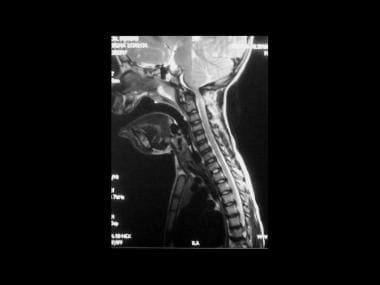
Myelography, CT, CT myelography, and MRI are added when indicated, as with compressive cord symptoms at the craniocervical and thoracolumbar junctions. Both CT and MRI can be used to examine the size of the foramen magnum, which is an important determinant of compressive myelopathy of the upper cervical cord. MRI has the added advantage of depicting posterior cranial fossa anatomy and other abnormalities, such as syringomyelia and hydrocephalus.

MRI is the examination of choice in suspected spinal stenosis, disk lesions, and compromise of the exiting nerve root in the lumbar region. Radiologic studies are indicated if the head circumference increases disproportionately or if symptoms of hydrocephalus develop.

In infancy before the fontanels close, ultrasonography provides a noninvasive and fairly reliable method of assessing the ventricles. This study can be supplemented by CT and/or MRI of the head to monitor for compression of the foramen magnum.

Limitations of Techniques

Both false-positive and false-negative diagnoses may occur with antenatal ultrasonography of skeletal dysplasias. Heterozygous disease may not be recognized until late in the second trimester (>24-28 wk), with early sonograms being normal.

Ultrasonography remains operator dependent. Conventional radiography is good for depicting skeletal pathology, but it is poor at providing information on the brain and spinal cord.

Myelography is invasive. Myelography has traditionally been the most useful examination in delineating the level of spinal cord or cauda equina compression. However, myelography in achondroplasia is difficult because of the stenotic lumber spine. With myelography near the lumber root, it is theoretically possible to increase the neurologic deficit, particularly in the presence of kyphosis. Therefore, in patients in whom myelography is needed, the study is best performed by means of cisternal puncture; however, this step makes the procedure even more invasive than it otherwise is.

CT exposes the patient to ionizing radiation and has limitations in its ability to portray the spinal cord and in depicting posterior fossa structures. For CT, infants and young children may need sedation or general anesthesia.

MRI is expensive and creates problems in patients with claustrophobia. However, MRI can accurately depict anatomic encroachment on the CNS. MRI is frequently used to evaluate the brain and spinal cord in patients with achondroplasia. It cannot be performed in patients with cardiac pacemakers, certain surgical clips, and some other foreign objects in the body. As with CT, young children may need sedation or general anesthesia to undergo MRI.


Spinal Stenosis

Other Problems to be Considered

Achondrogenesis
Chondroectodermal dysplasia
Asphyxiating thoracic dystrophy
Osteogenesis imperfecta
Congenital hypophosphatasia
Metatrophic dysplasia
Roberts syndrome
Diastrophic dysplasia
Short rib-polydactyly syndrome types I, II, and III
Spondyloepiphyseal dysplasia congenita (camptomelic dysplasia)
Thanatophoric dysplasia
Fibrochondrogenesis
Chondrodysplasia punctate (rhizomelic type)
Kniest dysplasia
Mesomelic and acromesomelic dysplasia
Hypochondroplasia
Pseudoachondroplasia
Double heterozygosity in bone growth disorders


Findings

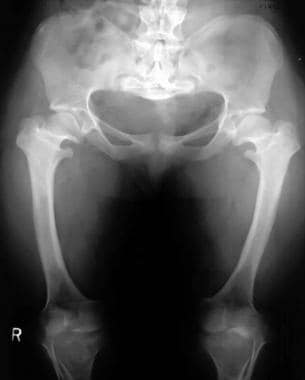
The radiographic findings in achondroplasia are as follows:

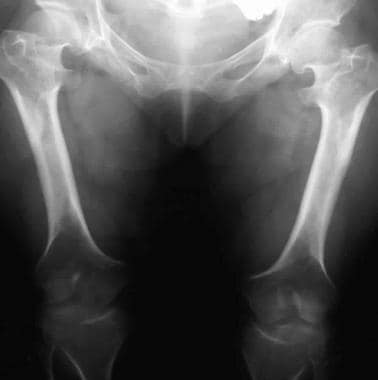
  • Shortening of tubular bones with a normal shaft caliber
  • Short extremities and ribs-versus-trunk length
  • Short phalanges
  • Ball-in-socket epiphyses
  • Metaphyseal flaring and cupping
  • Circumflex or chevron seat on the metaphysis (Langer, 1967; Hall, 1988)
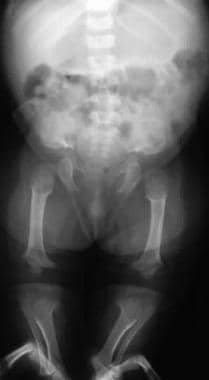
  • Squared iliac wings and narrow sacroiliac notch (champagne glass)
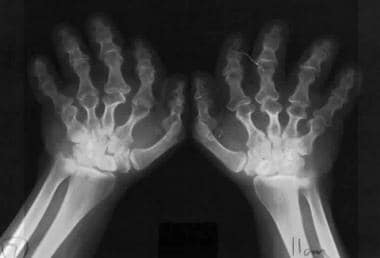
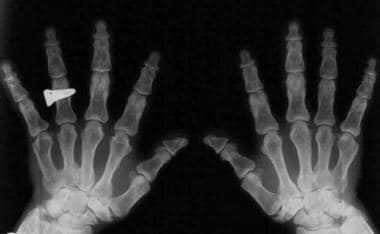
  • Fingers widely opposed and equal length (trident hands)
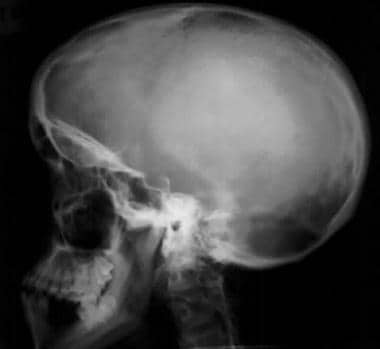
  • Enlarged skull vault and mandible
  • Small foramen magnum
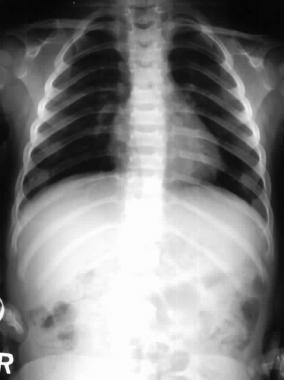
  • Narrow anteroposterior (AP) diameter of the spine with a concave posterior surface
  • Decreased lumber interpediculate distance and narrow spinal canal
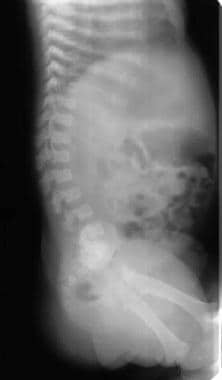
  • Hypoplastic (bullet nose) thoracolumbar junction vertebrae
  • Narrow vertebral interpediculate distance

Kitoh and associates (2002) examined 23 patients (41 elbows) with achondroplasia. Extension of the elbow was clinically assessed, and the angle of posterior bowing of the distal humerus was measured on lateral radiographs. Extension of the elbow was limited in 28 (68%), and the mean loss of extension was 13.1°. Posterior bowing of the humerus was seen in all elbows with a mean angle of 17.0°. The 2 measurements were positively correlated. Posterior bowing greater than 20° caused a loss of full elbow extension. Posterior dislocation of the radial head was seen in 9 elbows (22%).

The mean loss of extension of the elbows was 28.7°, which was significantly greater than that of these elbows in which the head was not dislocated (8.7°), though posterior bowing was not significantly different between the groups (19.3° vs 16.3°). Posterior bowing of the distal humerus is a principal cause of loss of elbow extension. Posterior dislocation of the radial head caused further limitation of movement in the more severely affected joints.

Thomeer and van Dijk (2002) described surgical treatment for lumbar stenosis in achondroplasia by selective widening of the lumbar interapophyseolaminar diameter. They found that dynamic lumbar myelography is mandatory for demonstrating the symptomatic level.

Degree of Confidence

Conventional radiography is noninvasive, inexpensive, quick to perform, and fairly reliable. It is generally the first examination performed after birth to confirm the diagnosis of achondroplasia. It is also usually the first examination of choice for patients with a symptomatic spine.

False Positives/Negatives

Conventional radiographs generally provide only bony detail and depict little information about the state of the brain and spinal cord. The cord is better depicted with myelography, though it provides poor information about anomalies within the cord.


Findings

Among infants with achondroplasia and apnea, CT and MRI have repeatedly demonstrated cord compression due to direct impingement of the posterior rim of the foramen magnum and C1 arch. Sleep apnea responds well to decompression of the foramen magnum. CT shows some degree of compromise of the foramen magnum in virtually all children with achondroplasia. About 96% of such children have a foramen magnum smaller than 3 standard deviations of the mean. CT and/or MRI can depict this change.

A small spinal canal is present in the cervical region from birth, but symptoms of cervical canal stenosis generally do not occur until middle age or later. If neurologic deficit occurs and is unresolved by conservative means, laminectomy at multiple levels may be required. Preoperative imaging with CT, CT myelography, and/or MRI is vital for successful surgery. Preoperative and intraoperative myelography, CT, or MRI defines the level of cord and/or root compression due to dorsolumbar spinal stenosis. Although MRI has largely replaced conventional myelography, CT myelography and intraoperative myelography can still play a role.

Otitis media is a relatively common complication of achondroplasia. To best define the changes affecting the temporal bone that might predispose patients with achondroplastic dwarfism to otitis media, Cobb et al (1988) evaluated 9 subjects referred because of hearing loss. Patients underwent high-resolution CT of the temporal bone; their results were compared with those of subjects without achondroplasia. A number of morphologic changes were seen: (1) poor development of mastoid air cells, (2) shortening of the carotid canals, (3) narrowing of the skull base, (4) towering petrous ridges, and (5) relative rotation of the cochlea and other temporal-bone structures.

The most notable change was the rotational effect, which was most pronounced medially and which resulted in abnormal orientations of inner-ear structures relative to middle-ear structures and of middle-ear structures relative to the external auditory canal. The investigators also noted a lack of evidence for otitis media or its sequelae in any of the subjects with achondroplasia.

Audiograms were also obtained in 2 adults and 4 children. The results showed evidence of mixed hearing loss in the 4 children but only of sensorineural hearing loss in the adults. The authors concluded that the persistent hearing loss in achondroplasia is not due to sequelae of otitis media, as others have suggested. Intrinsic vestibulocochlear changes below the limits of resolution of high-resolution CT scanning may be responsible.

Degree of Confidence

CT myelography has sensitivity greater than that of conventional myelography. CT depicts bone detail better than MRI. MRI has an obvious advantage of being radiation free, but many clinicians believe that the degree of stenosis is usually best demonstrated with myelography.

False Positives/Negatives

MRI better depicts details of the posterior fossa brain and cord. Cord edema and changes associated with myelomalacia usually cannot be seen with CT. CT also provides only indirect evidence of associated anomalies, such as syringomyelia, which MRI shows directly and clearly.


Findings

Craniocervical MRI findings can include narrowing of the foramen magnum and C1 canal, effacement of the subarachnoid spaces at the cervicomedullary junction, abnormal intrinsic cord signal intensity, and mild-to-moderate ventriculomegaly. In the spinal canal, associated anomalies such as syringomyelia and changes of myelomalacia are well depicted on MRI. In addition to depicting spinal canal stenosis, MRI also demonstrates compromise due to disk protrusions and osteophytes.

Brühl et al studied the CSF flow, venous drainage and spinal cord compression in achondroplastic children and the impact of MRI findings for decompressive surgery at the CCJ. They examined 25 patients with conventional morphologic and with functional imaging of CSF flow with magnetic resonance angiography (MRA) of the veins and sinuses at the cranial base by using a special protocol. The results were compared with those from age-matched control subjects and correlated with each other and with the neurologic findings. Distances and angulations at the CCJ on MRIs were similar to those measured on conventional radiographs and CT scans. Therefore, these measures can be used without correction for spatial distortion. Signs of cervical medullary compression, myelomalacia, and intramedullary cyst formation were found in 6, 7, and 3 children, respectively. These alterations were significantly correlated with each other (P <.05).

Semiquantitative evaluation of CSF flow demonstrated interruption of CSF pathways at the CCJ, which was correlated with CCJ narrowing (P <.05). MRA showed significant narrowing of the jugular foramina with a variable compensatory enlargement of the emissary veins and a significant reduction of the total outflow area (P <.01). These MRI changes were not significantly correlated with neurologic deficits.

The authors concluded that, because of this unexpectedly poor correlation between MRI and clinical findings in achondroplastic children, the present role of MRI in the clinical setting is limited to the demonstration of spinal-cord compression in individual patients. In 3 patients with prominent neurologic abnormalities, the severe changes demonstrated on MRI strongly supported the indication for surgical decompression.

Yamashita et al (1989) evaluated 29 patients with atlantoaxial subluxation using MRI. The atlantoaxial subluxation was related to a variety of pathologies, but 1 patient had achondroplasia. Cord compression was classified into 4 grades according to the degree on MRI. Seven patients had no thecal sac compression (grade 0), 10 had a minimal degree of subarachnoid space compression without cord compression (grade 1), 7 had mild cord compression (grade 2), and 5 had severe cord compression or cord atrophy (grade 3). Although the severity of myelopathy was poorly correlated with the atlantodental interval on conventional radiography, MRI grade and the degree of myelopathy were highly correlated. T2-weighted images showed hyperintense foci in 7 of 12 patients with cord compression (grades 2 and 3).

Kao et al (1989) performed MRI of the craniovertebral junction, cranium, and brain in 10 patients (aged 3 mo to 16 y) with achondroplasia. All had narrowing of the subarachnoid space at the level of the foramen magnum, and 5 had compressive deformities of the cervicomedullary junction. Apparent upward displacement of the brainstem and a relatively vertical course of the optic nerve were seen in all patients. Dilated lateral and third ventricles were seen in 5 patients, and bifrontal widening of the subarachnoid space was evident in 4. Skull asymmetry was seen in 2 patients, and an empty sella (confirmed on metrizamide cisternography) was present in 1. In 1 patient, foci of abnormal signal intensity were seen in the cervicomedullary region. The authors experience indicated that MRI is useful in delineating the many abnormalities of the cranial, cerebral, and cervicomedullary junction present in children with achondroplasia.

Degree of Confidence

MRI is a noninvasive technique and ideal for children because of it does not use ionizing radiation. MRI has an advantage over CT in the degree of detail of the posterior cranial fossa cord it provides. Early clinical and MRI evaluations are necessary to determine whether infants with achondroplasia have cervicomedullary compression. With early recognition, an immediate decompression can be performed safely to avoid serious complications associated with cervicomedullary compression, including sudden death.

False Positives/Negatives

CT depicts the bone detail and the degree of spinal stenosis better than MRI. Claustrophobia may limit the quality of MRI, and motion artifacts may theoretically produce false-negative and/or false-positive results.


Findings

Ultrasonography is generally performed in the antenatal setting and in pregnant women at risk of achondroplasia.

Homozygous achondroplasia results in rhizomelic micromelia, normal trunk length, and cloverleaf skull. These cases are lethal. Lung hypoplasia is a major cause of mortality (due to thoracic narrowing). There is a noticeable disproportion between skull dimensions and/or biparietal diameter (BPD) and limb lengths. The discrepancy between femoral length and BPD is noted as early as 13 weeks' gestation. The femoral length decreases to below the third percentile at 14.0-16.5 weeks' BPD age (mean, 15.6 weeks; 95% confidence interval: 13.4, 17.8). Therefore, femoral growth curves are established in the second trimester, and serial sonography enables prenatal distinction between homozygous and heterozygous disease.

The changes in heterozygous achondroplasia are relatively mild and include short limbs, narrow thorax and abdomen, increased fetal head circumference and BPD, a protuberant forehead, and a narrow interpediculate distance in the spine. Heterozygous disease may not be recognized until late in the second trimester (>24-28 wk), with early sonograms being normal. Rhizomelic limb shortening that predominantly affects the proximal long bones is observed.

Krakow and associates (2003) found that 3-dimensional (3D) imaging in the prenatal-onset diagnosis of skeletal dysplasia had advantages over the 2-dimensional (2D) imaging in the evaluation of facial dysmorphism, relative proportion of the appendicular skeletal elements, and the hands and feet. Of most importance, the patient and referring physician appreciated the 3D images of the abnormal findings more readily than other images; this advantage aided in patient counseling and in managing the pregnancy.

Degree of Confidence

Patel and Filly (1995) retrospectively reviewed serial sonograms of 15 fetuses at 25% risk of homozygous achondroplasia. Femoral growth curves were established and compared with published standards to determine the gestational age. They were calculated according to BPD, at which femoral length crossed below the third percentile. The presence and severity of achondroplasia were clinically determined after birth.

Their results showed that the femoral length crossed the third percentile at 14.0-16.5 weeks BPD age (mean, 15.6 wk) in the 4 homozygous fetuses and at 18.2-26.2 weeks BPD age (mean, 21.5 wk) in the 8 heterozygous fetuses. In the 3 unaffected fetuses, femoral length did not cross percentiles as gestational age increased. The authors concluded that the establishment of a femoral growth curve in the second trimester with serial sonograms enables prenatal distinction between homozygous, heterozygous, and unaffected fetuses, when both parents have heterozygous achondroplasia.

False Positives/Negatives

Parilla and associates (2003) reviewed 37 cases of skeletal dysplasia diagnosed antenatally over 8 years. Complete follow-up was available in 31 cases. The mean gestational age at diagnosis was 22.7 weeks (range, 14-32.3 wk). Twenty-one cases were diagnosed before 24 weeks. A final diagnosis was obtained in 80% of cases. The antenatal diagnosis was correct in 20 (65%) of 31 cases. Two false-positive diagnoses occurred.

Specific final diagnoses included thanatophoric dysplasia (n = 8), osteogenesis imperfecta (n = 6), Roberts syndrome (n = 2), achondroplasia (n = 3), Ellis-van Creveld syndrome (n = 1), metaphyseal dysplasia (n = 1), spondyloepiphyseal dysplasia (n = 1), distal arthrogryposis (n = 1), caudal regression (n = 1), and glycogen storage disorder (n = 1).

The condition was correctly thought to be lethal in 16 of the fetuses on the basis of early severe long-bone shortening (n = 13), femur length-abdominal circumference ratio of less than 0.16 (n = 12), hypoplastic thorax (n = 10), marked bowing or fractures (n = 4), short ribs (n = 4), caudal regression (n = 1), and cloverleaf skull (n = 1). The ability to predict lethality was 100%. No false-positive findings with respect to lethality occurred.

The authors concluded that antenatal diagnosis of skeletal dysplasias is problematic. In their series, only 20 of 31 cases were correctly diagnosed. However, the antenatal prediction of lethality was highly accurate. The most common predictors of lethal skeletal dysplasias included early and severe shortening of the long bones, femur length-abdominal circumference ratio of less than 0.16, hypoplastic thorax, and certain distinguishing characteristics.


Findings

Isotopic cisternography with an intrathecal injection of indium In 111 diethylenetriamine pentaacetic acid (DTPA) was commonly used in the past to assess hydrocephalus. It is rarely used now, as it does not add accuracy in predicting favorable responses to shunting, as compared with CT and clinical evaluation.


No specific treatment exists for achondroplasia. Associated orthopedic abnormalities, such as clubfeet, should be corrected.

Recommendations of the American Academy of Pediatrics Committee on Genetics

The American Academy of Pediatrics Committee on Genetics outlined recommendations for the treatment of children with achondroplasia in 1995. Their recommendations are meant to supplement guidelines available for treating the child with average stature. The recommendations include but are not limited to the following:

  • Monitoring of height, weight, and head circumference by using growth curves standardized for achondroplasia
  • Avoidance of obesity starting in early childhood
  • Careful neurologic examinations, with referral to a pediatric neurologist as necessary
  • MRI or CT of the foramen magnum region to evaluate severe hypotonia or signs of spinal cord compression
  • Obtaining a history for possible sleep apnea, with sleep studies as necessary
  • Evaluation for low thoracic or high lumbar gibbus if truncal weakness is present
  • Referral to a pediatric orthopedist if bowing of the legs interferes with walking
  • Management of frequent middle ear infections
  • Speech evaluation by age 2 years
  • Careful monitoring of social adjustment

Treatment of obstructive sleep apnea

Treatment of obstructive sleep apnea may include adenotonsillectomy, weight reduction, continuous positive airway pressure (CPAP) by means of a nasal mask, and tracheostomy in extreme cases. Improvement in disturbed sleep and some improvement in neurologic function can result from these interventions (Waters, 1995).

Growth hormone therapy

Growth hormone (GH) therapy has been proposed as a possible treatment for the short stature of achondroplasia. Initial skepticism about the utility of this approach was based on normal GH levels in children with achondroplasia and a concern that the abnormal growth-plate cartilage might not respond. However, growth velocity increases with GH therapy, especially during the first year of treatment. Data from a number of studies suggest an increased growth rate over 1-2 years of treatment (Key, 1996; Shohat, 1996; Weber, 1996; Stamoyannou, 1997; Tanaka, 1998). The usefulness of GH treatment in achondroplasia will be known only when patients in the current studies achieve their adult height.

Surgical limb lengthening

Early experience with surgical limb-lengthening procedures resulted in a high incidence of complications, including pain, pin infections, and neurologic and vascular compromise resulting from rapid lengthening. However, recent experience was improved, with increases in height of up to 12-14 inches.

The best predictors of need for suboccipital decompression include lower-limb hyperreflexia or clonus, central hypopnea demonstrated by polysomnography, and reduced foramen magnum size, as determined by means of CT of the CCJ and by comparison with the norms for children with achondroplasia.

Thomeer and van Dijk (2002) determined that about 70% of symptomatic patients with spinal stenosis had total relief of symptoms after decompression without laminectomy. The L2-3 level most commonly required decompression.

Other surgical treatment

Other surgical treatment consists of anterior decompression with fusion, when thoracolumbar kyphosis is prevalent, and/or posterior decompression, when the symptoms are mainly caused by canal stenosis. From the prognostic point of view, 2 groups of patients are recognized in relationship to the presence of marked dorsal kyphosis. Those with kyphosis almost invariably had poor functional results. In the remaining ones, the results were satisfactory, provided that the clinical history lasted less than 3 years and the symptoms were not already too advanced.

Labor and delivery

Women may have difficulty during labor. It is generally recommended that infants with achondroplasia be born by means of cesarean delivery to reduce the risk of possible CNS complications with vaginal delivery.

Socialization

Because of the highly visible nature of the short stature associated with achondroplasia, affected persons and their families may encounter difficulties in socialization and adjustment in school. Support groups can assist families with these issues through peer support, personal example, and social awareness programs. Patients and families may benefit from information about employment, education, disability rights, adoption of short-statured children, medical issues, suitable clothing, adaptive devices, and parenting is available through a national newsletter, seminars, and workshops.

Special Concerns

  • A family history of achondroplasia should alert parents to the possibility of their having an affected child. The typical appearance of achondroplastic dwarfism is apparent at birth.
  • Genetic counseling may be helpful for prospective parents when 1 or both have achondroplasia. Because achondroplasia arises as a spontaneous mutation, absolute prevention is not possible.
    • FGFR3 is not specific for achondroplasia, and other genetically related disorders may have the same genetic marker.
    • Other phenotypes associated with mutations in FGFR3 include the following: hypochondroplasia, FGFR-related craniosynostosis, thanatophoric dysplasia, and severe achondroplasia with developmental delay and acanthosis nigricans (SADDAN) dysplasia. Severe achondroplasia with developmental delay and acanthosis nigricans (Vajo, 2000).
    • SADDAN dysplasia is a rare disorder characterized by extremely short stature, severe tibial bowing, profound developmental delay, and acanthosis nigricans.
    • Unlike patients with thanatophoric dysplasia, patients with SADDAN dysplasia survive past infancy.
    • The 3 unrelated patients with this phenotype who have been observed to date have had obstructive apnea, but they have not required prolonged mechanical ventilation. An FGFR3 K650M mutation was identified in all 3 individuals (Francomano, 1996; Bellus, 1999).
  • Women may have difficulty during labor. Neonates with achondroplasia should generally be born by means of cesarean delivery to reduce the risk of possible CNS complications with vaginal delivery.


Media file 1:  Genu varum. Image shows rhizomelic shortening of the bilateral femurs with metaphyseal flaring. The bones are wide because of unaffected appositional growth.
Click to see larger pictureClick to see detailView Full Size Image
Media type:  X-RAY

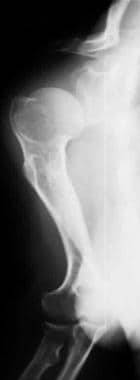
Media file 2:  Image shows rhizomelic shortening of the humerus with posterior bowing and an incomplete glenoid fossa.
Click to see larger pictureClick to see detailView Full Size Image
Media type:  X-RAY

Media file 3:  Image shows inverted femoral physes (inverted V configuration), which contributes to a waddling gait.
Click to see larger pictureClick to see detailView Full Size Image
Media type:  X-RAY

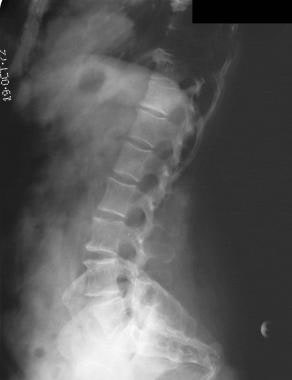
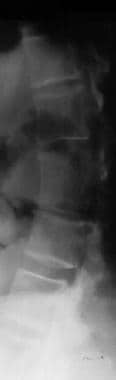
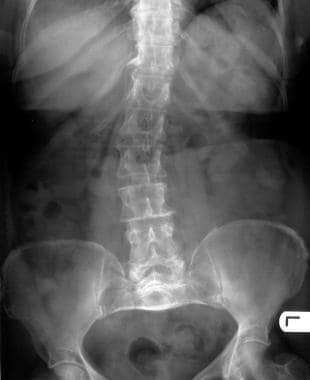
Media file 4:  Image shows progressive narrowing of the lumbar spinal canal, bullet-nose vertebrae, and marked lumbar lordosis. Note the shortened ribs.
Click to see larger pictureClick to see detailView Full Size Image
Media type:  X-RAY

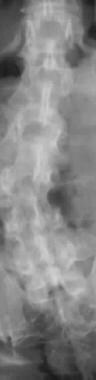
Media file 5:  Image shows progressive reduction in vertebral interpediculate distance in the caudal direction.
Click to see larger pictureClick to see detailView Full Size Image
Media type:  X-RAY

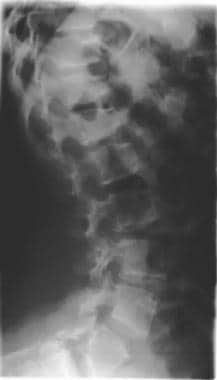
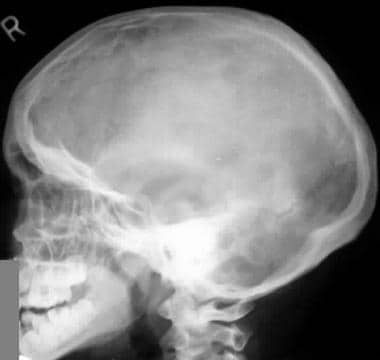
Media file 6:  The spine is often affected in achondroplasia. Features include interpediculate narrowing and thickened pedicles.
Click to see larger pictureClick to see detailView Full Size Image
Media type:  X-RAY

Media file 7:  Anterior wedging of the vertebral bodies produces a bullet shape (not shown). Disk herniation is common. Changes in the spine can result in stenosis of the spinal canal, particularly in the lumbar region.
Click to see larger pictureClick to see detailView Full Size Image
Media type:  X-RAY

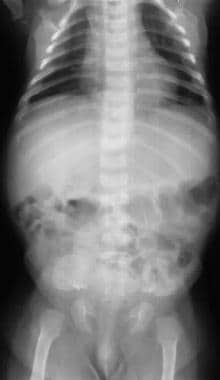
Media file 8:  Shortened ribs.
Click to see larger pictureClick to see detailView Full Size Image
Media type:  X-RAY

Media file 9:  Image shows progressive narrowing of the interpediculate distance with a champagne-glass pelvis. Note that the legs are straight in infancy.
Click to see larger pictureClick to see detailView Full Size Image
Media type:  X-RAY

Media file 10:  Image shows an enlarged calvaria with a shortened skull base and frontal bossing. Note the midface hypoplasia.
Click to see larger pictureClick to see detailView Full Size Image
Media type:  X-RAY

Media file 11:  Enlarged calvaria. Note the enlarged mandible.
Click to see larger pictureClick to see detailView Full Size Image
Media type:  X-RAY

Media file 12:  Image shows posterior bowing of the humerus, the principal cause of the loss of elbow extension. Posterior dislocation of the radial head may also contribute.
Click to see larger pictureClick to see detailView Full Size Image
Media type:  X-RAY

Media file 13:  Champagne-glass pelvis with squared iliac wings, a narrow sacroiliac notch, and a reduced acetabular angle.
Click to see larger pictureClick to see detailView Full Size Image
Media type:  X-RAY

Media file 14:  Patient with achondroplasia and pelvic changes less severe than those in the patient in Image 14.
Click to see larger pictureClick to see detailView Full Size Image
Media type:  X-RAY

Media file 15:  Trident hands. Image shows widely opposed fingers of equal length.
Click to see larger pictureClick to see detailView Full Size Image
Media type:  X-RAY

Media file 16:  Trident hands.
Click to see larger pictureClick to see detailView Full Size Image
Media type:  X-RAY

Media file 17:  Image shows a decreased lumbar interpedicular distance. Note the scoliosis.
Click to see larger pictureClick to see detailView Full Size Image
Media type:  X-RAY

Media file 18:  Image shows concave scalloping of the posterior surface of the vertebral bodies.
Click to see larger pictureClick to see detailView Full Size Image
Media type:  CT

Media file 19:  Image shows scoliosis.
Click to see larger pictureClick to see detailView Full Size Image
Media type:  X-RAY

Media file 20:  Image shows bullet-nose hypoplastic vertebrae with a narrowed anteroposterior diameter of the spine.
Click to see larger pictureClick to see detailView Full Size Image
Media type:  X-RAY

Media file 21:  Ellis-van Creveld (EVC) syndrome is a differential diagnosis of short-limb dwarfisms. It is also known as chondroectodermal dysplasia. This autosomal recessive disease involves chromosome 4p16. The hands demonstrate polydactyly in almost all patients, whereas the feet demonstrate polydactyly in only 10%. Note the broad hands with short middle phalanges and hypoplastic distal phalanges. The carpal bones are malformed, with fusion of the capitate and hamate. Extracarpal bones might also be present. The ends of the ulna and radius are enlarged.
Click to see larger pictureClick to see detailView Full Size Image
Media type:  X-RAY

Media file 22:  Ellis-van Creveld (EVC) syndrome is a differential diagnosis of short-limb dwarfisms. It is also known as chondroectodermal dysplasia. This autosomal recessive disease involves chromosome 4p16. The hands demonstrate polydactyly in almost all patients, whereas the feet demonstrate polydactyly in only 10%. Note the broad hands with short middle phalanges and hypoplastic distal phalanges. The carpal bones are malformed, with fusion of the capitate and hamate. Extracarpal bones might also be present. The ends of the ulna and radius are enlarged. (See also Image 22.)
Click to see larger pictureClick to see detailView Full Size Image
Media type:  X-RAY

Media file 23:  The knees of patients with Ellis-van Creveld (EVC) syndrome develop a genu valgus deformity, and the long bones are short. Hypoplasia of the proximal tibia is also present. (See also Images 21-22.)
Click to see larger pictureClick to see detailView Full Size Image
Media type:  X-RAY

Media file 24:  The knees of patients with Ellis-van Creveld (EVC) syndrome develop a genu valgus deformity, and the long bones are short. Hypoplasia of the proximal tibia is also present. (See also Images 21-22.)
Click to see larger pictureClick to see detailView Full Size Image
Media type:  X-RAY

Media file 25:  The thoracic cavity of this patient with Ellis-van Creveld (EVC) syndrome is small and narrow, with short ribs. About 60% of patients have cardiac anomalies, and most patients ultimately die from respiratory illness.
Click to see larger pictureClick to see detailView Full Size Image
Media type:  X-RAY

Media file 26:  In Ellis-van Creveld (EVC) syndrome, the teeth are hypoplastic, as are the nails. The teeth are small and cone shaped, with irregular spacing. Other facial anomalies include a partial harelip.
Click to see larger pictureClick to see detailView Full Size Image
Media type:  X-RAY

Media file 27:  Metaphyseal chondroplasia (Schmid type) is a differential diagnosis of achondroplasia, with metaphyseal flaring of the ulna and radius as well as bowing of the shaft. Note no hand involvement with metaphyseal chondroplasia, unlike achondroplasia.
Click to see larger pictureClick to see detailView Full Size Image
Media type:  X-RAY

Media file 28:  Metatrophic dwarfism II, or Kniest syndrome, is a differential diagnosis. Skeletal dysplasia results in short limbs and a proportionally long trunk; however, the head and face appear normal. With time, severe kyphoscoliosis produces marked shortening of the trunk, which can make body proportions deceiving.
Click to see larger pictureClick to see detailView Full Size Image
Media type:  X-RAY