Continually Updated Clinical Reference
 
 
  All Sources     eMedicine     Medscape     Drug Reference     MEDLINE
 
eMedicine - Pseudocyst, Pancreatic : Article by

Quick Find
Authors & Editors
Introduction
Differentials
Radiograph
CT SCAN
MRI
Ultrasound
Nuclear Medicine
Angiography
Intervention
Multimedia
References

Related Articles
Pancreas, Mucinous Cystic Neoplasm

Pancreas, Serous Cystadenoma

Pancreatitis, Acute

Pancreatitis, Chronic


Patient Education
Click here for patient education.


Author: Michael AJ Sawyer, MD, Director, Videoendoscopic Surgical Institute of Oklahoma, Consulting Staff, Department of Surgery, Comanche County Memorial Hospital; Consulting Staff, Great Plains Surgical Clinic, Lawton, Oklahoma

Michael AJ Sawyer is a member of the following medical societies: American College of Surgeons, Society for Surgery of the Alimentary Tract, Society of American Gastrointestinal and Endoscopic Surgeons, and Society of Laparoendoscopic Surgeons

Coauthor(s): Manish K Varma, MD, Chief of Interventional Radiology, Department of Radiology, Tripler Army Medical Center

Editors: Glenn Krinsky, MD, Chief of Abdominal Imaging Section, Associate Professor, Department of Radiology, New York University School of Medicine; Bernard D Coombs, MB, ChB, PhD, Consulting Staff, Department of Specialist Rehabilitation Services, Hutt Valley District Health Board, New Zealand; Udo P Schmiedl, MD, PhD, Clinical Professor, Department of Radiology, University of Washington; Consulting Staff, Swedish Medical Center, University of Washington Medical Center, Seattle Radiologists; Robert M Krasny, MD, Consulting Staff, Department of Radiology, The Angeles Clinic and Research Institute; Eugene C Lin, MD, Consulting Staff, Department of Radiology, Virginia Mason Medical Center

Author and Editor Disclosure

Synonyms and related keywords: lesser sac fluid collection, acute fluid collection, internal pancreatic fistula, postnecrotic pseudocysts, retention cysts, pancreatic cysts, postnecrotic pseudocysts

Background

Pancreatic pseudocysts are the most common cystic lesions of the pancreas, accounting for 75-80% of such masses. A pancreatic pseudocyst is a collection of amylase-rich, lipase-rich, and enterokinase-rich fluid. It is most frequently located in the lesser peritoneal sac in proximity to the pancreas. Large pseudocysts can extend into the paracolic gutters; pelvis; mediastinum; and, rarely, the neck or scrotum. Some pseudocysts in the pancreatic parenchyma are loculated. The most common etiologies for pancreatic pseudocysts include chronic pancreatitis, acute pancreatitis, and pancreatic trauma. In addition, pseudocysts are associated with pancreatic ductal obstruction and pancreatic neoplasms.

Pseudocystic fluid has electrolyte concentrations similar to those in plasma. In contrast, pseudocystic fluid has a high concentration of amylase, lipase, and enterokinases such as trypsin. These concentrations reflect the origin of the lesion from extravasated pancreatic exocrine secretions resulting from pancreatic ductal disruption. The pancreatic secretions incite an intense inflammatory response, which eventually leads to the development of a thick fibrous capsule surrounding the pancreatic fluid.

For the first 3-4 weeks, any fluid that is associated with an episode of acute pancreatitis is called an acute fluid collection. Typically, acute fluid collections do not have high amylase concentrations. They do not possess a thick fibrous capsule, and they usually have an irregular shape. They may or may not be associated with peripancreatic fat necrosis. These features are in contrast with those of pancreatic pseudocysts, which have high amylase concentrations, are surrounded by a thick fibrous capsule, and are oval or round. The reason for these differences is that acute fluid collections do not result from pancreatic ductal disruption and the subsequent leakage of pancreatic exocrine secretions.

Acute fluid collections represent an accumulation of transudative or exudative fluids from surrounding tissues in reaction to the episode of pancreatitis. An unusual form of pancreatitis called groove pancreatitis may result in an acute fluid collection or the formation of a pseudocyst between the pancreatic head and the duodenum

Not until the fluid collection has been present for 4 or more weeks is it called a pancreatic pseudocyst. By this time, the inflammatory process leads to encapsulation of the fluid collection by a rim of fibrous tissue that may contain some granulation tissue as well. The capsule usually is densely adherent to surrounding viscera such as the stomach or duodenum.

Note that the capsule of a pancreatic pseudocyst does not possess a true epithelial lining. This is a critical point in the differentiation of pancreatic pseudocysts from cystic neoplasms of the pancreas.

Pathophysiology

Pseudocysts most commonly result from an acute or chronic inflammatory process involving the pancreas. Pancreatic trauma also can result in pseudocyst formation. In this process, the common etiologic insult that causes leakage of pancreatic juice and pseudocyst formation is pancreatic ductal disruption.

In acute pancreatitis, the ductal disruption is secondary to necrosis of part of the pancreas and subsequent duct leakage. This finding led to use of the term postnecrotic pseudocyst for pseudocysts that appear in relation to an episode of acute pancreatitis.

Patients with chronic pancreatitis may have elevated pancreatic duct pressures resulting from strictures, ductal calculi, or other causes. This effect results in a small ductal disruption that frequently is retained within the parenchyma of the gland. The types of pseudocysts sometimes are called retention cysts.

In severe acute pancreatitis, necrosis of part of the gland frequently occurs. This leads to extravasation of enzyme-rich pancreatic secretions and their loculation in potential spaces, including the lesser peritoneal sac and anterior pararenal space. At this point, this mass of pancreatic secretions and reactive exudate is termed an acute fluid collection and is found in as many as 50% of patients with acute pancreatitis, according to Luque-de Leon and Sarr.1 Acute fluid collections may contain necrotic pancreatic tissue. These collections should be considered sterile necrosis.

Most acute fluid collections associated with acute pancreatitis resolve spontaneously. Some remain for longer than 4 weeks and become encased in a fibrous capsule. Those that persist for longer than 6 weeks may be followed conservatively if they are smaller than 6 cm in diameter. They still have an excellent chance of undergoing complete spontaneous resolution with a low morbidity rate. Pseudocysts that persist for more than 6 weeks and are 6 cm in diameter or larger have a low likelihood of complete spontaneous resolution and are associated with significant morbidity rates. These pseudocysts should be drained.

Chronic pancreatitis is the most common cause of pancreatic pseudocysts. Pancreatic ductal disruption may be present in patients with pseudocysts associated with chronic pancreatitis. The presentation of a pancreatic pseudocyst resulting from chronic pancreatitis is subtler than the presentation of acute pancreatitis. Patients with chronic pancreatitis frequently complain of vague abdominal pain or early satiety. Occasionally, nausea and vomiting are prominent components of the clinical picture. Gastrointestinal tract complaints can prompt the clinician to order abdominal ultrasonographic (US) studies or abdominal CT scans. These studies are highly sensitive for demonstration of pancreatic pseudocysts.

Confusion surrounding disparate terminologies and descriptions used to define acute fluid collections, pancreatic pseudocysts, and other peripancreatic fluid collections was addressed at the International Symposium on Acute Pancreatitis convened in Atlanta, Georgia, in 1992. Bradley reported the results of this symposium (Bradley, 1993).2 Some of the definitions produced by consensus at this meeting include the following:

  • Acute fluid collections: An acute fluid collection occurs early in the course of acute pancreatitis. It is located in proximity to the gland or within it. An acute fluid collection has no epithelial lining or capsule composed of fibrous or granulation tissue.
  • Pancreatic pseudocysts: A pancreatic pseudocyst is a fluid collection contained within a well-defined capsule of fibrous or granulation tissue or a combination of both. A pseudocyst does not possess an epithelial lining. Pseudocysts may develop in the setting of acute pancreatitis or chronic pancreatitis.
  • Pancreatic cysts: A pancreatic cyst is an epithelial wall or capsule that contains a fluid collection. Included in this group are congenital cysts and cystic neoplasms such as mucinous cystic tumors or serous cystadenomas.

Frequency

United States

Pseudocysts are the most common complication associated with chronic pancreatitis. Morel and Rohner wrote that a pseudocyst is found in 40-70% of patients undergoing surgical therapy for chronic pancreatitis.3 The incidence of true pseudocyst formation after an episode of acute pancreatitis is lower and approximately 10%, according to Bradley et al (Bradley, 1979).4 Overall, approximately 10,000 pancreatic pseudocysts are reported annually in the United States.

International

Pancreatic pseudocysts are known worldwide. Their incidence is similar to that in the United States, based on the prevalence of pancreatitis in each country.

Mortality/Morbidity

  • Morbidity: Most pancreatic pseudocysts resolve spontaneously. Most published reports describe spontaneous resolution rates of greater than 50%. Beebe and associates reported that 85% of the pseudocysts followed in their series resolved spontaneously.5
  • Mortality: Death directly attributable to a pancreatic pseudocyst is rare. Death occurs most frequently when vessel erosion results in a pseudoaneurysm that ruptures and bleeds freely into the peritoneal cavity. Reported mortality rates in this situation are 40-80%. Surgical mortality rates for patients undergoing surgical drainage are 0-6%.

Race

No well-described racial predilection exists for the formation of pancreatic pseudocysts.

Sex

No data exist to prove a proclivity for pseudocyst formation on the basis of sex.

Age

As Cooperman highlighted, pancreatic pseudocysts can occur anywhere in the pancreas in persons of any age.6 Because the common etiologies for pseudocyst formation include pancreatitis due to gallstones or alcohol, most pseudocysts are detected in adults.

Anatomy

Thorough knowledge of the anatomy of the pancreas and surrounding structures is essential for proper evaluation of patients with pancreatic pseudocysts and for planning potential therapeutic interventions. By convention, the pancreas is divided into 4 parts: head, neck, body, and tail.

The head of the pancreas forms the right side of the gland. It is cradled within the C-loop created by the course of the second through fourth portions of the duodenum. Anteriorly, the head of the pancreas is covered partially along its superior surface by the first portion of the duodenum. The gastroduodenal artery courses along the anterior surface of the pancreas, in a cephalic-to-caudal direction, creating a groove or indentation in the anterior surface of the gland that describes the boundary between the head and neck of the pancreas. Other anterior relations of the pancreatic head include the omental bursa, the greater omentum, the transverse colon, and the transverse mesocolon.

Posteriorly, the head of the pancreas rests against the right crus of the diaphragm, and it overlies the inferior vena cava. The termini of the renal veins are also posteriorly related to the pancreatic head, as is the aorta. The uncinate process is a projection of the left caudal area of the head of the pancreas, which is insinuated between the aorta and the superior mesenteric vessels. The intrapancreatic portion of the common bile duct courses along the posterior surface of the pancreas, or it may be partially embedded in the gland.

Anteriorly, the neck of the pancreas is in contact with the pylorus and the lesser peritoneal sac or omental bursa. Anterior to the omental bursa is the posterior surface of the stomach. The posterior relations of the neck of the pancreas include the termini of the splenic and superior mesenteric veins and their confluence to form the portal vein. The aorta and, more deeply, the spinal column are also important posterior relations of the pancreatic neck.

The predominant anterior relation of the body of the pancreas is the lesser peritoneal sac or omental bursa. The superior edge of the transverse mesocolon is in continuity with the peritonealized surface of the body of the pancreas. The splenic vein courses along the posterior surface of the pancreatic body, and the inferior mesenteric vein may course cephalad posterior to the body to join the splenic vein. The body of the pancreas rests against the aorta and the takeoff of the superior mesenteric artery. Other posterior relations include the left kidney, left renal vessels, left adrenal gland, and left crus of the diaphragm. The ligament of Treitz, the first several centimeters of the jejunum, and the splenic flexure of the colon are inferiorly related to the body of the pancreas.

The tail of the pancreas is at the left end of the gland and extends in the lienorenal ligament to contact the spleen at the splenic hilum. Anteriorly, the omental bursa and the splenic flexure of the colon are related to the pancreatic tail. Posteriorly, the left kidney is found.

The normal pancreatic duct system consists of the major pancreatic duct of Wirsung and the minor pancreatic duct of Santorini. The duct of Wirsung drains exocrine secretions from the tail, body, neck, and most of the head of the pancreas. It approaches the common bile duct and may join it, but it more commonly drains through a separate orifice at the ampulla of Vater. The duct of Santorini is responsible for draining part of the pancreatic head. Its orifice is found in the duodenum just proximal to the ampulla of Vater.

The arterial blood supply to the pancreas is derived from 4 major sources:

  • The anterior superior and posterior superior pancreaticoduodenal arteries are branches of the gastroduodenal artery.
  • The anterior inferior and posterior inferior pancreaticoduodenal arteries are derived from the superior mesenteric artery.
  • The splenic artery provides numerous branches to the pancreas during its course along the dorsal superior aspect of the gland.
  • The gastroduodenal artery provides additional arterial blood to the pancreas via its retroduodenal branch

.

Pancreatic veins drain into the superior mesenteric and splenic veins, and the lymphatic drainage from the pancreas goes to the pancreaticoduodenal, pancreaticolienal, portal, and celiac lymph nodes.

The major relevance of these anatomic relations is that a pancreatic pseudocyst can adhere to one or more hollow viscera after forming in a potential space, most commonly the lesser peritoneal sac. Therapeutic options are dictated by the anatomy and can include cystgastrostomy, cystoduodenostomy, cystojejunostomy, or combinations of the three.

With the abundance of major vessels in the region, imagining how vascular complications related to pseudocysts can occur is not difficult. Complications include thrombosis; pseudoaneurysm formation; and rupture of vessels, most commonly the splenic artery or vein.

Clinical Details

Physical findings

Results of the physical examination vary. Patients can have tenderness to palpation in the epigastrium. Thorough physical examination elicits the presence of a palpable upper abdominal mass in approximately 50% of patients with pancreatic pseudocysts. Ongoing free intraperitoneal hemorrhage can be associated with abdominal pain and with signs of shock.

Acute fluid collections are common in patients with acute pancreatitis or exacerbations of chronic pancreatitis. Acute fluid collections are easily diagnosed by using abdominal CT, which has become a routine study in the evaluation of patients with pancreatitis. The vast majority of acute fluid collections resolve.

Clinical suspicion for the presence of a pancreatic pseudocyst usually is aroused first by the persistence of abdominal pain following resolution of pancreatitis. Abdominal pain that persists for longer than 3 weeks after recovery from pancreatitis is a presenting symptom in 80-90% of patients with pancreatic pseudocysts, according to Cohen and Prinz.7 The authors also described abdominal fullness, nausea and vomiting, and weight loss as occurring in 40-50% of patients with pseudocysts. If the cyst compresses or obstructs the common bile duct or the second portion of the duodenum, jaundice and pruritus may become part of the clinical constellation.

Involvement of the stomach can cause early satiety, nausea, and, occasionally, vomiting. Pseudocysts that compress the duodenum can cause nausea, vomiting, and varying degrees of biliary obstruction. Vague epigastric or upper-quadrant abdominal pain is a frequent complaint in all of these scenarios.

Prolonged studies of the natural history of pseudocysts are a rarity. Vitas and Sarr published a series in which 68 patients with pancreatic pseudocysts were followed. After 51 months, 63% of the patients were asymptomatic. Only 9% of the patients developed any of the complications described above.8

Complications

Among the important complications associated with pancreatic pseudocysts are infection, obstruction, perforation, hemorrhage, and thrombosis. The most common acute complication of pancreatic pseudocysts is infection, which is heralded clinically by the presence of fever; worsening abdominal pain; and, occasionally, systemic signs of sepsis such as tachycardia, tachypnea, and hypotension. Laboratory analysis frequently demonstrates leukocytosis.

Obstruction of the hollow viscera of the gastrointestinal tract is not uncommon with pseudocysts that have been present for a long time. The presentation is usually less dramatic, and complete obstruction is uncommon. The presentation depends on the location of the pseudocyst and the particular viscus it is compressing, although true differentiation based on the symptoms alone may be difficult because of protean manifestations.

Pseudocysts may erode one of several named vessels, leading to pseudoaneurysm formation. The vessel most commonly affected is the splenic artery. The gastroduodenal artery, pancreaticoduodenal arteries, gastroepiploic and gastric arteries, and others have been involved as well. Acute episodes of hemorrhage associated with rupture of a pseudoaneurysm may be limited and present with sudden severe abdominal pain.

Pseudocysts may compress vascular structures as well, most commonly veins, which can lead to thrombosis. The most frequently affected vessel is the splenic vein.

Preferred Examination

Abdominal CT is performed in virtually every patient presenting with clinically significant pancreatitis or abdominal trauma severe enough to result in pancreatic ductal disruption. Therefore, abdominal CT is commonly the initial radiologic examination used to identify an acute fluid collection related to pancreatic ductal disruption.

Once the diagnosis is made, screening patients for resolution of the fluid collection is acceptable by using abdominal US. However, if a mature pseudocyst forms and does not resolve, repeat CT scanning is advised before planned percutaneous, endoscopic, or surgical interventions.

Limitations of Techniques

Currently available CT scanners enable the identification of virtually all clinically significant pancreatic pseudocysts. The major limitation is the inability to differentiate pseudocysts from cystic neoplasms by using CT.


Pancreas, Mucinous Cystic Neoplasm
Pancreas, Serous Cystadenoma
Pancreatitis, Acute
Pancreatitis, Chronic


Findings

Plain radiographs are not a typical choice in the diagnostic armamentarium for pancreatic pseudocysts. These images may be obtained in patients undergoing a workup for nonspecific abdominal pain.

If the patient has a pancreatic pseudocyst, plain abdominal radiographs may depict its presence on the basis of the mass effect caused by the pseudocyst. In this case, findings include suggestion of a soft-tissue mass displacing or compressing surrounding hollow viscera such as the stomach, duodenum, or transverse colon. Other diagnostic clues to the condition can include the presence of calcifications in the pancreatic duct in a patient with chronic pancreatitis.

Degree of Confidence

Although plain radiographs can demonstrate soft-tissue mass effect, findings are nonspecific and must be confirmed by using other diagnostic modalities. The studies of choice include abdominal CT scanning and abdominal US.

False Positives/Negatives

Other cystic lesions of the pancreas may be misinterpreted as pancreatic pseudocysts. No normal anatomic variants mimic a pseudocyst.


Findings

Abdominal CT is an excellent choice for imaging acute fluid collections and pancreatic pseudocysts. Most patients with clinically significant pancreatitis undergo CT scanning. Contrast-enhanced dynamic CT scans are instrumental in determining the severity of pancreatitis (percentage of pancreatic necrosis). Therefore, they have become important predictors of the clinical course and prognosis.

Approximately 30-50% of patients presenting with acute pancreatitis have an associated acute fluid collection according to the work of Siegelman and colleagues9 and Bradley and coworkers.10 The fluid collections are found in the lesser omental sac; in other peripancreatic locations; or, occasionally, within the gland.

CT characteristics of an acute fluid collection include low attenuation and a homogeneous appearance. Occasionally, especially when associated with severe acute pancreatitis, CT attenuation values may be greater than 20-30 HU (Hounsfield units) because of the presence of necrotic pancreatic or peripancreatic debris or blood within the confines of the acute fluid collection. The presence of such material in the pseudocyst can make its appearance more heterogeneous on CT scans.

Pancreatic pseudocysts have several features that help distinguish them from acute fluid collections on CT scans. Most prominent is the presence of a well-defined, nonepithelial, fibrous wall around the pseudocyst. The wall is the result of the intense inflammatory response associated with pancreatitis and the spillage of enzyme-rich pancreatic juice into the peripancreatic tissues.

Pseudocysts are round or ovoid in configuration, whereas acute fluid collections are not well defined. A thick pseudocyst capsule may enhance with the addition of contrast. Bradley has described a time course of at least 4 weeks before an acute fluid collection matures into a pseudocyst, which occurs in as many as 50% of patients with an acute fluid collection.10, 4

Degree of Confidence

The identification of a thick-walled, rounded, fluid-filled mass adjacent to the pancreas on an abdominal CT scan in a patient with a history of acute or chronic pancreatitis is virtually pathognomonic for pancreatic pseudocyst. Positive CT findings in this clinical situation do not require confirmation with another diagnostic modality.

Both abdominal CT scanning and US are highly sensitive and specific for the diagnosis of a pancreatic pseudocyst. In the acute setting, a CT scan is the better choice because significant amounts of bowel gas resulting from ileus or obstruction decrease the sensitivity of US. In addition, CT scans provide more detailed information regarding the surrounding anatomy and can demonstrate additional pathology, including pancreatic duct dilatation and calcifications, common bile duct dilatation, and extension of the pseudocyst outside the lesser sac.

False Positives/Negatives

The major weakness of CT scanning is the relative inability to distinguish pseudocyst from cystic neoplasms, especially mucinous cystadenomas and intraductal papillary mucinous tumors (IPMT). As Cooperman stated, the clinical history provides clues to a diagnosis other than pancreatic pseudocyst.6 If the patient has had no prior history of pancreatitis but has a cystic mass associated with the pancreas, an alternative diagnosis should be entertained.


Findings

Magnetic resonance imaging (MRI) and magnetic resonance cholangiopancreatography (MRCP) are sensitive diagnostic modalities for pancreatic pseudocysts. They are generally not routinely used because CT scanning typically offers all the diagnostic information that is required. However, the increased contrast provides for better characterization of fluid collections. MRI or MRCP is superior to CT in depicting debris within fluid collections and pseudocysts, as described by Chalmers11 and by Morgan and coworkers.12

On T2-weighted images, a fluid-filled cystic mass produces high signal intensity and appears bright on images. The pancreatic duct and biliary systems are easily visualized in detail, although interpreting the status of pancreatic duct integrity is difficult.

Degree of Confidence

As with CT scanning, the detection of a cystic mass in the proper clinical context should make the examiner confident that a pancreatic pseudocyst is present.

Although MRI is more expensive than CT, it has multiplanar capabilities, it requires no ionizing radiation, and it involves non-nephrotoxic contrast agents. Its ability to depict choledocholithiasis is far superior to that of CT or US. Furthermore, MRCP techniques can also depict subtle branch-chain dilatation in chronic pancreatitis. They are also highly sensitive to blood products such as that seen in complex hemorrhagic fluid collections or pseudocysts.

False Positives/Negatives

Megibow and coworkers13 and Dani and colleagues14 have stated that MRI offers no advantage over CT scanning in the differentiation of pancreatic pseudocysts from other pancreatic cystic lesions. The patient's clinical history is extremely important in this situation.


Findings

Pancreatic pseudocysts appear as anechoic structures associated with acoustic enhancement on US examination. They are well defined and round or oval, and they are contained within a smooth wall.

During the early phases of their development, pseudocysts can appear more complex, with varying degrees of internal echoes. Usually, this appearance results from the presence of necrotic pancreatic and peripancreatic debris and is more common in pseudocysts that form as a result of acute necrotizing pancreatitis than in other pseudocysts. The debris is cleared over time. The pseudocyst can appear more complex in 2 other instances: when hemorrhage occurs into the cyst or when infection of the cyst complicates the clinical course.

Color Doppler or duplex scanning should always be performed in cystic lesions to ensure that the lesion in question is not a giant pseudoaneurysm.

Degree of Confidence

Sensitivity rates for US in the detection of pancreatic pseudocysts are 75-90%, according to Pitchumoni and Agarwal15; therefore, US is slightly inferior to CT, which has a sensitivity of 90-100%.

US has several limitations, as compared with CT, in the initial diagnosis of a pseudocyst: the presence of overlying bowel gas decreases the sensitivity of US, and unlike CT, US examinations are highly operator dependent. However, CT scans provide more information regarding the surrounding viscera and vasculature.

False Positives/Negatives

No normal anatomic variants mimic the presence of a pseudocyst; however, other cystic pancreatic masses can be misinterpreted as pseudocysts. This observation is important because as many as 10% of cystic pancreatic lesions are neoplasms; examples of these include serous and mucinous cystadenomas and mucinous cystadenocarcinomas. Clues to the diagnosis of a neoplastic cyst include a complex nature and the presence of internal septations, which can be extremely difficult to detect with US.

Brugge states that endoscopic US is helpful in the differentiation of pancreatic fluid collections.16 Endoscopic US is more sensitive than transcutaneous US for demonstrating the internal architecture of the lesions.


Findings

Radionuclide examinations are rarely used for the diagnosis of pancreatic pseudocysts. Nevertheless, they can depict the presence of a pseudocyst, which appears as a photon-deficient mass in proximity to the pancreas. Tracers used in the diagnosis of a pancreatic pseudocyst include gallium-67 citrate and selenium-75 selenomethionine.

Pseudocysts can also be demonstrated scintigraphically if they dissect into the spleen, where they can be associated with subcapsular splenic hemorrhage. In these instances, case reports have been published in which a pseudocyst was imaged as a splenic defect on scanning using technetium-99m sulfur colloid.

Degree of Confidence

Nuclear medicine scans must be considered a poor choice in the diagnosis of pancreatic pseudocysts. They depend on indirect information such as compression or invasion of surrounding structures. The information they provide can demonstrate a mass effect but is nonspecific in aiding with an exact diagnosis.

If the presence of a pseudocyst is suggested on the basis of the results of a nuclear medicine study, the diagnosis must be confirmed by means of a more accurate examination such as abdominal CT or abdominal US. These studies are highly accurate in the diagnosis of a pancreatic pseudocyst.

False Positives/Negatives

No specific conditions cause false-negative or false-positive findings on nuclear medicine scans.


Findings

Angiography is rarely, if ever, useful in the diagnosis of pancreatic pseudocysts. Arterial pseudoaneurysms resulting from vessel erosion by pancreatic pseudocysts and acute pancreatitis are another matter. In these conditions, angiography can be used as both a diagnostic technique and a therapeutic modality.

Expectant management of pancreatic pseudocysts, including observation and waiting for their resolution, has been associated with rates of significant hemorrhage as high as 18%, according to a report by Kiviluoto and coworkers.17 Angiographic intervention has been helpful in controlling such hemorrhage. In addition, interventional angiographic techniques have been instrumental in decreasing the mortality rate associated with hemorrhagic complications of acute pancreatitis by transcatheter embolization of bleeding vessels and pseudoaneurysms.

Degree of Confidence

For diagnostic purposes, angiography is not a good choice because it is invasive, it exposes the patient to contrast material, and it offers no advantages over CT, MRI, or US.

False Positives/Negatives

To the authors' knowledge, no comprehensive discussions describe the issue of false-positive or false-negative angiographic findings related to pancreatic pseudocysts.


Controversy exists over the optimal timing for treatment of pancreatic pseudocysts. Authors advocating conservative therapy and observation state that the old rule dictating intervention on all pseudocysts larger than 6 cm that have been present for longer than 6 weeks is not founded on solid scientific data. However, the complication rates associated with pancreatic pseudocysts are, in fact, positively correlated with the duration of the cyst's presence.

Pseudocysts may rupture spontaneously or perforate. If the pseudocyst ruptures into a hollow viscus, it may completely resolve spontaneously. Free perforation into the peritoneal cavity produces the clinical picture of an acute abdomen. The patients are operated on emergently, and the remainder of the cyst is debrided and wide drainage established.

Once a decision is made to treat a patient with a pancreatic pseudocyst, a therapeutic approach is chosen from among the existing options. These include surgical drainage, endoscopic drainage, and percutaneous drainage.

Percutaneous drainage

Percutaneous drainage is an image-guided technique performed by interventional radiologists. CT, US, or fluoroscopy can be used to guide the percutaneous drainage. Formal percutaneous drainage should always be chosen instead of simple percutaneous aspiration because simple percutaneous aspiration is associated with cyst recurrence rates of approximately 63% and overall treatment failure in 54% of patients, according to data published by Gumaste and Pitchumoni.18

Percutaneous drainage involves penetration of the pseudocyst by an image-guided needle. Next, a guidewire is inserted through the needle and into the cyst. Finally, a pigtail catheter, usually 7F to 12F in diameter, is passed over the guidewire. Gumaste and Pitchumoni describe better results with continuous drainage in this manner, with failure rates and recurrence rates of approximately 16% and 7%, respectively.18

Complications associated with percutaneous drainage include catheter-site cellulitis and damage to adjacent organs such as the spleen, stomach, colon and small bowel, with the potential for fistula formation and gastrointestinal tract hemorrhage. The most serious complication associated with percutaneous drainage is the conversion of a sterile pseudocyst into an infected pseudocyst, which is reported to occur in as many as 10% of patients.

Comparison of drainage techniques

A few studies have compared the results of surgical drainage with the results of percutaneous catheter drainage. The findings have been mixed.

Rao and coworkers reported results with 70 patients. Of the patients, 52 underwent surgical drainage, 15 underwent percutaneous catheter drainage, 2 underwent endoscopic drainage, and 1 underwent combined percutaneous and endoscopic approach. The morbidity rate was 33% in the nonsurgical group, compared with 14% in the surgical group. Resolution of the pseudocyst was accomplished at a mean duration of 20 days in the surgical group and 104 days in the nonsurgical group (P = .01).19

Criado et al described long-term success after percutaneous pseudocyst drainage in only 9 (21%) of 42 patients. Ultimately, more than half of the patients required formal surgical drainage.20

In contrast, Adams and Anderson published findings from a retrospective analysis of 94 patients. The study population consisted of 42 patients undergoing internal surgical drainage and 52 patients undergoing percutaneous pseudocyst drainage. Significant complications occurred in 16.7% of the patients undergoing surgery and in 7.7% of the patients undergoing percutaneous drainage (P > .05). A subsequent operation was required in 9.5% of the surgical group and 19.2% of the percutaneous drainage group (P > .05). A significantly higher mortality rate was associated with surgical therapy (9%) than with percutaneous therapy (1%; P < .05).21

A prospective trial conducted by Lang included 26 patients each in surgical and percutaneous drainage treatment groups. Pseudocyst resolution rates were 88% in the surgical group and 77% in the percutaneous drainage groups. Recurrence rates at 6 months were 15% and 12%, respectively. Neither of the differences were statistically significant.22

Medical/Legal Pitfalls

  • Failure to diagnose a pancreatic pseudocyst
    • Current profuse usage of abdominal CT scanning and US imaging should make the failure to diagnose a pancreatic pseudocyst a rare occurrence.
    • These imaging modalities should be used liberally in the appropriate clinical scenarios, such as in a patient recovering from acute pancreatitis who presents with persistent abdominal pain or in a patient with chronic pancreatitis who has complaints such as nausea, vomiting, early satiety, or a sudden crescendo in the level of abdominal pain.
  • Failure to recognize the malignant potential of a cystic lesion of the pancreas
    • The lack of a history of pancreatitis should raise concern about the potential for a neoplastic process in a patient with a cystic lesion of the pancreas.
    • The radiologist can image the lesion, but final diagnosis depends on the pathologic examination of an adequate surgical specimen of the cyst wall.
    • Complete excision is usually necessary.
  • Failure to counsel patients adequately and completely regarding potential complications and the need for additional interventional procedures when attempting percutaneous drainage of a pseudocyst
    • Patients in whom percutaneous drainage of a pancreatic pseudocyst is under consideration should have the procedure fully explained to them, along with the risk for minor and major complications and the potential lack of resolution of the pseudocyst or its recurrence.
    • The potential need for subsequent formal operative drainage should be addressed.


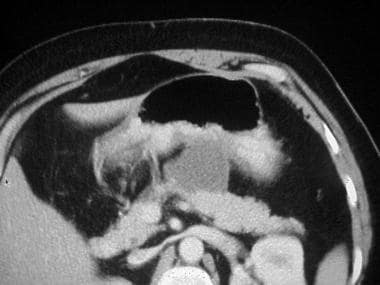
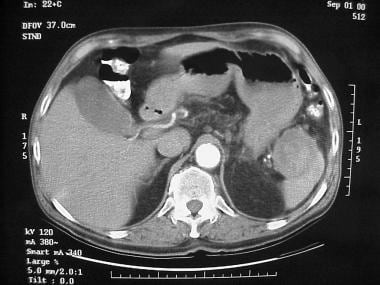
Media file 1:  CT scan of a large symptomatic pancreatic pseudocyst abutting the posterior wall of the stomach (same patient as in Images 2-10).
Click to see larger pictureClick to see detailView Full Size Image
Media type:  CT

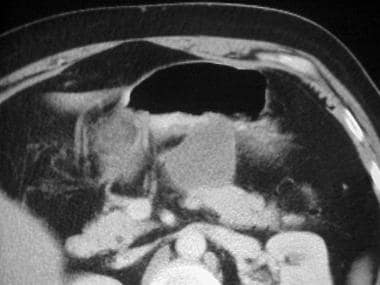
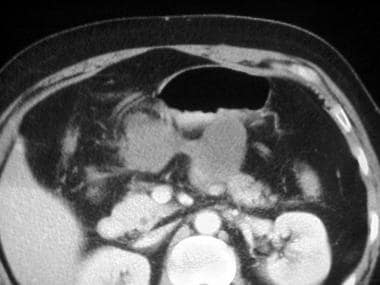
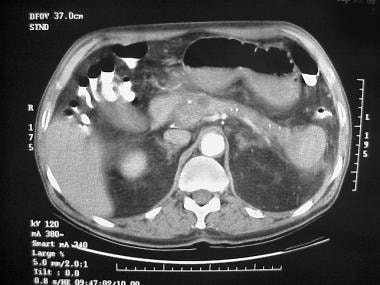
Media file 2:  CT image of a pancreatic pseudocyst shows that it has a mature, thick capsule and that it adheres to the posterior wall of the stomach (same patient as in Images 1 and 3-10).
Click to see larger pictureClick to see detailView Full Size Image
Media type:  CT

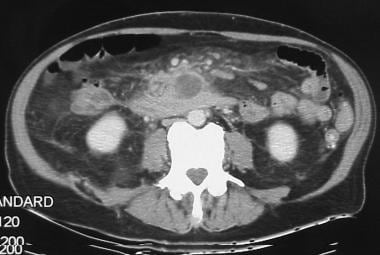
Media file 3:  CT image of a pancreatic pseudocyst suggests the complex nature of the pseudocyst, which is composed of 2 connected cavities (same patient as in Images 1-2 and 4-10).
Click to see larger pictureClick to see detailView Full Size Image
Media type:  CT

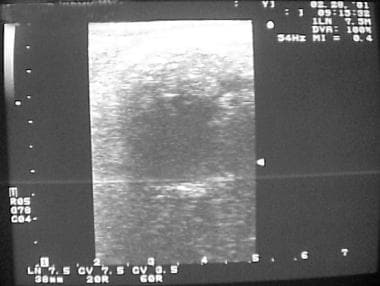
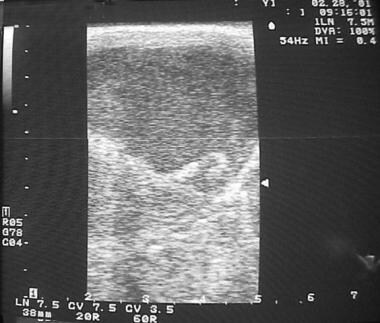
Media file 4:  Intraoperative sonogram of a pancreatic pseudocyst (same patient as in Images 1-3 and 5-10).
Click to see larger pictureClick to see detailView Full Size Image
Media type:  Image

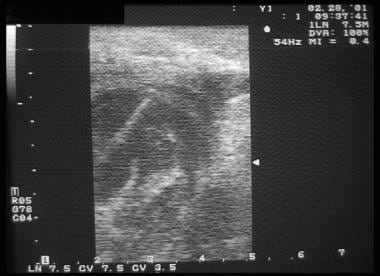
Media file 5:  Intraoperative sonogram demonstrates internal echoes in pancreatic pseudocyst fluid (same patient as in Images 1-4 and 6-10). This finding suggests presence of necrotic debris or possible pus.
Click to see larger pictureClick to see detailView Full Size Image
Media type:  Image

Media file 6:  Anterior gastrotomy was performed in a patient with a pancreatic pseudocyst (same patient as in Images 1-5 and 7-10).
Click to see larger pictureClick to see detailView Full Size Image
Media type:  Photo

Media file 7:  An intraoperative sonogram is used to guide needle placement through the posterior wall of the stomach and into a pancreatic pseudocyst (same patient as in Images 1-6 and 8-10). Fluid is aspirated to delineate placement of the cystgastrostomy site and to sample the fluid within. The needle is clearly depicted as the bright echogenic line entering the fluid-filled cavity.
Click to see larger pictureClick to see detailView Full Size Image
Media type:  Image

Media file 8:  Complex fluid-containing necrotic debris is aspirated from a pancreatic pseudocyst (same patient as in Images 1-7 and 9-10). The pseudocyst was analyzed with Gram staining and contained no organisms or cells.
Click to see larger pictureClick to see detailView Full Size Image
Media type:  Photo

Media file 9:  Guidewire threaded through a needle and left in place to assist in creation of the cystgastrostomy in a patient with a pancreatic pseudocyst (same patient as in Images 1-8 and 10).
Click to see larger pictureClick to see detailView Full Size Image
Media type:  Photo

Media file 10:  Cystgastrostomy completed in a patient with a pancreatic pseudocyst (same patient as in Images 1-9). A portion of the pseudocyst capsule should be excised and sent to the pathology laboratory to ensure that no true epithelial lining is present. The posterior walls of the stomach and pseudocyst capsule are sewn together by using a hemostatic, running, interlocking suturing technique.
Click to see larger pictureClick to see detailView Full Size Image
Media type:  Photo

Media file 11:  CT scan of a pancreatic pseudocyst emanating from the tail of the pancreas (same patient as in Images 12-21). Contrast enhancement in the pseudocyst demonstrates a pseudoaneurysm of the splenic artery branch that had bled into the pseudocyst.
Click to see larger pictureClick to see detailView Full Size Image
Media type:  CT

Media file 12:  CT scan (second in the sequence) of a patient with a pancreatic pseudocyst and an associated pseudoaneurysm (same patient as in Images 11 and 13-21). Heterogeneous appearance of the matter within the pseudocyst is consistent with a recent hemorrhage.
Click to see larger pictureClick to see detailView Full Size Image
Media type:  CT

Media file 13:  CT scan (third in the sequence) in a patient with a pancreatic pseudocyst (same patient as in Images 11-12 and 14-21) demonstrates the relationship of the pseudocyst to the tail of the pancreas.
Click to see larger pictureClick to see detailView Full Size Image
Media type:  CT

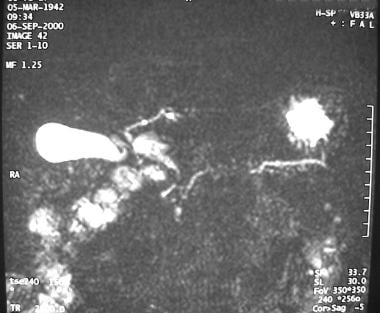
Media file 14:  Magnetic resonance cholangiopancreatogram of a pancreatic pseudocyst (same patient as in Images 11-13 and 15-21) demonstrates the pancreatic duct and pseudocyst well.
Click to see larger pictureClick to see detailView Full Size Image
Media type:  MRI

Media file 15:  Operative image in a patient with a pancreatic pseudocyst (same patient as in Images 11-14 and 16-21). In the surgeon's hand are the spleen, the pseudocyst, and the tail of the pancreas.
Click to see larger pictureClick to see detailView Full Size Image
Media type:  Photo

Media file 16:  Operative image (second in the sequence) in a patient with a pancreatic pseudocyst (same patient as in Images 11-15 and 17-21). The spleen, large pseudocyst, and distal pancreas are clearly depicted.
Click to see larger pictureClick to see detailView Full Size Image
Media type:  Photo

Media file 17:  Operative image (third in the sequence) in a patient with a pancreatic pseudocyst (same patient as in Images 11-16 and 18-21) shows the splenic artery coursing along the superior dorsal aspect of the pancreas.
Click to see larger pictureClick to see detailView Full Size Image
Media type:  Photo

Media file 18:  Operative image (fourth in the sequence) in a patient with a pancreatic pseudocyst (same patient as in Images 11-17 and 19-21) shows that the specimen, including a distal pancreatectomy, pseudocyst resection, and splenectomy site, has been removed.
Click to see larger pictureClick to see detailView Full Size Image
Media type:  Photo

Media file 19:  Operative image (fifth in the sequence) in a patient with a pancreatic pseudocyst (same patient as in Images 11-18 and 20-21) shows the oversewn stump of the pancreas.
Click to see larger pictureClick to see detailView Full Size Image
Media type:  Photo

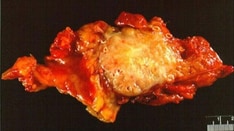
Media file 20:  Operative image (sixth in the sequence) in a patient with a pancreatic pseudocyst (same patient as in Images 11-19 and 21) shows the gross resected specimen.
Click to see larger pictureClick to see detailView Full Size Image
Media type:  Photo

Media file 21:  Final operative image (seventh in the sequence) in a patient with a pancreatic pseudocyst (same patient as in Images 11-20) shows that the pseudocyst has been opened and that the clot it contained has been removed.
Click to see larger pictureClick to see detailView Full Size Image
Media type:  Photo

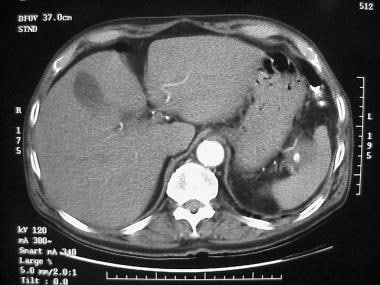
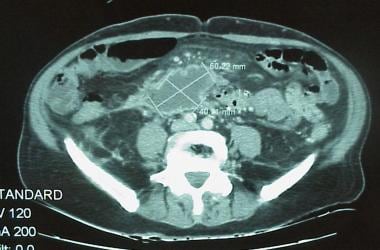
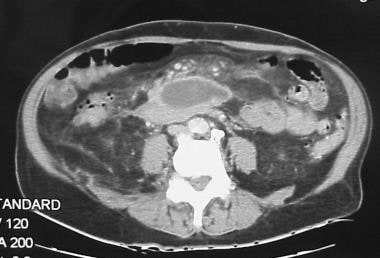
Media file 22:  CT scan (same patient as in Images 23-26) of pseudocyst causing gastric outlet obstruction. Cyst is in body of pancreas adjacent to the pylorus. Cyst-gastrostomy will not be possible.
Click to see larger pictureClick to see detailView Full Size Image
Media type:  CT

Media file 23:  CT scan (same patient as in Images 22 and 24-26) confirms maturity of cyst as demonstrated by thick wall.
Click to see larger pictureClick to see detailView Full Size Image
Media type:  CT

Media file 24:  CT scan (same patient as in Images 22-23 and 25-26)demonstrates large size of pseudocyst as measured by cursors. Based on chronicity, size and presence of symptoms, drainage of this cyst is indicated.
Click to see larger pictureClick to see detailView Full Size Image
Media type:  CT

Media file 25:  Operative photo (same patient as in Images 22-24 and 26) demonstrating location of dependent portion of cyst near base of the mesentery. The entire cyst was in a location which precluded construction of a cyst-gastrostomy.
Click to see larger pictureClick to see detailView Full Size Image
Media type:  Photo

Media file 26:  Operative photo (same patient as in Images 22-25) shows successful drainage of pancreatic pseudocyst by construction of a Roux-en-Y cyst-jejunostomy.

Click to see larger pictureClick to see detailView Full Size Image
Media type:  Photo


  1. Luque-de Leon E, Sarr MG. Management of pseudocysts in chronic pancreatitis. In: Problems in General Surgery. Vol 15. Philadelpha: Lippincott Williams & Wilkins;1998:123-44.
  2. Bradley EL 3rd. A clinically based classification system for acute pancreatitis. Summary of the International Symposium on Acute Pancreatitis, Atlanta, Ga, September 11 through 13, 1992. Arch Surg. May 1993;128(5):586-90. [Medline].
  3. Morel P, Rohner A. Surgery for chronic pancreatitis. Surgery. Feb 1987;101(2):130-5. [Medline].
  4. Bradley EL, Clements JL Jr, Gonzalez AC. The natural history of pancreatic pseudocysts: a unified concept of management. Am J Surg. Jan 1979;137(1):135-41. [Medline].
  5. Beebe DS, Bubrick MP, Onstad GR, Hitchcock CR. Management of pancreatic pseudocysts. Surg Gynecol Obstet. Dec 1984;159(6):562-4. [Medline].
  6. Cooperman AM. An overview of pancreatic pseudocysts: the emperor''s new clothes revisited. Surg Clin North Am. Apr 2001;81(2):391-7, xii. [Medline].
  7. Cohen MJ, Prinz RA. Pancreatic pseudocyst. In: Cameron JL, ed. Current Surgical Therapy. 7th ed. St Louis: Mosby-Year Book;2001:543-7.
  8. Vitas GJ, Sarr MG. Selected management of pancreatic pseudocysts: operative versus expectant management. Surgery. Feb 1992;111(2):123-30. [Medline].
  9. Siegelman SS, Copeland BE, Saba GP, et al. CT of fluid collections associated with pancreatitis. AJR Am J Roentgenol. Jun 1980;134(6):1121-32. [Medline].
  10. Bradley EL, Gonzalez AC, Clements JL Jr. Acute pancreatic pseudocysts: incidence and implications. Ann Surg. Dec 1976;184(6):734-7. [Medline].
  11. Chalmers AG. The role of imaging in acute pancreatitis. Eur J Gastroenterol Hepatol. Feb 1997;9(2):106-16. [Medline].
  12. Morgan DE, Baron TH, Smith JK, et al. Pancreatic fluid collections prior to intervention: evaluation with MR imaging compared with CT and US. Radiology. Jun 1997;203(3):773-8. [Medline].
  13. Megibow AJ, Lavelle MT, Rofsky NM. MR imaging of the pancreas. Surg Clin North Am. Apr 2001;81(2):307-20, ix-x. [Medline].
  14. Dani R, Cundari AM, Nogueira CE, et al. Magnetic resonance cholangiopancreatography in cystic lesions of the pancreas. Pancreas. Apr 2000;20(3):313-8. [Medline].
  15. Pitchumoni CS, Agarwal N. Pancreatic pseudocysts. When and how should drainage be performed?. Gastroenterol Clin North Am. Sep 1999;28(3):615-39. [Medline].
  16. Brugge WR. The role of endoscopic ultrasound in pancreatic disorders. Int J Pancreatol. Aug 1996;20(1):1-10. [Medline].
  17. Kiviluoto T, Kivisaari L, Kivilaakso E, Lempinen M. Pseudocysts in chronic pancreatitis. Surgical results in 102 consecutive patients. Arch Surg. Feb 1989;124(2):240-3. [Medline].
  18. Gumaste VV, Pitchumoni CS. Pancreatic pseudocyst. Gastroenterologist. Mar 1996;4(1):33-43. [Medline].
  19. Rao R, Fedorak I, Prinz RA. Effect of failed computed tomography-guided and endoscopic drainage on pancreatic pseudocyst management. Surgery. Oct 1993;114(4):843-7; discussion 847-9. [Medline].
  20. Criado E, De Stefano AA, Weiner TM, Jacques PF. Long term results of percutaneous catheter drainage of pancreatic pseudocysts. Surg Gynecol Obstet. Oct 1992;175(4):293-8. [Medline].
  21. Adams DB, Anderson MC. Percutaneous catheter drainage compared with internal drainage in the management of pancreatic pseudocyst. Ann Surg. Jun 1992;215(6):571-6; discussion 576-8. [Medline].
  22. Lang EK, Paolini RM, Pottmeyer A. The efficacy of palliative and definitive percutaneous versus surgical drainage of pancreatic abscesses and pseudocysts: a prospective study of 85 patients. South Med J. Jan 1991;84(1):55-64. [Medline].
  23. Ahlawat SK, Charabaty-Pishvaian A, Jackson PG, Haddad NG. Single-step EUS-guided pancreatic pseudocyst drainage using a large channel linear array echoendoscope and cystotome: results in 11 patients. JOP. 2006;7(6):616-24. [Medline].
  24. Aranha GV, Prinz RA, Esguerra AC, Greenlee HB. The nature and course of cystic pancreatic lesions diagnosed by ultrasound. Arch Surg. Apr 1983;118(4):486-8. [Medline].
  25. Barragan B, Love L, Wachtel M, Griswold JA, Frezza EE. A comparison of anterior and posterior approaches for the surgical treatment of pancreatic pseudocyst using laparoscopic cystogastrostomy. J Laparoendosc Adv Surg Tech A. Dec 2005;15(6):596-600. [Medline].
  26. Clemente CD. The abdomen. In: Anatomy: A Regional Atlas of the Human Body. 2nd ed. Baltimore: Urban & Schwa;1981:246-54.
  27. Kim YH, Saini S, Sahani D, Hahn PF, Mueller PR, Auh YH. Imaging diagnosis of cystic pancreatic lesions: pseudocyst versus nonpseudocyst. Radiographics. May-Jun 2005;25(3):671-85. [Medline].
  28. Laing FC, Gooding GA, Brown T, Leopold GR. Atypical pseudocysts of the pancreas: an ultrasonographic evaluation. J Clin Ultrasound. Feb 1979;7(1):27-33. [Medline].
  29. Lee CM, Chang-Chien CS, Lin DY, et al. The real-time ultrasonography of pancreatic pseudocyst: comparison of infected and noninfected pseudocysts. J Clin Ultrasound. Jul-Aug 1988;16(6):393-8. [Medline].
  30. Pansky B. Pancreas. In: Review of Gross Anatomy. 4th ed. New York: Macmillan Publishing Co;1979:332-3.
  31. Rattner DW, Warshaw AL. Surgical intervention in acute pancreatitis. Crit Care Med. Jan 1988;16(1):89-95. [Medline].
  32. Scott-Conner C, Dawson DL. Internal drainage of pancreatic pseudocysts. In: Operative Anatomy. Philadelphia: Lippincott;1993:427-30.
  33. Stanley JC, Frey CF, Miller TA, et al. Major arterial hemorrhage: a complication of pancreatic pseudocysts and chronic pancreatitis. Arch Surg. Apr 1976;111(4):435-40. [Medline].
  34. Teh SH, Pham TH, Lee A, Stavlo PL, Hanna AM, Moir C. Pancreatic pseudocyst in children: the impact of management strategies on outcome. J Pediatr Surg. Nov 2006;41(11):1889-93. [Medline].
  35. vanSonnenberg E, Wittich GR, Casola G, et al. Percutaneous drainage of infected and noninfected pancreatic pseudocysts: experience in 101 cases. Radiology. Mar 1989;170(3 Pt 1):757-61. [Medline].
  36. Vick CW, Simeone JF, Ferrucci JT Jr, et al. Pancreatitis-associated fluid collections involving the spleen: sonographic and computed tomographic appearance. Gastrointest Radiol. 1981;6(3):247-50. [Medline].
  37. Waltman AC, Luers PR, Athanasoulis CA, Warshaw AL. Massive arterial hemorrhage in patients with pancreatitis. Complementary roles of surgery and transcatheter occlusive techniques. Arch Surg. Apr 1986;121(4):439-43. [Medline].
  38. Yeo CJ, Bastidas JA, Lynch-Nyhan A, et al. The natural history of pancreatic pseudocysts documented by computed tomography. Surg Gynecol Obstet. May 1990;170(5):411-7. [Medline].

Pseudocyst, Pancreatic excerpt

Article Last Updated: Aug 30, 2007