Continually Updated Clinical Reference
 
 
  All Sources     eMedicine     Medscape     Drug Reference     MEDLINE
 
eMedicine - Femoral Neck, Fractures : Article by

Quick Find
Authors & Editors
Introduction
Differentials
Radiograph
CT Scan
MRI
Ultrasound
Nuclear Medicine
Angiography
Intervention
Multimedia
References


Patient Education
Click here for patient education.


Author: Hieu T Truong, MD, Staff Physician, Department of Radiological Sciences, University of California at Los Angeles Medical Center

Hieu T Truong is a member of the following medical societies: American College of Radiology, California Medical Association, Phi Beta Kappa, and Radiological Society of North America

Coauthor(s): Amilcare Gentili, MD, Clinical Professor of Radiology, University of California at San Diego; Consulting Staff, Department of Radiology, Thornton Hospital

Editors: Leon Lenchik, MD, Director, Densitometry Minifellowship, Assistant Professor, Department of Radiology, Wake Forest University Medical Center; Bernard D Coombs, MB, ChB, PhD, Consulting Staff, Department of Specialist Rehabilitation Services, Hutt Valley District Health Board, New Zealand; William R Reinus, MD, MBA, FACR, Professor of Radiology, Temple University; Chief of Musculoskeletal and Trauma Radiology, Vice Chair, Department of Radiology, Temple University Hospital; Robert M Krasny, MD, Consulting Staff, Department of Radiology, The Angeles Clinic and Research Institute; Felix S Chew, MD, MBA, EdM, Professor, Department of Radiology, Vice Chairman for Radiology Informatics, Section Head of Musculoskeletal Radiology, University of Washington

Author and Editor Disclosure

Synonyms and related keywords: subcapital femoral fracture, intracapsular femoral fracture, pathologic femoral fractures, hip fractures

Background

Femoral neck fractures have proven to be serious injuries that are associated with high mortality and significant morbidity in the geriatric population. The incidence has increased since the 1960s and is expected to increase in the foreseeable future, as life expectancies increase.1 Despite advances in surgical hardware and techniques, these injuries still pose a significant clinical challenge.1, 2, 3 (See also the eMedicine articles Femoral Neck Stress and Insufficiency Fractures [in the Orthopedic Surgery section], Femoral Neck Fracture [in the Sports Medicine section], and Fractures, Hip [in the Emergency Medicine section], as well as the articles Hip Protector Does Not Prevent Hip Fractures in Elderly Nursing Home Residents and Journal Watch (General) - Don't Delay Surgery After Hip Fracture, on Medscape.)

For excellent patient education resources, visit eMedicine's Bone, Joint, and Muscle CenterFractures and Broken Bones Center, and Arthritis Center. Also, see eMedicine's patient education articles Breaks, Fractures, and Dislocations and Osteoporosis and Bone Health.

Pathophysiology

Femoral neck fractures occur most commonly after falls. Factors that increase the risk of injuries are related to conditions that increase the probability of falls and those that decrease the intrinsic ability of the person to withstand the trauma. Physical deconditioning, malnutrition, impaired vision and balance, neurologic problems, and slower reflexes all increase the risk of falls. Osteoporosis is the most important risk factor that contributes to hip fractures. This condition decreases bone strength and, therefore, the bone's ability to resist trauma. (See also the eMedicine articles Osteoporosis [in the Rheumatology section] and Osteoporosis [in the Orthopedic Surgery section], as well as the Osteoporosis Resource Center, on Medscape.)

Femoral neck fractures can also be related to chronic stress instead of a single traumatic event. The resulting stress fractures can be divided into fatigue fractures and insufficiency fractures. Fatigue fractures are a result of an increased or abnormal stress placed on normal bone,4 whereas insufficiency fractures are due to normal stresses placed on diseased bone, such as an osteoporotic bone. (See also the eMedicine articles Femoral Neck Stress and Insufficiency Fractures and Stress Fractures [in the Orthopedic Surgery section] and Stress Fracture [in the Radiology section].) 

Frequency

United States

The incidence of hip fractures exceeds 250,000 per year, with an estimated cost of nearly $10 billion.1

Mortality/Morbidity

The primary complications arising from femoral neck fractures are nonunion and avascular necrosis (AVN). The rates of these events vary widely in the literature. In one review of reports from 1975-1990 involving patients older than 65 years, the rate of osteonecrosis was 33%, and the rate of nonunion in those treated with internal fixation was 16%. Other authors estimate the nonunion rate to be about 20%, and that of AVN is approximately 25%. Moreover, the mortality rate attributed to femoral neck fractures is on the order of 10%. (See also the eMedicine articles Femoral Head Avascular Necrosis [in the Sports Medicine section] and Avascular Necrosis, Femoral Head [in the Radiology section].)

Race

The rate of observed hip fractures is highest in white women, followed by white men, black women, and black men. These differences are thought to be due to differences in bone density among these groups.

Sex

Femoral neck fractures are more common in white women than in other patients because of the increased prevalence of osteoporosis in this group.

Age

Traumatic femoral neck fractures most commonly occur in the elderly, even after apparently trivial falls or twisting injuries. In young persons, traumatic femoral neck fractures are usually the result of high-energy trauma and are usually associated with multiple concomitant injuries.4 Stress fractures of the femoral neck can occur in both age groups, with insufficiency fractures found in the elderly and fatigue fractures found in young athletes.

Anatomy

The joint capsule of the hip extends from the acetabulum to the intertrochanteric line anteriorly and to the junction of the middle and distal thirds of the femoral neck posteriorly. Femoral neck fractures are therefore intracapsular injuries. This distinction is important because intracapsular fractures are more prone to posttraumatic complications. The main complication is osteonecrosis because the blood supply to the femoral head originates from the circumflex femoral arteries, which have branches that course recurrently along the joint capsule past the femoral neck to supply the femoral head.5 Fractures of the femoral neck and/or damage to the capsule can disrupt these supplying arteries.5 The ligamentum teres artery, which supplies the femoral head directly from a more proximal route by coursing through the acetabular fossa, provides insufficient vascularization to the femoral head by itself to prevent AVN. In fact, it may be completely atretic after puberty. (See alsothe eMedicine article  Osteonecrosis, Hip.)

Some studies suggest that the retinacular arteries on the surface of the femoral neck and the ligamentum teres artery are sensitive to changes in intracapsular pressure.6 Increased pressure from an intracapsular bleed compromises this circulation. Because of the inelastic character of the joint capsule, small increases in volume (eg, from a bleed) can result in large increases in joint pressure. The exact pressure at which circulation is compromised is not known, but it has been estimated by some authorities to be around 40 mm Hg.

The hip joint itself is a ball-and-socket joint, which allows for the wide range of motion required for ambulation. The acetabulum, which covers 40% of the femoral head, is formed by the ilium, ischium, and pubic bones. The greater trochanter of the hip serves as the insertion site for the gluteus medius and minimus, obturator internus and externus, superior and inferior gemelli, and piriformis tendons. The lesser trochanter is the site of attachment of the iliopsoas tendon. The femoral neck extends from the base of the femoral head to the intertrochanteric line.

Preferred Examination

Radiography should always be the initial imaging modality.7 Then, depending on the clinical concern, additional studies can be obtained. Magnetic resonance imaging (MRI)8, 9 or nuclear medicine scintigraphy10, 11, 12, 13 may provide additional information if the presence of a fracture is equivocal on radiographs. Computed tomography (CT) scanning may be useful if more osseous details (eg, degree of comminution and possible intra-articular bone fragments) are required.

Limitations of Techniques

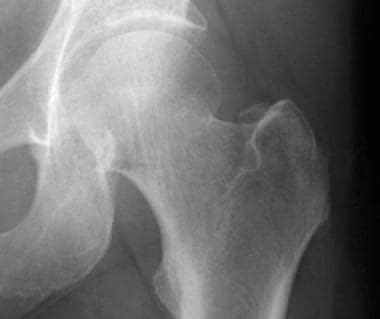
Some fractures are not visible on plain films. Spiral fractures can be difficult to detect on a single view (see Radiograph, Degree of Confidence, below). Some stress fractures may not be seen at all. In general, nondisplaced or minimally displaced fractures are difficult to perceive using plain radiographs.


Other Problems to Be Considered

Pathologic fractures
Femoral Head Avascular Necrosis (in the Sports Medicine section), Avascular Necrosis, Femoral Head (in the Radiology section)
Osteonecrosis, Hip
Deep Venous Thrombosis and Thrombophlebitis


Findings

General description

Radiography remains the first-line modality for imaging and classifying femoral neck fractures. Fractures can be broadly described according to their location along the femoral neck where the fracture line is located. Therefore, descriptive terms such as subcapital, midcervical, and basicervical fractures of the neck are sometimes used. However, more specific descriptions are necessary, especially in relation to orthopedic management.

Classification of fractures7

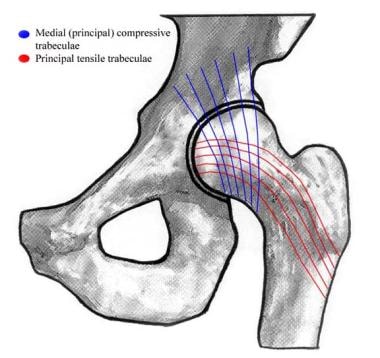
The Garden classification of subcapital femoral fractures is the most widely used today. This system is used to describe fractures on the basis of the distortions of the principal (medial) compressive trabeculae before reduction, as seen on anteroposterior (AP) radiographs.

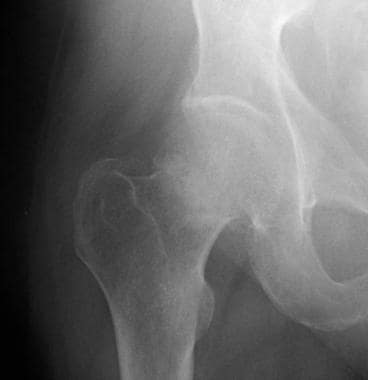
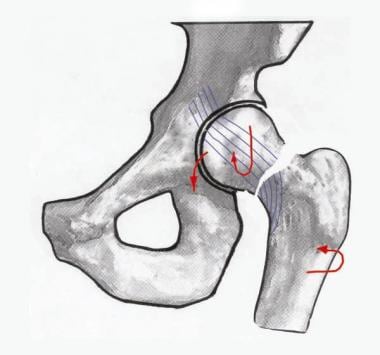
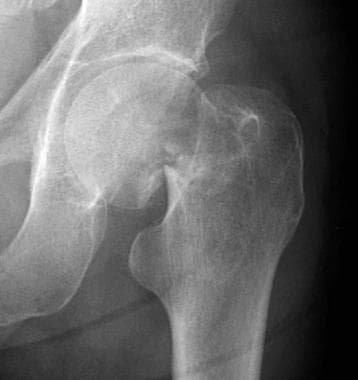
A stage I Garden fracture is an incomplete subcapital fracture (see Images 2 and 6-7). The femoral shaft is twisted externally. The alignment of the trabeculations of the distal femoral neck relative to the femoral head (which itself is adducted) causes the fracture to be in a valgus configuration. In other words, the trabecular markings in the femoral neck are displaced away from the midline relative to those in the femoral head. The altered angle of the trabeculations is greater than 180º viewed on the AP projection (normally 160º). Such fractures are inherently stable.
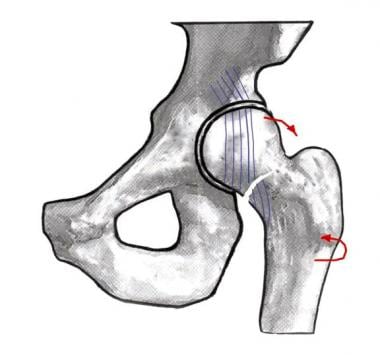
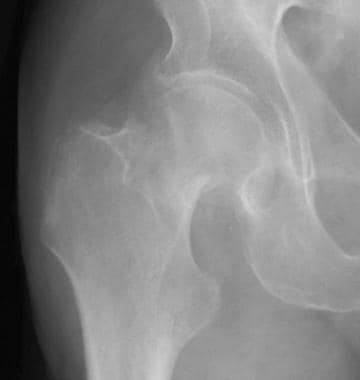
A stage II Garden fracture is a complete but nondisplaced fracture (see Images 3 and 10-12). The femoral head is abducted, but the femoral neck has moved in such a way as to maintain normal alignment with the femoral head. These fractures are considered stable and have a favorable prognosis.
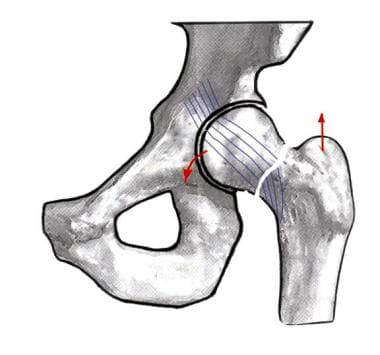
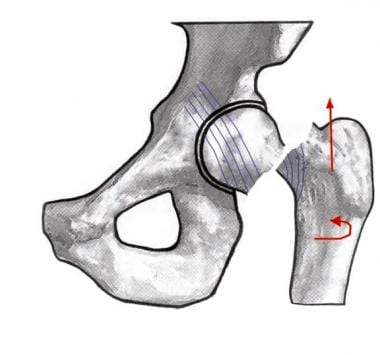
A stage III Garden fracture is a complete, partially displaced subcapital fracture (see Images 4 and 13). The femoral shaft is externally rotated. The femoral head is abducted and axially rotated such that its superior surface resides more anteriorly. The alignment of the femoral neck relative to the head is in varus deformity.

A stage IV Garden fracture is a complete and fully displaced fracture (see Images 5 and 14). The femur is externally rotated and superiorly displaced relative to the femoral head. The head, now completely detached from the neck, remains in anatomic position relative to the acetabulum. This fracture is considered unstable with a poor prognosis.

Avascular necrosis staging7

The most widely used classification system for AVN of the femoral head is the one proposed by Ficat and Arlet.14 This system is based on plain radiographic appearances.

Stage 0 has no radiographic findings. This preclinical stage is diagnosed by means of MRI or bone scanning.

Stage 1 manifests as slight osteoporosis on plain images. No sclerosis is present. Clinical symptoms may be present.

Stage 2 involves diffuse osteoporosis and sclerosis at the region of the infarction. The infarcted area is well delineated due to a reactive shell of bone. The spherical shape of the femoral head is maintained.

Stage 3 results in the crescent sign, or a radiolucency under the subchondral bone, which represents a fracture. The contour of the femoral head is abnormal. The joint space is preserved.

Stage 4 is characterized by femoral head collapse, joint-space narrowing, and subchondral sclerosis.

The Ficat-Arlet classification is especially pertinent in Garden III and IV fractures in which there is a significant incidence of AVN.

Degree of Confidence

Radiography is the preferred initial imaging modality for evaluating femoral neck fractures because of its near universal availability, its ease of acquisition, and its documented correlation with surgical results over many years of use.

However, radiography has some limitations. Spiral fractures are difficult to assess on a single view. Comminution is also not as easily demonstrated as it is with CT scanning. Some stress fractures are simply not visible on plain images at all. However, radiography will likely remain the mainstay in the evaluation of these injuries in the near future, and cross-sectional imaging will play an increasing but supplementary role.

False Positives/Negatives

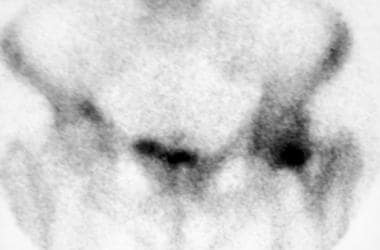
Some femoral neck fractures are not visible on radiographs that are obtained during the initial evaluation. If the clinical suspicion for such a fracture is strong, these cases can be further evaluated with MRI, which shows bone marrow edema, or nuclear medicine bone scanning, which shows increased tracer uptake (see Image 9). Bone scanning is much less expensive than MRI and nearly as sensitive; the major drawback of this modality is in the first 48-72 hours after the inciting trauma, when the sensitivity of bone scanning is lower than that of MRI.


Findings

CT scanning plays an increasingly important role in the evaluation of the hip after a fracture. CT scanning is exquisitely useful for imaging abnormalities of the bone itself. Because of this modality's superior resolution, cross-sectional capabilities, and amenability to image reconstruction in the coronal and sagittal planes, CT scanning is useful for preoperatively assessing fracture comminution and in postoperatively determining the extent of union (or lack thereof).

Degree of Confidence

CT scanning is the most useful test for evaluating bony injury. However, axial fractures in the plane of the images can occasionally be missed; this potential risk is decreased with the use of images that are reconstructed in the orthogonal planes and with newer multidetector CT (MDCT) scanners.


Findings

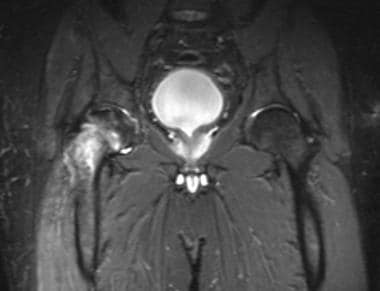
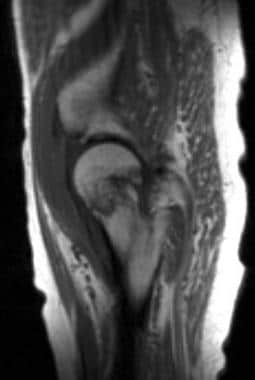
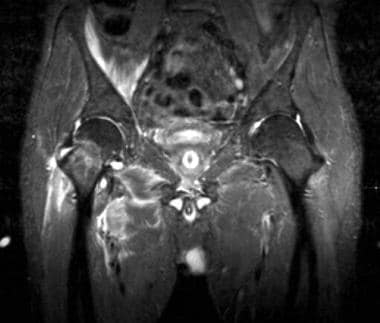
MRI is both sensitive and specific in the detection of femoral neck fractures, because this modality can show both the actual fracture line and the resulting bone marrow edema (see Images 11-12). MRI is the premiere imaging modality, especially in the setting of stress fractures, which can appear normal on initial plain images, because of the superior contrast of MRI when appropriate pulse sequences are used, the intrinsic spatial resolution, and the ability to image in multiple planes (coronal, axial, and less commonly, sagittal).

Popular pulse sequences include coronal and axial T1-weighted and T2-weighted fat-suppressed sequences, although several other bone marrow sequences can also be used. In practice, a large field of view is generally used so that both hips and the bony pelvis can be imaged simultaneously. Intravenous contrast enhancement is not routinely used in the assessment of fractures. The fracture line can be visualized as linear low-signal-intensity areas surrounded by bone marrow edema (see Image 11), which is hypointense relative to normal marrow on T1-weighted images or hyperintense on T2-weighted images.

The drawbacks of MRI include its longer imaging time, its relative lack of widespread availability, its higher costs, and the exclusion of patients with cardiac pacemakers and certain metal hardware in their body. With continued technological advances, the imaging time of MRI has decreased, as have the costs, making this modality more cost-effective.

MRI is the most sensitive modality for detecting bone marrow changes that are related to AVN, even when radiographic findings are normal; therefore, MRI is the imaging modality of choice in this regard. When AVN is detected after surgical fixation for a femoral fracture, the patient can become a candidate for placement of a prosthesis. More importantly, MRI can be used to detect the early stages of ischemic necrosis in the femoral head, when interventions can be initiated before further damage can occur. Such damage may include femoral head collapse, secondary osteoarthritis, or fragmentation.

Degree of Confidence

MRI is currently the best imaging modality for detecting femoral neck fractures. Several facts must be kept in mind, however. The normal bone marrow of the pelvis and hips can have an appearance that is patchy and of intermediate signal intensity, corresponding to the persistence of red marrow. Also, the subchondral area of the femoral head can sometimes have a thin rim of red marrow. These normal variants should not be confused with fractures.

Fractures and contusions should not be confused with idiopathic transient osteoporosis of the hip. Transient osteoporosis is an uncommon, self-limited disease that affects middle-aged men and pregnant women. This condition appears as osteopenia on plain radiographs and as areas of decreased T1 signal intensity and increased T2 signal intensity that generally extend from the femoral head to the intertrochanteric line on MRI. Usually, only one hip is affected at a given time. To complicate matters, transient osteoporosis can predispose patients to a fracture if proper care (eg, protected weight bearing) is not implemented. (See also the eMedicine article Contusions.)


Findings

Ultrasonography does not play a significant role in the routine evaluation of hip fractures. However, this modality has been used in research to evaluate the degree of distention of the hip joint capsule after fractures and in the study of elevated intracapsular pressures. Sonograms can also depict the presence of an intracapsular hematoma, which is mildly echogenic, as distinguished from synovial fluid, which is anechoic.


Findings

Approximately 80% of fractures can be visualized 24 hours after trauma, as seen by diffusely increased tracer uptake.12 By 3 days after trauma, 95% of fractures are visualized, and maximal fracture sensitivity is found at 7 days; this knowledge may be helpful in equivocal cases. Given the high sensitivity of nuclear medicine studies, they can be used to diagnose suspected femoral neck fractures that have not been confirmed by means of plain radiography.

Nuclear medicine studies with technetium-99m methylene diphosphonate (99mTc-MDP) have also been found to be effective in predicting healing complications related to femoral neck fractures.10, 11 Stromqvist et al demonstrated that 99mTc-MDP bone scans of the hips performed within 2 weeks after fixation surgery for femoral neck fractures have an excellent prognostic value for future fracture redisplacement, nonunion, or segmental femoral head collapse.10, 11

Degree of Confidence

Although sensitive, bone scintigraphy is not specific for fractures. Other processes such as infection, inflammation, or tumor formation can also demonstrate increased radionuclide uptake. However, in the right clinical setting (eg, known trauma), bone scintigraphy is highly sensitive for the detection of fractures.

When the ratio of radionuclide uptake of the affected femoral head to the contralateral hip is <1.0, bone scanning has a sensitivity of 90% and a specificity of 91% in predicting these complications within 2 years.7, 12


Findings

Angiography does not currently play a routine role in the evaluation or management of femoral neck fractures.


Simplistically speaking, the 2 most common methods of managing fractured hips are either to replace the femoral head with a prosthetic joint (hemiarthroplasty or total arthroplasty)15 or to place screws into the femoral head to anchor the head of the femur to its shaft (pinning of the hip, usually percutaneously). The clinical decision point between these 2 options generally hinges on the likelihood of ensuing AVN and nonunion.16 When the probability of AVN/nonunion is deemed high, the patient usually undergoes hemiarthroplasty or total arthroplasty to avoid these later complications.17 Conversely, when the probability is low, the patient undergoes percutaneous pinning of the hip to salvage the native joint. This is most pertinent in younger, more-active patients.

More severe fractures (Garden types III and IV) and those fractures in which there is a delay between the injury and surgical treatment (as in medically unstable patients) have higher incidences of AVN; therefore, such cases are more likely to undergo arthroplasty. In addition, chronically ill patients with limited physical activity are also candidates for prosthetic replacement to avoid the later complication of AVN. Patients with severe underlying arthritis of the hip in which the native joint is already diseased are also more likely to be treated with hip prostheses.

Exceptions in which patients may undergo internal fixation despite the high risk of AVN include the following: (1) younger patients whose longer lifespan may necessitate more than 2 future hip arthroplasties may initially undergo fixation to attempt to salvage the native joint. This is due to the fact that arthroplasties last 15-20 years, and future hip revision operations are generally difficult; (2) patients who are poor surgical candidates due to multiple medical problems; and (3) individuals with a short expected lifespan.

Options for replacement include unipolar, bipolar, or total hip arthroplasty, with or without cemented components. Some experts argue that the hemiarthroplasty is more suitable for elderly patients who require some ambulation, whereas total hip arthroplasty is more suitable for those with higher activity requirements or for those in whom internal fixation fails.17

Internal fixation for femoral neck fractures (approximately 40% of hip fractures) is usually performed using 3 screws placed across the fracture plane into the femoral head. Ideally, the pins or screws should be placed within the central two thirds of the femoral head and no closer than 5 mm from the subchondral bone.

Fixation for intertrochanteric fractures (approximately 50% of hip fractures) is usually accomplished by using sideplates and dynamic compression screws. Similar treatment is utilized for basicervical and subtrochanteric fractures. Intertrochanteric fractures carry a lower risk of AVN than neck fractures.

At clinical examination, pain with weight bearing that continues beyond 3 months after fixation should raise the suspicion of delayed union or nonunion. Intuitively, the risk for nonunion increases with the initial degree of comminution and displacement of the fracture, which corresponds to a greater risk of injury to the blood vessels. Some displaced fractures can kink the vessels that supply the femoral head without actually tearing them. Therefore, urgent reduction might restore blood supply to the head in these scenarios. Some reports indicate that surgery within 6 hours of injury is associated with improved union rates. These findings are corroborated by experimental results indicating that ischemia to trabecular bone causes irreversible damage within 6-12 hours.

Another factor that contributes to improved outcome with early surgery for femoral neck fractures is the decompression of the hip capsule to alleviate the elevated pressures secondary to joint hemarthrosis. Several studies in humans and animals have demonstrated that decompression of the hip joint results in improved blood flow.

Early full weight bearing is advocated by some experts, if the internal fixation is stable. Weight bearing may partly reduce the risk of systemic complications (eg, deep venous thrombi) due to prolonged bed rest. (See also the eMedicine articles Deep Venous Thrombosis and Thrombophlebitis [in the Emergency Medicine section], Deep Venous Thrombosis Prophylaxis [in the Orthopedic Surgery section], and Perioperative DVT Prophylaxis [in the Perioperative Care section].)

Special Concerns

  • Pediatric fractures18
    • Hip fractures in children usually result from high-energy trauma and have been associated with multiple concomitant injuries.
    • Potential complications include those that occur in adults, such as AVN and nonunion, as well as those that are specific to children, such as premature growth plate closure, leg-length inequality, and coxa vara.
    • Fractures that involve the growth plate are associated with a high rate of AVN and premature physeal closure.
    • Most investigators recommend early capsulotomy for joint decompression and rigid internal fixation for pediatric femoral neck fractures.


Media file 1:  Image depicting the trabecular system of the hip that is used in Garden staging.
Click to see larger pictureClick to see detailView Full Size Image
Media type:  Image

Media file 2:  Image depicting a Garden I hip fracture. (See also Images 6 and 7.)
Click to see larger pictureClick to see detailView Full Size Image
Media type:  Image

Media file 3:  Image depicting a Garden II hip fracture. (See also Images 10-12.)
Click to see larger pictureClick to see detailView Full Size Image
Media type:  Image

Media file 4:  Image depicting a Garden III hip fracture. (See also Image 13.)
Click to see larger pictureClick to see detailView Full Size Image
Media type:  Image

Media file 5:  Image depicting a Garden IV hip fracture. (See also Image 14.)
Click to see larger pictureClick to see detailView Full Size Image
Media type:  Image

Media file 6:  Radiograph demonstrating a Garden I hip fracture. (See also Images 1 and 7.)
Click to see larger pictureClick to see detailView Full Size Image
Media type:  X-RAY

Media file 7:  Magnetic resonance image of a Garden I hip fracture (same patient as in Image 6). Bone marrow edema is now present in the femoral neck on this short-tau inversion recovery (STIR) image.
Click to see larger pictureClick to see detailView Full Size Image
Media type:  MRI

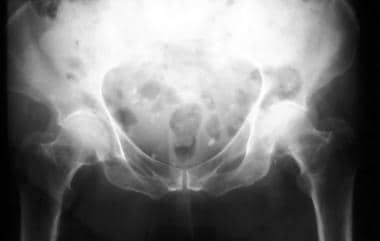
Media file 8:  Radiograph with a poor depiction of an incomplete fracture of the left femoral neck. (See also Image 9.)
Click to see larger pictureClick to see detailView Full Size Image
Media type:  X-RAY

Media file 9:  Bone scan of the left hip (same patient as in Image 8). This image shows increased uptake in the left femoral neck.
Click to see larger pictureClick to see detailView Full Size Image
Media type:  Nuclear Image

Media file 10:  Radiograph depicting a Garden II hip fracture. (See also Image 3.)
Click to see larger pictureClick to see detailView Full Size Image
Media type:  X-RAY

Media file 11:  Sagittal T1-weighted magnetic resonance image of a Garden II hip fracture. This image demonstrates a low-signal-intensity line that passes through the femoral neck. (See also Image 12.)
Click to see larger pictureClick to see detailView Full Size Image
Media type:  MRI

Media file 12:  Coronal short-tau inversion recovery (STIR) magnetic resonance image of a Garden II hip fracture (same patient as in Image 11). This image demonstrates bone marrow edema in the femoral neck, as well as edema in the adjacent muscles.
Click to see larger pictureClick to see detailView Full Size Image
Media type:  MRI

Media file 13:  Radiograph depicting a Garden III hip fracture. (See also Image 4.)
Click to see larger pictureClick to see detailView Full Size Image
Media type:  X-RAY

Media file 14:  Radiograph depicting a Garden IV hip fracture. (See also Image 5.)

Click to see larger pictureClick to see detailView Full Size Image
Media type:  X-RAY


  1. Raaymakers EL. Fractures of the femoral neck: a review and personal statement. Acta Chir Orthop Traumatol Cech. 2006;73(1):45-59. [Medline].
  2. Schmidt AH, Swiontkowski MF. Femoral neck fractures. Orthop Clin North Am. Jan 2002;33(1):97-111, viii. [Medline].
  3. Macaulay W, Yoon RS, Parsley B, Nellans KW, Teeny SM,. Displaced femoral neck fractures: is there a standard of care?. Orthopedics. Sep 2007;30(9):748-9. [Medline].
  4. Pihlajamäki HK, Ruohola JP, Kiuru MJ, Visuri TI. Displaced femoral neck fatigue fractures in military recruits. J Bone Joint Surg Am. Sep 2006;88(9):1989-97. [Medline].
  5. Kregor PJ. The effect of femoral neck fractures on femoral head blood flow. Orthopedics. Dec 1996;19(12):1031-6; quiz 1037-8. [Medline].
  6. Crawfurd EJ, Emery RJ, Hansell DM, Phelan M, Andrews BG. Capsular distension and intracapsular pressure in subcapital fractures of the femur. J Bone Joint Surg Br. Mar 1988;70(2):195-8. [Medline][Full Text].
  7. Greenspan A. Orthopedic Radiology: A Practical Approach. 3rd ed. Philadelphia, Pa: Lippincott Williams & Wilkins; 2000.
  8. Kaplan PA, Helms CA, Dussault R, Anderson MW, Major N. Musculoskeletal MRI. Philadelphia, Pa: WB Saunders Co; 2001.
  9. Kunesová M, Koudela K Jr, Koudela K Sr, Koudelová J. [Magnetic resonance imaging for examination of proximal femoral fractures: its contribution to clinical medicine] [Czech]. Acta Chir Orthop Traumatol Cech. Dec 2006;73(6):380-6. [Medline].
  10. Strömqvist B, Hansson LI, Ljung P, Ohlin P, Roos H. Pre-operative and postoperative scintimetry after femoral neck fracture. J Bone Joint Surg Br. Jan 1984;66(1):49-54. [Medline][Full Text].
  11. Strömqvist B, Hansson LI, Nilsson LT, Thorngren KG. Prognostic precision in postoperative 99mTc-MDP scintimetry after femoral neck fracture. Acta Orthop Scand. Oct 1987;58(5):494-8. [Medline].
  12. Thrall JH, Ziessman HA. Nuclear Medicine: The Requisites. 2nd ed. St Louis, Mo: Mosby-Year Book; 2001.
  13. Kim JW, Nam KW, Yoo JJ, Kim HJ. The role of preoperative bone scan for determining the treatment method for femoral neck fracture. Int Orthop. Feb 2007;31(1):61-4. [Medline].
  14. Arlet J, Ficat P. [Non-traumatic avascular femur head necrosis. New methods of examination and new concepts] [Polish]. Chir Narzadow Ruchu Ortop Pol. 1977;42(3):269-76. [Medline].
  15. Blomfeldt R, Törnkvist H, Eriksson K, et al. A randomised controlled trial comparing bipolar hemiarthroplasty with total hip replacement for displaced intracapsular fractures of the femoral neck in elderly patients. J Bone Joint Surg Br. Feb 2007;89(2):160-5. [Medline].
  16. Cuckler JM, Tamarapalli JR. An algorithm for the management of femoral neck fractures. Orthopedics. Sep 1994;17(9):789-92. [Medline].
  17. Iorio R, Schwartz B, Macaulay W, et al. Surgical treatment of displaced femoral neck fractures in the elderly: a survey of the American Association of Hip and Knee Surgeons. J Arthroplasty. Dec 2006;21(8):1124-33. [Medline].
  18. Canale ST, Bourland WL. Fracture of the neck and intertrochanteric region of the femur in children. J Bone Joint Surg Am. Jun 1977;59(4):431-43. [Medline][Full Text].
  19. Aminian A, Gao F, Fedoriw WW, et al. Vertically oriented femoral neck fractures: mechanical analysis of four fixation techniques. J Orthop Trauma. Sep 2007;21(8):544-8. [Medline].
  20. Bartonícek J. Pauwels' classification of femoral neck fractures: correct interpretation of the original. J Orthop Trauma. Jun-Jul 2001;15(5):358-60. [Medline].
  21. Cooney AD, Campbell AC. Do check X-rays influence the management of patients who have undergone hip fracture fixation using image intensifier guidance?. Injury. Aug 2006;37(8):763-7. [Medline].
  22. Garden RS. Reduction and fixation of subcapital fractures of the femur. Orthop Clin North Am. Oct 1974;5(4):683-712. [Medline].
  23. Garden RS. Selective surgery in medial fractures of the femoral neck: a review. Injury. Aug 1977;9(1):5-7. [Medline].
  24. Shimizu T, Miyamoto K, Masuda K, et al. The clinical significance of impaction at the femoral neck fracture site in the elderly. Arch Orthop Trauma Surg. Sep 2007;127(7):515-21. [Medline].
  25. Yih-Shiunn L, Chien-Rae H, Wen-Yun L. Surgical treatment of undisplaced femoral neck fractures in the elderly. Int Orthop. Oct 2007;31(5):677-82. [Medline].

Femoral Neck, Fractures excerpt

Article Last Updated: Nov 2, 2007