Continually Updated Clinical Reference
 
 
  All Sources     eMedicine     Medscape     Drug Reference     MEDLINE
 
eMedicine - Le Fort Fractures : Article by

Quick Find
Authors & Editors
Introduction
Differentials
Radiograph
CT SCAN
MRI
Angiography
Multimedia
References

Related Articles
Skull, Fractures


Patient Education
Click here for patient education.


Author: Anil R Shah, MD, Plastic Surgeon, Private Practice

Anil R Shah is a member of the following medical societies: Alpha Omega Alpha, American Academy of Facial Plastic and Reconstructive Surgery, American Academy of Otolaryngic Allergy, American Academy of Otolaryngology-Head and Neck Surgery, and Triological Society

Coauthor(s): Galdino E Valvassori, MD, Professor of Radiology and Otolaryngology, University of Illinois at Chicago; Rita M Roure, MD, Staff Physician, Department of Otolaryngology-Head and Neck Surgery, New York University Medical Center

Editors: Barton F Branstetter IV, MD, Associate Professor of Radiology, Otolaryngology, and Biomedical Informatics, University of Pittsburgh; Director of Head and Neck Imaging, Clinical Director of Neuroradiology, Department of Radiology, Division of Neuroradiology, University of Pittsburgh Medical Center; Bernard D Coombs, MB, ChB, PhD, Consulting Staff, Department of Specialist Rehabilitation Services, Hutt Valley District Health Board, New Zealand; C Douglas Phillips, MD, Professor, Departments of Radiology, Neurosurgery, and Otolaryngology, University of Virginia Health Sciences Center; Robert M Krasny, MD, Consulting Staff, Department of Radiology, The Angeles Clinic and Research Institute; Felix S Chew, MD, MBA, EdM, Professor, Department of Radiology, Vice Chairman for Radiology Informatics, Section Head of Musculoskeletal Radiology, University of Washington

Author and Editor Disclosure

Synonyms and related keywords: Le Fort fractures, floating palate fracture, Guerin fracture, floating maxilla fracture, pyramidal fracture, craniofacial dysjunction, floating face fracture, Wassmund fracture, Donat fracture, Manson fracture, Le Fort I fracture, Le Fort II fracture, Le Fort III fracture, LeFort I fracture, LeFort II fracture, LeFort III fracture


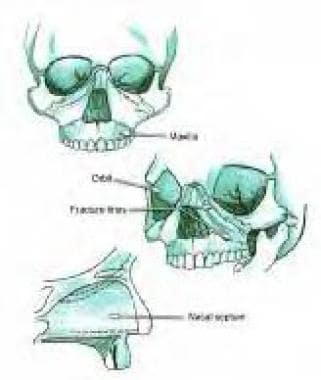
Le Fort fractures.


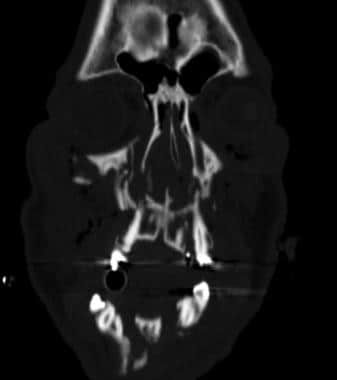
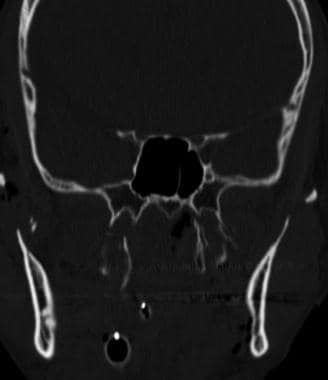
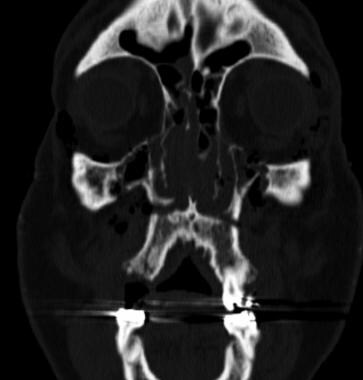
Coronal CT of a patient with right Le Fort III fracture and left Le Fort II fracture.


Bilateral pterygoid fractures.


Axial picture. Note bilateral pterygoid plate fractures.


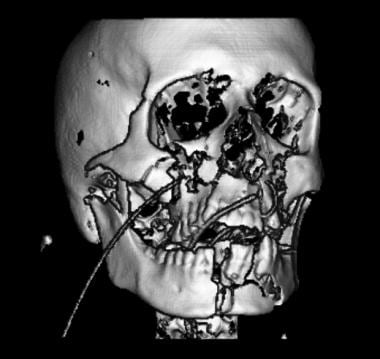
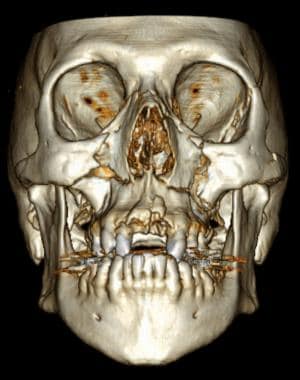
Three-dimensional reconstruction of a patient with right Le Fort I fracture and a left Le Fort II fracture.


Coronal CT demonstrating a right Le Fort I fracture and a left Le Fort II fracture.

Le Fort fractures account for 10-20% of all facial fractures. They result from exposure to a considerable amount of force. Motor vehicle accidents are the predominant cause; other causes include assaults and falls. With seatbelt laws and the increased use of airbags by auto manufacturers, the overall incidence of midface fractures has decreased.

Related eMedicine topics:
Facial Trauma, Maxillary and Le Fort Fractures
Facial Trauma, Frontal Sinus Fractures
Facial Trauma, Mandibular Fractures
Facial Trauma, Maxillary and Le Fort Fractures

Related Medscape topics:
Specialty Site Radiology
Radiology CME and News
Radiology Conferences
Specialty Site General Surgery
Resource Center Aesthetic Medicine Resource Center
Resource Center Trauma

Frequency

United States

Clinical Details

Demographics

Globally, the epidemiologies of midface fractures are similar. Young males are the typical patients, with motor vehicle accidents and assaults being the most common overall causes of facial and midfacial trauma. Male patients with midface fractures outnumber female patients with midface fractures by 5 to 1. Typically, these fractures affect younger males.

The incidence of midface fractures is far lower in children than in adults, owing to anatomic differences and the overall elasticity of children's tissues.1, 2, 3

In a study from United Arab Emirates, the average age of patients with facial fractures was 26.5 years.4 The majority of patients (83%) were males. The most common cause was motor vehicle accidents (59%), followed by falls (21%). Of all the patients with facial fractures, 33% had isolated midface fractures, and 14% had a combination of midface fracture and mandibular fracture.

In a study from China, 78.6% of midface fractures occurred in males; motor vehicle accidents were the leading cause (33%), followed by assaults (25%).

In a study by Motamedi from Iran, 89% of maxillofacial trauma patients were male.5 Motor vehicle accidents were the number one cause (31%), followed by assaults (10%). Le Fort II fractures were the most common (55%), followed by Le Fort I fractures (24%) and Le Fort III fractures (12%).

In a Turkish study on maxillofacial trauma by Aksoy et al, 83% of fractures occurred in males.6 The most common causes of facial fracture were motor vehicle accidents (90%) and assaults (3%).


Presentation

Because of the degree of force required to produce midface fractures, such injuries are often associated with a high incidence of serious intracranial and ophthalmologic injury. Le Fort fractures are often comminuted and are often associated with frontal or mandible fractures.

Because of the accompanying injuries to the entire body, the standard trauma protocol of ABCs must be strictly followed before any intervention. Often, the midface fracture is of less immediate concern because of the severity of intracranial injury and associated bodily injuries. Because about one half of midface fractures are associated with significant cerebral edema and a low Glasgow Coma Scale score (<5), and because such patients have a poor prognosis, it is important to understand the goals of the family and the other medical teams involved in the care of the trauma patient.

First of all, it is important to evaluate the airway early to rule out intraoral hemorrhage, edema, loose teeth, and posteroinferior displacement of the maxilla. Establishment of a safe airway is a priority; a tracheostomy may be needed if intubation proves to be impossible or unsafe for the patient.

Bleeding may complicate midface fractures. If the bleeding is severe enough, packing of the midface vessels and temporary reduction of the fracture may be necessary. Angiography may be necessary to locate arterial bleeding from the internal maxillary before embolization.

Obvious clinical signs of facial skeleton compromise include malocclusion, subcutaneous emphysema, abnormally mobile skeletal structures, and palpable step-offs. Crepitus may be a result of paranasal sinus air leaking into the soft tissues of the face. Palpable step-offs are seen especially with zygomatic fractures. Associated facial fractures must be evaluated and ruled out.

The patient's visual status, before and after traumatic insult, is vital in the treatment algorithm of midface fracture. There is a high incidence of visual problems associated with midface fractures, including enophthalmos, diplopia, entrapment, and epiphora. Epiphora occurs in 4% of Le Fort II or III fractures.

CSF leakage is also seen, especially in Le Fort III fractures. Any persistent, clear rhinorrhea should be tested appropriately for CSF fluid leak. Patients may complain of paresthesias of the upper jaw because of damage to the superior alveolar nerve.

As with all facial fractures, it is important to assess malocclusion. Patients may present with trismus and mouth pain. Palatal fractures often include a lip laceration and/or lacerations of the gingival and palatal mucosa. Patients with a palatal fracture may have an anterior open-bite deformity.

Facial edema may obscure the facial examination, and step-offs may not be palpable. It is important to assess fracture mobility by palpating the anterior maxilla between the thumb and forefinger. Motion at the level of the anterior nasal spine without simultaneous motion is a sign of a Le Fort I fracture. Le Fort I fractures may be associated with gingival crepitation.

Le Fort II fractures result in motion of the nasal pyramid along the medial orbit rims. The patient may have midface flattening and elongation. Le Fort II fractures often are associated with infraorbital paresthesias.

In Le Fort III fractures, motion is seen at the zygomaticofrontal suture (craniofacial dysjunction). The patient may have anosmia resulting from fracture at the cribriform plate, as well as severe edema, or lengthening; this is known as a dish-face deformity. This is a result of the lack of sagittal projection from the face, causing it to lose its contours and look spherical.

Midface fractures are usually not confused with other phenomena. The main concern is whether associated fractures are present. Examples include nasoethmoidal and orbitozygomatic fractures. These associated fractures are typically evident on examination or CT scanning. A history of trauma to the face and proper suspicion of imaging results should lead to the proper diagnosis.7, 8

Denture wearers typically have additional protection from midface fracture. However, when fractures do occur, unusual fracture patterns are common.

Lack of repair of the overlying soft tissue may result in descent and diastasis of the soft tissue of the face, leaving a flat or depressed area of the face.

Hypesthesia of the infraorbital nerve is a common complaint. The infraorbital nerve is entirely sensory. If a neuroma develops or if the patient's pain becomes intolerable, resection of the nerve may be required

Malocclusion is a common complaint. Molar occlusion is based on the angle classification of the first maxillary molar in relationship with its corresponding mandibular molar. When malocclusion occurs, additional osteotomies or orthognathic work may be required.

Infection of the bone is always a concern. Any fracture with mucosal involvement of the nose, sinus, or mouth should be considered a compound fracture. These should be treated with the appropriate antibiotic coverage to prevent further complication.


Le Fort classification system

Rene Le Fort described the classic patterns of fracture in his 1901 work. Le Fort's experiments consisted of dropping cadaver skulls from several stories or striking them with a wooden club. He found 3 distinct fracture patterns, which he termed the linea minoros resistentiae. Simply stated, in the Le Fort I fracture, the palate is separated from the maxilla; in the Le Fort II fracture, the maxilla separates from the face; and in the Le Fort III fracture, craniofacial dysjunction is present.


Le Fort fractures.


The Le Fort I fracture is a low transverse fracture that crosses the floor of the nose, pyriform aperture, canine fossa, and lateral wall from the maxilla, resulting in separation of the palate from the maxilla.

The Le Fort II fracture crosses the nasal bones on the ascending process of the maxilla and lacrimal bone and crosses the orbital rim. Only the Le Fort II fracture violates the orbital rim. Because of this proximity to the infraorbital foramen, type II fractures are associated with the highest incidence of infraorbital nerve hypesthesias. The Le Fort II fracture extends posteriorly to the pterygoid plates at the base of the skull. A Le Fort I fracture is characterized by a low septal fracture, whereas a Le Fort II fracture results in a high septal fracture.

Finally, the Le Fort III fracture traverses the frontal process of the maxilla, the lacrimal bone, the lamina papyracea, and the orbital floor. This fracture often involves the posterior plate of the ethmoid. Because of their location, Le Fort III fractures are associated with the highest rate of cerebrospinal fluid (CSF) leaks.9, 10, 11

Shortcomings of the Le Fort classification system

Despite its shortcomings, the Le Fort fracture classification system is still the most accepted method of classifying fractures and the location of osteotomies of the midface. However, recent studies have demonstrated that this classification system may be imprecise.

The Le Fort fracture system is deficient in addressing most midface fractures because most midface fractures do not follow the simple Le Fort pattern of fracture; rather, a combination of Le Fort fractures is usually encountered. In addition, most midface fractures have some degree of comminution and are complicated by fractures and displacement not addressed in the Le Fort system. These midface fractures include palate, medial maxillary arch, dentoalveolar, and anterior maxillary fractures.

Other classification systems

Sagittal fractures of the palate occur in as many as 25% of all patients with fractures of the midface. They are not classified in typical Le Fort fracture terminology. However, Rene Le Fort did describe traumatic injuries to the palate in his series of papers on maxillary fractures. Palatal fractures were classified by Hendrickson et al, who described 6 types of palatal fractures, including the following: I, anterior and posterolateral alveolar; II, sagittal; III, parasagittal; IV, para-alveolar; V, complex; and VI, transverse. Palatal fractures are associated with Le Fort I fractures 100% of the time and with either Le Fort II/III or mandible fractures 50% of the time.

There are many other classification systems for describing midface fractures. In the system of Donat et al, the face is divided into a matrix of vertical and horizontal beams, creating a lattice of 11 unilateral and 22 bilateral sites; this lattice is used to describe midface fractures.12 According to their preliminary data in 87 patients with midface fractures, this scheme enabled accurate transcription and communication among physicians 98% of the time.

Another classification system is the Wassmund system. This system classifies fractures into grades I-V. A Wassmund I fracture is equivalent to a Le Fort II fracture. A Wassmund IV fracture is equivalent to a Le Fort III fracture. A Wassmund III fracture is characterized as a Le Fort III fracture without inclusion of the nasal bones.

Manson described a facial fracture classification system on the basis of CT findings.13 He divided fractures into low- and high-impact fractures. His schema is described further in the CT Scan section below.


Anatomy and natural history

The maxilla has 4 processes: zygomatic, frontal, palatine, and alveolar. The maxillary sinus is housed within the maxilla and varies in size, depending on the degree of pneumatization.

The midface can be thought of as a grid of horizontal and vertical buttresses that provide support for the face. The 3 paired vertical buttresses of the midface are the nasomaxillary, zygomaticomaxillary, and pterygomaxillary structures. The nasomaxillary buttress is formed by the lower maxilla, the frontal process of the maxilla, the lacrimal bone, and the nasal process of the frontal bone. The zygomaticomaxillary buttress is formed from the lateral portion of the maxilla, zygoma, and lateral portion of the frontal bone. The final buttress extends along the pterygoid plates to the skull base. The lone unpaired, vertical support mechanism is the nasal septum/ethmoid complex.

The horizontal buttresses are composed of the alveolus, the hard palate, the inferior orbital rim, and the frontal bar. Horizontal buttresses have coronal and sagittal components. The sagittal buttresses are vital for facial projection. The midface is relatively deficient in sagittal buttresses. The skull base is at a 45° angle relative to the occlusal plane of the maxilla and may act as an axial buttress as well.

Nahum revealed that low forces may create a fracture in the midface. This is partly the result of the presence of the large, air-filled sinus cavities. Therefore, the midface acts as a shock absorber. The midface is relatively resistant to vertically oriented forces (anteroposterior [AP] direction). The lateral forces may fracture the obliquely directed force vectors.

The fractures may be of significant functional and aesthetic importance. Functional problems may lead to disorders of occlusion, nasal obstruction, and trigeminal-nerve sensation. Aesthetic losses include decreased midface height, facial width, facial projection, and malar eminence. These losses may lead to a dish-face deformity.14


Treatment

All patients with midface fractures are given antibiotics, because these fractures are considered open or compound. Violation of the paranasal sinus or alveolus and open soft tissue wounds are inevitable sequelae of midface fractures. Antibiotics have been shown to decrease the incidence of infection after midface fractures.

Typically, the earlier the repair of a midface fracture, the better the surgical result. This creates a dilemma for the midface reconstructive surgeon in that most patients with a midface fracture also have serious bodily injury. On the other hand, early repair prevents soft tissue scarring and memory from insetting, as well as fibrous malunion between the bony fragments.

A long surgical procedure in a terminal patient is not desirable for the patient, the patient's family, or the surgeon. Also, an additional procedure in a patient who is in unstable condition may not be in the patient's best interests. Piotrowski and Brandt have elucidated some parameters for reconstructive surgeons to allow for safe early repair. If the intracranial pressure is less than 15 mm Hg, midface repair—early, intermediate, or late—does not negatively affect the patient's recovery.

The radiologist and the reconstructive surgeon must communicate about the specific location of the fracture. Exposure is crucial in repair of the midface fracture. Generally speaking, a Le Fort I fracture is approached from a sublabial exposure; a Le Fort II fracture is approached with a combination of sublabial and periorbital exposure; and a Le Fort III fracture requires a combination of sublabial and bicoronal fracture for adequate exposure.

The surgical approaches to fractures of the midface have changed radically in the past 20 years. The technology has now evolved to allow for miniplate fixation to the midface instead of bulky external hardware. Complex internal wiring was the standard of care 10 years ago, but because of poor cosmetic results and extended periods of IMF, newer technologies have replaced it. Miniplate technology involves the placement of strong titanium plates to bridge the fractured areas. The principle is similar to that of bridge making: Stable areas are fixed to unstable areas until the overall stability of the area has been secured. If large deficiencies are present, bone grafting may be necessary.

For fractures involving large, displaced segments, the displaced segment may need to be pulled forward with a hook or index finger. If the fracture is impacted into adjacent bone and is immobile, a Rowe forceps may be useful. Nondisplaced midface fractures require little intervention. Usually, a short period of IMF is all that is needed. With any displacement, an open approach is typically required. A variety of midface fractures may be addressed effectively with a closed technique. Patients with nondisplaced, noncomminuted fractures are ideal candidates for a closed approach.15, 16, 17, 18, 19, 20

Repair in pediatric patients is a controversial area. Midface fractures are relatively rare in children because of their flexible skeleton, underdeveloped sinuses, unerupted dentition, and proportionally large frontal bone and mandible. Unerupted dentition results in several challenges for the surgeon.

The use of rigid fixation remains debatable. Animal experiments have shown that rigid fixation can lead to growth abnormalities. Some additional concerns are that an injury to the eyes or brain may happen due to slow movement of the plates. The counter-argument is that not treating the bony injury can lead to significant permanent deformities.


Skull, Fractures

Other Problems To Be Considered

Associated fractures, such as nasoethmoidal and orbitozygomatic fractures


Technique

Plain radiographs are usually not ordered in complex trauma cases. The applicable plain images include facial bone series, which typically includes Waters, Stevens, and Townsend views.

Panorex views are the best images for showing the orthognathic relationship and occlusion.

Imaging pearls

  • A Panorex view is especially helpful when associated mandible fractures are present.
  • If there is concern with the possibility of a midface fracture, a CT scan is warranted.
  • Plain radiographs have largely been replaced by CT scans for examining the midface.


Coronal CT of a patient with right Le Fort III fracture and left Le Fort II fracture.
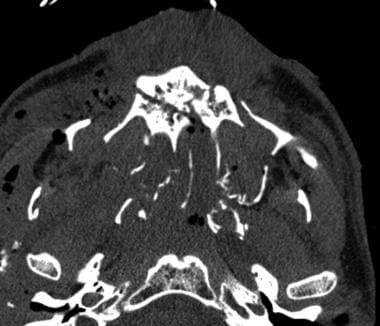


Bilateral pterygoid fractures.


Axial picture. Note bilateral pterygoid plate fractures.


Three-dimensional reconstruction of a patient with right Le Fort I fracture and a left Le Fort II fracture.


Coronal CT demonstrating a right Le Fort I fracture and a left Le Fort II fracture.


Technique

The preferred examination begins with a proper evaluation in the emergency department to ensure that the patient is stable and that the appropriate organ systems are treated in the necessary order. The preferred radiologic examination is CT scanning of the facial bones, with coronal and axial sections in bone windows for maximal detail. Midface fractures are best evaluated with CT imaging. Plain radiography and MRI play more limited roles in the evaluation of midfacial fractures.21

The imaging of choice for Le Fort fractures is CT scanning of the midface without contrast enhancement. It is important to analyze the whole face for fractures, including the entire mandible, because of the high rate of fracture of the upper and lower face when midface fractures occur.

The CT scan is analyzed in bone windows; 2- to 3-mm sections are preferred. A single-plane CT scan does not provide as much information as a 2-plane CT scan. It is crucial to use a systematic analysis in analyzing midface fracture CT scans.

Axial sections are best for analyzing the posterior wall of the antrum, the pterygoid plates, the hard palate, dentoalveolar segments, the zygomatic arch and body, and the lateral wall of the orbit. Coronal sections provide the best images for analyzing the anterior wall of the maxilla, the inferior orbital rim, the palate, and the orbital floor.

Reformatted CT images are also of high quality and have been shown to be reliable and accurate in surgical reconstructive efforts.

With the introduction of helical CT, which acquires data in a continuous fashion, it is now possible to produce computer-reformatted images, either coronal or sagittal, from the standard axial images. Coronal images reformatted from helically acquired thin-section axial CT data have been shown to have high sensitivity and specificity in the detection of fractures, as compared with direct coronal imaging.

Three-dimensional (3D) reconstructions are usually not necessary in analyzing midface fractures. However, these reconstructions may be useful in highly complex fractures or secondary reconstructions and in facilitating communication between the radiologist and the surgeon. Cavalanti et al have shown that 3D construction is quantitatively accurate for surgical planning and evaluation.


Three-dimensional reconstruction of a patient with a right Le Fort III fracture and left Le Fort II fracture.

Interpretation


Manson described a classification system in which fractures were classified as resulting from low-, middle-, or high-energy mechanisms; the determination of whether a fracture was the result of a log-, middle-, or high-energy mechanism was made on the basis of the degree of segmentation and displacement seen on CT scans.22 In Manson's system, fractures are classified according to the displacement and the degree of comminution. In type I fractures, there is minimal displacement and no comminution. In type II fractures, there is moderate displacement and a small amount of comminution. In type III fractures, there is severe displacement, with the major buttresses comminuted in multiple locations. This system may serve as a dependable guide for determining the prognosis and proper intervention.

In making the radiologic report, it is important that damage to adjacent structures, such as the nasolacrimal duct, mandible, zygoma, and orbit, be commented upon. The degree of displacement and the degree of comminution may affect the surgical approach. The presence of any hardware may signify previous traumatic injury and repair.23, 24, 25

Accuracy

CT scanning is the criterion standard for detecting facial fractures. It is superior to clinical examination, and it is more than 95% accurate.

Sagittal reformatted helical CT scans are comparable in quality to direct sagittal scans.

CT scanning of a facial bone results in few false-positive or false-negative results.

Koltai et al (1999) applied Manson's energy classification with CT scanning in children and found that CT is an effective way of determining the severity of fracture. The more severe the fracture, the more likely a repair is necessary.

Imaging Pearls

  • CT is the criterion standard for evaluating midface trauma.
  • CT is not as suitable as MRI for assessing soft tissue changes and acute intracranial changes.
  • Misinterpretation of facial suture lines can cause an inexperienced examiner to diagnose facial fractures when none is present.
  • Previous hardware and dental fillings can cause a scatter effect, making interpretation of fracture difficult in certain circumstances.
  • Previously, an adequate examination of the cribriform plate, orbital roof, and orbital floor required images in the coronal plane, necessitating a direct coronal CT scan. However, to acquire a direct coronal CT scan, the cervical spine had to be cleared, and this wasted valuable time. Obtaining a direct coronal CT scan also increased costs, increased patient exposure to ionizing radiation, and required transport of a potentially unstable patient to the scanner itself.


Accuracy

With regard to imaging the midface, the incidence of false-negative results are high with MRI, as compared with CT.

Imaging pearls

  • MRIs are typically not helpful in cases involving acute bony trauma to the face. If there is a question of soft-tissue injury to nervous structures, MRI may be helpful.
  • MRI is typically performed 48 hours after trauma. The signal intensity of blood on T1-weighted images varies, depending on the age and location of the blood.
  • Generally, a radiologist has a low degree of confidence in MRI findings when assessing a facial fracture. MRI plays an adjunctive role in the examination.
  • MRI does have a role in cases involving intracranial injury or in cases in which unusual soft-tissue injury may be present.
  • MRI is superior in the evaluation of brain and dural-space injury.


Imaging pearl

  • Angiography may be needed if there is concern about an associated injury to the carotid artery or internal maxillary artery (eg, to identify the site of arterial bleeding before embolization).


Media file 1:  Le Fort fractures.
Click to see larger pictureClick to see detailView Full Size Image
 
Media type:  CT

Media file 2:  Three-dimensional reconstruction of a patient with a right Le Fort III fracture and left Le Fort II fracture.
Click to see larger pictureClick to see detailView Full Size Image
Media type:  Image

Media file 3:  Coronal CT of a patient with right Le Fort III fracture and left Le Fort II fracture.
Click to see larger pictureClick to see detailView Full Size Image
Media type:  CT

Media file 4:  Bilateral pterygoid fractures.
Click to see larger pictureClick to see detailView Full Size Image
Media type:  CT

Media file 5:  Axial picture. Note bilateral pterygoid plate fractures.
Click to see larger pictureClick to see detailView Full Size Image
Media type:  CT

Media file 6:  Three-dimensional reconstruction of a patient with right Le Fort I fracture and a left Le Fort II fracture.
Click to see larger pictureClick to see detailView Full Size Image
Media type:  CT

Media file 7:  Coronal CT demonstrating a right Le Fort I fracture and a left Le Fort II fracture.

Click to see larger pictureClick to see detailView Full Size Image
Media type:  CT


  1. Iida S, Matsuya T. Paediatric maxillofacial fractures: their aetiological characters and fracture patterns. J Craniomaxillofac Surg. Aug 2002;30(4):237-41.
  2. Koltai PJ, Eames F, Selkin B. Midfacial Fractures in Children. Facial Plast Clinic of North Am. 1999;7:169-173.
  3. Rehman K, Edmondson H. The causes and consequences of maxillofacial injuries in elderly people. Gerodontology. Jul 2002;19(1):60-4. [Medline].
  4. Klenk G, Kovacs A. Etiology and patterns of facial fractures in the United Arab Emirates. J Craniofac Surg. Jan 2003;14(1):78-84.
  5. Motamedi MH. An assessment of maxillofacial fractures: a 5-year study of 237 patients. J Oral Maxillofac Surg. Jan 2003;61(1):61-4. [Medline].
  6. Aksoy E, Unlu E, Sensoz O. A retrospective study on epidemiology and treatment of maxillofacial fractures. J Craniofac Surg. Nov 2002;13(6):772-5. [Medline].
  7. Rimell F, Marentette LJ. Injuries of the hard palate and the horizontal buttress of the midface. Otolaryngol Head Neck Surg. Sep 1993;109(3 Pt 1):499-505. [Medline].
  8. Romano JJ, Manson PN, Mirvis SE, et al. Le Fort fractures without mobility. Plast Reconstr Surg. Mar 1990;85(3):355-62. [Medline].
  9. Gasparini G, Brunelli A, Rivaroli A, et al. Maxillofacial traumas. J Craniofac Surg. Sep 2002;13(5):645-9. [Medline].
  10. Thomas SH. Maxillofacial injuries. In: Harwood Nuss, ed. The Clinical Practice. Philadelphia: Lippincott Williams & Wilkins;. 1996: 408-18.
  11. Fraioli RE, Branstetter BF 4th, Deleyiannis FW. Facial fractures: beyond Le Fort. Otolaryngol Clin North Am. Feb 2008;41(1):51-76, vi. [Medline].
  12. Donat TL, Endress C, Mathog RH. Facial fracture classification according to skeletal support mechanisms. Arch Otolaryngol Head Neck Surg. Dec 1998;124(12):1306-14. [Medline].
  13. Manson PN, Clark N, Robertson B, et al. Subunit principles in midface fractures: the importance of sagittal buttresses, soft-tissue reductions, and sequencing treatment of segmental fractures. Plast Reconstr Surg. Apr 1999;103(4):1287-306; quiz 1307. [Medline].
  14. Hoffman GR, Islam S. The difficult Le Fort I osteotomy and downfracture: a review with consideration given to an atypical maxillary morphology. J Plast Reconstr Aesthet Surg. Jun 16 2008;[Medline].
  15. Abramson DL, Vander Woude DL, Orgill DP, Pribaz JJ. Traumatic avulsion and reconstruction of the midface. J Craniomaxillofac Trauma. Spring 1996;2(1):61-4. [Medline].
  16. Derdyn C, Persing JA, Broaddus WC, et al. Craniofacial trauma: an assessment of risk related to timing of surgery. Plast Reconstr Surg. Aug 1990;86(2):238-45; discussion 246-7. [Medline].
  17. Tian W, Li S, Pan J, et al. [Surgical reduction and rigid internal fixation of midface fractures]. Hua Xi Kou Qiang Yi Xue Za Zhi. May 1999;17(2):136-9. [Medline].
  18. Dhol WS, Reyneke JP, Tompson B, Sándor GK. Comparison of titanium and resorbable copolymer fixation after Le Fort I maxillary impaction. Am J Orthod Dentofacial Orthop. Jul 2008;134(1):67-73. [Medline].
  19. Dolanmaz D, Esen A, Emlik D, Candirli C, Kalayci A, Ci¸ce¸kcibas¸i A. Comparison of two different approches to the pterygomaxillary junction in Le Fort I osteotomy. Oral Surg Oral Med Oral Pathol Oral Radiol Endod. Jul 7 2008;[Medline].
  20. Ueki K, Hashiba Y, Marukawa K, Nakagawa K, Alam S, Yamamoto E. The evaluation of surgical factors related to recovery period of upper lip hypoaesthesia after Le Fort I osteotomy. J Craniomaxillofac Surg. May 15 2008;[Medline].
  21. Laine FJ, Conway WF, Laskin DM. Radiology of maxillofacial trauma. Curr Probl Diagn Radiol. Jul-Aug 1993;22(4):145-88. [Medline].
  22. Manson PN, Glassman D, Vanderkolk C, et al. Rigid stabilization of sagittal fractures of the maxilla and palate. Plast Reconstr Surg. May 1990;85(5):711-7. [Medline].
  23. Buitrago-Tellez CH, Schilli W, Bohnert M, et al. A comprehensive classification of craniofacial fractures: postmortem and clinical studies with two- and three-dimensional computed tomography. Injury. Oct 2002;33(8):651-68. [Medline].
  24. Chen WJ, Yang YJ, Fang YM, et al. Identification and classification in le fort type fractures by using 2D and 3D computed tomography. Chin J Traumatol. Feb 2006;9(1):59-64. [Medline].
  25. Nan X, Fan Y, Li R, Wu Z. [Clinical application of three-dimensional spiral CT in the complexmaxillofacial fractures]. Hua Xi Kou Qiang Yi Xue Za Zhi. Dec 2001;19(6):372-4. [Medline].

Le Fort Fractures excerpt

Article Last Updated: Nov 10, 2008