Continually Updated Clinical Reference
 
 
  All Sources     eMedicine     Medscape     Drug Reference     MEDLINE
 
eMedicine - Mechanical Low Back Pain : Article by

Quick Find
Authors & Editors
Introduction
Clinical
Differentials
Workup
Treatment
Medication
Follow-up
Miscellaneous
References

Related Articles
Achilles Tendon Injuries and Tendonitis

Coccyx Pain

Lumbar Compression Fracture

Lumbar Degenerative Disk Disease

Lumbar Facet Arthropathy

Lumbar Spondylolysis and Spondylolisthesis

Osteoporosis (Primary)

Psoriatic Arthritis


Patient Education
Bone Health Center

Back, Ribs, Neck, and Head Center

Back Pain Overview

Back Pain Causes

Back Pain Symptoms

Back Pain Treatment

Sprains and Strains Overview

Pain Medications


Author: Everett C Hills, MS, MD, Medical Director, Rehabilitation Hospital, Assistant Professor of Orthopaedics and Rehabilitation, Orthopaedics and Rehabilitation, Penn State Milton S. Hershey Medical Center

Everett C Hills is a member of the following medical societies: American Academy of Disability Evaluating Physicians, American Academy of Physical Medicine and Rehabilitation, American College of Physician Executives, American Congress of Rehabilitation Medicine, American Medical Association, American Society of Neurorehabilitation, Association of Academic Physiatrists, and Pennsylvania Medical Society

Editors: J Michael Wieting, DO, MEd, Professor, Department of Physical Medicine and Rehabilitation, Director, Physical Medicine and Rehabilitation Residency Training, Michigan State University College of Osteopathic Medicine, Medical Director, Rehabilitation Center, Ingham Regional Medical Center; Francisco Talavera, PharmD, PhD, Senior Pharmacy Editor, eMedicine; Patrick M Foye, MD, FAAPMR, FAAEM, Associate Professor of Physical Medicine and Rehabilitation, Co-Director of Musculoskeletal Fellowship, Co-Director of Back Pain Clinic, Director of Coccyx Pain (Tailbone Pain, Coccydynia) Service, University of Medicine and Dentistry of New Jersey, New Jersey Medical School; Kelly L Allen, MD, Consulting Staff, Department of Physical Medicine and Rehabilitation, Lourdes Regional Rehabilitation Center, Our Lady of Lourdes Medical Center; Rene Cailliet, MD, Professor-Chairman Emeritus, Department of Rehabilitation Medicine, University of Southern California School of Medicine; Former Director, Department of Rehabilitation Medicine, Santa Monica Hospital Medical Center

Author and Editor Disclosure

Synonyms and related keywords: myofascial low back pain, LBP, mechanical LBP, pulled low back, low back sprain, low back strain, lumbar sprain, lumbar strain, discogenic low back pain, diskogenic low back pain, sacroiliac joint sprain, sacroiliac joint strain, back pain, back strain, sciatica, worker's compensation, workman's comp, workers' compensation

Background

Mechanical low back pain (LBP) remains the second most common symptom-related reason for seeing a physician in the United States. Of the US population, 85% will experience an episode of mechanical LBP at some point during their lifetime. Fortunately, the LBP resolves for the vast majority within 2-4 weeks. For individuals younger than 45 years, mechanical LBP represents the most common cause of disability and is generally associated with a work-related injury. For individuals older than 45 years, mechanical LBP is the third most common cause of disability, and a careful history and physical examination are vital to evaluation, treatment, and management.

Numerous treatment guidelines have been written regarding the evaluation, treatment, and management of LBP. Perhaps the most widely reviewed (and controversial) guideline was published in 1994 by the Agency for Health Care Policy and Research titled "Acute Lower Back Problems in Adults: Clinical Practice Guidelines".

At the beginning of this decade, 750 national and international organizations partnered to create the Bone and Joint Decade (2002-2011). This initiative involves patient and professional health care organizations, government agencies, and industries working collaboratively to increase the awareness of bone and joint diseases while increasing the information and research to address this major health care issue. Because 1 in 5 Americans will be age 65 or older by 2030, 65 million people (20% of the total population) will be affected by musculoskeletal impairments, with LBP ranking among the most common problems. Already, total direct and indirect costs for the treatment of LBP are estimated to be $100 billion annually.

The physiatrist represents one type of medical specialist who can evaluate, diagnose, treat, and manage LBP by using medical and nonsurgical procedures and interventions. The physiatrist may have the best functional understanding of all specialists in the treatment and management of mechanical LBP.

Pathophysiology

Causes of mechanical LBP generally are attributed to an acute traumatic event, but they may also include cumulative trauma as an etiology. The severity of an acute traumatic event varies widely, from twisting one's back to being involved in a motor vehicle collision. Mechanical LBP due to cumulative trauma tends to occur more commonly in the workplace.

The pathophysiology of mechanical LBP remains complex and multifaceted. Multiple anatomic structures and elements of the lumber spine (eg, bones, ligaments, tendons, disks, muscle) are all suspected to have a role. Many of these components of the lumber spine have sensory innervation that can generate nociceptive signals representing responses to tissue-damaging stimuli. Other causes could be neuropathic (eg, sciatica). Most chronic LBP cases most likely involve mixed nociceptive and neuropathic etiologies.
Biomechanically, the movements of the lumbar spine consist of the cumulative motions of the vertebrae, with 80-90% of the lumbar flexion/extension occurring at the L4-L5 and L5-S1 intervertebral disks. The lumbar spine position most at risk for producing LBP is forward flexion (bent forward), rotation (trunk twisted), and attempting to lift a heavy object with out-stretched hands. Axial loading of short duration is resisted by annular collagen fibers in the disk. Axial loading of a longer duration creates pressure to the annulus fibrosis and increased pressure to the endplates. If the annulus and endplate are intact, the loading forces can be adequately resisted. However, compressive muscular forces may combine with the loading forces to increase intradiscal pressure that exceeds the strength of the annular fibers.

Repetitive, compressive loading of the disks in flexion (eg, lifting) puts the disks at risk for an annular tear and internal disk disruption. Likewise, torsional forces on the disks can produce shear forces that may induce annular tears. The contents of the annulus fibrosis (nucleus pulposus) may leak through these tears. Central fibers of the disk are pain free, so early tears may not be painful. Samples of disk material taken at the time of autopsy reveal that the cross-linked profile of pentosidine, a component of the collagen matrix, declines. This may indicate the presence of increased matrix turnover and tissue remodeling.
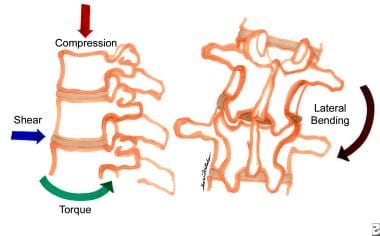
In lumbar flexion, the highest strains are recorded within the interspinous and supraspinous ligaments, followed by the intracapsular ligaments and the ligamentum flavum. In lumbar extension, the anterior longitudinal ligament experiences the highest strain. Lateral bending produces the highest strains in the ligaments contralateral to the direction of bending. Rotation generates the highest strains in the capsular ligaments.

Research in the past 20 years suggests that chemical causes may play a role in the production of mechanical LBP. Components of the nucleus pulposus, most notably the enzyme phospholipase A2 (PLA2), have been identified in surgically removed herniated disk material. This PLA2 may act directly on neural tissue, or it may orchestrate a complex inflammatory response that manifests as LBP.

Glutamate, a neuroexcitatory transmitter, has been identified in degenerated disk proteoglycan and has been found to diffuse to the dorsal root ganglion (DRG) affecting glutamate receptors. Substance P (pain) is present in afferent neurons, including the DRG, and is released in response to noxious stimuli, such as vibration and mechanical compression of the nerve. Steady, cyclic, or vibratory loading induces laxity and creep in the viscoelastic structures of the spinal elements. This creep does not recover fully in the in vivo cat model, even when rest periods are equal in duration to the loading period.

The concept of a biomechanical degenerative spiral has an appealing quality and is gaining wider acceptance. This concept postulates the breakdown of the annular fibers allows PLA2 and glutamate, and possibly other as-yet unknown compounds, to leak into the epidural space and diffuse to the DRG. The weakened vertebra and disk segment become more susceptible to vibration and physical overload, resulting in compression of the DRG and stimulating release of substance P. Substance P, in turn, stimulates histamine and leukotriene release, leading to an altering of nerve impulse transmission. The neurons become sensitized further to mechanical stimulation, possibly causing ischemia, which attracts polymorphonuclear cells and monocytes to areas that facilitate further disk degeneration and produce more pain.

Frequency

United States

The lifetime prevalence of mechanical LBP in the United States is 60-80%. The prevalence of serious mechanical LBP (persisting > 2 wk) is 14%. The prevalence of true sciatica (pain radiating down one or both legs) is approximately 2%.

Of all cases of mechanical LBP, 70% are due to lumbar strain or sprain, 10% are due to age-related degenerative changes in disks and facets, 4% are due to herniated disks, 4% are due to osteoporotic compression fractures, and 3% are due to spinal stenosis. All other causes account for less than 1% of cases.

Mechanical LBP is the most common cause of work-related disability in persons younger than 45 years in the United States.

International

Mechanical LBP exists in every culture and country. Estimates by numerous investigators indicate that at some point in their lives, 80% of all human beings experience LBP. Mechanical LBP becomes more prevalent in countries with higher per capita income and where more liberal policies and adequate funds provide for compensation (eg, Germany, Sweden, Belgium).

In Sweden, the level of insurance benefits for disabling LBP is 100%, compared with a range of 0-80% in the United States. In 1987, the percentage of the work force placed on a sick list for diagnoses associated with back pain was 8% in Sweden versus 2% in the United States. In the same year, the average number of days of back-related absence from work per patient per year in Sweden was 40, versus 9 in the United States.

Mortality/Morbidity

While mechanical LBP is not associated with mortality, morbidity in terms of lost productivity, use of medical services, and cost to society is staggering. Total workers' compensation costs for cases occurring in 1989 in the United States amounted to $11.4 billion, making it the most costly ailment for working-age adults. No evidence has been found to indicate that these costs are declining.

Race

No published information suggests that race is a factor in the prevalence of mechanical LBP.

Sex

The impact of sex on prevalence of LBP has not been established as well as the roles of other risk factors in LBP (eg, previous LBP, age). A reported 50-90% of women develop symptoms of LBP in the course of pregnancy. Discomfort generally develops in the very early weeks, more commonly in the third trimester. Age, race, occupation, baby's weight, prepregnancy maternal weight, weight gain, number of children, exercise habits, sleeping posture, mattress type, and history of previous LBP have not shown any correlation with the development of LBP symptoms during pregnancy.

Age

Age has been shown to be associated more consistently with mechanical LBP than sex. The prevalence of LBP during pregnancy appears to increase 5% for every 5 years of patient age. Sciatica (pain that radiates down one or both legs) is usually reported in persons aged 40-59 years. Women aged 60 years or older also report more low back symptoms.


History

  • Patients generally present with a history of an inciting event that produced immediate LBP. The most commonly reported histories include the following:
    • Lifting and/or twisting while holding a heavy object (eg, box, child, nursing home resident, a package on a conveyor)
    • Operating a machine that vibrates
    • Prolonged sitting (eg, long-distance truck driving, police patrolling)
    • Involvement in a motor vehicle collision
    • Falls
  • Commence the history by asking for the patient's age, hand dominance, and occupation. Also ask about the patient's current work status and last day he or she worked. If the back pain is the result of a work-related injury, ask the name of the employer and inquire how long the patient has worked for this particular employer. Sample questions are as follows:
    • When did the current symptoms begin and what were you doing?
    • What and where are your symptoms now? (A pain diagram is helpful for localizing the symptoms. The patient can draw on a figure and give the clinician an idea of the nature of the pain as neuropathic or nociceptive.)
    • Rate the pain on a scale of 0 (none) to 10 (worst imaginable). This is a global pain rating that takes into account physiological and psychological aspects of the LBP.
    • What makes the pain better (eg, sitting, standing, laying, medications, physical therapy)?
    • What makes the pain worse (eg, sitting, standing, laying, medications, physical therapy)?
    • What affect have these symptoms had on sleep, mood, work, activities of daily living, and/or social functioning?
  • Use open-ended questions to ascertain the maximum information about the patient's history. Establishing a rapport with the patient is essential to detect serious conditions, provide insights into the patient's concerns and expectations, and to achieve the optimum positive response to treatment.
  • In addition to the history of the present illness, the past medical history should be obtained to rule out infections (eg, septic arthritis), congenital abnormalities (eg, dysplasias, juvenile rheumatoid arthritis), metabolic disorders (eg, Paget disease), or previous traumatic causes (eg, athletic participation, military service).
  • The review of systems is helpful for relating the current symptoms to any other body parts or systems. Interruption in bowel or bladder function should be a reminder to consider more serious causes of back pain such as a tumor, infection, or fracture. Review of systems also should include a thorough medical history (including history of cancer, arthritis, infection, systemic disease that could increase susceptibility to infection, nocturnal pain, fever, drug use, depression, and symptoms suggestive of metabolic or metastatic disease). Ask for any history of headaches, peptic ulcer disease, prior cancer, or unexplained weight loss.
  • Assess for any history of previous treatments, such as the following:
    • Surgery
    • Medications: Obtain as complete a listing as possible, including reasons for discontinuation.
    • Physical therapy
    • Psychiatric or psychological therapy
  • Thoroughly screen for anxiety, depression, addiction, somatoform disorders, personality disorders, other prior psychiatric diagnoses, coping styles, and personality traits. Psychosocial factors (eg, depression, hypochondriasis, heavy alcohol consumption, tobacco use, menial work, poor job satisfaction, stressors at home and/or work) may accompany histories involving a work-related injury.
  • Assess the patient's vocational history. Look for consistency in the type of work and length of service with each employer since high school or college. Ask how many years the patient has been working for his or her current employer. Some cases have involved patients who have worked less than a week on a new job. Some work-related injuries are reported on a Monday or after a vacation. These are important dates for determining if the LBP was indeed work-related.
  • In a work-related LBP case, ask the patient about pending or planned litigation and related expectations.
  • Ask the patient what he or she thinks about the cause of the LBP.
  • Ask the patient what his or her goals are for the evaluation and treatment.
  • If the patient brought imaging study results (eg, plain radiographs, CT scans, MRIs), look for imaging evidence of herniated nucleus pulposus, spinal stenosis, or other conditions associated with back pain.

Physical

An important part of the physical examination is the general observation of the patient. The patient presents with pain in the low back region and often places his or her whole hand against the skin to indicate a regional pain; however, in some cases the patient may indicate a more precise location.

Realize that much of the physical examination is subjective because a patient-generated response or interpretation to the examiner's questions or maneuvers is required. For example, sensory findings observed during the physical examination and reported symptoms in response to provocative testing are reliant on the patient's response and, hence, represent a somewhat subjective portion of the physical examination. A well-performed and well-documented physical examination, with consistent findings from one visit to the next, can yield important information that may be able to stand up to rigorous scrutiny by any involved third parties (eg, insurance company, attorney, workers' compensation judge). These physical examination findings would need to be put into the context of the patient's symptoms and diagnostic test results.

Equipment often used for the examination includes a stethoscope, goniometer, inclinometer, pinwheel or safety pin, tape measure, and reflex hammer.

  • Observe the patient walking into the office or examining room. Observe the patient during the history-gathering portion of the visit for development, nutrition, deformities, and attention to grooming.
  • Measure blood pressure, pulse, respirations, temperature, height, and weight.
  • Inspect the back for signs of asymmetry, lesions, scars, trauma, or previous surgery.
  • Note chest expansion. If it is less than 2.5 cm, this finding can be specific, but not sensitive, for ankylosing spondylitis.
  • Take measurements of the calf circumferences (at mid calf). Differences of less than 2 cm are considered normal variation.
  • Measure lumbar range of motion (ROM) in forward bending while standing (Schober test).
  • The neurologic examination should test 2 muscles and 1 reflex representing each lumbar root to accurately distinguish between focal neuropathy and root problems.
  • Measure leg lengths (anterior superior iliac spine to medial malleolus) if side-to-side discrepancy is suspected.
  • Using the inclinometer, measure forward, backward, and lateral bending. With the goniometer positioned in a horizontal plane over the axial skeleton (ie, over the head), measure trunk rotation.
  • The AMA Guides to the Evaluation of Permanent Impairment (fifth edition) include reference tables for all motions, but these figures are not based on empiric data, only on consensus. The ROM measurements in the AMA Guides do not correlate with disability and are not consistent within the document itself.
  • Palpate the entire spine to identify vertebral tenderness that may be a nonspecific finding of fracture or other cause of LBP. Note any asymmetry, misalignment, or step-off between vertebral bodies. Remember also to palpate the sacroiliac joints.
  • Test for manual muscle strength in both lower extremities. The Medical Research Council rating is an ordinal scale used for this purpose (0 = absent strength, 1 = trace muscle movement, 2 = poor muscle strength [less than antigravity], 3 = fair muscle strength [antigravity strength through normal arc of motion], 4 = good strength, and 5 = normal strength).
  • Table 1. Functional Muscle Testing
    Nerve RootMotor ExaminationFunctional Test
    L3Extend quadricepsSquat down and rise
    L4Dorsiflex ankleWalk on heels
    L5Dorsiflex great toeWalk on heels
    S1Stand on toes*Walk on toes (plantarflex ankle)
    *When testing the S1 innervated gastrocnemius muscle, the ability to stand on the toes once represents fair (3/5) strength. The patient must stand on his or her toes 5 times in a row to be rated normal (5/5) strength. Note that this approach should allow the physician to detect weakness at a much milder stage than if gastrocnemius strength were assessed only by using the examiner's hand to apply resistance to ankle plantar flexion.
  • Test for sensation and reflexes using 0-2 ordinal scale for pinprick sensation (0 = no sensation, 1 = diminished sensation, and 2 = normal sensation), and 0-4 ordinal scale to rate reflexes (0 = no reflex, 1 = hyporeflexic, 2 = normal reflex, 3 = hyperreflexic, and 4 = hyperreflexic with clonus).
  • Table 2. Dermatomal Sensory and Reflex Testing
    Nerve RootPin-Prick SensationReflex
    L3Lateral thigh and medial femoral condylePatellar tendon reflex
    L4Medial leg and medial anklePatellar tendon reflex
    L5Lateral leg and dorsum of footMedial hamstring
    S1Sole of foot and lateral ankleAchilles tendon reflex
  • Clinical tests for signs of sciatic nerve tension are as follows:
    • Supine straight leg raising (SLR) test: Reproduction of pain caused by elevation of the contralateral limb raises the probability of a disk herniation to 98%. Remember that the SLR test result can be negative in persons with spinal stenosis.
    • Sitting SLR (knee extension) test (for lower roots): The patient should sit on the table edge with both hips and knees flexed at 90° and extend the knee slowly. This maneuver stretches the nerve roots as much as a moderate degree of supine SLR. The SLR test result, if positive, reproduces symptoms of sciatica with pain that radiates below the knee.
    • The prone SLR test (also called the reverse SLR test or the femoral nerve stretch test) assesses the upper lumbar roots, a less common site of radiculopathy worth remembering.
  • Nonphysiologic testing (Waddell signs) should be performed. The presence of 3 or more positive findings out of the 5 types may be clinically significant in terms of psychosocial issues or poor surgical outcome. Isolated positive signs are of limited value.
    • Nonorganic tenderness consists of the following:
      • Superficial - Skin tenderness to light pinch over a wide area of lumbar surface
      • Nonanatomic - Deep tenderness over a wide area, often extending cephalad to the thoracic spine or caudad to the sacrum
    • Simulation tests give the patient the impression that a particular examination is being conducted, including the following:
      • Axial loading - Vertical loading over the patient's head while he or she is standing, producing LBP
      • Rotation - Back pain when the shoulders and pelvis are rotated passively in the same plane with the feet together
    • Distraction tests indicate a positive finding when the patient's attention is distracted.
      • SLR: Observing an improvement of 30-40° when the patient is distracted, compared with formal testing.
      • Flip test: The patient is seated with the legs dangling over the examination table. Instruct the patient to steady himself or herself by holding the edge of the table. When the affected leg is flipped up quickly, the patient falls back and lets go, placing both hands behind him or her on the table.
    • Regional disturbances that do not correlate with anatomy include the following:
      • Weakness - Cogwheeling (giving way) of many muscle groups upon manual muscle testing of strength
      • Sensory - Diminished light touch or pinprick sensation in a stocking pattern, rather than a dermatomal pattern, in an individual who is not diabetic
      • Nonanatomic sensory loss
    • Overreaction during the examination may be observed in several manifestations (eg, disproportionate verbalization, facial grimacing, muscle tension and tremor, collapsing, sweating). Care must be taken to account for cultural variations.
    • In addition, evaluate the patient's function. Observe ROM and flexibility, ability to dress and undress, and ability to rise from a chair or the examination table.


Achilles Tendon Injuries and Tendonitis
Coccyx Pain
Lumbar Compression Fracture
Lumbar Degenerative Disk Disease
Lumbar Facet Arthropathy
Lumbar Spondylolysis and Spondylolisthesis
Osteoporosis (Primary)
Psoriatic Arthritis

Other Problems to be Considered

Benign and malignant primary and neural osseous tumors
Congenital anomalies of the lumbar nerve roots
Degenerative synovial cysts
Drug-seeking behavior
Extraspinal causes (eg, ovarian cyst, pancreatitis, ulcer)
Fractures of the lumbar vertebral body
Infection (eg, epidural abscesses, peritonitis)
Inflammatory conditions
Metastatic neoplasms
Myeloma
Aortic aneurism
Spondylolisthesis
Aseptic necrosis of the femoral head
Connective tissue disease
Myopathy
Renal infection or stone
Metabolic disease
Sickle cell disease
Seronegative arthritic diseases (eg, reactive arthritis, ankylosing spondylitis)


Lab Studies

  • If the history elicits reports of fever, night sweats, and chills that might suggest other causes for the LBP, then, at a minimum, obtain a CBC count, erythrocyte sedimentation rate, and urinalysis to rule out cancer or infection. Serum and urine electrophoresis studies may help to rule out multiple myeloma at an early stage when x-ray imaging studies appear negative or inconclusive.

Imaging Studies

  • The association between symptoms and imaging results is weak. Ordering of imaging studies should be limited to patients with clinical findings suggestive of systemic disease (eg, fever, weight loss without explanation, patients older than 50 y, alcohol use, or intravenous drug abuse) or trauma.
  • In the absence of any findings from the neurologic examination and no evidence of infection or cancer, imaging studies are not clinically helpful in the first 4 weeks of symptoms. The Quebec Task Force of Spinal Disorders (QTFSD) suggests that early radiographs are necessary only if the patient has neurologic deficits, fever, trauma, age older than 50 years or younger than 20 years, or signs of neoplasm. Anteroposterior and lateral views should be used on plain films unless spondylolysis is suggested, in which case oblique views are needed.
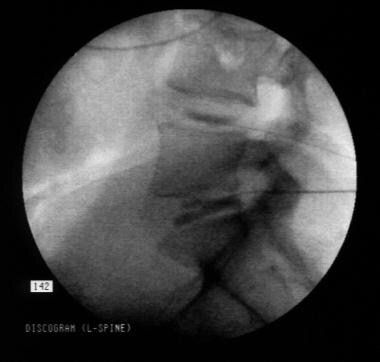
  • Persistent mechanical LBP may require additional imaging studies, including CT scanning, diskography, and 3-phase bone scanning. Sensitivity refers to the ability of the test or study to show that a disorder is present. Specificity refers to the ability of the test or study to rule in a specific disorder. The higher the number [0 to 1], the more sensitive or specific the test or study.
    • CT scanning has a sensitivity and specificity of 0.92 and 0.88, respectively, for a herniated disk.
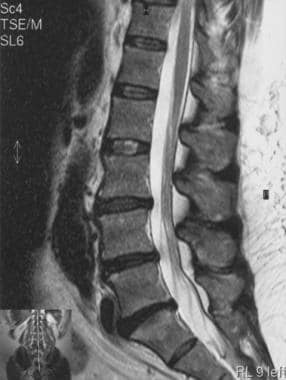
    • MRI is superior to CT scanning for detection of many conditions because it presents soft tissue detail and multiple planar points of view; it should be used if infection, cancer, or persistent neurologic deficit is strongly suggested.
    • Diskography has a sensitivity and specificity of 0.83 and 0.78, respectively, for a herniated disk. This test should be interpreted in the context of data on pain reproduction.
    • A 3-phase bone scanning may be helpful if infection, metastatic cancer, or pathological fracture is suggested.
    • Thermography has no known role in the evaluation of mechanical LBP.

Other Tests

  • Electrodiagnostic studies such as electromyography (EMG) and nerve conduction studies (NCS) can be very helpful in the evaluation of neurologic symptoms and/or neurologic deficits seen during the physical examination.
    • In the context of patients with LBP and neurologic symptoms/signs in the lower limb(s), EMG/NCS can objectively assess whether those symptoms/signs are due to lumbosacral radiculopathy versus peripheral polyneuropathy, myopathy, or peripheral nerve entrapment, among other conditions.
    • Further, EMG/NCS can often help identify which specific nerve root is involved in a given radiculopathy, which can be extremely helpful for correlation with any abnormal lumbosacral imaging study results (especially when the MRI shows multilevel abnormalities, while the nerve root compromise may be occurring in only one specific level). Identifying the specific nerve root involved can help ensure that any spinal injections or eventual surgery are performed at the appropriate level or site within the lumbar spine.
    • EMG/NCS is considered to have a relatively high degree of sensitivity for detecting radiculopathy, particularly with use of the needle EMG portion of the testing, when performed by an appropriately skilled physician. Further, because a patient is unable to voluntarily influence the appearance of abnormal EMG/NCS findings, the testing can be helpful in providing objective evidence of nerve pathology (or lack of evidence for such nerve pathology) in cases in which symptom magnification or malingering is suspected.
    • Many of the abnormal EMG/NCS findings take a couple of weeks to appear after an acute injury; hence, many electromyographers wait 2-4 weeks before performing the testing.

Procedures

  • Selective nerve root blocks and intradiscal injections are 2 diagnostic and therapeutic procedures for identifying the location of a possible pain generator. These interventions depend on the patient's self-report of pain during or after the procedure. Some clinicians videotape the patient's reaction to the injection to correlate the patient's response (subjective) with the physical response (objective).

Histologic Findings

Anatomic studies of autopsy tissues taken from individuals aged in their 20s reveal a superficial annulus fibrosus ligament over the ventral surface of the L5 intervertebral disk. This ligament is completely separate from the overlying anterior longitudinal ligament and the intervertebral disk. The fibers are vertically oriented.


Rehabilitation Program

Physical Therapy

The treatment program for mechanical LBP must have specific functional goals and can be outlined in the following 6 steps:

  1. Control of pain and the inflammatory process: Pain treatment should be initiated early and efficiently to gain control. Ice, transcutaneous electrical nerve stimulation (TENS), and relative rest may help with controlling the pain and the inflammatory process. Excessive bedrest, however, may be detrimental by leading to lumbar segment motion, loss of muscle strength, and general deconditioning with blunting of motivation.
  2. Restoration of joint ROM and soft tissue extensibility: Extension exercises may reduce neural tension. Flexion exercises reduce articular weight-bearing stress to the facet joints and stretch the dorsolumbar fascia. The use of ultrasound therapy may improve collagen extensibility.
  3. Improvement of muscular strength and endurance: Exercise training can begin after the patient has passed successfully through the pain control phase. The key is to attain adequate musculoligamentous control of lumbar spine forces to minimize the risk of repetitive injury to the intervertebral disks, facet joints, and surrounding structures. Start with isometrics, then progress to isotonic exercises with effort directed at concentric strengthening.
  4. Coordination retraining: Dynamic exercise in a structured training program maximizes coordinated muscle group activities that lead to postural control and the fusion of muscle control with spine stability.
  5. Improvement of general cardiovascular condition: Patients are encouraged to remain active and to initiate brisk walking programs, aquatic activities, or use of stationary bicycles/stair steppers. These activities can increase endorphin levels, promoting a sense of well-being, and allow the patient to perform at a higher level of function before perceiving pain.
  6. Maintenance exercise programs: A home program is developed within the tolerance and ability of the patient in order to encourage continued exercise after discharge from physical therapy.

  • The main goal of physical therapy in persons with acute back pain is not to increase strength, but to achieve adequate pain control. No benefit has been demonstrated for strengthening exercises in persons with acute back pain. Exercise should begin with extension exercises in the prone position after lateral trunk shifts and then progress, as tolerated, to prone lying with support. Flexion exercises can be performed only if the patient has no acute dural tension.
  • The spine should be stabilized using strengthening of segmental muscles followed by the prime movers of the spine (ie, latissimus dorsi, abdominals, erector spinae). Muscle groups should be strengthened in a neutral position to decrease tension on ligaments and joints; this position allows balanced segmental forces between the disks and the zygapophyseal joints and maximizes functional stability with axial loading.
  • Physical therapy programs should also include positioning the patient to maximize comfort. Loosening of the hamstrings, glutei, gastrocnemius/soleus group, tensor fascia latae, quadriceps group, and hip flexors also contributes to reduction of LBP and effective conditioning.
  • In a 2004 multicenter randomized trial, patients who were trained in exercises that matched their directional preference (DP) were more likely to achieve immediate, lasting improvement in pain compared with patients who received nondirectional treatment or opposite directional treatment. Patients using DP exercises were found to have a 3-fold decrease in medication usage. The idea of patient-specific exercises in managing LBP is recognized as controversial by the authors. Using DP to guide patients may improve outcomes in pain, function, and treatment satisfaction.

Medical Issues/Complications

Mechanical LBP is not a life-threatening illness. Unfortunately, it does have a far-reaching impact on medical care expenditures for injured workers. An in-depth examination of the impact of mechanical LBP on the US workers' compensation system, which varies from state to state, is beyond the subject of this article. Many interesting perceptions about mechanical LBP have been noted.

  • In studies in which subjects had to answer self-assessment instruments, patients with insurance referrals had poorer self-assessment scores regardless of functional status.
  • Among different health care providers, patients rated care and communication, followed by competence, over efficacy of treatment.
  • Chiropractors often have been favored over internists and orthopedic surgeons on the basis of their "high touch" approach to treatment.
  • Orthopedic surgeons were found to be less restrictive with activities compared with family practitioners.
  • In a Dutch study, factors such as better health, better job satisfaction, status as breadwinner, lower age, and reporting of less pain were favorable prognosticators of return to work in individuals who had not been working for more than 3 months. The authors of the study believed that more focus was necessary on the psychosocial aspects of health behavior and job satisfaction.
  • Exercise was found to be more effective than usual primary care management.

Surgical Intervention

Surgical interventions for mechanical LBP are the last choice for treatment. Diskectomies are performed in the United States at a rate proportional to the number of spine surgeons in the community. The US rate of surgeries is twice that of Europe, Canada, and Australia and is 5 times the rate in the United Kingdom. Better results occur with open excisions compared with percutaneous diskectomies. Results are best when no workers' compensation or litigation is involved.

Other Treatment

Evidence-based clinical practices on selected rehabilitation interventions for LBP have focused on the timing of interventions.

  • Acute LBP is defined as pain that does not radiate below the knees with current symptoms that have been present 4-6 weeks or less.
  • Subacute LBP is defined as pain that does not radiate below the knees with current symptoms that have been present 4-12 weeks from onset.
  • Chronic LBP is defined as pain that does not radiate below the knees with current symptoms that have been present greater than 12 weeks.
  • The Philadelphia Panel (2001) evaluated the literature on the treatment of LBP and assigned Grades of Recommendation based on the clinical importance of the studies, statistical significance of the findings, and the study design. Randomized control trials with statistically significant findings were assigned an A grade. Any study design without clinically significant findings but thought to have been worth performing was assigned a D grade. Grades of Evidence were assigned to the various studies. The highest grades were I for randomized control trials and III for the opinions of respected authorities.
    • For LBP of less than 4 weeks duration, the Philadelphia Panel found poor evidence (grade C) to include or exclude therapeutic exercises, traction, ultrasound, or TENS. Return to work was strongly encouraged.
    • For LBP of 4-12 weeks duration, the Philadelphia Panel found good evidence for the inclusion of therapeutic exercise and manual traction.
    • For LBP of greater than 12 weeks' duration, the Philadelphia Panel found good evidence for the inclusion of therapeutic exercises, therapeutic ultrasound, and electromyographic biofeedback. These treatments were positive interventions for achieving adequate pain control, increasing functional activities of daily living, and promoting return to work.


Pharmacological interventions for the relief of LBP include acetaminophen, nonsteroidal anti-inflammatory drugs (NSAIDs), topical analgesics, muscle relaxants, opioids, corticosteroids, antidepressants, and anticonvulsants.

Acetaminophen remains one of the best first-line treatments of acute LBP. It is generally well tolerated, has few adverse effects or drug reactions with other medications, and is inexpensive. Acetaminophen is as effective as aspirin; however, overdoses can result in fatal hepatic injury. The maximum advised dose is 4 g/d.

NSAIDs are the most frequently prescribed analgesic medications for mechanical LBP worldwide. A review of the Cochrane Controlled Trials Registry found 51 randomized control trials (involving 6057 patients) comparing different NSAIDs for the treatment of acute mechanical LBP. NSAIDs were found to be effective for short-term symptomatic relief. No specific type was shown to be clearly more effective than the others. Insufficient evidence was found for effective analgesic control in chronic LBP.

NSAIDs augmented with muscle relaxants are a standard medical prescription for LBP in the primary care setting. These agents should be prescribed on a scheduled basis, rather than as needed, for optimal analgesia. Patients on combined NSAIDs and muscle relaxants report reduction of symptoms at 1 week, which is less than when compared with either drug alone. The optimum combination of NSAIDs and muscle relaxants remains to be determined.

Topically applied lidocaine patches (Lidoderm 5% patch) have provided a reduction in pain intensity and pain relief in clinical trials of patients with acute pain.

Opioid medications are mainstays for short-term treatment of severe pain. Their role in the long-term care of patients with mechanical LBP is the subject of intense investigations. Transdermal opioid (fentanyl) has been shown to compare favorably to oral long-acting opioids. Concerns about drug diversion and abuse continue to cloud the benefits of long-term opioid use for LBP.

Corticosteroids may play a role in the treatment of mechanical LBP with acute radiculopathic features of radiating pain down one or both legs.

Antidepressants are thought to be effective when a component of depression is accompanying the mechanical LBP. Antidepressants may contribute to improving the disruption in sleep that patients frequently mention as a part of the constellation of symptoms resulting from LBP.

The basic mechanism of anticonvulsants is to stabilize neural membranes. This concept has been used to support the use of anticonvulsants for adjunct analgesia suspected to come from neuropathic causes.

Botulinum toxin type A has been investigated for pain relief in several small studies. The toxin temporarily paralyzes the lumbar muscles, which may be creating spasms that contribute to the generation of LBP.

Clinicians have found that long-acting oral opioids can be rotated periodically (eg q6-12mo) to maintain effectiveness. The molecular structures of these compounds may be sufficiently different to opioid receptors to counter the affects of diminished and down-regulation of receptors to chronic opioid exposure.

Pharmaceutical companies are exploring various combinations of NSAIDs/opioids, extended-release formulations, and drug delivery (eg topical, mucosal) in an effort to achieve safe and effective pain control.

Drug Category: Analgesic agents

Pain control is essential to quality patient care. Analgesics ensure patient comfort, promote pulmonary toilet, and have sedating properties, which are beneficial for patients who have sustained trauma or have sustained injuries.

Drug NameAcetaminophen (Tylenol, Feverall, Tempra)
DescriptionDOC for pain in patients with documented hypersensitivity to aspirin or NSAIDs, with upper GI disease, or who are taking oral anticoagulants.
Adult Dose500-1000 mg PO q4-6h
Pediatric Dose<12 years: 10-15 mg/kg/dose PO q4-6h prn; not to exceed 2.6 g/d
>12 years: 325-650 mg PO q4h; not to exceed 5 doses in 24 h
ContraindicationsDocumented hypersensitivity; known G-6-P deficiency
InteractionsRifampin can reduce analgesic effects; coadministration with barbiturates, carbamazepine, hydantoins, and isoniazid may increase hepatotoxicity
PregnancyB - Usually safe but benefits must outweigh the risks.
PrecautionsHepatotoxicity possible in chronic alcoholism following various dose levels; severe or recurrent pain or high or continued fever may indicate a serious illness; acetaminophen is contained in many OTC products and combined use with these products may result in cumulative doses exceeding recommended maximum dose

Drug Category: Nonsteroidal anti-inflammatory drugs

Have analgesic, anti-inflammatory, and antipyretic activities. Mechanism of action is not known, but they may inhibit COX activity and prostaglandin synthesis. Other mechanisms may also exist, such as inhibition of leukotriene synthesis, lysosomal enzyme release, lipoxygenase activity, neutrophil aggregation, and various cell-membrane functions.

Drug NameAspirin (Anacin, Ascriptin)
DescriptionEffective in most mechanical LBP cases. Irreversibly inhibits platelet function, leading to prolonged bleeding times.
Adult Dose500-1000 mg PO q4-6h
Pediatric DoseNot established
ContraindicationsDocumented hypersensitivity; liver damage, hypoprothrombinemia, vitamin K deficiency, bleeding disorders, asthma; due to association of aspirin with Reye syndrome, do not use in children ( <16 y) with flu
InteractionsEffects may decrease with antacids and urinary alkalinizers; corticosteroids decrease salicylate serum levels; additive hypoprothrombinemic effects and increased bleeding time may occur with coadministration of anticoagulants; may antagonize uricosuric effects of probenecid and increase toxicity of phenytoin and valproic acid; doses > 2 g/d may potentiate glucose-lowering effect of sulfonylurea drugs
PregnancyD - Unsafe in pregnancy
PrecautionsMay cause transient decrease in renal function and aggravate chronic kidney disease; avoid use in patients with severe anemia or history of blood coagulation defects or who are taking anticoagulants

Drug NameNaprosyn (Naproxen, Naprelan, Naprosyn)
DescriptionFor relief of mild to moderate pain; inhibits inflammatory reactions and pain by decreasing activity of COX, which results in a decrease of prostaglandin synthesis.
Adult Dose500 mg PO initially
250 mg PO q6-8h or 500 mg PO q12h
Pediatric DoseNot established
ContraindicationsDocumented hypersensitivity; peptic ulcer disease; recent GI bleeding or perforation; renal insufficiency
InteractionsCoadministration with aspirin increases risk of inducing serious NSAID-related adverse effects; probenecid may increase concentrations and, possibly, toxicity of NSAIDs; may decrease effect of hydralazine, captopril, and beta-blockers; may decrease diuretic effects of furosemide and thiazides; may increase PT when taking anticoagulants (instruct patients to watch for signs of bleeding); may increase risk of methotrexate toxicity; phenytoin levels may be increased when administered concurrently
PregnancyC - Safety for use during pregnancy has not been established.
PrecautionsCategory D in third trimester of pregnancy; acute renal insufficiency, interstitial nephritis, hyperkalemia, hyponatremia, and renal papillary necrosis may occur; patients with preexisting renal disease or compromised renal perfusion risk acute renal failure; leukopenia occurs rarely, is transient, and usually returns to normal during therapy; persistent leukopenia, granulocytopenia, or thrombocytopenia warrants further evaluation and may require discontinuation of drug

Drug Category: Cyclooxygenase II inhibitors

Although increased cost can be a negative factor, the incidence of costly and potentially fatal GI bleeding is clearly less with COX-2 inhibitors than with traditional NSAIDs. Ongoing analysis of cost avoidance of GI bleeds will further define the populations that will find COX-2 inhibitors the most beneficial.

Drug NameCelecoxib (Celebrex)
DescriptionInhibits primarily COX-2. COX-2 is considered an inducible isoenzyme, induced during pain and inflammatory stimuli. Inhibition of COX-1 may contribute to NSAID GI toxicity. At therapeutic concentrations, COX-1 isoenzyme is not inhibited, thus GI toxicity may be decreased. Seek lowest dose of celecoxib for each patient.
Adult Dose100-200 mg PO q12h
Pediatric DoseNot established
ContraindicationsDocumented hypersensitivity
InteractionsCoadministration with fluconazole may cause increase in celecoxib plasma concentrations because of inhibition of celecoxib metabolism; coadministration with rifampin may decrease celecoxib plasma concentrations
PregnancyC - Safety for use during pregnancy has not been established.
PrecautionsMay cause fluid retention and peripheral edema; caution in compromised cardiac function, hypertension, conditions predisposing to fluid retention, severe heart failure, and hyponatremia because may deteriorate circulatory hemodynamics; NSAIDs may mask usual signs of infection; caution in presence of existing controlled infections; evaluate symptoms and signs suggesting liver dysfunction, or in abnormal liver laboratory results

Drug Category: Muscle relaxants

Mechanism of action is not fully understood.

Drug NameCyclobenzaprine (Flexeril)
DescriptionSkeletal muscle relaxant that acts centrally and reduces motor activity of tonic somatic origins influencing both alpha and gamma motor neurons.
Structurally related to TCAs and thus carries some of their same liabilities. Given in combination with an NSAID (similar to carisoprodol).
Adult Dose10 mg PO tid
Pediatric DoseNot established
ContraindicationsDocumented hypersensitivity; MAOIs within last 14 d
InteractionsCoadministration with MAOIs and TCAs may increase toxicity; may have additive effect when used concurrently with anticholinergics; effects of alcohol, CNS depressants, and barbiturates may be enhanced
PregnancyC - Safety for use during pregnancy has not been established.
PrecautionsCaution in angle-closure glaucoma and urinary hesitance; warn patients not to operate machinery while taking this medication

Drug NameOrphenadrine (Norflex)
DescriptionWhile exact mode of action not well understood, has shown clinical effectiveness in muscular injury. Effectiveness may be related to analgesic properties. May have atropinelike effects and analgesic properties.
Adult Dose100 mg PO bid
60 mg IV/IM q12h
Pediatric DoseNot established
ContraindicationsDocumented hypersensitivity; GI obstruction, glaucoma, myasthenia gravis, or cardiospasm
InteractionsNone reported
PregnancyC - Safety for use during pregnancy has not been established.
PrecautionsCaution in cardiac arrhythmias and congestive heart failure

Drug NameCarisoprodol (Soma)
DescriptionShort-acting medication that may have depressant effects at spinal cord level. Often given in combination with an NSAID.
Adult Dose350 mg PO qid
Pediatric DoseNot established
ContraindicationsDocumented hypersensitivity; acute intermittent porphyria
InteractionsIncreases toxicity of alcohol, CNS depressants, MAOIs, clindamycin, and phenothiazines
PregnancyC - Safety for use during pregnancy has not been established.
PrecautionsCaution in renal and hepatic impairment

Drug Category: Opioids

Useful only for extremely severe pain. Can be administered by injection.

Drug NameOxycodone (OxyContin)
DescriptionIndicated for relief of moderate to severe pain.
Adult Dose5-10 mg PO q4-6h
Pediatric DoseNot established
ContraindicationsDocumented hypersensitivity
InteractionsPhenothiazines may antagonize analgesic effects; MAOIs, general anesthesia, CNS depressants, and TCAs may increase toxicity
PregnancyB - Usually safe but benefits must outweigh the risks.
PrecautionsPregnancy category D if used for prolonged periods or in high doses; caution in COPD, emphysema, and renal insufficiency


Further Inpatient Care

  • Mechanical LBP generally is treated in an outpatient setting. Inpatient care may be appropriate in some cases when compelling evidence of neurological deficits is present along with an accompanying history of infection, malignancy, and/or trauma. The initial medical workup should be performed in the general acute hospital setting.
    • Patients who are elderly or severely disabled with no social support may need to be admitted into a medical setting for diagnostic studies and therapeutic interventions.
    • A comprehensive interdisciplinary approach combines the medical management of the pain with the functional restoration of motion and activities of daily living that is achieved through physical and occupational therapy.
    • More varied modalities can be used in the rehabilitation unit (eg, aquatic therapy, other physical modalities), as can counseling for both patient and family. Psychological counseling may be more readily available in the rehabilitation unit, compared with the general medical or surgical unit.

Further Outpatient Care

  • The proper application of physical therapy, analgesic medications, and selected injections (when warranted) can produce a positive impact on the functional outcome of mechanical LBP.
  • Careful and complete history gathering, objective physical examinations, and clearly prescribed therapeutic interventions are fundamental in the management of mechanical LBP.
  • Patients may need regular follow-up and careful monitoring to ensure a positive outcome. Structured daily activity is crucial to encourage patients to realize that their efforts result in a positive outcome.
  • The most successful management of mechanical LBP comes from an interdisciplinary team approach of physicians, therapists, counselors, and case managers.
  • Sometimes, the physician needs to return to the history when if a puzzling clinical presentation that cannot be resolved.
  • Ensuring care between the physicians and therapists is coordinated, evidence-based medical practices are being used, and certain published guidelines are being considered may help achieve the optimum treatment for LBP patients.

In/Out Patient Meds

  • The most commonly prescribed medications for mechanical LBP are NSAIDs, muscle relaxants, opioid and nonopioid analgesics, and antidepressants.
    • NSAIDs provide satisfactory analgesic relief for most cases of mechanical LBP. NSAIDs are very easy to obtain, both in prescribed formulations and as over-the-counter preparations.
    • Muscle relaxants, in combination with the NSAIDs, may provide symptomatic relief to the low back musculature and promote more freedom of movement.
    • Opioid medications generally are not used as first-line treatments for mechanical LBP.
    • Nonopioid medications are being combined with NSAIDs to achieve adequate pain relief without the adverse effects of opioid medications.
    • Antidepressants are helpful adjuncts to the bio-psycho-social effects of chronic LBP.

Transfer

  • Patients with mechanical LBP may present to their family physicians or to the emergency department of a hospital or clinic. After determining the patient has no life-threatening cause for the mechanical LBP (eg, tumor on the spine, fracture of the axial spine), consideration should be given to transferring the patient to an appropriate outpatient care facility or to an inpatient rehabilitation unit for pain management, reconditioning of muscles, and preventive treatment.

Deterrence

  • Prevention of most cases of mechanical LBP can be achieved using good biomechanical principles when performing heavy manual labor. Deterrence and prevention information is mostly anecdotal and depends on education and raising the awareness levels of individuals at risk for developing mechanical LBP.

Complications

  • Complex social, legal, and economic issues tend to produce most of the complications surrounding mechanical LBP. A full account of these issues is beyond the scope of this article. The following complicating factors have been associated with extended care of LBP and should be viewed as "yellow flags" to help the physician explore other causes to the chronic spinal condition being presented:
    • Trauma
    • Greater than 4 separate episodes of LBP
    • Sciatica defined as pain extending below the knees
    • Skeletal anomalies
    • Heavy smoking
    • Multilevel degenerative joint disease
    • Job dissatisfaction
    • Job disability in previous 12 months
    • Psychological distress and abnormal illness behavior (eg, positive Waddell signs, pain consistently rated 9/10, pain avoidance behavior, symptom proliferation, total body pain, collapsing or inability to move)
  • In an informal survey of chiropractors who were asked to rate the top 10 "back-breaking jobs," the number 1 job was heavy truck driving. Following, in no particular order, are the next 9 jobs:
    • Construction worker
    • Landscaper
    • Police officer (due to long hours sitting in a car then having to respond to a call for help)
    • Farmer (because self-employment, tend to respond rapidly to pain management interventions)
    • Roofers (often in awkward, bending positions for long periods)
    • Firefighters and emergency medical technicians
    • Delivery drivers
    • Nursing home workers
    • Auto mechanics

Prognosis

  • The prognosis is good for recovery from mechanical LBP. At 1 month, 35% of patients can be expected to recover; at 3 months, 85% have recovered; and at 6 months, 95% have recovered.
  • Failure of a patient to recover should lead the clinician into a more thorough and extensive search into the cause of the back pain, including the possibility of recurrent back injuries.
  • Recurrence at 1 year is 62%. At 2 years, 80% of patients have had one or more recurrences. The question remains whether this is the inevitable result of natural aging, continued pathological processes, somatization, or a combination of all three. Clearly, much more research is required.

Patient Education

  • Patient education should begin with reassurance and a management plan, even though a precise pathoanatomic diagnosis may not be possible.
  • The importance of educating patients to understand that uncomplicated mechanical LBP has a natural course of recovery cannot be overemphasized.
  • One consistent finding from a review of the literature is that people who are depressed, have poor job satisfaction, and can receive compensation as long as their backs hurt have an increased prevalence of mechanical LBP that develops into chronic disability.
  • Deal with external factors that influence recovery, including anxiety, and increase the patient's understanding of the expectations of key players (eg, family, physician, employer) compared with his or her own goals.
  • Posture, reconditioning, proper nutrition, and stress management also should be addressed.
  • For excellent patient education resources, visit eMedicine's Bone Health Center and Back, Ribs, Neck, and Head Center. Also, see eMedicine's patient education articles Back Pain, Sprains and Strains, and Pain Medications.


Medical/Legal Pitfalls

  • The potential medical and legal pitfalls in cases of mechanical LBP are numerous and varied. The foremost medical pitfall is failure to correctly diagnose the cause of LBP. Legal pitfalls occur when attempting to establish causality for the LBP, especially in the presence of preexisting conditions.
  • To the primary care physician, mechanical LBP is usually a benign illness. The clinician must be careful to rule out any congenital, metabolic, infectious, or malignant processes as the cause because these medical conditions could lead to more serious disease.
  • In the absence of any underlying medical cause for the LBP, the goal of treatment is reduction of pain and maximization of function, but this may be very difficult to achieve in cases of mechanical LBP that occurred in work-related injuries or motor vehicle collisions.
  • When recovery is delayed or questions arise over a case of mechanical LBP, an independent medical evaluation (IME) may be requested.
    • An IME is usually requested by either the defense or plaintiff's attorney, claims adjuster for an insurance company, administrative adjudicator, or their representatives.
    • No physician-patient confidentiality exists because all parties have access to the report.
    • No physician-patient relationship is established because the IME is performed to answer questions about the case and not for the purposes of medical treatment.
  • The workers' compensation system was set up on the basic premise that an employee injured on the job would receive appropriate medical services free of charge. The employer or his designated agent would pay these medical services; however, several basic flaws exist in the workers' compensation system.
    • Workers' compensation systems vary from state to state.
    • Over the years, a great deal of mistrust has developed between injured employees and their employers, mainly over each party's responsibilities.
    • Compensation for patients remaining injured and unable to work may be sufficiently more attractive to the injured employee than returning to work, especially in situations of low job satisfaction or poor social support.
    • The costs of compensating work-related injuries in terms of lost wages and productivity add significant costs to employers who may be unable to pass these costs on to their customers.

Special Concerns

  • Patients presenting with work-related mechanical LBP may require a determination that maximum medical improvement was reached before they can be released to return to work. Maximum medical improvement is a term used to indicate that no further recovery of restoration of function is anticipated to occur within the next 12 months.
  • The following terms have unique legal definitions and the terminology may vary in different jurisdictions. The physician is advised to check the acceptable terminology in the appropriate jurisdiction.
    • Exacerbation refers to a temporary increase in symptoms of a preexisting condition. Exacerbation is generally seen as a flare-up of symptoms.
    • Aggravation refers to a long-standing factor due to an event that alters the course or progression of the medical impairment. The aggravation results in worsening, hastening, or deterioration of a condition.
    • Causation is defined as an identifiable factor that results in a medically identifiable condition.
    • Apportionment represents the distribution of causation among many factors that caused or contributed significantly to the impairment.
  • Depending on the date of onset, most patients can be encouraged to return to work in some capacity (eg, sedentary, light) with lifting restrictions.
  • Establishing time-limited and functionally oriented goals with the patient and the physical therapist is important. If goals cannot be met, then the treatment program should be modified.
  • Close communication between the physician and physical therapist is essential. The patient may report continued pain with certain exercises. If these persist, the patient should be referred back to the physician for further evaluation.


  • Adams MA, May S, Freeman BJ, et al. Effects of backward bending on lumbar intervertebral discs. Relevance to physical therapy treatments for low back pain. Spine. Feb 15 2000;25(4):431-7; discussion 438.
  • Atkinson JH, Slater MA, Wahlgren DR, et al. Effects of noradrenergic and serotonergic antidepressants on chronic low back pain intensity. Pain. Nov 1999;83(2):137-45.
  • Batt ME, Todd C. Five facts and five concepts for rehabilitation of mechanical low back pain. Br J Sports Med. Aug 2000;34(4):261. [Medline].
  • Bigos SJ, Boyer OR, Braen GR. Acute Low Back Problems in Adults. Clinical Practice Guideline, Quick Reference Guide Number 14. Public Health Agency, Agency for Health Care Policy and Research. Rockville, Md:. Department of Health and Human Services;1994.
  • Bone and Joint Decade. US Bone and Joint Decade Web site. Accessed December 28, 2005. Available at: http://www.usbjd.org/index.cfm. [Full Text].
  • Borenstein D. Epidemiology, etiology, diagnostic evaluation, and treatment of low back pain. Curr Opin Rheumatol. Mar 1996;8(2):124-9. [Medline].
  • Brigham CR, Babitsky S, Mangraviti JJ. The Independent Medical Evaluation Report: A Step-by-Step Guide with Models. SEAK Inc;1996.
  • Cherkin DC, Wheeler KJ, Barlow W, Deyo RA. Medication use for low back pain in primary care. Spine. Mar 1 1998;23(5):607-14.
  • Chrubasik S, Eisenberg E, Balan E, et al. Treatment of low back pain exacerbations with willow bark extract: a randomized double-blind study. Am J Med. Jul 2000;109(1):9-14.
  • Cocchiarella L, Andersson GBJ. AMA Guides to the Evaluation of Permanent Impairment. 5th ed. 2000.
  • Consumer Reports. Back pain: the best treatment is surprisingly simple. Consumer Reports;1995:620-621.
  • Cox ME, Asselin S, Gracovetsky SA, et al. Relationship between functional evaluation measures and self-assessment in nonacute low back pain. Spine. Jul 15 2000;25(14):1817-26. [Medline].
  • Derby R, Bogduk N, Anat D, Schwarzer A. Precision Percutaneous Blocking Procedures for Localizing Spine Pain. Part 1: The Posterior Lumbar Compartment. Pain Digest. 1993;3:89-100.
  • Deyo RA, Rainville J, Kent DL. What can the history and physical examination tell us about low back pain?. JAMA. Aug 12 1992;268(6):760-5. [Medline].
  • Di Fabio RP, Mackey G, Holte JB. Physical therapy outcomes for patients receiving worker''s compensation following treatment for herniated lumbar disc and mechanical low back pain syndrome. J Orthop Sports Phys Ther. Mar 1996;23(3):180-7. [Medline].
  • Dishman JD, Bulbulian R. Spinal reflex attenuation associated with spinal manipulation [In Process Citation]. Spine. Oct 1 2000;25(19):2519-25. [Medline].
  • Duance VC, Crean JK, Sims TJ, et al. Changes in collagen cross-linking in degenerative disc disease and scoliosis. Spine. Dec 1 1998;23(23):2545-51. [Medline].
  • Ferguson SA, Marras WS, Gupta P. Longitudinal quantitative measures of the natural course of low back pain recovery. Spine. Aug 1 2000;25(15):1950-6. [Medline].
  • Frymoyer JW. Back pain and sciatica. N Engl J Med. Feb 4 1988;318(5):291-300. [Medline].
  • Furlan AD, Brosseau L, Welch V, Wong J. Massage for low back pain. Cochrane Database Syst Rev. 2000;CD001929.
  • Handa N, Yamamoto H, Tani T, et al. The effect of trunk muscle exercises in patients over 40 years of age with chronic low back pain. J Orthop Sci. 2000;5(3):210-6. [Medline].
  • Hanson P, Qvortrup K, Magnusson SP. The superficial annulus fibrosus ligament. an incipient description of a separate ligament between the lumbar anterior longitudinal ligament and the intervertebral disc [In Process Citation]. Cells Tissues Organs. 2000;167(4):259-65. [Medline].
  • Harrington JF, Messier AA, Bereiter D, et al. Herniated lumbar disc material as a source of free glutamate available to affect pain signals through the dorsal root ganglion. Spine. Apr 15 2000;25(8):929-36. [Medline].
  • Hart LG, Deyo RA, Cherkin DC. Physician office visits for low back pain. Frequency, clinical evaluation, and treatment patterns from a U.S. national survey. Spine. Jan 1 1995;20(1):11-9. [Medline].
  • Hoogendoorn WE, van Poppel MN, Bongers PM, et al. Systematic review of psychosocial factors at work and private life as risk factors for back pain. Spine. Aug 15 2000;25(16):2114-25.
  • Institute for Clinical Systems Improvement. Adult low back pain. Bloomington, Minn: Institute for Clinical Systems Improvement;. Sept 2005.
  • Long A, Donelson R, Fung T. Does it matter which exercise? A randomized control trial of exercise for lowback pain. Spine. Dec 1 2004;29(23):2593-602.
  • McMorland G, Suter E. Chiropractic management of mechanical neck and low-back pain: a retrospective, outcome-based analysis. J Manipulative Physiol Ther. Jun 2000;23(5):307-11. [Medline].
  • National Guideline Clearinghouse. Listing of Guidelines for Low Back Pain. Accessed December 29, 2005. Available at: http://www.guidelines.gov. [Full Text].
  • North American Spine Society. Orthopedic Knowledge Update: Spine. NASS/AAOS;1997:113-119.
  • Philadelphia Panel. Philadelphia Panel evidence-based clinical practice guidelines on selected rehabilitation interventions for low back pain. Phys Ther. Oct 2001;81(10):1641-74.
  • Pustaver MR. Mechanical low back pain: etiology and conservative management. J Manipulative Physiol Ther. Jul-Aug 1994;17(6):376-84. [Medline].
  • Rungee JL. Low back pain during pregnancy. Orthopedics. Dec 1993;16(12):1339-44.
  • Sizer PS Jr, Matthijs O, Phelps V. Influence of age on the development of pathology. Curr Rev Pain. 2000;4(5):362-73. [Medline].
  • Solomonow M, He Zhou B, Baratta RV, et al. Biexponential recovery model of lumbar viscoelastic laxity and reflexive muscular activity after prolonged cyclic loading. Clin Biomech (Bristol, Avon). Mar 2000;15(3):167-75. [Medline].
  • Spengler D. Herniated nucleus pulposus surgery: effect of compensation. The Back Letter. Vol 12. 1997.
  • Spitzer WO, Skovron ML, Salmi LR, et al. Scientific monograph of the Quebec Task Force on Whiplash-Associated Disorders: redefining "whiplash" and its management. Spine. Apr 15 1995;20(8 Suppl):1S-73S. [Medline].
  • The Medical Letter. Drugs for pain. Med Lett Drugs Ther. Aug 21 2000;42(1085):73-8.
  • Von Feldt JM, Ehrlich GE. Pharmacologic therapies. Phys Med Rehabil Clin N Am. May 1998;9(2):473-87, ix.
  • Waddell G, McCulloch JA, Kummel E, Venner RM. Nonorganic physical signs in low-back pain. Spine. Mar-Apr 1980;5(2):117-25. [Medline].
  • Wilson L, Hall H, McIntosh G, Melles T. Intertester reliability of a low back pain classification system. Spine. Feb 1 1999;24(3):248-54. [Medline].
  • Wisconsin Medical Society Task Force on Pain Management. Guidelines for the assessment and management of chronic pain. WMJ. 2004;103(3):13-42.
  • van Tulder MW, Scholten RJ, Koes BW, Deyo RA. Non-steroidal anti-inflammatory drugs for low back pain. Cochrane Database Syst Rev. 2000;CD000396.

Mechanical Low Back Pain excerpt

Article Last Updated: Jun 28, 2006