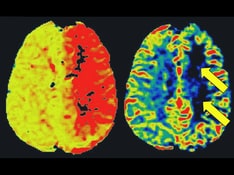
Overview of Lacunes
The lacunar hypothesis proposes that (1) symptomatic lacunes present with distinctive lacunar syndromes and (2) a lacune is due to occlusion of a single, deep penetrating artery generated by a specific vascular pathology.
The above concept is controversial because different definitions of lacunes have been used. Lacunes may be confused with other empty spaces, such as enlarged perivascular (Virchow-Robbins) spaces, in which the specific small-vessel pathology is occasionally absent. Originally, lacunes were defined pathologically, but lacunes are now diagnosed on clinical and radiologic grounds. [1] This problem is compounded by the present inability to image a single penetrating artery. [2]
Much of our current knowledge of lacunar strokes is due to Fisher's prior cadaveric dissection of postmortem stroke patients. He found that most symptomatic lacunar strokes are due to the occlusion of penetrating arteries of 200-800 μm in diameter, whereas those with smaller-diameter penetrating artery infarcts tended to be asymptomatic. [3]
Another study suggests that by using a gene expression profile, small deep infarct (SDI) differences between lacunar and nonlacunar strokes can be distinguished. SDIs of unclear cause are typically of nonlacunar etiology. This knowledge leads researchers to believe that complete workups of SDIs are critical to identifying potential cardioembolic and arterial causes of strokes. [4]
Definition of lacunes
Lacunes may be defined as small subcortical infarcts (< 15 mm in diameter) in the territory of the deep penetrating arteries; these lesions may present with specific lacunar syndromes or they may be asymptomatic. Unfortunately, the 5 classic lacunar syndromes established by Fisher and their radiologic appearances are not specific for lacunes. Lacunes occur most frequently in the basal ganglia and in the internal capsule, thalamus, corona radiata, and pons.
Incidence of lacunar strokes
In the United States and other Western nations, lacunes account for 15-25% of all ischemic strokes. [5, 6, 7] However, differences in the reported incidence rates of lacunar strokes between US and European studies may be due in part to different definitions used in the studies. In two community-based studies in the United States, the annual incidence rates of lacunar strokes were 13.4 and 19.5 cases per 100,000 population. However, two European community-based studies found higher annual incidence rates (31.7 and 53 cases per 100,000 population).
A study by Rukn et al indicated that among ischemic strokes in Middle Eastern and North African countries, lacunar strokes are the second most common type (24.1%). [8]
The incidence of lacunar strokes increases with age (mean age of first lacunar stroke, 65 y), and men may be affected more than women. Some studies have also found higher frequencies of lacunar strokes in black persons, Mexican Americans, and Hong Kong Chinese. [9]
Go to Medscape Reference articles Ischemic Stroke, Lacunar Syndrome, and Acute Management of Stroke for more information on these topics.

Classification of Ischemic Strokes
The Trial of ORG 10172 in Acute Stroke Treatment (TOAST) developed a different system for categorization of stroke subtypes based on etiology. This classification system had a high interphysician agreement rate and included the following 5 subtypes of ischemic stroke [10] :
-
Large-artery atherosclerosis
-
Cardioembolism
-
Small-vessel occlusion
-
Stroke of other determined etiology
-
Stroke of undetermined etiology
Formation of Lacunes
Lacunes are caused by occlusion of a single penetrating artery. The deep penetrating arteries are small, nonbranching end arteries (usually smaller than 500 μm in diameter), which arise directly from much larger arteries (eg, the middle cerebral artery, anterior choroidal artery, anterior cerebral artery, posterior cerebral artery, posterior communicating artery, cerebellar arteries, basilar artery). Their small size and proximal position predispose them to the development of microatheroma and lipohyalinosis. [11, 12]
Initially, lipohyalinosis was thought to be the predominant small-vessel pathology of lacunes; however, microatheroma now is thought to be the most common mechanism of arterial occlusion (or stenosis). Occasionally, atheroma in the parent artery blocks the orifice of the penetrating artery (luminal atheroma), or atheroma involves the origin of the penetrating artery (junctional atheroma).
A hemodynamic (hypoperfusion) mechanism is suggested when there is a stenosis (and not occlusion) of the penetrating artery. When no evidence of small-vessel disease is found on histologic examination, an embolic cause is assumed, either artery-to-artery embolism or cardioembolism. In one series, 25% of patients with clinical, radiologically defined lacunes had a potential cardiac cause for their strokes. [13]
Risk Factors for Lacunar Development
As discussed in Formation of Lacunes, the cause of lacunar infarction is occlusion of a single small penetrating artery. This occlusion may be due to microatheroma and lipohyalinosis, which are associated with hypertension, smoking, and diabetes, or may result from microembolism from the heart or carotid arteries. [7, 14]
Study results initially indicated that almost all patients with lacunes have hypertension. However, later studies found hypertension in only 44-75% of patients. In the setting of chronic hypertension, the penetrating arteries, which usually are not affected by atherosclerosis, may develop microatheroma and lipohyalinosis.
Diabetes mellitus is well recognized as a risk factor for development of small-vessel disease throughout the body, including in the penetrating arteries, and smoking is also an established risk factor for lacunes.
Traditionally, embolism (either cardioembolism or artery-to-artery embolism) was considered a rare mechanism of lacunar stroke, but a potential embolic cause is not uncommon when lacunes are defined clinicoradiologically. A potential embolic cause may be a coincidental finding only.
Atrial fibrillation and ipsilateral carotid stenosis have a stronger association with nonlacunar infarcts. [15]
The data are less clear regarding a strong association between other risk factors and lacunar stroke, including alcohol consumption, elevated cholesterol, and history of previous stroke.
Go to Hypertension, Type 2 Diabetes Mellitus, and Atrial Fibrillation for more information on these topics.
Evaluation of Lacunar Syndromes
Lacune-related symptoms may occur suddenly or may evolve in either a fluctuating (eg, the capsular warning syndrome) or a progressive manner. [16, 17]
Fisher’s studies led to development of his 5 classic lacunar syndromes, of which each has a symptom complex that is relatively specific to it: pure motor stroke/hemiparesis, ataxic hemiparesis, dysarthria/clumsy hand, pure sensory stroke, and mixed sensorimotor stroke.
Occasionally, cortical infarcts and intracranial hemorrhages can mimic a lacunar syndrome. [18] Cortical symptoms (eg, aphasia, neglect) and visual field defects are absent.
Pure motor stroke/hemiparesis
Pure motor stroke/hemiparesis is the most common (33-50%) lacunar syndrome; the lacune is usually in the posterior limb of the internal capsule, which carries the descending corticospinal and corticobulbar tracts, or the basis pontis.
This syndrome consists of hemiparesis or hemiplegia that typically affects the face, arm, and leg equally. However, the face or leg can be involved to a lesser extent than other regions, and occasionally, only arm or leg weakness is noted by patients. Transient sensory symptoms (but not signs) may be present. Dysarthria and dysphagia may also be present.
Hemiparesis or hemiplegia is noted, with hyperreflexia and Babinski sign; no involvement of any other system is observed.
Ataxic hemiparesis
Ataxic hemiparesis is the second most frequent lacunar syndrome. The most frequent sites of infarction are the posterior limb of the internal capsule, basis pontis, and corona radiata.
This syndrome features a combination of cerebellar and motor symptoms, including weakness and clumsiness, on the ipsilateral side of the body. The leg is usually more affected than the arm; hence, it is known also as homolateral ataxia and crural paresis. The onset of symptoms is often over hours or days.
A combination of pyramidal signs (eg, hemiparesis, hyperreflexia, Babinski sign) and cerebellar ataxia on the same side of the body. The lower extremities are typically more involved than the upper extremities. Nystagmus may be present.
Dysarthria/clumsy hand
Although now considered to be a variant of ataxic hemiparesis, this disorder is usually still classified as a separate lacunar syndrome. The lesion is in the pons.
The main symptoms are dysarthria and clumsiness (ie, weakness) of the hand, which are often most prominent when the patient is writing.
Unilateral lower facial weakness with dysarthric speech is noted. On protrusion, the tongue may deviate to the side of facial weakness. A mild, ipsilateral hemiparesis is usually noted, but the arm is ataxic. Ipsilateral hyperreflexia and Babinski sign may be observed.
Pure sensory stroke
The infarct of this lacunar syndrome is usually in the thalamus. Symptoms consist of persistent or transient numbness and/or tingling on one side of the body (eg, face, arm, leg, trunk). Occasionally, patients complain of pain or burning, or of another unpleasant sensation.
Unilateral sensory loss is observed. Although the patient may complain of weakness, no weakness is found on examination.
Mixed sensorimotor stroke
The infarct in mixed sensorimotor strokes is usually in the thalamus and the adjacent posterior internal capsule (seemingly, in the carotid and vertebrobasilar territories).
With this lacunar syndrome, patients note hemiparesis or hemiplegia with ipsilateral sensory impairment.
A combination of pyramidal signs (eg, hemiparesis, hyperreflexia, Babinski sign) is noted, as is sensory loss in the absence of any cortical signs.
Diagnostic Considerations
When considering the diagnosis of a lacunar stroke, other conditions should also be evaluated, including hypoglycemia, migraine headache, middle cerebral artery stroke, other stroke subtypes (large artery disease, cardioembolic, hemorrhagic), seizures (Todd paresis), and space-occupying lesions (abscess, tumor).
Routine Tests
Obtain a serum glucose level to rule out hypoglycemia.
Obtain a complete blood cell (CBC) count, as thrombocytopenia is a contraindication for thrombolysis. Coagulation studies such as prothrombin time/international normalized ratio (PT/INR) and activated partial prothrombin time (aPTT) should also be obtained, as anticoagulant use with prolonged aPTT or PT (>15 sec) or INR greater than 1.7 are contraindications to thrombolysis.
CT Scanning of the Head
Computed tomography (CT) scans are usually negative for lacunes in the acute stage; however, CT scanning is the imaging procedure of choice to rule out an intracerebral hemorrhage. It may show a large cortical stroke, an old lacune, or a space-occupying lesion.
Magnetic Resonance Studies of the Head
Magnetic resonance imaging (MRI) is more sensitive than computed tomography (CT) scanning for the identification of acute and old lacunes (particularly in the posterior fossa). [19] However, although MRI can help to identify acute hemorrhage, there is a longer acquisition time than with CT scanning.
Magnetic resonance angiography (MRA) also should be performed, because lacunes occasionally result from large-vessel disease. If further anatomic details are needed, the use of diffusion-weighted (DW) MRI may be indicated. [19]
Cardiac and Arterial Studies
An electrocardiogram (ECG), a Holter monitor study, a carotid Doppler ultrasonogram, and an echocardiogram may be required to identify a potential embolic cause for the lacune. [13]
Cerebral angiography is required if a severe (>70% occlusion) carotid stenosis is identified on noninvasive testing (carotid ultrasonography or magnetic resonance angiography [MRA]) and if carotid endarterectomy is contemplated.
Histology
Lacunes are not examined histologically except at necropsy. Histologically, lacunes are no different from other brain infarcts. Cells undergoing necrosis are initially pyknotic, but their plasma and nuclear membranes then break down. Polymorphonuclear cells appear, followed by macrophages, and the necrotic tissue is removed by phagocytosis. A cavity surrounded by a zone of gliosis is the end result. Careful examination may reveal the underlying small-vessel pathology.
Microatheroma causing occlusion or stenosis of a deep penetrating artery is the most common small-vessel pathology, usually involving the artery in the first half of its course. Histologically, microatheroma is identical to large-vessel atheroma with subintimal deposition of lipids and proliferation of fibroblasts, smooth muscle cells, and lipid-laden macrophages.
Lipohyalinosis is seen in the smaller penetrating arteries (< 200 μm in diameter) and occurs almost exclusively in patients with hypertension. [20] It has features of atheroma formation and fibrinoid necrosis, with lipid and eosinophilic fibrinoid deposition in the media.
Management of Lacunar Strokes
A detailed discussion of the treatment of lacunar strokes is beyond the scope of this article, but a brief overview follows.
The role of anticoagulation or carotid endarterectomy in patients with lacunes has not been fully defined. Although a study showed that the benefit of endarterectomy in patients with lacunes is smaller than it is in patients with nonlacunar strokes, the procedure is superior to medical therapy.
The prevention of deep venous thrombosis (DVT), aspiration pneumonia, urinary tract infection, and decubitus ulcers are important considerations for any patient following stroke.
Transfer may be required for further diagnostic evaluation and treatment, including rehabilitation.
Pharmacotherapy
The medications used in the management of lacunes are not specific to this stroke subtype.
Fibrinolytic agents are used to improve stroke outcome. The National Institute of Neurological Disorders and Stroke (NINDS) study on recombinant tissue-type plasminogen activator (rt-PA) showed an 11-13% absolute increase in the number of ischemic stroke patients with a favorable outcome at 3 months with tissue plasminogen activator (t-PA). [21, 22]
A study by Matusevicius et al using the SITS (Safe Implementation of Treatments in Stroke) International Stroke Thrombolysis Register found that in patients who had suffered a lacunar stroke, the likelihood of functional independency was 7.1% greater among those who were treated with intravenous (IV) thrombolysis than in patients who did not receive this therapy. However, the adjusted odds ratios for mortality at 3 months were similar between the two groups. The investigators also found that among lacunar and nonlacunar stroke patients who underwent IV thrombolysis, the risk for symptomatic intracerebral hemorrhage was lower in the former group than in the latter. [23]
Using data from the Efficacy and Safety of MRI-Based Thrombolysis in Wake-Up Stroke (WAKE-UP) trial, Barow et al found that among patients who had suffered a lacunar infarct, favorable functional outcomes occurred in 31 out of 53 (58.5%) persons who underwent IV thrombolysis with the recombinant tissue-type plasminogen activator (rt-PA) alteplase, compared with 24 out of 52 individuals (46.2%) who received a placebo. (However, one symptomatic intracranial hemorrhage and one death occurred in the alteplase patients, with neither occurring in the placebo group.) In addition, no significant difference in alteplase-related functional outcomes was found between patients with lacunar stroke and those with other stroke types. [24]
Similarly, a retrospective Australian study, by Eggers et al, found a similar degree of improvement in lacunar and nonlacunar ischemic stroke patients treated with rt-PA, with functional outcomes better in both groups at 3-month follow-up than in ischemic stroke patients who did not undergo thrombolysis. [25]
Antiplatelet agents are used for secondary stroke prevention, and if commenced within 48 hours of stroke onset, confer a small survival benefit. A literature review by Kwok et al indicated that following a lacunar stroke, antiplatelet therapy has a significant benefit over placebo in the reduction of secondary stroke. The study, which included 17 trials (42,234 participants), also suggested that dual antiplatelet agent therapy has no clear benefit over monotherapy and should therefore not be used for long-term prevention of lacunar stroke. [26]
Angiotensin-converting enzyme inhibitors are also used for secondary stroke prevention. [27, 28] Anticoagulant agents are employed for prophylaxis of deep vein thrombosis (DVT) and pulmonary embolism.
Some patients with spasticity or joint contractures following a lacunar stroke may benefit from the injection of botulinum toxin or neurolytic agents.
Surgical intervention
Surgery (eg, gastrostomy/jejunostomy) is rarely required as a result of a lacunar stroke, but patients with severe dysphagia may require long-term tube feeding.
Consultations
A social worker should be consulted to assess personal and family resources, to inform the patient and family of available government resources, to facilitate discharge planning, and to coordinate community services.
Rehabilitation Overview
Rehabilitation in patients following a lacunar stroke may include physical and occupational therapy, speech therapy, and recreational therapy.
Physical therapy
After the initial assessment of a patient who has suffered a lacunar stroke, a physical therapy program should provide passive exercises, with the major joints of the paretic limb being put through a full range of motion (ROM). As soon as patients are stable and can tolerate more active therapy, encourage them to sit up (initially in bed and later in a chair), to stand, and to transfer safely; then, they can commence ambulating with assistance and aids, as required. The physical therapist can provide splints and braces to support joints and limbs, to treat and prevent complications (eg, shoulder-hand syndrome, spasticity), and to assist the patient in walking.
Occupational therapy
When the patient who has had a lacunar stroke becomes stable, assess his/her ability to perform activities of daily living (ADLs), such as dressing and undressing, bathing, personal grooming, toileting, preparing meals, and eating. The occupational therapist can advise on equipment that may allow the patient to be more independent. If the patient is returning home, an assessment of the residence identifies potential problems and necessary modifications (eg, handrails, moving a bed to a ground level room), thereby providing confidence to the patient and family.
Speech therapy
A speech-language therapist can assist with speech-language problems and swallowing disorders in patients who have had a lacunar stroke. Early assessment of a patient with swallowing problems may prevent dehydration and malnutrition from inadequate intake, as well as prevent aspiration and pneumonia. In addition to the bedside assessment, cinefluoroscopy with barium swallow may be required. Treatment may require a change in food consistency, a change in positioning or compensatory swallowing technique, or placement of a feeding tube. Patients with lacunes may be dysarthric (but not dysphasic), requiring treatment to improve functional communication.
Recreational therapy
Following stroke, recreational therapy improves a patient's independence, self-confidence, and ability to function, through participation in individual and group recreational activities that the patient previously enjoyed, as well as through participation in new ones.
The recreational therapist must assess the medical condition and physical capabilities of the patient, in addition to that individual's interests and hobbies. Then, the therapist must help the patient to set realistic goals and to make any modifications needed to achieve them.
Recreational therapy not only allows the stroke patient to practice motor skills but also allows him/her to remain socially active. Recreational therapy includes leisure activities, such as going for a walk, fishing, and gardening, as well as involvement in family and community activities, such as playing cards or going to a restaurant or to church.
Complications of Lacunar Strokes
Complications from lacunar strokes are not specific to this stroke subtype. They include the following:
-
Stroke progression or recurrent stroke
-
Aspiration pneumonia
-
Deep vein thrombosis and pulmonary embolism
-
Urinary tract infection
-
Depression
-
Shoulder-hand syndrome
-
Decubitus ulcers
A study by Cukierman-Yaffe et al indicated that in patients with diabetes who suffer a lacunar stroke, an association exists between hemoglobin A1c (HbA1c) levels and cognitive scores. Using the Cognitive Abilities Screening Instrument (CASI), the investigators found that during follow-up, a 1% rise in HbA1c over time corresponded with a reduction of 0.021 in the CASI score. More specifically, every 1% increase in HbA1c was associated with a 0.033 decrease in the clock-making test z-score (executive function), a 0.018 reduction in discriminability, and a 0.016 decrease in the controlled oral word association z-score (verbal fluency). [29]
In a study of 912 patients with lacunar stroke and 425 controls, Ohlmeier et al reported the incidence of vascular cognitive impairment (VCI) to be 38.8% and 13.4%, respectively. Using logistic regression models, the investigators found that diabetes mellitus, depressive symptoms (as measured on the Geriatric Depression Scale), a higher body mass index (BMI), and white matter hyperintensity were risk factors for VCI in lacunar stroke. Years of full-time education, on the other hand, negatively correlated with the VCI risk. [30]
Outpatient Management Considerations
If the patient who has had a lacunar stroke is functionally independent, can return safely home, and would benefit from intensive inpatient rehabilitation, transfer him/her to a rehabilitation facility.
Educate the patient and family about the common stroke symptoms. Inform them early about the importance of presentation, because tissue plasminogen activator (t-PA) (which may be indicated) can be given only within 3 hours of stroke onset. [22]
Medical follow-up is necessary to assess neurologic and functional improvement, to monitor and treat risk factors, and to monitor drug compliance. Outpatient physical, occupational, and/or speech therapy may be recommended.
Discharge on aspirin and ramipril. [31] If the patient remains nonambulatory and is at high risk of deep vein thrombosis, continue subcutaneous heparin.
Lacunar Stroke Outcomes
Patient survival rates and rates of functional improvement are better for lacunar strokes than they are for other stroke subtypes. [5, 6, 7, 9] Between 70% and 80% of patients who have suffered a lacunar stroke are functionally independent at 1 year, compared with fewer than 50% of patients who have had a nonlacunar stroke.
The early (< 30 d) survival rate for patients who have had a lacunar stroke is approximately 96-97%. This compares to an early survival rate of 85% for patients who have suffered a nonlacunar stroke.
The late (1 yr) survival rates are 87% following lacunar strokes and 65-70% following nonlacunar strokes.
The risk of recurrent lacunar stroke, no more than 10% at 1 year, is no higher (and possibly is lower) than the recurrent stroke risk noted for other stroke subtypes. [5, 6]
A study by Erdur et al of inhospital stroke recurrence over a median length of stay of 5 days found no recurrences among patients with lacunar stroke. The study involved 5106 patients with acute ischemic stroke or transient ischemic attack (TIA). [32]
Tables

What would you like to print?
- Overview of Lacunes
- Classification of Ischemic Strokes
- Formation of Lacunes
- Risk Factors for Lacunar Development
- Evaluation of Lacunar Syndromes
- Diagnostic Considerations
- Routine Tests
- CT Scanning of the Head
- Magnetic Resonance Studies of the Head
- Cardiac and Arterial Studies
- Histology
- Management of Lacunar Strokes
- Rehabilitation Overview
- Complications of Lacunar Strokes
- Outpatient Management Considerations
- Lacunar Stroke Outcomes
- Show All
- References