|
|   |
AUTHOR INFORMATION
| Section 1 of 10  |
|
| Author: Kresimir Banovac, MD, Professor, Department of Physical Medicine and Rehabilitation, University of Miami School of Medicine; Medical Director, Spinal Cord Injury Rehabilitation, Jackson Memorial Medical Center Coauthor(s): John Speed, MBBS, Interim Chairman, Associate Professor, Division of Physical Medicine and Rehabilitation, University of Utah School of Medicine |
| Kresimir Banovac, MD, is a member of the following medical societies:
American Spinal Injury Association |
| Editor(s): Robert L Sheridan, MD, Assistant Chief of Staff, Chief of Burn Surgery, Shriners Burns Hospital; Associate Professor of Surgery, Department of Surgery, Division of Trauma and Burns, Massachusetts General Hospital and Harvard Medical School; Francisco Talavera, PharmD, PhD, Senior Pharmacy Editor, eMedicine;
Patrick M Foye, MD, Assistant Professor of Physical Medicine and Rehabilitation, Co-Director of Musculoskeletal Fellowship, Co-Director Back Pain Clinic, Director of Coccyx Pain (Tailbone Pain, Coccydynia) Service, UMDNJ, New Jersey Medical School;
Kelly L Allen, MD, Consulting Staff, Department of Physical Medicine and Rehabilitation, Lourdes Regional Rehabilitation Center, Our Lady of Lourdes Medical Center;
and Consuelo T Lorenzo, MD, Consulting Staff, Department of Physical Medicine and Rehabilitation, Alegent Health Care, Immanuel Rehabilitation Center |
Disclosure
|   |
INTRODUCTION
| Section 2 of 10  |
|
Background: The term heterotopic ossification (HO) describes bone formation at an abnormal anatomical site, usually in soft tissue. Stover et al classify HO into the following 3 types:
Myositis ossificans progressiva (fibrodysplasia ossificans progressiva)
This condition appears first in early childhood and progresses to a severely immobilizing condition by adulthood. The first stage is thought to be an interstitial myositis or fibrositis. About 75% of all cases reported have had congenital anomalies, most frequently failure of development of the big toes or thumbs and, less commonly, other digits. The first symptom is often a firm swelling in a paravertebral or cervical muscle with mild erythema and swelling of the overlying skin. With time, other muscles become similarly involved, producing osteoid and cartilage; within 6-12 months, calcium deposition is noted with resultant reduced range of motion (ROM) and secondary soft tissue contractures and deformities. The differential diagnosis for this condition includes calcinosis universalis, which usually occurs in relation to scleroderma or polymyositis. In calcinosis, calcium deposition is noted in the skin, subcutaneous tissues, and connective tissue sheaths around muscles, as opposed to within muscles.
Traumatic myositis ossificans
In this condition, a painful area develops in muscle or soft tissue following a single blow to the area, a muscle tear, or repeated minor trauma. The painful area gradually develops masses of cartilaginous consistency and, within 4-7 weeks, a solid mass of bone can be felt. Common sites include the pectoralis major, biceps, and thigh muscles. A nontraumatic type of myositis ossificans also may exist.
Neurogenic heterotopic ossification
This condition is the one that comes to mind when the generic phrase heterotopic ossification is used. This type of HO is the subject of this article. The various terms mentioned at the outset all refer to this type of HO.
In 1918, Dejerine and Ceilier first described HO in patients with spinal cord injury (SCI) from the First World War. Now HO is recognized as a fairly common sequela of SCI, especially after traumatic cord injury. The condition also has been described with lesser frequency in other severe neurologic disorders (eg, closed head injuries [CHI], stroke, encephalitis, polio, tetanus, tabes dorsalis, syringomyelia, anoxic encephalopathy), as well as following severe burns. Pathophysiology: The etiology and pathogenesis of neurogenic heterotopic ossification remain unknown despite many investigations. Rossier's extensive review of the problem in 1973 attempted to address the question of pathogenesis by investigating several different parameters, including (1) radiographs, (2) lower limb angiography, (3) venous and arterial blood gas analyses, (4) serial serum calcium, (5) phosphorus, (6) creatine kinase (CK) and alkaline phosphatase (ALP), (7) urine calcium and hydroxyproline, (8) skin temperature, (9) bone scans, and (10) biopsy.
None of these observations explains the factors responsible in the development of HO. Although the etiology of HO remains unknown, clinical and experimental evidence supports the hypothesis that trauma is one of the most important initiating factors. In the studies in which HO was induced experimentally, 2 factors were found to be prerequisites for ectopic ossification: (1) traumatic ischemic degeneration of involved muscle and (2) tissue expression of bone morphogenic proteins (BMPs). It also has been shown that expression of many genes, including BMP, is regulated by mechanical stress. The target cells in the muscle for BMP are mesenchymal stem cells, also called satellite cells. These cells are precursors capable of differentiating into many cell types, including osteoblasts. Thus, BMP may play a role as a paracrine factor in the differentiation of satellite cells into bone-forming cells.
On the other hand, clinically, muscle trauma has been reported as a cause of HO after SCI by numerous investigators, and these observations are further supported by more recent studies from Bodley et al and Snoecx et al. The types of muscle trauma proposed as initiating HO are muscle tears, ruptures, edema, and bleeding. It also was suggested that factors such as intensive rehabilitation, transfer activities, or repeated minor trauma during activities of daily living can cause superimposed mechanical stress and initiate HO. The hypothesis that trauma is an important factor in HO formation after SCI also has been documented by ultrasonography and histology studies. Various degrees of muscular damage with evidence of tissue bleeding were found in the early stage of HO.
During formation of HO, initially immature connective tissue, fibroblasts, ground substance, and collagen fibers are seen. Eventually, usually within 7-14 days, osteoblasts are noted, located irregularly in osteoid. New bone formation may start in multiple foci within osteoid. As mineralization progresses, amorphous calcium phosphate is gradually replaced by hydroxyapatite crystals. Commonly, after approximately 6 months, the appearance of true bone is noted. Rossier noted that after approximately 30 months, the pattern in HO approached that of normal young adult bone. Anatomically, HO is always extra-articular, but it may be attached to the joint capsule without disrupting it. Occasionally, HO may be attached to the cortex of adjacent bone with or without cortical disruption. Frequency:
- In the US: Reported incidence of HO following SCI varies greatly from study to study. Incidence varies from a low of 3.4% to a high of 47% reported by Hassard, who found HO around the hips of 62 of 131 patients with SCI who were admitted to the Hot Springs Rehabilitation Center over a 2-year period. Most studies cite a range between these 2 extremes. Peak incidence is noted from 4-12 weeks post injury and can occur up to 5 months following trauma. Later onset has been reported, but it is very rare.
In 1954, Irving and LeBrun first documented HO in patients with hemiplegia. Roberts reported 6 cases of HO following intracranial lesions (3 traumatic, 2 vascular, and 1 neoplastic) in 1968, and subsequent studies cite incidence of 11-76% clinically significant HO following severe CHI. Incidence of HO following other neurologic disorders has not been delineated yet, but it appears to be lower than incidence following SCI or head injury.
Several reasons may be postulated for the large variability in incidence seen in different studies.
- First, different authors use different criteria to define HO. For example, using a radiologic screening survey yields higher incidence figures than reporting only clinically significant HO detected on physical examination.
- Secondly, although neurogenic heterotopic ossification (NHO) generally occurs periarticularly (as noted in the European term paraosteoarthropathy), some authors include patients with calcification or bone formation, possibly secondary to other causes (eg, decubitus ulcers, septic arthritis, trauma, surgery) in their studies.
- Thirdly, various authors study different populations (eg, early versus late cord injured patients).
Mortality/Morbidity: Approximately 10-35% of all patients with HO secondary to SCI have significant reduction of ROM at the affected joint or joints. Wharton and Morgan found that 3% of patients with SCI have an ankylosed joint caused by HO. Effects on activities of daily living (ADL) and functional mobility (eg, transfers) are not difficult to imagine. In addition, abnormal weight distribution may lead to increased frequency of decubitus ulceration, as Hassard noted in 1975.
Race: No known correlation exists between race and incidence of HO.
Sex: No known correlation exists between sex and incidence of HO.
Age: Age has no significant correlation with HO formation, though the condition is somewhat less frequent in pediatric and geriatric patients with SCI.

|   |
CLINICAL
| Section 3 of 10  |
|
History: - Onset of HO usually is 1-4 months after injury in SCI patients, though it may occur as early as 19 days or as late as 1 year following injury.
- The condition may occur later with other precipitating circumstances (eg, fracture, surgery, severe systemic illness).
- Not uncommonly, incidental HO that was never noted clinically may be detected much later on x-ray.
- HO always occurs below the level of injury in SCI patients, and most authors agree there is no relation to presence or absence of spasticity in SCI patients.
- HO does tend to occur more frequently with complete injuries.
- In SCI patients with HO, the hips are involved most commonly.
- At the hip, the flexors and abductors tend to be involved more frequently than extensors or adductors.
- At the knee, the medial aspect most commonly is affected by HO.
- Shoulders and elbows are the joints affected most commonly in the upper extremities.
- One report in the literature notes involvement of the metacarpophalangeal joints in the hand.
- The lumbar paravertebral region also has been mentioned as an infrequent site.
- In patients who have sustained head injury or stroke, the story is a bit different. HO almost always occurs on the affected side, and most authors have noted that HO is more frequent in patients with spasticity than without.
- Garland and Blum studied 496 patients with severe head injuries. Clinically significant HO, causing pain and decreased ROM, was noted in 100 joints in 57 patients. Of the 100 involved joints, 89 were in spastic extremities. Frequency of involvement of different joints was slightly different than in patients with SCI; the hips were involved most commonly (44), then shoulders (27), and elbows (26). HO was detected in only 3 knee joints.
- Spielman also looked at occurrence of HO in patients with head injuries. In that study, inclusion criteria were (1) initial Glasgow Coma Scale score of 8 or less and (2) coma lasting more than 2 weeks. All patients had passive range of motion (PROM) of unknown frequency. Once again, HO was more common in the limbs of patients with severe spasticity. Prolonged coma also appeared to increase the likelihood of development of HO.
- In patients with neurologic deficits, increased limb spasticity, decreased joint ROM, and inflammatory signs near a joint strongly suggest the possibility of HO.
Physical: - Diagnosis of HO can be made clinically if localized inflammatory reaction, palpable mass, or limited ROM is observed.
- Clinically, onset of larger masses of HO is often characteristic of any inflammatory reaction.
- Fairly suddenly, a warm and swollen extremity becomes obvious, and fever is present.
- If sensation is intact, the area of swelling is painful.
- The swelling usually is localized more than in thrombophlebitis, and, within several days, a more circumscribed firmer mass is palpable within the edematous area.
- If the mass is adjacent to a joint, gradual loss of PROM may follow.
- With development of early HO at the hip or knee, effusion may be noted at the knee.
Causes: See the Pathophysiology section above.
|   |
DIFFERENTIALS
| Section 4 of 10  |
|
Other Problems to be Considered:
Thrombophlebitis
Cellulitis
Joint sepsis
Fracture
Hematoma
Early pressure sore (before skin breakdown is evident)
Local trauma
Osteomyelitis |
|
Patient Education
|
|
Click here for patient education.
|
|
|
|
|
|   |
WORKUP
| Section 5 of 10  |
|
Lab Studies:
- This test is not specific for HO but is of value in determining the severity of muscle involvement and may be helpful in planning treatment of HO. Rossier et al showed in 1973 that patients with an acute form of HO after SCI have elevated CK levels that correlated with histologic involvement of muscle. Two recent studies found CK to be useful in the diagnosis and management of HO. Singh et al reported significantly higher CK levels in the group of patients who developed HO. Data published by Sherman et al indicate that a higher level of CK ultimately correlated with a more severe form of HO, suggesting more widespread involvement of surrounding muscle.
- These results are promising in that CK may reliably predict a higher risk of developing HO, can help predict severity, and can be used to follow treatment success.
- The initial stage of HO is manifested by a prominent inflammatory response. This acute reaction is accompanied by changes in levels of cytokines that stimulate the production of acute-phase proteins, one of these being C-reactive protein (CRP).
- A recent study by Estores et al indicates that the serum concentration of CRP correlated better than did the erythrocyte sedimentation rate with the inflammatory activity of HO after SCI. The normalization of CRP in serum was accompanied by a resolution of the inflammation of soft tissue. It seems that administering nonsteroidal anti-inflammatory drugs (NSAIDs) in the early phase of HO and monitoring the serum CRP level may provide added benefit in reducing the inflammatory reaction that is proposed to be an important factor in the genesis of HO.
- The ALP level was one of the most commonly used tests in the past that is not often used today.
- Serum ALP levels are not elevated in acute HO in many patients.
- The elevation can also be nonspecific because of associated skeletal injuries or surgical treatments of fractures.
- The serum ALP level is of little value in determining the maturity of HO prior to surgical removal.
Imaging Studies:
- Ideally, the goal of diagnostic imaging should focus on the detection of nonmineralized HO because the presently available medication, etidronate, can inhibit early mineralization. In this respect, bone scintigraphy and ultrasonography are recommended imaging studies for early diagnosis of HO.
- Bone scintigraphy is highly sensitive in the early diagnosis of HO. This is the most commonly used diagnostic study for HO.
- Freed evaluated the 3-phase bone scan in the detection of HO and found that a marked vascular blush and increased blood pool about the hips preceded the development of clinical HO by 2-4 weeks.
- The 3-phase bone scan using technetium Tc 99m diphosphonate is used in diagnosing and monitoring HO.
- Ultrasonography: This is also used in the early diagnosis of HO about the hips. However, no data are available on the diagnostic value of ultrasonography in the diagnosis of HO in other joints (eg, knee, shoulder, elbow).
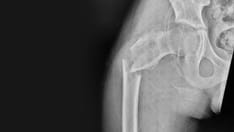
- While plain radiography is highly specific in the diagnosis of HO, this method lacks sensitivity in early diagnosis. Because soft tissue calcification must occur for radiographic evidence of HO to be present, radiographs are not helpful in the early stages. Radiologic examinations do not show evidence of HO until a flocculent patchy appearance develops, as calcium is deposited about 7-10 days after the onset of clinical symptoms.
- This patchy appearance coalesces and enlarges on subsequent examinations, and, by 2-3 months, the boundaries of the HO demarcate with the appearance of mature bone. Radiography, however, is not reliable at assessing the maturity of HO because more mature areas may hide immature areas.
- CT scan and MRI may be useful in delineating local anatomy prior to resection.
- The role of CT scan and MRI in the evaluation of other aspects of HO has not been well established.
Other Tests:
- Biopsy has no role in diagnosis of HO, but it has been considered in assisting to determine maturity.
- Risk of inadequate sampling is possible as mature and immature HO may be intermixed.
|   |
TREATMENT
| Section 6 of 10  |
|
Rehabilitation Program:
- Physical Therapy: Use of physical therapy (PT) in HO has been controversial for a long time. Rossier noted occasional transverse microfractures on sections of HO that he thought might be caused by spasticity or overly aggressive PROM. Since then, the debate between resting the joint and aggressive PROM has continued, but consensus appears to be developing in the more recent literature that aggressive PROM and continued mobilization, once acute inflammatory signs have subsided, are indicated as they help maintain ROM and may lead to formation of a pseudarthrosis in more extensive HO. Resting the joint appears more likely to lead to decreased ROM or ankylosis.
During the acute inflammatory stage, the patient should rest the involved joint in a functional position, and the physical therapist should initiate gentle PROM as soon as possible. The role of continuous PROM machines has not been studied in this situation. For patients with incomplete SCI or head injuries, maintaining ROM may be difficult because of pain from ROM exercises. Joint manipulation has been reported in cases of HO with functional limitations because of limited joint ROM, but it is controversial because of risks of formation of new hematoma and long-bone fracture risk in the patient population with secondary osteoporosis.
Medical Issues/Complications: Nonarticular complications of HO are rare, but they have been reported. These complications include ulnar nerve compression with HO at the elbow; vascular (predominantly venous) compression, with or without associated deep venous thrombosis (DVT); and lymphatic obstruction leading to lymphedema.- Until recently, no effective protocol had been developed for preventing HO after SCI. The authors' recent studies, based on the well-documented beneficial effect of NSAIDs in the prevention of HO after total hip arthroplasty, showed that these drugs can also be helpful in reducing the incidence and severity of HO after SCI (Banovac, 2001; Banovac, 2003).
- The nonselective NSAID indomethacin SR in a dose of 75 mg/d given after SCI for 3 weeks reduced the incidence of HO 2-3 times.
- Nonselective NSAID indomethacin SR in dose of 75 mg daily given after SCI for 3 weeks reduced the incidence of HO 2 to 3 times.
- The selective COX-2 inhibitor rofecoxib at 25 mg/d decreased the risk of HO formation 2.5 times.
- These positive results with NSAIDs in the prevention of HO may be an important step forward in the clinical management of this condition.
Surgical Intervention: Once HO has developed to the point that it interferes significantly with the functional capacity of the patient, the only treatment option remaining is surgery, which most commonly is required at the hip. Ensure that the HO has reached maturity before resection, as resection of immature HO leads to recurrence rates of nearly 100%. Hemorrhage may be a significant problem at the time of surgery with an average blood loss of 2100 mL reported. Postsurgical infection may lead to amputation; therefore, great care must be taken at the time of surgery. Initiate a presurgery program to eliminate any possible nidus of bacteremia or infections (eg, decubitus ulcers, urinary tract infections).
The usual surgical technique used on HO occurring anteriorly at the hip is anterior wedge resection. Postoperatively, position the joint properly with foam wedges so that the surgical correction can be maintained and any strain on the incision or pressure sores can be prevented. Start gentle PROM about 72 hours postoperation, and increase therapy intensity gradually to incorporate retraining in functional activities. Patient selection and careful identification of functional goals are critical for successful surgical intervention. Consultations: Consultation with an orthopedist is necessary for any consideration of surgical management of HO. Other Treatment (injection, manipulation, etc.): - Radiation therapy has been studied most in connection with prevention of HO in patients at high risk for recurrence following hip arthroplasty.
- The most common use in the rehabilitation setting is for prevention of postoperative recurrence, but the optimal dosage, frequency, and timing have not been established.
- Mesenchymal stem cells that may be in muscle and transform into bone-forming cells are highly radiosensitive. Little is known of its effect on HO after SCI as a primary treatment. One reason that radiation therapy has not been established as a treatment for HO is a risk of local induction of malignancy. More recently, radiation has been used in Europe by Sautter-Bihl et al as a primary treatment for early HO after SCI; no adverse effects were noted.
|   |
MEDICATION
| Section 7 of 10  |
|
Today, the medical treatment of HO is directed at the therapy of early HO. In the later stages of development of mature bone, medical treatment is ineffective. Etidronate (Didronel) is the only available medication for the treatment of HO after SCI. Treatment with NSAIDs may be required initially until resolution of inflammation and normalization of CRP levels.
Drug Category: Nonsteroidal anti-inflammatory agents -- Presumed to have both direct and indirect effects on formation of HO. Direct effect refers to inhibiting differentiation of mesenchymal cells into osteogenic cells and indirect refers to inhibiting posttraumatic bone remodeling by suppression of the prostaglandin-mediated inflammatory response. Drug Name
| Indomethacin (Indocin) -- Known to inhibit synthesis of prostaglandins. |
|---|
| Adult Dose | 25 mg PO tid for 3-6 wk from time of surgery for excision of HO
|
|---|
| Pediatric Dose | <14 years: Not recommended >14 years: Administer as in adults |
|---|
| Contraindications | Documented hypersensitivity |
|---|
| Interactions | Coadministration with aspirin increases risk of serious NSAID-related adverse effects; probenecid may increase concentrations and, possibly, toxicity of NSAIDs; may decrease effect of hydralazine, captopril, and beta-blockers; may decrease diuretic effects of furosemide and thiazides; monitor PT closely (instruct patients to watch for signs of bleeding); may increase risk of methotrexate toxicity; phenytoin levels may be increased when administered concurrently |
|---|
| Pregnancy |
C - Safety for use during pregnancy has not been established.
|
|---|
| Precautions | Category D in third trimester of pregnancy; acute renal insufficiency, hyperkalemia, hyponatremia, interstitial nephritis, and renal papillary necrosis may occur; increases risk of acute renal failure in patients with preexisting renal disease or compromised renal perfusion; reversible leukopenia may occur, (discontinue if persistent leukopenia, granulocytopenia, or thrombocytopenia presents)
|
|---|
Drug Category: Bisphosphonates -- The bisphosphonate group of compounds has properties similar to naturally occurring pyrophosphate, which may be a regulator of calcification. Etidronate disodium is the most extensively studied of this class of drugs for treatment of HO. Etidronate acts by (1) inhibiting precipitation of calcium phosphate from unsaturated solutions, (2) delaying aggregation of apatite crystals into layers, and (3) blocking conversion of calcium phosphate into hydroxyapatite. Apparently, predisposition to the inflammatory process and mineralization decreases with time, though it is not understood why. This phenomenon may be why there is no massive rebound bone formation after cessation of etidronate. Thus, effectiveness of etidronate depends entirely on when and how long it is given, and it does not affect HO that has been formed already.Drug Name
| Etidronate disodium (Didronel) -- Reduces bone formation and does not alter renal tubular reabsorption of calcium. The effects of etidronate increase as the dose increases. Agent does not appear to affect fracture healing. |
|---|
| Adult Dose | 20 mg/kg PO q24h for 2 wk followed by 10 mg/kg for 10 wk If GI upset occurs, give in divided doses To maximize absorption, food, vitamins, and antacids should be avoided within 2 h of dosing |
|---|
| Pediatric Dose | Not indicated; may result in rachitis |
|---|
| Contraindications | Documented hypersensitivity; hypocalcemia, renal impairment, osteomalacia |
|---|
| Interactions | Coadministration with calcium containing products and other multivalent cations decrease absorption |
|---|
| Pregnancy |
C - Safety for use during pregnancy has not been established.
|
|---|
| Precautions | Monitor hypercalcemia-related parameters (eg, serum levels of calcium, phosphate, magnesium and potassium); maintain adequate intake of calcium and vitamin D to prevent severe hypocalcemia; caution if active upper GI problems; do not administer with alendronate for osteoporosis in postmenopausal women |
|---|
|   |
FOLLOW-UP
| Section 8 of 10  |
|
Further Inpatient Care:
- Patients with advanced HO who undergo surgical intervention generally require hospitalization and further inpatient care. For discussion of care following an anterior hip resection surgery, see Surgical Intervention.
Further Outpatient Care:
- Monitoring of HO maturation
- Monitoring of HO maturation should be performed regularly.
- In patients with functional limitations for whom surgery is a consideration, radiography should be performed every 4-6 months.
- CT scanning and MRI may offer more precise delineation of ectopic bone that may be helpful in preoperative planning.
Deterrence/Prevention:
- As stated previously, prophylactic use of medications to prevent HO has been studied in individuals with SCI, with promising outcomes. NSAIDs do have a role in the prevention of HO and postoperative recurrence after excision of HO. Radiation therapy also may be used to prevent recurrence postoperatively in some patients.
Complications:
- Potential complications associated with surgical intervention in patients with HO include hemorrhage and postsurgical infections (see Surgical Intervention).
- HO in patients with SCI may lead to other complications, such as pressure sores and DVT.
Prognosis:
- Approximately 20-30% of SCI patients develop clinically evident HO, and 3-8% develop severe functional limitations.
Patient Education:
- Patient and family education is an important part of the treatment process in individuals with HO. Physical therapists may instruct patients and family members, if needed, to complete ROM exercises as instructed by the physician. Patients should be taught also to watch for signs of other potential complications when dealing with heterotopic ossification (eg, prevention of pressure sores in patients with SCI).
|   |
MISCELLANEOUS
| Section 9 of 10  |
|
Medical/Legal Pitfalls:
- Careful consideration of the differential diagnosis of the swollen limb and appropriate imaging studies clarifies the diagnosis.
- No general standard of care has been agreed upon for prophylaxis of HO except in the postoperative setting.
|   |
BIBLIOGRAPHY
| Section 10 of 10 |
|
-
Banovac K, Gonzalez F, Renfree KJ: Treatment of heterotopic ossification after spinal cord injury. J Spinal Cord Med 1997 Jan; 20(1): 60-5[Medline].
-
Banovac K: The effect of etidronate on late development of heterotopic ossification after spinal cord injury. J Spinal Cord Med 2000 Spring; 23(1): 40-4[Medline].
-
Banovac K, Williams JM, Patrick LD, Haniff YM: Prevention of heterotopic ossification after spinal cord injury with indomethacin. Spinal Cord 2001 Jul; 39(7): 370-4[Medline].
-
Banovac K, Williams JM, Patrick LD, Levi A: Prevention of heterotopic ossification after spinal cord injury with COX-2 selective inhibitor (rofecoxib). Spinal Cord 2004 Dec; 42(12): 707-10[Medline].
-
Bodley R, Jamous A, Short D: Ultrasound in the early diagnosis of heterotopic ossification in patients with spinal injuries. Paraplegia 1993 Aug; 31(8): 500-6[Medline].
-
Bradleigh LH, Perkash A, Linder SH, et al: Deep venous thrombosis associated with heterotopic ossification. Arch Phys Med Rehabil 1992 Mar; 73(3): 293-4[Medline].
-
Estrores IM, Harrington A, Banovac K: C-reactive protein and erythrocyte sedimentation rate in patients with heterotopic ossification after spinal cord injury. J Spinal Cord Med 2004; 27(5): 434-7[Medline].
-
Rossier AB, Bussat P, Infante F, et al: Current facts of para-osteo-arthropathy (POA). Paraplegia 1973 May; 11(1): 38-78[Medline].
-
Sautter-Bihl ML, Liebermeister E, Nanassy A: Radiotherapy as a local treatment option for heterotopic ossifications in patients with spinal cord injury. Spinal Cord 2000 Jan; 38(1): 33-6[Medline].
-
Sherman AL, Williams J, Patrick L, Banovac K: The value of serum creatine kinase in early diagnosis of heterotopic ossification. J Spinal Cord Med 2003; 26(3): 227-30[Medline].
-
Singh RS, Craig MC, Katholi CR, et al: The predictive value of creatine phosphokinase and alkaline phosphatase in identification of heterotopic ossification in patients after spinal cord injury. Arch Phys Med Rehabil 2003 Nov; 84(11): 1584-8[Medline].
-
Snoecx M, De Muynck M, Van Laere M: Association between muscle trauma and heterotopic ossification in spinal cord injured patients: reflections on their causal relationship and the diagnostic value of ultrasonography. Paraplegia 1995 Aug; 33(8): 464-8[Medline].
-
Subbarao JV, Garrison SJ: Heterotopic ossification: diagnosis and management, current concepts and controversies. J Spinal Cord Med 1999 Winter; 22(4): 273-83[Medline].
-
Varghese G, Williams K, Desmet A, Redford JB: Nonarticular complication of heterotopic ossification: a clinical review. Arch Phys Med Rehabil 1991 Nov; 72(12): 1009-13[Medline].
Heterotopic Ossification excerpt |