Continually Updated Clinical Reference
 
 
  All Sources     eMedicine     Medscape     Drug Reference     MEDLINE
 
eMedicine - Transcutaneous Electrical Nerve Stimulation : Article by

Quick Find
Authors & Editors
Introduction
Technical Considerations
Applications Of Tens In Clinical Practice
Comparison Between Tens And Other Electrical Modalities
References


Patient Education
Click here for patient education.


Author: Vladimir Kaye, MD, Consulting Staff, Departments of Neurology and Psychiatry, Hoag Hospital

Coauthor(s): Murray E Brandstater, MBBS, PhD, Chairman and Program Director, Professor, Department of Physical Medicine and Rehabilitation, Loma Linda University School of Medicine

Editors: Virginia Simson Nelson, MD, MPH, Chief, Clinical Associate Professor, Department of Physical Medicine and Rehabilitation, Division of Pediatric and Adolescent, Dept of PM&R, University of Michigan; Francisco Talavera, PharmD, PhD, Senior Pharmacy Editor, eMedicine; Patrick M Foye, MD, FAAPMR, FAAEM, Associate Professor of Physical Medicine and Rehabilitation, Co-Director of Musculoskeletal Fellowship, Co-Director of Back Pain Clinic, Director of Coccyx Pain (Tailbone Pain, Coccydynia) Service, UMDNJ-New Jersey Medical School; Kelly L Allen, MD, Consulting Staff, Department of Physical Medicine and Rehabilitation, Lourdes Regional Rehabilitation Center, Our Lady of Lourdes Medical Center; Consuelo T Lorenzo, MD, Consulting Staff, Department of Physical Medicine and Rehabilitation, Alegent Health Care, Immanuel Rehabilitation Center

Author and Editor Disclosure

Synonyms and related keywords: transcutaneous electrical nerve stimulation, TENS

Transcutaneous electrical nerve stimulation (TENS) currently is one of the most commonly used forms of electroanalgesia. Hundreds of clinical reports exist concerning the use of TENS for various types of conditions such as low back pain (LBP), myofascial and arthritic pain, sympathetically mediated pain, bladder incontinence, neurogenic pain, visceral pain, and postsurgical pain. Because many of these studies were uncontrolled, there has been ongoing debate about the degree to which TENS is more effective than placebo in reducing pain.

The currently proposed mechanisms by which TENS produces neuromodulation include the following:

  • Presynaptic inhibition in the dorsal horn of the spinal cord
  • Endogenous pain control (via endorphins, enkephalins, and dynorphins)
  • Direct inhibition of an abnormally excited nerve
  • Restoration of afferent input

The results of laboratory studies suggest that electrical stimulation delivered by a TENS unit reduces pain through nociceptive inhibition at the presynaptic level in the dorsal horn, thus limiting its central transmission. The electrical stimuli on the skin preferentially activate low- threshold myelinated nerve fibers. The afferent input from these fibers inhibits propagation of nociception carried in the small unmyelinated C fibers by blocking transmission along these fibers to the target or T cells located in the substantia gelatinosa (laminae 2 and 3) of the dorsal horn.

The mechanism of the analgesia produced by TENS is explained by the gate control theory proposed by Melzack and Wall in 1965. The gate usually is closed, inhibiting constant nociceptive transmission via C fibers from the periphery to the T cell. When painful peripheral stimulation does occur, the information carried by C fibers reaches the T cells and opens the gate, allowing pain transmission centrally to the thalamus and cortex, where it is interpreted as pain. The gate control theory postulated a mechanism by which the gate is closed again, preventing further central transmission of the nociceptive information to the cortex. The proposed mechanism for closing the gate is inhibition of the C-fiber nociception by impulses in activated myelinated fibers.


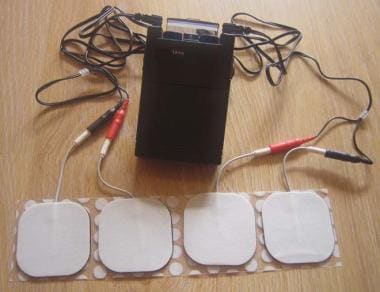
A TENS unit consists of one or more electric signal generators, a battery, and a set of electrodes. The units are small and programmable, and the generators can deliver trains of stimuli with variable current strengths, pulse rates, and pulse widths. The preferred waveform is biphasic, to avoid the electrolytic and iontophoretic effects of a unidirectional current. The usual settings for the stimulus parameters used clinically are the following:

  • Amplitude - Current at low intensity, comfortable level, just above threshold
  • Pulse width (duration) - 10-1000 microseconds
  • Pulse rate (frequency) - 80-100 impulses per second (Hz); 0.5-10 Hz when stimulus intensity is set high

When TENS is used for pain control, patients are instructed to try different frequencies and intensities to find those that provide the best pain control for that individual. Optimal settings of stimulus parameters are subjective and are determined by trial and error. Electrode positioning is quite important. Usually, the electrodes are placed initially on the skin over the painful area, but other locations (eg, over cutaneous nerves, trigger points, acupuncture sites) may give comparable or even better pain relief.

The 3 options for the standard settings used in different therapeutic methods of TENS application include the following:

  • Conventional TENS has a high stimulation frequency (40-150 Hz) and low intensity, just above threshold, with the current set between 10-30 mA. The pulse duration is short (up to 50 microseconds). The onset of analgesia with this setup is virtually immediate. Pain relief lasts while the stimulus is turned on, but it usually abates when the stimulation stops. Patients customarily apply the electrodes and leave them in place all day, turning the stimulus on for approximately 30-minute intervals throughout the day. In individuals who respond well, analgesia persists for a variable time after the stimulation stops.
  • In acupuncturelike settings, the TENS unit delivers low frequency stimulus trains at 1-10 Hz, at a high stimulus intensity, close to the tolerance limit of the patient. Although this method sometimes may be more effective than conventional TENS, it is uncomfortable, and not many patients can tolerate it. This method often is considered for patients who do not respond to conventional TENS.
  • Pulsed (burst) TENS uses low-intensity stimuli firing in high frequency bursts. The recurrent bursts discharge at 1-2 Hz, and the frequency of impulses within each burst is at 100 Hz. No particular advantage has been established for the pulsed method over the conventional TENS method.

Patient comfort is a very important determinant of compliance and, consequently, the overall success of treatment. The intensity of the impulse is a function of both pulse duration and amplitude. Greater pulse widths tend to be more painful. The acupuncturelike method is less tolerable because the impulse intensity is higher.

The amount of output current depends on the combined impedance of the electrodes, skin, and tissues. With repetitive electrical stimuli applied to the same location on the skin, the skin impedance is reduced, which could result in greater current flow as stimulation continues. A constant current stimulator, therefore, is preferred to minimize sudden uncontrolled fluctuations of current intensity related to changes in impedance. An electroconductive gel applied between the electrode and skin serves to minimize the skin impedance. Skin irritation can occur in as many as 33% of patients, at least in part, due to drying out of the electrode gel. Patients need to be instructed in the use and care of TENS equipment, with particular attention to the electrodes.

Medical complications arising from use of TENS are rare; however, skin irritation is a frequent problem and often is due partly to the drying out of the electrodes. Sometimes individuals react to the tape used to secure the electrodes. Skin irritation is minimized by using self-adhesive disposable electrodes and repositioning them slightly for repeated applications. The use of TENS is contraindicated in patients with demand-type pacemakers because their stimulus outputs may drive or inhibit the pacemaker.

A variety of newer transcutaneous or percutaneous electrical stimulation modalities recently has emerged.

  • Interferential current therapy (IFC) is based on summation of 2 alternating current signals of slightly different frequency. The resultant current consists of cyclical modulation of amplitude, based on the difference in frequency between the 2 signals. When the signals are in phase, they summate to an amplitude sufficient to stimulate, but no stimulation occurs when they are out of phase. The beat frequency of IFC is equal to the difference in the frequencies of the 2 signals. For example, the beat frequency and, hence, the stimulation rate of a dual channel IFC unit with signals set at 4200 and 4100 Hz is 100 Hz.
  • IFC therapy can deliver higher currents than TENS. IFC can use 2, 4, or 6 applicators, arranged in either the same plane for use on regions such as the back or in different planes in complex regions (eg, the shoulder).
  • Percutaneous electrical nerve stimulation (PENS) combines advantages of both electroacupuncture and TENS. Rather than using surface electrodes, PENS uses acupuncturelike needle probes as electrodes, placed at dermatomal levels corresponding to local pathology. The main advantage of PENS over TENS is that it bypasses the local skin resistance and delivers electrical stimuli at the precisely desired level in close proximity to the nerve endings located in soft tissue, muscle, or periosteum.


Literature on the use of TENS in a variety of medical conditions reports a wide range of outcomes, from very positive to negative effectiveness. Currently, there is an overall consensus favoring the use of TENS, with authorities differing on its value in different clinical situations. Generally, TENS provides initial relief of pain in 70-80% of patients, but the success rate decreases after a few months or longer to around 20-30%. To exclude a false-negative response, a trial of TENS for at least 1 hour should be given to confirm potential benefit from subsequent continuous use.

According to Johnson, the time from the start of stimulation to the onset of analgesia varies from almost immediate to hours (on average 20-30 minutes in over 75% of patients and 1 hour in 95% of patients). The duration of analgesia also varies considerably, continuing only for the duration of stimulation in some patients and providing considerable prolonged poststimulation relief in others. The same TENS protocol may have different degrees of antinociception in acute experimental pain compared with chronic clinical pain in patients with chronic LBP.

Patients differ in their stimulus preferences and in their rates of compliance. In Johnson's study of compliance in patients who benefited from TENS, 75% used the device on a daily basis. Patients showed individual preferences for particular pulse frequencies and patterns and consistently adjusted their stimulators to these settings on subsequent treatment sessions.

Indications for the use of TENS

  • Neurogenic pain (eg, deafferentation pain, phantom pain), sympathetically mediated pain, postherpetic neuralgia, trigeminal neuralgia, atypical facial pain, brachial plexus avulsion, pain after spinal cord injury (SCI)
  • Musculoskeletal pain: Examples of specific diagnoses include joint pain from rheumatoid arthritis and osteoarthritis, acute postoperative pain (eg, postthoracotomy), and acute posttraumatic pain. After surgery, TENS is most effective for mild-to-moderate levels of pain, and it is ineffective for severe pain. The use of TENS in chronic LBP and myofascial pain is controversial, as placebo-controlled studies fail to show statistically significant beneficial results. Uncertainty also exists about the value of TENS in tension headache.
  • Visceral pain and dysmenorrhea are other conditions in which TENS has been applied successfully.
  • Other disorders: TENS has been used successfully in patients with angina pectoris and urge incontinence, as well as in patients requiring dental anesthesia. Reports discuss use of TENS to assist patients in regaining motor function following stroke, to control nausea in patients on chemotherapy, as an opioid-sparing modality in postoperative recovery, and in postfracture pain.

Contraindications for the use of TENS

  • TENS should not be used in patients with a pacemaker (especially of the demand type).
  • TENS should not be used during pregnancy because it may induce premature labor.
  • TENS should not be applied over the carotid sinuses due to the risk of acute hypotension through a vasovagal reflex.
  • TENS should not be placed over the anterior neck because of possible laryngospasm due to laryngeal muscle contraction.
  • The electrodes should not be placed in an area of sensory impairment (eg, in cases of nerve lesions, neuropathies), where the possibility of burns exists.
  • A TENS unit should be used cautiously in patients with a spinal cord stimulator or intrathecal pump.


A number of studies have compared TENS to other similar therapeutic modalities, including PENS, IFC, and acupuncture.

  • In one study of elderly patients with chronic LBP, both acupuncture and TENS had demonstrable benefits, with the acupuncture group demonstrating improvement in spinal flexion.
  • In patients with chronic LBP and sciatica, PENS was more effective than TENS in providing short-term pain relief and improved function, including an improved quality of sleep and sense of well-being.
  • Overall, 91% and 73% of patients, respectively, chose PENS as the preferred modality for pain relief in LBP and sciatica.
  • PENS has been used successfully for pain relief in patients with acute herpes zoster and cancer with bony metastases.
  • Both IFC and TENS had a statistically significant effect on median nerve excitation threshold in young women.


  • Ahmed HE, Craig WF, White PF, et al. Percutaneous electrical nerve stimulation: an alternative to antiviral drugs for acute herpes zoster. Anesth Analg. Oct 1998;87(4):911-4. [Medline].
  • Ahmed HE, Craig WF, White PF, Huber P. Percutaneous electrical nerve stimulation (PENS): a complementary therapy for the management of pain secondary to bony metastasis. Clin J Pain. Dec 1998;14(4):320-3. [Medline].
  • Anonymous. CMS details coverage of electrical stimulation and electromagnetic therapy for wound treatment in home health setting. Home Healthc Nurse. Oct 2004;22(10):676.
  • Aydin G, Tomruk S, Keleş I, et al. Transcutaneous electrical nerve stimulation versus baclofen in spasticity: clinical and electrophysiologic comparison. Am J Phys Med Rehabil. Aug 2005;84(8):584-92.
  • Banerjee T. Letter: Transcutaneous nerve stimulation for pain after spinal injury. N Engl J Med. Oct 10 1974;291(15):796. [Medline].
  • Basbaum AI, Fields HL. Endogenous pain control mechanisms: review and hypothesis. Ann Neurol. Nov 1978;4(5):451-62. [Medline].
  • Benedetti F, Amanzio M, Casadio C, et al. Control of postoperative pain by transcutaneous electrical nerve stimulation after thoracic operations. Ann Thorac Surg. Mar 1997;63(3):773-6. [Medline].
  • Berman BM, Swyers JP. Applying alternative medical approaches to managing chronic pain syndromes: If not now, when?. APS Bulletin. 1998;8:4-6.
  • Bertalanffy A, Kober A, Bertalanffy P, et al. Transcutaneous electrical nerve stimulation reduces acute low back pain during emergency transport. Acad Emerg Med. Jul 2005;12(7):607-11.
  • Bloodworth D, Callvillo O, Smith K,Grabois M. Chronic pain syndromes: Evaluation and treatment. In:Braddom R, ed. Physical Medicine and Rehabilitation. 2nd ed. Mosby;2000:913-933.
  • Borjesson M, Eriksson P, Dellborg M, et al. Transcutaneous electrical nerve stimulation in unstable angina pectoris. Coron Artery Dis. Aug-Sep 1997;8(8-9):543-50. [Medline].
  • Bower WF, Moore KH, Adams RD, Shepherd R. A urodynamic study of surface neuromodulation versus sham in detrusor instability and sensory urgency. J Urol. Dec 1998;160(6 Pt 1):2133-6. [Medline].
  • Bushnell MC, Marchand S, Tremblay N, Duncan GH. Electrical stimulation of peripheral and central pathways for the relief of musculoskeletal pain. Can J Physiol Pharmacol. May 1991;69(5):697-703. [Medline].
  • Cheing GL, Hui-Chan CW. Transcutaneous electrical nerve stimulation: nonparallel antinociceptive effects on chronic clinical pain and acute experimental pain. Arch Phys Med Rehabil. Mar 1999;80(3):305-12. [Medline].
  • Cheing GL, Luk ML. Transcutaneous electrical nerve stimulation for neuropathic pain. J Hand Surg [Br]. Feb 2005;30(1):50-5.
  • Chen H, Lamer TJ, Rho RH, et al. Contemporary management of neuropathic pain for the primary care physician. Mayo Clin Proc. Dec 2004;79(12):1533-45. [Medline].
  • Chen L, Tang J, White PF, et al. The effect of location of transcutaneous electrical nerve stimulation on postoperative opioid analgesic requirement: acupoint versus nonacupoint stimulation. Anesth Analg. Nov 1998;87(5):1129-34. [Medline].
  • Clement-Jones V, McLoughlin L, Tomlin S, et al. Increased beta-endorphin but not met-enkephalin levels in human cerebrospinal fluid after acupuncture for recurrent pain. Lancet. Nov 1 1980;2(8201):946-9. [Medline].
  • Cottingham B, Phillips PD, Davies GK, Getty CJ. The effect of subcutaneous nerve stimulation (SCNS) on pain associated with osteoarthritis of the hip. Pain. Jul 1985;22(3):243-8. [Medline].
  • D''Alberto A. Auricular acupuncture in the treatment of cocaine/crack abuse: a review of the efficacy, the use of the National Acupuncture Detoxification Association protocol, and the selection of sham points. J Altern Complement Med. Dec 2004;10(6):985-1000.
  • Danziger N, Rozenberg S, Bourgeois P, et al. Depressive effects of segmental and heterotopic application of transcutaneous electrical nerve stimulation and piezo-electric current on lower limb nociceptive flexion reflex in human subjects. Arch Phys Med Rehabil. Feb 1998;79(2):191-200. [Medline].
  • Deyo RA, Walsh NE, Martin DC, et al. A controlled trial of transcutaneous electrical nerve stimulation (TENS) and exercise for chronic low back pain. N Engl J Med. Jun 7 1990;322(23):1627-34. [Medline].
  • Eriksson MB, Sjolund BH, Sundbarg G. Pain relief from peripheral conditioning stimulation in patients with chronic facial pain. J Neurosurg. Jul 1984;61(1):149-55. [Medline].
  • Fagade OO, Oginni FO, Obilade TO. Comparative study of the therapeutic effect of a systemic analgesic and transcutaneous electrical nerve stimulation (TENS) on post-IMF trismus and pain in Nigerian patients. Niger Postgrad Med J. Jun 2005;12(2):97-101.
  • Frampton V. Transcutaneous electrical nerve stimulation and chronic pain. In: Wells PE, Frampton V, Borosher D, eds. Pain Management in Physical Therapy. Norwalk, Conn:. Appleton & Lange;1988.
  • Frick U, Kharraz A, Hauser S, et al. Comparison perception of singular transcranial magnetic stimuli by subjectively electrosensitive subjects and general population controls. Bioelectromagnetics. May 2005;26(4):287-98.
  • Gadsby G, Flowerdew M. Nerve stimulation for low back pain--a review. Nurs Stand. Jul 16 1997;11(43):32-3. [Medline].
  • Gaillet JC, Biraud JC, Bessou M, Bessou P. Modifications of baropodograms after transcutaneous electric stimulation of the abductor hallucis muscle in humans standing erect. Clin Biomech (Bristol, Avon). Dec 2004;19(10):1066-9.
  • Ghoname EA, Craig WF, White PF. Percutaneous electrical nerve stimulation (PENS): An alternative to opioid analgesics for treating headache pain after electroconvulsive therapy. Headache. 1999;39:502-5.
  • Ghoname EA, Craig WF, White PF, et al. Percutaneous electrical nerve stimulation for low back pain: a randomized crossover study. JAMA. Mar 3 1999;281(9):818-23. [Medline].
  • Ghoname EA, White PF, Ahmed HE, et al. Percutaneous electrical nerve stimulation: an alternative to TENS in the management of sciatica. Pain. Nov 1999;83(2):193-9. [Medline].
  • Ghoname ES, Craig WF, White PF, et al. The effect of stimulus frequency on the analgesic response to percutaneous electrical nerve stimulation in patients with chronic low back pain. Anesth Analg. Apr 1999;88(4):841-6. [Medline].
  • Grant DJ, Bishop-Miller J, Winchester DM, et al. A randomized comparative trial of acupuncture versus transcutaneous electrical nerve stimulation for chronic back pain in the elderly. Pain. Jul 1999;82(1):9-13. [Medline].
  • Gyory AN, Caine DC. Electric pain control (EPC) of a painful forearm amputation stump. Med J Aust. Jul 30 1977;2(5):156-8. [Medline].
  • Hamza MA, White PF, Ahmed HE, Ghoname EA. Effect of the frequency of transcutaneous electrical nerve stimulation on the postoperative opioid analgesic requirement and recovery profile. Anesthesiology. Nov 1999;91(5):1232-8. [Medline].
  • Han JS, Chen XH, Sun SL. Effect of low- and high-frequency TENS on Met-enkephalin-Arg-Phe and dynorphin A immunoreactivity in human lumbar CSF. Pain. Dec 1991;47(3):295-8. [Medline].
  • Hargitai IA, Sherman RG, Strother JM. The effects of electrostimulation on parotid saliva flow: a pilot study. Oral Surg Oral Med Oral Pathol Oral Radiol Endod. Mar 2005;99(3):316-20.
  • Hu WQ, Zhang Z, Zhou P, et al. [Clinical observation on effect of qiangji recipe combined with physical therapy in treating ankylosing spondylitis]. Zhongguo Zhong Xi Yi Jie He Za Zhi. Jan 2005;25(1):64-6. [Medline].
  • Jayme MK, Concha ME, Sarino JA, Uy HG. Effectivity of the Electronic Dental Anesthesia in controlling pain caused by local anesthetic injections. J Philipp Dent Assoc. Dec-1999 Feb 1998;50(3):39-52. [Medline].
  • Johnson MI, Ashton CH, Thompson JW. The consistency of pulse frequencies and pulse patterns of transcutaneous electrical nerve stimulation (TENS) used by chronic pain patients. Pain. Mar 1991;44(3):231-4. [Medline].
  • Johnson MI, Ashton CH, Thompson JW. An in-depth study of long-term users of transcutaneous electrical nerve stimulation (TENS). Implications for clinical use of TENS. Pain. Mar 1991;44(3):221-9. [Medline].
  • Johnston TE, Smith BT, Betz RR, et al. Strengthening of partially denervated knee extensors using percutaneous electric stimulation in a young man with spinal cord injury. Arch Phys Med Rehabil. May 2005;86(5):1037-42.
  • Jonsdottir S, Bouma A, Sergeant JA, Scherder EJ. Effects of transcutaneous electrical nerve stimulation (TENS) on cognition, behavior, and the rest-activity rhythm in children with attention deficit hyperactivity disorder, combined type. Neurorehabil Neural Repair. Dec 2004;18(4):212-21.
  • Khadilkar A, Milne S, Brosseau L, et al. Transcutaneous electrical nerve stimulation (TENS) for chronic low-back pain. Cochrane Database Syst Rev. 2005;CD003008.
  • King EW, Audette K, Athman GA, et al. Transcutaneous electrical nerve stimulation activates peripherally located alpha-2A adrenergic receptors. Pain. Jun 2005;115(3):364-73.
  • Kiser RS, Khatami MJ, Gatchel RJ. Acupuncture relief of chronic pain syndrome correlates with increased plasma met-enkephalin concentrations. Lancet. Dec 17 1983;2(8364):1394-6. [Medline].
  • Kruger LR, van der Linden WJ, Cleaton-Jones PE. Transcutaneous electrical nerve stimulation in the treatment of myofascial pain dysfunction. S Afr J Surg. Feb 1998;36(1):35-8. [Medline].
  • Law PP, Cheing GL. Optimal stimulation frequency of transcutaneous electrical nerve stimulation on people with knee osteoarthritis. J Rehabil Med. Sep 2004;36(5):220-5. [Medline].
  • Ledergerber CP. Postoperative electro-analgesia. Obstet Gynaecol. 1978;151:338.
  • Lewith G, Kenyon J, Lewis P. Complementary medicine: An integrated approach. Oxford University Press. NY:. 1996.
  • Linzer M, Long DM. Transcutaneous neural stimulation for relief of pain. IEEE Trans Biomed Eng. Jul 1976;23(4):341-5. [Medline].
  • Luijpen MW, Swaab DF, Sergeant JA, et al. Effects of transcutaneous electrical nerve stimulation (TENS) on memory in elderly with mild cognitive impairment. Behav Brain Res. Mar 30 2005;158(2):349-57.
  • Lund I, Lundeberg T, Kowalski J, Svensson E. Gender differences in electrical pain threshold responses to transcutaneous electrical nerve stimulation (TENS). Neurosci Lett. Feb 28 2005;375(2):75-80.
  • Lundeberg T, Bondesson L, Lundstrom V. Relief of primary dysmenorrhea by transcutaneous electrical nerve stimulation. Acta Obstet Gynecol Scand. 1985;64(6):491-7. [Medline].
  • Macgregor K, Gerlach S, Mellor R, Hodges PW. Cutaneous stimulation from patella tape causes a differential increase in vasti muscle activity in people with patellofemoral pain. J Orthop Res. Mar 2005;23(2):351-8.
  • McDowell BC, McCormack K, Walsh DM, et al. Comparative analgesic effects of H-wave therapy and transcutaneous electrical nerve stimulation on pain threshold in humans. Arch Phys Med Rehabil. Sep 1999;80(9):1001-4. [Medline].
  • Melzack R, Wall PD. Pain mechanisms: a new theory. Science. Nov 19 1965;150(699):971-9. [Medline].
  • Miles J, Lipton S. Phantom limb pain treated by electrical stimulation. Pain. Dec 1978;5(4):373-82. [Medline].
  • Myers RA, Woolf CJ, Mitchell D. Management of acute traumatic pain by peripheral transcutaneous electrical stimulation. S Afr Med J. Aug 13 1977;52(8):309-12. [Medline].
  • Nadler SF. Nonpharmacologic management of pain. J Am Osteopath Assoc. Nov 2004;104(11 Suppl 8):S6-12.
  • Nashold BS. Peripheral nerve stimulation for pain. J Neurosurg. Jul 1980;53(1):132-3. [Medline].
  • Nathan PW, Wall PD. Treatment of post-herpetic neuralgia by prolonged electric stimulation. Br Med J. Sep 14 1974;3(5932):645-7. [Medline].
  • Norrbrink Budh C, Lundeberg T. Non-pharmacological pain-relieving therapies in individuals with spinal cord injury: a patient perspective. Complement Ther Med. Dec 2004;12(4):189-97.
  • Ottawa Panel. Ottawa Panel Evidence-Based Clinical Practice Guidelines for Electrotherapy and Thermotherapy Interventions in the Management of Rheumatoid Arthritis in Adults. Phys Ther. Nov 2004;84(11):1016-43.
  • Paillard T, Noé F, Edeline O. [Neuromuscular effects of superimposed and combined transcutaneous electrical stimulation with voluntary activity: a review]. Ann Readapt Med Phys. Apr 2005;48(3):126-37.
  • Palmer ST, Martin DJ, Steedman WM, Ravey J. Alteration of interferential current and transcutaneous electrical nerve stimulation frequency: effects on nerve excitation. Arch Phys Med Rehabil. Sep 1999;80(9):1065-71. [Medline].
  • Paris P. Treating the patient in pain. In: Emergency Medicine. 1996:66-85.
  • Parry CB. Pain in avulsion lesions of the brachial plexus. Pain. Aug 1980;9(1):41-53. [Medline].
  • Paternostro-Sluga T, Fialka C, Alacamliogliu Y, et al. Neuromuscular electrical stimulation after anterior cruciate ligament surgery. Clin Orthop. Nov 1999;(368):166-75. [Medline].
  • Pearl ML, Fischer M, McCauley DL, et al. Transcutaneous electrical nerve stimulation as an adjunct for controlling chemotherapy-induced nausea and vomiting in gynecologic oncology patients. Cancer Nurs. Aug 1999;22(4):307-11. [Medline].
  • Pike PM. Transcutaneous electrical stimulation. Its use in the management of postoperative pain. Anaesthesia. Feb 1978;33(2):165-71. [Medline].
  • Popovic MR, Keller T. Modular transcutaneous functional electrical stimulation system. Med Eng Phys. Jan 2005;27(1):81-92.
  • Razavi M, Jansen GB. Effects of acupuncture and placebo TENS in addition to exercise in treatment of rotator cuff tendinitis. Clin Rehabil. Dec 2004;18(8):872-8. [Medline].
  • Richardson RR, Meyer PR, Cerullo LJ. Neurostimulation in the modulation of intractable paraplegic and traumatic neuroma pains. Pain. Feb 1980;8(1):75-84. [Medline].
  • Roscoe JA, Matteson SE, Morrow GR, et al. Acustimulation wrist bands are not effective for the control of chemotherapy-induced nausea in women with breast cancer. J Pain Symptom Manage. Apr 2005;29(4):376-84.
  • Rowbotham DJ. Recent advances in the non-pharmacological management of postoperative nausea and vomiting. Br J Anaesth. Jul 2005;95(1):77-81.
  • Simkin P, Bolding A. Update on nonpharmacologic approaches to relieve labor pain and prevent suffering. J Midwifery Womens Health. Nov-Dec 2004;49(6):489-504.
  • Simpson KH, Ward J. A randomized, double-blind, crossover study of the use of transcutaneous spinal electroanalgesia in patients with pain from chronic critical limb ischemia. J Pain Symptom Manage. Nov 2004;28(5):511-6.
  • Smania N, Corato E, Fiaschi A, et al. Repetitive magnetic stimulation A novel therapeutic approach for myofascial pain syndrome. J Neurol. Mar 2005;252(3):307-14.
  • Solomon RA, Viernstein MC, Long DM. Reduction of postoperative pain and narcotic use by transcutaneous electrical nerve stimulation. Surgery. Feb 1980;87(2):142-6.
  • Streitberger K, Kleinhenz J. Introducing a placebo needle into acupuncture research. Lancet. Aug 1 1998;352(9125):364-5.
  • Sutbeyaz ST, Koseoglu BF, Yeşiltepe E, et al. Simultaneous upper and lower extremity complex regional pain syndrome type I in tetraplegia. Spinal Cord. Apr 19 2005.
  • Sylvester K, Kendall GP, Lennard-Jones JE. Treatment of functional abdominal pain by transcutaneous electrical nerve stimulation. Br Med J (Clin Res Ed). Aug 23 1986;293(6545):481-2.
  • Takakura N, Yajima H, Homma I. Inhibitory effect of pain-eliciting transcutaneous electrical stimulation on vibration-induced finger flexion reflex in the human upper limb. Jpn J Physiol. Jun 2004;54(3):243-8.
  • Taylor P, Hallett M, Flaherty L. Treatment of osteoarthritis of the knee with transcutaneous electrical nerve stimulation. Pain. Oct 1981;11(2):233-40.
  • Tekeoglu Y, Adak B, Goksoy T. Effect of transcutaneous electrical nerve stimulation (TENS) on Barthel Activities of Daily Living (ADL) index score following stroke. Clin Rehabil. Aug 1998;12(4):277-80.
  • Tinazzi M, Zarattini S, Valeriani M, et al. Long-lasting modulation of human motor cortex following prolonged transcutaneous electrical nerve stimulation (TENS) of forearm muscles: evidence of reciprocal inhibition and facilitation. Exp Brain Res. Mar 2005;161(4):457-64.
  • Treacy K. Awareness/relaxation training and transcutaneous electrical neural stimulation in the treatment of bruxism. J Oral Rehabil. Apr 1999;26(4):280-7.
  • Tsen LC, Thomas J, Segal S, et al. Transcutaneous electrical nerve stimulation does not augment combined spinal epidural labour analgesia. Can J Anaesth. Jan 2000;47(1):38-42.
  • Vaiman M, Shlamkovich N, Eviatar E, Segal S. Treatment of nasal valve collapse with transcutaneous and intranasal electric stimulation. Ear Nose Throat J. Nov 2004;83(11):757-62, 764.
  • Walsh DM, Lowe AS, McCormack K, et al. Transcutaneous electrical nerve stimulation: effect on peripheral nerve conduction, mechanical pain threshold, and tactile threshold in humans. Arch Phys Med Rehabil. Sep 1998;79(9):1051-8.
  • Walsh DM, Noble G, Baxter GD, Allen JM. Cct A preliminary study on the effect of various transcutaneous electrical nerve stimulation (TENS) parameters upon the RIII nociceptive and H-reflexes in humans (Arch Phys Med Rehabilitation, 2000, Mar;81(3):324-33). Ir J Med Sci. 1997;166(3):179-80.
  • Ward AR, Robertson VJ. Variation in torque production with frequency using medium frequency alternating current. Arch Phys Med Rehabil. Nov 1998;79(11):1399-404.
  • Weber DC, Brown AW. Physical agent modalities. In: Braddom R, ed. Physical Medicine & Rehabilitation. 2nd ed. Mosby;2000:453-455.
  • White PF, Phillips J, Proctor TJ, Craig WF. Percutaneous Electrical Nerve Stimulation (PENS): A Promising Alternative-Medicine Approach to Pain Management. Vol 9. American Pain Society Bulletin;1999.
  • Widerstrom-Noga E, Dyrehag LE, Borglum-Jensen L, et al. Pain threshold responses to two different modes of sensory stimulation in patients with orofacial muscular pain: psychologic considerations. J Orofac Pain. Winter 1998;12(1):27-34.
  • Wilentz J. NIH consensus development conference on acupuncture. APS Bulletin. 1998;8(2):1, 21.
  • Woolf CJ, Thompson JW. Stimulation-induced analgesia: Transcutaneous electrical nerve stimulation (TENS) and vibration. In: Wall PD, Melzack R, eds: Textbook of Pain. 3rd ed. New York, NY:. Churchill Livingstone;1994.
  • Yang EH, Barsness GW, Gersh BJ, et al. Current and future treatment strategies for refractory angina. Mayo Clin Proc. Oct 2004;79(10):1284-92.
  • Zaidi AS, Russell IF. Is transcutaneous electrical stimulation a realistic surrogate for genuine surgical stimulation during spinal anesthesia for cesarean delivery?. Anesth Analg. May 2005;100(5):1477-81, table of contents.

Transcutaneous Electrical Nerve Stimulation excerpt

Article Last Updated: Jan 26, 2007