Continually Updated Clinical Reference
 
 
  All Sources     eMedicine     Medscape     Drug Reference     MEDLINE
 
eMedicine - Trochanteric Bursitis : Article by

Quick Find
Authors & Editors
Introduction
Clinical
Differentials
Workup
Treatment
Medication
Follow-up
Miscellaneous
Acknowledgments
Multimedia
References

Related Articles
Osteoarthritis


Patient Education
Arthritis Center

Bursitis Overview

Bursitis Causes

Bursitis Symptoms

Bursitis Treatment


Author: Patrick M Foye, MD, FAAPMR, FAAEM, Associate Professor of Physical Medicine and Rehabilitation, Co-Director of Musculoskeletal Fellowship, Co-Director of Back Pain Clinic, Director of Coccyx Pain (Tailbone Pain, Coccydynia) Service, University of Medicine and Dentistry of New Jersey, New Jersey Medical School

Patrick M Foye is a member of the following medical societies:
American Academy of Physical Medicine and Rehabilitation, American Association of Neuromuscular and Electrodiagnostic Medicine, Association of Academic Physiatrists, and International Spine Intervention Society

Coauthor(s): Debra Ibrahim, BA, MSIV; Todd P Stitik, MD, Professor, Department of Physical Medicine and Rehabilitation, Acting Director of Sports Medicine, UMDNJ-New Jersey School of Medicine; Lead Physician, Practice Medical Director of University Hospital PM & R Clinic

Editors: Rajesh R Yadav, MD, Assistant Professor, Section of Physical Medicine and Rehabilitation, MD Anderson Cancer Center, University of Texas at Houston; Francisco Talavera, PharmD, PhD, Senior Pharmacy Editor, eMedicine; Michael T Andary, MD, MS, Residency Program Director, Professor, Department of Physical Medicine and Rehabilitation, Michigan State University College of Osteopathic Medicine; Kelly L Allen, MD, Consulting Staff, Department of Physical Medicine and Rehabilitation, Lourdes Regional Rehabilitation Center, Our Lady of Lourdes Medical Center; Consuelo T Lorenzo, MD, Consulting Staff, Department of Physical Medicine and Rehabilitation, Alegent Health Care, Immanuel Rehabilitation Center

Author and Editor Disclosure

Synonyms and related keywords: greater trochanteric bursitis, greater trochanteric pain syndrome, extra-articular snapping hip syndrome, external snapping hip syndrome, painful inflammation of the bursa, lateral hip pain, repetitive contracture of gluteus medius, repetitive contracture of the iliotibial band

Background

Trochanteric bursitis is characterized by painful inflammation of the bursa located just superficial to the greater trochanter of the femur.1, 2, 3 Patients typically complain of lateral hip pain, although the hip joint itself is not involved. The pain may radiate down the lateral aspect of the thigh.4

Related eMedicine article:
Trochanteric Bursitis
Bursitis [Emergency Medicine]
Bursitis [Orthopedic Surgery]

Pathophysiology

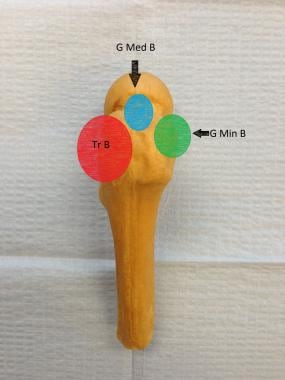
Inflammation of the affected bursa between the femoral trochanteric process and the gluteus medius/iliotibial tract may be caused by acute or repetitive (cumulative) trauma. Acute trauma includes contusions from falls, contact sports, and other sources of impact. Repetitive trauma includes bursal irritation resulting from friction by the iliotibial band (ITB), which is an extension of the tensor fascia lata muscle. Such repetitive, cumulative irritation often occurs in runners but can also be seen in less active individuals. Other predisposing factors include a leg-length discrepancy and lateral hip surgery.5

Frequency

United States

Trochanteric bursitis is relatively common in physically active patients, as well as in sedentary individuals.

Unilateral and bilateral greater trochanteric pain syndrome (GTPS) have a prevalence of 15.0% and 8.5% in women, and of 6.6% and 1.9% men, respectively.6

Related Medscape topic:
Resource Center Exercise and Sports Medicine

International

In a study by Lievense and colleagues, the annual incidence of trochanteric pain in primary care was reported as being 1.8 patients per 1000.7

Mortality/Morbidity

  • No mortality is associated with trochanteric bursitis.
  • Morbidity includes chronic pain, limping, and pain-related sleep disturbances that occur when the patient is lying on the affected side.

Race

No racial predilection has been reported.

Sex

Lievense and colleagues found that trochanteric bursitis seems to be much more common in females (80%) than in males.7

Age

Trochanteric bursitis can occur in adults of any age. The condition can also develop as a complication (in an estimated 1.4% of cases) of arthroscopic surgery of the hip.8


History

  • With acute trauma, patients may recall specific details of the impact.
  • The classic symptom is pain at the greater trochanteric region of the lateral hip.
  • Pain may radiate down the lateral aspect of the ipsilateral thigh; however, it should not radiate all the way into the foot.
  • The symptoms are made worse when the patient lies on the affected bursa (that is, when lying in the lateral decubitus position). The pain may awaken the patient at night.
  • Hip movements (internal and external rotation), walking, running, weight bearing, and other strenuous activities can exacerbate the symptoms. Patients may report that the pain limits their strength and makes their legs feel weak.
  • Onset may be insidious or acute.
  • Symptoms are often related to increased activity or exercise.

Physical

  • The most classic finding is point tenderness over the greater trochanter, which reproduces the presenting symptoms.
  • Palpation may also reproduce pain that radiates down the lateral thigh.
  • Bursal swelling may be present, but this may be difficult to appreciate in many patients.
  • In obese patients, it may be difficult to locate the trochanter directly. Consider using the iliac crest as a landmark and assessing for the trochanter approximately 8 inches (20 cm) below the pelvic brim. Also consider palpating the region while passively circumducting the hip.
  • Overlying skin changes of ecchymosis with abrasions may occur with recent trauma.
  • Lateral hip pain can often be elicited by passive external rotation of the hip without provoking such symptoms by internal rotation. Also, the external rotation can be combined with passive hip abduction.
  • Lateral hip pain can be reproduced with flexion of the hip and followed by resisted hip abduction.
  • Groin pain or referred knee pain provoked by passive internal rotation of the hip may indicate hip joint pathology (such as osteoarthritis).
  • To assess for sciatica or lumbosacral radiculopathy, perform a detailed neurologic examination of both lower extremities, including assessments of strength, reflexes, sensation, and dural stretch maneuvers (such as the straight leg raise).

Related Medscape topics:
CME Low Back Pain: Evaluating Presenting Symptoms in Elderly Patients
CME Sciatica and Low Back Pain

Causes

  • Acute trauma, such as a fall or tackle, that causes the patient to land on the lateral hip region can result in trochanteric bursitis.
  • More commonly, repetitive (cumulative) trauma is involved. Such trauma is caused by the repetitive contracture of the gluteus medius and/or the ITB during running or walking.
  • Conditions that predispose patients to trochanteric bursitis include underlying lower leg gait and back or sacroiliac disturbances.
  • At times, the bursitis develops spontaneously without apparent precipitating factors.


Osteoarthritis

Other Problems to Be Considered

Fracture of the femur: This must be considered if significant trauma has occurred, particularly in elderly or osteoporotic individuals.
Avascular necrosis of the femoral head
Hip fracture (eg, stress fracture of the femoral neck)
Lumbosacral radiculopathy and trochanteric bursitis: Both can cause pain that radiates down the lower limb.
Gluteus medius bursitis
Gluteus medius partial tear
Iliopsoas bursitis
ITB tendinitis
Osteoarthritis of the hip: Note, however, that this disorder generally manifests with groin or knee pain.
Soft-tissue metastases9
Tuberculous trochanteric bursitis10


Lab Studies

  • Generally, no laboratory studies are necessary for the diagnosis of trochanteric bursitis.
  • On rare occasions, blood work may be needed to rule out infection or connective-tissue disease.

Imaging Studies

  • Plain radiographs of the hip and femur may be performed to assess for possible fracture, underlying degenerative arthritis, or bony lesions. Pelvic tilting caused by a leg length discrepancy may be appreciated better with standing anteroposterior pelvis and hip films.
  • Bone scanning, computed tomography (CT) scanning, and magnetic resonance imaging (MRI) also can be used to exclude underlying diseases. In patients who are suffering from greater trochanteric pain, MRI and ultrasonography (US) scans potentially can be employed to differentiate gluteus medius tendinitis from trochanteric bursitis.11

Procedures

  • Occasionally, diagnostic injection of local anesthetic into the trochanteric bursa may be helpful, particularly in an obese individual in whom the diagnosis is not yet certain.

Histologic Findings

Bursal inflammation


Rehabilitation Program

Physical Therapy

While only limited controlled studies have proven the usefulness of physical therapy (PT) for this condition, a specific and goal-directed PT program often seems quite reasonable. PT can be incorporated to teach the patient a home exercise program, emphasizing stretching of the ITB, tensor fascia lata (TFL), external hip rotators, quadriceps, and hip flexors. The use of phonophoresis and soft-tissue massage also may be helpful.

Stretching of the ITB and TFL can be achieved with a program that incorporates passive adduction of the knee of the affected limb across the midline as far as possible, with this position being held for at least 10-20 seconds. The stretch can be repeated in various degrees of hip flexion, thus theoretically stretching various fibers within the ITB and TFL. To avoid exacerbation, stretching should not be performed in a ballistic, jerking fashion. Instead, stretches should be carried out in a controlled, sustained fashion.

Transcutaneous electrical nerve stimulation (TENS) can be considered in resistant cases.

Medical Issues/Complications

  • Chronic pain
  • Limited activity level
  • Limping (antalgic gait)
  • Sleep disturbance, which is especially problematic for a patient who usually sleeps in the side-lying position

Surgical Intervention

Generally, no surgical intervention is required for cases of trochanteric bursitis. Only rarely does a patient with this diagnosis need a bursectomy and partial resection of the greater trochanteric process.12, 13, 14

Consultations

The patient may be referred to a physiatrist or other musculoskeletal specialist.15

Other Treatment

Treatment may include relative rest, ice, injection, and nonsteroidal anti-inflammatory drugs (NSAIDs).16

  • Corticosteroid injection into the trochanteric bursa17, 18
    • Many authors and clinicians consider injections to be an important option within the comprehensive treatment plan. A randomized, controlled clinical trial has shown that corticosteroid and lidocaine injection for trochanteric bursitis is an effective therapy with a prolonged benefit.19
    • Trochanteric bursa injections are commonly performed without radiographic guidance. However, some preliminary data suggest that radiological confirmation (for example, with fluoroscopy) is necessary for accurate trochanteric bursa injections, especially in patients who are obese, have a history of trauma, suffer from chronic inflammation, or have had previous surgery, as well as when repeated injections are necessary. Such confirmation may also be needed in patients with chronic pain who therefore have developed peripheral sensitization, which may lead to the injection of medicine into tender areas rather than into areas involved in pain generation.20
    • The procedure for diagnostic injection is to use local anesthetic without epinephrine (for example, 5 mL of 1-2% lidocaine), which is injected into the affected trochanteric bursa using a 22-gauge needle. A 1.5-in (3.8-cm) needle may be adequate for a slimmer patient, but a heavier patient may require a 3.5-in (8.9-cm) needle to reach the bursa. The needle is advanced to the greater trochanter (with contact with the bone being made in order to confirm depth and appropriate placement) and is then withdrawn slightly so that it is located within the bursa. The local anesthetic can then be injected directly into the bursa. If the patient receives appropriate relief, this would be considered confirmation of trochanteric bursitis as the etiology of the pain.
    • This injection of local anesthetic can then be followed by the administration of steroids (by using the needle that is already in place and switching to a syringe containing the corticosteroid). Injection of 40-80 mg of methylprednisolone acetate or triamcinolone acetonide should be adequate. This injection may be repeated at 4-6 weeks if pain relief has been less than 50%.
    • In most cases, in which the diagnosis of trochanteric bursitis seems straightforward from the clinical evaluation, a diagnostic injection (or local anesthetic injection) is not necessary prior to the corticosteroid injection. In these cases, the most straightforward approach is to perform the same needle approach outlined above, followed by the delivery of a mixture of a corticosteroid and a local anesthetic (such as 40-80 mg of long-acting methylprednisolone [eg, Depo-Medrol] and 5 mL of 1% lidocaine).
    • Further specifics of the injection procedure and potential complications are beyond the scope of this text. Interested clinicians are encouraged to read other appropriate sources.
    • In their study, Lievense and colleagues found that, depending on the treatment setting (primary care vs hospital vs specialist), injection rates were 34%, 34%, and 37%, respectively, resulting in improvement rates of 60-66% at follow-up visits 1 year and 5 years later. In patients who received a corticosteroid injection, the chance of recovery at 5 years was 2.7-fold higher than it was for patients who had not received an injection. Thus, the report indicated that corticosteroid injections are predictive for improvement at 5 years, with the injection being associated with a lower likelihood of chronic pain development at the site at which it was administered.7
  • Relative rest includes restriction of activities, such as climbing stairs or getting in and out of chairs. Direct pressure on the affected site also should be avoided.
  • Evaluation and correction of underlying gait abnormalities are important and may be addressed with assistive devices (eg, cane, walker, orthotics, shoe lift, knee brace).
  • Use of deep-heating modalities (eg, ultrasound, TENS) should be considered in resistant cases (10-12 wk).


For this musculoskeletal condition, medications are used primarily to decrease pain and inflammation. The most commonly used medications are oral NSAIDs and focal corticosteroid injections; these are employed in conjunction with the rest of the rehabilitation plan.

Drug Category: Nonsteroidal anti-inflammatory drugs

Oral NSAIDs can help to decrease pain and inflammation and may be used for several weeks. Various oral NSAIDs can be used. The choice of an NSAID is largely a matter of convenience (how frequently doses must be taken to achieve adequate analgesic and anti-inflammatory effects) and cost.

Drug NameIbuprofen (Motrin, Advil, Nuprin, Rufen)
DescriptionDOC for mild to moderate pain. Ibuprofen inhibits inflammatory reactions and pain by decreasing prostaglandin synthesis.
Adult Dose200-800 mg PO tid/qid
Pediatric Dose<6 months: Not established
6 months to 12 years: 4-10 mg/kg PO tid/qid
>12 years: Administer as in adults
ContraindicationsDocumented hypersensitivity to ibuprofen, other NSAIDs, or aspirin; avoid in peptic ulcer disease, recent GI bleeding or perforation, renal insufficiency, or high risk of bleeding
InteractionsMay decrease effects of loop diuretics with co-administration; co-administration with anticoagulants may increase PT (monitor and watch for signs of bleeding); may increase serum lithium levels and risk of methotrexate toxicity; probenecid may increase toxicity
PregnancyB - Fetal risk not confirmed in studies in humans but has been shown in some studies in animals
D - Fetal risk shown in humans; use only if benefits outweigh risk to fetus
PrecautionsTo minimize risks of side effects, patient should avoid taking multiple NSAIDs concurrently; caution in patients taking anticoagulants or systemic corticosteroids, as well as with bleeding disorders or significant alcohol use; caution in congestive heart failure, hypertension, and decreased renal and hepatic function

Drug NameKetoprofen (Oruvail, Orudis, Actron)
DescriptionFor relief of mild to moderate pain and inflammation. Small doses are indicated initially in patients with a small body size, in elderly patients, and in persons with renal or liver disease. Doses >75 mg do not increase the therapeutic effects. Administer high doses with caution and closely observe the patient for response.
Adult Dose25-50 mg PO q6-8h prn; not to exceed 300 mg/d
Pediatric Dose<3 months: Not established
3 months to 12 years: 0.1–1 mg/kg PO q6-8h
>12 years: Administer as in adults
ContraindicationsDocumented hypersensitivity
InteractionsMay decrease effects of loop diuretics with co-administration; co-administration with anticoagulants may increase PT (monitor and watch for signs of bleeding); may increase serum lithium levels and risk of methotrexate and phenytoin toxicity; probenecid may increase toxicity
PregnancyB - Fetal risk not confirmed in studies in humans but has been shown in some studies in animals
D - Fetal risk shown in humans; use only if benefits outweigh risk to fetus
PrecautionsCaution in congestive heart failure, hypertension, and decreased renal and hepatic function; caution in anticoagulation abnormalities or during anticoagulant therapy

Drug NameNaproxen (Anaprox, Naprelan, Naprosyn)
DescriptionFor relief of mild to moderate pain. Naproxen inhibits inflammatory reactions and pain by decreasing the activity of cyclo-oxygenase, which is responsible for prostaglandin synthesis.
Adult Dose500 mg PO, followed by 250 mg PO q6-8h; not to exceed 1.25 g/d
Pediatric Dose<2 years: Not established
>2 years: 2.5 mg/kg PO; not to exceed 10 mg/kg/d
ContraindicationsDocumented hypersensitivity; peptic ulcer disease; recent GI bleeding or perforation; renal insufficiency
InteractionsProbenecid may increase toxicity of NSAIDs; co-administration with ibuprofen may decrease effects of loop diuretics; co-administration with anticoagulants may prolong PT (watch for signs of bleeding); NSAIDs may increase serum lithium levels and risk of methotrexate toxicity (eg, stomatitis, bone marrow suppression, nephrotoxicity)
PregnancyB - Fetal risk not confirmed in studies in humans but has been shown in some studies in animals
D - Fetal risk shown in humans; use only if benefits outweigh risk to fetus
PrecautionsAcute renal insufficiency, interstitial nephritis, hyperkalemia, hyponatremia, and renal papillary necrosis may occur; patients with pre-existing renal disease or compromised renal perfusion risk acute renal failure; leukopenia occurs rarely, is transient, and usually returns to normal during therapy; persistent leukopenia, granulocytopenia, or thrombocytopenia warrant further evaluation and may require discontinuation of drug

Drug NameFlurbiprofen (Ansaid)
DescriptionMay inhibit cyclo-oxygenase enzyme, which in turn inhibits prostaglandin biosynthesis. These effects may result in analgesic, antipyretic, and anti-inflammatory activities.
Adult Dose200-300 mg/d PO divided bid/qid
Pediatric DoseNot established
ContraindicationsDocumented hypersensitivity
InteractionsMay decrease effects of loop diuretics with co-administration; co-administration with anticoagulants may increase PT (monitor and watch for signs of bleeding); may increase serum lithium levels and risk of methotrexate toxicity; probenecid may increase toxicity
PregnancyC - Fetal risk revealed in studies in animals but not established or not studied in humans; may use if benefits outweigh risk to fetus
D - Fetal risk shown in humans; use only if benefits outweigh risk to fetus
PrecautionsAcute renal insufficiency, interstitial nephritis, hyperkalemia, hyponatremia, and renal papillary necrosis may occur; patients with pre-existing renal disease or compromised renal perfusion risk acute renal failure; leukopenia occurs rarely, is transient, and usually returns to normal during therapy; persistent leukopenia, granulocytopenia, or thrombocytopenia warrant further evaluation and may require discontinuation of drug

Drug Category: Corticosteroids

In contrast to the widespread systemic distribution of an oral anti-inflammatory drug, a local corticosteroid injection can achieve focal placement of a potent anti-inflammatory agent at the site of maximal tenderness or inflammation. When corticosteroid injections are used, there are a variety of corticosteroid preparations from which to choose. Commonly, the corticosteroid is mixed with a local anesthetic agent prior to injection. Again, there are various local anesthetic agents from which to choose.

Drug NameMethylprednisolone (Depo-Medrol, Solu-Medrol, Medrol, Adlone)
DescriptionUsed commonly for local injections of bursae or joints to provide a local anti-inflammatory effect while minimizing some of the GI and other risks of systemic medications.
Adult Dose40 mg (1 mL), intralesionally, is common for many sites, often mixed with few mL of local anesthetic, such as 1% lidocaine
Pediatric DoseNot established
ContraindicationsDocumented hypersensitivity; skin infection at the site of injection; use caution when performing injections in any patient on anticoagulants or with a history of bleeding disorders, because of the risk of hemorrhage or local bruising
InteractionsLocal corticosteroid injections are not known to produce the same degree of medication interaction as that resulting from oral or other systemic administration of corticosteroids
PregnancyC - Fetal risk revealed in studies in animals but not established or not studied in humans; may use if benefits outweigh risk to fetus
PrecautionsNever inject corticosteroids through an area of infected skin; diabetic patients may sometimes experience a transient elevation of blood glucose level after a local corticosteroid injection


Further Outpatient Care

  • The patient should return for re-evaluation within approximately 1 month. Assess for a therapeutic response to the corticosteroid injection and to any other interventions (eg, PT) that have been initiated.
  • The patient should be instructed to contact the physician sooner than 1 month after the injection if there is significant progression of the symptoms or if there are any local signs of infection at the injection site.

Deterrence

  • Advise the patient to avoid lying on the affected side, if possible.

Complications

  • Progressive or persistent pain with associated limping and decreased mobility
  • Potential complications resulting from focal corticosteroid injection include the following:
    • Bleeding, bruising, infection, and allergic reactions may occur after the injection.
    • Necrotizing fasciitis has been observed from a single steroid injection of the greater trochanteric bursa.21
    • Transient elevation of blood glucose levels may occur after corticosteroid injection in a diabetic patient.
    • Local anesthetic injected intravascularly potentially could cause cardiac arrhythmia.
    • Subcutaneous skin atrophy can occur with more superficial administration of corticosteroids.
    • Peripheral nerve dysfunction is possible if the injection is administered very close to or within a major nerve.

Prognosis

  • Most patients with trochanteric bursitis respond very well to a combination of corticosteroid injection, PT, and activity restriction. Some patients may require a repeat of the corticosteroid injection.
  • A retrospective study of 164 patients who presented with trochanteric pain found that after 1 year, at least 36% were still symptomatic, and that after 5 years, 29% were still symptomatic; thus, many patients developed chronic pain at this site. Patients with osteoarthritis (OA) in the lower limbs had a 4.8-fold risk of persistent symptoms after 1 year, as compared with patients without OA. Patients treated with corticosteroid injection were 2.7 times less likely to have chronic pain at this site at 5 years, as compared with those treated without such injections.7

Patient Education

  • As with any medical condition, the patient should be educated with regard to the nature of the condition, causative factors, and treatment plan.
  • As with any injection, the patient should be educated to watch for any signs or symptoms of local infection at the injection site.
  • As with any corticosteroid injection, diabetic patients should be instructed that they may experience a transient increase in their blood glucose levels.
  • Additionally, as with any corticosteroid injection, patients should be informed that the symptomatic improvement from the corticosteroid usually does not begin to take effect until a few days after the injection. Patients should also understand that they may experience a mild, transient increase in symptoms during the window of time in which the local anesthetic has worn off but the steroids have not yet begun to have a therapeutic effect.

For excellent patient education resources, visit eMedicine's Arthritis Center. Also, see eMedicine's patient education article Bursitis.


Medical/Legal Pitfalls

  • Never inject corticosteroid into a site that appears to be infected.
  • In the presence of significant trauma, always check the radiograph for evidence of fracture before proceeding with treatment.
  • If it is thought that the pain may be secondary to metastatic cancer, consider performing a bone scan, even if the plain radiograph findings are negative.9

Special Concerns

  • Pregnancy - A focal corticosteroid injection can be performed during pregnancy. Oral NSAIDs should be avoided, especially in the third trimester.
  • Pediatric population - For a patient who is a minor, obtain informed consent from the parent or legal guardian before proceeding with any injection.
  • Geriatric population - The physician should use caution when administering oral NSAIDs to elderly patients.


Debra Ibrahim, 4th year medical student, New York College of Osteopathic Medicine, Class of 2008, assisted with the revision of this manuscript.


Media file 1:  This photo demonstrates one method of stretching the iliotibial band (ITB) in the standing position. One foot is crossed over the other, and the patient leans away from the side being stretched. The exercise is performed by letting the side to be stretched lean in toward the wall. The patient should feel the stretch at the lateral aspect of the hip that is closest to the wall. Stretching should be done in a controlled, sustained manner, never in a ballistic manner with sudden, jerking movements.
Click to see larger pictureClick to see detailView Full Size Image
Media type:  Photo

Media file 2:  This photo demonstrates one method of stretching the iliotibial band (ITB) in the supine position. The foot that is ipsilateral to the stretch is crossed over the contralateral knee. Next, the thigh that is ipsilateral to the stretch is pulled across the midline (adduction). The patient should feel the stretch at the lateral aspect of the hip, in the area shown by the dark line. Stretching should be done in a controlled, sustained manner, never in a ballistic manner with sudden, jerking movements.
Click to see larger pictureClick to see detailView Full Size Image
Media type:  Photo


  1. Brinker MR, Miller MD. The adult hip. In: Fundamentals of Orthopaedics. Philadelphia, Pa: WB Saunders; 1999:269-85.
  2. McGee DJ. Hip. In: Orthopedic Physical Assessment. 2nd ed. Philadelphia, Pa: WB Saunders; 1992:333-71.
  3. Steinberg JG, Seybold EA. Hip and pelvis. In: Steinberg GG, Akins CM, Baran DT, eds. Orthopaedics in Primary Care. 3rd ed. Baltimore, Md: Lippincott, Williams & Wilkins; 1998:171-203.
  4. Trochanteric bursitis. In: Snider RK, ed. Essentials of Musculoskeletal Care. Rosemont, Ill: American Academy of Orthopaedic Surgeons; 1997:299-303.
  5. Young JL, Olsen NK, Press JM. Musculoskeletal disorders of the lower limbs. In: Physical Medicine and Rehabilitation. Philadelphia, Pa: WB Saunders; 1996:783-812.
  6. Segal NA, Felson DT, Torner JC, et al. Greater trochanteric pain syndrome: epidemiology and associated factors. Arch Phys Med Rehabil. Aug 2007;88(8):988-92. [Medline].
  7. Lievense A, Bierma-Zeinstra S, Schouten B, et al. Prognosis of trochanteric pain in primary care. Br J Gen Pract. Mar 2005;55(512):199-204. [Medline][Full Text].
  8. Clarke MT, Lee PT, Arora A, et al. Levels of metal ions after small- and large-diameter metal-on-metal hip arthroplasty. J Bone Joint Surg Br. Aug 2003;85(6):913-7. [Medline].
  9. Bertoli AM, Saurit V, Alvarellos A, et al. Soft tissue metastases presenting as greater trochanteric pain syndrome. J Clin Rheumatol. Dec 2003;9(6):370-2. [Medline].
  10. Crespo M, Pigrau C, Flores X, et al. Tuberculous trochanteric bursitis: report of 5 cases and literature review. Scand J Infect Dis. 2004;36(8):552-8. [Medline].
  11. Kong A, Van der Vliet A, Zadow S. MRI and US of gluteal tendinopathy in greater trochanteric pain syndrome. Eur Radiol. Jul 2007;17(7):1772-83. [Medline].
  12. Baker CL Jr, Massie RV, Hurt WG, et al. Arthroscopic bursectomy for recalcitrant trochanteric bursitis. Arthroscopy. Aug 2007;23(8):827-32. [Medline].
  13. Farr D, Selesnick H, Janecki C, et al. Arthroscopic bursectomy with concomitant iliotibial band release for the treatment of recalcitrant trochanteric bursitis. Arthroscopy. Aug 2007;23(8):905.e1-5. [Medline].
  14. Voos JE, Rudzki JR, Shindle MK, et al. Arthroscopic anatomy and surgical techniques for peritrochanteric space disorders in the hip. Arthroscopy. Nov 2007;23(11):1246.e1-5. [Medline].
  15. Fundamentals of procedural care. In: Lennard TA, ed. Physiatric Procedures in Clinical Practice. Philadelphia, Pa: Hanley & Belfus; 1995:1-13.
  16. Nonsteroidal anti-inflammatory drugs (NSAIDs). In: Green SM, ed. Tarascon Pocket Pharmacopoeia 2000. Loma Linda, Calif: Tarascon Pub; 2000:11-2.
  17. Olsen NK, Press JM, Young JL. Bursal injections. In: Lennard TA, ed. Physiatric Procedures in Clinical Practice. Philadelphia, Pa: Hanley & Belfus; 1995:36-43.
  18. Injection and corticosteroids. In: Snider RK, ed. Essentials of Musculoskeletal Care. Rosemont, Ill: American Academy of Orthopaedic Surgeons; 1997:37-9.
  19. Shbeeb MI, O'Duffy JD, Michet CJ, et al. Evaluation of glucocorticosteroid injection for the treatment of trochanteric bursitis. J Rheumatol. Dec 1996;23(12):2104-6. [Medline].
  20. Cohen SP, Narvaez JC, Lebovits AH, et al. Corticosteroid injections for trochanteric bursitis: is fluoroscopy necessary? A pilot study. Br J Anaesth. Jan 2005;94(1):100-6. [Medline][Full Text].
  21. Hofmeister E, Engelhardt S. Necrotizing fasciitis as complication of injection into greater trochanteric bursa. Am J Orthop. May 2001;30(5):426-7. [Medline].

Trochanteric Bursitis excerpt

Article Last Updated: May 9, 2008