Continually Updated Clinical Reference
 
 
  All Sources     eMedicine     Medscape     Drug Reference     MEDLINE
 
eMedicine - Vascular, Hemangiomas : Article by

Quick Find
Authors & Editors
Introduction
Indications
Relevant Anatomy
Contraindications
Workup
Treatment
Complications
Outcome and Prognosis
Future and Controversies
Multimedia
References


Patient Education
Click here for patient education.


Author: Meir Cohen, MD, MPS, Consulting Staff, Department of Plastic Surgery, Schneider Children's Medical Center of Israel, Tel Aviv University

Meir Cohen is a member of the following medical societies: American Cleft Palate/Craniofacial Association and Plastic Surgery Research Council

Coauthor(s): Eyal Raveh, MD, Consulting Staff, Department of Otolaryngology, Rabin Medical Center, Israel; Dan Ben-Amitai, MD, Head of Pediatric Dermatology Service, Lecturer, Schneider Children's Medical Center of Israel; Shimon Maimon, MD, Head of Invasive Radiology Unit, Beilinson Campus, Rabin Medical Center, Israel; Benjamin Shalev, MD, Consulting Staff, Ophthalmology Unit, Schneider Children's Medical Center of Israel; Moshe Lapidoth, MD, Head, Laser Service, Dermatology, Golda-Hasharon Hospital; Eric Bensimon, MD, Clinical Instructor, Department of Surgery, University of Montreal

Editors: Shahin Javaheri, MD, Chief, Department of Plastic Surgery, Martinez Veterans Affairs Outpatient Clinic; Consulting Staff, Advanced Aesthetic Plastic & Reconstructive Surgery; Francisco Talavera, PharmD, PhD, Senior Pharmacy Editor, eMedicine; Wayne Stadelmann, MD, Stadelmann Plastic Surgery, PC; Nicolas (Nick) G Slenkovich, MD, Practice Director, Colorado Plastic Surgery Center at Swedish Medical Center; Jorge I de la Torre, MD, FACS, Professor of Surgery and Physical Medicine and Rehabilitation, Residency Program Director, Division of Plastic Surgery, University of Alabama at Birmingham; Director, Center for Advanced Surgical Aesthetics

Author and Editor Disclosure

Synonyms and related keywords: Vascular hemangioma, hemangioma, vascular lesions, skin lesion, congenital skin lesion, congenital vascular lesion, acquired skin lesion, acquired vascular lesion, hemangiomas, capillary malformation, venous malformation, lymphatic malformation, slow-flow lesions, high-flow lesions, capillary hemangioma, strawberry hemangioma, cavernous hemangioma, superficial hemangioma, deep hemangioma, mixed hemangioma, mixed type hemangioma, malignant type hemangioma, spreading hemangioma, spreading lesion, involution phase, proliferation phase, PHACES syndrome, PHACES, pyogenic granuloma, facial deformity, facial disfigurement, spontaneous involution, facial hemangioma, periorbital hemangioma, forehead hemangioma, cheek hemangioma, nasal hemangioma, upper lip hemangioma, lower lip hemangioma


Classification

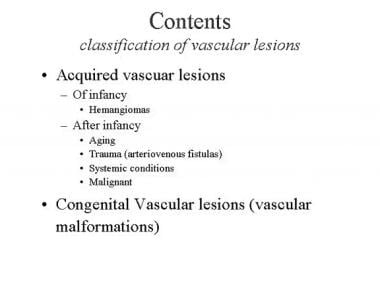
Vascular lesions of the skin are divided into congenital and acquired lesions (see Image 1).

  • Acquired vascular lesions: The most significant acquired vascular lesions of infancy are hemangiomas.1, 2 The lesions are composed of proliferating blood vessels and, although benign, have a potentially destructive character. Hemangiomas undergo a proliferative and an involution stage. Pyogenic granuloma is another acquired vascular lesion that is frequently observed during childhood. It is of minor aesthetic significance compared to hemangiomas.3 After infancy, acquired vascular lesions are associated with aging (senile angiomas), trauma (arteriovenous fistulas), systemic conditions (spider angioma), and malignancy (Kaposi sarcoma). (For more information on senile angiomas, please see this Medscape CME activity.)
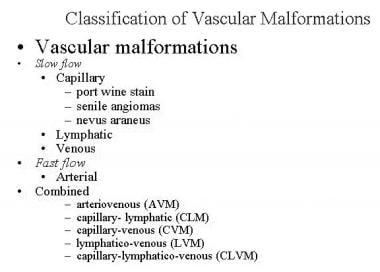
  • Congenital vascular lesions: The most common congenital vascular lesions are vascular malformations. Vascular malformations are the outcome of errors in vascular formation during embryonic life. They do not proliferate. The dilated blood vessels that build up these lesions gradually enlarge. Vascular malformations can be classified based on their type of blood flow into slow-flow lesions (capillary, venous, lymphatic), high-flow lesions (arterial), and lesions with a combined slow and fast blood flow (see Image 2).

The nomenclature of vascular lesions is confusing, and one may find perplexing terms such as "capillary hemangiomas" in some textbooks. Terms such as "strawberry hemangiomas" for superficial lesions and "cavernous hemangiomas" for deep lesions are puzzling and probably should not be used. Instead, hemangiomas should be classified as superficial, deep, or mixed type, according to their location in the skin and subcutaneous tissue. The classification presented here is based on the type of blood vessel, type of flow, and clinical presentation of the lesion.1 Exceptions are found to this classification; some hemangiomas are congenital,4 and some vascular malformations are not present at birth. Congenital hemangiomas are discussed in the Outcome and Prognosis section.

Frequency

Approximately 80% of hemangiomas grow as a single tumor,5 and 20% proliferate in multiple sites. Hemangiomas are far more common in females than in males, with a female-to-male ratio of 3-5:1. The incidence in white infants is 10-12% and is 22% in preterm infants who weigh less than 1000 g. The incidence is lower in infants with darker skin.5 Prenatal associations include older maternal age, placenta previa, and preeclampsia.6 (For information on reducing the risk of preeclampsia, please view this Medscape CME/CE activity.)

Etiology

Formation and remodeling of blood vessels are controlled generally by paracrine signals, many of which are protein ligands that bind and modulate transmembrane receptor tyrosine kinases.7 Negative regulators include angiostatin, Endostatin, and thrombospondin. Among the positive regulators are vascular endothelial growth factor (VEGF), fibronectin, 5-integrin, vascular endothelial cadherin, and transforming growth factor-1 (TGF-1).7

Several studies indicate that hemangiomas are the outcome of an angiogenic growth factor effect.7, 8, 9 Basic fibroblast growth factor (bFGF) and VEGF messenger RNAs are up-regulated in proliferative hemangiomas. TGF-b1 messenger RNA remains low in both proliferative and involuted hemangiomas.8 VEGF is localized predominantly in pericytes and endothelial cells during the proliferative phase.9 bFGF is found in endothelial cells in both the proliferative and early involutional phases.9 Other studies indicate that the angiogenic peptide, bFGF, is elevated in the urine of infants with proliferating hemangiomas.5 Its levels subsequently diminish and return to normal during natural involution or during accelerated regression induced by antiangiogenic therapy. In contrast, in patients with vascular malformations, normal concentrations of bFGF are found in the urine.5

Pathophysiology

See Etiology.

Clinical

Diagnosis of a vascular lesion is based on the medical history, physical examination, and imaging. The type of lesion can usually be determined based on the first 2 items. Imaging is mostly useful for confirming the clinical diagnosis, estimating the extent of the lesion, and determining the feasibility of surgical resection.

Medical history

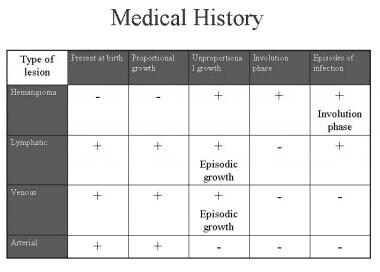
When obtaining the medical history, ask the following 4 questions (see Image 3):

  1. Was the lesion present at birth?
  2. Did proportional or disproportional growth of the lesion occur after birth?
  3. Did a phase of involution occur?
  4. Has an episodic enlargement occurred at any point?
Physical examination

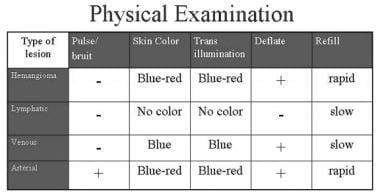
Physical examination of a patient with a vascular lesion includes inspection, palpation, and transillumination (see Image 4). A complete body examination should be performed to exclude syndromes that include skin hemangiomas. One such syndrome is neonatal hemangiomatosis, which refers to infants with multiple cutaneous hemangiomas. Such patients may have intrahepatic hemangiomas that can cause congestive heart failure, hepatomegaly, and anemia.5

Hemangiomas may be associated with other underlying conditions; lumbosacral hemangiomas may be overlying an occult spinal dysraphism as a tethered cord, lipomeningocele, and diastematomyelia. Facial hemangioma may be associated with posterior fossa abnormality, malformations of great arteries, and ocular abnormalities. PHACES syndrome is the association of Posterior fossa malformations, Hemangiomas, Arterial abnormalities, Coarctation of the aorta, and Eye abnormalitieS.10 Subglottic hemangioma should be suspected in an infant with a facial hemangioma who presents with dyspnea and stridor.

Differential diagnosis

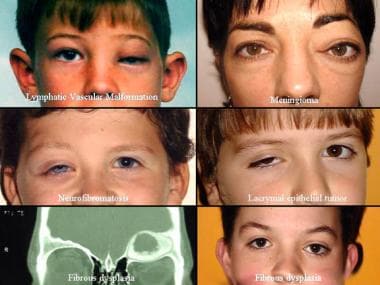
Hemangiomas may be confused with deep lymphatic or venous vascular malformations. The presence of the lesion at birth supports a diagnosis of a vascular malformation, although congenital hemangiomas are observed at birth. MRI can help distinguish between a vascular malformation and a hemangioma. The differential diagnosis also includes gliomas and other benign and malignant tumors. Image 17 shows a 1-year-old girl who presented with a 3-month history of a right facial lump. The lesion was initially managed as a hemangioma. However, MRI indicated that this was not a vascular lesion, and excisional biopsy through an upper buccal incision disclosed nodular fasciitis. Image 18 shows the differential diagnosis of orbital hemangioma.

Pyogenic granuloma, which is also one of the most common acquired vascular lesions of childhood, has a typical history of a nonhealing and occasionally bleeding wound. It has a growth phase similar to that of hemangiomas but is usually much smaller and may appear after the first year of life.3


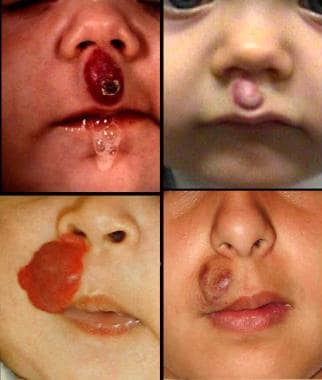
Most hemangiomas do not require treatment. They regress spontaneously by the time the individual is aged 10-12 years (see Images 5-7).5 Indications for early intervention are primarily functional, such as obscuration of vision or breathing difficulties (see Image 8). Uncontrolled bleeding and pain caused by an ulcerated hemangioma may also be an indication for intervention (see Image 9, Image 10). Facial hemangiomas, especially aggressive, rapidly spreading hemangiomas, may necessitate early pharmacologic or surgical intervention to decrease the long-term aesthetic deformity (see Image 9). Very large hemangiomas may be associated with platelet trapping, thus requiring early intervention.

Parental concerns and psychosocial effects of the deformity on the growing child should also be taken into consideration and may warrant earlier treatment. The indications for treatment and a regional approach to the management of facial hemangiomas are presented in Surgical therapy.


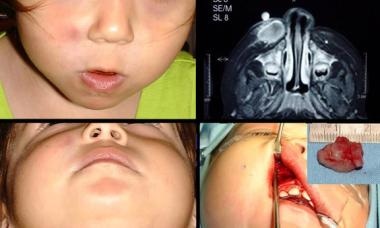
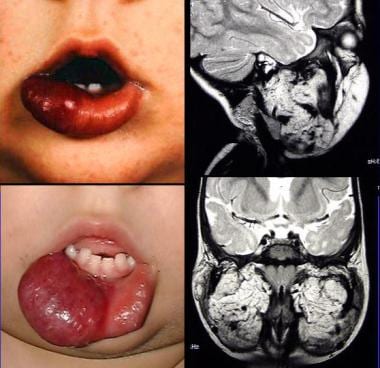
Hemangiomas are composed of abnormal vessels located at the skin and/or subcutaneous tissue. The lesion can extend far beyond the skin and invade adjacent structures such as the floor of the mouth and the cheek muscles. Image 11 shows a lower lip hemangioma in an infant aged 6 months (upper left) and following proliferation at age 16 months (lower left). MRI shows extension of the lesion into the floor of the mouth and cheek.


Surgical therapy may be contraindicated in several circumstances, including the following:

  • Intraoperative and postoperative bleeding cannot be controlled.
  • Surgery places an organ at risk (eg, injury to the eye or facial nerve).
  • Expected aesthetic and/or functional outcome of the procedure is similar or inferior to the aesthetic outcome of spontaneous involution.
  • Aesthetic and/or functional outcome of the procedure is similar to the predicted outcome of spontaneous involution and the psychosocial effect on the child living through childhood with a disfiguring deformity is not significant.


Imaging Studies

  • The most important imaging tool for this condition is contrast-enhanced MRI.11 This diagnostic test, which requires sedation or general anesthesia for children younger than 6 years, demonstrates the extent of the lesion and helps differentiate between hemangiomas and venous, lymphatic, and arterial lesions. It may also help differentiate between a vascular lesion and nonvascular lesions, such as those found in neurofibromatosis.  
    • MRI scans have 3 basic images: T1-weighted spin-echo image, T2-weighted spin-echo image, and contrast-enhanced (gadolinium) T1-weighted spin-echo image. T refers to the time necessary for the protons to discontinue spinning (see Image 12). T1 refers to a value of approximately 600 milliseconds and T2 refers to a value of about 4000 milliseconds. The typical findings in the 3 image modes are presented in Image 13.
    • Hemangiomas have a typical solid appearance with intermediate intensity on a T1-weighted spin-echo image, which is more intense than venous or lymphatic malformations.11
    • During the proliferative stage, hemangiomas show a relatively low intensity in a T2-weighted spin-echo image; in the involution phase, they have a very low intensity.
    • Contrast-enhanced T1-weighted MRI shows moderate intensity with prominent flow voids during the proliferative stage because of the high flow at this stage. In contrast, hemangiomas show low intensity during involution as a result of the low flow at that stage.
    • Image 14 shows a 5-year-old boy with a left intraorbital hemangioma that had caused vertical dystopia of the left globe. Image 15 shows the contrast-enhanced T1-weighted image with visible flow voids and intensity, typical for hemangiomas at the proliferative phase.
  • Doppler ultrasonography can assess the flow of hemangiomas. Generally, they are characterized by a shunt pattern with decreased arterial resistance and increased venous velocity.
  • Arteriography is rarely used for diagnosis or treatment of hemangiomas. Superselective embolization may be used in selected bleeding hemangiomas with a detectable regional nourishing vessel.

Histologic Findings

Proliferating hemangiomas are composed of clusters of rapidly dividing endothelial cells (see Image 16). With regression, endothelial activity gradually diminishes and the cells flatten and mature. Mast cells appear in the late proliferating phase and early involuting phase and interact with macrophages, fibroblasts, and other cell types.3, 12 During involution, light microscopy demonstrates progressive deposition of perivascular and interlobular/intralobular fibrous tissue. Multilaminated basement membranes, an ultrastructural hallmark of a proliferative phase hemangioma, persist in the involuted phase.3, 12

Most endothelial cells and pericytes express proliferating cell nuclear antigen in the proliferative and early involuting phases.9 Its expression is negligible in the involuted phase.9 The total number of mast cells is highest in the involuting phase, and the proportion of chymase-positive mast cells decreases with the progression of involution.9 Type IV collagen and the 2 chains of laminin and perlecan are detected in the basement membranes in all phases.9


Medical Therapy

Observation is indicated in most hemangiomas. Presentation of images showing the natural course of hemangiomas is very useful when discussing the natural course of the disease with parents and/or caregivers.13 However, 40% of hemangiomas that have completed the involution phase leave significant disfigurement that may necessitate late intervention.4, 5

Nonsurgical Therapy

Local wound care

Local antibiotic ointment or wet-to-dry dressing is useful to clear the debris and decrease the likelihood of local infection during the involution stage when the lesion becomes ulcerated. Parents need to be informed about the possibility of acute bleeding and how to apply local pressure.

Local pressure

Wearing a pressure garment for at least 20 hours every day may be helpful in suitable anatomic sites.14 Image 19 shows the effect of a pressure garment on a large chest hemangioma. The lesion decreased following treatment of this 1-year-old girl with a compression garment 20 hours every day for 4 months. Local excision was deferred to avoid injury to the breast bud.

Steroids

Systemic or local injection of steroids is indicated in certain patients during the growth phase.15 The usual dosage is up to 2-3 mg/kg/d for 4-6 weeks with gradual tapering of the dosage afterwards. The dosage may be increased up to 5 mg/kg/d in severe cases. Steroid treatment is indicated when major functional complications arise. Among the patients treated with steroids, one third have very satisfactory results, one third show partial or temporary reduction in mass, and the remainder demonstrate minimal or no response to treatment. Pope showed that oral corticosteroids offer more clinical and biological benefit than intravenous pulse steroids.16

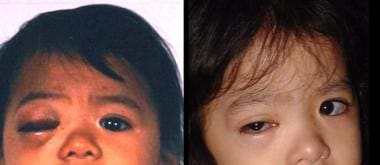
Image 8 shows the effect of local and systemic steroid treatment on orbital hemangioma. The 9-month-old infant girl in the image was able to open her eye again following 3 months of treatment.

Short-term adverse effects that are minor and transient may occur. Long-term complications are uncommon.17

Recombinant interferon alfa-2a

Recombinant interferon alfa-2a may be indicated in patients in whom steroids are contraindicated or not effective.18 Treatment is associated with complications such as transient elevation of liver enzyme levels, neutropenia, and anemia. A concerning complication is the possibility of long-term spastic diplegia.5 Recently, vincristine has been suggested as an alternative treatment for corticosteroid-resistant hemangiomas.19

Flash lamp pulsed dye laser

This device has a moderate lightening effect on the capillary discoloration of hemangiomas. Pulsed dye laser does not have an effect on the volume of the lesions.20

Intralesional laser

An intralesional fiber with the potassium-titanyl-phosphate (KTP) laser was demonstrated to induce involution of voluminous hemangiomas of the face and neck regions.21 Intralesional photocoagulation treatment with the KTP and Nd:YAG lasers was also found to be effective and safe for the treatment of periorbital hemangiomas.22

Carbon dioxide laser

This tool is useful for treating subglottic hemangiomas. It may also be useful for resurfacing residual minor skin irregularities.

Superselective catheterization and embolization

This is infrequently used to treat hemangiomas with a defined nourishing artery. Embolization may be useful to decrease high-output cardiac failure in infants with liver hemangiomas.

Surgical Therapy

Surgical therapy may be considered in several circumstances, including the following:

  • When intraoperative and postoperative bleeding can be controlled
  • When surgery does not place an organ at risk (eg, injury to the eye or facial nerve)
  • When the expected aesthetic and/or functional outcome of the procedure is similar to or superior to the aesthetic outcome of spontaneous involution
  • When the aesthetic and/or functional outcome of the procedure is inferior to the predicted outcome of spontaneous involution and the psychosocial effect on the child having to live through childhood with a disfiguring deformity is significant

Regional approach to the management of facial hemangiomas

Facial hemangiomas are a challenge. They are associated with significant parental concerns and psychosocial effect on the developing child. A regional approach to the management of those often very disfiguring lesions is discussed below.

Periorbital hemangiomas

Most hemangiomas in this area are managed by a conservative approach (see Image 8, Image 15, Image 16). Treatment with local injections and/or systemic steroids is indicated when vision is impaired and such impairment may cause astigmatism or deprivation amblyopia (see Image 8). Late excision may be indicated for residual fibrous fatty tissue. MRI is mandatory to exclude other benign or malignant causes of periorbital fullness, proptosis, and dystopia. The differential diagnosis (see Image 18) includes lymphatic lesions, neurofibromatosis, meningioma, lacrimal epithelial tumors, and fibrous dysplasia.

Forehead hemangiomas

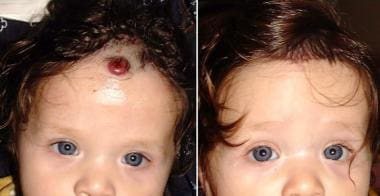
The combination of a relatively thin skin, subcutaneous tissue, and muscle causes most forehead hemangiomas to become exophytic (see Image 10, Image 20). These lesions, especially when located close to or within the hairline, tend to bleed profusely. This may require early resection (see Image 10). Lower forehead hemangiomas may cause secondary ptosis. The lesions can be excised through a direct incision. A bicoronal approach provides excellent exposure and allows wide resection of the lesion without visible scars. 

Image 20 demonstrates resection of a lower forehead hemangioma at the fibrous fatty stage through a bicoronal approach. The lesion (upper left and middle images) was exposed through a bicoronal incision (upper right) and excised (lower left). The nasal bridge was exposed and excess fibrofatty tissue was resected as well (lower middle). A satisfactory result is observed 3 months after surgery (lower right).

Cheek hemangiomas

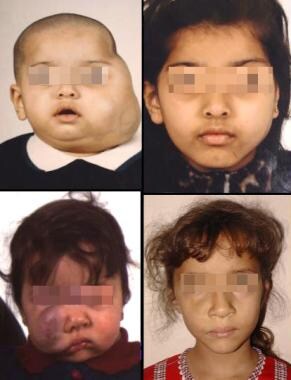
Most hemangiomas in this area are managed by a conservative approach (see Image 5, Image 6). Systemic and/or local treatment with steroids is indicated when vision is impaired. The aesthetic outcome of deep lesions is excellent. Image 5 demonstrates 2 patients, one aged 1 year and one aged 8 years, with deep cheek hemangiomas. An excellent outcome with conservative treatment is shown. When the hemangioma includes a superficial skin involvement, future intervention to address excess skin and skin texture is anticipated. Image 6 shows 2 patients who had cheek hemangiomas with a superficial component. The patient in the upper part of the figure is observed at age 9 months and age 9 years. The patient in the lower part of theimageisobservedatage4 months and age 5 years. 

Nasal hemangiomas

Based on their location, hemangiomas can be classified (see Image 21) into nasal tip lesions, nasal bridge lesions, and lateral nasal lesions. Lateral nasal lesions are managed in the same manner as cheek lesions, and early treatment of those lesions with steroids is indicated when vision is obstructed.

In the authors' experience, early surgery has proved to be beneficial for nasal bridge and nasal tip lesions. The feasibility of the surgical intervention depends on the size of the lesion and the likelihood of aesthetically pleasing primary skin closure. The surgical excision can be preceded by local steroid injections. Nasal bridge lesions can be excised and the skin primarily closed in many patients (see Image 22). Nasal tip ("Pinocchio") lesions can be addressed by open rhinoplasty when the individual is aged 3-4 years. The vascular lesion is excised from the inner side of the nasal skin. The tip is redraped and the excess skin is excised. Image 23 shows the outcome of early excision of a nasal tip hemangioma (upper left). The nose is observed (lower left; upper and lower right) 10 years following open rhinoplasty performed when the patient was aged 2.5 years.

Upper lip hemangiomas

Upper lip hemangiomas are usually not associated with functional problems. They are associated with aesthetic concerns and cause discoloration, protrusion, and lip ptosis on the affected side due to their mass effect. In the authors' experience, lesions that do not involve the skin can be excised through an intraoral approach with good aesthetic outcome. Lesions that involve the skin are best managed conservatively until the lesion decreases. Waiting allows reconstruction of the entire aesthetic unit or subunit of the upper lip. This usually makes an almost impossible reconstruction a feasible one.

Image 7 shows the natural course of upper lip lesions that involve the skin. The upper and lower left images show upper lip hemangiomas in individuals aged 9 months and 2 years, respectively. The upper and lower right images show upper lip hemangioma in individuals aged 6 years and 11 years, respectively. Observation facilitates lip reconstruction but may be associated with a severe psychosocial effect on the child. This should always be taken into consideration when surgery is planned. The girl observed in the lower left and right pictures was frequently teased by her peers because of the "worm" on her upper lip.

Lower lip hemangiomas

Lower lip lesions have aesthetic as well as functional consequences. Lip protrusion and ptosis may cause drooling and speech impairment (see Image 24). The lesions may extend into the floor of the mouth. The visible lip lesion in these patients is usually the "tip of an iceberg." Image 11 shows a lower lip hemangioma in an individual at age 6 months (upper left) and following proliferation at age 16 months (lower left). MRI shows involvement of the floor of the mouth and cheek. Lip reduction is advised in such patients at the end of the proliferation phase. This can be performed by a fusiform mucosal excision with lip debulking. Tumescence is a valuable adjunct for the excision of such lesions.23

Rapidly spreading panfacial hemangiomas

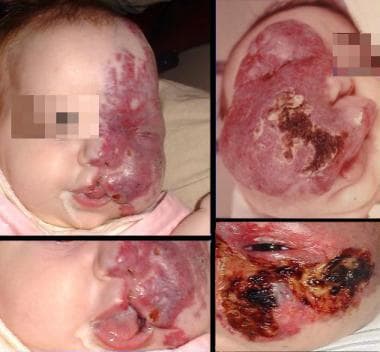
The authors define rapidly spreading "malignant"-type hemangiomas as lesions that quickly extend from their original aesthetic units. These lesions frequently are associated with significant aesthetic deformities. They require early detection and treatment with steroids. The healing process may be associated with necrosis and soft tissue loss that produce severe facial deformities.

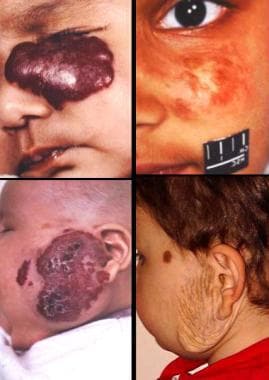
Image 9 (upper left) shows a 4-month-old infant girl with rapidly spreading hemangioma that started as a small cheek nodule and eventually invaded the forehead, eyelids, cheek, and lip aesthetic units. Part of the lip underwent necrosis and caused a cleft of the lip (lower left). The images on the right are of 6-month-old (upper right) and 4-month-old (lower right) infants with aggressive, rapidly spreading hemangiomas. Parents need to be informed that administration of steroids may induce repulsive necrosis of the lesion (Image 9, lower right).


Vision

Obstruction of vision during the first 6 months of life by a periorbital, cheek, forehead, or nasal hemangioma may cause long-term visual damage. Early treatment with steroids, surgery, or both is indicated in such patients (see Image 8).

Breathing

Hemangiomas that invade the neck may compress the soft tracheal rings of infants and present as stridor. Steroids are indicated in these patients. Direct external excision of the lesions is impossible in most patients because of close proximity of the hemangioma to vital structures. Localized subglottic lesions can be reopened with carbon dioxide laser. Consider tracheostomy for patients who have failed to improve from pharmacologic treatment.

Bleeding

Hemangiomas have a high flow during the proliferative phase, and when extensive lesions become ulcerated, anemia may result. This is especially common in the scalp. Parents are instructed to apply pressure over the bleeding area. Pharmacologic treatment and/or surgery are indicated for symptomatic patients. Image 10 shows a small but repeatedly bleeding forehead hemangioma before and after surgical excision.

Thrombocytopenia

Large hemangiomas with a high flow may be associated with platelet trapping and thrombocytopenia (Kasabach-Merritt phenomenon). Pharmacologic treatment is indicated in such patients.

Psychosocial complications

Many facial hemangiomas cause a significant facial deformity during the proliferative and early involution phases. Facial appearance usually improves when the individual is older than 10 years.5 Children with facial hemangiomas are often teased by their peers. Early surgery may be indicated in such situations.


Most hemangiomas appear during the first months of life, undergo proliferation with a peak at age 1 year, and then undergo gradual involution. Involution is 50% complete by age 5 years and 70% complete by age 7 years, with continued improvement up to age 10-12 years.5 An exception is congenital hemangioma, which is present at birth and usually undergoes regression at approximately age 1 year.5 Noninvoluting congenital hemangioma is a variant of the common hemangioma of infancy with persistent fast flow.24 Unlike vascular malformations, hemangiomas rarely cause bony distortion and overgrowth, with the exception of huge facial hemangiomas, which may affect the underlying bone and cartilage.5, 25

Various associated medical conditions are discussed in Physical examination.


The introduction of a classification method by Mulliken and associates was a significant contribution to the understanding of vascular legions.1 This made diagnosis and treatment more accurate and predictable. However, confusing and occasionally wrong terms used by different subspecialties are still found.

Improvement in patient monitoring and anesthesia during and after surgery made early excisions safer and more acceptable. Other contributions included the introduction of the pulsed dye laser, which helps fade away the capillary component of hemangiomas,20 and the intralesional fiber laser.21, 23

A major controversy is whether to wait until involution is complete or to operate early on children with disfiguring lesions. No clear-cut answer exists to this question. The authors believe that decisions should be made according to the individual situation. The psychosocial consequences of growing up with a facial deformity should always be taken into consideration.

Future genetic research, including angiogenic growth factor products, will contribute to the understanding of the mechanism underlying the formation of hemangiomas and may provide new modalities for treatment.7 Because bFGF and VEGF messenger RNA have been implicated in the pathobiology of human hemangioma formation, biochemical modulation of these angiogenic cytokines may eventually help inhibit proliferation and promote regression of hemangiomas.8


Media file 1:  Hemangiomas. Classification of vascular lesions.
Click to see larger pictureClick to see detailView Full Size Image
Media type:  Image

Media file 2:  Hemangiomas. Classification of vascular malformations.
Click to see larger pictureClick to see detailView Full Size Image
Media type:  Image

Media file 3:  Hemangiomas. Diagnosis - Medical history.
Click to see larger pictureClick to see detailView Full Size Image
Media type:  Image

Media file 4:  Hemangiomas. Diagnosis - Physical examination.
Click to see larger pictureClick to see detailView Full Size Image
Media type:  Image

Media file 5:  Deep cheek hemangiomas.
Click to see larger pictureClick to see detailView Full Size Image
Media type:  Photo

Media file 6:  Superficial cheek hemangiomas.
Click to see larger pictureClick to see detailView Full Size Image
Media type:  Photo

Media file 7:  Upper lip hemangiomas.
Click to see larger pictureClick to see detailView Full Size Image
Media type:  Photo

Media file 8:  Treatment with steroids of orbital hemangioma.
Click to see larger pictureClick to see detailView Full Size Image
Media type:  Photo

Media file 9:  Panfacial hemangiomas.
Click to see larger pictureClick to see detailView Full Size Image
Media type:  Photo

Media file 10:  Resection of a bleeding forehead hemangioma.
Click to see larger pictureClick to see detailView Full Size Image
Media type:  Photo

Media file 11:  Lower lip hemangioma with intraoral extension.
Click to see larger pictureClick to see detailView Full Size Image
Media type:  Photo

Media file 12:  Hemangiomas. Relaxation time - MRI T1, T2.
Click to see larger pictureClick to see detailView Full Size Image
Media type:  Image

Media file 13:  Hemangiomas. Diagnosis MRI.
Click to see larger pictureClick to see detailView Full Size Image
Media type:  Image

Media file 14:  Left orbital hemangioma.
Click to see larger pictureClick to see detailView Full Size Image
Media type:  Photo

Media file 15:  MRI of orbital hemangioma.
Click to see larger pictureClick to see detailView Full Size Image
Media type:  MRI

Media file 16:  Proliferating hemangioma - Light microscopy.
Click to see larger pictureClick to see detailView Full Size Image
Media type:  Photo

Media file 17:  Hemangiomas. Facial nodular fasciitis misdiagnosed as a vascular lesion.
Click to see larger pictureClick to see detailView Full Size Image
Media type:  Photo

Media file 18:  Differential diagnosis of orbital hemangiomas.
Click to see larger pictureClick to see detailView Full Size Image
Media type:  Photo

Media file 19:  The effect of compression on a chest hemangioma.
Click to see larger pictureClick to see detailView Full Size Image
Media type:  Photo

Media file 20:  Use of a bicoronal approach to resect a forehead hemangioma.
Click to see larger pictureClick to see detailView Full Size Image
Media type:  Photo

Media file 21:  Types of nasal hemangiomas.
Click to see larger pictureClick to see detailView Full Size Image
Media type:  Photo

Media file 22:  Resection and primary closure of a nasal bridge hemangioma.
Click to see larger pictureClick to see detailView Full Size Image
Media type:  Photo

Media file 23:  Open rhinoplasty approach to resect a nasal tip hemangioma.
Click to see larger pictureClick to see detailView Full Size Image
Media type:  Photo

Media file 24:  Lower lip hemangioma.
Click to see larger pictureClick to see detailView Full Size Image
Media type:  Photo


  1. Mulliken JB, Glowacki J. Hemangiomas and vascular malformations in infants and children: a classification based on endothelial characteristics. Plast Reconstr Surg. Mar 1982;69(3):412-22. [Medline].
  2. Marler JJ, Mulliken JB. Current management of hemangiomas and vascular malformations. Clin Plastic Surg. 2005;32:99-116. [Medline].
  3. Patrice SJ, Wiss K, Mulliken JB. Pyogenic granuloma (lobular capillary hemangioma): a clinicopathologic study of 178 cases. Pediatr Dermatol. Dec 1991;8(4):267-76. [Medline].
  4. Boon LM, Enjolras O, Mulliken JB. Congenital hemangioma: evidence of accelerated involution. J Pediatr. Mar 1996;128(3):329-35. [Medline].
  5. Mulliken JB. Vascular anomalies. In: Aston SJ, Beasley RW, Thorne CHM, eds. Grabb and Smith Plastic Surgery. 5th ed. NY: Lippincott Raven Publishers; 1997.
  6. Hemangioma Investigator Group, Haggstrom AN, Drolet BA, Baselga E, Chamlin SL, Garzon MC, et al. Prospective study of infantile hemangiomas: demographic, prenatal, and perinatal characteristics. J Pediatr. Mar 2007;150(3):291-4. [Medline].
  7. Breugem CC, van Der Horst CM, Hennekam RC. Progress toward understanding vascular malformations. Plast Reconstr Surg. May 2001;107(6):1509-23. [Medline].
  8. Chang J, Most D, Bresnick S, Mehrara B, Steinbrech DS, Reinisch J, et al. Proliferative hemangiomas: analysis of cytokine gene expression and angiogenesis. Plast Reconstr Surg. Jan 1999;103(1):1-9; discussion 10. [Medline].
  9. Tan ST, Velickovic M, Ruger BM, Davis PF. Cellular and extracellular markers of hemangioma. Plast Reconstr Surg. Sep 2000;106(3):529-38. [Medline].
  10. Metry DW, Hawrot A, Altman C, Freiden IJ. Association of solitary, segmental hemangiomas of the skin with visceral hemangiomatosis. Arch Dermatol. May 2004;140(5):591-6. [Medline].
  11. Armstrong DC, ter Brugge K. Selected interventional procedures for pediatric head and neck vascular lesions. Neuroimaging Clin N Am. Feb 2000;10(1):271-92, x. [Medline].
  12. Takahashi K, Mulliken JB, Kozakewich HP, Rogers RA, Folkman J, Ezekowitz RA. Cellular markers that distinguish the phases of hemangioma during infancy and childhood. J Clin Invest. Jun 1994;93(6):2357-64. [Medline].
  13. Organek A, Cohen M, Zuker R. Interactive information kiosk improves patient knowledge and satisfaction in a busy pediatric plastic surgery clinic. Can J Plast Surg. 2000;8(3):105.
  14. Bonifazi E, Mileti F. Images in clinical medicine. Congenital hemangioma. N Engl J Med. Apr 8 1999;340(14):1080. [Medline].
  15. Sloan GM, Reinisch JF, Nichter LS, Saber WL, Lew K, Morwood DT. Intralesional corticosteroid therapy for infantile hemangiomas. Plast Reconstr Surg. Mar 1989;83(3):459-67. [Medline].
  16. Pope E, Krafchik BR, Macarthur C, Stempak D, Stephens D, Weinstein M, et al. Oral versus high-dose pulse corticosteroids for problematic infantile hemangiomas: a randomized, controlled trial. Pediatrics. Jun 2007;119(6):e1239-47. [Medline].
  17. Boon LM, MacDonald DM, Mulliken JB. Complications of systemic corticosteroid therapy for problematic hemangioma. Plast Reconstr Surg. Nov 1999;104(6):1616-23. [Medline].
  18. Ezekowitz RA, Mulliken JB, Folkman J. Interferon alfa-2a therapy for life-threatening hemangiomas of infancy. N Engl J Med. May 28 1992;326(22):1456-63. [Medline].
  19. Fawcett SL, Grant I, Hall PN, Kelsall AW, Nicholson JC. Vincristine as a treatment for a large haemangioma threatening vital functions. Br J Plast Surg. Mar 2004;57(2):168-71. [Medline].
  20. Scheepers JH, Quaba AA. Does the pulsed tunable dye laser have a role in the management of infantile hemangiomas? Observations based on 3 years' experience. Plast Reconstr Surg. Feb 1995;95(2):305-12. [Medline].
  21. Achauer BM, Celikoz B, VanderKam VM. Intralesional bare fiber laser treatment of hemangioma of infancy. Plast Reconstr Surg. Apr 1998;101(5):1212-7. [Medline].
  22. Achauer BM, Chang CJ, VanderKam VM, Boyko A. Intralesional photocoagulation of periorbital hemangiomas. Plast Reconstr Surg. Jan 1999;103(1):11-6; discussion 17-9. [Medline].
  23. Silfen R, Amir A, Regev D, Hauben DJ. Tumescence: a valuable adjunct for the excision of facial hemangiomas. Plast Reconstr Surg. Jul 2000;106(1):217-8. [Medline].
  24. Enjolras O, Mulliken JB, Boon LM, Wassef M, Kozakewich HP, Burrows PE. Noninvoluting congenital hemangioma: a rare cutaneous vascular anomaly. Plast Reconstr Surg. Jun 2001;107(7):1647-54. [Medline].
  25. Zuker MR, Cohen M. Congenital hand anomalies (discussion). In: Goldwyn RM, Cohen MN, eds. The Unfavorable Result in Plastic Surgery Avoidance and Treatment. 3rd ed. Philadelphia: Lippincott Williams and Wilkins; 2000:710-13.

Vascular, Hemangiomas excerpt

Article Last Updated: Mar 14, 2008