Continually Updated Clinical Reference
 
 
  All Sources     eMedicine     Medscape     Drug Reference     MEDLINE
 
eMedicine - Collagen Injections : Article by

Quick Find
Authors & Editors
Introduction
Indications
Contraindications
Treatment
Complications
Outcome And Prognosis
Future And Controversies
Multimedia
References


Patient Education
Click here for patient education.


Author: Thomas J Gampper, MD, Vice Chair, Department of Surgery, Director of Aesthetic and Laser Surgery, Associate Professor, Departments of Plastic Surgery and Clinical Neurosurgery, University of Virginia

Thomas J Gampper is a member of the following medical societies: American Association of Plastic Surgeons, American Cleft Palate/Craniofacial Association, American College of Surgeons, American Society for Aesthetic Plastic Surgery, American Society for Laser Medicine and Surgery, American Society of Plastic Surgeons, Association of Academic Chairmen of Plastic Surgery, and Undersea and Hyperbaric Medical Society

Coauthor(s): Ashok Tholpady, BA, MS, University of Virginia School of Medicine; Gary D Monheit, MD, Associate Professor, Department of Dermatology, University of Alabama at Birmingham; John D Kayal, MD, Consulting Dermatologist, NW Georgia Dermatology and Skin Cancer Specialists, LLC

Editors: James F Thornton, MD, Assistant Professor, Department of Plastic and Reconstructive Surgery, University of Texas Southwestern; Francisco Talavera, PharmD, PhD, Senior Pharmacy Editor, eMedicine; Mark E Krugman, MD, Assistant Professor of Plastic Surgery and Clinical Professor of Otolaryngology-Head and Neck Surgery, University of California at Irvine School of Medicine; Nicolas (Nick) G Slenkovich, MD, Practice Director, Colorado Plastic Surgery Center at Swedish Medical Center; Deepak Narayan, MD, FRCS, Associate Professor of Surgery (Plastic), Yale University School of Medicine; Chief of Plastic Surgery, West Haven Veterans Affairs Medical Center

Author and Editor Disclosure

Synonyms and related keywords: skin filler substances, scar removal, scar revision, scar, scar correction, bovine collagen, skin-filling agents, collagen, hyaluronic acid polymers, fat, synthetic materials, silicone, implants, Zyderm, Zyplast, Resoplast, Dermalogen, Autologen, Isolagen, AlloDerm, human placental collagen, recombinant human collagen, Hylaform gel, Restylane, silicone, Artecoll, Gore-Tex, SoftForm, Endoplast-50, Profill, Fascian, Cymetra

Over the past 30 years, the methods available for the removal or improvement of acne scars and for the correction of wrinkle lines increased exponentially with the advent of new skin filler substances, improved techniques for elevating existing scars, and technology for abrading and resurfacing facial contours. Seemingly every month, a new and improved filling agent or laser, which will be the best of all available methods, becomes available. In the midst of these technological breakthroughs, the basic mechanisms remain the same. Three categories of techniques are presently available to improve acne scars: (1) scar removal and revision; (2) filling depressed scars; and (3) contouring the surface of scars.

History of the Procedure

The goal for research and development in this field over the past 50 years has been the synthesis of the ideal filler substance for skin and soft-tissue augmentation. The ideal filling material has the following qualities:

  • Physiologic - Incorporates itself with the body's tissues
  • Simple procedure - Injectable
  • Risk free - No complications or adverse effects
  • Permanent - Does not degrade with time

This ideal has not been met but it has been the goal in creating all presently available materials.

Physiologic filling materials such as dermis, fascia, and fat have been used as autologous implants for many years, with specific surgical techniques used for each. These remain in use today but on the whole are cumbersome and complicated surgical operations with associated adverse effects and complications. Injectable filling materials included cutting oils, paraffin, and silicone, each with its own adverse effects and complications.

The first Food and Drug Administration (FDA)-approved injectable filling agent, bovine collagen, was approved in 1982 and remains the most commonly used product for skin and soft-tissue augmentation. In fact, Zyderm remains the criterion standard against which all new fillers are compared.

Thirty years ago, one either excised a scar or dermabraded the surface. Combinations of these two methods were beginning along with punch grafts and the use of autodermal grafts. The basic workup and evaluation of these scars remain essentially the same because these choices are available for the types of scars the clinician evaluates for improvement. This review discusses skin-filling agents available for scar correction.

Problem

Distensible cutaneous scars are best elevated with filling material. A distensible scar is defined as one that elevates to the surface when tension is placed on either side. This simple test allows the clinician to determine whether a particular scar is likely to respond to filling material. Fibrotic ice pick and fixed scars cannot be elevated because the scar tissue extends through to the subcutaneous tissue plane. Placing filling material in the dermis only elevates the surrounding skin and produces a donut effect and making the scar appear worse.

The ideal skin-filling agent is safe, physiologic, simple, and permanent. No known substance meets all of these criteria. Each of the available substances has adverse effects that detract from these properties, but all are the result of striving to perfect their qualities to fulfill these requirements. The list of injectable filling materials increases each month, with both synthetic and natural substances added. Other implant materials may be placed surgically.


Indications for collagen injection are acne scars, traumatic scars, photoaging, wrinkles, and gravitational rhytides.


Contraindications to this procedure include allergy to bovine collagen, allergy to lidocaine, pregnancy, or a collagen vascular disease such as dermatomyositis or polymyositis.


Medical therapy

Fillers

Fillers are used to fill defects within the skin and subcutaneous tissue. The depth of the defect should determine the filler chosen for the appropriate procedure. For example, collagen and hyaluronic acid are used to fill relatively superficial defects, while deeper defects may require fat or synthetic products, including implants or permanent fillers.

Fillers are used to fill deep, intermediate, or superficial defects, with the depth of the defect determining the product of choice. Multiple fillers or implants may be layered to achieve maximal correction.

  • Superficial defects - Collagen, hyaluronic acid polymers
  • Deeper defects - Fat, synthetic materials, silicone, implants, or permanent fillers

Available filling substances

Numerous fillers are available. Each of these preparations has special properties, indications, and contraindications.

  • Biodegradable - Zyderm/Zyplast, Resoplast, Dermalogen, Autologen, Isolagen, AlloDerm, human placental collagen, recombinant human collagen (future), Hylaform gel, Restylane
  • Nonbiodegradable - Silicone (illegal in US), Artecoll, Gore-Tex, SoftForm, Endoplast-50, Profill

Dermal collagen

Collagen fillers can be divided into those of bovine and human origin. The bovine products are employed most widely. Human collagen can be divided into allogeneic and autologous forms. Since the autologous forms are prepared from the patient's own tissues, they are not allergenic and do not transmit exogenous infectious agents.

  • Bovine collagen - Zyderm I and II, Zyplast, Resoplast
  • Human collagen
    • Allogeneic - Dermalogen, AlloDerm, Fascian, Cymetra (which is micronized AlloDerm)
    • Autologous collagen - Autologen
  • Human placental collagen/recombinant human collagen - Isolagen

Injectable filling materials

AlloDerm and Cymetra

AlloDerm and Cymetra are approved by the FDA and manufactured by LifeCell Corporation, Branchburg, NJ.

AlloDerm is an acellular human dermal graft processed from tissue bank–derived skin. It has been used since 1992 on more than several thousand patients; initially, it was used for burn victims and, later, in oral surgery and soft tissue augmentation. Because AlloDerm is available in sheets 1-2 mm thick, it is not injected but implanted surgically. Scar correction is theoretically the result of the ingrowth of tissue during the remodeling phase of wound healing.

Insertion requires the use of local anesthesia by nerve block, local infiltration, or both. After rehydrating the graft in normal saline, the dermal sheet is rolled and trimmed to the appropriate length of the defect.  A tunnel is then created under the scar or contour deformity and an instrument is used to pass the tissue to the opposite side, where it may be sutured into place.

A clinical trial of 12 lip augmentation procedures showed no rejection or displacement at 12 months postoperatively. Suture site infection and reactivation of herpes labialis was reported. Results from AlloDerm last for approximately 6-12 months, but persistence of grafts can reach several years.  AlloDerm appears to have greater longevity than collagen fillers, though no controlled studies have been performed.

Cymetra is a micronized form of AlloDerm that is injectable. This material is rehydrated with lidocaine in the physician's office before injection. Because it is human-derived, no skin test is required by the manufacturer. Clinical trials of 200 patients to date show no evidence of allergic reactions; however, transient bruising, redness, and swelling occurred at a rate of 2.1%. Results last in the range of 3-6 months.

Artecoll

Artecoll is not approved by the FDA and is manufactured by Rofil Medical International, The Netherlands.

Artecoll is a synthetic mixture of polymethyl methacrylate (PMMA) microspheres suspended in bovine collagen, saline, and 0.3% lidocaine. The mixture is injected deeply in the dermis and subcutaneous tissue. Following injection, the collagen is gradually degraded with permanent deposition of PMMA spheres. Artecoll is injected subdermally and overcorrection is not necessary. Broad experience in Europe has found this product reliable and long lasting, and its use in acne scars is well documented. It is presently not available in the United States, and many concerns have been raised about the safety of injection of PMMA because of the risk of ulceration and inflammatory reactions to the product.

Autologen

Autologen does not require FDA approval and is manufactured by Collagenesis Corporation, Beverly, Mass.

Autologen is an injectable dermal implant harvested from autologous collagen. It provides 2 theoretical advantages for implant material. First, it is autologous, which means that allergic and tissue reactions should not occur; second,  it contains intact dermal collagen fibers that may exhibit greater resistance to enzymatic degradation. The skin material is provided from skin specimens obtained from plastic and reconstructive surgery procedures in which skin is removed and discarded. The removed skin is processed into a collagen suspension with concentrations from 25-100 mg/mL and injected through a syringe (27-30 gauge).

Results from controlled evaluations in 30 patients demonstrated that 3 layered Autologen treatments provided greater than 75% correction for more than 1 year.  Autologen is no longer available in the United States.

CosmoDerm and CosmoPlast

These agents are approved by the FDA and are manufactured by INAMED Aesthetics, Santa Barbara, Calif.

CosmoDerm and CosmoPlast are both human collagen fillers that are created under laboratory conditions. They are supplied as a 35mg/mL solution of collagen and 0.3% lidocaine. CosmoDerm is for superficial lines and wrinkles; CosmoPlast is made more resistant to endogenous proteases by glutaraldehyde, and its crosslinking treatment is for deeper wrinkles. Because both of these products are of human origin, no allergy testing is recommended or required.

Dermalogen

Dermalogen is approved by the FDA and is manufactured by Collagenesis Corporation, Beverly, Mass.

Dermalogen is a human collagen preparation that consists predominantly of intact collagen fibers as well as other matrix proteins suspended in a neutral pH buffer. The material is harvested from cadaver skin specimens from the American Association of Tissue Banks (AATB), which is a group of accredited tissue skin banks. It is sterile and has undergone several viral and prion inactivation steps. Dermalogen is injected through a 30-gauge needle. This preparation does not contain lidocaine; therefore, some form of anesthesia is necessary. Implantation of the filling agent is followed by neovascularization and collagen synthesis by host fibroblasts. The injection site is mid dermis to deep dermis, and a 125% correction is achieved by the clinician.

To produce the stability necessary for a 1-2 year correction, 2-3 injections over 2-4 weeks are typically required. Few adverse effects are associated. No allergic reactions have been reported over the last 10,000 administered injections; thus, the previously recommended skin test has been discontinued. This product has also been discontinued by the company.

Endoplast-50

Endoplast-50 is not approved by the FDA and is manufactured by Laboratories Filorgra.

Endoplast-50 consists of elastin peptides solubilized in bovine collagen. This mixture is thought to stimulate the resident host fibroblasts into producing collagen and, thus, producing a long-term benefit. Results are thought to last as long as 1 year.

Fibrel

Fibrel is approved by the FDA.

Fibrel has been an effective method of elevating scars using 3 agents; porcine gelatin, amino caproic acid, and 1% lidocaine. The mixture is placed within distensible scars and provides correction for more than 1 year. In select patients, scar elevation has persisted for up to 5 years.

Adverse effects include a prolonged inflammatory reaction in select patients, which is probably related to an idiosyncratic sensitivity response to the products. It has been used extensively in patients who are allergic to Zyderm and has been a reliable filling agent for acne scars.

Hylaform (hylan B gel)

Hylaform (hylan B gel) is approved by the FDA and is manufactured by INAMED (Santa Barbara, Calif) and Genzyme Corporations (Cambridge, Mass).

Hylaform B gel (previously known as hylan B gel) is a hyaluronic acid derivative of an avian polysaccharide from the rooster comb. It is a cross-linked derivative of natural hyaluronan polymer with little immunologic activity and no species specificity. It is an intradermal injection used to augment scars. No skin test is required, but the procedure requires a series of injections rather than a single treatment session. After 2 or 3 injections, the initial clinical trials resulted in 80% of patients satisfied with their correction at 12 weeks. Longevity is 9 months to 1 year, after which reinjection is necessary. Adverse reactions have been minimal, including erythema, ecchymosis, and acneiform dermatitis, with no reported allergic reactions.

Isolagen

Isolagen is not approved by the FDA and is manufactured by Isolagen Inc., Exton, Penn.

Isolagen is also a method of harvesting autologous skin, purifying the host fibroblasts, and packaging it in a suspension for intradermal injection. A piece of skin derived from a punch biopsy is sent to the company. From this, the fibroblast population of cells is isolated and grown. These cells are the ones responsible for collagen synthesis in vivo. After 6 weeks, a vial of cells is sent back to the physician for injection. Implantation of the material must take place within 1 day, otherwise it is unusable. Because the product is autologous, little risk exists of allergic response. Once harvested and processed, a long-term supply of fibroblasts is then available for the patient. The cells can be cryogenically stored for use years later. A theoretical benefit may also exist in using cells that were isolated from the patient at a much younger age.

Restylane and Perlane

These agents are approved by the FDA and are manufactured by Medicis, Scottsdale, Ariz.

Both of these products are similar to Hylaform in that they are composed of hyaluronic acid. Instead of being produced from animal sources, however, they are both derived from bacteria that produce hyaluronic acid. Restylane is used for superficial wrinkles, while Perlane, which is much less susceptible to breakdown in the body, is for deeper wrinkles. Both products do not pose an allergy risk and are thought to be broken down at a slower rate than the collagen products. Results can last as long as 1 year.

Radiesse

Radiesse is approved by the FDA and is manufactured by BioForm Medical, San Mateo, Calif.

Radiesse (formerly known as Radiance) is an aqueous gel that contains microspheres of calcium hydroxyapatite. This formulation has been used to correct bony defects and has been used off-label as a cosmetic filler. Hydroxyapatite has a much slower rate of resorption by the body and, so, has the potential to give a semipermanent result when used as a filler.  Calcium hydroxyapatite does not elicit an inflammatory reaction, so no allergy testing is necessary. The formulation does not contain lidocaine; therefore, some form of anesthesia is required.

Reviderm Intra

Reviderm Intra is not approved by the FDA and is manufactured by Rofil Medical International, The Netherlands.

Reviderm Intra is a bacterial hyaluronic acid–based product that contains suspended 40-60 micron dextran beads. The dextran beads are thought to elicit an inflammatory response that is followed by fibroblast mediated collagen production. This product is intended for intradermal injection and correction of superficial and deep wrinkles.

Sculptra

Sculptra is approved by the FDA and is manufactured by Dermik Aesthetics, a division of Sanofi-Aventis, Bridgewater, NJ.

Sculptra is a novel injectable filler that is composed of poly-L-lactic acid. This material has been used for years to make suture materials and is known to be highly biocompatible. It has been approved for treatment of HIV facial lipoatrophy.  It is supplied as a freeze-dried material that can be reconstituted in sterile water at room temperature. Multiple treatments over several weeks are required for the best results; however, results can last up to 2 years.

Silikon 1000

Silikon 1000 is approved by the FDA for certain ophthalmologic applications but not cosmetic surgery, and is manufactured by Dow Corning, Midland, Mich.

Medical grade silicone was originally used in the 1960s for correction of wrinkles and soft tissue defects. Its popularity led untrained practitioners to use industrial grade silicone, which resulted in many severe, well-publicized complications.  In the hands of a trained practitioner, its use can yield cosmetically superior results. At present, it is not approved for cosmetic filler applications but is used for off-label indications.

Zyderm and Zyplast collagen

These agents are approved by the FDA and are manufactured by INAMED (Santa Barbara, Calif).

The first injectable filling material to be approved by the FDA was Zyderm collagen. This bovine collagen implant has been used for approximately 20 years and the injection technique has been standardized. Each is delivered in 1-mL syringes packaged with lidocaine and a 30-gauge needle.

Three variations are available for this collagen implant. Zyderm I collagen is a 25% suspension of purified bovine dermis in saline with 0.3% lidocaine. The saline carrier is absorbed and the remaining implant persists for 3-10 months. Zyderm I is used most successfully to treat shallow distensible scars and fine rhytides.

Zyderm II has double the concentration and is a more viscid substance. The longevity of scar correction is increased and it can be used for larger filling defects.

Zyplast is a cross-linked derivative of bovine collagen, which is a heavier filling material and has greater longevity. Zyplast can be used for larger scars that require a greater and deeper filling of volume and lasts longer. It is placed deeper in the dermis and requires 100% correction at the time of implantation, rather than the 150% used for Zyderm I. Zyderm I has a longevity of 6 weeks to 3 months; Zyderm II, 4-5 months; and Zyplast may last 9 months to 1 year, especially in a relatively immobile scar.

These two filling agents are the most commonly used i implants in the United States. They are user friendly, relatively easy to inject, and can be integrated into a simple office visit for the patient requesting dermal augmentation. The filling agent is technique dependent for longer lasting results, proportional to the clinician's ability to place the collagen correctly. Adverse reactions have been noted including allergic reactions, hypersensitivity reactions with Zyderm I and II, and vascular necrosis occurring with Zyplast, particularly in the glabella and on the nose. Although these complications are rare, they have been reported and proper allergy testing must be performed for each patient.

Fat

Fat injections have been available and performed for more than 100 years as live, free fat grafts. Liposuction has made the harvesting of fat a simpler procedure, and for grafting, this is performed with a syringe in an atraumatic manner. The best donor sites include the thighs, buttocks, knees, and abdomen, and the resultant fat is then centrifuged gently to separate the intact fat cells from supernatant serum-free lipid. Fat cells are then injected into a subcutaneous plane under larger scars with a 16- to 18-gauge needle or special cannula. Fat is used as a subcutaneous filling substance and is not indicated in dermal augmentation. Thus, it is reserved for large, atrophic defects that include skin and fat.

Surgical therapy

Other procedures include surgical methods of replacing or implanting material into the dermis for scar elevation.

Dermal grafting

Dermal grafting is an old technique for the treatment of larger depressed scars. The dermis is harvested, defatted, placed in saline, and then divided into sections to fit the size of the defect. A simple stab incision is made to create a pocket within and under the scar in which the dermal implants are placed. Because this represents a graft, little absorption occurs and the results may be long-lasting.

Synthetic grafts

Similarly, synthetic grafts such as Gore-Tex and SoftForm can also be used to fill scars. These are synthetic products that are surgically placed within and under the dermis for augmentation. Gore-Tex is a polytetrafluoroethylene product that has been used extensively in cardiovascular, urologic, and reconstructive surgery. For skin augmentation, it must be placed in the superficial subcutaneous tissue. It is a technique-sensitive operation with adverse reactions including infection, foreign body extrusion, and movement of the implant from the placement site. The product is best for atrophic scars, full-thickness skin defects, and deep melolabial furrows. The implant is permanent and movement or extrusion requires replacement and surgical revision.

The use of either injectable or surgically placed implants for the correction of acne scars depends on the surgeon's and patient's desires. Many patients are satisfied with the simple but repeatable procedure of Zyderm collagen, while others insist upon a single procedure. Both of these choices are available with the advent of new injectable and implantable skin-filling substances.


Complications include bruising, purpura, lumpiness, delayed mediated hypersensitivity reaction with granuloma formation, vascular infarction with tissue necrosis, and cystic ulceration.


Collagen is an excellent temporary skin filler that yields a natural cosmetic result. After 1 or 2 treatments, the patient's defect should be stable and the correction should last 6-9 months.


Some questions remain concerning prion activity among the bovine herds and possible "mad cow disease" infection from collagen injections. However, this is hypothetical and care has been taken to isolate the Zyderm bovine herd from other cattle to prevent such an occurrence.


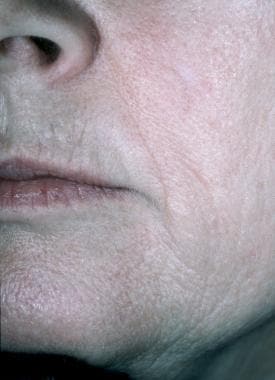
Media file 1:  Photograph before collagen injection.
Click to see larger pictureClick to see detailView Full Size Image
Media type:  Photo

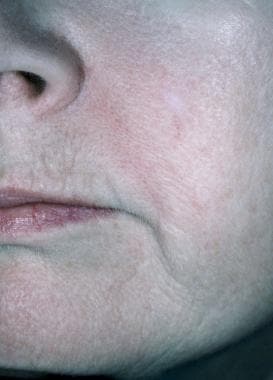
Media file 2:  Photograph after collagen injection.

Click to see larger pictureClick to see detailView Full Size Image
Media type:  Photo

Media file 3:  Photograph before collagen injection.
Click to see larger pictureClick to see detailView Full Size Image
Media type:  Photo

Media file 4:  Photograph after collagen injection.
Click to see larger pictureClick to see detailView Full Size Image
Media type:  Photo


  • Duffy DM. Understanding sclerotherapy. In: Principles and Techniques of Cutaneous Surgery. Columbus, Ohio: McGraw-Hill; 1996:403-417.
  • Elson ML. Evaluation and Treatment of the Aging Face. Springer-Verlag; 1995.
  • Klein AW. Skin Filling Agents. 1997.
  • Klein AW, ed. Tissue Augmentation in Clinical Practice: Procedures and Techniques. New York: Marcel Dekker; 1998.
  • Melton JL, Hanke CW. Soft tissue augmentation. In: Roenigk RK, Roenigk HHR. Dermatologic Surgery. 2nd ed. New York: Marcel Dekker; 1996.
  • Monheit GD. Injection techniques in cutaneous scars for soft tissue augmentation. Cosmetic Dermatology. 1992;5(4):10-15.
  • Swinehart JM. Dermal grafting. In: Klein AW, ed. Tissue Augmentation in Clinical Practice: Procedures and Techniques. New York: Marcel Dekker; 1998:63-95.

Collagen Injections excerpt

Article Last Updated: May 3, 2007