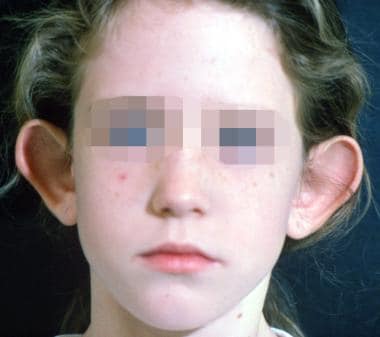
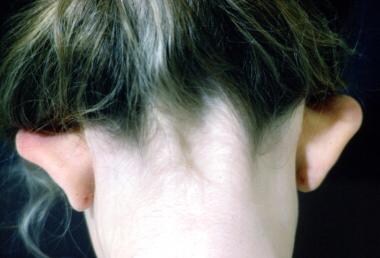
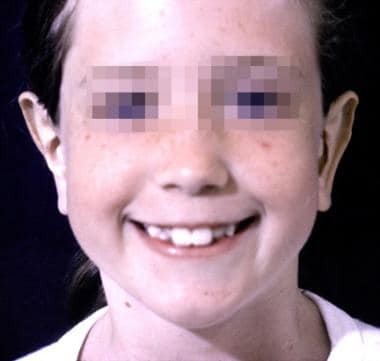
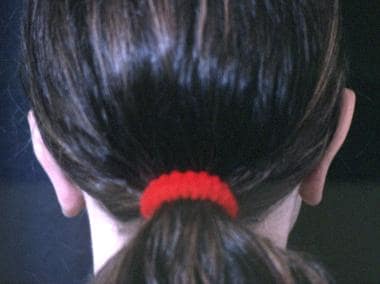
You are in: eMedicine Specialties > Plastic Surgery > HEAD AND NECK Ear, Congenital DeformitiesArticle Last Updated: May 31, 2005AUTHOR AND EDITOR INFORMATIONAuthor: Carl H Manstein, MD, Private Practice, Manstein Plastic Surgical Association Carl H Manstein is a member of the following medical societies: American Society of Plastic Surgeons, Pennsylvania Medical Society, and Sigma Xi Editors: Lawrence Ketch, MD, FAAP, FACS, Head, Program Director, Associate Professor, Department of Surgery, Division of Plastic Surgery, University of Colorado Health Sciences Center; Chief, Pediatric Plastic, The Children's Hospital of Denver; Francisco Talavera, PharmD, PhD, Senior Pharmacy Editor, eMedicine; Jaime R Garza, MD, DDS, FACS, Consulting Staff, Private Practice; Nicolas (Nick) G Slenkovich, MD, Practice Director, Colorado Plastic Surgery Center at Swedish Medical Center; Al Aly, MD, FACS, Consulting Surgeon, Iowa City Plastic Surgery Author and Editor Disclosure Synonyms and related keywords: setback otoplasty, set-back otoplasty, protruding ears, prominent ears, lop-ear, constricted ear, external ear microtia INTRODUCTIONProtruding ear and external ear microtia (or a variant) are the two most frequently encountered congenital ear problems in plastic surgery. The former condition is commonly treated by many practitioners, while the latter has become the bailiwick of just a few surgeons. Most of this discussion focuses on prominent ears because of their common occurrence. Otoplasty has undergone important developments with numerous techniques being presented in the surgical literature. Congenital ear microtia and atresia is treated in only a few centers by surgeons with an established reputation, similar to the way some centers specialize in craniofacial osteotomy surgery. History of the ProcedureMany different approaches to setback otoplasty have been developed. Originally, the first operations were merely resection of skin from the posterior sulcus. Over the years, there has been an evolution of operations including those with and without sutures, with and without resection of cartilage, and with or without scoring of cartilage. What should be apparent is that with this many variations, no single "right" technique exists. Microtia as a modern operation was first pioneered by Tanzer from Dartmouth Medical School. Tanzer was the first to develop the technique of using a whole piece of rib cartilage to simulate the cartilaginous structure of the external ear. Burt Brent from Stanford, Calif, expounded upon Tanzer's work and has written extensively about microtia reconstruction. ProblemThe expression "beauty is in the eye of the beholder" is often quoted and still quite relevant. What constitutes a prominent ear? Ray Elliot stated in his 1990 review article in Clinics of Plastic Surgery, "the esthetic ear protrudes less than 2 cm when measured from the surface of the helix to the mastoid scalp at the midpoint of the ear's length." However, once this measurement achieves a distance of less than 1.2 cm, the ear has an equally displeasing "pinned back" appearance. The ear protrudes more at the lower pole and less so at the upper pole because of the shape of the skull. The scaphoconchal angle should have a natural soft roll and should not block the view of the helix anywhere along its course when viewed anteriorly. FrequencyNo statistics are available on the prevalence of protruding or prominent ears. Heredity plays a role in many deformities of the external ear. EtiologyMost embryologic studies of the ear focus on the development of the 6 ear hillocks. These hillocks appear around the fundus of the first branchial groove by 38 days of gestation. As the groove closes and the first and second arches come together, the primitive ear is formed by day 50 of gestation. The first 3 hillocks come from the first branchial arch and the second 3 from the second branchial arch. Absence of hillocks 2-5 produces a frequent and typical microtia. Malformations of the ear can appear anywhere during this development. PathophysiologyFeatures seen in the patient with prominent or protruding ears (in decreasing order of importance)
Address some or all of these problems in the planning and execution of the operation to correct the abnormality. Auricular anatomy in children varies only slightly from that in adults. By the third year, 85% of ear growth and development occurs, and little growth occurs after 10 years. The ear's height may increase gradually into adulthood but its distance from the scalp changes little after 10 years. Because of this, setback otoplasty can safely be performed on children as young as 5-6 years. ClinicalMost parents, while emotionally distressed when their baby is born with a portion of the external auricle missing or severely distorted, are unconcerned about protruding ears at birth. Patients tend to seek surgical opinion for protruding ear problems at two stages of life. Parents often seek medical advice for their children at the start of school because of the child's complaints of classmates' teasing. The jeer of "Dumbo" is difficult for a first grader. The second group of patients is primarily women in their twenties or early thirties. These patients also are embarrassed about their protruding ears. INDICATIONSFor the child born without an external ear, the indications for surgical reconstruction are obvious. Parents are anxious to proceed as soon as possible to spare their child any embarrassment. Unlike cleft lip surgery, which is performed in the first few weeks of life, most experienced surgeons recommend waiting to do multistages at age 6-7 years. The more important question is not whether surgery is indicated, but which of the techniques for reconstruction is indicated for the individual. In the patient born with a prominent ear or deformity, the situation may be a little different. With the obtuse scaphoconchal angle and absent antihelical fold, distance from the helical rim varies. Many authorities believe the external ear should protrude no more than 2 cm from the surface of the helix to the mastoid scalp at the midpoint of the ear's length. This measurement is a guide and not an absolute rule. Much will depend upon the patient's expectations as well as the surgeon's experience. Although congenital absence is almost always unilateral, patients with prominent ears usually require a bilateral operation. Children with protruding ears generally do well when operated on as early as age 5-6 years. A recent study from the Medical College of Wisconsin presented a series of 12 patients in whom otoplasty was performed before the age of 4 years with good results. Taunts from schoolmates begin at this time. Parents, not realizing how cruel kindergarten children can be, often are oblivious to this ridicule. Young girls reveal much less of this mental anguish because they are able to wear their hair long and cover their ears. They never wear a ponytail, lest a peer discovers their ears stick out. In this author's practice, a common indication for setback otoplasty is the approximately 20-year-old woman who is getting married and now wants to wear her hair in an upswept fashion. Boys do not have that option. Because a genetic predisposition to protruding ears exists, it becomes difficult for some parents to seek plastic surgical consultation for their children. To admit his or her child is flawed means the parent must admit he or she is flawed. RELEVANT ANATOMYAnatomy of the normal ear
The ear can be difficult to reproduce surgically because only a thin layer of skin covers the cartilaginous structure. This cartilaginous structure is attached to the temporal bone medially by several minor intrinsic muscles. A looser attachment of skin is found upon the posterior aspect of the auricle than the anterior aspect of the auricle. The vascular supply comes from the superficial temporal and posterior auricular vessels. Corresponding veins drain the ear. The sensory supply arises from the great auricular nerve, with the upper portion of the ear supplied by the lesser occipital and auriculotemporal nerves. The conchal region is supplied by the vagal branch. Prominent or protruding ears
Cup ear deformity (lop-ear, constricted ear)
Cryptotia
Stahl ear
CONTRAINDICATIONSContraindications for treatment of prominent ears are (1) unreasonable expectations from either patient or family, (2) child younger than 5 years, (3) patient who is unable to tolerate postoperative wound care, including a protective bandage head wrap, and (4) patient who is against the operation despite his or her parents' wishes to proceed. WORKUPLab Studies
Imaging Studies
Diagnostic Procedures
Histologic FindingsSpecimens are never sent to the laboratory for histologic evaluation. TREATMENTMedical therapyHistorically, prominent or protruding ears have been treated surgically. In the past decade, nonsurgical techniques have emerged to treat neonates immediately after delivery. The posterior helical rim is taped to the posterior retroauricular region with surgical tape. Tubular elastic net bandage or some type of ear wrap is used for reinforcement. To achieve the desired result, such techniques must begin in the first few weeks of life and take several weeks or months of constant and vigilant therapy. A protruding ear tends to become more apparent as the child ages, particularly in the neonatal period. Matsuo believes most prominent ear deformities are acquired and recommends careful positioning of babies in their cribs to keep the auricles from folding anteriorly. One preventive method is to lay babies in a prone position. MedicationsDrug Name: Epinephrine (Adrenalin, Bronitin, EpiPen)Sympathomimetic catecholamine that acts as vasoconstrictor on alpha-adrenergic receptors in capillaries and decreases permeability of dilated capillaries to plasma. This vasoconstrictive action reduces absorption of local anesthetic, prolonging duration of action and decreasing risk of anesthetic's toxicity. Vasoconstrictive action also causes hemostasis in small vessels, relaxes smooth muscle of bronchioles, stomach, intestine, pregnant uterus, and urinary bladder wall. Use to prolong anesthetic effect and provide hemostasis. IM/SC administration has rapid onset and short duration of action, deteriorates rapidly on exposure to air or light, turning pink from oxidation to adrenochrome and brown from the formation of melanin. Replace solutions that show evidence of discoloration. Adult Dose 1:500,000-1:50,000 mixed with local anesthetic Pediatric Dose Not established Contraindications Documented hypersensitivity; cardiac arrhythmias, angle-closure glaucoma; local anesthesia in areas such as fingers or toes because vasoconstriction may produce sloughing of tissue; during labor (may delay second stage of labor) Interactions Increases toxicity of beta- and alpha-blocking agents and that of halogenated inhalational anesthetics Pregnancy C - Fetal risk revealed in studies in animals but not established or not studied in humans; may use if benefits outweigh risk to fetus Precautions Light sensitive; store in container provided at room temperature (15°-30°C/59°-86°F); do not refrigerate; large doses or accidental IV injection may result in cerebral hemorrhage from sharp rise in blood pressure; do not inject IV; rapidly acting vasodilators can counteract the marked pressor effects; because of vasoconstrictive properties, use with caution in body areas that may be particularly susceptible to ischemia (eg, tip of nose, ear, genitalia, digits); massaging site after IM/SC injection may increase absorption; repeated injections may cause tissue necrosis from vascular constriction; rotate injection sites and observe area for signs of blanching Drug Name: Triamcinolone (Aristopan Intra-Articular, Aristopan Intralesional, Aristocort Intralesional) Intermediate-acting glucocorticoid with essentially no mineralocorticoid activity. Causes decreased inflammation through enzyme induction and decreased immune response by reducing activity and volume of lymphatic system. Use to decrease inflammation and increase immunosuppression. Diacetate and acetonide salts for injection have variable onset and duration of action, depending on whether they are injected into an intra-articular space, a muscle, or on the blood supply to that muscle. May be administered IM, intra-articularly, intrasynovially, intralesionally, sublesionally, or by soft-tissue injection. Diacetate susp is slightly soluble, providing a prompt onset of action and a longer duration of action of 1-2 wk. Triamcinolone acetonide is relatively insoluble and slowly absorbed. Extended duration of action lasts for several wk. Triamcinolone hexacetonide is relatively insoluble, absorbed slowly, and has prolonged action of 3-4 wk. Adult Dose Triamcinolone acetonide: 2.5-15 mg intra-articularly; not to exceed 1 mg intralesionally prn Triamcinolone diacetate: 2-40 mg intra-articularly, intrasynovially, or intralesionally q1-8wk Triamcinolone hexacetonide: 2-20 mg intra-articularly q3-4wk prn; not to exceed 0.5 mg intralesionally per square inch of skin Pediatric Dose Not established Contraindications Documented hypersensitivity; caution in patients with GI ulcer, renal disease, hypertension, osteoporosis, diabetes mellitus, hypothyroidism, cirrhosis, diverticulitis, nonspecific ulcerative colitis, recent intestinal anastomosis, thromboembolic disorders, seizures, myasthenia gravis, heart failure, tuberculosis, ocular herpes simplex, emotional instability, or psychotic tendencies Interactions Coadministration with barbiturates, phenytoin, and rifampin decreases effects of triamcinolone Pregnancy C - Fetal risk revealed in studies in animals but not established or not studied in humans; may use if benefits outweigh risk to fetus Precautions Most adverse reactions are dose-dependent or duration-dependent Skin: Burning, pruritus, irritation, dryness, erythema, folliculitis, hypertrichosis, hypopigmentation, acneiform eruptions, perioral dermatitis, maceration, secondary infection, atrophy, striae, miliaria (with occlusive dressings) may occur Other: Hypothalamic-pituitary-adrenal axis suppression, Cushing syndrome, hyperglycemia, glycosuria may occur with systemic administration Toxic signs and symptoms rarely occur if used for less than 3 wk, even at large doses; chronic use causes adverse physiologic effects, including suppression of the hypothalamic-pituitary-adrenal axis, cushingoid appearance, muscle weakness, and osteoporosis Drug Name: Bupivacaine hydrochloride (Marcaine) Long-acting local anesthetic that can be used with or without epinephrine (as bitartrate) 1:200,000 to induce local or regional anesthesia or analgesia for surgery, oral surgery procedures, diagnostic and therapeutic procedures, and obstetric procedures. Has a pKA of 8.1, similar to lidocaine at 7.86; possesses greater degree of lipid solubility and is protein bound to greater extent than lidocaine. Local anesthetics block generation and conduction of nerve impulses, presumably by increasing threshold for electrical excitation in nerve, by slowing propagation of nerve impulse, and reducing rate of rise of action potential. In general, progression of anesthesia is related to diameter, myelination, and conduction velocity of affected nerve fibers. Clinically, the order of loss of nerve function is as follows: (1) pain, (2) temperature, (3) touch, (4) proprioception, and (5) skeletal muscle tone. Onset of action is rapid and anesthetic effects long–lasting. Anesthetic effects are significantly longer than other commonly used local agents. Adult Dose Usual dose for local infiltration: 0.25% bupivacaine; may be repeated once q3h, although long-acting nature usually makes a single dose sufficient; doses up to 225 mg with epinephrine 1:200,000 and up to 175 mg without epinephrine are most used; in clinical studies to date, total daily doses up to 400 mg have been reported, but until further experience is gained, this dose is not to be exceeded in 24 h Pediatric Dose Not established Contraindications Documented hypersensitivity; septicemia, spinal deformities, severe hypertension, and existing neurologic disease Interactions May enhance effects of CNS depressants; coadministration may increase toxicity of MAO inhibitors, TCAs, beta-blockers, vasopressors, and phenothiazines Pregnancy C - Fetal risk revealed in studies in animals but not established or not studied in humans; may use if benefits outweigh risk to fetus Precautions Reactions are characteristic of those associated with other amide-type local anesthetics; test a dose and monitor for CNS toxicity, cardiovascular toxicity, and signs of unintended intrathecal administration; caution with inflammation or sepsis in region of proposed injection; monitor patient state of consciousness after each injection; caution in hypertension, cerebral vascular insufficiency, peripheral vascular disease or heart block, and arteriosclerotic heart disease Surgical therapyMany techniques exist to treat prominent or protruding ears but no standard technique exists. Most surgeons use at least one of the steps listed below but certainly not all.
Excision of conchal cartilage: Bauer and associates from Chicago comment that many surgeons fail to recognize conchal hypertrophy as one of the leading causes of the prominent ear deformity. It is a common part of this author's surgical plan and treatment Preoperative detailsAs patients are operated on under local anesthesia with or without IV or IM sedation, preoperative testing is not required. If the patient cannot tolerate the slight discomfort of local infiltration, they will not be cooperative with postoperative care (eg, bandages, night guards). No scientific evidence indicates a need for preoperative audiologic evaluation unless a history of hearing deficits exists. Setback otoplasty does not improve or decrease auditory acuity. With the exception of congenital atresia reconstruction or other procedures in which rib cartilage is harvested, almost all congenital ear reconstruction can be performed under local anesthesia with or without IV or IM sedation. This technique is successful for treatment of protruding ears, even with young patients. Many adult and pediatric patients operated upon without an anesthetist have excellent compliance. Patients also appreciate that they are not encumbered with additional fees for anesthesia services. Request that patients shower thoroughly and shampoo their hair the morning of surgery. Although draping hair out of the surgical field is not necessary, men should get a short haircut just before surgery, and women should braid or secure their hair so that it is not a distraction in the operative field. Prophylactic antibiotics are not routinely given. A cerebellar ring headrest, most commonly employed by neurosurgical services, allows easy access to both ears and inspection of the completed result for symmetry. A small cotton plug placed into the patient's ear canal prevents blood from becoming an unpleasant irritant of the tympanic membrane. For anesthesia, use 0.25% Marcaine with 1:200,000 epinephrine as a direct infiltration. This has the advantage of a 6-8 hour postoperative analgesic effect. Epinephrine can be diluted to 1:400,000, if desired, with similar hemostatic effects. Using a long-acting drug such as Marcaine, infiltrate both ears (usually 5-10 mL per ear), wash hands, prep and drape the patient, and begin surgery. This allows the epinephrine to gain its optimal hemostatic effect (after about 7 min) without wasting operating room time. Intraoperative detailsMany operative techniques are available to correct protruding ears. This means there is no preferred way to perform the operation. Most surgeons combine several procedures. The key is to achieve symmetry and a natural-looking ear on each side. How to achieve that goal is a matter of scientific debate and discussion. The entire operation can be performed using only a posterior incision, although some use a strictly anterior approach and others use both. The surgeon's preference and comfort level determine this. No matter which incisions and approaches are used, meticulous hemostasis and gentle handling of tissues must remain paramount. Even small hematomas can be disastrous. That stated, the author never uses drains. Close all skin incisions using a single layer of running 5-0 fast-absorbing plain gut suture. Dissecting the skin off the cartilage up to and over the edge of the helical rim is an important element when using the posterior incision approach. Release of the skin envelope allows complete visualization of deformed cartilage without restraint from attachments to the skin. It allows a precise examination of the location of excessive conch resection as well as placement of sutures. Suture material is usually a 4-0 or 5-0 Mersilene on a small cutting needle, placed in a vertical mattress fashion. To improve upon the natural folding of the scaphoconchal angle, score the anterior perichondral. This can be achieved even with a posterior incision by dissecting anteriorly at the root of the helix. Scoring can be performed using Georgiade otoraspers. This may be unnecessary if the physician is resecting hypertrophic conch cartilage. Many patients are candidates for conchal resections. In the naturally aesthetic ear, the antihelical fold should lie closer to the head than the helical rim and should not obstruct the rim from a frontal view. This cannot be achieved without resecting some of the conchal cartilage. To determine the amount of excess cartilage to remove, place four 25-gauge hypodermic needles along the scaphoconchal angle with the points exposed posteriorly. Apply methylene blue to each tip and pull out the needles; the exact location of the angle can be seen on the posterior surface. Estimate a small wedge of resection, complete the excision, and remove additional cartilage as needed. This allows for a break in the cartilage and does not result in a sharp angle at the fold. Postoperative detailsSurgery is performed on an outpatient basis, thus patients go home the same afternoon. Patients usually are wrapped with a large turban-type dressing.
Follow-upThere is little postoperative follow-up care for patients who have undergone corrective surgery for protruding ears. The wrap-around turban bandage is removed at 4-5 days, and a protective headband is worn at all times for the next 2-3 weeks. Recommend that patients wear headbands at night for 2-3 months. See patients once or twice during the immediate postoperative period. Discourage aggressive contact sports for the first 3 months following surgery. Take follow-up photographs at 4-6 months, at which point any relapse would begin to appear. At this time, patients occasionally complain about suture abscess (because of Mersilene) in the posterior auricular sulcus. Treatment usually can take place in the office by removing the offending suture. Warm compresses are also valuable. Patients with hypertropic or keloid scar formation (a rare phenomenon) can be treated with Kenalog-40 injections. COMPLICATIONS
"Spitting" of sutures. Use of Mersilene or other permanent sutures may result in extrusion which can be bothersome to the patient. OUTCOME AND PROGNOSISAs the ear withstands trauma well, patients typically do well after surgery. For set-back otoplasty, outcome depends upon expectation. If the patient is well informed, he or she has a better outcome because it matches expectations. FUTURE AND CONTROVERSIESFuture treatment of congenital ear deformities probably lies in two arenas. In utero diagnosis and surgery already has been investigated with cleft lip and palate and neural tube abnormalities. It is probable that soon, other abnormalities of the head and neck, such as ear atresia, will at least be recognized before birth. With early diagnosis comes the hope of in utero correction. As discussed, new nonsurgical techniques emerging from Japan have been used to treat auricular deformities with nothing more than tape and head bands. Will this become the standard of care for the protruding ear in the 21st century? It is difficult to predict. As physicians advance toward minimally invasive surgery, the assumption is that parents who become aware of this nonsurgical option will choose this procedure. Patient and parent compliance is an entirely different issue. The second area, and one that is currently occurring, is the advent of osseous integrated implants for reconstruction. As these devices become the criterion standard for dental reconstruction, their use in craniofacial reconstruction has grown. Devices and prostheses are available for surgically resected ears in the treatment of cancers. It is likely that similar implantation devices will replace the vastly complex and multistaged operations currently considered state-of-the-art for the congenitally absent ear. Lastly, advances are being made in gene therapy and tissue generation. In these fields, the reconstructive surgeon is limited only by his or her imagination. Cartilage frameworks someday may be grown in a laboratory and then implanted into an undermined skin pocket to recreate an atretic ear. Medicolegal Pitfalls Medicolegal pitfalls associated with congenital ear deformities are similar to those found in other areas of surgery. Of particular concern to the plastic surgeon is patient satisfaction. A well-informed patient with realistic expectations of the end result is less likely to be dissatisfied with the outcome. Always address the issue of scarring with the patient, as well as the possible success or failure of cartilage grafts that may be used during surgery. MULTIMEDIA
REFERENCES
Ear, Congenital Deformities excerpt Article Last Updated: May 31, 2005 | |||||||||||||||||||||||||||||||||||||||||||||||||||||||||||||