Practice Essentials
Human herpesvirus 6 (HHV-6) is a herpesvirus that causes roseola infantum (or exanthema subitum [sixth disease]) in infants and children. [1] Infection is nearly ubiquitous by age 2 years. [2] Management of HHV-6 infection in immunocompetent hosts is supportive.
HHV-6 infection has been associated with complications of varying severity in hematopoietic stem cell transplant (HSCT) recipients, to a lesser degree in solid organ transplant (SOT) recipients, and in those who are otherwise immunosuppressed. [3] Owing to the complexities of testing, lack of strong evidence demonstrating causation of these complications, and the toxicities of potential therapies, the management of HHV-6 disease in immunosuppressed patients is controversial and not well understood. [2, 4] The exception to this is in immunocompromised patients with HHV-6 encephalitis, in whom the recommendation for treatment is strong. [5]

Background
HHV-6 was the sixth herpesvirus discovered, and infection in humans is nearly ubiquitous in the first two years of life, with seroprevalence rates surpassing 95% in most studies. [1, 3] HHV-6 was isolated in 1986 during attempts to find novel viruses in patients with lymphoproliferative diseases.
Infection is typically self-limited in children, but HHV-6 encephalitis can occur in immunocompromised patients and is the most feared complication of HHV-6 disease. This was first described in 1994. [5] HHV-6 encephalitis has been studied almost exclusively in HSCT and SOT recipients, in whom this clinical entity is most likely to occur. [4]
A beta herpesvirus (like cytomegalovirus [CMV], human herpesvirus 7 [HHV-7], and human herpesvirus 8 [HHV-8]), HHV-6 is characterized by two strains (A and B), considered distinct from each other. [4, 6] HHV-6B is the predominant strain of the virus documented in seroprevalence studies in the United States and Japan. HHV-6A disease has been documented to cause disease in only profoundly immunosuppressed hosts. [7] Whether the two strains have relevant clinical differences is not well understood, so, for the purposes of management, they are treated the same. For the remainder of this article, unless clinically relevant, HHV-6 will be used as a general term with the understanding that this largely refers to HHV6-B.
Primary HHV-6 infection usually occurs in infants or children and is a common cause of fever-induced seizures in children aged 6-24 months. [8] Acute HHV-6 infection is rare in immunocompetent adults but may manifest as a mononucleosislike illness characterized by fever, lymphadenopathy, and hepatitis.
Similar to other herpesviruses, HHV-6 infects a wide variety of cells and remains latent after initial infection. [6] Unlike other herpesviruses, HHV-6 has the ability to be chromosomally integrated, which, while occurring in less than 1% of the total population who newly acquire infection, is the suggested route of vertical transmission. [9, 10, 7] It is unclear what this means for the risk of both reactivation and/or disease causation. Only one case of reactivation of chromosomally integrated HHV-6A has been documented to cause HHV-6 encephalitis in an allogeneic HSCT recipient. [4, 7]
It is estimated that 1%-2% of the general population has chromosomally integrated HHV-6 (ciHHV-6) inherited from their parents. [4, 6] Chromosomally integrated HHV-6 has the potential to further complicate a clinician’s ability to interpret laboratory testing, particularly when attempting to diagnose HHV-6 encephalitis. In these patients, because ciHHV-6 DNA is present in all leukocytes, detection in whole-blood polymerase chain reaction (PCR) is virtually guaranteed. More specifically, in patients with encephalitis who have CSF leukocytosis, detection of HHV-6 DNA via PCR (provided the method is sensitive enough) will always occur, complicating differentiation of true disease from ciHHV6 DNA detected in white blood cells of the CSF. The challenges of ciHHV-6 also can confound the significance of viremia detection in other patients, such as those who are critically ill. [11] Methods to differentiate true infection from ciHHV-6 exist but are often not readily available clinically. [10]
HHV-6 encephalitis is the most well-described clinical entity in adults and occurs exclusively in the profoundly immunosuppressed population, particularly among HSCT or SOT recipients. [4, 5] Although this is the most feared complication of HHV-6 infection, it still remains relatively rare. In a 2019 retrospective review studying HSCT recipients of the Mayo Clinic, the reported incidence of HHV-6 encephalitis was 1.7% (9/531). [5] While the incidence was low, the mortality rate in these patients was 50%, and those who survived had high rates of persistent neurologic deficits.
A related argument over the role of HHV-6 in critically ill patients without baseline immunosuppression has also been detailed in the literature. [11] HHV-6 DNA can be measured in the serum of critically ill patients without symptoms of HHV-6 disease. Some studies have documented HHV-6 DNA detection in more than 25% of patients with septic shock. The significance of this finding is unclear. As with other herpesviruses (eg, CMV) that can reactivate and are believed to contribute to a worse prognosis in these patients, the association has not been shown to be causal (see Prognosis).
HHV-6 has also been associated with idiopathic pneumonitis and hepatitis. [4] In most cases in which an association with HHV-6 and other clinical entities (eg, multiple sclerosis, pityriasis rosea) has been described, there is not enough evidence to support pathophysiologic causation. [12, 13, 14, 15] Given their relative controversy and lack of strong evidence to support recommendations, they are not discussed further in this article.
In general, HHV-6 disease is most commonly associated with the following:
-
Roseola infantum
-
Exanthema subitum
-
Febrile seizures (infants and children)
-
Immunocompromised states (HSCT, SOT, HIV infection)
-
Acute limbic encephalitis (seizures, anterograde amnesia, medial temporal lobe MRI abnormalities)
-
Pneumonia (immunocompromised patients)
-
Hepatitis (immunocompromised patients)
Laboratory diagnosis is rarely required in immunocompetent children presenting with classic roseola infantum; most often, HHV-6 infection is diagnosed based on its clinical features (see DDx and Workup). This is not the case in immunocompromised patients, in whom PCR of HHV-6 DNA is often used for workup.
No strongly recommended treatment for HHV-6 infection has been established, largely because the clinical relevance of HHV-6 isolation, except in cases of encephalitis, is not well understood. Treatment varies according to the presenting clinical situation and is usually unnecessary with primary infection in immunocompetent hosts. Supportive measures are the basis of care. Some infants may require hospitalization for atypical presentations or complications. Antivirals such as ganciclovir and foscarnet have been suggested as possible therapies for acute disease, but they remain controversial in most clinical settings aside from encephalitis. No vaccine exists. (See Treatment.)
For patient education resources, see the Bacterial and Viral Infections Center and the Children’s Health Center, as well as Mononucleosis and Skin Rashes in Children.
Pathophysiology
HHV-6 belongs to the Herpesviridae family and Betaherpesvirinae subfamily and to what is commonly referred to as the Roseolovirus genus. [17] Other viruses in the Herpesviridae family include CMV, herpes simplex virus (HSV)–1, HSV-2, Epstein-Barr virus (EBV), HHV-7, and HHV-8. HHV-6 can be subdivided into two strains: A and B. [18] While some studies have suggested that HHV-6A has a stronger affinity for CNS infection, this has not been demonstrated conclusively, and, for all practical purposes, HHV-6B is the strain that predominantly causes disease. Approximately 90% of the amino acids coded by their DNA are equivalent. [2]
The virion particle has the typical structure of a herpesvirus, with a central core containing the viral DNA, a capsid, and a tegument layer that is surrounded by a membrane. The cell surface marker CD46, which is broadly expressed throughout human nucleated cells, is used as a receptor for entry.
The exact mode by which HHV-6 is transmitted has yet to be fully elucidated. Studies indicate that primary HHV-6B infection is typically acquired during the first 24 months of life, with the peak of infection occurring at age 6-9 months. Vertical transmission of HHV-6 in children of parents who have chromosomally integrated HHV-6 viral DNA occurs in 1%-2% of births. [9, 10, 7]
The development of latent HHV-6 infection is a critical part of the pathophysiology. Like other latent herpes virus infections, latent HHV-6 is distributed among peripheral blood mononuclear cells (PBMCs), where it resides without active production of viral particles or viral proteins. In contrast to other herpesviruses that exist as extrachromosomal episomes (independent nonessential groups of DNA), the HHV-6 virus is integrated into host cell chromosomal DNA via covalent linkage. This has important implications for vertical transmission. Latency and asymptomatic shedding, predominantly in oral secretions, is believed to be the predominant route of transmission. [8] Latency is important, particularly when considering reactivation in immunosuppressed patients. For example, up to 45% of HSCT recipients will experience HHV-6 reactivation in the first few weeks after transplant, and rates among cord blood recipients are even higher (up to 90%). Note that reactivation (eg, detection of HHV-6 viral DNA in serum or CSF) is not the same clinical entity as active disease. [19, 4, 20, 21]
HHV-6 is the only human herpesvirus with the potential to integrate itself into the telomeric portion of its host’s chromosomes and thus can be transmitted vertically. Whether this has significant clinical implications is not well understood. One case report described an infant with X-linked severe combined immunodeficiency who reactivated chromosomally integrated HHV-6A. [7] The infection was shown via elegant work involving PCR of viral messenger RNA and fluorescent in-situ hybridization from both the boy’s mother and father’s genomics to have arisen from vertical acquisition. [7]
Theoretical links between HHV-6 infection and other clinical entities such as pityriasis rosea, multiple sclerosis, and even chronic fatigue syndrome have been described in the literature; however, these are either not strong associations or not well understood. Mechanisms for the pathophysiology of these associations have been suggested, although these discussions remain controversial owing to limited data, and the arguments are beyond the scope of this article. [22]
Etiology
HHV-6 disease can largely be thought of in two categories: (1) a disease of childhood that affects nearly the entire population and (2) a disease of reactivation in profoundly immunosuppressed individuals. [18] HHV-6 has also been associated with other clinical entities, although causality has not necessarily been proven, and their discussion is beyond the scope of this article (see Pathophysiology).
HHV-6 is the virus that most commonly causes the childhood disease roseola infantum. [1] It includes two genetically distinct strains: HHV-6A and HHV-6B. These two strains were originally considered variants of a single species, but genetic work has argued convincingly that they are different strains. Ultimately, the clinically relevant differences between HHV-6A and HHV-6B, such as ability to reactivate, tissue and cellular tropism, and geographic distribution, are not well understood.
HHV-6 infection in infants and children is associated with febrile seizures. In a landmark prospective study published in the New England Journal of Medicine, infants and children younger than 3 years were enrolled to try to elucidate the natural history of this infection. [8] In this study, all 2,200-plus patients with HHV-6 infection had fever, and the infection was responsible for 20% of emergency department visits and one third of the febrile seizures that were evaluated in their emergency department.
A 2005 study described 277 children who were prospectively monitored for HHV-6 from birth until age 2 years. By age 24 months, 77% of the children developed primary HHV-6 infection as determined with weekly PCR testing. Among 81 patients with a well-documented acquisition timeline, 93% developed symptoms. None of the patients had seizures, and 23% developed roseola. [23]
Because of the ubiquitous nature of HHV-6, in addition to advances in therapies used to treat malignancies, an important subset of HHV-6 disease occurs in profoundly immunosuppressed patients, more specifically among stem cell transplant recipients, in whom most of the research on this virus has been conducted. HHV-6 reactivation after HSCT is well described, and approximately 40%-50% of recipients will experience reactivation within 2-3 weeks after transplant, with risk varying by transplant type (ie, cord blood transplantation is believed to confer a higher risk). [6, 4, 21] HHV-6 encephalitis is a known complication of HSCT, particularly allogeneic transplantation.
States of relative immunosuppression are also associated with HHV-6 viremia, but the significance is not well understood (see Prognosis). [11] Management strategies are difficult owing to a lack of well-designed in vivo studies (see Treatment).
Epidemiology
United States statistics
HHV-6 infection is ubiquitous. HHV-6B is the most common strain in the United States. Infection almost uniformly occurs before age two years. Seroprevalence studies have documented greater than 95% seropositivity in children younger than two years. [2] The most common clinical presentation of infection in children is fever and rash, or the so-called exanthema subitum, or roseola infantum. Other viral infections are among the differential diagnoses, however, and the diagnosis of HHV-6 infection is typically presumed without confirmation or diagnostic testing.
International statistics
HHV-6 has a worldwide distribution. In an initial assessment of an HIV-1–endemic region of sub-Saharan Africa, the predominant form in infant infections was found to be HHV-6A, although this was not found to be the case upon reassessment of a larger subset of that population several years later. [16, 24] In Europe and Japan, as in the United States, HHV-6B is the agent mainly responsible for infant infection.
Age-, sex-, and race-related demographics
HHV-6 infection most commonly occurs after maternal antibodies have waned, usually between ages 6 months and 3 years (average, 9 months).
Serologic studies demonstrate that HHV-6 infects approximately 90% of children by age 2 years. [23] A prospective study found that HHV-6 was acquired in infancy, was usually symptomatic, and often resulted in a medical evaluation. However, only a minority of these patients developed roseola or febrile seizures with primary HHV-6 infection. Older siblings and other care takers appeared to be a source of HHV-6 transmission. [2, 23]
Primary HHV-6 infection is rare in adults. However, reactivation can occur at any age in immunosuppressed individuals.
HHV-6 infection has no sexual predilection and may occur in people of all races.
Prognosis
HHV-6 infections that occur early in life and in immunocompetent hosts are typically uncomplicated and have a self-limited course. The prognosis of these infections is usually excellent.
While the risk of /HHV-6 reactivation (which more precisely refers to detection of HHV-6 DNA via PCR, typically in serum or CSF) is high after HSCT, the risk of complications of this reactivation is not well understood. Strategies to prognosticate risk, including monitoring HHV-6 viral DNA in the serum of patients undergoing HSCT, varies by institution and cannot be strongly recommended, if at all, based on lack of evidence. [25, 26, 27]
The risk of HHV-6 encephalitis among HSCT recipients is associated with higher plasma viral loads (>105 copies/mL) and cord blood transplantation. [4, 5] HHV-6 encephalitis is associated with worse outcomes in immunosuppressed individuals. A 2019 review of patients with HHV-6 encephalitis after HSCT, while reporting low overall rates of encephalitis, reported high rates of persistent complications after disease. Sixty percent had residual neurologic deficits, and half of the patients died.
Lastly, as with other latent herpesviruses, HHV-6 viremia has been well described in patients with septic shock who otherwise did not have risk factors for immunosuppression at baseline. Well-designed prospective observational studies of these critically ill patients have suggested that this is common (up to 26% in one cohort [11] ). While HHV-6 viremia alone has not been demonstrated to increase the risk of mortality, HHV-6 viremia in the presence of other herpesviruses (eg, CMV viremia) has been associated with an increased mortality risk. While this is difficult to quantify, in general, HHV-6 viremia can be regarded as an indicator of illness severity, particularly in patients with other concurrent viremic events.
-
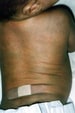
Nine-month-old infant boy presented with one-day history of high-grade fever and irritability. In the emergency department, the patient underwent septic workup, including lumbar puncture (adhesive bandage), with normal cerebrospinal fluid analysis results. He was admitted to the hospital.
-
Nine-month-old infant boy presented with one-day history of high-grade fever and irritability. In the emergency department, the patient underwent septic workup, including lumbar puncture, with normal cerebrospinal fluid analysis results. He was admitted to the hospital. High-grade fever abruptly resolved on day 3 of hospitalization. Within a few hours, erythematous, pink papular (roseola) nonpruritic rash appeared, mainly on trunk.
-
N-month-old infant boy presented with one-day history of high-grade fever and irritability. In the emergency department, the patient underwent septic workup, including lumbar puncture, with normal cerebrospinal fluid analysis results. He was admitted to the hospital. High-grade fever abruptly resolved on day 3 of hospitalization. Within a few hours, erythematous, pink papular (roseola) nonpruritic rash appeared, mainly on trunk. Patient was playful after supportive therapy. Antibiotics were discontinued after 2 days of negative cultures.