| Patient Education |
|
Click here for patient education.
|
|
You are in: eMedicine Specialties >
Pediatrics: Genetics and Metabolic Disease > Genetics
Skeletal Dysplasia
Article Last Updated: Nov 15, 2007
AUTHOR AND EDITOR INFORMATION
Section 1 of 10
Author: Harold Chen, MD, MS, FAAP, FACMG, Professor, Departments of Pediatrics, Obstetrics and Gynecology, Pathology, Director of Perinatal Genetics and Genetic Laboratory Services, Louisiana State University Medical Center; Laboratory Director, Hema-Con Cancer Cytogenetics Laboratory, Gainesville, Florida
Harold Chen is a member of the following medical societies: American Academy of Pediatrics, American Medical Association, American Society of Human Genetics, and Teratology Society
Editors: James Bowman, MD, Senior Scholar of Maclean Center for Clinical Medical Ethics, Professor Emeritus, Department of Pathology, University of Chicago; Mary L Windle, PharmD, Adjunct Assistant Professor, University of Nebraska Medical Center College of Pharmacy, Pharmacy Editor, eMedicine.com, Inc; David Flannery, MD, FAAP, FACMG, Vice Chair of Education, Chief, Section of Medical Genetics, Professor, Department of Pediatrics, Medical College of Georgia; Paul D Petry, DO, FACOP, FAAP, Clinical Assistant Professor of Pediatrics, University of North Dakota, School of Medicine and Health Sciences; Consulting Staff, Altru Health System; Bruce Buehler, MD, Professor, Department of Pathology and Microbiology, Director, Hattie B Munroe Center for Human Genetics, Chairman, Department of Pediatrics, University of Nebraska Medical Center
Author and Editor Disclosure
Synonyms and related keywords:
skeletal dysplasia, disproportional short stature, short stature, dwarfism, osteochondrodysplasias, thanatophoric dysplasia, achondroplasia, osteogenesis imperfecta, achondrogenesis, chondrodysplasia punctata, homozygous achondroplasia, chondrodysplasia punctata, camptomelic dysplasia, congenital lethal hypophosphatasia, perinatal lethal type of osteogenesis imperfecta, short-rib polydactyly syndromes, hypochondroplasia, rhizomelic type of chondrodysplasia punctata, Jansen-type metaphyseal dysplasia, spondyloepiphyseal dysplasia congenita, atelosteogenesis, diastrophic dysplasia, congenital short femur, Langer-type mesomelic dysplasia, Nievergelt-type mesomelic dysplasia, Robinow syndrome, Reinhardt syndrome, acrodysostosis, peripheral dysostosis, Kniest dysplasia, fibrochondrogenesis, Roberts syndrome, acromesomelic dysplasia, micromelia, Morquio syndrome, Kniest syndrome, metatrophic dysplasia, spondyloepimetaphyseal dysplasia
Background
Dwarfism is a commonly used term for disproportionately short stature, although a more medically appropriate term for this disorder is skeletal dysplasia. Short stature is defined as height that is 3 or more standard deviations below the mean height for age. If short stature is proportional, the condition may be due to endocrine or metabolic disorders or chromosomal or nonskeletal dysplasia genetic defects. In general, patients with disproportionately short stature have skeletal dysplasia (osteochondrodysplasia). Skeletal dysplasias are a heterogeneous group of more than 200 disorders characterized by abnormalities of cartilage and bone growth, resulting in abnormal shape and size of the skeleton and disproportion of the long bones, spine, and head.
Pathophysiology
Skeletal dysplasias differ in natural histories, prognoses, inheritance patterns, and etiopathogenetic mechanisms. During the 1950s and 1970s, many new bone dysplasias were identified based on clinical manifestations, radiographic findings, inheritance patterns, and morphology of the growth plate. In the 1980s, research focused on defining the natural history and variability of the disorders. In the 1990s, the focus shifted toward elucidating the responsible mutations and characterizing the pathogenetic mechanisms by which the mutations disrupt bone growth. In 1997, the International Working Group on Bone Dysplasias proposed a newly revised "International Nomenclature and Classification of the Osteochondrodysplasias."1 In the newly revised nomenclature, families of disorders were rearranged based on recent etiopathogenetic information concerning the gene and/or protein defect involved. Disorders for which the basic defect was well documented were regrouped into distinct families in which component disorders result from mutations of the identical gene. Several new groups of disorders were added, and other families were renamed. Despite this update, the basic defect remains unrecognized in many disorders. With increasing molecular discoveries, classification and nomenclature need to be constantly updated.
Frequency
United States
The overall incidence of skeletal dysplasias is approximately 1 case per 4000-5000 births. The true incidence may be twice as high because many skeletal dysplasias do not manifest until short stature, joint symptoms, or other complications arise during childhood. Lethal skeletal dysplasias are estimated to occur in 0.95 per 10,000 deliveries. The 4 most common skeletal dysplasias are thanatophoric dysplasia, achondroplasia, osteogenesis imperfecta, and achondrogenesis. Thanatophoric dysplasia and achondrogenesis account for 62% of all lethal skeletal dysplasias. Achondroplasia is the most common nonlethal skeletal dysplasia.
Mortality/Morbidity
Among infants with skeletal dysplasias detected at birth, approximately 13% are stillborn, and 44% die during the perinatal period. The overall frequency of skeletal dysplasias in infants who die perinatally is 9.1 per 1000.
Race
No racial predilections are described.
Sex
Males are primarily affected in X-linked recessive disorders. X-linked dominant disorders may be lethal in males. Otherwise, males and females are usually equally affected by skeletal dysplasias.
Age
Skeletal dysplasias are usually detected in the newborn period or during infancy. Some disorders may not manifest until later in childhood.
History
- Family history
- A complete and accurate family history is essential for evaluation of the nature and inheritance pattern of skeletal dysplasia.
- Histories (including spontaneous abortions or stillbirths), medical records, photographs, and radiographs of affected individuals should be carefully studied for clues to the nature of skeletal dysplasia.
- Parents, siblings, and other relatives should be carefully examined for mild manifestations of the disorder due to variable clinical penetrance and expressivity.
- Multiple affected siblings, normal-appearing parents, and/or consanguinity favor an autosomal recessive mode of inheritance.
- An affected parent (or advanced paternal age in a sporadic case) suggests autosomal dominant inheritance.
- Multiple spontaneous abortions or stillbirths in a family with only female members affected suggest an X-dominant mode of inheritance.
- Affected male siblings and maternal uncles suggest an X-recessive disorder.
- Pregnancy and birth histories
- Maternal hydramnios is probably the most significant event associated with fetal skeletal dysplasia during pregnancy.
- Fetal hydrops is frequently observed.
- Fetal activity may be decreased in the lethal types of skeletal dysplasia.
- Maternal usage of warfarin or phenytoin may induce stippling of the epiphyses, resembling the skeletal dysplasia chondrodysplasia punctata.
- When an infant affected with skeletal dysplasia has died before or shortly after birth, lethal chondrodysplasias should be considered. Lethal types of congenital skeletal dysplasia include achondrogenesis, homozygous achondroplasia, chondrodysplasia punctata (recessive form), camptomelic dysplasia, congenital lethal hypophosphatasia, perinatal lethal type of osteogenesis imperfecta, thanatophoric dysplasia, and short-rib polydactyly syndromes.
- Clinical history
- Disproportionately short stature (short limbs or short trunk), delayed motor milestone, and airway obstruction may be noted.
- Pain, deformity, and minor or major neural deficits, such as paraparesis and quadriparesis, can be caused by spinal disorders.
- Other skeletal anomalies and functional disturbances include large head with hydrocephalus and bowlegs with waddling gaits. Neurologic complications can be related to atlantoaxial instability, cervical kyphosis, or thoracolumbar kyphosis.
Physical
- Anthropometric parameters should be compared with the gestational age for the newborn or the chronologic age of the patient, considering appropriate racial, ethnic, socioeconomic, and perinatal factors. To detect disproportionately short stature, anthropometric measurements should include the upper-to-lower segment ratio and arm span.
- Diagnosis of short-limb skeletal dysplasia is based on the most severely affected segment of the long bone.
- Rhizomelic shortening (short proximal segments [eg, humerus, femur]) is present in patients with achondroplasia, hypochondroplasia, the rhizomelic type of chondrodysplasia punctata, the Jansen type of metaphyseal dysplasia, spondyloepiphyseal dysplasia (SED) congenita, thanatophoric dysplasia, atelosteogenesis, diastrophic dysplasia, and congenital short femur.
- Mesomelic shortening (short middle segments [eg, radius, ulna, tibia, fibula]) includes the Langer and Nievergelt types of mesomelic dysplasias, Robinow syndrome, and Reinhardt syndrome.
- Acromelic shortening (short distal segments [eg, metacarpals, phalanges]) is present in patients with acrodysostosis and peripheral dysostosis.
- Acromesomelic shortening (short middle and distal segments [eg, forearms, hands]) is present in patients with acromesomelic dysplasia.
- Micromelia (shortening of extremities involving entire limb) is present in achondrogenesis, fibrochondrogenesis, Kniest dysplasia, dys-segmental dysplasia, and Roberts syndrome.
- Diagnosis of the short trunk variety includes Morquio syndrome, Kniest syndrome, Dyggve-Melchior-Clausen disease, metatrophic dysplasia, SED, and spondyloepimetaphyseal dysplasia (SEMD).
- Certain clinical features may be of value as diagnostic indicators, although they may not be specific or consistent.
- Skeletal dysplasias associated with mental retardation can be broadly categorized in the following terms according to etiology or pathogenesis:
- CNS developmental anomalies - Orofaciodigital syndrome type 1 (hydrocephaly, porencephaly, hydranencephaly, agenesis of corpus callosum) and Rubinstein-Taybi syndrome (microcephaly, agenesis of corpus callosum)
- Intracranial pathologic processes - Craniostenosis syndromes (pressure) and thrombocytopenia-radial aplasia syndrome (bleeding)
- Neurologic impairment - Dysosteosclerosis (progressive cranial nerve involvement) and mandibulofacial dysostosis (deafness)
- Chromosome aberrations - Autosomal trisomies
- Primary metabolic abnormalities - Lysosomal storage diseases
- Other disorders - Chondrodysplasia punctata, warfarin embryopathy (teratogen), and cerebrocostomandibular syndrome (hypoxia)
- Skull
- Disproportionately large head - Achondroplasia, achondrogenesis, and thanatophoric dysplasia
- Cloverleaf skull - Thanatophoric dysplasia, Apert syndrome, Carpenter syndrome, Crouzon syndrome, and Pfeiffer syndrome
- Caput membranaceum - Hypophosphatasia and osteogenesis imperfecta congenita
- Multiple wormian bones - Cleidocranial dysplasia and osteogenesis imperfecta
- Craniosynostosis - Apert syndrome, Crouzon syndrome, Carpenter syndrome, other craniosynostosis syndromes, and hypophosphatasia
- Eyes
- Congenital cataract - Chondrodysplasia punctata
- Myopia - Kniest dysplasia and SED congenita
- Mouth - Bifid uvula and high arched or cleft palate (as in Kniest dysplasia), SED congenita, diastrophic dysplasia, metatrophic dysplasia, and camptomelic dysplasia
- Ears - Acute swelling of the pinnae (as in diastrophic dysplasia)
- Radial ray defects - Trisomy 18; trisomy 13; vertebral, anal, cardiac, tracheal, esophageal, renal, limb (VACTERL) syndrome; Fanconi anemia; Cornelia de Lange syndrome; Holt-Oram syndrome; Townes-Brock syndrome; Okihiro syndrome, Aase syndrome; acrofacial dysostosis; Levy-Hollister syndrome; Tar syndrome, Roberts syndrome; and Baller-Gerold syndrome.
- Polydactyly
- Preaxial - Chondroectodermal dysplasia and short-rib polydactyly syndromes (frequently in Majewski syndrome, rarely in Saldino-Noonan syndrome)
- Postaxial - Chondroectodermal dysplasia, lethal short-rib polydactyly syndromes, and Jeune syndrome
- Hands and feet
- Hitchhiker thumb - Diastrophic dysplasia
- Clubfoot - Diastrophic dysplasia, Kniest dysplasia, and osteogenesis imperfecta
- Nails
- Hypoplastic nails - Chondroectodermal dysplasia
- Short and broad nails - McKusick metaphyseal dysplasia
- Joints - Multiple joint dislocations, as in Larsen syndrome and otopalatodigital syndrome
- Long bone fractures (as in osteogenesis imperfecta syndromes, hypophosphatasia, osteopetrosis, and achondrogenesis type I)
- Thorax/ribs
- Long or narrow thorax - Asphyxiating thoracic dysplasia, chondroectodermal dysplasia, and metatrophic dysplasia
- Pear-shaped chest - Thanatophoric dysplasia, short-rib polydactyly syndromes, and homozygous achondroplasia
- Heart
- Atrial septal defect or single atrium - Chondroectodermal dysplasia
- Patent ductus arteriosus - Lethal short-limbed skeletal dysplasias
- Transposition of the great vessels - Majewski syndrome
Causes
Skeletal dysplasia is a heterogeneous group of disorders characterized by abnormalities of cartilage and bone growth. Their modes of inheritance are heterogeneous (ie, autosomal recessive, autosomal dominant, X-linked recessive, or X-linked dominant. Skeletal dysplasias with known molecular bases are as follows:
- Achondroplasia group: Mutations in the fibroblast growth factor receptor 3 gene (FGFR3) cause achondroplasia, thanatophoric dysplasias, hypochondroplasia, and other FGFR3 disorders.
- Diastrophic dysplasia group: Mutations in the diastrophic dysplasia sulfate transporter gene (DTDST) cause diastrophic dysplasia, achondrogenesis type IB, and atelosteogenesis type II.
- Langer mesomelic dysplasia (LMD) and Leri-Weill dyschondrosteosis (LWDC): SHOX nullizygosity results in Langer mesomelic dysplasia, and SHOX haploinsufficiency leads to Leri-Weill dyschondrosteosis. Turner syndrome and idiopathic short stature are also associated with SHOX deficiency.
- Type II collagenopathies: Mutations in the procollagen II gene (COL2A1) cause achondrogenesis type II, hypochondrogenesis, Kniest dysplasia, SED congenita, SEMD Strudwick type, SED with brachydactyly, mild SED with premature onset arthrosis, and Stickler dysplasia.
- Type XI collagenopathies: Mutations in procollagen XI genes (COL11A1 and COL11A2) cause Stickler dysplasia and otospondylomegaepiphyseal dysplasia.
- Multiple epiphyseal dysplasias and pseudoachondroplasia: Mutations in the cartilage oligomatrix protein gene (COMP) cause multiple epiphyseal dysplasias and pseudoachondroplasia.
- Chondrodysplasia punctata (stippled epiphyses group): Genes that encode the peroxisomal biogenesis factors (PEX) are responsible for rhizomelic chondrodysplasia punctata and Zellweger syndrome. Mutations in the X-linked dominant chondrodysplasia punctata gene (CPXD) cause the Conradi-Hunermann type of chondrodysplasia punctata. Mutations in the X-linked recessive chondrodysplasia punctata gene (CPXR) cause the X-linked recessive type of chondrodysplasia punctata. Mutations in the arylsulfatase E gene (ARSE) cause the brachytelephalangic type of chondrodysplasia punctata.
- Metaphyseal dysplasias: A mutation in the gene encoding the parathyroid hormone/parathyroid hormone–related polypeptide receptor (PTHR) is responsible for the Jansen type of metaphyseal dysplasia. Mutations in the procollagen X gene (COL10A1) cause the Schmid type of metaphyseal dysplasia. Mutations in the adenosine deaminase gene (ADA) cause the adenosine deaminase type of metaphyseal dysplasia.
- Acromelic and acromesomelic dysplasias: Mutations in the gene encoding the cartilage-derived morphogenic protein-1 gene (CDMP1) cause Grebe dysplasia, Hunter-Thompson dysplasia, and brachydactyly type C. Mutations in the gene coding for the guanine nucleotide-binding protein of the adenylate cyclase a-subunit (GNAS1) cause pseudohypoparathyroidism (Albright hereditary osteodystrophy).
- Dysplasias with prominent membranous bone involvement: Mutations involving the transcription core binding factor a1-subunit gene (CBFA1) cause cleidocranial dysplasia.
- Bent bone dysplasia group: Mutations in the gene coding for the SRY-box 9 protein (SOX9) cause camptomelic dysplasia.
- Dysostosis multiplex group: Specific gene mutations cause different types of mucopolysaccharidosis, fucosidosis, mannosidosis, aspartylglycosaminuria, GM1 gangliosidosis, sialidosis, sialic acid storage disease, galactosialidosis, multiple sulfatase deficiency, and mucolipidosis types II and III.
- Dysplasias with decreased bone density: Mutations in the procollagen I genes (COL1A1, COL1A2) cause various types of osteogenesis imperfecta.
- Dysplasias with defective mineralization: Mutations in the liver alkaline phosphatase gene (ALPL) cause perinatal lethal and infantile forms of hypophosphatasia. Mutations in the X-linked hypophosphatemia gene (PHEX) cause hypophosphatemic rickets. Mutations in the parathyroid calcium-sensing receptor gene (CASR) cause neonatal hyperparathyroidism and transient neonatal hyperparathyroidism.
- Increased bone density without modification of bone shape: Mutations in the carbonic anhydrase II gene (CA2) cause osteopetrosis with renal tubular acidosis. Mutations in the gene encoding cathepsin K (CTSK) cause pyknodysostosis.
- Disorganized development of cartilaginous and fibrous components of the skeleton: Mutations in exostosis genes (EXT1, EXT2, EXT3) cause multiple cartilaginous exostoses. Mutations in the guanine nucleotide-binding protein a-subunit gene (CNAS1) cause fibrous dysplasia (McCune-Albright and others). The bone morphogenic protein 4 gene (BMP4) is overexpressed in fibrodysplasia ossificans progressiva.
- Skeletal dysplasias and disease genes associated with osteoarthritis: These mutations cause SED congenita (COL2A1), SED tarda (COL2A1, SEDL), Stickler dysplasia (COL2A1, COL11A1-A2), pseudoachondroplasia (COMP), MED (COMP, COL9A1-A3, MATN3, DTDST), and progressive pseudorheumatoid chondrodysplasia (WISP3).
- Mutations in osteopetrosis: These mutations cause type I (LRP5), type II (CLCN7), Van Buchem disease (SOST), sclerostenosis (SOST), autosomal recessive osteopetrosis (OSTM1, TCIRG1, CLCN7), and osteopetrosis with renal tubular acidosis (CA2).
- Mutations in osteoporosis: These mutations cause osteoporosis-pseudoglioma syndrome (LRP5) and familial expansile osteolysis (RANK).
- Mutations in craniosynostosis: These include mutations in FGFR1 (osteoglophonic dysplasia, Pfeiffer syndrome), FGFR2 (Apert syndrome, Pfeiffer syndrome, Crouzon syndrome, Jackson-Weiss syndrome, Beare-Stevenson cutis gyrata syndrome, nonclassifiable and variable craniosynostosis), FGFR3 (thanatophoric dysplasia, type I and type II, crouzondermoskeletal syndrome, Muenke syndrome, hypochondroplasia), TWIST (Saethre-Chotzen syndrome), MSX2 (Boston type craniosynostosis), EFNB1 (craniofrontonasal syndrome), EFNA4 (nonsyndromal coronal synostosis), POR (Antley-Bixler syndrome), and ALPL (hypophosphatasia, particularly infantile type).
- Mutations in IHH gene: These mutations cause brachydactyly type A1 and acrocapitofemoral dysplasia.
- Mutations in PTHR1: These mutations cause Jansen metaphyseal chondrodysplasia, Blomstrand chondrodysplasia, Eiken syndrome, and multiple enchondromatosis, Ollier type.
- Mutations in FLNA: These mutations cause otopalatodigital syndrome type I and II, frontometaphyseal dysplasia, and Melnick-Needle syndrome.
Achondrogenesis
Achondroplasia
Apert Syndrome
Child Abuse & Neglect: Failure to Thrive
Constitutional Growth Delay
Cornelia De Lange Syndrome
Crouzon Syndrome
Cystic Fibrosis
Cystinosis
Cytomegalovirus Infection
DiGeorge Syndrome
Down Syndrome
Failure to Thrive
Fanconi Syndrome
Growth Failure
Hyperparathyroidism
Hypophosphatasia
McCune-Albright Syndrome
Sialidosis (Mucolipidosis I)
Trisomy 18
Other Problems to be Considered
- Cardiopulmonary disorders, such as dysgammaglobulinemia, familial dysautonomia, severe recurrent pneumonias with bronchiectasis or with intractable asthma and congenital heart defects, especially cyanotic forms
- Chromosomal disorders
- Endocrine disorders, such as pituitary skeletal dysplasia, growth hormone deficiency, Mauriac syndrome, and Shwachman syndrome
- Inborn errors of metabolism, such as lysosomal storage disorders
- Intrauterine growth retardation, such as maternal insufficiency due to drugs, ethanol, infections including rubella, cytomegalic inclusion disease, syphilis, and toxoplasmosis; fetal insufficiency due to chromosomal disorders; and placental insufficiency
- Nutritional disorders due to inadequate energy intake, such as cleft palate, anorexia, deprivation, feeding problems, and severe malnutrition such as kwashiorkor or marasmus
- Primary growth disturbances, such as primordial skeletal dysplasia, Seckel syndrome, and Weill-Marchesani syndrome
Lab Studies
- In general, clinical laboratory examinations are more helpful in patients with proportionate growth than in patients with disproportionate growth. Immune function, alkaline phosphatase, urinary phosphorylethanolamine, urinary mucopolysaccharides, lysosomal enzymes, and other assays may be indicated.
- Immune function studies
- T-cell dysfunction–related susceptibility to severe varicella infection may be seen in cartilage-hair hypoplasia (metaphyseal dysplasia, McKusick type).
- Neutropenia is a feature of Shwachman syndrome (metaphyseal dysplasia and pancreatic insufficiency).
- Adenosine deaminase deficiency and severe combined immune deficiency may be present.
- Biochemical studies
- Decreased serum alkaline phosphatase and increased urinary phosphorylethanolamine levels may indicate severe congenital hypophosphatasia.
- Deficiency of a specific lysosomal enzyme may detect lysosomal storage disease.
- An abnormal pattern of excretion of urinary glycosaminoglycan may indicate Kniest dysplasia (keratan sulfate), pseudoachondroplasia, and thanatophoric dysplasia.
Imaging Studies
- Conventional radiographic examination remains the most useful means of studying the dysplastic skeleton. The skeletal survey should probably include the skull (anteroposterior [AP], lateral, and Towne views), chest (AP), spine (AP and lateral), pelvis (AP), tubular bones (AP), and/or hands and feet (AP). Findings associated with particular conditions include the following:
- Oval translucent area in proximal femora and humeri - Achondroplasia
- Dumbbell-shaped appearance of long bones - Kniest dysplasia and metatrophic dysplasia
- Bowing of limbs (camptomelia) - Camptomelic dysplasia, osteogenesis imperfecta syndromes, and thanatophoric dysplasia
- Calcified projections (spikes) at lateral femoral metaphyses - Thanatophoric dysplasia and achondrogenesis types I and II
- Cupping of the ends of the rib and long bones and metaphyseal flaring - Achondroplasia, metaphyseal dysplasias, asphyxiating thoracic dysplasia, and chondroectodermal dysplasia
- Long bone fractures - Osteogenesis imperfecta syndromes, hypophosphatasia, osteopetrosis, and achondrogenesis type I (Parenti-Fraccaro syndrome)
- Absence of epiphyseal ossification centers - SED congenita, multiple epiphyseal dysplasia, and other SED (unspecified)
- Cone-shaped epiphyses - Acrodysostosis, cleidocranial dysplasia, and trichorhinophalangeal dysplasia
- Stippling of the epiphyses - Chondrodysplasia punctata and other nonskeletal dysplasia syndromes, such as cerebrohepatorenal syndromes, warfarin-related embryopathy, chromosomal trisomy (trisomy 21, trisomy 18), lysosomal storage diseases (generalized gangliosidosis), phenytoin-induced embryopathy, Smith-Lemli-Opitz syndrome, anencephaly, cretinism, multiple epiphyseal dysplasia, SED, and normal variant hypoparathyroidism
- Rib shortening - Short-rib polydactyly syndromes, asphyxiating thoracic dysplasia, chondroectodermal dysplasia, metaphyseal dysplasia (associated with immune defect), and metatrophic dysplasia
- Absence of calcification of vertebral bodies - Achondrogenesis types I and II
- Severe platyspondylia - Metatrophic dysplasia, lethal perinatal osteogenesis imperfecta, thanatophoric dysplasia, short-rib polydactyly syndromes, SED congenita, other types of SED, and Kniest dysplasia
- Abnormal pelvic configuration (small sacrosciatic notches) - Achondroplasia, Ellis-van Creveld syndrome, metatrophic dysplasia, thanatophoric dysplasia, and Jeune syndrome
- Severe hypoplasia of the scapula - Camptomelic dysplasia and Antley-Bixler syndrome
- CT scan and MRI
- CT scan and MRI of the skull and brain can reveal concurrent brain anomalies. Three-dimensional (3D) images can be used to evaluate craniofacial anomalies and deformities of the chondrocranium and cranial vault secondary to craniosynostosis and other skeletal dysplasias. These 3D architectural data are essential for reconstructive cosmetic surgery.
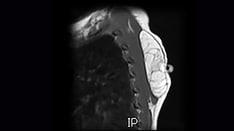
- MRI of the spine is important to assess atlantoaxial instability seen in metatrophic skeletal dysplasia, Kniest dysplasia, certain mucopolysaccharidoses, multiple epiphyseal dysplasia, SED, cartilage-hair hypoplasia, and achondroplasia. Radiography, CT scan, and MRI findings can reveal stenosis of the foramen magnum and narrowing of the upper cervical spinal canal, which can produce severe hypotonia and spinal cord compression symptoms. MRI scans also can reveal edema and gliosis of the cervicomedullary cord secondary to the bony compression and other compression myelopathies resulting from progressive spinal deformities and scoliosis.
- CT 3D reconstruction allows better surgical planning for osteotomies for complex pelvic and hip dysplasias.
- Prenatal ultrasonography
- Recently, noninvasive ultrasonography has gained acceptance in diagnosing fetal skeletal dysplasia. Prenatal diagnosis of skeletal diagnosis is usually made in women who previously delivered an infant with skeletal dysplasia or in whom findings of shortened, bowed, or anomalous extremities or other skeletal anomalies were depicted during routine prenatal ultrasonographic examination. For mothers who present with accurate gestational age, nomograms are available for assessing upper and lower limbs of the fetus. For mothers who present with uncertain gestational age, comparisons between limb dimensions and the head perimeter of the fetus can be used. Repeat ultrasonography examinations are usually required.
- Evaluation of long bones may be helpful. Measurements of all extremities can help detect predominant shortened segments, hypoplasia or absence of certain bones, degree of mineralization, bowing, angulation, and fractures or thickening secondary to callus formation.
- Evaluation of short-limb dysplasia may reveal rhizomelic skeletal dysplasia (heterozygous achondroplasia, chondrodysplasia punctata), mild micromelic dysplasia (Jeune syndrome, Ellis-van Creveld syndrome, diastrophic dysplasia), mild bowed micromelic dysplasia (camptomelic dysplasia, osteogenesis imperfecta type III), severe micromelic dysplasia (homozygous achondroplasia, thanatophoric dysplasia, osteogenesis imperfecta type II, achondrogenesis, congenital lethal form of hypophosphatasia, and short-rib polydactyly syndromes)
- Evaluation of thoracic dimensions may reveal hypoplastic thorax, which is associated with severe or lethal skeletal dysplasias. This leads to pulmonary hypoplasia and is a frequent cause of death in patients with these conditions.
- Evaluation of the fetal spine includes assessing the degree of ossification, hemivertebrae, scoliosis, gross vertebral disorganization, and platyspondylia.
- Evaluation of hands and feet can reveal polydactyly, missing digits, and postural deformities including clubfoot and hypoplastic or hitchhiker thumbs.
- Evaluation of fetal craniofacial structures can reveal defects of membranous ossification, orbits (evaluate to exclude ocular hypertelorism), retrognathia/micrognathia, facial or lip clefting, frontal bossing, and cloverleaf skull deformity.
- Evaluation of fetal movement may be helpful. Movement is usually decreased in fetuses with bone dysplasias, especially lethal types.
- Evaluation of associated anomalies includes maternal hydramnios, fetal hydrops, increased nuchal translucency thickness, and other fetal anomalies, such as congenital heart defects and cystic renal malformation.
- The prenatal diagnosis of skeletal dysplasia is often initiated by the ultrasonographic findings in the mid trimester of a short femoral length, or by the knowledge of a previous familial history of skeletal dysplasia. Ultrasonography is highly specific for predicting lethal outcome, but of limited value for providing an accurate diagnosis of the bone disorder.
- Antenatal radiography has been used selectively when ultrasonography examinations cannot help establish a diagnosis or treatment plan adequately. Fetal radiography is especially helpful in obtaining more information about bone shape and mineralization, as well as confirming the diagnosis obtained by ultrasonography, particularly when termination of pregnancy is considered.
- A babygram (AP and lateral views of an entire neonate to detect developmental anomalies of the entire skeletal system) should be performed on any infant with possible skeletal dysplasia because skeletal findings can provide essential diagnostic information needed for further genetic counseling. In addition, a babygram obtains information when consent for autopsy has been denied.
- Amniography is used only occasionally to delineate fetal limbs.
- Fetoscopy may be indicated in selected patients to allow direct depiction of structural defects such as limb shortening, polydactyly, facial cleft, or skin lesions.
Other Tests
- Sleep studies should be performed if a history of sleep apnea is noted.
- Molecular analyses are available in many skeletal dysplasias. Examples include the following:
- FGFR mutation analysis in patients with achondroplasia, hypochondroplasia, thanatophoric dysplasia, and craniosynostosis syndromes (Apert, Crouzon, Pfeiffer, Jackson-Weiss, and Beare-Stevenson syndromes)
- Mutational analysis of SOX9 in patients with camptomelic dysplasia and Antley-Bixler syndrome
- Cytogenetic study findings include the following:
- Abnormal radiographic features may be found in certain chromosomal anomalies such as cervical hypoplasia in del(4p) syndrome.
- Sex reversal (female external genitalia with a male karyotype, 46,XY) may be observed in camptomelic dysplasia.
Histologic Findings
Histopathologic and electron microscopic examinations of chondro-osseous tissue may be helpful in delineating a particular skeletal dysplasia.
- Histologic studies of growth plates
- Cytoplasmic inclusions in resting chondrocytes reveal type I achondrogenesis, Kniest dysplasia, pseudoachondroplastic SED, type III short-rib polydactyly syndrome, and SED congenita.
- Large ballooned chondrocytes with clear cytoplasm and markedly deficient cartilaginous matrix reveal type II achondrogenesis.
- Resting cartilage with myxoid degeneration (Swiss cheese cartilage) may indicate Kniest dysplasia.
Medical Care
- Prenatal detection of skeletal dysplasias may influence the obstetric and perinatal treatment of affected infants. For example, a fetus with achondroplasia should undergo cesarean delivery to minimize the risk of possible CNS complications from vaginal delivery because of the cephalopelvic disproportion caused by a large fetal head and instability of the C1-C2 level of the fetal spine.
- Treatment is supportive. Medical care for individuals with skeletal dysplasia should be directed at preventing neurologic and orthopedic complications due to spinal cord compression, joint instability, and long bone deformity.
- Administer neonatal resuscitation and ventilatory support. Most infants with lethal skeletal dysplasias are stillborn or die within hours of birth. Given respiratory support, some infants with severe respiratory distress (eg, asphyxiating thoracic dysplasia) may survive.
- Obstructive sleep apnea may be treated by adenotonsillectomy, weight reduction, continuous airway pressure by a nasal mask, and tracheostomy in extreme cases.
- Monitoring height, weight, and head circumference of a child with skeletal dysplasia is important. Specific growth charts are available for specific conditions such as achondroplasia. Care should be taken to avoid obesity.
- Recombinant human growth hormone treatment has been tried in some patients with skeletal dysplasia. Growth hormone is not a logical treatment for the short stature associated with skeletal dysplasia because the defect is caused by abnormal bone growth in response to the stimulus growth hormone secreted at normal levels. Short-term treatment in patients with achondroplasia and hypochondroplasia has demonstrated an increase in growth velocity, which has been sustained for as many as 4-6 years. More trials are needed to confirm any long-term beneficial effects.
Surgical Care
Surgical intervention depends on the signs and symptoms of skeletal dysplasia as follows:
- Thoracolumbar kyphosis can be controlled with a Milwaukee brace fitted with kyphosis pads to prevent progression to thoracic kyphosis.
- Progressive kyphosis, which may lead to spinal cord compression and spastic paraparesis, is best treated by anterior and posterior fusion. Lumbar lordosis with spinal stenosis responds to extensive lumbar laminectomy. Surgical decompression is required to relieve edema of the cervicomedullary cord secondary to bony compression.
- Progressive scoliosis requires spinal fusion.
- Ilizarov procedure, a bone-lengthening procedure, is an osteogenetic distractive osteotomy performed to mechanically induce diaphyseal bone growth. The procedure can lengthen limbs; rotate, angulate, and straighten bowed or deformed long bones; and offer reparative hope in some specific situations. Although recent experience has been more favorable (lower incidence of pain, infections, and neurologic/vascular compromise), postponement of such surgical intervention is advocated until the young person is able to make an informed decision.
- Bone marrow transplantation may benefit patients with skeletal dysplasia associated with congenital immune deficiencies, mucopolysaccharidosis, lipidosis, osteopetrosis, and Gaucher disease.
- Cesarean delivery must be performed in mothers with certain skeletal dysplasias (eg, achondroplasia) because of a small pelvis (cephalopelvic disproportion secondary to marked pelvic contracture). In achondroplasia, general anesthesia should be considered because the mother can be expected to have spinal stenosis, with the consequent risk associated with spinal or epidural anesthesia.
Consultations
- Clinical geneticist
- Orthopedist
- Radiologist
- Pediatric surgeon
- Ophthalmologist
- Otolaryngologist
- Neurologist
- Physical and occupational therapists
Diet
No special diet is required.
Activity
For nonlethal skeletal dysplasias, physical activity may be limited because of existing orthopedic problems.
Further Outpatient Care
- Genetic counseling
- To prevent inappropriate counseling, do not offer genetic counseling until the diagnosis is confirmed by a clinician experienced in skeletal dysplasias.
- In an autosomal dominant disorder, the risk that an affected parent will have an affected child is 50%. For unaffected parents, the risk is negligible, except when germinal mosaicism occurs.
- When both parents have the same autosomal dominant condition, such as achondroplasia, the offspring have (1) a 25% chance of having normal stature, (2) a 50% chance of having typical achondroplasia, and (3) a 25% chance of having homozygous achondroplasia, which is lethal.
- When one parent has an autosomal dominant skeletal dysplasia condition (eg, achondroplasia) and the other parent has a different autosomal dominant skeletal dysplasia (eg, hypochondroplasia) the offspring have (1) a 25% chance of having normal stature, (2) a 25% chance of having achondroplasia, (3) a 25% chance of having hypochondroplasia, and (4) a 25% chance of having heterozygous for the achondroplasia-hypochondroplasia compound with intermediate severity.
- In an autosomal recessive disorder, the parents are obligatory carriers with a 25% risk that each child will have the disorder.
- In an X-linked recessive disorder in which the mother is a carrier, a male child has a 50% risk of being affected and a female child has a 50% risk of being a carrier.
- Assistance with research and diagnosis is available from various organizations. Cedars-Sinai Medical Center is a referral center for the diagnosis, management, and etiology of skeletal dysplasia. The contact information is as follows:
International Skeletal Dysplasia Registry Medical Genetics Institute 8700 Beverly Blvd West Tower, Suite 665 Los Angeles, CA 90048 Phone: 800-CEDARS-1 (800-233-2771) or 310-423-9915 email: MaryAnn.Priore@cshs.org
Complications
- Intrauterine complications: Polyhydramnios and fetal hydrops are typically seen in patients with lethal types of chondrodystrophy, such as achondrogenesis or thanatophoric dysplasia. Occasionally, polyhydramnios may be seen in patients with nonlethal types of chondrodystrophy, such as achondroplasia.
- Respiratory complications: Respiratory distress secondary to small chest, small lungs, small or collapsing trachea, or small upper airway is seen in patients with many types of chondrodystrophy, such as asphyxiating thoracic dystrophy. Infants may snore, may have upper airway obstruction, or may experience hypoxic episodes.
- CNS complications: Hydrocephalus can occur in several types of skeletal dysplasia, notably in achondroplasia, metatropic dysplasia, and other conditions that affect the base of the skull, resulting in small foramen magnum and jugular foramen.
- Skeletal complications: Instability of the C1-C2 cervical spine that leads to spinal cord compression or nerve damage may be observed in patients with several types of chondrodystrophy, such as achondroplasia, SED congenita, and Morquio syndrome. Vertebral abnormalities, hip dysplasia, tight and loose joints, osteoarthritis, bowed legs, and fractures may vary.
- Muscular complications: Truncal hypotonia may lead to kyphoscoliosis in infants with achondroplasia or mucopolysaccharidoses. Thoracolumbar kyphosis may revert to marked lordosis in achondroplasia.
- Otolaryngologic complications: Progressive deafness is associated with repeated middle ear infections in patients with diastrophic dysplasia and achondroplasia. Hearing loss can be conductive or neurosensory in origin.
- Ophthalmologic complications: Myopia may predispose the patient to retinal detachment in Kniest dysplasia and SED congenita.
- Dental complications: Malocclusions, dental crowding, and structural abnormalities of teeth may be present in patients with many types of chondrodystrophy.
- Nutritional complications: Obesity is often a problem in patients with some types of chondrodystrophy, especially achondroplasia.
- Other complications
- Anesthesia can be a problem in patients with some chondrodysplasias.
- Unstable cervical vertebrae should be excluded.
- Malignant hyperthermia may occur during anesthesia in patients with some types of chondrodysplasia, such as osteogenesis imperfecta.
- Numerous obstetric and gynecologic problems are common in women with disproportionately short stature. Cesarean delivery of a baby may be required because of a contracted pelvis in the mother.
Prognosis
- Although certain skeletal dysplasias are lethal in the newborn or infancy periods, patients with other types of skeletal dysplasia have normal or near-normal life expectancy. For patients with nonlethal skeletal dysplasias, prognosis depends on the degree of skeletal abnormalities and concomitant anomalies.
- All persons with skeletal dysplasia are physically impaired by virtue of the dysplasia. Only those with severe physical abnormalities are handicapped in obtaining education and employment.
- Some patients may have difficulty finding a marital partner.
- Men with skeletal dysplasia complain less often of psychiatric symptoms and feel less stigmatized than do women.
Patient Education
The birth of a child with a skeletal dysplasia is an emotionally difficult experience for parents. The term "dwarf" has especially negative connotations; thus, skeletal dysplasia is the preferred term for discussing these disorders. Up-to-date information and resources pertaining to skeletal dysplasia should be made available to families. The following resources may help parents meet other parents of children with skeletal dysplasia who can offer support and realistic appraisal of the implications:
Medical/Legal Pitfalls
- Diagnosis based on traditional clinical, radiographic, and pathologic methods is almost impossible if a pregnancy has been terminated using destructive methods.
- Refer patients to clinical geneticists and physicians experienced in skeletal dysplasias for diagnosis and genetic counseling.
- The diagnosis of achondroplasia may not be apparent in the neonate because the birth length of an infant with achondroplasia may not be below the fifth percentile.
Special Concerns
- Prenatal diagnosis
- Prenatal ultrasonography can identify most fetuses with skeletal dysplasia by identification of short limbs and other skeletal and nonskeletal anomalies.
- Currently, certain disorders, such as achondroplasia, can be diagnosed prenatally by using DNA testing of FGFR3 mutations of fetal cells obtained from amniocentesis or chorionic villus sampling.
- When one or both parents have an autosomal dominant type of skeletal dysplasia, the pregnancy is at high risk. In such situations, disease-causing mutations in the affected parent(s) should be identified prior to prenatal testing.
- Prenatal diagnosis provides families with reproductive options, ie, elective termination of pregnancy for the lethal and most severe skeletal dysplasias or continuation of pregnancy for optimal perinatal care.
| Media file 1:
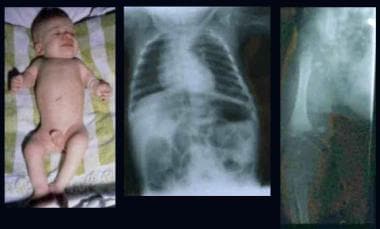
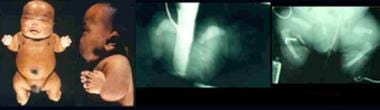
Infant with rhizomelic form of chondrodysplasia punctata (left). Note rhizomelic shortening of limbs, disproportionately short stature, enlarged joints, and contractures. Radiographs depict epiphyseal stipplings on the proximal humerus, both ends of the femora, and lower spine. |
 | View Full Size Image | |
Media type: Photo
|
| Media file 2:
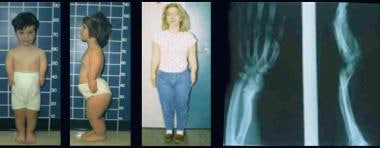
Brother and sister with mesomelic dysplasia (homozygous dyschondrosteosis gene) and a woman with Leri-Weill syndrome. Note disproportionately short stature with mesomelic shortening and deformities of forearms and legs (in mesomelic dysplasia) and short forearms with Madelung-type deformity (in Leri-Weill syndrome). |
 | View Full Size Image | |
Media type: Photo
|
| Media file 3:
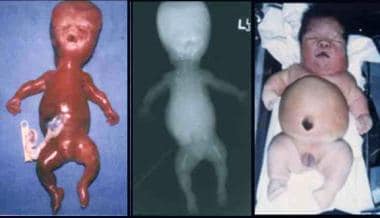
Infant with Beemer-type (left) and an infant with Majewski-type (right) short-rib syndrome (SRS). Note severe micrognathia/retrognathia with cleft palate, apparently low-set and malformed ears, small and narrow chest, protuberant abdomen with omphalocele, and short and slightly curved limbs with bilateral postaxial polydactyly (Beemer-type SRS), a large head, short nose, flat nasal bridge, central cleft of upper and lower lips, short neck, short chest, protuberant abdomen, abdomen, ambiguous genitalia, short limbs, and preaxial and postaxial polydactyly (Majewski-type SRS). |
 | View Full Size Image | |
Media type: Photo
|
| Media file 4:
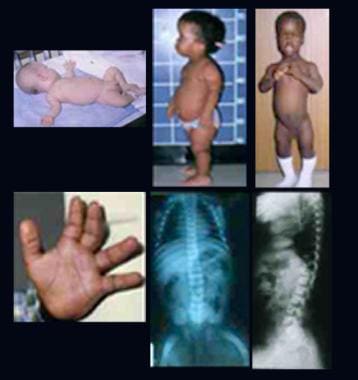
Infant and 2 children with achondroplasia. Note relatively normal-sized trunk, a large head, rhizomelic shortening of the limbs, lumbar lordosis, and trident hands. Radiographs demonstrate abnormal pelvis with small square iliac wings, horizontal acetabular roofs, and narrowing of the greater sciatic notch, an oval translucent area at the proximal ends of the femora, caudal narrowing of the interpedicular distances in the lumbar region, short pedicles, and lumbar lordosis. |
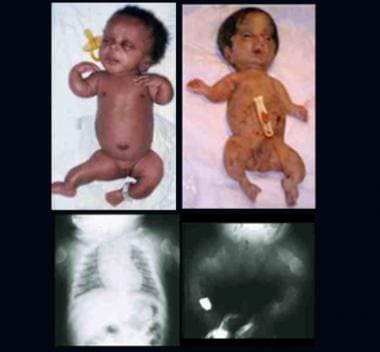
 | View Full Size Image | |
Media type: Photo
|
| Media file 5:
Infant with thanatophoric dysplasia. Note short-limbed dysplasia, large head, short neck, narrow thorax, short and small fingers, and bowed extremities. Radiographs demonstrate thin flattened vertebrae, short ribs, small sacrosciatic notch, extremely short long tubular bones, and markedly short and curved femora (telephone receiver–like appearance). |
 | View Full Size Image | |
Media type: Photo
|
| Media file 6:
Infant with atelosteogenesis. Note short-limbed dysplasia, relative macrocephaly, and short neck. Radiographs demonstrate boomeranglike triangular or oval form of the long bones (humeri), absent radii, markedly delayed ossification of phalanges, short femora, and absent fibulae. |
 | View Full Size Image | |
Media type: Photo
|
| Media file 7:
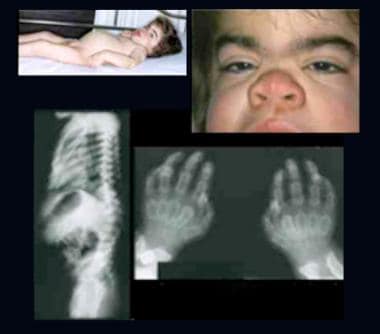
Child with Hurler syndrome (mucopolysaccharidosis type IH). Note dysplasia, scaphocephalic macrocephaly, coarse facial features, depressed nasal bridge, broad nasal tip, thick lips, short neck, protuberant abdomen, inguinal hernia, joint contractures, and claw hands. Radiographs demonstrate hook-shaped deformity (anterior wedging) of the L1 and L2 vertebrae; abnormally short, wide, and deformed tubular bones (bullet-shaped) of the hands; and narrow base of the second-to-fifth metacarpals. The distal articular surfaces of the ulna and radius are slanted toward each other. |
 | View Full Size Image | |
Media type: Photo
|
| Media file 8:
Two infants with perinatal lethal form of osteogenesis imperfecta. Note short-limbed skeletal dysplasia, deformed extremities, and relatively large head. Radiographs show short, thick, ribbonlike long bones with multiple fractures and callus formation at all sites (ribs, long bones). |
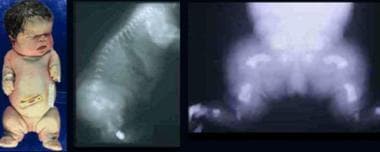
 | View Full Size Image | |
Media type: Photo
|
| Media file 9:
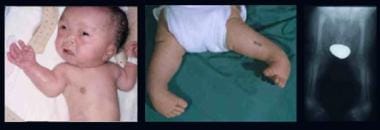
Infant with Larsen syndrome. Note the flat face with depressed nasal bridge, prominent forehead, hypertelorism, cleft palate, talipes equinovarus, and dislocations of elbows, hips, and knees. Radiograph demonstrates dislocation at the knee. |
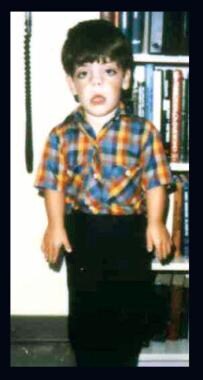
 | View Full Size Image | |
Media type: Photo
|
| Media file 10:
Child with Robinow syndrome. Note moderate short stature, flat facial profile (fetal face–like appearance), short forearms, and small hands. |

 | View Full Size Image | |
Media type:
|
- International Working Group on Constitutional Diseases of Bone. International nomenclature and classification of the osteochondrodysplasias (1997). Am J Med Genet. Oct 12 1998;79(5):376-82. [Medline].
- Baitner AC, Maurer SG, Gruen MB, Di Cesare PE. The genetic basis of the osteochondrodysplasias. J Pediatr Orthop. Sep-Oct 2000;20(5):594-605. [Medline].
- Bethem D, Winter RB, Lutter L, et al. Spinal disorders of dwarfism. Review of the literature and report of eighty cases. J Bone Joint Surg Am. Dec 1981;63(9):1412-25. [Medline].
- Bridges NA, Brook CG. Progress report: growth hormone in skeletal dysplasia. Horm Res. 1994;42(4-5):231-4. [Medline].
- Chen H. Genetic disorders. In: Liu PI, ed. Blue Book of Diagnostic Tests. Philadelphia, PA: WB Saunders Co; 1986:421-62.
- Chen H. Skeletal dysplasias and mental retardation. In: Papadatos CJ, Bartsocas CS, eds. Skeletal Dysplasias. 1982. New York, NY: Alan R Liss Inc; 451-85.
- Clark RN. Congenital dysplasias and dwarfism. Pediatr Rev. Nov 1990;12(5):149-59. [Medline].
- Cohen MM Jr. The new bone biology: pathologic, molecular, and clinical correlates. Am J Med Genet A. Dec 1 2006;140(23):2646-706. [Medline].
- Cormier-Daire V, Huber C, Munnich A. Allelic and nonallelic heterogeneity in dyschondrosteosis (Leri-Weill syndrome). Am J Med Genet. Winter 2001;106(4):272-4. [Medline].
- Dominguez R, Talmachoff P. Diagnostic imaging update in skeletal dysplasias. Clin Imaging. Jul-Sep 1993;17(3):222-34. [Medline].
- Dorst JP, Scott CI Jr, Hall JG. The radiologic assessment of short stature--dwarfism. Radiol Clin North Am. Aug 1972;10(2):393-414. [Medline].
- Folstein SE, Weiss JO, Mittelman F, Ross DJ. Impairment, psychiatric symptoms, and handicap in dwarfs. Johns Hopkins Med J. Jun 1981;148(6):273-7. [Medline].
- Fukami M, Okuyama T, Yamamori S, Nishimura G, Ogata T. Microdeletion in the SHOX 3' region associated with skeletal phenotypes of Langer mesomelic dysplasia in a 45,X/46,X,r(X) infant and Leri-Weill dyschondrosteosis in her 46,XX mother: implication for the SHOX enhancer. Am J Med Genet A. Aug 15 2005;137(1):72-6. [Medline].
- Hall JG, Rimoin DL. Medical complications of dwarfing syndromes. In: Growth, Genetics and Hormones. Vol 4. 1988:6-9.
- Hunter AG. Some psychosocial aspects of nonlethal chondrodysplasias: I. Assessment using a Life-Styles Questionnaire. Am J Med Genet. Jun 16 1998;78(1):1-8. [Medline].
- Hurst JA, Firth HV, Smithson S. Skeletal dysplasias. Semin Fetal Neonatal Med. Jun 2005;10(3):233-41. [Medline].
- Ikegawa S. Genetic analysis of skeletal dysplasia: recent advances and perspectives in the post-genome-sequence era. J Hum Genet. 2006;51(7):581-6. [Medline].
- Ilizarov GA. Clinical application of the tension-stress effect for limb lengthening. Clin Orthop. Jan 1990;(250):8-26. [Medline].
- Jia L, Ho NC, Park SS, et al. Comprehensive resource: Skeletal gene database. Am J Med Genet. Winter 2001;106(4):275-81. [Medline].
- Kennelly MM, Moran P. A clinical algorithm of prenatal diagnosis of Radial Ray Defects with two and three dimensional ultrasound. Prenat Diagn. Aug 2007;27(8):730-7. [Medline].
- Lachman RS, Rappaport V. Fetal imaging in the skeletal dysplasias. Clin Perinatol. Sep 1990;17(3):703-22. [Medline].
- Leka SK, Kitsiou-Tzeli S, Kalpini-Mavrou A, Kanavakis E. Short stature and dysmorphology associated with defects in the SHOX gene. Hormones (Athens). Apr-Jun 2006;5(2):107-18. [Medline].
- Ngo C, Viot G, Aubry MC, et al. First-trimester ultrasound diagnosis of skeletal dysplasia associated with increased nuchal translucency thickness. Ultrasound Obstet Gynecol. Aug 2007;30(2):221-6. [Medline].
- Orioli IM, Castilla EE, Barbosa-Neto JG. The birth prevalence rates for the skeletal dysplasias. J Med Genet. Aug 1986;23(4):328-32. [Medline].
- Rimoin DL. Molecular defects in the chondrodysplasias. Am J Med Genet. May 3 1996;63(1):106-10. [Medline].
- Rimoin DL, Lachman R, Unger S. Chondrodysplasias. In: Emery and Rimoin's Principles and Practice of Medical Genetics. Vol 3. 4th ed. London, England: Churchill Livingstone; 2002:4071-115.
- Rimoin DL, Lachman RS. Genetic disorders of the osseous skeleton. In: Beighton P, ed. McKusick's Heritable Disorders of Connective Tissue. 5th ed. Mosby-Year Book; 1993:557-689.
- Romero R, Athanassiadis AP, Jeanty P. Fetal skeletal anomalies. Radiol Clin North Am. Jan 1990;28(1):75-99. [Medline].
- Sillence DO, Rimoin DL, Lachman R. Neonatal dwarfism. Pediatr Clin North Am. Aug 1978;25(3):453-83. [Medline].
- Spirt BA, Oliphant M, Gottlieb RH, Gordon LP. Prenatal sonographic evaluation of short-limbed dwarfism: an algorithmic approach. Radiographics. Mar 1990;10(2):217-36. [Medline].
- Superti-Furga A, Bonafe L, Rimoin DL. Molecular-pathogenetic classification of genetic disorders of the skeleton. Am J Med Genet. Winter 2001;106(4):282-93. [Medline].
- Unger S, Hecht JT. Pseudoachondroplasia and multiple epiphyseal dysplasia: New etiologic developments. Am J Med Genet. Winter 2001;106(4):244-50. [Medline].
- Yang SS. Skeletal system: Osteochondrodysplasias and dysostoses. In: Gilbert-Barness E, ed. Potter's Pathology of the Fetus and Infant. Vol 2. St Louis, Mo: Mosby-Year Book; 1997:1423-78.
- Yasui N, Kawabata H, Kojimoto H, et al. Lengthening of the lower limbs in patients with achondroplasia and hypochondroplasia. Clin Orthop. Nov 1997;(344):298-306. [Medline].
Skeletal Dysplasia excerpt Article Last Updated: Nov 15, 2007
|