Continually Updated Clinical Reference
 
 
  All Sources     eMedicine     Medscape     Drug Reference     MEDLINE
 
eMedicine - Acute Respiratory Distress Syndrome : Article by

Quick Find
Authors & Editors
Introduction
Clinical
Differentials
Workup
Treatment
Medication
Follow-up
Miscellaneous
Multimedia
References

Related Articles
Acute Poststreptococcal Glomerulonephritis

Afebrile Pneumonia Syndrome

Airway Foreign Body

Alveolar Proteinosis

Asthma

Atelectasis, Pulmonary

Gastroesophageal Reflux

Goodpasture Syndrome

Heart Failure, Congestive

Hemosiderosis

Hydrocarbon Inhalation Injury

Hypersensitivity Pneumonitis

Lymphangitis

Meningococcal Infections

Myocardial Infarction in Childhood

Myocarditis, Nonviral

Myocarditis, Viral

Near Drowning

Nephritis

Nephrotic Syndrome

Pericardial Effusion, Malignant

Pericarditis, Constrictive

Pneumococcal Bacteremia

Pneumococcal Infections

Pneumomediastinum

Pneumonia

Pneumothorax

Pseudomonas Infection

Pulmonary Hypertension, High Altitude

Pulmonary Hypertension, Idiopathic

Pulmonary Infarction

Pulmonary Interstitial Emphysema

Respiratory Failure


Patient Education
Lung and Airway Center

Bacterial and Viral Infections Center

Acute Respiratory Distress Syndrome Overview

Acute Respiratory Distress Syndrome Causes

Acute Respiratory Distress Syndrome Symptoms

Acute Respiratory Distress Syndrome Treatment

SARS Overview


Author: Lennox H Huang, MD, Associate Clinical Chair, Assistant Professor, Department of Pediatrics, McMaster University; Deputy Chief of Pediatrics, McMaster Children's Hospital

Lennox H Huang is a member of the following medical societies: American Academy of Pediatrics, Canadian Medical Association, Ontario Medical Association, and Society of Critical Care Medicine

Coauthor(s): David J Vaughan, MBBCh, Consultant Pediatrician, Department of Pediatrics, Our Lady of Lourdes Hospital, Ireland; Thomas Brogan, MD, Assistant Professor, Department of Pediatrics, University of Washington at Seattle, Children's Hospital and Regional Medical Center of Seattle; Jerry Zimmerman, MD, PhD, Professor, Department of Pediatrics/Anesthesia, University of Washington School of Medicine; Director, Division of Pediatric Critical Care Medicine, Children's Hospital of Seattle

Editors: G Patricia Cantwell, MD, Associate Clinical Professor, Department of Pediatrics, University of Miami; Director of Pediatric Critical Care Medicine, Miller School of Medicine, Jackson Children's Hospital; Mary L Windle, PharmD, Adjunct Assistant Professor, University of Nebraska Medical Center College of Pharmacy, Pharmacy Editor, eMedicine.com, Inc; Barry J Evans, MD, Assistant Professor of Pediatrics, Temple University Medical School; Director of Pediatric Critical Care and Pulmonology, Associate Chair for Pediatric Education, Temple University Children's Medical Center; Mary E Cataletto, MD, Associate Director, Division of Pediatric Pulmonology, Winthrop University Hospital; Associate Professor, Department of Clinical Pediatrics, State University of New York at Stony Brook; Maureen Strafford, MD, Arnold P Gold Foundation Associate Professor, Departments of Anesthesiology and Pediatrics, Tufts University and Tufts-New England Medical Center

Author and Editor Disclosure

Synonyms and related keywords: acute respiratory distress syndrome, adult respiratory distress syndrome, ARDS, respiratory distress syndrome, RDS, shock lung, Da Nang lung, respirator lung, acute lung injury, ALI, ventilator-induced lung injury, VILI, infant respiratory distress syndrome, IRDS, severe acute respiratory syndrome, SARS

Background

In 1967, Ashbaugh first described adult respiratory distress syndrome, now known as acute respiratory distress syndrome (ARDS). He reported a clinical entity of dyspnea, cyanosis resistant to supplemental oxygen, and bilateral chest infiltrates on chest radiography. In view of its apparent similarity to the recently described respiratory distress syndrome (RDS) observed in newborns, it was termed adult RDS. An immense body of work has grown around the study of this condition. However, until recently, a lack of diagnostic standardization confused efforts to accurately define the incidence and predisposing factors for this condition. In addition, an inability to agree on a consistent definition of this syndrome hindered attempts at therapeutic trials.

In 1994, a European–North American consensus conference agreed on standard definitions of ARDS and an illness less severe than ARDS, namely, acute lung injury (ALI). The definition is based on (1) chest radiographic appearance, (2) the ratio of the partial pressure of oxygen in arterial blood to the percentage inhaled oxygen concentration (PaO2/FiO2 ratio), and (3) assessment of the left atrial filling pressure by means of a wedged pulmonary artery catheterization or clinical assessment.

ARDS is considered to be present in the setting of bilateral infiltrates on a chest radiograph, a PaO2/FiO2 <200, and a left atrial filling pressure <18 mm Hg or no clinical or radiologic evidence of elevated left atrial pressure. ALI is defined similarly, with the difference being that the PaO2/FiO2 is <300. Unlike earlier definitions of ARDS, the PaO2/FiO2 is defined regardless of the level of positive end-expiratory pressure (PEEP).

Pathophysiology

The pathophysiology of ARDS is complex and multifaceted. It may be considered as 3 distinct components, which are the nature of the stimulus that initiates or causes ARDS, the host response to this stimulus, and, finally, the role that iatrogenic damage plays in the progression and outcome of this condition. There are 3 pathohistologic stages of ARDS which are further discussed under histology.

An initiating stimulus leads to a cascade of effects, the most immediate of which is an increase in alveolar and pulmonary capillary permeability. Protein-rich fluid engulfs the alveolus, activated neutrophils and macrophages follow, and an inflammatory cascade is initiated. This cascade involves the release of interleukins (ILs), tumor necrosis factor, and other inflammatory mediators. Neutrophils release oxidants, leukotrienes, and various proteases. The net effect at a cellular level is massive cell damage, alveolar denudation, and sloughing of cell debris into the lumen of the alveolus. Furthermore, surfactant is markedly inactivated.

Meanwhile, in the pulmonary capillary, endothelial cells swell, platelets aggregate, and a procoagulant cascade may arise, leading to small-vessel thrombosis. At a physiologic level, the consequences of the reactions outlined above are myriad.

Surfactant depletion, alveolar flooding, cellular debris within the alveoli, and increased airway resistance all lead to increased work of breathing. Surfactant loss leads to alveolar collapse because of increased surface tension, which is analogous to the situation observed in premature infants with infant RDS (IRDS). As alveoli collapse, closing lung volume decreases below the patient's functional residual capacity (FRC), further increasing the work of breathing. This is reflected as reduced compliance; that is, additional pressure is required to generate a unit volume.

A widened interstitial space between the alveolus and the vascular endothelium decreases oxygen-diffusing capacity. Hypoxia arises as a result of the change described above. Collapsed alveoli result in either low ventilation-perfusion (V/Q) units or a right-to-left pulmonary shunt. The end result is marked venous admixture, the process whereby deoxygenated blood passing through the lungs does not absorb sufficient oxygen and causes a relative desaturation of arterial blood when it mixes with blood that is oxygenated adequately. Hence, relatively deoxygenated arterial blood attempts to supply respiratory muscles that are working harder than usual. These muscles become fatigued; the body is unable to maintain such sustained work of breathing, and respiratory failure ensues.

In addition, hypoxia, hypercarbia, and small-vessel thrombosis combine to elevate pulmonary artery pressures, leading to increased right ventricular work, increased right ventricular filling, and, ultimately, a septal shift toward the left ventricle. These changes, in turn, may decrease cardiac output, further reducing oxygen delivery to the tissues.

Iatrogenic problems may further complicate the patient's clinical picture. High-inspired oxygen concentration (FiO2 >95%) may cause absorption atelectasis, further reducing the number of patent alveoli. Oxygen toxicity can be seen with FiO2 >60% over time, leading to additional inflammation secondary to free radical damage.

High mean airway pressures during attempts to maintain adequate oxygenation and ventilation may decrease cardiac output. In addition, high peak airway pressures may cause air leaks (eg, pneumothoraces), which may acutely compromise cardiac and respiratory function. Ventilator-induced lung injury (VILI), discussed in detail below, may further complicate and accelerate disease progression.

Finally, fluid resuscitation may lead to further alveolar and pulmonary interstitial flooding, with worsening compliance and oxygenation.

Frequency

United States

Incidence of ARDS varies greatly, partly because of differing and changing definitions of the disease. Moreover, to determine an accurate estimate, all cases in a given population must be ascertained. This may be problematic; however, recent data are available from a number of facilities, both in the United States and internationally. These data may clarify the true incidence of this condition.

An initial study in 1972 revealed that the annual incidence in adults is 75 cases per 100,000 population. A study from Utah showed an estimated incidence of 4.8-8.3 cases per 100,000 population. A study is currently underway in Seattle; the investigators are using the consensus definition to determine the incidence of ALI and ARDS in the United States.

With regard to the pediatric age group, little data are available concerning incidence in children on a population basis. However, in the early 1990s, Fackler et al examined all pediatric intensive care unit (PICU) admissions at 40 institutions. Data from 8000 admissions were analyzed, and 679 patients were identified as having ARDS.

International

Using the consensus conference definition (see Background), researchers from Denmark, Sweden, and Iceland reported annual rates of 17.9 cases per 100,000 population for ALI and 13.9 cases per 100,000 population for ARDS.

A more recent population-based study in Germany showed a low prevalence of 5.5 X 10⁻⁵ cases per year and an incidence of 3. 2 X 10⁻⁵ cases per year in pediatric patients aged 1 month to 18 years.

Mortality/Morbidity

A true estimate of morbidity and mortality highly depends on accurate definitions of ALI and ARDS. Nevertheless, published estimated mortality rates from ARDS vary in both adult and pediatric populations. Studies from the early 1980s revealed mortality rates of 29-94% for children; however, the definition of ARDS was not standardized at that point.

In 1995, Timmons and colleagues reported that acute hypoxic respiratory failure (defined as mechanical ventilation with a PEEP >6 cm and H2O and FiO2 >0.5 for >12 h) was associated with a mortality rate of 43%, as shown in a survey of 41 PICUs. The patient subset classified as having ARDS had a mortality rate of 51%.

Mortality rates tended to decline, as shown in studies from the 1990s, which yielded mortality rates of 30-50%.Pediatric studies in the past 5 years have demonstrated morality rates of 8-26%. Many explanations have been posited for this change, including the emergence of skilled highly specialized PICUs; improvement in the transportation of critically ill children; changes in the definition of the illness itself; and, finally and most importantly, changes in the management, specifically ventilator management, of this illness.

Ventilator management has been given credence in a landmark study of ARDS in adults in which a strategy of low-tidal-volume, permissive hypercapnia was effective in reducing mortality. Patients with ARDS treated with an initial tidal volume of 12 mL/kg and a plateau pressure <50 cm H2O were compared with patients treated with initial tidal volume of 6 mL/kg and a plateau pressure of 30 cm H2O or less. The trial was prematurely ended because of a significant difference (P = .007) in mortality between the groups. Mortality rates were 31% versus 39.8% with low versus conventional tidal volumes. A secondary outcome measure, days without ventilator assistance, was also significantly different between the groups. This study has not been replicated in pediatric patients, but principles of gentle ventilation have been extrapolated and almost universally applied in PICUs.

Morbidity resulting from ARDS may be divided into pulmonary and extrapulmonary morbidity. This distinction is somewhat artificial because increasing evidence suggests that pulmonary injury, specifically VILI, and extrapulmonary injury are inextricably linked. Traditionally recognized pulmonary complications resulting from ARDS and its treatment include air-leak syndromes, specifically pneumothoraces, pneumomediastinum, pneumopericardium, and subcutaneous emphysema. Conventional thinking has been that air-leak syndromes were associated with high ventilatory pressures and that their presence was associated with an excess mortality rate.

In 1998, Weg et al concluded that high ventilator pressures were not correlated with the development of air-leak syndrome. In addition, air-leak syndromes were not associated with mortality. The incidence of pneumothorax in the study was 6.9%. An air leak of some description developed in 10% of patients.


History

The history is generally remarkable for evidence of the precipitating event. The presence of comorbid pathologies, iatrogenic complications, and multiorgan-system failure may complicate the clinical pictures.

  • Cough may be present, reflecting a primary lung injury, such as pneumonia or aspiration. Absence of a cough or gag reflex in a patient with symptoms and signs consistent with ARDS who had a witnessed episode of vomiting suggests that aspiration may have been the primary risk factor for ARDS.
  • Dyspnea usually develops shortly after the initiating stimulus, and it becomes progressively severe, reflecting the increasing alveolar flooding and decreasing pulmonary compliance.

Physical

The evident physical signs primarily reflect lung pathology and other organ injury associated with ARDS.

  • Tachypnea is an early sign as pulmonary edema develops, as pulmonary compliance decreases, as tidal volume decreases toward the FRC, and, therefore, as the work of breathing increases.
  • Cyanosis may become apparent with increasing hypoxemia. Remembering that clinically evident cyanosis requires a certain minimum hemoglobin concentration is important, particularly in the patient with trauma.
  • Fever may reflect the underlying process causing ARDS (eg, pneumonia, sepsis) or may reflect massive cytokine release.
  • Crackles may be audible throughout the lung fields, signifying pulmonary edema.
  • Physical signs of air leak syndromes may manifest in the late stages of ARDS. These include pneumothoraces, pneumomediastinum, pneumopericardium, and subcutaneous emphysema.
    • Features of a pneumothorax include decreased air entry on the side of the air leak, an increased percussion note on the same side, and tracheal deviation toward the side of collapse in a simple pneumothorax or toward the contralateral side in a tension pneumothorax.
    • Heart sounds may be muffled, and signs of decreased cardiac output may be observed with a tension pneumothorax.

Causes

Multiple risk factors exist for ARDS. Approximately 20% of patients with ARDS have no identified risk factor. Given the number of adult studies, major risk factors associated with the development of ARDS include the following:

  • Bacteremia
  • Sepsis
  • Trauma, with or without pulmonary contusion
  • Fractures, particularly multiple fractures and long bone fractures
  • Burns
  • Massive transfusion
  • Pneumonia
  • Aspiration
  • Drug overdose
  • Near drowning
  • Postperfusion injury after cardiopulmonary bypass
  • Pancreatitis
  • Fat embolism


Acute Poststreptococcal Glomerulonephritis
Afebrile Pneumonia Syndrome
Airway Foreign Body
Alveolar Proteinosis
Asthma
Atelectasis, Pulmonary
Gastroesophageal Reflux
Goodpasture Syndrome
Heart Failure, Congestive
Hemosiderosis
Hydrocarbon Inhalation Injury
Hypersensitivity Pneumonitis
Lymphangitis
Meningococcal Infections
Myocardial Infarction in Childhood
Myocarditis, Nonviral
Myocarditis, Viral
Near Drowning
Nephritis
Nephrotic Syndrome
Pericardial Effusion, Malignant
Pericarditis, Constrictive
Pneumococcal Bacteremia
Pneumococcal Infections
Pneumomediastinum
Pneumonia
Pneumothorax
Pseudomonas Infection
Pulmonary Hypertension, High Altitude
Pulmonary Hypertension, Idiopathic
Pulmonary Infarction
Pulmonary Interstitial Emphysema
Respiratory Failure


Lab Studies

  • General testing
    • No definitive laboratory tests aid in the diagnosis of ARDS.
    • Because ARDS often develops concomitantly with severe acute illness, major derangement of laboratory indices may be present, including thrombocytopenia and abnormal liver function, renal function, electrolyte levels, blood glucose concentrations, lactate values, and coagulation parameters.
    • Hypoproteinemia is predictive of ARDS, weight gain, and death in patients with severe sepsis.
  • CBC analysis
    • Leucocytosis may be evident, reflecting either the initiating stimulus or a nonspecific inflammatory response.
    • Anemia secondary to acute illness, underlying chronic disease, acute blood loss, or hemodilution secondary to massive fluid resuscitation may be evident.
    • Thrombocytopenia may be present.
  • ABG analysis
    • In the early stages of ARDS, ABG values may be in the reference ranges.
    • Respiratory alkalosis reflecting a relative hyperventilation and hypocarbia is an early sign of respiratory distress.
    • Hypercarbia develops with worsening disease, reflecting an increasing shunt fraction and an increased dead space.
    • Hypoxemia may also be evident. The degree of oxygen supplementation may determine the severity.
    • Because of the uncertainty imposed by the measurement of the partial pressure of oxygen in arterial blood and the necessity of a standard definition of ARDS, the PaO2/FiO2 ratio is often used as a measure of disease severity.
    • Depending on coexisting pathologies, a metabolic acidosis may also be present.

Imaging Studies

  • Chest radiography
    • Chest radiography is essential for diagnosing ARDS or ALI. In the early stages of ARDS, findings on chest radiography may be normal. Early changes reflect increased pulmonary alveolar and endothelial permeability. As the alveoli fill with a protein-rich exudate, patchy alveolar infiltrates develop.
    • As the disease progresses, the lung fields become diffusely and homogeneously opaque. However, this homogeneous appearance is misleading, as chest CT scanning demonstrates. Although the radiographic appearance may initially be indistinguishable from that observed in cardiac failure, a number of characteristic differences are present.
    • ARDS-related edema and edema secondary to heart failure may be difficult to distinguish on radiographs. Cardiomegaly is not a feature of ARDS; it is usually present with marked cardiac failure. Kerley B lines, which indicate interstitial edema or lymphatic swelling, are rarely observed in ARDS.
    • Other radiologic differential diagnoses of the infiltrates observed in ARDS include aspiration, hemorrhage, pneumonia, and atelectasis. Distinguishing these entities on the basis of chest radiographic appearances is often difficult. As opacification of the lung fields increases, air bronchograms may become apparent. Radiologic worsening is often associated with clinical deterioration and death.
    • Air-leak syndromes are commonly observed on plain chest radiographs of patients with ARDS. These include pneumothoraces, pneumomediastinum, pneumopericardium, subcutaneous emphysema, pneumoperitoneum, and pneumoretroperitoneum (free air in the retroperitoneal space). In intubated patients, free air rises to the high caudal areas overlying the diaphragm because of their supine position. Early and subtle signs suggestive of free air include the deep sulcus sign, which is increased radiolucency in the costophrenic angle of the affected side and increased acuteness of the costophrenic angle on the same side. The double-diaphragm sign is also reported in association with air leaks; subpulmonic air produces the impression of a second diaphragm formed by the basal border of the lower lobe. Air below the diaphragm, which does not cross the midline, suggests pneumoretroperitoneum.
    • Characteristic radiologic changes of late ARDS corresponding to histopathologic changes are well described. After a variable period (ie, usually days to weeks), patchy areas of increased lucency appear. Associated with clinical resolution of illness, radiologic improvement follows slowly. Although radiologic changes completely resolve in most children, chronic changes are apparent in a small subset. Whether the persisting changes (often ascribed to fibrosis) are the result of the primary illness or VILI is often unclear. Iatrogenic features visible on a chest radiograph in a patient with ARDS may include an endotracheal tube, central venous lines, and chest tubes.
  • CT scanning
    • CT scanning of the chest was first reported almost 2 decades ago. Since then, the utility of chest CT in understanding the pathophysiologic mechanisms underlying ARDS and the response of the ARDS lung to ventilator maneuvers have been reported many times.
    • Gattinoni et al have been at the forefront of this research. Before the introduction of CT imaging, clinicians assumed that ARDS was a homogeneous lung process. The use of chest CT scanning demonstrated that, though pulmonary involvement in ARDS was diffuse, it also was heterogeneous. In 1994, Gattinoni et al reported that, in adults with ARDS, areas of normal lung were interspersed with poorly aerated lung parenchyma.
    • Researchers have shown a marked spatial distribution of parenchymal collapse in the lungs of patients with ARDS. In patients ventilated in a supine position, collapse was most pronounced in the more dorsal regions. A combination of edematous lung, the weight of the chest wall and mediastinal structures (ie, specifically the heart), and supine positioning are postulated to play a part in the development of dorsal atelectasis. These findings provide an intellectual basis for the role of prone positioning in severe ARDS.
    • CT findings support the baby lung hypothesis. Simply stated, the lungs of patients with ARDS are functionally smaller than normal lungs. Indeed, some authors suggest that the volume reduction may be on the order of 75% of total lung volume. Hence, ventilation with normal physiologic tidal volume may lead to iatrogenic lung damage. Recent data, which show improved outcomes in patients with ARDS ventilated with small tidal volumes, lend credence to this theory.
    • In 1994, Gattinoni proposed that 2 types of ARDS exist: ARDS due to primary pulmonary disease (eg, aspiration, pneumonia) and ARDS arising secondary to extrapulmonary disease (eg, sepsis, trauma). In support of this hypothesis, Goodman et al (1999) described CT findings in adults with ARDS due to pulmonary and extrapulmonary disease. Marked differences existed between the populations; the group with pulmonary-related ARDS had ground-glass opacification or consolidation, which tended to be asymmetric. The group with extrapulmonary ARDS generally had symmetric ground-glass opacification. In both groups, pleural effusions and air bronchograms were common, whereas Kerley B lines and pneumatoceles were uncommon. Mortality tended to increase in the group with extensive consolidation versus those with extensive ground-glass opacification, but this difference was not statistically significant.
    • In the present clinical setting, the main usefulness of chest CT scanning is to determine the presence of coexisting illness, specifically thoracic abscess formation, barotrauma undefined on plain radiography, or other unsuspected pathology. CT is not routinely required to diagnose or manage ARDS.
  • Chest ultrasonography: The only role for chest ultrasonography in patients with ARDS is to define the presence of pleural effusions and to determine whether loculation of the pleural fluid is present if drainage of the effusion is being considered.
  • MRI: To the authors' knowledge, no data are available concerning the role of MRI in patients with ARDS.
  • Echocardiography
    • The primary role of echocardiography in ARDS is to detect congenital or acquired heart disease as a cause of respiratory distress and pulmonary edema.
    • Echocardiography may provide evidence of pulmonary hypertension; however, the practical implications of this finding are unclear because little evidence supports the clinical benefit of pulmonary vasodilators in ARDS.

Other Tests

  • Pulmonary mechanics: Many authorities debate the utility of determining pulmonary mechanics as a means of defining optimal ventilatory strategies. As of yet, no clear consensus exists on their use.

Procedures

  • Bronchoalveolar lavage (BAL) is not required to diagnose ARDS. BAL may be useful in determining the underlying etiology in patients with primary pulmonary ARDS in whom pneumonia or an infective pneumonitis is thought to be the cause. This is especially true for immunocompromised patients.
  • Many investigators are interested in the use of BAL as a research tool.
  • Cytokine levels in BAL fluid have been determined in patients with ARDS.
  • Much has been learned regarding the complex interplay of the inflammatory response in ARDS. In a small series of patients, elevated levels of IL-8 in BAL fluid was predictive of ARDS in at-risk patients and predictive of mortality in patients with ARDS (Meduri, 1995).
  • The use of bronchoscopy as an adjunct to surfactant therapy has been reported. In 10 adults with ARDS, sequential bronchopulmonary segmental lavage with a dilute synthetic was safe, well tolerated, and associated with a decrease in oxygen requirements (Walmrath, 1996). To the authors' knowledge, no study has been performed to compare the use of surfactant with or without bronchoscopy in the setting of ARDS.

Histologic Findings

Three classic histopathologic phases of ARDS are described. These correspond to the time course of the disease.

The earliest or exudative phase occurs during days 1-7 of the initial injury. Typical histologic appearances include diffuse hemorrhage, edema, leukocyte infiltration, and cellular necrosis or apoptosis. Evidence of the initiating illness may also be apparent, such as pneumonia or aspiration.

The proliferative phase begins at about day 7 of the illness. The main features of this period include fibroblast proliferation, hyperplasia of type II pneumocytes, and ongoing evidence of inflammation.

The fibrotic phase begins approximately 3 weeks after the onset of illness, of which the main features are fibrosis, honeycombing, and bronchiectasis.


Medical Care

No treatment for ARDS is definitive. The cornerstone of management is impeccable intensive care. Early anticipatory management may avoid late complications and poor outcome. Treat the primary cause (eg, sepsis, pneumonia) if possible. As much as possible, minimizing the risk of multiple organ failure and VILI is essential.

Critical aspects are maintaining nutrition and being cognizant of the risk of numerous complications in critically ill children, including sepsis, fluid overload, inappropriate levels of sedation, and neuromuscular blocking agents. Many of the therapies and strategies proposed for ARDS are founded on rational physiologic and pathologic principles, but they have not been shown to have unequivocal benefits. Reasons include an incomplete understanding of the pathophysiology of ARDS, the lack of a standardized diagnostic test, and the heterogeneity of the illness and the patient population. Furthermore, an inability to adequately control for other therapies, specifically ventilation modalities, and the fact that most patients die from multiple organ failure or their precipitating illness confound the analysis and interpretation of data from many trials.

  • Ventilation
    • Ventilation is the cornerstone of treating the patient with ARDS. Striking a balance between the level of ventilator support necessary to provide a reasonable ventilation and oxygenation while minimizing VILI is one of the most active areas of research in critical care.
    • Noninvasive ventilation has been used early in ALI and ARDS to avoid endotracheal intubation. Published experience has largely been limited to the adults, and most patients with ARDS require endotracheal intubation for airway control and invasive mechanical ventilation.
    • Traditional ventilatory strategies are aimed at maintaining normal tidal volumes and normal blood gas values; however, this was associated with a high morbidity and mortality rate. Therefore, many clinicians attempted to use high partial pressures of carbon dioxide (PaCO2), ie, the permissive hypercapnic strategy. Associated with this was the increasing recognition that repetitive opening and closing of alveoli exacerbated lung injury. Hence, a strategy of maintaining an open lung evolved.
    • The twin goals of permissive hypercapnia and open lung maintenance are achieved, in simple terms, by optimizing PEEP and minimizing delivered tidal volumes.
      • Hickling et al (1990) gave one of the original descriptions of permissive hypercapnia, reporting an almost 80% reduction in mortality rates. Although subsequent trials showed no benefit in reducing tidal volumes.
      • Amato et al (1998) reported that their strategy of ventilating at a low tidal volume with an elevated carbon dioxide level and preventing alveolar closure by optimizing PEEP decreased the mortality rate (38% versus 71%, P < .001).
      • The study by Amato et al was criticized for the high mortality rate in the control arm. However, a multicenter study sponsored by the National Institutes of Health (NIH) confirmed these results. The control group was ventilated with a tidal volume of 12 mL/kg adjusted to maintain a plateau pressure of 45-50 cm H2O. In the study group, tidal volume was reduced to 6 mL/kg and then as low as 4 mL/kg to maintain a plateau pressure <30 cm H2O. The trial was terminated prematurely when an interim analysis showed a markedly reduced mortality rate in the group receiving low tidal volume (31% vs 39.8%, P = .007).
    • Ranieri et al provided additional information to suggest that low tidal volume may be beneficial. They reported lowered levels of cytokines in BAL fluid and plasma in patients treated with low tidal volume. The authors postulated that decreased levels of cytokines reflect reduced inflammation in organs other than the lungs, leading to a possible survival benefit. Numerous ventilator modes are available; however, little if any data demonstrate the superiority of 1 mode versus another.
    • Two modes of high-frequency ventilation are high-frequency oscillatory ventilation (HFOV) and high-frequency jet ventilation (HFJV).
      • HFJV is rarely used in pediatric practice, and it is not discussed any further.
      • HFOV may be thought of as the ultimate in high-PEEP low-tidal-volume strategy. Because of the extremely small tidal volumes used, HFOV minimizes repetitive opening and closing and possibly reduces VILI, if the lung is recruited sufficiently. Because of the extremely high respiratory rates, carbon dioxide can be maintained at satisfactory levels. Randomized controlled trials have been done to compare HFOV with conventional mechanical ventilation in pediatric and neonatal practice, with generally encouraging results. Although initial studies in neonates show no benefit, the strategy was less than optimal. Recruiting (or opening) the atelectatic areas of the lung is critical to maintaining lung volume at the FRC. Optimal lung volume is gauged with clinical assessment, monitoring of arterial oxygen saturation, ABGs, and lung inflation on chest radiography.
    • Airway pressure–release ventilation (APRV) is a relatively new mode of ventilation that allows for spontaneous ventilation with mean airway pressures similar to that achieved with HFOV. Case studies report the successful use of APRV in ARDS; however, data are insufficient to compare it with conventional or HFOV.
    • As an adjunct to ventilator management, prone positioning has been advanced as a means to improve oxygenation in patients with severe ARDS. By turning patients prone, V/Q matching is thought to be optimized by reducing atelectasis in dependent areas of the lung. Many trials have shown improved oxygenation with prone positioning, however, a recent multicenter trial of 102 patients demonstrated no significant difference in clinical outcomes, including ventilator-free days. The study population had a mortality rate of only 8%, suggesting that prone positioning may still have a role in extremely ill patients with ARDS. Although no consensus exists regarding how to incorporate prone positioning into the care of a child with ARDS, it should still be attempted in a patient with profound hypoxemia.
  • Steroid therapy
    • The use of steroids is reported as a therapy for ARDS. A number of reported trials demonstrated no benefit with large doses of steroids administered as a short course in the early phases of ARDS. However, many investigators contend that on-going or late-stage ARDS is partly an inflammatory condition. Hence, by virtue of their anti-inflammatory properties, steroids may be beneficial when used in the fibroproliferative phase.
    • In 1998, Meduri et al reported their randomized double-blind placebo-controlled trial in adults with ARDS who were not improving, as defined by lack of improvement in lung injury score by day 7 of respiratory failure. Patients received methylprednisolone or placebo for 32 days. Those with no response were given the alternative treatment on day 10. Those receiving steroids had reduced lung injury and multiorgan dysfunction scores, and they were extubated more frequently than those given placebo. The hospital mortality rate significantly decreased (12% vs 62%). Rates of infection did not differ between the groups. Similar data in the pediatric population are not available. Many centers begin steroid therapy on days 7-10 of mechanical ventilation. Use of steroids for the fibroproliferative phase of ARDS in the pediatric population is extrapolated from this study.
    • To the authors' knowledge, no study has been performed to examine the potential role of inhaled steroids in ARDS.
    • Steroids may be indicated as part of the treatment for the underlying etiology of ARDS, eg, ARDS secondary to Pneumocystis jiroveci infection.
    • A subgroup of patients with ARDS with marked eosinophilia in their peripheral blood or bronchoalveolar fluid may benefit from steroid therapy.
    • Steroid use may contribute to prolonged weakness after ARDS. Care should be taken to minimize concomitant neuromuscular blockade.
  • Surfactant treatment
    • One of the key events in the progression of ARDS is a reduction in both volume and function of surfactant. In addition, surfactant inhibitors may be present in the alveolus. Based on positive results of many clinical trials of IRDS, a number of studies have been conducted to examine the role of surfactant in ARDS.
    • Administration of exogenous surfactant has many theoretical benefits, as demonstrated in vitro. These include the prevention of alveolar collapse, maintenance of pulmonary compliance, optimization of oxygenation, enhancement of ciliary function, enhancement of bacterial killing, and downregulation of the inflammatory response.
    • Studies of various surfactants and different modes of delivery in adults have not yielded a consensus regarding the efficacy of surfactant in ARDS. In vitro data and extrapolated data from neonatal in vivo studies suggest that animal-derived surfactant may be superior to synthetic surfactant. In addition, inhalation may be inefficient as a means of delivery.
    • A growing body of literature supports the use of surfactant for severe pediatric ARDS. A retrospective chart review of 19 patients showed improvement in oxygenation index and hypoxemia score but no change in other outcome measures. Prospective studies from the late 1990s to early 2000 involving porcine or bovine surfactant showed variable outcomes ranging from improvement in only oxygenation to shortened ventilation and PICU stay.
    • A recent multicenter randomized double-blind placebo-controlled trial (Wilson, 2005) of Calfactant demonstrated a significant reduction in mortality, with an absolute risk reduction of 17%. This reduction was most pronounced in patients younger than 12 months, who had a corresponding absolute risk reduction of 33%. Significant improvement was also demonstrated in the oxygenation index, in ventilator-free days, and in rates of failure with conventional mechanical ventilation. One confounding factor was that the placebo group had more immunocompromised patients than the treatment group.
    • Data from a cost-effectiveness study of Infasurf suggested that the use of exogenous surfactant may be cost-effective in an American healthcare setting. The expense of the surfactant was offset by early PICU discharge. Mortality benefits and ventilator-free days were not factored into the model.
  • Nitric oxide (NO) therapy
    • NO is a potent vasodilator, first described in 1989. Its use as a specific pulmonary vasodilator was first described almost a decade ago in neonates with persistent pulmonary hypertension. Subsequent trials confirmed the efficacy of inhaled NO (iNO) in this population, in whom iNO decreased the use of extracorporeal membrane oxygenation (ECMO).
    • iNO is a selective pulmonary vasodilator, as it rapidly binds to hemoglobin and is inactivated before reaching the systemic circulation. It may have a number of attractive properties in patients with ARDS. By reducing hypoxic pulmonary vasoconstriction (HPV), iNO may reduce right-sided pulmonary pressures. This, in turn, lessens the degree of leftward septal shift, which improves cardiac output. Oxygenation benefits that occur while iNO diffuses to only relatively well-aerated parts of the lung lessen any local HPV. Other benefits may include decreased pulmonary edema while pulmonary pressures are reduced.
    • Despite the potential benefits, no study has shown lasting advantage associated with iNO. Although many studies demonstrated improvement in surrogate measures (eg, oxygenation, degree of ventilator support), no differences are noted in primary outcome measures (eg, mortality, ventilator-free days, time to extubation). Reasons for this lack of clinical benefit are unclear. The fact that ARDS tends to be a heterogeneous lung disease in contrast to persistent pulmonary hypertension of the newborn may be part of the explanation. As an alternative, the fact that most patients with ARDS die from sepsis, multiorgan failure, or their primary illness may imply that no survival benefit is observed with improved oxygenation and decreased ventilator support. Another confounder is that patients with ARDS are heterogeneous.
    • A recent multicenter study of the use of iNO (dose of 10 ppm) in children with acute hypoxic respiratory failure was reported. Although oxygenation acutely improved in the group treated with iNO, this change did not translate into a survival benefit. However, data from a post-hoc analysis suggested that patients with severe respiratory failure (oxygenation index >25) or immunocompromise may have benefited from the use of iNO. However, this analysis has been criticized.
    • In summary, although a number of trials have shown an improvement in various physiologic indices, these results have not translated to tangible benefits, such as decreased mortality rates. A recent review by the Cochrane database confirmed this assessment. According to this review, iNO has no effect on mortality and only transiently improves oxygenation in both children and adults.
  • Liquid ventilation
    • Perfluorocarbons (PFCs) have a number of attractive properties that facilitate their use in liquid ventilation. Because PFCs are chemically and biologically inert, with a high vapor pressure that ensures rapid evaporation when exposed to the atmosphere, both oxygen and carbon dioxide dissolve easily in PFC liquid.
    • Perceived advantages of PFCs in ARDS include an ability to maintain open lung, and repetitive opening and closing of the alveoli are minimized. Authors have called this liquid PEEP or "PEEP in a bottle."
    • In addition, a lavage effect may clear the alveoli and small airways of debris and inflammatory mediators, reducing ongoing inflammation.
    • PFCs are also thought to have intrinsic anti-inflammatory actions.
    • By flowing preferentially to dependent areas of the lung where alveolar collapse is maximal, intra-alveolar pressure is increased; hence, perfusion to these areas is decreased, which may improve V/Q matching.
    • Two types of liquid ventilation have been described: partial liquid ventilation (PLV), in which a volume of liquid equal to the FRC is instilled and total liquid ventilation (TLV) with a conventional ventilator. In contrast to PLV, TLV requires that the lung is filled completely with PFC and that the patient is ventilated with a specially designed liquid ventilator. For logistical reasons and because no data suggest that TLV is superior to PLV, PLV has been used more widely than TLV.
    • Little convincing data are available to assess the use of PFC liquid ventilation in ARDS. Investigators from 2 uncontrolled trials (1 in adults and 1 in pediatric patients) described its use in conjunction with extracorporeal life support (ECLS) (Hirschl, 1998; Fedora, 1999). A randomized trial in 1998 did not demonstrate a difference in outcome in a group treated with PLV compared with a group treated with CMV (Davies, 2004).
  • Other pharmacologic therapy: Although they have shown promise in animal and small-scale human studies, many pharmaceutical agents have not demonstrated an unequivocal benefit in large trials. These agents include systemic pulmonary vasodilators, pentoxifylline, various antioxidants, ketoconazole, anticytokines, and antiproteases. Their use is not discussed further.

Surgical Care

  • Chest-tube placement: In the event of a pneumothorax, placement of a chest tube is usually mandatory.
  • Extracorporeal life support
    • ECLS has been used since the 1970s to improve oxygenation and/or ventilation in critically ill patients with severe ARDS.
    • A number of modalities have been reported, including ECMO, which may consist of an arterial and venous cannula (AV-ECMO) or 2 venous cannulae (VV-ECMO).
    • Extracorporeal carbon dioxide removal (ECCO2R) has been used, most commonly in Europe.
    • The rationale of ECCO2R is similar to that for ECMO, which is to allow the lung to rest while carbon dioxide is removed and excessive hypercarbia is prevented. Limited data are available concerning this modality in the pediatric population.
  • Extracorporeal membrane oxygenation
    • A large randomized study of the efficacy of ECMO in adults with severe ARDS was published in 1979. Zapol et al did not demonstrate a benefit with ECMO, reporting a mortality rate of >90% in both control and ECMO groups.
    • Anecdotal reports and case series are numerous. They suggest that ECMO may be of benefit in children with severe ARDS unresponsive to maximal conventional therapy.
    • In 1996, Green et al reported data from a pediatric study. Although they concluded that ECMO was associated with improved survival, their study had a number of limitations. It was not a controlled trial; instead, it was a retrospective collection of data from a large number of PICUs. Furthermore, conventional therapy was not uniform. An attempt at a definitive, randomized controlled trial was terminated when the overall mortality rate in pediatric ARDS decreased to such a degree that sufficient numbers of patients could not be recruited.
    • Numerous studies from the United Kingdom showed that the use of ECMO in neonates with respiratory failure was associated with improved outcomes (Brown, 2004; Petrou, 2004; Bennett, 2001). With pediatric ECMO, the survival rate is approximately 50%. This is markedly less than the reported survival rate of 80% in neonates treated with ECMO. Reasons for this disparity may include the heterogeneity of illness leading to respiratory failure in the pediatric population, relatively limited experience with pediatric versus neonatal ECMO, or a reluctance to commence ECMO that leads to delays that further exacerbate lung damage.
    • The question of who should receive ECMO remains uncertain. Candidates should have severe lung disease that progresses despite maximal conventional medical therapy. The disease process leading to respiratory failure should have a reasonable potential for reversibility and recovery. Objective indicators include an alveolar-arterial (A-a) gradient >450 mm Hg or ventilator peak pressures >40 cm H2O. Exclusion criteria include cerebral hemorrhage, preexisting chronic lung disease, congenital or acquired immunodeficiency, congenital anomalies, or other organ failure associated with poor outcomes. Ventilation for >10 days before ECMO is a relative contraindication.
    • Why ECMO may confer a survival benefit is unclear. Possibilities include the ability to rest the lung by reducing excess stretch (ie, high pressures) and reducing repetitive opening and closing (ie, high ventilator rates). Oxygen toxicity may be minimized. Fluid balance can be optimized with aggressive diuresis or with renal replacement therapy.

Consultations

  • Critical care specialist
  • Infectious diseases specialist
  • Otolaryngologist (ENT specialist)
  • Pulmonologist

Diet

The thinking regarding the role of nutrition in patients with ARDS has taken a paradigm shift.

  • As attention was being given to the role of adequate nutrition in the critically ill patient, bacterial overgrowth in the GI tract due to antibiotic use and the late introduction of feeds was postulated to contribute to bacterial translocation across the bowel wall. Hence, the standard practice of introducing early enteral feeds when possible has expanded.
  • In situations of feeding intolerance, efforts to optimize enteral nutrition include the placing of a transpyloric tube (duodenal or jejunal), administering continuous drip feeds, and administering promotility agents (metoclopramide or erythromycin).
  • Recent researchers concluded that administration of a formula supplemented with eicosapentaenoic acid, gamma-linolenic acid, and antioxidants is associated with a reduction in pulmonary neutrophil recruitment, improved gas exchange, decreased requirement for mechanical ventilation, reduced length of ICU stay, and a reduction of new organ failures.
  • In some patients with limited pulmonary reserve, high-energy loads may lead to respiratory failure because of marked carbon dioxide production.
  • Intravenous fat emulsions have been associated with worsening pulmonary mechanics in some patients with ARDS. Published evidence is not currently conclusive and limited to animal data and findings in small case series. Caution should be used if parenteral nutrition is required during the early stages of ARDS.

Activity

In general, the severity of the precipitating illness (eg, trauma, sepsis) and ARDS limits the patient's activity. If the patient recovers, no limitation on activity is usually necessary, except in the few patients with evidence of extensive pulmonary scarring or fibrosis.


To date, no proven effective medical therapies for ARDS exist. Information regarding the use of corticosteroids and surfactant is outlined below because many clinicians use these drugs in children with severe ARDS.

Drug Category: Adrenal corticosteroids

These drugs have anti-inflammatory and immunosuppressive properties. They cause profound and varied metabolic effects, and they modify the body's immune response to diverse stimuli.

As discussed previously, data suggest that the use of corticosteroids may be beneficial in patients with severe ARDS. To the authors' knowledge, no large blinded multicenter trial has been performed. Although anecdotal, the suggested regimen outlined below may be therapeutic in children; however, no trials have been conducted to evaluate their use in children with ARDS. The schedule outlined below is drawn from the article by Meduri et al (1998).

Drug NameMethylprednisolone (Medrol, Solu-Medrol)
DescriptionMechanism of action in ARDS unknown. By virtue of anti-inflammatory effects, host fibrotic response presumably dampened, allowing for salvage of viable lung tissue.
Adult DoseDays 1-14: 2 mg/kg IV loading dose then 2 mg/kg/d IV divided q6h until enteral feeding established, then change to same dose administered PO
Tapering schedule:
Days 15-21: 1 mg/kg/d
Days 22-28: 0.5 mg/kg/d
Days 29-30: 0.25 mg/kg/d
Days 31-32: 0.125 mg/kg/d, then stop
If patient extubated before day 14, therapy is advanced to day 15 (1 mg/kg/d) and tapered according to the schedule
Pediatric DoseAdminister as in adults
ContraindicationsDocumented hypersensitivity; viral, fungal, or tubercular skin infections
InteractionsCoadministration with digoxin may increase digitalis toxicity secondary to hypokalemia; estrogens may increase levels; phenobarbital, phenytoin, and rifampin may decrease levels (adjust dose); monitor patients for hypokalemia when taken concurrently with diuretics
PregnancyC - Safety for use during pregnancy has not been established.
PrecautionsHyperthyroidism, cirrhosis, nonspecific ulcerative colitis, hypertension, osteoporosis, thromboembolic tendencies, congestive heart failure, convulsive disorders, myasthenia gravis, thrombophlebitis, peptic ulcer, and diabetes; use smallest possible dosage and shortest possible time in elderly patients because of adverse effects; acute adrenal insufficiency may occur with abrupt withdrawal after long-term therapy or with stress

Drug Category: Surfactants

Exogenous surfactant can be helpful in treating airspace disease (eg, RDS). If administered under carefully controlled conditions, surfactant may also be helpful in other conditions (eg, meconium aspiration syndrome [MAS]), though it is not yet approved for this indication. After inhaled administration, surface tension is reduced, and alveoli are stabilized, decreasing the work of breathing and increasing lung compliance.

Drug NameCalfactant (Infasurf)
DescriptionNatural calf lung extract containing phospholipids, fatty acids, and surfactant-associated proteins B (260 mcg/mL) and C (390 mcg/mL). Decrease in surfactant levels and function commonly observed in ARDS. Evidence suggests that use may be beneficial in children with ARDS by reducing mortality and ventilator-dependent days. Young children with ARDS due to primary pulmonary insult may most likely benefit from exogenous surfactant.
Adult DoseNo adult dose available; because of negative results from a trial of aerosolized Exosurf, use not discussed further
Pediatric DoseEndotracheal instillation of 80 mL/m2 of Infasurf delivered in 4 equal aliquots in rotating positions (ie, right side down, head down; right side down, head up; left side down, head down; left side down, head up); children hand ventilated during administration for 10-20 min with FiO2 of 1 by using peak pressures and rates that approximated previous ventilator settings
ContraindicationsNone known
InteractionsNone reported
PregnancyC - Safety for use during pregnancy has not been established.
PrecautionsTransient cyanosis, bradycardia, reflux of surfactant into endotracheal tube, and airway obstruction observed most frequently among infants treated with calfactant in clinical trials; because of possible rapid improvement in compliance, pay attention to delivered tidal volumes in patients ventilated in pressure-control mode


Further Inpatient Care

  • Prevention of the numerous complications associated with intensive care is paramount. Have a high index of suspicion for nosocomial infections, specifically line-related bacteremia and ventilator-associated pneumonia. Continue aggressive nutrition to maintain anabolism or at least to prevent catabolism. Use neuromuscular blockers judiciously, especially in conjunction with steroids, to minimize the risk of myopathy and long-term weakness.
  • Meticulous attention to fluid balance is essential because excess body water may further increase ventilator requirements because of increased parenchymal water and chest-wall edema, which decrease pulmonary and total chest compliance. Furthermore, alveolar water may reduce oxygen diffusion across the alveolar membrane. Judicious use of diuretics may be necessary, as is early renal replacement therapy (eg, hemofiltration, hemodialysis, peritoneal dialysis) if renal failure leads to difficulties in maintaining fluid balance. Routine use of renal-dose dopamine is not recommended.
  • Critically ill children may require sedation and pharmacological paralysis. Hence, it may be necessary to prevent joint contractures. Early occupational/physical therapy is essential in preventing these complications.
  • Many institutions, as part of their standard of care for children treated with HFOV, require that earplugs be placed to reduce both discomfort and the risk of permanent hearing loss resulting from HFOV.
  • Placement of a semipermanent line (eg, as a peripherally inserted central catheter [PICC] line) may help reduce nosocomial infections in at-risk children by allowing the removal of large-caliber central venous catheters.
  • Bronchodilators may be beneficial in cases of ARDS complicated by reactive airway disease.
  • All children should receive prophylaxis for stress ulcers.
  • Many predictors of extubation success have been published; however, clinicians often use clinical judgment to determine a patients' readiness for extubation.
    • To date, no data specifically describe predictive parameters in children with ARDS. Indices used to predict successful extubation include the rapid, shallow breathing index (RSBI); the compliance, resistance, oxygenation, and pressure (CROP) index; and ratio of tidal volume to dead space (Vd/Vt).
    • Regardless of the method used, all candidates for extubation should have a leak around their endotracheal tube (ie, at a reasonable airway pressure), and they should be able to maintain their own airway (ie, good cough and gag reflex). Patients must not be dependent on suctioning through their endotracheal tube. The level of sedation must not be excessive. If no air leak is present around the endotracheal tube, consider deferring extubation and administering steroids to reduce airway edema.
    • Once extubated, patients may require further support of their breathing. Options include continuous positive airway pressure (CPAP), bilevel positive airway pressure (BiPAP), supplemental oxygen, heliox, or reintubation.

Further Outpatient Care

  • Periodic outpatient follow-up may be necessary for those with severe residual lung damage to assess the need for oxygen supplementation and to monitor for the development of restrictive lung disease.
  • The most common complaint after intensive-care hospitalization for ARDS is muscular weakness, which may persist for weeks following discharge.

Transfer

  • Transfer to a center skilled in pediatric intensive care should be mandatory for any patient at risk of developing ARDS or any patient with full-blown ARDS.
  • A team with expertise in the transport of critically ill children should perform the transfer. In critically ill children, transporting them to a facility that offers pediatric ECMO capabilities is preferable.

Deterrence/Prevention

  • Few cases of ARDS can be anticipated before presentation; however, all children with chronic lung disease should receive influenza and pneumococcal vaccines. Administer respiratory syncytial virus (RSV)–specific vaccines as indicated.
  • ARDS secondary to aspiration may be prevented by the use of appropriate intubation techniques (eg, rapid-sequence intubation). Although no evidence is definitive, early intervention with noninvasive ventilation in patients with respiratory failure may reduce the risk of progression of ARDS.

Complications

  • General complications
    • Several complications are associated with ARDS, though many of these are due to the precipitating condition that leads to ARDS.
    • Acute complications include air-leak syndromes, VILI, and multiorgan-system failure, though definitive evidence linking this syndrome to ARDS or ventilator use remains controversial.
    • Complications arising specifically from ARDS include persisting lung disease and myopathy due to steroids and neuromuscular-blocking agents, the requirement for a tracheostomy.
  • Pulmonary complications
    • Numerous pulmonary complications result from ARDS. The most common are the air-leak syndromes, frequently pneumothorax but also pneumomediastinum, pneumopericardium, pneumoperitoneum, and subcutaneous emphysema.
    • VILI is an entity receiving attention with the publication of reports of landmark trials suggesting that a "kinder, gentler" form of mechanical ventilation improves outcomes in ARDS. VILI most likely has several causes, including excessive lung stretching due to high tidal volumes, repetitive opening and closing of alveoli leading to shear stress, oxygen toxicity, and cytokine release.
  • Cardiovascular complications
    • The patient who develops ARDS may also be compromised from a cardiovascular standpoint. Patients with sepsis, trauma, or other multisystem insults may lose their ability to tolerate high airway pressures. This ability leads to decreased preload and cardiac output.
    • Moreover, hypoxia, hypercarbia, and acidosis may elevate pulmonary artery pressures, increasing right ventricular afterload and leading to increased right ventricular work and leftward movement of the intraventricular septum.
    • Tension pneumothoraces may further reduce cardiac output.
  • GI complications: Complications commonly observed in the critically ill population include stress ulcers, liver failure, pancreatitis, and pancreatic insufficiency, leading to glucose intolerance.
  • Renal complications: Renal failure may result from the primary illness or may occur secondarily as a result of multiorgan system failure.
  • Endocrine complications
    • Critically ill children with glucose intolerance occasionally require exogenous insulin.
    • Adrenal suppression may be a cause of intractable hypotension.
    • Iatrogenic adrenal suppression may result from steroid therapy.
  • Infectious complications
    • Secondary or nosocomial infection is common in critically ill children. The most common sites of infection are the bloodstream and the lungs.
    • Urinary tract infections due to indwelling bladder catheters sometimes occur.
    • Organisms that are commonly isolated include gram-positive organisms, gram-negative organisms, and fungi or yeast species.
  • Neurologic complications
    • Prolonged use of muscle relaxants, especially in conjunction with steroids, may lead to a myopathy. Critically ill children are at increased risk of seizures, which may be subtle or not apparent because of the effects of sedation or paralysis.
    • Although essential in the care of a child with ARDS, the use of sedatives, analgesics, and anxiolytics may be suboptimal, their use may be prolonged, or doses may be weaned inappropriately.
  • Musculoskeletal complications: Immobilization for any length of time may lead to joint contractures.

Prognosis

  • Increasing evidence suggests that mortality rates due to ARDS have been decreasing over the last decade.
    • Many recent studies have revealed data demonstrating a mortality rate of <30% in patients with ARDS. This finding contrasts with data from many series before the 1990s in which mortality rates of 50-90% were common. As noted above, several reasons probably account for this improvement, including improved ventilator strategies, improved intensive care, and possibly improved more definitions of the disease.
    • Many patients with ARDS die not from their lung disease but from the primary insult or secondary organ failure. For those who survive ARDS, the outcome is generally good.
    • Pulmonary function testing in adults has demonstrated restrictive defects with decreased diffusing capacity, which may improve over a year after discharge. Many patients have residual, mild restrictive defect.
  • Negative prognostic factors include elevated cytokine levels in plasma and BAL fluid, concomitant sepsis, and multiorgan failure.
  • In patients with ARDS, diabetes is associated with an improved outcome. The reasons for this are unclear but may be related to diminished neutrophil function, which, in turn, attenuates an inflammatory cascade that is partly responsible for the severity of ARDS.
  • In 1993, Davis et al reported that an A-a difference in oxygen tension (P[A-a]O2) >420 mm Hg was the best early predictor of death (sensitivity, 80%; specificity, 87%; positive predictive value, 87%; negative predictive value, 80%).
  • Children who develop ARDS after bone marrow transplantation invariably have a poor prognosis, with estimated mortality rates in most centers of almost 90%. Data from a 2000 study by Keenan et al in Seattle confirmed these percentages, though, in a 1999 study, Rossi et al from Toronto suggested a mortality rate lower than this.
  • Flori et al conducted a prospective study of risk factors associated with mortality in pediatric ALI, which demonstrated 3 independent factors, all associated with prolonged mechanical ventilation:
    • Initial severity of oxygenation defect (PaO2/FiO2 ratio)
    • Nonpulmonary and non-CNS organ dysfunction
    • CNS dysfunction

Patient Education


Medical/Legal Pitfalls

  • Failure to recognize or treat any coexisting illness
  • Failure to anticipate or recognize impending respiratory failure and treat accordingly
  • Failure to anticipate or recognize the multiple complications associated with intensive care (eg, sepsis, adverse drug interactions, drug toxicity)


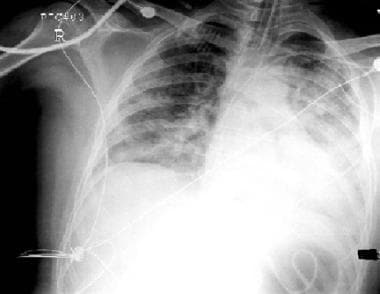
Media file 1:  Chest radiograph in a 3-year-old girl who developed acute respiratory distress syndrome due to overwhelming gram-negative sepsis. Salient features include an endotracheal tube; diffuse, bilateral infiltrates; air bronchograms on the left side; and a central venous catheter. The ratio of the partial pressure of oxygen in arterial blood to the percentage of inhaled oxygen concentration at the time of chest radiography was 100.
Click to see larger pictureClick to see detailView Full Size Image
Media type:  X-RAY

Media file 2:  Chest radiograph demonstrates a complication of acute respiratory distress syndrome. The patient presented with respiratory failure after a near-drowning episode. Peak inspiratory pressures were 40 cm H2O. She had sudden desaturation and had decreased bilateral air entry, as well as cool peripheries and decreased blood pressure. Needle evacuation of both pleural spaces confirmed pleural air. Chest tubes were placed, with immediate improvement in her clinical status. Her pulmonary status continued to deteriorate; she was given high-frequency oscillatory ventilation. She subsequently required a second chest tube on the left side.
Click to see larger pictureClick to see detailView Full Size Image
Media type:  X-RAY

Media file 3:  Chest CT in a 6-month-old male infant with newly diagnosed cystic fibrosis. He was intubated for respiratory failure and subsequently developed acute respiratory distress syndrome. Image demonstrates numerous cystic and bronchiectatic areas. Note the dorsal distribution of atelectasis, particularly on the right side, that is observed in this disease.
Click to see larger pictureClick to see detailView Full Size Image
Media type:  CT

Media file 4:  Typical pressure-volume curve may provide information regarding lung compliance, lung hysteresis, and critical opening and closing pressures. Evidence of pulmonary overdistension may also be observed.
Click to see larger pictureClick to see detailView Full Size Image
Media type:  Graph


  • ARDSNet. Ventilation with lower tidal volumes as compared with traditional tidal volumes for acute lung injury and the acute respiratory distress syndrome. The Acute Respiratory Distress Syndrome Network. N Engl J Med. May 4 2000;342(18):1301-8. [Medline].
  • Amato MB, Barbas CS, Medeiros DM, et al. Effect of a protective-ventilation strategy on mortality in the acute respiratory distress syndrome. N Engl J Med. Feb 5 1998;338(6):347-54. [Medline].
  • Anzueto A, Baughman RP, Guntupalli KK, et al. Aerosolized surfactant in adults with sepsis-induced acute respiratory distress syndrome. Exosurf Acute Respiratory Distress Syndrome Sepsis Study Group. N Engl J Med. May 30 1996;334(22):1417-21. [Medline].
  • Bennett CC, Johnson A, Field DJ. UK collaborative randomised trial of neonatal extracorporeal membrane oxygenation: follow-up to age 4 years. Lancet. Apr 7 2001;357(9262):1094-6. [Medline].
  • Bindl L, Dresbach K, Lentze MJ. Incidence of acute respiratory distress syndrome in German children and adolescents: a population-based study. Crit Care Med. Jan 2005;33(1):209-312. [Medline].
  • Bone RC. The ARDS lung. New insights from computed tomography. JAMA. Apr 28 1993;269(16):2134-5. [Medline].
  • Briassoulis GC, Venkataraman ST, Vasilopoulos AG, et al. Air leaks from the respiratory tract in mechanically ventilated children with severe respiratory disease. Pediatr Pulmonol. Feb 2000;29(2):127-34. [Medline].
  • Brown KL, Walker G, Grant DJ, et al. Predicting outcome in ex-premature infants supported with extracorporeal membrane oxygenation for acute hypoxic respiratory failure. Arch Dis Child Fetal Neonatal Ed. Sep 2004;89(5):F423-7. [Medline][Full Text].
  • Curley MA, Hibberd PL, Fineman LD, et al. Effect of prone positioning on clinical outcomes in children with acute lung injury: a randomized controlled trial. JAMA. Jul 13 2005;294(2):229-37. [Medline].
  • Davies MW, Fraser JF. Partial liquid ventilation for preventing death and morbidity in adults with acute lung injury and acute respiratory distress syndrome. Cochrane Database Syst Rev. 2004;CD003707. [Medline].
  • Davis SL, Furman DP, Costarino AT. Adult respiratory distress syndrome in children: associated disease, clinical course, and predictors of death. J Pediatr. Jul 1993;123(1):35-45. [Medline].
  • Dellinger RP, Zimmerman JL, Taylor RW, et al. Effects of inhaled nitric oxide in patients with acute respiratory distress syndrome: results of a randomized phase II trial. Inhaled Nitric Oxide in ARDS Study Group. Crit Care Med. Jan 1998;26(1):15-23. [Medline].
  • Dellinger RP. Inhaled nitric oxide in acute lung injury and acute respiratory distress syndrome. Inability to translate physiologic benefit to clinical outcome benefit in adult clinical trials. Intensive Care Med. Sep 1999;25(9):881-3. [Medline].
  • Dobyns EL, Cornfield DN, Anas NG, et al. Multicenter randomized controlled trial of the effects of inhaled nitric oxide therapy on gas exchange in children with acute hypoxemic respiratory failure. J Pediatr. Apr 1999;134(4):406-12. [Medline].
  • Fan E, Needham DM, Stewart TE. Ventilatory management of acute lung injury and acute respiratory distress syndrome. JAMA. Dec 14 2005;294(22):2889-96.
  • Faucher M, Bregeon F, Gainnier M, et al. Cardiopulmonary effects of lipid emulsions in patients with ARDS. Chest. Jul 2003;124(1):285-91. [Medline].
  • Fedora M, Nekvasil R, Seda M, et al. Partial liquid ventilation in the therapy of pediatric acute respiratory distress syndrome. Bratisl Lek Listy. Sep 1999;100(9):481-5. [Medline].
  • Flori HR, Glidden DV, Rutherford GW, Matthay MA. Pediatric acute lung injury: prospective evaluation of risk factors associated with mortality. Am J Respir Crit Care Med. May 1 2005;171(9)