Continually Updated Clinical Reference
 
 
  All Sources     eMedicine     Medscape     Drug Reference     MEDLINE
 
eMedicine - Glycogen-Storage Disease Type III : Article by

Quick Find
Authors & Editors
Introduction
Clinical
Differentials
Workup
Treatment
Medication
Follow-up
Miscellaneous
Acknowledgments
Multimedia
References

Related Articles
Adrenal Insufficiency

Carnitine Deficiency

Child Abuse & Neglect: Physical Abuse

Fructose 1,6-Diphosphatase Deficiency

Fructose 1-Phosphate Aldolase Deficiency (Fructose Intolerance)

Gaucher Disease

Glycogen-Storage Disease Type 0

Glycogen-Storage Disease Type I

Glycogen-Storage Disease Type IV

Glycogen-Storage Disease Type V

Glycogen-Storage Disease Type VI

Glycogen-Storage Disease Type VII

GM1 Gangliosidosis

Hepatocellular Carcinoma

Hyperinsulinemia

Hypoglycemia

Long-Chain Acyl CoA Dehydrogenase Deficiency

Medium-Chain Acyl-CoA Dehydrogenase Deficiency

Mucopolysaccharidosis Type I H/S

Mucopolysaccharidosis Type II

Mucopolysaccharidosis Type IV

Mucopolysaccharidosis Type VI

Mucopolysaccharidosis Type VII

Niemann-Pick Disease

Rhabdomyolysis


Patient Education
Click here for patient education.


Author: David Tegay, DO, FACMG, Assistant Professor of Pediatrics and Internal Medicine, Clinical Research Scholar, Co-Director, Division of Medical Genetics, Stony Brook University Hospital

David Tegay is a member of the following medical societies: American Society of Human Genetics and Federation of American Societies for Experimental Biology

Editors: Edward Kaye, MD, Vice President of Clinical Research, Genzyme Corporation; Mary L Windle, PharmD, Adjunct Assistant Professor, University of Nebraska Medical Center College of Pharmacy, Pharmacy Editor, eMedicine.com, Inc; Hagop Youssoufian, MD, MSc, Vice President of Clinical Research, ImClone Systems Incorporated; Paul D Petry, DO, FACOP, FAAP, Consulting Staff, Freeman Pediatric Care, Freeman Health System; Bruce Buehler, MD, Professor, Department of Pediatrics, Pathology and Microbiology, Executive Director, Hattie B Munroe Center for Human Genetics and Rehabilitation, University of Nebraska Medical Center

Author and Editor Disclosure

Synonyms and related keywords: glycogen-storage disease type III, glycogen storage disease type III, type III glycogen-storage disease, GSD type III, GSD III, glycogen debranching deficiency, glycogenosis III, type 3 glycogenosis, limit dextrinosis, AGL deficiency, Amylo-1, 6-glucosidase deficiency, Cori disease, Cori's disease, Forbes disease, Illingworth-Cori-Forbes disease,

Background

Glycogen-storage disease type III (GSD III) is an autosomal recessive inborn error of metabolism caused by loss of function mutations of the glycogen debranching enzyme (Amylo-1,6-glucosidase [AGL]) gene, which is located at chromosome band 1p21.2. GSD III is characterized by the storage of structurally abnormal glycogen, termed limit dextrin, in both skeletal and cardiac muscle and/or liver, with great variability in resultant organ dysfunction.

In 1928, Snappes and van Creveld provided the first description of 2 patients with GSD III (see Online Mendelian Inheritance in Man [OMIM]). Both patients had hepatomegaly and reduced ability to mobilize hepatic glycogen stores.

In 1953, Forbes provided an extensive clinical description of a third patient with GSD III and suggested that the glycogen in both liver and muscle tissues had an abnormal structure. Illingworth and Cori isolated the glycogen from the tissues of this patient and showed that it had extremely short outer chains. This structure had previously been termed a limit dextrin by Cori and Cori, specifically to identify a glycogen molecule that had been extensively hydrolyzed by phosphorylase (ie, the enzyme that cleaves the alpha1,4-glycosidic bonds that form the linear backbone of glycogen) but that contained all of the alpha1,6-glycosidic bonds that formed the branch points of the original glycogen molecule. Cori and Cori predicted that the patient's condition was caused by a debranching enzyme deficiency.

Only 4 years later, Illingworth, Cori, and Cori demonstrated the enzyme deficiency in GSD III in 1956. Thirty-six years after his initial 1928 report, van Creveld, with the aid of Huijing, demonstrated deficient debranching activity in his original patients. The clinical status of both patients had improved significantly since their conditions were originally described in 1928. Although Snappes and van Creveld's patients with GSD III were the first individuals in whom a defect in glycogen metabolism was reported, Cori and Cori demonstrated in 1952 that the absence of glucose-6-phosphatase activity was the enzyme defect in GSD I (von Gierke disease). Indeed, GSD I was the first inborn error of metabolism in which the precise enzyme defect was identified.

Since 1952, the various GSDs have been categorized numerically by the chronologic order in which the enzymatic defects were identified. The sole exception to this general rule is GSD type 0, which is not a true GSD because the quantity of liver glycogen in this condition is less than the amount in healthy individuals. Moreover, the hepatic glycogen in this condition has an entirely normal chemical structure.

In recognition of their pioneering work on the structure, synthesis, and metabolism of glycogen, the husband and wife team of Carl F. and Gerty T. Cori were corecipients of the 1947 Nobel Prize in Physiology or Medicine. This award came 5 years before they had defined the nature of the enzymatic defect in GSD I.

A great deal of misinformation exists about the incidence and clinical characteristics of GSD III, including the following:

  • First, GSD I is widely believed to be the most common of the GSDs, and GSD III is considered relatively rare. In fact, 2 large studies have demonstrated GSD I, GSD III, and GSD VI incidences to be approximately equal. Collectively, these 3 types account for approximately 80% of GSD cases. GSD II, which is actually a lysosomal storage disease, accounts for an additional 15% of all GSD cases. Moreover, because GSD III can have a mild clinical presentation, its incidence may be underestimated.
  • Second, a common belief is that the hypoglycemia experienced by patients with GSD I is much more severe than the hypoglycemia experienced by patients with GSD III. While this usually is true, many patients with GSD III have hypoglycemia as severe or even more severe than the hypoglycemia experienced in GSD I.
  • Third, the hepatic signs and symptoms in GSD III are widely believed to always improve with advancing age and to possibly even disappear after puberty. In fact, a significant number of patients with GSD III develop overt cirrhosis and even liver failure after puberty; moreover, in several patients, the cirrhosis has progressed to aggressive hepatocellular carcinoma.
  • Fourth, approximately 85% of patients with GSD III have significant involvement of both the liver and the skeletal muscles, a form of the disease referred to as GSD IIIa, which is a fact that is often overlooked. Muscular involvement usually is minimal during childhood but often becomes the predominant feature by young adulthood. Progressive muscle weakness and distal muscle wasting frequently become disabling as the patients enter the third or fourth decade of life, although this condition has been reported to begin in childhood in many Japanese patients.
  • Fifth, muscular involvement can also involve the heart. Cardiomegaly is not rare, and a few patients have developed a dilated hypertrophic cardiomyopathy. The disorder is confined to the liver in only 15% of patients with GSD III.

Pathophysiology

Understanding the clinical abnormalities of GSD III requires familiarity with the structure and function of both glycogen and glycogen debranching enzyme.

Role and availability of glycogen

The polysaccharide glycogen is a readily mobilized storage form of glucose. Because glucose is the primary energy source for most mammalian cells, the survival advantages of having a readily available storage form of this carbohydrate are obvious. Although glycogen serves this essential function in virtually every organ, the liver and the skeletal muscles are the major sites of glycogen storage. Smaller concentrations of glycogen exist in almost every tissue—even in the brain.

Although the concentration of glycogen per gram of tissue is much higher in the liver than in muscle, the total amount of glycogen stored in muscle is much larger than the amount stored in the liver because of the relative masses of the 2 organs. The importance of this energy resource can be appreciated by noting that the free glucose content of the body fluids of a child who weighs 10 kg is approximately 5 g, whereas tissue glycogen content, even after fasting 10 hours, is approximately 25 g.

Glycogen structure

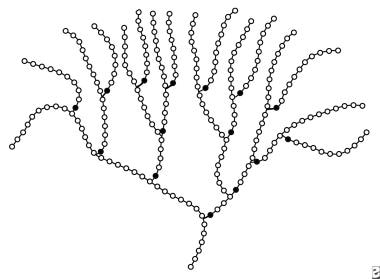
Glycogen is a highly branched polymer of glucose in which most of the glucose residues are linked to each other by alpha1,4-glycosidic bonds to form a linear backbone (see Image 1). Interspersed along the linear backbone, at intervals of 4-10 glucose residues, are branches created by alpha1,6-glycosidic bonds. As a result of the extensive branching, the glycogen molecule has a frondlike and highly branched configuration with an open helical tertiary structure. The helix, in turn, is organized into spherical particles with a molecular weight of 10-15 million (60,000 glucose residues per particle), and the spherical particles, in turn, are organized into large granules. The granules range in size from 10-40 nm and are located in the cellular cytosol.

Function of glycogen

Although glycogen is most abundant in liver and muscle, it has 2 quite different primary functions in these tissues. In muscle, glycogen is employed as a fuel source (ie, a source for the production of adenosine triphosphate [ATP]) during brief periods of high energy consumption. In contrast, glycogen's major role in the liver is as a key player in the complex process of glucose homeostasis.

During times of energy abundance (eg, after a meal), the liver takes up glucose and nutrients that it can convert into glucose (primarily amino acids, galactose, fructose, lactate, pyruvate, and glycerol—but not fatty acids) from the bloodstream and converts these nutrients to glycogen. Conversely, when blood glucose levels fall, the liver catabolizes glycogen to glucose via a series of exquisitely regulated hydrolytic reactions referred to as glycogenolysis. Glucose is then available for delivery to tissues that cannot synthesize the carbohydrate in significant quantities (eg, brain, muscle, erythrocyte).

Not surprisingly, the predominant features of GSDs that primarily involve muscle are muscle cramps, exercise intolerance, easy fatigability, progressive weakness, and myopathy; in some cases, cardiomyopathy is a feature. In contrast, the predominant features of GSDs that primarily involve the liver are hepatomegaly, hepatic dysfunction, and hypoglycemia.

Debranching enzyme

Debranching enzyme (usually called debrancher) is a large protein composed of 1,532 amino acids organized as a single polypeptide with a molecular mass of approximately 170,000 daltons. This enzyme is unusual in that it is among the few proteins with 2 independently functioning catalytic activities located at separate sites on a single polypeptide chain. The 2 catalytic activities of debranching enzyme are a transferase, oligo-1,4-1,4-glucanotransferase (EC 2.4.1.25), and a glucosidase, amylo-alpha1,6-glucosidase (EC 3.2.1.33). Complete degradation of glycogen requires the concerted action of the enzymes phosphorylase and of both debranching enzyme components.

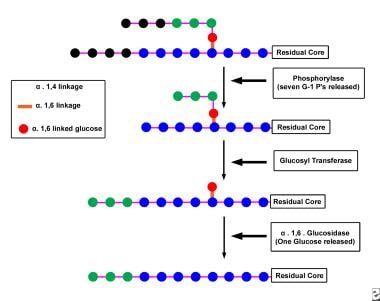
Phosphorylase first removes glucose moieties (see Image 2, in which the moieties are depicted as 7 black circles), which are linked to their neighbors via alpha1,4-glucosidic bonds from the unbranched outer portions of the glycogen molecule until only 4 glucosyl units (the 3 green circles and the 1 red circle in Image 2) remain before an alpha1,6 branch point. Then, the transferase component of the debranching enzyme transfers the 3 glucose residues (green in Image 2) from the short branch to the end of an adjacent branch of the glycogen molecule. The glucosidase component of debranching enzyme then removes the glucose moiety (the red circle in Image 2) remaining at the alpha1,6 branch point. In the process, the branch pointformedby the alpha1,6-glucosidic bond is removed, hence the name debrancher.

Unlike phosphorylase, which removes glucose moieties from glycogen in the form of glucose-1-phosphate, debrancher releases 1 free glucose moiety from each branch point. After cleaving the branch site, phosphorylase attacks unbranched portions of the glycogen molecule until the enzyme is stymied by the appearance of another branch site, at which point debranching enzyme is once again called into play. Eventually, the entire glycogen molecule is degraded to free glucose by the action of the amylo-alpha1,6-glucosidase activity of debranching enzyme and to glucose-1-phosphate by the action of phosphorylase.

The glucose-1-phosphate may be used in a variety of biosynthetic reactions, or it may be converted to glucose-6-phosphate by the action of phosphoglucomutase. The glucose-6-phosphatase so formed may be used for energy production via either the glycolytic or the hexose monophosphate pathway, or it may be converted to free glucose by the action of glucose-6-phosphatase.

Hypoglycemia

Hypoglycemia is the primary clinical manifestation of GSD III. At least in its early stages, hypoglycemia is caused by the defect in glycogenolysis that results from deficient activity of debranching enzyme. Because of deficient debrancher activity in GSD III, only a small portion of the glucose moieties stored in the liver as glycogen is readily available for glucose homeostasis. As a result, patients may experience significant hypoglycemia, even after a relatively short fast. However, in contrast to patients with GSD I, gluconeogenesis is normal in patients with all forms of GSD III. This probably explains why the hypoglycemia observed in patients with GSD III is usually less severe than that routinely encountered in patients with GSD I. Nonetheless, be aware that patients with GSD III can experience hypoglycemia sufficiently severe to induce hypoglycemic seizures and to cause brain damage and even death.

Hepatic abnormalities

The mechanism responsible for the liver damage that occurs in GSD III is unknown. During infancy and early childhood, plasma transaminase levels are routinely elevated, often to very high levels. Although the recurrent bouts of hypoglycemia may cause hepatic damage, as has been suggested, hepatic fibrosis and cirrhosis do not occur in GSD I, in which the bouts of hypoglycemia usually are more frequent and more severe. Another hypothesis suggests that the abnormally structured glycogen may play a role in liver damage; however, no evidence supports this theory. Similarly, no explanation exists for the hepatic adenomas and hepatocellular carcinomas that occasionally develop in patients with GSD III.

An entirely realistic goal, given modern treatment modalities, would be to reduce the incidence of all of these hepatic complications by preventing bouts of hypoglycemia. Stabilizing blood glucose levels within the reference range significantly reduces incidence of hepatic adenomas and hepatocellular carcinoma in patients with GSD I. No theories explain why hepatic signs and symptoms of GSD III usually improve with advancing age and even may disappear after puberty.

Skeletal myopathy and cardiomyopathy

The mechanism causing the myopathy and the occasional cardiomyopathy that occurs in GSD III is unknown, although this muscle damage is suggested to be attributed to recurrent bouts of hypoglycemia. However, myopathy and cardiomyopathy do not occur in GSD I, despite this condition's typically more frequent and severe bouts of hypoglycemia. Abnormally structured glycogen may play a role in the myopathy, but this hypothesis lacks support.

Miscellaneous abnormalities

During infancy and early childhood, patients with GSD III may have hepatomegaly, hypoglycemia, hyperlipidemia, and growth retardation, conditions similar to those in GSD I. Clinical presentation of the 2 diseases in children aged 3-8 years may be almost indistinguishable. Because all of the steps in glucose metabolism, including glucose-6-phosphatase and the transport system for glucose-6-phosphate, are intact in patients with GSD III, levels of phosphorylated glycolytic intermediates are not elevated. As a result, blood lactate and uric acid levels usually are within reference ranges, unlike the marked elevations that routinely occur in patients with GSD I. Nonetheless, modestly elevated blood levels of lactate and uric acid occasionally occur in patients with GSD III for no known reason.

Similarly, patients with GSD III catabolize fatty acids normally because the activity of acetyl CoA carboxylase or levels of malonyl CoA do not increase significantly. As a result, the hypoglycemia of patients with GSD III is often accompanied by significant fasting ketosis, a combination that does not occur in patients with GSD I.

Causes

All forms of GSD III display autosomal recessive inheritance and are caused by various mutations at chromosome band 1p21. Because so many mutations in the debrancher gene have already been identified, most affected patients probably are compound heterozygotes rather than true homozygotes.

Patients with GSD IIIa apparently have a generalized debrancher activity deficiency, which has been identified in the liver, skeletal muscle, heart, erythrocytes, and cultured fibroblasts. Recent research demonstrates that the progressive myopathy and/or the progressive cardiomyopathy develop only in patients with this generalized debrancher activity deficiency.

Patients with GSD IIIb are deficient in debrancher activity in the liver but have normal enzyme activity in muscle. The molecular biology of GSD IIIa and IIIb is an extremely active area of research; several quite different mutations, including different types of mutation, in the debrancher gene can produce GSD IIIa. GSD IIIb is caused by 2 different mutations in exon 3 at the amino acid codon 6. No known mechanism explains how these exon 3 mutations permit debranching enzyme activity in muscle but not in liver.

Rare forms of GSD III

In addition to GSD IIIa and GSD IIIb, 2 relatively rare forms of the disease are termed GSD IIIc and GSD IIId. Only 1 or 2 cases of GSD IIIc are documented, and its clinical manifestations have not been fully described. GSD IIIc has intact debrancher transferase activity but deficient glucosidase activity. Because no patient with this form of GSD III has been reported in the past 20-30 years, this condition may have been a "family disease."

A significant number of GSD IIId cases have been described. The condition is clinically indistinguishable from GSD IIIa. In GSD IIId, debrancher glucosidase activity is normal, but transferase activity is deficient in both liver and muscle tissues. The molecular biological basis for these 2 rare forms of GSD III is unknown.

Frequency

United States

No reliable estimates of GSD incidence exist because of the lack of newborn screening programs for these disorders. The estimated incidence of GSD III in North America is approximately 1 case per 100,000 live births.

International

Based on several European studies, the overall GSD incidence is approximately 1 case per 20,000-25,000 live births. As GSD III accounts for approximately 24% of all GSD cases, its estimated incidence in Europe is approximately 1 case per 83,000 live births. Disease frequency is higher in certain populations, such as the Inuit population of North America and Sephardic Jewish people of North African descent, among whom the incidence is approximately 1:5,066 or 1:5,400, respectively. This incidence for the homozygous condition translates to a frequency of 1:37 for the heterozygous state. All North African Jewish patients with GSD III have GSD IIIa. The highest known GSD III prevalence occurs in the Faroese population of the Faroe Islands, where the estimated incidence is approximately 1:3600 due to a founder effect.

Mortality/Morbidity

Note that the clinical manifestations of GSD III, even within the various subtypes, vary dramatically from patient to patient. These differences are termed microheterogeneity. Although the basis for microheterogeneity in GSD III is not understood, the level of residual debrancher activity does not determine clinical severity. An example of this microheterogeneity occurs in the families of North African Jewish patients with GSD IIIa whose peripheral neuromuscular impairments vary from minimal to severe, yet all have both liver and muscle involvement and precisely the same single mutation: the deletion of T at position 4455 (4455delT) in both alleles.

  • Hypoglycemic symptoms and complications are frequent and nonspecific and include the following:
    • Irritability
    • Tantrums
    • Tremulousness
    • Poor feeding
    • Respiratory distress
    • Apnea
    • Bradycardia
    • Lethargy
    • Confusion or apathy
    • Twitching or shakiness
    • Seizures
    • Inappropriate behavior (eg, laughter, crying)
    • Poor concentration
    • Hypothermia
    • Headache
    • Pallor
    • Palpitations
    • Hypotonia
    • Sweating
    • Coma
    • Sudden death
  • Long-term complications of hypoglycemia and/or storage of abnormal glycogen include the following:
    • Short stature
    • Cirrhosis
    • Liver failure
    • Hepatic adenomas
    • Hepatocellular carcinomas
    • Exercise intolerance
    • Muscle wasting and weakness
    • Cardiomegaly
    • Dilated hypertrophic cardiomyopathy with ventricular dysfunction
    • Renal failure secondary to myoglobinuria (rare)

Race

GSD III has been reported in several racial and ethnic groups, including white Europeans, Africans, Hispanics, Jews, Aboriginal North Americans, and Asians. GSD III is especially frequent among Sephardic Jewish people from North Africa; all affected people in this group have GSD IIIa.

Sex

All forms of GSD III occur with equal frequency in both sexes because the disorder has autosomal recessive inheritance.

Age

GSD III is an inborn error of metabolism; the condition is present from the moment of conception. Age of first clinical appearance varies dramatically from patient to patient. Hypoglycemia is rare in neonates but often manifests at age 3-4 months, an age when many parents reduce feeding frequency. Hepatic symptoms may be so mild that the diagnosis is not confirmed until adulthood, when the patient first manifests signs and symptoms of neuromuscular disease.


History

Hypoglycemia is infrequent in neonates unless the infant experiences an intercurrent illness that precludes a normal feeding schedule. These episodes may respond only partially to glucagon administration; glucagon administration may not improve the hypoglycemia of a child who has fasted longer than a few hours.

  • The following are the most common GSD III symptoms in neonates:
    • Tremulousness or tremors
    • Sweating
    • Irritability
    • Apnea
    • Seizures
    • Coma
    • Hypotonia
    • Lethargy
    • Poor feeding
    • Respiratory distress
    • Apnea
    • Bradycardia
    • Sudden death
  • Older infants may manifest the following signs and symptoms in addition to those noted for neonates:
    • Difficult arousal from either a nap or overnight sleep
    • Poor growth
    • Apparently voracious appetite despite poor linear growth
    • Increased abdominal girth (infrequent)
    • Symptoms that suggest hypoglycemia associated with an intercurrent illness
    • Dizziness
    • Confusion

Physical

  • Affected infants are healthy at birth and are usually healthy for the first several months of life.
  • Hepatomegaly is rare before the second month of life but then may gradually progress. The liver is firm and uniform in consistency. Although splenomegaly often occurs, the kidneys are not enlarged. The hepatomegaly usually resolves, sometimes completely, as patients reach puberty.
  • Most affected patients have poor growth and short stature during infancy and childhood, although many can achieve normal growth rates by maintaining their blood glucose levels within reference ranges.
  • Developmental milestones are normal.
  • In GSD IIIa and IIId, muscle wasting and weakness begin to appear as patients reach the second or third decade of life. Some patients may develop disabling myopathy, while others may have only minimal signs and symptoms.
  • A dilated hypertrophic cardiomyopathy may develop in some patients with GSD IIIa and IIId as they reach the third and fourth decades of life, yet overt cardiac dysfunction is rare.
  • Some articles have reported a typical dysmorphic facial appearance characterized by midfacial hypoplasia. This has not been universally appreciated.

Causes

  • All forms of GSD III show autosomal recessive inheritance and are caused by various mutations in the AGL gene at chromosome band 1p21.2. A number of different mutations have been described and, outside of populations displaying a strong founder effect, most affected individuals are compound heterozygotes rather than true homozygotes.
  • Patients with both GSD IIIa and IIId apparently have a generalized debrancher activity deficiency, which has been identified in liver, skeletal muscle, heart, erythrocytes, and cultured fibroblasts. Recent research demonstrates that the progressive myopathy and/or the progressive cardiomyopathy develop only in patients with this generalized debrancher activity deficiency. The molecular biology of GSD IIIa and IIIb is an extremely active area of research; several quite different mutations, including different types of mutation, in the debrancher gene can produce GSD IIIa.
  • Patients with GSD IIIb are deficient in debrancher activity in the liver but have normal enzyme activity in muscle. GSD IIIb is caused by 2 different mutations in exon 3 at the amino acid codon 6. No known mechanism explains how these exon 3 mutations permit debranching enzyme activity in muscle but not in liver.


Adrenal Insufficiency
Carnitine Deficiency
Child Abuse & Neglect: Physical Abuse
Fructose 1,6-Diphosphatase Deficiency
Fructose 1-Phosphate Aldolase Deficiency (Fructose Intolerance)
Gaucher Disease
Glycogen-Storage Disease Type 0
Glycogen-Storage Disease Type I
Glycogen-Storage Disease Type IV
Glycogen-Storage Disease Type V
Glycogen-Storage Disease Type VI
Glycogen-Storage Disease Type VII
GM1 Gangliosidosis
Hepatocellular Carcinoma
Hyperinsulinemia
Hypoglycemia
Long-Chain Acyl CoA Dehydrogenase Deficiency
Medium-Chain Acyl-CoA Dehydrogenase Deficiency
Mucopolysaccharidosis Type I H/S
Mucopolysaccharidosis Type II
Mucopolysaccharidosis Type IV
Mucopolysaccharidosis Type VI
Mucopolysaccharidosis Type VII
Niemann-Pick Disease
Rhabdomyolysis

Other Problems to be Considered

Addison disease
Adrenal crisis
Carnitine acyltransferase deficiency
Charcot-Marie-Tooth disease
Exogenous insulin administration
Fatty acid oxidation defect diseases (ie, trifunctional enzyme deficiencies)
Fructose 1,6-bisphosphate aldolase deficiency (ie, hereditary fructose intolerance)
Hyperinsulinemia
Miscellaneous myopathies and cardiomyopathies
Mitochondrial enzyme deficiencies
Muscular dystrophy
Oral hypoglycemic agent poisoning
Sepsis
Very long chain acyl CoA dehydrogenase deficiency


Lab Studies

  • Initial laboratory workup should include serial measurements of blood glucose levels, correlated with the time of the last feeding. Because the entire pathway of gluconeogenesis is intact in patients with GSD III, they can usually maintain their blood glucose concentrations at acceptable values for several hours after a meal. Even a moderately prolonged fasting study is inadvisable because blood glucose values may fall precipitously and without warning.
  • A complete panel of liver function studies, including prothrombin levels, is essential. Transaminases levels, which are routinely higher in infants and children, usually fall during pubescence and often return to reference range values. Alterations in prothrombin levels occur only in patients with significant fibrosis and/or cirrhosis.
  • Obtain a lipid profile. Modest elevations in very low-density lipoprotein cholesterol and triglyceride levels sometimes occur.
  • Evaluate blood and urine for ketones, especially after a brief fast. Fasting ketosis is prominent.
  • Obtain blood lactate levels after a brief fast. These levels are occasionally elevated, although rarely to more than a moderate extent.
  • Blood uric acid levels should also be obtained after a brief fast. These levels, too, are occasionally elevated, although rarely to more than a moderate extent.
  • Always obtain serum creatine kinase levels, even in infants and children, but remember that patients with GSD IIIb have no muscle involvement so their creatine kinase levels are within reference ranges. Because significant muscle involvement does not usually begin until the second or third decade of life, even in patients with GSD IIIa, reference range creatine kinase levels do not exclude debrancher activity deficiency in muscles. However, most patients with GSD IIIa have significantly elevated creatine kinase levels. No correlation exists between the levels of serum creatine kinase and the extent of the myopathy.
  • To confirm GSD III, laboratory test results must demonstrate abnormal glycogen (ie, short outer branches) and a debrancher enzyme activity deficiency in liver and muscle tissues. Normal debrancher activity in muscle precludes a diagnosis of GSD IIIa or IIId.
  • An alternative method measures debrancher activity—and even the absolute quantity of enzyme protein—in skin fibroblasts or lymphocytes. This method, however, has not been as reliable as measuring debrancher activity in liver and muscle tissues.
  • Molecular analysis of the AGL gene using DNA isolated from peripheral blood is now clinically available in a number of laboratories and is diagnostic when mutations are detected.

Imaging Studies

  • Abdominal ultrasonographic examinations can provide reliable estimates of the liver's size, an important assessment because patients' livers usually become smaller with aging. Abdominal ultrasonography also helps monitor the liver to detect adenomas and hepatocellular carcinomas.
  • Perform a pelvic ultrasonographic examination of female patients to detect polycystic ovaries. These are common in all forms of GSD III, yet, remarkably, they do not seem to interfere with patients' fertility.
  • Perform abdominal CT scanning of patients who develop cirrhosis because scans may provide early detection of hepatocellular carcinoma.

Other Tests

  • Electromyography is essential for early detection of myopathic changes. The technique also permits monitoring the rate of progression of myopathy. Nerve conduction studies also help evaluate patients for possible myopathic changes.
  • Glucagon administration 2 hours after a meal rich in carbohydrates usually induces a normal rise of blood glucose levels. Administering the same glucagon dose after a 6- to 8-hour fast rarely affects blood glucose levels. Administration of glucagon to patients with GSD III is entirely safe because the hormone does not induce the occasionally dangerous rises in blood lactate that may occur when patients with GSD I receive the drug.
  • Oral administration of galactose or fructose (1.75 g/kg) usually induces a normal rise in blood glucose levels. No elevation in blood lactate levels occurs as a result of these carbohydrate challenges in patients with GSD III, while levels almost invariably rise in patients with GSD I.
  • Although GSD I and GSD III may be almost indistinguishable during infancy and childhood, challenge tests involving glucagon, galactose, or fructose administration are not recommended to differentiate between these conditions because these tests may cause sudden, marked, and potentially dangerous lactic acid elevations.

Histologic Findings

Accumulated glycogen in the livers of patients with GSD III causes extensive distention of hepatocytes. Fat rarely accumulates in their livers, a finding that distinguishes the histologic appearance of the liver in GSD III from the appearance in GSD I.

In addition, fibrous septa usually form in the livers of patients with GSD III but not in the livers of patients with GSD I. The extent of fibrosis ranges from minimal periportal fibrosis, to bridging fibrosis, to micronodular cirrhosis. This fibrosis is not progressive in most patients, although it occasionally progresses to severe cirrhosis, a condition apparently most common in Japanese patients.

Hepatic adenomas are frequent, with a possible prevalence as high as 25% in French patients. While malignant transformation of the adenomas is unreported, 2 patients with end-stage cirrhosis developed hepatocellular carcinomas.

No extensive descriptions exist of histopathologic findings in skeletal and cardiac muscle, probably because myopathy or cardiomyopathy diagnoses are usually based upon findings from electromyography, nerve conduction studies, electrocardiography, and echocardiography rather than histologic studies. The histopathologic findings consist of vacuoles within the myocytes. Vacuolization extent varies and does not correlate with myopathy extent. The vacuoles are periodic acid-Schiff positive, consistent with the limit dextrin produced by the action of phosphorylase on glycogen in the absence of debrancher.


Medical Care

Because measuring debrancher activity in skin fibroblasts or lymphocytes is not as reliable as measuring debrancher activity in liver and muscle, a brief hospitalization is usually required to obtain the required tissue samples. Glucagon, galactose, or fructose stimulation tests are not recommended because patients with GSD I may develop severe lactic acidosis. Also, these test results are only suggestive; they are never diagnostic. Many patients with GSD III whose diagnosis is not yet established are already hospitalized to evaluate hepatomegaly and/or hypoglycemia.

Provide frequent daytime feedings to infants and continuous nasogastric tube (NGT) feedings at night to ensure they maintain satisfactory blood glucose levels. Once a child has reached age 2-3 years, nocturnal NGT feedings can usually be replaced by feedings containing raw cornstarch (ie, a slow-release form of glucose) dispersed in room-temperature water or a diet drink. This suspension maintains blood glucose levels at satisfactory levels for 3-6 hours. Warn caregivers never to substitute any other type of starch (eg, rice, potato) for cornstarch because only cornstarch achieves the desired results. Moreover, do not use hot water to achieve a more homogeneous suspension; aqueous cornstarch suspensions prepared with hot water may maintain blood glucose levels at satisfactory levels for only 1-2 hours.

Significant hypoglycemia sometimes develops in patients receiving adequate dietary control. This complication is usually caused by deviations from the patient's dietary therapy, either because of an intercurrent illness or because of occasional adolescent rebelliousness. When a patient experiences more than a very occasional episode of hypoglycemia, providing the family with a glucometer and the associated paraphernalia and instructions on how to use the device may be best.

Treatment of hypoglycemic episodes depends upon the patient's mental status. For a patient who is awake and alert, a sufficient dose should be 15 g of simple carbohydrate (ie, 4 oz of most fruit juices, 3 tsp table sugar, 15 g glucose either as tablets or gel by mouth). If the patient's symptoms do not improve promptly, or if the blood glucose level does not rise above 39 mmol/L (ie, 70 mg/dL) within 15 minutes, repeat the carbohydrate dosage. Failure to respond adequately to a second dose is most unusual; indeed, such a failure mandates a search for other causes of hypoglycemia (eg, overwhelming infection, exogenous insulin administration, adrenal insufficiency). Waiting 15 minutes after the initial treatment before retesting or administering a second dose of carbohydrate is important because overtreatment of low blood sugars can lead to hypoglycemia, probably because of hyperinsulinemia.

When a patient's mental status is depressed to the point that it causes concern that the patient may aspirate orally administered carbohydrate, the appropriate form of treatment depends upon the setting.

  • Home treatment
    • Subcutaneous glucagon administration may be tried for patients at home, but remember that patients with GSD III who have not eaten recently may not respond to glucagon because their glycogen supplies may be depleted of glucose moieties that can be cleaved in the absence of debrancher activity. All caregivers should have this hormone available and should know how to administer it.
    • Administer glucagon subcutaneously, 0.5 mg for patients who weigh less than 20 kg (ie, 44 lb) or 1.0 mg for patients who weigh more than 20 kg. Immediately contact local emergency medical services if the patient does not respond promptly to subcutaneous administration because intravenous glucose administration is then necessary.
  • Hospital treatment
    • If a hospitalized patient does not respond to oral administration of 30 g of glucose, administer glucagon only if venous access is a problem; remember that glucagon may provide little benefit to a nutritionally depleted patient with GSD III.
    • The preferred inpatient treatment is prompt administration of intravenous glucose, which always proves beneficial. Moreover, intravenous glucose does not provoke the nausea and vomiting that may follow glucagon administration.
    • The treatment for acute hypoglycemia is an intravenous bolus of 2.5 mL/kg of 10% dextrose in sterile water. Follow the bolus with an intravenous infusion of glucose at a rate that matches normal endogenous hepatic glucose production. This rate in infants is approximately 8-10 mg/kg/min; the rate in older children is approximately 5-7 mg/kg/min. These rates are only guidelines; actual rates vary from patient to patient. Always adjust the dose to maintain plasma glucose levels above 2.5 mmol/L (45 mg/dL). A higher maintenance level may be chosen.
    • Concurrent infections or other illnesses that interfere with the patient's oral dietary intake may necessitate intravenous glucose support until the condition resolves. The response to parenteral dextrose administration is virtually immediate.

Surgical Care

  • Most patients with GSD III require no special surgical care other than that required to obtain a liver specimen, if the specimen cannot be safely obtained percutaneously.
  • Patients with GSD IIIa or IIId who develop end-stage cirrhosis or hepatocellular carcinoma require surgical intervention, which sometimes includes liver transplantation.

Consultations

  • A biochemical geneticist should have active and regular involvement in the care of all patients with GSD III, regardless of subtype.
  • Annual evaluation by a nutritionist or dietitian who specializes in metabolic diseases is an important component of GSD III management because a patient's energy needs increase with growth. Only a portion of the glucose content of glycogen is metabolically available in a patient with GSD III because of the debrancher activity deficiency; therefore, a goal of dietary therapy is to ensure optimal glycogen stores in these patients.
  • Involve a gastroenterologist in the management of patients with GSD III because these patients may develop cirrhosis and even hepatocellular carcinoma. Some gastroenterologists have considerable expertise in GSD III management.
  • Periodic consultations with a neurologist are advisable for patients with GSD IIIa and IIId because they may develop a significant myopathy, especially upon entering their teenage years.
  • Consultation with a cardiologist is advisable because patients with GSD IIIa and IIId may develop a hypertrophic cardiomyopathy.

Diet

Meticulous dietary management is the mainstay therapy for all forms of GSD III. Management requires regular involvement by a nutritionist or dietitian who specializes in metabolic diseases. The goal is to ensure adequate blood glucose levels throughout the day and night (especially at night) and optimal glycogen stores.

  • For infants, frequent feedings of breast milk or formula provide adequate amounts of glucose and glucose precursors during the day, even though both forms of milk contain almost 50% of their energy value as fat, which provides little gluconeogenic substrate. For example, 1000 calories of fat provides less than 0.08 moles (14 g) of carbohydrate precursors, whereas the same number of calories of lactose provides more than 1.4 moles (>250 g) of carbohydrate.
  • Maintain euglycemia in infants at night by continuous NGT feedings. The feedings may consist of formula or breast milk, elemental enteral formula, or solutions of either glucose or glucose polymers (eg, Polycose, Moducal). Set the infusion rate to provide approximately 8-10 mg/kg/min of glucose in an infant and approximately 5-7 mg/kg/min of glucose in an older child. The pump delivering the nocturnal feedings must be equipped with an effective alarm; hypoglycemia and even deaths have occurred from pump malfunction or NGT dislodgement.
  • As an infant begins to ingest solid food, formula or breast milk can be supplemented with various foods. The goal is to achieve a diet that contains approximately 55-65% of its energy value as carbohydrate, 20-25% as fat, and 15-20% as protein.
  • Because the entire pathway of gluconeogenesis is intact in patients with GSD III, the diet may include all precursors of glucose (ie, proteins, galactose, fructose, lactate, pyruvate, glycerol). Unlike patients with GSD I, no restrictions are necessary for sucrose, lactose, galactose, and fructose intake because these carbohydrates are not obligatory sources of lactic acid in patients with GSD III. Fatty acids cannot be converted to glucose, so the best method is to restrict dietary fat content to 20-25% of energy intake, a limitation that has the added benefit of being heart healthy.
  • When a child is about age 2 years, continuous nocturnal NGT feedings can be replaced with suspensions of cornstarch in water or in a diet drink. Although the duodenal concentration of pancreatic amylase reaches levels approaching that in an adult by age 6-8 months, the wise course is to delay replacing nocturnal continuous NGT infusions with cornstarch suspensions until the child is aged 2-3 years because younger children do not usually accept the raw cornstarch suspension, probably because of its somewhat unpalatable texture.
  • The initial dose of cornstarch in 2-year-old children is approximately 1.6 g/kg of body weight every 4 hours. Prepare the cornstarch as a 1:2 ratio (weight-to-volume) suspension of cornstarch in room-temperature water or diet drink. As the child ages, the interval between nocturnal cornstarch ingestions can usually be extended to every 6 hours at a dose of 1.75-2.5 g/kg body weight. Be cautious about the amount of carbohydrate administered because overtreatment may elicit symptomatic hypoglycemia, probably because of induced hyperinsulinism.
  • The myopathies of GSD IIIa and IIId possibly result from the breakdown of muscle protein to provide amino acids as substrates for gluconeogenesis. The recommended treatment to overcome this problem is a high-protein diet (ie, 25% of energy intake). Such a diet reportedly has improved and even reversed the myopathy in patients with GSD III. However, benefits from this approach appear unlikely because all gluconeogenesis, amino acid synthesis, and amino acid catabolism reactions remain intact in patients with GSD III. Most investigators now believe no satisfactory treatment exists for the progressive myopathy or cardiomyopathy of GSD IIIa and IIId.

Activity

Encourage patients to participate in physical activities, including contact sports, to their personal limits. No reports exist of ruptured livers or spleens secondary to contact sports in patients with any form of GSD III.

Caution patients with GSD IIIa or IIId against vigorous activity at times when their blood glucose levels are not within references ranges. For example, one of the author's teenaged patients quarreled with his mother and left for school without eating breakfast. The boy skipped lunch, then participated in a prolonged volleyball match. He subsequently developed severe muscle cramps and voided dark urine that tested positive for myoglobin. The boy then went into acute renal failure and required dialysis for 7 days before his kidneys resumed urine production. His depleted energy stores presumably caused the rhabdomyolysis that led to myoglobinuria and renal shutdown. The boy was fortunate and had no long-term sequelae.


Glucose—oral, enteral, and intravenous forms—is used to manage hypoglycemic episodes. Glucagon administration may have value for managing hypoglycemic episodes. For patients with a concurrent illness, pay particular attention to ensuring an adequate intake of glucose and glucose precursors.

Drug Category: Monosaccharides

Dextrose is a metabolic substrate and simple sugar.

Drug NameDextrose (D-Glucose)
DescriptionAbsorbed rapidly from the small intestine and then distributed to other tissues. Administer parenterally injected dextrose to patients who cannot maintain adequate PO intake or to patients with hypoglycemia who require rapidly increased blood glucose levels. Concentrated dextrose infusions provide large amounts of glucose in a small volume. Paradoxically, rebound hypoglycemia can be produced if hyperinsulinemia is induced by excessively raising serum glucose levels.
Adult DoseSymptomatic hypoglycemia: 0.5-1 g/kg IV bolus as 10-25% solution (ie, D10W, D25W); followed by continuous infusion to maintain plasma glucose >2.5 mmol/L (ie, >45 mg/dL)
Pediatric DoseSymptomatic hypoglycemia:
Neonates: 200 mg/kg IV bolus as 10% solution (ie, D10W), followed by continuous infusion to maintain plasma glucose >2.5 mmol/L (ie, >45 mg/dL)
Infants <6 months: 0.5-1 g/kg IV bolus as 10% solution (ie, D10W), followed by continuous infusion to maintain plasma glucose >2.5 mmol/L (ie, >45 mg/dL)
>6 months: Administer as in adults
ContraindicationsDocumented hypersensitivity (most likely to the preservative); suspected intraspinal or intracranial hemorrhage (do not administer 10-20% glucose solutions)
InteractionsExercise caution when administering dextrose IV to patients receiving corticosteroids or corticotropins
PregnancyC - Fetal risk revealed in studies in animals but not established or not studied in humans; may use if benefits outweigh risk to fetus
PrecautionsMay cause nausea or produce vitamin B complex deficiency; caution in patients with pulmonary edema, hepatic coma, or severe dehydration; rapid administration may produce hyperglycemia, hyperosmolar syndrome, or serum electrolyte dilution; large doses shortly before delivery may produce neonatal hyperbilirubinemia; hypertonic glucose administered via a peripheral vein may cause venous thrombosis (when possible, administer hypertonic solutions via central venous catheter); do not administer IM or SC; do not administer >10% solution if patient is <6 mo

Drug Category: Pancreatic hormones

Pancreatic alpha cells of the islets of Langerhans produce glucagon, a polypeptide hormone, which exerts opposite effects of insulin on blood glucose. Glucagon elevates blood glucose levels by inhibiting glycogen synthesis and by enhancing glucose formation from noncarbohydrate sources such as proteins and fats (ie, gluconeogenesis). The most important role of glucagon in treating GSD III is to stimulate glycogenolysis in the liver.

Drug NameGlucagon
DescriptionPolypeptide (single chain) with 29 amino acid residues and a molecular weight of 3483. Acts only on liver glycogen to release glucose via a complex series of reactions involving cAMP, epinephrine, phosphorylase, and phosphorylase kinase. May be useful when IV access is problematic and dextrose cannot be administered.
Adult Dose1-2 mg/dose IV/IM/SC; dose may be repeated every few hours
Pediatric Dose<20 kg: 0.5 mg/dose IV/IM/SC or 20-30 mcg/kg; dose may be repeated every few hours
>20 kg: 1 mg/dose IV/IM/SC; dose may be repeated every few hours
ContraindicationsDocumented hypersensitivity; pheochromocytoma; insulinoma
InteractionsMay enhance effects of anticoagulants (although onset may be delayed, thus, not typical with short-term use); propranolol may partially inhibit hyperglycemic effect; phenytoin may significantly inhibit effects
PregnancyB - Fetal risk not confirmed in studies in humans but has been shown in some studies in animals
PrecautionsIn GSD III, glucagon is not a substitute for adequate PO or enteral sources of glucose or glucose precursors; use only with mental status depression when risk of aspiration exists or IV access is problematic; acts only on liver glycogen and does not help adrenal insufficiency, chronic hypoglycemia, or malnourishment; unlikely to help patients with GSD III because they are hypoglycemic and their liver glycogen is depleted of those glucose moieties that are susceptible to action of phosphorylase; may cause nausea and vomiting for 4-6 h after administration; rarely causes generalized urticaria


Further Inpatient Care

  • Any condition that precludes adequate oral or enteral intake of nutrients requires hospital admission to administer intravenous glucose.

Further Outpatient Care

  • A physician experienced in GSD III management, preferably a biochemical geneticist, should provide follow-up care at least every 6 months. More frequent follow-up is recommended during the first year after diagnosis and during the patient's pubertal growth spurt.
    • Follow-up appointments should include a complete physical examination focused on the growth of the patient.
    • Periodically evaluate patients for liver function, appearance of hepatic adenomas, and muscle strength.

In/Out Patient Meds

Transfer

  • Strongly consider transfer to a tertiary care center to treat any problems that cannot be promptly resolved by intravenous glucose administration to maintain adequate blood glucose levels.

Deterrence/Prevention

  • Instruct parents and patients about dangers of fasting hypoglycemia and of fasting more than 5-7 hours. Parents and patients should pay special attention to periods of reduced oral intake that result from concurrent illness.
  • Advise patients to avoid strenuous activity at times when blood glucose levels are not within reference ranges. Failure to do so creates a remote danger of rhabdomyolysis, which may lead to myoglobinuria and acute renal failure.

Complications

  • Profound hypoglycemia, cerebral edema, coma, and death
  • Cirrhosis and liver failure
  • Hepatic adenoma and hepatocellular carcinoma
  • Myopathy with progressive muscle weakness and distal muscle wasting
  • Hypertrophic cardiomyopathy
  • Acute renal failure secondary to rhabdomyolysis and myoglobinuria following strenuous activity at times when blood glucose levels are not within reference ranges

Prognosis

  • Patients receiving proper management of their blood glucose levels should not encounter life-threatening hypoglycemia.
  • Some patients develop cirrhosis and even liver failure. Liver transplantation is an option.
  • Cirrhosis may lead to hepatocellular carcinoma.
  • Some patients develop hypertrophic cardiomyopathy, yet overt cardiac dysfunction is rare.

Patient Education

  • Teach all caregivers and sufficiently mature patients how to recognize signs of impending hypoglycemia.
  • Teach all caregivers and sufficiently mature patients how to manage hypoglycemic episodes.
  • Teach all caregivers and sufficiently mature patients how to measure blood glucose levels.
  • Teach all caregivers how to insert an NGT and how to use an infusion pump.
  • Provide intensive nutritional education to caregivers and sufficiently mature patients.
  • Encourage sufficiently mature patients to participate in the dietary management of their disease.
  • The following organizations provide excellent information for families of patients with GSD III:


Medical/Legal Pitfalls

  • Failure to recognize and effectively treat patients with GSD III may lead to profound hypoglycemia, which can cause permanent and profound neurologic damage and even death.
  • Failure to provide adequate food energy and adequate amounts of glucose and glucose precursors predisposes patients to bouts of hypoglycemia and poor growth.
  • Failure to educate parents and caregivers about the need to maintain adequate oral or enteral intake during an acute illness can lead to bouts of severe hypoglycemia. Parents must know they should take the child to a hospital for intravenous glucose administration whenever they cannot maintain adequate oral or enteral intake.
  • Failure to evaluate siblings for mild forms of GSD III is a potential pitfall because illness severity may sometimes vary remarkably among siblings.
  • Failure to inform parents about the disorder's autosomal recessive inheritance and prenatal diagnosis availability could lead to expensive and difficult-to-defend wrongful birth lawsuits. In addition, if mutation analysis is performed and is able to identify causative AGL mutations, then preimplantation genetic diagnosis (PGD) becomes another viable reproductive option.
  • Some states (eg, New York) have strict licensing laws for laboratories that test for metabolic diseases. Sending a sample obtained from a resident of these states to a laboratory not licensed by their home state for that specific test exposes the physician to state medical board disciplinary action and to an indefensible malpractice suit if the patient's condition is misdiagnosed.
  • Failure to inform patients and their families that the disease's hepatic manifestations may improve during pubescence but that patients still risk developing significant myopathy, and even cardiomyopathy, as they age is a potential pitfall.
  • Failure to consider the diagnosis of the Munchausen syndrome by proxy as the basis for the patient's episodic bouts of hypoglycemia is a potential pitfall.

Special Concerns

  • Prenatal diagnosis and carrier detection can theoretically be performed on cultured amniocytes by assays for debranching enzyme. However, this test is technically difficult, and errors have been reported. The recommended procedure is to perform mutation analyses only by DNA-based or linkage studies. PGD is another viable reproductive option when AGL mutations are identified before conception.
  • With careful management of their disease, women with GSD III can carry pregnancies to term and can deliver healthy babies.


The authors and editors of eMedicine gratefully acknowledge the contributions of previous author Howard R Sloan, MD, PhD to the development and writing of this article.


Media file 1:  Schematic representation of a portion of a molecule of glycogen. Open circles represent the glucose moieties connected to each other via alpha1,4 linkages. Solid circles represent the glucose moieties connected to their neighbors via alpha1,6 linkages. Thus, each solid circle represents a branch point in the molecule.

Click to see larger pictureClick to see detailView Full Size Image
Media type:  Image

Media file 2:  Schematic illustration of the degradation of glycogen by the concerted action of the enzymes phosphorylase and debranching enzyme. First, phosphorylase removes glucose moieties (linked to their neighbors via alpha1,4 glucosidic bonds and depicted in Image 2 as the 7 black circles) from the unbranched outer portions of the glycogen molecule until only 4 glucosyl units (depicted as the 3 green circles and the 1 red circle) remain before an alpha1,6 branch point. The transferase component of debranching enzyme then transfers the 3 (green) glucose residues from the short branch to the end of an adjacent branch of the glycogen molecule. The glucosidase component of debranching enzyme then removes the glucose moiety (depicted as the red circle) remaining at the alpha1,6 branch point. In the process, the branch point formed by the alpha1,6 glucosidic bond is removed, hence the name debrancher. Unlike phosphorylase, which removes glucose moieties from glycogenin the form ofglucose-1-phosphate, debrancher releases 1 free glucose moiety from each branch point. After the cleavage of the branch site, phosphorylase attacks unbranched portions of the glycogen molecule until the enzyme is stymied by the appearance of another branch point, at which point debranching enzyme once again is called into play. Eventually, large portions of the glycogen molecule are degraded to free glucose by the action of the amylo-alpha1,6-glucosidase activity of debranching enzyme and to glucose-1-phosphate by the action of phosphorylase.
Click to see larger pictureClick to see detailView Full Size Image
Media type:  Image


  • Bhuiyan J, Al Odaib AN, Ozand PT. A simple, rapid test for the differential diagnosis of glycogen storage disease type 3. Clin Chim Acta. Sep 2003;335(1-2):21-6. [Medline].
  • Chen YT. A novel point mutation in an acceptor splice site of intron 32 (IVS32 A-12&#174G) but no exon 3 mutations in the glycogen debranching enzyme gene in a homozygous patient with glycogen storage disease type IIIb. Hum Genet. Jan 1999;104(1):111-2. [Medline].
  • Chen YT. The Metabolic and Molecular Bases of Inherited Disease. Vol 1. New York, NY:. McGraw Hill;2001:1521-51.
  • Cleary MA, Walter JH, Kerr BA, Wraith JE. Facial appearance in glycogen storage disease type III. Clin Dysmorphol. Apr 2002;11(2):117-20. [Medline].
  • Coleman RA, Winter HS, Wolf B, Chen YT. Glycogen debranching enzyme deficiency: long-term study of serum enzyme activities and clinical features. J Inherit Metab Dis. 1992;15(6):869-81. [Medline].
  • DiMauro S, Hartwig GB, Hays A, et al. Debrancher deficiency: neuromuscular disorder in 5 adults. Ann Neurol. May 1979;5(5):422-36. [Medline].
  • Forbes G. Glycogen Storage Disease. Report of a case with abnormal glycogen structure in liver and skeletal muscle. J Pediatr. 1953;42:645-52.
  • Gremse DA, Bucuvalas JC, Balistreri WF. Efficacy of cornstarch therapy in type III glycogen-storage disease. Am J Clin Nutr. Oct 1990;52(4):671-4. [Medline].
  • Haagsma EB, Smit GP, Niezen-Koning KE, et al. Type IIIb glycogen storage disease associated with end-stage cirrhosis and hepatocellular carcinoma. The Liver Transplant Group. Hepatology. Mar 1997;25(3):537-40. [Medline].
  • Hadjigeorgiou GM, Comi GP, Bordoni A, et al. Novel donor splice site mutations of AGL gene in glycogen storage disease type IIIa. J Inherit Metab Dis. Aug 1999;22(6):762-3. [Medline].
  • Illingworth B, Cori G, Cori C. Amylo-1,6-glucosidase in muscle tissue in generalized glycogen storage disease. J Biol Chem. 1956;218:123-30.
  • Illingworth B, Cori G. Structure of glycogens and amylopectins, III. Normal and abnormal human glycogen. J Biol Chem. 1952;199:653-9.
  • Labrune P, Trioche P, Duvaltier I, et al. Hepatocellular adenomas in glycogen storage disease type I and III: a series of 43 patients and review of the literature. J Pediatr Gastroenterol Nutr. Mar 1997;24(3):276-9. [Medline].
  • Lee P, Mather S, Owens C, et al. Hepatic ultrasound findings in the glycogen storage diseases. Br J Radiol. Nov 1994;67(803):1062-6. [Medline].
  • Lee PJ, Deanfield JE, Burch M, et al. Comparison of the functional significance of left ventricular hypertrophy in hypertrophic cardiomyopathy and glycogenosis type III. Am J Cardiol. Mar 15 1997;79(6):834-8. [Medline].
  • Markowitz AJ, Chen YT, Muenzer J, et al. A man with type III glycogenosis associated with cirrhosis and portal hypertension. Gastroenterology. Dec 1993;105(6):1882-5. [Medline].
  • Matern D, Starzl TE, Arnaout W, et al. Liver transplantation for glycogen storage disease types I, III, and IV. Eur J Pediatr. Dec 1999;158 Suppl 2:S43-8. [Medline].
  • Okuda S, Kanda F, Takahashi K, et al. Fatal liver cirrhosis and esophageal variceal hemorrhage in a patient with type IIIa glycogen storage disease. Intern Med. Dec 1998;37(12):1055-7. [Medline].
  • Parvari R, Moses S, Shen J, et al. A single-base deletion in the 3'-coding region of glycogen-debranching enzyme is prevalent in glycogen storage disease type IIIA in a population of North African Jewish patients. Eur J Hum Genet. Sep-Oct 1997;5(5):266-70. [Medline].
  • Santer R, Kinner M, Steuerwald U, et al. Molecular genetic basis and prevalence of glycogen storage disease type IIIA in the Faroe Islands. Eur J Hum Genet. May 2001;9(5):388-91. [Medline].
  • Shaiu WL, Kishnani PS, Shen J, et al. Genotype-phenotype correlation in two frequent mutations and mutation update in type III glycogen storage disease. Mol Genet Metab. Jan 2000;69(1):16-23. [Medline].
  • Shen J, Liu HM, McConkie-Rosell A, Chen YT. Prenatal diagnosis and carrier detection for glycogen storage disease type III using polymorphic DNA markers. Prenat Diagn. Jan 1998;18(1):61-4. [Medline].
  • Shen J, Bao Y, Liu HM, et al. Mutations in exon 3 of the glycogen debranching enzyme gene are associated with glycogen storage disease type III that is differentially expressed in liver and muscle. J Clin Invest. Jul 15 1996;98(2):352-7. [Medline].
  • Shen JJ, Chen YT. Molecular characterization of glycogen storage disease type III. Curr Mol Med. Mar 2002;2(2):167-75. [Medline].
  • Siciliano M, De Candia E, Ballarin S, et al. Hepatocellular carcinoma complicating liver cirrhosis in type IIIa glycogen storage disease. J Clin Gastroenterol. Jul 2000;31(1):80-2. [Medline].
  • Snappes I, Van Creveld S. Un cas d'hypoglycemie avec acetonemie chez un enfant. Bull Mem Soc Med Hop (Paris). 1928;52:1315-7.
  • Van Creveld S, Huijing F. Differential diagnosis of the type of glycogen disease in two adult patients with long history of glycogenosis. Metabolism. 1964;13:191-8.
  • Van Creveld S. Chronische hepatogene Hypoglykamie im Kindesalter. Z Kindern. 1932;52:299.
  • Wolfsdorf JI, Crigler JF Jr. Effect of continuous glucose therapy begun in infancy on the long-term clinical course of patients with type I glycogen storage disease. J Pediatr Gastroenterol Nutr. Aug 1999;29(2):136-43. [Medline].
  • Yang BZ, Ding JH, Brown BI, Chen YT. Definitive prenatal diagnosis for type III glycogen storage disease. Am J Hum Genet. Oct 1990;47(4):735-9. [Medline].
  • Zimakas PJ, Rodd CJ. Glycogen storage disease type III in Inuit children. CMAJ. Feb 1 2005;172(3):355-8. [Medline][Full Text].

Glycogen-Storage Disease Type III excerpt

Article Last Updated: Jul 25, 2006