Continually Updated Clinical Reference
 
 
  All Sources     eMedicine     Medscape     Drug Reference     MEDLINE
 
eMedicine - Choledochal Cyst: Surgical Perspective : Article by

Quick Find
Authors & Editors
Introduction
Indications
Relevant Anatomy
Contraindications
Workup
Treatment
Complications
Multimedia
References


Patient Education
Click here for patient education.


Author: Gail E Besner, MD, Professor of Surgery and Pediatrics, Department of Surgery, Ohio State University College of Medicine and Public Health; Director, Pediatric Surgical Research, Department of Surgery, Children's Hospital

Gail E Besner is a member of the following medical societies: Alpha Omega Alpha, American Academy of Pediatrics, American Burn Association, American College of Surgeons, American Gastroenterological Association, American Medical Association, American Medical Women's Association, American Pediatric Surgical Association, Association for Academic Surgery, Federation of American Societies for Experimental Biology, Society of Critical Care Medicine, Society of Surgical Oncology, and Society of University Surgeons

Coauthor(s): Heather N Paddock, MD, Pediatric Surgery Fellow, Department of Pediatric Surgery, University of Florida; Luong Tuyen Nguyen, MD, Associate Professor, Department of Surgery, Department of Pediatric General Surgery, McGill University; Consulting Surgeon, Montreal Children's Hospital; Saundra M Kay, MD, FRCSC, Consulting Staff, Rocky Mountain Pediatric Surgery

Editors: Rebeccah Brown, MD, Assistant Director of Trauma Services, Department of Clinical Surgery and Pediatrics, Assistant Professor, University of Cincinnati Medical Center and Children's Hospital; Mary L Windle, PharmD, Adjunct Assistant Professor, University of Nebraska Medical Center College of Pharmacy, Pharmacy Editor, eMedicine.com, Inc; Deborah F Billmire, MD, Associate Professor, Department of Surgery, Indiana University Medical Center; H Biemann Othersen Jr, MD, Professor of Surgery and Pediatrics, Emeritus Head, Division of Pediatric Surgery, Medical University of South Carolina; Harsh Grewal, MD, FACS, FAAP, Professor of Surgery and Pediatrics, Temple University School of Medicine; Chief, Section of Pediatric Surgery, Temple University Children's Medical Center

Author and Editor Disclosure

Synonyms and related keywords: cystic dilatation of the common bile duct, cystic dilatation of the CBD, cystic dilatation, biliary tract anomaly, cystic disease of the biliary tract, distal CBD obstruction, distal common bile duct obstruction, anomaly of the pancreaticobiliary junction, choledochal cyst

Cystic dilatation of the common bile duct (CBD), also known as choledochal cyst, is a fairly uncommon anomaly of the biliary tract. Although it was first described by Vater and Ezler in 1723, Douglas published the first complete clinical description of the anomaly in a patient in 1853. He speculated about the congenital nature of this anomaly.

In 1959, Alonso-Lej et al published an extensive review of 94 cases in the literature and added two cases of their own. They classified choledochal cysts into 3 types. In 1977, Todani et al further classified this anomaly into 5 types. Subsequent subtypes based on cholangiographic findings have been described.

The management of choledochal cysts has evolved during the last 3 decades. Today, complete excision of the cyst and biliary bypass have become the treatment of choice. Other procedures, such as cystoduodenostomy or cystojejunostomy, have been associated with high morbidity rates and the potential for malignant transformation in the residual cyst. Even after complete excision, sporadic cases of cancer in the remaining biliary tree have been reported in the last decade.

Frequency

Population prevalence estimates of choledochal cysts range from approximately 1 case in 13,000 people to 1 case in 2 million people. Cystic diseases of the bile duct are more common in Japan and Asia (Flanigan, 1975). In an extensive review published in 1980, Yamaguchi et al reviewed 1433 cases from the literature; of these, 1204 (more than two thirds) were from Japan.

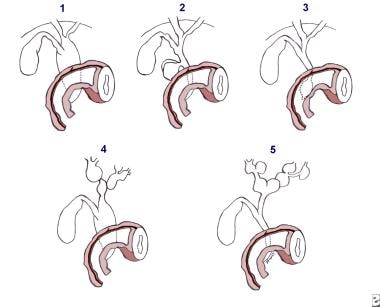
In all reported series, the most frequent type of choledochal cyst is type I (see Image 1; see Relevant Anatomy). In types I and IV choledochal cysts (fusiform dilation of the CBD without or with dilated intrahepatic ducts, respectively), the female-to-male ratio is roughly 4:1. However, in types II (diverticulum of the CBD), III (choledochocele), and V (dilation of intrahepatic ducts only), the cysts occur with equal frequency in both sexes.

Choledochal cysts can occur in persons of any age. Two thirds of the cysts are diagnosed before the patient is age 10 years (Kasai, 1970; Katyal, 1992; O'Neill, 1992). Approximately 20% of cysts are diagnosed in much older patients (Lipset, 1994; Okada, 1990; Saing, 1985). In rare cases, choledochal cysts have been detected at prenatal ultrasonography as early as 15 weeks' gestation.

Pathophysiology

Pathogenesis

The exact cause of choledochal cyst remains obscure. Many authors believe that they are congenital because most of the cysts are diagnosed in infants and children. However, because approximately 20% are diagnosed in adults, including elderly patients, several theories have been postulated, as follows (Lipset, 1994; O'Neill, 1992; Yamaguchi, 1969):

  • Weakness of the wall of the bile duct (Babbitt, 1973; Bismuth, 1999; Flanigan, 1975)
  • Obstruction of the distal choledochus (Spitz, 1977)
  • Combination of obstruction and weakness (Kato, 1974)
  • Reflux of pancreatic enzymes into the CBD secondary to an anomaly of the pancreaticobiliary junction (Babbitt, 1969; Kato, 1981; Miyano, 1979; Okada, 1990; Todani, 1984, Yamashiro, 1984)

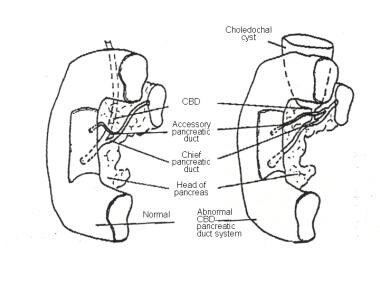
In 1969, Babbitt and colleagues carefully analyzed the cholangiograms of patients with choledochal cysts and found many with an anomaly of the pancreaticobiliary junction. In these patients, a small distal CBD entered the pancreatic duct at 2-3.5 cm from the ampulla of Vater, whereas the normal common channel is 5 mm or less. This may represent failure of normal separation of these two ducts during embryologic development. This proximal junction precludes the proper functioning of the sphincter of Oddi. The pressure in the pancreatic duct (30-50 cm H2O) exceeds the pressure in the CBD (25-30 cm H2O) favoring reflux of pancreatic secretions into the CBD. They also noted a high amylase content in the fluid from the cysts. The reflux of pancreatic juice could lead to weakness and dissolution of the wall of the CBD (see Image 2).

Experimental support for this concept was reported in 1974 by Kato and associates who anastomosed the main pancreatic duct to the gallbladder in dogs. Within 9 days after the anastomosis, all the tested animals had varying degrees of dilatation of the CBD, with edematous changes of the CBD wall. They concluded that proteolytic enzymes were responsible for the damage.

In 1977, Spitz supported the concept of distal CBD obstruction as a cause of choledochal cyst when he demonstrated bile duct dilatation in lambs by means of ligation of the duct near the duodenum. However, the same experiment failed to reproduce dilatation of the bile duct in mature sheep.

Miyano et al (1981) established an experimental model of an anomalous choledochopancreatic ductal junction by creating a choledochopancreatic end-to-side ductal anastomosis in puppies. They successfully reproduced the dilatation of the CBD in all experimental animals without exception.

In 1984, Todani et al conducted an analysis of endoscopic retrograde cholangiopancreatograms and other cholangiograms and confirmed this long common-channel anomaly. The anomaly was found in most patients. Other authors have reported the same findings in their series (Jona, 1979; Kato, 1981; Miyano, 1979; Okada, 1990; Oguchi, 1988). Reflux of pancreatic enzymes into the CBD can happen early in life, even in fetal life, resulting in damage to the ductal wall. The distal portion of the CBD is most at risk, and with repeated irritation, it can become stenotic.

All of these theories are applicable to choledochal cyst type I, III, and IV anomalies, but they cannot be used to explain type II and V choledochal cysts in which the CBD is normal. Perhaps genetic factors play a role (Flanigan, 1975; Miyano, 1996; Yamaguchi, 1980). Despite this, the two most accepted theories are still reflux of pancreatic enzymes into the CBD secondary to an anomalous pancreaticobiliary junction and obstruction of the distal CBD.

Pathologic features

Grossly, the size of a type I choledochal cyst is highly variable (Flanigan, 1975; Jona, 1979; Kasai, 1970; Katyal, 1992; Lipset, 1994; Postema, 1999; Saing, 1985; Todani, 1995). The cysts contain a few hundred milliliters of bilious fluid that is rich in pancreatic enzymes. The cyst wall thickness is also variable, ranging from very thin to a few millimeters in thickness.

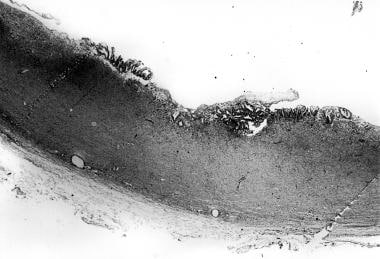
In type IV and V anomalies, intrahepatic cysts can be fusiform or saccular and are in continuity with the CBD. Dilatation of the proximal common duct is frequent, particularly just proximal to the long common channel. Sludge and stones are sometimes present within the cyst (Flanigan, 1975; Miyano, 1996). The bile duct distal to the cyst is usually stenotic. The liver may have variable degrees of fibrosis or established cirrhosis with portal hypertension. Histologic studies of the wall of choledochal cysts show dense fibrous connective tissue with inflammation and ulceration of the mucosa and submucosal layers (see Image 3).

The inflammation is significantly less in younger patients than in older children in whom chronic inflammatory changes abound (Miyano, 1996; Oguchi, 1988; Raffensperger, 1990; Suita, 1999; Todani, 1995). With severe inflammation, only a relatively thin and fragmented lining, rather than the typical biliary mucosa, is observed lining the cyst. Intramucosal glandular structures are frequently observed; this suggests epithelial metaplasia secondary to repeated destruction and regrowth of the lining of the cyst. Inflammation has been noted to be more severe in intrahepatic cysts than in extrahepatic cysts.

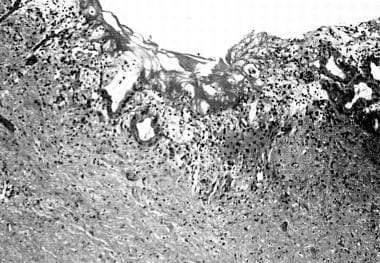
Carcinoma arising in a choledochal cyst wall or remaining biliary tree after complete cyst excision is well recognized. Malignancy is believed to be the result of chronic inflammation and metaplasia (see Image 4). The typical malignancy is adenosquamous carcinoma or occasional cases of small cell carcinoma.

Clinical

Choledochal cysts and malignancies

Malignancies in choledochal cyst can arise from the distal CBD, the wall of the cyst (even after successful drainage at cystoenterostomy), or the intrahepatic bile ducts. The risk of cancer appears to be related to the age of the patient; it is high (>20 times) compared with that of the healthy population (Bismuth, 1999; Imazu, 2001; Iwai, 1990; O'Neill, 1992; Todani, 1977; Todani, 1979; Todani, 1987; Watanabe, 1999). The risk of detecting a biliary tree malignancy in a resected cyst is 0.7% in patients who undergo surgery before age 10 years, 6.8% in patients who undergo surgery at age 11-20 years, and 14.3% in patients who undergo surgery after age 20 years.

More than half of the cancers arise from the cyst wall, even after successful internal drainage. Total cyst excision has not prevented the risk of malignancy in the remaining bile ducts. Malignancy can develop many years after excision of the cyst, and it can develop in areas of the biliary tree remote from the cyst such as the gallbladder and terminal common duct, which is left behind after excisional surgery.

Any type of cyst is susceptible to malignancy, but the greatest prevalence is observed with types I, IV, and V. Factors thought to contribute to the development of malignancy include prolonged bile stasis and chronic inflammation of the cyst wall. Inflammatory and metaplastic changes increase with patient age, and they are frequently observed in association with carcinoma of the bile duct. The increased risk of biliary tract malignancy, even after surgery, warrants close surveillance in any case of choledochal cyst.

Prenatal diagnosis

With the use of prenatal ultrasonography, an increasing number of choledochal cysts have been reported in the fetus (Hammada, 1998; Howell, 1983; Lipset, 1994; Mackenzie, 2001; Marchildon, 1988; Shamberger, 1995). Incomplete gastric obstruction by a large cyst is one of the typical clinical manifestations in newborns and young infants (Komuro, 2000). The earliest reported choledochal cyst was detected in a fetus at 15 weeks' gestation, which may correspond to the timing of the formation of pancreatic enzymes.

The prenatal demonstration of a cystic structure inferior to the liver strongly suggests the diagnosis. Fetal development should be carefully monitored with serial ultrasonography after such a discovery. Most centers prefer to excise the cyst shortly after birth. A waiting period of a few weeks is necessary to stabilize the baby and allow for proper preoperative evaluation. Surgical excision in the neonatal period has been shown to be technically feasible and well tolerated by the patient.

Clinical presentation

Two distinct clinical groups of patients exist with regard to age at presentation (Katyal, 1992; Lipset, 1994; O'Neill, 1992; Raffensperger, 1990; Suita, 1999; Todani, 1995). The first group is the infantile group consisting of babies younger than 1 year, with or without obvious hepatomegaly, with obstructive jaundice and acholic stools. This clinical picture is indistinguishable from that of biliary atresia in the absence of a palpable mass in the right side of the abdomen. However, the cystic mass can usually be detected either at clinical examination or on ultrasonography; this finding suggests a diagnosis of choledochal cyst.

In 1995, Todani et al found that 26 of 28 infants younger than 1 year had a mass, whereas only 3 of 8 infants aged 13-24 months had a mass. Other symptoms, such as vomiting, fever, and abdominal pain with hyperamylasemia are extremely infrequent (Saing, 1985). In infants with a prenatal diagnosis of choledochal cyst, jaundice often does not manifest until 1-3 weeks after birth (Ono, 2000; Patel, 1991).

In contrast, infants older than 1 year, with the so-called adult form of choledochal cyst, generally have one or more components of the classic triad: pain, jaundice, and a palpable mass. The entire triad is present in fewer than 30% of patients (O'Neill, 1992). Jaundice is intermittent and often associated with vague abdominal pain. The pain has been described as being similar to that of cholangitis or recurrent mild pancreatitis. Undiagnosed choledochal cysts can lead to choledocholithiasis, cirrhosis with portal hypertension, cyst rupture, or biliary carcinomas.


Total excision of the cyst with adequate bile drainage is the standard treatment for choledochal cyst. However, in the setting of extensive inflammation, a cyst mucosectomy and cystoenterostomy can be performed.


Regarding the anatomic classification of choledochal cyst, in 1977, Todani et al modified the classic Alonso-Lej classification by adding two new types (types IV and V). Others have subsequently added further subtypes (see Image 1). The types are as follows:

  • Type I - Cystic or fusiform dilatation of the CBD; most frequent type (90-95% of the cases).
  • Type II - Diverticulum of the CBD, with normal size CBD
  • Type III - Choledochocele, a cystic dilatation of the distal intramural portion of the CBD, typically protruding into the second portion of the duodenum
  • Type IV - Cystic or fusiform dilatation of the CBD associated with cystic, fusiform, or saccular dilatation of intrahepatic bile ducts, also termed form fruste
  • Type V - Cystic, fusiform, or saccular dilatation of the intrahepatic bile ducts associated with a normal CBD; may be associated with hepatic fibrosis (referred to as Caroli disease)


The treatment of choledochal cyst is typically complete surgical excision at the time of presentation, with the exception of type V (multiple intrahepatic cysts) which may benefit from conservative therapy including percutaneous drainage and medical management.


Lab Studies

  • Laboratory studies that may be useful for the diagnosis and preoperative evaluation of a patient with a choledochal cyst include direct bilirubin, alkaline phosphatase, serum aspartate aminotransferase (AST), serum alanine aminotransferase (ALT), gamma-glutamyl transferase (GGT), and coagulation profiles. A complete blood cell count (CBC) should also be obtained to exclude any associated or underlying anemia prior to surgery.

Imaging Studies

  • Imaging studies are the cornerstone of diagnosis of choledochal cysts. They serve not only to confirm the diagnosis but also to outline the anatomy of the anomaly in preparation for surgical intervention.
  • Ultrasonography is the best initial study (Yamaguchi, 1980). In neonates, it may be the only test needed. Ultrasonography can demonstrate changes in the bile ducts as well as in the liver (see Image 5).
  • Endoscopic retrograde cholangiopancreatography (ERCP) remains the criterion standard diagnostic study. In expert hands, ERCP can be performed with a high rate of success, even in small infants. When successful, ERCP clearly shows the anatomy of the pancreaticobiliary junction (Kasai, 1970; Jona, 1979; Todani, 1977; Todani, 1984). With forceful injection of contrast even small choledochoceles can be imaged, presumably by distension of the cyst wall.
  • Magnetic resonance cholangiopancreatography (MRCP) has largely supplanted ERCP as the diagnostic test of choice for choledochal cysts because it offers high resolution detailed images of relevant anatomy, is noninvasive, and does not suffer from complications such as postprocedure pancreatitis (Kim, 2000) (see Image 6). MRCP detects most choledochal cysts with sensitivities from 90-100% and specificities from 73-100% (Park, 2005), with the exception of small choledochoceles and minor ductal anomalies. MRCP has been shown to be effective in neonates (Lin, 2005), children (Yamataka, 1997), adults (Zhong, 2003), and fetuses (Wong, 2005).
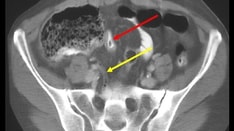
  • Computed tomography (CT) may also be useful to delineate the cyst and its relationship to surrounding structures. In older patients, especially adults, CT scanning combined with cholangiography may be useful (see Image 7).
  • Upper gastrointestinal imaging and cholangiography with oral or intravenous contrast enhancement are of limited value in the setting of hyperbilirubinemia and are generally outdated.
  • Scintigraphy with 99mTc diisopropyl iminodiacetic acid (DISIDA) may show complete obstruction of the distal bile duct without any drainage to the intestine (Lipset, 1994; O'Neill, 1992).


Surgical therapy

Treatment of choledochal cysts is surgical, except in type V multiple intrahepatic cysts, which can benefit from medical management for variable periods of time. In the past, operative aspiration and external drainage were used extensively because most patients were quite sick, and a simple quick procedure was convenient. These external drainage procedures of the biliary tree were unsuccessful because of numerous complications, including repeated cholangitis and biliary fistulae. Mortality rates were high (Flanigan, 1975; Fu, 2000; Joseph, 1990; Kasai, 1970; Lipset, 1994; O'Neill, 1992). Today, in the setting of acute severe disease, percutaneous cholecystostomy drainage can be performed prior to the definitive procedure. This is safe and generally well tolerated; however, it is not necessary in most patients.

Internal drainage, either with cystoduodenostomy or cystojejunostomy with Roux-en-Y biliary reconstruction, was used in the past. These procedures left the cyst behind, and the free reflux of pancreatic enzymes into the cyst via the anomalous pancreaticobiliary junction resulted in a high incidence of calculi, recurrent cholangitis, anastomotic strictures, and carcinoma arising from the cyst. Of patients treated with either cystoduodenostomy or cystojejunostomy, 65% remained symptomatic, and 40% required repeat surgery at a later date (Chijiiwa, 1993; Chijiiwa, 1994). Recurrent cholangitis and chronic inflammation in the remaining cyst eventually produces metaplasia that leads to malignant transformation.

Total excision of the cyst in types I, II, and IV followed by reconstruction of the biliary tree with hepaticojejunostomy in a Roux-en-Y fashion has been widely accepted as the procedure of choice in treating choledochal cysts and has been found to be superior to hepaticoduodenostomy (Shimotakahara, 2005). This procedure implies excision of the distal CBD. Consequently, it blocks the reflux of pancreatic enzymes into the biliary tract, thereby decreasing the incidence of carcinoma of the bile duct.

Total excision of the cyst is possible in virtually all infants and young children. In older patients with repeated cholangitis and marked pericystic inflammation, this disease may be best managed with resection of the anterolateral part of the cyst followed by an endocystic resection of the lining, leaving the back wall adjacent to the portal vein in place, as reported by Lilly in 1977. This technique also appears to be most useful in patients who have previously undergone cystoenterostomy and who require repeat surgery because of recurrent cholangitis. This technique makes the dissection less hazardous.

Recently, several groups have successfully performed laparoscopic-assisted and laparoscopic total cyst excision with Roux-en-Y hepatoenterostomy with complication rates comparable to those of the open procedure. Li and colleagues (2004) performed laparoscopic cyst excision with laparoscopic-assisted Roux-en-Y hepatoenterostomy in 35 children (33 cyst type, 2 fusiform) without conversion to the open procedure and with postoperative stays of 3-5 days. The procedure is described in detail for both choledochal cyst and biliary atresia surgery by Martinez-Ferro et al (2005).

Intraoperative cholangiography obtained via puncture of the cyst or via the gallbladder is always obtained. It outlines the exact anatomy of the choledochal cyst and its relationship with the pancreas. Cholecystectomy is routinely performed at the same time.

Biliary reconstruction can be performed with a Roux-en-Y hepaticojejunostomy as high as possible, near the hilum of the liver (Hata, 1993; Joseph, 1990; Kasai, 1970; Miyano, 1996). Some authors, including Raffensperger and Shamberger, have interposed a reversed segment of jejunum to prevent reflux (Cosentino, 1992; Fu, 2000; Reynolds, 1985; Shamberger, 1995). This idea has not been universally accepted. No stents are routinely necessary.

With regard to type II choledochal cysts, a simple excision of the diverticulum with ductoplasty for reconstruction of the CBD is all that is required. Laparoscopic excision has been successfully performed in this rather rare disease (Liu, 2000).

With type III choledochal cysts, the general approach is one of lateral duodenotomy with unroofing of the choledochocele to drain the bile duct and pancreatic duct directly into the duodenum. The two ductal openings should be carefully examined to determine whether ductoplasty is required (Joseph, 1990; Jona, 1979; Maning, 1990).

In patients with type IV choledochal cysts with intrahepatic cysts, each case is individually evaluated, and the principle of adequate bile drainage is taken into account. Excision of the dilated extrahepatic bile ducts as far as the porta hepatis, with hepaticojejunostomy at the level of the hilum, may provide good biliary drainage and effective decompression of the intrahepatic cysts. If the intrahepatic cysts are localized in a small portion of the liver, partial hepatectomy may be required (Ohi, 1985; Ohi, 1990; Okada, 1990).

With regard to type V choledochal cysts, patients with localized disease may benefit from a hepatic lobectomy. If the disease is diffuse, involving both lobes of the liver, treatment is palliative and liver transplantation may be required (Joseph, 1990; O'Neill, 1992; Todani, 1978; Todani, 1984).


Complications after surgery have been mainly observed with types I, IV, and V choledochal cysts. They are much less common in excisional procedures. The overall morbidity rate is less than 10%. Mortality and repeat surgery rates are low after excision, compared with those associated with internal drainage operations.

Postsurgical complications include the following:

  • Cholangitis
    • In 1996, Miyano et al reported a 2.3% incidence of cholangitis after cyst excision.
    • In 1995, Todani and Watanabe et al found cholangitis in 10 patients in their 25-year review of 97 patients who underwent cyst excision.
    • In contrast, Chijiiwa et al (in 1993 and 1994) found that 88% of patients who previously underwent cystoenterostomy had cholangitis.
  • Biliary stone formation
    • In 1993 and 1994, Chijiiwa et al reported a 25% rate of choledocholithiasis and a 33% rate of hepatolithiasis after cystoenterostomy.
    • In 1997, Yamataka et al reported stone formation in 3 of 18 patients who underwent previous cyst excision. Two patients had stones at the porta hepatis, and one patient had stones at both the porta hepatis and within the left lobe of the liver.
    • Stones can be observed in the intrapancreatic bile duct. Usually, cholangitis and stone formation are observed in the same patient. These complications are thought to result from many factors, including the following:
      • Stricture of the anastomosis
      • Residual debris in the intrahepatic bile duct
      • Dilated intrahepatic ducts, especially in type IV and type V choledochal cysts
  • Anastomotic stricture
    • Apart from technical errors, anastomotic strictures may be a progressive phenomenon after surgery.
    • In a 1993 report, Hata et al found a 4.1% rate of anastomotic strictures. The diameter of an adequate anastomosis is usually reduced by 20-30% after a few weeks.
    • Such a reduction in the anastomotic diameter may result from excessive devascularization of the duct during dissection. A wide anastomosis as far as the hepatic hilum may prevent anastomotic stricture.
  • Residual debris in the intrahepatic bile ducts: Residual debris is commonly observed in older patients. Debris left within the intrahepatic duct or pancreatic duct during cyst excision may be responsible for postexcisional stone formation and pancreatitis (Chijiiwa, 1994; Joseph, 1990; Ohi, 1990; Suita, 1999).
  • Intrahepatic bile duct dilatation: Dilatation usually regresses after cyst excision and hepaticojejunostomy in young patients. In older patients and adults, this dilatation tends to persist. Dilatation and residual debris may cause cholangitis and stone formation (Ohi, 1990; Ohi, 1985). Some authors recommend endoscopic examination of the duct during surgery to clean out all the debris (Miyano, 1995; Yamataka, 2000).
  • Malignancy
    • The risk of carcinoma in the retained cyst approaches 50% in patients treated with cystoenterostomy and is approximately 20 times greater than in the general population (Bismuth, 1999; Chijiiwa, 1994; Joseph, 1990; Todani, 1987).
    • Total cyst excision had been promising in eliminating the risk of cancer development. However, sporadic cases of carcinoma in the intrahepatic ducts and distal common duct after complete cyst excision have been reported (Ohi, 1990; Todani, 1995).
    • In a 1997 report, Yamataka et al have recommended excision of the intrapancreatic terminal choledochus.
    • With regard to intrahepatic ducts, adequate bile drainage may prevent malignant transformation.

In summary, total excision of the cyst with adequate bile drainage is the standard treatment for choledochal cysts. Long-term follow-up is necessary to detect any late complications, especially the development of malignancy.


Media file 1:  Choledochal cyst: surgical perspective. Todani classification of the 5 types of choledochal cysts.
Click to see larger pictureClick to see detailView Full Size Image
Media type:  Image

Media file 2:  Choledochal cyst: surgical perspective. Babbitt, 1969 anomalous pancreaticobiliary ductal system theory of choledochal cyst etiology.
Click to see larger pictureClick to see detailView Full Size Image
Media type:  Photo

Media file 3:  Choledochal cyst: surgical perspective. Photomicrograph shows the cyst wall, with inflammation and ulceration of the mucosa and submucosa.
Click to see larger pictureClick to see detailView Full Size Image
Media type:  Photo

Media file 4:  Choledochal cyst: surgical perspective. Image shows the wall of the cyst, with inflammation and metaplasia.
Click to see larger pictureClick to see detailView Full Size Image
Media type:  Photo

Media file 5:  Choledochal cyst: surgical perspective. Sonogram shows a large unilocular cyst under the liver.
Click to see larger pictureClick to see detailView Full Size Image
Media type:  Image

Media file 6:  Choledochal cyst: surgical perspective. Magnetic resonance cholangiopancreatography shows dilated hepatic ducts and common bile duct (CBD) of a type IV cyst.
Click to see larger pictureClick to see detailView Full Size Image
Media type:  CT

Media file 7:  Choledochal cyst: surgical perspective. CT scan shows a large cyst with wall thickening.

Click to see larger pictureClick to see detailView Full Size Image
Media type:  CT


  • Alonso-Lej F, Rever WB Jr, Pessagno DJ. Congenital choledochal cyst, with a report of 2, and an analysis of 94, cases. Int Abstr Surg. Jan 1959;108(1):1-30. [Medline].
  • Babbitt DP. [Congenital choledochal cysts: new etiological concept based on anomalous relationships of the common bile duct and pancreatic bulb]. Ann Radiol (Paris). 1969;12(3):231-40. [Medline].
  • Babbitt DP, Starshak RJ, Clemett AR. Choledochal cyst: a concept of etiology. Am J Roentgenol Radium Ther Nucl Med. Sep 1973;119(1):57-62. [Medline].
  • Bismuth H, Krissat J. Choledochal cystic malignancies. Ann Oncol. 1999;10 Suppl 4:94-8. [Medline].
  • Chijiiwa K, Koga A. Surgical management and long-term follow-up of patients with choledochal cysts. Am J Surg. Feb 1993;165(2):238-42. [Medline].
  • Chijiiwa K, Tanaka M. Late complications after excisional operation in patients with choledochal cyst. J Am Coll Surg. Aug 1994;179(2):139-44. [Medline].
  • Cosentino CM, Luck SR, Raffensperger JG, Reynolds M. Choledochal duct cyst: resection with physiologic reconstruction. Surgery. Oct 1992;112(4):740-7; discussion 747-8. [Medline].
  • Flanigan PD. Biliary cysts. Ann Surg. Nov 1975;182(5):635-43. [Medline].
  • Fu M, Wang Y, Zhang J. Evolution in the treatment of choledochus cyst. J Pediatr Surg. Sep 2000;35(9):1344-7. [Medline].
  • Hamada Y, Tanano A, Sato M, et al. Rapid enlargement of a choledochal cyst: antenatal diagnosis and delayed primary excision. Pediatr Surg Int. Jul 1998;13(5-6):419-21. [Medline].
  • Hata Y, Sasaki F, Takahashi H, et al. Surgical treatment of congenital biliary dilatation associated with pancreaticobiliary maljunction. Surg Gynecol Obstet. Jun 1993;176(6):581-7. [Medline].
  • Howell CG, Templeton JM, Weiner S, et al. Antenatal diagnosis and early surgery for choledochal cyst. J Pediatr Surg. Aug 1983;18(4):387-93. [Medline].
  • Imazu M, Iwai N, Tokiwa K, et al. Factors of biliary carcinogenesis in choledochal cysts. Eur J Pediatr Surg. Feb 2001;11(1):24-7. [Medline].
  • Iwai N, Deguchi E, Yanagihara J, et al. Cancer arising in a choledochal cyst in a 12-year-old girl. J Pediatr Surg. Dec 1990;25(12):1261-3. [Medline].
  • Jona JZ, Babbitt DP, Starshak RJ, et al. Anatomic observations and etiologic and surgical considerations in choledochal cyst. J Pediatr Surg. Jun 1979;14(3):315-20. [Medline].
  • Joseph VT. Surgical techniques and long-term results in the treatment of choledochal cyst. J Pediatr Surg. Jul 1990;25(7):782-7. [Medline].
  • Kasai M, Asakura Y, Taira Y. Surgical treatment of choledochal cyst. Ann Surg. Nov 1970;172(5):844-51. [Medline].
  • Kato T, Asakura Y, Kasai M. An attempt to produce choledochal cyst in puppies. J Pediatr Surg. Aug 1974;9(4):509-13. [Medline].
  • Kato T, Hebiguchi T, Matsuda K, Yoshino H. Action of pancreatic juice on the bile duct: pathogenesis of congenital choledochal cyst. J Pediatr Surg. Apr 1981;16(2):146-51. [Medline].
  • Katyal D, Lees GM. Choledochal cysts: a retrospective review of 28 patients and a review of the literature. Can J Surg. Dec 1992;35(6):584-8. [Medline].
  • Kim SH, Lim JH, Yoon HK, et al. Choledochal cyst: comparison of MR and conventional cholangiography. Clin Radiol. May 2000;55(5):378-83. [Medline].
  • Komuro H, Makino S, Tahara K. Choledochal cyst associated with duodenal obstruction. J Pediatr Surg. Aug 2000;35(8):1259-62. [Medline].
  • Li L, Feng W, Jing-Bo F, et al. Laparoscopic-assisted total cyst excision of choledochal cyst and Roux-en-Y hepatoenterostomy. J Pediatr Surg. Nov 2004;39(11):1663-6. [Medline].
  • Lilly JR. Total excision of choledochal cyst. Surg Gynecol Obstet. Feb 1978;146(2):254-6. [Medline].
  • Lin JTH YH, Chen YH, Ni HS, et al. Magnetic resonance cholangiopancreatography diagnosed pancreatitis associated choledochal cyst: report of one case. Acta Paediatr Taiwan. Nov-Dec 2001;42(6):363-6. [Medline].
  • Lipsett PA, Pitt HA, Colombani PM, et al. Choledochal cyst disease. A changing pattern of presentation. Ann Surg. Nov 1994;220(5):644-52. [Medline].
  • Liu DC, Rodriguez JA, Meric F, Geiger JL. Laparoscopic excision of a rare type II choledochal cyst: case report and review of the literature. J Pediatr Surg. Jul 2000;35(7):1117-9. [Medline].
  • Mackenzie TC, Howell LJ, Flake AW, Adzick NS. The management of prenatally diagnosed choledochal cysts. J Pediatr Surg. Aug 2001;36(8):1241-3. [Medline].
  • Maning P, Polley T, Oldam K. Choledochocele: an unusual form of choledochal cyst. Pediatr Surg Int. 1990;5:22-6.
  • Marchildon MB. Antenatal diagnosis of choledochal cyst: the first four cases. Pediatr Surg Int. 1988;3:431-6.
  • Martinez-Ferro M, Esteves E, Laje P. Laparoscopic treatment of biliary atresia and choledochal cyst. Semin Pediatr Surg. Nov 2005;14(4):206-15. [Medline].
  • Miyano T, Suruga K, Suda K. Abnormal choledocho-pancreatico ductal junction related to the etiology of infantile obstructive jaundice diseases. J Pediatr Surg. Feb 1979;14(1):16-26. [Medline].
  • Miyano T, Suruga K, Suda K. Choledocho-pancreatic end to side anastomosis in dog as an experimental model of choledocho-pancreatic long common channel disorders. Jpn J Pediatr Surg. 1981;13:525-31.
  • Miyano T, Yamataka A, Kato Y, et al. Hepaticoenterostomy after excision of choledochal cyst in children: a 30-year experience with 180 cases. J Pediatr Surg. Oct 1996;31(10):1417-21. [Medline].
  • Miyano T, Yamataka A, Kato Y. Choledochal cysts: special emphasis on the usefulness of intraoperative endoscopy. J Pediatr Surg. Mar 1995;30(3):482-4. [Medline].
  • O''Neill JA. Choledochal cyst. Curr Probl Surg. Jun 1992;29(6):361-410. [Medline].
  • Oguchi Y, Okada A, Nakamura T, et al. Histopathologic studies of congenital dilatation of the bile duct as related to an anomalous junction of the pancreaticobiliary ductal system: clinical and experimental studies. Surgery. Feb 1988;103(2):168-73. [Medline].
  • Ohi R, Yaoita S, Kamiyama T, et al. Surgical treatment of congenital dilatation of the bile duct with special reference to late complications after total excisional operation. J Pediatr Surg. Jun 1990;25(6):613-7. [Medline].
  • Ohi R, Koike N, Matsumoto Y, et al. Changes of intrahepatic bile duct dilatation after surgery for congenital dilatation of the bile duct. J Pediatr Surg. Apr 1985;20(2):138-42. [Medline].
  • Okada A, Nakamura T, Higaki J, et al. Congenital dilatation of the bile duct in 100 instances and its relationship with anomalous junction. Surg Gynecol Obstet. Oct 1990;171(4):291-8. [Medline].
  • Ono S, Tokiwa K, Aoi S, et al. A bleeding tendency as the first symptom of a choledochal cyst. Pediatr Surg Int. 2000;16(1-2):111-2. [Medline].
  • Park DH, Kim MH, Lee SK, et al. Can MRCP replace the diagnostic role of ERCP for patients with choledochal cysts?. Gastrointest Endosc. Sep 2005;62(3):360-6. [Medline].
  • Patel S, Sterkin L, Donahue PE, Young S. Congenital cyst of common bile duct: an unusual cause of obstructive jaundice. Surgery. Mar 1991;109(3 Pt 1):333-5. [Medline].
  • Postema RR, Hazebroek FW. Choledochal cysts in children: a review of 28 years of treatment in a Dutch children''s hospital. Eur J Surg. Dec 1999;165(12):1159-61. [Medline].
  • Raffensperger JG. Swenson's Pediatric Surgery. 5th ed. Norwalk, Conn:. Appleton & Lange;1990:665.
  • Reynolds M, Luck SR, Raffensperger JG. The valved conduit prevents ascending cholangitis: a follow-up. J Pediatr Surg. Dec 1985;20(6):696-702. [Medline].
  • Saing H, Tam PK, Lee JM, Pe-Nyun. Surgical management of choledochal cysts: a review of 60 cases. J Pediatr Surg. Aug 1985;20(4):443-8. [Medline].
  • Shamberger RC, Lund DP, Lillehei CW, Hendren WH 3rd. Interposed jejunal segment with nipple valve to prevent reflux in biliary reconstruction. J Am Coll Surg. Jan 1995;180(1):10-5. [Medline].
  • Shimotakahara A, Yamataka A, Yanai T, et al. Roux-en-Y hepaticojejunostomy or hepaticoduodenostomy for biliary reconstruction during the surgical treatment of choledochal cyst: which is better?. Pediatr Surg Int. Jan 2005;21(1):5-7. [Medline].
  • Spitz L. Experimental production of cystic dilatation of the common bile duct in neonatal lambs. J Pediatr Surg. Feb 1977;12(1):39-42. [Medline].
  • Suita S, Shono K, Kinugasa Y, et al. Influence of age on the presentation and outcome of choledochal cyst. J Pediatr Surg. Dec 1999;34(12):1765-8. [Medline].
  • Todani T, Narusue M, Watanabe Y, et al. Management of congenital choledochal cyst with intrahepatic involvement. Ann Surg. Mar 1978;187(3):272-80. [Medline].
  • Todani T, Tabuchi K, Watanabe Y, Kobayashi T. Carcinoma arising in the wall of congenital bile duct cysts. Cancer. Sep 1979;44(3):1134-41. [Medline].
  • Todani T, Watanabe Y, Fujii T, Uemura S. Anomalous arrangement of the pancreatobiliary ductal system in patients with a choledochal cyst. Am J Surg. May 1984;147(5):672-6. [Medline].
  • Todani T, Watanabe Y, Fujii T, et al. Congenital choledochal cyst with intrahepatic involvement. Arch Surg. Sep 1984;119(9):1038-43. [Medline].
  • Todani T, Watanabe Y, Toki A, Urushihara N. Carcinoma related to choledochal cysts with internal drainage operations. Surg Gynecol Obstet. Jan 1987;164(1):61-4. [Medline].
  • Todani T, Watanabe Y, Urushihara N, et al. Biliary complications after excisional procedure for choledochal cyst. J Pediatr Surg. Mar 1995;30(3):478-81. [Medline].
  • Todani T, Urushihara N, Morotomi Y, et al. Characteristics of choledochal cysts in neonates and early infants. Eur J Pediatr Surg. Jun 1995;5(3):143-5. [Medline].
  • Todani T, Watanabe Y, Narusue M, et al. Congenital bile duct cysts: Classification, operative procedures, and review of thirty-seven cases including cancer arising from choledochal cyst. Am J Surg. Aug 1977;134(2):263-9. [Medline].
  • Watanabe Y, Toki A, Todani T. Bile duct cancer developed after cyst excision for choledochal cyst. J Hepatobiliary Pancreat Surg. 1999;6(3):207-12. [Medline].
  • Wong AM, Cheung YC, Liu YH, et al. Prenatal diagnosis of choledochal cyst using magnetic resonance imaging: a case report. World J Gastroenterol. Aug 28 2005;11(32):5082-3. [Medline].
  • Yamaguchi M. Congenital choledochal cyst. Analysis of 1,433 patients in the Japanese literature. Am J Surg. Nov 1980;140(5):653-7. [Medline].
  • Yamaguchi M, Sakurai M, Takeuchi S, Awazu S. Observation of cystic dilatation of the common bile duct by ultrasonography. J Pediatr Surg. Apr 1980;15(2):207-10. [Medline].
  • Yamashiro Y, Miyano T, Suruga K, et al. Experimental study of the pathogenesis of choledochal cyst and pancreatitis, with special reference to the role of bile acids and pancreatic enzymes in the anomalous choledocho-pancreatico ductal junction. J Pediatr Gastroenterol Nutr. Nov 1984;3(5):721-7. [Medline].
  • Yamataka A, Ohshiro K, Okada Y, et al. Complications after cyst excision with hepaticoenterostomy for choledochal cysts and their surgical management in children versus adults. J Pediatr Surg. Jul 1997;32(7):1097-102. [Medline].
  • Yamataka A, Segawa O, Kobayashi H, et al. Intraoperative pancreatoscopy for pancreatic duct stone debris distal to the common channel in choledochal cyst. J Pediatr Surg. Jan 2000;35(1):1-4. [Medline].
  • Yamataka A, Kuwatsuru R, Shima H, et al. Initial experience with non-breath-hold magnetic resonance cholangiopancreatography: a new noninvasive technique for the diagnosis of choledochal cyst in children. J Pediatr Surg. Nov 1997;32(11):1560-2. [Medline].
  • Zhong L, Yao QY, Li L, Xu JR. Imaging diagnosis of pancreato-biliary diseases: a control study. World J Gastroenterol. Dec 2003;9(12):2824-7. [Medline].

Choledochal Cyst: Surgical Perspective excerpt

Article Last Updated: Aug 28, 2006