Continually Updated Clinical Reference
 
 
  All Sources     eMedicine     Medscape     Drug Reference     MEDLINE
 
eMedicine - Intestinal Transplantation : Article by

Quick Find
Authors & Editors
Introduction
Indications
Relevant Anatomy
Contraindications
Workup
Treatment
Complications
Outcome and Prognosis
Future and Controversies
Multimedia
References


Patient Education
Click here for patient education.


Author: Stuart M Greenstein, MD, Professor of Surgery, Albert Einstein College of Medicine; Consulting Surgeon, Department of Surgery, Division of Transplantation, Montefiore Medical Center

Stuart M Greenstein is a member of the following medical societies: American Association for the Advancement of Science, American College of Surgeons, American Society of Transplant Surgeons, American Society of Transplantation, Association for Academic Surgery, International College of Surgeons, Medical Society of New Jersey, National Kidney Foundation, New York Academy of Sciences, and Southeastern Surgical Congress

Coauthor(s): Daniela Hoehn, MD, Staff Physician, Department of Surgery, Montefiore Medical Center; Owen Prowse, MD, MPH, Staff Physician, Department of Surgery, Division of Transplantation, Albert Einstein College of Medicine, Montefiore Medical Center

Editors: Casimir F Firlit, MD, PhD, Consulting Staff, Department of Urology, Cardinal Glennon Children's Hospital; Mary L Windle, PharmD, Adjunct Assistant Professor, University of Nebraska Medical Center College of Pharmacy, Pharmacy Editor, eMedicine.com, Inc; Steve Dunn, MD, Chief, Solid Organ Transplantation, Department of Surgery, Alfred I DuPont Hospital for Children at Wilmington; Ron Shapiro, MD, Professor of Surgery, University of Pittsburgh; Director, Kidney, Pancreas, and Islet Transplantation, Thomas E Starzl Transplantation Institute, University of Pittsburgh Medical Center; Mary C Mancini, MD, PhD, Director of Cardiothoracic Transplantation, Professor, Department of Surgery, Louisiana State University Health Sciences Center

Author and Editor Disclosure

Synonyms and related keywords: intestinal transplantation, transplant, small intestine transplantation, small-intestine transplantation, small intestinal transplantation, small-intestinal transplantation, small bowel transplantation, small-bowel transplantation, bowel transplantation, graft versus host disease, GVHD, graft-versus-host disease, Epstein-Barr virus, EBV, cytomegalovirus, CMV, multivisceral transplantation, total parenteral nutrition, TPN

Progress in various aspects of organ preservation, surgical technique, immunosuppression, and postoperative management has improved the outcomes of organ transplantation in children and adults. Bone marrow, kidneys, pancreas, heart, lungs, and liver can now be transplanted. Small-intestine transplantation continues to evolve as a surgical procedure used in the management of intestinal failure in children and adults.

The indications for intestinal transplantation include short-bowel syndrome with complications associated with parenteral nutrition, irreversible intestinal failure, and end-stage liver disease for combined liver and small-intestine transplantation. Patients with congenital mucosal disorders, chronic pseudo-obstruction of intestine, and locally invasive tumors at the base of the intestine may also require intestinal transplantation. Transplant options include isolated intestinal (cadaveric or living-related) and multivisceral transplantation (combined liver and multivisceral).

Patient survival and graft survival rates have improved with the introduction of tacrolimus (FK506)–based immunosuppression used in combination with decontamination protocols, antibiotic regimens, and antiviral measures against cytomegalovirus (CMV) and Epstein-Barr virus (EBV). Isolated intestinal grafts have achieved 1-year patient survival rates of up to 93% and offer patients a viable alternative to parenteral nutrition, but the survival rates of these grafts still remain inferior to those of solid-organ transplants in the medium and long term. Currently, the short-term success of intestinal transplantation depends on the long-term delivery of profound immunosuppression, which can lead to infections, malignancies (posttransplant lymphoproliferative disorder [PTLD]), and drug toxicity.

History of the Procedure

Although Lillehei et al reported the first case of bowel transplantation in humans in October 1967, Alexis Carrel was the first one to perform a small-intestine transplantation in an animal model. Before 1970, 8 clinical cases of small-intestine transplantation were reportedly performed worldwide; maximum graft survival time was 79 days, and all patients died of technical complications, sepsis, or rejection.

Until the early 1980s, with the advent of cyclosporine, immunosuppressive medications consisted of azathioprine (Imuran), steroids, and antilymphocyte globulin (ALG). Cyclosporine revived interest in small-intestine transplantation; however, clinical results were disappointing because most grafts were lost to rejection. Deltz reported the first successful long-term small-intestine transplantation in Germany, where, in 1988, a 42-year-old woman received a segment of her sister's jejunum and ileum. This graft survived until 1992, when it was lost to chronic rejection. In 1990, Goulet reported on 9 patients (including a 9-month-old infant who received 2 intestinal transplants) who had poor success rates under cyclosporine-based immunosuppression. A total of 15 isolated small-intestine transplantations were performed from 1985-1990 using cyclosporine. Graft survival time in these cases ranged from 10 days to 49 months.

The most significant advance to contribute to the development of intestinal transplantation was the introduction of tacrolimus, in 1990, as reported by the Starzl group. Up through 1993, 59 patients underwent some form of small-intestine transplantation and had a 1-year graft survival rate of 60%. The Starzl group (Reyes, 1998) reported that in 55 children (28 girls and 27 boys; median age, 3.2 y) who underwent small-intestine transplantations, patient survival rates were 55% and graft survival rates were 52%. Greater understanding of the unique immunologic properties of the intestine has furthered the advancement of small-intestine transplantation.

As a result of these advances and a growing appreciation of the phenomenon of chimerism, the number of intestinal transplants has steadily increased, with more than 100 intestinal transplants being performed each year in the United States, according to Transplant Living.

Frequency

The incidence of intestinal failure with complications of total parenteral nutrition (TPN) is difficult to measure. From studies of TPN-dependent patients, the incidence of irreversible intestinal failure is estimated to be 2-3 cases per million persons per year. Success of small-intestine transplantation was first reported in cases of multivisceral transplantation at the University of Pittsburgh in 1987 and in cases of isolated bowel transplantation at the University of Kiel, Germany, in 1988. Small-intestine transplantation is performed in only a few centers worldwide.

As of November 11, 2005, the United Network for Organ Sharing (UNOS) database listed 190 patients awaiting intestinal transplantation. In 2003, 116 small-intestine transplantations were performed in adult and pediatric patients in the United States.

Graft survival rates at 1 and 5 years have been reported to be as high as 84% and 63%, respectively. There are about 150 patients awaiting transplantation, but, unfortunately, very few cadaveric donors are suitable for intestinal transplantation. Despite relatively brief waiting times for a suitable small intestine for transplantation, the mortality rate was 66% from 1993-1997 for patients with intestinal failure on the waiting list.

Etiology

TPN is the current standard of care for patients unable to maintain adequate nutrition via the intestinal tract alone. Patients with poor intestinal function who cannot be maintained on TPN are potential candidates for transplantation. Transplantation of the intestine, either alone or in association with other intra-abdominal organs (eg, liver, stomach, pancreas), may help these patients.

Intestinal failure—defined as the inability to maintain sufficient electrolyte, nutrient, and fluid balance for more than 1 month without TPN and no adaptive potential to meet these needs in the future—may result from surgical short-bowel syndrome or intestinal dysfunction in children.

Worldwide, the leading cause of intestinal failure is short-bowel syndrome caused by surgical removal. Conditions leading to short-bowel syndrome include those caused by midgut volvulus, gastroschisis, trauma, necrotizing enterocolitis (NEC), ischemia, and Crohn disease.

In addition to surgical removal of the intestine, other causes of intestinal dysfunction are dysmotility and absorptive disorders, such as microvillus inclusion, secretory diarrhea, and autoimmune enteritis. Poor motility may result from pseudo-obstruction, Hirschsprung disease, visceral neuropathy, or a tumor, such as desmoid tumor and familial polyposis (eg, Gardner disease).

The leading causes of intestinal failure differ between adult and pediatric populations. In children, the following are the leading causes of intestinal failure, in order of decreasing frequency:

  • Intestinal atresia
  • Gastroschisis
  • Crohn disease
  • Microvillus involution disease
  • NEC
  • Midgut volvulus
  • Chronic intestinal pseudo-obstruction
  • Massive resection secondary to tumor
  • Hirschsprung disease

The following are the leading causes of intestinal failure in adults, also in order of decreasing frequency:

  • Crohn disease
  • Superior mesenteric artery thrombosis
  • Superior mesenteric vein thrombosis
  • Trauma
  • Desmoid tumor
  • Volvulus
  • Pseudo-obstruction
  • Massive resection secondary to tumor
  • Radiation enteritis


Intestinal transplantation is reserved for TPN-dependent children and adults with permanent intestinal insufficiency. These patients become intolerant of TPN. Their intolerance manifests itself in potentially fatal TPN complications, such as recurrent sepsis, thrombosis of access sites, metabolic disorders, cholestasis, and hepatic dysfunction.

Isolated cadaveric or living-related intestinal grafting is indicated for patients who have poor venous access or moderate hepatic dysfunction and for those who develop severe fluid and electrolyte abnormalities that cannot be managed with TPN. Patients with intestinal insufficiency and irreversible hepatic failure or coagulopathy may be candidates for combined small-intestine and liver transplantation. Multivisceral transplants (ie, combined stomach, duodenum, pancreas, small intestine) are offered to patients following extensive surgical resection of abdominal organs for aggressive tumor or severe abdominal trauma.

The Table shows the number of intestinal transplantations performed each year from 1998-2003.

Preoperative evaluation and selection

Patients referred for intestinal transplantation often present with complicated medical problems. Preoperative evaluation requires a complete multidisciplinary assessment to clearly define the cause of isolated intestinal or intestinal/hepatic failure.

Evaluation of comorbidities and organ dysfunction is important, as is the determination of appropriate therapy, which may include transplantation, medical management, and other surgical options.

Evaluate patients as soon as end-stage intestinal failure is suspected.

Appropriate selection of candidates and optimization of preoperative morbid conditions (eg, infection, malnutrition) can significantly affect outcome.

Referring patients before onset of hepatic dysfunction is also important, because the progression of liver injury, as manifested by jaundice, significantly influences life expectancy. Studies show that patients with bilirubin concentrations exceeding 3 mg/dL at the time of referral have 1- and 2-year survival rates of 42% and 20%, respectively, compared to a survival rate of 80% in patients with serum bilirubin concentrations less than 3 mg/dL.

An appropriate transplant operation is one that is tailored to the needs of the patient (ie, isolated small-intestine transplantation, combined liver and small-intestine transplantation, or multivisceral graft).

Isolated intestinal transplantation

Transplantation may not be indicated for patients who have complications of their disease but maintain a borderline length of intestine; these patients may respond to intensive medical management. Medical management may involve modified administration of TPN, selective gut decontamination, and optimized enteral feedings.

Suspected progression of liver dysfunction requires prompt evaluation for intestinal transplantation and a liver biopsy to determine whether a combined liver and small-intestine transplantation is needed.

Combined liver and small-intestine transplantation

Patients with end-stage liver disease in addition to intestinal failure require both liver and small-intestine transplantation. This group of patients has the highest mortality rate of all patients on the waiting lists for organ transplants. Very few size-match quality organs are available for these patients, and these patients are competing for organs with patients on longer waiting lists who are waiting for an isolated liver transplantation. Patients in need of combined liver and small-intestine transplantation comprise only 2% of the patients on the liver waiting list and do not rank well in the MELD (model for end-stage liver disease) and PELD (pediatric end-stage liver disease) scoring system. To exclude correctable causes of cholestasis, patients who develop hyperbilirubinemia without evidence of liver failure need to be evaluated.

Multivisceral transplantation

Possible candidates for multivisceral transplantation include patients with permanent intestinal dysfunction, those with TPN dependency with complications, and those with a systemic motility disorder (eg, chronic pseudo-obstruction, traumatic loss of the stomach or duodenum). These patients can receive a stomach, duodenum, pancreas, and small intestine, with or without the liver.


See Treatment.


Absolute contraindications to intestinal transplantation include congenital immunodeficiency syndromes because of the risk of unrestrained graft versus host disease (GVHD). Relative contraindications are evolving, but concern appears to be growing about transplantation from CMV- or EBV-positive donors to CMV- or EBV-negative recipients. These concerns are caused by the high morbidity and mortality rates associated with the development of CMV or lymphoproliferative disease in pediatric intestinal transplant recipients. No clear lower age limit for intestinal transplantation has been established for pediatric patients. Although critically ill patients should be excluded, a history of multiple abdominal surgeries is not a contraindication for transplantation.

Hakim (1999) reports a recommendation to retrieve a small-intestine graft from a stable cadaveric donor with a beating heart who is 20% smaller than the recipient. This recommendation is designed to ensure that the pediatric recipient (who is likely to have a contracted peritoneal cavity) can accommodate the graft. The shortage of potential donors because of size constraints is prompting development of novel harvesting and grafting techniques.


Lab Studies

  • Preoperative workup: All potential transplant recipients require a review of comorbidities, with relevant laboratory and imaging studies.
  • Laboratory studies include the following:
    • CBC
    • Chem-20
    • Prothrombin time (PT)
    • Activated partial thromboplastin time (aPTT)
    • Blood group and screen
    • Serologic testing for HIV, hepatitis B virus (HBV), hepatitis C virus (HCV), CMV, EBV, syphilis, blood group system (ABO), and human leukocyte antigen (HLA) status
    • When indicated, a hypercoagulable workup (ie, protein C, protein S, antithrombin III, factor V mutation)

Imaging Studies

  • Perform angiography and or additional Duplex studies to assess the vascular supply for potential isolated living-related intestine donors. Angiography helps evaluate the superior mesenteric artery (SMA) to ensure a normal vascular distribution to the small intestine, including a normal ileocolic artery with adequate blood supply to the cecum. Duplex and Doppler studies help asses for possible inflow/outflow stenosis. Adequate assessment and preservation of the descending branch of the right colic artery are important to provide adequate blood supply to the areas of the terminal ileum and ileocecal valve.

Diagnostic Procedures

  • Patients with dysmotility disorders require assessment of the stomach to exclude functional abnormalities.
  • Manometry of the stomach, esophagus, and rectum may be required to exclude sphincter achalasia and gastroparesis.
  • Children with pseudo-obstruction require urologic assessment because as many as a third may have a dysfunctional urinary tract.
  • Children with NEC require a full neurologic and pulmonary workup to exclude the possibility of associated intraventricular hemorrhage and bronchopulmonary dysplasia.
  • Liver biopsy may be indicated in patients with intestinal failure and hepatic insufficiency.


Preoperative details

Cadaveric small-intestine procurement

  • When possible, choose smaller donors than the intended recipient.
  • Preferentially direct CMV-negative donors to CMV-negative recipients.
  • Perform selective gut decontamination with antibiotic and antifungal preparations administered via a nasogastric tube along with standard IV antibiotic prophylaxis.
  • Use University of Wisconsin Universal Organ Preservation (UW) solution for both in situ flushing and cold storage.
  • Obtain wide exposure to the abdominal cavity, and encircle the abdominal aorta distally for subsequent insertion of the infusion cannula and proximally above the celiac axis for cross-clamping.
  • Perform dissection, in situ cooling of abdominal organs, and exsanguination before removing the organs to the back table for preparation.
  • Detach the small bowel from the large bowel by total colectomy.
  • Mobilize and devascularize the cecum and ascending colon with care to preserve the ileal branches of the ileocolic artery.
  • Divide and close the ileum with the gastrointestinal anastomosis (GIA) stapler near the ileocecal valve.
  • Devascularize the colon by ligating and dividing the middle colic, left colic, and inferior mesenteric arteries near their origin.
  • After transection of the gastrocolic ligament and transection of the stapled sigmoid colon, remove the large bowel and greater omentum.
  • Free the root of the small-bowel mesentery from its retroperitoneal attachments.
  • Expose the mesenteric root, abdominal aorta, and infrahepatic vena cava, including entry of the renal veins.
  • Divide the highest jejunal vascular arcades.
  • Preserve the vascular supply to the fourth part of the duodenum and the proximal part of the jejunum.
  • Transect the proximal jejunum after mobilizing and dividing the ligament of Treitz and the inferior mesenteric vein (IMV).
  • Suture the jejunal end of the intestine to help orient the allograft.
  • At this stage, the intestine is attached to the donor only by the superior mesenteric pedicle, containing the superior mesenteric artery and superior mesenteric vein.
  • Divide the mesenteric root distal to the level of the ligated middle colic vessel.

Intraoperative details

In situ organ cooling and removal

  • Transaortic cooling requires UW solution, 50-100 mL/kg, for pediatric donors.
  • Vent venous beds via the suprahepatic vena cava.
  • Avoid overperfusion of the intestine.
  • Remove the small-intestine graft by dissection of the superior mesenteric artery and superior mesenteric vein below the origin of the inferior pancreaticoduodenal artery.
  • Excise a large Carrel patch from the anterior aortic wall containing the celiac axis and superior mesenteric artery.
  • Procure iliac and carotid arteries and veins as potential vascular grafts.

Back-table preparation of organs

  • Small-intestine grafts require little revision.
  • If the pedicle of the superior mesenteric artery is too short, it may be lengthened with free vascular grafts.
  • The anastomoses are made to the recipient aorta and portal vein or vena cava.

Transplantation surgical therapy

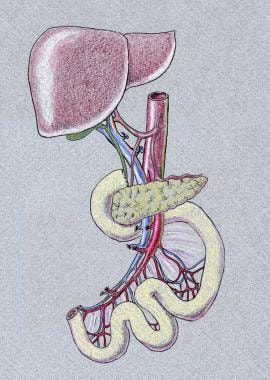
  • Isolated living-related intestinal grafting requires as much as 150-200 cm of distal jejunum and ileum to ensure that the recipient has a sufficient amount of small bowel to be completely free of TPN.
  • Preserve the donor's distal ileum, ileocecal valve, and cecum, taking care to protect the descending branch of the right colic artery to ensure adequate blood supply for the donor.
  • Carefully preserve the donated portion of the proximal ileum on a vascular pedicle comprising the ileocolic artery and vein. Vessels are anastomosed end-to-side to the recipient's infrarenal aorta and vena cava.
  • For cadaveric intestinal grafting, arteries are anastomosed directly to the infrarenal aorta with a Carrel patch. Venous drainage of the small intestine and the liver is accomplished through an anastomosis or patch to the recipient's vena cava. For isolated cadaveric intestinal grafting, the preferred venous drainage is to the recipient's portal vein.
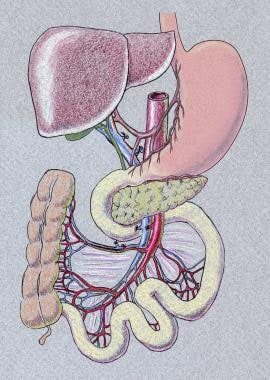
  • En bloc combined reduced liver and small-intestine transplantation has been reported as a method to alleviate shortages of size-matched donor organs for infants and small children. This technique employs ex situ liver reduction in an extrahilar fashion, with preservation of the duodenum in continuity.
  • In addition, a gastrostomy or jejunostomy is usually performed for continuous enteral feeding. Graft ileostomy permits frequent endoscopic and histologic postoperative monitoring.

Postoperative details

  • Patients require ICU monitoring postoperatively.
  • Induction therapy with tacrolimus and steroids is typically begun most often in conjunction with an interleukin-2 (IL-2) receptor antibody.
  • Maintain high levels of immunosuppression early in the postoperative period, when the risk of rejection is greatest; then follow with a lower dose for maintenance therapy.
  • Consider the variable absorption and bioavailability of whichever immunosuppression regimen is used (ie, tacrolimus, cyclosporine microemulsion). Because the bioavailability of these drugs depends on intestinal surface area and transit time, the function of the grafts directly affects drug availability.
  • In addition, multiple immunosuppressive agents are used (as in other organ transplants) to minimize toxicity and to maximize therapeutic efficacy.

Follow-up

At regular intervals, perform CMV antigenemia, quantitative EBV polymerase chain reaction (PCR) surveillance, routine cultures, transplant ileostomal endoscopy, and biopsy. Additionally, monitor fluid status, stool losses, and serum electrolytes.


Infectious complications account for approximately 60% of intestinal graft losses, with rejection and technical errors accounting for a further 36%. An autopsy series found 94% of patients had a coexisting infection, even in cases in which sepsis was not the immediate cause of death. Bacterial and fungal infections in patients with intestinal transplantation are similar to those found in patients with other solid-organ transplants. Posttransplant lymphoproliferative disease and graft rejection can lead to breakdown of the mucosal barrier, resulting in bacteremia or fungemia.

CMV infection

  • Immunosuppression is maintained to avoid breakthrough rejection but is decreased if the patient's condition worsens.
  • CMV infection reportedly occurs in 15-30% of patients receiving intestinal grafts and most often involves an allograft intestine. CMV disease is one of the most serious infections that can occur after a transplant, because it can lead to loss of the transplanted organ and even death.
  • Incidence of CMV disease is highest in CMV-negative recipients who receive CMV-positive grafts. As a result, transplantation of isolated intestines from CMV-positive donors to CMV-negative recipients is avoided.
  • Infection is diagnosed by measuring CMV antigenemia and by findings on endoscopic examination. Endoscopy shows superficial ulcers, and histopathology confirms CMV inclusion bodies.
  • Treatment consists of intravenous ganciclovir in combination with CMV immune globulin (CytoGam) and valganciclovir (Valcyte) tablets, which was approved by the US Food and Drug Administration in September 2003.
  • Valganciclovir is the oral prodrug of ganciclovir, which has been the most widely prescribed anti-CMV medication in the world. It delivers the same active drug ingredient as Cytovene oral, with up to 10 times more bioavailability than Cytovene. As an ester prodrug, the diastereomers of valganciclovir are rapidly converted to ganciclovir by intestinal and hepatic esterases.
  • Ganciclovir is a synthetic analogue of 2'-deoxyguanosine, which inhibits replication of human CMV in vitro and in vivo. In CMV-infected cells, ganciclovir is initially phosphorylated to ganciclovir monophosphate by the viral protein kinase pUL97. Further phosphorylation of the drug occurs by cellular kinases to produce the active anti-CMV species, ganciclovir triphosphate (ganciclovir-TP). As the phosphorylation is largely dependent on the viral kinase pUL97, phosphorylation of ganciclovir occurs preferentially in virus-infected cells. Ganciclovir-TP expresses virustatic activity by inhibiting viral DNA polymerase (UL54) and thereby blocking viral DNA biosynthesis. Ganciclovir-TP is only slowly metabolized intracellularly (half-life, 18 h).
  • Sensitivity test results of ganciclovir, expressed as the concentration of drug required to inhibit the growth of virus in cell culture by 50% (IC50), vary greatly, depending on a number of factors. The IC50 of ganciclovir that inhibits human CMV replication in vitro (laboratory and clinical isolates) ranges from 0.02 to 5.75 mcg/mL. The selectivity of ganciclovir is evident from its higher IC50 values affecting mammalian cell proliferation (IC50s ranging from 10.21 to >250 mcg/mL). However, bone marrow–derived colony-forming cells are more sensitive (IC50 = 0.69-3.06 mcg/mL).

EBV-associated lymphoproliferative disease

  • Posttransplantation lymphoproliferative disease occurs more often in children than in adults (29% vs 11%) and occurs more commonly within 24 months after multivisceral transplantation than after isolated intestinal transplantation.
  • Posttransplantation lymphoproliferative disease has also been linked to EBV infection in association with the use of anti-CD3 monoclonal antibody (OKT3) and steroids; the high incidence in small-intestine recipients is presumably caused by the large amount of immunosuppression necessary to prevent transplant rejection.
  • EBV may lead to a wide spectrum of clinical disease, ranging from a benign mononucleosis syndrome to a polyclonal proliferative tumor or monoclonal type lymphoma.
  • Patients present with fever, abdominal pain, and either lymphadenopathy or masses on abdominal imaging. In addition, low-grade EBV infections often precede posttransplantation lymphoproliferative disease.
  • Treatment of posttransplantation lymphoproliferative disease involves reduction of immunosuppression and administration of ganciclovir (10 mg/kg/d) as antiviral therapy.
  • Mortality has decreased because of improved early diagnosis with in situ hybridization staining for EBV and early ribonucleic acid (RNA) and EBV PCR surveillance, combined with early intervention.

Acute and chronic allograft rejection

  • Early diagnosis of allograft rejection, a major contributor to both the high morbidity and the high mortality associated with small-intestine transplantation, is essential. Allograft rejection incidence rates as high as 87% have been reported.
  • Intestinal rejection manifests itself clinically as fever, abdominal pain, increased output from the ostomy, abdominal distention, and acidosis. Malabsorption and electrolyte abnormalities occur in some patients.
  • Bacterial and fungal sepsis can be life threatening because of the intestine's loss of barrier function, making early diagnosis and effective treatment of the rejection vital.
  • Rejection is diagnosed by endoscopic intestinal biopsy through the ileostomy.
  • Diagnosis can be difficult because of the patchy nature of rejection and the presence of bleeding and perforation complications.
  • Diagnostic procedure requires sedation and is time consuming.
  • Histologic evidence of allograft rejection includes mucosal necrosis and loss of villous architecture with transmural cellular infiltrate. Histopathology reveals crypt cell apoptosis, cryptitis or crypt loss, necrosis, and endotheliitis.
  • Rejection may be treated by an IV bolus of methylprednisolone (10 mg/kg), followed by steroid recycle and optimization of the tacrolimus level.
  • OKT3 therapy may be used to treat steroid-resistant rejection.
  • Some centers report that combined liver-intestine transplantation provides a greater protective benefit (ie, lower incidence and severity of acute rejection) than intestinal transplantation.
  • With improvements in immunosuppressive drugs, chronic rejection has become an increasingly important cause of late allograft dysfunction.
  • Little is known of the clinical and pathophysiologic course of chronic intestinal rejection.
    • In 1990, Goulet reported muscular fibrosis and chronic infiltrate with intact mucosal and epithelial structures in a small-intestine transplant removed from a 17-month-old infant. An obliterative arteritis was observed, as well as atrophic Peyer patches and mesenteric lymph nodes.
    • Chronic rejection may possibly be caused by injury to the vascular endothelium, with a complex inflammatory cascade occurring in the vessel wall. As a result, prevention and treatment of chronic intestinal rejection are difficult.
    • In general, preventing acute rejection and decreasing its incidence are believed to help reduce chronic rejection.

Graft versus host disease

  • The small intestine is an immunocompetent organ; its population of lymphoid cells can mount an immunologic response to the host—a GVHD reaction.
  • Although animal models have shown that GVHD is a common occurrence, GVHD has not been a significant clinical problem, and few cases have been reported. The lack of reports does not necessarily mean GVHD is not clinically present; GVHD may be manifested subclinically and diagnosed only histologically.
  • Patients with acute GVHD present 1-8 weeks after transplantation with fever, leukopenia, diarrhea, and rash. Other symptoms may include malaise, anorexia, arthralgia, and abdominal pain.
  • Confirm diagnosis by biopsy of the skin or bowel. Once diagnosis is confirmed, promptly institute treatment with high-dose steroids and antithrombocyte globulin or with OKT3.

Technical errors

  • Technical errors are more common in children than in adults.
  • The errors may cause graft loss.
  • The errors include anastomotic leaks, hepatic artery thrombosis, and biliary anastomosis leaks in combined transplantations.


In 1999, Mazariegos reported a 55% patient survival rate and 52% graft survival rate at 5 years following intestinal transplantation; a matched group of patients who did not receive transplants demonstrated 30% 1-year and 22% 2-year survival rates. Isolated intestinal grafts reportedly provide better patient and graft survival rates than composite grafts (ie, liver and small-bowel, multivisceral). Graft and patient survival rates are improving as centers gain experience.

The Table summarizes some of the reported series of survival rates for small-intestine transplantations.

Summary of Intestinal Graft and Patient Survival Rates

Author Transplant Type Graft 1 Year,
%
Patient 1 Year,
%
Graft 5 Years,
%
Patient 5 Years,
%
Langnas Liver and small intestine 61 76
Reyes All 63 73
Grant Small intestine 55 69
Liver and small intestine 63 66
Multivisceral 63 63
Mazariegos All 52 55
Control 30
Madariaga Multivisceral 54 42
Farmer All 77 90

Small-intestine transplantation has higher incidences of rejection, sepsis, and posttransplantation lymphoproliferative disease than other organ transplantations. Infectious complications and incidence of sepsis increase when intestinal transplants include the colon. These outcomes may be secondary to bacterial translocation. Overall, 78% of intestinal transplant patients can be expected to be free of TPN and to tolerate oral nutrition following surgery.

Growth appears normal in 50% of pediatric patients who receive intestinal transplants, according to one study. Sudan et al (2000) reported that 11% of patients maintained pretransplant growth at less than the 10th percentile, and 15% demonstrated catch-up growth. Sudan's group reported that 84% of these children were able to return to day care, preschool, or school at the appropriate level for their development.


The introduction of tacrolimus immunosuppression, in combination with decontamination protocols, antibiotic regimens, and antiviral measures against CMV and EBV, has improved patient and graft survival rates. Survival rates at 1 year as high as 90% have been achieved for patients receiving isolated intestinal grafts.

Outcomes may improve with further work to overcome the lack of suitable organ donors through living-related intestinal transplantation, improved immunosuppression, and infection surveillance. Promising procedures, although still unproven, include new immunosuppressive drugs and regimens, as well as unmodified donor bone marrow infusions to induce chimerism and to promote graft acceptance.

Cost analyses of continued medical management versus early liver-intestine and intestinal transplantation requires further study to help guide policy.


Media file 1:  Isolated small-intestine transplantation.
Click to see larger pictureClick to see detailView Full Size Image
Media type:  Image

Media file 2:  Combined liver and small-intestine transplantation.
Click to see larger pictureClick to see detailView Full Size Image
Media type:  Image

Media file 3:  The chart shows the number of intestinal transplantations performed each year from 1998-2003. Statistics from Transplant Living.
Click to see larger pictureClick to see detailView Full Size Image
Media type:  Graph

Media file 4:  International small-intestine transplantation registration, May 2001.
Click to see larger pictureClick to see detailView Full Size Image
Media type:  Graph

Media file 5:  Graft ileostomy permits frequent endoscopic and histologic postoperative monitoring.
Click to see larger pictureClick to see detailView Full Size Image
Media type:  Image

Media file 6:  Valganciclovir (Valcyte) is the oral prodrug of ganciclovir.
Click to see larger pictureClick to see detailView Full Size Image
Media type:  Image


  • Abu-Elmagd K, Fung J, Bueno J. Logistics and technique for procurement of intestinal, pancreatic, and hepatic grafts from the same donor. Ann Surg. Nov 2000;232(5):680-7. [Medline].
  • Beath SV, Protheroe SP, Brook GA. Early experience of paediatric intestinal transplantation in the United Kingdom, 1993 to 1999. Transplant Proc. Sep 2000;32(6):1225. [Medline].
  • Benedetti E, Baum C, Raofi V. Living related small bowel transplantation: progressive functional adaptation of the graft. Transplant Proc. Sep 2000;32(6):1209. [Medline].
  • Bueno J, Ohwada S, Kocoshis S. Factors impacting the survival of children with intestinal failure referred for intestinal transplantation. J Pediatr Surg. Jan 1999;34(1):27-32; discussion 32-3. [Medline].
  • Carrel A. La technique des anastomese vasculaires et la transplantation des visceres. Lyon Med. 1902;98:859.
  • Cicalese L, Sileri P, Green M. Bacterial translocation in clinical intestinal transplantation. Transplant Proc. Sep 2000;32(6):1210. [Medline].
  • Deltz E, Schroeder P, Gebhardt H. [First successful clinical small intestine transplantation. Tactics and surgical technic]. Chirurg. Apr 1989;60(4):235-9. [Medline].
  • Farmer DG, McDiarmid SV, Yersiz H. Improved outcome after intestinal transplantation: an 8-year, single-center experience. Transplant Proc. Sep 2000;32(6):1233-4. [Medline].
  • Filston HC, Colombani PM. Preliminary experience with intestinal transplantation in infants and children. Pediatrics. Apr 1996;97(4):583-4. [Medline].
  • Finn L, Reyes J, Bueno J. Epstein-Barr virus infections in children after transplantation of the small intestine. Am J Surg Pathol. Mar 1998;22(3):299-309. [Medline].
  • Frezza EE, Tzakis A, Fung JJ. Small bowel transplantation: current progress and clinical application. Hepatogastroenterology. Mar-Apr 1996;43(8):363-76. [Medline].
  • Giraldo M, Martin D, Colangelo J. Intestinal transplantation for patients with short gut syndrome and hypercoagulable states. Transplant Proc. Sep 2000;32(6):1223-4. [Medline].
  • Goulet O, Revillon Y, Jan D. Small-bowel transplantation in children. Transplant Proc. Dec 1990;22(6):2499-500. [Medline].
  • Grant D. Intestinal transplantation: 1997 report of the international registry. Intestinal Transplant Registry. Transplantation. Apr 15 1999;67(7):1061-4. [Medline].
  • Grebe SC, Streilein JW. Graft-versus-Host reactions: a review. Adv Immunol. 1976;22:119-221. [Medline].
  • Gruessner RW, Sharp HL. Living-related intestinal transplantation: first report of a standardized surgical technique. Transplantation. Dec 15 1997;64(11):1605-7. [Medline].
  • Hakim NS, Papalois VE. Small bowel transplantation. Int Surg. Oct-Dec 1999;84(4):313-7. [Medline].
  • Kahan BD. Cyclosporine. N Engl J Med. Dec 21 1989;321(25):1725-38. [Medline].
  • Kato T, Berho M, Weppler D. Is severe rejection an indication for retransplantation?. Transplant Proc. Sep 2000;32(6):1201. [Medline].
  • Kocoshis SA. Small bowel transplantation in infants and children. Gastroenterol Clin North Am. Dec 1994;23(4):727-42. [Medline].
  • Langnas AN, Shaw BW Jr, Antonson DL. Preliminary experience with intestinal transplantation in infants and children. Pediatrics. Apr 1996;97(4):443-8. [Medline].
  • Langrehr JM, Banner B, Lee KK. Clinical course, morphology, and treatment of chronically rejecting small bowel allografts. Transplantation. Feb 1993;55(2):242-50. [Medline].
  • Lee C et al. Pharmacokinetics of tacrolimus (FK506) prior to kidney transplantation. Clin Pharmacol Ther. 1993;62:2.
  • Lillehei RC, Idezuki Y, Feemster JA. Transplantation of stomach, intestine, and pancreas: experimental and clinical observations. Surgery. Oct 1967;62(4):721-41. [Medline].
  • Madariaga JR, Reyes J, Mazariegos G. The long-term efficacy of multivisceral transplantation. Transplant Proc. Sep 2000;32(6):1219-20. [Medline].
  • Margreiter R. The history of intestinal transplantation. Transplant Rev. 1977;11:9.
  • Mazariegos GV, Reyes J. What''s new in pediatric organ transplantation. Pediatr Rev. Nov 1999;20(11):363-75. [Medline].
  • Mazariegos GV, Kocoshis S. Patient selection for intestinal transplantation. Curr Opin Organ Transplant. 1998;3:293-97.
  • Nalesnik M, Jaffe R, Reyes J. Posttransplant lymphoproliferative disorders in small bowel allograft recipients. Transplant Proc. Sep 2000;32(6):1213. [Medline].
  • Reyes J, Bueno J, Kocoshis S. Current status of intestinal transplantation in children. J Pediatr Surg. Feb 1998;33(2):243-54. [Medline].
  • Reyes J. Liver and intestine transplantation. Immunol Allergy Clin North Am. 1996;16(2):293-312.
  • Roberts CA, Radio SJ, Markin RS. Histopathologic evaluation of primary intestinal transplant recipients at autopsy: a single-center experience. Transplant Proc. Sep 2000;32(6):1202-3. [Medline].
  • Sudan DL, Kaufman S, Horslen S. Incidence, timing, and histologic grade of acute rejection in small bowel transplant recipients. Transplant Proc. Sep 2000;32(6):1199. [Medline].
  • Sudan DL, Iverson A, Weseman RA. Assessment of function, growth and development, and long-term quality of life after small bowel transplantation. Transplant Proc. Sep 2000;32(6):1211-2. [Medline].
  • Thompson JS. Intestinal transplantation. Experience in the United States. Eur J Pediatr Surg. Aug 1999;9(4):271-3. [Medline].
  • Todo S, Tzakis A, Abu-Elmagd K. Current status of intestinal transplantation. Adv Surg. 1994;27:295-316. [Medline].
  • Transplant Patient Data Source. United Network for Organ Sharing. Available at: http://www.unos.org/. 2005, November;[Full Text].

Intestinal Transplantation excerpt

Article Last Updated: Sep 14, 2006