Continually Updated Clinical Reference
 
 
  All Sources     eMedicine     Medscape     Drug Reference     MEDLINE
 
eMedicine - Burns, Electrical : Article by

Quick Find
Authors & Editors
Introduction
Clinical
Differentials
Workup
Treatment
Medication
Follow-up
Miscellaneous
Multimedia
References

Related Articles
Burns, Thermal

Status Epilepticus

Syncope

Ventricular Fibrillation


Patient Education
Environmental Exposures and Injuries Center

Burns Center

Lightning Strike Overview

Lightning Strike Causes

Lightning Strike Symptoms

Lightning Strike Treatment

Electric Shock Overview

Thermal Burns Overview


Author: Brian E Benson, MD, Staff Physician, Division of Otolaryngology, New Jersey Medical School

Brian E Benson is a member of the following medical societies: American Academy of Otolaryngic Allergy, American Academy of Otolaryngology-Head and Neck Surgery, and Sigma Xi

Coauthor(s): Monika I Sidor, MD, Staff Physician, Department of Surgery, University of Michigan at Ann Arbor; Robert A Schwartz, MD, MPH, Professor and Head of Dermatology, Professor of Medicine, Professor of Pediatrics, Professor of Pathology, Professor of Preventive Medicine and Community Health, UMDNJ-New Jersey Medical School; Franklin Desposito, MD, Professor of Pediatrics and Clinical Director, Center for Human and Molecular Genetics, UMDNJ-New Jersey Medical School; Consulting Staff, Department of Pediatrics, UMDNJ-University Hospital; Mark A Hostetler, MD, MPH, Assistant Professor of Pediatrics, University of Chicago; Chief, Section of Emergency Medicine, Department of Pediatrics, Medical Director of Pediatric Emergency Department, University of Chicago Children's Hospital

Editors: Harold K Simon, MD, MBA, Professor of Pediatrics and Emergency Medicine, Associate Division Director of Pediatric Emergency Medicine, Emory University School of Medicine, Children's Healthcare of Atlanta; Mary L Windle, PharmD, Adjunct Assistant Professor, University of Nebraska Medical Center College of Pharmacy, Pharmacy Editor, eMedicine.com, Inc; Wayne Wolfram, MD, MPH, Clinical Associate Professor, Departments of Pediatrics, Children's Hospital and University of Cincinnati; Paul D Petry, DO, FACOP, FAAP, Consulting Staff, Freeman Pediatric Care, Freeman Health System; Maureen Strafford, MD, Arnold P Gold Foundation Associate Professor, Departments of Anesthesiology and Pediatrics, Tufts University and Tufts-New England Medical Center

Author and Editor Disclosure

Synonyms and related keywords: electrical injury, electrical shock, electrical burns, tetany, locked-on phenomenon, low-voltage burns, high-voltage burns, high-tension voltage burns, hand-to-hand burns, hand-to-foot burns, foot-to-foot burns, lightning strikes, lightning burns, household electrical burns, accidental burns, AC burns, DC burns

Background

Although frequently grouped together in a single category, electrical injuries are actually a spectrum of injuries. Injuries range from the very mild, as seen with an electrical shock caused by low-voltage household current, to the truly devastating, as seen with high-tension electrical injuries.

Obtaining detailed information regarding the specifics of the injury has a major impact on workup, management, and outcome in patients. Important factors include the amount of current (low-voltage household, 120-440 V; high voltage, 440-1000 V; high-tension voltage, >1000 V), type of current (alternating current [AC] or direct current [DC]), path of current (hand-to-hand, hand-to-foot, foot-to-foot), length of contact (tetany, locked-on phenomenon), and the events associated with the injury (fall, burns, water contact).

Pathophysiology

Simply stated, electricity involves the flow of energy (electrons) along the path of least resistance toward a natural ground. All objects are either resistors or conductors. The skin acts as a natural resistor to flow; dry skin has a resistance of 40,000-100,000 ohms, wet skin has a resistance of approximately 1000 ohms, and calloused skin has a resistance of 2,000,000 ohms. Children's thin skin and high water content results in decreased resistance, compared with adults. The internal resistance of the body is estimated to be between 500-1000 ohms, with bones, tendons, and fat providing the most resistance to electric current. Nerves, blood vessels, mucus membranes, and muscle are the best conductors. With regard to electrical burns, the cross-sectional area is inversely proportional to tissue damage. Therefore, small areas such as joints receive maximal injury.

The current pathway plays an important role in determining injury, with a vertical pathway being more dangerous than a horizontal (hand-to-hand) pathway.

Standard household current in the United States and Canada is 110 V AC with a frequency of 60 Hz. Skeletal muscle is stimulated into tetany by currents with frequencies of 40-110 Hz. Most low- and high-tension electrical current is AC. AC produces tetany and the locked-on phenomenon. Although tetany occurs in all muscles that are stimulated, flexor groups are usually stronger and predominate. As a result, an individual's grasp is uncontrollably locked onto an object, which can increase the length of time the current passes through the body and may result in greater injury. In contrast, DC tends to produce a single large muscular contraction that often throws the patient away from the source. However, at high voltages, both AC and DC produce similar effects.

High-voltage injuries are associated with arc burns and flash burns. Arc temperatures may reach up to 5000°C, and are usually responsible for the severe thermal injuries in high-voltage injuries.

Lightning involves a single massive current impulse that is roughly equivalent to a DC blast of 2000 to 2 billion V of extremely short duration (0.1-1 ms). The peak temperature in the lightning strike channel is 30,000°K. However, the short duration usually precludes serious direct thermal injury. Four modes of lightning injury have been described: direct strike, side flash (discharge from an object near the victim), stride potential (enters one foot and exits via the other), and flash-over (energy passing outside the body with vaporization of surface water and blast effect to clothing).

Lightning may cause full cardiac arrest by inducing either asystole or central apnea. Massive depolarization of the heart leads to asystole. However, the heart's automaticity usually restarts the heart in normal sinus rhythm. Massive depolarization of the brain is believed to stun the respiratory center causing a much longer duration of central apnea. If artificial respiration is provided, many patients can survive.

Electrical injury may cause disruption of the body's normal electrical activities. The neurologic system is affected most commonly. Neurologic dysfunction is present in some form, even if only temporary, in virtually all patients. Transient nerve injuries resulting in temporary numbness and tingling are most common. Mass depolarization of the brain may lead to a loss of consciousness, amnesia, and coma. Spinal cord involvement may result in transverse myelitis. Transverse myelitis may have delayed onset and is associated with poor prognosis for recovery.

Electrical injuries also may affect the heart. As many as 25% of patients with electrical injuries have cardiac dysrhythmia. However, this number probably includes many benign transient entities (eg, sinus tachycardia, premature atrial ventricular contractions, conduction disorders). Sudden death from an AC electrical injury is usually the result of ventricular fibrillation, although asystole and other dysrhythmias are common. Ventricular fibrillation is 3 times more likely to occur if the flow of current is arm-to-arm. True myocardial infarction is rare unless the patient has preexisting cardiac disease.

Another mechanism of injury is related directly to the amount of heat generated by the flow of electrical current through body tissue. At higher voltages, higher temperatures are achieved, resulting in greater direct thermal injury. High-tension voltages cause devastating injuries from huge amounts of internal thermal damage.

Vascular injury occurs as a result of vascular spasm. Heat generated by the injury also can cause coagulation and vascular occlusion. Damage to the vascular wall may produce delayed thrombosis and bleeding. Compartment syndrome may develop as a result of acute ischemic insult to the musculature.

Renal injuries may occur as a result of rhabdomyolysis. Rhabdomyolysis causes myoglobinuria from massive release of myoglobin. Myoglobin crystallization in the kidney tubules may cause acute renal failure.

Electrical burn injuries from surgical instruments have been well documented in the surgical literature but are beyond the scope of this discussion.

Frequency

United States

Electrical injuries account for approximately 20,000 emergency department (ED) visits and 1000 deaths per year. Low-voltage injuries (110-440 V) are most common, accounting for more than 60% of all reported injuries. Children account for 20% of all low-voltage injuries. Electrocution by lightning is not a reportable injury, and accurate statistics are lacking. Estimates range from 300 to several thousand injuries and 100-600 deaths per year.

Mortality/Morbidity

  • Lightning has a case-fatality rate of 25-30%. Approximately 75% of individuals who survive a lightning strike have permanent sequelae (eg, cataracts, ruptured tympanic membrane, peripheral nerve damage).
  • Low-voltage injuries have very low morbidity and mortality. Both morbidity and mortality increase proportionately as voltage increases.
  • Wet skin significantly decreases resistance, allowing an increased exchange of energy and subsequent injury.
  • At the same voltage, AC injuries have 3 times the morbidity and mortality rates as DC injuries.
  • A pathway of current from hand-to-hand (across the heart) is associated with a mortality rate of 60%, hand-to-foot with 20%, and foot-to-foot with a mortality rate of less than 5%.
  • Ventricular fibrillation is 3 times more likely to occur in patients who experienced a hand-to-hand flow of current across the heart.

Sex

Electrical injuries are more common in males.

Age

  • Low-voltage injuries in toddlers often result from chewing on electrical cords or sticking objects into outlets.
  • In older children and adolescents, electrical injuries may occur as a result of unintentional contact with high-voltage electrical wires during activities such as climbing trees.


History

Not all electrical or lightning injuries are the same. A detailed history, including all of the specifics associated with the event, is essential.

  • Voltage and type of current
    • Standard household current in the United States and Canada is 110 V AC.
    • Larger household or industrial appliances may involve 440 V AC.
    • Power lines and electrical transformers constitute high-voltage energies and involve over 600 V. By definition, high-tension injuries involve currents of greater than 1000 V.
  • Length of exposure and potential transmittance of energy
    • Identify whether the electrical injury was brief or sustained (tetany) and an approximate time of contact.
    • Determine conditions associated with the injury that may have influenced the amount of energy transferred (eg, wet skin, puddle of water, bathtub).
    • If possible, determine the proximity of the energy transfer. Differentiating between direct strike, contact, arc, or side-flash types of injuries is helpful.
  • Other patient history
    • Determine symptomatology immediately after the injury (level of consciousness, presence of vital signs, movement of extremities, presence of cyanosis), and provide lifesaving measures.
    • Determine preexisting medical conditions.

Physical

  • Airway: Patients unable to maintain their own airway require an artificial airway.
  • Breathing: Patients may require artificial ventilation. This is particularly true of patients who were struck by lightning in whom the respiratory center may be temporarily stunned.
  • Circulation
    • Circulation can be assessed by determining perfusion to end organs by evaluating the level of consciousness, skin color and temperature, capillary refill, and urinary output.
    • Heart rate should be assessed for appropriate rate and regularity.
  • Disability
    • A thorough neurologic evaluation is indicated to determine the presence and level of deficits including global dysfunction (cerebral), localized dysfunction (peripheral nerve), or regional dysfunction (transverse myelitis).
    • Serial examinations are necessary to ascertain progression or resolution of abnormalities.
  • Environment-related factors
    • As with most environmental injuries, patients may be at risk for hypothermia, which is associated with increased morbidity and mortality rates. Pay attention to maintaining temperatures within the reference range.
    • Remove wet or burnt clothing, and keep the patient warm and dry.
  • Extremities
    • Electrical injuries may be associated with a fall from a height or an explosion, resulting in other associated trauma.
    • Closely inspect all extremities to exclude other related injuries caused by the associated trauma.
    • Even at lower voltages, tetany may cause otherwise unsuspected fractures or dislocations. Isolated swelling, deformity, or pain may indicate a fracture.
  • Skin
    • Thoroughly assess the skin for the presence of burns.
    • Flash burns may occur and appear identical to standard thermal burns. Usually associated with higher voltages, flash burns denote an external flash of energy and usually are not associated with a significant internal transmission of energy or injury.
    • Flash burns associated with lightning result from an intense impulse of energy occurring for an extremely brief period of time (lightning side flash) and may cause characteristic distributions of injury. Thermal burns are uncommon in lightning strikes unless clothing catches fire.
    • Linear superficial burns may occur where sweat had accumulated, presumably because of brief intense steam production.
    • Feathering or ferning may occur and is believed to be the result of an electron shower causing transient cutaneous markings. Usually, this is not considered to be a true burn, but it is pathognomonic for lightning injury.
    • Arc burns have a characteristic white center with a rim of congestion or erythema. Arc burns commonly are associated with significant internal transfer of energy and related injury.
  • Wound examination
    • Direct energy transmission often results in 2 wounds, an entrance and an exit wound.
    • Classic teaching has been that entrance wounds are smaller and more discrete than the blowout wound associated with exiting; however, this is not always true. A simple description of the location and appearance of the wounds is probably better than attempting to differentiate entrance from exit wounds.

Causes

Major risk factors for electrical injury include improper supervision of children and failure to make a child's environment safe.

  • Risks to small children: Young children may experience an electrical injury as the result of chewing on an electrical cord or playing with an electrical outlet.
  • Risks to older children and young adults
    • Electrical injury may occur from using an improperly grounded appliance or electrical tool. These types of injuries are less common with the increased use of ground-fault circuit interrupters in kitchens and bathrooms.
    • Electrical injury may occur from inadvertently touching electrical wires while climbing trees.
    • Adolescents may exhibit unusual risk-taking behavior or impaired judgment because of mind-altering substances such as drugs or alcohol.


Burns, Thermal
Status Epilepticus
Syncope
Ventricular Fibrillation


Lab Studies

  • Workup and treatment of patients with electrical injuries remain somewhat controversial.
  • High-voltage injury studies
    • Recommended routine screening laboratory studies include a complete blood count (CBC) and electrolyte levels (sodium, potassium, chloride, carbon dioxide, glucose, blood urea nitrogen, creatinine). Although these studies usually are not helpful in the ED, they serve as useful baselines for trending purposes.
    • Reserve routine testing for quantitative creatine kinase (CK) levels and rhabdomyolysis for patients with a history of high-voltage electrical injury or direct lightning strike.
  • Low-voltage injury studies
    • Most patients with low-voltage household electrical injuries can be managed safely with limited workup and discharge. Patients with a history of low-voltage electrical shock who are asymptomatic require no further testing and may be safely discharged home.
    • Neurologic symptoms, such as numbness and tingling, are transient and resolve without treatment.
    • Rhabdomyolysis and cardiac dysrhythmia are extremely uncommon following low-voltage injury.
    • Routine testing for quantitative CK levels and myoglobinuria is neither helpful nor indicated in asymptomatic patients with low-voltage injuries. Consider routine testing for quantitative CK levels in patients with low-voltage injury only if they are symptomatic.
    • Urine that tests positive for heme but has no RBCs is presumptive evidence of rhabdomyolysis and myoglobinuria. In these patients, send serum for quantitative CK analysis.
  • Other pertinent studies
    • Consider toxicologic screening in patients with an altered level of consciousness.
    • Consider arterial blood gas (ABG) analysis in patients with a history of cardiac arrest, shortness of breath, or shock.

Imaging Studies

  • Chest radiograph is indicated for patients with history of syncope, cardiac arrest, chest pain, or shortness of breath.
  • Extremity radiographs are indicated for swelling, deformity, or pain.
  • Computed tomography (CT) of the head is indicated for patients with altered level of consciousness or a history of possible blunt or concussive trauma associated with the electrical injury.

Other Tests

  • Cardiac monitoring while in the ED is recommended in patients who are either symptomatic for or have a history of high-voltage electrical or lightning injury.
  • Electrocardiogram is recommended for patients with any of the following signs or symptoms: (1) cardiac arrest, (2) dysrhythmia or loss of consciousness in the field, (3) a hand-to-hand path of current, or (4) a mechanism of enhanced conduction associated either with tetany and the locked-on phenomenon or with wet skin. Admission for continued cardiac monitoring is rarely necessary following low-voltage electrical injury and is safely reserved for patients with a history of cardiac arrest or loss of consciousness, dysrhythmia, or abnormal electrocardiogram findings.

Procedures

  • Foley catheters are indicated for patients with high-voltage injuries to allow continuous measurement of urine output.


Medical Care

Remove the patient from the source of the injury while maintaining the safety of all rescuers and caregivers. Standard burn care and tetanus prophylaxis should always be provided.

  • Airway: Maintain airway patency. The airway itself usually is unaffected unless it is a specific site of contact.
  • Breathing
    • Maintain adequate ventilation. Intubation and mechanical ventilation may be required as indicated.
    • Patients may have central apnea if struck by lightning.
    • High-voltage electrical injuries may be associated with life-threatening rhythms or multisystemic involvement requiring ventilatory support.
  • Circulation
    • Maintain adequate perfusion to tissues. Treat patients as if they have experienced a burn.
    • Intravenous access and, possibly, central venous access may be indicated depending on the severity of the injury.
      • Low-voltage injuries rarely cause significant thermal injury, and in general, patients do not require large amounts of fluid.
      • Patients with high-voltage injuries have proportionately larger amounts of injured tissue and require large volumes of fluid. If peripheral access is inadequate, attempt either intraosseous or central venous catheter insertion.
  • Accurately estimating the body surface area (BSA) involved is very difficult because the internal depth and degree of injury may be much greater than would be assumed from external appearances.
  • One approach to fluid resuscitation is to attempt to estimate the total body surface area (TBSA) involved and to use a burn-resuscitation formula. The two most commonly used are the Brooke and the Parkland formulas.
    • Using these formulas, fluid resuscitation is based on 2-4 mL/kg/% of the TBSA burned and is administered over the first 24 hours postinjury. Administer half of the fluid within the first 8 hours following injury and the remaining half in the subsequent 16 hours.
    • Remember that the indicated timing is based on the time at which the injury occurred, not on the time at presentation to the ED or at the beginning of resuscitation. Therefore, if fluid resuscitation is not begun until 4 hours postinjury, the first half of the amount of fluid is administered within the next 4 hours (which is within 8 h postinjury).
    • Accurately estimating the TBSA in electrical burns is difficult because most of the involved tissue is not visible. Involved tissues may be estimated grossly based on the pathway of the current.
    • A second approach to fluid resuscitation is to begin with 20 mL/kg boluses and to continue fluids to maintain a minimum urine output of 1 mL/kg/h.
    • The fluid of choice is lactated Ringer solution, which is recommended over isotonic sodium chloride solution because the latter tends to cause significant hyperchloremia.

  • Disability: After obtaining a baseline neurologic examination, prevent any further injury. If potential exists for a cervical spine or back injury, completely immobilize the patient pending radiographic studies.
  • Exposure: Thoroughly undress and examine patients, taking into consideration that hypothermia has particularly deleterious effects on patients with burns or who have experienced trauma. Cover patients, and keep them clean and dry. Use external warming sources early in the course of care if necessary.
  • Renal function

  • Maintain adequate renal perfusion and urine output.
  • Patients with high-voltage injuries are susceptible to rhabdomyolysis and myoglobinuria. Myoglobin is toxic to the kidney because it may crystallize, occlude urine flow, and result in acute renal failure.
  • Adequate hydration is recommended with the addition of an osmotic diuretic such as mannitol.
  • Mannitol 0.25 g/kg/L may be added to intravenous (IV) fluid and run at the appropriate rates that are calculated or anticipated based on mechanism of injury or TBSA involvement.

Surgical Care

  • Vascular access is necessary in all patients with high-voltage injury or direct lightning strikes. If peripheral access is inadequate, attempt insertion of either an intraosseous or a central venous catheter.
  • Fasciotomies may be necessary relatively early in treatment and should be considered in patients with extremity injuries and compromised neurovascular status to relieve tight compartments and compartment syndrome. Gross myoglobinuria is a predictor of the need for fasciotomies. Emergent consultation with a burn specialist, surgical intensivist, or general surgeon is indicated.
  • Removal of devascularized tissue is necessary. Once the wound is clear of necrotic debris, autografting may be performed. Some wounds may necessitate amputation, and the tissue may continue to evolve and require revisions over several days. Multiple methods, including arteriography, have been used to estimate the appropriate level of amputation with mixed results.
  • Escharotomies usually are not necessary because severe thermal burns of the skin are uncommon.
  • For oral commissure burns, delayed reconstruction is reported to provide better cosmetic results.

Consultations

  • Asymptomatic patients with low-voltage household current injuries do not require consultations with specialists.
  • Patients who are symptomatic or have a history of a high-voltage injury require consultation with a burn specialist, trauma specialist, or surgical intensivist.
  • Children with oral burns resulting from chewing on an electrical cord require consultation with a burn specialist or facial plastic surgeon. Prosthetic devices have been devised to separate the healing commissures in order to prevent adhesions and improve cosmetic outcome. Some data support their use in preventing the need for surgical repair of the oral commissure.
  • Surgical release of contractures facilitates physiotherapy and rehabilitiation.


Drug Category: Osmotic diuretics

Diuresis is induced by elevating osmolarity of the glomerular filtrate, thus decreasing tubular reabsorption of water. Excretion of sodium and chloride is increased. Used for diuresis, urine output maintenance, and reduction of the crystallization of myoglobin in renal tubules, which may result in acute renal failure.

Drug NameMannitol (Osmitrol)
DescriptionDOC for osmotic diuresis to maintain adequate urine output.
Adult Dose25-100 g IV as 15-25% solution; not to exceed 200 g/d
To maintain diuresis, add 25 g mannitol/L of IV fluid
Pediatric Dose0.25-1 g/kg IV
May be administered as 0.25 g/kg/L of IV fluid
ContraindicationsDocumented hypersensitivity; anuria; severe pulmonary congestion; progressive renal damage; severe dehydration; active intracranial bleeding; hypotension; progressive heart failure
InteractionsMay decrease serum lithium levels
PregnancyC - Safety for use during pregnancy has not been established.
PrecautionsBeware of excessive bleeding or fluid leakage in patients in whom ongoing fluid loss is occurring due to its osmotic effect; may cause excess diuresis with dehydration and electrolyte disturbances (monitor electrolytes and fluid status); carefully evaluate cardiovascular status before rapid administration of mannitol because sudden increase in extracellular fluid may lead to fulminating CHF; when blood is given simultaneously, add a minimum of 20 mEq of sodium chloride to each liter of mannitol solution to avoid pseudoagglutination; do not administer electrolyte-free mannitol solutions with blood

Drug Category: Analgesic agents

Pain control is essential to quality patient care. Analgesics ensure patient comfort, promote pulmonary toilet, and have sedating properties that are beneficial for patients who have sustained trauma or injuries.

Drug NameMorphine sulfate
DescriptionDOC for acute pain control following electrical burns. IV administration provides rapid and effective pain relief that is both titratable and reversible. IM administration is not recommended in patients with acute burns because of erratic absorption.
Adult Dose2-4 mg IV q2-4h prn
Pediatric Dose0.1 mg/kg IV; may initially repeat q5-10min prn; then prn q2-4h
ContraindicationsDocumented hypersensitivity; hypotension; potentially compromised airway in patients in whom establishing rapid airway control would be difficult
InteractionsReduce dose of each drug by 25% if administered with sedative (ie, benzodiazepine); phenothiazines may antagonize analgesic effects of opiate agonists; tricyclic antidepressants, MAOIs, or other CNS depressants may potentiate adverse effects of morphine; CYP2D6 substrate clearance may decrease with CYP2D6 inhibitors (eg, cimetidine, ranitidine, fluvoxamine)
PregnancyB - Usually safe but benefits must outweigh the risks.
PrecautionsPregnancy category D if prolonged use or high doses; may cause respiratory depression and hypotension (may be reversed with naloxone and IV fluids); titrate dose upward to effect
May cause characteristic urticarial rash shortly after administration because of histamine release (not true allergic reaction and usually resolves without further treatment); if severe, underlying cause (ie, massive histamine release) is treated as is standard with diphenhydramine, corticosteroids, and epinephrine
Chest wall rigidity may occur and may be reversed with naloxone; if severe rigidity occurs, use succinylcholine (succinylcholine causes paralysis and requires at least temporary ventilatory support)

Drug Category: Vaccines

Active immunization increases resistance to infection. Vaccines consist of microorganisms or cellular components that act as antigens. Administration of the vaccine stimulates production of antibodies with specific protective properties.

Drug NameTetanus toxoid
DescriptionElectrical burns require adequate tetanus prophylaxis.
The immunizing agents of choice for most adults and children > 7 y are tetanus and diphtheria toxoids.
Necessary to administer booster doses to maintain tetanus immunity throughout life.
Adult Dose0.5 mL IM
Pediatric DoseAdminister as in adults
ContraindicationsDocumented hypersensitivity; history of neurologic symptoms or signs following administration of tetanus toxoid; FDA recommends deferring elective tetanus immunization during outbreaks of poliomyelitis because tetanus toxoid injections are an important cause of provocative poliomyelitis
InteractionsPatients receiving immunosuppressants, including corticosteroids or radiation therapy, may remain susceptible despite immunization because of poor immune response; cimetidine may enhance or augment delayed-hypersensitivity responses to skin test antigens; avoid concurrent use of medication with systemic chloramphenicol because may impair amnestic response to tetanus toxoid; concurrent use of tetanus immune globulin may delay development of active immunity by several days (interaction is nevertheless clinically insignificant and does not preclude concurrent use)
PregnancyC - Safety for use during pregnancy has not been established.
PrecautionsDo not use to treat tetanus infections or for immediate prophylaxis of unimmunized individuals (use tetanus antitoxin instead, preferably human tetanus immune globulin); diminished antibody response to active immunization may be observed in patients receiving immunosuppressive therapy; better to defer primary diphtheria immunization until immunosuppressive therapy is discontinued; routine immunization of symptomatic and asymptomatic patients with HIV infection is recommended

Drug Category: Topical antibiotic creams

Topical agents (eg, silver sulfadiazine) are used to cover cutaneous burns. They act as protective barriers and have some bacteriocidal properties. They also may provide relief of pain merely by covering the denuded highly sensate skin.

Drug NameSilver sulfadiazine (Silvadene)
DescriptionDOC for topical covering of cutaneous burns not involving the face. Useful in prevention of infections from second- or third-degree burns. Has bactericidal activity against many gram-positive and gram-negative bacteria, including yeast.
Adult DoseApply as thin layer (thickness of 1/16 in) qd/bid over entire burn
Pediatric Dose<2 years: Contraindicated
>2 years: Administer as in adults
ContraindicationsDocumented hypersensitivity; age <2 y
InteractionsEffect of proteolytic enzymes is reduced when used concomitantly
PregnancyB - Usually safe but benefits must outweigh the risks.
PrecautionsCaution in G-6-PD deficiency or renal insufficiency; may cause silver staining of skin

Drug NameBacitracin ointment (Baciguent)
DescriptionDOC for facial burns.
Adult DoseApply in thin layer tid/qid over affected area
Pediatric DoseAdminister as in adults
ContraindicationsDocumented hypersensitivity
InteractionsNone reported
PregnancyC - Safety for use during pregnancy has not been established.
PrecautionsProlonged use may result in growth of nonsusceptible organisms; rarely, topical sensitization has occurred


Further Inpatient Care

  • Fluids: Administer IV fluids (lactated Ringer solution) to maintain a urine output of at least 1 mL/kg/h.
  • Temperature homeostasis: Take care to keep the patient euthermic. Hypothermia has particularly deleterious adverse effects in patients with electrical burns.
  • Renal function
    • Take care to maintain adequate renal function.
    • Maintain adequate urine output, and monitor the parameters of renal function.
    • Serial testing of quantitative CK levels may indicate the level of rhabdomyolysis and help guide treatment with osmotic agents such as mannitol.
  • Cardiac monitoring: Patients with high-voltage injuries, direct strikes, syncope, or history of cardiac dysrhythmia require continuous cardiac monitoring.
  • Pain management
    • Provide adequate pain management.
    • Early in the course of treatment, IV administration is preferred because GI tract absorption may be erratic.
    • Once the patient has been stabilized, analgesia may be provided orally.

Further Outpatient Care

  • Patients with low-voltage injuries usually require no specific follow-up care.
  • Patients with high-voltage injuries require follow-up care by a burn specialist.
  • Provide ample analgesia.
  • Some injuries, particularly electrical cord bite injuries, require ongoing care to prevent poor cosmetic outcomes. Children may be fitted with special orthodontic devices that fit into the commissures of the mouth, preventing unwanted adhesion, scarring, and microstomia.
  • Positioning of limbs, splinting, and exercises are important components of a therapeutic rehabilitation program for major and moderate burns.

In/Out Patient Meds

  • Oral analgesics are indicated for most patients following significant injury. Initial pain management is perhaps best achieved with narcotic agents containing morphine, codeine, hydrocodone, or oxycodone. Later, these may be switched to nonsteroidal anti-inflammatory drugs (NSAIDs) as the pain naturally subsides in the days following acute injury. Some burn specialists begin NSAIDs early in the course of care as a means of decreasing inflammatory mediators.
  • Antibiotic creams, such as silver sulfadiazine, may be used to cover cutaneous burns to all parts of the body except the face. Bacitracin ointment may be used safely on facial burns.
  • Oral antibiotics are not indicated prophylactically and should be used only in patients with documented infection.
  • Steroids are not indicated.

Transfer

  • Transfer patients with high-voltage injuries to a burn center with specialists capable of treating such injuries.

Deterrence/Prevention

  • Childproof the house. Keep cords out of reach and outlets covered.
  • Provide children with appropriate supervision. Teach children safe habits.
  • Instruct children regarding the serious danger associated with electrical wires. Families and children should be aware of all wires in the vicinity of their yards and areas where the children tend to play.
  • Unplug appliances before attempting repairs.
  • Ensure appropriate grounding and automatic shutoff outlets in high-risk areas such as the bathroom, kitchen, and the outdoors.
  • Do not allow the use of electrical devices near the bathtub or other bodies of water.

Complications

  • Infections may occur. Advise patients and families regarding the warning signs of infection and what to do if symptoms develop.
  • Ischemia may result with high-voltage injuries due to compartment syndrome. Pay close attention to neurovascular function. Amputations are sometimes necessary following high-voltage injuries.
  • Delayed bleeding by the labial artery may occur following injury when a child bites an electrical cord. Sudden severe bleeding may occur 7-10 days following the initial injury. Instruct parents regarding the technique of digital compression to control bleeding. Specifically instruct parents regarding where to go if such bleeding occurs.
  • Patients with full-thickness burns may require coverage of skin in the form of skin grafts.
  • Patients may develop scarring and adhesions resulting in poor cosmetic outcome. This is of particular concern with an electrical cord injury in which scarring and adhesions may develop in the commissures of the mouth, resulting in microstomia.

Prognosis

  • Prognosis is good in patients with low-voltage injuries.
  • Morbidity increases with increasing voltage and can result in death or severe extremity injury requiring amputation.
  • A pathway of current from hand-to-hand (across the heart) is associated with a mortality rate of 60%, and patients have a 3-fold higher risk of ventricular fibrillation. The mortality rate in patients with hand-to-foot pathway injuries is 20%. Patients with foot-to-foot pathway injuries have a mortality rate of less than 5%.
  • Lightning has a case-fatality rate of 25-30%; approximately 75% of individuals who survive have permanent sequelae.

Patient Education


Medical/Legal Pitfalls

  • Failure to appreciate the severity of the injury
  • Failure to transfer patients to an appropriate center (burn or trauma center)
  • Failure to provide adequate fluid resuscitation and maintain renal function in patients
  • Failure to recognize other associated injuries (cervical spine or extremity fractures)
  • Failure to recognize potential severity of a labial burn in children


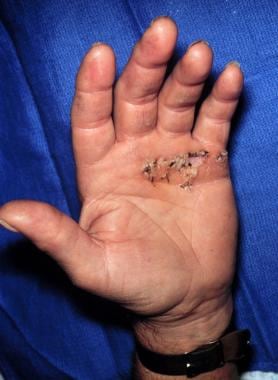
Media file 1:  Electrical burns to the hand
Click to see larger pictureClick to see detailView Full Size Image
Media type:  Photo

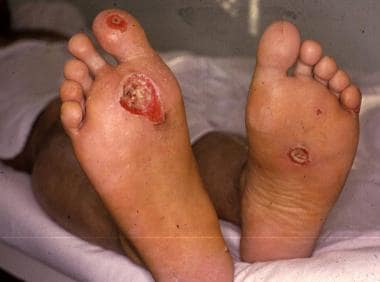
Media file 2:  Electrical burns to the feet
Click to see larger pictureClick to see detailView Full Size Image
Media type:  Photo

Media file 3:  High-voltage electrical burns to the chest
Click to see larger pictureClick to see detailView Full Size Image
Media type:  Photo

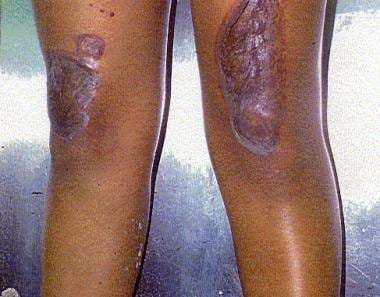
Media file 4:  Superficial electrical burns to the knees (flash/ferning)
Click to see larger pictureClick to see detailView Full Size Image
Media type:  Photo


  • Adams AJ, Beckett MW. Bilateral wrist fractures from accidental electric shock. Injury. Apr 1997;28(3):227-8. [Medline].
  • Bailey B, Gaudreault P, Thivierge RL, Turgeon JP. Cardiac monitoring of children with household electrical injuries. Ann Emerg Med. May 1995;25(5):612-7. [Medline].
  • Butler ED, Gant TD. Electrical injuries, with special reference to the upper extremities. A review of 182 cases. Am J Surg. Jul 1977;134(1):95-101. [Medline].
  • Canady JW, Thompson SA, Bardach J. Oral commissure burns in children. Plast Reconstr Surg. Apr 1996;97(4):738-44; discussion 745; 746-55. [Medline].
  • Cancio LC, Jimenez-Reyna JF, Barillo DJ, et al. One hundred ninety-five cases of high-voltage electric injury. J Burn Care Rehabil. Jul-Aug 2005;26(4):331-40. [Medline].
  • Casoli V, Verolino P, Castede JC, et al. One-stage complete phalloplasty with forearm free flap after severe electrical burns. Plast Reconstr Surg. Jan 2004;113(1):313-6. [Medline].
  • Chen W, Zhongsheng Z, Lee RC. Supramembrane potential-induced electroconformational changes in sodium channel proteins: a potential mechanism involved in electric injury. Burns. Feb 2006;32(1):52-9. [Medline].
  • Colic M, Ristic L, Jovanovic M. Emergency treatment and early fluid resuscitation following electrical injuries. Acta Chir Plast. 1996;38(4):137-41. [Medline].
  • Cooper MA. Electrical and lightning injuries. Emerg Med Clin North Am. Aug 1984;2(3):489-501. [Medline].
  • Dollery W. Towards evidence based emergency medicine: best BETs from the Manchester Royal Infirmary. Immobilisation after first anterior shoulder dislocation. J Accid Emerg Med. Nov 1998;15(6):382-3. [Medline].
  • El-Badawy A, Mabrouk AR. Epidemiology of childhood burns in the burn unit of Ain Shams University in Cairo, Egypt. Burns. Dec 1998;24(8):728-32. [Medline].
  • Evans RJ, Little K. Fracture due to shock from domestic electricity supply. Injury. May 1991;22(3):231-2. [Medline].
  • Fahmy FS, Brinsden MD, Smith J, Frame JD. Lightning: the multisystem group injuries. J Trauma. May 1999;46(5):937-40. [Medline].
  • Ferreiro I, Melendez J, Regalado J, et al. Factors influencing the sequelae of high tension electrical injuries. Burns. Nov 1998;24(7):649-53. [Medline].
  • Fontanarosa PB. Electrical shock and lightning strike. Ann Emerg Med. Feb 1993;22(2 Pt 2):378-87. [Medline].
  • Garcia CT, Smith GA, Cohen DM, Fernandez K. Electrical injuries in a pediatric emergency department. Ann Emerg Med. Nov 1995;26(5):604-8. [Medline].
  • George EN, Schur K, Muller M, et al. Management of high voltage electrical injury in children. Burns. Jun 2005;31(4):439-44. [Medline].
  • Hammond JS, Ward CG. High-voltage electrical injuries: management and outcome of 60 cases. South Med J. Nov 1988;81(11):1351-2. [Medline].
  • Hettiaratchy S, Dziewulski P. ABC of burns: pathophysiology and types of burns. BMJ. Jun 12 2004;328(7453):1427-9. [Medline].
  • Jain S, Bandi V. Electrical and lightning injuries. Crit Care Clin. Apr 1999;15(2):319-31. [Medline].
  • Kopp J, Loos B, Spilker G, Horch RE. Correlation between serum creatinine kinase levels and extent of muscle damage in electrical burns. Burns. Nov 2004;30(7):680-3. [Medline].
  • Koumbourlis AC. Electrical injuries. Crit Care Med. Nov 2002;30(11 Suppl):S424-30. [Medline].
  • Lee RC. Injury by electrical forces: pathophysiology, manifestations, and therapy. Curr Probl Surg. Sep 1997;34(9):677-764. [Medline].
  • Leibovici D, Shemer J, Shapira SC. Electrical injuries: current concepts. Injury. Nov 1995;26(9):623-7. [Medline].
  • Milano M. Oral electrical and thermal burns in children: review and report of case. ASDC J Dent Child. Mar-Apr 1999;66(2):116-9, 85. [Medline].
  • O'Keefe Gatewood M, Zane RD. Lightning injuries. Emerg Med Clin North Am. May 2004;22(2):369-403. [Medline].
  • Purdue GF, Hunt JL. Electrocardiographic monitoring after electrical injury: necessity or luxury. J Trauma. Feb 1986;26(2):166-7. [Medline].
  • Rai J, Jeschke MG, Barrow RE, Herndon DN. Electrical injuries: a 30-year review. J Trauma. May 1999;46(5):933-6. [Medline].
  • Selvaggi G, Monstrey S, Van Landuyt K, et al. Rehabilitation of burn injured patients following lightning and electrical trauma. NeuroRehabilitation. 2005;20(1):35-42. [Medline].
  • Shaheen MA, Sabet NA. Bilateral simultaneous fracture of the femoral neck following electrical shock. Injury. Jul 1984;16(1):13-4. [Medline].
  • Stefanacci HA, Vandevender DK, Gamelli RL. The use of free tissue transfers in acute thermal and electrical extremity injuries. J Trauma. Oct 2003;55(4):707-12. [Medline].
  • Thomas SS. Electrical burns of the mouth: still searching for an answer. Burns. Mar 1996;22(2):137-40. [Medline].
  • Veneman TF, van Dijk GW, Boereboom E, et al. Prediction of outcome after resuscitation in a case of electrocution. Intensive Care Med. Mar 1998;24(3):255-7. [Medline].

Burns, Electrical excerpt

Article Last Updated: Oct 3, 2006