Continually Updated Clinical Reference
 
 
  All Sources     eMedicine     Medscape     Drug Reference     MEDLINE
 
eMedicine - Streptococcal Infection, Group A : Article by

Quick Find
Authors & Editors
Introduction
Clinical
Differentials
Workup
Treatment
Medication
Follow-up
Miscellaneous
Multimedia
References

Related Articles
Arthritis, Septic

Bacteremia

Bacterial Tracheitis

Empyema

Epiglottitis

Fever in the Toddler

Impetigo

Kawasaki Disease

Lymphadenitis

Lymphadenopathy

Mitral Valve Insufficiency

Nephritis

Osteomyelitis

Pneumonia

Rheumatic Fever

Rheumatic Heart Disease

Staphylococcus Aureus Infection

Streptococcal Infection, Group A

Toxic Shock Syndrome


Patient Education
Ear, Nose, and Throat Center

Women's Health Center

Sore Throat Overview

Sore Throat Causes

Sore Throat Symptoms

Sore Throat Treatment

Strep Throat Overview

Toxic Shock Syndrome Overview


Author: Mark R Schleiss, MD, American Legion Chair of Pediatrics, Professor of Pediatrics, Division Director, Division of Infectious Diseases and Immunology, Department of Pediatrics, University of Minnesota School of Medicine

Mark R Schleiss is a member of the following medical societies: American Pediatric Society, Infectious Diseases Society of America, Pediatric Infectious Diseases Society, and Society for Pediatric Research

Editors: José Rafael Romero, MD, Director of Pediatric Infectious Diseases Fellowship Program, Associate Professor, Department of Pediatrics, Combined Division of Pediatric Infectious Diseases, Creighton University/University of Nebraska Medical Center; Mary L Windle, PharmD, Adjunct Assistant Professor, University of Nebraska Medical Center College of Pharmacy, Pharmacy Editor, eMedicine.com, Inc; Larry I Lutwick, MD, Professor of Medicine, State University of New York, Downstate Medical School; Director, Infectious Diseases, Veterans Affairs New York Harbor Health Care System, Brooklyn Campus; Daniel Rauch, MD, FAAP, Director, Pediatric Hospitalist Program, Associate Professor, Department of Pediatrics, New York University School of Medicine; Russell W Steele, MD, Head, Division of Pediatric Infectious Diseases, Ochsner Children's Health Center; Clinical Professor, Department of Pediatrics, Tulane University School of Medicine

Author and Editor Disclosure

Synonyms and related keywords: Streptococcus pyogenes, S pyogenes, group A Streptococcus; beta-hemolytic Streptococcus, Lancefield group A, acute rheumatic fever, ARF, acute glomerulonephritis, poststreptococcal glomerulonephritis, PSGN, necrotizing fasciitis, toxic shock syndrome, TSS, streptococcal pharyngitis, group A streptococcal pharyngitis, sore throat, streptococcal skin infections, streptococcal impetigo, impetigo contagiosa, scarlet fever, upper respiratory tract infection, puerperal sepsis, Streptococcus pneumoniae, bacteremia, streptococcal pyoderma, septic arthritis

osteomyelitis, brain abscess, pediatric autoimmune neuropsychiatric disorders associated with streptococcal infections syndrome, PANDAS syndrome, streptococcosis, tonsillopharyngeal erythema, a red edematous uvula, palatal petechiae, tender anterior cervical adenopathy, strawberry tongue, scabies, atopic dermatitis, streptococcal tonsillitis, ecthyma, streptococcal cellulitis, vaginitis, erysipelas, cervical adenitis, peritonsillar abscess, retropharyngeal abscess, otitis media, mastoiditis, sinusitis, pneumonia, meningitis, endocarditis, streptococcal gangrene, varicella-zoster virus, VZV, hypotension

Background

Streptococcus pyogenes (group A Streptococcus) is one of the most important pathogens encountered in clinical practice. An understanding of the diverse nature of infectious disease complications attributable to this organism is an important cornerstone of pediatric medicine. In addition to infections of the upper respiratory tract and the skin, S pyogenes can cause a wide variety of invasive systemic infections, and infection with this pathogen is also causally linked to 2 potentially serious nonsuppurative complications: acute rheumatic fever and acute glomerulonephritis. Recently, infection with S pyogenes has reemerged as an important cause of toxic shock syndrome (TSS), as well as life-threatening skin and soft tissue infections, especially necrotizing fasciitis.
Clinical syndromes compatible with S pyogenes infection have been documented in humans for many centuries. S pyogenes was likely responsible for the apparent scarlet fever epidemic described by Hippocrates in the fifth century BC. The first modern description of streptococcal infection was based on the demonstration of the organism in cases of erysipelas and wound infection by Billroth in 1874. In 1884, Pasteur was the first to report isolation of this organism from the bloodstream in a woman with puerperal sepsis. The organism was designated S pyogenes by Rosenbach in the late 19th century. Another important historical milestone was the description of the classic differential patterns of alpha, beta, and gamma hemolysis on blood agar plates, which was described by Brown in 1919. This observation allowed differentiation of pathogenic streptococci.

Perhaps the major historic turning point in the classification of streptococcal infections occurred in the early 1930s by Rebecca Lancefield with her pioneering work in the identification and description of distinct streptococcal serogroups. The work of Lancefield was instrumental in leading to the important classification of beta-hemolytic strains into distinct serogroups. This insight, in turn, led to the recognition that serogroup A isolates (S pyogenes) were the streptococcal strains responsible for pharyngitis, pyoderma, and nonsuppurative sequelae.

Pathophysiology

Description and identification of the organism

Streptococci are gram-positive cocci that tend to grow as pairs and short chains in clinical specimens. When cultured on blood agar plates, the production of a characteristic zone of complete hemolysis (beta-hemolysis) is an important clue to classification. S pyogenes produces beta-hemolysis, in contrast to the zone of partial hemolysis (alpha-hemolysis) generated by Streptococcus pneumoniae.

As originally described by Lancefield, beta-hemolytic streptococci can be divided into many groups based on the antigenic differences in group-specific polysaccharides located in the bacterial cell wall. More than 20 serologic groups have been identified and designated by letters (eg, A, B, C). Of the non–group A streptococci, the group B strain is the most important human pathogen (the most common cause of neonatal sepsis and bacteremia), although other groups (particularly group G) have occasionally been implicated as causes of pharyngitis.

Although serologic grouping by the Lancefield method is the criterion standard for differentiation of pathogenic streptococcal species, group A organisms can be identified more cost effectively by numerous latex agglutination, coagglutination, or enzyme immunoassay procedures.

Group A strains can also be distinguished from other groups by their sensitivity to bacitracin. A disc that contains 0.04 U of bacitracin inhibits the growth of more than 95% of group A strains, whereas 80-90% of non–group A strains are resistant to this antibiotic. The bacitracin disc test is simple to perform and interpret in an office-based laboratory and is sufficiently accurate for presumptive identification of group A streptococci.

Presumptive identification of a strain as group A streptococci can also be made on the basis of production of the enzyme L-pyrrolidonyl-beta-naphthylamide (PYRase). Among the beta-hemolytic streptococci isolated from throat culture, only group A isolates produce PYRase, which can be identified on the basis of the characteristic color change (red) after inoculation of a disk on an agar plate followed by overnight incubation.

Cellular constituents and virulence factors

The somatic cellular constituents as well as the extracellular enzymes and toxins of S pyogenes are responsible for many of the pathogenic effects observed in vivo. These are summarized as follows:

  • Intrinsic (somatic) constituents
    • M protein
    • Hyaluronic acid
    • Lipoteichoic acid
    • Protein F
    • Serum opacity factor (OF)
    • T protein
  • Extracellular streptococcal proteins
    • Streptococcal pyogenic exotoxins (SPEs)
    • Streptolysin O
    • Streptolysin S
    • Deoxyribonucleases (DNAses)
    • Hyaluronidase
    • Streptokinase
    • Nicotinamide adenine dinucleotidase (NADase)

The major virulence factor of the organism is the M protein. This protein, a stable dimer, is anchored to the cell membrane and traverses and penetrates the cell wall. The proximal portion of the molecule is highly conserved among group A isolates, whereas the distal portions contain type-specific epitopes localized on the tips of fibrils (fimbriae) that protrude from the cell surface. The ability of group A streptococci to initiate disease is highly depends on M protein.1 Strains lacking M protein are essentially nonpathogenic. Interestingly, streptococci isolated from chronic pharyngeal carriers (individuals asymptomatically colonized with S pyogenes) contain little or no M protein and are also relatively avirulent.

Molecular mechanisms by which M protein mediates pathogenesis are complex. In the nonimmune host, M protein mediates an antiphagocytic effect by inhibition of activation of the alternate complement pathway. Acquired immunity to streptococcal infection is based on the development of opsonic antibodies directed against the antiphagocytic epitopes of M protein. Although such antibodies protect from infection against a homologous M protein type, they unfortunately confer no immunity against other M types. This observation is one of the factors that represent a major theoretical obstacle to the S pyogenes vaccine design because more than 80 M serotypes have been described to date. Community-based outbreaks of particular streptococcal diseases tend to be associated with certain M types; therefore, M serotyping has been very valuable for epidemiologic studies.

Other streptococcal cell wall antigens are important in pathogenesis and epidemiologic typing of S pyogenes. Most strains are enveloped in a hyaluronic acid capsule that serves as an accessory virulence factor by inhibiting phagocytosis. Lipoteichoic acid and protein F are cell wall constituents that play roles in the adherence of S pyogenes to fibronectin on the surface of human epithelial cells, an important event in the initiation of the infectious process. Serum OF is a lipoproteinase associated with M protein that serves in classifying strains not identifiable by M typing. Another streptococcal protein, T protein, does not appear to be a virulence factor but shows significant antigenic variation among clinical isolates. Therefore, T typing is a useful adjunct to M typing for epidemiologic studies of group A streptococcal outbreaks.

Another typing schemes that has been used to characterize and measure the genetic diversity among isolates of S pyogenes is emm typing, which is based on sequence at the 5' end of a locus (emm) that is present in all isolates. The targeted region of emm displays the highest level of sequence polymorphism known for a S pyogenes gene; more than 150 emm types have been described to date.2 The  emm gene encodes the M protein, which forms the basis of a serological typing scheme described above. There are 4 major subfamilies of emm genes, which are defined by sequence differences within the 3' end, encoding the peptidoglycan-spanning domain. The chromosomal arrangement of emm subfamily genes reveals 5 major emm patterns, designated as emm patterns A through E. An example of the usefulness of emm typing is described by McGregor et al.3

In addition to somatic constituents, group A streptococci produce a wide variety of extracellular enzymes and toxins important in pathogenesis. The family of SPEs includes SPEs A, B, C, and F. These toxins are responsible for the rash of scarlet fever. These toxins are further responsible for other pathogenic effects on the host, including pyrogenicity, cytotoxicity, and enhancement of susceptibility to endotoxin. SPE B is a precursor for a cysteine protease, another determinant of virulence.

Group A streptococcal isolates associated with streptococcal TSS encode certain SPEs (ie, A, C, F) capable of functioning as superantigens. These antigens induce a marked febrile response, induce proliferation of T lymphocytes, and induce synthesis and release of multiple cytokines, including tumor necrosis factor, interleukin-1 beta, and interleukin-6. This activity is attributed to the ability of the superantigen to simultaneously bind to the V-beta region of the T-cell receptor and to class II major histocompatibility antigens of antigen-presenting mononuclear cells, resulting in widespread nonspecific T-cell proliferation and increased production of interleukin-2.

S pyogenes also elaborates 2 distinct hemolysins. These proteins are responsible for the zone of hemolysis observed on blood agar plates and are also important in the pathogenesis of tissue damage in the infected host. Streptolysin O is toxic to a wide variety of cell types, including myocardium. Streptolysin O is highly immunogenic, and determination of the antibody responses engendered to this protein (ASO titer) is often useful in the serodiagnosis of recent infection. Streptolysin S is another virulence factor capable of damaging polymorphonuclear leukocytes and subcellular organelles; however, in contrast to streptolysin O, it does not appear to be immunogenic.

Other extracellular products are elaborated by S pyogenes that may play a role in tissue damage and spread of organisms through tissue planes. These products include a family of DNAses (ie, DNAses A-D), hyaluronidase, and streptokinase. Other virulence factors of streptococci include NADase, proteinase, C5a-peptidase, amylase, and esterase, although the role of these proteins in pathogenesis is less well understood.

A characteristic of S pyogenes studied in greater detail is the ability of the organism to invade epithelial cells. Failure of penicillin to eradicate S pyogenes from the throats of patients, especially those who are carriers of S pyogenes, has been increasingly reported. The viability of ingested, intracellular S pyogenes  after epithelial cell exposure to antibiotics commonly recommended for therapy was recently studied in a human laryngeal epithelial cell line (HEp-2) using bacteriologic and electron microscopic evaluation.4 S pyogenes survived intracellularly despite exposure of the streptococci-containing epithelial cells to penicillin. In contrast, ingested S pyogenes was killed after exposure of epithelial cells to either erythromycin or azithromycin.

These observations strongly suggest that if the carrier state results from intraepithelial cell streptococci survival, the failure of penicillin to kill ingested S pyogenes may be related to a lack of effective penicillin entry into epithelial cells. These observations may have clinical implications for understanding carriers and managing S pyogenes infection.

Frequency

United States

Upper respiratory tract infection is most common in the northern regions of the United States, especially during winter and early spring. By contrast, streptococcal skin infections occur most frequently during the summer (or year-round in warm climates), when the skin is exposed and abrasions and insect bites are more likely to occur. Interestingly, unique strains characterized by Erdem and colleagues appear to predominant in Hawaii,5 and novel emm types are associated with invasive disease and streptococcal-related sequelae.

Disease in neonates is uncommon, probably in part because of the effect of protective transplacentally acquired antibody. Prevalence of pharyngeal infection is highest in children older than 3 years. Indeed, group A streptococcal pharyngitis has been described as hazard in school-aged children.6 S pyogenes also has the potential to produce outbreaks of disease in younger children in daycare.

Evidence suggests that the frequency of severe, invasive group A streptococcal infections is increasing and that strains of streptococci with increased pathogenic potential are appearing. An increasing number of patients are being identified who have various unusually severe soft tissue infections associated with marked systemic toxicity, bacteremia, and shock. Factors responsible for the emergence of these more virulent strains of S pyogenes are not clearly defined, although many of these outbreaks appear to be clonal in nature.

International

Infections with group A Streptococcus are observed worldwide. Prevalence of streptococcal pyoderma is higher in regions near the tropics. Aside from this observation, no geographic barriers to infection with this ubiquitous organism are recognized.

Rheumatic fever is most frequently observed in the age group most susceptible to group A streptococcal infections (ie, children aged 5-15 y). The attack rate following upper respiratory tract infection is approximately 3% in individuals with untreated or inadequately treated infection.

Mortality/Morbidity

Infection with group A streptococci leads to various clinical manifestations responsible for considerable morbidity and, with increasing frequency, mortality.7 In addition, infection with this organism leads to postsuppurative sequelae, particularly acute rheumatic fever and poststreptococcal glomerulonephritis (PSGN). These disease manifestations are considered in Medical Care.

Race

Group A streptococcal infections are observed worldwide. Streptococcal pyoderma is a more common complication closer to tropical regions of the world. Otherwise, no racial or ethnic predispositions to infection with this organism are recognized.

Sex

In general, no sex-based differences are observed with this pathogen.

Age

Group A streptococcal infections may be observed in people of any age, although the prevalence of infection is higher in children, presumably because of the combination of multiple exposures (in school or daycare) and little immunity. Group A streptococcal pharyngitis is particularly common in school-aged children.


History

History, physical, and causes are reviewed by disease in Medical Care.

Physical

Infection with group A streptococci includes a wide variety of manifestations. Classic acute disease involves the skin and oropharynx, but any organ system may be involved. Complications can include TSS and multiple-organ system disease. Long-term complications (nonsuppurative sequelae) include acute rheumatic fever (which, in turn, may include any of several major and minor manifestations involving the heart, joints, skin, and CNS) and PSGN.

Causes

Epidemiology

  • Streptococcus pyogenes can be present on healthy skin for at least a week before lesions appear. Spread is via skin contact, not via the respiratory tract, although impetigo serotypes may colonize the throat.
  • Person-to-person transmission is the route by which S pyogenes is primarily spread, although foodborne and waterborne outbreaks have been documented. Neither spread of organisms by fomites nor transmission from animals (eg, family pets) appears to play a significant role in contagion.
  • S pyogenes is highly communicable and can cause disease in healthy people of all ages who do not have type-specific immunity against the specific serotype responsible for infection.
  • Respiratory droplet spread is the major route for transmission of strains associated with upper respiratory tract infection, although skin-to-skin spread is known to occur with strains associated with streptococcal pyoderma.
  • Children with untreated acute infections spread organisms by airborne salivary droplet and nasal discharge. The incubation period for pharyngitis is 2-5 days. Children are usually not infectious within 24 hours after appropriate antibiotic therapy has been started, an observation that has important implications for return to the daycare or school environment. Individuals who are streptococcal carriers (chronic asymptomatic pharyngeal and nasopharyngeal colonization) are not usually at risk of spreading disease to others because of the generally small reservoir of often-avirulent organisms.
  • Fingernails and the perianal region can harbor streptococci and can play a role in disseminating impetigo.
  • Multiple streptococcal infections in the same family are common. Both impetigo and pharyngitis are more likely to occur among children living in crowded homes and in suboptimal hygienic conditions.


Arthritis, Septic
Bacteremia
Bacterial Tracheitis
Empyema
Epiglottitis
Fever in the Toddler
Impetigo
Kawasaki Disease
Lymphadenitis
Lymphadenopathy
Mitral Valve Insufficiency
Nephritis
Osteomyelitis
Pneumonia
Rheumatic Fever
Rheumatic Heart Disease
Staphylococcus Aureus Infection
Streptococcal Infection, Group A
Toxic Shock Syndrome

Other Problems to be Considered

Acute appendicitis
Epstein-Barr virus
Gastroenteritis
Multiple-organ system disease
Roseola


Lab Studies

  • As noted, culture of group A streptococci is the criterion standard for diagnosis.
  • Depending on disease manifestations, cultures of pharyngeal secretions, blood, cerebrospinal fluid, joint aspirate, leading edge aspirate of cellulitis, skin biopsy specimen, epiglottic secretions, bronchoalveolar lavage fluid, thoracocentesis fluid, or abscess fluid may be sources for locating the organism. In cases of suspected necrotizing fasciitis, a frozen section biopsy obtained in the operating room may be of great value in confirming the diagnosis and may aid in defining how much surgical debridement of devitalized tissue is necessary.
  • As discussed elsewhere in this article, serologic assays (antistreptococcal antibodies) are a potential useful adjunct for diagnosis.
  • Other ancillary laboratory tests (eg, CBC count, WBC count, erythrocyte sedimentation rate, C-reactive protein) may be useful depending on the manifestations of disease under consideration.
  • This is discussed in a disease-by-disease fashion in Medical Care.

Imaging Studies

  • Various imaging studies may be warranted for streptococcal pneumonia, septic arthritis, osteomyelitis, brain abscess, and for complications of streptococcal infection, such as acute rheumatic fever or glomerulonephritis.
  • Possible imaging studies include plain radiography, CT scanning, ultrasonography, echocardiography, and radioisotope renal scanning.
  • For CNS manifestations, such as chorea or pediatric autoimmune neuropsychiatric disorders associated with streptococcal infections (PANDAS) syndrome, modalities such as MRI or positron emission tomography/single-photon emission CT (PET/SPECT) may be valuable. These are addressed on a disease-by-disease basis in Medical Care.

Other Tests

  • Other tests, depending on disease syndrome, can be very diverse in nature. For example, a histopathologic analysis of skin biopsy specimens, which may need to be analyzed intraoperatively, is warranted in cases of suspected necrotizing fasciitis.
  • Calculation of creatinine clearance may be valuable in assessing the extent of renal dysfunction for nephritis.
  • These issues are reviewed by disease in Medical Care.

Procedures

  • Necessary procedures for the management of the diverse nature of group A streptococcal infections may include endotracheal intubation, thoracocentesis, lumbar puncture, abscess or skin aspiration, and even surgical debridement of devitalized tissue.
  • These issues are reviewed by disease in Medical Care.

Histologic Findings

  • As noted above, histologic analysis of skin biopsies may be an important tool in the diagnosis of streptococcal necrotizing fasciitis. In this setting, one of the hallmarks of the histologic findings is the absence of inflammatory cells, which suggests the necrotic, avascular nature of the affected tissue.


Medical Care

The approach to various acute streptococcal syndromes is described below, including diagnosis, clinical manifestations, and management.

Streptococcal Pharyngitis

Acute pharyngitis represents one of the most common reasons children are seen by a pediatrician. Yet, despite the common nature of the problem, few subjects engender more controversy than that of the diagnostic and therapeutic approach to the child with a sore throat. Many questions provoke disagreement on this topic, but some of the major points debated among clinicians include the following:

  • Which children should be tested for streptococcal pharyngitis?
  • How should children be tested for streptococcal pharyngitis?
  • What treatment approach should be used for suspected streptococcal pharyngitis?

In general, make decisions about laboratory testing and antibiotic therapy only after careful consideration of epidemiologic factors and clinical findings. The most important historic information in the evaluation of a sore throat is that of the presence or absence of other symptoms of upper respiratory tract infection. Children with streptococcal pharyngitis do not have cough, rhinorrhea, or symptoms of viral upper respiratory tract infection. Indeed, the diagnosis of streptococcal pharyngitis can effectively be ruled out on the basis of the clinical findings of marked coryza, hoarseness, cough, or conjunctivitis.

However, although these are important exclusionary criteria, the pediatrician must be aware that signs and symptoms of streptococcal pharyngitis may otherwise be nonspecific and widely vary depending on patient age, severity of the infection, or timing of the illness.

Relatively few localizing or constitutional symptoms may be present, such that the illness may be unrecognized (subclinical infection). Young infants do not present with classic pharyngitis. Streptococcal upper respiratory tract infections in infants and toddlers instead may be characterized by low-grade fever, anorexia, and a thick purulent nasal discharge (so-called "streptococcosis"). Conversely, some patients may be toxic, with high fever, malaise, headache, and severe pain upon swallowing.

Streptococcal toxic shock can be associated with pharyngitis; however, this is rare. Vomiting and abdominal pain may be prominent early symptoms simulating gastroenteritis or even acute appendicitis. Hence, streptococcal pharyngitis should be considered in a child with acute onset of abdominal pain. Because streptococcal pharyngitis is chiefly a disease of winter and spring and primarily affects children older than 3 years, fewer throat cultures should be completed in the summer and in children younger than 3 years.

Upon physical examination, children with classic group A streptococcal pharyngitis are more likely to demonstrate tonsillopharyngeal erythema, a red edematous uvula, palatal petechiae, and tender anterior cervical adenopathy than children with pharyngitis of other etiologies. Typically, tonsils are enlarged and erythematous with patchy exudate on the surface, although the presence of exudate is not pathognomonic for streptococcal pharyngitis and may be observed in the context of other bacterial and viral etiologies of pharyngitis, particularly Epstein-Barr virus.

The papillae of the tongue may be red and swollen (so-called strawberry tongue). Cutaneous petechiae are not uncommon, and a scarlatiniform rash may be present (see Scarlet Fever). When the characteristic rash of scarlet fever is present, a clinical diagnosis can be made with increased confidence. However, consistently making the diagnosis of streptococcal pharyngitis on clinical grounds alone is difficult.

Various clinical scoring systems has been devised to attempt to predict the results of subsequent throat cultures or antigen detection tests; however, at best, these scoring systems have no more than an 80% predictive value. Therefore, even the most experienced clinician should rely on bacteriologic confirmation of the diagnosis. Some clinicians express a reluctance to obtain diagnostic studies in children with sore throats, rationalizing this approach with the mistaken assumption that all febrile respiratory tract ailments require a course of antibiotic therapy. The ongoing crisis in antibiotic resistance and the urgent need to use a more judicious approach in antimicrobial prescribing practice should, hopefully, herald a return to appropriate diagnostic testing for group A streptococcal pharyngitis.

The appropriate bacteriologic confirmation of the tentative diagnosis of streptococcal pharyngitis is disputed. Fifteen years after their introduction into clinical practice, controversy persists regarding the relative merits of antigen detection systems for Streptococcus pyogenes compared with traditional throat culture. Despite technologic improvements in rapid streptococcal testing, the throat culture remains the criterion standard for the diagnosis of streptococcal pharyngitis.

If performed correctly, a throat swab cultured on a blood agar plate has a sensitivity rate of 90-95% in detecting the presence of S pyogenes in the pharynx. This sensitivity depends on properly obtaining the specimen. When possible, a specimen should be obtained from the surface of both tonsils and from the posterior pharyngeal wall. Other areas of the oropharynx are not acceptable; in the uncooperative child, study of a culture that was obtained from areas of the mouth that are clearly known to be inadequate for culturing is difficult to justify. The culture should be examined at 24 hours postinoculation and again at 48 hours postinoculation.

When considering the approach to bacteriologic diagnosis, emphasizing those patients who should not undergo throat culture is important. Cultures should not be obtained from children with nasal congestion, injected conjunctiva, and cough because these features indicate the presence of acute viral pharyngitis. A positive culture finding in this context only reflects chronic colonization (streptococcal carrier state). Although identifying and treating the streptococcal carrier may occasionally have merit, routinely obtaining cultures in children with symptoms suggestive of viral pharyngitis is not warranted and leads to unwarranted courses of antibiotic therapy.

Although a negative throat culture finding essentially rules out the diagnosis of streptococcal pharyngitis, a positive culture finding unfortunately cannot be used to differentiate between acute infection and asymptomatic carriage. Some studies have reported that the degree of positivity of the culture may, by quantifying the load of organisms, assist in making this differentiation. However, in practice, assuming that all positive results in appropriately cultured patients represent streptococcal infection and accepting that some degree of overtreatment is inevitable is probably best.

Sometimes families express concern regarding the delay of 24-48 hours that is required to obtain throat culture findings. Therefore, clinicians feel pressure to immediately initiate therapy, prior to obtaining the result of the culture. However, because treatment of group A streptococcal sore throat as long as 9 days after onset of symptoms still effectively prevents rheumatic fever, initiation of antibiotics is seldom of urgent importance. Early antibiotic therapy may have beneficial effects in relieving symptoms and allowing an earlier return to school or daycare; however, early antibiotic therapy may have disadvantages as well. Several controlled studies have shown that children receiving immediate antibiotic therapy are more likely to have symptomatic recurrences in the months following treatment than are children who delay the initiation of therapy by 48 hours.

When the diagnosis of streptococcal pharyngitis seems particularly likely based on examination findings or when social factors necessitate an immediate decision about antibiotic therapy, the use of rapid antigen detection tests capable within minutes of identifying group A streptococci directly from the throat swab is a reasonable option in most practice settings.

Most kits use antibodies for the detection of group A carbohydrate antigen. The indicator systems used are latex agglutination or enzyme immunoassay. Tests can be completed in a matter of minutes. Numerous studies have demonstrated that the currently available rapid streptococcal tests have a sensitivity of 70-90% compared with standard throat cultures. In contrast to their relatively low sensitivity, the specificity of these rapid tests has consistently been 90-100%. Therefore, if a rapid streptococcal test result is positive, a culture is not necessary, and appropriate antibiotic therapy can be immediately initiated. However, when a negative rapid test result is encountered, a standard throat culture should always be obtained.

Streptococcal Skin Infections

Superficial pyoderma is the most common form of skin infection caused by group A Streptococcus. Also referred to as streptococcal impetigo (or "impetigo contagiosa"), it occurs most commonly in tropical climates but can be highly prevalent in northern climates as well, particularly in the summer months. Risk factors that predispose to this infection include low socioeconomic status; low level of overall hygiene; and local injury to skin caused by insect bites, scabies, atopic dermatitis, and minor trauma. Colonization of unbroken skin precedes the development of pyoderma by approximately 10 days.

This form of streptococcal infection is usually painless, and the patient is usually afebrile. Streptococcal impetigo usually has the highest prevalence in young children (aged 2-5 y). Infection spreads readily to other individuals from the skin lesions, and multiple occurrences within families are common.

Streptococcal impetigo usually appears first as a discrete papulovesicular lesion surrounded by a localized area of redness. The vesicles rapidly become purulent and covered with a thick, confluent, honey-colored crust. The appearance of the lesions of streptococcal impetigo is in contrast to the classic bullous appearance of impetigo due to phage group II Staphylococcus aureus. However, recent evidence indicates that many cases of nonbullous impetigo are, in fact, mixed infections containing both S aureus and S pyogenes, and conclusions about etiology based on the clinical appearance of impetigo should be drawn with caution.

Lesions are most commonly encountered on the face and extremities. If untreated, streptococcal impetigo is a mild but chronic illness, often spreading to other parts of the body. Regional lymphadenitis is common. The M types that give rise to streptococcal tonsillitis (ie, types 1, 3, 5, 6, 12, 18, 19, and 24) are rarely found in streptococcal impetigo. One of the streptococcal pyoderma-associated strains, the M49 strain, is very strongly associated with PSGN.

Deeper soft tissue infections may occur following colonization of the skin with S pyogenes. A deeply ulcerated form of streptococcal impetigo, ecthyma, may complicate streptococcal impetigo. Ecthyma tends to be a more deep-seated and chronic form of streptococcal impetigo and is encountered mainly in the tropics.

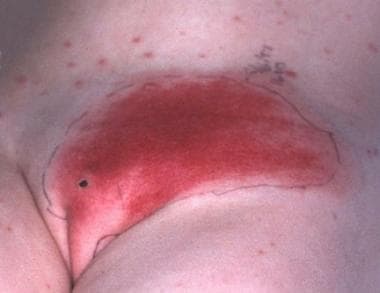
Streptococcal cellulitis is an acute rapidly spreading infection of skin and subcutaneous tissue, which can follow burns, wounds, surgical incisions, varicella infection, and mild trauma. Pain, tenderness, swelling and erythema, and systemic toxicity are common, and patients may have associated bacteremia. Careful serial examination is crucial because cellulitis may progress to necrotizing fasciitis (see Media file 1).

Perianal cellulitis and vaginitis should be considered in children who report perineal discomfort or vaginal discharge. Today, erysipelas is a relatively rare acute streptococcal infection involving the deeper layers of the skin and the underlying connective tissue. Skin over the affected area tends to be swollen, red, and exquisitely tender in contrast to streptococcal impetigo, which is usually painless. Superficial blebs may be present. The most characteristic finding in erysipelas, the sharply defined and slightly elevated border, helps to differentiate this entity from cellulitis, which has an indistinct border.

At times, reddish streaks of lymphangeitis may project out from the margins of the lesion. Systemic toxicity is common. For both erysipelas and cellulitis, cultures obtained by leading edge needle aspirate of the inflamed area are warranted.

Scarlet Fever

When a fine, diffuse, erythematous rash is present in the setting of acute streptococcal pharyngitis, the illness is called scarlet fever. The rash of scarlet fever is caused by the pyrogenic exotoxins (ie, SPE A, B, C, and F). The rash highly depends on toxin expression; preexisting humoral immunity to the specific SPE toxin prevents the clinical manifestations of scarlet fever. Recently, scarlet fever is apparently less common and is less virulent than in past decades; however, incidence is cyclic, depending on the prevalence of toxin-producing strains and the immune status of the population. Modes of transmission, age distribution of cases, and other epidemiologic features are similar to those for streptococcal pharyngitis.

Scarlet fever rash usually appears within 24-48 hours after onset of symptoms, although it may appear with the first signs of illness. It is often initially noticed on the neck and upper chest as a diffuse, finely papular, erythematous eruption producing a bright red discoloration of the skin, which blanches on pressure. The texture is that of fine sandpaper.

The flexor skin creases, particularly in the antecubital fossae, may be unusually prominent (ie, Pastia lines). The area around the mouth is pale, creating the appearance of circumoral pallor. In severe cases, small vesicular lesions (ie, miliary sudamina) may appear on the abdomen, hands, and feet. Toward the end of the first week of illness, the rash begins to fade and is followed by a desquamation over the trunk, which progresses to the hands and feet. Typical scarlet fever is not generally difficult to diagnose, but it may be confused with roseola, Kawasaki syndrome, drug eruptions, and toxigenic S aureus infections.

A history of recent exposure to another individual (eg, classroom or household contact) with streptococcal infection is a helpful clue. Isolation of S pyogenes from the pharynx confirms the diagnosis in uncertain cases, and serologic evidence of recent group A streptococcal infection may be present (ASO or anti-DNAse B antibody response).

Other Miscellaneous Streptococcal Infections

Suppurative complications from the spread of streptococci to adjacent structures were very common in the preantibiotic era. Cervical adenitis, peritonsillar abscess, retropharyngeal abscess, otitis media, mastoiditis, and sinusitis still occur in children in whom the primary illness has gone unnoticed or in whom treatment of the pharyngitis has been inadequate because of noncompliance. S pyogenes is an occasional etiology of pneumonia and is an important etiology of parapneumonic effusion. Acute hematogenous osteomyelitis is an important complication of streptococcal infection. Isolated bacteremia, meningitis, and endocarditis are described but appear to be rare manifestations of acute infection.

Invasive Streptococcal Infections

Invasive infections with S pyogenes have been encountered with increased frequency in recent years. These may manifest as either necrotizing fasciitis or streptococcal TSS.

Necrotizing fasciitis

Necrotizing fasciitis caused by S pyogenes (so-called streptococcal gangrene) is an acute, rapidly progressive, severe, deep-seated infection of the subcutaneous tissue associated with extensive destruction of superficial and deep fascia. Diffuse erythematous swelling heralds the onset, with exquisite pain at the affected site. Indeed, severe excruciating pain that seems inconsistent with the observed clinical findings should strongly suggest the possibility of this diagnosis.

As the lesion progresses (approximately 48-72 h), the skin becomes bluish and dusky, and bullae containing yellow or hemorrhagic fluid appear. By the fourth to fifth day, frank gangrene is present, and extensive sloughing of skin occurs. Surgical debridement of necrotic tissue is a crucial adjunct to management. Differentiation between streptococcal cellulitis and necrotizing fasciitis can be difficult, and careful serial physical examination is crucial.

Consultation with a surgeon early in the course of infection is essential because debridement is often lifesaving. If diagnosis is not certain on clinical grounds, a biopsy with frozen section may be useful. Histopathology commonly reveals both microbial and neutrophilic infiltration of deep dermal and superficial fascial layers of skin, with resultant thrombosis, vasculitis, and necrosis.

Although any part of the body may be affected, streptococcal fasciitis usually begins on an extremity. It may begin at a site of trivial or inapparent trauma, or it may follow cuts, burns, penetrating injuries, or blunt trauma. A major risk factor for development of streptococcal necrotizing fasciitis is a history of recent varicella-zoster virus (VZV) infection (see Media file 1). The risk of varicella-associated necrotizing fasciitis should decrease with the implementation of routine childhood immunization against VZV.

Streptococcal TSS

Streptococcal TSS is characterized by hypotension and multiple-organ failure. Considerable overlap occurs with streptococcal necrotizing fasciitis, insofar as most cases occur in association with soft tissue infections; however, streptococcal TSS may occur in association with other focal streptococcal infections, including pharyngeal infection.

As noted above, the pathogenesis of streptococcal TSS appears to be related in part to the ability of certain SPEs (A, C, F) to function as superantigens. Multiple-organ system disease is common and manifests as renal impairment, occurring in approximately 80% of patients, and hepatic dysfunction, occurring in 65% of patients.

Criteria proposed by the Working Group on Severe Streptococcal Infections for the diagnosis of streptococcal toxic shock are outlined as follows:8

  • Isolation of group A Streptococcus
    • From a sterile site
    • From a nonsterile body site
  • Clinical signs of severity (Two or more of the following clinical and laboratory abnormalities are required.)
    • Renal impairment
    • Coagulopathy
    • Liver abnormalities
    • Acute respiratory distress
    • Extensive tissue necrosis (necrotizing fasciitis)
    • Erythematous rash
  • Definite case - Isolation of group A Streptococcus from a sterile site plus compatible clinical signs
  • Probable case - Isolation of group A Streptococcus from a nonsterile body site plus compatible clinical signs

Surgical Care

Necessary procedures for management of the diverse nature of group A streptococcal infections may include endotracheal intubation, thoracocentesis, lumbar puncture, abscess or skin aspirate, prompt surgical drainage, and even surgical debridement of devitalized tissue, fasciotomy, or amputation (see Medical Care). Some children with recurrent streptococcal pharyngitis (7 culture-proven episodes in the preceding year) may benefit from tonsillectomy.

Consultations

  • Surgeon (for necrotizing fasciitis and bone and joint infections)
  • Critical care specialist (for epiglottitis and TSS)
  • Nephrologist (for PSGN)
  • Neurologist (for chorea and PANDAS syndrome)
  • Infectious diseases specialist (for assistance in differential diagnosis and broad management issues)
  • Cardiologist (for carditis)
  • Dermatologist (for skin conditions)
  • Pathologist (for analysis of biopsies and other intraoperative specimens)


Treatment approaches for group A streptococcal infections vary depending on the clinical syndrome. Penicillin therapy, in general, remains the treatment of choice in most situations. Remarkably, no penicillin-resistant strains of S pyogenes have yet been encountered in clinical practice.9 Therefore, penicillin remains the drug of choice (except in individuals who are allergic to penicillin) for pharyngeal infections as well as for complicated or invasive infections. Approaches to antibiotic therapy of various streptococcal syndromes are considered below.

Drug Category: Antibiotics

Empiric antimicrobial therapy must be comprehensive and should cover all likely pathogens in the context of the clinical setting.

Drug NamePenicillin VK ( Pfizerpen, Pen-Vee K, Beepen-VK)
DescriptionInhibits the biosynthesis of cell wall mucopeptide. Bactericidal against sensitive organisms when adequate concentrations are reached, and most effective during the stage of active multiplication. Inadequate concentrations may produce only bacteriostatic effects. For streptococcal pharyngitis, the PO antibiotic of choice is penicillin VK (phenoxymethyl penicillin). Penicillin VK is preferable to penicillin G because of its acid stability, allowing it to be dosed without regard to meals. The most common reason for penicillin failure is noncompliance. The drug is often discontinued before the 10-d course is completed because children usually appear to have recovered in 3-4 d. When PO treatment is prescribed, the necessity of completing a full course of therapy must be emphasized. Even in compliant patients, recent reports suggest penicillin fails to eradicate S pyogenes from about 15% of treated patients. Many theories have been proposed to explain these apparent penicillin failures.
The presence of beta-lactamase–producing normal flora (particularly organisms such as mouth anaerobes) is proposed as a potential mechanism by which penicillin may become inactivated. However, the clinical significance of this theory has never been conclusively demonstrated. Many of the failures of penicillin therapy are more likely to occur in studies where streptococcal pharyngitis has not been defined rigorously enough, and some of these patients may, in fact, be streptococcal carriers who had viral pharyngitis at study onset.
Adult Dose250-500 mg PO bid
Pediatric Dose40 mg/kg/d PO or 250 mg PO bid/tid
ContraindicationsDocumented hypersensitivity
InteractionsProbenecid may increase effectiveness by decreasing clearance; tetracyclines are bacteriostatic, causing a decrease in the effectiveness of penicillins when administered concurrently
PregnancyB - Fetal risk not confirmed in studies in humans but has been shown in some studies in animals
PrecautionsCaution in renal impairment

Drug NamePenicillin G benzathine (Bicillin LA)
DescriptionInterferes with synthesis of cell wall mucopeptides during active multiplication, which results in bactericidal activity. If noncompliance with PO therapy seems likely, parenteral therapy is indicated.
Formulation is painful when administered IM, and it is often combined with penicillin G procaine to minimize discomfort at the injection site. When this combination is used in a single injection, take care to ensure that an adequate amount of penicillin G benzathine is administered. The combination of 900,000 U of penicillin G benzathine and 300,000 U of penicillin G procaine is satisfactory for most children.
Adult Dose1.2 million U IM for 1 dose
Pediatric Dose<27 kg: 600,000 U IM for 1 dose
>27 kg: Administer as in adults
ContraindicationsDocumented hypersensitivity
InteractionsProbenecid can increase penicillin effectiveness by decreasing clearance; coadministration with tetracyclines can decrease effectiveness of penicillin
PregnancyB - Fetal risk not confirmed in studies in humans but has been shown in some studies in animals
PrecautionsCaution in impaired renal function

Drug NameErythromycin (EES, Ery-Tab, E-Mycin)
DescriptionInhibits bacterial growth, possibly by blocking dissociation of peptidyl tRNA from ribosomes, causing RNA-dependent protein synthesis to arrest. For treatment of staphylococcal and streptococcal infections.
In children, age, weight, and severity of infection determine proper dosage. When bid dosing is desired, half-total daily dose may be taken q12h. For more severe infections, double the dose. PO erythromycin is an acceptable alternative for patients allergic to penicillin or cephalosporin antibiotics and is effective in the treatment of streptococcal pharyngitis. Erythromycin estolate and erythromycin ethylsuccinate are both effective, although note local antibiotic resistant rates because up to 5% of isolates of S pyogenes may be erythromycin resistant.
Adult Dose250 mg erythromycin stearate/base (or 400 mg ethylsuccinate) q6h PO 1 h ac or 500 mg q12h; alternatively, 333 mg q8h and increase to 4 g/d depending on severity of infection
Pediatric Dose30-50 mg/kg/d (15-25 mg/lb/d) PO divided q6-8h
ContraindicationsDocumented hypersensitivity; hepatic impairment
InteractionsCoadministration may increase toxicity of theophylline, digoxin, carbamazepine, and cyclosporine; may potentiate anticoagulant effects of warfarin; coadministration with lovastatin and simvastatin increases risk of rhabdomyolysis
PregnancyB - Fetal risk not confirmed in studies in humans but has been shown in some studies in animals
PrecautionsCaution in liver disease; estolate formulation may cause cholestatic jaundice; GI adverse effects are common (administer doses pc); discontinue use if nausea, vomiting, malaise, abdominal colic, or fever occur

Drug NameClarithromycin (Biaxin)
DescriptionInhibits bacterial growth, possibly by blocking dissociation of peptidyl tRNA from ribosomes, causing RNA-dependent protein synthesis to arrest. Similar susceptibility profile to erythromycin but has fewer adverse effects.
Adult Dose250-500 mg PO q12h
Pediatric Dose15 mg/kg/d PO divided bid
ContraindicationsDocumented hypersensitivity; coadministration of pimozide
InteractionsToxicity increases with coadministration of fluconazole and pimozide; clarithromycin effects decrease and GI adverse effects may increase with coadministration of rifabutin or rifampin; may increase toxicity of anticoagulants, cyclosporine, tacrolimus, digoxin, omeprazole, carbamazepine, ergot alkaloids, triazolam, and HMG CoA-reductase inhibitors; plasma levels of certain benzodiazepines may increase, prolonging CNS depression; arrhythmias and increase in QTc intervals occur with disopyramide; coadministration with omeprazole may increase plasma levels of both agents
PregnancyC - Fetal risk revealed in studies in animals but not established or not studied in humans; may use if benefits outweigh risk to fetus
PrecautionsCoadministration with ranitidine or bismuth citrate is not recommended with CrCl <25 mL/min; administer half dose or increase dosing interval if CrCl <30 mL/min; diarrhea may be sign of pseudomembranous colitis; superinfections may occur with prolonged or repeated antibiotic therapies

Drug NameAzithromycin (Zithromax)
DescriptionSimilar susceptibility profile to erythromycin, but has fewer adverse effects. Treats mild-to-moderate microbial infections.
Adult DoseDay 1: 500 mg PO
Days 2-5: 250 mg PO qd
Pediatric Dose12 mg/kg/d PO for 5 d
ContraindicationsDocumented hypersensitivity; hepatic impairment; coadministration with pimozide
InteractionsMay increase toxicity of theophylline, warfarin, and digoxin; effects are reduced with coadministration of aluminum antacids, magnesium antacids, or both; nephrotoxicity and neurotoxicity may occur when coadministered with cyclosporine
PregnancyB - Fetal risk not confirmed in studies in humans but has been shown in some studies in animals
PrecautionsSite reactions can occur with IV route; bacterial or fungal overgrowth may result with prolonged antibiotic use; may increase hepatic enzymes and cholestatic jaundice; caution in patients with impaired hepatic function, prolonged QT intervals, or pneumonia; caution in hospitalized, geriatric, or debilitated patients

Drug NameCephalexin (Keflex, Biocef)
DescriptionFirst-generation cephalosporin arrests bacterial growth by inhibiting bacterial cell wall synthesis. Bactericidal activity against rapidly growing organisms. Primary activity against skin flora; used for skin infections or prophylaxis in minor procedures. PO cephalosporins are effective in the treatment of streptococcal pharyngitis.
Short-course regimens of PO cephalosporin therapy have been studied and offer obvious advantages from a compliance perspective. However, this must be balanced against the higher cost and unnecessarily broad spectrum of these agents.
Adult Dose250 mg PO q6h or 500 mg PO q12h
Pediatric Dose25-50 mg/kg/d PO divided q6h
ContraindicationsDocumented hypersensitivity
InteractionsCoadministration with aminoglycosides increase nephrotoxic potential
PregnancyB - Fetal risk not confirmed in studies in humans but has been shown in some studies in animals
PrecautionsAdjust dose in renal impairment

Drug NameClindamycin (Cleocin)
DescriptionLincosamide for treatment of serious skin and soft tissue staphylococcal infections. Also effective against aerobic and anaerobic streptococci (except enterococci). Inhibits bacterial growth, possibly by blocking dissociation of peptidyl tRNA from ribosomes, causing RNA-dependent protein synthesis to arrest. Patients with invasive group A streptococcal infections (eg, necrotizing fasciitis, TSS, sepsis) should be treated with IV penicillin in combination with clindamycin. Because the pathophysiology of invasive group A streptococcal infection is largely toxin mediated, the use of protein synthesis inhibitor (eg, clindamycin) offers a theoretical advantage.
Furthermore, in vivo evidence of the lack of efficacy of penicillin in deep tissue infections has been observed in animal models. This effect, first described by Eagle in 1952, appears to occur because of high inoculum of organisms encountered in overwhelming infections (eg, necrotizing fasciitis, myositis, sepsis).
Large concentrations of organisms lead to rapid attainment of the stationary growth phase, which is associated with decreased expression of cell wall penicillin-binding proteins (PBPs), the molecular targets of penicillin. Decreased expression of PBPs in deep tissue infections with group A streptococci appears to render penicillin less effective. In contrast, clindamycin retains efficacy. Vigorous supportive care, including fluids, pressors, and mechanical ventilation, is also a critical aspect of management of invasive streptococcal skin and soft tissue infections. Prompt surgical drainage, debridement, fasciotomy, or amputation may be indicated.
Differentiating a streptococcal carrier with recurrent viral infection from a child with recurrent streptococcal pharyngitis may be difficult. Although most streptococcal carriers do not require medical intervention, situations arise in which eradication of the carrier state is desirable (eg, families in with an inordinate amount of anxiety about streptococci, families in which ping-pong spread has been occurring, when tonsillectomy is considered only because of chronic carriage). A course of clindamycin has been shown to be highly effective in eradicating the carrier state and should be tried in patients with recurrent or frequent episodes of culture-proven pharyngitis. Some children with recurrent streptococcal pharyngitis (7 culture-proven episodes in the preceding y) may benefit from tonsillectomy.
Adult Dose150-450 mg/dose PO q6-8h; not to exceed 1.8 g/d
Pediatric Dose20 mg/kg/d PO divided tid for 10 d
ContraindicationsDocumented hypersensitivity; regional enteritis; ulcerative colitis; hepatic impairment; antibiotic-associated colitis
InteractionsIncreases duration of neuromuscular blockade induced by tubocurarine and pancuronium; erythromycin may antagonize effects of clindamycin; antidiarrheals may delay absorption of clindamycin
PregnancyB - Fetal risk not confirmed in studies in humans but has been shown in some studies in animals
PrecautionsAdjust dose in severe hepatic dysfunction; no adjustment necessary in renal insufficiency; associated with severe and possibly fatal colitis


Further Inpatient Care

  • Further inpatient care may be necessary for rehabilitative reasons (eg, chorea, neuropsychiatric manifestations of infection) or for debilitating arthritis.
  • Consultation with a physical medicine and rehabilitation (PMR) physician, neurologist, or rheumatologist may be useful in these situations.

Further Outpatient Care

  • Outpatient follow-up care with infectious diseases specialists (management of long-term therapy or prophylaxis for acute rheumatic fever), surgeons, neurologists, rheumatologists, and nephrologists may be important.
  • The primary care physician must be closely involved in managing and coordinating long-term special services.

Deterrence/Prevention

  • Prophylaxis against streptococcal infection
    • Long-term antibiotic therapy to prevent streptococcal infection is indicated for patients with a history of acute rheumatic fever or rheumatic heart disease. The recommended regimen is an injection every 3-4 weeks with 1.2 million IU of benzathine penicillin G, 250 mg of oral penicillin V twice a day, or 0.5-1 g of sulfadiazine daily.
    • The role of prophylaxis for household contacts of individuals with either acute streptococcal disease or nonsuppurative complications is uncertain. Some authorities recommend that cultures be obtained from all contacts if a family history of rheumatic fever is noted or when a patient with acute glomerulonephritis is identified. An alternative approach is to treat all household contacts in the setting of acute PSGN in an effort to eradicate household transmission of nephritogenic strains. For invasive group A streptococcal infections (eg, necrotizing fasciitis, TSS), no data are available on which to base assessment of risk to household contacts. However, because of the devastating nature of these infections and the observation that invasive disease may be due to clonal outbreaks of more virulent strains, empiric antibiotic therapy of household contacts seems warranted.
  • Prospects for streptococcal vaccines
    • Apart from rheumatic fever prophylaxis and the prevention of intrafamily spread, few strategies are available to prevent streptococcal infection.
    • A streptococcal vaccine could offer promise for prevention of disease, but an effective vaccine would have to provide protection from multiple serotypes. Furthermore, theoretical concern that vaccine-induced antibodies could injure host tissue and precipitate rheumatic fever is recognized.
    • Multivalent vaccines that contain multiple M protein peptide epitopes have been engineered and show efficacy in animal models but have not yet entered clinical trials.10

Complications

Acute rheumatic fever and acute PSGN are the classic nonsuppurative complications of S pyogenes infections. Although the link between group A streptococcal infections and these complications has been clearly established, the mechanism or mechanisms through which the injury is produced are incompletely defined.

  • Acute rheumatic fever
    • During the 1960s and 1970s, this disease nearly disappeared in the United States, although it continued unabated in developing countries. This decline in disease was largely attributed to careful disease surveillance and initiation of prompt aggressive antibiotic therapy in primary care practice. However, in 1985, several multifocal outbreaks of rheumatic fever occurred in several parts of the United States. In contrast with earlier outbreaks in this country, most of the patients were white, middle-class children from rural and suburban communities who had good access to health care. This unexplained resurgence in acute rheumatic fever underscores the point that a great deal remains to be learned about the pathogenesis of this disease.
    • Epidemiologically, considerable evidence supports the link between group A streptococcal infections of the upper respiratory tract and acute rheumatic fever, although only certain M group serotypes (ie, 1, 3, 5, 6, 18, 24) are associated with this complication. Very mucoid strains, particularly strains of M type 18, have appeared in numerous communities prior to the appearance of rheumatic fever. Rheumatic fever is most frequently observed in children aged 5-15 years (the age group most susceptible to group A streptococcal infections). The attack rate following upper respiratory tract infection is approximately 3% for individuals with untreated or inadequately treated infection. The latent period between the group A streptococcal infection and the onset of rheumatic fever varies from 2-4 weeks. In contrast to PSGN, which may follow either pharyngitis or streptococcal pyoderma, rheumatic fever can occur only after an infection of the upper respiratory tract.
    • Despite the depth of knowledge about the molecular microbiology of Streptococcus pyogenes that has accumulated in recent years, the pathogenesis of acute rheumatic fever remains unknown. A direct effect of a streptococcal extracellular toxin, in particular streptolysin O, may be responsible for the pathogenesis of acute rheumatic fever, according to some hypotheses. Observations that streptolysin O is cardiotoxic in animal models support this hypothesis, but linking this toxicity to the valvular damage observed in acute rheumatic fever has been difficult.
    • A more popular hypothesis is that an abnormal host immune response to some component of the group A Streptococcus is responsible. The group A streptococcal M protein shares certain amino acid sequences with some human tissues, and this has been proposed as a source of cross-reactivity between the organism and human host that could lead to an immunopathologic immune response. Also, antigenic similarity between the group-specific polysaccharide of S pyogenes and glycoproteins found in human and bovine cardiac valves has been recognized, and patients with acute rheumatic fever have prolonged persistence of these antibodies compared with controls with uncomplicated pharyngitis. Other group A streptococcal antigens appear to cross-react with cardiac sarcolemma membranes.
    • As a result of this molecular mimicry, during the course of the host's immune response to the group A streptococci, the host's antigens may be mistaken as foreign; this leads to an inflammatory cascade with resultant tissue damage. In patients with acute rheumatic fever with Sydenham chorea, common antibodies to antigens found in the S pyogenes cell membrane and the caudate nucleus of the brain are present, further supporting the concept of an aberrant autoimmune response in the development of acute rheumatic fever.
    • Recently, interest in whether such autoimmune responses may play a role in the pathogenesis of the PANDAS syndrome has been considerable, although further work is necessary to establish the link between streptococcal infections and these syndromes. Differences in genetic susceptibility apparently play an important role in the likelihood of developing poststreptococcal sequelae, although the exact nature of the genetic predisposition remains undefined.
    • Acute rheumatic fever is largely a clinical diagnosis best established by careful physical examination. The Jones criteria for the diagnosis are outlined in Rheumatic Fever. Few patients with acute rheumatic fever have positive throat culture or rapid streptococcal antigen test findings at the time of presentation.
    • Because the isolation or identification of group A streptococci from a throat swab does not distinguish between a person with acute streptococcal infection and a person who is a streptococcal carrier, the best evidence of an antecedent streptococcal infection is a serologic response to the organism. An elevated streptococcal antibody titer can be used as serologic evidence of a recent group A streptococcal infection. Serial samples should be obtained because identification of a rising titer is particularly helpful. The most commonly used streptococcal antibody test is the ASO titer, although anti-DNase B and antihyaluronidase assays, which can be measured as a part of a panel of streptococcal antibodies referred to as the streptozyme panel, are also helpful. When 2 or more different streptococcal antibody tests are performed, an increased titer is found within the first few months of onset in most instances of acute rheumatic fever.
  • Acute glomerulonephritis
    • Glomerulonephritis can follow group A streptococcal infections of either the pharynx or the skin, and incidence varies with the prevalence of so-called nephritogenic strains of group A streptococci in the community. Type 12 is the most frequent M serotype that causes PSGN after pharyngitis, and M type 49 is the type most commonly related to pyoderma-associated nephritis. The latent period between group A streptococcal infection and the onset of glomerulonephritis varies from 1-2 weeks.
    • Pathogenesis appears to be immunologically mediated. Immunoglobulins, complement components, and antigens that react with streptococcal antisera are present in the glomerulus early in the course of the disease, and antibodies elicited by nephritogenic streptococci are postulated to react with renal tissue in such a way as to promote glomerular injury. In contrast to acute rheumatic fever, recurrences of PSGN are rare. Diagnosis of PSGN is based on clinical history, physical examination findings, and confirmatory evidence of recent streptococcal infection (see Glomerulonephritis, Poststreptococcal).
    • Even in the absence of bacteriologic confirmation of S pyogenes, the presence of skin lesions compatible with streptococcal impetigo is highly suggestive, and elevated streptococcal antibody titers in the setting of a hypocomplementemic nephritis is essentially diagnostic of PSGN. Over the past several decades, incidence of acute PSGN in the United States has been steadily declining.

Patient Education


Medical/Legal Pitfalls

  • Physicians must be aware and concerned about the potential for life-threatening complications presented by group A streptococcal infections. Even seemingly minor infections (eg, pharyngitis, impetigo) may lead to fatal TSS.
  • Unusually ill-appearing children require aggressive inpatient evaluation and treatment.
  • Streptococcal infections superimposed on VZV infection (chicken pox) represent a particularly high-risk situation. Aggressive treatment of such infections and close follow-up care is essential.


Media file 1:  Invasive soft tissue infection due to Streptococcus pyogenes. This child developed fever and soft tissue swelling on the fifth day of varicella-zoster infection. Leading edge aspirate of cellulitis grew S pyogenes. Although the patient responded to intravenous penicillin and clindamycin, operative debridement was necessary because of clinical suspicion of early necrotizing fasciitis.
Click to see larger pictureClick to see detailView Full Size Image
Media type:  Photo


  1. Cunningham MW. Pathogenesis of group A streptococcal infections. Clin Microbiol Rev. Jul 2000;13(3):470-511. [Medline].
  2. Beal B. Assigning emm Types and Subtypes. Centers for Disease Control and Prevention. Available at