| Patient Education |
|
Click here for patient education.
|
|
You are in: eMedicine Specialties >
Pediatrics: Surgery > Otolaryngology
Pierre Robin Malformation
Article Last Updated: Jun 20, 2006
AUTHOR AND EDITOR INFORMATION
Section 1 of 11
Author: Marie M Tolarova, MD, PhD, DSc, Professor and Executive Director, UOP Craniofacial Team, Cleft Prevention Program, Department of Orthodontics, University of the Pacific School of Dentistry
Marie M Tolarova is a member of the following medical societies: American Cleft Palate/Craniofacial Association, American Society of Human Genetics, and International Association for Dental Research
Coauthor(s):
Craig W Senders, MD, Professor and Program Director, Department of Otolaryngology, University of California at Davis School of Medicine; Director, Cleft and Craniofacial Team, Department of Otolaryngology, University of California at Davis Medical Center;
Alex M Espinoza, MD, Medical Director, Infant Follow-up Clinic, Department of Neonatology, Alta Bates Medical Center and John Muir Medical Center
Editors: Orval Brown, MD, Director of Otolaryngology Clinic, Professor, Department of Otolaryngology-Head and Neck Surgery, University of Texas Southwestern Medical Center at Dallas; Mary L Windle, PharmD, Adjunct Assistant Professor, University of Nebraska Medical Center College of Pharmacy, Pharmacy Editor, eMedicine.com, Inc; Alan D Murray, MD, Pediatric Otolaryngologist, ENT for Children; Consulting Staff, Department of Otolaryngology, Medical Center of Lewisville, Children's Medical Center at Dallas, Cook Children's Medical Center; Full-Time Staff, Texas Pediatric Surgery Center, The Pediatric Surgery Center; Daniel Rauch, MD, FAAP, Director, Pediatric Hospitalist Program, Associate Professor, Department of Pediatrics, New York University School of Medicine; Maureen Strafford, MD, Arnold P Gold Foundation Associate Professor, Departments of Anesthesiology and Pediatrics, Tufts University and Tufts-New England Medical Center
Author and Editor Disclosure
Synonyms and related keywords:
Pierre Robin malformation, Pierre Robin syndrome, Robin sequence, Pierre Robin anomalad, Robin complexes, Pierre Robin malformation complex, syndromic Robin sequence, nonsyndromic Robin sequence, Velocardiofacial syndrome, Stickler syndrome, Stickler's syndrome, autosomal dominant Stickler syndrome, Treacher Collins syndrome, Nager syndrome, spondyloepiphyseal dysplasia congenita, spondyloepiphyseal dysplasia congenita, SED, cleft palate, CP, connective tissue dysplasia, 22q11.2 deletion syndrome, spondyloepiphyseal dysplasia congenita
Background
Robin sequence (RS) (see Images 1-2), previously known as Pierre Robin syndrome and Pierre Robin anomalad, consists of 3 essential components:
- Micrognathia or retrognathia
- Cleft palate (usually U-shaped, but V-shape also possible)
- Glossoptosis, often accompanied by airway obstruction. (The tongue is not actually larger than normal, but because of the small mandible, the tongue is large for the airway and therefore causes obstruction. Rarely, the tongue is smaller than normal.)
A sequence is a series of anomalies all initiated by one malformation. Other definitions have been suggested based on a combination of mandibular deficiency, presence of U-shaped or V-shaped cleft palate (see Image 5), and airway obstruction. This condition is not only causally heterogenous but also pathogenetically and phenotypically variable (Pruzansky, 1969). Robin sequence occurs as an isolated defect, as part of a recognized syndrome, or as part of a complex of multiple congenital anomalies. The condition is named after the French dental surgeon Pierre Robin (1867-1950). His main interest was glossoptosis, and over a 30-year period, he published more than 20 articles and monographs on embryology, anatomy, complications, and management of this disorder (Beighton, 1986).
Pathophysiology
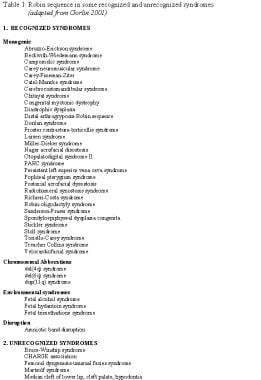
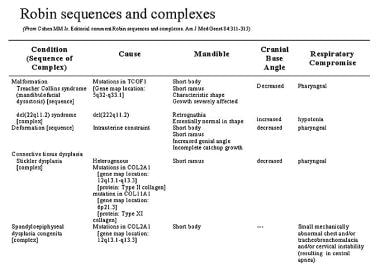
Etiology and pathogenesis Robin sequence is etiologically heterogenous. Etiologic heterogeneity suggests pathogenetic heterogeneity and phenotypic variability. These include various causes of malformations and deformations and connective tissue dysplasia (see Clinical). A major distinction should be made between isolated occurrences of Robin sequence and cases in which RS is part of a recognized syndrome, part of a complex of multiple anomalies, or part of an unrecognized syndrome. Isolated RS is often a deformation resulting from intrauterine forces acting on the mandible, which restrict its growth and impact the tongue between the palatal shelves. Some deformational cases of RS have been associated with oligohydramnios. Because micrognathia results from intrauterine molding, mandibular catch-up growth is expected after birth once intrauterine forces are removed. The most severe cases of micrognathia are unlikely to be isolated RS caused by deformation. Therefore, catch-up growth is unlikely. In patients with RS, 13-27.7% of other family members are affected with cleft lip and/or palate (Marques, 1998; Holder-Espinasse, 2001). Jakobsen et al (2006) compared data in several databases and proposed genes that might participate in etiology of RS, including GAD67 on 2q31, PVRL1 on 11q23-q24, and SOX9 on 17q24.3-q25.1. Melkoniemi et al (2003) detected disease-associated mutations in COL11A1 and COL11A2 genes in some patients with nonsyndromic RS. Further research is required to confirm that they are candidate genes for RS. The proportion of cases that are isolated RS varies in different studies. Hanson and Smith (1975) found that 25% of RS cases had specific syndromes, another 35% had multiple anomalies without a specific recognized syndrome, and only 40% had isolated RS. Another study (Williams et al, 1981) found that 74% of cases were isolated RS. Among syndromic cases, the most common is Stickler syndrome, which makes up 20-25 % of all RS cases (see Images 6-8). The second most common RS syndrome is velocardiofacial syndrome, which makes up about 15% of all RS cases (Shprintzen, 1981). Treacher Collins syndrome (mandibulofacial dysostosis), Nager syndrome, spondyloepiphyseal dysplasia congenita, and other recognized syndromes make up the rest of the syndromic RS cases. Cohen (1997) listed 46 conditions associated with RS (see Image 9). Although this list is representative, it is not complete. RS may be present with other conditions and various other anomalies, especially those involving the eye, ear, heart, and limb (Gorlin, 2001). When RS is diagnosed, a full genetic evaluation (including fluorescent in situ hybridization [FISH] for 22q deletion, test for mutation in Treacle (TCOF1) gene) is appropriate, together with diagnostic tests for other suspected syndromes (eg, bone radiographs, ophthalmology examination). Among 47 patients with RS who were monitored by Sheffield et al (1987), 12 patients were diagnosed as syndromic. Out of 52 cases reported by Sher (1992), 15 patients had Stickler syndrome and only 5 had nonsyndromic Robin sequence. Distinguishing between micrognathia (ie, a small mandible) and retrognathia (ie, an essentially normal-sized mandible) is important. With micrognathia the mandible is small; with retrognathia, the mandible size is essentially normal but the mandible is retrognathic in position because the cranial base angle is larger than normal. Most Robin conditions are either micrognathic or retrognathic (Cohen, 1990). In velocardiofacial syndrome, the mandible is retrognathic. Because the cranial base is altered, the mandible grows downward instead of forward. This gives the appearance of a small mandible, but the bone mass is normal. It is unusual for retrognathia to produce severe airway distress. In the vast majority of other syndromes, the mandible is micrognathic. The bone mass is decreased, and the mandible is disproportionately small. Severe airway obstruction is more common with these syndromes. One of the most severe problems with airway obstruction may occur in patients affected with spondyloepiphyseal dysplasia congenita (SED). Cleft palate (CP) or RS is often present in this autosomal dominant condition that has a mutation in the COL2A1 gene, located on chromosome 12 (12q13.11-q13.2), the same as found in Stickler syndrome type I (hereditary progressive arthroophthalmopathy). The respiratory compromise in SED is caused by multiple mechanisms: a small abnormal chest, a tracheobronchomalacia, and/or a central apnea caused by compression of cervical spinal cord or medulla oblongata caused by cervical instability (Harding, 1990). Furthermore, the upper respiratory obstruction of the RS may worsen the respiratory condition of the patient with SED (see Image 10). The mandible in Robin sequence is often compared with the mandible in Treacher Collins syndrome (see Image 11). When comparing two newborn babies with these conditions, one can see that the mandible in both conditions is short. Because the severity of the defects varies widely in both conditions, the defects in Robin sequence may initially seem much greater than in Treacher Collins syndrome; however, a significant difference between these two conditions becomes very apparent as the infant develops. In deformational Robin sequence, so-called "catch-up growth" occurs, although it may be incomplete (Kreiborg, 1996). In Treacher Collins syndrome, mandibular growth remains severely affected.
Frequency
United States
The reported birth prevalence of Robin sequence varies from 1 in 2000 (Poswillo, 1968) to 1 in 30,000. Bush and Williams (1963) suggested 1 in 8500. The case definition of Robin sequence still varies, and it is obvious that differences in definition lead to differences in the reported birth prevalence (Shprintzen, 1988). In studies with the highest birth prevalence of RS, syndromic cases are most likely included.
The study of a population-based sample of 4433 patients with orofacial cleft (ascertained from 2,509,881 California births) reported a birth prevalence of nonsyndromic Robin sequence as 1 in 18,730 (0.05/1000 births) (Tolarova, 1998).
The majority of nonsyndromic RS cases are sporadic. In the older literature, several authors reported a familial occurrence (Smith, 1961; Bixler, 1971; Shah, 1970). Very probably, some of these cases were syndromic. The authors' recommendation is to consider Stickler syndrome first when a familial occurrence of Robin sequence is found. Stickler syndrome is the most common syndrome among RS cases, and RS is the most constant feature of Stickler syndrome. When diagnosed correctly, myopia will be detected early; this can prevent retinal detachment and possibly blindness.
History
Airway obstruction with RS, if very severe or not managed properly, may lead to hypoxia, cor pulmonale, failure to thrive, and cerebral impairment. Syndromic cases and Robin complexes are usually more severe and have worse prognoses than nonsyndromic RS. Mortality rates as high as 30% have been reported (Jones, 1997). Neonates with RS should be carefully monitored because a significant airway obstruction may develop during the first 1-4 weeks of life.
Causes
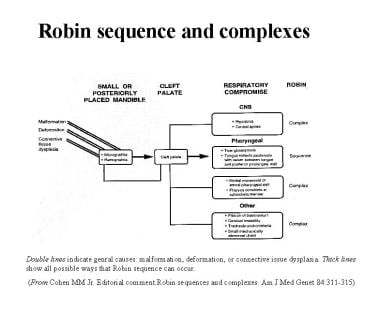
Suggested causes of Robin sequence and Robin complexes include malformation, deformation, or connective tissue dysplasia (Cohen, 1999). Because of differences in pathogenetic causes and phenotypes, various forms of Robin sequence or Robin complexes can occur (see Image 10). For example, a pure exogenous factor such as oligohydramnios causing mandibular constraint leads to a failure of the tongue to descend and starts a sequence that ends as a Robin sequence (deformation sequence). However, intrinsic intrauterine mandibular hypoplasia that may be part of a complex of anomalies (syndrome) caused by a chromosomal aberration can cause the same problem (ie, failure of the tongue to descend), and it ends in exactly the same way as the previous example (malformation sequence); yet, the first is a deformation sequence, while the latter is a malformation sequence.
Beckwith-Wiedemann Syndrome
CHARGE Syndrome
Cleft Lip and Palate
DiGeorge Syndrome
Fetal Alcohol Syndrome
Mandibulofacial Dysostosis (Treacher Collins Syndrome)
Multiple Births
Obstructive Sleep Apnea Syndrome
Pectus Excavatum
Stridor
Velocardiofacial Syndrome
Other Problems to be Considered
The first diagnostic consideration should be to specify whether RS is an isolated condition. The most common syndrome with Robin sequence is autosomal dominant Stickler syndrome. In this syndrome, mutations in the COL2A1 or COL11A1 genes cause connective tissue dysplasia that results in a short ramus and antegonial notching of the mandibular body and subsequent micrognathia. Different forms of Robin complexes also occur. Cohen (2000) gives an example of two different forms: the 22q11.2 deletion syndrome (ie, velocardiofacial syndrome, Shprintzen syndrome, DiGeorge syndrome, or conotruncal anomalies/face syndrome) and spondyloepiphyseal dysplasia congenita. In the 22q11.2 deletion syndrome, retrognathia and cleft palate are present. Pharyngeal obstruction is caused by hypotonia, not by a flat cranial base angle and retrognathia. Thus, Robin sequence is not present. Rather, in this form of Robin complex, all manifestations are causally, but not sequentially, related (Cohen, 1999).
Imaging Studies
- When RS is diagnosed, diagnostic tests such as bone radiographs are appropriate to assess for other suspected syndromes.
Other Tests
- When RS is diagnosed, a full genetic evaluation (FISH for 22q deletion, test for mutation in Treacle [TCOF1] gene) is appropriate.
- An ophthalmology examination is also appropriate to assess for suspected syndromes.
Medical Care
The newborn affected with Robin sequence is of serious concern to neonatologists, pediatricians, and other health care providers. Pierre Robin sequence has 3 essential components: micrognathia/retrognathia, cleft palate, and relative glossoptosis. Immediately after delivery, because of the micrognathia and, therefore, relative glossoptosis, many children have airway distress. This can require emergency treatment. As the body will always prioritize breathing over eating, many infants have difficulty in achieving adequate caloric intake. A cleft palate further adds to the feeding difficulties.
Neonatal careThe primary concern in airway compromise is its life-threatening aspect. Most neonates have an isolated defect that is not part of a syndrome, for which the airway and feeding complications are usually greater. The great majority of neonates can be treated in the prone position (face down). Devices or procedures such as oral airways, palatal prostheses, continuous positive airway pressure or endotracheal intubation, mechanical ventilation, and tracheostomy can be avoided. These neonates also need to be fed in a prone position, but they can be fed by mouth. Again, very few infants will need long-term gavage feeding tubes or other devices. Multidisciplinary care that includes a neonatologist, a neonatal nurse specialist, members of the craniofacial team, and the parents is the best approach in the complex care of neonates affected with RS and Robin complexes. The vast majority of nonsyndromic neonates, those who are breathing without assistance and orally feeding while in a prone position, can be discharged home after a few days in the hospital. The mandible is expected to eventually grow; hence, the severe airway obstruction and the feeding issues are expected to decrease. Also anticipated is that the infant will continue to need feeding and speech assessments and that breathing capacity will be monitored. Eventually, the cleft palate will need a closure, and a long-term orthodontic care will be required; however, some neonates will have much more severe immediate or long-term medical problems.
Postneonatal careAirway Secondary to the micrognathia/retrognathia, airway obstruction may be mild or severe. Severe obstruction may require immediate intervention with a very difficult intubation. In many infants, airway difficulties may seem mild at birth but will progress during the first 4-8 weeks. This may be because of the relatively small respiratory needs of a newborn. As an infant grows, the minute:volume requirements increase, making the obstruction more severe. A mild obstruction can normally be handled in a very conservative manner with positional changes. Obstruction of airway results from a small mandible and a normal-sized tongue. By putting a baby in the prone position, gravity pulls the tongue forward and results in a larger airway passage. Infants with a nonsyndromic etiology will often outgrow this type of obstruction. If the obstruction does not resolve through positional changes, many practitioners advocate use of the nasopharyngeal airway. The nasopharyngeal airway bypasses the oral pharynx and the obstruction caused by the relative glossoptosis. In the neonatal ICU, this can be a very effective temporary form of management of the airway obstruction. Most centers do not feel comfortable sending patients home with a nasopharyngeal airway, as its dislodgement can result in an acute airway obstruction. In patients who consistently maintain CO2 levels above 50, a surgical procedure is appropriate. There are 3 surgical procedures used to treat Pierre Robin sequence: tongue-lip adhesion/glossopexy, tracheotomy, and distraction osteogenesis of the mandible. The tongue-lip adhesion/glossopexy is a controversial method to improve the airway obstruction. In this technique, the tongue is sutured to the lower lip, thereby pulling the tongue forward, providing a larger airway. Later, presumably after the child has demonstrated catch-up growth, this bond between the tongue and lip is separated. This results in a very mild cosmetic deformity to the lip and tongue. With a glossopexy, many surgeons will try to pull the base of the tongue forward by attaching it to the mandible. Because the mandible is relatively soft, it is very difficult to place a suture that would permanently hold the base of the tongue forward; consequently, the tongue-lip adhesion/glossopexy has been a relatively controversial technique. Nevertheless, it does have its isolated advocates among maxillofacial surgeons. A tracheotomy tube effectively bypasses the obstruction in the oral pharynx and hypopharynx. When and if the infant's airway obstruction is resolved, the tracheotomy tube can be removed. Unfortunately, tracheotomy tubes require close monitoring. If the tracheotomy tube becomes occluded or dislodged, the patient could have an acute respiratory arrest. However, it would be unusual for a tracheotomy tube to remain in place less than a year after being placed in a newborn. Despite the hardship for the family of taking care of a tracheotomy tube, methods of teaching families how to care for it are well established. Tracheotomy remains a criterion standard for children with severe airway obstruction. Distraction osteogenesis is a relatively new technique for treating airway obstruction in Pierre Robin sequence. Distraction osteogenesis has been popularized by Jim Sidman (2001), who has the world's widest experience in treating patients with Pierre Robin sequence with distraction osteogenesis. In recent years, many centers have developed expertise in this area. In this technique, the mandible is cut near the angle of the mandible on both sides. A mechanical device distracts the two portions of the mandible approximately 1½-2 mm a day. As the portions of the mandible are separated, new bone is formed, and the mandible gradually elongates over a period of 2-3 weeks. Distraction can be performed in the newborn to prevent a tracheotomy, or it can be performed later to remove a tracheotomy tube. Because this new technique has been popularized only during the last 5-10 years, the long-term sequelae on mandibular growth and tooth development is not known at this time; nevertheless, it remains a very promising technique that has been gaining in popularity (see Images 12-13). Even if the results of distraction osteogenesis are promising, one must keep in mind that, in nonsyndromic RS, the mandible grows very fast after birth and that "catch-up growth" will improve the airway passage. Mandibular distraction should be reserved only for very severe isolated RS cases and for syndromic RS cases where mandibular catch-up growth does not occur. Feeding Many children with Pierre Robin sequence have feeding difficulties. This is because the body will preferentially choose to breathe rather than eat; therefore, a patient with airway difficulties is expected to have feeding difficulties. If the infant demonstrates catch-up growth, feeding may be handled through special techniques, which consist of keeping the child's head more elevated and using special cleft nursing bottles (for more details, see Cleft Lip and Palate). If this is not satisfactory, gavage or feeding tubes can temporarily provide adequate nutrition. If feeding does not improve over a period of months, many infants require gastrostomy tubes. After the child develops the ability to orally feed, these tubes can be removed. Cleft palate In the United States, cleft palates are typically repaired in infants aged 10-18 months; however, if airway concerns exist, often the palate surgery is delayed until the child is aged approximately 18 months. Current belief is that, generally, the earlier the surgery is performed, the better the chance that the child will have a completely normal function of the palate and, consequently, normal speech. If a child has a tracheotomy tube in place, the palate repair can be performed at any time. Micrognathia/retrognathia Micrognathia may be managed during the perinatal period if airway obstruction is significant and the family chooses to proceed with distraction osteogenesis of the mandible. Otherwise, most centers will wait until the infant achieves full growth of the facial bones before dealing with the functional and aesthetic abnormalities caused by micrognathia. In infants who have retrognathia, surgery for the defective dental occlusion is rarely indicated. However, infants with either micrognathia or retrognathia may benefit from some sort of chin enhancement procedure for esthetic reasons. An extensive description of treatment choices can be found in the review by St-Hilaire and Buchbinder (2000). Because different types of obstruction, positioning, and traction devices are not always successful, they may not be recommended in most patients with syndromic Robin sequence and Robin complexes. Thus, nasopharyngeal airway, tongue-lip adhesion, and other glossopexy procedures, as well as tracheostomy, are more common in syndromic patients with RS than in those with isolated deformational Robin sequence. A multidisciplinary approach is always necessary for choosing the best treatment protocol for each patient. In patients with syndromic as well as nonsyndromic Robin sequence, postponement of palatal closure may be beneficial for the final treatment outcome. One must carefully consider the individual timing and choice of procedures based on a precise diagnosis and the particulars of the individual case, particularly since variability is great both between syndromes and within each clinical condition.
- The major problem is airway compromise or obstruction. As mentioned previously in Etiology and pathogenesis, different causes of airway obstruction exist in Robin sequence and Robin complexes. Therefore, one must accurately diagnose a baby with Robin sequence as soon as possible in order to successfully manage this serious condition.
- The vast majority of infants with nonsyndromic Robin sequence and normal tongue size experience airway obstruction due to micrognathia of different degrees. If the baby is in the prone position (face down), gravity pulls the tongue forward and keeps the airway open. In severe cases, this may not be sufficient, and tongue-lip adhesion or glossopexy may be necessary.
- Placement of a nasopharyngeal airway can help to avoid airway blockage. Consider it especially when hypotonia is also present (eg, deletion of chromosome band 22q11.2 syndrome), as well as in Robin complexes with neurological symptoms. Some patients still require a tracheostomy to maintain an open airway.
- In extensive studies dealing with airway problems in Robin sequence, Shprintzen (1988, 1992) demonstrated that different mechanisms of obstruction can occur within the same syndrome and noted that in some patients, glossoptosis is frequently not the cause of the upper airway obstruction.
- Infants with Robin sequence also have difficulties with feeding. A cleft palate prevents production of the negative pressure necessary for sucking during breastfeeding. In addition, because of an abnormal jaw position, a baby with a small mandible usually has difficulties contracting its orbicularis oris muscle and squeezing the mother's nipple. In cleft palate, a wide communication between the oral and nasal cavities creates a risk of choking and other feeding problems. Consultation with a feeding specialist is advised. In many cases, when carefully instructed, a mother is able to manage bottle feeding while her baby is in a semisitting position. In patients with severe problems, gavage feeding may be necessary in the beginning of the baby's life.
- In deformational Robin sequence, the mandible undergoes catch-up growth (see Images 3-4) that starts after birth when intrauterine constraint disappears and thus eases airway and feeding problems. Usually, improvement is observed after the first 3 months. Even with partial catch-up growth, a child's profile is almost normal at age 4-6 years without any treatment (see Image 3). When, as in some patients, the mandible still lags behind, orthodontic treatment of malocclusion may be required (see Surgical Care).
- In Robin sequence that is part of a syndrome or in Robin complexes, initial problems during the neonatal period and early stages of life are similar to those in deformational Robin sequence.
- Numerous syndromes exist with Robin sequence (Cohen, 1999; Gorlin, 1990). Because postnatal development is different for each of them, a precise diagnosis based on a genetic workup is essential.
- A careful analysis of the type of airway obstruction is fundamental. Sher et al (1992) studied the mechanism of airway obstruction using flexible fiberoptic nasolaryngoscopy and developed a classification scheme based on 4 different processes. Identifying a type of airway obstruction and understanding its mechanism is essential for correct management and treatment.
- One thing is common for nondeformational Robin sequence: no catch-up growth of the mandible occurs. Because growth is altered in the mandible but may not be altered in other parts of the face, a dysmorphism of the features may progress and become more prominent with age if not treated.
- Although treatment in the beginning of an infant's life is similar for all patients with Robin sequences, management of airway obstruction may require a more invasive approach in syndromic Robin sequence and in Robin complexes.
Surgical Care
An extensive description of treatment choices can be found in the review by St-Hilaire and Buchbinder (2000). Because of different types of obstruction, positioning and traction devices are not always successful and may not be sufficient for airway management in patients with syndromic Robin sequence and Robin complexes. Thus, nasopharyngeal airway, tongue-lip adhesion, and other glossopexy procedures, as well as tracheostomy, are more common than in patients with deformational Robin sequence.
- The vast majority of infants with nonsyndromic Robin sequence and normal tongue size experience airway obstruction due to micrognathia of different degrees. If the baby is in the prone position, gravity pulls the tongue forward and keeps the airway open. Placement of a nasopharyngeal airway can help to avoid airway blockage. Consider it especially when hypotonia is also present (eg, deletion of chromosome band 22q11.2 syndrome) as well as in Robin complexes with neurological symptoms. Some cases require a tracheostomy to maintain an open airway in the baby.
- One should pay special attention to the timing of cleft palate surgery. Usually, the palatal cleft is shaped like a wide U, with a wide and shallow palate.
- At the time when surgery is recommended for most children with cleft palate (9-18 mo), the lower jaw is still small, and the child may not be gaining weight and thriving properly because of feeding and airway problems.
- Furthermore, because of the micrognathic jaw and the normal tongue size, an infant may use his or her cleft palate as an airway. Closing of the cleft may significantly compromise airway function; therefore, a multidisciplinary team of specialists should carefully evaluate the timing of cleft palate closure. Lehman (1995) reported a detailed retrospective analysis of cleft palate repair in 34 patients with Robin sequence. Approximately 24% of patients suffered from complications related to airway management at the time of palatoplasty.
- Mandibular distractional osteogenesis offers a definitive structural resolution of micrognathia. After the first cases of mandibular distractional osteogenesis were published (McCarthy, 1992), numerous patients underwent this procedure; various modifications of the original technique are now used.
- Cohen et al (1998) reported performing mandibular distractional osteogenesis in patients aged 14 weeks to 12 years with obstructive sleep apnea caused by craniofacial anomalies. In all patients, significant relief from airway obstruction was observed.
Drug therapy currently is not a component of standard care for this condition. See Treatment.
Further Inpatient Care
- The major problem is airway compromise or obstruction. As mentioned previously in Etiology and pathogenesis, Robin sequence and Robin complexes cause different types of airway obstruction. In order to successfully manage this serious condition in a baby with Robin sequence, determine the accurate diagnosis as soon as possible.
- The vast majority of infants with nonsyndromic Robin sequence and normal tongue size experience airway obstruction due to micrognathia of different degrees. If the baby is in the prone position, gravity pulls the tongue forward and keeps the airway open
- Placement of a nasopharyngeal airway can help to avoid airway blockage. Consider it especially when hypotonia is also present (eg, deletion of chromosome band 22q11.2 syndrome), as well as in Robin complexes with neurological symptoms. Some cases require a tracheostomy to maintain an open airway in the baby.
- In extensive studies dealing with airway problems in Robin sequence, Shprintzen (1988, 1992) demonstrated that different mechanisms of obstruction can occur within the same syndrome and noted that, in some patients, glossoptosis frequently is not the cause of the upper airway obstruction (see Treatment).
- In deformational Robin sequence, the mandible undergoes catch-up growth (see Images 3-4), which starts after birth when intrauterine constraint disappears and thus eases airway and feeding problems. Usually, an improvement is observed after the first 3 months. Even with partial catch-up growth, a child's profile is almost normal at age 4-6 years without any treatment (see Image 3). When, as in some patients, the mandible still lags behind, orthodontic treatment of malocclusion may be required (see Surgical Care).
- In Robin sequence that is a part of a syndrome or in Robin complexes, initial problems during the neonatal period and early stages of life are similar to those in deformational Robin sequence.
- A careful analysis of the type of airway obstruction is fundamental. Sher et al (1992) studied the mechanism of airway obstruction using flexible fiberoptic nasolaryngoscopy and developed a classification scheme based on four different processes. Identifying a type of airway obstruction and understanding its mechanism is essential for correct management and treatment.
- One thing is common for patients with nondeformational Robin sequence: no catch-up growth of the mandible occurs. Because growth is altered in the mandible but may not be altered in other parts of the face, a dysmorphic feature may progress and become more prominent with age if not treated.
- Although treatment in the beginning of an infant's life is similar for all patients with Robin sequences, management of airway obstruction may require a more invasive approach in the syndromic Robin sequence and in Robin complexes.
- Smith and Senders (2006) reviewed 60 patients with RS. One third of patients who failed positional therapy were temporarily stabilized with a nasopharyngeal airway or endotracheal intubation. The remaining two thirds of patients required a surgical procedure. By age 3 years, most patients were successfully taking an oral diet.
Complications
- Velopharyngeal dysfunction after palatoplasty is rather common. It is more common in patients with nonsyndromic Robin sequence, when the cleft is usually U-shaped, large, and wide, than in patients with syndromic Robin sequence (Witt, 1997).
Patient Education
- Children with Robin sequence also have difficulties with feeding. A cleft palate prevents production of the negative pressure necessary for sucking during breastfeeding. In addition, because of an abnormal jaw position, a baby with a small mandible usually has difficulties contracting its orbicularis oris muscle and squeezing the mother's nipple. In cleft palate, a wide communication between the oral and nasal cavities creates a risk of aspiration, nasal regurgitation, choking, and other feeding problems. Consultation with a feeding specialist is advised. In many cases, when carefully instructed, a mother is able to manage bottle feeding while her baby is in a semisitting position. Special cleft palate nipples and squeezing bottles are helpful (for more details, see Cleft Lip and Palate). In patients with severe problems, gavage feeding may be necessary in the beginning of the baby's life.
- It is important to verify that the mother of the baby with Robin sequence is familiar with emergency techniques for the prevention of suffocation by food, such as the Heimlich maneuver.
Medical/Legal Pitfalls
- The potential for legal issues in regard to complex congenital malformations always exists. Attention to feeding techniques, airway management, surgical plans, and hereditary implications for the infant and family are potential legal issues.
- All neonates with significant RS are at risk from sudden death. The Sudden Infant Death Syndrome (SIDS) data show the risk of SIDS is increased when infants sleep in the prone position. Neonates with RS already have a compromised airway and additionally typically require prone positioning. Monitoring these neonates should be strongly considered.
- Infants with RS deserve a multidisciplinary approach with a knowledgable and experienced team in order to provide a comprehensive assessment, realistic plan of treatment, and follow-up. Engaging the family in the early stages of the evaluation, the ongoing medical investigations, issues regarding the child's care, and future planning will generally lead to satisfaction, even in the most difficult of medical issues.
| Media file 1:
Three-week-old baby boy affected with nonsyndromic Robin sequence. |
 | View Full Size Image | |
Media type: Photo
|
| Media file 2:
One-month-old baby affected with nonsyndromic Robin sequence. |
 | View Full Size Image | |
Media type: Photo
|
| Media file 3:
Patient from Image 2 at age 4 years. The profile is almost normal because of catch-up growth. |
 | View Full Size Image | |
Media type: Photo
|
| Media file 6:
Eight-year-old boy with Stickler syndrome. Note a flat, hypotonic face and small mandible. He also has a U-shaped, wide cleft palate (CP). His mandible does not show catch-up growth. He is a mouth-breather and snores. He is using his CP as an airway. A closing of the CP without preparation would compromise his airway passage. The authors recommend placement of an obturator (perhaps with a speech bulb) for a couple of hours a day at first and gradually increasing the time. After a few months, when the child will have changed his breathing pattern, the palate can be closed. |
 | View Full Size Image | |
Media type: Image
|
| Media file 7:
Eight-year-old boy with Stickler syndrome from the previous picture. Note a flat, hypotonic face and a small mandible. His mandible does not show catch-up growth. |
 | View Full Size Image | |
Media type: Image
|
| Media file 8:
Eight-year-old boy with Stickler syndrome from previous 2 pictures. Note a U-shaped, wide cleft palate. |
 | View Full Size Image | |
Media type: Image
|
| Media file 9:
Robin sequence in some recognized and unrecognized syndromes. |
 | View Full Size Image | |
Media type: Image
|
| Media file 12:
Child with Pierre Robin Sequence prior to distraction osteogenesis. |
 | View Full Size Image | |
Media type: Photo
|
| Media file 13:
Distraction osteogenesis is completed, and the bone is consolidating. |
 | View Full Size Image | |
Media type: Photo
|
- Beighton P, Beighton G. The Man Behind Syndrome. Springer-Verlag, Berlin. 1986.
- Bixler D, Christian JC. Pierre Robin syndrome occurring in two unrelated sibships. Birth Defects Orig Art Ser. 1971;VII(7):67-71.
- Bush PG, Williams AJ. Incidence of the Robin anomalad (Pierre Robin syndrome). Br J Plast Surg. 1983;36:434-437. [Medline].
- Cohen MM Jr. Dysmorphology, syndromology, and genetics in plastic surgery. In: McCarthy JG, ed. Plastic Surgery. Philadelphia, WB Saunders;1990:69-112.
- Cohen MM Jr. Editorial comment. Robin sequences and complexes. Causal heterogeneity and pathogenetic/phenotypic variability. Amer J Med Genet. 1999;84:311-315. [Medline]. [Full Text].
- Cohen MM Jr. Etiology and pathogenesis of orofacial clefting. Oral and Maxillofacial Surgery Clinics of North America. 2000;12(3):379-397.
- Cohen MM Jr. The Child with Multiple Birth Defects, 2nd ed. Oxford University Press, New York. 1997.
- Cohen SR, Simms C, Burstein FD. Mandibular distraction osteogenesis in the treatment of upper airway obstruction in children with craniofacial anomalies. Plast Reconstr Surg. 1998;101:312-318. [Medline].
- Gorlin RJ, Cohen MM Jr, Hennekam RCM. Syndromes of the Head and Neck, 4th ed. Oxford University Press, New York. 2001.
- Hanson JW, Smith DW. U-shaped palatal defect in the Robin anomalad: developmental and clinical relevance. J Pediatr. Jul 1975;87(1):30-33. [Medline].
- Harding CO, Green CG, Perloff WH, Pauli RM. Respiratory complications in children with spondyloepiphyseal dysplasia congenita. Pediatr Pulmonol. 1990;9:49-54. [Medline].
- Holder-Espinasse M, Abadie V, Cormier-Daire V, et al. Pierre Robin sequence: a series of 117 consecutive cases. J Pediatr. Oct 2001;139(4):588-90. [Medline].
- Houdayer C, Portnoi MF, Vialard F, et al. Pierre Robin sequence and interstitial deletion 2q32.3-q33.2. Am J Med Genet. Aug 15 2001;102(3):219-226. [Medline].
- Jakobsen LP, Knudsen MA, Lespinasse J, et al. The genetic basis of the Pierre Robin Sequence. Cleft Palate Craniofac J. Mar 2006;43(2):155-9. [Medline].
- Jones KL. Smith's Recognizable Patterns of Human Malformation. 5th ed. Philadelphia, PA:WB Saunders; 1970: 234-235.
- Kreiborg S, Cohen MM Jr. Syndrome delineation and growth in orofacial clefting and craniosynostosis. In: Turvey TA, Vig KWL, Fonseca RJ, eds. Facial Clefts and Craniosynostosis. Principles and Management. Philadelphia, WB Saunders;1996:57-75.
- Lehman JA, Fishman JRA, Neiman GS. Treatment of cleft palate associated with Robin sequence: Appraisal of risk factors. Cleft Palate Craniofac J. 1995;32:25-29. [Medline].
- Marques IL, Barbieri MA, Bettiol H. Etiopathogenesis of isolated Robin sequence. Cleft Palate Craniofac J. Nov 1998;35(6):517-25. [Medline].
- McCarthy JG, Schreiber J, Karp N, et al. Lengthening of the human mandible by gradual distraction. Plast Reconstr Surg. 1992;89:1-8. [Medline].
- Melkoniemi M, Koillinen H, Mannikko M, et al. Collagen XI sequence variations in nonsyndromic cleft palate, Robin sequence and micrognathia. Eur J Hum Genet. Mar 2003;11(3):265-70. [Medline].
- Poswillo D. The aetiology and surgery of cleft palate with micrognathia. Ann R Coll Surg Engl. 1968;43(2):61-88. [Medline].
- Pruzansky S. Not all dwarfed mandibles are alike. Birth Defects. 1969;5(2):120-129.
- Shah CV, Pruzansky S, Harris WS. Cardiac malformations with facial clefts; with observations on the Pierre Robin syndrome. Am J Dis Child. Mar 1970;119(3):238-44. [Medline].
- Sheffield LJ, Reiss JA, Strohm K, Gilding M. A genetic follow-up study of 64 patients with the Pierre Robin complex. Amer J Med Genet. 1987;28:25-36. [Medline].
- Sher AE. Mechanisms of airway obstruction in Robin sequence: Implications for treatment. Cleft Palate Craniofac J. 1992;29:224-231. [Medline].
- Shprintzen RJ. Pierre Robin, micrognathia, and airway obstruction: The dependency of treatment on accurate diagnosis. Int Anesthesiol Clin. 1988;26:64-71. [Medline].
- Shprintzen RJ. The implications of the diagnosis of Robin sequence. Cleft Palate Craniofac J. 1992;29:205-209. [Medline].
- Shprintzen RJ, Goldberg RB, Young D, Wolford L. The velo-cardio-facial syndrome: A clinical and genetic analysis. Pediatrics. 1981;67:167-172. [Medline].
- Sidman JD, Sampson D, Templeton B. Distraction osteogenesis of the mandible for airway obstruction in children. Laryngoscope. 2001;111:1137-1146. [Medline].
- Smith JW, Stowe WR. The Pierre Robin syndrome (glossoptosis, micrognathia, cleft palate). A review of 39 cases with emphasis on associated ocular lesions. Pediatrics. 1961;27:128-133.
- Smith MC, Senders CW. Prognosis of airway obstruction and feeding difficulty in the Robin sequence. Int J Pediatr Otorhinolaryngol. Feb 2006;70(2):319-24. [Medline].
- St-Hilaire H, Buchbinder D. Maxillofacial pathology and management of Pierre Robin sequence. Otolaryngol Clin of North Am. Dec 2000;33(6):1241-1256. [Medline].
- Tolarova MM, Cervenka J. Classification and birth prevalence of orofacial clefts. Amer J Med Genet. 1998;75:126-137. [Medline]. [Full Text].
- Weintraub AS, Holzman IR. Neonatal care of infants with head and neck anomalies. Otolaryngol Clin North Am. Dec 2000;33(6):1171-89, v. [Medline].
- Williams AJ, Williams MA, Walker CA, Bush PG. The Robin anomalad (Pierre Robin syndrome) - a follow-up study. Arch Dis Child. 1981;45:663-668. [Medline].
- Witt PD, Myckatyn T, Marsh JL, et al. Need for velopharyngeal management following palatoplasty: An outcome analysis of syndromic and nonsyndromic patients with Robin sequence. Plast Reconstr Surg. 1997;99:1522-1529. [Medline].
Pierre Robin Malformation excerpt Article Last Updated: Jun 20, 2006
|