You are in: eMedicine Specialties >
Pediatrics: General Medicine > Dermatology
Sunburn
Article Last Updated: Nov 5, 2007
AUTHOR AND EDITOR INFORMATION
Section 1 of 11
Author: Lyn Guenther, MD, Professor, Department of Medicine, Division of Dermatology, University of Western Ontario, London, Canada
Lyn Guenther is a member of the following medical societies: Alpha Omega Alpha, American Academy of Dermatology, American Society for Dermatologic Surgery, Canadian Dermatology Association, Canadian Medical Association, College of Physicians and Surgeons of Ontario, International Society for Dermatologic Surgery, Ontario Medical Association, Royal College of Physicians and Surgeons of Canada, Society for Investigative Dermatology, and Society for Pediatric Dermatology
Coauthor(s):
Benjamin Barankin, MD, FRCPC, Dermatologist, Private Practice, Toronto;
Julie Powell, MD, Assistant Professor of Pediatrics, Director, Department of Pediatrics, Division of Dermatology, Ste-Justine Hospital, University of Montreal, Quebec, Canada
Editors: Kevin P Connelly, DO, Clinical Assistant Professor, Department of Pediatrics, Division of General Pediatrics and Emergency Care, Virginia Commonwealth University; Medical Director, Paws for Health Pet Visitation Program; Mary L Windle, PharmD, Adjunct Assistant Professor, University of Nebraska Medical Center College of Pharmacy, Pharmacy Editor, eMedicine.com, Inc; Robert A Schwartz, MD, MPH, Professor and Head of Dermatology, Professor of Medicine, Professor of Pediatrics, Professor of Pathology, Professor of Preventive Medicine and Community Health, UMDNJ-New Jersey Medical School; Merrily P M Poth, MD, Professor, Department of Pediatrics and Neuroscience, Uniformed Services University of the Health Sciences; Dirk M Elston, MD, Director, Department of Dermatology, Geisinger Medical Center
Author and Editor Disclosure
Synonyms and related keywords:
sunburn, sun burn, acute sun damage, acute sunburn reaction, erythema solare, tanning, sun sensitivity, ultraviolet radiation, UVR, ultraviolet B, UV-B, ultraviolet A, UV-A, UV-A I, UV-A II, ultraviolet C, UV-C, ultraviolet index, ozone layer, ozone loss, greenhouse gas, skin protection, skin protection factor, SPF, minimal erythema dose, MED, sunscreen
Background
A sunburn is an intense, delayed, transient inflammatory response caused by acute overexposure to ultraviolet radiation (UVR) in sunlight, primarily ultraviolet B (UV-B). UVR accounts for 5% of the total energy reaching the earth's surface. UVR is composed of ultraviolet A ([UV-A], 320-400 nm), UV-B (290-320 nm), and ultraviolet C ([UV-C], 200-290 nm). UV-A is further divided into UV-A II (320-340 nm) and UV-A I (340-400 nm). Sunlight contains the entire UVR spectrum, but only UV-A and UV-B reach the earth's surface. Approximately 95-98% of the solar UVR at the earth's surface is UV-A. UV-A can penetrate glass; UV-B cannot. Unlike UV-A, all UV-C and approximately 90% of UV-B is filtered by the ozone layer; therefore, no UV-C and only 10% of UV-B reaches the earth. Exposure to UV-C may result from welding arcs, bactericidal lamps, and mercury arc lamps. The depth of UVR skin penetration depends on the wavelength; longer wavelengths have deeper penetration. Approximately 90% of UV-B is absorbed by the epidermis, whereas 50% of UV-A reaches the basal layer or deeper. Since the 1920s, a tanned appearance has been a symbol of health and wealth, often indicating the ability to travel to sunny areas. Outdoor recreational activities have led to increased sun exposure and, thus, increased risk of sunburn. In 1996, 79% of Canadians reported an average of at least 30 minutes daily exposure to the summer sun, 32% reported 1-2 hours, and 28% reported 2 or more hours.1 A 1996 US survey of adults older than 18 years showed that 83% had at least 1 hour of weekday exposure during the summer, and 93% had more than 1 hour of weekend exposure; most of this exposure occurred between 10 am and 4 pm.2 A tan is the skin's response to injury produced by UVR; a safe tan is not possible. Approximately 25% of an individual's estimated lifetime sun exposure occurs during childhood and adolescence, 50% by age 40 and 75% by age 60. Use of artificial tanning beds and sun lamps has become common, particularly by women, but artificial tanning devices are associated with the same risks as exposure to UVR from sunlight. Over the past 10 years, the idea that a tan is healthy has gradually lost favor because sun exposure has become strongly associated with skin cancer, immunosuppression, cataract formation, and photoaging. Blistering sunburns, particularly during childhood, significantly increase an individual's subsequent risk of developing cutaneous melanoma. Ozone layer thickness varies with the seasons. The layer above North America is thickest in late winter and thinnest in late summer and early fall. The ozone layer has been decreasing. Reactive nitrogen compounds (eg, nitrous oxide, nitrogen dioxide), halogens (eg, chlorine, bromine), and hydrogen compounds can destroy the ozone layer. Nitrogen gases from various sources (eg, supersonic aircraft, air pollution, fertilizers, microorganisms); chlorofluorocarbons (CFCs), which are used as refrigerants and in aerosols, extruded foam, and solvents; and bromine-containing halons, which are used in fire extinguishers, contribute to ozone layer depletion. Buildup of greenhouse gas (eg, carbon dioxide) traps heat near the earth's surface, cools the stratosphere, and increases ozone loss. A 1% decrease in ozone results in a 1-2% increase in UV-B and a consequent 2% increase in skin cancers. Clouds and air pollution have little effect on UVR because as much as 80% of UVR penetrates. UVR also penetrates 1-m depths of water. UVR exposure increases 4% for each 300-m rise in altitude. Reflection from sand, pavement, snow, and water also increases UVR exposure. Humidity increases susceptibility to sunburn. The equator receives the greatest amount of UVR throughout the year. Ultraviolet index The UV index was introduced in 1994 to forecast UVR intensity. UV index ratings and associated risks, based upon the estimated extent of exposure required to cause sunburn in a fair-skinned person, are as follows: - 0-2 - Minimal risk (1-h exposure required to sunburn)
- 3-4 - Low risk (20-min exposure required to sunburn)
- 5-6 - Moderate risk (<15-min exposure required to sunburn)
- 7-9 - High risk (<10-min exposure required to sunburn)
- 10 or more - Extreme risk (<5-min exposure required to sunburn)
Additional information about the US Environmental Protection Agency's UV monitoring program is available at the UV-Net Web site. Measurements of sunburn and skin protection The unit of measurement for sunburn is the minimal erythema dose (MED), defined as the minimum UV-B exposure required to produce a clearly marginated erythema in an irradiated site following a single exposure. Sunscreens are rated with a sun protection factor (SPF) number, a number that primarily reflects the sunscreen's protection from UV-B. No standard measurement exists for UV-A photoprotection. SPF numbers are calculated by dividing the MED with sunscreen applied by the MED without sunscreen. Note that this degree of protection is determined under ideal laboratory conditions and may be considerably less with thin application and outdoor use. No internationally accepted test for UVA protection has been recognized.
Pathophysiology
UV-B radiation causes most sunburn reactions and is 1000 times as erythemogenic as UV-A. UV-B is also most likely to induce and promote DNA damage. UV-A causes approximately 15% of sunburn reactions but causes most phototoxic drug reactions. UV-A and UV-B are absorbed by chromophores, which resonate at the same wavelength as UVR and become excited and then subsequently degraded. The chromophores for wavelengths less than 300 nm are the nucleic, amino, and urocanic acids. Melanin is the chromophore for longer wavelengths. The DNA in epidermal keratinocytes absorbs UVR, resulting in pyrimidine dimer formation. Cells with damaged DNA can repair the damaged DNA or they can be eliminated through P53 gene–dependent sunburn cell (apoptotic keratinocyte) formation. Sunburn cell formation depends on Fas ligand, a proapoptotic protein induced by DNA damage. UVR may cause P53 gene mutations, resulting in diminished surveillance against UVR-induced cancer. Many cytokines and inflammatory mediators are synthesized and released, probably because of DNA damage. UVR causes increased synthesis and release of arachidonic acid metabolites (eg, prostaglandin E2 [PGE2], prostaglandin D2 [PGD2], prostaglandin F2a [PGF2a], 12 hydroxyeicosatetraenoic acid [12-HETE]), cytokines (eg, interleukin [IL]-1, IL-6, IL-8, IL-10, IL-12, tumor necrosis factor [TNF]-a), adhesion molecules, histamines, kinins, substance P, calcitonin gene–related peptide, and nitric oxide. Reactive oxygen species can induce membrane lipid peroxidation and destruction. Alcohol consumption is associated with greater body surface area sunburned, greater initial pain, and increased likelihood of developing blisters.
Frequency
United States
A 1996 national survey of US adults reported that 39% had experienced a sunburn that year; the mean number of sunburns per adult was 1.75.2 A telephone survey of 503 continental US households during the summer of 1997 found that 13% of children had sunburned during the week or weekend prior to the survey contact, as had 9% of their parents during the prior weekend.3 A 2003 continental US survey showed that 39% of respondents had at least one sunburn in the previous year, 26% had 2 or more, 15% had 3 or more, and 9% had 4 or more.4 Sunburn was more common in individuals who were smokers or who consumed a lot of alcohol.
International
A 1996 Canadian national survey showed that half of the population had experienced at least one sunburn during the summer months, one third reported 2 or more sunburns, and 13% reported 4 or more sunburns.1 A mild sunburn (ie, erythema with sensitivity) was reported by 40% of Canadians, moderate sunburn (ie, erythema with sensitivity and peeling) was reported by 28%, and blistering sunburn every summer was reported by 4%.
Sunburns are more common in those who use sun beds than in those who do not. Twenty-five percent of Italian salon users and 44% of Swedish salon users had salon-induced sunburns.5, 6
Mortality/Morbidity
Sunburns, for the most part, are a symptomatic nuisance that results in pruritic and tender erythematous skin. In the long term, sunburns are associated with nonmelanoma skin cancer (NMSC) and malignant melanoma, which can add to morbidity and shorten the lifespan. Severe sunburns infrequently require the attention of a burn unit, and more rarely, result in death. According to a 1999 survey of Galveston (Texas) beachgoers, 16% of 56 sunburned beachgoers missed work (average 1.89 days) within the previous year because of sunburn.7
Race
White people are more susceptible to sunburn, although people of all races may experience sunburn with prolonged exposure. Sunburns occur most frequently in persons with skin phototype (SPT) 1 or 2 (ie, individuals with light skin who have difficulty tanning). Type 1 phototypes are fair skinned and often have freckles, burn easily, and never tan. Individuals with type 5 (ie, brown skin) and 6 (ie, black skin) are less likely to sunburn but can burn with prolonged UVR exposure. SPTs are genetically determined but are also based in part on individuals' histories of sun exposure and reactions. SPT is based on a person's own estimate of sunburning and tanning; therefore, patients should be asked if they tan easily. A negative response to this question from a white person implies an SPT 1 or SPT 2 designation (25% of the US population), whereas affirmative responses imply designations of SPT 3 or SPT 4.
Sex
Males typically experience more sunburns, use fewer sun protective measures, and tend to be less informed about skin malignancies and UV indices than women. In the 1996 Canadian national survey, 57% of the men reported at least one sunburn in the summer, compared to 49% of the women.1 Men reported longer sun exposure; 35% had an average of at least 2 hours exposure daily in the summer, compared with 21% of the women. Most outdoor workers responding to this survey were men. No difference has been observed in the anatomic distribution of painful sunburns in men and women.
Age
Although sunburn occurs in people of all ages, incidence of sunburns increases from childhood to adolescence. The highest prevalence of multiple sunburns in the summer occurs in individuals aged 15-24 years.
History
Patients with sunburn have a history of excessive sun exposure from outdoor recreation or work and, less frequently, a history of concomitant ingestion of oral medications or application of topical agents.
- All individuals develop sunburns from large doses of UVR, although persons with darker skin burn less frequently.
- Individuals with blue or green eye color, lighter skin, and those who tan poorly and freckle easily are more prone to sunburn.
- If the patient has received the threshold dose of UVR, delayed skin erythema in exposed areas occurs in 2-6 hours, peaks at 15-36 hours, and resolves within 72-120 hours.
- Individuals with fair skin (eg, SPT 1 and 2) may have a history of immediate transient flush.
- The trunk, neck, and head burn at lower UVR doses than upper limbs; upper limbs burn more readily than lower limbs.
- According to the 1996 Canadian National Survey, the area most commonly sunburned was the back and shoulders; followed by the arms and legs; then face, scalp and neck, and chest.1
- Erythema following UV-A exposure from sun beds begins immediately, peaks at approximately 8 hours, and persists 24-48 hours.
Physical
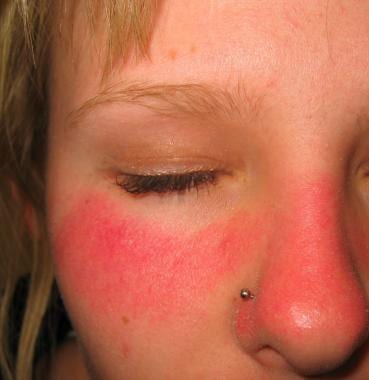
- Confluent erythema and warmth are present in exposed areas.
- Edema, pain and tenderness, and pruritus may occur as a result of moderate-to-severe sun exposure.
- Vesiculation occurs in severe cases of sunburn and may require a week or longer to resolve.
- Complications due to secondary infection are infrequent.
- Scaling or peeling occurs a few days following exposure.
- Nausea, abdominal cramping, weakness and malaise, fever, chills, and headache may also occur, most often with severe sunburn.
- Patients with severe sunburn may have a rapid pulse rate.
Causes
Although exposure to UV-B light causes most sunburns, use of tanning salons and home tanning devices have made UV-A–induced sunburn increasingly common. - Severe sunburns often result after falling asleep at the beach or under a UV lamp or from prolonged exposure at swimming areas.
- Both outdoor work and outdoor recreational activities are risk factors for sunburn.
- Sunburn is common when residents of northern latitudes have prolonged sun exposure while vacationing in southern latitudes or near the equator.
- Outdoor exposure on cloudy days may provide people a false sense of protection. As much as 80% of UVR penetrates clouds.
- Reflective surfaces such as sand, snow, water, and cement may contribute to sunburn development.
- Increased humidity reduces the threshold for erythema caused by UVR.
- Medical treatments that expose patients to UV-B and UV-A may cause a sunburn reaction.
- UV-C exposure from welding arcs, bactericidal lamps, and mercury arc lamps may cause sunburn.
- The degree of sunburn depends on the duration and intensity of exposure, patient's skin type or complexion, and previous conditioning of the skin.
- The unit of measurement of a sunburn is the MED, defined as the minimum UV-B exposure required to produce a clearly marginated erythema in an irradiated site following a single exposure. MED is expressed as mJ/cm2.
- Phototoxic reactions resulting in a sunburn reaction usually occur in the UV-A range and can be caused by topical and systemic agents. In contrast to photoallergic reactions, phototoxic reactions may occur after the initial exposure and do not affect areas of the body that were protected from light.
- Topical agents causing phototoxic reactions include the following:
- Bergamot oil (5-methoxypsoralen)
- Coal tar derivatives
- Acridine
- Anthracene
- Fluoranthene
- Naphthalene
- Phenanthrene
- Pyridine
- Thiophene
- Dyes or pigments
- Acriflavine
- Anthraquinone
- Cadmium sulfate
- Eosin
- Methylene blue
- Rose bengal
- Toluidine blue
- Methoxsalen
- Plants (furocoumarins)
- Leguminosae family
- Moraceae family - Figs
- Rutaceae family - Bergamot orange, gas plant, lemon, lime
- Umbelliferae family - Angelica, anise, bishop weed, celery, cow parsley, dill, fennel, giant hogweed, wild parsnip, wild carrot
- Retinoids (after continued use)
- Adapalene
- Tazarotene
- Vitamin A acid
- Tar
- Systemic agents causing phototoxic reactions include the following:
- Antimicrobials
- Ceftazidime
- Griseofulvin
- Quinolones - Ciprofloxacin, nalidixic acid, norfloxacin, ofloxacin
- Sulfonamides
- Tetracyclines - Doxycycline, tetracycline
- Trimethoprim
- Antineoplastic agents
- Dacarbazine
- 5-Fluorouracil
- Vinblastine
- Antimalarials - Quinine
- Cardiac medications
- Diuretics
- Furosemide
- Hydrochlorothiazide
- Hematoporphyrin
- Hypolipidemics
- Nonsteroidal anti-inflammatory drugs (NSAIDs)
- Diclofenac
- Ibuprofen
- Indomethacin
- Ketoprofen
- Naproxen
- Piroxicam
- Sulindac
- Tiaprofenic acid
- Psoralens
- Antipsychotics
- Alprazolam
- Chlordiazepoxide
- Chlorpromazine
- Desipramine
- Imipramine
- Perphenazine
- Prochlorperazine
- Thioridazine
- Trifluoperazine
- Retinoids
- Sulfonylureas - Tolbutamide
- Sulfites
Burns, Chemical
Burns, Electrical
Burns, Thermal
Toxic Shock Syndrome
Other Problems to be Considered
Drug-induced photosensitivity or photosensitivity due to topical agents including sunscreens Collagen vascular disease (eg, dermatomyositis, drug-induced lupus erythematosus) Polymorphous light eruption Erythropoietic protoporphyria Chronic actinic dermatitis (actinic reticuloid, persistent light reactivity, photosensitive eczema) Skin cancers: Because of the risk of NMSC and malignant melanoma, physicians should be vigilant during skin examinations and should educate patients about this risk, especially when treating patients with SPT 1 or 2 who have a history of extensive sun exposure, sunburns, and family history of skin cancer. Rickets: Aggressive photoprotection in individuals with a normal diet does not cause vitamin D deficiency. Vitamin D-3 is ingested in foods or is formed in the presence of UV-B from epidermal and dermal 7-dehydrocholesterol, which is converted to previtamin D-3 and then vitamin D-3.
Lab Studies
- Except for patients with severe sunburn, laboratory studies are rarely indicated and are usually ordered only if the diagnosis is unclear.
- Manage cases of severe sunburn as burn cases; order appropriate laboratory studies and monitor for fluid and electrolyte imbalance and for risk of secondary infection.
Imaging Studies
- No imaging studies are required for patients with sunburn.
Other Tests
- If porphyria is suspected, obtain tests for blood, urine, and stool porphyrins.
- If systemic lupus erythematosus is suspected, obtain tests for antinuclear antibody (ANA) serology, anti-Ro, and anti-La antibody titers.
- Phototesting may reveal an abnormally low erythemal threshold in chronic actinic dermatitis and may induce the disorder.
- Patch testing and photopatch testing may be used to identify a contact or photocontact allergen.
- If secondary infection is suspected, obtain microbiology tests.
Procedures
Performing a skin biopsy is usually unnecessary because diagnosis is usually easy to confirm from the history and clinical findings.
Histologic Findings
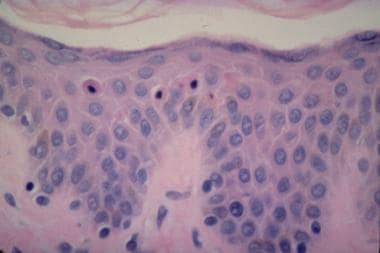
Histology is rarely required because the diagnosis is usually clinically confirmed, although it may help distinguish sunburn from photosensitivity disorders. Histologic changes may occur before clinical signs or symptoms appear, sometimes as early as 30 minutes after exposure. In patients with sunburn, examination of the epidermis reveals sunburn cells (ie, dyskeratotic and vacuolated keratinocytes with pyknotic nuclei), mild spongiosis, vacuolization of melanocytes, and decreased numbers of Langerhans cells (see Media file 1). Examination of the dermis reveals mast cell degranulation, endothelial cell swelling of superficial and deep venular plexuses, and a mixed perivascular infiltrate, primarily around superficial vessels. Endothelial cell swelling is apparent within 30 minutes after irradiation and peaks at 24 hours.
Medical Care
A sunburn is considered a self-limited injury. However, even a mild sunburn that requires no treatment provides an excellent opportunity to teach patients about the risks of sun exposure and use of photoprotection.
Patients with moderate sunburn should be encouraged to replenish their fluids with nonalcoholic beverages. Those with mild-to-moderate sunburn may require relief of pain or pruritus.
Severe sunburn requires admission to a burn unit for parenteral fluid replacement, pain control, and prophylaxis against infection.
Patients presenting with a vesicular reaction should not have the vesicles unroofed because the epidermal surface of the blister provides protection against secondary infection.
After a sunburn, the skin should not be exposed to the sun for at least a week because the skin is more susceptible to burning. Nonpharmacologic treatment for sunburn includes the following:
- Direct the patient to stay in a shaded, cool environment for a few days, with bed rest as necessary.
- Cool baths or cool tap water (depending on the affected surface area) or normal saline compresses for 20 minutes and repeated 3-4 times daily may offer some relief from pain and pruritus.
- Applying calamine or pramoxine lotion 3 times daily to affected areas may help.
- Moisturizers, applied liberally and frequently, help reduce dryness and peeling in mild sunburns.
- Bath preparations (eg, colloidal oatmeal) are helpful, but direct patients to use soaps sparingly.
- Ointments or butter do not help a mild-to-moderate sunburn and may be painful to wash off.
Surgical Care
Patients with blistering sunburns may require treatment within a hospital burn unit.
Consultations
Refer patients who have experienced a severe sunburn or who have burned while on a photosensitizing medication to a dermatologist. Other possible consultations include the following:
- Plastic surgeon
- Ophthalmologist (if corneal injury suspected)
Topical vitamin E, if applied within 2 minutes of excessive UV exposure, may reduce erythema and edema. However, because clinical effects of sunburn do not appear for some time after exposure, the risk of sunburn may not be appreciated at the time of exposure. Oral indomethacin or ibuprofen or topical indomethacin 1%, administered immediately after sun exposure may reduce erythema and the degree of epidermal insult. Diclofenac gel (Solaraze) applied 6 hours and 10 hours after irradiation may alleviate spontaneous and provoked pain and decrease erythema, edema and skin temperature. Improvement is noted 2 hours after application and lasts for up to 48 hours after irradiation. Decrease erythema by applying glycolic acid 12% topically qid starting 4 hours after UV-B exposure and glycolic acid 8% daily starting 24 hours after UV-B exposure. Three weeks of pretreatment with 8% glycolic acid cream 8% results in an SPF of approximately 2.4. Some emergency departments and burn units continue to administer systemic corticosteroids, although the effectiveness of these drugs has not been established. Systemic corticosteroid administration has little beneficial effect in sunburn treatment and may increase the risk of secondary infection. Potent topical corticosteroids transiently reduce erythema but do not influence epidermal damage. Topical corticosteroids may provide some relief of stinging or itching when applied bid/tid and provide an additive effect to indomethacin or ibuprofen. Avoid prolonged administration of potent steroids. However, topical tacrolimus does not have a significant impact on UV-induced erythema or inflammation when administered before or after UV exposure. Acetaminophen or aspirin may offer some relief of associated pain, although opioid analgesics may be necessary in severe situations. Diphenhydramine (Benadryl) or hydroxyzine HCL (Atarax) 25-75 mg hs may help patients sleep and relieve itching, but they provide no other sunburn management benefits. Discourage use of topical diphenhydramine and topical anesthetic sprays because of allergic contact dermatitis risk.
Drug Category: Anti-inflammatory agents
These agents help reduce erythema and degree of epidermal insult.
| Drug Name | Indomethacin (Indocin) |
| Description | Rapidly absorbed PO. Metabolism occurs in the liver by demethylation, deacetylation, and glucuronide conjugation. Inhibits prostaglandin synthesis. Topical indomethacin 1% applied immediately after sun exposure may reduce erythema and the degree of epidermal insult. |
| Adult Dose | 25-50 mg PO bid/tid 75 mg SR PO bid; not to exceed 200 mg/d |
| Pediatric Dose | 1-2 mg/kg/d PO divided bid/qid; not to exceed 4 mg/kg/d or 150-200 mg/d |
| Contraindications | Documented hypersensitivity; GI bleeding; renal insufficiency |
| Interactions | Coadministration with aspirin increases risk of inducing serious NSAID-related adverse effects; probenecid may increase concentrations and, possibly, toxicity of NSAIDs; may decrease effect of hydralazine, captopril, and beta-blockers; may decrease diuretic effects of furosemide and thiazides; closely monitor PT (instruct patients to watch for signs of bleeding); may increase risk of methotrexate toxicity; phenytoin levels may be increased when concurrently administered |
| Pregnancy | B - Fetal risk not confirmed in studies in humans but has been shown in some studies in animals D - Fetal risk shown in humans; use only if benefits outweigh risk to fetus
|
| Precautions | Category D in third trimester of pregnancy; acute renal insufficiency, hyperkalemia, hyponatremia, interstitial nephritis, and renal papillary necrosis may occur; increases risk of acute renal failure in patients with preexisting renal disease or compromised renal perfusion; reversible leukopenia may occur, (discontinue if persistent leukopenia, granulocytopenia, or thrombocytopenia is present) |
| Drug Name | Ibuprofen (Advil, Motrin) |
| Description | DOC for patients with mild-to-moderate pain; also used to reduce fever. Inhibits inflammatory reactions and pain by decreasing prostaglandin synthesis. Ibuprofen 400 mg q6h initiated immediately after sun exposure may reduce erythema and degree of epidermal insult. |
| Adult Dose | 200-400 mg PO q4-6h while symptoms persist; not to exceed 3.2 g/d |
| Pediatric Dose | 6 months to 12 years: 4-10 mg/kg PO tid/qid >12 years: Administer as in adults |
| Contraindications | Documented hypersensitivity; peptic ulcer disease; recent GI bleeding or perforation; renal insufficiency; high risk of bleeding |
| Interactions | Coadministration with aspirin increases risk of inducing serious NSAID-related adverse effects; probenecid may increase concentrations and, possibly, toxicity of NSAIDs; may decrease effect of hydralazine, captopril, and beta-blockers; may decrease diuretic effects of furosemide and thiazides; closely monitor PT (instruct patients to watch for signs of bleeding); may increase risk of methotrexate toxicity; phenytoin levels may be increased when administered concurrently |
| Pregnancy | B - Fetal risk not confirmed in studies in humans but has been shown in some studies in animals D - Fetal risk shown in humans; use only if benefits outweigh risk to fetus
|
| Precautions | Category D in third trimester of pregnancy; caution in congestive heart failure, hypertension, and decreased renal and hepatic function; caution in anticoagulation abnormalities or during anticoagulant therapy |
Drug Category: Analgesics
These agents may offer some pain relief, although opioid analgesics may be necessary in severe situations.
| Drug Name | Acetaminophen (Tylenol) |
| Description | DOC for pain in patients with documented hypersensitivity to aspirin or NSAIDs, with upper GI disease, or who are taking PO anticoagulants. |
| Adult Dose | 325-650 mg PO q4-6h or 1000 mg PO tid/qid; not to exceed 4 g/d |
| Pediatric Dose | <12 years: 10-15 mg/kg PO q4-6h prn; not to exceed 2.6 g/d >12 years: 325-650 mg PO q4h; not to exceed 5 doses in 24 h |
| Contraindications | Documented hypersensitivity; G-6-PD deficiency |
| Interactions | Rifampin can reduce analgesic effects; coadministration with barbiturates, carbamazepine, hydantoins, or isoniazid may increase hepatotoxicity |
| Pregnancy | B - Fetal risk not confirmed in studies in humans but has been shown in some studies in animals
|
| Precautions | Hepatotoxicity possible with overdose or long-term use; severe or recurrent pain or high or continued fever may indicate a serious illness; contained in many OTC products, and combined use with these products may result in cumulative doses exceeding recommended maximum dose |
| Drug Name | Aspirin (Anacin, Ascriptin, Bayer Aspirin, Bayer Buffered Aspirin) |
| Description | Treatment for mild to moderate pain. Inhibits prostaglandin synthesis, which prevents formation of platelet-aggregating thromboxane A2. |
| Adult Dose | 325-650 mg PO q4-6h; not to exceed 4 g/d |
| Pediatric Dose | 10-15 mg/kg PO q4-6h; not to exceed 60-80 mg/kg/d |
| Contraindications | Documented hypersensitivity; liver damage; hypoprothrombinemia; vitamin K deficiency; bleeding disorders; asthma; because of association of aspirin with Reye syndrome, do not use in children (<16 y) with flu |
| Interactions | Effects may decrease with antacids and urinary alkalinizers; corticosteroids decrease salicylate serum levels; additive hypoprothrombinemic effects and increased bleeding time may occur with coadministration of anticoagulants; may antagonize uricosuric effects of probenecid and increase toxicity of phenytoin and valproic acid; doses >2 g/d may potentiate glucose-lowering effect of sulfonylurea drugs |
| Pregnancy | D - Fetal risk shown in humans; use only if benefits outweigh risk to fetus
|
| Precautions | May cause transient decrease in renal function and aggravate chronic kidney disease; avoid use in patients with severe anemia, with history of blood coagulation defects, or taking anticoagulants |
Drug Category: Dermatologic agents
These agents are used to decrease erythema.
| Drug Name | Glycolic acid |
| Description | Organic acid contained in various topical preparations, used to treat hyperpigmentation and photodamaged skin. Reduces erythema following sunburn. Pretreatment for 3 wk with glycolic acid cream 8% provides an SPF of approximately 2.4. |
| Adult Dose | Apply 12% cream topically qid, starting 4 h after UV-B exposure and 8% cream qd starting 1 d after UV-B exposure |
| Pediatric Dose | Administer as in adults |
| Contraindications | Documented hypersensitivity |
| Interactions | None reported |
| Pregnancy | C - Fetal risk revealed in studies in animals but not established or not studied in humans; may use if benefits outweigh risk to fetus
|
| Precautions | None known |
Drug Category: Antihistamines
These agents may help patient sleep and provide relief from itching but provide no additional benefit in management of sunburn.
| Drug Name | Diphenhydramine (Benadryl) |
| Description | For symptomatic relief of symptoms caused by release of histamine. |
| Adult Dose | 25-50 mg PO q6-8h prn; not to exceed 400 mg/d |
| Pediatric Dose | 12.5-25 mg PO tid/qid, or 5 mg/kg/d, or 150 mg/m2/d divided tid/qid; not to exceed 300 mg/d 5 mg/kg/d IV/IM, or 150 mg/m2/d, divided qid; not to exceed 300 mg/d |
| Contraindications | Documented hypersensitivity; coadministration of MAOIs |
| Interactions | Potentiates effect of CNS depressants; because of alcohol content, do not administer syr dosage form to patient taking medications that can cause disulfiramlike reactions |
| Pregnancy | C - Fetal risk revealed in studies in animals but not established or not studied in humans; may use if benefits outweigh risk to fetus
|
| Precautions | May exacerbate angle-closure glaucoma, hyperthyroidism, peptic ulcer, or urinary tract obstruction; xerostomia may occur |
| Drug Name | Hydroxyzine hydrochloride (Atarax) |
| Description | Antagonizes H1-receptors in periphery; may suppress histamine activity in subcortical region of CNS. |
| Adult Dose | 25-100 mg PO qd/qid |
| Pediatric Dose | 0.6 mg/kg/dose PO q6h |
| Contraindications | Documented hypersensitivity |
| Interactions | CNS depression may increase with alcohol or other CNS depressants |
| Pregnancy | C - Fetal risk revealed in studies in animals but not established or not studied in humans; may use if benefits outweigh risk to fetus
|
| Precautions | Associated with clinical exacerbations of porphyria (may not be safe for porphyric patients); ECG abnormalities (alterations in T waves) may occur; may cause drowsiness |
Further Outpatient Care
- Patients with mild-to-moderate sunburn do not require close monitoring.
- Closely monitor patients with extensive burns and dehydration to assess their needs for fluid replacement and treatment of infection.
- Caution patients and parents to watch for signs of secondary infection in cases of severe sunburn. Instruct patients and parents to seek medical care for drainage, foul smell, or increasing redness or fevers associated with disruption of the natural skin barrier.
Deterrence/Prevention
- The association of repeated sun exposure and sunburns with the development of skin cancer and premature aging highlights the importance of preventive practices.
- Early intervention and education during childhood maximize the effects of preventive practices. Encourage adults to teach sun protection to their children. Infants and small children may be unable to avoid sun exposure on their own.
- Encourage patients who desire a tanned appearance to try self-tanning gels or lotions (eg, dihydroxyacetone), which do not increase the risk of skin cancer or wrinkling. (These gels and lotions offer insignificant sun protection.)
- Sunburn prevention may involve behavioral and pharmacologic components. The following behaviors minimize the risk of sunburn:
- Avoid prolonged exposure during the middle of the day (ie, 10 am to 4 pm), particularly during summer months.
- Avoid prolonged sun exposure when the UV index is high.
- Sit or play in the shade whenever possible. Umbrellas may decrease UVR exposure by approximately 70% but offer little protection against reflected radiation. Shade from trees (unless in a dense forest), awnings, and buildings, while helpful, provides insufficient UVR protection (ie, SPF typically <4).
- Wear appropriate protective clothing and accessories (eg, long pants, long-sleeved shirts, hats, sunglasses).
- Patients who have excessive exposure to sunlight or who have histories of skin cancer should consider buying clothing specifically designed to protect from UVR.
- Dark, dry, tightly woven clothing offers the most protection. When fabric is wet, water occupies the spaces between the fibers and allows greater UVR penetration. Nylon stockings provide minimal protection. Synthetic fabrics (eg, rayon) offer greater protection than cotton clothing.
- Recently developed commercial products (eg, Rit Sun Guard with Tinosorb) add UV protection to clothing. The product is added to the clothes washing cycle, and a single treatment reportedly remains effective through 20 washings.
- Wear hats with wide brims (eg, >7.5 cm) of tightly woven material (not straw) to protect the face, ears, and neck. Baseball caps, depending upon how they are worn, often inadequately protect the ears, nose, and back of the neck.
- Avoid cosmetic tanning and tanning salons.
- Avoid or minimize sun exposure while taking phototoxic medications or topical agents that may interact with UV/visible light to avoid causing a dose-related sunburn.
- Pharmacologic aspects of sunburn prevention include chemical and physical sunscreens. No sunscreen offers 100% photoprotection, so consider sunscreen only as an adjunctive photoprotective measure.
- No truly effective oral sunscreens are known. Antimalarial drugs, vitamin A or E, beta carotene, and oral para-aminobenzoic acid (PABA) do not provide adequate sun protection. Combined systemic vitamin C at 2 g/d and vitamin E at 1000 IU/d provide minimal protection (SPF 1.4); topical application in a sunscreen may enhance sun protection.
- Sunscreens are meant to protect the skin and not to prolong sun exposure. Although sunscreens can prevent sunburn, UVR-induced immunosuppression and carcinogenicity may occur before the UV erythema threshold is reached.
- Daily sunscreen use for 4.5 years has been associated with a decline in the incidence of squamous cell carcinoma.
- Sunscreen selection is determined as follows:
- Seek out a broad spectrum (UVB and UVA protection) sunscreen with an SPF of 30 or more (ie, high protection), preferably a product that offers protection against both UV-B and UV-A. SPFs ranging from 1-11 are rated minimal protection, and SPFs ranging from 12-29 are rated moderate protection.
- If sunscreens with high SPF ratings are unavailable, use sunscreens with an SPF of at least 15. Sunscreens rated at SPF 15 block approximately 93% of UV-B radiation, compared to the 97% block provided by SPF 30.
- Sunscreen use is as follows:
- Apply sunscreen 15-60 minutes prior to UV exposure to allow proper skin binding.
- Generously apply topical sunscreens to all exposed surfaces, including often forgotten areas such as the lips, ears, neck, and dorsum of feet; approximately 30 mL is required to cover the body completely. However, studies have shown that only 20-60% of the amount of sunscreen needed to achieve the SPF rating on the product is actually applied by most people.
- Reapply sunscreens after swimming, toweling, or sweating because these activities remove some of the sunscreen. Waterproof sunscreens are more substantive (ie, maintain efficacy after 80-min water immersion) than water-resistant sunscreens (ie, maintain efficacy after 40-min water immersion); both are more effective than sweat-resistant sunscreens (ie, maintain efficacy after 30-min continuous heavy sweating).
- Reapplication does not extend the period of protection.
- Physical sunscreens reflect and scatter UV rays and are useful for individuals of all ages. Examples include titanium dioxide, zinc oxide, talc, kaolin, ferric chloride, and melanin. Titanium dioxide and zinc oxide also absorb UVR; therefore, they are considered both chemical and physical sunscreens.
- Physical sunscreens tend to be thicker, less cosmetically appealing, and more easily rubbed off, although micronized titanium dioxide and zinc oxide are relatively transparent and more cosmetically pleasing.
- Although physical sunscreens offer reduced risk of sensitization, their occlusive effect may cause miliaria and folliculitis.
- UV-B absorbers include the following:
- Benzylidene camphor derivative (4-methylbenzylidene camphor) - Photostabilizer for dibenzoylmethanes
- Cinnamates - Easily removed with swimming and sweating; may cross react with balsam of Peru, benzyl and methyl cinnamate, cinnamic alcohol, cinnamic aldehyde, cinnamon, cinnamon oil, and cocoa leaves
- 2-Ethoxyethyl para-methoxycinnamate (Cinoxate)
- Octocrylene
- Octyl methoxycinnamate (Parsol MCX)
- PABA esters (eg, octyl dimethyl PABA [Padimate O]) - May induce contact or photocontact dermatitis; may cross-react with ester anesthetics, sulfonamides, sulfonylurea hypoglycemics, and thiazides
- Salicylates - Easily removed with swimming or sweating; rare cause of contact dermatitis
- Octyl salicylate
- Homomenthyl salicylate (homosalate)
- Triethanolamine salicylate
- UV-A absorbers include the following:
- Anthranilates (methyl anthranilate) - Incomplete UV-A protection (max absorption is 332-345 nm); rare cause of contact dermatitis
- Benzophenones - Broad-spectrum with UV-A II/UV-B protection
- Dioxybenzone (benzophenone-8) - May induce contact dermatitis and contact urticaria
- Oxybenzone (benzophenone-3) - May induce contact and photocontact dermatitis
- Dibenzoylmethanes (eg, t-butylmethoxy-dibenzoylmethane, avobenzone, Parsol 1789) - Broad UV-A II and I protection; photodegradable; may induce contact and photocontact sensitization
- Benzylidene camphor derivative - Maximum absorption at 345 nm, good photostability
- Terephthalydene dicamphor sulfonic acid (Mexoryl SX, Ecamsule) - May rarely cause contact dermatitis
- Green tea contains polyphenolic compounds that inhibit UV-induced erythema, sunburn cells, immunosuppression, and carcinogenesis.
Complications
- Closely monitor patients with extensive burns and dehydration to assess their need for fluid replacement and their risk of secondary infection.
- Sunburned skin rarely leads to scarring after healing unless secondary infection occurs.
Prognosis
- Prognosis for most patients with sunburn is excellent.
- The long-term effects of sunburn increase the patient's risk for skin cancer, lentigines, and photoaging.
Patient Education
- Teach patients about the harmful effects of the sun and how to provide appropriate sun protection for the entire family. Patients should be taught that a healthy tan is not possible and that sunburns are more easily prevented than treated.
- Direct patients to avoid or minimize sun exposure during the peak times of sunburning (ie, 10 am to 4 pm) when the UV index is high. (A memorable reminder for patients is to tell them the peak times are whenever your shadow is shorter than you.)
- Instruct patients to avoid sunbathing.
- Encourage parents to use sun protection themselves as well as to provide it for their children. Research has found that parents who used sun protection themselves were more likely to provide sun protection for their children, compared with parents who do not use sun protection for themselves.
- Encourage susceptible persons (eg, those with SPT 1 or 2 and/or those with outdoor occupations) to apply sunscreen every day along with their daily cosmetic regimen.
- Remind young patients who enjoy tanning about the unattractive dyspigmentation and wrinkling associated with long-term sun exposure, not to mention the increased future risk of developing cutaneous malignancy.
- Make patients aware of the UV index, which indicates the sunlight intensity based on weather conditions. Many weather forecasts now feature this information.
- Encourage patients to perform regular skin self-examinations and to seek periodic professional examinations from their physicians.
- For excellent patient education resources, visit eMedicine's Burns Center. Also, see eMedicine's patient education article Sunburn.
Medical/Legal Pitfalls
- Sunburn reaction after medical phototherapy or the use of tanning beds may result in malpractice suits.
- The US Food and Drug Administration (FDA) regulates sun lamp products, posting of warnings, and eye protection. The FDA also recommends exposure schedules. Despite these regulations, studies have shown that 95% of patrons exceed the recommended times.
- Regulations for the day-to-day operation of tanning parlors, including the need for parental consent for minors, is at the state level.
| Media file 1:
Note the apoptotic sunburn cells in the epidermis. Photograph courtesy of David Shum, MD, Division of Dermatology, University of Western Ontario. |
 | View Full Size Image | |
Media type: Photo
|
| Media file 2:
Acute sunburn of face after a soccer match in a 15 year-old female. |
 | View Full Size Image | |
Media type: Image
|
| Media file 4:
Subacute sunburn of shoulder with peeling in a 21 year-old male |
 | View Full Size Image | |
Media type: Image
|
- Lovato C, Shoveller J, Rivers J. National Survey on Sun Exposure and Protective Behaviours: Final Report. Vancouver, Canada. Institute of Health Promotion Research. 1997.
- Robinson JK, Rigel DS, Amonette RA. Trends in sun exposure knowledge, attitudes, and behaviors: 1986 to 1996. J Am Acad Dermatol. Aug 1997;37(2 Pt 1):179-86. [Medline].
- Robinson JK, Rigel DS, Amonette RA. Summertime sun protection used by adults for their children. J Am Acad Dermatol. May 2000;42(5 Pt 1):746-53. [Medline].
- Brown TT, Quain RD, Troxel AB, Gelfand JM. The epidemiology of sunburn in the US population in 2003. J Am Acad Dermatol. Oct 2006;55(4):577-83. [Medline].
- Monfrecola G, Fabbrocini G, Posteraro G, Pini D. What do young people think about the dangers of sunbathing, skin cancer and sunbeds? A questionnaire survey among Italians. Photodermatol Photoimmunol Photomed. Feb 2000;16(1):15-8. [Medline].
- Boldeman C, Beitner H, Jansson B, Nilsson B, Ullen H. Sunbed use in relation to phenotype, erythema, sunscreen use and skin diseases. A questionnaire survey among Swedish adolescents. Br J Dermatol. Nov 1996;135(5):712-6. [Medline].
- McCarthy EM, Ethridge KP, Wagner RF Jr. Beach holiday sunburn: the sunscreen paradox and gender differences. Cutis. Jul 1999;64(1):37-42. [Medline].
- Adam J. Sun-protective clothing. J Cutan Med Surg. Jul 1998;3(1):50-3. [Medline].
- Adam JE. Living a "shady life": sun-protective behaviour for Canadians. CMAJ. May 18 1999;160(10):1471-4. [Medline].
- Autier P, Boniol M, Severi G, et al. Quantity of sunscreen used by European students. Br J Dermatol. Feb 2001;144(2):288-91. [Medline].
- Barankin B, Liu K, Howard J, Guenther L. Effects of a sun protection program targeting elementary school children and their parents. J Cutan Med Surg. Jan-Feb 2001;5(1):2-7. [Medline].
- Beattie PE, Finlan LE, Kernohan NM, et al. The effect of ultraviolet (UV) A1, UVB and solar-simulated radiation on p53 activation and p21. Br J Dermatol. May 2005;152(5):1001-8. [Medline].
- Berne B, Ros AM. 7 years experience of photopatch testing with sunscreen allergens in Sweden. Contact Dermatitis. Feb 1998;38(2):61-4. [Medline].
- Buescher LS. Sunscreens and photoprotection. Otolaryngol Clin North Am. Feb 1993;26(1):13-22. [Medline].
- Coldiron BM. Thinning of the ozone layer: facts and consequences. J Am Acad Dermatol. Nov 1992;27(5 Pt 1):653-62. [Medline].
- Darr D, Dunston S, Faust H. Effectiveness of antioxidants (vitamin C and E) with and without sunscreens as topical photoprotectants. Acta Derm Venereol. Jul 1996;76(4):264-8. [Medline].
- Diffey BL, Langtry J. Phototoxic potential of thiazide diuretics in normal subjects. Arch Dermatol. Oct 1989;125(10):1355-8. [Medline].
- Driscoll MS, Wagner RF Jr. Clinical management of the acute sunburn reaction. Cutis. Jul 2000;66(1):53-8. [Medline].
- Dromgoole SH, Maibach HI. Sunscreening agent intolerance: contact and photocontact sensitization and contact urticaria. J Am Acad Dermatol. Jun 1990;22(6 Pt 1):1068-78. [Medline].
- Eberlein-Konig B, Placzek M, Przybilla B. Protective effect against sunburn of combined systemic ascorbic acid (vitamin C) and d-alpha-tocopherol (vitamin E). J Am Acad Dermatol. Jan 1998;38(1):45-8. [Medline].
- Edwards EK Jr, Edwards EK, Ridge JC. Sunscreen effect on the formation of epidermal sunburn cells. Dermatology. 1982;33-35.
- Epstein JH. Phototoxicity and photoallergy in man. J Am Acad Dermatol. Feb 1983;8(2):141-7. [Medline].
- Farr PM, Diffey BL, Humphreys F. A quantitative study of the effect of terfenadine on cutaneous erythema induced by UVB and UVC radiation. J Invest Dermatol. Dec 1986;87(6):771-4. [Medline].
- Fitzpatrick TB, Johnson RA, Wolff K. Color Atlas and Synopsis of Clinical Dermatology. 3rd ed. New York, NY: McGraw-Hill; 1997.
- Fourtanier A, Labat-Robert J, Kern P. In vivo evaluation of photoprotection against chronic ultraviolet-A irradiation by a new sunscreen Mexoryl SX. Photochem Photobiol. Apr 1992;55(4):549-60. [Medline].
- Freedberg IM, Eisen AZ, Wolff K, et al, eds. Photomedicine. In: Fitzpatrick's Dermatology in General Medicine. 5th ed. New York, NY: McGraw-Hill; 1999:Section 19.
- Gambichler T, Tomi NS, Moussa G, et al. Topical tacrolimus neither prevents nor abolishes ultraviolet-induced erythema. J Am Acad Dermatol. Nov 2006;55(5):882-5. [Medline].
- Gange RW, Soparkar A, Matzinger E. Efficacy of a sunscreen containing butyl methoxydibenzoylmethane against ultraviolet A radiation in photosensitized subjects. J Am Acad Dermatol. Sep 1986;15(3):494-9. [Medline].
- Georgouras KE, Stanford DG, Pailthorpe MT. Sun protective clothing in Australia and the Australian/New Zealand standard: an overview. Australas J Dermatol. Jun 1997;38 Suppl 1:S79-82. [Medline].
- Gilchrest BA, Soter NA, Stoff JS. The human sunburn reaction: histologic and biochemical studies. J Am Acad Dermatol. Oct 1981;5(4):411-22. [Medline].
- Godar DE, Urbach F, Gasparro FP, van der Leun JC. UV doses of young adults. Photochem Photobiol. Apr 2003;77(4):453-7. [Medline].
- Gould JW, Mercurio MG, Elmets CA. Cutaneous photosensitivity diseases induced by exogenous agents. J Am Acad Dermatol. Oct 1995;33(4):551-73; quiz 574-6. [Medline].
- Granstein RD. Evidence that sunscreens prevent UV radiation-induced immunosuppression in humans. Sunscreens have their day in the sun. Arch Dermatol. Oct 1995;131(10):1201-4. [Medline].
- Green A, Williams G, Neale R. Daily sunscreen application and betacarotene supplementation in prevention of basal-cell and squamous-cell carcinomas of the skin: a randomised controlled trial. Lancet. Aug 28 1999;354(9180):723-9. [Medline].
- Greenwald JS, Parrish JA, Jaenicke KF. Failure of systemically administered corticosteroids to suppress UVB- induced delayed erythema. J Am Acad Dermatol. Aug 1981;5(2):197-202. [Medline].
- Guenther L. Sunburn. In: Therapeutic Choices. 2000. 3rd ed. Ottawa, Canada: Canadian Pharmaceutical Association; 507-12.
- Harber LC, Baer RL. Pathogenic mechanisms of drug-induced photosensitivity. J Invest Dermatol. Jun 1972;58(6):327-42. [Medline].
- Harber LC, Bickers DR. Sunburn (Ultraviolet erythema). In: Photosensitivity Diseases. Principles of diagnosis and treatment. 2nd ed. Toronto, Canada: BC Decker; 1989:112-23.
- Hawk JLM. Photodermatology. New York, NY: Oxford University Press Inc; 1999.
- Hebert AA. Photoprotection in children. In: Callen, Dahl, Golitz, Greenway, Schachner, eds. Advances in Dermatology. Vol 8. St Louis, Mo: Mosby-Year Book; 1993:309-25.
- Hornung RL, Magee KH, Lee WJ, Hansen LA, Hsieh YC. Tanning facility use: are we exceeding Food and Drug Administration limits?. J Am Acad Dermatol. Oct 2003;49(4):655-61. [Medline].
- Hughes GS, Francom SF, Means LK. Synergistic effects of oral nonsteroidal drugs and topical corticosteroids in the therapy of sunburn in humans. Dermatology. 1992;184(1):54-8. [Medline].
- Ikezawa Z, Kitamura K, Osawa J. Photosensitivity to piroxicam is induced by sensitization to thimerosal and thiosalicylate. J Invest Dermatol. Jun 1992;98(6):918-22. [Medline].
- Kienzler JL, Magnette J, Queille-Roussel C, Sanchez-Ponton A, Ortonne JP. Diclofenac-Na gel is effective in reducing the pain and inflammation associated with exposure to ultraviolet light - results of two clinical studies. Skin Pharmacol Physiol. May-Jun 2005;18(3):144-52. [Medline].
- Kochevar IE, Moran M, Lyon N. Effects of systemic indomethacin, meclizine, and BW755C on chronic ultraviolet B-induced effects in hairless mouse skin. J Invest Dermatol. Feb 1993;100(2):186-93. [Medline].
- Kuchel JM, Barnetson RSC, Halliday GM. Nitric oxide appears to be a mediator of solar-simulated ultraviolet radiation-induced immunosuppresssion in humans. J Invest Dermatol. 2003;121:587-93.
- Kullavanijaya P, Lim HW. Photoprotection. J Am Acad Dermatol. Jun 2005;52(6):937-58; quiz 959-62. [Medline].
- Liu KE, Barankin B, Howard J, Guenther LC. One-year followup on the impact of a sun awareness curriculum on medical students' knowledge, attitudes, and behavior. J Cutan Med Surg. May-Jun 2001;5(3):193-200. [Medline].
- Longstreth JD, de Gruul FR, Takaizawa Y. Human health. In: Environmental effects of ozone depletion 1991 update. UNEP Report. 1992;15-24.
- Maibach HI, Marzulli FN. Photoirritation (phototoxicity) from topical agents. Dermatol Clin. Apr 1986;4(2):217-22. [Medline].
- Marks R, Foley PA, Jolley D. The effect of regular sunscreen use on vitamin D levels in an Australian population. Results of a randomized controlled trial. Arch Dermatol. Apr 1995;131(4):415-21. [Medline].
- McLean DI. Update on photoprotection. Can J Dermatol. 1992;4(6):338-339.
- Morison WL. Phototherapy and Photochemotherapy of Skin Disease. 2nd ed. New York, NY: Raven Press; 1991.
- Morison WL. To tan or not to tan. A burning question. Arch Dermatol. Sep 1989;125(9):1258-60. [Medline].
- Nedorost ST, Dijkstra JW, Handel DW. Drug-induced photosensitivity reaction. Arch Dermatol. Mar 1989;125(3):433-4. [Medline].
- Nixon RL, Frowen KE, Lewis AE. Skin reactions to sunscreens. Australas J Dermatol. Jun 1997;38 Suppl 1:S83-5. [Medline].
- Pallatt SG. Sunscreen and tanning products. In: Nonprescription Drug Reference for Health Professionals. Ottawa, Canada. Canadian Pharmaceutical Association. 1996.
- Parsons PG, Neale R, Wolski P, Green A. The shady side of solar protection. Med J Aust. Apr 6 1998;168(7):327-30. [Medline].
- Patel NP, Highton A, Moy RL. Properties of topical sunscreen formulations. A review. J Dermatol Surg Oncol. Apr 1992;18(4):316-20. [Medline].
- Pathak MA. Sunscreens and their use in the preventive treatment of sunlight-induced skin damage. J Dermatol Surg Oncol. Jul 1987;13(7):739-50. [Medline].
- Perpall A. Selected environmental skin disorders. Emerg Med Clin North Am. May 1992;10(2):437-48. [Medline].
- Perricone NV, DiNardo JC. Photoprotective and antiinflammatory effects of topical glycolic acid. Dermatol Surg. May 1996;22(5):435-7. [Medline].
- Piccolo-Lobo MS, Piccolo NS, Piccolo-Daher MT. Sun tanning-related burns--a 3-year experience. Burns. Apr 1992;18(2):103-6. [Medline].
- Purdue MP, Marrett LD, Peters L et al. Predictors of sunburn among Canadian adults. Prev Med. 2001;Oct;33(4):305-12.
- Rapaport M. Sunlight and sunscreens. Dermatology. May 1982;34-48.
- Sams WM Jr. Assessment of the photosensitive patient. Dermatol Nurs. Feb 1992;4(1):30-4. [Medline].
- Schneider J. The teaspoon rule of applying sunscreen. Arch Dermatol. 2002;138:838-9.
- Serrano G, Fortea JM, Latasa JM. Photosensitivity induced by fibric acid derivatives and its relation to photocontact dermatitis to ketoprofen. J Am Acad Dermatol. Aug 1992;27(2 Pt 1):204-8. [Medline].
- Shear NH. Year-round safe sun. Pharmacy Practice. July/August 1990;10-14.
- Sinclair SA, Diffey BL. Sun protection provided by ladies stockings. Br J Dermatol. Feb 1997;136(2):239-41. [Medline].
- Sollitto RB, Kraemer KH, DiGiovanna JJ. Normal vitamin D levels can be maintained despite rigorous photoprotection: six years' experience with xeroderma pigmentosum. J Am Acad Dermatol. Dec 1997;37(6):942-7. [Medline].
- Stoner JG, Rasmussen JE. Plant dermatitis. J Am Acad Dermatol. Jul 1983;9(1):1-15. [Medline].
- Taylor CR, Stern RS, Leyden JJ. Photoaging/photodamage and photoprotection. J Am Acad Dermatol. Jan 1990;22(1):1-15. [Medline].
- Thieden E, Philipsen PA, Sandby-Moller J, Wulf HC. Sunburn related to UV radiation exposure, age, sex, occupation, and sun bed use based on time-stamped personal dosimetry and sun behavior diaries. Arch Dermatol. Apr 2005;141(4):482-8. [Medline].
- Trevithick JR. Vitamin E prevention of ultraviolet-induced skin damage. In: Fuchs J, Packer L, eds. Oxidative Stress in Dermatology. New York, NY: Marcell-Dekker; 1993:67-80.
- Van Laethem A, Claerhout S, Garmyn M, Agostinis P. The sunburn cell: regulation of death and survival of the keratinocyte. Int J Biochem Cell Biol. Aug 2005;37(8):1547-53. [Medline].
- Warthan MM, Sewell DS, Marlow RA, Warthan ML, Wagner RF Jr. The economic impact of acute sunburn. Arch Dermatol. Aug 2003;139(8):1003-6. [Medline].
- Werninghaus K, Meydani M, Bhawan J. Evaluation of the photoprotective effect of oral vitamin E supplementation. Arch Dermatol. Oct 1994;130(10):1257-61. [Medline].
|