| Patient Education |
|
Click here for patient education.
|
|
AUTHOR AND EDITOR INFORMATION
Section 1 of 10
Author: Mohsen Saidinejad, MD, Pediatric Emergency Medicine Fellow, Department of Pediatrics, Assistant Clinical Instructor, Children's Hospital of Michigan
Mohsen Saidinejad is a member of the following medical societies: American Academy of Pediatrics and American Medical Association
Coauthor(s):
Samuel Ritter, MD, Associate Chair and Professor, Department of Pediatrics, Chief, Division of Pediatric Cardiology, State University of New York at Brooklyn; Vice President of Children's Services, Chair, Director of Fetal Echo Cardiac Imaging Center, Staten Island University Hospital
Editors: Christopher Johnsrude, MD, Associate Professor of Pediatrics, Director of Electrophysiology, University of Louisville School of Medicine; Consulting Staff, Pediatric Cardiology Associates, PSC; Mary L Windle, PharmD, Adjunct Assistant Professor, University of Nebraska Medical Center College of Pharmacy, Pharmacy Editor, eMedicine.com, Inc; Alvin J Chin, MD, Professor of Pediatrics, Division of Cardiology, The Children's Hospital of Philadelphia, University of Pennsylvania School of Medicine; Gilbert Herzberg, MD, Assistant Professor, Department of Pediatrics, Section of Pediatric Cardiology, New York Medical College; Stuart Berger, MD, Professor of Pediatrics, Division of Cardiology, Medical College of Wisconsin; Chief of Pediatric Cardiology, Medical Director of Pediatric Heart Transplant Program, Medical Director of The Heart Center, Children's Hospital of Wisconsin
Author and Editor Disclosure
Synonyms and related keywords:
aortic valve insufficiency, aortic insufficiency, AI, aortic regurgitation, AR, aortic valve incompetence, aortic valve prolapse, aortic valve insufficiency, abnormalities in the aortic valve leaflets, sinus of Valsalva, truncus arteriosus, truncus septum, congenital heart disease, ventricular septal defect, bicuspid aortic valve, subvalvular aortic stenosis, endocarditis, rheumatic fever, Ehlers-Danlos syndrome, systemic lupus erythematosus, Marfan syndrome, aortic regurgitation, increased preload, ventricular ectopy, tachycardia, myocardial dysfunction, hypotension, valvulitis, myocarditis, cardiovascular collapse, angina, orthopnea, paroxysmal nocturnal dyspnea, angina pectoris, myocardial ischemia
Background
Aortic valve insufficiency results from leakage and backflow of blood that is ejected from the left ventricle (LV) into the ascending aorta back into the left ventricle. Many mechanisms contribute to aortic valve insufficiency. These include abnormalities of the aortic valve leaflets and pathologies of the proximal aortic root. This article primarily focuses on aortic valve insufficiency caused by abnormalities in the aortic valve leaflets. Anatomy of the aortic valve The aortic valve is composed of 3 thin leaflets (ie, cusps) that project from the wall of the proximal ascending aorta. These leaflets and their respective sinuses of Valsalva are termed left, right, and noncoronary. Embryologic development of the aorta In the embryonic stage, the truncus arteriosus connects to the dorsal aspect of the aorta via 6 pairs of aortic arches. The separation of truncus arteriosus into 2 great arteries results from the fusion of the aorticopulmonary septum and the truncus septum. The semilunar valves and their related sinuses are created by absorption and the hollowing out of tissue at the distal side of the truncus ridges. Many mouse single-gene-knockout models of truncus arteriosus have been reported (eg, Sox4 null, Tbx1 null, pax3Splotch), although only NFATc1 null and Sox4 null display absent semilunar cusps. Ablation of a particular region in the cranial neural crest also results in truncus arteriosus, at least in the chick. Aortic valve insufficiency can be due to, or associated with, congenital heart disease.
- Ventricular septal defect of the membranous (conoventricular) or conal septal (infundibuloventricular) types
- Bicuspid (ie, bicommissural) aortic valve
- Subvalvular aortic stenosis
- Dysplasia of valve cusps, without fusion of commissures
- Absence of 2 or 3 aortic valve leaflets
Acquired valvular aortic insufficiency Causes of acquired aortic valve insufficiency include endocarditis, trauma, systemic diseases, and connective tissue syndromes. Systemic diseases that cause aortic valve insufficiency include the following:
Syndromes that lead to aortic valve insufficiency include the following:
Recently, the percentage of individuals with aortic valve insufficiency caused by aortic root disease has been steadily increasing compared with the percentage of those with valvular disease. In fact, more than half of patients who present with pure aortic regurgitation (AR) without any associated cardiac anomalies have aortic valve insufficiency caused by aortic root disease.
Pathophysiology
Regardless of etiology, aortic valve insufficiency results in volume overload on the LV because the LV is forced to pump the entire diastolic volume received from the left atrium and the regurgitant volume from the aorta through an incompetent aortic valve. Over time, such volume overload (ie, increased preload) causes eccentric hypertrophy of the LV. (Compare this with the concentric hypertrophy observed in aortic stenosis.) Chronic aortic insufficiency In long-standing AR, this compensatory mechanism begins to deteriorate. When LV function cannot continue to compensate for volume overload, the LV dilates, and LV end-diastolic volume increases, even without further increase in AR volume. The LV thickness–to–chamber size ratio decreases. This causes an increase in systolic wall tension and a decrease in ejection fraction, stroke volume, and ventricular emptying. This larger end-systolic volume leads to progressively larger end-diastolic volume. With progressive increases in wall tension, a mismatch occurs between oxygen demand and supply. Supply, which is always abnormally tenuous because of the lower-than-normal coronary driving pressure (difference in aortic diastolic pressure and ventricular diastolic pressure), cannot keep up with the increased demand. Interstitial fibrosis begins to occur, reducing wall compliance and further increasing end-diastolic LV pressure. If untreated, this interstitial fibrosis leads to elevated left atrial pressure and pulmonary venous congestion, especially during exercise. Ventricular ectopy is another manifestation of the oxygen supply-demand mismatch. Acute severe aortic insufficiency In acute severe aortic valve insufficiency due to endocarditis or sudden trauma, the LV cannot immediately respond with increased stroke volume to facilitate proper emptying because the element of eccentric hypertrophy is missing. As a result, LV diastolic pressure suddenly rises. Volume overload in the LV results in an early closure of the mitral valve during diastole. This occurs as a natural defense mechanism to protect the pulmonary venous system from the high-pressure regurgitant backflow coming from the high-pressure LV chamber. Systolic pressures remain effectively unchanged in the aorta and the LV. Because of the increase in LV diastolic pressure, the pulse pressure may not significantly widen in acute severe aortic valve insufficiency. Tachycardia and early closure of the mitral valve are the compensatory mechanisms here. Natural history The natural history of aortic valve insufficiency after diagnosis is as follows:
- Asymptomatic patients with normal LV systolic function
- The 5-year survival rate is approximately 75%.
- The 10-year survival rate is approximately 50%.
- Progression to symptoms, LV dysfunction, or both occurs in fewer than 6% of patients per year.
- Progression to asymptomatic LV dysfunction occurs in fewer than 3.5% of patients per year.
- Sudden death occurs in fewer than 0.2% of patients per year.
- Asymptomatic patients with LV systolic dysfunction: Progression to cardiac symptoms occurs in more than 25% of patients per year.
- Symptomatic patients: The mortality rate is higher than 10% per year.
Most findings in patients with aortic valve insufficiency are related to LV volume overload and eventual myocardial dysfunction. Individuals with chronic aortic valve insufficiency may be asymptomatic for several years. This is because of adaptation of the LV to the pressure dynamics generated from long-standing volume overload. Many patients with chronic aortic valve insufficiency are no longer in the pediatric age group by the time signs and symptoms appear. However, in acute severe aortic valve insufficiency, the LV does not have the ability to adapt to sudden volume overload resulting from aortic valve insufficiency. In this setting, LV failure and cardiac collapse occur. They are manifested as chest discomfort, dyspnea, and hypotension.
Frequency
United States
- An estimated 5 million Americans have at least one form of heart valve disease.
- In 2000, 1 million Americans were affected by congenital heart disease. This is a 3-fold increase from 300,000 in 1980. This figure is projected to increase to 1.4 million in the year 2020.
- Risk of premature death, complications, and the need for medication because of congenital heart disease is at least 50%.
- In approximately two thirds of patients with AR, the disease is rheumatic in origin, resulting in thickening, deformation, and shortening of the individual aortic valve cusps. This leads to changes that prevent their proper opening during systole and closure during diastole.
- A rheumatic origin is less common in patients with isolated AR.
International
- Data are similar to those of the United States.
- Acute rheumatic fever is associated with varying degrees of valvulitis and myocarditis.
- A New Zealand study published in January 2001 focused on LV mechanics during and after acute rheumatic fever.1 The study found that the contractile dysfunction during and after acute rheumatic fever evolves in a manner dependent on the degree and type of aortic valve insufficiency and may be influenced by surgical intervention. The study concluded that mechanical factors are the most important contributors to myocardial damage during and after an episode of acute rheumatic fever in children.
Mortality/Morbidity
- Mortality and morbidity associated with aortic valve insufficiency are related to the following parameters:
- Duration of aortic valve insufficiency
- Severity of valve incompetence
- Compensatory mechanisms
- Postsurgical complications for valve replacement in symptomatic severe aortic valve insufficiency
- In patients with chronic aortic valve insufficiency, in whom LV diastolic function remains stable and compensatory mechanisms have evolved over time, the presence of a new acute lesion may adversely affect the LV dysfunction. This can have a significant impact on valve function and blood flow dynamics and may ultimately facilitate decompensation. Therefore, even a person with compensated chronic severe aortic valve insufficiency should be considered at a high risk of decompensation with respect to life-threatening cardiac complications. Furthermore, because of the lower-than-normal coronary driving pressure, patients with severe aortic valve insufficiency are difficult to successfully resuscitate following cardiovascular collapse.
- Most natural history data are from the adult population with a history of several years of aortic valve insufficiency. According to these data, in patients who have angina, the 5-year survival rate of uncorrected severe aortic valve insufficiency is 50%. Once syncope develops, almost 50% of patients who do not undergo correction die within 3 years. Once heart failure develops, 50% of uncorrected patients die within 2 years. Compare this with an approximate 1-5% mortality rate in patients with surgical correction.
Race
No racial predilection is reported.
Sex
- Approximately three fourths of patients with pure or predominant aortic valve insufficiency are males.
- In patients who have associated mitral valve disease, the incidence is higher in females than in males.
Age
Other than aortic valve insufficiency associated with congenital heart disease, the incidence of aortic valve insufficiency is not age related.
History
Presenting symptoms in aortic valve insufficiency include the following: - Chronic severe aortic valve insufficiency
- Gradual enlargement of the LV and gradual increase of stroke volume in most cases
- No symptoms for many years in most patients with chronic aortic valve insufficiency
- No symptoms for decades in most patients with chronic moderate aortic valve insufficiency
- Exertional dyspnea (common)
- Orthopnea (common)
- Paroxysmal nocturnal dyspnea (common)
- Angina pectoris (less common)
- Abdominal discomfort (less common)
- Syncope (rare)
- Nocturnal angina with diaphoresis (rare)
- Causes of symptoms in chronic severe aortic valve insufficiency
- The onset of myocardial ischemia and diastolic dysfunction
- Splanchnic ischemia, which may cause abdominal discomfort
- Symptoms associated with acute severe aortic valve insufficiency
- Chest discomfort
- Dyspnea
- Hypotension
- Uncomfortable awareness of heartbeat/palpitations
- Chest pain
- Sudden cardiovascular collapse
- Cause of symptoms in acute severe aortic valve insufficiency
- Sudden drop in coronary driving pressure
- Increased filling pressure of the LV
- Increased left atrial pressure
- Low cardiac output
Physical
Physical examination findings can be associated with the signs and symptoms of various degrees of severity of insufficiency and with the status of LV compensation. These may include physical findings of widening of pulse pressure or volume overload. In chronic aortic valve insufficiency, systolic pressures are abnormally elevated and diastolic pressures are abnormally low, which may indicate the extent of aortic valve insufficiency. Coexisting cardiac pathology, such as a ventricular septal defect or aortic stenosis, may also be revealed during physical examination.
- Physical findings in chronic severe aortic valve insufficiency
- Water-hammer pulse - Bounding radial pulse with elevation of the patient's arm
- Corrigan pulse - A quick filling and collapse of carotid pulse
- de Musset sign - Head bobbing with each systole
- Bisferiens pulse - Characterized by 2 systolic peaks of equal or unequal magnitudes separated by a midsystolic trough; usually detected well in the carotid artery, but noted better in the brachial and femoral pulses in severe chronic aortic valve insufficiency
- Traube sign - Bounding pistol shotlike femoral artery pulse during systole and diastole
- Müller sign - Pulsations of the uvula during systole
- Duroziez sign - Murmur heard over femoral artery when compressed; heard during systole when the femoral artery is compressed proximally and heard during diastole when the femoral artery is compressed distally
- Quincke sign - Pulsations of the nail beds with systole, when the nail is distally compressed
- Hill sign - A greater than 40 mm Hg elevation of the popliteal systolic pressure over that of the brachial systolic pressure
- Physical findings in chronic aortic valve insufficiency associated with increased stroke volume
- Displacement of the point of maximal impulse inferiorly and laterally, consistent with the volume overload and increased LV chamber size
- Hyperdynamic apical impulse
- Diastolic thrill, consistent with rapid forceful ventricular emptying
- Systolic thrill over suprasternal notch or carotid arteries, consistent with increased stroke volume
- Auscultatory findings in chronic severe aortic valve insufficiency
- Soft S1
- S2 abnormalities, which may include absent S2, single S2, or paradoxical splitting of S2
- Soft or absent A2 portion of S2 can be caused by incomplete or abnormal closure of the aortic valve.
- Absent P2 portion of S2 may be caused by the murmur of AI during the early diastole.
- Paradoxical splitting of S2 can be caused by delayed closure of the aortic valve because of increased preload volume.
- Systolic murmur - Caused by forceful ejection of overloaded volume from the LV, which results in aortic distension
- S3 - Can be heard when filling of the LV continues through an already expanded and stretched LV; may suggest an extremely high-end systolic volume of the LV and may be an early sign of impeding LV failure and severe AR
- Diastolic murmur
- Quality of the murmur of chronic aortic valve insufficiency
- High frequency
- Begins immediately after A2
- Best heard with patient sitting up or leaning forward (increases the setting of preload and volume return to the heart, accentuates the murmur of aortic valve insufficiency)
- Best heard with deep expiration
- Holodiastolic decrescendo (signifies severe insufficiency)
- Auscultatory differentiation between chronic severe and chronic mild aortic valve insufficiency
- Intensity and duration of the murmur correlate with the amount of volume overload and stroke volume ejected from the LV to the aorta.
- A murmur that is confined to the early part of diastole correlates with mild AR. This murmur is also high pitched.
- A murmur that extends through diastole correlates with severe aortic valve insufficiency.
- A musical-type murmur may be related to a perforated aortic valve cusp.
- Determining where the aortic valve insufficiency murmur is best heard
- A murmur that is best heard at the left sternal border at the third and fourth intercostal spaces suggests a primary valvular disease.
- A murmur that is best heard along the right sternal border suggests proximal aortic root dilatation.
- An Austin Flint murmur is a mid- to late-diastolic rumble, which is best heard at the apex.
- The Austin Flint murmur
- This mid- to late-diastolic murmur is present when a surge of flow from the left atrium to the LV is counteracted by the regurgitant flow from the aorta to the LV as it courses back into the mitral valve. The regurgitant flow causes constriction of the mitral opening and accentuates the rumble of the forward flow from the left atrium through the mitral valve.
- The Austin Flint murmur is similar to the murmur of mitral stenosis. The difference is that S1 is not as loud in aortic valve insufficiency as it is in mitral stenosis.
- Onset, duration, and termination of the Austin Flint murmur are related to the amount of LV volume overload and the end-diastolic pressure in the LV chamber. In the most severe form of increased end-diastolic pressure, the murmur is heard in early to mid diastole.
- The Austin Flint murmur may be graded 1-4, depending on the ejection fraction and stroke volume. The murmur can be transmitted upward to the carotid vessels.
- Certain maneuvers that can alter the intensity of the murmur in chronic aortic valve insufficiency
- Sitting up or leaning forward causes increased volume overload and increased LV end-diastolic pressure; therefore, it increases the intensity of the murmur.
- Straining, Valsalva maneuver, and hypotension decrease the intensity of the murmur.
- Physical findings in acute severe aortic valve insufficiency
- Severe cyanosis
- Tachycardia
- Severe dyspnea indicating pulmonary congestion and LV failure
- Edema
- Limited peripheral manifestations
- No significant widening of pulse pressure
- May relate to acute mitral valve regurgitation and premature closure of mitral valve
- Pulmonary hypertension with S3, S4, and loud P2
- Low-pitched short early diastolic murmur: In extremely severe aortic valve insufficiency, when LV decompensation occurs, a significant part of the murmur is diminished as an equalization of pressure occurs between the aorta and the LV in the latter part of diastole.
- Shortened (or absent) Austin Flint murmur, with no presystolic component because of premature closure of the mitral valve during diastole
Causes
Causes of aortic valve insufficiency include congenital malformations of the aortic valves and diseases of the aortic valves and root. See Pathophysiology for further discussion of causes.
Aortic Stenosis, Subaortic
Aortic Stenosis, Valvar
Aortic Valve Disease and the Ross Operation
Aortic Valve, Bicuspid
Ehlers-Danlos Syndrome
Endocarditis, Bacterial
Endocarditis, Fungal
Heart Failure, Congestive
Heart Transplantation
Hypoplastic Left Heart Syndrome and the Staged Norwood Procedure
Marfan Syndrome
Rheumatic Fever
Systemic Lupus Erythematosus
Turner Syndrome
Ventricular Septal Defect, General Concepts
Ventricular Septal Defect: Surgical Perspective
Imaging Studies
Several imaging studies can be performed to diagnose and assess the severity and impact of aortic valve insufficiency, including plain-film radiography, angiographic studies, echocardiography, radionuclide imaging, and nuclear MRI imaging.
- Plain-film radiography
- Perform plain-film radiographic studies to evaluate the duration and severity of insufficiency and to look for a possible etiology.
- Evaluate cardiac size to assess the duration and severity of aortic valve insufficiency.
- Evaluate LV function.
- Assess increases in the long axis and transverse diameter of the heart.
- Assess possible aortic valve calcification.
- Assess the size of aortic root.
- Look for aneurysms.
- Look for linear calcifications.
- Radiographic findings may provide clues to the possible etiology.
- Cardiac enlargement can indicate chronicity of aortic valve insufficiency.
- LV enlargement in the long axis with displacement of the point of maximal impulse laterally and inferiorly can occur with chronic aortic valve insufficiency.
- Aortic valve calcification can occur with combined aortic and mitral regurgitation, but this is not likely in patients with pure aortic valve insufficiency.
- Left atrial enlargement despite good left heart function can suggest a mitral insufficiency instead of aortic valve insufficiency.
- Dilation of the aortic root and ascending aorta can indicate disease of the aortic root (eg, cystic medial necrosis, Marfan syndrome, aortic annular ectasia).
- Linear calcifications in the ascending aorta suggest disease of the ascending aorta (eg, syphilis).
- Angiographic studies
- Results may provide clues for differentiating acute aortic valve insufficiency from chronic aortic valve insufficiency.
- Look for LV end-diastolic volume.
- Look for thickness of LV wall.
- In acute aortic valve insufficiency, no significant increase in LV end-diastolic volume occurs initially, but, eventually, the LV wall thickens and the end-diastolic LV volume increases.
- Echocardiography
- Look for the etiology of aortic valve insufficiency and assess the need for surgical intervention.
- Look for the following:
- Thickening of the valve cusps
- Morphology of the commissures, presence of a raphe
- Cusp prolapse
- Detached or flailing valve cusps
- Vegetations
- Aortic root dilatation
- LV wall thickness
- LV end-diastolic dimension
- LV end-systolic dimension
- LV shortening fraction
- LV end-systolic wall stress–velocity of circumferential fiber shortening (Vcfc) relationship
- Echocardiographic findings specific to acute severe aortic valve insufficiency include the following:
- The mitral valve opens late and closes early.
- The LV functions at the steep portion of the pressure-volume curve.
- LV end-diastolic volume is only slightly increased.
- The shortening fraction is normal to low.
- Echocardiographic findings specific to chronic severe aortic valve insufficiency include the following:
- The mitral valve opens early and closes late.
- The LV functions at the flattened portion of the pressure-volume curve.
- LV end-diastolic volume and pressure are increased.
- Left heart wall motion is increased.
- Aortic valve opens early when aortic and LV pressures equalize.
- Echocardiographic findings in acute and chronic aortic valve insufficiency include diastolic high-frequency fluttering of the anterior leaflet of the mitral valve in aortic valve insufficiency.
- Suggestive of AR and caused by regurgitant flow
- Not observed when mitral valve is rigid
- Can occur in mild and severe aortic valve insufficiency
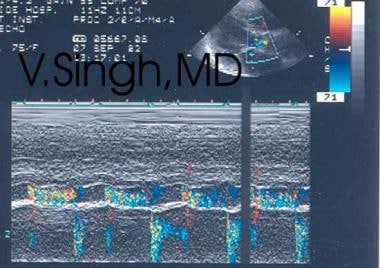
- Doppler echocardiography with color flow is one of the most accurate and sensitive noninvasive imaging studies in aortic valve insufficiency.
- Measures the velocity of regurgitant jet and can therefore be informative about the difference between the aortic and ventricular diastolic pressures
- Measures the rate of decrease in the velocity of regurgitant jet in the LV
- Measures the size of defect in the aorta, through which the regurgitant flow passes
- Can compare the velocity of regurgitant flow in the aortic, mitral, and pulmonic valves
- Radionuclide imaging is very expensive, but it is an accurate noninvasive evaluation of aortic valve insufficiency. It can be useful and assist with the following:
- Determination of fraction of regurgitation
- Ratio of LV–to–right ventricular stroke volume
- Differential diagnosis of mitral, pulmonic, or tricuspid regurgitation
- Serial studies to help identify evolving LV failure
- Measurement of regurgitant volume
- Measurement of end-systolic and end-diastolic volume of LV
Other Tests
- Electrocardiography in acute aortic valve insufficiency
- Prolongation of the PR interval
- Nonspecific T-wave changes
- Nonspecific ST-segment changes
- Possible left axis deviation caused by left heart failure
- No left axis deviation despite left heart failure (Depending on the duration and severity of insufficiency, LV hypertrophy may result in left axis deviation.)
- Electrocardiography in chronic aortic valve insufficiency
- LV hypertrophy
- LV volume overload
- Increased end-diastolic volume in the LV
- Progression to LV conduction defect with sufficient hypertrophy and volume overload
- Eventual LV dysfunction
- LV failure
- Initial presentation in chronic aortic valve insufficiency
- Definite LV hypertrophy showing as left axis deviation
- Prominent Q waves in lead I, aVL, and anterior leads
- Small R wave in V1 lead
- Possible peak T waves in left precordial leads
- Progression of chronic aortic valve insufficiency
- Increasing amplitude of QRS complex with continued LV hypertrophy
- T waves become inverted
- ST-segment depression
- Possible PR interval increase (may suggest inflammatory process responsible for aortic valve insufficiency)
Procedures
- Cardiac catheterization and angiography
- Aid in decisions regarding surgical treatment
- Accurate measurement of the magnitude of regurgitation and the status of LV function
- Evaluation of the condition of the coronary arterial bed
Medical Care
- At present, acute severe aortic valve insufficiency cannot be managed by medication alone. Symptomatic patients with normal LV function may be safely treated with aggressive medical management with variable results, but no present data have provided for a significant role of medical therapy for patients with acute severe AI.
- In severe aortic valve insufficiency, the excess in afterload increases burden on the left side of the heart. Theoretically, any medication that can reduce afterload could be expected to improve left ventricular function and decrease regurgitant backflow from the aorta. This would provide a temporizing measure by which surgical intervention can be postponed. One study showed that the use of nifedipine in asymptomatic patients with severe aortic regurgitation who had normal LV function could delay the need for surgery by 2-3 years.2 This result may also be expected with the use of similar vasodilating agents.
- As a general rule, medical management of chronic aortic valve insufficiency is related to the severity of regurgitation, symptoms, LV function, and size, as follows:
- Moderate aortic valve insufficiency with no change in cardiac size
- Mild or moderate aortic valve insufficiency with only minimally increased cardiac size
- Severe aortic valve insufficiency with volume overload
- Severe aortic valve insufficiency with LV dysfunction
- Severe aortic valve insufficiency with significant LV hypertrophy
- Mild aortic valve insufficiency with no change in cardiac size
- Therapy not required
- Echocardiographic follow-up required every 12 months, looking for change in chamber size or cardiac function
- Antibiotic prophylaxis for endocarditis
- Moderate aortic valve insufficiency with slight limitation of cardiac reserve
- No vigorous athletic activity
- No isometric exercise
- No therapy except endocarditis prophylaxis
- Follow-up echocardiographic studies
- Severe aortic valve insufficiency with LV dilation but normal LV systolic performance
- Echocardiographic evaluation every 6 months
- Vasodilators: With the exception of vasodilators, no data suggest that other medications are of long-term benefit hemodynamically or in terms of patient outcome. Vasodilating agents reduce afterload by improving stroke volume and subsequently reduce regurgitant volume in chronic severe AR. This reduces end-diastolic volume of the LV; therefore, wall stress and afterload is decreased, and LV function and size normalize.
- No isometric exercise or school physical education activities
- Digitalis glycosides
- Other cardiac glycosides
- Severe aortic valve insufficiency with symptoms and/or reduction in LV function
- Surgical treatment
- Aortic valve replacement
- Other therapeutic modalities include the following:
- Arrhythmias treated when present
- Bradycardias treated when present
- Possible infections treated
- Possible role of nitroglycerin in management of angina
- Intravenous hydralazine
- Oral prazosin
- Sublingual nifedipine
- Cardiac catheterization may be indicated, if questions remain after evaluation with echo-Doppler, CT, and MRI, as follows:
- In symptomatic patients with an ejection fraction less than 0.55 or an end-systolic LV dimension of 55 mm or higher (or, in Marfan syndrome, an aortic dimension of >4 cm), perform cardiac catheterization and angiography in anticipation of valve replacement surgery.
- An indicator-dilution, thermodilution, or Fick technique is used for cardiac output measurement.
- Retrograde left heart catheterization records coronary driving pressure, and LV angiocardiography evaluates the size of the LV, wall thickness, mitral valve function, patency of the coronary arteries, and diameters of the aortic root and ascending aorta.
- Cine aortography with contrast material into the aortic root is used to measure the severity of AI, with calculation of regurgitant volume by subtraction of the net forward flow (ie, Fick method) from the angiographically determined total forward flow.
- Possible complications include rupture of blood vessel, tachyarrhythmias, bradyarrhythmias, and vascular occlusion.
- Postcatheterization complications include hemorrhage, vascular disruption after balloon dilation, pain, nausea, and vomiting. Other possible complications include arterial or venous obstruction by a thrombus or transient vasospasm.
Surgical Care
With development of increasing severity in symptoms, aortic valve replacement should be considered, even if LV systolic performance appears well preserved. Surgery is also indicated in patients with severe AR and reproducible evidence of LV dysfunction at rest or extreme LV dilation. In asymptomatic patients, do not consider surgery on the basis of a single echocardiographic or radionuclide angiographic measurement. When choosing surgical intervention, assess the patient's clinical stability for a major surgical procedure and sufficiently examine the risks and benefits. Deciding the appropriateness of surgical intervention may be difficult in a patient who has the immediate risk of surgical intervention with aortic valve replacement and risk of hemodynamic collapse without surgical intervention. In symptomatic patients, surgical intervention is a more acceptable approach than attempting long-term medical therapy. The exception to this is symptomatic patients with normal LV systolic performance who are poor candidates for surgery because of additional cardiac or noncardiac risk factors.
- Outcomes of surgical therapy
- Surgical outcome tends to correspond to the degree of LV performance before surgery.
- Persistent cardiomegaly is possible.
- Worsening of LV function after valve placement may occur.
- LV function improves greatly in persons whose LV systolic performance was adequate preoperatively.
- Postoperative considerations
- Focus on minimizing postoperative LV dysfunction and assessing ventricular size.
- Short duration of preoperative ventricular dysfunction is associated with good postsurgical outcome.
- Obtain close follow-up echocardiographic studies.
- Use radionuclide ventriculography for follow-up assessments.
- Evaluate ejection fraction and end-systolic volumes.
- Evaluate LV volume overload during exertion as opposed to during rest.
- Assessing surgically suitable candidates
- Assess indices that are relatively load-independent, including end-systolic wall stress-Vcfc relationship.
- Look for predictors of poor surgical outcome, including the following:
- Patients with severe LV dysfunction
- Prolonged ventricular dysfunction with decompensation
- Ejection fraction less than 0.50 (may suggest need for surgical evaluation but is also associated with possibility of poor surgical outcome)
- In adults, end-systolic diameter higher than 55 mm (may signify risk of LV dysfunction and death; however, no guidelines have been formulated for children)
- Surgical correction
- The focus is on correcting underlying problem and may involve the following:
- Correction of the dilated aortic root with annuloplasty
- Correction of aneurysmal dilation of the ascending aorta with excision and graft replacement and coronary artery reimplantation
- Correction of prolapsed aortic leaflet
- Correction of perforated leaflet of a valve with a pericardial patch
- Placement of prosthetic valve
- The Ross procedure is a method of pulmonary valve autotransplantation.
- First pioneered by Ross in 1967, the Ross procedure is a complicated procedure that has proponents and opponents. It uses the patient's pulmonary valve and root to replace a diseased aortic valve. The procedure involves harvesting and transposing the pulmonary valve into the aortic position, either as a complete root or as a freehand valve in the native aortic root.
- An article published in 2001 found that following the Ross procedure, overall survival rate into adulthood is excellent, and the need for valve replacement is rare.3 However, the use of a allograft is associated with questions regarding durability and late function.
- A recent study was conducted in 2003 to compare the clinical and hemodynamic outcome after an aortic valve replacement with a pulmonary valve autograft (using the Ross procedure) with an allograft valve in children.4 This study reported that both procedures showed excellent clinical results over the following years. It also reported that the Ross procedure showed a better hemodynamic status, suggesting that, over the long run, it may be the better tolerated procedure.
- In complete pulmonary root transposition, coronary artery reimplantation is needed. Then, a pulmonary homograft is placed in the position of the pulmonary root. Note that the durability of homografts is greater on the right side of the heart than the left; the hemodynamic stress on the right side of the heart is less than that on the left.
- The pulmonary autotransplanted valve then begins to adapt to the hemodynamic burden of the aortic position without need for anticoagulation. Risk of thromboembolism and endocarditis is thought to be minimal. Nevertheless, reoperation may be necessary in 15-20% of patients within 20 years, usually for replacement of the pulmonary homograft.
- Elkins et al have studied this procedure in children and concluded that it is the operation of choice for children requiring an aortic valve replacement.5 The low surgical mortality rate and late morbidity associated with the Ross procedure and lack of a need for anticoagulation make this procedure desirable. Furthermore, Elkins et al noted that the Ross procedure allows a growing child to have a near-normal lifestyle, with a limited risk of reoperation for autograft valve or homograft valve failure.
- Some concerns about the Ross procedure have been raised. The operation is thought to be highly complex and associated with greater risk for complication than isolated aortic valve replacement or root replacement. Another concern is that few cardiothoracic surgeons have enough experience with this procedure in children to be able to offer it with a risk comparable to conventional valve replacement. In addition, the Ross procedure is not indicated in patients with connective tissue disorders, such as Marfan syndrome or primary aneurysm disease with secondary aortic valve incompetence, because aneurysmal changes may also be expected to develop in the new pulmonary transplant in the aortic position.
- Elkins et al recently examined mid and late results of autograft valve durability, patient survival, and valve-related morbidity related to the Ross procedure.3 A retrospective review of patients (age range, 3 d to 17 y) who underwent the Ross procedure between November 1986 and May 2001 was performed using medical records and patient contacts.
- The most recent echocardiographic evaluation was reviewed for autograft valve and homograft valve function.3 The operative mortality rate was noted to be 4.5% (8 cases in 178 patients), with 3 late deaths (2 were non–valve-related) for an actuarial survival rate of 92% ± 3% at 12 years. Autograft valve degeneration requiring reoperation or severe insufficiency of autograft valve or valve-related death was low, with the freedom from complication rate reaching 90% ± 4% at 12 years. Autograft valve degeneration was not affected by the technique of insertion (141 root replacement, 37 intra-aortic), aortic valve morphology (157 bicuspid or unicuspid, 26 tricuspid), or age at operation.
- Autograft valve degeneration was worse in patients with a primary lesion of aortic valve insufficiency than in those with aortic stenosis (P = .03).3 Autograft valve reoperation was required in 12 patients; autograft valve replacement was needed in 7. The actuarial freedom from autograft replacement was 93% ± 3% at 12 years. Homograft valve replacement was required in 7 patients, with 90% ± 4% actuarial freedom from replacement at 12 years. The study concluded that survival and freedom from aortic valve replacement are excellent in children. Homograft valve late function remains a concern, and efforts to improve homograft durability should be encouraged.
- Many patients do extremely well after valve replacement. In children, the procedure seems to be well tolerated and successful.
- In a study published in 2005, cross-sectional data of 112 patients who had a clinic visit and echocardiography at some point after a Ross procedure were reviewed.6
- Aortic valve insufficiency was the indication for the procedure in most (70.5%) patients, and aortic stenosis was an indication in others (9.8%).
- The male-to-female ratio was approximately 5:1.
- The study reported that late outcome for the Ross procedure was excellent with respect to survival and quality of life. On the other hand, physiologically, root dilatation, autograft regurgitation, and allograft stenosis increased in prevalence over time.
- The study suggested that even slight modifications of the procedure, annual echocardiographic evaluation, and early reintervention on the early and mild dilatation of the aortic root may improve the durability of an autologous pulmonary valve.
- Currently, the main concern is the long-term performance of allograft. Recent literature has focused on the fact that, although the allograft has excellent performance and provides symptom-free results for several months and even years, the durability of the graft is still a concern. Better, more durable solutions may be required beyond the current lifespan of the grafts presently used, in order to avoid the need for a more dangerous regrafting at a later age.
- One study published in 2002, presented a 13-year experience with allografts in 267 successive adult patients who underwent graft replacement.7 The study noted that the range of graft survival was 12-23 years. The overall postoperative survival rate at 9 years was 73%. The study concluded that allograft durability is a potential significant problem.
- LV function may or may not improve greatly; however, better techniques have allowed for a higher percentage of patients to experience an improvement in LV function.
- The operative mortality rate for such operations is 4-10%, depending on institutional experiences.
Consultations
Management of aortic valve insufficiency in infants, children, and young adults is complex and generally should be supervised by a cardiologist.
Diet
No diet restrictions are indicated.
Activity
- Patients with mild aortic valve insufficiency may continue to engage in regular activity.
- Isometric exercise should be avoided in moderate or severe aortic valve insufficiency.
- Competitive athletics should be avoided in all patients with severe aortic valve insufficiency.
The goal of drug therapy is to stop or slow the progression of LV systolic dysfunction. For chronic severe aortic valve insufficiency, vasodilators, ACE inhibitors, and digoxin may be useful. Antibiotics to prevent bacterial endocarditis should be prescribed according to American Heart Association (AHA) guidelines. For more information, see Antibiotic Prophylactic Regimens for Endocarditis.
Drug Category: Vasodilators
The mainstay of management for chronic aortic valve insufficiency is vasodilator therapy and observation. Vasodilators reduce systemic vascular resistance (SVR), allowing more forward flow to occur and, thus, improving cardiac output. In cases of acute mitral or aortic valve failure, a significant portion of the cardiac output is regurgitated through an incompetent valve. Catecholamines can worsen this effect by increasing peripheral vascular resistance. Oral hydralazine was found to reduce end-diastolic volume and increase ejection fraction when observed in clinical trials that lasted 1-2 years. Dihydropyridine calcium channel blockers (eg, nifedipine) cause acute reduction in peripheral vascular resistance. Other physiologic effects include an immediate increase in cardiac output, decreased regurgitant volume, reduction in end-diastolic volume, increased ejection fraction, and reduction of LV dilation. Alpha-blockers (eg, prazosin) or direct vasodilators (eg, nitroprusside) are also effective.
| Drug Name | Hydralazine (Apresoline) |
| Description | Decreases systemic resistance through direct vasodilation of arterioles. |
| Adult Dose | 10 mg PO qid initially, may increase by 10-25 mg/dose q2-5d; not to exceed 300 mg/d 10-20 mg/dose IV q4-6h prn initially; increase to 40 mg/dose prn |
| Pediatric Dose | 0.75-1 mg/kg/d PO divided bid/qid; not to exceed 25 mg/dose initially; may gradually increase over 3-4 wk to maximum of 5 mg/kg/d (infants) and 7.5 mg/kg/d (children); not to exceed 200 mg/d 0.1-0.2 mg/kg/dose IV q4-6h prn initially; increase to 1.7-3.5 mg/kg/d prn; not to exceed 20 mg/dose |
| Contraindications | Documented hypersensitivity; dissecting aortic aneurysm |
| Interactions | MAOIs and beta-blockers may increase hydralazine toxicity; pharmacologic effects of hydralazine may be decreased by NSAIDs |
| Pregnancy | C - Fetal risk revealed in studies in animals but not established or not studied in humans; may use if benefits outweigh risk to fetus
|
| Precautions | Caution in coronary artery disease, history of stroke, or renal insufficiency (decrease dose); may cause SLE; Stevens-Johnson syndrome has been reported |
| Drug Name | Nitroprusside (Nitropress) |
| Description | Produces vasodilation and increases inotropic activity of the heart. At higher dosages, may exacerbate myocardial ischemia by increasing heart rate. |
| Adult Dose | Begin infusion at 0.3-0.5 mcg/kg/min IV and use increments of 0.5 mcg/kg/min; titrate to desired effect; average dose is 1-6 mcg/kg/min Infusion rates >10 mcg/kg/min may lead to cyanide toxicity |
| Pediatric Dose | Administer as in adults |
| Contraindications | Documented hypersensitivity; idiopathic hypertrophic subaortic stenosis; atrial fibrillation or flutter |
| Interactions | Effects are additive when administered with other hypotensive agents |
| Pregnancy | C - Fetal risk revealed in studies in animals but not established or not studied in humans; may use if benefits outweigh risk to fetus
|
| Precautions | Caution in increased intracranial pressure, hepatic failure, severe renal impairment, and hypothyroidism; in renal or hepatic insufficiency, levels may increase and can cause cyanide toxicity; sodium nitroprusside has ability to lower blood pressure and, thus, should be used only in mean arterial pressures >70 mm Hg |
| Drug Name | Nifedipine (Adalat, Procardia) |
| Description | Relaxes coronary smooth muscle and produces coronary vasodilation, which in turn improves myocardial oxygen delivery. For this indication, SL administration is generally safe, despite theoretical concerns. |
| Adult Dose | 10-30 mg IR cap PO tid; not to exceed 120-180 mg/d 30-60 mg SR tab PO qd; not to exceed 90-120 mg/d |
| Pediatric Dose | 0.25-0.5 mg/kg/dose PO q4-6h prn; not to exceed 10 mg/dose or 3 mg/kg/d |
| Contraindications | Documented hypersensitivity |
| Interactions | Caution with coadministration of any agent that can lower BP, including beta-blockers and opioids; H2 blockers (eg, cimetidine) may increase toxicity |
| Pregnancy | C - Fetal risk revealed in studies in animals but not established or not studied in humans; may use if benefits outweigh risk to fetus
|
| Precautions | May cause lower extremity edema; allergic hepatitis has occurred but is rare |
| Drug Name | Prazosin (Minipress) |
| Description | Alpha1-adrenergic agonist. When increasing dosages, administer first dose of each increment hs to reduce syncopal episodes. |
| Adult Dose | 1 mg PO bid/tid initially; 6-15 mg/d PO divided bid/tid maintenance |
| Pediatric Dose | Not established; suggested dose is 0.5-7 mg PO tid |
| Contraindications | Documented hypersensitivity |
| Interactions | Acute postural hypotensive reaction from beta-blockers may worsen; indomethacin may decrease antihypertensive activity; verapamil may increase serum levels and may increase sensitivity to prazosin-induced postural hypotension; may decrease antihypertensive effects of clonidine |
| Pregnancy | C - Fetal risk revealed in studies in animals but not established or not studied in humans; may use if benefits outweigh risk to fetus
|
| Precautions | Caution in renal insufficiency |
Drug Category: Angiotensin-converting enzyme (ACE) inhibitors
These agents are typically less effective than calcium channel blockers but are tolerated better by most patients. Pharmacologic effects result in a decrease in SVR, reducing blood pressure, preload, and afterload.
| Drug Name | Captopril (Capoten) |
| Description | Prevents conversion of angiotensin I to angiotensin II, a potent vasoconstrictor, resulting in lower aldosterone secretion. |
| Adult Dose | 6.25-12.5 mg PO tid; not to exceed 150 mg tid |
| Pediatric Dose | Newborns: 0.01 mg/kg/dose PO q8-12h Infants: 0.15-0.3 mg/kg/dose PO initially; may increase gradually; not to exceed 6 mg/kg/d Children: 0.3-0.5 mg/kg/dose PO initially; may increase gradually; not to exceed 6 mg/kg/d Older children: 6.25-12.5 mg/dose PO q12-24h initially; may gradually increase; not to exceed 6 mg/kg/d |
| Contraindications | Documented hypersensitivity; renal impairment |
| Interactions | NSAIDs may reduce hypotensive effects of captopril; ACE inhibitors may increase digoxin, lithium, and allopurinol levels; rifampin decreases captopril levels; probenecid may increase captopril levels; the hypotensive effects of ACE inhibitors may be enhanced when given concurrently with diuretics |
| Pregnancy | C - Fetal risk revealed in studies in animals but not established or not studied in humans; may use if benefits outweigh risk to fetus D - Fetal risk shown in humans; use only if benefits outweigh risk to fetus
|
| Precautions | Category D in second and third trimester of pregnancy; caution in renal impairment, valvular stenosis, or severe congestive heart failure |
Drug Category: Diuretics
These agents are used to treat edema associated with congestive heart failure.
| Drug Name | Furosemide (Lasix) |
| Description | Increases excretion of water by interfering with chloride-binding cotransport system, which in turn inhibits sodium and chloride reabsorption in ascending loop of Henle and distal renal tubule. Dose must be individualized to patient circumstances. |
| Adult Dose | 20-80 mg/d PO/IV/IM; titrate up to 600 mg/d for severe edematous states |
| Pediatric Dose | 1-2 mg/kg/dose PO; not to exceed 6 mg/kg/dose; do not administer more frequently than q6h 1 mg/kg/dose IV/IM slowly under close supervision; not to exceed 6 mg/kg/d |
| Contraindications | Documented hypersensitivity; hepatic coma, anuria, and severe electrolyte depletion |
| Interactions | Metformin decreases concentrations; interferes with hypoglycemic effect of antidiabetic agents and antagonizes muscle-relaxing effect of tubocurarine; auditory toxicity appears to be increased with coadministration with aminoglycosides; hearing loss of varying degrees may occur; anticoagulant activity of warfarin may be enhanced when taken concurrently with this medication; increased plasma lithium levels and toxicity are possible when taken concurrently with this medication |
| Pregnancy | C - Fetal risk revealed in studies in animals but not established or not studied in humans; may use if benefits outweigh risk to fetus
|
| Precautions | Perform frequent serum electrolyte, carbon dioxide, glucose, creatinine, uric acid, calcium, and BUN determinations during first few months of therapy and periodically thereafter |
Drug Category: Beta-blocking agents
These agents are used to treat acute aortic valve insufficiency. They are not to be used for long-term situations because of their potential to decrease LV function.
| Drug Name | Propranolol (Inderal) |
| Description | Beta1-blockade produces decreased heart rate and myocardial contractility, resulting in a decrease in cardiac output. Blockade of beta-receptors in cardiac conduction tissue results in slowing of AV conduction and suppression of automaticity. |
| Adult Dose | 40-80 mg PO bid initially; increase to 160-320 mg/d (some patients require up to 640 mg/d) |
| Pediatric Dose | 0.5 mg/kg/d PO divided bid/qid; increase gradually q3-7d; typical dosage range is 2-4 mg/kg/d divided bid |
| Contraindications | Documented hypersensitivity; uncompensated congestive heart failure; bradycardia, cardiogenic shock; AV conduction abnormalities |
| Interactions | Coadministration with aluminum salts, barbiturates, NSAIDs, penicillins, calcium salts, cholestyramine, and rifampin may decrease effects; calcium channel blockers, cimetidine, loop diuretics, and MAOIs may increase toxicity; may cause toxicity of hydralazine, haloperidol, benzodiazepines, and phenothiazines to increase |
| Pregnancy | C - Fetal risk revealed in studies in animals but not established or not studied in humans; may use if benefits outweigh risk to fetus
|
| Precautions | Beta-adrenergic blockade may decrease signs of acute hypoglycemia and hyperthyroidism; abrupt withdrawal may exacerbate symptoms of hyperthyroidism, including thyroid storm; withdraw drug slowly and monitor closely |
Further Inpatient Care
- Most inpatient follow-up care relates to symptomatic aortic valve insufficiency that has warranted valve replacement.
- Aortic valve replacement for AR (in patients with severe AR and symptoms of heart failure) improves the patient's survival rate and quality of life.
- In asymptomatic patients with impaired LV function, valve replacement prevents a decrease in LV function.
- In asymptomatic patients, if surgery is performed soon after recognition of ventricular dysfunction, the postoperative outcome is good in terms of survival rate and restoration of a normal ventricular function.
Further Outpatient Care
- Patients with chronic AR usually do not become symptomatic until after the development of myocardial dysfunction.
- Surgical treatment often does not restore normal LV function.
- In patients with severe AR, careful clinical follow-up and noninvasive testing with echocardiography at approximately 6-month intervals are necessary for correct timing of surgical intervention (after the onset of LV dysfunction but before the development of severe symptoms).
- Lack of symptoms and normal LV function indicate that surgery can be delayed.
- Surgery should be considered for asymptomatic patients with progressive LV dysfunction and an LV ejection fraction less than 0.50, an LV or end-systolic volume higher than 55 mL/m2, or an end-systolic diameter longer than 55 mm.
- An echocardiographic evaluation should be performed in asymptomatic patients with known AR, looking for signs of development of LV dysfunction.
Deterrence/Prevention
- Prevention of infective endocarditis is of major importance. Studious attention to dental hygiene is of paramount importance in reducing the chances of an endocarditis episode.
- The goal is to preserve normal LV function and volume and to prevent development of symptoms of heart failure.
Prognosis
- The prognosis largely depends on how accurately the aortic valve insufficiency is characterized and how well the aortic valve insufficiency is then managed.
Patient Education
- Because of the complexity of management, detailed education is required for parents and, if applicable, the patient.
Medical/Legal Pitfalls
- The timing of surgery for severe aortic valve insufficiency is among the most challenging problems facing the cardiologist. Errors in judgment are frequent and may lead to litigation.
Special Concerns
- Pregnancy
- Less than 1% of all pregnancies are affected by any cardiac disease; however, cardiac disease and hemodynamic changes during pregnancy can be significant causes of morbidity and mortality in the mother and can affect the outcome of the pregnancy.
- As with mitral regurgitation, the negative consequences of chronic AR during pregnancy are minimal. This may be because of reduced SVR and an increased heart rate, which leads to a short time of diastole. If the patient becomes symptomatic, medications such as diuretics, digoxin, and hydralazine for LV afterload reduction can be used safely.
- Physiologic changes in the cardiovascular system during pregnancy can be determined by the increased blood volume, increased heart rate, increased stroke volume, decreased systemic vascular resistance, and increased LV ejection fraction.
- Pregnancy is a state of volume expansion. Midpregnancy is the time of maximal volume expansion rate. This volume expansion does not include a significant increase in hemoglobin production; as a result, a physiologic anemia of pregnancy develops, which is related to dilution and expansion of plasma volume in relation to hematocrit level. Therapy with iron may help improve the hematocrit level. Estrogen-mediated stimulation of the renin-angiotensin system and subsequent activity of aldosterone in increased sodium reabsorption from the kidney tubules are thought to be mediators of the increased retention of water and subsequent volume increase.
- The heart rate increases during pregnancy. This increase is more notable as pregnancy progresses and can be as much as 20% higher than baseline.
- Stroke volume increases during pregnancy. This increase is less notable in the first few weeks of pregnancy and can be up to 40% higher than baseline.
- Systemic vascular resistance decreases during pregnancy to as much as 30-40% lower than baseline.
- LV ejection fraction increases slightly during pregnancy, from 5-10% higher than baseline.
- Cardiac output (ie, product of heart rate and stroke volume) increases during pregnancy because heart rate and stroke volume are also evaluated.
- Blood pressure (ie, product of cardiac output and systemic vascular resistance) is basically unchanged during pregnancy. As cardiac output increases and systemic vascular resistance decreases, the product is only minimally affected. This is true for systolic and diastolic blood pressure.
- Physiologic changes in the cardiovascular system during labor can be determined by changes related to anxiety, stress of pregnancy, and pain of labor.
- Increased oxygen consumption up to 3- to 4-fold
- Progressive increase in cardiac output
- Increase in blood pressure
- Further increase in blood pressure during the active phase of labor
- Adequate control during pain and anxiety during labor can be important in minimizing hemodynamic changes of labor.
- Cesarean delivery
- Advantages
- Less anxiety
- Less pain
- Less fluctuation in blood pressure
- Disadvantages
- Excessive blood loss
- Effect of general anesthesia
- Stress of intubation and extubation
- Postanesthesia recovery
- Adequacy of analgesia
- Postpartum hemodynamic changes
- Venous return is increased (compression release from the inferior vena cava).
- Autotransfusion occurs from the uterus to systemic circulation.
- In time, most hemodynamic changes return to normal. Cardiac output and heart rate return to prelabor values within an hour. By 24 hours, blood pressure and stroke volume normalize.
- Gentles TL, Colan SD, Wilson NJ, et al. Left ventricular mechanics during and after acute rheumatic fever: contractile dysfunction is closely related to valve regurgitation. J Am Coll Cardiol. Jan 2001;37(1):201-7. [Medline].
- Scognamiglio R, Rahimtoola SH, Fasoli G, et al. Nifedipine in asymptomatic patients with severe aortic regurgitation and normal left ventricular function. N Engl J Med. Sep 15 1994;331(11):689-94. [Medline].
- Elkins RC, Lane MM, McCue C. Ross operation in children: late results. J Heart Valve Dis. Nov 2001;10(6):736-41. [Medline].
- Lupinetti FM, Duncan BW, Lewin M, Dyamenahalli U, Rosenthal GL. Comparison of autograft and allograft aortic valve replacement in children. J Thorac Cardiovasc Surg. Jul 2003;126(1):240-6. [Medline].
- Elkins RC, Knott-Craig CJ, McCue C, Lane MM. Congenital aortic valve disease. Improved survival and quality of life. Ann Surg. May 1997;225(5):503-10; discussion 510-1. [Medline].
- Luciani GB, Favaro A, Casali G, Santini F, Mazzucco A. Ross operation in the young: a ten-year experience. Ann Thorac Surg. Dec 2005;80(6):2271-7. [Medline].
- Takkenberg JJ, van Herwerden LA, Eijkemans MJ, Bekkers JA, Bogers AJ. Evolution of allograft aortic valve replacement over 13 years: results of 275 procedures. Eur J Cardiothorac Surg. Apr 2002;21(4):683-91; discussion 691. [Medline].
- Bolen JL, Alderman EL. Hemodynamic consequences of afterload reduction in patients with chronic aortic regurgitation. Circulation. May 1976;53(5):879-83. [Medline].
- Bonow RO, Carabello B, de Leon AC, et al. ACC/AHA Guidelines for the Management of Patients With Valvular Heart Disease. Executive Summary. A report of the American College of Cardiology/American Heart Association Task Force on Practice Guidelines (Committee on Management of Patients With Val. J Heart Valve Dis. Nov 1998;7(6):672-707. [Medline].
- Bonow RO, Dodd JT, Maron BJ, et al. Long-term serial changes in left ventricular function and reversal of ventricular dilatation after valve replacement for chronic aortic regurgitation. Circulation. Nov 1988;78(5 Pt 1):1108-20. [Medline].
- Bonow RO, Rosing DR, Maron BJ, et al. Reversal of left ventricular dysfunction after aortic valve replacement for chronic aortic regurgitation: influence of duration of preoperative left ventricular dysfunction. Circulation. Oct 1984;70(4):570-9. [Medline].
- Braunwald. Heart Disease: A Textbook of Cardiovascular Medicine. Vol 1. 1997:1045-60.
- Cameron DE. Surgical techniques. Ascending aorta. Cardiol Clin. Nov 1999;17(4):739-50. [Medline].
- Carabello BA. Vasodilators in aortic regurgitation--where is the evidence of their effectiveness?. N Engl J Med. Sep 29 2005;353(13):1400-2. [Medline].
- Carabello BA, Crawford FA Jr. Valvular heart disease. N Engl J Med. Jul 3 1997;337(1):32-41. [Medline].
- Ekery DL, Davidoff R. Aortic regurgitation: quantitative methods by echocardiography. Echocardiography. Apr 2000;17(3):293-302. [Medline].
- Elkins RC. The Ross operation: applications to children. Semin Thorac Cardiovasc Surg. Oct 1996;8(4):345-9. [Medline].
- Fedderly RT. Left ventricular outflow obstruction. Pediatr Clin North Am. Apr 1999;46(2):369-84. [Medline].
- Fioretti P, Benussi B, Scardi S, et al. Afterload reduction with nifedipine in aortic insufficiency. Am J Cardiol. May 1982;49(7):1728-32. [Medline].
- Grande KJ, Cochran RP, Reinhall PG, Kunzelman KS. Mechanisms of aortic valve incompetence: finite element modeling of aortic root dilatation. Ann Thorac Surg. Jun 2000;69(6):1851-7. [Medline].
- Greenberg BH, DeMots H, Murphy E, Rahimtoola S. Beneficial effects of hydralazine on rest and exercise hemodynamics in patients with chronic severe aortic insufficiency. Circulation. Jul 1980;62(1):49-55. [Medline].
- Grocott-Mason RM, Lund O, Elwidaa H, et al. Long-term results after aortic valve replacement in patients with congestive heart failure. Homografts vs prosthetic valves. Eur Heart J. Oct 2000;21(20):1698-707. [Medline].
- Harris KM, Malenka DJ, Haney MF, et al. Improvement in mitral regurgitation after aortic valve replacement. Am J Cardiol. Sep 15 1997;80(6):741-5. [Medline].
- Ismailov RM, Weiss HB, Ness RB, et al. Blunt cardiac injury associated with cardiac valve insufficiency: trauma links to chronic disease?. Injury. Sep 2005;36(9):1022-8. [Medline].
- Katz NM. Current surgical treatment of valvular heart disease. Am Fam Physician. Aug 1995;52(2):559-68. [Medline].
- Levine HJ, Gaasch WH. Vasoactive drugs in chronic regurgitant lesions of the mitral and aortic valves. J Am Coll Cardiol. Nov 1 1996;28(5):1083-91. [Medline].
- Shah PM, Graham BM. Management of aortic stenosis: is cardiac catheterization necessary?. Am J Cardiol. May 1 1991;67(11):1031-2. [Medline].
- Shiota T, Jones M, Aida S, et al. Calculation of aortic regurgitant volume by a new digital Doppler color flow mapping method: an animal study with quantified chronic aortic regurgitation. J Am Coll Cardiol. Sep 1997;30(3):834-42. [Medline].
Aortic Valve Insufficiency excerpt Article Last Updated: Dec 6, 2007
|