Continually Updated Clinical Reference
 
 
  All Sources     eMedicine     Medscape     Drug Reference     MEDLINE
 
eMedicine - Ventricular Fibrillation : Article by

Quick Find
Authors & Editors
Introduction
Clinical
Differentials
Workup
Treatment
Medication
Follow-up
Miscellaneous
Multimedia
References

Related Articles
Long QT Syndrome

Ventricular Tachycardia


Patient Education
Heart Center

Public Health Center

Atrial Fibrillation Overview

Atrial Fibrillation Causes

Atrial Fibrillation Symptoms

Atrial Fibrillation Treatment

Cardiopulmonary Resuscitation (CPR)


Author: Elizabeth Stephenson, MD, Assistant Professor of Pediatrics, University of Toronto; Consulting Staff, Division of Cardiology, The Hospital for Sick Children

Elizabeth Stephenson is a member of the following medical societies: American Heart Association

Coauthor(s): Charles Berul, MD, Associate Professor of Pediatrics, Harvard Medical School; Senior Associate, Department of Cardiology, Children's Hospital of Boston

Editors: Christopher Johnsrude, MD, Associate Professor of Pediatrics, Director of Electrophysiology, University of Louisville School of Medicine; Consulting Staff, Pediatric Cardiology Associates, PSC; Mary L Windle, PharmD, Adjunct Assistant Professor, University of Nebraska Medical Center College of Pharmacy, Pharmacy Editor, eMedicine.com, Inc; Alvin J Chin, MD, Professor of Pediatrics, Division of Cardiology, The Children's Hospital of Philadelphia, University of Pennsylvania School of Medicine; Gilbert Herzberg, MD, Assistant Professor, Department of Pediatrics, Section of Pediatric Cardiology, New York Medical College; Stuart Berger, MD, Professor of Pediatrics, Division of Cardiology, Medical College of Wisconsin; Chief of Pediatric Cardiology, Medical Director of Pediatric Heart Transplant Program, Medical Director of The Heart Center, Children's Hospital of Wisconsin

Author and Editor Disclosure

Synonyms and related keywords: ventricular fibrillation, VF, ventricular tachycardia, VT, cardiac arrest, heart attack, malignant arrhythmia, cardiac arrhythmia, primary ventricular fibrillation, ventricular arrhythmia, malignant ventricular arrhythmia

Background

Ventricular fibrillation (VF) is rare in the pediatric population, and, when it does occur, ventricular fibrillation is usually a degeneration of other malignant arrhythmias, such as ventricular tachycardia (VT). The period of arrhythmia may not be extensive, but ventricular fibrillation occurring without a few initial beats of ventricular tachycardia is unusual. In adults, ventricular fibrillation is preceded by ventricular tachycardia in approximately 80% of cases.

Primary ventricular fibrillation is uncommon in children. In a study of pediatric out-of-hospital arrests, ventricular fibrillation was the initial recorded rhythm in 19% of cardiac arrests. Causes of ventricular fibrillation varied and included medical illness, overdose, drowning, and trauma; only 2 of 29 patients had congenital heart disease. Thus, ventricular fibrillation as a terminal rhythm in cardiac arrest may result from a variety of causes.

The outcome in patients with ventricular fibrillation is better than in patients with asystole or pulseless electrical activity (PEA), and outcome may be further improved by prompt recognition and treatment of ventricular fibrillation. In a population of patients with known ventricular arrhythmias, individuals who had ventricular fibrillation were more likely to have underlying significant heart disease (eg, cardiac tumors, long QT syndrome, structural congenital heart disease) than patients with ventricular tachycardia.

After initial resuscitation, therapy in patients with ventricular fibrillation is primarily focused on preventing the antecedent ventricular tachycardias. However, recent technologic advances in both implantable and external automated defibrillators have made these devices an important part in the management of malignant ventricular arrhythmias.

Pathophysiology

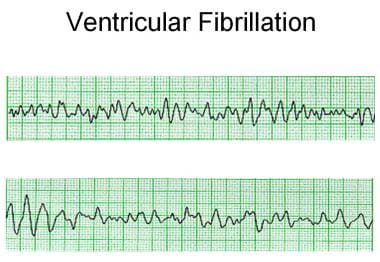
The electrical activity in ventricular fibrillation is characterized by chaotic depolarization of cells throughout the ventricular myocardium. The lack of coordinated depolarization prevents effective contraction of the myocardium and, thus, ejection of blood from the heart. Surface ECG demonstrates no identifiable QRS complexes, although a wide range of amplitude of electrical activity is present, from sine-wave ventricular flutter to fine ventricular fibrillation, which may be difficult to distinguish from asystole (see Image 1). This arrhythmia is maintained by multiple reentrant circuits because portions of the myocardium are depolarizing constantly. Ventricular fibrillation may be initiated when an area of myocardium has refractory and conducting portions, and, as in any reentrant circuit, this combination promotes a self-sustaining rhythm.

Frequency

United States

The incidence of ventricular fibrillation from all causes is very low in the pediatric population. In studies of pediatric cardiac arrests, ventricular fibrillation was the first identified rhythm in 6-19% of patients, with asystole or PEA as the most frequent rhythm identified first. Overall incidence is likely to be higher because cardiac rhythms frequently change during an arrest, and ventricular fibrillation may have preceded asystole in some patients.

Mortality/Morbidity

Without prompt and aggressive therapy, sustained ventricular fibrillation is uniformly lethal. Polymorphic ventricular tachycardia, for example, torsade de pointes, may be sustained or nonsustained, and morbidity is related to the duration of the arrhythmia and to the cardiac output. Some ventricular arrhythmias allow adequate cardiac ejection for a limited period, but once a rhythm degenerates to ventricular fibrillation, ejection is minimal. Until the rhythm is converted, cardiac output is not effective; thus, patients are extremely vulnerable to ischemia and death. In one study, 17% of patients with cardiac arrest and a presenting rhythm of ventricular fibrillation had a good outcome (ie, absent or mild disability), all of whom received early defibrillation. Clearly, early defibrillation is essential to a good outcome.

Race

Although some predisposing factors may demonstrate genetic trends, ventricular fibrillation can be observed throughout all populations.

Sex

Vulnerability to ventricular fibrillation is not significantly different between males and females, although, at least in adults, torsade de pointes is more commonly observed in females than in males. In preadolescent children, this sex difference in QT interval range and propensity to torsade de pointes is not evident.

Age

  • Sudden cardiac death is unusual in pediatric populations, even in children with known cardiac disease; however, patients with congenital heart disease may encounter increasing risk of arrhythmias with or without surgical intervention and as they age. Although terminal rhythms are often not documented in sudden death populations, ventricular fibrillation may represent a final common pathway for these patients.
  • Various forms of congenital heart disease have been associated with an increased incidence of late sudden death, including tetralogy of Fallot, aortic stenosis, and the atrial switch operations for D-transposition of the great arteries. This may represent an increased incidence of both ventricular tachycardia and ventricular fibrillation vulnerability in this population, since the sudden death is presumed to be of arrhythmic etiology.


History

ventricular fibrillation is usually preceded by other ventricular arrhythmias, and prevention of ventricular fibrillation may be best accomplished through prevention of those arrhythmias. Thus, obtain a thorough history focusing on identification of symptomatic arrhythmias and exercise-associated symptoms.

  • Patients with ventricular ectopy may present with dizziness, palpitations, chest pain, or syncope, all of which should be explored.
  • Recreational and prescribed drug use may increase the risk of ventricular ectopy. Cocaine use is of specific concern because it can lead to coronary perfusion abnormalities. The extensive list of medications that can prolong the QT interval are also of specific concern.
  • Genetic influences may be present, such as long QT syndrome or inherited cardiomyopathies; therefore, the family history should be explored for syncope, arrhythmia, or sudden death, especially in young people. A family history of congenital deafness associated with syncope, palpitations, or sudden death should raise the suspicion of Jervell and Lange-Nielsen inherited long QT syndrome. Often, the family history does not clearly indicate a cardiac cause but simply shows unexplained deaths, such as drownings, early "heart attacks," or single motor vehicle accidents. Occasionally, the syncope and myoclonic movements that can be seen with long QT syndrome–associated arrhythmias are misdiagnosed as seizures.

Physical

Focus the physical examination on detection of structural heart disease because these patients may be at increased risk of malignant ventricular arrhythmias.

  • Conditions such as long QT syndrome may not have any physical examination correlates, although congenital nerve deafness is associated with Jervell and Lange-Nielsen syndrome.
  • Signs of congestive heart failure, low cardiac output, myocarditis, abnormal heart sounds, or cholesterol deposits may indicate underlying conditions that increase the risk of serious ventricular arrhythmias.
  • Identify findings compatible with hypertrophic cardiomyopathy and ventricular outflow obstructive lesions (eg, aortic stenosis).

Causes

  • A variety of factors can lead to the lowering of the ventricular fibrillation threshold and, thus, increase the likelihood of an arrhythmia proceeding to ventricular fibrillation. These precipitating factors include electrolyte abnormalities, proarrhythmic medications, alterations in the sympathetic-parasympathetic balance (particularly increased catecholamines), hypothermia or hyperthermia, primary electrical disease (eg, long QT syndrome), and hypoxia/ischemia. These variables may influence myocardial susceptibility to an R-on-T phenomenon, causing depolarization of partially repolarized tissue, potentially initiating ventricular fibrillation.
  • Since ventricular fibrillation is usually a degeneration of ventricular tachycardias, the role ventricular tachycardias play in the evolution of the rhythm disturbance must be considered. The triggers for ventricular tachycardia are multiple and diverse; they are expanded upon in the articles Ventricular Tachycardia; Cardiomyopathy, Hypertrophic; and Long QT Syndrome. Briefly, the triggers for ventricular tachycardia include a long QT interval (eg, congenital, acquired), drug use (eg, digoxin, antiarrhythmics, antidepressants, phenothiazines, terfenadine, erythromycin), alcohol intake, metabolic imbalance (eg, electrolytes, hypoxia, acidemia), coronary artery disease, myocarditis, cardiomyopathy (eg, idiopathic, hypertrophic cardiomyopathy, Chagas disease), mitralvalveprolapse(possibly),intracardiac tumors, and congenital heart disease, especially postsurgical interventions.
  • Wolff-Parkinson-White syndrome: Atrial fibrillation (AF) in the presence of an accessory pathway (bypass tract) that allows extremely rapid antegrade stimulation of the ventricle (>300 beats per minute [bpm]) presents a potential risk for degeneration to ventricular fibrillation in patients with Wolff-Parkinson-White (WPW) syndrome. The risk of rapidly conducting AF depends on the conduction and refractory characteristics of the accessory pathway. These electrophysiologic properties may vary during the day (eg, with catecholamine state associated with exertion, anxiety), by age, and with other clinical variables.
  • Commotio cordis: Commotio cordis is an uncommon syndrome of abrupt ventricular fibrillation following blunt chest wall trauma that typically occurs in young participants in sports (notably, ice hockey, lacrosse, baseball, and softball).
    • Commotio cordis is unusual and appears to particularly affect individuals aged 5-15 years; boys are affected more often than girls. Whether this is secondary to increased participation of boys in higher-risk sports activities or differences inherent to each sex is unclear.
    • Commotio cordis is characterized by a relatively low-energy impact that does not cause structural damage to the chest wall, myocardium, coronary arteries, or elsewhere within the thorax. Ventricular fibrillation is the most common rhythm recorded after an event, although complete heart block and idioventricular rhythms have also been observed. Commotio cordis is notably difficult to convert to sinus rhythm, and survival rates from this type of arrhythmic event are unfortunately quite low.
    • In an animal study by Link et al, timing of low-energy chest wall impact was coordinated with the cardiac cycle. They found that ventricular fibrillation could be produced when impact occurred at 15-30 milliseconds before the peak of the T wave on ECG; it was not produced at any other time during the cardiac cycle. Ventricular fibrillation was initiated at the time of impact and was not preceded by ventricular ectopy, ischemic changes in ECG, or heart block.
    • Whether individual susceptibility to commotio cordis exists or whether it is solely an issue of an electrical timing vulnerability remains unclear. Regardless, survivors of commotio cordis are recommended to wear adequate chest protection during future contact sports participation.


Long QT Syndrome
Ventricular Tachycardia

Other Problems to be Considered

Torsade de pointes
Asystole
Electrocardiographic artifact (electrode/lead failure)


Lab Studies

  • The workup in patients who have been resuscitated from ventricular fibrillation is aimed at determining any preventable triggers or risk factors for the ventricular arrhythmias that may degenerate into ventricular fibrillation. A detailed discussion of triggers and risk factors is offered in Ventricular Tachycardia.
    • Electrolyte levels: In particular, serum magnesium, potassium, and calcium levels are most relevant to assessing ventricular arrhythmia vulnerability.
    • Blood gases, particularly pH, are determined because acidemia promotes arrhythmia susceptibility.
    • Clinicians may want to obtain drug levels, particularly in any of the medications that may prolong the QT interval and any proantiarrhythmic agents to which the patient may have been exposed. Medications such as procainamide and amiodarone have arrhythmogenic potential, as do many antiarrhythmic drugs.
    • Toxicology screen: In particular, stimulant drugs of abuse, such as cocaine and amphetamines, may promote ventricular arrhythmias. Other illicit drugs, including phencyclidine, lysergic acid diethylamide (LSD), ecstasy, and even marijuana may increase vulnerability to arrhythmias, including ventricular fibrillation. Legal stimulants, such as caffeine, theophylline, and pseudoephedrine, may promote ventricular arrhythmias, particularly in individuals with underlying susceptibility.
    • Genetic testing: Extensive research is ongoing regarding identification of cardiac channelopathies which cause many of the primary electrical diseases. Commercial testing is becoming available for some of these channelopathies; however, it is essential to recognize that many genetic variants have yet to be identified.

Imaging Studies

  • Chest radiography
  • Echocardiography
  • Cardiac MRI, particularly concentrating on potential for arrhythmogenic right ventricular dysplasia (Fibrofatty infiltration may be evident in patchy distribution within the right, and sometimes left, ventricle.)

Other Tests

  • Electrocardiography (A 12-lead ECG is most helpful in formulating differential diagnoses following ventricular fibrillation arrest.)
  • Holter monitor
  • Event monitor
  • Additional tests as indicated based on suspected precipitating factors
    • Provocative testing to elicit arrhythmias may be helpful in determining the electrophysiologic etiology.
    • Noninvasive provocative testing is predominantly by means of exercise stress testing.
    • Less commonly, infusion of cardioactive medications, such as isoproterenol or epinephrine, has been used to provoke ventricular arrhythmias in individuals with potential susceptibility.
    • In addition, infusion of sodium channel blocking antiarrhythmic drugs, such as ajmaline or procainamide, has been used to provoke an electrocardiographic phenotype of Brugada syndrome.
    • These tests may increase sensitivity in the identification of individuals with potential susceptibility, although specificity may be sacrificed. The value of the use of these provocative tests in pediatric patients has not yet been fully defined.

Procedures

  • Electrophysiologic studies
    • An invasive electrophysiologic (EP) study may be warranted in patients at high risk for ventricular fibrillation (eg, sustained or nonsustained ventricular tachycardia, averted sudden cardiac death). An EP study usually consists of programmed atrial and ventricular stimulation to determine the presence or absence of inducible ventricular tachycardia/ventricular fibrillation. Other potential arrhythmia substrates such as WPW with rapid antegrade conduction may also be examined.
    • Pharmacologic provocation studies (eg, using isoproterenol or other catecholaminergic agents for arrhythmia induction) may also be used during an EP study. Medications that may promote ECG signatures for specific disease states, such as a type I antiarrhythmic agents (eg, flecainide, ajmaline), may be administered to unmask the classic ECG pattern found in patients with Brugada syndrome.
    • Since diagnostic predictive value is limited, negative EP study findings do not exclude the possibility of a sudden cardiac event in the future, particularly in patients with structural congenital heart disease.


Medical Care

Resuscitation from ventricular fibrillation is occasionally successful if performed in a timely fashion; the longer the myocardium is allowed to fibrillate, the more difficult conversion to a sinus rhythm becomes. The use of antiarrhythmics, such as lidocaine and amiodarone, may assist in maintaining sinus rhythm once successful defibrillation is achieved. Note that bretylium has been removed from the current American Heart Association (AHA) pediatric advanced life support (PALS) pulseless arrest guidelines, secondary to risk of hypotension and unclear efficacy.

  • The AHA recommendations for treatment in pediatric patients with pulseless (ventricular tachycardia/ventricular fibrillation/PEA) arrest are as follows:
    • Perform cardiac and pulmonary rehabilitation (CPR).
    • Support ABCs, and provide airway management with 100% oxygen.
    • Monitor rhythm.
  • Additionally, if ventricular fibrillation or pulseless ventricular tachycardia occurs, use the following methods:
    • Defibrillate with 2 J/kg, 4 J/kg, and 4 J/kg.
    • Administer epinephrine IV/IO 0.01 mg/kg (1:10000, 0.1 mL/kg) or via endotracheal tube (ET) 0.1 mg/kg (1:1000, 0.1 mL/kg)
    • Identify and treat causes.
    • Defibrillate with 4 J/kg within 30-60 seconds after each medication.
    • Consider treatment with one of the following antiarrhythmics:
      • Amiodarone 5 mg/kg bolus IV/IO
      • Lidocaine 1 mg/kg IV/IO/ET
      • Magnesium 25-50 mg/kg IV/IO (not to exceed 2 g) for torsade de pointes or hypomagnesemia
    • Defibrillate with 4 J/kg within 30-60 seconds after medication infusion.
  • Defibrillation is the definitive treatment for ventricular fibrillation. Electric shocks (delivered in an asynchronous fashion for ventricular fibrillation) are aimed at depolarizing the myocardium to terminate the fibrillating rhythm and allow an intrinsic cardiac pacemaker to resume control. If the shocks delivered have successfully terminated ventricular fibrillation or ventricular tachycardia, defibrillation has been achieved. Several factors can influence whether attempts at defibrillation are successful, including metabolic environment, transthoracic impedance, paddle placement, energy dose, and type of waveform used.
    • Impedance: The electrical impedance of the defibrillating circuit is affected by paddle size and the electrode–chest wall interface. Larger paddles reduce impedance, but paddles or electrodes cannot be in contact with one another or bridging can occur and the electrical current is shunted and does not travel through the patient. Similarly, use electrode cream generously to lower the high impedance of the skin and to avoid serious skin burns.
    • Placement of paddles: The goal of paddle placement is to direct most of the electric current through as much myocardium as possible.
      • In larger children, this is usually achieved by placing the paddles in the standard adult position of one paddle over the right upper chest and the other paddle over the apex of the heart. However, paddles may also be placed in the anterior-posterior or, alternately, in the side-to-side position. This may allow larger paddles to be used in children when pediatric paddles are not available.
      • Rarely, simultaneous defibrillation may be necessary through two separate pairs of pads/paddles because of markedly high defibrillation energy requirements (>360 J).
      • In children with congenital heart disease, recognizing that the heart may not be located in the left hemithorax is important. In this case, if the cardiac position is known, attempt to position the paddles to capture as much myocardium as possible.
    • Energy dose: Standard energy recommendations are 2 J/kg for the first shock, followed by 4 J/kg for subsequent shocks if defibrillation is not achieved with the first dose. If the patient is successfully defibrillated but ventricular fibrillation resumes, the energy dose does not need to be increased because a critical mass of myocardium was captured with the first shock. At that point, concentrating on improving the metabolic environment and raising the myocardial fibrillation threshold becomes important. Some antiarrhythmic medications may affect the defibrillation threshold; therefore, the defibrillation dose may need to be modified, particularly if the initial attempts are unsuccessful.
    • Waveform: Defibrillators use biphasic or monophasic waveforms; biphasic waveforms have been shown to be more effective at lower energy doses and have a lower probability of defibrillation thresholds than monophasic waveforms. Recently, biphasic waveforms have been used more frequently in modern external defibrillators than monophasic waveforms, although both modalities are effective.
    • Metabolic environment: The metabolic environment influences the ability to defibrillate the patient and the ability to maintain a perfusing rhythm after successful defibrillation. Thus, while correction of hypoxia, acidosis, and pharmacologic therapy should not delay the initiation of electric shocks, concomitant therapy aimed at correction of these factors should be attempted.
  • Automated external defibrillators (AEDs) have been introduced into communities and adult populations. AEDs offer the opportunity to vastly improve outcomes from cardiac arrests, primarily by providing earlier defibrillation.
    • Currently, AEDs are standardized for adult resuscitation and, until 2001, were not recommended for use in children younger than 8 years. Work by Cecchin et al has shown a high specificity and sensitivity for ventricular fibrillation and nonshockable rhythms in a pediatric population using an adult-based algorithm. Recently in a swine model, Berg et al demonstrated that outcomes were improved using pediatric rather than adult electrical dosages. This may indicate that AEDs are indeed accurate (in algorithm-based rhythm diagnosis) for use in all age groups, and using AEDs with pediatric pads or cables may improve survival rates following ventricular fibrillation arrests.
    • The US Food and Drug Administration (FDA) has approved AED models for use in children. These systems incorporate the option of pediatric-modified pads or cables. If the pediatric output is plugged into the AED, the system decreases the output current to approximately one third of the standard 150-J output for adult AED defibrillation.

Surgical Care

  • In addition to therapy with medications, implantable cardioverter-defibrillators (ICDs) are often indicated in patients who have survived ventricular fibrillation arrest.
    • The use of ICDs has dramatically expanded since the first human implant in 1980 and has changed the clinical treatment of patients with malignant ventricular arrhythmias. Technological advances are rapidly improving the features available with ICDs and expanding the indications and patient populations in which they can be used.
    • Originally, ICDs were quite large and required a sternotomy or thoracotomy for implantation. Therefore, usage was limited in the pediatric population, especially in small patients.
    • Modern devices are significantly smaller than the original devices, allowing for nonthoracotomy implantation, even in smaller patients. Features may include high- and low-energy defibrillation, as well as antibradycardia and antitachycardia pacing.
    • Modern devices can be deployed through epicardial patch or transvenous lead placement, although the transvenous route may be limited in the smallest patients secondary to the lead-to-vessel lumen ratio. Patients with congenital heart disease with significant intracardiac shunting or single ventricle anatomy would also be most likely to have an ICD placed via the epicardial route.
    • Current technology allows the ICD generator to be used as part of the defibrillation circuit (ie, "hot can"), thereby lowering defibrillation thresholds. The lead has several parts, including 1 or 2 coils for internal defibrillation, pacing and sensing electrodes for detection of ventricular rate and rhythm, and antibradycardia and antitachycardia pacing. Subcutaneous arrays can also be used, when necessary, in patients who have demonstrated high defibrillation thresholds. In unique circumstances, such as infants, a subcutaneous array has been used alone without a transvenous shocking coil or epicardial patch. This technique has been successfully demonstrated in both an immature piglet model and a series of pediatric patients.
    • The ICD generators use lithium batteries with an average lifespan of 4-8 years and may use monophasic or biphasic pulses. A biphasic pulse often results in lower defibrillation thresholds; therefore, a biphasic pulse is typically preferred.

Consultations

Consult a pediatric electrophysiologist.

Diet

No specific diet restrictions are recommended for management or prevention of ventricular fibrillation beyond the nutritional recommendations for prevention of coronary artery disease.

Activity

Restrictions on activity are dictated by the conditions that may have led to ventricular fibrillation; for example, the arrhythmias in long QT syndrome or catecholaminergic ventricular tachyarrhythmias may be triggered by exercise.


Patients who have been resuscitated from ventricular fibrillation arrests should be evaluated for risk of recurrence. If ventricular fibrillation was secondary to degeneration of another arrhythmia that may recur, medication and other therapies (eg, radiofrequency catheter ablation [RFCA], pacemaker placement, automatic ICD [AICD], surgery) may be aimed at prevention of that arrhythmia. These potentially degenerating arrhythmias should be considered particularly in patients without evidence of severe electrolyte disturbance, metabolic derangement, hypoxia, myocardial infarction (MI), or drug toxicity. Medications to treat such arrhythmias are discussed in Ventricular Tachycardia. Some evidence suggests that vasopressin may play a role in the treatment of adult shock-refractory ventricular fibrillation; however, the safety and efficacy of this drug in children has not been evaluated.

Drug Category: Antiarrhythmic agents

These agents alter the electrophysiologic mechanisms responsible for arrhythmia. Use during cardiac arrest follows administration of epinephrine and attempted defibrillation.

Drug NameAmiodarone (Cordarone)
DescriptionMay inhibit AV conduction and sinus node function. Prolongs action potential and refractory period in myocardium and inhibits adrenergic stimulation.
Adult DoseCardiac arrest: 300 mg IV bolus; may repeat with 150 mg in 2-5 min; not to exceed 2.2 g/d
Pediatric DoseCardiac arrest: 5 mg/kg bolus IV/IO
ContraindicationsDocumented hypersensitivity; complete AV block if pacemaker is not in place; intraventricular conduction defects; patients taking ritonavir or sparfloxacin
InteractionsIncreases effect and blood levels of theophylline, quinidine, procainamide, phenytoin, methotrexate, flecainide, digoxin, cyclosporine, beta-blockers, and anticoagulants; cardiotoxicity is increased by ritonavir, sparfloxacin, and disopyramide; coadministration with calcium channel blockers may cause an additive effect and decrease myocardial contractility further; cimetidine may increase amiodarone levels; avoid use with other drugs that prolong QT interval
PregnancyC - Safety for use during pregnancy has not been established.
PrecautionsCaution in thyroid, kidney, or liver disease; may cause hypotension; may prolong QT interval and increase risk for polymorphic ventricular tachycardia

Drug NameLidocaine (Xylocaine)
DescriptionClass IB antiarrhythmic agent that increases electrical stimulation threshold of the ventricle, suppressing automaticity of conduction through the tissue. Consider as alternate treatment for ventricular fibrillation or pulseless ventricular tachycardia.
Adult Dose1-1.5 mg/kg IV bolus over 2-3 min; may repeat doses of 0.5-0.75 mg/kg in 5-10 min; not to exceed cumulative dose of 3 mg/kg
Maintain with continuous infusion: 30-50 mcg/kg/min IV (typically 1-4 mg/min)
Pediatric DoseLoading dose: 1 mg/kg IV/IO/ET; may repeat in 10-15 min for 2 doses
Maintain with continuous infusion: 20-50 mcg/kg/min IV/IO
ContraindicationsDocumented hypersensitivity; Adams-Stokes syndrome and Wolff-Parkinson-White syndrome; severe sinoatrial, AV, or intraventricular block if artificial pacemaker not in place
InteractionsCoadministration with cimetidine or beta-blockers increases toxicity of lidocaine; coadministration with procainamide and tocainide may result in additive cardiodepressant action; may increase effects of succinylcholine
PregnancyB - Usually safe but benefits must outweigh the risks.
PrecautionsUse solution without preservatives; caution in heart failure, hepatic disease, hypoxia, hypovolemia or shock, respiratory depression, and bradycardia; may increase risk of CNS and adverse cardiac effects in elderly or very young patients; high plasma concentrations can cause seizures, heart block, and AV conduction abnormalities; reduce maintenance dose with liver impairment or low CO that is compromising hepatic and renal blood flow

Drug NameMagnesium sulfate
DescriptionUsed for suspected hypomagnesemia or torsade de pointes. Consider use in refractory ventricular tachycardia following lidocaine.
Adult DoseCardiac arrest: 1-2 g IV rapid bolus over 5 min (dilute prior to administration)
Pediatric Dose25-50 mg/kg IV/IO infusion (administer over 10-20 min); not to exceed 2 g/dose
ContraindicationsDocumented hypersensitivity; heart block if pacemaker is not in place; Addison disease; myocardial damage; severe hepatitis
InteractionsConcurrent use with nifedipine may cause hypotension and neuromuscular blockade; may increase neuromuscular blockade observed with aminoglycosides and potentiate neuromuscular blockade produced by tubocurarine, vecuronium, and succinylcholine; may increase CNS effects and toxicity of CNS depressants, betamethasone, and cardiotoxicity of ritodrine
PregnancyA - Safe in pregnancy
PrecautionsMagnesium may alter cardiac conduction leading to heart block in patients taking digitalis; monitor respiratory rate, deep tendon reflex, and renal function when electrolyte is administered parenterally; caution when administering magnesium dose because may produce significant hypotension or asystole; in overdose, calcium gluconate (10-20 mL IV of 10% solution) can be administered as antidote for clinically significant hypermagnesemia; may cause hypotension and bradycardia with rapid administration; caution in renal failure (adjust dose)

Drug Category: Vasopressors

Patients most likely to respond adequately are those in whom physiologic parameters (eg, urine flow, myocardial function, blood pressure) have not deteriorated profoundly.

Drug NameEpinephrine (Adrenalin)
DescriptionUsed for asystole or pulseless arrest. Also used for symptomatic bradycardia unresponsive to oxygen and ventilation.
Adult Dose1 mg (10 mL of 1:10,000 solution) rapid IV bolus q3-5min or 0.1 mg/kg IVP q3-5min; higher doses of up to 0.2 mg/kg may be used if 1-mg dose fails
Alternative: 2-2.5 mg ET (dilute in 10 mL isotonic sodium chloride solution)
Pediatric Dose0.01 mg/kg (1:10,000; 0.1 mL/kg) IV/IO; may repeat with higher doses of 0.1-0.2 mg/kg (1:1000; 0.1-0.2 mL/kg) q3-5min
Alternative: 0.1 mg/kg (1:1000; 0.1 mL/kg) ET
ContraindicationsDocumented hypersensitivity; cardiac arrhythmias; angle-closure glaucoma; local anesthesia in areas such as fingers or toes because vasoconstriction may produce sloughing of tissue
InteractionsIncreases toxicity of beta- and alpha-blocking agents and halogenated inhalational anesthetics
PregnancyC - Safety for use during pregnancy has not been established.
PrecautionsCaution in elderly persons, prostatic hypertrophy, hypertension, cardiovascular disease, diabetes mellitus, hyperthyroidism, and cerebrovascular insufficiency; rapid IV infusions may cause death from cerebrovascular hemorrhage or cardiac arrhythmias


Further Inpatient Care

  • Evaluate patients presenting with ventricular fibrillation arrest or averted sudden death for evidence of risk of repeated events (see Workup). Appropriate follow-up care is determined by any substrate for further arrhythmia that is identified.

Transfer

  • A patient who has experienced any life-threatening arrhythmia should have an electrophysiologic evaluation, ideally by a pediatric electrophysiologist; transfer to a facility with appropriate staff and an EP laboratory may be required.

Prognosis

  • The short-term prognosis of a patient with ventricular fibrillation is primarily dictated by time to defibrillation, and long-term issues are modulated by any underlying conditions that may have led to the ventricular fibrillation event. One study demonstrated a good outcome in 17% of patients presenting with cardiac arrest and ventricular fibrillation, all of whom had early defibrillation.

Patient Education

  • It is essential that the families of patients with life-threatening arrhythmias, such as ventricular fibrillation, be competent in bystander cardiopulmonary resuscitation (CPR); they must be aware of the need for early defibrillation.
  • Any patient who has averted sudden death or has been identified as at risk for such an event is likely to require psychological support and counseling, as may family members.
  • Driving can be an issue in adolescents with life-threatening arrhythmias. Individual states have restrictions that must be followed that are often based on a certain length of time that the driver has been free of an event.
  • In patients with long QT syndrome, Brugada syndrome, arrhythmogenic right ventricular dysplasia, familial dilated or hypertrophic cardiomyopathy, and other inherited arrhythmia disorders, family members should be evaluated for the presence of the disease.
  • For excellent patient education resources, visit eMedicine's Heart Center and Public Health Center. Also, see eMedicine's patient education articles Atrial Fibrillation and Cardiopulmonary Resuscitation (CPR).


Medical/Legal Pitfalls

  • A child with susceptibility to ventricular fibrillation (particularly, a child resuscitated from ventricular fibrillation) and continued potential susceptibility to ventricular fibrillation substrates should be treated aggressively; treatment should include a comprehensive pediatric electrophysiology evaluation and probable AICD implantation. Guidelines of expert consensus from the AHA and the American College of Cardiology provide general recommendations regarding adult and pediatric patients in whom AICD implantation may be indicated.


Media file 1:  Ventricular fibrillation with polymorphic morphology and cycle lengths varying from 80 msec to 280 msec.
Click to see larger pictureClick to see detailView Full Size Image
Media type:  ECG


  • Alexander ME, Berul CI. Ventricular arrhythmias: when to worry. Pediatr Cardiol. Nov-Dec 2000;21(6):532-41. [Medline].
  • Alexander ME, Berul C. Ventricular Tachycardia. eMedicine Journal [serial online]. 2001. Available at: http://www.emedicine.com/PED/topic2546.htm. Accessed August 12, 2002. [Full Text].
  • American Heart Association. Guidelines 2000 for Cardiopulmonary Resuscitation and Emergency Cardiovascular Care. Part 10: pediatric advanced life support. The American Heart Association in collaboration with the International Liaison Committee on Resuscitation. Circulation. Aug 22 2000;102(8 Suppl):I291-342. [Medline].
  • Benson DW Jr, Benditt DG, Anderson RW, et al. Cardiac arrest in young, ostensibly healthy patients: clinical, hemodynamic, and electrophysiologic findings. Am J Cardiol. Jul 1983;52(1):65-9. [Medline].
  • Berg RA, Samson RA, Berg MD, et al. Better outcome after pediatric defibrillation dosage than adult dosage in a swine model of pediatric ventricular fibrillation. J Am Coll Cardiol. Mar 1 2005;45(5):786-9. [Medline].
  • Berul CI, Hill SL, Geggel RL, et al. Electrocardiographic markers of late sudden death risk in postoperative tetralogy of Fallot children. J Cardiovasc Electrophysiol. Dec 1997;8(12):1349-56. [Medline].
  • Cecchin F, Jorgenson DB, Berul CI, et al. Is arrhythmia detection by automatic external defibrillator accurate for children?: sensitivity and specificity of an automatic external defibrillator algorithm in 696 pediatric arrhythmias. Circulation. May 22 2001;103(20):2483-8. [Medline].
  • Driscoll DJ, Edwards WD. Sudden unexpected death in children and adolescents. J Am Coll Cardiol. Jun 1985;5(6 Suppl):118B-121B. [Medline].
  • Fulton DR, Chung KJ, Tabakin BS, Keane JF. Ventricular tachycardia in children without heart disease. Am J Cardiol. May 1 1985;55(11):1328-31. [Medline].
  • Garson A Jr, Smith RT, Moak JP, et al. Ventricular arrhythmias and sudden death in children. J Am Coll Cardiol. Jun 1985;5(6 Suppl):130B-133B. [Medline].
  • Leenhardt A, Lucet V, Denjoy I, et al. Catecholaminergic polymorphic ventricular tachycardia in children. A 7-year follow-up of 21 patients. Circulation. Mar 1 1995;91(5):1512-9. [Medline].
  • Link MS. Commotio cordis: sudden death due to chest wall impact in sports. Heart. Feb 1999;81(2):109-10. [Medline].
  • Link MS, Wang PJ, Pandian NG, et al. An experimental model of sudden death due to low-energy chest-wall impact (commotio cordis). N Engl J Med. Jun 18 1998;338(25):1805-11. [Medline].
  • Maron BJ, Poliac LC, Kaplan JA, Mueller FO. Blunt impact to the chest leading to sudden death from cardiac arrest during sports activities. N Engl J Med. Aug 10 1995;333(6):337-42. [Medline].
  • Mogayzel C, Quan L, Graves JR, et al. Out-of-hospital ventricular fibrillation in children and adolescents: causes and outcomes. Ann Emerg Med. Apr 1995;25(4):484-91. [Medline].
  • Morady F, Scheinman MM, Hess DS, et al. Clinical characteristics and results of electrophysiologic testing in young adults with ventricular tachycardia or ventricular fibrillation. Am Heart J. Dec 1983;106(6):1306-14. [Medline].
  • Pedersen DH, Zipes DP, Foster PR, Troup PJ. Ventricular tachycardia and ventricular fibrillation in a young population. Circulation. Nov 1979;60(5):988-97. [Medline].
  • Safranek DJ, Eisenberg MS, Larsen MP. The epidemiology of cardiac arrest in young adults. Ann Emerg Med. Sep 1992;21(9):1102-6. [Medline].
  • Stephenson EA, Batra AS, Knilans TK, et al. A multicenter experience with novel implantable cardioverter defibrillator configurations in the pediatric and congenital heart disease population. J Cardiovasc Electrophysiol. Jan 2006;17(1):41-6. [Medline].
  • Vlay S. A Practical Approach to Cardiac Arrhythmias. Boston, Mass: Little Brown & Co;1996.
  • Walsh CK, Krongrad E. Terminal cardiac electrical activity in pediatric patients. Am J Cardiol. Feb 1983;51(3):557-61. [Medline].

Ventricular Fibrillation excerpt

Article Last Updated: Mar 17, 2006