Continually Updated Clinical Reference
 
 
  All Sources     eMedicine     Medscape     Drug Reference     MEDLINE
 
eMedicine - Biliary Atresia : Article by

Quick Find
Authors & Editors
Introduction
Clinical
Differentials
Workup
Treatment
Medication
Follow-up
Miscellaneous
Multimedia
References

Related Articles
Alagille Syndrome

Caroli Disease

Cholestasis

Cystic Fibrosis

Cytomegalovirus Infection

Galactose-1-Phosphate Uridyltransferase Deficiency (Galactosemia)

Hemochromatosis, Neonatal

Herpes Simplex Virus Infection

Lipid Storage Disorders

Rubella

Syphilis

Toxoplasmosis


Patient Education
Click here for patient education.


Author: Steven M Schwarz, MD, FAAP, FACN, AGAF, Professor of Pediatrics, State University of New York, Downstate Medical Center College of Medicine; Professor of Clinical Pediatrics, St George's University School of Medicine; Distinguished Lecturer, New York Medical College, School of Public Health; Chair and Consulting Staff, Department of Pediatrics, Long Island College Hospital

Steven M Schwarz is a member of the following medical societies: American Academy of Pediatrics, American College of Nutrition, American College of Physician Executives, American Gastroenterological Association, American Pediatric Society, Gastroenterology Research Group, New York Academy of Medicine, North American Society for Pediatric Gastroenterology and Nutrition, and Society for Pediatric Research

Editors: Jorge Vargas, MD, Professor, Department of Pediatrics, Division of Pediatric Gastroenterology, University of California at Los Angeles School of Medicine; Mary L Windle, PharmD, Adjunct Assistant Professor, University of Nebraska Medical Center College of Pharmacy, Pharmacy Editor, eMedicine.com, Inc; Stefano Guandalini, MD, Director, University of Chicago Celiac Disease Program, Department of Pediatrics, Section Chief of Gastroenterology, Hepatology and Nutrition; Professor, University of Chicago Comer Children's Hospital; David Pallares, MD, Clinical Assistant Professor, Department of Pediatrics, Division of Allergy and Immunology, University of Louisville; Carmen Cuffari, MD, Associate Professor, Department of Pediatrics, Division of Gastroenterology/Nutrition, Johns Hopkins University School of Medicine

Author and Editor Disclosure

Synonyms and related keywords: biliary atresia, extrahepatic biliary atresia, cholestasis, jaundice, obliteration of the extrahepatic biliary system, discontinuity of the extrahepatic biliary system, obstruction of bile flow, bile obstruction, biliary obstruction, secondary biliary cirrhosis, isolated biliary atresia, postnatal biliary atresia, situs inversus, polysplenia, asplenia

Background

Biliary atresia is characterized by obliteration or discontinuity of the extrahepatic biliary system, resulting in obstruction to bile flow. The disorder represents the most common surgically treatable cause of cholestasis encountered during the newborn period. If not surgically corrected, secondary biliary cirrhosis invariably results. Patients with biliary atresia can be subdivided into 2 distinct groups: those with isolated biliary atresia (postnatal form), which accounts for 65-90% of cases, and patients with associated situs inversus or polysplenia/asplenia with or without other congenital anomalies (fetal/embryonic form), comprising 10-35% of cases.

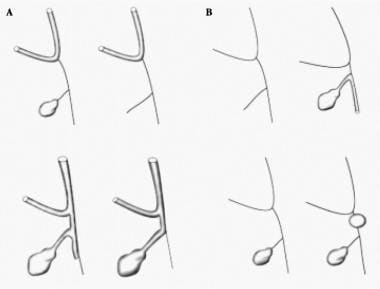
The pathology of the extrahepatic biliary system widely varies in these patients, and the following classification is based on the predominant site of atresia:

  • Type I involves obliteration of the common duct; the proximal ducts are patent
  • Type II is characterized by atresia of the hepatic duct, with cystic structures found in the porta hepatis
  • Type III (>90% of patients) involves atresia of the right and left hepatic ducts to the level of the porta hepatis. These variants should not be confused with intrahepatic biliary hypoplasia, which comprises a group of distinct and surgically noncorrectable disorders.

Pathophysiology

Although histopathologic features of biliary atresia have been extensively studied in surgical specimens from excised extrahepatic biliary systems of infants undergoing portoenterostomy, the pathogenesis of this disorder remains poorly understood. Early studies postulated a congenital malformation of the biliary ductular system. Problems of hepatobiliary ontogenesis are suggested by the fetal/embryonic form of atresia that is associated with other congenital anomalies. However, the more common neonatal type is characterized by a progressive inflammatory lesion, which suggests a role for infectious and/or toxic agents causing bile duct obliteration.

In type III, the most prevalent histopathological variant, the fibrous remnant demonstrates complete obliteration of at least a portion of the extrahepatic biliary system. Ducts within the liver, extending to the porta hepatis, are initially patent during the first few weeks of life but may progressively be destroyed. The same agent or agents that damaged the extrahepatic ducts may be causative, and the effects of retained toxins in bile are contributing factors.

Identification of active and progressive inflammation and destruction of the biliary system suggests that extrahepatic biliary atresia likely represents an acquired lesion. However, no single etiologic factor has been identified. Infectious agents seem to be the most plausible candidates, particularly in the isolated (neonatal) form of atresia. Several studies have identified elevated antibody titers to reovirus type 3 in patients with biliary atresia when compared with controls. Other viruses, including rotavirus and cytomegalovirus (CMV), have also been implicated.

Frequency

United States

Individual studies suggest an overall incidence in the United States of 1 per 10,000-15,000 live births.

International

The incidence of biliary atresia is highest in Asian populations, and it may be more common in Chinese infants compared with Japanese infants.

Mortality/Morbidity

Prior to the development of liver transplantation as a therapeutic option for children with end-stage liver disease, the long-term survival rate for infants with biliary atresia following portoenterostomy was 47-60% at 5 years and 25-35% at 10 years. In one third of all patients, bile flow is inadequate following surgery, and these children succumb to complications of biliary cirrhosis in the first few years of life unless orthotopic liver transplantation is performed. Following portoenterostomy, complications include cholangitis (50%) and portal hypertension (>60%).

Hepatocellular carcinoma may be a risk for patients with cirrhosis and no clinical evidence of portal hypertension. Progressive fibrosis and biliary cirrhosis develop in children who do not drain bile. Thus, as discussed below (see Prognosis), liver transplantation may be the only option for long-term survival in most patients.

Race

Incidence of biliary atresia is highest in Asian populations. The disorder also occurs in black infants, with an incidence approximately 2 times higher than that observed among white infants.

Sex

Extrahepatic biliary atresia occurs more commonly in females than in males.

Age

Biliary atresia is a disorder unique to the neonatal period. Two presentations are described in this chapter (see Background). The fetal/perinatal form is evident within the first 2 weeks of life; the postnatal type presents in infants aged 2-8 weeks.


History

  • Regardless of etiology, the clinical presentation of neonatal cholestasis is remarkably similar in most infants.
    • Typical symptoms include variable degrees of jaundice, dark urine, and light stools.
    • In the case of biliary atresia, most infants are full-term, although a higher incidence of low birthweight may be observed.
    • In most cases, acholic stools are not noted at birth but develop over the first few weeks of life. Appetite, growth, and weight gain may be normal.

Physical

Physical findings do not identify all cases of biliary atresia. No findings are pathognomonic for the disorder.

  • Infants with biliary atresia are typically full term and may manifest normal growth and weight gain during the first few weeks of life.
  • Hepatomegaly may be present early, and the liver is often firm or hard to palpation. Splenomegaly is common, and an enlarging spleen suggests progressive cirrhosis with portal hypertension.
  • Direct hyperbilirubinemia is always an abnormal finding and may be present from birth in the fetal/embryonic form. Consider biliary atresia in all neonates with direct hyperbilirubinemia.
  • In the more common postnatal form, physiologic jaundice frequently merges into conjugated hyperbilirubinemia. The clinician must be aware that physiologic unconjugated hyperbilirubinemia rarely persists beyond 2 weeks. Infants with prolonged physiologic jaundice must be evaluated for other causes.
  • In patients with the fetal/neonatal form (polysplenia/asplenia syndrome), a midline liver may be palpated in the hypogastrium.
  • The presence of cardiac murmurs suggests the presence of associated cardiac anomalies.
  • A high index of suspicion is key to making a diagnosis because surgical treatment by age 2 months has clearly been shown to improve the likelihood of establishing bile flow and to prevent the development of irreversible biliary cirrhosis.

Causes

The disorder is rarely seen in infants who are stillborn or in premature infants, which supports a late gestational etiology. By contrast, infants with idiopathic neonatal hepatitis, which is the major differential diagnosis, are often preterm, small for gestational age, or both.

  • Infectious agents
    • No single agent has been identified as causative for biliary atresia, though the role of infecting organisms has been the most extensively studied.
    • Fischler et al reported CMV infection in almost 25% of affected infants in one study based upon immunoglobulin M (IgM) serology.1 Interestingly, an even higher frequency of CMV infection has been found by Chang et al in cases of idiopathic neonatal hepatitis, lending support to the concept that both disorders are ends of the same pathological spectrum, originally described by Landing as infantile obstructive cholangiopathy.2 
    • Investigations of reovirus type 3 have yielded conflicting results. Wilson et al noted in one study that the virus damages the bile ducts and hepatocytes in mice, whereas another study by Steele et al failed to demonstrate evidence of infection in infants with cholestasis.3
    • Other studies have examined the role of rotavirus groups A, B, and C and the common hepatitis viruses A, B, and C; however, no clear associations have been found.
  • Genetic factors
    • The existence of the fetal/perinatal form of biliary atresia, frequently associated with other gastrointestinal and cardiac anomalies, suggests the possibility of a disorder in ontogenesis. Studies have identified specific genetic mutations in mice with visceral heterotaxy and cardiac anomalies, defects similar to those found in conjunction with the fetal/perinatal form of biliary atresia.
    • Various genetic abnormalities, including deletion of the mouse c-jun gene (a proto-oncogene transcription factor) and mutations of homeobox transcription factor genes, are associated with hepatic and splenic defects; however, a direct link to biliary atresia has not been described.
  • Other causes
    • Disorders of bile acid synthesis are part of the differential diagnosis of biliary atresia. In fact, bile acids almost certainly contribute to ongoing hepatocellular and bile ductular damage in infants with the disorder. Although associated defects in bile acid metabolism may hasten progression of liver disease, no primary role for bile acids in the development of biliary atresia has been identified.
    • Several investigators have studied the potential effects of other etiological agents, including teratogens and immunological factors. Again, no clear correlations with biliary atresia have been demonstrated.


Alagille Syndrome
Caroli Disease
Cholestasis
Cystic Fibrosis
Cytomegalovirus Infection
Galactose-1-Phosphate Uridyltransferase Deficiency (Galactosemia)
Hemochromatosis, Neonatal
Herpes Simplex Virus Infection
Lipid Storage Disorders
Rubella
Syphilis
Toxoplasmosis

Other Problems to be Considered

Alpha1-anti-trypsin deficiency
Byler disease
Choledochal cyst
Idiopathic neonatal hepatitis
Inborn errors of bile acid synthesis
Nonsyndromic intrahepatic bile duct hypoplasia
Total parenteral nutrition–associated (TPN) cholestasis
Viral infections (eg, toxoplasmosis, other infections, rubella, cytomegalovirus infection, and herpes simplex [TORCH])


Lab Studies

  • Serum bilirubin (total and direct): Conjugated hyperbilirubinemia, defined as any level exceeding either 2 mg/dL or 20% of total bilirubin, is always abnormal. Interestingly, infants with biliary atresia typically show only moderate elevations in total bilirubin, which is commonly 6-12 mg/dL, with the direct (conjugated) fraction comprising 50-60% of total serum bilirubin. 
  • Alkaline phosphatase (AP), 5' nucleotidase, gamma-glutamyl transpeptidase (GGTP), serum aminotransferases, serum bile acids
    • These candidate tests have been proposed as a means to increase both sensitivity and specificity of routine laboratory evaluation. Unfortunately, no single biochemical determination accurately discriminates between biliary atresia and the other causes of neonatal cholestasis.
    • In addition to direct hyperbilirubinemia (a universal finding in neonatal cholestasis), enzyme abnormalities include elevated AP levels. In some cases, skeletal sources of AP can be differentiated from hepatic sources by measuring the liver-specific AP fraction, 5' nucleotidase.
    • GGTP is an integral membrane protein of the bile canaliculus and is elevated in cholestatic conditions. GGTP levels closely correlate with AP findings and are increased in all biliary obstructive conditions. However, GGTP levels may be within the reference range in some forms of cholestasis of hepatocellular origin.
    • Aminotransferase levels are not particularly helpful in establishing a diagnosis, although a markedly elevated alanine aminotransferase level (>800 IU/L) indicates significant hepatocellular injury and is more consistent with the neonatal hepatitis syndromes.
  • Serum alpha1-antitrypsin with Pi typing: Alpha1-antitrypsin deficiency is the most common inherited liver disease that presents with neonatal cholestasis. The abnormal PiZZ phenotype, as determined by electrophoresis, is associated with neonatal cholestasis in approximately 10% of subjects.
  • Sweat chloride (Cl): Biliary tract involvement is a well-recognized complication of cystic fibrosis (CF), and an association between meconium ileus in the newborn and cholestasis has been described. A diagnosis of CF should be strongly considered in any infant with direct hyperbilirubinemia, particularly if other associated signs or symptoms (ie, respiratory, GI) are present. Sweat Cl iontophoresis remains the criterion standard for diagnosing CF.

Imaging Studies

  • Ultrasonography
    • In neonatal cholestasis syndromes, ultrasonography can exclude specific anomalies of the extrahepatic biliary system, particularly choledochal cysts. Today, a diagnosis of choledochal cyst should be made in utero using fetal ultrasonography. 
    • In biliary atresia, ultrasonography may demonstrate absence of the gallbladder and no dilatation of the biliary tree. Unfortunately, the sensitivity and specificity of these findings, even in the most experienced centers, probably do not exceed 80%. For this reason, ultrasonography has been found unreliable in the evaluation of biliary atresia.
  • Hepatobiliary scintiscanning
    • Hepatobiliary imaging, utilizing technetium-labeled diisopropyl iminodiacetic acid (DISIDA) nuclear scintiscan, is useful in evaluating infants with suspected biliary atresia. Unequivocal evidence of intestinal excretion of radiolabel confirms patency of the extrahepatic biliary system.
    • Two cautionary notes are required. First, reliability of the scintiscan is diminished at very high conjugated bilirubin levels (>20 mg/dL). Second, the test has been associated with a 10% rate of false-positive or false-negative diagnostic errors.

Other Tests

  • Duodenal intubation and duodenal string test: These studies are performed in some centers to evaluate duodenal bile excretion; however, in the author's experience, these studies are cumbersome, time-consuming, and unreliable.
  • Endoscopic retrograde cholangiopancreatography (ERCP): This diagnostic procedure has previously been unavailable for use during infancy because of technical considerations. However, endoscope manufacturers are now producing side-viewing instruments that may be successfully used in neonates. Although not yet widely used, recent reports have demonstrated the utility of ERCP in diagnosing biliary atresia.

Procedures

  • Percutaneous liver biopsy
    • Percutaneous liver biopsy is widely regarded as the most valuable study for evaluating neonatal cholestasis. Morbidity is low in patients without coagulopathy. When examined by an experienced pathologist, an adequate biopsy specimen can differentiate between obstructive and hepatocellular causes of cholestasis, with 90% sensitivity and specificity for biliary atresia.
    • Several cholestatic conditions, including biliary atresia, may demonstrate an evolving histopathological pattern. Accordingly, biopsies are not usually diagnostic in those younger than 2 weeks, and serial samples, usually at 2-week intervals, may be required to reach a definitive diagnosis.
  • Intraoperative cholangiography: This procedure definitively demonstrates anatomy and patency of the extrahepatic biliary tract. Perform intraoperative cholangiography when liver biopsy findings suggest an obstructive etiology. The study is also indicated when biopsy results are equivocal or scintiscan fails to demonstrate clear evidence of duodenal bile excretion.

Histologic Findings

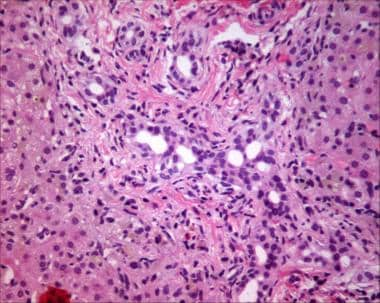
Despite the fact that several variants of extrahepatic biliary atresia have been described, suggesting a role for both ontogenic and acquired causes, no discernible qualitative differences in histopathological characteristics are evident. Surgical specimens demonstrate a spectrum of abnormalities, including active inflammation with bile duct degeneration, a chronic inflammatory reaction with proliferation of both ductular and glandular elements, and fibrosis. The progressive nature of the disorder is confirmed by its evolving histological picture. Ultimately, evidence of biliary tract obstructive disease confirmed by liver biopsy findings determines which infants require exploratory laparotomy and intraoperative cholangiography. Portal bile ductular proliferation, bile plugging, portal-portal fibrosis, and an acute inflammatory reaction are characteristic findings in infants with neonatal cholestasis of an obstructive etiology.

Periodic acid-Schiff (PAS) staining of biopsy tissue can also be used to confirm a diagnosis of alpha1-antitrypsin deficiency by finding intracellular PAS-positive granules resistant to digestion by diastase.


Medical Care

  • No primary medical treatment is relevant in the management of extrahepatic biliary atresia. The pediatrician's objective is to confirm the diagnosis.
  • Once biliary atresia is suspected, surgical intervention is the only mechanism available for a definitive diagnosis (intraoperative cholangiogram) and therapy (Kasai portoenterostomy).
Surgical Care

  • Following a thorough evaluation for causes of neonatal cholestasis, intraoperative cholangiography establishes the diagnosis of extrahepatic biliary atresia.
  • During the operation, the fibrotic biliary tract remnant is identified, and the patency of the biliary system is assessed.
  • In cases in which biliary patency is associated with ductal hypoplasia, further surgical intervention is not indicated, and bile may be collected to evaluate for disorders of bile acid metabolism.
  • In the unusual circumstance of distal patency of the common duct with acceptable proximal luminal caliber, a modified portoenterostomy may be considered in place of the traditional Kasai procedure. However, the clinician must be aware that progression of disease pathophysiology may occur. The author has observed patients undergo modified portoenterostomies (gallbladder Kasai), only to subsequently experience continued inflammation and obliteration of the extrahepatic biliary tree and to ultimately require classic portoenterostomies.
  • In most cases of atresia, dissection into the porta hepatis and creation of a Roux-en-Y anastomosis with a 35- to 40-cm retrocolic jejunal segment is the procedure of choice.
  • Recent studies have reported that extension of the portal dissection beyond the portal vein bifurcation and the umbilical point in the left hilum may improve the likelihood of achieving adequate biliary drainage.

Consultations

  • The evaluation of neonatal cholestasis may initially be carried out by the primary care provider, depending on the reliability of the laboratory in performing the necessary serum determinations indicated above. 
  • Obviously, further nonsurgical testing (eg, hepatobiliary imaging, liver biopsy) and surgical exploration should only be carried out in centers with considerable experience in managing this disorder. 
  • The physician must not delay in the diagnosis of extrahepatic biliary atresia. Refer infants for appropriate subspecialty care as soon as a diagnosis of obstructive jaundice is suspected.

Diet

  • During the evaluation phase of biliary atresia, the infant's diet is typically not changed.
  • Postoperative breastfeeding is encouraged when possible because breast milk contains both lipases and bile salts to aid in lipid hydrolysis and micelle formation. Theoretically, breast milk may also protect against cholangitis, a common complication following portoenterostomy, by suppressing the growth of gram-negative and anaerobic flora. However, no data is available to support this claim.
  • Infants who are fed formula and who achieve adequate bile drainage should not require a special diet. Early in the postoperative course and when the status of biliary continuity may be in question, one of the medium-chain triglyceride-containing formulas (eg, Alimentum, Pregestimil) may enhance lipid digestion.


In the immediate postoperative period, methylprednisolone has been used as both an anti-inflammatory agent and as a nonspecific stimulant of bile salt-independent bile flow. In patients with chronic cholestatic conditions and bile duct patency, ursodeoxycholic acid (ie, ursodiol, UCDA) has also been shown to enhance bile flow. For infants following portoenterostomy, UCDA may improve outcomes, and the drug is associated with minimal toxicity.

In order to prevent cholangitis postoperatively, prophylaxis with trimethoprim-sulfamethoxazole has been used on a long-term basis. Unfortunately, conclusive data supporting the use of this agent, or the other drugs described above, in the management of biliary atresia are not available.

Drug Category: Bile acids

These agents enhance bile salt-dependent biliary flow.

Drug NameUrsodiol (Actigall, Urso)
DescriptionShown to promote bile flow in cholestatic conditions associated with a patent extrahepatic biliary system. Following portoenterostomy in infants with biliary atresia, the drug may be useful in enhancing biliary drainage.
Adult DoseIndication not applicable to adults
Pediatric Dose15-30 mg/kg/d PO divided q6-8h
ContraindicationsDocumented hypersensitivity; extrahepatic biliary tree obstruction
InteractionsAluminum based antacids and bile acid sequestrants may decrease absorption of ursodiol
PregnancyB - Fetal risk not confirmed in studies in humans but has been shown in some studies in animals
PrecautionsGI effects including nausea, vomiting, diarrhea, or constipation; dermatologic effects including a rash; monitor hepatic enzymes

Drug Category: Glucocorticoids

These agents elicit anti-inflammatory properties and cause profound and varied metabolic effects. They modify the body's immune response to diverse stimuli. Although no definitive data is available, methylprednisolone blast therapy (ie, high dose, short duration) has been used in the immediate postoperative period in an effort to establish bile drainage, in part by (theoretically) enhancing bile salt-independent bile flow.

Drug NameMethylprednisolone (Solu-Medrol)
DescriptionCorticosteroids have long been recognized as potent anti-inflammatory agents and may stimulate bile salt-independent bile flow. Although their role in the postoperative management of biliary atresia has never been established, some centers have found that short-term, high-dose therapy in the immediate postoperative period may improve the likelihood of achieving adequate bile drainage, particularly for infants in whom bile flow is not immediately apparent following portoenterostomy.
Adult DoseIndication not applicable to adults
Pediatric Dose1.6-2 mg/kg/d IV divided qid
ContraindicationsDocumented hypersensitivity; administration of live virus vaccines and systemic fungal infections; immunosuppression (not an absolute contraindication); upper GI bleeding (a controversial association); consider concomitant use of H2-receptor antagonists when administered in the immediate postoperative period
InteractionsMonitor patients for hypokalemia when taking this medication concurrently with diuretics; in this clinical setting and utilized over a short course only, no other important drug interactions are expected
PregnancyC - Fetal risk revealed in studies in animals but not established or not studied in humans; may use if benefits outweigh risk to fetus
PrecautionsGlucose intolerance, hypertension, agitation, indigestion

Drug Category: Antibiotics

Long-term antibiotic prophylaxis may reduce the incidence of cholangitis following portoenterostomy.

Drug NameTrimethoprim-Sulfamethoxazole (Bactrim, Septra)
DescriptionCholangitis is a common complication, both acutely and long term, following the Kasai procedure. When used prophylactically, may reduce the incidence of cholangitis, though conclusive supportive information is not available.
Adult DoseIndication not applicable to adults
Pediatric Dose8 mg/kg/d (based on trimethoprim component) PO divided q12h
ContraindicationsDocumented hypersensitivity; megaloblastic anemia due to folate deficiency; age <2 months; unconjugated hyperbilirubinemia
InteractionsMay increase PT when used with warfarin (perform coagulation tests and adjust dose accordingly); coadministration with dapsone may increase blood levels of both drugs; phenytoin levels may increase with coadministration; may potentiate effects of methotrexate in bone marrow depression; may increase levels of zidovudine
PregnancyC - Fetal risk revealed in studies in animals but not established or not studied in humans; may use if benefits outweigh risk to fetus
PrecautionsDiscontinue the drug at the first appearance of skin rash or any sign of adverse reaction; rash, sore throat, fever, arthralgia, cough, shortness of breath, pallor, purpura, or jaundice may be early indications of serious reactions
Hepatic necrosis; aplastic anemia; agranulocytosis; hemolysis may occur in individuals with G-6-PD deficiency, and it is frequently dose-related
Exercise caution in patients diagnosed with renal or hepatic impairment; maintain adequate fluid intake to prevent crystalluria and stone formation; Stevens-Johnson syndrome and toxic epidermal necrolysis


Complications

  • Complications following portoenterostomy include both acute and chronic problems.
    • In the early postoperative phase, an unsuccessful anastomosis with failure to achieve adequate bile drainage is the most common complication. In this case, adequacy of bile flow may be predicted by the preoperative liver histology and the caliber of bile ductular remnants in the porta hepatis. In one third of all patients, bile flow is inadequate following surgery, and these children succumb to complications of biliary cirrhosis in the first few years of life unless orthotopic liver transplantation is performed.
    • Later in the course, complications related to progressive liver disease and portal hypertension occur in more than 60% of infants who achieved initial surgical success.
    • Cholangitis develops in 50% of patients following portoenterostomy.
    • Hepatocellular carcinoma may be a risk for those patients with cirrhosis and no clinical evidence of portal hypertension. Progressive fibrosis and biliary cirrhosis develop in children who do not drain bile, and liver transplantation is the only option for long-term survival.
    • Detailed management of these complications is described in Histologic Findings, Medical Care, Consultations, Diet, and Medications.

Prognosis

  • Data regarding outcome from centers worldwide widely vary. The initial success rate of Kasai portoenterostomy (for achieving bile flow) is 60-80%. Clearly, the most critical determinant of outcome remains age at the time of operation. Although individual centers have reported favorable surgical results in some infants older than 3 months, patients are significantly less likely to require early liver transplantation if the portoenterostomy is performed when they are younger than 10 weeks. In the postoperative period, the rate of decline in serum bilirubin levels directly correlates with a positive prognosis. As discussed in Mortality/Morbidity, bile flow, even if achieved at surgery, may be inadequate in as many as one third of patients after the initial postoperative period. These children require early (<2 y) liver transplantation. Factors that predict improved long-term outcome after Kasai portoenterostomy include the following:
    • Younger than 10 weeks (in some reports, 2 mo) at operation
    • Preoperative histology and ductal remnant size
    • Presence of bile in hepatic lobular zone 1
    • Absence of portal hypertension, cirrhosis, and associated anomalies
    • Experience of the surgical team
    • Postoperative clearing of jaundice
  • The following 3 categories of patients with extrahepatic biliary atresia should be considered for reexploration following a Kasai or modified Kasai portoenterostomy:
    • Infants who become jaundiced after an initial anicteric phase postoperatively
    • Infants with favorable hepatic and biliary duct remnant histology at initial operation, who do not successfully drain bile
    • Infants who may have had an inadequate initial surgery
  • Extrahepatic biliary atresia is the most common primary diagnosis in children requiring orthotopic liver transplantation (OLT), comprising more than 50% of patients with liver transplants in most series.
    • Overall, a recent review demonstrated that 66% of infants undergoing the Kasai procedure ultimately required OLT, including more than 50% of patients who initially achieved bile drainage.
    • In most series reported to date, the primary indications for OLT are the symptoms of end-stage liver disease and/or hepatic failure, including progressive cholestasis, recurrent cholangitis, poorly controlled portal hypertension, intractable ascites, decreased hepatic synthetic function (eg, hypoalbuminemia, coagulopathy unresponsive to vitamin K), and growth failure.
    • As long-term outcomes following OLT in children continue to improve (along with increased living donor availability) using split-liver grafts, application of this surgical modality for early treatment of biliary atresia will likely increase, certainly in patients with inadequate bile flow following portoenterostomy.


Medical/Legal Pitfalls

  • Although not strictly a medical-legal issue, whether portoenterostomy or OLT is the best initial therapy for extrahepatic biliary atresia remains controversial. Transplantation has certainly been suggested as the initial procedure of choice because of its excellent long-term survival rate and the fact that more than 60% of infants undergoing the Kasai procedure ultimately require OLT. However, a careful review of available data indicates that overall survival statistics are not significantly altered by primary transplantation. In addition, at a time when organ procurement problems remain the most important obstacles to survival for patients requiring OLT, portoenterostomy represents a therapeutic option that secures favorable long-term outcomes in a significant number of patients with biliary atresia.


Media file 1:  Biliary atresia.
Click to see larger pictureClick to see detailView Full Size Image
Media type:  Image

Media file 2:  Bile ductular proliferation in liver biopsy specimen (hematoxylin and eosin stain) from patient with biliary atresia. Also note hepatocellular bile staining as a consequence of cholestasis
Click to see larger pictureClick to see detailView Full Size Image
Media type:  Histology


  1. Fischler B, Ehrnst A, Forsgren M, et al. The viral association of neonatal cholestasis in Sweden: a possible link between cytomegalovirus infection and extrahepatic biliary atresia. J Pediatr Gastroenterol Nutr. Jul 1998;27(1):57-64. [Medline].
  2. Chang MH, Huang HH, Huang ES, et al. Polymerase chain reaction to detect human cytomegalovirus in livers of infants with neonatal hepatitis. Gastroenterology. Sep 1992;103(3):1022-5. [Medline].
  3. Wilson GA, Morrison LA, Fields BN. Association of the reovirus S1 gene with serotype 3-induced biliary atresia in mice. J Virol. Oct 1994;68(10):6458-65. [Medline][Full Text].
  4. Balistreri WF, Grand R, Hoofnagle JH, et al. Biliary atresia: current concepts and research directions. Summary of a symposium. Hepatology. Jun 1996;23(6):1682-92. [Medline].
  5. Barshes NR, Lee TC, Balkrishnan R, et al. Orthotopic liver transplantation for biliary atresia: the U.S. experience. Liver Transpl. Oct 2005;11(10):1193-200. [Medline].
  6. Bates MD, Bucuvalas JC, Alonso MH, Ryckman FC. Biliary atresia: pathogenesis and treatment. Semin Liver Dis. 1998;18(3):281-93. [Medline].
  7. Bittmann S. Surgical experience in children with biliary atresia treated with portoenterostomy. Curr Surg. Jul-Aug 2005;62(4):439-43. [Medline].
  8. Chin LT, D'Alessandro AM, Knechtle SJ, et al. Liver transplantation for biliary atresia: 19-year, single-center experience. Exp Clin Transplant. Jun 2004;2(1):178-82. [Medline].
  9. el-Youssef M, Whitington PF. Diagnostic approach to the child with hepatobiliary disease. Semin Liver Dis. 1998;18(3):195-202. [Medline].
  10. Karrer FM, Price MR, Bensard DD, et al. Long-term results with the Kasai operation for biliary atresia. Arch Surg. May 1996;131(5):493-6. [Medline].
  11. Kasai M. Treatment of biliary atresia with special reference to hepatic porto- enterostomy and its modifications. Prog Pediatr Surg. 1974;6:5-52. [Medline].
  12. Lai MW, Chang MH, Hsu SC, et al. Differential diagnosis of extrahepatic biliary atresia from neonatal hepatitis: a prospective study. J Pediatr Gastroenterol Nutr. Feb 1994;18(2):121-7. [Medline].
  13. Mack CL, Sokol RJ. Unraveling the pathogenesis and etiology of biliary atresia. Pediatr Res. May 2005;57(5 Pt 2):87R-94R. [Medline][Full Text].
  14. Matsuo S, Suita S, Kubota M, Shono K. Long-term results and clinical problems after portoenterostomy in patients with biliary atresia. Eur J Pediatr Surg. Jun 1998;8(3):142-5. [Medline].
  15. Mowat AP. Biliary atresia into the 21st century: a historical perspective. Hepatology. Jun 1996;23(6):1693-5. [Medline].
  16. Muraji T, Higashimoto Y. The improved outlook for biliary atresia with corticosteroid therapy. J Pediatr Surg. Jul 1997;32(7):1103-6; discussion 1106-7. [Medline].
  17. Nio M, Ohi R, Shimaoka S, et al. The outcome of surgery for biliary atresia and the current status of long-term survivors. Tohoku J Exp Med. Jan 1997;181(1):235-44. [Medline].
  18. Okazaki T, Kobayashi H, Yamataka A, et al. Long-term postsurgical outcome of biliary atresia. J Pediatr Surg. Feb 1999;34(2):312-5. [Medline].
  19. Otte JB, de Ville de Goyet J, Reding R, et al. Sequential treatment of biliary atresia with Kasai portoenterostomy and liver transplantation: a review. Hepatology. Jul 1994;20(1 Pt 2):41S-48S. [Medline].
  20. Ryckman FC, Alonso MH, Bucuvalas JC, Balistreri WF. Biliary atresia--surgical management and treatment options as they relate to outcome. Liver Transpl Surg. Sep 1998;4(5 Suppl 1):S24-33. [Medline].
  21. Steele MI, Marshall CM, Lloyd RE, Randolph VE. Reovirus 3 not detected by reverse transcriptase-mediated polymerase chain reaction analysis of preserved tissue from infants with cholestatic liver disease. Hepatology. Mar 1995;21(3):697-702. [Medline].
  22. Tan CE, Davenport M, Driver M, Howard ER. Does the morphology of the extrahepatic biliary remnants in biliary atresia influence survival? A review of 205 cases. J Pediatr Surg. Nov 1994;29(11):1459-64. [Medline].
  23. Tanaka H, Kita Y, Kawarasaki H, et al. Beneficial effect of ursodeoxycholic acid on serum gamma-GTP in patients with biliary atresia following living related liver transplantation. Transplant Proc. Nov 1998;30(7):3326-7. [Medline].
  24. Utterson EC, Shepherd RW, Sokol RJ, et al. Biliary atresia: clinical profiles, risk factors, and outcomes of 755 patients listed for liver transplantation. J Pediatr. Aug 2005;147(2):180-5. [Medline].
  25. Valayer J. Conventional treatment of biliary atresia: long-term results. J Pediatr Surg. Nov 1996;31(11):1546-51. [Medline].
  26. Visser BC, Suh I, Hirose S, et al. The influence of portoenterostomy on transplantation for biliary atresia. Liver Transpl. Oct 2004;10(10):1279-86. [Medline].
  27. Yoon PW, Bresee JS, Olney RS, et al. Epidemiology of biliary atresia: a population-based study. Pediatrics. Mar 1997;99(3):376-82. [Medline][Full Text].

Biliary Atresia excerpt

Article Last Updated: Sep 13, 2007