You are in: eMedicine Specialties >
Pediatrics: General Medicine > Hematology
Acanthocytosis
Article Last Updated: Dec 28, 2006
AUTHOR AND EDITOR INFORMATION
Section 1 of 11
Author: Ulrike M Reiss, MD, Assistant Member, Department of Hematology, St Jude Children's Research Hospital
Ulrike M Reiss is a member of the following medical societies: American Society of Hematology and American Society of Pediatric Hematology/Oncology
Coauthor(s):
Pedro A de Alarcon, MD, William H Albers Professor and Chair, Department of Pediatrics, University of Illinois College of Medicine at Peoria;
Frank E Shafer, MD, Associate Professor, Department of Pediatrics, Section of Hematology-Oncology, St. Christopher's Hospital for Children, MCP Hahnemann University School
Editors: J Martin Johnston, MD, Associate Professor of Pediatrics, Mercer University School of Medicine; Director of Pediatric Hematology/Oncology, Backus Children's Hospital; Consulting Oncologist/Hematologist, St Damien's Pediatric Hospital; Mary L Windle, PharmD, Adjunct Assistant Professor, University of Nebraska Medical Center College of Pharmacy, Pharmacy Editor, eMedicine.com, Inc; Steven K Bergstrom, MD, Assistant to the Chairman, Department of Pediatrics, Division of Hematology-Oncology, Kaiser Permanente Medical Center of Oakland; Samuel Gross, MD, Professor Emeritus, Department of Pediatrics, University of Florida, Clinical Professor, Department of Pediatrics, UNC, Adjunct Professor, Department of Pediatrics, Duke University; Max J Coppes, MD, PhD, MBA, Executive Director, Center for Cancer and Blood Disorders, Children's National Medical Center, Washington, DC; Professor of Medicine, Oncology, and Pediatrics, Georgetown University
Author and Editor Disclosure
Synonyms and related keywords:
acanthocytosis, acanthocytes, abetalipoproteinemia, Bassen-Kornzweig syndrome, atypical retinitis pigmentosa, progressive ataxic neurologic disorder, neuroacanthocytosis, McLeod syndrome, McLeod blood group, Lutheran blood group, apolipoprotein B deficiency, beta-lipoprotein deficiency, beta lipoprotein deficiency, familial hypobetalipoproteinemia, microsomal triglyceride transfer protein deficiency, celiac disease, spur cell hemolytic anemia, spur cell anemia of severe liver disease, severe active hepatitis, cholestasis, neonatal hepatitis, metastatic liver disease, hemochromatosis, Wilson disease, alcoholic cirrhosis, infantile pyknocytosis, Zieve syndrome, lipid metabolism, hypothyroidism
Background
Acanthocytes (from the Greek word acantha, which means thorn), or spur cells, are spiculated red cells with a few projections of varying size and surface distribution. The cells appear contracted, dense, and irregular. The morphology of acanthocytes in these various conditions is similar, but the pathogenesis and clinical context often greatly differ. In general, the formation of acanthocytes depends on alteration of the lipid composition and fluidity of the red cell membrane.
Acanthocytosis is a red cell phenotype found in various underlying conditions. Abetalipoproteinemia (Bassen-Kornzweig syndrome) and spur cell hemolytic anemia of severe liver disease are the most frequent and most significant underlying conditions associated with acanthocytosis. Acanthocytes also occur in neuroacanthocytosis, anorexia nervosa and other malnutrition states, infantile pyknocytosis, McLeod syndrome, In(Lu) null Lutheran phenotype, hypothyroidism, idiopathic neonatal hepatitis, and myxedema. They are also observed with transient hemolysis and stomatocytosis in individuals with alcoholism and with mild hemolysis and spherocytosis in individuals with congestive splenomegaly. Other conditions associated with acanthocytes include homozygous familial hypobetalipoproteinemia, Zieve syndrome, and chronic granulomatous disease (CGD) associated with McLeod red cell phenotype.
Acanthocytes should be distinguished from echinocytes (from the Greek word echinos, which means urchin). Echinocytes, or burr cells, appear with multiple small projections that are uniformly distributed on the red cell surface. Echinocytes occur in many conditions, including malnutrition associated with mild hemolysis due to hypomagnesemia and hypophosphatemia, uremia, hemolytic anemia in long-distance runners, and pyruvate kinase deficiency. In vitro, elevated pH, blood storage, ATP depletion, calcium accumulation, and contact with glass can lead to formation of echinocytes.
Pathophysiology
The description of acanthocyte pathophysiology s varies among underlying conditions. Acanthocytes can be caused by (1) altered distribution or proportions of membrane lipids or by (2) membrane protein or membrane skeleton abnormalities. In membrane lipid abnormalities, previously normal red cell precursors often acquire the acanthocytic morphology from the plasma. Altered membranes may contain decreased phosphatidylcholine levels but increased levels of cholesterol and sphingomyelin. The imbalance in membrane lipids causes cells to stiffen, wrinkle, pucker, and form spicules because of a relative increase of the outer hemileaflet's surface area compared with the inner hemileaflet's surface area. In membrane protein or membrane skeleton abnormalities, the defect is intrinsic but, again, causes imbalances in inner versus outer leaflet surface areas and abnormal interaction between the membrane skeleton and lipid membrane. The alteration in plasma lipids in autosomal recessive abetalipoproteinemia caused by the absence of beta-apolipoprotein is best described. Specifically, the lipoproteins apoprotein B (ApoB)–48 and ApoB-100 are deficient because of either abnormal assembly or defective aposecretion, leading to absent cellular secretion from hepatocytes or intestinal epithelial cells. Formation of normal chylomicrons (ie, lipoproteins that contain cholesterol and triglycerides) is inhibited and prevents intestinal absorption of lipids, leading to severe fat malabsorption. In addition to lipid abnormalities and altered membrane integrity, secondary vitamin E–deficient red cells have increased oxidant sensitivity and tend to hemolyze more easily. Acanthocytes in the homozygous form of familial hypobetalipoproteinemia are thought to have a similar pathophysiology. Severe liver dysfunction of various etiologies can also cause altered plasma lipid composition and acanthocytes (usually called spur cells in this case) because of acquired abnormal red cell membrane lipid composition. The liver dysfunction causes accumulation of an abnormal, apolipoprotein A-II-deficient lipoprotein in plasma. Red cells are loaded with cholesterol by this lipoprotein and acquire an increased cholesterol-to-phospholipid ratio and a surface area preferentially within the outer bilayer leaflet.
Cholesterol-laden red cells are then remodeled in the spleen, resulting in the typical spur cell shape. The molecular mechanisms are not completely clear but may also include influences on membrane protein content and functions. The resulting spur cells are less deformable and are easily trapped in the spleen, conferring markedly shortened red cell survival. Another group of patients with liver dysfunction may have normal red cell membrane lipids, and the pathophysiology in these cases is unknown. This situation is more often seen in children with severe hepatocellular dysfunction. In neuroacanthocytosis, the plasma lipoproteins are normal, and the formation of acanthocytes may be associated with intrinsic membrane abnormalities. Studies have indicated that abnormal protein formation or abnormal membrane protein trafficking (CHAC mutation) is involved. Electron microscopy studies have shown that membrane protrusions depend on the irregular distribution of the membrane skeletons. Therefore, shape changes are likely related to interactions between membrane skeletons that harbor abnormal proteins and lipid membranes. These results were also found in acanthocytes due to the McLeod blood group. Individuals with the McLeod blood group or McLeod syndrome lack the Kx antigen, a membrane precursor of the Kell antigen that leads to acanthocytic red cell morphology. The Kell antigen is located on a 93-kD glycoprotein and is associated with the underlying membrane skeleton. Both cell types show significant ultrastructural variability between cells. McLeod acanthocytes also exhibit increased mechanical stability on ektacytometry findings, increased membrane rigidity, decreased potassium content, and an increased frequency of dense cells. Another blood group phenotype, the null Lutheran blood group or In(Lu) Lu(a-b-) red cell phenotype also causes acanthocytes. However, in both blood groups and in neuroacanthocytosis, cells are more resistant to hemolysis than in the previously mentioned disorders. Acanthocytes are also found in myxedema, in panhypopituitarism, and in 20-65% of hypothyroidism cases. Serum lipid abnormalities with hypothyroidism are common, and patients with acanthocytes may have more severely abnormal lipids than patients with normal-shaped red cells.
Frequency
International
Acanthocytes are found in 50-90% of cells on peripheral blood smear findings in abetalipoproteinemia, which is a rare autosomal recessive disorder with only about 100 cases described worldwide. Acanthocytes are also relatively common in severe liver dysfunction and malnutrition. Spur cell hemolytic anemia of severe liver disease is an uncommon complication and depends on the incidence of the underlying hepatic or hepatotoxic disorder. It occurs most often in patients with alcoholic cirrhosis, which develops in 10-30% of all patients with alcoholism (approximately 10 million in the United States).
The percentage of acanthocytes is usually smaller in the rare conditions of neuroacanthocytosis and McLeod and null Lutheran red cell blood group abnormalities. In hypothyroidism, 20-65% of cases have approximately 0.5-2% acanthocytes on peripheral smear findings.
Mortality/Morbidity
Mortality and morbidity with acanthocytosis due to abetalipoproteinemia is not well described because of the rarity of the disease and the limited prognostic data. Lifespan may be near normal with early diagnosis and adequate vitamin supplementation and dietary restriction but may vary significantly. Death may occur in the second or third decade and is usually determined by the degree and progression of neurological complications. Acanthocytosis due to severe liver dysfunction is a hallmark of high risk for mortality. In neonatal hepatitis, the process resolves in 65% of individuals within weeks to months. Acanthocytosis in infantile pyknocytosis is a transient benign process. In malnutrition, hypothyroidism, and myxedema, the red cell abnormality resolves with appropriate treatment and resolution of the underlying disease.
Race
Acanthocytosis within the various underlying conditions is seen in all ethnicities.
Sex
Acanthocytosis has no sex predominance.
Age
The appearance of acanthocytes depends on the underlying condition. Acanthocytes in infants and children may indicate infantile pyknocytosis, neonatal hepatitis, autosomal recessive abetalipoproteinemia or homozygous familial hypobetalipoproteinemia, McLeod blood group, null Lutheran blood group, CGD with McLeod blood group, hypothyroidism, or severe malnutrition.
History
Patients with acanthocytosis may have a history of chronic diarrhea with pale, foul-smelling, and bulky stools; loss of appetite and vomiting; and slow weight gain and decreased growth, possibly including a bleeding tendency. Patients may report symptoms of ataxia, tremors, and visual abnormalities or jaundice, abdominal pain, pallor, dark urine, and recurrent infections. Adolescents and adults may report dyskinesias and cognitive deterioration.
Physical
- Hematologic
- Pallor
- Jaundice
- Bleeding
- Lymphadenopathy
- Ocular
- Progressive retinitis pigmentosa with loss of night vision, visual acuity, and color vision
- Nystagmus after age 10 years
- Ophthalmoplegia with strabismus
- Progressive exotropia
- Cataracts
- Gastrointestinal
- Abdominal distention
- Failure to thrive, with short stature and decreased weight
- Hepatomegaly
- Splenomegaly
- Ascites
- Neurologic
- Loss of deep tendon reflexes
- Decreased sensation to touch, pain, temperature, and position
- Stocking-glove distribution of hypoesthesia
- Decreased muscle strength
- Intention tremors and progressive ataxia with clumsiness and gait disturbances, dysarthria, dysdiadochokinesis, and dysmetria
- Chorea
- Mental retardation
- Altered mental status
- Fatigue
- Cold intolerance
- Skin Palmar erythema
- Spider angiomas
- Abdominal wall collateral veins
- Edema
- Recurrent skin infections
- Skeletomuscular
- Muscular atrophy
- Muscle contractures
- Kyphoscoliosis
- Pes cavus
- Pes equinovarus
Causes
- Autosomal recessive abetalipoproteinemia: Heterozygotes are usually healthy. Disease arises from homozygosity for affected alleles. Underlying mutations in the microsomal triglyceride transfer protein (MTTP) gene cause a congenital absence of beta-apolipoprotein in the plasma. Multiple mutations have been described in the MTTP gene, which is localized on chromosome 4. These mutations lead to a lack of functional MTTP complex. MTTP catalyzes the transport of triglyceride, cholesterol ester, and phospholipids between phospholipid surfaces and is required for secretion of ApoB-containing lipoproteins.
- Homozygous autosomal dominant familial hypobetalipoproteinemia: This rare condition is caused by various APOB gene mutations. APOB is located on chromosome 2, and various mutations have been described. This disorder has clinical features similar to abetalipoproteinemia but has milder phenotypes. The synthesis of hepatocyte beta-apoprotein is reduced because of low RNA transcription. Low-density lipoproteins (LDLs) in plasma are decreased.
- Neuroacanthocytosis: This term describes a group of phenotypically and genotypically heterogeneous disorders with acanthocytosis and onset of neurologic symptoms in adolescence or adulthood. Acanthocytosis has a variable percentage and is a diagnostic hallmark. Plasma lipoproteins are normal. Genetic studies distinguish certain entities, of which the core syndromes are autosomal recessive chorea-acanthocytosis (VPS13A, or CHAC, [CHAC is an appositive; they are synonymous] mutation, which encodes for chorein), X-linked McLeod syndrome (XK mutation, which encodes for Kx), pantothenate kinase–associated neurodegeneration (PKAN) (PANK2 mutation), and Huntington disease–like 2 (HDL2) (JPH3 mutation). Red cells of individuals with the McLeod blood group lack Kx antigen, a membrane precursor of the Kell antigen, and may become sensitized, requiring McLeod red cells for transfusions.
- In(Lu) Lu(a-b-) red cell phenotype: This null Lutheran blood group phenotype is caused by inhibition of antigen expression by In(Lu), the inherited, dominantly acting inhibitor. Red cells are abnormally shaped, but no hemolysis is present.
- Severe liver dysfunction due to alcoholic cirrhosis, metastatic liver disease, hemochromatosis, neonatal hepatitis, cholestasis, Wilson disease, severe acute hepatitis, and infantile pyknocytosis
- Transient hemolysis associated with fatty metamorphosis of the liver and hypoglycemia (Zieve syndrome)
- Transient hemolysis and stomatocytosis in alcoholism
- Mild hemolysis and spherocytosis observed in individuals with congestive splenomegaly
- Idiopathic neonatal hepatitis: This may manifest as acanthocytosis and hemolytic anemia, which can be severe. The process resolves after several months in approximately 65% of cases. Cirrhosis occurs in 20% of cases, and hepatocellular necrosis and death can occur in 10-20% of cases.
- Infantile pyknocytosis: Patients with this benign transient process present during the first few days of life with jaundice, mild hepatosplenomegaly, and moderately severe hemolytic anemia. Up to 50% of RBCs may be pyknotic and resemble acanthocytes. Reticulocytes range from 10-20% and are not pyknotic. Transfused RBCs acquire the same pyknotic morphology and are prematurely destroyed, indicating extrinsic causation. The causative mechanisms are unclear. The condition resolves within a mean of 4 months.
- Anorexia nervosa, cystic fibrosis, celiac disease, and severe malnutrition: The mechanism of causation is unclear. Fat malabsorption or insufficient intake and vitamin E deficiency contribute. An abetalipoproteinemialike lipid profile has been described. The morphologic abnormality is reversed with improved nutrition.
- Hypothyroidism: Acanthocytes are found in 20-65% of patients with a frequency rate of 0.5-2%. Evidence of acanthocytes in adults suggests hypothyroidism in up to 90% of cases.
- Myxedema and panhypopituitarism: RBC lipids are normal, and the cell morphology normalizes with appropriate therapy.
Anemia, Acute
Anemia, Chronic
Cystic Fibrosis
Growth Failure
Hepatitis A
Hepatitis B
Hepatitis C
Hepatorenal Syndrome
Hypopituitarism
Hypothyroidism
Malabsorption Syndromes
Malnutrition
Panhypopituitarism
Other Problems to be Considered
Congenital conditions McLeod red cell phenotype and CGD: The gene that controls Kx expression on RBCs is adjacent to the locus involved in CGD. Large deletions in this region may result in the appearance of both CGD and acanthocytic McLeod red cells. Although most patients with CGD do not have both ailments, those with both genes affected have a mild hemolytic anemia. Acquired conditionsEchinocytes or Burr cells: Acanthocytes should be distinguished from echinocytes (from the Greek word echinos, which means urchin). These cells appear with multiple small projections that are uniformly distributed on the red cell surface. Echinocytes occur in many conditions, including malnutrition associated with mild hemolysis due to hypomagnesemia and hypophosphatemia, uremia, hemolytic anemia in long-distance runners, and pyruvate kinase deficiency. In vitro, elevated pH, blood storage, ATP depletion, calcium accumulation, and contact with glass can lead to formation of echinocytes.
Lab Studies
- CBC count shows mild-to-moderate normocytic anemia with an elevated reticulocyte count. Peripheral blood smear findings reveal 0.2-90% acanthocytes.
- Iron and folate may be deficient.
- Direct antibody test results are negative.
- Blood group may show McLeod or null Lutheran phenotype.
- Total bilirubin and lactate dehydrogenase levels are elevated, reflecting the degree of hemolysis.
- Liver function tests and total protein and albumin levels are abnormal in liver disease.
- Plasma lipid profile may be abnormal. In abetalipoproteinemia, plasma cholesterol levels are very low, less than 50 mg/dL. Plasma phospholipid levels are very low. Plasma apolipoprotein B is absent. Chylomicrons, very-low-density lipoproteins (VLDLs), and LDLs are absent. Serum triglyceride levels are very low, less than 10 mg/dL. Plasma sphingomyelin levels are relatively increased at the expense of lecithin.
- Levels of fat-soluble vitamins E, A, D, or K are decreased in abetalipoproteinemia, hypobetalipoproteinemia, and malnutrition.
- Prothrombin time (PT) is prolonged in vitamin K deficiency.
- Fecal fat is elevated in abetalipoproteinemia, hypobetalipoproteinemia, and malnutrition.
- MTTP or APOB sequencing may identify mutations (not widely available).
- Endocrine studies may reflect hypothyroidism or panhypopituitarism.
Other Tests
- Nerve conduction velocity test findings show slow nerve conduction and decreased amplitude of sensory potentials.
- Electromyography findings reflect denervation in abetalipoproteinemia.
Procedures
- Perform intestinal and peripheral nerve biopsy when abetalipoproteinemia is suspected.
Histologic Findings
Intestinal biopsy findings show engorgement of mucosal cells with lipid droplets and normal villi, but lack of apolipoprotein B using immunofluorescence. Peripheral nerve biopsy findings reveal paranodal demyelination in abetalipoproteinemia.
Medical Care
Treatment of disorders with acanthocytosis depends on the underlying condition.
- Medical care of abetalipoproteinemia includes dietary restriction of long-chain fatty acids, with judicious supplementation with medium-chain triglycerides. Supplementation with lipid-soluble vitamins A, D, E, and K is necessary in large doses.
- Vitamin E supplementation may stabilize neuromuscular and retinal abnormalities. Iron and folate supplementation may be necessary.
- Occupational and physical therapy is recommended to treat progressive neurologic disease.
- Typical care for severe liver disease includes careful fluid management, correction of metabolic disturbances, treatment of hypoglycemia, and careful nutritional management.
- Encephalopathy requires decreasing ammonia production.
- Gastrointestinal bleeding may require surgical intervention. Other therapies appropriate for the underlying disease may be necessary.
- Splenectomy moderates hemolysis; however, it should be reserved for patients in whom the risks of abdominal surgery are considered acceptable.
- Surgical risks are high in the setting of severe hepatocellular disease, portal hypertension, and coagulopathy.
- In spur cell hemolytic anemia of severe liver disease, various lipid-lowering agents have been tried without success.
- Hormone replacement is administered as indicated with endocrine disorders.
Consultations
- Gastroenterologist
- Nutritionist
- Ophthalmologist
- Neurologist
- Hematologist
- Orthopedist
Diet
Restriction of long-chain fatty acids and judicious supplementation with medium-chain triglycerides is necessary in abetalipoproteinemia.
Treatment of abetalipoproteinemia includes dietary restriction of triglycerides, supplementation with medium-chain triglycerides, and supplementation of lipid-soluble vitamins A, D, E, and K in high doses. Occasionally, patients have associated iron or folic acid deficiencies, necessitating supplementation with oral iron and folic acid.
Drug Category: Vitamins and cofactors
These agents are organic substances required by the body in small amounts for various metabolic processes. They are classified as fat- or water-soluble. Vitamins A, D, E, and K are fat-soluble; biotin, folic acid, niacin, pantothenic acid, the B vitamins (ie, B-1, B-2, B-6, B-12), and vitamin C are generally water-soluble. These agents are clinically used for the prevention and treatment of specific vitamin-deficiency states.
| Drug Name | Vitamin A (Aquasol A, Del-Vi-A, Palmitate-A 5000) |
| Description | Required for bone development, growth, night vision, and gonadal function and is a biochemical cofactor. |
| Adult Dose | 5,000-25,000 U/d PO of water-miscible product; based on monitoring of levels |
| Pediatric Dose | Administer as in adults |
| Contraindications | Documented hypersensitivity; hypervitaminosis A |
| Interactions | PO contraceptives increase plasma vitamin A levels; cholestyramine may decrease PO absorption; large doses increase the anticoagulant effect of warfarin |
| Pregnancy | A - Safe in pregnancy
|
| Precautions | Pregnancy category X if dose exceeds RDA; monitor for toxicity if dose >25,000 U/d |
| Drug Name | Ergocalciferol (Drisdol) |
| Description | Vitamin D stimulates the absorption of calcium and phosphate from the intestines and decreases bone resorption. |
| Adult Dose | 800-5000 IU/d PO; based on monitoring of levels |
| Pediatric Dose | Administer as in adults |
| Contraindications | Documented hypersensitivity; hypercalcemia; vitamin D toxicity |
| Interactions | Colestipol, mineral oil, and cholestyramine may decrease absorption from the small intestine; thiazide diuretics may increase effects of vitamin D |
| Pregnancy | A - Safe in pregnancy
|
| Precautions | Pregnancy risk factor C if exceeds RDA; hypercalcemia, hypercalciuria, and pseudotumor cerebri; caution in impaired renal function, renal stones, heart disease, or arteriosclerosis |
| Drug Name | Vitamin E (Nutr-E-Sol) |
| Description | Vitamin E protects polyunsaturated fatty acids in membranes from free radical injury and stabilizes RBC membranes. Nutr-E-Sol is a specially formulated vitamin E complexed with polyethylene glycol 1000 succinate to allow direct absorption without biliary emulsification. This is the formulation of choice for vitamin E?replacement therapy in patients with cholestasis. The formulation contains 400 IU vitamin E/15 mL. |
| Adult Dose | 15-45 mL PO qd; based on monitoring of levels |
| Pediatric Dose | Administer as in adults |
| Contraindications | Documented hypersensitivity |
| Interactions | Antagonizes vitamin K and results in abnormal PT; delays absorption of iron |
| Pregnancy | B - Usually safe but benefits must outweigh the risks.
|
| Precautions | Pregnancy risk factor C with large doses; in neonates, possible increased intraventricular hemorrhage, necrotizing enterocolitis, sepsis, and hepatic toxicity if administered in large IV doses |
| Drug Name | Phytonadione (Mephyton) |
| Description | Vitamin K-1 is necessary for the production of clotting factors II, VII, IX, and X by serving as a cofactor during carboxylation of glutamic acid residues. |
| Adult Dose | 10 mg PO qd/bid |
| Pediatric Dose | 2.5-10 mg PO qd |
| Contraindications | Documented hypersensitivity |
| Interactions | Resistance to prothrombin-depressing anticoagulants (eg, warfarin) may result from larger doses |
| Pregnancy | C - Safety for use during pregnancy has not been established.
|
| Precautions | Large doses may cause severe hemolytic anemia and hyperbilirubinemia in neonates |
| Drug Name | Folic acid (Folvite) |
| Description | Important cofactor for enzymes used in production of RBCs. |
| Adult Dose | 1 mg PO qd |
| Pediatric Dose | Infants: 15 mcg/kg/d PO or 50 mcg/d <12 years: 0.1-0.4 mg/d PO >12 years: Administer as in adults |
| Contraindications | Documented hypersensitivity |
| Interactions | Increase in seizure frequency and a decrease in subtherapeutic levels of phenytoin reported when used concurrently |
| Pregnancy | A - Safe in pregnancy
|
| Precautions | Benzyl alcohol present in some products as preservative has been associated with fatal gasping syndrome in premature infants; resistance to treatment may occur in patients with alcoholism and deficiencies of other vitamins |
Drug Category: Trace elements
These agents are inorganic substances found in small amounts in the tissues and are required for various metabolic processes.
| Drug Name | Polysaccharide-iron complex (Niferex, Nu-Iron) |
| Description | A nutritionally essential inorganic substance. Polysaccharide-iron complex is a product that contains ferric iron. 150 mg equals 150 mg of elemental iron. Also available as elixir containing 100 mg elemental iron per 5 mL. |
| Adult Dose | 150 mg PO qd; may adjust dose according to hemoglobin or weight |
| Pediatric Dose | 4-6 mg/kg/dose PO qd |
| Contraindications | Documented hypersensitivity; hemochromatosis; hemosiderosis |
| Interactions | Absorption is enhanced by ascorbic acid; food and antacids impair absorption; when coadministered, may decrease levodopa, fluoroquinolones (eg, ciprofloxacin), mycophenolate, penicillamine, cephalosporins, tetracyline, or thyroid hormones absorption |
| Pregnancy | A - Safe in pregnancy
|
| Precautions | May cause gastrointestinal upset; iron toxicity is observed with ingestion of large amount and can be fatal, especially in children |
Further Outpatient Care
- Consider diet restrictions and nutritional supplementations. Regular monitoring of vitamin A, vitamin E, folate levels, iron studies, and other parameters is recommended, depending on the underlying condition.
Complications
- Acanthocytosis may induce variable degrees of hemolytic anemia, depending on the underlying condition.
- In abetalipoproteinemia, complications include chronic mild hemolysis with mild anemia and a moderately shortened red cell survival. Occasionally, anemia is more severe because of secondary iron and folate deficiency. Malabsorption or celiac syndrome leads to steatorrhea and failure to thrive in the first year of life. Retinitis pigmentosa develops within the first decade of life with night blindness and progressive loss of visual field and acuity. Ophthalmoplegia may eventually develop. Neurologic changes begin in the first-to-second decade of life, are progressive, and include sensory disturbances, movement disorders, muscle weakness, and mental retardation. Ataxic neurologic disease is progressive, with loss of ambulation by the third decade of life.
- In neuroacanthocytosis, hematologic manifestations are usually minimal, but neurologic symptoms are progressive and include dyskinesias, cognitive deterioration, and progressive neurodegeneration, mainly of the basal ganglia.
Prognosis
- Complications of abetalipoproteinemia progress to cause death in the second or third decade.
- The clinical course of spur cell anemia is progressive and usually fatal because of end-stage liver disease.
Patient Education
- The Genetics Home Reference from the US National Library of Medicine provides excellent updated information and multiple links for further study on abetalipoproteinemia.
Medical/Legal Pitfalls
- Acanthocytes should not be confused with echinocytes.
- Abetalipoproteinemia is a rare disorder in children. The diagnosis may initially be missed or delayed.
- Autosomal recessive abetalipoproteinemia must be differentiated from the homozygous form of familial hypobetalipoproteinemia. The presentation of both disorders is similar, but hypobetalipoproteinemia is clinically milder.
| Media file 1:
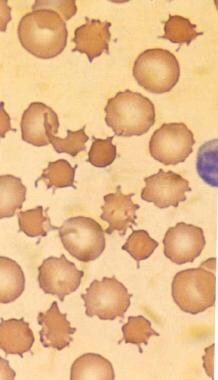
This image (magnified X 2000) shows the spiculated thorny RBCs (acanthocytes) as observed in an individual with abetalipoproteinemia. These are indistinguishable from the acanthocytes shown in Image 2, which are observed in an individual with spur cell hemolytic anemia. Used with permission from Little, Brown and Company. |
 | View Full Size Image | |
Media type: Photo
|
| Media file 2:
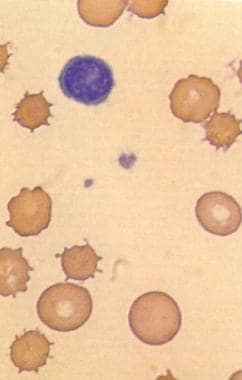
This image (magnified X 2000) demonstrates acanthocytes in an individual with spur cell hemolytic anemia associated with alcoholic cirrhosis. Acanthocytes, unlike echinocytes or burr cells (see Image 3), have fewer spicules. Used with permission from Little, Brown and Company. |
 | View Full Size Image | |
Media type: Photo
|
| Media file 3:
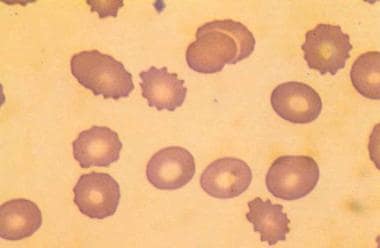
This image (magnified X 2000) shows echinocytes, or burr cells, a universal feature of uremia. The spicules of acanthocytes vary in length and width and project nonuniformly from the cell surface, while burr cells have regularly spaced, smoothly rounded crenulations. The second morphologic feature of RBCs in an individual with uremia is the presence of ellipsoid cells. Used with permission from Little, Brown and Company. |

 | View Full Size Image | |
Media type: Photo
|
- Ament ME. Malabsorption syndromes in infancy and childhood. II. J Pediatr. Nov 1972;81(5):867-84. [Medline].
- Azizi E, Zaidman JL, Eshchar J, Szeinberg A. Abetalipoproteinemia treated with parenteral and oral vitamins A and E, and with medium chain triglycerides. Acta Paediatr Scand. Nov 1978;67(6):796-801. [Medline].
- Ballas SK, Bator SM, Aubuchon JP, et al. Abnormal membrane physical properties of red cells in McLeod syndrome. Transfusion. Oct 1990;30(8):722-7. [Medline].
- Bassen FA, Kornzweig AL. Malformation of the erythrocytes in a case of atypical retinitis pigmentosa. Blood. Apr 1950;5(4):381-87. [Medline].
- Bertelson CJ, Pogo AO, Chaudhuri A, et al. Localization of the McLeod locus (XK) within Xp21 by deletion analysis. Am J Hum Genet. May 1988;42(5):703-11. [Medline].
- Bohlega S, Al-Jishi A, Dobson-Stone C, et al. Chorea-acanthocytosis: clinical and genetic findings in three families from the Arabian peninsula. Mov Disord. Apr 2003;18(4):403-7. [Medline].
- Branch DR, Gaidulis L, Lazar GS. Human granulocytes lack red cell Kx antigen. Br J Haematol. Apr 1986;62(4):747-55. [Medline].
- Cooper RA, Gulbrandsen CL. The relationship between serum lipoproteins and red cell membranes in abetalipoproteinemia: deficiency of lecithin:cholesterol acyltransferase. J Lab Clin Med. Sep 1971;78(3):323-35. [Medline].
- Cooper RA, Durocher JR, Leslie MH. Decreased fluidity of red cell membrane lipids in abetalipoproteinemia. J Clin Invest. Jul 1977;60(1):115-21. [Medline]. [Full Text].
- Cooper RA. Anemia with spur cells: a red cell defect acquired in serum and modified in the circulation. J Clin Invest. Oct 1969;48(10):1820-31. [Medline]. [Full Text].
- Cooper RA, Diloy Puray M, Lando P, Greenverg MS. An analysis of lipoproteins, bile acids, and red cell membranes associated with target cells and spur cells in patients with liver disease. J Clin Invest. Dec 1972;51(12):3182-92. [Medline]. [Full Text].
- Cooper RA, Kimball DB, Durocher JR. Role of the spleen in membrane conditioning and hemolysis of spur cells in liver disease. N Engl J Med. Jun 6 1974;290(23):1279-84. [Medline].
- Danek A, Rubio JP, Rampoldi L, et al. McLeod neuroacanthocytosis: genotype and phenotype. Ann Neurol. Dec 2001;50(6):755-64. [Medline].
- Danek A, Jung HH, Melone MA, et al. Neuroacanthocytosis: new developments in a neglected group of dementing disorders. J Neurol Sci. Mar 15 2005;229-230:171-86. [Medline].
- Danks DM, Campbell PE, Smith AL, Rogers J. Prognosis of babies with neonatal hepatitis. Arch Dis Child. May 1977;52(5):368-72. [Medline].
- Dobson-Stone C, Danek A, Rampoldi L, et al. Mutational spectrum of the CHAC gene in patients with chorea-acanthocytosis. Eur J Hum Genet. Nov 2002;10(11):773-81. [Medline].
- Dobson-Stone C, Velayos-Baeza A, Jansen A, et al. Identification of a VPS13A founder mutation in French Canadian families with chorea-acanthocytosis. Neurogenetics. Sep 2005;6(3):151-8. [Medline].
- Dodge JT, Cohen G, Kayden HJ, Phillips GB. Peroxidative hemolysis of red blood cells from patients with abetalipoproteinemia (acanthocytosis). J Clin Invest. Mar 1967;46(3):357-68. [Medline]. [Full Text].
- Estes JW, Morley TJ, Levine IM, Emerson CP. A new hereditary acanthocytosis syndrome. Am J Med. Jun 1967;42(6):868-81. [Medline].
- Forsyth CC, Lloyd JK, Fosbrooke AS. A-beta-lipoproteinaemia. Arch Dis Child. Feb 1965;40:47-51. [Medline].
- Gracey M, Hilton HB. Acanthocytes and hypobetailipoproteinemia. Lancet. Mar 24 1973;1(7804):679. [Medline].
- Higgins JJ, Patterson MC, Papadopoulos NM, et al. Hypoprebetalipoproteinemia, acanthocytosis, retinitis pigmentosa, and pallidal degeneration (HARP syndrome). Neurology. Jan 1992;42(1):194-8. [Medline].
- Illingworth DR, Connor WE, Miller RG. Abetalipoproteinemia. Report of two cases and review of therapy. Arch Neurol. Oct 1980;37(10):659-62. [Medline].
- Jandl H. Hemolytic anemias caused by primary defects of red cell membranes. In: Blood: Textbook of Hematology. 2nd ed. Boston, Mass: Little, Brown; 1966: 381-384.
- Jandl JH. The anemia of liver disease: observations on its mechanism. J Clin Invest. Mar 1955;34(3):390-404. [Medline].
- Kapff CT, Jandl JH. Acanthocytes. Spur cells. Burr cells. In: Blood: Atlas and Sourcebook of Hematology. 2nd ed. Baltimore, Md:. Lippincott, Williams & Wilkins;1991:46.
- Keimowitz R, Desforges JF. Infantile pyknocytosis. N Engl J Med. Nov 18 1965;273(21):1152-4. [Medline].
- Lange Y, Steck TL. Mechanism of red blood cell acanthocytosis and echinocytosis in vivo. J Membr Biol. 1984;77(2):153-9. [Medline].
- Lee S, Zambas ED, Marsh WL, Redman CM. Molecular cloning and primary structure of Kell blood group protein. Proc Natl Acad Sci U S A. Jul 15 1991;88(14):6353-7. [Medline]. [Full Text].
- Levy RI, Fredrickson DS, Laster L. The lipoproteins and lipid transport in abetalipoproteinemia. J Clin Invest. Apr 1966;45(4):531-41. [Medline]. [Full Text].
- Mant MJ, Faragher BS. The haematology of anorexia nervosa. Br J Haematol. Dec 1972;23(6):737-49. [Medline].
- Marsh WL, Uretsky SC, Douglas SD. Antigens of the Kell blood group system on neutrophils and monocytes: their relation to chronic granulomatous disease. J Pediatr. Dec 1975;87(6 PT 2):1117-20. [Medline].
- Marsh WL. The Kell blood group, Kx antigen, and chronic granulomatous disease. Mayo Clin Proc. Mar 1977;52(3):150-2. [Medline].
- McBride JA, Jacob HS. Abnormal kinetics of red cell membrane cholesterol in acanthocytes: studies in genetic and experimental abetalipoproteinaemia and in spur cell anaemia. Br J Haematol. Apr 1970;18(4):383-97. [Medline].
- Neerhout RC. Red cell lipids in hypothyroidism. Clin Chim Acta. Oct 1972;41:347-53. [Medline].
- Owen JS, Brown DJ, Harry DS, et al. Erythrocyte echinocytosis in liver disease. Role of abnormal plasma high density lipoproteins. J Clin Invest. Dec 1985;76(6):2275-85. [Medline]. [Full Text].
- Rader DJ, Brewer HB. Abetalipoproteinemia. New insights into lipoprotein assembly and vitamin E metabolism from a rare genetic disease. JAMA. Aug 18 1993;270(7):865-9. [Medline].
- Rampoldi L, Dobson-Stone C, Rubio JP, et al. A conserved sorting-associated protein is mutant in chorea-acanthocytosis. Nat Genet. Jun 2001;28(2):119-20. [Medline].
- Robertson AL. Acanthocytes and hypobetalipoproteinaemia. Lancet. Apr 21 1973;1(7808):882. [Medline].
- Rubio JP, Danek A, Stone C, et al. Chorea-acanthocytosis: genetic linkage to chromosome 9q21. Am J Hum Genet. Oct 1997;61(4):899-908. [Medline]. [Full Text].
- Salt HB, Wolff OH, Lloyd JK, et al. On having no beta-lipoprotein. A syndrome comprising a-beta-lipoproteinaemia, acanthocytosis, and steatorrhoea. Lancet. Aug 13 1960;2:325-9. [Medline].
- Sharp D, Blinderman L, Combs KA, et al. Cloning and gene defects in microsomal triglyceride transfer protein associated with abetalipoproteinaemia. Nature. Sep 2 1993;365(6441):65-9. [Medline].
- Shinitzky M, Barenholz Y. Dynamics of the hydrocarbon layer in liposomes of lecithin and sphingomyelin containing dicetylphosphate. J Biol Chem. Apr 25 1974;249(8):2652-7. [Medline].
- Silber R, Amorosi E, Lhowe J, Kayden HJ. Spur-shaped erythrocytes in Laennec's cirrhosis. N Engl J Med. Sep 22 1966;275(12):639-43. [Medline].
- Smith JA, Lonergan ET, Sterling K. Spur-cell anemia: hemolytic anemia with red cells resembling acanthocytes in alcoholic cirrhosis. N Engl J Med. Aug 20 1964;271:396-8. [Medline].
- Spencer SE, Walker FO, Moore SA. Chorea-amyotrophy with chronic hemolytic anemia: a variant of chorea-amyotrophy with acanthocytosis. Neurology. Apr 1987;37(4):645-9. [Medline].
- Sperling MA, Hengstenberg F, Yunis E. Abetalipoproteinemia: metabolic, endocrine, and electron-microscopic investigations. Pediatrics. Jul 1971;48(1):91-102. [Medline].
- Suarez L, Valbuena ML, Moreno A, et al. Abetalipoproteinemia associated with hepatic and atypical neurological disorders. J Pediatr Gastroenterol Nutr. Sep-Oct 1987;6(5):799-802. [Medline].
- Symmans WA, Shepherd CS, Marsh WL, et al. Hereditary acanthocytosis associated with the McLeod phenotype of the Kell blood group system. Br J Haematol. Aug 1979;42(4):575-83. [Medline].
- Takeshita J, Arai Y, Hirose N, et al. Abetalipoproteinemia-like lipid profile and acanthocytosis in a young woman with anorexia nervosa. Am J Med Sci. Nov 2002;324(5):281-4. [Medline].
- Taswell HF, Lewis JC, Marsh WL, et al. Erythrocyte morphology in genetic defects of the Rh and Kell blood group systems. Mayo Clin Proc. Mar 1977;52(3):157-9. [Medline].
- Terada N, Fujii Y, Ueda H, et al. Ultrastructural changes of erythrocyte membrane skeletons in chorea-acanthocytosis and McLeod syndrome revealed by the quick-freezing and deep-etching method. Acta Haematol. Mar 1999;101(1):25-31. [Medline].
- Udden MM, Umeda M, Hirano Y, Marcus DM. New abnormalities in the morphology, cell surface receptors, and electrolyte metabolism of In(Lu) erythrocytes. Blood. Jan 1987;69(1):52-7. [Medline].
- Ueno S, Maruki Y, Nakamura M, et al. The gene encoding a newly discovered protein, chorein, is mutated in chorea-acanthocytosis. Nat Genet. 2001;28:121-122. [Medline].
- Velayos-Baeza A, Vettori A, Copley RR, et al. Analysis of the human VPS13 gene family. Genomics. Sep 2004;84(3):536-49. [Medline].
- Wardrop CA, Hutchison HE. Red cell shape in hypothyroidism. J Clin Pathol. May 1970;23(4):377. [Medline]. [Full Text].
- Wetterau JR, Aggerbeck LP, Bouma ME, et al. Absence of microsomal triglyceride transfer protein in individuals with abetalipoproteinemia. Science. Nov 6 1992;258(5084):999-1001. [Medline].
- Wimer BM, Marsh WL, Taswell HF, Galey WR. Haematological changes associated with the McLeod phenotype of the Kell blood group system. Br J Haematol. Jun 1977;36(2):219-24. [Medline].
- Young SG, Bertics SJ, Curtiss LK, et al. Genetic analysis of a kindred with familial hypobetalipoproteinemia. Evidence for two separate gene defects: one associated with an abnormal apolipoprotein B species, apolipoprotein B-37; and a second associated with low plasma concentrations of apolipop. J Clin Invest. Jun 1987;79(6):1842-51. [Medline]. [Full Text].
Acanthocytosis excerpt Article Last Updated: Dec 28, 2006
|