You are in: eMedicine Specialties >
Pediatrics: Surgery > Otolaryngology
Otitis Media
Article Last Updated: Jul 22, 2008
AUTHOR AND EDITOR INFORMATION
Section 1 of 12
Author: Muhammad Waseem, MD, Associate Professor of Emergency Medicine in Clinical Pediatrics, Weill Medical College of Cornell University; Consulting Staff, Department of Pediatrics, Bronx Lebanon Hospital; Consulting Staff, Department of Emergency Medicine, Lincoln Medical and Mental Health Center
Muhammad Waseem is a member of the following medical societies: American Academy of Pediatrics and American Medical Association
Coauthor(s):
Muhammad Aslam, MD, Instructor in Pediatrics, Harvard Medical School; Chief Clinical Fellow, Department of Newborn Medicine, Children's Hospital Boston;
Leslie A Wilson, MD, Chief, Well-Baby Clinic and Chronic Ear Clinic, Department of Pediatrics, Wilford Hall Air Force Medical Center
Editors: Orval Brown, MD, Director of Otolaryngology Clinic, Professor, Department of Otolaryngology-Head and Neck Surgery, University of Texas Southwestern Medical Center at Dallas; Mary L Windle, PharmD, Adjunct Assistant Professor, University of Nebraska Medical Center College of Pharmacy, Pharmacy Editor, eMedicine; Alan D Murray, MD, Pediatric Otolaryngologist, ENT for Children; Consulting Staff, Department of Otolaryngology, Medical Center of Lewisville, Children's Medical Center at Dallas, Cook Children's Medical Center; Full-Time Staff, Texas Pediatric Surgery Center, The Pediatric Surgery Center; Daniel Rauch, MD, FAAP, Director, Pediatric Hospitalist Program, Associate Professor, Department of Pediatrics, New York University School of Medicine; Maureen Strafford, MD, Arnold P Gold Foundation Associate Professor, Departments of Anesthesiology and Pediatrics, Tufts University and Tufts-New England Medical Center
Author and Editor Disclosure
Synonyms and related keywords:
otitis media, OM, inflammation of the middle ear, middle ear inflammation, acute otitis media, AOM, otitis media with effusion, OME, serous otitis media, mucoid otitis media, secretory otitis media, glue ear, chronic otitis media, COM, chronic suppurative otitis media, earache, ear infection, middle ear infection, middle ear disease, middle ear effusion, MEE, tympanic membrane, TM, eustachian tube, ET, eustachian tube dysfunction, ETD, tympanocentesis, tympanostomy tube, TT, TT insertion
Background
Otitis media (OM) is the second most common disease of childhood, after upper respiratory infection (URI). OM is also the most common cause for childhood visits to a physician's office. Annually, an estimated 16 million office visits are attributed to OM; this does not include visits to the emergency department. OM is any inflammation of the middle ear without reference to etiology or pathogenesis. OM can be classified into many variants on the basis of etiology, duration, symptomatology, and physical findings. Acute OM (AOM) implies rapid onset of disease associated with one or more of the following symptoms: - Otalgia
- Fever
- Otorrhea
- Recent onset of anorexia
- Irritability
- Vomiting
- Diarrhea
These symptoms are accompanied by abnormal otoscopic findings of the tympanic membrane (TM), which may include the following:
- Opacity
- Bulging
- Erythema
- Middle ear effusion (MEE)
- Decreased mobility with pneumatic otoscopy
AOM is a recurrent disease. More than one third of children experience 6 or more episodes of AOM by age 7 years. OM with effusion (OME), formerly termed serous OM or secretory OM, is MEE of any duration that lacks the associated signs and symptoms of infection (eg, fever, otalgia, irritability). OME usually follows an episode of AOM. Chronic suppurative OM is a chronic inflammation of the middle ear that persists at least 6 weeks and is associated with otorrhea through a perforated TM, an indwelling tympanostomy tube (TT), or a surgical myringotomy.
Pathophysiology
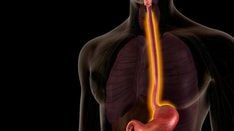
The most important factor in middle ear disease is eustachian tube (ET) dysfunction. In ET dysfunction (ETD), the mucosa at the pharyngeal end of the ET is part of the mucociliary system of the middle ear. Interference with this mucosa by edema, tumor, or negative intratympanic pressure facilitates direct extension of infectious processes from the nasopharynx to the middle ear, causing OM. Esophageal contents regurgitated into the nasopharynx and middle ear through the ET can create a direct mechanical disturbance of the middle ear mucosa and cause middle ear inflammation. In children, developmental alterations of the ET, an immature immune system, and frequent infections of the upper respiratory mucosa all play major roles in AOM development. Studies have demonstrated how viral infection of the upper respiratory epithelium leads to increased ETD and increased bacterial colonization and adherence in the nasopharynx.1 Certain viral infections cause abnormal host immune and inflammatory responses in the ET mucosa and subsequent microbial invasion of the middle ear. The host immune and inflammatory response to bacterial invasion of the middle ear produces fluid in the middle ear and the signs and symptoms of AOM. Although interactions between the common pathogenic bacteria in AOM and certain viruses are not fully understood, strong evidence indicates that these interactions often lead to more severe disease, lowered response to antimicrobial therapy, and OME development following AOM.
Frequency
United States
OM, the most common specifically treated childhood disease, accounts for approximately 20 million annual physician visits. Various epidemiologic studies report the prevalence rate of AOM to be 17-20% within the first 2 years of life, and 90% of children have at least one documented MEE by age 2 years. OM is a recurrent disease. One third of children experience 6 or more episodes of AOM by age 7 years.
International
Incidence and prevalence in other industrialized nations are similar to US rates. In less developed nations, OM is extremely common and remains a major contributor to childhood mortality resulting from late-presenting intracranial complications.
Mortality/Morbidity
US mortality rates are extremely low in this era of antimicrobial therapy (<1 death per 100,000 cases). In developing nations with limited access to primary medical care and modern antibiotics, mortality rates are similar to US rates before antibiotic therapy. A study that examined the causes of death in Los Angeles County Hospital from 1928-1933, years prior to the advent of sulfa, showed 1 in 40 deaths was caused by intracranial complications of OM. Morbidity from this disease remains significant, despite frequent use of systemic antibiotics to treat the illness and its complications. Intratemporal and intracranial complications of OM are the 2 major types.
- Intratemporal complications
- Hearing loss (conductive and sensorineural)
- TM perforation (acute and chronic)
- Chronic suppurative OM (with or without cholesteatoma)
- Cholesteatoma
- Tympanosclerosis
- Mastoiditis
- Petrositis
- Labyrinthitis
- Facial paralysis
- Cholesterol granuloma
- Infectious eczematoid dermatitis
- Intracranial complications
- Meningitis
- Subdural empyema
- Brain abscess
- Extradural abscess
- Lateral sinus thrombosis
- Otitic hydrocephalus
Race
Until recently, prevalence of OM in the United States was reported to be higher in black and Hispanic children than in white children. A study that controlled for socioeconomic and other confounding factors showed equal incidence in blacks and whites. Hispanic children and Alaskan Inuit and other American Indian children have higher prevalence of AOM than white and black children in the United States. International studies show increased prevalence of AOM and chronic OM (COM) among Micronesian and Australian aboriginal children.
Sex
Several more recent studies have shown equal AOM prevalence in males and females; many previous studies had shown increased incidence in boys.
Age
- Peak prevalence of OM in both sexes occurs in children aged 6-18 months.
- Some studies show bimodal prevalence peaks; a second, lower peak occurs at age 4-5 years and corresponds with school entry.
- Although OM can occur at any age, 80-90% of cases occur in children younger than 6 years.
- Children who are diagnosed with AOM during the first year of life are much more likely to develop recurrent OM and chronic OME than children in whom the first middle ear infection occurs after age 1 year.
History
- Suspect acute otitis media (AOM), with or without effusion, in children with a history of the following symptoms:
- Head and neck
- Otalgia: Young children may exhibit signs of otalgia by pulling on the affected ear or ears or pulling on the hair. Otalgia apparently occurs more often when the child is lying down (eg, during the night, during nap time), which may be due to increased ETD when the child is in a recumbent position.
- Otorrhea: Discharge may come from the middle ear through a recently perforated TM, through a preexisting TT, or through another perforation. For trauma patients, excluding a basilar skull fracture with associated cerebrospinal fluid (CSF) otorrhea is important.
- Headache
- Concurrent or recent URI symptoms (eg, cough, rhinorrhea, sinus congestion)
- General
- Two thirds of children with AOM have a history of fever, although fevers greater than 40°C are uncommon and may represent bacteremia or other complications.
- Irritability may be the sole early symptom in a young infant or toddler.
- A history of lethargy, although nonspecific, is a sensitive marker for sick children and should not be dismissed.
- GI tract: Symptoms include anorexia, nausea, vomiting, and diarrhea.
- OME often follows an episode of AOM. Consider OME in patients with recent AOM in whom the history includes any of the following symptoms:
- Hearing loss: Most young children cannot provide an accurate history. Parents, caregivers, or teachers may suspect a hearing loss or describe the child as inattentive.
- Tinnitus: This is possible, although it is an unusual complaint from a child.
- Vertigo: Although true vertigo (ie, room-spinning dizziness) is a rare complaint in uncomplicated AOM or OME, parents may report some unsteadiness or clumsiness in a young child with AOM.
- Otalgia: Intermittent otalgia tends to worsen at night.
- OM treatment widely varies based on the duration of symptoms, past therapeutic failures, and severity of current symptoms.
- Exposure to environmental risk factors is another important aspect of the history and includes the following:
- Passive exposure (ie, secondhand) to tobacco smoke
- Group daycare attendance
- Seasonality: AOM prevalence is much higher in winter and early spring than in summer and early fall.
- Supine bottle feeding (ie, bottle propping)
Physical
Pneumatic otoscopy remains the standard examination technique for patients with suspected OM. When performed correctly, this technique is 90% sensitive and 80% specific for diagnosis of AOM, and findings are more accurate than with myringotomy. Proper pneumatic otoscopy technique is crucial to distinguish AOM from OME because recommended therapies for these entities are significantly different. Studies show that most practitioners improperly perform otoscopic examinations. Almost one half of physicians never use pneumatic compression of the TM during routine otoscopic examination, and almost 30% use otoscopes with inadequate light sources. Tympanometry, acoustic reflectometry, and audiometry are important adjunctive techniques with which to evaluate patients with MEE. In addition to a carefully documented examination of the external ear and TM, examining the entire head and neck region of patients with suspected OM is important. Several congenital syndromes, craniofacial anomalies, and systemic diseases have increased incidence associated with OM, including cleft palate, Down syndrome, Treacher Collins syndrome (ie, mandibulofacial dysotosis), hemifacial microsomia, diabetes mellitus, human immunodeficiency virus (HIV) infection, and many types of mucopolysaccharidosis. Examination techniques used in the diagnosis of OM include the following:
- Pneumatic otoscopy examination
- Under direct visualization, first remove any cerumen, which causes a limited and sometimes inaccurate view of the TM and inaccurate and confusing results on tympanometry and audiometry.
- To move the TM, the ear speculum must create an air seal against the external auditory canal (EAC), which is seldom possible with a standard disposable speculum. All otoscope manufacturers sell inexpensive cuffed ear speculums to perform insufflation. A rubber sleeve over the speculum may reduce patient discomfort during the examination. Usually, the TM is in the neutral position (ie, neither retracted nor bulging), pearly gray, translucent, and unperforated. It responds briskly to positive and negative pressure, indicating an air-filled space. Many older texts emphasize a TM "light reflex" in an otherwise normal ear. Because this reflex may be absent in entirely normal ears and present in ears with MEE, the light reflex does not help confirm or exclude an OM diagnosis.
- Every examination should include an evaluation and description of the following 4 TM characteristics:
- Color
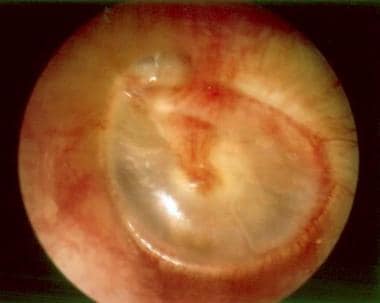
- A normal TM is a translucent pale gray.
- An opaque yellow or blue TM is consistent with MEE.
- Dark red indicates a recent trauma or blood behind the TM.
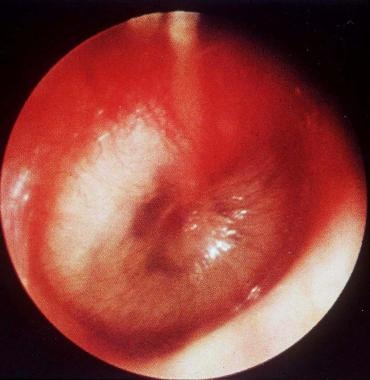
- A dark pink or lighter red TM is consistent with AOM or hyperemia of the TM caused by crying, coughing, or nose blowing.
- Color of the eardrum is less important diagnostically than its position and mobility. Redness of the TM alone does not necessarily suggest AOM because crying, removal of cerumen with associated irritation of the auditory canal, coughing, nose blowing, and fever can all cause redness of the eardrum without a middle ear infection. Note that most children cry when their ears are examined.
- A study of 85 infants showed that the otoscopic finding most predictive of AOM was a poorly mobile, bulging, yellow, and opacified TM. However, this appearance was noted in only 19% of patients. In another analysis, a slightly red TM in a normal position and with normal mobility had a predictive value of only 7% for AOM.
- Position: The position of the TM (ie, bulging, retracted, neutral, full) is key to differentiating AOM from OME.
- In AOM, the TM is usually bulging.
- In OME, the TM is typically retracted or in the neutral position.
- Mobility: Abnormal movement of the TM during pneumatic otoscopy can suggest various conditions or disorders.
- Movement during negative pressure only suggests ETD.
- A TM that moves only slightly with both positive and negative pressure applied indicates the probable presence of middle ear fluid.
- No movement occurs with a TM perforation or a TT.
- Studies show that the most consistent physical finding in patients with OME is impaired mobility of the TM during pneumatic otoscopy. Pay special attention to movement of retracted segments of the TM because immobility of these sections may indicate middle ear cholesteatoma in the retraction pockets.
- Perforation
- Single perforations are most common, but some patients may have multiple perforations.
- Note the location and cause of the perforation.
- Perforations in the posterosuperior quadrant, which are the most difficult to detect, are important because they occasionally are associated with cholesteatoma.
- Pus or other fluid may drain through a perforation.
- Multiple perforations and otorrhea that does not yield pathogens on culture may indicate tuberculosis.
- Adjunctive screening techniques for OM: Adjunctive techniques help identify patients with asymptomatic OME, which may comprise 10% of cases.
- Tympanometry (ie, impedance audiometry), the most commonly used adjunctive technique, measures changes in acoustic impedance of the TM/middle ear system with air pressure changes in the EAC.
- Current recommendations call for screening tympanometry at the beginning of school and 1 year later to identify children aged 4-6 years with asymptomatic OME.
- Tympanometry screening has a high degree of sensitivity (>90%) but is not specific for OME.
- The test may yield false-positive results in children with a retracted TM or a thickened TM without effusion. Screening tests may also yield invalid results in children who have cerumen obstructing the external canal or who are crying during the examination.
- Middle ear pressure more than –200 daPa or a flat tympanometric curve is classified as a failure.
- Further physician evaluation is indicated in a child in whom tympanometry screening fails in both ears and who has at least a 20-dB hearing loss at 1, 2, or 4 kHz.
- After 2 months, retest any child in whom tympanometry screening fails in one ear and hearing loss occurs (>20 dB). Also retest children in whom tympanometry screening fails in both ears, even without marked hearing loss (ie, <20 dB). A second screening failure should lead to physician evaluation. Assess the child's hearing, speech, and language and immediately start therapy to correct deficits.
- Acoustic reflectometry uses an acoustic otoscope to measure reflected sound from the TM; the louder the reflected sound, the greater the likelihood of an MEE. The breakpoint is defined as the level of sound reflectivity that correlates with the presence of MEE.
- Acoustic reflectometry is rapid and easy to perform. Among its advantages over tympanometry is that an airtight seal of the EAC is unnecessary and that the test is unaffected by a crying patient or the presence of cerumen in the EAC.
- Despite these advantages, acoustic reflectometry has not been widely accepted by otolaryngologists because of the difficulty in setting standards to interpret test results.
- No accepted breakpoint standards have been established, so sensitivity and specificity vary according to the breakpoints set for each study. A low breakpoint leads to high sensitivity but low specificity. A high breakpoint leads to higher specificity but lower sensitivity.
Causes
A multitude of host, infectious, allergic, and environmental factors contribute to OM development.
- Host factors
- Immune system: The immature immune systems of infants or the impaired immune systems of patients with congenital immune deficiencies, HIV infection, or diabetes may be involved in the development of OM. OM is an infectious disease that prospers in an environment of decreased immune defenses.
- Familial (genetic) predisposition: Although familial clustering of OM has been demonstrated in studies that examined genetic associations of OM, separating genetic factors from environmental influences has been difficult. No specific genes have been linked to OM susceptibility. As with most disease processes, effects of environmental exposures on genetic expression probably play an important role in OM pathogenesis.
- Mucins: The role of mucins in OME has been described. Mucins are responsible for gel-like properties of mucus secretions. The middle ear mucin gene expression is unique compared with the nasopharynx. Abnormalities of this gene expression, especially upregulation of MUC5B in the ear, may have a predominant role in OME.
- Anatomic abnormality: Children with anatomic abnormalities of the palate and associated musculature, especially the tensor veli palantini, exhibit marked ETD and have higher risk for OM. Specific anomalies that correlate with high prevalence of OM include cleft palate, Crouzon syndrome or Apert syndrome, Down syndrome, and Treacher Collins syndrome.
- Physiologic dysfunction: Abnormalities in the physiologic function of the ET mucosa, including ciliary dysfunction and edema, increase the risk of bacterial invasion of the middle ear and the resultant OME. Children with cochlear implants have a high incidence of OM, especially chronic OM and cholesteatoma formation. One study described a relationship between laryngopharyngeal reflux and chronic OM (COM); the authors concluded that reflux work-up should be performed as part of COM investigations, and, if reflux is confirmed, reflux treatment should be initiated in addition to treatment of primary disease.2
- Vitamin A deficiency is associated with pediatric upper respiratory infections and AOM.
- Infectious factors
- Bacterial pathogens
- The most common bacterial pathogen in AOM is Streptococcus pneumoniae, followed by nontypeable Haemophilus influenzae and Moraxella catarrhalis. These 3 organisms are responsible for more than 95% of all AOM cases with a bacterial etiology.
- In infants younger than 6 weeks, gram-negative bacilli (eg, Escherichia coli, Klebsiella species, and Pseudomonas aeruginosa) play a much larger role in AOM, causing 20% of cases. S pneumoniae and H influenzae are also the most common pathogens in this age group. Staphylococcus aureus has also been found as a pathogen in this age group in some studies, but more recent studies suggest that the flora in these young infants may be that of usual AOM in children older than 6 weeks.
- Many experts had proposed that the MEE associated with OME was sterile because cultures of middle ear fluid obtained by tympanocentesis often did not grow bacteria. This view is changing as newer studies show 30-50% incidence of positive results in middle ear bacterial cultures in patients with chronic MEE. These cultures grow a wide range of aerobic and anaerobic bacteria; S pneumoniae, H influenzae, M catarrhalis, and group A streptococci are the most common.
- Further evidence for the presence of bacteria in the MEE of patients with OME was provided by studies using polymerase chain reaction (PCR) assay to detect bacterial DNA in MEE samples that were determined to be sterile using standard bacterial culture techniques. In one such study using PCR assay, 77.3% of the MEE samples had positive results for one or more common AOM pathogens (eg, S pneumoniae, H influenzae, M catarrhalis).
- In chronic suppurative OM, the most frequently isolated organisms include P aeruginosa, S aureus, Corynebacterium species, and Klebsiella pneumoniae. An unanswered question is whether these pathogens invade the middle ear from the nasopharynx via the ET (as do the bacteria responsible for AOM) or whether they enter through the perforated TM or a TT from the EAC.
- The role of Helicobacter pylori in children with OME has been increasingly recognized. Evidence that this agent might be responsible for OME comes from its isolation from middle ear and tonsillar and adenoidal tissue in patients with OME.
- Alloiococcus otitidis is a newly recognized species of gram-positive bacterium that has been recently discovered as a pathogen associated with OME.3, 4 This organism is the most frequent bacterium in AOM, as well as in OME. It has also been detected in patients who had been treated with antibiotics, such as beta-lactams or erythromycin, suggesting that these agents may not be sufficiently effective to eliminate this organism. Further investigation is needed to reveal the clinical role of the organism in OM.
- Viral pathogens
- Because acute viral URI is a prominent risk factor for AOM development, most investigators have suspected a role for respiratory viruses in AOM pathogenesis.
- Many studies have substantiated this suspicion by showing how certain respiratory viruses can cause inflammatory changes to the respiratory mucosa that lead to ETD, increased bacterial colonization and adherence, and, eventually, AOM. Studies have also shown that viruses can alter the host-immune response to AOM, thereby contributing to prolonged middle ear fluid production and development of chronic OME.
- The viruses most commonly associated with AOM are respiratory syncytial virus (RSV), influenza viruses, parainfluenza viruses, rhinovirus, and adenovirus.
- Human parechovirus 1 (HPeV1) infection is associated with OM and cough in pediatric patients.5 OM developed in 50% of 3-month follow-up periods that yielded evidence of HPeV1 infection but in only 14% of the HPeV1-negative periods; in recurring OM, the middle ear fluid samples were positive for HPeV in 15% of episodes.
- Factors related to allergies
- The relationship between allergies and OM remains unclear. In children younger than 4 years, the immune system is still developing, and allergies are unlikely to play a role in recurrent AOM in this age group. Although much evidence suggests that allergies contribute to the pathogenesis of OM in older children, extensive evidence refutes the role of allergies in the etiology of middle ear disease.
- The following is a brief list of evidence for and against the etiologic role of allergy in OM:
- Many patients with OM have concomitant allergic respiratory disease (eg, allergic rhinitis, asthma).
- Many patients with OM have positive results to skin testing or radioallergosorbent testing (RAST).
- Although mast cells are found in the middle ear mucosa, most studies fail to show significant levels of immunoglobulin E (IgE) or eosinophils in the MEE of patients with OM.
- OM is most common in the winter and early spring, yet most major allergens (eg, tree and grass pollens) peak in the late spring and early fall.
- Most patients with concomitant OM and allergy show no marked improvement in middle ear disease with aggressive allergy management, despite marked improvements to nasal and other allergy-related symptoms.
- Environmental factors
- Infant feeding methods
- Many studies report that breastfeeding protects infants against OM. The most recent and best of these studies indicates that this benefit is evident only in children who are breastfed exclusively for the first 3-6 months of life. Breastfeeding of this duration reduces the incidence of OM by 13%.
- The protective effects of breastfeeding for the first 3-6 months persist 4-12 months after breastfeeding ceases, possibly because delaying onset of the first OM episode reduces recurrence of OM in these children.
- Passive smoke exposure
- Many studies have shown a direct relationship between passive smoke exposure and risk of middle ear disease.
- A recent systematic review of 45 publications dealing with OM and parental smoking showed pooled odds ratios of 1.48 (95% confidence interval [CI] of 1.08-2.04) for recurrent OM, 1.38 (95% CI of 1.23-1.55) for MEE, and 1.3 (95% CI of 1.3-1.6) for AOM.6
- Group daycare attendance
- Daycare centers create close contact among many children, which increases the risks of respiratory infection, nasopharyngeal colonization with pathogenic microbes, and OM.
- Many researchers have used meta-analysis to confirm that exposure to other young children (including siblings) in group daycare settings is a major risk factor for OM.7 A meta-analysis reported that care outside the home conferred a 2.5-fold risk for OM. Other critical reviews of studies on OM and group childcare show heightened odds ratios of 1.6-4.0:1 for center care versus home care.
- Children who attend daycare centers frequently acquire antibacterial-resistant organisms in their nasopharynx, leading to AOM that may be refractory to antibacterial treatment. American Academy of Pediatrics and American Academy of Family Physicians' guidelines recommend high-dose amoxicillin/clavulanic acid as the antibiotic of choice in the treatment of AOM in children who attend daycare.
- Socioeconomic factors: Socioeconomic status encompasses many independent factors that affect both the risk of OM and the likelihood that OM will be diagnosed.8
- In general, lower socioeconomic status confers higher risk for environmental exposure to parental smoking, bottle-feeding, crowded group daycare, crowded living conditions, and viruses and bacterial pathogens.
- Compared with children from middle-income and high-income families, children from lower socioeconomic groups use health care resources less frequently, which decreases the likelihood that OM cases will be diagnosed.
Allergic Rhinitis
Apert Syndrome
Bacteremia
Cholesteatoma
Cleft Lip and Palate
Colic
Diarrhea
Down Syndrome
Fever in the Toddler
Fever in the Young Infant
Fever Without a Focus
Gastroenteritis
Gastroesophageal Reflux
Haemophilus Influenzae Infection
Head Trauma
Hearing Impairment
Human Immunodeficiency Virus Infection
Mastoiditis
Meningitis, Bacterial
Nasal Polyps
Nasopharyngeal Cancer
Otitis Externa
Otosclerosis
Parainfluenza Virus Infections
Passive Smoking and Lung Disease
Pharyngitis
Pneumococcal Infections
Primary Ciliary Dyskinesia
Respiratory Syncytial Virus Infection
Rhinovirus Infection
Sinusitis
Lab Studies
- Laboratory evaluation is usually unnecessary, although many experts recommend a full sepsis workup in infants younger than 12 weeks who present with fever and associated acute otitis media (AOM).
- OM is associated with multiple systemic diseases and congenital syndromes. AOM may be the first presenting illness in some of these diseases; therefore, order appropriate laboratory studies to confirm or exclude possible systemic or congenital diseases.
Imaging Studies
- Imaging studies are not indicated in patients with OM unless intratemporal or intracranial complications are suspected.
- In patients in whom an OM complication is suspected, the imaging study of choice is a contrast-enhanced CT scan of the temporal bones. CT findings help diagnose many complications (eg, mastoiditis, epidural abscess, sigmoid sinus thrombophlebitis, meningitis, brain abscess, subdural abscess). Finely cut CT sections through the temporal bone can reveal ossicular disease and cholesteatoma. MRI is more helpful in depicting fluid collections, especially small middle ear collections. MRI is usually performed following CT if further information is needed for definitive diagnosis.
Other Tests
Procedures
In clinical trials, the criterion standard in the diagnosis of AOM is tympanocentesis to determine the presence of middle ear fluid, followed by culture of the fluid to identify causative pathogens. Because of the expense, effort, and lack of availability, no consensus guidelines call for routine use of tympanocentesis to manage AOM and OME. - Tympanocentesis can improve diagnostic accuracy, guide treatment, and help eliminate unnecessary medical or surgical interventions in selected patients with refractory or recurrent middle ear disease.
- Neonates, infants, and children with AOM who appear severely ill or toxic should undergo early tympanocentesis with culturing. Children with acquired immunodeficiency virus (AIDS) or those who are immunocompromised secondary to steroid therapy, chemotherapy, or immunosuppressive therapy following organ transplantation should undergo early tympanocentesis to exclude unusual organisms or nosocomial infection.
- A recent report from the Centers for Disease Control and Prevention (CDC) working group on drug-resistant S pneumoniae (DRSP) includes an option for tympanocentesis versus empiric second-line antibiotic therapy in patients in whom initial antibiotic therapy has failed.9
Medical Care
Medical management of otitis media (OM) is actively debated in the medical literature, primarily because of a dramatic increase in acute OM (AOM) prevalence over the past 10 years caused by DRSP and beta-lactamase–producing H influenzae or M catarrhalis. Beta-lactamases are enzymes that hydrolyze amoxicillin and some, but not all, oral cephalosporins, leading to in vitro resistance to these drugs. Currently, 90% of M catarrhalis isolates and 40-50% of H influenzae isolates in the United States produce beta-lactamases. As a result, empiric antibiotic therapy for this disease has become more complex. Many opinions have been expressed regarding which drugs are best for first- and second-line therapy or whether antibiotics should be prescribed in all patients with AOM.
Guidelines for medical management of AOM In 2004, the American Academy of Pediatrics and the American Academy of Family Practice published guidelines for the medical management of AOM based on expert opinion and a thorough, nonsystematic review of the literature.10 Their recommendations are summarized as follows: - To diagnose AOM, the clinician should confirm a history of acute onset, identify signs of MEE, and evaluate for the presence of signs and symptoms of middle-ear inflammation.
- The management of AOM should include an assessment of pain. If pain is present, the clinician should recommend treatment to reduce pain. Acetaminophen and ibuprofen are first-line drugs for pain reduction.
- OM is one of the most common disorders in children, and concern regarding antimicrobial resistance due to aggressive antibiotic use is growing. Because of these concerns, treatment of OM has significantly changed over the last decade. A growing number of physicians do not recommend antibiotic prophylaxis or treatment in children with mild OM without a fever (or with minimal fever). More importance is now given to observation and close follow-up.
- Observation without use of antibacterial agents in a child with uncomplicated AOM is an option for selected children based on diagnostic certainty, age, illness severity, and assurance of follow-up. Many parents have concerns regarding this option, but education and involvement in medical decisions increases acceptability.
- Although instant access is available to clinical guidelines that recommend an expectant management for children with OM who are older than 1-2 years, the antibiotic prescription rate is still high in most emergency departments. If a decision is made to treat with an antibacterial agent, amoxicillin should be prescribed for most children. When amoxicillin is used, the dose should be 80-90 mg/kg/d.
- In vitro antibacterial activity of amoxicillin against penicillin-susceptible and nonsusceptible S pneumoniae strains isolated from children with AOM has shown that penicillin resistance cannot be extrapolated to amoxicillin. Therefore, minimal inhibitory concentrations of penicillin-nonsusceptible S pneumoniae for amoxicillin should be evaluated, and this antimicrobial agent still remains a first-line choice for children with AOM.
- If the patient fails to respond to the initial management option within 48-72 hours, the clinician must reassess the patient to confirm AOM and exclude other causes of illness. If AOM is confirmed in a patient initially treated with observation, the clinician should begin antibacterial therapy. If the patient was initially treated with one or more antibacterial agents, the clinician should change the antibacterial agent(s).
- New alternative treatments for OM are desirable because of the relatively high prevalence of recurrent and persistent AOM. The presence of the most prevalent etiologic agent, S pneumoniae, especially penicillin-nonsusceptible strains in children, also supports alternative treatment regimens.
- Large-dose cefdinir therapy can be used in combination with tympanocentesis and has high efficacy against penicillin-susceptible S pneumoniae.11 The effectiveness is low for nonsusceptible and H influenzae strains.
- Clinicians should encourage the prevention of AOM through reduction of risk factors.
- Evidence is insufficient to make a recommendation regarding the use of Complementary and Alternative Medicine (CAM) for AOM.
Earlier recommendations from the American Academy of Pediatrics and the CDC working group on AOM published in 1999 are summarized as follows:
- First, distinguishing AOM from OME is critical. Prompt antibiotic therapy has been the cornerstone of therapy for AOM for decades; however, antibiotics are not indicated for initial treatment of OME.
- Second, antimicrobials should not be prescribed in patients in whom AOM is only suspected or in response to parental pressure on providers for specific therapy. A diagnosis of AOM should be supported by a careful history and physical examination that document the presence of MEE and concurrent signs or symptoms of acute illness (see History and Physical).
- Third, patients with uncomplicated AOM who are younger than 2 years should be treated with a 10-day course of antimicrobials; children older than 2 years may be treated with a 5- to 7-day course of antimicrobials. All patients with severe or recurrent AOM or with complications of AOM should be treated for a minimum of 10 days.
- Fourth, reserve antimicrobial prophylaxis for selected children with recurrent AOM. Recurrent AOM is defined as 3 or more documented episodes within the prior 6 months or 4 or more episodes in the preceding 12 months.
A meta-analysis of 6 randomized trials that studied the effects of antibiotic use in AOM showed that children older than 2 years with mild AOM can be observed without the need for antibiotic administration.12 Antibiotic administration seemed to have a beneficial effect in patients younger than 2 years with bilateral OM and in patients with AOM and otorrhea. A recent study determined the clinical practices related to the diagnosis of OM based on American Academy of Pediatrics guidelines.13 Authors reviewed 88 studies on OM diagnosis and treatment from 1994-2005. At least one American Academy of Pediatrics criteria were used in 81% of the studies, whereas 20% of the studies used all 3 criteria. Use of these criteria can help provide uniformity to the diagnosis and treatment of OM among various centers. The 2004 guidelines have also been shown to reduce the rate of antibiotic prescribing practices among primary care physicians.14 Medical therapy for AOM In 1999, the CDC therapeutic working group on DRSP published consensus recommendations for AOM management.15 The recommendations support the use of amoxicillin as the first-line antimicrobial agent of choice in patients with AOM. The group recommended increasing the dose used for empiric treatment from 40-45 mg/kg/d to 80-90 mg/kg/d because of concerns about increasingly resistant strains of S pneumoniae, which are theoretically susceptible to this higher dose. The recommendations for second-line therapy were more controversial, despite their reasonableness from a scientific viewpoint. Stressing the importance of documenting true clinical failure of therapy after at least 3 days of treatment with high-dose amoxicillin, the working group suggests tympanocentesis for identification and susceptibility testing of the etiologic bacteria to guide alternate antibiotic therapy. In cases in which second-line therapy is empirically chosen (a common occurrence, because few primary care physicians routinely perform tympanocentesis in the office), the recommendations suggest administering the following 3 preparations:
- High-dose amoxicillin/clavulanate (80-90 mg/kg/d of amoxicillin component, 6.4 mg/kg/d of clavulanate)
- Cefuroxime axetil
- Intramuscular (IM) ceftriaxone (administered as a single IM injection of 50 mg/kg on 3 consecutive days)
The choice of these 3 preparations from among the 16 antimicrobials currently approved by the US Food and Drug Administration (FDA) for OM therapy was based on studies that reported that these drugs achieve sufficient concentrations in middle ear fluid for bacteriocidal action against the common pathogens in AOM, including DRSP and beta-lactamase–producing H influenzae. Similar studies for the other 13 approved agents either have not been completed or failed to show similar efficacy against resistant bacteria. These recommendations rely heavily on the pharmacodynamics model of drug efficacy. In this model, clinical cure is believed to correlate with demonstrated penetrance of the antibiotic into the middle ear at a level believed to be sufficient to kill the bacterial pathogens that cause AOM. Nevertheless, this model has the following shortcomings:
- Although bacteriologic eradication correlates with a successful clinical outcome, clinical success occurs in more than 60% of patients, even when bacteriologic eradication is not achieved. Eventually, almost all patients improve.
- Validation of the pharmacodynamic model relies on tympanocentesis to identify the causative bacteria and to measure antibiotic levels in middle ear fluid. Some antibiotics (eg, azithromycin [Zithromax], clarithromycin [Biaxin]) concentrate intracellularly, not in middle ear fluid, and are bacteriostatic, not bactericidal. A model predicated on certain drug levels and bacterial eradication may underestimate the efficacy of these agents.
- The drug levels used by the CDC to define bacterial killing were based on standards that changed 6 months after the CDC publication.
The following crucial issues in AOM treatment were not clearly addressed by the CDC recommendations:
- Patient compliance and the associated factors of dosing frequency, duration of therapy, palatability, and drug cost
- Guidance for special situations (eg, allergy to penicillins, beta-lactam drugs, or both)
- Discussion of the option of withholding antibiotic therapy for 2-3 days in a subset of patients with AOM who are likely to experience spontaneous resolution of disease with only supportive care and analgesic therapy (a widespread practice in the Netherlands and Scandinavia but a practice with few proponents in the United States)
Compliance, duration of therapy, and cost are important issues in treating children with AOM. The primary determinants of compliance appear to be frequency of dosing, palatability of the agent, and duration of therapy. Less frequent doses (ie, qd or bid) are more desirable than more frequent doses, which interfere with daily routines. Shorter duration of therapy (ie, 5-7 d vs 10-14 d) increases compliance but should be used only when equal clinical efficacy can be assured. In many instances, palatability ultimately determines compliance in children. For children who are allergic to penicillin or beta-lactam, the only currently available products are cephalosporins, trimethoprim-sulfamethoxazole, or macrolides. Patients who are allergic to penicillin show 10-15% cross-reactivity when treated with cephalosporins. Levofloxacin has demonstrated higher efficacy in the treatment of AOM when compared with amoxicillin/clavulanate and can be used in patients who are allergic to penicillin.16
- Pneumococcal resistance to trimethoprim/sulfamethoxazole is increasing and has become more common than penicillin resistance in some areas. Use this drug to treat AOM only in regions where it remains effective.
- Of the macrolides, erythromycin/sulfisoxazole is a good choice, but many children refuse this agent because of taste; a 5-day course of azithromycin or 10-day course of clarithromycin may be preferred.
- If DRSP is the suspected etiologic bacterium, do not use macrolides because pneumococcal resistance is absolute with macrolides and, unlike the use of some beta-lactam antibiotics, resistance cannot be overcome by increasing the dose.
Many children with AOM do not benefit from antimicrobial therapy, either because the etiology of the illness is not bacterial or because their immune system clears the infection without use of a drug. No clinical criteria currently distinguish which children do not require antibiotic therapy for AOM. Until such criteria are available, many practitioners are unlikely to withhold initial antimicrobial therapy for proven cases of AOM. Increasing awareness of the pathophysiology of the disease among parents and healthcare providers has resulted in an increase in an observation-only approach in emergency departments with less parental anxiety.17 Medical therapy for OME Most cases of OME occur after an episode of AOM, and 67% of patients develop an MEE. The mean duration of the effusions is 23 days, but many persist much longer. Most cases of OME spontaneously resolve. Studies of the natural history of this disease report the following:
- An MEE is harbored in 50% of ears 1 month after an episode of acute OME.
- An MEE is harbored in 20% of ears after 2 months.
- An MEE continues to be harbored in 10-15% of ears after 3 months.
- OMEs that persist longer than 3 months have spontaneous resolution rates of only 20-30%, even after years of observation.
Most cases of chronic OME are associated with conductive hearing loss, averaging approximately 25 dB. Complications of hearing loss (eg, language delay, behavioral problems, poor academic performance) have led to investigations of multiple medical and surgical treatments for OME. The following are among the many strategies advocated for medical treatment in patients with OME:
- Antimicrobials
- Antihistamine-decongestants
- Intranasal and systemic steroids
- Nonsteroidal anti-inflammatory drugs (NSAIDs)
- Mucolytics
- Aggressive management of allergic symptoms
Of these options, only antimicrobial therapy has provided measurable benefits. Steroid therapy (when administered in combination with a beta-lactam antimicrobial) has shown benefit in some studies and no benefit in others. All other medical therapies (ie, decongestants, antihistamines, mucolytics, NSAIDs) have not provided measurable short- or long-term improvements in patients with OME. Patients in whom OME is unresponsive to medical therapy and with an MEE that persists more than 12 weeks should be referred to an otolaryngologist to discuss surgical options in conjunction with further medical therapies.
- Antimicrobial therapy
- No clinical guidelines or consensus recommendations suggest which antimicrobials to use as first-line agents for OME. In this era of increasing antibiotic resistance, selection of an antibiotic agent should be individualized to the patient.
- In each patient, consider prior experience with antibiotics, age, sex, and daycare attendance.
- If penicillin allergy is not a concern and if the patient has no recent exposure to antibiotics, a reasonable choice for initial therapy is amoxicillin, administered at the same high dose recommended by the CDC for AOM (ie, 80-90 mg/kg/d).
- A reasonable first choice in a patient with antibiotic exposure during the prior month is trial administration of a beta-lactamase–stable agent (eg, amoxicillin/clavulanate) or a second- or third-generation cephalosporin.
- As with antimicrobial selection, no recommendations have been made regarding duration of therapy; 10 days is reasonable for amoxicillin, amoxicillin/clavulanate, and cephalosporins. Studies of prolonged treatment in patients with OME show no advantage in therapies that last longer than 10 days.
- Steroid therapy
- The literature on steroid treatment is inconclusive. In 1994, the Agency for Health Care Policy and Research (AHCPR) reviewed more than 5000 articles concerning the management of OME and published a clinical practice guideline on the topic.18 The review reported that a combination of steroids plus antibiotics improved clearance of MEE in 25.1% of patients. This difference did not meet statistical significance standards, and the panel felt the risks of steroid administration outweighed potential benefits. The final guideline states, "steroid medications are not recommended for treatment of OME in a child of any age."
- Since publication of the AHCPR guideline, another investigation of steroids plus antibiotics to treat OME has been published by Rosenfeld.19 Rosenfeld reported that surgery was avoided or postponed for 6 months in 1 of 4 children treated with steroids. Therefore, steroid administration may have a role in patients who are not good surgical candidates.
- The steroid regimen should be oral prednisone or prednisolone at a dose of 1 mg/kg/d for 5-7 days, administered in combination with a beta-lactam antibiotic.
- Steroids are contraindicated in patients with exposure to varicella who have not received the varicella vaccine because of the possibility of life-threatening disseminated disease.
Controversy continues over the optimal management of OME. The AHCPR guideline, although criticized for having a narrow scope, for favoring medical rather than surgical management of OME, and for minimizing the problem of drug-resistant bacteria, provides a framework with which to consider management options.
Surgical Care
From the beginning, integrate surgical management of AOM and OME with medical treatment for these diseases. Early surgical interventions (eg, tympanocentesis) may be performed by primary care providers, but more invasive procedures (eg, myringotomy, TT insertion, adenoidectomy) require an otolaryngologist. In patients with intratemporal or intracranial complications of OM, surgical consultation is critical. Certain special patient populations, such as those with cleft palate, Down syndrome, or other craniofacial abnormalities, may require early surgical intervention to prevent OM.
- Indications for tympanocentesis
- OM in patients who have severe otalgia, who are seriously ill, or who appear toxic
- Unsatisfactory response to antimicrobial therapy
- Onset of AOM in a patient receiving antimicrobial therapy
- OM associated with a confirmed or potential suppurative complication
- OM in a newborn, sick neonate, or patient who is immunologically deficient, any of whom may harbor an unusual organism
- Recommendations for TT insertion in children
- Chronic OME: TT insertion is recommended in children in whom OME is unresponsive to a trial of antibiotic therapy and has persisted for at least 3 months, when bilateral, or at least 6 months, when unilateral. In patients with unilateral OM, 6 months of persistent OME is not an absolute indication for TT placement. If the patient has evidence of TM structural abnormality secondary to OME or if the patient has recurrent infections, TT placement is indicated. If these criteria are not met and hearing is normal in the affected ear, careful observation is probably sufficient.
- Recurrent AOM: TT insertion is recommended in children with recurrent AOM, especially when antimicrobial prophylaxis fails. A minimum frequency of 3 or more episodes of AOM during the previous 6 months or 4 or more episodes (one of which is recent) during the previous year indicates tube insertion.
- Recurrent OME: TT insertion is recommended in children with recurrent OME in whom the duration of each episode does not meet criteria for chronic disease but cumulative duration is considered excessive (eg, 6 of previous 12 mo).
- ETD: TT insertion is recommended in children with ETD (even in the absence of MEE) if the child has persistent or recurrent signs and symptoms of ETD not relieved by medical treatment options or if the child has ETD at the time of reconstructive middle ear surgery. Signs and symptoms include hearing loss (usually fluctuating), disequilibrium/vertigo, tinnitus, autophony, and severe retraction pocket.
- Barotrauma: TT insertion is recommended in children with barotrauma, especially for prevention of recurrent episodes (eg, after air travel, hypobaric chamber treatment).
- Adenoidectomy and/or tonsillectomy procedures performed to treat patients with OM (in addition to myringotomy and TT placement) have generated extensive discussion and recent research, although potential benefits are controversial. Current literature supports the following recommendations from Bluestone:20
- Initial surgery: Myringotomy and TT placement are the initial surgical techniques (withhold adenoidectomy unless the patient has a nasal obstruction). Some experts advocate simultaneous adenoidectomy in patients older than 3 years because this has been shown to improve ET function.
- Repeat surgery (following extrusion of tubes and recurrence of chronic MEE unresponsive to antimicrobial therapy): Myringotomy, with or without tube placement, and adenoidectomy, irrespective of adenoid size, are the techniques used.
- Tonsillectomy: Although it is not indicated for treatment of OM because it has not been shown to benefit ET function, tonsillectomy may be performed concurrently with surgery for OM if indications are present (eg, frequently recurrent tonsillitis, pharyngeal obstruction).
- Recommendations for surgery in patients with cleft palate, Down syndrome, and other craniofacial abnormalities include the following:
- Myringotomy and TT placement are warranted in most children with cleft palate because of inherent ETD and increased risk of OM. In patients who also have a cleft lip, the TT may be placed at the time of initial lip repair, many months prior to palate repair. Consider performing TT placement or replacement at the time of palate repair.
- Children with Down syndrome often exhibit ETD, conductive and sensorineural hearing loss, EAC stenosis, and subtle immunologic deficiencies. These conditions create a high risk for OM, make diagnosis of MEE difficult, and can lead to profound language and learning difficulties.
- The essential elements of care in these patients include close monitoring, appropriate surgical interventions for EAC enlargement, and repetitive TT placements.
- Tube selection is a critical issue. These patients may require prolonged external ventilation with TTs because of prolonged ETD. Unfortunately, TTs labeled as long acting or permanent cause the greatest damage to the TM.
- These patients often require repeated TT insertions, even when long-acting or permanent TTs are used.
- The best procedure may be to anticipate early extrusion and reinsertion and to avoid these tubes in favor of ultrasmall TTs to prevent long-term TM damage.
Consultations
- Otolaryngologist: Refer all patients who may require surgical interventions for complicated OM or who have recurrent AOM or chronic OME to an otolaryngologist. Primary care physicians who are uncomfortable performing tympanocentesis should refer patients who need this procedure to an otolaryngologist.
- Otologist: Children who present with subjective evidence of hearing loss should receive a formal hearing test (ie, audiogram). Subjective evidence of hearing loss is often provided by a parent or caregiver in younger children or, possibly, by a school teacher in older children.
- Speech therapist: Speech therapy is indicated for patients in whom COM has caused speech and language delays because of hearing loss.
The FDA has approved more than a dozen antibiotics to treat otitis media (OM). Some clinicians advocate administering corticosteroids in combination with a beta-lactam–stable antibiotic. Before prescribing such therapy, obtain a history of varicella, vaccination against varicella, and recent exposure to a patient with varicella to avoid the risk of disseminated varicella. Studies of other adjunctive therapy for acute OM (AOM) and OME have shown that NSAIDs, decongestants, and antihistamines provide no obvious benefits.
Drug Category: Antimicrobial agents
These agents remove pathogenic bacteria from middle ear fluid.
| Drug Name | Amoxicillin (Biomox, Amoxil, Trimox) |
| Description | Mainly bactericidal. As with penicillins, inhibits third and final stage of bacterial cell wall synthesis by preferentially binding to specific PBPs located inside the bacterial cell wall. PO semisynthetic aminopenicillin similar to ampicillin. Aminopenicillins are not stable in beta-lactamases of either gram-positive or gram-negative bacteria; more stable in gastric acid than penicillin and more bioavailable than PO ampicillin. Amoxicillin is associated with a lower prevalence of diarrhea than is ampicillin administered PO because of the greater bioavailability of amoxicillin. Commonly used to treat infections (eg, OM, bronchitis, sinusitis, bacterial cystitis) caused by susceptible organisms. To increase efficacy against PRSP in OM or respiratory infections, higher dosing regimens have been recommended. |
| Adult Dose | Mild-to-moderate infections caused by highly susceptible organisms: 500 mg PO q12h or 250 mg PO q8h Severe infections or infections caused by less susceptible organisms: 875 mg PO q12h or 500 mg PO q8h |
| Pediatric Dose | <3 months: 20-30 mg/kg/d PO q12h >3 months: <40 kg: 80-90 mg/kg/d PO divided q8-12h for 10 d in children with AOM who have received antibiotics during prior month or in whom OM is suspected to be caused by penicillin-intermediate PRSP; 25-45 mg/kg/d PO divided q12h or 20-40 mg/kg/d PO q8h for patients with no recent exposure to antibiotics and in whom PRSP is not suspected >40 kg: Administer as in adults |
| Contraindications | Documented hypersensitivity |
| Interactions | Reduces efficacy of PO contraceptives |
| Pregnancy | B - Fetal risk not confirmed in studies in humans but has been shown in some studies in animals
|
| Precautions | Caution in cephalosporin or imipenem allergy; prevalence of true cross-sensitivity estimated to be approximately 3-5%; patients with allergies or atopic conditions, including asthma, eczema, hives, or hay fever, may have greater risk for hypersensitivity reactions to penicillins; adjust dose in renal impairment; may enhance chance of candidiasis; caution in history of GI tract disease, especially colitis, because adverse GI tract effects associated with penicillin therapy can exacerbate condition; if patient develops diarrhea while taking or soon after discontinuing amoxicillin, consider differential diagnosis of antibiotic-associated pseudomembranous colitis Although animal data reveal no teratogenic effects, no adequate and well-controlled studies have examined effects in pregnant women; although amoxicillin should be used with caution in pregnancy, penicillins are usually considered safe during pregnancy if clearly needed; excreted in breast milk in small amounts (may cause diarrhea, candidiasis, and rash in breastfeeding infants); consider potential risk to infant vs potential benefit to mother; chewable tabs contain 1.82 mg per 200-mg tab and 3.64 mg per 400-mg tab phenylalanine; PO susps do not contain phenylalanine False-positive reaction for glucose in urine has been observed in patients receiving penicillins and using Benedict solution, Fehling solution, or Clinitest tab for urine glucose testing (reaction has not been observed with Tes-tape [glucose enzymatic test strip, USP, Lilly] or Clinistix); patients with diabetes mellitus should use glucose tests based on enzymatic glucose oxidase reactions during amoxicillin treatment; caution in lymphatic leukemia because patients may be more likely to develop drug rash; patients with viral infections (eg, CMV, viral respiratory infections, especially mononucleosis) have high prevalence of reported rashes |
| Drug Name | Amoxicillin and clavulanate (Augmentin) |
| Description | As a beta-lactam antibiotic, amoxicillin is mainly bactericidal. Inhibits third and final stage of bacterial cell wall synthesis by preferentially binding to specific PBPs located inside the bacterial cell wall. As with all beta-lactam antibiotics, ability to interfere with PBP-mediated cell wall synthesis ultimately leads to cell lysis. Clavulanic acid is a beta-lactamase inhibitor that possesses weak antibacterial activity and acts as a competitive "suicide" inhibitor of many plasmid-mediated and chromosome-mediated bacterial beta-lactamases. Excellent choice for second-line therapy in AOM or initial therapy in OME. Drug combination treats bacteria resistant to beta-lactam antibiotics. Combination with clavulanic acid reestablishes amoxicillin's activity against beta-lactamase-producing bacteria. Excellent for treating infections due to beta-lactamase-producing H influenzae and penicillinase-producing anaerobes. Commonly used to treat infections (eg, AOM, acute sinusitis, acute bacterial cystitis, uncomplicated gonorrhea, chancroid) caused by susceptible organisms. For children >3 mo, base dosing protocol on amoxicillin content. Because of different amoxicillin/clavulanic acid ratios in 250-mg tab (250/125) vs 250-mg chewable tab (250/62.5), do not use 250-mg tab until child weighs >40 kg. Use the 7:1 formulation (ie, bid formulation) in higher doses to minimize GI tract effects. |
| Adult Dose | 875 mg PO q12h or 500 mg PO q8h for 10 d |
| Pediatric Dose | <3 months: 20-30 mg/kg/d (based on amoxicillin component) PO divided q12h for 10 d (use 125 mg/5 mL susp) >3 months: <40 kg: 40-45 mg/kg/d PO divided q8h for 10 d in patients with no recent exposure to antibiotics and patients in whom PRSP is not suspected; 80-90 mg/kg/d PO divided q8-12h for 10 d in patients with AOM caused by penicillin-intermediate PRSP or for empiric treatment of patients who have received antibiotic therapy during prior month or in whom amoxicillin therapy has failed >40 kg: Administer as in adults |
| Contraindications | Documented hypersensitivity; history of drug-induced cholestasis, jaundice, or other hepatic dysfunction induced by amoxicillin and clavulanate combination |
| Interactions | Coadministration with warfarin or heparin increases risk of bleeding; reduces efficacy of PO contraceptives |
| Pregnancy | B - Fetal risk not confirmed in studies in humans but has been shown in some studies in animals
|
| Precautions | Caution in cephalosporin or imipenem allergy; prevalence of true cross-sensitivity has been estimated to be approximately 3-5%; patients with allergies or atopic conditions, including asthma, eczema, hives, or hay fever, may have greater risk for hypersensitivity reactions to penicillins; adjust dose in renal impairment; may enhance risk of candidiasis; caution in history of GI tract disease, especially colitis, because adverse GI tract effects associated with penicillin therapy can exacerbate condition; if patient develops diarrhea while taking or soon after discontinuing amoxicillin, consider differential diagnosis of antibiotic-associated pseudomembranous colitis Although animal data reveal no teratogenic effects, no adequate and well-controlled studies have examined effects in pregnant women; although amoxicillin should be used with caution in pregnancy, penicillins are usually considered safe during pregnancy if clearly needed; excreted in breast milk in small amounts (may cause diarrhea, candidiasis, and rash in breastfeeding infants); consider potential risk to infant vs potential benefit to mother Chewable tab contains phenylalanine in the amount of 2.1 mg per 200-mg tab and 4.2 mg per 400-mg tab; PO susp contains 7 mg phenylalanine/5 mL; false-positive reaction for glucose in urine has been observed in patients receiving penicillins and using Benedict solution, Fehling solution, or Clinitest tab for urine glucose testing (reaction has not been observed with Tes-tape [glucose Enzymatic Test Strip, USP, Lilly] or Clinistix); patients with diabetes mellitus should use glucose tests based on enzymatic glucose oxidase reactions during amoxicillin treatment; caution in lymphatic leukemia because patients may be more likely to develop drug rash; patients with viral infections (eg, CMV, viral respiratory infections, especially mononucleosis) have high prevalence of reported rashes Caution in patients with preexisting hepatic disease; monitor liver function |
| Drug Name | Cefaclor (Ceclor) |
| Description | Second-generation PO cephalosporin indicated for infections caused by susceptible gram-positive cocci and gram-negative rods. Has slightly improved activity against H influenzae compared to cephalexin. Although marketed after first-generation agents, causing some clinicians to consider it a second-generation agent, its spectrum more closely resembles first-generation cephalosporins. Clinically, used primarily to treat OM, sinusitis, and URIs caused by H influenzae that are resistant to ampicillin or amoxicillin. Use higher doses for severe infections (eg, pneumonia, OM), less susceptible strains of pathogens, and in patients who are obese. |
| Adult Dose | IR: 250-500 mg PO q8h; not to exceed 4 g/d SR: 375-500 mg PO q12h for 7-10 d |
| Pediatric Dose | >1 month: 20-40 mg/kg/d PO q8h; may be divided bid to treat OM or pharyngitis; not to exceed 2 g/d |
| Contraindications | Documented hypersensitivity |
| Interactions | Alcoholic beverages consumed <72 h after taking cefaclor may produce disulfiramlike reactions; may increase hypoprothrombinemic effects of anticoagulants; coadministration with potent diuretics and aminoglycosides (eg, loop diuretics) may increase nephrotoxicity |
| Pregnancy | B - Fetal risk not confirmed in studies in humans but has been shown in some studies in animals
|
| Precautions | Caution in penicillin or imipenem allergy; prevalence of true cross-sensitivity has been estimated to be approximately 3-7%; patients with allergies or atopic conditions, including asthma, eczema, hives, or hay fever, may have greater risk for hypersensitivity reactions to cephalosporins; reduce dose by 50% if CrCl is 10-30 mL/min and by 75% if CrCl is <10 mL/min (high doses may cause CNS toxicity); bacterial or fungal overgrowth of nonsusceptible organisms may occur with prolonged or repeated therapy; caution in history of GI tract disease, especially colitis, because of adverse GI tract effects associated with therapy Antibiotic-associated pseudomembranous colitis has been reported with almost all antibacterial agents, including cefaclor, and has ranged from mild to life threatening; if patient develops diarrhea while taking or soon after taking cephalosporins, consider differential diagnosis of antibiotic-associated pseudomembranous colitis Positive results to direct Coombs test have been reported; excreted in breast milk in small quantities; breastfeeding infants may have alterations in gut flora resulting in diarrhea and dehydration; caution during breastfeeding, and benefits vs risks should be considered; caution in elderly patients and patients with preexisting coagulopathy (eg, vitamin K deficiency) because of higher risk for developing bleeding complications Cephalosporins may cause hypothrombinemia and have potential to cause bleeding; IM injections should be administered cautiously to patients (may cause bleeding, bruising, or hematomas due to hypothrombinemia effect secondary to cephalosporin therapy); false-positive reaction for glucose in urine has been observed in patients receiving cefaclor and using Benedict solution, Fehling solution, and Clinitest tabs (has not been observed with Tes-tape) |
| Drug Name | Cefprozil (Cefzil) |
| Description | PO, semisynthetic, second-generation cephalosporin. Binds to one or more PBPs, which, in turn, inhibit cell wall synthesis and result in bactericidal activity. Possible second-line therapy for AOM or initial therapy for OME. Therapeutic uses include OM, soft tissue infections, and respiratory tract infections. |
| Adult Dose | 250-500 mg PO q12h for 10 d |
| Pediatric Dose | >6 months: 15 mg/kg PO q12h for 10 d; not to exceed 1 g/d |
| Contraindications | Documented hypersensitivity |
| Interactions | Probenecid increases effect; coadministration with furosemide and aminoglycosides increases nephrotoxic effects |
| Pregnancy | B - Fetal risk not confirmed in studies in humans but has been shown in some studies in animals
|
| Precautions | Caution in penicillin or imipenem allergy; prevalence of true cross-sensitivity has been estimated to be approximately 3-7%; patients with allergies or atopic conditions, including asthma, eczema, hives, or hay fever, may have greater risk for hypersensitivity reactions to cephalosporins; adjust dose in severe renal insufficiency (high doses may cause CNS toxicity); superinfections and promotion of nonsusceptible organisms may occur with prolonged use or repeated therapy; caution in phenylketonuria (PO solution contains 28 mg phenylalanine/5 mL); caution in history of GI tract disease, especially colitis, because of adverse GI tract effects associated with therapy Antibiotic-associated pseudomembranous colitis has been reported with almost all antibacterial agents and has ranged from mild to life threatening; for patients who develop diarrhea while taking or soon after taking cephalosporins, consider differential diagnosis of antibiotic-associated pseudomembranous colitis Positive results in direct Coombs test have been reported; excreted in breast milk in small quantities; breastfeeding infants may have alterations in gut flora resulting in diarrhea and dehydration; caution during breastfeeding, and consider benefits vs risks; caution in elderly patients and patients with preexisting coagulopathy (eg, vitamin K deficiency) because of higher risk of developing bleeding complications Cephalosporins may cause hypothrombinemia and have potential to cause bleeding; IM injections should be administered cautiously (may cause bleeding, bruising, or hematomas due to hypothrombinemia effect secondary to cephalosporin therapy); false-positive reaction for glucose in urine has been observed in patients receiving cefaclor and using Benedict solution, Fehling solution, and Clinitest tabs (has not been observed with Tes-tape) |
| Drug Name | Cefuroxime (Ceftin) |
| Description | Second-generation cephalosporin maintains the gram-positive activity of first-generation cephalosporins and adds activity against Proteus mirabilis, H influenzae, E coli, K pneumoniae, and M catarrhalis. Common clinical uses include severe upper and lower respiratory tract infections, skin infections, OM, and surgical prophylaxis. Condition of patient, severity of infection, and susceptibility of microorganism determine proper dose and route of administration. Susp is less bioavailable than tab. Bioavailability is enhanced when administered with food or infant formula. |
| Adult Dose | OM: 250-500 mg PO bid Sinusitis: 250 mg PO bid for 10 d |
| Pediatric Dose | Susp: 3 months to 12 years: 30 mg/kg/d PO divided bid pc; not to exceed 1000 mg/d Tab: 250 mg PO bid pc in children able to swallow tabs |
| Contraindications | Documented hypersensitivity |
| Interactions | Disulfiramlike reactions may occur when alcohol consumed within 72 h after taking cefuroxime; may increase hypoprothrombinemic effects of anticoagulants; may increase nephrotoxicity in patient receiving potent diuretics (eg, loop diuretics); coadministration with aminoglycosides increases nephrotoxic potential |
| Pregnancy | C - Fetal risk revealed in studies in animals but not established or not studied in humans; may use if benefits outweigh risk to fetus
|
| Precautions | Caution in penicillin or imipenem allergy; prevalence of true cross-sensitivity has been estimated to be approximately 3-7%; patients with allergies or atopic conditions, including asthma, eczema, hives, or hay fever, may have greater risk for hypersensitivity reactions to cephalosporins; reduce dose by 50% if CrCl is 10-30 mL/min and by 75% if CrCl is <10 mL/min (high doses may cause CNS toxicity); bacterial or fungal overgrowth of nonsusceptible organisms may occur with prolonged or repeated therapy; caution in history of GI tract disease, especially colitis, because of adverse GI tract effects associated with therapy Antibiotic-associated pseudomembranous colitis has been reported with almost all antibacterial agents and has ranged from mild to life threatening; if patient develops diarrhea while taking or soon after taking cephalosporins, consider differential diagnosis of antibiotic-associated pseudomembranous colitis; positive results on direct Coombs test have been reported Excreted in breast milk in small quantities; breastfeeding infants may have alterations in gut flora resulting in diarrhea and dehydration; caution during breastfeeding, and consider benefits vs risks; caution in elderly patients and patients with preexisting coagulopathy (eg, vitamin K deficiency) because of higher risk for developing bleeding complications Cephalosporins may cause hypothrombinemia and have potential to cause bleeding; IM injections should be administered cautiously (may cause bleeding, bruising, or hematomas due to hypothrombinemia effect secondary to cephalosporin therapy); false-positive reaction for glucose in urine has been observed in patients receiving cefaclor and using Benedict solution, Fehling solution, and Clinitest tabs (has not been observed with Tes-tape) |
| Drug Name | Cefixime (Suprax) |
| Description | Third-generation cephalosporin available in an PO formulation. As with ceftriaxone, has enhanced antibacterial activity and increased stability against many beta-lactamases. By binding to one or more PBPs, it arrests bacterial cell wall synthesis and inhibits bacterial growth. Commonly used to treat OM, respiratory tract infections, and URIs caused by susceptible organisms. When treating OM, susp is preferred due to higher serum concentrations achieved with this dosage form compared with tabs. |
| Adult Dose | >50 kg: 400 mg/d PO qd or divided bid |
| Pediatric Dose | 6 months to 12 years: 8 mg/kg/d PO qd or divided bid; not to exceed 400 mg/d >12 years or >50 kg: Administer as in adults |
| Contraindications | Documented hypersensitivity |
| Interactions | Coadministration of aminoglycosides increases nephrotoxicity; probenecid may increases effects |
| Pregnancy | B - Fetal risk not confirmed in studies in humans but has been shown in some studies in animals
|
| Precautions | Caution in penicillin or imipenem allergy; prevalence of true cross-sensitivity has been estimated to be approximately 3-7%; patients with allergies or atopic conditions, including asthma, eczema, hives, or hay fever, may have greater risk for hypersensitivity reactions to cephalosporins; reduce dose by 50% if CrCl is 10-30 mL/min and by 75% if CrCl is <10 mL/min (high doses may cause CNS toxicity); bacterial or fungal overgrowth of nonsusceptible organisms may occur with prolonged or repeated therapy; caution in history of GI tract disease, especially colitis, because of adverse GI tract effects associated with therapy Antibiotic-associated pseudomembranous colitis has been reported with almost all antibacterial agents and has ranged from mild to life threatening; if patient develops diarrhea while taking or soon after taking cephalosporins, consider differential diagnosis of antibiotic-associated pseudomembranous colitis; positive results on direct Coombs test have been reported Excreted in breast milk in small quantities; breastfeeding infants may have alterations in gut flora resulting in diarrhea and dehydration; caution during breastfeeding, and consider benefits vs risks; caution in older patients and patients with preexisting coagulopathy (eg, vitamin K deficiency) because of higher risk of bleeding complications Cephalosporins may cause hypothrombinemia and have potential to cause bleeding; IM injections should be administered cautiously (may cause bleeding, bruising, or hematomas due to hypothrombinemia effect secondary to cephalosporin therapy); false-positive reaction for glucose in urine has been observed in patients receiving cefaclor and using Benedict solution, Fehling solution, and Clinitest tabs (has not been observed with Tes-tape) |
| Drug Name | Ceftriaxone (Rocephin) |
| Description | Third-generation cephalosporin with broad-spectrum gram-negative activity; lower efficacy against gram-positive organisms; higher efficacy against resistant organisms. Arrests bacterial growth by binding to one or more PBPs. Has longest half-life of all cephalosporins, allowing once-daily dosing and making it a useful antibiotic for outpatient therapy. In Dec 1997, the FDA approved IM ceftriaxone to treat bacterial AOM caused by H influenzae (beta-lactamase negative), H influenzae (beta-lactamase positive), M catarrhalis (including beta-lactamase producing strains), and S pneumoniae. Approval was based on the following data in children aged 5 months to 5 years: A prospective, randomized, double-blind, clinical trial compared the effectiveness of a 50 mg/kg single dose of IM ceftriaxo |
|---|
|