You are in: eMedicine Specialties >
Pediatrics: General Medicine > Oncology
Nasopharyngeal Cancer
Article Last Updated: Jun 8, 2006
AUTHOR AND EDITOR INFORMATION
Section 1 of 10
Author: Anna M Barrett, MD, Associate Professor of Physical Medicine and Rehabilitation, University of Medicine and Dentistry of New Jersey, New Jersey Medical School; Director, Stroke Rehabilitation Research, Kessler Medical Rehabilitation Research and Education Corporation
Arnold C Paulino is a member of the following medical societies: American College of Radiology, American Society for Therapeutic Radiology and Oncology, and American Society of Clinical Oncology
Coauthor(s):
Stephan A Grupp, MD, PhD, Director, Stem Cell Biology Program, Department of Pediatrics, Division of Oncology, Children's Hospital of Philadelphia; Associate Professor of Pediatrics, University of Pennsylvania
Editors: Samuel Gross, MD, Professor Emeritus, Department of Pediatrics, University of Florida, Clinical Professor, Department of Pediatrics, UNC, Adjunct Professor, Department of Pediatrics, Duke University; Mary L Windle, PharmD, Adjunct Assistant Professor, University of Nebraska Medical Center College of Pharmacy, Pharmacy Editor, eMedicine.com, Inc; Steven K Bergstrom, MD, Assistant to the Chairman, Department of Pediatrics, Division of Hematology-Oncology, Kaiser Permanente Medical Center of Oakland; Helen SL Chan, MBBS, FRCP(C), FAAP, Senior Scientist, Research Institute; Professor, Division of Hematology/Oncology, Department of Pediatrics, The Hospital for Sick Children, University of Toronto, Canada; Robert J Arceci, MD, PhD, King Fahd Professor of Pediatric Oncology, Department of Oncology, Division of Pediatric Oncology, Johns Hopkins University School of Medicine
Author and Editor Disclosure
Synonyms and related keywords:
nasopharyngeal cancer, rhabdomyosarcomas, lymphomas, Epstein-Barr virus, EBV
Background
Nasopharyngeal carcinoma is a rare tumor arising from the epithelium of the nasopharynx. It accounts for fewer than 1% of cases of childhood malignancy. Whereas almost all adult nasopharyngeal cancers are carcinomas, only 20-35% of nasopharyngeal malignancies are carcinomas in children. In the pediatric population, most nasopharyngeal malignancies are rhabdomyosarcomas or lymphomas.
Pathophysiology
The detection of the Epstein-Barr virus (EBV) nuclear antigen and viral DNA in nasopharyngeal carcinoma has revealed that EBV can infect epithelial cells and is associated with their transformation to cancer. Clonal EBV DNA is found in cells in preinvasive lesions, suggesting that it is directly related to the process of transformation.
Frequency
United States
Incidence is variable according to geographic location. Incidence is approximately 1 in every 100,000 children annually among white children in North America and Europe. The disease is far more common in children of Southeast Asian and Northern African descent, with an incidence of 8-25 in every 100,000 children annually.
Mortality/Morbidity
When radiotherapy is used alone, survival rates range from 40-50%. Use of combination radiation therapy and chemotherapy allows long-term survival rates of 55-80%.
Race
- In the United States, the incidence of nasopharyngeal carcinoma is increased among black teenagers.
- Children of Asian and Northern African descent are also more commonly affected.
Sex
A male preponderance exists. The male-to-female ratio is approximately 2:1.
Age
- Nasopharyngeal carcinoma has a bimodal age distribution. A small peak is observed in late childhood, and a second peak occurs in people aged 50-60 years.
- Childhood nasopharyngeal carcinoma is usually a disease of adolescence.
History
Nasopharyngeal carcinoma rarely comes to medical attention before it has spread to regional lymph nodes. Enlargement and extension of the tumor in the nasopharynx may result in symptoms of nasal obstruction (eg, congestion, nasal discharge, bleeding), changes in hearing (usually associated with blockage of the eustachian tube, but direct extension into the ear is possible), and cranial nerve palsies (usually associated with extension of the tumor into the base of the skull).
- One study indicated the following symptoms:
- Nasal symptoms, including bleeding, obstruction, and discharge (77.5%)
- Ear symptoms, including deafness and tinnitus (73%)
- Headaches (61%)
- Neck swelling (60%)
Physical
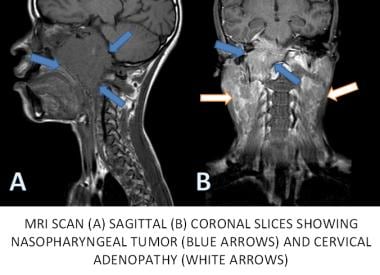
- The most common physical finding is a neck mass, which is observed in 80% of patients. Painless firm lymph node enlargement is present.
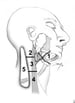
- Neck involvement is often bilateral; the most common nodes involved are the jugulodigastric and upper and middle jugular nodes in the anterior cervical chain.
- Cranial nerve palsy at initial presentation is observed in 25% of patients.
- On nasopharyngoscopy, a mass arising in the nasopharynx is often visible. The most frequent site is the fossa of Rosenmüller.
- A paraneoplastic osteoarthropathy has been described in patients with widespread or recurrent disease.
Causes
Viral DNA in nasopharyngeal carcinoma has revealed that EBV can infect epithelial cells and is associated with their transformation to cancer.
Nasal Polyps
Non-Hodgkin Lymphoma
Rhabdomyosarcoma
Other Problems to be Considered
Juvenile angiofibroma is a benign tumor that can occur in this region. It is associated with epistaxis but not cervical lymphadenopathy. The other malignancies associated with the nasopharynx include rhabdomyosarcoma and lymphoma.
Lab Studies
- Perform routine blood work, including a complete blood cell (CBC) count and chemistry profile. Liver function test results may be abnormal in those rare cases with hepatic metastases.
- EBV titers, including immunoglobulin A (IgA) and immunoglobulin G (IgG) antibodies to the viral capsid antigen, should be performed. These titers correlate with tumor burden and decrease with treatment.
- If invasion through the base of the skull has occurred, a cerebrospinal fluid examination is performed to detect tumor seeding.
Imaging Studies
- Computed tomography imaging
- CT imaging of the head and neck is used to determine tumor extent, base of skull erosion, and cervical lymphadenopathy.
- CT imaging of the chest and bone imaging are used to search for distant metastases.
- When intracranial extension is suspected, magnetic resonance imaging (MRI) may reveal the extent of the tumor.
- Positron emission tomography (PET) imaging has been used to assess questionable neck nodes.
Other Tests
- A baseline audiogram is helpful prior to radiotherapy, especially in children who will receive cisplatin.
Procedures
- A biopsy of the primary lesion or neck node is obtained for diagnosis.
Histologic Findings
The World Health Organization (WHO) has classified nasopharyngeal carcinoma into 3 categories. WHO-1 is defined as well–to–moderately differentiated squamous or transitional cell carcinoma with keratin production. WHO-2 is nonkeratinizing carcinoma. WHO-3 is undifferentiated carcinoma, including lymphoepithelioma. This entity consists of malignant epithelial cells with lymphocytic infiltration. The great majority of children are found to have WHO-3 disease.
Staging
A variety of staging schema has been proposed for nasopharyngeal carcinoma in children. No single system has proven satisfactory in correlating disease extent to prognosis. The TNM system, widely used in adult head and neck cancers, places most childhood disease in the advanced-stage category and does not recognize the relatively good prognosis of many children in these stages. Ho and colleagues proposed a modification of the TNM system that further divides patients into various groups based on prognosis. The T stage alone has been shown to have limited predictive value.
Medical Care
Radiation therapy is the mainstay of treatment, with chemotherapy used in advanced cases. Concurrent cisplatin, 5-fluorouracil, and radiotherapy have been shown to improve survival. Many pediatric studies have employed neoadjuvant chemotherapy followed by radiation therapy with improvement in local control or progression-free survival rates over radiotherapy alone.
- Radiotherapy is administered to the primary tumor and level II-V neck nodes. Take care to include the skull base in the initial field because nasopharyngeal cancer can travel via the foramen lacerum. Initial radiotherapy fields are often treated with 2 parallel opposed lateral fields that encompass the nasopharynx and upper cervical nodes. The lower cervical nodes are treated with an anterior field, which abuts the upper lateral fields superiorly.
- Avoid overdose to the spinal cord at this junction by using a "cheater block." Treatments are administered at 1.8-2.0 Gy/d, 5 days a week until a dose of 40-44 Gy has been administered. Thereafter, additional radiation is administered to the posterior neck nodes using electrons to avoid radiation myelitis. A dose of 50 Gy to the neck is desirable; bulky neck masses may need higher doses.
- The nasopharyngeal tumor and anterior neck continue to be treated with parallel opposed fields to a dose of at least 50 Gy. The primary site then receives a boost, delivering a dose of 50-70 Gy. Three-dimensional (conformal) radiotherapy may be used to spare more critical structures next to the nasopharynx, such as the brain, pituitary gland, optic chiasm, optic nerve, and spinal cord.
- Parotid sparing techniques are also available in some centers with 3-dimensional treatment capability or intensity modulated radiation therapy (IMRT). Recent data using IMRT reveal equivalent or better locoregional control compared to conventional radiotherapy.
- During the course of radiotherapy, several immediate effects may occur, usually after the first 2 weeks of treatment. Confluent mucositis usually occurs, especially in children receiving both radiotherapy and 5-fluorouracil. Dry mouth and thick saliva are also likely secondary to irradiation of the salivary glands. Redness, itching, and peeling of the treated skin can occur towards the end of radiotherapy and may need to be treated with topical antibiotics and Silvadene. Because of this oropharyngeal mucositis, consider placement of a gastrostomy tube prior to initiation of radiotherapy. If a gastrostomy tube is not placed, poor nutrition and dehydration are quite common, and intravenous fluids may need to be administered.
Surgical Care
Surgical therapy for these patients is often limited to a biopsy for tissue diagnosis. Nearly all tumors are unresectable at diagnosis because of tumor location.
Consultations
- Consultation with an otolaryngologist is often required in the initial management to obtain tissue diagnosis and in follow-up endoscopic examinations to rule out recurrence. An otolaryngologist may also be involved if the child develops sensorineural hearing loss from cisplatin and radiotherapy.
- Consultation with an endocrinologist may be required in the future if the child shows signs of growth retardation or hypothyroidism secondary to radiotherapy. Occasionally, children develop panhypopituitarism.
- Consultation with a dentist familiar with radiation effects should be performed prior to initiation of radiotherapy to minimize risk of osteoradionecrosis. Patients will also need to be followed after treatment as xerostomia and change in salivary consistency may predispose the patient to dental caries.
Diet
Many patients experience severe mucositis during radiotherapy. Certain foods may irritate irradiated mucosa, causing pain or difficulty swallowing or chewing. Soft foods such as milkshakes, mashed potatoes, and pureed meats are advisable during the course of radiotherapy. Citrus fruits, spicy foods, salty foods, and coarse foods can make the irritated mucosa worse. Gastrostomy tube placement allows adequate hydration and calorie intake during radiotherapy.
Activity
Activity depends on the child's condition. During periods of chemotherapy-induced thrombocytopenia, some limitation of strenuous activity and avoidance of contact sports is necessary. Infectious contacts should be avoided where possible, especially during periods of neutropenia.
Medical therapy consists of radiation therapy and chemotherapy. Concurrent treatment with cisplatin, 5-fluorouracil, and radiotherapy has been shown to improve survival rates. Other studies have employed neoadjuvant chemotherapy followed by radiation therapy with improvement in local control or progression-free survival rates.
Anesthetic lozenges and sprays may be helpful during the course of radiotherapy to minimize oral or throat pain.
Drug Category: Antineoplastic agents
Chemotherapy is used to decrease the bulk of disease and to limit the risk of recurrence. Cancer chemotherapy is based on an understanding of tumor cell growth and how drugs affect this growth. After cells divide, they enter a period of growth (ie, phase G1), followed by DNA synthesis (ie, phase S). The next phase is a premitotic phase (ie, G2); then, finally a mitotic cell division (ie, phase M) occurs.
Cell division rate varies for different tumors. Most common cancers increase very slowly in size compared to normal tissues, and the rate may decrease further in large tumors. This difference allows normal cells to recover more quickly than malignant ones from chemotherapy and is the rationale behind current cyclic dosage schedules. Dosage cycles are determined by cancer stage and tolerance of adverse effects.
Antineoplastic agents interfere with cell reproduction. Some agents are cell cycle specific, while others (eg, alkylating agents, anthracyclines, cisplatin) are not. Cellular apoptosis (ie, programmed cell death) is also a potential mechanism of many antineoplastic agents.
| Drug Name | Cisplatin (Platinol) |
| Description | Inhibits DNA synthesis and, thus, cell proliferation by causing DNA crosslinks and denaturation of double helix. |
| Pediatric Dose | 80-100 mg/m2 per cycle IV on day 1 of cycle; alternatively 200 mg/m2 per cycle IV divided over 5 d (ie, 40 mg/m2/d for 5 d) |
| Contraindications | Documented hypersensitivity; preexisting renal insufficiency; myelosuppression; significant hearing impairment (especially speech-range hearing loss) |
| Interactions | Increases toxicity of bleomycin and ethacrynic acid; cisplatin-related nephrotoxicity is increased when concurrently used with other nephrotoxic drugs (eg, aminoglycosides, amphotericin B, cyclosporine); bleomycin, cytarabine, methotrexate, and ifosfamide may accumulate when used with cisplatin because of decreased renal excretion; may enhance cytotoxicity of etoposide; coadministration of mesna and sodium thiosulfate directly inactivate cisplatin; dipyridamole increases cytotoxicity by enhancing cellular uptake; paclitaxel-related peripheral neuropathy may be increased in patients previously treated with cisplatin |
| Pregnancy | D - Unsafe in pregnancy
|
| Precautions | Administer adequate hydration before and 24 h after dosing to reduce risk of nephrotoxicity; adverse effects include bone marrow suppression, nausea, vomiting, mucositis, and high-frequency hearing loss; major dose-limiting toxicity is peripheral neuropathy; can cause acute or chronic renal failure in up to one third of patients treated, but renal failure can usually be prevented by vigorous hydration and saline diuresis; renal tubular wasting of potassium and magnesium are common (monitor closely and supplement as needed); cellulitis and fibrosis rarely have occurred after extravasation; avoid aluminum needles |
| Drug Name | 5-Fluorouracil (5-FU, Adrucil) |
| Description | Fluorinated pyrimidine antimetabolite that inhibits thymidylate synthase and also interferes with RNA synthesis and function. Has some effect on DNA. Useful in symptom palliation for patients with progressive disease. |
| Pediatric Dose | 15 mg/kg/d IV continuous infusion (over 24 h) for 5 consecutive d, often in combination with cisplatin |
| Contraindications | Documented hypersensitivity; bone marrow suppression; serious infection |
| Interactions | Increased risk of bleeding with anticoagulants, NSAIDs, platelet inhibitors, and thrombolytic agents; enhanced bone marrow toxicity with other immunosuppressive agents |
| Pregnancy | D - Unsafe in pregnancy
|
| Precautions | Nausea, oral and GI ulcers, depression of immune system, and hemopoiesis failure (bone marrow suppression) may occur; adjust dosage in renal impairment |
Drug Category: Antiemetic agents
Prevention and treatment of chemotherapy-induced nausea and vomiting. Prevention is essential for highly emetogenic drugs (eg, cisplatin-based chemotherapy).
Antineoplastic-induced vomiting is stimulated through the chemoreceptor trigger zone (CTZ), which then stimulates the vomiting center (VC) in the brain. Increased activity of central neurotransmitters, dopamine in CTZ, or acetylcholine in VC appears to be a major mediator for inducing vomiting. Following administration of antineoplastic agents, serotonin (5-HT) is released from enterochromaffin cells in the GI tract. With serotonin release and subsequent binding to 5-HT3-receptors, vagal neurons are stimulated and transmit signals to the VC, resulting in nausea and vomiting.
Antineoplastic agents may cause nausea and vomiting so intolerable that patients may refuse further treatment. Some antineoplastic agents are more emetogenic than others. Prophylaxis with antiemetic agents prior to and following cancer treatment is often essential to ensure administration of the entire chemotherapy regimen.
| Drug Name | Ondansetron (Zofran) |
| Description | Selective 5-HT3-receptor antagonist that blocks serotonin both peripherally and centrally. Prevents nausea and vomiting associated with emetogenic cancer chemotherapy (eg, high-dose cisplatin) and complete body radiotherapy. |
| Pediatric Dose | Oral: 4-12 years: 4 mg PO 30 min prior to chemotherapy, repeat q4h for 2 doses, then q8h for 1-2 d >12 years: 8 mg PO 30 min prior to chemotherapy, repeat once in 8 h, then q12h for 1-2 d Intravenous: O.45 mg/kg/d IV divided q8h or administered as a single daily dose |
| Contraindications | Documented hypersensitivity |
| Interactions | Although potential for cytochrome P-450 inducers (eg, barbiturates, rifampin, carbamazepine, phenytoin) to change half-life and clearance of ondansetron exists, dosage adjustment is not usually required |
| Pregnancy | C - Safety for use during pregnancy has not been established.
|
| Precautions | More effective when administered for prevention of nausea and vomiting than as rescue; may cause headache |
Drug Category: Colony-stimulating factors
Act as a hematopoietic growth factor that stimulates the development of granulocytes. Used to treat or prevent neutropenia in patients receiving myelosuppressive cancer chemotherapy and to reduce the period of neutropenia associated with bone marrow transplantation. Also used to mobilize autologous peripheral blood progenitor cells for bone marrow transplantation and in the management of chronic neutropenia.
| Drug Name | Filgrastim (G-CSF, Neupogen) |
| Description | Granulocyte colony-stimulating factor that activates and stimulates production, maturation, migration, and cytotoxicity of neutrophils. Is most often administered to prevent neutropenia, starting 1 d after completion of highly myelosuppressive chemotherapy. Can also be used to treat neutropenia in the setting of significant infection. |
| Pediatric Dose | 5 mcg/kg/d SC until ANC has recovered (ie, >2,000-10,000/mcL) |
| Contraindications | Documented hypersensitivity |
| Interactions | Do not use 12-24 h before or 24 h after administering cytotoxic chemotherapy because it increases sensitivity of rapidly dividing myeloid cells to cytotoxic chemotherapy; use in the setting of myeloid malignancy is controversial |
| Pregnancy | C - Safety for use during pregnancy has not been established.
|
| Precautions | Risk of developing myelodysplastic syndrome or acute myeloid leukemia in certain patients with an underlying predisposition; leukocytosis; possible tumor growth |
Further Inpatient Care
- Certain types of chemotherapy may need to be administered on an inpatient basis.
- Patients who develop febrile neutropenia need to be admitted for intravenous antibiotics. The antibiotic regimen usually consists of an antipseudomonal cephalosporin such as ceftazidime, with or without an aminoglycoside and/or an antistaphylococcal penicillin such as oxacillin. Empiric use of vancomycin is problematic because of the potential for bacterial resistance and is not recommended by many treating physicians.
Further Outpatient Care
- Radiation therapy is often administered on an outpatient basis. The patient must be seen in follow-up after all radiation and chemotherapy has been administered.
- Patients are evaluated every 2 months during the first year and every 3 months during the second and third years after treatment. Thereafter, the child is seen every 6 months.
- Physical examination including nasopharyngoscopy in older children is performed with each visit.
- A CT scan of the head and neck is obtained 1 month after therapy to assess response.
- A dental examination prior to radiotherapy and on a routine basis after therapy is recommended because of the possibility of caries and poor dental hygiene. Osteonecrosis of the mandible is a rare complication of radiotherapy and is often avoided with proper dental care.
In/Out Patient Meds
- Routine medications are not often administered and depend on treatment-related symptomatology.
- Amifostine (Ethyol) may be used in the management of patients with nasopharyngeal cancer. This drug has been found to reduce xerostomia resulting from radiotherapy and nephrotoxicity resulting from cisplatin chemotherapy.
Complications
- Late toxicity of radiotherapy may include xerostomia, hypothyroidism, fibrosis of the neck with complete loss of range of motion, trismus, dental abnormalities, and hypoplasia of irradiated muscular and bony structures. Because of the high doses of radiotherapy used in this disease, these late toxicities can be significant, especially in younger children.
- Growth retardation can occur secondary to radiotherapy to the pituitary gland. Panhypopituitarism can occur in some instances.
- Sensorineural hearing loss may occur with the use of cisplatin and radiotherapy.
- Renal toxicity can occur in patients receiving cisplatin. Those who receive bleomycin are at risk for developing pulmonary fibrosis.
- Caries and poor dental hygiene are associated complications. Osteonecrosis of the mandible is a rare complication of radiotherapy and is often avoided with proper dental care.
- Second malignancy may occur in a child who has received previous radiotherapy. This risk is small but continues throughout life.
- With proper radiotherapy techniques, the chance for development of radiation myelitis should be less than 1%.
Prognosis
- The results of recent clinical trials that include both radiation therapy and chemotherapy generally report long-term survival rates of 50-80% overall.
- In a study by Serin and colleagues, the 5-year overall survival rate was 42% with radiotherapy alone and 58% with chemoradiation.
- St. Jude Children's Research Hospital reported a 5-year survival rate of 69% with chemoradiation. Most patients were treated with 4 cycles of neoadjuvant chemotherapy consisting of methotrexate, cisplatin, 5-fluorouracil, and leucovorin followed by radiotherapy.
Patient Education
- Patients and parents should be educated regarding the importance of follow-up after completion of all therapy. A detailed discussion of the risks of chemotherapy, especially the risk of febrile neutropenia, is necessary. Families should also be well informed of the issues of late effects.
- For excellent patient education resources, visit eMedicine's Cancer and Tumors Center. Also, see eMedicine's patient education article Cancer of the Mouth and Throat.
Medical/Legal Pitfalls
- Informed consent should be obtained from the parent or guardian regarding the possible side effects and complications of treatment.
- Delay in the diagnosis of nasopharyngeal carcinoma, particularly as a cause of lymphadenopathy in children, has been the basis for some legal proceedings.
- Al-Sarraf M, LeBlanc M, Giri PG. Chemoradiotherapy versus radiotherapy in patients with advanced nasopharyngeal cancer: phase III randomized Intergroup study 0099. J Clin Oncol. Apr 1998;16(4):1310-1317. [Medline].
- Ayan I, Altun M. Nasopharyngeal carcinoma in children: retrospective review of 50 patients. Int J Radiat Oncol Biol Phys. Jun 1 1996;35(3):485-92. [Medline].
- Berry MP, Smith CR, Brown TC. Nasopharyngeal carcinoma in the young. Int J Radiat Oncol Biol Phys. Apr 1980;6(4):415-21. [Medline].
- Chan AT, Teo PM, Leung TW. The role of chemotherapy in the management of nasopharyngeal carcinoma. Cancer. Mar 15 1998;82(6):1003-12. [Medline].
- Cooper JS, Cohen R, Stevens RE. A comparison of staging systems for nasopharyngeal carcinoma. Cancer. Jul 15 1998;83(2):213-9. [Medline].
- Delanian S, Balla-Mekias S, Lefaix JL. Striking regression of chronic radiotherapy damage in a clinical trial of combined pentoxifylline and tocopherol. J Clin Oncol. Oct 1999;17(10):3283-90. [Medline].
- Douglass EC, Fontanesi J, Ribiero RC. Improved long-term disease free survival in nasopharyngeal carcinoma in childhood and adolescence. Proc. ASCO. 1996;15:467.
- Gastpar H, Wilmes E, Wolf H. Epidemiologic, etiologic and immunologic aspects of nasopharyngeal carcinoma [NPC]. J Med. 1981;DA - 19820212(4):257-84. [Medline].
- Greene MH, Fraumeni JF, Hoover R. Nasopharyngeal cancer among young people in the United States: racial variations by cell type. J Natl Cancer Inst. May 1977;58(5):1267-70. [Medline].
- Henle G, Henle W. Epstein-Barr virus-specific IgA serum antibodies as an outstanding feature of nasopharyngeal carcinoma. Int J Cancer. Jan 15 1976;17(1):1-7. [Medline].
- Ingersoll L, Woo SY, Donaldson S. Nasopharyngeal carcinoma in the young: a combined M.D. Anderson and Stanford experience. Int J Radiat Oncol Biol Phys. Oct 1990;19(4):881-7. [Medline].
- International Nasopharynx Cancer Study Group. Preliminary results of a randomized trial comparing neoadjuvant chemotherapy (cisplatin, epirubicin, bleomycin) plus radiotherapy vs. radiotherapy alone in stage IV(> or = N2, M0) undifferentiated nasopharyngeal carcinoma: a positive effect on progres. Int J Radiat Oncol Biol Phys. Jun 1 1996;35(3):463-9. [Medline].
- Kun LE, Kumar P, Jones D. Long-term outcome following curative therapy of pediatric nasopharyngeal carcinoma (PNC): three decade experience at St. Jude Children's Research Hospital (SJCRH). Proc Am Soc Clin Oncol. 1997;15 (abstract):512a.
- Kwong DL, Wei WI, Sham JS. Sensorineural hearing loss in patients treated for nasopharyngeal carcinoma: a prospective study of the effect of radiation and cisplatin treatment. Int J Radiat Oncol Biol Phys. Sep 1 1996;36(2):281-9. [Medline].
- Lee N, Xia P, Quivey JM. Intensity-modulated radiotherapy in the treatment of nasopharyngeal carcinoma: an update of the UCSF experience. Int J Radiat Oncol Biol Phys. 2002;53:12-22.
- Mertens R, Granzen B, Lassay L. Nasopharyngeal carcinoma in childhood and adolescence: concept and preliminary results of the cooperative GPOH study NPC-91. Gesellschaft fur Padiatrische Onkologie und Hamatologie. Cancer. Sep 1 1997;80(5):951-9. [Medline].
- Pathmanathan R, Prasad U, Sadler R. Clonal proliferations of cells infected with Epstein-Barr virus in preinvasive lesions related to nasopharyngeal carcinoma. N Engl J Med. Sep 14 1995;333(11):693-8. [Medline].
- Rodriguez-Galindo C, Wofford M, Castleberry RP. Preradiation chemotherapy with methotrexate, cisplatin, 5-fluorouracil, and leucovorin for pediatric nasopharyngeal carcinoma. Cancer. Feb 15 2005;103(4):850-7. [Medline].
- Serin M, Erkal HS, Elhan AH. Nasopharyngeal carcinoma in childhood and adolescence. Med Pediatr Oncol. Dec 1998;31(6):498-505. [Medline].
- Sham JS, Poon YF, Wei WI. Nasopharyngeal carcinoma in young patients. Cancer. Jun 1 1990;65(11):2606-10. [Medline].
- Teo PM, Chan AT, Lee WY. Enhancement of local control in locally advanced node-positive nasopharyngeal carcinoma by adjunctive chemotherapy. Int J Radiat Oncol Biol Phys. Jan 15 1999;43(2):261-71. [Medline].
- Wolden SL, Steinherz PG, Kraus DH. Improved long-term survival with combined modality therapy for pediatric nasopharynx cancer. Int J Radiat Oncol Biol Phys. 2000;46:859-864.
Nasopharyngeal Cancer excerpt Article Last Updated: Jun 8, 2006
|