| Patient Education |
|
Click here for patient education.
|
|
You are in: eMedicine Specialties >
Pediatrics: General Medicine > Hematology
May-Hegglin Anomaly
Article Last Updated: Aug 1, 2008
AUTHOR AND EDITOR INFORMATION
Section 1 of 11
Author: Vikramjit S Kanwar, MBBS, MBA, MRCP(UK), FAAP, Associate Professor of Pediatric Hematology-Oncology, Department of Pediatrics, Albany Medical Center; Faculty, Alden March Bioethics Institute
Vikramjit S Kanwar is a member of the following medical societies: American Academy of Pediatrics, American Society of Pediatric Hematology/Oncology, Children's Oncology Group, and Royal College of Physicians of the United Kingdom
Coauthor(s):
Frank E Shafer, MD, Associate Professor, Department of Pediatrics, Section of Hematology-Oncology, St. Christopher's Hospital for Children, MCP Hahnemann University School
Editors: Gary R Jones, MD, Associate Medical Director, Clinical Development, Berlex Laboratories; Mary L Windle, PharmD, Adjunct Assistant Professor, University of Nebraska Medical Center College of Pharmacy, Pharmacy Editor, eMedicine.com, Inc; Gary D Crouch, MD, Program Director of Pediatric Hematology-Oncology Fellowship, Department of Pediatrics, Associate Professor, Uniformed Services University of the Health Sciences; Samuel Gross, MD, Professor Emeritus, Department of Pediatrics, University of Florida, Clinical Professor, Department of Pediatrics, UNC, Adjunct Professor, Department of Pediatrics, Duke University; Robert J Arceci, MD, PhD, King Fahd Professor of Pediatric Oncology, Department of Oncology, Division of Pediatric Oncology, Johns Hopkins University School of Medicine
Author and Editor Disclosure
Synonyms and related keywords:
May-Hegglin anomaly, MHA, thrombocytopenia, MYH9 gene, leukocytic inclusions, leukocyte inclusions, macrothrombocytopenia, Döhle bodies, Sebastian syndrome, Epstein syndrome, Fechtner syndrome, recurrent epistaxis, gingival bleeding, easy bruising, menorrhagia, hearing loss, cataracts, hematuria, proteinuria
Background
In 1909, May described the presence of leukocytic inclusions in a young female patient who was asymptomatic. In 1945, Hegglin described a man and his 2 sons who were healthy but who had a triad consisting of thrombocytopenia, giant platelets, and leukocyte inclusions. This condition gave rise to the eponym May-Hegglin anomaly (MHA).
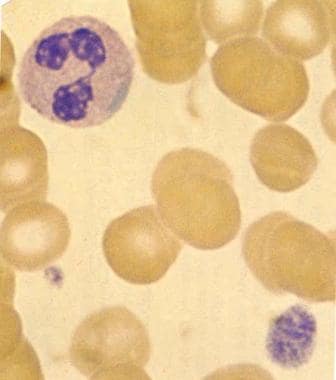
MHA is an autosomal dominant disorder characterized by various degrees of thrombocytopenia that may be associated with purpura and bleeding, giant platelets containing few granules, and large (2-5 µm), well-defined, basophilic, cytoplasmic inclusion bodies in granulocytes that resemble Döhle bodies.1
MHA is one of a family of macrothrombocytopenias characterized by mutations in the MYH9 gene.2 The other members of this family include Sebastian syndrome,3 Epstein syndrome,4 and Fechtner syndrome.5
Pathophysiology
Patients have a mutation of the MYH9 gene present in chromosomal region 22q12-13.6, 2 The mutation results in disordered production of nonmuscle myosin heavy-chain type IIA, which leads to invariable macrothrombocytopenia secondary to defective megakaryocyte maturation. Platelet function in patients with MHA has been reported as normal.7, 8 However, in one study, epinephrine response was described as abnormal in 8 of 15 patients.9
Leukocyte Döhlelike inclusion bodies are visualized on standard Wright stain. Ultrastructural studies reveal that these bodies consist of clusters of ribosomes oriented along parallel myosin heavy-chain filaments 7–10 nm in diameter.10 Neutrophil function is considered to be normal, and patients have no increased susceptibility to infections.
Frequency
United States
MHA is a rare autosomal dominant disorder. In one review, 180 cases had been reported in the literature.9 The exact incidence of the syndrome is unknown.
International
MHA is a rare autosomal dominant disorder, and the exact incidence is unknown. Kindreds have been reported from Italy, France, Germany, and North America.2 MHA was reported in 15 families in Japan in 1993.11
Mortality/Morbidity
The rarity of MHA has led to conflicting literature regarding the risk for bleeding. Asymptomatic patients have been described.7, 8 However, abnormal bleeding has also been documented.9 The risk for excess bleeding with surgical procedures is unclear.12
History
Individuals with May-Hegglin anomaly (MHA) are often asymptomatic. The bleeding tendency associated with MHA is generally mild and is thought to mainly depend on the degree of thrombocytopenia.7 Symptoms of bleeding can include the following:
- Recurrent epistaxis
- Gingival bleeding
- Easy bruising
- Menorrhagia
- Excessive bleeding associated with surgical procedures
Physical
Physical findings are often normal. Findings of abnormal bleeding may be subtle.
- Bruising, which may or may not be associated with a history of clinically significant trauma, may be noted.
- Petechiae may be present on the skin and are most common in pressure-point areas (eg, neck, overlying the clavicles, on the waist, areas where clothes are tight). Petechiae are associated with restricting conditions, such as the application of a tourniquet for venipuncture. Petechiae may also be observed on the oral and nasal mucosal surfaces.
- Active bleeding from the mucosal surfaces may be observed. The most common sites of bleeding include the mouth and nose. Prolonged and excessive bleeding and oozing associated with lacerations and sutures may also be observed.
Looking for the associated clinical features of MYH9-related disorders is important in enabling an accurate diagnosis. In patients initially thought to have MHA or Sebastian syndrome, the following findings were noted.13
Causes
MHA is one of a family of macrothrombocytopenias characterized by mutations in the MYH9 gene, which is present at chromosomal region 22q12-13 and codes for nonmuscle myosin heavy-chain IIA.2 The Döhlelike leukocyte inclusions in MHA are due to precipitation of myosin heavy chains in leukocytes. Analysis of more than 70 families confirms that mutations in MYH9 can lead to MHA, Sebastian syndrome, Fechtner syndrome, or Epstein syndrome.14 In one fifth of individuals, the mutation may sporadically arise.15 Macrothrombocytopenia is invariable, and the clinical features of these 4 entities are described below. The clinical description of these syndromes predated the discovery of the MYH9 gene mutations. Although the theory was that genotype-phenotype correlations would be found, overall this has not been the case.16 The MYH9 R702 mutation is reportedly associated with the smaller neutrophil inclusions seen in Sebastian syndrome, Fechtner syndrome, and Epstein syndrome.17 Clinical Features of MYH9-Related Thrombocytopenias13
| Condition | Macrothrombocytopenia | Granulocyte inclusions | Nephritis and Deafness | Cataracts |
|---|
| MHA | Yes | Linear Döhlelike | No | No | | Epstein syndrome | Yes | Absent or faint | Yes | No | | Fechtner syndrome | Yes | Spherical granules | Yes | Yes | | Sebastian syndrome | Yes | Spherical granules | No | No |

Alport Syndrome
Bernard-Soulier Syndrome
Glanzmann Thrombasthenia
Immune Thrombocytopenic Purpura
Wiskott-Aldrich Syndrome
Other Problems to be Considered
In addition to acute immune thrombocytic purpura, the differential diagnosis for thrombocytopenia associated with large platelets (elevated mean platelet volume) includes Bernard-Soulier syndrome, Montreal platelet syndrome, gray-platelet syndrome, and Alport syndrome. The differential diagnosis for thrombocytopenia due to ineffective thrombopoiesis includes Bernard-Soulier syndrome, Wiskott-Aldrich syndrome, Greaves syndrome, thrombopoietin deficiency, and megaloblastic anemia. The differential diagnosis for leukocytic inclusions, sometimes called Döhle bodies, includes septicemia, myeloproliferative disorders, and pregnancy.
Lab Studies
- The CBC count is essential.
- The platelet count is decreased, but the degree of thrombocytopenia varies. The platelet count is usually 40-80 X 109/L.
- The disorder is also characterized by giant platelets. Platelets are enlarged (£15 µm in diameter), and the mean platelet volume of May-Hegglin anomaly (MHA) platelets can be as high as 30 fL. Platelet morphology is otherwise normal.
- On electron microscopy findings, platelets contain normal organelles (alpha granules, dense granules, lysosomes, mitochondria). The most conspicuous ultrastructural feature of the platelets is an increased amount of disorganized microtubuli.
- The Wright-stained peripheral blood smear shows cytoplasmic inclusion bodies, particularly in the neutrophils, but also in monocytes, eosinophils, and basophils. The inclusions are large (£5 µm), spindle shaped, pale, blue-staining bodies that consist of ribosomes, segments of endoplasmic reticulum, and microfilaments. They are located in the periphery of the cytoplasm and resemble Döhle bodies.
- Immunocytochemistry can detect NMMHCIIA complexes within the leukocytes and is a useful confirmatory test.18
- The bleeding time is prolonged in concordance with the degree of thrombocytopenia. Platelets usually aggregate normally in response to various agonists. The glycoprotein composition of the platelet surface is normal.8
Medical Care
The literature is conflicting, but most patients with May-Hegglin anomaly (MHA) do not appear to have clinically significant bleeding problems, and specific treatment is not required. Corticosteroids and splenectomy are ineffective. In rare patients with severe bleeding, platelet transfusion may be required.
Surgical Care
Patients with MHA who undergo normal vaginal or Cesarian delivery do not appear to have a significantly increased risk of bleeding.19, 20
For patients with MHA scheduled for surgery, consult a hematologist, obtain a careful personal and family history of bleeding tendency, and perform a manual platelet count to determine the actual risk for bleeding. Intravenous desmopressin acetate (DDAVP) may be valuable. Routine prophylactic platelet transfusions are not usually indicated, and ensuring that platelets are available is prudent, in case unexpected bleeding occurs. A patient with MHA who successfully underwent craniotomy after DDAVP infusion alone has been described.12
Consultations
Consult a hematologist before patients undergo surgery or vaginal delivery and in patients who experience severe trauma.
Activity
Depending on the degree of thrombocytopenia and family history, individuals may be at an increased risk for bleeding, and refraining from participation in contact or collision sports may be prudent.
Most patients with May-Hegglin anomaly (MHA) do not have clinically significant problems with bleeding and do not require treatment. Corticosteroids and splenectomy are ineffective. On the rare occasions when patients have severe bleeding, platelet transfusions may be required. Prophylactic platelet transfusions are not routinely used before surgery and delivery. Intravenous desmopressin has been used preoperatively,12 although the mechanism of action is uncertain.21
Drug Category: Pituitary hormone
Use of desmopressin, a synthetic analogue of vasopressin, may be used before surgery.
| Drug Name | Desmopressin acetate (DDAVP) |
| Description | Releases von Willebrand protein from endothelial cells. Improves bleeding time and hemostasis in patients with some vWf (mild and moderate von Willebrand disease without abnormal molecular forms of von Willebrand protein). Effective in uremic bleeding. Tachyphylaxis usually develops after 48 h, but the drug can be effective again after several days. Nasal solution available as 0.1 mg/mL (10 mcg/0.1 mL). |
| Adult Dose | IV: 0.3 mcg/kg IV Intranasal: >50 kg: 2 sprays intranasally; each spray delivers 0.1 mL (10 mcg) |
| Pediatric Dose | 0.3 mcg/kg IV |
| Contraindications | Documented hypersensitivity; platelet-type von Willebrand disease |
| Interactions | Coadministration with demeclocycline and lithium decrease effects; fludrocortisone and chlorpropamide increase effects of desmopressin; loperamide increases bioavailability and absorption of desmopressin, thus potentially increasing effect |
| Pregnancy | B - Fetal risk not confirmed in studies in humans but has been shown in some studies in animals
|
| Precautions | Avoid overhydration in patients using desmopressin to benefit from its hemostatic effects; may cause severe hyponatremia that can result in seizures and death; caution in patients at risk for water intoxication with hyponatremia (eg, habitual or psychogenic polydipsia, patient taking drugs that cause dry mouth or increased thirst) |
Complications
- Most individuals with May-Hegglin anomaly (MHA) do not have bleeding problems; however, severe bleeding can occur.9
- The bleeding risk is increased by taking drugs that decrease platelet function.
Prognosis
- Most patients with MHA do not have clinically significant problems with bleeding and, therefore, do not require treatment.
Patient Education
- Individuals with MHA should understand their personal risk of bleeding. They should understand that their bleeding risks are associated with the degree of thrombocytopenia.
- Before patients undergo surgical procedures or in patients with trauma, the diagnosis of MHA must be discussed because special precautions and procedures may be required to prevent bleeding complications.
- Individuals with MHA should be educated to avoid drugs (eg, aspirin) that can adversely affect platelet function.
Medical/Legal Pitfalls
- Because of the increased risk of bleeding in individuals with chronic thrombocytopenia (especially intracranial hemorrhage), pay special attention to individuals with May-Hegglin anomaly (MHA) who have an injury. Consider performing imaging studies in these patients. Failure to recognize internal bleeding associated with thrombocytopenia could delay treatment.
- Failure to appropriately diagnose MHA could result in inappropriate treatment. In clinical states of chronic thrombocytopenia associated with large and giant platelets, including chronic immune thrombocytic purpura, consider MHA in the differential diagnosis. A familial history of thrombocytopenia can be an important feature. Rule out MHA before undertaking procedures (eg, splenectomy) or medical therapy with potentially toxic adverse effects.
- MHA may be confused with other MYH9-related disorders in which hearing and renal function are impaired. In a patient with this diagnosis, renal function and hearing should be evaluated.
Special Concerns
- Because of the increased risks (particularly intracranial hemorrhage) of bleeding in young children who have thrombocytopenia, pay special attention to children with MHA who have severe head trauma. Imaging studies of the head (CT or MRI) should be considered in these patients.
- Because MHA is an autosomal dominant inherited condition, genetic counseling is important.
| Media file 1:
Blood smear (original magnification X2000) in a patient with May-Hegglin anomaly (MHA) demonstrates a characteristic giant platelet with poorly defined granulation. A normal-sized platelet is also present. The trilobed neutrophil contains a large, well-defined, basophilic, peripherally placed cytoplasmic inclusion body (resembling a Döhle body). Used with permission from Little, Brown. |
 | View Full Size Image | |
Media type: Photo
|
- Oski FA, Naiman JL, Allen DM, Diamond LK. Leukocytic inclusions--Dohle bodies--associated with platelet abnormality (the May-Hegglin anomaly). Report of a family and review of the literature. Blood. Dec 1962;20:657-67. [Medline].
- Seri M, Cusano R, Gangarossa S, et al. Mutations in MYH9 result in the May-Hegglin anomaly, and Fechtner and Sebastian syndromes. The May-Heggllin/Fechtner Syndrome Consortium. Nat Genet. Sep 2000;26(1):103-5. [Medline].
- Greinacher A, Nieuwenhuis HK, White JG. Sebastian platelet syndrome: a new variant of hereditary macrothrombocytopenia with leukocyte inclusions. Blut. Nov 1990;61(5):282-8. [Medline].
- Epstein CJ, Sahud MA, Piel CF, Goodman JR, Bernfield MR, Kushner JH. Hereditary macrothrombocytopathia, nephritis and deafness. Am J Med. Mar 1972;52(3):299-310. [Medline].
- Peterson LC, Rao KV, Crosson JT, White JG. Fechtner syndrome--a variant of Alport's syndrome with leukocyte inclusions and macrothrombocytopenia. Blood. Feb 1985;65(2):397-406. [Medline].
- Kunishima S, Kojima T, Tanaka T, et al. Mapping of a gene for May-Hegglin anomaly to chromosome 22q. Hum Genet. Nov 1999;105(5):379-83. [Medline].
- Burns ER. Platelet studies in the pathogenesis of thrombocytopenia in May-Hegglin anomaly. Am J Pediatr Hematol Oncol. Winter 1991;13(4):431-6. [Medline].
- Mayer K, Schildknecht O, von Felten A. [May-Hegglin anomaly: further studies on thrombocyte dysfunction]. Schweiz Med Wochenschr. Jun 28 1997;127(26):1134-40. [Medline].
- Noris P, Spedini P, Belletti S, et al. Thrombocytopenia, giant platelets, and leukocyte inclusion bodies (May- Hegglin anomaly): clinical and laboratory findings. Am J Med. Apr 1998;104(4):355-60. [Medline].
- Pujol-Moix N, Kelley MJ, Hernandez A, Muniz-Diaz E, Espanol I. Ultrastructural analysis of granulocyte inclusions in genetically confirmed MYH9-related disorders. Haematologica. Mar 2004;89(3):330-7. [Medline].
- Ishii A, Honnma T, Ishida M, Sano F, Hamada H, Takayanagi M. Pregnancy complicated by the May-Hegglin anomaly. J Perinat Med. 1993;21(3):247-52. [Medline].
- Sehbai AS, Abraham J, Brown VK. Perioperative management of a patient with May-Hegglin anomaly requiring craniotomy. Am J Hematol. Aug 2005;79(4):303-8. [Medline].
- Seri M, Pecci A, Di Bari F, et al. MYH9-related disease: May-Hegglin anomaly, Sebastian syndrome, Fechtner syndrome, and Epstein syndrome are not distinct entities but represent a variable expression of a single illness. Medicine (Baltimore). May 2003;82(3):203-15. [Medline].
- Heath KE, Campos-Barros A, Toren A, Rozenfeld-Granot G, Carlsson LE, Savige J. Nonmuscle myosin heavy chain IIA mutations define a spectrum of autosomal dominant macrothrombocytopenias: May-Hegglin anomaly and Fechtner, Sebastian, Epstein, and Alport-like syndromes. Am J Hum Genet. Nov 2001;69(5):1033-45. [Medline].
- Otsubo K, Kanegane H, Nomura K, Ogawa J, Miyawaki T, Kunishima S. Identification of a novel MYH9 mutation in a patient with May-Hegglin anomaly. Pediatr Blood Cancer. Dec 2006;47(7):968-9. [Medline].
- Dong F, Li S, Pujol-Moix N, et al. Genotype-phenotype correlation in MYH9-related thrombocytopenia. Br J Haematol. Aug 2005;130(4):620-7. [Medline].
- Kunishima S, Yoshinari M, Nishio H, Ida K, Miura T, Matsushita T. Haematological characteristics of MYH9 disorders due to MYH9 R702 mutations. Eur J Haematol. Mar 2007;78(3):220-6. [Medline].
- Kunishima S, Matsushita T, Kojima T, Sako M, Kimura F, Jo EK. Immunofluorescence analysis of neutrophil nonmuscle myosin heavy chain-A in MYH9 disorders: association of subcellular localization with MYH9 mutations. Lab Invest. Jan 2003;83(1):115-22. [Medline].
- Bizzaro N. May-Hegglin anomaly and uncomplicated vaginal delivery: a report of 41 cases. Am J Obstet Gynecol. Jul 1999;181(1):226-7. [Medline].
- Chabane H, Gallais Y, Pathier D, Tchernia G, Gaussem P. Delivery management in a woman with thrombocytopenia of the May-Hegglin anomaly type. Eur J Obstet Gynecol Reprod Biol. Nov 2001;99(1):124-5. [Medline].
- DiMichele DM, Hathaway WE. Use of DDAVP in inherited and acquired platelet dysfunction. Am J Hematol. Jan 1990;33(1):39-45. [Medline].
May-Hegglin Anomaly excerpt Article Last Updated: Aug 1, 2008
|