You are in: eMedicine Specialties >
Pediatrics: General Medicine > Endocrinology
Hypopituitarism
Article Last Updated: May 25, 2006
AUTHOR AND EDITOR INFORMATION
Section 1 of 11
Author: Lawrence A Wetterau, MD, Assistant Professor, Section of Endocrinology, Children's Hospital Central California
Lawrence A Wetterau is a member of the following medical societies: American Academy of Pediatrics, Endocrine Society, and Lawson-Wilkins Pediatric Endocrine Society
Editors: Phyllis W Speiser, MD, Chief of Pediatric Endocrinology, Schneider Children's Hospital; Professor of Pediatrics, New York University School of Medicine; Mary L Windle, PharmD, Adjunct Assistant Professor, University of Nebraska Medical Center College of Pharmacy, Pharmacy Editor, eMedicine.com, Inc; George P Chrousos, MD, FAAP, MACP, MACE, Professor and Chair, Department of Pediatrics, Athens University Medical School; Merrily P M Poth, MD, Professor, Department of Pediatrics and Neuroscience, Uniformed Services University of the Health Sciences; George P Chrousos, MD, FAAP, MACP, MACE, Professor and Chair, Department of Pediatrics, Athens University Medical School
Author and Editor Disclosure
Synonyms and related keywords:
hypopituitarism, growth hormone deficiency, GHD, multiple pituitary hormone deficiency, MPHD, pituitary hypothalamus, hypoglycemia, short stature
Background
Hypopituitarism is a partial or complete insufficiency of pituitary hormone secretion, which may derive from pituitary or hypothalamic disease. Onset can occur in children or adults; underlying causes and clinical presentation vary considerably with age. The focus of this article is childhood-onset hypopituitarism.
A brief review of pituitary anatomy, development, and physiology facilitates comprehension of childhood-onset hypopituitarism.
The pituitary gland, located at the base of the brain, is comprised of anterior (ie, adenohypophysis) and posterior (ie, neurohypophysis) regions. The anterior pituitary is an ectodermal structure that derives from the pharynx as the Rathke pouch. The anterior pituitary synthesizes and releases the following hormones into systemic circulation:
- Growth hormone (GH)
- Adrenocorticotropic hormone (ACTH)
- Thyroid-stimulating hormone (TSH)
- Luteinizing hormone (LH)
- Follicle-stimulating hormone (FSH)
- Prolactin (PRL)
The anterior pituitary is primarily regulated by neuropeptide-releasing and release-inhibiting hormones produced in the hypothalamus. These regulatory hormones are transported to the anterior pituitary via the pituitary portal system circulation. The release-stimulating hormones include growth hormone–releasing hormone (GHRH), corticotropin-releasing hormone (CRH), thyrotropin-releasing hormone (TRH), and gonadotropin-releasing hormone (GnRH). In some instances, other peptides may also have a regulatory influence as is the case for antidiuretic hormone (ADH), which acts synergistically with CRH to promote ACTH release. PRL secretion is regulated by dopamine, which inhibits its release.
Additionally, a negative feedback loop exists such that the hormones produced in the target glands inhibit the release of their respective regulatory pituitary and hypothalamic factors. For example, hypothalamic TRH stimulates TSH release, which, in turn, stimulates the thyroid gland resulting in increased serum levels of thyroxine (T4) and triiodothyronine (T3). When they have reached sufficient levels, T3 and T4 suppress further TRH and TSH release.
The posterior pituitary consists of neural tissue that descends from the floor of the third ventricle. In contrast to the anterior pituitary hormones, the posterior pituitary hormones (ie, ADH, oxytocin) are synthesized by cell bodies in the hypothalamus and transported along the neurohypophyseal tract of the pituitary stalk. Release of these hormones occurs in response to neurohypophyseal stimuli.
Intrinsic pituitary disease (or any process that disrupts the pituitary stalk or damages the hypothalamus) may produce pituitary hormone deficiency.
The clinical presentation of hypopituitarism varies considerably, depending upon patient age and upon the specific hormone deficiencies that may occur singly or in various combinations. As a general rule, diagnosis of a single pituitary hormone deficiency requires evaluating the other hormone axes.
Pathophysiology
Hypopituitarism has multiple possible etiologies; the pathophysiology depends upon the underlying cause (see Causes). The common endpoint is disrupted synthesis or release of one or more pituitary hormones, resulting in clinical manifestations of hypopituitarism.
Frequency
United States
Multiple pituitary hormone deficiency (MPHD) is rare in childhood, with a possible incidence of fewer than 3 cases per million people per year. The most common pituitary hormone deficiency, growth hormone deficiency (GHD), is much more frequent; a United States study reported a prevalence of 1 case in 3480 children.
International
A Scottish survey of 48,000 school-aged children reported a prevalence of 1 case of GHD in 4000 children.
Mortality/Morbidity
Morbidity and mortality generally relate to the underlying cause of hypopituitarism. Morbidity and mortality are minimal when pituitary insufficiency is recognized properly and appropriate hormone replacement (including stress doses of hydrocortisone, when indicated) is instituted. However, failure to recognize and treat clinical manifestations of hypopituitarism can result in significant sequelae.
- Hypoglycemia can cause convulsions; persistent severe hypoglycemia can cause permanent CNS injury.
- During periods of significant stress, an untreated ACTH deficiency can lead to profound hypotension, severe shock, and death.
- Short stature caused by hypopituitarism can havesignificant psychosocial consequences.
- Hypopituitarism appears to shorten life expectancy. In 1990, Rosen and Bengtsson reported a series of 333 consecutive cases of hypopituitarism diagnosed from 1956-1987 in patients who received routine hormone replacement. Overall mortality was significantly increased in age- and sex-matched populations and was attributed to cardiovascular causes. GHD was believed to be an important contributing factor.
Race
Hypopituitarism exhibits no specific racial predilection.
Sex
Hypopituitarism exhibits no specific predilection for either sex.
Age
Because hypopituitarism has both congenital and acquired forms, the disease can occur in neonates, infants, children, adolescents, or adults.
History
Clinical presentation, which varies considerably, depends upon the patient's age, etiology, and the specific hormone deficiencies, which may occur as isolated deficiencies or in various combinations of MPHD. Presenting signs and symptoms may develop insidiously and can be nonspecific, requiring a high index of suspicion.
- Hypopituitarism in neonates
- Most neonates with hypopituitarism have normal or even high birth weights and lengths and no history of intrauterine growth retardation.
- Neonates (particularly those with MPHD) often have histories of breech presentation, although the explanation for this is unclear.
- Presenting features in newborns may include hypoglycemia, prolonged jaundice, history of a complicated neonatal course, hyponatremia, and small genitalia.
- Signs of hypoglycemia may be nonspecific and include lethargy, jitteriness, pallor, cyanosis, apnea, and convulsions.
- Jaundice may be secondary to indirect hyperbilirubinemia (as occurs in TSH axis deficiency) or to direct hyperbilirubinemia (as occurs in GH or ACTH axis deficiencies).
- Neonates with hypopituitarism may have undergone several evaluations to exclude sepsis or for unexplained apnea, hypotension, or temperature instability. Consider hypopituitarism as a possible diagnosis when these conditions occur in a full-term infant.
- Hyponatremia unassociated with hypovolemia and unresponsive to fluid restriction occurs in infants with hypopituitarism. In contrast to the hyponatremia that occurs with the salt-losing crisis of 21-hydroxylase deficiency, serum potassium levels typically are low or within the reference range. The hyponatremia resolves with physiologic corticosteroid replacement.
- Microgenitalia may result from a gonadotropin deficiency or from GH deficiency.
- Hypopituitarism in older infants and children
- Common presenting features include growth failure, disorders of pubertal development, and diabetes insipidus.
- Hypoglycemia, although less frequent, can also be a presenting sign of hypopituitarism in older infants and children.
- Growth failure may be the most common presenting symptom in this age group, possibly with an associated delay in tooth development.
- Patients with acquired or milder forms of gonadotropin deficiency who do not present with microgenitalia in infancy may present later with absent or delayed puberty.
- Central diabetes insipidus secondary to ADH deficiency can be difficult to recognize in infancy because patients often present with nonspecific signs (eg, irritability, unexplained fever).
- Symptoms of polyuria and polydipsia are more readily obvious in older children.
- Patients with hypothyroidism secondary to a TSH axis deficiency present with signs and symptoms identical to those of primary hypothyroidism, although typically less severe. These include fatigue, cold intolerance, constipation, dry skin, slow growth, and weight gain.
- Depending on the etiology of the hypopituitarism, associated findings in the neonate, infant, or child may include developmental delay, various visual and neurologic symptoms, and a number of congenital malformation syndromes.
- Optic nerve hypoplasia warrants careful follow-up of linear growth and consideration of pituitary hormone testing.
- Anencephaly is associated with variable pituitary hypoplasia and complete absence of the hypothalamus.
- Various forms of holoprosencephaly may be associated with hypopituitarism.
- Patients with acquired hypopituitarism, caused by a suprasellar tumor, often present with headaches, visual disturbances, and other neurologic symptoms.
Physical
- Neonates
- Birth weights and lengths typically are within the reference range.
- Important physical signs in the neonate that may suggest a diagnosis of hypopituitarism include microgenitalia, jaundice, and physical evidence of possible hypoglycemia (ie, jitteriness, pallor).
- Microgenitalia includes micropenis (which has a well-documented association with hypopituitarism) and an underdeveloped clitoris. Micropenis is defined as stretched penile length less than 2.5 cm (reference range mean length is 4 cm). Data on normal clitoral size, including that for different gestational ages, are also available.
- Optic nerve hypoplasia is associated with hypopituitarism; the presence of small pale optic disks or nystagmus should prompt consideration of hypopituitarism.
- Older infants and children
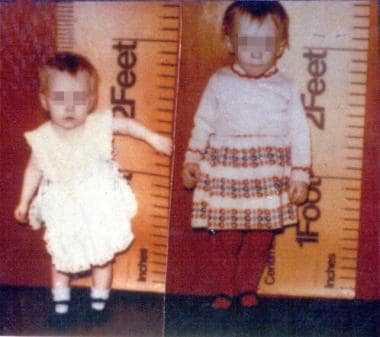
- Growth failure (see Image 1) is the most important sign to recognize in hypopituitarism. Growth failure may often exist for a considerable period of time before it is recognized. In addition to short stature and abnormal growth rate, the affected child may show evidence of delayed skeletal maturation (eg, delayed dental development).
- Weight gain typically is out of proportion to growth, resulting in relative obesity. This obesity is truncal in distribution; skull and head circumference growth are typically preserved, producing the impression of a large head.
- Craniofacial features of pituitary GHD include craniofacial disproportion (ie, normal head circumference, small facies, prominent forehead, frontal bossing). The presence of a central incisor is an important finding because it may represent hypopituitarism in a midline CNS abnormality.
- During physical examination, pay particular attention to pubertal development because patients with hypopituitarism may present with microgenitalia in infancy or with delayed or absent puberty.
- Visual and neurologic abnormalities may represent important features associated with hypopituitarism. When not recognized in infancy, optic nerve hypoplasia may be noted in childhood as decreased visual acuity. Signs that may indicate the potential presence of a suprasellar mass include decreased visual acuity, visual field defects, papilledema, and/or optic atrophy.
- Anosmia, particularly in a patient with delayed or absent puberty, should prompt consideration of Kallmann syndrome (KS).
Causes
The past 2 decades have brought considerable advances in the understanding of the various genetic causes of hypopituitarism, which may be autosomal recessive, autosomal dominant, or X-linked recessive. Some heritable forms of the disorder are limited to the hypothalamic, pituitary, or GH axes; these forms are caused by mutations in individual axis components.
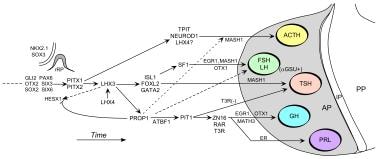
Mutations in pituitary transcription factors can cause multiple or isolated pituitary hormone deficiency. Mutations in PIT1 and PROP1 (ie, prophet of Pit-1) were the first shown to cause MPHD. Pit-1 is a homeobox transcription factor expressed in the anterior pituitary during early fetal development and throughout life. Mutations in the PIT1 gene produce a phenotype consisting of deficiencies of GH, PRL, and TSH. PROP1 is expressed before Pit-1 and is a prerequisite for the expression of Pit-1. Inactivating mutations of PROP1 cause deficiencies of LH, FSH, GH, PRL, and TSH. Clinical phenotypes of MPHD patients with PROP1 defects, determined by the pattern of hormone deficiency, can vary considerably even among patients with the same mutation.
HESX1 and KAL are two additional genes for which mutations have been found to cause pituitary abnormalities. Homozygous inactivating mutations in HSEX1 produce a complex phenotype with pituitary hypoplasia that resembles septo-optic dysplasia (SOD). Most cases of SOD remain sporadic without a known genetic defect and much remains to be learned about the role of HESX1 in other forms of hypopituitarism.
KAL plays a causative role in some forms of KS. KS is a rare syndrome consisting of hypogonadotropic hypogonadism and anosmia. Cases may be sporadic or familial with x-linked, autosomal recessive, and autosomal dominant forms being reported. The x-linked form is caused by a KAL gene defect and is characterized by failure of GnRH secretion caused by the failure of GnRH neurons to migrate normally from the olfactory bulb to the hypothalamus. KAL gene defects are only responsible for a small percentage of other familial cases as well as some sporadic cases. Defects in autosomal genes that have yet to be identified are thought to be likely to account for most familial (and presumably sporadic) cases of KS.
In the past several years, several novel transcription factor gene alterations have been reported as a cause of congenital pituitary hormone deficiencies. In addition to the above, these include mutations in LHX3, LHX4, TPIT, and PTX2.
Congenital etiologies
- Perinatal insults (eg, traumatic delivery, birth asphyxia)
- Genetic disorders
- Isolated GHD types IA, IB, II, III
- MPHD (eg, PIT1, PROP1 gene mutations)
- Septo-optic dysplasia
- KS
- Developmental CNS defects
- Anencephaly
- Holoprosencephaly
- Pituitary aplasia or hypoplasia
- Interrupted pituitary stalk
- Absent or ectopic neurohypophysis
- Pallister-Hall syndrome
Acquired etiologies
- Cranial irradiation
- Infiltrative disorders
- Histiocytosis X
- Tuberculosis
- Sarcoidosis
- Lymphocytic hypophysitis
- Hemochromatosis
- Tumors (eg, sellar, suprasellar, pineal)
- Craniopharyngioma (most common)
- Germinoma
- Glioma/astrocytoma
- Pituitary adenoma (rare prior to adulthood)
Adrenal Insufficiency
Ambiguous Genitalia and Intersexuality
Diabetes Insipidus
Growth Failure
Growth Hormone Deficiency
Hypernatremia
Hypoglycemia
Hypogonadism
Hyponatremia
Hyposomatotropism
Hypothyroidism
Jaundice, Neonatal
Microphallus
Other Problems to be Considered
Delayed puberty Psychosocial deprivation
Lab Studies
- To evaluate GHD, tests for insulinlike growth factor-I (IGF-I) and insulinlike growth factor–binding protein 3 (IGFBP-3) are useful for screening, although their use is limited in very young children or children with brain tumors. When GHD is strongly suspected, further provocative testing of GH secretion is typically performed under the supervision of a pediatric endocrinologist.
- Insulin-induced hypoglycemia is the most reliable provocative test for GHD and has the added advantage of accurately assessing the CRH-ACTH-cortisol axis. However, this test also has the greatest potential for harm, so it is not routinely employed in most pediatric centers.
- Alternative GH secretagogues used successfully in combination as 2 serial tests include arginine, levodopa, GHRH, propranolol with glucagon, exercise, clonidine, and epinephrine. In prepubertal children, consideration should be given to "priming" with sex steroids prior to testing.
- A random serum GH level rarely is helpful; the exception is during early infancy when GH levels usually are tonically elevated.
- Measurement of morning serum cortisol levels can help exclude a CRH-ACTH-cortisol axis deficiency; a level of 20 mcg/dL virtually excludes this diagnosis.
- Insulin-induced hypoglycemia probably is the criterion standard test but has limitations secondary to its inherent risks.
- As an alternative, metyrapone, which transiently induces adrenal insufficiency by blocking 11-hydroxylase activity, can be used to stimulate cortisol secretion. This test is quite variable and has some inherent risk.
- ACTH stimulation testing is sensitive, reproducible, and extremely safe. Even though it directly examines the state of the adrenal cortices, indirectly it provides information about the hypothalamic-pituitary unit because the cortisol response to exogenous ACTH is blunted in long-standing (>10 d) hypopituitarism.
- CRH stimulation testing can also be considered. It is of equivalent value to the ACTH stimulation test.
- In patients with acute hypoglycemia, a critical sample documenting low serum glucose, while simultaneously measuring GH and cortisol levels, can also be diagnostic.
- To assess central hypothyroidism (ie, TSH or TRH deficiency), low free thyroxine (FT4) levels assayed by dialysis and reference range or low serum TSH levels are diagnostic.
- Laboratory approaches to assess the pituitary-gonadal axis vary based on patient age.
- Young infants spontaneously secrete FSH and LH in amounts that can be detected by radioimmunoassay; they also produce substantial amounts of testosterone and estradiol. At this age, random measurements of estradiol or testosterone levels and of LH and FSH levels are adequate to assess the gonadal axis.
- From later infancy until about age 4 years, spontaneous secretion of LH and FSH is reduced, but stimulated responses to GnRH are retained, making GnRH testing an option.
- No method reliably assesses the axis in preadolescent children older than 4 years. Testing is typically deferred until puberty, when diagnostic findings show low random LH and FSH levels in conjunction with low sex steroid levels (eg, testosterone, estradiol).
- Elevated serum sodium and serum osmolality levels, when combined with low or low-normal urine osmolality, suggest diabetes insipidus (DI). A low serum ADH level in this context can be diagnostic for central DI (ie, pituitary vasopressin deficiency). A water deprivation test is definitive; this test is performed under the supervision of a pediatric endocrinologist. In patients with DI, serum sodium and serum osmolality levels rise during water deprivation, while urine fails to concentrate properly. A normal response to administered vasopressin differentiates central DI from nephrogenic DI.
Imaging Studies
- A brain MRI with specific cuts of the pituitary is the preferred imaging study for hypopituitarism. This may be obtained pre– and post–gadolinium contrast, which can be helpful in the delineation of the posterior pituitary and some pituitary tumors.
Medical Care
Appropriate treatment primarily involves appropriate hormone replacement.
Surgical Care
Tumor location and type dictate the choice of surgical procedures.
Consultations
Consultation with a pediatric hematologist-oncologist is necessary for patients with a pituitary tumor or histiocytosis X.
Diet
Diet is unrestricted.
Activity
Activity is unrestricted.
Agents used to treat hypopituitarism simply replace the deficient hormone(s). When appropriately administered, dosing is determined in a physiologic manner, and adverse effects are rare. Careful titration is critical. Consistent and accurate compliance with appropriately prescribed regimens is mandatory to avoid hormone deficiency or excess.
Drug Category: Endocrine hormones
These hormones are designed to replace absent hormones in patients with a pituitary deficiency.
| Drug Name | Somatropin (Nutropin, Genotropin, Saizen, Humatrope) |
| Description | Recombinant human growth hormone (rhGH) used to treat growth failure and metabolic abnormalities that accompany GHD. Somatropin is a purified polypeptide hormone of recombinant DNA origin. The amino acid sequence of somatropin is identical to pituitary derived human GH. Growth response of infants and children with severe GHD secondary to congenital hypopituitarism often is remarkable (see Image 1, which depicts the results achieved with rhGH therapy for 8 mo). |
| Pediatric Dose | 0.025-0.050 mg/kg/d SC hs |
| Contraindications | Documented hypersensitivity; closed epiphyses; actively growing intracranial tumor; critical illness related to respiratory failure |
| Interactions | Glucocorticoids may decrease growth-promoting effects |
| Pregnancy | C - Safety for use during pregnancy has not been established.
|
| Precautions | Regularly monitor growth velocity and assess IGF-I and IGFBP-3 levels at least annually during rhGH therapy; caution in diabetes mellitus; reconstitute with sterile water for injection if administering to newborns |
| Drug Name | Levothyroxine (Synthroid, Levoxyl) |
| Description | In active form, influences growth and maturation of tissues. Sufficient thyroid hormone is mandatory for normal growth, metabolism, and neurologic development. For central hypothyroidism, the goal is normal FT4. |
| Pediatric Dose | Replacement: 100 mcg/m2/d, individualize and titrate according to thyroid function test (TFT) results Neonates: 25-37.5 mcg PO qd; titrate based on TFT results 6-12 months: 50-75 mcg/d PO 1-5 years: 75-100 mcg/d PO 6-12 years: 100-150 mcg/d PO >12 years: 150 mcg/d PO |
| Contraindications | Documented hypersensitivity; uncorrected adrenal insufficiency |
| Interactions | Cholestyramine may decrease levothyroxine absorption; estrogens may decrease response to thyroid hormone therapy in patients with nonfunctioning thyroid glands; effect of anticoagulants increases when administered with levothyroxine; activity of some beta-blockers may decrease when hypothyroid patient is converted to a euthyroid state; phenytoin may decrease levels; soy protein ingestion can inhibit absorption of levothyroxine |
| Pregnancy | A - Safe in pregnancy
|
| Precautions | Caution in angina pectoris or cardiovascular disease; periodically monitor thyroid status |
| Drug Name | Hydrocortisone (Cortef, Solu-Cortef) |
| Description | Used for cortisol replacement therapy; has mineralocorticoid activity and glucocorticoid effects. |
| Pediatric Dose | Replacement: 8-12 mg/m2/d PO divided bid (usually two thirds in morning and one third in evening to simulate diurnal variation) Acute adrenal insufficiency: 50-100 mg/m2 IV bolus initially; followed by 50-100 mg/m2/d IV divided q6h |
| Contraindications | Documented hypersensitivity; viral, fungal, or tubercular skin infections |
| Interactions | Corticosteroid clearance may decrease with estrogens; may increase digitalis toxicity secondary to hypokalemia |
| Pregnancy | C - Safety for use during pregnancy has not been established.
|
| Precautions | Caution in hyperthyroidism, osteoporosis, peptic ulcer, cirrhosis, nonspecific ulcerative colitis, diabetes mellitus, and myasthenia gravis; during intercurrent illness, maintenance dose must be increased 2- to 3-fold and/or parenterally administrated |
| Drug Name | Vasopressin (Pitressin) |
| Description | Used for ADH replacement therapy; dose is quite variable and is titrated depending upon serum and/or urine sodium osmolality, fluid balance, and urine output; may be administered IM, SC, or as continuous IV infusion. |
| Pediatric Dose | 2.5-10 U IM/SC bid/qid |
| Contraindications | Documented hypersensitivity; coronary artery disease |
| Interactions | Lithium, epinephrine, demeclocycline, heparin, and alcohol may decrease effects; chlorpropamide, urea, fludrocortisone, and carbamazepine may potentiate effects |
| Pregnancy | B - Usually safe but benefits must outweigh the risks.
|
| Precautions | Caution in patients with predisposition to thrombus formation and conditions associated with fluid and electrolyte imbalance, cardiovascular disease, seizure disorders, nitrogen retention, asthma, or migraine; excessive doses may result in hyponatremia |
| Drug Name | Desmopressin (DDAVP) |
| Description | Increases cellular permeability of collecting ducts, resulting in reabsorption of water by kidneys; used for ADH replacement. |
| Pediatric Dose | 0.05-0.4 mg PO qd or divided bid; 5-40 mcg/d intranasally qd or divided bid |
| Contraindications | Documented hypersensitivity; platelet-type von Willebrand disease |
| Interactions | Coadministration with demeclocycline and lithium decreases effects; fludrocortisone and chlorpropamide increase effects of desmopressin |
| Pregnancy | B - Usually safe but benefits must outweigh the risks.
|
| Precautions | Caution in patients with predisposition to thrombus formation and conditions associated with fluid and electrolyte imbalance or cardiovascular disease |
Further Outpatient Care
- Routinely monitor growth and development at 3-month intervals.
- If a patient is receiving rhGH therapy, monitor for adverse effects and monitor IGF-I levels at least annually. Also, consider obtaining periodic hemoglobin A1c (HgbA1c), particularly in the patient with risk factors (eg, family history, obesity) for diabetes mellitus.
- Monitor FT4, when appropriate.
- When relevant, monitor blood sugar to ensure euglycemia; the condition may or may not require IV dextrose.
In/Out Patient Meds
- The presence of one or more hormone deficiencies determines medication choice (see Medications).
Deterrence/Prevention
- Genetic counseling with parents and patients about the mode of transmission is important for cases involving heritable forms of hypopituitarism.
Complications
- Sequelae from episodes of severe hypoglycemia, hypernatremia, or adrenal crises are among potential complications. Long-term complications include short stature and infertility.
Prognosis
- With appropriate treatment, overall prognosis is very good. Previous findings of increased cardiovascular morbidity and decreased life expectancy in adults with hypopituitarism were thought to be largely secondary to untreated GHD.
Patient Education
Medical/Legal Pitfalls
- Any patient with hypopituitarism must have an MRI examination to exclude a brain tumor.
- Close monitoring is mandatory for patients receiving rhGH therapy to identify possible adverse effects.
Special Concerns
- Conduct appropriate stress dosing of corticosteroid replacement.
| Media file 1:
The left photograph shows an untreated 21-month-old girl with congenital hypopituitarism. The right panel depicts the same child aged 29 months, following 8 months of growth hormone therapy. |
 | View Full Size Image | |
Media type: Photo
|
- Argyropoulou MI, Kiortsis DN. MRI of the hypothalamic-pituitary axis in children. Pediatr Radiol. Nov 2005;35(11):1045-55. [Medline].
- Baylis PH, Cheetham T. Diabetes insipidus. Arch Dis Child. Jul 1998;79(1):84-9. [Medline].
- Blethen SL. Hypopituitarism. In: Pediatric Endocrinology. New York, NY:. Marcel;1996:19-32.
- Bottner A, Keller E, Kratzsch J, et al. PROP1 mutations cause progressive deterioration of anterior pituitary function including adrenal insufficiency: a longitudinal analysis. J Clin Endocrinol Metab. Oct 2004;89(10):5256-65. [Medline]. [Full Text].
- Choo-Kang LR, Sun CC, Counts DR. Cholestasis and hypoglycemia: manifestations of congenital anterior hypopituitarism. J Clin Endocrinol Metab. Aug 1996;81(8):2786-9. [Medline].
- Darzy KH, Shalet SM. Hypopituitarism after cranial irradiation. J Endocrinol Invest. 2005;28(5 Suppl):78-87. [Medline].
- Fluck C, Deladoey J, Rutishauser K, et al. Phenotypic variability in familial combined pituitary hormone deficiency caused by a PROP1 gene mutation resulting in the substitution of Arg-->Cys at codon 120 (R120C). J Clin Endocrinol Metab. Oct 1998;83(10):3727-34. [Medline]. [Full Text].
- Ghigo E, Masel B, Aimaretti G, et al. Consensus guidelines on screening for hypopituitarism following traumatic brain injury. Brain Inj. Aug 20 2005;19(9):711-24. [Medline].
- Kim SS, Kim Y, Shin YL, et al. Clinical characteristics and molecular analysis of PIT1, PROP1, LHX3, and HESX1 in combined pituitary hormone deficiency patients with abnormal pituitary MR imaging. Horm Res. 2003;60(6):277-83. [Medline].
- Kjellin IB, Kaiserman KB, Curran JG, Geffner ME. Aplasia of right internal carotid artery and hypopituitarism. Pediatr Radiol. Aug 1999;29(8):586-8; discussion 585. [Medline].
- Lamberts SW, de Herder WW, van der Lely AJ. Pituitary insufficiency. Lancet. Jul 11 1998;352(9122):127-34. [Medline].
- Lebl J, Vosahlo J, Pfaeffle RW, et al. Auxological and endocrine phenotype in a population-based cohort of patients with PROP1 gene defects. Eur J Endocrinol. Sep 2005;153(3):389-96. [Medline].
- Lindsay R, Feldkamp M, Harris D, et al. Utah Growth Study: growth standards and the prevalence of growth hormone deficiency. J Pediatr. Jul 1994;125(1):29-35. [Medline].
- Mootha SL, Barkovich AJ, Grumbach MM, et al. Idiopathic hypothalamic diabetes insipidus, pituitary stalk thickening, and the occult intracranial germinoma in children and adolescents. J Clin Endocrinol Metab. May 1997;82(5):1362-7. [Medline]. [Full Text].
- Oliveira LM, Seminara SB, Beranova M, et al. The importance of autosomal genes in Kallmann syndrome: genotype- phenotype correlations and neuroendocrine characteristics. J Clin Endocrinol Metab. Apr 2001;86(4):1532-8. [Medline]. [Full Text].
- Osorio MG, Kopp P, Marui S, et al. Combined pituitary hormone deficiency caused by a novel mutation of a highly conserved residue (F88S) in the homeodomain of PROP-1. J Clin Endocrinol Metab. Aug 2000;85(8):2779-85. [Medline]. [Full Text].
- Parks JS, Kinoshita EI, Pfaffle RW. Pit-1 and hypopituitarism. Trends Endocrinol Metab. 1993;4:81-5.
- Parks JS, Brown MR, Hurley DL, et al. Heritable disorders of pituitary development. J Clin Endocrinol Metab. Dec 1999;84(12):4362-70. [Medline]. [Full Text].
- Pernasetti F, Milner RD, al Ashwal AA, et al. Pro239Ser: a novel recessive mutation of the Pit-1 gene in seven Middle Eastern children with growth hormone, prolactin, and thyrotropin deficiency. J Clin Endocrinol Metab. Jun 1998;83(6):2079-83. [Medline]. [Full Text].
- Pinto G, Netchine I, Sobrier ML, et al. Pituitary stalk interruption syndrome: a clinical-biological-genetic assessment of its pathogenesis. J Clin Endocrinol Metab. Oct 1997;82(10):3450-4. [Medline]. [Full Text].
- Reynaud R, Saveanu A, Barlier A, et al. Pituitary hormone deficiencies due to transcription factor gene alterations. Growth Horm IGF Res. Dec 2004;14(6):442-8. [Medline].
- Rosen T, Bengtsson BA. Premature mortality due to cardiovascular disease in hypopituitarism. Lancet. Aug 4 1990;336(8710):285-8. [Medline].
- Rosenbloom AL, Almonte AS, Brown MR, et al. Clinical and biochemical phenotype of familial anterior hypopituitarism from mutation of the PROP1 gene. J Clin Endocrinol Metab. Jan 1999;84(1):50-7. [Medline]. [Full Text].
- Rosenfeld RG. Disorders of growth hormone and insulin-like growth factor secretion and action. Pediatric Endocrinology. 1996;117-169.
- Sane K, Pescovitz OH. The clitoral index: a determination of clitoral size in normal girls and in girls with abnormal sexual development. J Pediatr. Feb 1992;120(2 Pt 1):264-6. [Medline].
- Sklar CA. Craniopharyngioma: endocrine abnormalities at presentation. Pediatr Neurosurg. 1994;21 Suppl 1:18-20. [Medline].
- Triulzi F, Scotti G, di Natale B, et al. Evidence of a congenital midline brain anomaly in pituitary dwarfs: a magnetic resonance imaging study in 101 patients. Pediatrics. Mar 1994;93(3):409-16. [Medline].
- Turton JP, Reynaud R, Mehta A. Novel mutations within the POU1F1 gene associated with variable combined pituitary hormone deficiency. J Clin Endocrinol Metab. Aug 2005;90(8):4762-70. [Medline].
- Vance ML. Hypopituitarism. N Engl J Med. Jun 9 1994;330(23):1651-62. [Medline].
- Vimpani GV, Vimpani AF, Lidgard GP, et al. Prevalence of severe growth hormone deficiency. Br Med J. Aug 13 1977;2(6084):427-30. [Medline].
- Weinzimer SA, Homan SA, Ferry RJ, Moshang T. Serum IGF-I and IGFBP-3 concentrations do not accurately predict growth hormone deficiency in children with brain tumours. Clin Endocrinol (Oxf). Sep 1999;51(3):339-45. [Medline].
Hypopituitarism excerpt Article Last Updated: May 25, 2006
|