| Patient Education |
|
Click here for patient education.
|
|
You are in: eMedicine Specialties >
Pediatrics: General Medicine > Endocrinology
Hyperparathyroidism
Article Last Updated: Aug 13, 2008
AUTHOR AND EDITOR INFORMATION
Section 1 of 10
Author: Gordon L Klein, MD, MPH, Professor, Departments of Pediatric Gastroenterology, Hepatology, and Nutrition, University of Texas Medical Branch
Gordon L Klein is a member of the following medical societies: American Academy of Pediatrics, American Gastroenterological Association, American Pediatric Society, American Society for Bone and Mineral Research, American Society for Clinical Nutrition, American Society for Nutritional Sciences, North American Society for Pediatric Gastroenterology and Nutrition, Sigma Xi, and Society for Pediatric Research
Editors: Phyllis W Speiser, MD, Chief of Pediatric Endocrinology, Schneider Children's Hospital; Professor of Pediatrics, New York University School of Medicine; Mary L Windle, PharmD, Adjunct Assistant Professor, University of Nebraska Medical Center College of Pharmacy, Pharmacy Editor, eMedicine; George P Chrousos, MD, FAAP, MACP, MACE, Professor and Chair, Department of Pediatrics, Athens University Medical School; Merrily P M Poth, MD, Professor, Department of Pediatrics and Neuroscience, Uniformed Services University of the Health Sciences; Stephen Kemp, MD, PhD, Professor, Department of Pediatrics, Section of Pediatric Endocrinology, University of Arkansas and Arkansas Children's Hospital
Author and Editor Disclosure
Synonyms and related keywords:
hyperparathyroidism, primary hyperparathyroidism, secondary hyperparathyroidism, tertiary hyperparathyroidism, parathyroid adenoma, parathyroid hyperplasia, hypocalcemia, intestinal malabsorption, chronic renal failure, multiple endocrine neoplasia, MEN, nutritional rickets, hypercalcemia, bradycardia, dehydration, jaw tumors, Wilms tumor, fractures, Zollinger-Ellison tumors, pancreatitis, urolithiasis, nephrolithiasis, nephrocalcinosis, bone resorption, vitamin D malabsorption, cholestatic liver disease, Paget disease
Background
Hyperparathyroidism is defined as proliferation of the parathyroid hormone (PTH)–secreting cells, or chief cells, in one or more of the 4 parathyroid glands. Hyperparathyroidism may be caused by genetic mutations (as in primary hyperparathyroidism), various underlying conditions that produce secondary hyperparathyroidism due to hypocalcemia (eg, intestinal malabsorption), or high serum phosphorus levels (as is seen in chronic renal failure). Tertiary hyperparathyroidism usually occurs in situations of secondary hyperparathyroidism. Tertiary hyperparathyroidism occurs when parathyroid hyperplasia becomes so severe that removal of the underlying cause does not eliminate the stimulus for PTH secretion and hypertrophic chief cells become autonomous.
Pathophysiology
Although the exact mechanism that causes primary increased PTH secretion is not certain, a loss of sensitivity of these proliferating chief cells to normal extracellular calcium concentrations is observed. In 1996, Kifor et al showed that the parathyroid cell surface G protein–coupled calcium-sensing receptor is reduced by approximately 50% in parathyroid adenoma cells as compared to normal parathyroid controls.1 This reduction is associated with an increased amount of circulating calcium, which is required to suppress PTH secretion. The reduction may be caused by genetic mutation (eg, familial hypocalciuric hypercalcemia, neonatal severe hyperparathyroidism), multiple endocrine neoplasia (MEN), or conditions that would normally stimulate compensatory PTH secretion. In addition, some genetic mutations have been described in primary hyperparathyroidism, including relocation of the PTH gene to a site next to an oncogene. Loss of one copy of a tumor suppressor gene on chromosome 11 has also been reported in some patients with MEN type 1 (MEN I) syndrome. Conditions leading to secondary hyperparathyroidism include calcium or vitamin D malabsorption, accumulation of phosphate with inability to excrete it (eg, chronic renal failure), and uremia.
PTH indirectly stimulates bone resorption by attaching to the osteoblast PTH receptor, which then signals the osteoblast to produce various substances, among them is the ligand of the receptor activator of the nuclear transcription factor NF-kappa B (RANK), known as RANK ligand or RANKL, which can stimulate osteoclast differentiation and proliferation. The osteoblast also acts as a brake on osteoclastic activity by producing osteoprotegerin. Exactly how the osteoblast governs osteoclastogenesis is not fully understood.
Frequency
United States
Frequency of primary hyperparathyroidism is reported to occur in adults with a frequency of 1 case in 500-1000 population. Its true prevalence in children is unknown, but it is considered rare. The frequency of secondary hyperparathyroidism depends on the frequency of the underlying disease.
International
No data indicate that international frequency differs from US frequency. One report from Libansky et al from a medical center in the Czech Republic reports that 10 children, aged 10-17 years, underwent surgical resection.2 This provides a crude rate of a little less than 1 case per year that results in surgical treatment, although this does not suggest overall incidence of the condition. However, if nutritional rickets, a form of secondary hyperparathyroidism, is taken into account, occurrence of this condition in children in developing countries is much higher than in the United States, increasing overall frequency worldwide.
Mortality/Morbidity
The morbidity from primary hyperparathyroidism is most often due to hypercalcemia. This can take the form of bradycardia and heart block and dehydration due to polyuria, nausea, vomiting, and poor fluid intake. Pancreatitis has also been reported. Other causes of morbidity observed with primary hyperparathyroidism may be due to effects of associated tumors, such as jaw tumors or Wilms tumor. In 1999, a population-based study by Khosla et al demonstrated that, even with mild disease, risk of fractures is increased, especially in adults.3 This appears directly related to age and sex (ie, older females have the highest incidence of fractures). Morbidity from secondary hyperparathyroidism usually involves demineralization of bones with subsequent pain, fracturing, or deformity.
Race
No racial predominance is reported.
Sex
Primary hyperparathyroidism is most commonly observed in females, with a female-to-male ratio of 3:1. Females also have a greater risk of developing fractures.
Age
Postmenopausal women have the highest incidence of primary hyperparathyroidism and fractures. Additionally, they have an increase in secondary hyperparathyroidism because the skin of older persons is less efficient in converting the 7-dehydrocholesterol precursor to vitamin D with ultraviolet light exposure. Because sporadic parathyroid tumors in children are rare, patients are relatively more likely to have tumors associated with MEN I, such as Zollinger-Ellison tumors of the pancreatic islet cells and pituitary tumors, or to have hyperparathyroidism fibro-osseous jaw tumors, which are associated with Wilms tumors in affected families.
History
- Primary hyperparathyroidism
- Most commonly, patients present without symptoms. Hyperparathyroidism may be diagnosed in an otherwise asymptomatic patient by incidental discovery during routine blood chemistry analysis of hypercalcemia.
- Symptoms of early disease, when present, are specific to hypercalcemia. They include muscle weakness, depression, increased sleepiness, nausea, vomiting, acute abdominal pain (which might be the result of pancreatitis), constipation, and polydipsia. Frequent and occasionally painful urination and dysuria and/or back pain may be observed, the latter from nephrolithiasis. The most common presenting symptoms of the ten children reported by Libansky et al included urolithiasis, nephrolithiasis, nephrocalcinosis, and bone resorption, as well as fatigue and muscle weakness.
- Secondary hyperparathyroidism
- Patients with secondary hyperparathyroidism usually present with a history of underlying disease such as renal or intestinal conditions.
- Symptoms are musculoskeletal in nature, including bone pain, muscle weakness, and previous fracture.
Physical
- Primary hyperparathyroidism
- Signs of dehydration due to hypercalcemia, such as tenting of skin, prolonged capillary refill time, and dry mucous membranes
- Bradycardia, with or without irregular heartbeat
- Decreased muscle tone and somnolence
- Secondary hyperparathyroidism
- Skeletal deformity
- Decreased muscle tone
- Bone pain on palpation
- Short stature
Causes
- Primary hyperparathyroidism is caused by a genetic mutation.
- Secondary hyperparathyroidism may develop as a response to hypocalcemia caused by intestinal disease resulting in calcium and vitamin D malabsorption.
- Chronic renal insufficiency
- Insufficient vitamin D and calcium intake: Insufficient intake in children may cause rickets. Although this is not as common in the United States, rickets are a major cause of secondary hyperparathyroidism in developing countries, especially those countries in which children are kept out of the sun while parents work. Moreover, a growing body of data suggest that many children and adolescents, especially in northern climates, are vitamin D insufficient and have a serum level of 25-hydroxyvitamin D between 20-30 ng/mL. Levels in this range are associated with increased circulating intact PTH.
- Cholestatic liver disease: Contrary to previous belief, not all children with chronic cholestatic liver disease have secondary hyperparathyroidism. Many of these patients, as well as adults with chronic liver disease, have levels of PTH within the reference range.
- Iatrogenic causes: Iatrogenic causes, such as lithium administration, may decrease the ability of circulating levels of calcium that are within the reference range to suppress PTH secretion. The mechanism for this is not presently clear.
Malnutrition
Multiple Endocrine Neoplasia
Wilms Tumor
Other Problems to be Considered
Adrenal insufficiency Bradycardia Chronic cholestatic liver disease (some cases) Chronic renal insufficiency Familial hypocalciuric hypercalcemia Granulomatous disease Heart block Humoral hypercalcemia of malignancy Hyperparathyroidism jaw tumor syndrome Immobilization Jansen metaphyseal chondrodysplasia Lithium treatment Radiation Thyrotoxicosis Vitamin D intoxication Williams syndrome
Lab Studies
- One key difference between primary and secondary hyperparathyroidism is that patients with primary disease are always hypercalcemic, whereas those with secondary disease are almost always normocalcemic.
- For blood studies, serum calcium concentrations and immunoreactive PTH levels using immunoradiometric assay (IRMA) to detect intact PTH molecules are most important. These can be used to distinguish primary hyperparathyroidism from secondary hyperparathyroidism. In primary disease, high levels of calcium and PTH are observed, whereas in secondary disease, levels of calcium are within the reference range and levels of PTH are high.
- Serum levels of phosphorus are not always helpful with respect to diagnosis.
- Serum phosphorus levels in primary hyperparathyroidism are mainly in the low-normal range.
- Serum levels in secondary hyperparathyroidism due to renal failure serum phosphorus levels are elevated because of the inability of the kidney to excrete phosphorus.
- In the absence of dialysis therapy, phosphorus levels are elevated.
- In some cases of chronic cholestatic liver disease, serum phosphorus levels are low.
- Tests for the following biochemical markers of bone formation are elevated because of the high turnover state. This high turnover state is not specific to hyperparathyroidism of either primary or secondary origin and could be equally compatible with Paget disease or other high turnover states.
- Serum levels of osteocalcin or bone-specific alkaline phosphatase
- Biochemical markers of bone resorption, such as serum C-telopeptide of type I collagen
- Urinary N-telopeptide (NTx), C-telopeptide of type I collagen (CTX)
- Deoxypyridinoline
Imaging Studies
- Radiography
- The value of skeletal radiographs in diagnosis of primary hyperparathyroidism is questionable because relatively few cases exhibit stigmata of hyperparathyroidism.
- Radiography may be useful in defining the extent of damage in secondary hyperparathyroidism.
- Radiography reveals the following in some cases of primary and most cases of secondary hyperparathyroidism:
- Multiple areas of subperiosteal bone resorption of the distal phalanges
- Tapering of the clavicles
- Brown tumors of the long bones and a salt-and-pepper appearance of the skull
- Bone densitometry
- Another way to monitor the severity of bony involvement is with bone densitometry, determined by dual energy x-ray absorptiometry (DEXA). This technique can be used to quantify bone mineral content of a specific region in g, bone area in cm2, and density in g/cm2.
- This is an areal or 2-dimensional measurement but can be followed longitudinally to evaluate the severity of the effect on bone and the effectiveness of therapy.
- Bone density in the hip and lumbar spine, for which pediatric reference range values are often integrated into the computer software of the machine, are expected to be low compared with age-related reference range values.
- The degree of improvement with treatment is hard to predict because no reports exist of this occurring.
- Patients with severe primary hyperparathyroidism have reduced bone mineral density at multiple sites, although overt bone disease is now seen in less than 5% of these patients in the United States.
- The drawback to this method in children is that the pediatric bone is still growing and adapting to stresses, and changes in bone volume that will affect bone strength cannot be detected. In addition, bone density readings are size dependent. Thus, a smaller person has a falsely lower bone density than a larger person.
Other Tests
- The only other tests of value are those that are used to diagnose the underlying cause of secondary hyperparathyroidism, associated genetic defects, or tumors accompanying primary hyperparathyroidism.
Procedures
- No diagnostic procedures are pertinent to diagnosis, except those that are used to diagnose an underlying disease in secondary hyperparathyroidism.
Histologic Findings
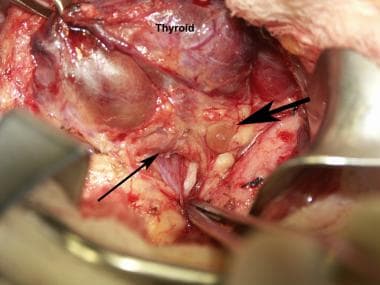
- In most cases of primary hyperparathyroidism, an adenoma involving only 1 of 4 glands is present. Less frequently, adenomas involve multiple glands, and parathyroid carcinoma is very rare. All histologic findings have been described in adults.
- In secondary hyperparathyroidism, the vast majority of cases demonstrate only chief cell hyperplasia.
- In severe cases, especially with chronic renal failure, adenomas may develop and hyperparathyroidism may continue even in the absence of hyperphosphatemic stimulus. This is known as tertiary hyperparathyroidism.
Medical Care
Medical management of primary hyperparathyroidism has not been satisfactory because no agents are available that can produce either sustained blockage of PTH release by parathyroid glands or sustained blockage of hypercalcemia. However, research is currently underway to develop calcimimetics, which can stimulate up-regulation of parathyroid calcium-sensing receptor and potentially blunt abnormally increased PTH secretion. Clinical studies have already identified the drug cinacalcet, which can treat both primary and secondary hyperparathyroidism in adults as well as at least one recent report of its successful use in children. Muscheites et al in Germany used a daily dosage of 0.25 mg/kg body weight for 4 weeks in 7 children with end-stage renal disease and secondary hyperparathyroidism, with a resultant 80% decrease in serum intact PTH levels.4 In addition, human osteoprotegerins, which can block PTH-induced hypercalcemia, are also undergoing clinical studies. For secondary hyperparathyroidism that occurs with chronic renal failure, parenteral administration of calcitriol is helpful; however, this manner of administration is feasible only for those patients receiving hemodialysis. One complication of intravenous calcitriol may be an increase in circulating calcium. This can be avoided by intravenous administration of a new vitamin D analog, paricalcitol, that can treat secondary hyperparathyroidism without raising serum calcium and phosphorus levels. For those individuals receiving therapy with peritoneal dialysis, oral administration of calcitriol is the only alternative. This route of administration may not be as effective as the intravenous route; however, some preliminary clinical trials, as stated above, have been conducted for calcimimetics in primary and secondary hyperparathyroidism. Early results are encouraging. In addition, a new oral form of paricalcitol is now in development and may reduce circulating PTH an average of 42%. For other forms of secondary hyperparathyroidism, such as that resulting from chronic cholestatic liver disease, no standard treatment guidelines are available. Therefore, treatment should be aimed at ameliorating the underlying condition and supplying sufficient dietary calcium, phosphorus, vitamin D, and magnesium. This ensures that hyperparathyroidism is not exacerbated by nutritional insufficiency. The treatment of acute severe hypercalcemia (serum calcium level >14 mg/dL), which may or may not result from hyperparathyroidism, includes hydration with isotonic sodium chloride solution to restore extracellular fluid volume that may be depleted secondary to vomiting and to induce calciuresis. Consider the addition of loop diuretics (eg, furosemide) only after normal hydration is restored. In extreme cases, either hemodialysis or peritoneal dialysis with low or zero calcium dialysate could be used. Although not routinely used in pediatrics, newer studies are demonstrating that the bisphosphonates (antiresorptive agents) can be safely used in children and may lower serum calcium levels by decreasing bone resorption. Also, mobilization should be encouraged to prevent the hypercalcemia that occurs secondary to bed rest.
Surgical Care
- Parathyroidectomy
- For primary hyperparathyroidism, subtotal or total parathyroidectomy is the most common choice for adults or children, depending on the number of glands involved with tumors.
- Parathyroidectomy can result in reference range serum calcium levels, an increase in bone mineral density, and successful prevention of kidney stones.
- Also, in patients with uremia, subtotal or total parathyroidectomy is an option when medical management with calcitriol or one of its analogs is unsuccessful or when tertiary hyperparathyroidism that is independent of external feedback develops.
- Surgical complications
- Postoperative complications include transient hypocalcemia because parathyroids regain their sensitivity to circulating calcium.
- Hungry bone syndrome, a prolonged period of hypocalcemia, can occur postoperatively in those cases of primary hyperparathyroidism that demonstrated significant bone demineralization. Bones reaccumulate calcium at the expense of circulating levels.
- Finally, as in thyroid surgery, a risk of damage to the recurrent laryngeal nerve resulting in permanent hoarseness of the voice is observed.
Consultations
- The primary care provider should consult an adult or pediatric endocrinologist. Also, a radiologist should be consulted if the condition may involve the bones.
- Consultation with a surgeon may be obtained after consultation with the pediatric endocrinologist.
- Consult an oncologist if malignancy underlies hypercalcemia. Consult a nephrologist, a urologist, or both, if chronic renal failure is causing secondary hyperparathyroidism or if renal calculi develop.
- Genetic counseling for the patient and family members should be offered if the diagnosis of MEN is made.
Diet
- No strict dietary requirements are necessary for management of primary hyperparathyroidism.
- For secondary hyperparathyroidism, dietary management depends on the underlying disease state.
- For renal disease, phosphate may be restricted depending on the success of dialysis treatment or oral phosphate–binding therapy.
- For liver disease or malabsorptive syndromes, oral or intravenous supplementation of calcium, phosphate, magnesium, and vitamin D would be helpful to minimize inadequacy of these nutrients caused by malabsorption or other loss.
Activity
Restrictions are mandated according to the underlying chronic disease.
At present, satisfactory medical therapy for primary hyperparathyroidism is being developed and early studies are promising. Pharmacologic treatment for secondary hyperparathyroidism is currently oral or parenteral calcitriol (1,25-dihydroxyvitamin D) in patients with renal failure. However, increasing use of paricalcitol or cinacalcet may reduce the need for surgical resection.
Drug Category: Vitamin D analogs
These agents regulate serum calcium levels via actions on calcium and phosphorus metabolism at intestinal, renal, and skeletal sites. The kidney appears to play a central role in this system. It produces calcitriol (ie, 1,25-dihydroxyvitamin D, the primary active metabolite of vitamin D3), which acts on distal organs, and at the same time is the target organ for PTH, calcitonin, and possibly calcitriol. Calcitriol is administered to help suppress excessive PTH release and blunt the hyperparathyroid response to chronic renal failure.
Unlike calcitriol, a new vitamin D analog, paricalcitol, can treat secondary hyperparathyroidism without raising serum calcium and phosphorus levels. Paricalcitol is not yet extensively used in pediatric patients, but articles by Sanchez5 and Seeherunvong et al6 have described initial data suggesting safety and effectiveness in children.
| Drug Name | Calcitriol (Calcijex, Rocaltrol) |
| Description | Used in attempted suppression of PTH secretion stimulated by inability of the kidneys to excrete phosphate, with its consequent accumulation in blood. Increases calcium levels by promoting absorption of calcium in the intestines and retention in the kidneys. Has not been tried in patients with other causes of secondary hyperparathyroidism. |
| Adult Dose | Peritoneal dialysis: 0.5-5 mcg/dose PO 2-3 times/wk Hemodialysis: 1-2 mcg/dose IV 2-3 times/wk |
| Pediatric Dose | 0.01-0.04 mcg/kg/d PO IV dose is not established; not to exceed adult dose |
| Contraindications | Documented hypersensitivity; hypercalcemia; malabsorption syndrome; hypervitaminosis D; renal osteodystrophy with hyperphosphatemia |
| Interactions | Cholestyramine and colestipol decrease absorption of calcitriol; magnesium-containing antacids and thiazide diuretics can increase calcitriol effects |
| Pregnancy | C - Fetal risk revealed in studies in animals but not established or not studied in humans; may use if benefits outweigh risk to fetus
|
| Precautions | Maternal hypersensitivity to vitamin D during pregnancy may lead to Williams syndrome; growth arrest may result in children fed ergocalciferol 1800 U/d; major precaution involves monitoring to avoid hypercalcemia |
| Drug Name | Paricalcitol (Zemplar) |
| Description | For treatment of secondary hyperparathyroidism in ESRD. Reduces PTH levels, stimulates calcium and phosphorous absorption, and stimulates bone mineralization. |
| Adult Dose | 0.04-0.1 mcg/kg IV bolus 3 times/wk; adjust dose based on PTH levels |
| Pediatric Dose | <5 years: Not established 5-19 years: Data limited, 0.04-0.08 mcg/kg IV 3 times/wk; adjust dose based on PTH levels
|
| Contraindications | Documented hypersensitivity; hypercalcemia; vitamin D toxicity |
| Interactions | Do not use phosphate or vitamin D-related compounds concomitantly with paricalcitol; caution if administered with digoxin (digitalis toxicity is potentiated by hypercalcemia) |
| Pregnancy | C - Fetal risk revealed in studies in animals but not established or not studied in humans; may use if benefits outweigh risk to fetus
|
| Precautions | Caution in breastfeeding; adverse effects include GI tract distress, dry mouth, lightheadedness, edema, chills, or fever |
Drug Category: Isotonic crystalloids
Sodium chloride 0.9% fluid is used to supply intravenous hydration to replace fluids lost by emesis for patients with acute hypercalcemia of any etiology.
| Drug Name | Sodium chloride 0.9%, IV (Normal saline) |
| Description | Commonly used solution that is designed to replace circulating crystalloid lost by emesis. |
| Adult Dose | Dosage depends on the estimated fluid loss; in patients with normal renal function, continuous IV infusion over 24-48h usually lowers serum Ca by 1-3 mg/dL |
| Pediatric Dose | 20-40 mL/kg IV over the first h in patients with normal renal function Depending on the degree of dehydration, use sufficient isotonic sodium chloride solution to replace 50% of the deficit over the first 8 h and the remainder of the deficit over the next 16 h |
| Contraindications | Fluid retention; hypernatremia; acute renal failure or chronic renal disease; inappropriate ADH secretion |
| Interactions | May decrease levels of lithium when administered concurrently |
| Pregnancy | C - Fetal risk revealed in studies in animals but not established or not studied in humans; may use if benefits outweigh risk to fetus
|
| Precautions | Caution in congestive heart failure, hypertension, edema, liver cirrhosis, renal insufficiency, and sodium toxicity |
Drug Category: Loop diuretics
Once hydration has been established, use of a diuretic (eg, furosemide) can help increase calciuresis without adding to the dehydration caused by hypercalcemia.
| Drug Name | Furosemide (Lasix) |
| Description | Increases excretion of water by interfering with chloride-binding cotransport system, which in turn inhibits sodium and chloride reabsorption in the ascending loop of Henle and the distal renal tubule. The published doses of 80-100 mg for adults and 25-50 mg for children IV q4h should be reserved for the most severe cases. |
| Adult Dose | 10-20 mg IV q2-4h prn for acute hypercalcemia |
| Pediatric Dose | 1 mg/kg IV; may cautiously increase dose by 1 mg/kg q2h; not to exceed 6 mg/kg/dose |
| Contraindications | Documented hypersensitivity; hepatic coma; anuria; state of severe electrolyte depletion |
| Interactions | Metformin decreases furosemide concentrations; furosemide interferes with hypoglycemic effect of antidiabetic agents and antagonizes muscle-relaxing effect of tubocurarine; auditory toxicity appears to be increased with coadministration of aminoglycosides and furosemide; hearing loss of varying degrees may occur; anticoagulant activity of warfarin may be enhanced when taken concurrently with this medication; increased plasma lithium levels and toxicity are possible when taken concurrently with this medication |
| Pregnancy | C - Fetal risk revealed in studies in animals but not established or not studied in humans; may use if benefits outweigh risk to fetus
|
| Precautions | Neonates exhibit a prolonged half-life (consider extending dosage interval); measure serum electrolytes, CO2, glucose, creatinine, uric acid, calcium, and BUN levels |
Drug Category: Bisphosphonates
Bisphosphonates are antiresorptive agents that are used to help preserve bone mass. They are available in oral and parenteral forms. The inhibition of bone resorption produces a hypocalcemic effect. These agents are used in the management of conditions associated with increased bone resorption (eg, osteoporosis, Paget disease, management of hypercalcemia [especially that associated with malignancy]). In case of acute hypercalcemia with vomiting, parenteral therapy is recommended. By reducing bone resorption, a calcium-lowering effect in the blood may occur.
| Drug Name | Pamidronate (Aredia) |
| Description | IV bisphosphonate that acts as an antiresorptive agent. Inhibits normal and abnormal bone resorption. Appears to inhibit bone resorption without inhibiting bone formation and mineralization. Currently accepted uses include the treatment of hypercalcemia associated with neoplasms and metastases as well as for treatment of Paget disease. This category of drugs is not approved for the treatment of hypercalcemia secondary to hyperparathyroidism; however, in practice, can be used for this as well as in the management of postmenopausal osteoporosis. Now being used in pediatrics to treat osteogenesis imperfecta and idiopathic juvenile osteoporosis. Preliminary study results on its use to prevent bone loss following severe burns appear promising. |
| Adult Dose | 60-90 mg IV infused over 8 h; prepare IV by mixing in 1 L of dextrose 5% and water solution |
| Pediatric Dose | Not established; some studies have used 1.5 mg/kg/dose IV infused over 12 h; not to exceed 90 mg/dose; prepare IV by mixing 1 L of dextrose 5% and water |
| Contraindications | Documented hypersensitivity; hypocalcemia |
| Interactions | None reported |
| Pregnancy | C - Fetal risk revealed in studies in animals but not established or not studied in humans; may use if benefits outweigh risk to fetus
|
| Precautions | Monitor hypercalcemia-related parameters, such as serum levels of calcium, phosphate, magnesium, and potassium once treatment begins; adequate intake of calcium and vitamin D is necessary to prevent severe hypocalcemia; caution when administering bisphosphonates in patients with active upper GI problems (eg, gastric irritation, nausea, GI pain) |
Drug Category: Calcimimetic Agent
These agents reduce PTH levels. A small clinical trial by Muscheites et al in children showed an 80% decrease in serum PTH levels.4
| Drug Name | Cinacalcet (Sensipar) |
| Description | Directly lowers intact parathyroid hormone (iPTH) levels by increasing sensitivity of calcium sensing receptor on chief cell of parathyroid gland to extracellular calcium. Also results in concomitant serum calcium decrease. Indicated for secondary hyperparathyroidism in patients with chronic kidney disease on dialysis. |
| Adult Dose | 30 mg PO qd initially; slowly titrate upward (no more frequent than q2-4wk intervals) by 30 mg increments to target iPTH of 150-300 pg/mL Take with meals or immediately following; do not crush, chew or cut tab
|
| Pediatric Dose | Not established, but note that 0.25 mg/kg PO qd for 4 wk has been shown to be effective in lowering circulating PTH levels |
| Contraindications | Documented hypersensitivity |
| Interactions | Strong CYP450 2D6 inhibitor; may increase serum levels of CYP 2D6 substrates (eg, flecainide, vinblastine, thioridazine, tricyclic antidepressants); coadministration with CYP450 3A4 inhibitors (eg, ketoconazole, erythromycin, itraconazole) may decrease cinacalcet clearance |
| Pregnancy | C - Fetal risk revealed in studies in animals but not established or not studied in humans; may use if benefits outweigh risk to fetus
|
| Precautions | Serum calcium reduction may cause lowered seizure threshold, paresthesia, myalgia, cramping, and tetany; monitor calcium and phosphorus levels closely within 1 wk following initial dose or dose changes, and then monthly (secondary hyperparathyroidism) and q2 mo (parathyroid carcinoma); do not initiate treatment if serum calcium below 8.4 mg/dL; adynamic bone disease may occur if iPTH levels suppressed below 100 pg/mL; caution with hepatic impairment; common adverse effects include nausea and vomiting |
Further Inpatient Care
- Further inpatient care depends on the nature of the diagnosis and why the patient was admitted.
- For a parathyroidectomy, the patient's serum calcium level must be postoperatively monitored to determine if any evidence of transient postoperative hypocalcemia or hungry bone syndrome is present.
- Monitor wound healing and observe for damage to the recurrent laryngeal nerve.
- Because management is often medical for secondary hyperparathyroidism, further care depends on efforts to control the underlying problem, thereby improving hyperparathyroidism; management also often involves initial use of calcitriol to find the appropriate dose for maintenance of the patient.
Further Outpatient Care
- Outpatient care for postparathyroidectomy patients involves continued monitoring of serum calcium levels (if low at discharge) and observation of wound healing.
- Furthermore, care should include treatment of accompanying tumors, such as in MEN I.
- For secondary hyperparathyroidism, outpatient care includes management and control of the underlying condition.
In/Out Patient Meds
- Calcitriol is a vitamin D metabolite administered to help suppress excessive PTH release and blunt the hyperparathyroid response to chronic renal failure.
Transfer
- Transfer to another facility is necessary only if current facilities cannot provide the expertise of an endocrinologist, surgeon, or subspecialist for an exacerbation of underlying disease.
Complications
- Complications of primary hyperparathyroidism include consequences of hypercalcemia, such as nephrolithiasis, dehydration, and cardiac arrhythmias.
- Complications of secondary hyperparathyroidism are mainly skeletal and involve fractures, decreased bone density, bone pain, and muscle weakness.
Prognosis
- For primary hyperparathyroidism, parathyroidectomy should be curative if the condition occurs in isolation. However, if it is associated with other tumors, then prognosis depends on the management of accompanying tumors.
- For secondary hyperparathyroidism, prognosis depends entirely on the success of managing the primary disease process.
Patient Education
- Patients with primary hyperparathyroidism must understand the following:
- Location and function of parathyroid gland and PTH
- Effects of hypercalcemia on the body (eg, arrhythmia, stones, bone demineralization, increased fracture risk)
- Lack of success in managing primary hyperparathyroidism medically, need for surgical consultation, and possible removal of one or more parathyroid glands
- Patients with secondary hyperparathyroidism must understand the following:
- The mechanism by which the underlying condition causes secondary hyperparathyroidism
- Effects on the body (eg, bone pain, bone demineralization, increased fracture risk, muscle weakness)
- Proper management of secondary hyperparathyroidism in each individual case
Medical/Legal Pitfalls
- Inasmuch as primary hyperparathyroidism may be asymptomatic, mild hypercalcemia incidentally found on a screening test of serum electrolytes may not be diagnostically pursued. Failure to repeat the serum calcium determination and obtain serum intact PTH concentration to detect consistent elevation of serum calcium concentration in the face of elevated serum levels of intact PTH results in failure to diagnose the condition as primary hyperparathyroidism.
- Conversely, symptoms such as nausea, vomiting, and constipation, although characteristic of hypercalcemia, may lead to pursuing other diagnostic possibilities. Failure to check serum calcium levels in children presenting with nausea and vomiting may lead to a missed diagnosis of primary hyperparathyroidism.
- Failure to diagnose an underlying cause for hypercalcemia, such as renal failure or malignancy, is another medicolegal pitfall.
- Clinicians should be aware of the possibility of MEN in cases of familial hyperparathyroidism due to adenomas. Careful family history must be taken for hypercalcemia, parathyroid adenomas, Zollinger-Ellison syndrome, and other MEN-associated problems. The family should be counseled accordingly if history is positive.
Special Concerns
- Pediatrics: Because of the high frequency of gastrointestinal symptoms, such as abdominal pain and constipation, among school-aged children and adolescents, checking blood ionized calcium concentration as part of a routine workup of the above-mentioned symptoms is prudent.
- Kifor O, Moore FD Jr, Wang P. Reduced immunostaining for the extracellular Ca2+-sensing receptor in primary and uremic secondary hyperparathyroidism. J Clin Endocrinol Metab. Apr 1996;81(4):1598-606. [Medline].
- Libansky P, Astl J, Adamek S, et al. Surgical treatment of primary hyperparathyroidism in children: Report of 10 cases. Int J Pediatr Otorhinolaryngol. Aug 2008;72(8):1177-82. [Medline].
- Khosla S, Melton III LJ, Wermers RA. Primary hyperparathyroidism and the risk of fractures: A population-based study. J Bone Miner Res. 1999;14:1700-1707. [Medline].
- Muscheites J, Wigger M, Drueckler E, Fischer DC, Kundt G, Haffner D. Cinacalcet for secondary hyperparathyroidism in children with end-stage renal disease. Pediatr Nephrol. May 27 2008;[Medline].
- Sanchez CP. Secondary hyperparathyroidism in children with chronic renal failure: pathogenesis and treatment. Paediatr Drugs. 2003;5(11):763-76. [Medline].
- Seeherunvong W, Nwobi O, Abitbol CL, Chandar J, Strauss J, Zilleruelo G. Paricalcitol versus calcitriol treatment for hyperparathyroidism in pediatric hemodialysis patients. Pediatr Nephrol. Oct 2006;21(10):1434-9. [Medline].
- Arnold A. Familiar hyperparathyroid syndromes. In: Favus MJ. Primer on the Metabolic Bone Diseases and Disorders of Mineral Metabolism. Sixth. Washington DC: American Society for Bone and Mineral Research; 2006:185-188.
- Aubin JE, Lian JB, Stein GS. Bone Formation: Maturation and Functional Activities of Osteoblast Lineage Cells. In: Favus MJ. Primer on the Metabolic Bone Diseases and Disorders of Mineral Metabolism. Sixth. Washington DC: American Society for Bone and Mineral Research; 2006:20-29.
- Bilezekian JP, Silverberg SJ. Primary Hyperparathyroidism. In: Favus MJ. Primer on the Metabolic Bone Diseases and Disorders of Mineral Metabolism. Sixth. Washington DC: American Society for Bone and Mineral Research; 2006:181-185.
- Hebert SC. Therapeutic use of calcimimetics. Annu Rev Med. 2006;57:349-64. [Medline].
- Langman CB. Hypercalcemic Syndromes in Infants and Children. In: Primer on the Metabolic Bone Diseases and Disorders of Mineral Metabolism. Sixth. Washington DC: American Society for Bone and Mineral Research; 2006:209-212.
- Martin KJ, Al-Aly Z, Gonzalez EAl. Renal Osteodystrophy. In: Favus MJ. Primer on the Metabolic Bone Diseases and Disorders of Mineral Metabolism. Sixth. Washington DC: American Society for Bone and Mineral Research; 2006:359-366.
- Marx SJ. Familial Hypocalciuric Hypercalcemia. In: Familial hypocalciuric hypercalcemia. In: Primer on the Metabolic Bone Diseases and Disorders of Mineral Metabolism. Sixth. Washington DC: American Society for Bone and Mineral Research; 2006:188-190.
- Morony S, Capparelli C, Lee R. A chimeric form of osteoprotegerin inhibits hypercalcemia and bone resorption induced by IL-1 beta, TNF-alpha, PTH, PTHrP, and 1,25 (OH)2D3. J Bone Miner Res. 1999;14:1478-1485. [Medline].
- National Kidney Foundation. Clinical Practice Guidelines for Bone Metabolism and Disease in Chronic Kidney Disease. Am J Kid Dis. 2003;42 suppl 3:S1-202.
- Ross FP. Osteoclast Biology and Bone Resorption. In: Favus MJ. Primer on the Metabolic Bone Diseases and Disorders of Mineral Metabolism. Sixth. Washington DC: American Society for Bone and Mineral Research; 2006:30-35.
- Silverberg SJ, Shane E, Jacobs TP. A 10-year prospective study of primary hyperparathyroidism with or without parathyroid surgery. N Engl J Med. 1999;341:1249-1255. [Medline].
- United States Pharmacopeia. Vitamin D and Analogs Systemic. USP Dispensing Information: Advice to the Health Care Professional. 2004;1:2849-57.
- Vestergaard P, Nielsen LR, Mosekilde L. [Cinacalcet--a new drug for the treatment of secondary hyperparathyroidism in patients with uraemia, parathyroid cancer or primary hyperparathyroidism]. Ugeskr Laeger. Jan 3 2006;168(1):29-32. [Medline].
- Wada M, Nagano N, Nemeth EF. The calcium receptor and calcimimetics. Curr Opin Nephrol Hypertens. 1999;8:429-433. [Medline].
Hyperparathyroidism excerpt Article Last Updated: Aug 13, 2008
|