AUTHOR AND EDITOR INFORMATION
Section 1 of 11
Author: William H Lamb, MD, FRCP, FRCPCH, Clinical Lecturer, Department of Child Health, The General Hospital, Bishop Auckland, UK
William H Lamb is a member of the following medical societies: British Medical Association, Royal College of Paediatrics and Child Health, and Royal College of Physicians
Editors: G Patricia Cantwell, MD, Associate Clinical Professor, Department of Pediatrics, University of Miami; Director of Pediatric Critical Care Medicine, Miller School of Medicine, Jackson Children's Hospital; Mary L Windle, PharmD, Adjunct Assistant Professor, University of Nebraska Medical Center College of Pharmacy, Pharmacy Editor, eMedicine.com, Inc; Barry J Evans, MD, Assistant Professor of Pediatrics, Temple University Medical School; Director of Pediatric Critical Care and Pulmonology, Associate Chair for Pediatric Education, Temple University Children's Medical Center; Mary E Cataletto, MD, Associate Director, Division of Pediatric Pulmonology, Winthrop University Hospital; Associate Professor, Department of Clinical Pediatrics, State University of New York at Stony Brook; Maureen Strafford, MD, Arnold P Gold Foundation Associate Professor, Departments of Anesthesiology and Pediatrics, Tufts University and Tufts-New England Medical Center
Author and Editor Disclosure
Synonyms and related keywords:
diabetic ketoacidosis, DKA, cerebral edema, DKA, diabetes, diabetes mellitus, insulin deficiency, hyperglycemia, low bicarbonate, acidosis, ketonemia, ketonuria, type 1 diabetes, type 1 diabetes mellitus, insulin-dependent diabetes, IDD, insulin-dependent diabetes mellitus, IDDM, childhood diabetes, childhood diabetes mellitus, childhood-onset diabetes, childhood-onset diabetes mellitus, diabetes in childhood, diabetes mellitus in childhood, juvenile-onset diabetes, juvenile-onset diabetes mellitus, ketosis-prone diabetes, autoimmune diabetes mellitus, brittle diabetes mellitus, maturity-onset diabetes of the young, MODY, chamber-pot dropsy, thirst disease, sugar disease, sugar sickness
Background
Diabetic ketoacidosis (DKA) is a metabolic derangement caused by the absolute or relative deficiency of the anabolic hormone insulin. Together with the major complication of cerebral edema, DKA is the most important cause of mortality and severe morbidity in children with diabetes, particularly at the time of first diagnosis. Early recognition and careful management are essential if death and disability are to be avoided.
Pathophysiology
Insulin is the pivotal hormone of blood glucose regulation, increasing peripheral glucose uptake while stimulating glycogen synthesis and peripheral fat deposition.
Insulin deficiency exaggerates the normal response to fasting, which is to increase liver production of glucose by gluconeogenesis from fat and protein together with breakdown of liver glycogen stores by glycogenolysis. Peripheral glucose uptake is impaired and levels of the main counter-regulatory hormones (ie, glucagon, cortisol, catecholamines, growth hormone) increase. A variety of metabolic consequences follow.
Hyperglycemia
Glucagon stimulates glycogenolysis and gluconeogenesis, doubling liver glucose production. Hyperglycemia further impairs peripheral glucose uptake and inhibits any residual insulin synthesis. Blood glucose levels rise above the renal threshold for glucose reabsorption, causing an osmotic diuresis.
Fluid and electrolytes
Fluid losses are considerable, typically 3-10% of body weight. Most water is lost by osmotic diuresis, with important contributions from hyperventilation and vomiting. The diuresis also leads to considerable urinary losses of potassium, sodium, phosphate, and magnesium ions.
Ketoacidosis
Insulin inhibits the lipolytic action of cortisol and growth hormone, so insulin deficiency increases circulating levels of fatty acids. These are oxidized in the liver, producing the acidic ketone bodies beta-hydroxybutyrate and acetoacetate, from which acetone spontaneously forms. The resulting acidosis primarily is due to circulating ketone bodies, with additional contributions from excess fatty acids and lactic acidosis, as a consequence of poor tissue perfusion.
Eventually, hyperventilation no longer can compensate for the metabolic acidosis, which, together with dehydration, leads to renal failure and circulatory collapse followed by coma and death.
Frequency
United States
Exact figures for the incidence of DKA are not available; however, 25% of new cases of type I diabetes present with ketoacidosis, giving an approximate incidence of 4 per 100,000 children annually. DKA has been reported to develop in cases of established diabetes at a rate of around 2 episodes per 10 patient years.
International
As in the United States, few data are available, but most report a similar incidence of DKA at first diagnosis. DKA rates in children with established diabetes vary considerably, but in a United Kingdom national prospective study, 60% of all cases occurred in patients with known diabetes. DKA at the time of diagnosis is more likely in the most deprived communities.
Mortality/Morbidity
DKA is the most common cause of diabetes-related death in childhood. Without insulin therapy, the mortality rate is 100%, but current mortality rates are around 2-5%.
- Treatment for DKA may cause life-threatening, predictable, and avoidable acute complications such as hypokalemia, hypoglycemia, hyponatremia, and fluid overload. Other complications, such as cerebral edema, are not as predictable but are very important.
- Cerebral edema is the most serious complication of DKA. Its causes are not known, but associated factors include duration and severity of DKA before treatment, overaggressive fluid replacement, and use of sodium bicarbonate to treat the acidosis, too early an introduction of insulin therapy, cerebral anoxia, and degree of hyperglycemia. Cerebral edema is the most important cause of mortality and long-term morbidity with DKA.
- Other rare complications of DKA include acute respiratory distress syndrome (ARDS) with pulmonary edema, mediastinal pneumothorax, rhabdomyolysis, and acute renal failure.
Race
No researchers have reported that race alone has any influence on the likelihood of developing DKA.
Sex
Although no difference in DKA rates exists between the sexes at diagnosis and during early childhood, adolescent girls with diabetes are twice as likely to develop DKA as adolescent boys.
Age
- Infants and children under 5 years of age are at greatest risk of presenting with DKA because the diagnosis of diabetes in younger children is more difficult and more likely to be delayed.
- Adolescents are more likely to develop DKA after diagnosis of diabetes.
History
When DKA occurs as a first presentation of diabetes, symptoms are likely to develop over several days with progressive dehydration and ketosis. In a small child wearing diapers and with naturally high fluid intake, polyuria and polydipsia are easily missed. When diabetes is developing, the stress and symptoms of another illness may precipitate DKA, as well as mask the underlying problem.
DKA can develop very rapidly in a patient with established diabetes, particularly when insulin therapy has been forgotten, deliberately omitted, or disrupted, as with children on continuous subcutaneous insulin infusions (CSII) or using the newer analogue insulins. Under these circumstances, DKA may present with relatively normal blood glucose levels (ie, 250 mg/dL, 15 mmol/L) or less.
- Symptoms of hyperglycemia
- Increased volume and frequency of urination (Polyuria)
- Polydipsia: Thirst is often extreme, with children waking at night to consume large quantities of any available drinks.
- Nocturia and secondary enuresis in a previously continent child
- Weight loss, which may be dramatic due to breakdown of protein and fat stores
- Muscle pains and cramps
- Symptoms of acidosis and dehydration
- Abdominal pain that may be severe enough to present as a surgical emergency. For children with a failure of CSII, this may be the first presenting sign, along with vomiting.
- Shortness of breath that may be mistaken for primary respiratory distress
- Confusion and coma in the absence of recognized head injury
- Other symptoms
- Vomiting
- Signs of intercurrent infection (eg, urinary tract infection, respiratory tract infection)
- Weakness and nonspecific malaise that may precede other symptoms of hyperglycemia
Physical
- Dehydration
- Blood pressure usually is normal until terminal stages of illness.
- Tachycardia may be present.
- Capillary refill initially is maintained because of the vasodilator effect of acidosis until severe dehydration causes poor tissue perfusion.
- Kussmaul breathing or deep sighing respiration is a mark of acidosis. These symptoms may be mistaken for status asthmaticus, pneumonia, and even hysterical hyperventilation.
- Patient may have a smell of ketones on the breath. (Many people cannot detect this smell.)
- Impaired consciousness occurs in approximately 20% of patients.
- Coma may be present in 10% of patients.
- Abdominal tenderness may occur.
- Tenderness usually is nonspecific or epigastric in location.
- Bowel sounds may be reduced or absent in severe cases.
Causes
Twenty-five percent of patients with diabetes present with DKA; a missed diagnosis of diabetes is the most common cause, especially in young children.
- In children with established diabetes, the causes of DKA vary with age. Infection is the most likely precipitant in the prepubertal child; missed injections or emotional upset are more usual in the older teenager.
- Failure to administer prescribed insulin is the most common cause of DKA in adolescents. Children with high glycosylated hemoglobin (HbA1c) levels (a measure of control over an 8-12 wk period) may be receiving only a third or less of the prescribed insulin dose. Total insulin deficiency obviously leads to DKA, but inadequate doses render the child more liable to decompensate with other stresses such as infection, emotional turmoil, or food bingeing.
- Children on CSII are at particular risk of DKA if the device fails or if insulin delivery is disrupted because they have no effective depot of insulin and become insulin-deficient very quickly. DKA is most likely to occur in the first months after commencing CSII. Children with DKA often present with vomiting and abdominal pain, symptoms that are mistaken for gastroenteritis or food poisoning.
- Children using only analogue insulins are also at risk of rapid-onset DKA. Omitting an evening dose of long-acting insulin may result in insulin deficiency through the night and typically leads to the child waking up vomiting.
- Some children have repeated episodes of DKA (so-called brittle diabetics). These children usually have major emotional disturbances relating to home, school, or relationships with their peer group. They may repeatedly present in a critical condition, but they invariably deny any failure of compliance. Helping these children is extremely difficult.
- Alcohol and drug abuse, particularly with amphetamine derivatives and their analogues, are other precipitants of DKA.
- In the developing world, infection and the lack of available insulin are the most important causes of DKA.
Acidosis, Metabolic
Acidosis, Respiratory
Asthma
Hypokalemia
Pneumonia
Respiratory Distress Syndrome
Toxicity, Salicylate
Other Problems to be Considered
Acute abdomen Gastroenteritis Hyperosmolar hyperglycemic nonketotic coma (HONK)
Lab Studies
- Blood glucose
- Capillary blood samples analyzed on any modern blood glucose meter are acceptable for monitoring changes in blood glucose levels as treatment progresses, but measure at least one whole blood glucose at presentation.
- Check blood glucose at least hourly (more frequently if blood glucose levels fall quickly) or if changes to insulin infusion rates are made.
- Blood gases
- Traditionally, arterial blood samples are used, but free-flowing capillary or venous samples are as reliable for monitoring acidosis are much easier to collect and less traumatic for the child.
- In moderate and severe DKA, pH will be less than 7.2.
- Potassium
- Initial blood levels usually are normal or high, despite considerable deficits of total body potassium. This is because the acidosis encourages leakage of intracellular potassium. Insulin drives potassium back into the cells, and levels may drop very quickly with treatment.
- Frequent (ie, every 1-2 h) checks of potassium levels together with ECG monitoring may be required in the first hours of therapy.
- Sodium
- Measured values are likely to be low because of the dilutional effect of hyperglycemia.
- True sodium levels can be calculated by adding 1.6 mEq/L sodium for every 100 mg/dL glucose (ie, 1 mmol/L sodium for 3 mmol/L glucose).
- Sodium levels should rise with treatment.
- Failure of sodium levels to rise is associated with an increased risk of cerebral edema.
- Blood urea and creatinine: Some creatinine assays can be affected by the presence of ketones, thus giving falsely elevated results. Under these circumstances, blood urea may give a better measure of dehydration.
- Bicarbonate (usually available from blood gas analysis) reflects degree of acidosis.
- HbA1c: High results would be expected in a patient with newly diagnosed diabetes and in patients with an established diagnosis who have poor compliance to treatment.
- Full blood count: WBC usually is elevated, even in absence of infection.
- Urine: Check all urine for glucose and ketones for at least 24 hours.
- Perform blood culture and other cultures as indicated clinically (eg, urine, throat swab).
- Amylase: Blood amylase levels often are elevated in DKA and can be misleading in the presence of abdominal pain.
- Serum osmolarity usually is elevated.
- Phosphate, calcium, and magnesium: Levels invariably are reduced but without obvious clinical significance.
- Lipids: Extremely high triglyceride levels sometimes are present. This causes an artificial lowering of other blood values such as glucose, sodium, and potassium.
Imaging Studies
- Perform head CT scanning if coma is present or develops. Concurrently, initiate appropriate measures to manage cerebral edema.
- Perform chest radiography if clinically indicated.
Other Tests
- ECG is a useful adjunct to monitor potassium status. Characteristic changes appear with extremes of potassium status.
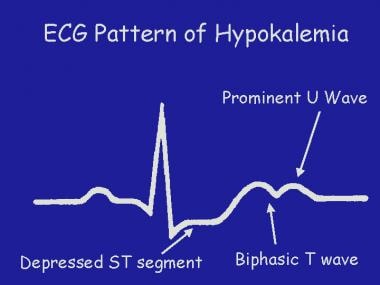
- Characteristic changes of hypokalemia as represented on ECG (see Image 1) are as follows:
- Apparent prolongation of QT interval
- ST segment depression
- Flat or diphasic T waves
- Prominent U waves
- Prolongation of PR interval
- Sinoatrial block
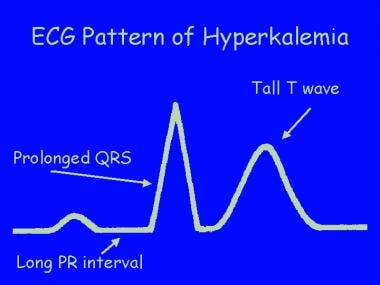
- Hyperkalemia may develop due to overcorrection of potassium loss, with ECG changes as follows (see Image 2):
- Broadening of the QRS
- Peaked T waves
- Prolonged PR interval
- Disappearance of P wave
- Diphasic QRS complex
- Asystole
- Regularly assess consciousness level.
- Check consciousness level hourly for up to 12 hours, especially in a young child with a first presentation of diabetes. The Glasgow coma scale (see Image 3) is recommended for this purpose.
- Normal maximum score on the Glasgow coma scale is 15. A score of 12 or less implies significant impairment of consciousness. A falling score may signify development of cerebral edema.
Procedures
- Ideally, insert a good-sized venous cannula into each arm, the first for fluid, electrolyte, and insulin replacement and the second for regular sampling.
- Arterial cannulation is appropriate for patients who require mechanical ventilation or for those who need intensive care for conditions such as coma, shock, or severe acidosis.
- Insert a nasogastric tube and aspirate gastric contents for all patients with impaired consciousness and for children with repeated vomiting.
- Consider urinary catheterization for children with impaired consciousness. This allows accurate calculation of urinary losses, particularly in the early hyperosmolar phases of DKA in which osmotic diuresis can lead to massive urinary losses, even in the presence of dehydration.
- Manage cerebral edema with intubation and hyperventilation.
Medical Care
As always, the first principals of resuscitation apply (ie, ABCs). Outcomes are best when children are monitored closely and changing status is addressed promptly. Give oxygen, although this has no effect on the respiratory drive of acidosis. Diagnose by clinical history, physical signs, and elevated blood glucose.
- Fluid replacement: No randomized trials of fluid replacement have been conducted, and over the years, a variety of regimens have been proposed. Published series suggest the best outcomes have been achieved by using isotonic sodium chloride solution or half-strength sodium chloride solution for first resuscitation and replacement. Slowly correcting the fluid deficit over 24-48 hours appears safer than rapid rehydration and, thus, forms the basis for the regimen that follows:
- Calculate fluid deficit by weight loss or clinical assessment.
- In a child with severe acidosis or compromised circulation, an initial resuscitation of 10-20 mL/kg of isotonic sodium chloride solution (0.9%) can be administered over 30 minutes.
- After resuscitation, slowly correct the fluid deficit over 24-48 hours by providing normal maintenance fluids together with the calculated deficit.
- Administer isotonic sodium chloride solution until blood glucose levels have fallen to 250-300 mg/dL (ie, 12-15 mmol/L), at which time glucose-containing fluids should be introduced (eg, 5% glucose with 0.45% saline). Continue maintenance with dextrose saline until the child is eating and drinking normally.
- If cerebral edema develops, restrict fluid replacement to two thirds of normal maintenance and replace the deficit over 48 or more hours.
- Replace ongoing losses: Carefully measure all continuing fluid losses. The osmotic dieresis continues while blood glucose levels remain above 300 mg/dL. This can cause greater urinary output than the rate of fluid replacement. Obviously, the child can become more dehydrated and acidotic unless ongoing losses are replaced. Clinicians may need to calculate and replace losses on an hourly basis. Urinary and vomit losses normally are replaced by isotonic sodium chloride solution with the addition of 20 mEq of potassium chloride (KCl) per liter of saline.
- Weigh regularly: Check weight twice daily; continuous monitoring with a weigh bed is better, if one is available. Weight should remain stable or increase slowly (by no more than 10% of the deficit) in the 4 hours after treatment starts. A falling weight indicates inadequate replacement of ongoing losses, which delays the correction of acidosis.
- Insulin replacement
- Continuous, low-dose intravenous (IV) insulin infusion generally is accepted as the safest and most effective method of insulin delivery for treating DKA. Low-dose IV insulin infusion is simple, provides more physiological serum levels of insulin, allows gradual correction of hyperglycemia, and reduces the likelihood of sudden hypoglycemia and hypokalemia.
- The results of a prospective national study of DKA in the United Kingdom suggest a greater risk of cerebral edema in patients who received insulin within the first hour of treatment. In light of these results, starting insulin therapy an hour after fluid resuscitation has commenced is prudent, especially in the newly diagnosed child.
- The correct dose of insulin to infuse in the treatment of DKA is under debate. Traditionally, 0.1 U/kg/hr is given, but a lower dose of 0.05 U/kg/hr is enough to prevent gluconeogenesis and results in a slower reduction of blood glucose levels. Regularly reviewing the response to treatment and adjusting rates accordingly is probably better than having a single fixed rate. Adolescents with secondary DKA and insulin resistance may need more than 0.1 U/kg/h.
- Authorities commonly recommend that blood glucose levels not fall faster than 90 mg% (ie, 5 mmol/L) per hour. The infusion rate can be reduced as blood glucose levels fall but should not drop below 0.05 U/kg/hr to prevent any recurrence of ketosis. Do not discontinue infusion until subcutaneous (SC) insulin has been given when the child has recovered. If blood glucose falls below 120 mg% (ie, 7 mmol/L), increase the concentration of infused glucose to prevent hypoglycemia. Ketosis clears more quickly if insulin infusions are prolonged for 36 hours or more.
- In cases of mild-to-moderate DKA where the patient is able to tolerate oral fluids, giving repeated (hourly) SC injections of regular or fast-acting analogue insulins in a dose of 0.1U/kg is possible. This is as effective as intravenous insulin
- Electrolyte replacement
- Regular assessment
- Attention to detail is important to achieving a good outcome. Specifically designed recording charts (see Images 4-7) make the process of care much easier. Ideally, these charts include all important measurements of clinical and biochemical status, fluid balance, and insulin prescription.
- Frequent review of neurologic status, at least hourly (or any time a change in level of consciousness is suspected), is essential during the first 12 hours of DKA treatment. Promptly treat any suspected cerebral edema.
Consultations
Consult a neurosurgeon if cerebral edema is suspected.
Diet
Once the child has recovered, he or she can resume a normal diet.
The cornerstones of DKA management are fluid resuscitation, insulin administration, electrolyte monitoring and administration, and close observation to minimize the effect of cerebral edema.
Drug Category: Fluid replacement
The best outcomes have been achieved by using normal or half-strength saline (ie, 0.9% or 0.45% sodium chloride) for first resuscitation and replacement. Slowly correcting the fluid deficit over 24-48 h appears safer than rapid rehydration.
In a child with severe acidosis or compromised circulation, an initial resuscitation of 10-20 mL/kg of isotonic sodium chloride solution (0.9% NaCl) can be administered over 30 minutes. After resuscitation, slowly correct the fluid deficit over 24-48 h by providing normal maintenance fluids together with the calculated deficit. Administer isotonic sodium chloride solution until blood glucose levels have fallen to 250-300 mg/dL (ie, 12-15 mmol/L), at which time glucose-containing fluids should be introduced (eg, 5% glucose with 0.45% NaCl). Continue maintenance with dextrose saline until the child is eating and drinking normally.
| Drug Name | Sodium chloride 0.9% (Normal Saline) |
| Description | Used for resuscitation and dehydration associated with DKA. Calculate fluid deficit by weight loss or clinical assessment. |
| Adult Dose | 500-1000 mL IV initially; then slowly correct fluid deficit over 24-48 h IV Average daily requirements of sodium and chloride are 1000 mL/d of 0.9% NaCl |
| Pediatric Dose | Initial bolus: 10-20 mL/kg IV Maintenance: Slowly correct fluid deficit over 24-48 h IV |
| Contraindications | Fluid retention; hypernatremia |
| Interactions | May decrease levels of lithium when administered concurrently |
| Pregnancy | A - Safe in pregnancy
|
| Precautions | If cerebral edema develops, restrict fluid replacement to two thirds of normal maintenance and replace the deficit over 48 or more h; caution in congestive heart failure, hypertension, edema, liver cirrhosis, renal insufficiency, or sodium toxicity |
Drug Category: Insulin
Insulin is the only treatment for DKA. Results from a prospective study of DKA suggested the risk of cerebral edema was higher in those who received immediate insulin treatment and starting insulin infusion one h after fluid resuscitation has begun is suggested.
IV insulin is probably the safest and most effective method for treating severe DKA. To reduce the risk of hypoglycemia, infuse the insulin through a Y-site or 3-way connector into the same IV line used for the maintenance fluid.
Only regular or fast-acting analogue insulins are suitable for IV use. Frequent, small SC doses of insulin lispro or insulin aspart have been used successfully to treat milder cases of DKA in which oral fluid replacement is possible. Once the child has recovered, administer SC insulin for further diabetes maintenance. Administer SC insulin at least 30 minutes before discontinuing the IV insulin.
| Drug Name | Insulin regular (Humulin) |
| Description | A short-acting form of insulin traditionally used in the management of DKA as it may be used intravenously. Stimulates proper utilization of glucose by the cells and reduces blood sugar levels. Have pharmacy prepare the syringe at a concentration of 1 U/mL (ie, 50 U insulin qs with 0.9% NaCl to 50 mL). Because of adsorption of insulin to the tubing and syringe, the actual amount of insulin administered may be less than the apparent amount. Adjust doses according to effect and not apparent insulin dose. |
| Adult Dose | 0.05-0.1 U/kg/h IV infusion; adjust dose as needed |
| Pediatric Dose | Administer as in adults |
| Contraindications | Documented hypersensitivity; hypoglycemia |
| Interactions | Medications that may decrease hypoglycemic effects of insulin include acetazolamide, AIDS antivirals, asparaginase, phenytoin, nicotine, isoniazid, diltiazem, diuretics, corticosteroids, thiazide diuretics, thyroid estrogens, ethacrynic acid, calcitonin, oral contraceptives, diazoxide, dobutamine phenothiazines, cyclophosphamide, dextrothyroxine, lithium carbonate, epinephrine, morphine sulfate, and niacin Medications that may increase hypoglycemic effects of insulin include calcium, ACE inhibitors, alcohol, tetracyclines, beta blockers, lithium carbonate, anabolic steroids, pyridoxine, salicylates, MAOIs, mebendazole, sulfonamides, phenylbutazone, chloroquine, clofibrate, fenfluramine, guanethidine, octreotide, pentamidine, and sulfinpyrazone |
| Pregnancy | B - Usually safe but benefits must outweigh the risks.
|
| Precautions | Monitor electrolytes to avoid hypokalemia or hypoglycemia |
| Drug Name | Insulin lispro (Humalog) |
| Description | A novel, short-acting, recombinant human insulin analogue that can be given IV to manage DKA. Insulin lispro is an insulin analog that has a more rapid onset and shorter duration of action than regular human insulin. Stimulates proper utilization of glucose by the cells and reduces blood sugar levels. Have pharmacy prepare the syringe at a concentration of 1 U/mL (ie, 50 U insulin qs with 0.9% NaCl to 50 mL). Because of adsorption of insulin to the tubing and syringe, the actual amount of insulin administered may be less than the apparent amount. Adjust doses according to effect and not apparent insulin dose. |
| Adult Dose | 0.05-0.1 U/kg/h IV infusion; adjust dose as needed |
| Pediatric Dose | Administer as in adults |
| Contraindications | Documented hypersensitivity; hypoglycemia |
| Interactions | Medications that may decrease hypoglycemic effects of insulin include acetazolamide, AIDS antivirals, asparaginase, phenytoin, nicotine, isoniazid, diltiazem, diuretics, corticosteroids, thiazide diuretics, thyroid estrogens, ethacrynic acid, calcitonin, oral contraceptives, diazoxide, dobutamine phenothiazines, cyclophosphamide, dextrothyroxine, lithium carbonate, epinephrine, morphine sulfate, and niacin Medications that may increase hypoglycemic effects of insulin include calcium, ACE inhibitors, alcohol, tetracyclines, beta blockers, lithium carbonate, anabolic steroids, pyridoxine, salicylates, MAOIs, mebendazole, sulfonamides, phenylbutazone, chloroquine, clofibrate, fenfluramine, guanethidine, octreotide, pentamidine, and sulfinpyrazone |
| Pregnancy | B - Usually safe but benefits must outweigh the risks.
|
| Precautions | Monitor blood glucose and electrolytes to avoid hypoglycemia or hypokalemia |
| Drug Name | Insulin aspart (NovoLog) |
| Description | Homologous with regular human insulin with the exception of single substitution of amino acid proline by aspartic acid in position B28. Produced by recombinant DNA technology. Insulin lowers blood glucose levels by stimulating peripheral glucose uptake, especially by skeletal muscle and fat and by inhibiting hepatic glucose production. Inhibits lipolysis in the adipocyte, inhibits proteolysis, and enhances protein synthesis. Insulin is principal hormone required for proper glucose use in normal metabolic processes. |
| Adult Dose | 0.05-0.1 U/kg/h IV infusion; adjust dose as needed |
| Pediatric Dose | Administer as in adults |
| Contraindications | Documented hypersensitivity; hypoglycemia |
| Interactions | Medications that may decrease hypoglycemic effects of insulin include acetazolamide, AIDS antivirals, asparaginase, phenytoin, nicotine, isoniazid, diltiazem, diuretics, corticosteroids, thiazide diuretics, thyroid estrogens, ethacrynic acid, calcitonin, oral contraceptives, diazoxide, dobutamine phenothiazines, cyclophosphamide, dextrothyroxine, lithium carbonate, epinephrine, morphine sulfate, and niacin Medications that may increase hypoglycemic effects of insulin include calcium, ACE inhibitors, alcohol, tetracyclines, beta blockers, lithium carbonate, anabolic steroids, pyridoxine, salicylates, MAOIs, mebendazole, sulfonamides, phenylbutazone, chloroquine, clofibrate, fenfluramine, guanethidine, octreotide, pentamidine, and sulfinpyrazone |
| Pregnancy | B - Usually safe but benefits must outweigh the risks.
|
| Precautions | Monitor blood glucose and electrolytes to avoid hypoglycemia or hypokalemia |
Drug Category: Electrolyte replacement
Patients with DKA always have a total body deficit of potassium. After initial resuscitation, and provided serum or plasma levels are below 5 mEq/L, or a good renal output has been maintained, add potassium to all replacement fluids.
| Drug Name | Potassium chloride |
| Description | Essential for transmission of nerve impulses, contraction of cardiac muscle, maintenance of intracellular tonicity, skeletal and smooth muscles, and maintenance of normal renal function. |
| Adult Dose | Serum levels >2.5 mEq/L: 10 mEq IV infused over 1 h, and prn based on frequently obtained lab values; not to exceed 200 mEq/24h Serum levels <2.5 mEq/L: 40 mEq IV infused over 1 h, and prn based on frequently obtained lab values; not to exceed 400 mEq/24h |
| Pediatric Dose | Serum potassium <2.5 mEq/L: carefully monitor administration of 1 mEq/kg by separate IV infusions over 1 h Serum potassium 2.5-3.5 mEq/L: 40 mEq/L in IV infusion fluid Serum potassium 3.5-5 mEq/L: 20 mEq/L in IV infusion fluid Serum potassium 5-6 mEq/L: 10 mEq/L in IV infusion fluid Serum potassium > 6 mEq/L: Stop potassium IV infusion and repeat level in 2 h |
| Contraindications | Hyperkalemia, renal failure, and conditions in which potassium retention is present and those with oliguria or azotemia, crush syndrome, severe hemolytic reactions, anuria, and adrenocortical insufficiency |
| Interactions | Concurrent use with ACE inhibitors may result in elevated serum potassium concentrations; in patients taking digoxin, hypokalemia may result in digoxin toxicity; caution if discontinuing potassium administration in patients maintained on digoxin |
| Pregnancy | A - Safe in pregnancy
|
| Precautions | Do not infuse rapidly; high plasma concentrations of potassium may cause death due to cardiac depression, arrhythmias, or arrest (must dilute with IV solution prior to administration); plasma levels do not necessarily reflect tissue levels; monitor potassium replacement therapy whenever possible by continuous or serial ECG; when a concentration >40 mEq/L is infused IV, local pain and phlebitis may also follow |
Drug Category: Osmotic diuretics
These agents are used for emergency treatment of cerebral edema. Urgent treatment is required if neurological status deteriorates and hypoglycemia is excluded; delay beyond 10 minutes is associated with very poor outcomes.
| Drug Name | Mannitol (Osmitrol, Resectisol) |
| Description | An osmotic diuretic traditionally used to treat cerebral edema. It is presented as a 10% or 20% solution for infusion, the latter being preferable for pediatric use. |
| Adult Dose | 0.2-0.5 g/kg over 15-20 min (1-2.5 mL/kg of 20% solution); can be repeated after 1 h |
| Pediatric Dose | Administer as in adults |
| Contraindications | Documented hypersensitivity; anuria, severe pulmonary congestion, progressive renal damage, severe dehydration, active intracranial bleeding, and progressive heart failure |
| Interactions | May decrease serum lithium levels |
| Pregnancy | C - Safety for use during pregnancy has not been established.
|
| Precautions | Carefully evaluate cardiovascular status before rapid administration of mannitol since a sudden increase in extracellular fluid may lead to fulminating CHF; avoid pseudoagglutination (when blood given simultaneously, add at least 20 mEq of sodium chloride to each liter of mannitol solution); do not give electrolyte-free mannitol solutions with blood |
Further Inpatient Care
- Children with severe acidosis (ie, pH <7.1) or with altered consciousness should be admitted to a pediatric intensive therapy unit (ITU).
- Following recovery from DKA, the patient requires SC insulin therapy (see Diabetes Mellitus).
- In cases in which DKA occurs signaling a new diagnosis of diabetes, the process of education and support by the diabetes team should begin when the patient recovers.
- In cases in which DKA occurs in a child with established diabetes, explore the cause of the episode and take steps to prevent a recurrence.
Further Outpatient Care
- Organize outpatient care through the pediatric diabetes care team.
In/Out Patient Meds
Transfer
- Transfer any child with severe DKA who has a pH lower than 7.1 or who has altered consciousness to a pediatric ICU.
Deterrence/Prevention
- DKA in a patient in whom diabetes is newly diagnosed can be prevented only if the general public and primary care physicians know the symptoms and if physicians are alert to the possibility, particularly in young children. A urine test for glycosuria is easy to perform.
- Adequate education and support for patients with established diabetes (and for their families) should prevent DKA occurring as a result of illness. Intervention is much more difficult when insulin is withheld deliberately or administered improperly. Identification of children at risk for such behaviors and intervention with social and psychological support may alleviate these problems.
Complications
- Cerebral edema
- Cerebral edema is the most important complication of DKA. The overall risk of cerebral edema is 0.7-1% occurring in 0.4% of established cases and in 1.2% of newly diagnosed cases. Mortality rates are high, approximately 25-30%, with permanent neurologic deficits in 35% or more of survivors. The cause of cerebral edema associated with DKA is unknown.
- Two theories exist that explain the pathogenesis of DKA-related cerebral edema. The first postulates that brain cells produce idiogenic osmoles to prevent cell shrinkage in a hyperosmolar environment. These osmoles are slow to clear from the cells, and as plasma osmolarity falls during treatment, water is drawn into the brain cells by the resulting osmotic gradient. This accounts for the belief that over-rapid correction of hyperosmolarity is associated with cerebral edema. The second theory proposes an effect on the cell membrane sodium/hydrogen transport system. As DKA develops, acidic molecules accumulate in both intracellular and extracellular fluids. With treatment, the concentration of acid falls more rapidly in the extracellular compartment, causing a net influx of sodium and water into the cells as hydrogen ions are exchanged. This could explain the observation that cerebral edema seems to appear with biochemical correction of the acidosis.
- Presentation varies; most cases occur 4-12 hours after initiation of treatment. Typically, the child appears to be improving until a sudden deterioration occurs, with increasing coma, fixed dilated pupils, and, finally, respiratory arrest. Other patients may have a progressively worsening coma. Children occasionally may present with signs of cerebral edema before treatment begins. Regular monitoring of neurologic status to detect early changes, together with prompt corrective treatment, are important to avoid death or damage.
- Clinical signs of developing cerebral edema include the following:
- Headache
- Irritability
- Confusion
- Reduced level of consciousness
- Vomiting
- Small and unequal pupil size
- Occasionally, papilledema (more useful: absent venous pulsation at the optic disc)
- Falling pulse and increasing blood pressure
- Irregular Cheyne-Stokes respiration
- If cerebral edema is suspected and hypoglycemia is excluded, prompt treatment with mannitol is indicated followed by a CT scan and referral to a neurosurgeon. Intubation, hyperventilation, and intracranial pressure monitoring reportedly improve outcomes.
- Unfortunately, only half of children who develop cerebral edema have obvious signs of deterioration; children may present with respiratory arrest. Young children have a greater risk of respiratory arrest, and the outcome for these children is particularly bad. A recent United Kingdom study reported that every child who presented with respiratory arrest either died or was left with neurologic deficits.
Prognosis
- Expect full recovery with appropriate management. The degree and quality of monitoring probably are the most important factors determining outcomes.
Patient Education
Medical/Legal Pitfalls
- Regularly monitor neurologic status to detect cerebral edema, which must be treated promptly if death or disability is to be avoided.
- Carefully monitor potassium status to prevent complications from hypokalemia.
- Hypoglycemia should not occur with adequate monitoring and is less likely if low-dose, continuous insulin infusions are administered together with dextrose when blood glucose levels fall below 200 mg%.
- Early in the treatment of DKA, when blood glucose levels are very elevated, the child can continue to experience massive fluid losses and deteriorate. Strict measurement of fluid balance is essential for optimal treatment.
Special Concerns
- DKA during pregnancy is associated with a very high risk of fetal loss.
- Rapid onset of DKA that presents with relatively low blood glucose levels, vomiting, and abdominal pain can occur in children using short- and long-acting insulin analogues or CSII.
| Media file 1:
A graphical representation of the ECG changes of hypokalemia. |
 | View Full Size Image | |
Media type: ECG
|
| Media file 2:
A graphical representation of the ECG changes of hyperkalemia (due to overcorrection of potassium loss). |
 | View Full Size Image | |
Media type: ECG
|
| Media file 3:
Glasgow Coma Scale, modified for age of verbal response. |
 | View Full Size Image | |
Media type: Graph
|
| Media file 4:
Page 1 (of 4), diabetic ketoacidosis (DKA) treatment and results flow chart |
 | View Full Size Image | |
Media type: Graph
|
| Media file 5:
Page 2 (of 4), diabetic ketoacidosis (DKA) treatment and results flow chart |
 | View Full Size Image | |
Media type: Graph
|
| Media file 6:
Page 3 (of 4), diabetic ketoacidosis (DKA) treatment and results chart |
 | View Full Size Image | |
Media type: Graph
|
| Media file 7:
Page 4 (of 4), diabetic ketoacidosis (DKA) treatment and results flow chart |
 | View Full Size Image | |
Media type: Graph
|
| Media file 8:
Carbs for Kids-Count Them In: The Constant Carbohydrates Diet. |
 | View Full Size Image | |
Media type: Video
|
- Brandenburg MA, Dire DJ. Comparison of arterial and venous blood gas values in the initial emergency department evaluation of patients with diabetic ketoacidosis. Ann Emerg Med. Apr 1998;31(4):459-65. [Medline].
- Brink SJ. Diabetic ketoacidosis: prevention, treatment and complications in children and adolescents. Diabetes Nutr Metab. Apr 1999;12(2):122-35. [Medline].
- Brink SJ. Diabetic ketoacidosis. Acta Paediatr Suppl. Jan 1999;88(427):14-24. [Medline].
- Butkiewicz EK, Leibson CL, O''Brien PC, et al. Insulin therapy for diabetic ketoacidosis. Bolus insulin injection versus continuous insulin infusion. Diabetes Care. Aug 1995;18(8):1187-90. [Medline].
- Cohn BA, Cirillo PM, Wingard DL, et al. Gender differences in hospitalizations for IDDM among adolescents in California, 1991. Implications for prevention. Diabetes Care. Nov 1997;20(11):1677-82. [Medline].
- Delamater AM, Shaw KH, Applegate EB, et al. Risk for metabolic control problems in minority youth with diabetes. Diabetes Care. May 1999;22(5):700-5. [Medline]. [Full Text].
- Della Manna T, Steinmetz L, Campos PR, et al. Subcutaneous use of a fast-acting insulin analog: an alternative treatment for pediatric patients with diabetic ketoacidosis. diabetes care. 2005;28:1856-1861. [Full Text].
- Durr JA, Hoffman WH, Sklar AH, et al. Correlates of brain edema in uncontrolled IDDM. Diabetes. May 1992;41(5):627-32. [Medline].
- Edge JA, Ford-Adams ME, Dunger DB, et al. Causes of death in children with insulin dependent diabetes 1990-96. Arch Dis Child. Oct 1999;81(4):318-23. [Medline]. [Full Text].
- Edge JA, Matyka K. Acute Complications of Diabetes. In: Court S, Lamb W H, eds. Childhood and Adolescent Diabetes. 1997:201-23.
- Edge JA, Dunger DB. Variations in the management of diabetic ketoacidosis in children. Diabet Med. Dec 1994;11(10):984-6. [Medline].
- Edge JA, Roy Y, Bergomi A, et al. Conscious level in children with diabetic ketoacidosis is related to severity of acidosis and not to blood glucose concentration. Pediatr Diabetes. Feb 2006;7(1):11-5. [Medline].
- Fish LH. Diabetic ketoacidosis. Treatment strategies to avoid complications. Postgrad Med. Sep 1 1994;96(3):75-8, 81, 85 passim. [Medline].
- Glaser NS, Kuppermann N, Yee CK, et al. Variation in the management of pediatric diabetic ketoacidosis by specialty training. Arch Pediatr Adolesc Med. Nov 1997;151(11):1125-32. [Medline].
- Gonzalez-Campoy JM, Robertson RP. Diabetic ketoacidosis and hyperosmolar nonketotic state: gaining control over extreme hyperglycemic complications. Postgrad Med. Jun 1996;99(6):143-52. [Medline].
- Green SM, Rothrock SG, Ho JD, et al. Failure of adjunctive bicarbonate to improve outcome in severe pediatric diabetic ketoacidosis. Ann Emerg Med. Jan 1998;31(1):41-8. [Medline].
- Hale PJ, Crase J, Nattrass M. Metabolic effects of bicarbonate in the treatment of diabetic ketoacidosis. Br Med J (Clin Res Ed). Oct 20 1984;289(6451):1035-8. [Medline].
- Hale PM, Rezvani I, Braunstein AW, et al. Factors predicting cerebral edema in young children with diabetic ketoacidosis and new onset type I diabetes. Acta Paediatr. Jun 1997;86(6):626-31. [Medline].
- Harris GD, Fiordalisi I. Physiologic management of diabetic ketoacidemia. A 5-year prospective pediatric experience in 231 episodes. Arch Pediatr Adolesc Med. Oct 1994;148(10):1046-52. [Medline].
- Hoffman WH, Locksmith JP, Burton EM, et al. Interstitial pulmonary edema in children and adolescents with diabetic ketoacidosis. J Diabetes Complications. Nov-Dec 1998;12(6):314-20. [Medline].
- Holsclaw DS Jr, Torcato B. Acute pulmonary edema in juvenile diabetic ketoacidosis. Pediatr Pulmonol. Dec 1997;24(6):438-43. [Medline].
- Holstein A, Abel C, Zumwalde I. Recurrent severe diabetic ketoacidosis due to intoxication with synthetic drugs ('Ecstasy' and 'Speed'). Intensivmedizin und Notfallmedizin. 1997;34(1):46-50.
- Jolobe OM. ESPE/LWPES Consensus Statement on diabetic ketoacidosis in children and adolescents (Arch Dis Child 2004;89:188-94). Arch Dis Child. Nov 2004;89(11):1077. [Medline]. [Full Text].
- Liss DS, Waller DA, Kennard BD, et al. Psychiatric illness and family support in children and adolescents with diabetic ketoacidosis: a controlled study. J Am Acad Child Adolesc Psychiatry. May 1998;37(5):536-44. [Medline].
- Marshall SM, Walker M, Alberti KGMM. Diabetic Ketoacidosis and Hyperglycaemic non-ketotic coma. In: Alberti, Zimmet, Defronzo eds. International Textbook of Diabetes Mellitus. 1997:1215-30.
- Mel JM, Werther GA. Incidence and outcome of diabetic cerebral oedema in childhood: are there predictors?. J Paediatr Child Health. Feb 1995;31(1):17-20. [Medline].
- Miller SG. Family therapy for recurrent diabetic ketoacidosis: Treatment guidelines. Family Systems Medicine. 1996;14(3):303-14.
- Morris AD, Boyle DI, McMahon AD, et al. Adherence to insulin treatment, glycaemic control, and ketoacidosis in insulin-dependent diabetes mellitus. The DARTS/MEMO Collaboration. Diabetes Audit and Research in Tayside Scotland. Medicines Monitoring Unit. Lancet. Nov 22 1997;350(9090):1505-10. [Medline].
- Musey VC, Lee JK, Crawford R. Diabetes in urban African-Americans. I. Cessation of insulin therapy is the major precipitating cause of diabetic ketoacidosis. Diabetes Care. Apr 1995;18(4):483-9. [Medline].
- Neu A, Willasch A, Ehehalt S, et al. Ketoacidosis at onset of type 1 diabetes mellitus in children--frequency and clinical presentation. Pediatr Diabetes. Jun 2003;4(2):77-81. [Medline].
- Okuda Y, Adrogue HJ, Field JB, et al. Counterproductive effects of sodium bicarbonate in diabetic ketoacidosis. J Clin Endocrinol Metab. Jan 1996;81(1):314-20. [Medline].
- Quinn M, Fleischman A, Rosner B, et al. Characteristics at diagnosis of type 1 diabetes in children younger than 6 years. J Pediatr. Mar 2006;148(3):366-71. [Medline].
- Sartor G, Dahlquist G. Short-term mortality in childhood onset insulin-dependent diabetes mellitus: a high frequency of unexpected deaths in bed. Diabet Med. Jul 1995;12(7):607-11. [Medline].
- Silink M. Practical management of diabetic ketoacidosis in childhood and adolescence. Acta Paediatr Suppl. Oct 1998;425:63-6. [Medline].
- Silver SM, Clark EC, Schroeder BM, Sterns RH. Pathogenesis of cerebral edema after treatment of diabetic ketoacidosis [published erratum appears in Kidney Int 1997 May;51(5):1662]. Kidney Int. Apr 1997;51(4):1237-44. [Medline].
- Singh RK, Perros P, Frier BM. Hospital management of diabetic ketoacidosis: are clinical guidelines implemented effectively?. Diabet Med. Jun 1997;14(6):482-6. [Medline].
- Smaldone A, Honig J, Stone PW, et al. Characteristics of California children with single versus multiple diabetic ketoacidosis hospitalizations (1998-2000). Diabetes Care. Aug 2005;28(8):2082-4. [Medline]. [Full Text].
- Smith CP, Firth D, Bennett S, et al. Ketoacidosis occurring in newly diagnosed and established diabetic children. Acta Paediatr. May 1998;87(5):537-41. [Medline].
- Thompson CJ, Cummings F, Chalmers J, Newton RW. Abnormal insulin treatment behaviour: a major cause of ketoacidosis in the young adult. Diabet Med. May 1995;12(5):429-32. [Medline].
- Vanelli M, Chiari G, Ghizzoni L, et al. Effectiveness of a prevention program for diabetic ketoacidosis in children. An 8-year study in schools and private practices. Diabetes Care. Jan 1999;22(1):7-9. [Medline]. [Full Text].
- Warner DP, McKinney PA, Law GR, Bodansky HJ. Mortality and diabetes from a population based register in Yorkshire 1978-93. Arch Dis Child. May 1998;78(5):435-8. [Medline]. [Full Text].
- Wiggam MI, O''Kane MJ, Harper R, et al. Treatment of diabetic ketoacidosis using normalization of blood 3- hydroxybutyrate concentration as the endpoint of emergency management. A randomized controlled study. Diabetes Care. Sep 1997;20(9):1347-52. [Medline].
Diabetic Ketoacidosis excerpt Article Last Updated: Jun 17, 2006
|