Continually Updated Clinical Reference
 
 
  All Sources     eMedicine     Medscape     Drug Reference     MEDLINE
 
eMedicine - Retinopathy of Prematurity : Article by

Quick Find
Authors & Editors
Introduction
Clinical
Workup
Treatment
Medication
Follow-up
Miscellaneous
Multimedia
References


Patient Education
Click here for patient education.


Author: KN Siva Subramanian, MD, Professor of Pediatrics and Obstetrics/Gynecology, Chief of Neonatology, Director of Nurseries, Georgetown University Medical Center

KN Siva Subramanian is a member of the following medical societies: American Academy of Pediatrics, American Association for the Advancement of Science, American College of Nutrition, American Society for Parenteral and Enteral Nutrition, American Society of Law Medicine and Ethics, New York Academy of Sciences, and Southern Society for Pediatric Research

Coauthor(s): Monisha Bahri, MBBS, MD, Fellow in Neonatal/Perinatal Medicine, Department of Neonatalogy, Georgetown University Hospital; Gonzalo (Vike) Vicente, MD, FAAP, Consulting Ophthalmologist, Eye Doctors of Washington; Rosemary D Higgins, MD, Program Scientist/Medical Officer, Neonatal Research Network, Center for Developmental Biology and Perinatal Medicine, National Institute of Child Health and Human Development, National Institutes of Health

Editors: Oussama Itani, MD, FAAP, FACN, Clinical Associate Professor of Pediatrics and Human Development, Michigan State University; Medical Director, Department of Neonatology, Borgess Medical Center; Mary L Windle, PharmD, Adjunct Assistant Professor, University of Nebraska Medical Center College of Pharmacy, Pharmacy Editor, eMedicine.com, Inc; Arun K Pramanik, MD, MBBS, Professor of Pediatrics, Director of Neonatal Fellowship, Louisiana State University Health Sciences Center; Carol L Wagner, MD, Professor of Pediatrics, Medical University of South Carolina; Ted Rosenkrantz, MD, Head, Division of Neonatal-Perinatal Medicine, Professor, Departments of Pediatrics and Obstetrics/Gynecology, University of Connecticut School of Medicine

Author and Editor Disclosure

Synonyms and related keywords: retinopathy of prematurity, ROP, retrolental fibroplasia, retinal neovascularization, extremely low birth weight infants, ELBW, respiratory distress syndrome, RSD, bronchopulmonary dysplasia, BPD, sepsis, retinal hypoxia, tortuosity of vessels, maternal preeclampsia, pulmonary hemorrhage, visual impairment, blindness, myopia, amblyopia, strabismus, patent ductus arteriosus, intraventricular hemorrhage

Background

Retinopathy of prematurity (ROP) is a serious vasoproliferative disorder that affects extremely premature infants. ROP often regresses or heals but can lead to severe visual impairment or blindness. Significant ROP can lead to life-long disabilities for the smallest survivors of neonatal intensive care units (NICUs). It remains a serious problem despite striking advances in neonatology.

Pathophysiology

ROP primarily occurs in extremely low birth weight (ELBW) infants. Most research suggests that a low birth weight, a young gestational age (GA), and the severity of illness (eg, respiratory distress syndrome [RDS], bronchopulmonary dysplasia [BPD], sepsis) are associated factors. Recently, other associations have been described. However, the severity of the illness appears to be a major predictor of severe disease. The smallest, sickest, and most immature infants are at the highest risk for serious disease. African American infants appear to have less severe ROP.

Retinal vasculature begins to develop around 16 weeks' gestation. It grows circumferentially and becomes fully mature at term. Premature birth results in the cessation of normal retinal vascular maturation. Exposure of newborn premature infants to hyperoxia downregulates retinal vascular endothelial growth factor (VEGF). Blood vessels constrict and can become obliterated, resulting in delays of normal retinal vascular development. This hyperoxia-vasocessation is known as phase 1 of ROP.

Early on, oxygen and nutrients can be delivered to the retina by means of diffusion from the underlying choroid capillary bed. The retina continues to grow in thickness and eventually outgrows its vascular supply. Over time, retinal hypoxia occurs and results in an overgrowth of vessels; this hypoxia-vasoproliferation is phase 2 of ROP. This process is mediated, in part, by VEGF and is affected by insulinlike growth factor-1 (IGF-1) and other cytokines. These changes in the retina result in ROP.

Frequency

United States

The incidence varies with birth weight but is reported to be approximately 50-70% in infants whose weight is less than 1250 g at birth.

Hussain et al reviewed the incidence and the need for surgery in neonates with ROP who were born at 22-36 weeks' gestation between July 1989 and June 30, 1997.1 The incidences were 21.3% (202 of 950 patients) for ROP of any stage and 4.6% (44 of 950 patients) for ROP at stage 3 or worse. No ROP was noted in infants born after 32 weeks' gestation. No infant born after 28 weeks' gestation needed retinal surgery in this study. Despite the increased survival of ELBW infants, they found a considerable reduction in the incidence and severity of ROP compared with reports from an earlier period. However, infants born before 28 weeks' gestation and those with birth weights less than 1000 g were at risk to need retinal surgical treatment for ROP.

Investigators from the Supplemental Therapeutic Oxygen for Prethreshold Retinopathy of Prematurity (STOP-ROP) multicenter trial concluded that maintaining oxygen saturation in the high-90% range did not reduce the severity of the retinopathy when compared with the saturations in the low-90% range.2 However, it did result in more adverse pulmonary events. In a subanalysis of infants who did not have plus disease (ie, tortuosity of vessels) at the time of study entry, the progression to threshold was significantly decreased when compared with the progression in infants with plus disease. Thus, a critical window for oxygen administration may be determined.

International

ROP is prevalent worldwide and several reports have detailed the incidence and risk factors associated with the disease. 

A Korean study reported a 20.7% incidence (88 of 425 premature babies) and reported that a GA of 28 weeks or less and a birth weight of 1000 g or less were the most significant risk factors.3 Another study from Singapore reported a 29.2% incidence (165 of 564 ELBW infants).4 The median age of onset of ROP was 35 weeks (range, 31-40 wk) postmenstrual age. The risk factors for development of threshold ROP by regression analysis were maternal preeclampsia, birth weight, pulmonary hemorrhage, duration of ventilation, and duration of continuous positive airway pressure (CPAP).

An observational study from United Kingdom designed to compare the characteristics of infants with severe ROP in countries with low, moderate, and high levels of development found that the mean birth weights of infants from highly developed countries was 737-763 g compared with 903-1527 g in less-developed countries.5 Mean GAs of infants from highly developed countries were 25.3-25.6 weeks compared with 26.3-33.5 weeks in less-developed countries. Thus, larger and more mature infants seemed to be developing severe ROP in less-developed nations. This suggests that individual countries need to develop their own screening programs with criteria suited to their local population.

Mortality/Morbidity

Long-term outcomes for serious disease include severe visual impairment and blindness. In addition, myopia, amblyopia, and strabismus may occur. Repka et al described the need for subsequent ophthalmic intervention in patients with ROP.6

Race

Some reports indicate a decreased incidence of progression to threshold disease in black infants. Most evidence comes from the Cryotherapy for Retinopathy of Prematurity (CRYO-ROP) study.7 Further evidence that black infants are less likely to develop severe ROP has been reported in studies of candidemia in ELBW infants.8 The exact mechanism for the decreased incidence of progression to surgery in black infants has not been described. Bizzaro et al showed a strong genetic predisposition to ROP when comparing monozygotic twins with dizygotic twins.9

Sex

Although some reports indicate a male predilection, the CRYO-ROP study revealed no differences based on sex.7

Age

ROP is a disease of the immature retina, and the occurrence of ROP is inversely related to GA. The more premature the infant, the more likely that some form of ROP will develop.


History

  • Infants at highest risk for retinopathy of prematurity (ROP) are those with the lowest birth weights and youngest GAs.
  • Prolonged exposure to supplemental oxygen is also a risk factor.
  • The severity of illness (including sepsis), blood transfusions, days receiving mechanical ventilation, a patent ductus arteriosus, and intraventricular hemorrhage are also associated with ROP.
  • The effect of blood transfusion on ROP is controversial. The smallest, sickest infants receive more transfusions than their healthy counterparts and may have more frequent or severe ROP. However, theoretical risks associated with factors such as volume and iron load may place infants who receive more transfusions at higher risk for ROP.

Physical

  • Screening: An ophthalmologist experienced in evaluating infants for ROP should perform a screening examination.
  • International classification
    • To standardize examinations, a group of physicians organized an international classification of ROP (ICROP) in 1984 and updated the classification in 1987 and again in 2005.10
    • ROP is characterized by 3 parameters: stage, zone, and plus disease (ie, tortuosity of vessels).
  • Examination recommendations: The American Academy of Pediatrics (AAP) and the American Academy of Ophthalmology have joint recommendations for infants who should be screened for ROP.11
    • Screening should include those infants with a birth weight of less than 1500 g or a GA of 31 weeks or less and selected infants with a birth weight of 1500-2000 g or a GA of more than 31 weeks with an unstable clinical course, including those who require cardiorespiratory support and those who are believed by their attending pediatrician or neonatologist to be at high risk.
    • The retinal screening examinations should be performed by an experienced ophthalmologist after pupillary dilation using binocular indirect ophthalmoscopy to detect ROP. 
    • The time of initiation of ROP screening should be based on the infant's age. The onset of serious ROP correlates better with postmenstrual age (gestational age at birth plus chronologic age) than with postnatal age; this means that the youngest infants at birth take the longest time to develop serious ROP.
    • Screening guidelines have been the focus of recent studies. The issue of cost-effectiveness versus missing cases is controversial. In addition, Subhani et al suggested that infants should be examined by age 4-6 weeks, contrary to the standard postmenstrual age criteria.12 The recent AAP guidelines for ROP screening suggested a schedule for detecting prethreshold ROP (99% confidence), usually well before any required treatment. See the table below.
    • Timing of First Eye Examination Based on Gestational Age at Birth

      Gestational Age at Birth (wk)Chronologic Age (wk)Postmenstrual Age (wk)
      22*931
      23*831
      24731
      25631
      26531
      27431
      28432
      29433
      30434
      31†435
      32†436
    • * This guideline should be considered tentative rather than evidence-based for infants with a GA of 22-23 weeks because of the small number of survivors in these categories.

      If necessary.

    • Follow-up examinations are based on initial examination findings. Most infants are screened every 2 weeks. More frequent (once a week or less) follow-up is recommended in stage 1 or 2 ROP in zone I  and in stage 3 ROP in zone II. The presence of plus disease requires careful evaluation because, in these cases, peripheral ablation is more appropriate rather that observation alone.
    • Screening examinations are continued until the blood vessels reach the anterior edge of the retina (complete retinal vascularization around 40 weeks' gestation) or until postmenstrual age of 45 weeks with no prethreshold disease (defined as stage 3 ROP in zone II, any ROP in zone I) or no worse ROP is present.


Other Tests

  • Ophthalmologic evaluation
    • Record the vascular maturity (how far out the vessels have grown), as indicated by zone, stage of disease, and the presence or absence of plus disease or preplus disease.
    • Quantify the extent of ROP on the basis of number and contiguity of clock hours in which the disease is present in the retina.
    • Some centers are also experimenting by taking retinal fundus photographs and having an off-site ophthalmologist evaluate the photos.

Staging

  • The ICROP describes 5 stages of ROP, as follows:10
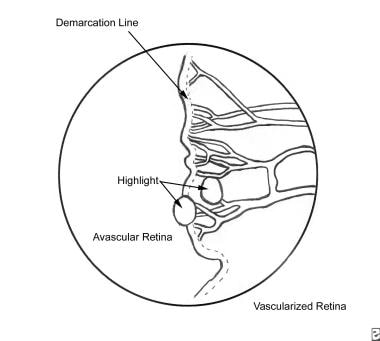
    • Stage 1 is characterized by a line of demarcation. Extra vessels can be seen growing at the leading edge of the retinal vasculature. The line of demarcation separates the vascularized portion of the retina from the anteriorly positioned avascular retina.
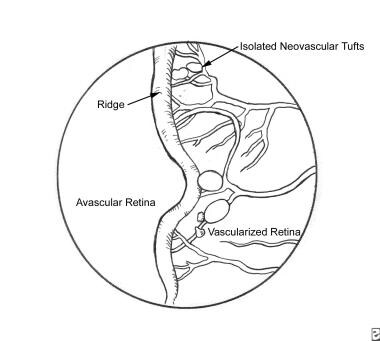
    • Stage 2 is characterized by an elevated ridge, rather than a flat demarcation line. Neovascularization may be present but is posterior to the ridge.
    • Stage 3 refers to extraretinal neovascularization or vessels that grow onto the ridge and then into the vitreous toward the examiner. 
    • Stage 4 refers to partial retinal detachment.
    • Stage 5 is total retinal detachment.
  • Some ophthalmologists describe an immature or avascular retina as Stage 0 ROP.
  • Plus disease refers to severe tortuosity of vessels. Preplus disease is defined as vascular abnormalities of the posterior pole characterized by more arterial tortuosity and more venous dilatation than normal but not severe enough to be classified as plus disease. Rapidly progressing plus disease is sometimes referred to as Rush disease.
  • In addition, the zone of disease is designated as follows (see Multimedia):
    • Zone 1 is the innermost area of the retina surrounding the macula.
    • Zone 2 is the middle third of the retina, nasally extending to the edge of the retina.
    • Zone 3 is the most peripheral area of the retina on the temporal side.


Medical Care

  • Medical care consists of ophthalmologic screening of appropriate infants. No standard medical therapies are available at this time.
  • Ongoing research is examining the potential use of intravitreally injected antineovascularization drugs, such as bevacizumab (Avastin). These drugs have been successfully used in patients with other forms of neovascularization, such as diabetic retinopathy. Other treatments may involve restoring normal levels of IGF-1 in the developing retina, as proposed by Chen and Smith.13
  • The STOP-ROP Trial assessed the effect of supplemental oxygen in reducing the probability of progression to threshold ROP and the need for peripheral retinal ablation in infants with prethreshold retinopathy of prematurity (ROP).2 The results of the trial showed no reduction in the infants who required ablative surgery. A post hoc subgroup analysis showed that infants without plus disease may be more responsive to supplemental oxygen therapy (46% progression in the conventional arm vs 32% progression in the supplemental arm) than infants with plus disease (52% progression in the conventional arm vs 57% in the supplemental arm). Supplemental oxygen increased the risk of adverse pulmonary events (8.5% conventional arm vs 13.2% in the supplemental arm).

Surgical Care

  • Ablative surgery
    • If threshold disease is present, perform ablative surgery.
    • Ablative therapy currently consists of cryotherapy or laser surgery to destroy the avascular areas of the retina.
    • The average GA at which surgery is necessary is usually 37-40 weeks.
    • If the ROP continues to progress, more than one treatment may be required.
  • Cryotherapy
    • A randomized prospective trial of cryotherapy showed a 50% reduction in retinal detachment in treated eyes versus nontreated eyes.
    • Beneficial effects were observed in infants with threshold disease, defined as 5 contiguous clock hours of stage 3 disease with plus disease or 8 noncontiguous clock hours of stage 3 disease with plus disease.
  • Laser surgery
    • Currently, laser surgery is preferred to cryotherapy because it may be more effective in treating zone 1 disease and causes less inflammation. Laser photocoagulation appears to be associated with outcomes in structure and function that are at least as good as those of cryotherapy 7 years after therapy.14 In addition, visual acuity and refractive error data suggest that laser surgery may have an advantage over cryotherapy, and evidence suggests that laser surgery is easier to perform and better tolerated by the infants. Cryotherapy is still the preferred treatment option when the view of the retina is limited by media opacities.
    • Laser surgery has been used more recently than cryotherapy, and whether the slightly improved outcomes with laser surgery are attributable to changes in the care of high-risk neonates (eg, antenatal glucocorticoid therapy, surfactant use) is unclear. However, cryotherapy has been rigorously evaluated in a multicenter prospective randomized fashion, and the 10-year follow-up data show long-term value in preserving visual acuity in eyes with threshold ROP.7
  • Early treatment
    • The Early Treatment for Retinopathy of Prematurity (ET-ROP) Trial showed that early treatment of high-risk prethreshold ROP significantly reduced unfavorable ROP outcomes at age 9 months and at age 2 years.15, 16 Patients in this study had one eye randomized to "early" retinal ablative therapy. Eyes treated had type 1 ROP, defined as zone 1 with plus disease and any stage ROP; zone 1 with stage 3 and no plus disease; or zone 2, stage 2 or 3, and plus disease.
    • The investigators subsequently compared their results from this ET-ROP study with those of the CRYO-ROP study, with respect to incidence and early course of ROP. The incidence, time of onset of any disease and prethreshold disease, and rate of progression have changed little since the mid 1980s. The ET-ROP had more cases of prethreshold disease (36.9% in ET-ROP and 27.1% in CRYO-ROP) and more zone 1 ROP.


If a patient has prethreshold disease, some centers try to maintain normal serum levels of vitamin E. Vitamin E use was evaluated in a meta-analysis, and levels should be maintained within the reference range in patients at high risk for severe retinopathy of prematurity (ROP).


Further Inpatient Care

  • Base follow-up examinations on previous examination results. The more immature the retinal vasculature or the more serious the disease, the shorter the follow-up interval must be to enable the detection of disease. These examinations allow the physician to offer treatment if threshold disease develops in the eye.
  • After surgical intervention, an ophthalmologist should perform an examination every 1-2 weeks to determine if additional surgery is indicated.
  • Patients who are medically monitored must undergo examinations until the retinal vasculature is mature. Ensuring appropriate monitoring of infants is critical if they are discharged from the nursery before retinal vascular maturity is attained.
  • Numerous patients have lost sight due to inappropriate, untimely monitoring. In untreated patients, retinal detachments commonly occur at 38-42 weeks' postmenstrual age.

Further Outpatient Care

  • Patients require yearly ophthalmologic follow-up evaluations. More frequent evaluation may be necessary, depending on the severity of the disease.
  • The long-term outcome for infants with retinopathy of prematurity (ROP) continues to be problematic. Patients with ROP are at significant risk for myopia. In addition, strabismus, amblyopia, and late retinal detachment continue to be problems for these infants.
  • Long-term follow-up findings from the CRYO-ROP cooperative group indicate that refractive errors in eyes with mild ROP are associated with the same risk of myopia as that in eyes without ROP.7 In patients with moderate-to-severe ROP, the prevalence of severe myopia is increased. Fifteen year follow-up from the CRYO-ROP Trial shows that children remain at risk for new retinal detachments, even with eyes that have relatively good structural findings at age 10 years.
  • Long-term, regular follow-up of eyes with threshold ROP is warranted.
  • As stated above, laser surgery offers some advantage over cryotherapy in treating zone 1 disease.

Deterrence/Prevention

  • The only known deterrent measure is to prevent preterm birth. The more mature a neonate is at birth, the less likely ROP is to occur.
  • Studies regarding the effects of antenatal corticosteroids on ROP revealed that this treatment has a protective effect against severe ROP.17
  • Recent studies have shown that maintaining oxygen saturation values by pulse oximeter (SpO2) at 83-93% decreases the incidence of threshold ROP.18, 19

Complications

  • Late complications include myopia, amblyopia, strabismus, nystagmus, cataracts, retinal breaks, and retinal detachment.
  • Vanderveen et al observed strabismus is often variable and may improve by age 9 months.15
  • Follow-up by an ophthalmologist is required on a long-term basis.


Medical/Legal Pitfalls

  • The timing of examination and follow-up are important factors in the diagnosis and treatment of retinopathy of prematurity (ROP). If a patient misses an examination, it should be performed as soon as possible.
  • Ensuring that parents are aware of the significance of ROP and appropriate follow-up is also important.
  • Patients can be discharged or transferred from the NICU while their retina is still immature. Most follow-up examinations by an ophthalmologist must occur within 2 weeks of discharge.


Media file 1:  Scheme of retina of right eye (RE) and left eye (LE) showing zone borders and clock hours used to describe location and extent of retinopathy of prematurity.
Click to see larger pictureClick to see detailView Full Size Image
Media type:  Illustration

Media file 2:  Stage I retinopathy of prematurity.
Click to see larger pictureClick to see detailView Full Size Image
Media type:  Illustration

Media file 3:  Stage II retinopathy of prematurity.
Click to see larger pictureClick to see detailView Full Size Image
Media type:  Illustration

Media file 4:  Stage III retinopathy of prematurity.
Click to see larger pictureClick to see detailView Full Size Image
Media type:  Illustration

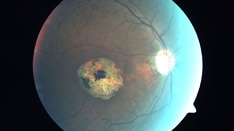
Media file 5:  Retinopathy of prematurity.
Click to see larger pictureClick to see detailView Full Size Image
Media type:  Illustration

Media file 6:  Retinopathy of prematurity.
Click to see larger pictureClick to see detailView Full Size Image
Media type:  Illustration

Media file 7:  Retinopathy of prematurity.
Click to see larger pictureClick to see detailView Full Size Image
Media type:  Illustration

Media file 8:  Retinopathy of prematurity.
Click to see larger pictureClick to see detailView Full Size Image
Media type:  Illustration

Media file 9a:  Zone I retinopathy of prematurity.
Click to see larger pictureClick to see detailView Full Size Image
Media type:  Chart

Media file 9b:  Zone II retinopathy of prematurity.
Click to see larger pictureClick to see detailView Full Size Image
Media type:  Chart

Media file 9c:  Zone III retinopathy of prematurity.
Click to see larger pictureClick to see detailView Full Size Image
Media type:  Chart

Media file 10a:  Retinopathy of prematurity threshold, according to the Cryotherapy for Retinopathy of Prematurity Cooperative Group.
Click to see larger pictureClick to see detailView Full Size Image
Media type:  Chart

Media file 10b:  Treatment guidelines, according to the Early Treatment for Retinopathy of Prematurity Study.
Click to see larger pictureClick to see detailView Full Size Image
Media type:  Chart

Media file 11a:  Cryotherapy probe application.
Click to see larger pictureClick to see detailView Full Size Image
Media type:  Chart

Media file 11b:  Laser photocoagulation.
Click to see larger pictureClick to see detailView Full Size Image
Media type:  Chart


  1. Hussain N, Clive J, Bhandari V. Current incidence of retinopathy of prematurity, 1989-1997. Pediatrics. Sep 1999;104(3):e26. [Medline][Full Text].
  2. STOP-ROP. Supplemental Therapeutic Oxygen for Prethreshold Retinopathy Of Prematurity, a randomized, controlled trial. I: primary outcomes. Pediatrics. Feb 2000;105(2):295-310. [Medline].
  3. Kim TI, Sohn J, Pi SY, Yoon YH. Postnatal risk factors of retinopathy of prematurity. Paediatr Perinat Epidemiol. Mar 2004;18(2):130-4. [Medline].
  4. Shah VA, Yeo CL, Ling YL, Ho LY. Incidence, risk factors of retinopathy of prematurity among very low birth weight infants in Singapore. Ann Acad Med Singapore. Mar 2005;34(2):169-78. [Medline].
  5. Gilbert C, Fielder A, Gordillo L, et al. Characteristics of infants with severe retinopathy of prematurity in countries with low, moderate, and high levels of development: implications for screening programs. Pediatrics. May 2005;115(5):e518-25. [Medline].
  6. Repka MX, Summers CG, Palmer EA, et al. The incidence of ophthalmologic interventions in children with birth weights less than 1251 grams. Results through 5 1/2 years. Cryotherapy for Retinopathy of Prematurity Cooperative Group. Ophthalmology. Sep 1998;105(9):1621-7. [Medline].
  7. Cryotherapy for Retinopathy of Prematurity Cooperative Group. Multicenter Trial of Cryotherapy for Retinopathy of Prematurity: ophthalmological outcomes at 10 years. Arch Ophthalmol. Aug 2001;119(8):1110-8. [Medline].
  8. Tadesse M, Dhanireddy R, Mittal M, Higgins RD. Race, Candida sepsis, and retinopathy of prematurity. Biol Neonate. 2002;81(2):86-90. [Medline].
  9. Bizzarro MJ, Hussain N, Jonsson B, et al. Genetic susceptibility to retinopathy of prematurity. Pediatrics. Nov 2006;118(5):1858-63. [Medline].
  10. International Committee for the Classification of Retinopathy of Prematurity. The International Classification of Retinopathy of Prematurity revisited. Arch Ophthalmol. Jul 2005;123(7):991-9. [Medline].
  11. AAP, AAO, and AAPOS. Screening examination of premature infants for retinopathy of prematurity. Pediatrics. Feb 2006;117(2):572-6. [Medline].
  12. Subhani M, Combs A, Weber P, et al. Screening guidelines for retinopathy of prematurity: the need for revision in extremely low birth weight infants. Pediatrics. Apr 2001;107(4):656-9. [Medline].
  13. Chen J, Smith LE. Retinopathy of prematurity. Angiogenesis. 2007;10(2):133-40. [Medline].
  14. Shalev B, Farr AK, Repka MX. Randomized comparison of diode laser photocoagulation versus cryotherapy for threshold retinopathy of prematurity: seven-year outcome. Am J Ophthalmol. Jul 2001;132(1):76-80. [Medline].
  15. VanderVeen DK, Coats DK, Dobson V, et al. Prevalence and course of strabismus in the first year of life for infants with prethreshold retinopathy of prematurity: findings from the Early Treatment for Retinopathy of Prematurity study. Arch Ophthalmol. Jun 2006;124(6):766-73. [Medline].
  16. Good WV, Hardy RJ, Dobson V, et al. The incidence and course of retinopathy of prematurity: findings from the earlytreatment for retinopathy of prematurity study. Pediatrics. Jul 2005;116(1):15-23. [Medline].
  17. Console V, Gagliardi L, De Giorgi A, De Ponti E. Retinopathy of prematurity and antenatal corticosteroids. The Italian ROP Study Group. Acta Biomed Ateneo Parmense. 1997;68 Suppl 1:75-9. [Medline].
  18. Wright KW, Sami D, Thompson L, Ramanathan R, Joseph R, Farzavandi S. A physiologic reduced oxygen protocol decreases the incidence of threshold retinopathy of prematurity. Trans Am Ophthalmol Soc. 2006;104:78-84. [Medline].
  19. Wallace DK. Oxygen saturation levels and retinopathy of prematurity--are we on target?. J AAPOS. Oct 2006;10(5):382-3. [Medline].
  20. AAP, AAPOS, AAO. Screening examination of premature infants for retinopathy of prematurity. A joint statement of the American Academy of Pediatrics, the American Association for Pediatric Ophthalmology and Strabismus, and the American Academy of Ophthalmology. Pediatrics. Aug 1997;100(2 Pt 1):273. [Medline][Full Text].
  21. Bremer DL, Palmer EA, Fellows RR, et al. Strabismus in premature infants in the first year of life. Cryotherapy for Retinopathy of Prematurity Cooperative Group. Arch Ophthalmol. Mar 1998;116(3):329-33. [Medline].
  22. Brooks SE, Marcus DM, Gillis D, et al. The effect of blood transfusion protocol on retinopathy of prematurity: A prospective, randomized study. Pediatrics. Sep 1999;104(3 Pt 1):514-8. [Medline].
  23. Committee for the Classification of Retinopathy of Prematurity. An international classification of retinopathy of prematurity. Arch Ophthalmol. Aug 1984;102(8):1130-4. [Medline].
  24. Connolly BP, McNamara JA, Sharma S, et al. A comparison of laser photocoagulation with trans-scleral cryotherapy in the treatment of threshold retinopathy of prematurity. Ophthalmology. Sep 1998;105(9):1628-31. [Medline].
  25. Cryotherapy for Retinopathy of Prematurity Cooperative Group. Multicenter trial of cryotherapy for retinopathy of prematurity: preliminary results. Pediatrics. May 1988;81(5):697-706. [Medline].
  26. Dani C, Reali MF, Bertini G, et al. The role of blood transfusions and iron intake on retinopathy of prematurity. Early Hum Dev. Apr 2001;62(1):57-63. [Medline].
  27. Early Treatment For Retinopathy Of Prematurity Cooperative Group. Revised indications for the treatment of retinopathy of prematurity: results of the early treatment for retinopathy of prematurity randomized trial. Arch Ophthalmol. Dec 2003;121(12):1684-94. [Medline].
  28. Gelman R, Martinez-Perez ME, Vanderveen DK, Moskowitz A, Fulton AB. Diagnosis of plus disease in retinopathy of prematurity using Retinal Image multiScale Analysis. Invest Ophthalmol Vis Sci. Dec 2005;46(12):4734-8. [Medline].
  29. Good WV. The Early Treatment for Retinopathy Of Prematurity Study: structural findings at age 2 years. Br J Ophthalmol. Nov 2006;90(11):1378-82. [Medline].
  30. Higgins RD, Mendelsohn AL, DeFeo MJ, et al. Antenatal dexamethasone and decreased severity of retinopathy of prematurity. Arch Ophthalmol. May 1998;116(5):601-5. [Medline].
  31. Hunter DG, Repka MX. Diode laser photocoagulation for threshold retinopathy of prematurity. A randomized study. Ophthalmology. Feb 1993;100(2):238-44. [Medline].
  32. Johnson L, Quinn GE, Abbasi S, et al. Severe retinopathy of prematurity in infants with birth weights less than 1250 grams: incidence and outcome of treatment with pharmacologic serum levels of vitamin E in addition to cryotherapy from 1985 to 1991. J Pediatr. Oct 1995;127(4):632-9. [Medline].
  33. Kennedy JE, Todd DA, John E. Progress in Retinopathy of Prematurity. In: Premature Birth and Retinopathy of Prematurity. 1997:73-5.
  34. Lee SK, Normand C, McMillan D, et al. Evidence for changing guidelines for routine screening for retinopathy of prematurity. Arch Pediatr Adolesc Med. Mar 2001;155(3):387-95. [Medline].
  35. McNamara JA, Tasman W, Brown GC, Federman JL. Laser photocoagulation for stage 3+ retinopathy of prematurity. Ophthalmology. May 1991;98(5):576-80. [Medline].
  36. O'Keefe M, O'Reilly J, Lanigan B. Longer-term visual outcome of eyes with retinopathy of prematurity treated with cryotherapy or diode laser. Br J Ophthalmol. Nov 1998;82(11):1246-8. [Medline][Full Text].
  37. Palmer EA, Hardy RJ, Dobson V, et al. 15-year outcomes following threshold retinopathy of prematurity: final resultsfrom the multicenter trial of cryotherapy for retinopathy of prematurity. Arch Ophthalmol. Mar 2005;123(3):311-8. [Medline].
  38. Pearce IA, Pennie FC, Gannon LM, et al. Three year visual outcome for treated stage 3 retinopathy of prematurity: cryotherapy versus laser. Br J Ophthalmol. Nov 1998;82(11):1254-9. [Medline].
  39. Phelps DL. Retinopathy of prematurity. Pediatr Rev. Feb 1995;16(2):50-6. [Medline].
  40. Quinn GE, Dobson V, Kivlin J, et al. Prevalence of myopia between 3 months and 5 1/2 years in preterm infants with and without retinopathy of prematurity. Cryotherapy for Retinopathy of Prematurity Cooperative Group. Ophthalmology. Jul 1998;105(7):1292-300. [Medline].
  41. Raju TN, Langenberg P, Bhutani V, Quinn GE. Vitamin E prophylaxis to reduce retinopathy of prematurity: a reappraisal of published trials. J Pediatr. Dec 1997;131(6):844-50. [Medline].
  42. Reynolds JD, Hardy RJ, Kennedy KA, et al. Lack of efficacy of light reduction in preventing retinopathy of prematurity. Light Reduction in Retinopathy of Prematurity (LIGHT-ROP) Cooperative Group [see comments]. N Engl J Med. May 28 1998;338(22):1572-6. [Medline].
  43. Saunders RA, Donahue ML, Christmann LM, et al. Racial variation in retinopathy of prematurity. The Cryotherapy for Retinopathy of Prematurity Cooperative Group. Arch Ophthalmol. May 1997;115(5):604-8. [Medline].
  44. Travassos A, Teixeira S, Ferreira P, et al. Intravitreal bevacizumab in aggressive posterior retinopathy of prematurity. Ophthalmic Surg Lasers Imaging. May-Jun 2007;38(3):233-7. [Medline].
  45. Vanderveen DK, Mansfield TA, Eichenwald EC. Lower oxygen saturation alarm limits decrease the severity of retinopathy of prematurity. J AAPOS. Oct 2006;10(5):445-8. [Medline].
  46. Wallace DK. Oxygen saturation levels and retinopathy of prematurity--are we on target?. J AAPOS. Oct 2006;10(5):382-3. [Medline].
  47. Young TL, Anthony DC, Pierce E, et al. Histopathology and vascular endothelial growth factor in untreated and diode laser-treated retinopathy of prematurity. J AAPOS. Jun 1997;1(2):105-10. [Medline].

Retinopathy of Prematurity excerpt

Article Last Updated: Jan 22, 2008