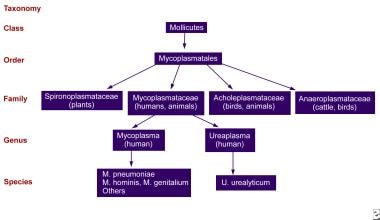
You are in: eMedicine Specialties > Pediatrics: General Medicine > Infectious Disease Mycoplasma InfectionsArticle Last Updated: Aug 8, 2007AUTHOR AND EDITOR INFORMATIONAuthor: Archana Chatterjee, MD, PhD, Associate Professor of Pediatrics, Medical Microbiology and Immunology, and Pharmacy, Division of Pediatric Infectious Diseases, Chief of Division of Pediatric Infectious Diseases, Creighton University Medical Center; Hospital Epidemiologist and Medical Director of Infection Control, Children's Hospital Archana Chatterjee is a member of the following medical societies: American Academy of Pediatrics, American Society for Microbiology, International Society for Infectious Diseases, Pediatric Infectious Diseases Society, and Society for Pediatric Research Editors: Rosemary Johann-Liang, MD, Medical Officer, Infectious Diseases and Pediatrics, Division of Special Pathogens and Immunological Drug Products, Center for Drug Evaluation and Research, Food and Drug Administration; Mary L Windle, PharmD, Adjunct Assistant Professor, University of Nebraska Medical Center College of Pharmacy, Pharmacy Editor, eMedicine.com, Inc; Larry I Lutwick, MD, Professor of Medicine, State University of New York, Downstate Medical School; Director, Infectious Diseases, Veterans Affairs New York Harbor Health Care System, Brooklyn Campus; Robert W Tolan Jr, MD, Chief, Division of Allergy, Immunology and Infectious Diseases, The Children's Hospital at Saint Peter's University Hospital; Clinical Associate Professor of Pediatrics, Drexel University College of Medicine; Russell W Steele, MD, Head, Division of Pediatric Infectious Diseases, Ochsner Children's Health Center; Clinical Professor, Department of Pediatrics, Tulane University School of Medicine Author and Editor Disclosure Synonyms and related keywords: Mycoplasma infections, walking pneumonia, pneumonia, mycoplasmal pneumonia, Mycoplasma pneumonia, M pneumoniae infection, Mycoplasma pneumoniae, tracheobronchitis INTRODUCTIONBackgroundMycoplasmal organisms are the smallest known free-living life forms. They are nearly ubiquitous in both the plant and animal kingdoms as colonizers and pathogens. They are prokaryotes but lack a cell wall. However, they have a unique cell membrane that contains sterols, which are not present in either bacteria or viruses. Mycoplasma organisms are small (150-250 nm) and have deformable membranes. The name Mycoplasma refers to the plasticity of the bacterial forms resembling fungal elements. When they were first discovered, mycoplasmal organisms were believed to be viruses because they pass through filters that retain bacteria. However, unlike viruses, they are able to grow in cell-free media and contain both RNA and DNA. Mycoplasma species have also been mistakenly believed to be L-forms of bacteria, which also lack cell walls. Unlike mycoplasmal organisms, L-form bacteria do not have sterols in the cell membranes, and they can revert to their walled parental forms. The following summary is modified from Baum's "Introduction to Mycoplasma Diseases" in Principles and Practice of Infectious Diseases (see Image 1).1 The general characteristics of Mycoplasma species include the following:
Mycoplasma species differ from viruses in the following ways:
Mycoplasma species differ from bacteria (including L-forms) in the following ways:
PathophysiologyMycoplasma organisms cause infection primarily as extracellular parasites, attaching to the surface of ciliated and nonciliated epithelial cells. The attachment site, or receptor, is a complex carbohydrate structurally akin to antigen I of red blood cells. The antibody response to this receptor results in production of the anti-I antibody or cold agglutinin, which acts as an autoantibody. Following attachment, mycoplasmal organisms may cause direct cytotoxic damage to epithelial cells because of hydrogen peroxide generation or cytolysis via an inflammatory response mediated by mononuclear cells or antigen-antibody reactions. Systemic spread of the bacterium is rare. Most Mycoplasma pneumoniae–associated illnesses are confined to the respiratory tract (see Extrarespiratory manifestations for M pneumoniae infection). Genital mycoplasmal organisms are associated with a number of genitourinary tract and reproductive diseases but also can cause infections at other sites. Mycoplasmal organisms commonly contaminate tissue cultures, in which they act as intracellular parasites and alter both cellular and viral molecular events. They are difficult to eliminate, and they raise questions regarding the validity of molecular biology results from tissue-culture experiments. FrequencyUnited StatesThe disease is distributed worldwide. Atypical organisms such as M pneumoniae are implicated in up to 40% of cases of community-acquired pneumonia. In the United States, at least 1 case of mycoplasmal pneumonia per 1000 persons is estimated to occur each year, or more than 2 million cases annually. The incidence of nonpneumonic respiratory infection caused by Mycoplasma species may be 10-20 times higher than this. Mortality/MorbidityMost M pneumoniae infections lead to clinically apparent disease involving the upper respiratory tract. In 5-10% of patients (with the rate depending on age), the infection progresses to tracheobronchitis or pneumonia and is usually self-limited. Pleural effusion (usually small) occurs in 5-20% of patients. Mycoplasmas have also been implicated in the pathogenesis of asthma, leading to acute and chronic wheezing in some individuals. Of all extrapulmonary manifestations, cardiac abnormalities are reported most frequently. In some reports, cardiac anomalies occur in as many as 10% of patients with M pneumoniae infections. Neurologic complications occur in approximately 1 per 1000 cases and usually are reversible; however, the mortality rate in patients with neurologic complications is higher than the rate in other patients. Recent reports suggest that CNS involvement is a common site in addition to the respiratory system, and may occur in up to 7% of patients hospitalized with M pneumoniae. In individuals with sickle cell anemia, mycoplasmal infection may be severe. Unusually severe M pneumoniae infection has also been reported in children with Down syndrome. Race
Sex
Age
CLINICALHistorySymptoms of M pneumoniae infection are often nonspecific. The onset is usually insidious, with fever, malaise, headache, and cough. Cough is a hallmark of M pneumoniae infection. The frequency and severity of cough may increase over the few days after onset and may become debilitating. In patients in whom the infection progresses to lower respiratory tract disease, the original symptoms persist, with a worsening and relatively nonproductive cough. On occasion, white or blood-flecked sputum and parasternal chest pain may be present as a result of muscle strain. Otitis media and sinusitis are uncommon. Postinfectious bronchitis may persist for weeks. M pneumoniae infection may complicate asthma, and acute asthma may be the first manifestation of infection. Infection by genital mycoplasmal organisms may have diverse manifestations, including burning micturition (nongonococcal urethritis); prostatic pain, fever, and chills (suggestive of pyelonephritis); vaginal discharge; symptoms of pelvic inflammatory disease; postpartum fever; and postabortal fever. Neonates may present with symptoms of cough, meningitis, or brain abscess. PhysicalPatients with M pneumoniae infection usually do not appear ill, and the illness often has been termed walking pneumonia. The pharynx may be erythematous without cervical adenopathy. Bullous myringitis is a classic but rare complication. Examination of the chest and lungs may yield little abnormality. A hallmark of M pneumoniae infection is the disparity between physical findings (relatively few) and radiographic evidence of pneumonia. Wheezing can occur, especially in patients with asthma. Rarely, fulminant pneumonia with respiratory failure can occur. Physical findings of genital Mycoplasma infection vary depending on the type of infection. Neonates, especially premature infants, may present with wheezing, retractions, and respiratory failure or signs of meningitis/brain abscess (eg, seizures, lethargy, neurologic deficits). Extrarespiratory manifestations of M pneumoniae infection include the following:
Causes
DIFFERENTIALSChlamydial Infections Influenza Legionella Infection Parainfluenza Virus Infections Q Fever Respiratory Syncytial Virus Infection Rhinovirus Infection Rickettsial Infection
| ||||||||||||||||||||||||||||||||||||||||||||||||||||||||||||||||||||||||||||||||||||||||||||||||||||||||||||||||||||||||||||||
| Drug Name | Erythromycin (E.E.S., E-Mycin, Eryc) |
|---|---|
| Description | Inhibits bacterial growth, possibly by blocking dissociation of peptidyl transfer RNA (tRNA) from ribosomes, causing RNA-dependent protein synthesis to arrest. For treatment of staphylococcal and streptococcal infections. In children, age, weight, and severity of infection determine proper dosage. |
| Adult Dose | 500 mg PO q6h for 7 d |
| Pediatric Dose | 30-50 mg/kg/d PO divided qid |
| Contraindications | Documented hypersensitivity; hepatic impairment |
| Interactions | Inhibits CYP450 isoenzymes 1A2 and 3A4; coadministration may increase toxicity of theophylline, digoxin, carbamazepine, or cyclosporine; may potentiate anticoagulant effects of warfarin; coadministration with lovastatin and simvastatin increases risk of rhabdomyolysis |
| Pregnancy | B - Fetal risk not confirmed in studies in humans but has been shown in some studies in animals |
| Precautions | Caution in liver disease; estolate formulation may cause cholestatic jaundice; adverse GI effects are common (administer doses pc); discontinue if nausea, vomiting, malaise, abdominal colic, or fever occur |
| Drug Name | Clarithromycin (Biaxin) |
|---|---|
| Description | Inhibits bacterial growth, possibly by blocking dissociation of peptidyl tRNA from ribosomes, arresting RNA-dependent protein synthesis. |
| Adult Dose | 500 mg PO q12h for 7 d |
| Pediatric Dose | 15 mg/kg/d PO divided bid |
| Contraindications | Documented hypersensitivity; coadministration of pimozide |
| Interactions | Toxicity increases with coadministration of fluconazole and pimozide; clarithromycin effects decrease and adverse GI effects may increase with coadministration of rifabutin or rifampin; may increase toxicity of anticoagulants, cyclosporine, tacrolimus, digoxin, omeprazole, carbamazepine, ergot alkaloids, triazolam, HMG-CoA–reductase inhibitors; plasma levels of certain benzodiazepines may increase, prolonging CNS depression; arrhythmias and increase in QTc intervals occur with disopyramide; coadministration with omeprazole may increase plasma levels of both agents |
| Pregnancy | C - Fetal risk revealed in studies in animals but not established or not studies in humans; may use if benefits outweigh risk to fetus |
| Precautions | Coadministration with ranitidine or bismuth citrate is not recommended with creatinine clearance (CrCl) <25 mL/min; administer one-half dose or increase dosing interval if CrCl <30 mL/min; diarrhea may be sign of pseudomembranous colitis; superinfections may occur with prolonged or repeated antibiotic therapies; caution in children because susp has bitter taste |
| Drug Name | Azithromycin (Zithromax) |
|---|---|
| Description | Inhibits bacterial growth, possibly by blocking dissociation of peptidyl tRNA from ribosomes, arresting RNA-dependent protein synthesis. |
| Adult Dose | Day 1: 500 mg PO Days 2-5: 250 mg/d PO |
| Pediatric Dose | <6 months: Not established >6 months: Day 1: 10 mg/kg PO once; not to exceed 500 mg/d Days 2-5: 5 mg/kg/d PO; not to exceed 250 mg/d |
| Contraindications | Documented hypersensitivity; hepatic impairment; do not administer with pimozide |
| Interactions | May increase toxicity of theophylline, warfarin, and digoxin; effects reduced with coadministration of aluminum and/or magnesium antacids; nephrotoxicity and neurotoxicity may occur when coadministered with cyclosporine |
| Pregnancy | B - Fetal risk not confirmed in studies in humans but has been shown in some studies in animals |
| Precautions | Site reactions can occur with IV route; bacterial or fungal overgrowth may result with prolonged antibiotic use; may increase hepatic enzymes and cholestatic jaundice; caution in patients with impaired hepatic function, prolonged QT intervals, or pneumonia; caution in patients who are hospitalized, geriatric, or debilitated |
| Drug Name | Tetracycline (Sumycin) |
|---|---|
| Description | Treats gram-positive and gram-negative organisms, as well as mycoplasmal, chlamydial, and rickettsial infections. Inhibits bacterial protein synthesis by binding with 30S and possibly 50S ribosomal subunits. |
| Adult Dose | 500 mg PO q6h for 7 d |
| Pediatric Dose | <8 years: Not recommended >8 years: 25-50 mg/kg/d (10-20 mg/lb) PO divided qid |
| Contraindications | Documented hypersensitivity; severe hepatic dysfunction |
| Interactions | Bioavailability decreases with antacids containing aluminum, calcium, magnesium, iron, or bismuth subsalicylate; can decrease effects of oral contraceptives, causing breakthrough bleeding and increased risk of pregnancy; tetracyclines can increase hypoprothrombinemic effects of anticoagulants |
| Pregnancy | D - Fetal risk shown in humans; use only if benefits outweigh risk to fetus |
| Precautions | Photosensitivity may occur with prolonged exposure to sunlight or tanning equipment; reduce dose in renal impairment; consider drug serum level determinations in prolonged therapy; tetracycline use during tooth development (last one half of pregnancy through age 8 y) can cause permanent discoloration of teeth; Fanconilike syndrome may occur with outdated tetracyclines |
| Drug Name | Doxycycline (Vibramycin) |
|---|---|
| Description | Inhibits protein synthesis and thus bacterial growth by binding to 30S and, possibly, 50S ribosomal subunits of susceptible bacteria. |
| Adult Dose | 100 mg PO q12h for 7 d |
| Pediatric Dose | <8 years: Not recommended >8 years: 2-4 mg/kg/d divided PO bid; not to exceed 200 mg/d |
| Contraindications | Documented hypersensitivity; severe hepatic dysfunction |
| Interactions | Bioavailability decreases with antacids containing aluminum, calcium, magnesium, iron, or bismuth subsalicylate; tetracyclines can increase hypoprothrombinemic effects of anticoagulants; tetracyclines can decrease effects of oral contraceptives, causing breakthrough bleeding and increased risk of pregnancy |
| Pregnancy | D - Fetal risk shown in humans; use only if benefits outweigh risk to fetus |
| Precautions | Photosensitivity may occur with prolonged exposure to sunlight or tanning equipment; reduce dose in renal impairment; consider drug serum level determinations in prolonged therapy; tetracycline use during tooth development (last one half of pregnancy through age 8 y) can cause permanent discoloration of teeth; Fanconilike syndrome may occur with outdated tetracyclines |
| Drug Name | Levofloxacin (Levaquin) |
|---|---|
| Description | Of the fluoroquinolones (eg, ciprofloxacin, ofloxacin, levofloxacin, sparfloxacin, grepafloxacin), drug of choice (DOC) to treat community-acquired pneumonia in adults. Use in children and pregnant women restricted because of concern regarding cartilage toxicity, but several clinical trials ongoing, and such use may be indicated in the future. |
| Adult Dose | 500 mg/d PO |
| Pediatric Dose | <18 years: Not recommended >18 years: Administer as in adults |
| Contraindications | Documented hypersensitivity |
| Interactions | Antacids, iron salts, and zinc salts may reduce serum levels; administer antacids 2-4 h before or after fluoroquinolones; cimetidine may interfere with metabolism; levofloxacin reduces therapeutic effects of phenytoin; probenecid may increase serum concentrations; may increase toxicity of theophylline, caffeine, cyclosporine, and digoxin (monitor digoxin levels); may increase effects of anticoagulants (monitor prothrombin time [PT]) |
| Pregnancy | C - Fetal risk revealed in studies in animals but not established or not studies in humans; may use if benefits outweigh risk to fetus |
| Precautions | In prolonged therapy, periodically evaluate organ system functions (eg, renal, hepatic, hematopoietic); adjust dose in renal impairment; superinfections may occur with prolonged or repeated antibiotic therapy |
| Drug Name | Telithromycin (Ketec) |
|---|---|
| Description | First antibiotic in new ketolides class. Combats resistant bacteria by inhibiting protein synthesis necessary for bacterial reproduction, binding 10 times tighter than macrolides at 2 sites on bacterial ribosomes. Blocks protein synthesis by binding to 50S ribosomal subunit (23S rRNA at domains II and V). Binding at domain II retains activity against gram-positive cocci (eg, Streptococcus pneumoniae). In resistance mediated by methylases (erm genes) that alter domain V binding site. May also inhibit the assembly of nascent ribosomal units. Resistance and cross resistance have not been observed. Active against S pneumoniae, Streptococcus pyogenes, Staphylococcus aureus, Haemophilus influenzae, and Moraxella catarrhalis; as well as atypical bacteria such as Chlamydia pneumoniae, M pneumoniae, and Legionella pneumoniae. Indicated to treat mild-to-moderate community-acquired pneumonia, including infections caused by multidrug resistant S pneumoniae). |
| Adult Dose | 800 mg PO qd for 7-10 d |
| Pediatric Dose | Not established |
| Contraindications | Documented hypersensitivity; coadministration with cisapride or pimozide; myasthenia gravis; history of hepatitis and/or jaundice with use of macrolides |
| Interactions | CYP 3A4 inhibitor and substrate; coadministration with other CYP 3A4 inhibitors (eg, itraconazole, ketoconazole) decreases elimination and increases maximum concentration Cmax and area under the curve AUC; CYP 3A4 inducers (eg, rifampin) decreases Cmax and AUC by 79% and 86% respectively; increases Cmax and AUC of other CYP 3A4 substrates (eg, cisapride, pimozide, simvastatin, lovastatin, atorvastatin, midazolam, triazolam); beta-hydroxy-beta-methylglutaryl coenzyme (HMG-CoA) reductase inhibitors (eg, simvastatin, atorvastatin, lovastatin) should be temporarily discontinued due to increased myopathy risk when coadministered; increases digoxin and theophylline serum levels; decreases sotalol Cmax and AUC secondary to decreased absorption; caution with other drugs that increase QTc interval (eg, quinidine, procainamide, dofetilide) |
| Pregnancy | C - Fetal risk revealed in studies in animals but not established or not studies in humans; may use if benefits outweigh risk to fetus |
| Precautions | Caution in severe renal impairment (limited data); consider pseudomembranous colitis if diarrhea occurs after antibiotic treatment; may prolong QTc interval (caution with heart conduction abnormalities); common adverse effects include diarrhea and nausea; may rarely cause visual disturbances or increased liver enzyme levels; acute hepatic failure and severe liver injury (in some cases fatal) have been reported (if clinical hepatitis or liver enzyme elevations combined with other systemic symptoms occur, permanently discontinue) |
| Media file 1: General characteristics of Mycoplasma species. | |

![]() | View Full Size Image | Media type: Graph |
Article Last Updated: Aug 8, 2007