Continually Updated Clinical Reference
 
 
  All Sources     eMedicine     Medscape     Drug Reference     MEDLINE
 
eMedicine - Hemangioma : Article by

Quick Find
Authors & Editors
Introduction
Indications
Contraindications
Workup
Treatment
Complications
Outcome And Prognosis
Future And Controversies
Multimedia
References


Patient Education
Skin, Hair, and Nails Center

Bruises Overview

Bruises Causes

Bruises Symptoms

Bruises Treatment


Author: Danielle A Katz, MD, Assistant Professor, Department of Orthopedic Surgery, State University of New York Upstate Medical University

Danielle A Katz is a member of the following medical societies: Alpha Omega Alpha

Coauthor(s): Timothy A Damron, MD, David G Murray Endowed Professor, Department of Orthopedic Surgery, Professor, Orthopedic Oncology and Adult Reconstruction, Vice Chair, Department of Orthopedics, State University of New York Upstate Medical University at Syracuse

Editors: Timothy A Damron, MD, David G Murray Endowed Professor, Department of Orthopedic Surgery, Professor, Orthopedic Oncology and Adult Reconstruction, Vice Chair, Department of Orthopedics, State University of New York Upstate Medical University at Syracuse; Francisco Talavera, PharmD, PhD, Senior Pharmacy Editor, eMedicine; Sean P Scully, MD, PhD, Professor, Department of Orthopedics, University of Miami; Dinesh Patel, MD, FACS, Associate Clinical Professor of Orthopedic Surgery, Harvard Medical School; Chief of Arthroscopic Surgery, Department of Orthopedic Surgery, Massachusetts General Hospital; Harris Gellman, MD, Consulting Surgeon, Broward Hand Center, Voluntary Clinical Professor of Orthopedic Surgery and Plastic Surgery, Departments of Orthopedic Surgery and Surgery, University of Miami School of Medicine

Author and Editor Disclosure

Synonyms and related keywords: benign vascular tumor, senile hemangioma, cherry hemangioma, strawberry nevus, visceral hemangioma, intramuscular hemangioma, hemangioma of the bone, hemangiomatosis, skeletal-extraskeletal angiomatosis, vertebral hemangioma, Kasabach-Merritt syndrome, tumor-induced osteomalacia, Gorham disease, disappearing bone disease, osteolysis, hemangiomatous disease, enchondromatosis, Maffucci syndrome, synovial hemangioma, osseous hemangioma

A hemangioma is an abnormal proliferation of blood vessels that may occur in any vascularized tissue. Considerable debate exists as to whether these lesions are neoplasms, hamartomas, or vascular malformations. Mulliken strongly supports classification of hemangiomas as neoplasms, whereas Godanich and Capanacci seem to favor a hamartomatous classification (Godanich, 1962).

Hemangiomas occur most often in the skin or subcutaneous tissue, and dermatologists, pediatricians, and primary care medical physicians typically treat these readily identifiable processes. One common example is the senile or cherry hemangioma, which is a benign, self-limited, small, red-purple papule in the skin of elderly patients. Another is the strawberry nevus, which is seen in approximately 0.5% of infants and spontaneously involutes in the vast majority of cases. Visceral hemangiomas are far less common but may have greater consequences when they result in organ dysfunction.

Orthopedists most commonly are called upon to treat hemangiomas of the deep soft tissues and bone. Skeletal muscle is the most common site for hemangioma of the deep soft tissue. Intramuscular hemangiomas may cause symptoms such as pain and swelling for which patients seek treatment. Hemangioma of bone may be symptomatic or may be purely an incidental finding. Most commonly, hemangiomas are localized to a single area, but multiple hemangiomas may occur in a single individual in a process known as hemangiomatosis.

Some authors have defined hemangiomatosis as multiple hemangiomas occurring in noncontiguous bones. In 1994, Devaney et al defined skeletal-extraskeletal angiomatosis as a benign vascular proliferation involving the medullary cavity of bone and at least one other type of tissue. Rarely, hemangiomas may be associated with other pathologic processes, such as the consumptive coagulopathy of Kasabach-Merritt syndrome and tumor-induced osteomalacia. Gorham disease is a process of massive osteolysis, which is believed to be within the spectrum of hemangiomatous disease. Hemangiomas occurring in the setting of multiple enchondromatosis are part of the spectrum of Maffucci syndrome.

History of the Procedure

The first documentation of a case of intramuscular hemangioma is attributed to Liston in 1843. Virchow described the first case of a vertebral hemangioma in 1867. In 1940, Kasabach and Merritt reported a case of a hemangioma involving the skin and deep soft tissue of the thigh that was associated with extensive purpura. The patient's platelet count dropped as low as 16,000/dL, but he responded well to transfusions and radiation therapy. Gorham et al first reported on 2 cases of massive osteolysis in 1954, and, in 1955, they expanded on the pathologic findings and potential etiology.

Problem

Hemangiomas of muscle and bone are abnormal proliferations of blood vessels that may be asymptomatic or may cause symptoms such as pain and swelling. Multiple hemangiomas may be present in a single individual with hemangiomatosis or skeletal-extraskeletal angiomatosis. Gorham disease is an osteolytic process thought to be related to abnormal vasculature, resulting in hyperemia of affected bones. Rarely, hemangiomas may be associated with complications such as tumor-induced osteomalacia or Kasabach-Merritt syndrome.

Frequency

Intramuscular hemangiomas

Most deep soft tissue hemangiomas probably are asymptomatic and small and go completely unnoticed; therefore, the exact incidence and prevalence are impossible to determine with any degree of certainty. That said, intramuscular hemangiomas are uncommon compared to other types of hemangiomas. Muscle hemangiomas accounted for 10 of 570 hemangiomas reported by Geschickter and Keasbey in 1935. Watson and McCarthy estimated that intramuscular hemangiomas accounted for 0.8% of all benign vascular tumors. Intramuscular hemangiomas occur most often in young people (range 2 mo to 66 y), with 80-90% presenting in persons younger than 30 years. Males and females are affected with near equal frequency.

Synovial hemangiomas

Synovial hemangiomas are extremely rare. They can arise from any surface that is lined by synovium, particularly tendon or joint space. They typically occur in young patients.

Osseous hemangiomas

Hemangiomas of bone accounted for approximately 1% of primary bone tumors of which biopsies were taken in Dahlin and Mirra's series. Hemangiomas of bone may occur in patients of any age. Approximately 25% present in persons in the fifth decade of life; however, reports exist of hemangiomas in patients as young as 2 years and as old as 77 years. Approximately two thirds of osseous hemangiomas occur in the cranium or vertebrae, and hemangioma is the most common benign tumor of vertebrae. Vertebral hemangiomas are found in approximately 10% of autopsy specimens.

Hemangiomatosis

Hemangiomatosis and skeletal-extraskeletal angiomatosis are rare conditions.

Gorham disease

Gorham disease (ie, massive osteolysis, disappearing bone disease) is very rare. Most patients are younger than 40 years.

Kasabach-Merritt syndrome

Kasabach-Merritt syndrome is a rare complication of large hemangiomas in which platelets are trapped and a consumptive coagulopathy ensues.

Etiology

Hemangiomas

The etiology of hemangiomas still is unclear. Angiogenesis likely plays a role in the vascular excess present. Cytokines, such as basic fibroblast growth factor (bFGF) and vascular endothelial growth factor (VEGF), have been implicated in the process of angiogenesis. Excess levels of angiogenic factors such as these or decreased levels of angiogenesis inhibitors such as gamma-interferon, tumor necrosis factor–beta, and transforming growth factor–beta may play a role in the etiology of hemangiomas.

Gorham disease

The etiology of Gorham disease is unknown but is thought to be related to increased vascularity of the affected bone or bones. The resultant hyperemia has been hypothesized to uncouple the balance between osteoblasts and osteoclasts, leading to bone resorption at a far greater rate than bone formation.

Kasabach-Merritt syndrome

Although the etiology is not entirely clear, development of Kasabach-Merritt syndrome seems to be related to stagnation of blood flow within a large hemangioma, which leads to platelet trapping and a subsequent consumptive coagulopathy.

Tumor-induced osteomalacia

The mechanisms behind osteomalacia have not been fully elucidated.

Pathophysiology

Hemangiomas are benign lesions with increased numbers of blood vessels. They can affect numerous tissue types (individually or in combination), including skin, subcutaneous tissue, viscera, muscle, synovium, and bone, but they do not spread to avascular tissue such as cartilage.

Gorham disease is a process in which variably progressive dissolution of bone occurs. This process may affect a single bone or may cross joint spaces. The etiology of this process is unknown but is thought to be related to excess vascularity of the involved bone.

Clinical

Intramuscular hemangiomas

Intramuscular hemangiomas occur most often in young adults, with 80-90% presenting in individuals younger than 30 years. They occur most often in the lower extremities, especially the thigh, and typically present with a palpable mass, but the overlying skin typically is not discolored. Intramuscular hemangiomas can be asymptomatic or can present with symptoms including increased girth of the extremity, increased temperature in the area, discoloration of the overlying skin, and pain. Intramuscular hemangiomas typically are compressible and decrease in size with elevation of the extremity. Exercise often exacerbates the symptoms of pain and swelling due to increased blood flow through the hemangioma resulting in vascular dilation. Larger hemangiomas may be associated with a bruit or thrill. Often, intramuscular hemangiomas cannot be definitively distinguished from soft tissue sarcomas based of clinical examination alone.

Large intramuscular hemangiomas occasionally may be associated with significant shunting of blood flow. This is uncommon, but in rare cases, it may lead to heart murmurs and/or congestive heart failure. If significant shunting exists within the hemangioma, the presentation may be similar to that of an arteriovenous fistula. In this case, it may be possible to elicit the Branham sign, a reflex bradycardia following compression of the arteriovenous fistula due to reduction in the shunt.

Synovial hemangiomas

Synovial hemangiomas are rare. In tendinous synovium, they typically present as a painless mass. In the synovium of a joint, they may present with recurrent effusions, pain, and even mechanical symptoms suggesting intraarticular derangement. A palpable, spongy, compressible mass may be present, and it may decrease in size with elevation of the extremity. The knee is by far the most common joint involved, where the presentation may be confused with meniscal or ligamentous pathology. Both localized and diffuse forms exist.

Osseous hemangiomas

Hemangiomas of bone often are incidental findings, but they may cause pain and swelling. Those in the skull may be associated with swelling, erythema, tenderness, or facial deformity. On rare occasions, vertebral hemangiomas may cause cord compression and fractures, but most vertebral hemangiomas are asymptomatic.

Osseous hemangiomas may be solitary (affecting a single bone) or focal (affecting one bone or, according to some authors, contiguous bones in a focal site). Various authors define hemangiomatosis differently. Some authors define hemangiomatosis as multiple hemangiomas located in noncontiguous bones. The condition of multiple bony hemangiomas also has been referred to as cystic angiomatosis of bone when no soft tissue component is present. Skeletal-extraskeletal angiomatosis has been defined as hemangiomas affecting the medullary canal of a bone, as well as 1 nonosseous site. The nonosseous site most often is adjacent soft tissue, but, alternatively, the nonosseous may be noncontiguous viscera.

Other authors define hemangiomatosis as lesions involving skin, muscle, and bone, which usually become symptomatic during childhood, with diffuse persistent swelling and discoloration with or without pain. Hemangiomatosis can also present with pathologic fracture.

Rarely, hemangiomas may be associated with induction of osteomalacia. They are one of many tumors that may produce a tumor-induced osteomalacia.

Gorham disease

Gorham disease can present with dull aching pain or insidious weakness and rarely is suspected prior to radiographic evaluation. Patients usually are younger than 40 years.

Kasabach-Merritt syndrome

Kasabach-Merritt syndrome can present with diffuse petechiae and ecchymosis in association with a large soft tissue mass. If platelet counts drop low enough, spontaneous hemorrhage may result.


Intramuscular hemangiomas

The natural history of many intramuscular hemangiomas is that of gradual fatty replacement, atrophy, and involution over time. This is supported by their greater frequency in individuals younger than 30 years and relative rarity in older adults. Many intramuscular hemangiomas are asymptomatic or produce only mild symptoms with activity, even during the active adolescent years. Treatment may be considered if pain is substantial, but due to the poor success rate of treatment and the apparent limited natural history of the process, indications for treatment are limited. The more limited the extent of the disease, the more likely it is to be controlled with surgical excision.

Synovial hemangiomas

The natural history of synovial hemangiomas may be similar to that of their intramuscular counterparts, but their rarity makes it difficult to document. The focal type more frequently is amenable to surgical excision than is the diffuse type.

Osseous hemangiomas

Hemangiomas of bone frequently are asymptomatic and may never require any treatment. Indications for treatment are based on symptoms.

Hemangiomatosis

Both osseous hemangiomatosis and skeletal-extraskeletal angiomatosis often become symptomatic during childhood with pain and diffuse swelling. Perhaps even more significantly, extraskeletal manifestations of hemangiomatosis can lead to hepatic dysfunction and cardiac complications. Because of the extensive nature of the disease, chemotherapy has been used for treatment with some success.

Gorham disease

The natural history of Gorham disease is poorly defined. Extent and pace of bone loss are variable. However, due to the unpredictable natural history and the potentially devastating effects of progressive disease, treatment with steroids and/or radiation therapy generally should be instituted upon diagnosis.

Kasabach-Merritt syndrome

Kasabach-Merritt syndrome is a potentially life-threatening coagulopathy that is related to platelets being trapped in a large cavernous hemangioma. Approximately 30% of patients who develop this complication die from hemorrhage or infection. Surgical resection of the hemangioma often is difficult. Consequently, steroids, radiation therapy, interferon alfa-2a, and pentoxifylline have been used in attempts at treatment.

Tumor-induced osteomalacia

Tumor-induced osteomalacia results in diffuse osteopenia with marked hypophosphatemia, low levels of serum calcium, and increased serum levels of alkaline phosphatase. Because osteomalacia generally resolves with excision of the tumor, surgical treatment usually is indicated.


Contraindications to surgery are lack of symptoms, failure to attempt nonoperative measures, and threat to life or limb should surgery be performed.


Lab Studies

  • If a patient presents with history, physical examination findings, and imaging study findings consistent with hemangioma, no laboratory studies are necessary.
  • For patients with intramuscular hemangiomas who manifest petechiae, easy bruising, or ecchymosis, consider the diagnosis of Kasabach-Merritt syndrome.
    • In Kasabach-Merritt syndrome, a CBC (for hemoglobin, hematocrit, and platelets) and coagulation studies (eg, prothrombin time, activated partial thromboplastin time, thrombin time, fibrinogen, fibrinogen degradation products) are recommended for evaluation.
    • Hemoglobin and hematocrit can be decreased if hemorrhage is significant. Platelet counts can fall to 20,000 or less. Coagulation studies reveal that prothrombin time may be mildly elevated. Levels of fibrinogen may be decreased, while fibrin degradation products may be elevated.
  • If tumor-induced osteomalacia is suspected based on radiographic findings, check calcium, phosphorus, parathyroid hormone, and alkaline phosphatase levels. Serum calcium will be in the low-to-normal range, marked hypophosphatemia will be present, parathyroid hormone levels will be within the reference range, and alkaline phosphatase will be elevated.

Imaging Studies

  • Intramuscular hemangiomas
    • Radiography
      • Soft tissue hemangiomas may be seen on radiographs as soft tissue shadows, although typically they are isodense with muscle.
      • Soft tissue hemangiomas may cause benign-appearing periosteal reaction or chronic cortical thickening and remodeling in adjacent bone (see Image 1).
      • Phleboliths within the soft tissue mass are diagnostic but are not common. These small round calcified densities occur within organizing thrombus within the vascular structures of hemangiomas (see Image 2).
    • MRI
      • After a plain radiograph, an MRI is the imaging modality of choice for soft tissue hemangiomas, including those of muscle and synovium (see Image 3).
      • Hemangiomas show increased signal on both T1 and T2 weighted images, frequently with areas of signal void. These void areas may be indicative of dense fibrous tissue, thrombi, phleboliths, or regions of high flow.
      • The diagnosis of hemangioma may be made with MRI when these signal characteristics are present and when the serpentine pattern of the vascular structures is depicted, usually with interposed fat as well. The margins of hemangiomas range from very infiltrative and irregular to well marginated.
      • Increased signal with gadolinium enhancement also may be helpful in distinguishing hemangiomas from other soft tissue masses.
    • Angiography
      • Angiography reveals a highly vascular lesion with vessels oriented parallel to one another.
      • The lesions may be high flow or low flow. This distinction between high flow and low flow can be important in treatment decisions, as high-flow lesions are more likely to benefit from embolization than are low-flow lesions.
  • Synovial hemangiomas
    • Radiography
      • Synovial hemangiomas result in nonspecific changes on plain radiographs, occasionally including a vague soft tissue density.
      • Erosion of bone is rarely present.
    • MRI
      • MRI is useful in the diagnosis of synovial hemangiomas.
      • The signal characteristics are similar to those of intramuscular hemangiomas (increased signal on T1 and T2 and depiction of vascular structures).
      • In addition, MRI can provide information as to whether a synovial hemangioma is localized and pedunculated or diffuse (see Image 7). This information helps in planning treatment.
      • Finally, MRI can be used to diagnose other pathologic processes that may be among the differential diagnoses of a synovial hemangioma (eg, meniscal tear).
    • Angiography: This study reveals pooling over the mass, consistent with a vascular process.
  • Osseous hemangiomas
    • Radiography: Hemangiomas of bone have different radiographic characteristics in different anatomic locations.
      • In the skull, they produce lytic lesions that are well circumscribed and may have a honeycomb appearance. Frequently, fine radiating striations are present, creating a sunburst or sunray appearance. The cortex often is expanded in the skull.
      • In the vertebral bodies, the parallel vertical trabeculae have a pathognomonic appearance, often referred to as corduroy cloth or jailhouse appearance (see Image 8). The cortex is not expanded in the vertebrae.
      • In the long bones, radiographic findings typically are less specific, with a coarse or bubbly appearance. Occasionally, the appearance may be primarily or completely lytic with a sclerotic rim.
    • Computed tomography
      • CT scan occasionally is used in identification of osseous hemangiomas but generally is not used to evaluate soft tissue hemangiomas.
      • Vertebral body hemangiomas have a distinctive polka-dot appearance on axial CT scan (see Image 5).
    • MRI
      • In MRI of osseous hemangiomas, signal is increased on T1 and T2 and the presence of vascular structures.
      • Vertebral hemangiomas can be identified by the jailhouse appearance on sagittal sections (see Image 4, similar to that seen on radiographs) and by the polka dot appearance seen on axial sections (as on CT scan, see Image 5).
  • Gorham disease – Radiography: Massive osteolysis is evidenced by what appears to be dissolution of one bone or of adjacent bones in which the ends become tapered (see Image 9).

Diagnostic Procedures

  • Intramuscular hemangiomas
    • Differential diagnoses for the clinical and radiographic findings associated with intramuscular hemangiomas include soft tissue sarcoma. Therefore, when the clinical and radiographic diagnosis is equivocal, biopsy is indicated (see Images 10-11).
    • Biopsy can be performed by needle or open techniques. Excessive bleeding should be anticipated in most cases.
  • Osseous hemangiomas
    • The most significant entities included in the differential diagnosis of hemangioma of bone are osseous angiosarcoma and metastatic disease.
    • As with soft tissue hemangiomas, when the clinical and radiographic diagnosis is equivocal, biopsy is indicated.
    • Biopsy can be performed by needle or open techniques.

Histologic Findings

Hemangiomas may have a spectrum of histologic findings. In a simplistic classification schema, hemangiomas can be divided into capillary (small vessel), cavernous (large vessel), and mixed types. Capillary hemangiomas have abundant vessels approximately 10-100 microns in diameter with walls 1-3 cells thick. The vessels tend to run in parallel. There is a single layer of endothelial cells with no shedding and no anaplasia. Cavernous hemangiomas have a similar appearance, but the lumina are bigger. A cellular type also has been described in which a much higher number of cells are present, distinct lumina are still identifiable, and no shedding or anaplasia is seen. There may be smaller areas within a cellular type that resemble capillary hemangiomas.

Using a more refined classification schema, Enzinger and Weiss divide localized hemangiomas into 7 categories, as follows:

  • Capillary hemangioma, including juvenile
  • Cavernous hemangioma
  • Venous hemangioma
  • Arteriovenous hemangioma (racemose hemangioma)
  • Epithelioid hemangioma
  • Hemangioma of granulation tissue
  • Miscellaneous hemangiomas of deep soft tissue (This last category includes many of the hemangiomas important to orthopedists, specifically synovial and intramuscular hemangiomas.)

Cells within a hemangioma can be stained to reveal that they are factor VIII positive, indicating that the cells are endothelial. Recently, each of three suggested phases of hemangioma development (proliferative, involuting, and involuted) have been defined histochemically and immunohistochemically by a group in New Zealand. Both CD31 and von Willebrand factor stain vascular endothelial cells in tumors of each phase. Proliferating cell nuclear antigen was predominate in the proliferative and involuting hemangiomas, but negligible in the involuting phase. Mast cells were identified predominately in the involuting phase hemangiomas. Vascular endothelial growth factor was identified primarily during the proliferative phase. Basic fibroblast growth factor was identified during the proliferative and early involuting phases. While these studies are not generally necessary for diagnosis, they provide insight into the biology and evolution of hemangioma.

Electron microscopy can be used to identify Weibel-Palade bodies. Weibel-Palade bodies are rod-shaped, 0.1-0.3 microns in length, and contain parallel tubules that localize factor VIII-associated antigen. They are relatively specific to endothelial cells.

Intramuscular hemangiomas

Intramuscular hemangiomas typically are capillary, cavernous, or mixed. Intramuscular hemangiomas can be distinguished from skeletal muscle angiosarcomas because they do not develop the freely anastomosing sinusoidal pattern seen in certain angiosarcomas. In addition, hemangiomas do not have the nuclear changes of pleomorphism and hyperchromatism seen in angiosarcomas. It may be more difficult to distinguish hemangiomas from hemangioendotheliomas, but hemangioendotheliomas may have shedding and cellular atypia. Hemangiomas can be differentiated from angiolipomas by the lack of lipoblasts in hemangiomas.

Synovial hemangiomas

Synovial hemangiomas are of the cavernous type. A matrix that is edematous, myxoid, or focally hyalinized is present between the vessels. The cells may contain significant amounts of hemosiderin.

Osseous hemangiomas

Most hemangiomas of bone are cavernous, although they may be mixed capillary and cavernous. There may be reactive new bone formation, which can appear similar to an osteoblastoma. Hemangioendothelioma of bone may be distinguished by a plumper endothelial lining and varying degrees of cellular atypia.

Gorham disease

Histologic evaluation of Gorham disease typically reveals hypervascular bone. The vascular proliferation often fills the medullary canal.


Medical therapy

Intramuscular hemangiomas

Observation is appropriate for asymptomatic or mildly symptomatic hemangiomas of skeletal muscle and bone. If symptoms cannot be adequately managed by activity modification and nonnarcotic analgesics, further treatment may be considered. Embolization may be used to provide symptomatic relief of intramuscular hemangiomas.

When surgical excision is planned, embolization also may be used preoperatively to decrease intraoperative blood loss and postoperative recurrence. Excision of symptomatic intramuscular hemangiomas can provide permanent relief. However, because complete excision is required for long-lasting satisfactory results, this treatment option generally is restricted to hemangiomas contained within a single muscle belly. Even so, complete resection is not always possible, and when not completely resected, hemangiomas nearly always recur. In addition, surgery can be associated with large volumes of blood loss, even when preoperative embolization is employed.

Laser knife excision of hemangiomas is a recently reported technique developed to better control intraoperative bleeding for these vascular processes. Preoperative ultrasound-guided hookwire localization may aid in defining the extent of a hemangioma for intraoperative guidance during excision. Radiation has been used to treat soft tissue hemangiomas in surgically inaccessible or potentially dangerous sites.

Synovial hemangiomas

Local pedunculated synovial hemangiomas are removed surgically, often through an arthroscope. More diffuse lesions may be treated with intraarticular low-dose radiation therapy, open excision, or both when sufficiently symptomatic.

Osseous hemangiomas

Hemangiomas of bone rarely require treatment. If symptoms are substantial enough to warrant consideration of treatment, it is important to confirm the diagnosis, as more aggressive neoplasms (eg, metastatic renal cell carcinoma) may masquerade as hemangioma.

Radiation may be used for the treatment of symptomatic hemangiomas that are surgically inaccessible. For example, it is sometimes used in the treatment of symptomatic vertebral hemangiomas. However, some authors have found that selective arterial embolization is safer and more effective in the treatment of symptomatic vertebral lesions.

Open excision of bone hemangiomas rarely is indicated. One (uncommon) indication is to decompress the spinal cord when a vertebral hemangioma is causing neurologic deficits.

Hemangiomatosis

Chemotherapy has been used in the treatment of extensive hemangiomatosis, particularly when the vascular proliferation is life or limb threatening.

Gorham disease

Radiation may help control the progression and symptoms of Gorham disease, and steroids have been used with variable success.

Kasabach-Merritt syndrome

Kasabach-Merritt syndrome is treated with supportive measures, particularly transfusion of platelets. Steroids also have been used in the treatment of Kasabach-Merritt syndrome with some success. In 1991, de Prost et al reported good results of treatment with pentoxifylline.

Pentoxifylline acted to restore blood flow and seemed to possess antithrombotic activity as well. Interferon alfa-2a has been used in attempts at pharmacologic management as well. Radiation therapy has had variable success. Surgical resection of the hemangioma often is difficult.

Preoperative details

Angiography is an important aspect of preoperative planning when the vascular supply of the lesion is in question and when preoperative embolization is considered. Embolization of high-flow lesions may be performed by interventional radiology to decrease blood loss intraoperatively and to decrease the risk of postoperative recurrence. Low-flow lesions are not successfully treated with embolization. Therefore, sclerosing agents sometimes are used to decrease blood flow through low-flow hemangiomas.

Intraoperative details

Surgical excision attempts to achieve a marginal border unless the hemangioma is contained within a single muscle belly that can be completely excised to achieve a wide margin. Local recurrence following wide excision has been reported as less than 10%, whereas local recurrence after marginal excision ranges from 25% to much higher. Meticulous hemostasis is essential in the prevention of postoperative hematoma.

Postoperative details

Postoperatively, the surgical site is wrapped in a compressive dressing. The patient is required to maintain a minimal level of activity. Both of these measures are instituted to prevent the occurrence of postoperative hematoma.

Follow-up

Follow-up assessment of symptomatic relief and the possibility of recurrence is required.

For excellent patient education resources, visit eMedicine's Skin, Hair, and Nails Center. Also, see eMedicine's patient education article Bruises.


In both intramuscular and osseous hemangiomas, hemorrhage can occur spontaneously during biopsy or during attempts at surgical resection and can be massive. Furthermore, hemangiomas typically recur following incomplete surgical excision. Some large hemangiomas may result in shunting of the blood to a degree significant enough to cause congestive heart failure.

Rarely, cord compression and neurologic deficits can result from vertebral hemangiomas. Approximately 30% of patients with Kasabach-Merritt syndrome die from hemorrhage or infection. Osteomalacia is an uncommon complication that has been associated with hemangioma.


Intramuscular hemangiomas

A significant number of intramuscular hemangiomas are associated with relatively mild symptoms, such as intermittent aching or discomfort with exercise. These may require no treatment and may have no significant sequelae. Unfortunately, those symptomatic enough to indicate treatment are those most likely to be incompletely excised, and thus, they recur. Recurrence rates following surgery range from 18-50%.

Synovial hemangiomas

The outcomes for diffuse synovial hemangiomas are similar to those of intramuscular hemangiomas. Patients with localized synovial hemangiomas tend to have excellent results following surgical excision.

Hemangiomas of bone

Many osseous hemangiomas remain asymptomatic, require no treatment, and have no significant sequelae.

Hemangiomatosis

Hemangiomatosis often becomes symptomatic during childhood, and yet is nearly impossible to excise. Therefore, treatment with chemotherapy has been tried with variable success.

Gorham disease

The rarity of Gorham disease prohibits a clear assessment of its prognosis. Patients have had variable results from treatment with steroids and radiation therapy.


One of the biggest controversies surrounding hemangiomas is the true nature of their etiology. No clear consensus exists regarding the inciting cause, nor is there agreement as to whether hemangiomas are neoplasms, hamartomas, or malformations.

Future investigations likely will attempt to answer these questions and may lead to new innovations in therapy. Work has begun examining the role of angiogenic cytokines and angiogenesis inhibitors in the treatment of hemangiomas, including systemic administration of the antiangiogenic proteins AGM-1470 and angiostatin or of the matrix metalloproteinase inhibitor batimastat, and gene gun therapy with interleukin-12.


Media file 1:  Cortical thickening of the tibia adjacent to an intramuscular hemangioma of the leg.
Click to see larger pictureClick to see detailView Full Size Image
Media type:  X-RAY

Media file 2:  Radiograph showing phleboliths in an intramuscular hemangioma of the thigh.
Click to see larger pictureClick to see detailView Full Size Image
Media type:  X-RAY

Media file 3:  T1 and T2 MRI images of intramuscular hemangioma of the leg. Note the serpentine quality of the vessels and that the hemangioma is high signal on both T1 and T2. This indicates that the hemangioma is predominantly of water density.
Click to see larger pictureClick to see detailView Full Size Image
Media type:  MRI

Media file 4:  MRI (sagittal cut) illustrating the jailhouse appearance of a vertebral hemangioma.
Click to see larger pictureClick to see detailView Full Size Image
Media type:  MRI

Media file 5:  Axial cut on CT scan illustrating the polka dot appearance of an intraosseous vertebral hemangioma.
Click to see larger pictureClick to see detailView Full Size Image
Media type:  CT

Media file 6:  T1 (time to repetition [TR]=500, time to echo [TE]=15.0/1) and T2 (TR=3000, TE=15/Ef) images of an intramuscular hemangioma of the leg. This hemangioma is dark on T1 and bright on T2 indicating that this hemangioma likely has fat or other nonliquid products within it.
Click to see larger pictureClick to see detailView Full Size Image
Media type:  MRI

Media file 7:  MRI of a pedunculated synovial hemangioma of the knee. (T2 image with time to repetition [TR]=25.4, time to echo [TE]=9.0/1.)
Click to see larger pictureClick to see detailView Full Size Image
Media type:  MRI

Media file 8:  Radiograph of a vertebral hemangioma illustrating the corduroy or jailhouse appearance of striations.
Click to see larger pictureClick to see detailView Full Size Image
Media type:  X-RAY

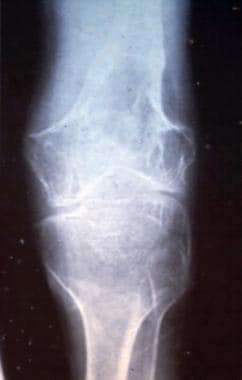
Media file 9:  Radiograph of a patient with Gorham disease showing dissolution of bone.
Click to see larger pictureClick to see detailView Full Size Image
Media type:  X-RAY

Media file 10:  Low-power view of the histology of an intramuscular hemangioma. Note the vascular channels.
Click to see larger pictureClick to see detailView Full Size Image
Media type:  Photo

Media file 11:  High-power view of the histology of an intramuscular hemangioma. Red blood cells are visible within the vascular channels.

Click to see larger pictureClick to see detailView Full Size Image
Media type:  Photo


  • Beham A, Fletcher CD. Intramuscular angioma: a clinicopathological analysis of 74 cases. Histopathology. Jan 1991;18(1):53-9. [Medline].
  • Bremnes RM, Hauge HN, Sagsveen R. Radiotherapy in the treatment of symptomatic vertebral hemangiomas: technical case report. Neurosurgery. Nov 1996;39(5):1054-8. [Medline].
  • Buetow PC, Kransdorf MJ, Moser RP Jr, et al. Radiologic appearance of intramuscular hemangioma with emphasis on MR imaging. AJR Am J Roentgenol. Mar 1990;154(3):563-7. [Medline].
  • Chang J, Most D, Bresnick S, et al. Proliferative hemangiomas: analysis of cytokine gene expression and angiogenesis. Plast Reconstr Surg. Jan 1999;103(1):1-9; discussion 10. [Medline].
  • Cohen AJ, Youkey JR, Clagett GP, et al. Intramuscular hemangioma. JAMA. May 20 1983;249(19):2680-2. [Medline].
  • Devaney K, Vinh TN, Sweet DE. Skeletal-extraskeletal angiomatosis. A clinicopathological study of fourteen patients and nosologic considerations. J Bone Joint Surg Am. Jun 1994;76(6):878-91. [Medline].
  • Enzinger FM, Weiss SW. Soft Tissue Tumors. St. Louis:. Mosby-Year Book;1995:579-626.
  • Geschickter CF, Keasbey LE. Tumors of blood vessels. Am J Cancer. 1935;23:568, 591.
  • Godanich IF, Campanacci M. Vascular hamartomata and infantile angioectatic osteohyperplasia of the extremities. J Bone Joint Surg. 1962;44A:815.
  • Greenspan A, Azouz EM, Matthews J 2nd, Decarie JC. Synovial hemangioma: imaging features in eight histologically proven cases, review of the literature, and differential diagnosis. Skeletal Radiol. Nov 1995;24(8):583-90. [Medline].
  • Henley JD, Danielson CF, Rothenberger SS, et al. Kasabach-Merritt syndrome with profound platelet support. Am J Clin Pathol. May 1993;99(5):628-30. [Medline].
  • Kenan S, Abdelwahab IF, Klein MJ, Lewis MM. Hemangiomas of the long tubular bone. Clin Orthop. Jul 1992;(280):256-60. [Medline].
  • Maki DD, Craig-Mueller J, Griffiths HJ. Radiologic case study. Intramuscular hemangioma. Orthopedics. Oct 1996;19(10):916, 907-9. [Medline].
  • Mirra JM. Vascular tumors. In: Mirra JM, ed. Bone Tumors: Clinical, Radiologic, and Pathologic Correlations. Vol 2. Philadelphia:. Lea & Febiger;1989:1336-1377.
  • Mulliken JB. Cutaneous vascular anomalies. In: McCarthy JG, May JW Jr, Littler JW, eds. Plastic Surgery: Tumors of the Head & Neck and Skin. Philadelphia:. WB Saunders Co;1990:3191-3223.
  • O''Connell JX, Kattapuram SV, Mankin HJ. Epithelioid hemangioma of bone. A tumor often mistaken for low-grade angiosarcoma or malignant hemangioendothelioma. Am J Surg Pathol. Jun 1993;17(6):610-7. [Medline].
  • Paley D, Evans DC. Angiomatous involvement of an extremity. A spectrum of syndromes. Clin Orthop. May 1986;(206):215-8. [Medline].
  • Petasnick JP, Turner DA, Charters JR, et al. Soft-tissue masses of the locomotor system: comparison of MR imaging with CT. Radiology. Jul 1986;160(1):125-33. [Medline].
  • Price NJ, Cundy PJ. Synovial hemangioma of the knee. J Pediatr Orthop. Jan-Feb 1997;17(1):74-7. [Medline].
  • Pritchard DJ. Surgical management of common benign soft-tissue tumors. In: Simon MA, Springfield D, eds. Surgery for Bone and Soft-tissue Tumors. Philadelphia:. Lippincott-Raven Publishers;1998:534-537.
  • Rogalski R, Hensinger R, Loder R. Vascular abnormalities of the extremities: clinical findings and management. J Pediatr Orthop. Jan-Feb 1993;13(1):9-14. [Medline].
  • Sherman RS, Wilner D. The roentgen diagnosis of hemangioma of bone. AJR. 1961;86(6):1146-1159.
  • Sung MS, Kang HS, Lee HG. Regional bone changes in deep soft tissue hemangiomas: radiographic and MR features. Skeletal Radiol. Apr 1998;27(4):205-10. [Medline].
  • Unni KK. Dahlin's Bone Tumors: General Aspects and Data on 11,087 Cases. Philadelphia:. Lippincott-Raven Publishers;1996:307-316.
  • Unni KK, Ivins JC, Beabout JW, Dahlin DC. Hemangioma, hemangiopericytoma, and hemangioendothelioma (angiosarcoma) of bone. Cancer. Jun 1971;27(6):1403-14. [Medline].
  • Weinstein JN, Boriani S, Phillips FM, Wetzel FT. Management of benign tumors of the spine. In: Simon MA, Springfield D, eds. Surgery for Bone and Soft-tissue Tumors. Philadelphia:. Lippincott-Raven Publishers;1998:212-214.
  • Wenger DE, Wold LE. Benign vascular lesions of bone: radiologic and pathologic features. Skeletal Radiol. Feb 2000;29(2):63-74. [Medline].
  • Wild AT, Raab P, Krauspe R. Hemangioma of skeletal muscle. Arch Orthop Trauma Surg. 2000;120(3-4):139-43. [Medline].
  • de Prost Y, Teillac D, Bodemer C, et al. Successful treatment of Kasabach-Merritt syndrome with pentoxifylline. J Am Acad Dermatol. Nov 1991;25(5 Pt 1):854-5. [Medline].

Hemangioma excerpt

Article Last Updated: Aug 18, 2004