Continually Updated Clinical Reference
 
 
  All Sources     eMedicine     Medscape     Drug Reference     MEDLINE
 
You are in: eMedicine Specialties > Orthopedic Surgery > Knee

Total Knee Arthroplasty

Last Updated: July 13, 2004
Email to a Colleague
Synonyms and related keywords: TKA, total knee replacement, knee replacement, knee replacement surgery, knee surgery, knee pain, osteoarthritis of the knee, total joint arthroplasty, artificial knee

  AUTHOR INFORMATION Section 1 of 11    Click here to go to the next section in this topic
Author Information Introduction Indications Relevant Anatomy And Contraindications Workup Treatment Complications Outcome And Prognosis Future And Controversies Pictures Bibliography

Author: Simon H Palmer, MD, Consultant Surgeon, Department of Orthopedics and Trauma, Worthing and Southlands NHS trust, Sussex

Coauthor(s): Mervyn J Cross, MBBS, FRACS, Director of the Australian Institute of Musculoskeletal Research, Department of Orthopedic Surgery, North Sydney Orthopedic/Sports Medicine Center, Crows Nest, Australia

Editor(s): M Mike Malek, MD, FACS, Associate Professor, Department of Orthopedic Surgery, Howard University School of Medicine; Consulting Surgeon, Orthopedic Surgery and Sports Medicine, Washington Orthopedic and Knee Clinic, Inc; Francisco Talavera, PharmD, PhD, Senior Pharmacy Editor, eMedicine; John W Uribe, MD, Chief, Division of Sports Medicine, Associate Professor, Department of Orthopedics and Rehabilitation, University of Miami at Jackson Memorial Medical Center; Dinesh Patel, MD, FACS, Associate Clinical Professor of Orthopedic Surgery, Harvard Medical School; Chief of Arthroscopic Surgery, Department of Orthopedic Surgery, Massachusetts General Hospital; and Carlos J Lavernia, MD, FAAOS, Adjunct Clinical Professor, Department of Orthopedic Surgery, University of Miami School of Medicine; Medical Director, Orthopedic Institute at Mercy Hospital

Disclosure


  INTRODUCTION Section 2 of 11   Click here to go to the previous section in this topic Click here to go to the top of this page Click here to go to the next section in this topic
Author Information Introduction Indications Relevant Anatomy And Contraindications Workup Treatment Complications Outcome And Prognosis Future And Controversies Pictures Bibliography

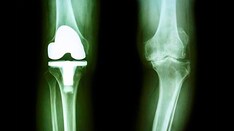
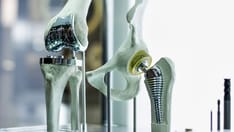
Total knee replacement in some form has been practiced for over 50 years. The complexities of the knee joint only began to be understood 30 years ago. Because of this, total knee replacement initially was not as successful as Sir John Charnley's artificial hip. However, over the last 20 years, dramatic advancements in the knowledge of knee mechanics have led to design modifications that appear to be durable. Significant advances have occurred in the type and quality of the metals, polyethylene, and more recently, ceramics used in the prosthesis manufacturing process, leading to improved longevity. As with most techniques in modern medicine, more and more patients are receiving the benefits of total knee arthroplasty (TKA) (see Image 1).

History of the Procedure: In the 1860s, Fergusson reported performing a resection arthroplasty of the knee for arthritis. Verneuil is thought to have performed the first interposition arthroplasty using joint capsule. Other tissues were subsequently tried, including skin, muscle, fascia, fat, and even pig bladder.

The first artificial implants were tried in the 1940s as molds fitted to the femoral condyles following similar designs in the hip. In the next decade, tibial replacement was also attempted, but both designs had problems with loosening and persistent pain. Combined femoral and tibial articular surface replacements appeared in the 1950s as simple hinges. These implants failed to account for the complexities of knee motion and consequently had high failure rates from aseptic loosening. They were also associated with unacceptably high rates of postoperative infection.

In 1971, Gunston importantly recognized that the knee does not rotate on a single axis like a hinge, but rather the femoral condyles roll and glide on the tibia with multiple instant centres of rotation. His polycentric knee replacement had early success with its improved kinematics over hinged implants but was unsuccessful because of inadequate fixation of the prosthesis to bone.

The highly conforming and constrained Geomedic knee arthroplasty introduced in 1973 at the Mayo Clinic ignored Gunston's work, and a kinematic conflict arose. Other designs followed, either following Gunston's principle in attempting to reproduce normal knee kinematics or allowing a conforming articulation to govern knee motion.

The total condylar prosthesis was designed by Insall at the Hospital for Special Surgery in 1973. This prosthesis concentrated on mechanics and did not try to reproduce normal knee motion. In 1993, Ranawat et al reported a rate of survivorship of 94% at 15 years of follow-up, which is the most impressive reported to date. The component was subsequently altered to artificially introduce normal kinematics to improve range of motion of the component. At the same time, a prosthesis with more natural kinematics was developed at the Hospital for Special Surgery, relying on the retained cruciate ligaments to provide knee motion.

The argument as to whether knee ligaments should be preserved or sacrificed continues to this day. Long-term follow-up studies do not show any significant differences, although gait appears to be less abnormal if ligaments are preserved, especially when walking up and down stairs. One theoretical way of incorporating normal kinematics and maximal conformity is with mobile tibial bearings. Current midterm follow-up studies of these prostheses have so far shown encouraging results.

Problem: Patients with painful, deformed, and unstable knees secondary to degenerative or inflammatory conditions need a prosthesis that provides reproducible pain relief and improvement in function. The morbidity and complications from the procedure should be minimal. The complexities of a normal knee joint, however, are not reproducible with modern techniques, and patients should understand that they will not have a normal knee. The prosthesis should be durable, requiring patients to undergo only one definitive procedure in their lifetime, although this may simply be unrealistic in younger patients.

Frequency: Approximately 130,000 knee replacements are performed every year in the United States.

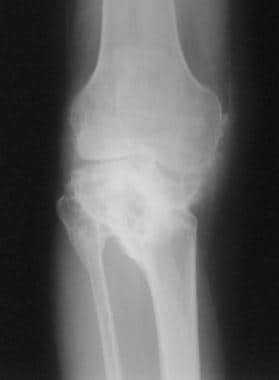
Etiology: Osteoarthritic destruction of the knee is the most common reason for total knee replacement. This is a disease of synovial joints, characterized by degenerative and reparative processes, and is observed in 40% of 40-year-old patients on radiographic examination. However, only 50% of these patients are symptomatic. Osteoarthritis may be primary or secondary. Mechanical derangements (eg, previous meniscal or cruciate ligament damage), pyogenic infection, ligamentous instability, fracture into a joint [see Image 2]) are among the common causes of the secondary type. Other causes of cartilage destruction include rheumatoid arthritis, hemophilia, seronegative arthritides, crystal deposition diseases, pigmented villonodular synovitis, idiopathic or steroid-induced avascular necrosis, and rare bone dysplasias.

Recent studies into risk factors for severe osteoarthritis of the hip and knee have revealed that siblings of individuals undergoing joint replacement are 3-5 times more likely to require similar surgery than age-matched controls. This means that genes contribute around 30% of the overall risk for severe osteoarthritis. Laboratory-based studies have shown that chromosome 11 is linked to severe osteoarthritis of the hip and chromosome 2 to severe osteoarthritis of the knee. The precise genes involved are as yet unknown.

Pathophysiology: The exact cause of the degenerative process in primary osteoarthritis is unknown. It may represent a defect in cellular (chondrocyte) repair processes. Osteoarthritic cartilage contains increased amounts of water; alterations in the type of proteoglycan; type II collagen abnormalities; and increased levels of cathepsins, metalloproteinase, interleukin-1, and others as a complex cascade of enzymatic process. Changes in the synovium include synoviocyte hyperplasia, an increased leukocyte population in the membrane and fluid, occasional giant cells, neovascularization with increased vessel permeability, and altered matrix and cellular cytokine formation.

Clinical: Clinical history in a patient with arthritis of the knee is dominated by pain. This predominantly occurs on weightbearing but in the end stages may be constant and unrelieved by rest. Night pain is a particularly disabling symptom that demands urgent attention. The pain may be localized to one compartment or may be diffuse. Other symptoms include stiffness, swelling, locking, and giving way. Try to quantify the level of pain on a simple scale (eg, mild, moderate, severe; numerical scale of 1-10) and assess how the patient's activities of daily living (ADL) are affected. Ask the patient about maximum walking distance, recreational sporting ability and aspirations, stair climbing (which often gives clues about patellofemoral disease), the need for walking aids, the ability to dress and perform self-care, and the ability to perform activities that require knee flexion. Some patients may have considerable interference with social interaction, sexual function, and sleep and may experience exhaustion and even
depression from their disease.

Various structured outcome evaluations can be used to try to quantify disability from dysfunction of the knee and are useful as research tools in follow-up studies of total knee replacement. These include general health status measures (eg, Medical Outcomes Short Form 36 [SF 36]) or specific knee scoring systems (eg, those used by the Knee Society).

Establish the integrity of the ligaments because deficiency may require use of a special prosthesis with intrinsic stability.

Seek and systematically exclude other sources of knee and leg pain. These include root pain from spinal disease, referred pain from the ipsilateral hip, peripheral vascular disease, meniscal pathology, and bursitis of the knee.

Roentgenographic findings must correlate with a clear clinical impression of knee arthritis. Knee roentgenography should include a standing anteroposterior (AP) view, a lateral view, a 45-degree posteroanterior (PA) view of the knee (Rosenberg view), and a skyline view of the patella. Loss of joint space, cysts, subchondral sclerosis, and osteophytes confirm the diagnosis of osteoarthritis (see Image 3).

The overall mortality rate from a total knee replacement is less than 1%, but this figure increases with age, male sex, and the number of preexisting medical conditions. Identification and optimization of such conditions prior to surgery is important to reduce perioperative complications.

An assessment of the patient's social circumstances is important for organization of postoperative rehabilitation and placement.

Examination should include assessment of scars or soft tissue defects around the knee. Consult a plastic surgeon if wound healing is predicted to be a problem. Similarly, perform an accurate assessment of the vascular status to the limb. Identify and treat chronic local or systemic infection.

Identify and treat deficiency of the quadriceps musculature and extensor mechanism through rehabilitation because this may improve mechanical pain and facilitate postoperative recovery. Measure range of motion, including fixed flexion deformity, with a goniometer and record findings. The best predictor of range of motion following total knee replacement is the preoperative range of motion. This is an important factor when obtaining consent from the patient for surgery (see Image 4).
  INDICATIONS Section 3 of 11   Click here to go to the previous section in this topic Click here to go to the top of this page Click here to go to the next section in this topic
Author Information Introduction Indications Relevant Anatomy And Contraindications Workup Treatment Complications Outcome And Prognosis Future And Controversies Pictures Bibliography

The primary indication for TKA is to relieve pain caused by severe arthritis. The pain should be significant and disabling. Night pain is particularly distressing. If dysfunction of the knee is causing significant reduction in the patient's quality of life, this should be taken into account. Correction of significant deformity is an important indication but is rarely used as the primary indication for surgery. Roentgenographic findings must correlate with a clear clinical impression of knee arthritis. Patients who do not have significant loss of joint space tend to be less satisfied with their clinical result following TKA. Exhaust all conservative treatment measures before considering surgery.

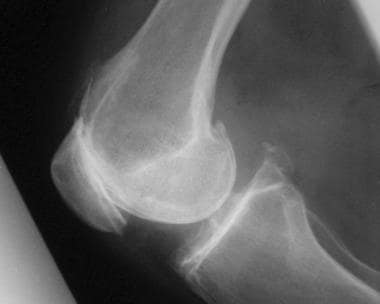
Knee replacement has a finite expected survival that is adversely affected by activity level. Generally, it is indicated in older patients with more modest activities. It is also clearly indicated in younger patients who have limited function because of systemic arthritis with multiple joint involvement. Young patients requesting knee replacement, especially those with posttraumatic arthritis, are not excluded by age but must be significantly disabled and must understand the inherent longevity of joint replacement. Rarely, severe patellofemoral arthritis (see Image 5) may justify arthroplasty because the expected outcome of arthroplasty is superior to patellectomy. Isolated patellofemoral replacement still is undergoing clinical investigation.

Deformity can sometimes become the principal indication for knee replacement in patients with moderate arthritis when flexion contracture or varus or valgus laxity is significant. In such cases, often a more constrained prosthesis is required, leading to greater technical difficulty in surgery and more uncertain long-term survival.

  RELEVANT ANATOMY AND CONTRAINDICATIONS Section 4 of 11   Click here to go to the previous section in this topic Click here to go to the top of this page Click here to go to the next section in this topic
Author Information Introduction Indications Relevant Anatomy And Contraindications Workup Treatment Complications Outcome And Prognosis Future And Controversies Pictures Bibliography

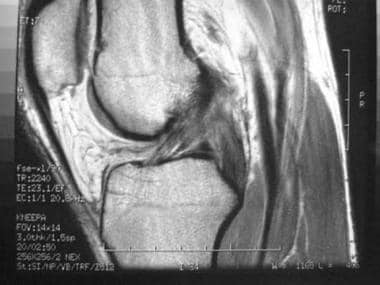
Relevant Anatomy: Movement of the knee joint can be classified as having 6 degrees of freedom: 3 translations (including anterior/posterior, medial/lateral, and inferior/superior) and 3 rotations (including flexion/extension, internal/external, and abduction/adduction). Movements of the knee joint are determined by the shape of the articulating surfaces of the tibia and femur and the orientation of the 4 major ligaments of the knee joint, including the anterior and posterior cruciate ligaments (see Image 6) and the medial and lateral collateral ligaments as a 4-bar linkage system.

Knee flexion/extension involves a combination of rolling and sliding called femoral rollback, which is an ingenious way of allowing increased ranges of flexion. Because of asymmetry between the lateral and medial femoral condyles, the lateral condyle rolls a greater distance than the medial condyle during 20 degrees of knee flexion. This causes coupled external rotation of the tibia, which has been described as the screw-home mechanism of the knee that locks the knee into extension.

The primary function of the medial collateral ligament is to restrain valgus rotation of the knee joint, with its secondary function being control of external rotation. The lateral collateral ligament restrains varus rotation and resists internal rotation.

The primary function of the anterior cruciate ligament (ACL) is to resist anterior displacement of the tibia on the femur when the knee is flexed and control the screw-home mechanism of the tibia in terminal extension of the knee. A secondary function of the ACL is to resist varus or valgus rotation of the tibia, especially in the absence of the collateral ligaments. The ACL also resists internal rotation of the tibia.

The main function of the posterior cruciate ligament (PCL) is to allow femoral rollback in flexion and resist posterior translation of the tibia relative to the femur. The PCL also controls external rotation of the tibia with increasing knee flexion. Retention of the PCL in total knee replacement has been shown biomechanically to provide normal kinematic rollback of the femur on the tibia. This also is important for improving the lever arm of the quadriceps mechanism with flexion of the knee.

Movement of the patellofemoral joint can be characterized as gliding and sliding. During flexion of the knee, the patella moves distally on the femur. This movement is governed by the attachments of the patellofemoral joint to the quadriceps tendon, ligamentum patellae, and the anterior aspects of the femoral condyles. The muscles and ligaments of the patellofemoral joint are responsible for producing extension of the knee. The patella acts as a pulley in transmitting the force developed by the quadriceps muscles to the femur and the patellar ligament. It also increases the mechanical advantage of the quadriceps muscle relative to the instant center of rotation of the knee.

The mechanical axis of the lower limb is an imaginary line through which the weight of the body passes. It runs from the center of the hip to the center of the ankle through the middle of the knee. This is altered in the presence of deformity and must be reconstituted at surgery, which allows normalization of gait and protects the prosthesis from eccentric loading and early failure.

Contraindications: Absolute contraindications to total knee replacement include knee sepsis, a remote source of ongoing infection, extensor mechanism dysfunction, severe vascular disease, recurvatum deformity secondary to muscular weakness, and the presence of a well-functioning knee arthrodesis. Relative contraindications include medical conditions that preclude safe anesthesia and the demands of surgery and rehabilitation. Other relative contraindications include skin conditions within the field of surgery (eg, psoriasis), a past history of osteomyelitis around the knee, a neuropathic joint, and obesity.

Quick Find
Author Information
Introduction
Indications
Relevant Anatomy And Contraindications
Workup
Treatment
Complications
Outcome And Prognosis
Future And Controversies
Pictures
Bibliography

Click for related images.

Patient Education


  WORKUP Section 5 of 11   Click here to go to the previous section in this topic Click here to go to the top of this page Click here to go to the next section in this topic
Author Information Introduction Indications Relevant Anatomy And Contraindications Workup Treatment Complications Outcome And Prognosis Future And Controversies Pictures Bibliography

Lab Studies:

  • Preoperative laboratory evaluation should include the following: FBC (full blood count), sedimentation rate, prothrombin time and activated partial thromboplastin time (PT/aPTT), urine analysis and culture, and urea and electrolytes.
    • Urinalysis is performed to exclude occult urinary tract infection
    • Routine preoperative evaluation of coagulation studies is not necessary except in patients with a history of bleeding, alcoholism, or previous liver disease.

Imaging Studies:

  • Radiographic views for the assessment of the patient with knee arthritis include the following:
    • Standing AP view
    • Lateral view
    • Long leg radiographs to assess malalignment - Helpful for preoperative planning
    • Standing radiographs with the knee in extension or in 45 degrees of flexion (Rosenberg view) - Can improve the sensitivity of detection of cartilage degeneration
  • Routine use of a chest roentgenography is not usually recommended as a screening tool. However, it is indicated in patients with cardiopulmonary disease or in patients with clinical signs identified in the preadmission clinic.

Other Tests:

  • Electrocardiography is performed in elderly patients and in patients with a history of cardiac issues.

  • More sophisticated imaging modalities in the investigation of knee arthritis are of occasional benefit for the assessment of significant bone loss or bone infection and include the following:
    • Indium white blood cell scanning
    • Computed tomography scanning
    • Magnetic resonance imaging
    • Bone densitometry
Histologic Findings: Macroscopic examination shows a spectrum of changes in the articular cartilage, from softening and fibrillation to complete cartilage destruction, subchondral bone thickening, cysts, and osteophytes. Microscopic examination shows chondrocyte proliferation into embryonic and dedifferentiated forms in the deeper zones, fibrocartilage formation with capillary infiltration, loss of proteoglycan ground substance with altered staining characteristics, chondrocalcinosis, and synovial hyperplasia.

  TREATMENT Section 6 of 11   Click here to go to the previous section in this topic Click here to go to the top of this page Click here to go to the next section in this topic
Author Information Introduction Indications Relevant Anatomy And Contraindications Workup Treatment Complications Outcome And Prognosis Future And Controversies Pictures Bibliography

Medical therapy: Initial management of most patients with osteoarthritis should be nonoperative and may include nonsteroidal anti-inflammatory medications, intra-articular viscosupplementation (eg, Synvisc, Hyalgan), analgesics, bracing, orthoses, shoe modifications, weight loss, and ambulatory aids (eg, walking stick held in the opposite hand). Activity modification may also be necessary. Home health care–assistive devices for daily living (eg, toilet extenders, safety rails, bath seats) may help the patient cope with disability and should be prescribed after consultation with an occupational therapist. Knee rehabilitation under the supervision of a physiotherapist may include strengthening and range-of-motion exercises, gait training, and patient education.

Joint aspiration and intra-articular steroid injection may be used to improve synovitis. Osteoarthritis in the knee usually progresses slowly, thus affording opportunities for nonoperative treatment. Responses to nonoperative treatment, however, are varied and unpredictable because none of the treatments are specific for the disease. Because of the progressive nature of the disease, many patients with osteoarthritis of the knee eventually require operative treatment.

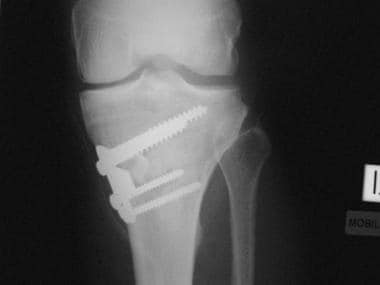
Surgical therapy: A number of operative procedures should be considered in patients with degenerative disease of the knee. Arthroscopic debridement is sometimes indicated in mild degenerative joint disease with mechanical symptoms and recurrent persistent effusions. Proximal tibial valgus osteotomy should be reserved for patients with medial tibiofemoral compartment disease, stable collateral ligaments, and a correctable varus deformity of the knee joint (see Image 8).

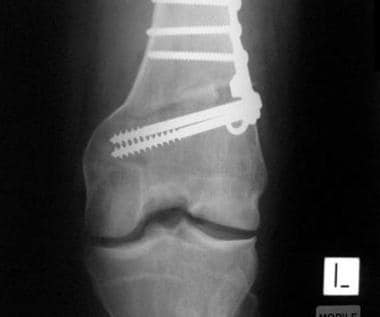
Similarly, a distal femoral varus osteotomy can be considered for patients with lateral tibiofemoral compartment disease, stable collateral ligaments, and a valgus deformity of the knee joint (see Image 9).

These procedures restore the mechanical axis of the lower limb and off-load the diseased compartment. Proximal tibial valgus osteotomy and distal femoral varus osteotomy are generally reserved for young high-demand patients because of concerns about the durability of total knee replacement in this patient group. Unicompartmental knee replacement or hemiarthroplasty can be used in low-demand younger patients with unicompartmental disease or in elderly patients with unicompartmental disease of the knee joint who are not obese (see Image 10).

Arthrodesis or fusion of the knee is rarely performed but should be considered in patients with chronic sepsis, younger patients with tricompartmental disease (eg, following trauma) who require stability and durability, and patients with deficient extensor mechanisms. TKA is performed in patients with symptomatic advanced degenerative changes in one or more compartments of the knee joint.

The aim of total knee replacement is to resurface the deficient and damaged tibiofemoral joint surfaces with metal components and provide a low-friction articulation with a polyethylene bearing. If significant patellofemoral disease is present, this joint can also be resurfaced, although the need for this is rather variable. The mechanical alignment and soft tissue balance around the knee should be anatomically restored for optimum function and longevity of the knee replacement.

Preoperative details: A thorough preoperative medical evaluation of patients undergoing TKA is important to prevent potential complications in the perioperative period. Complete the evaluation in an elective preadmission clinic well before the date for surgery. This allows for a careful and unhurried assessment with adequate time for investigations, specialist anesthetic and medical opinion, and consent. It also allows operating schedules to be reorganized if patients are deferred from surgery.

Most patients who undergo TKA are elderly with comorbid diseases. Patients must have good cardiopulmonary function to withstand anesthesia and to withstand a blood loss of 1000-1500 mL over the perioperative period. Routine preoperative electrocardiography should be performed on elderly patients. Patients with ischemic heart disease, congestive heart failure, and chronic obstructive airway disease should be seen by a medical specialist or anesthetist. Patients with significant peripheral vascular disease should be seen by a vascular surgeon.

Patients should have completed an informed consent for surgery and fully understand the risks and possible complications of the procedure. They should have had all medical conditions optimized before surgery and be free of intercurrent infections. Two units of blood should be available for perioperative transfusion, either from the blood bank or preferably as predonated blood. Full medical and surgical backup must be available in case unforeseen complications occur.

Selection of regional or general anesthesia is made following preoperative discussion between the anesthetist and the patient, with some input from the surgical team. This decision is affected partly by the medical condition of the patient, although cardiovascular outcomes, cognitive function, and mortality rates of regional and general anesthesia have not been proved to be significantly different. Patients who have epidural anesthesia have been shown to develop fewer perioperative deep vein thromboses. Whether this has any overall positive benefit to the patient is not known. Another benefit of epidural anesthesia is the presence of an indwelling catheter for 48-72 hours postoperatively for pain control, thus avoiding the need for excessive amounts of centrally acting analgesics. Adverse effects of continuous postoperative epidural analgesia include pruritus, urinary retention, nausea, vomiting, and formation of an epidural hematoma (on rare occasions).

Antibiotics and antithrombotic prophylaxis are administered approximately 30 minutes before the incision is made, and mechanical antithromboembolic devices (eg, stockings, foot pumps) are used intraoperatively. The patient is set up on the operating table in a supine position following preoperative cleaning of the leg (see Image 11).

Intraoperative details: A thigh tourniquet is generally used to aid surgical exposure, although it should be avoided in patients with a history of previous deep vein thrombosis or significant vascular disease. The operation should be performed in a laminar flow operating theatre with meticulous attention to detail to prevent contamination of the operation site.

The knee joint is usually approached anteriorly through a medial parapatellar approach, although some surgeons use a lateral or subvastus approach. Osteophytes and intra-articular soft tissues are then cleared. Bone cuts in the distal femur are made perpendicular to the mechanical axis, usually using an intramedullary alignment system, which is then checked against the center of the hip. The proximal tibia is cut perpendicular to the mechanical axis of the tibia using either intramedullary or extramedullary alignment rods. Restoration of mechanical alignment is important to allow optimum load sharing and prevent eccentric loading through the prosthesis. Sufficient bone is removed so that the prosthesis re-creates the level of the joint line. This allows the ligaments around the knee to be balanced accurately and prevents alteration in patella height, which can have a deleterious effect on patellofemoral mechanics.

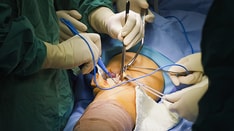
Because of preoperative deformity, some ligaments around the knee are contracted. These are carefully released in a step-wise fashion to balance the soft tissues around the knee and allow optimum knee kinematics (see Image 12).

Patellofemoral tracking is assessed with trial components in situ and balanced if necessary with a lateral release or medial reefing procedure. If the patellofemoral joint is significantly diseased, it can be resurfaced with a polyethylene button. The original width of the patella must be recreated.

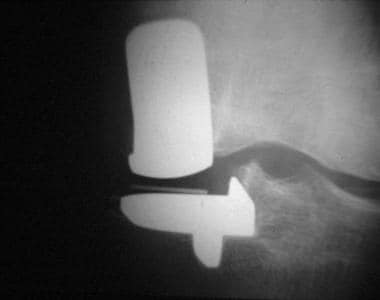
Once the definitive components have been selected, they are cemented into place with polymethyl methacrylate cement. If an uncemented system is being used (see Image 13), press-fit and bony ingrowth provides the short-term and long-term fixation of the component (see Image 14). The tourniquet should be deflated prior to closure to allow accurate hemostasis, and the knee joint is usually drained and dressed in extension. Foot pulses are checked at the end of the procedure.

Postoperative details: The patient is recovered and usually observed for a 24-hour period in a high-dependency ward. Adequate hydration and analgesia are essential in this time of high physical stress. Analgesia is provided through continuation of the intraoperative epidural, patient-controlled intravenous analgesia, or oral analgesia. At this early stage, the patient begins knee movement sometimes using a continuous passive motion (CPM) machine and exercises. These are continued under the supervision of a physiotherapist until discharge.

Cryotherapy is used to reduce postoperative swelling and pain. Drains are usually removed within 24 hours, and the patient is encouraged to walk on the second postoperative day. Continual improvement is generally observed, and discharge occurs in 5-14 days. Discharge is only recommended once wound healing is satisfactory, knee flexion of 90 degrees has been achieved, the patient is considered to be safe and supported in the home environment, and no complications are present. Thromboembolism prophylaxis is often continued at home for a period of time. The first outpatient review generally is in 6 weeks to 3 months (see Image 15).

Follow-up care: Follow-up depends on the surgeon, the patient, and the health care system. A typical example would be a surgical follow-up appointment at 6 weeks, 3 months, 6 months, 1 year, 2 years, 5 years, 10 years, and thereafter as appropriate. This is modified for each patient according to age, degree of activity, and presence of complications.

For excellent patient education resources, visit eMedicine's Foot, Ankle, Knee, and Hip Center, Bone Health Center, and Arthritis Center. Also, see eMedicine's patient education articles Knee Joint Replacement and Knee Pain.

  COMPLICATIONS Section 7 of 11   Click here to go to the previous section in this topic Click here to go to the top of this page Click here to go to the next section in this topic
Author Information Introduction Indications Relevant Anatomy And Contraindications Workup Treatment Complications Outcome And Prognosis Future And Controversies Pictures Bibliography

Thromboembolism

Thromboembolism includes deep vein thrombosis (DVT) with subsequent life-threatening pulmonary embolism (PE). Predisposing factors for increased risk of DVT include age older than 40 years, female sex, obesity, varicose veins, smoking, past history of DVT, diabetes mellitus, and coronary artery disease. Overall incidence of DVT following total knee replacement without any prophylaxis has been reported at 40-88%. Most of these are calf thromboses. The risk of fatal PE, however, is the important figure and varies from 0.1-1%.

Many current methods of DVT prophylaxis are available and are used, including mechanical compression stockings or foot pumps and pharmaceutical agents, including low-dose warfarin, low molecular weight heparin, and aspirin. Many studies show evidence of reduction of rates of DVT, but how this affects overall death rates from PE is unclear at this time, with many of the current studies concluding after only 10 days. Using a multifactorial approach to prevent DVT, including intraoperative foot pumps, epidurals, pharmaceutical agents, antithromboembolic stockings, adequate hydration, early mobilization of the patient, and regular postoperative surveillance, is probably prudent.

Infection

Prevention of infection in total knee replacement begins in the preoperative examination to exclude intercurrent infection. In the operating room, personnel should be kept to the smallest number, and traffic in and out of the room should be kept to a minimum. Use of vertical laminar flow in operating theaters, prophylactic antibiotics, ultraviolet light, body exhaust systems to prevent bacterial shedding, and meticulous and expeditious surgery all help to reduce the occurrence of infections to less than 1% of operations performed.

Factors relating to a higher rate of infection following TKA include rheumatoid arthritis, skin breakdown, prolonged wound drainage (>6 d), previous knee surgery, use of a hinged knee prosthesis, obesity, concomitant urinary tract infection, steroid use, renal failure, diabetes mellitus, malignant disease, and psoriasis.

Treatment of the infected total knee replacement often is laborious and time consuming and a disaster for the patient. The risk is minimized by a theater team obsessed with detail supported by good nursing skills on the ward and vigilance by the surgeon in the postoperative period.

Patellofemoral complications

Patellofemoral complications include patellofemoral instability (see Image 16), patellar fracture, patellar component failure, patellar clunk syndrome, and extensor mechanism tendon rupture. All of these complications have been cited as the common reasons for reoperation. These can be avoided by attention to detail, meticulous technique, and avoidance of component malposition.

Neurovascular complications

Arterial thrombosis following total knee replacement is a rare (ie, 0.03-0.17%) but devastating complication, frequently resulting in amputation. Several authors have recommended performing TKA without the use of a tourniquet in patients with significant vascular disease. Such patients should undergo a vascular surgery consultation prior to knee replacement.

Peroneal nerve palsy is the commonly reported nerve palsy following total knee replacement. It usually occurs in the correction of combined fixed valgus and flexion deformities often observed in patients with rheumatoid arthritis. Fifty percent undergo spontaneous recovery, and 50% undergo partial recovery with conservative treatment. Some good results have been obtained with surgical decompression.

Periprosthetic fractures

Supracondylar fractures of the femur are not common following total knee replacement (ie, 0.2-1%). These fractures are observed if the anterior femoral cortex is notched and weakened during surgery and in patients with osteoporosis, rheumatoid arthritis, poor flexion, revision arthroplasty, and neurologic disorders. Treatment is with internal fixation or revision TKA. Tibial fractures are uncommonly observed.

Aseptic loosening

Loosening leads to the ultimate failure of the prosthesis and occurs at an approximate rate of 5-10% of patients at 10-15 years. It may be complicated by bone loss or osteolysis, which can lead to catastrophic deterioration and make revision surgery difficult. The etiology of this problem is not entirely understood but is related to polyethylene debris causing mechanisms at a cellular level to result in bone resorption. Once a component is loose, it becomes mechanically unstable with worsening osteolysis. Treatment is revision with bone grafting.

Arthrofibrosis

This is a condition of excessive scar tissue causing restriction of knee movement. Etiology is unknown. It is more common in young patients and in patients taking warfarin. It occurs in less than 1% of patients. Conservative management includes anti-inflammatory medication, physiotherapy, and reassurance. More aggressive treatment includes manipulation under anesthetic with CPM therapy and excision of scar tissue.

  OUTCOME AND PROGNOSIS Section 8 of 11   Click here to go to the previous section in this topic Click here to go to the top of this page Click here to go to the next section in this topic
Author Information Introduction Indications Relevant Anatomy And Contraindications Workup Treatment Complications Outcome And Prognosis Future And Controversies Pictures Bibliography

Most patients seem satisfied with their knee replacements, and if pain relief is the main indication for surgery, this indeed should be the case. Satisfactory knee function is usually restored following TKA, and the majority of patients are able to return to low-impact sporting activity. Long-term studies confirm satisfactory functional scores and show a 91-96% prosthesis survival rate at 14-15 years of follow-up. No difference appears to exist between PCL-retaining and PCL-substituting designs. Cementless designs do not have the same length of follow-up, but studies at 10-12 years report a 95% prosthesis survival rate.

  FUTURE AND CONTROVERSIES Section 9 of 11   Click here to go to the previous section in this topic Click here to go to the top of this page Click here to go to the next section in this topic
Author Information Introduction Indications Relevant Anatomy And Contraindications Workup Treatment Complications Outcome And Prognosis Future And Controversies Pictures Bibliography

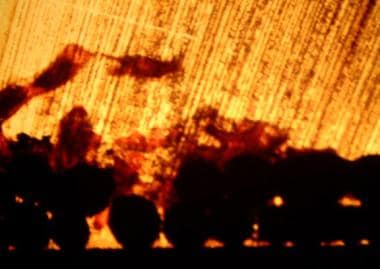
Cemented total knee replacements will remain the criterion standard for TKA, but use of uncemented designs with bioactive surfaces (eg, hydroxyapatite) are showing promising midterm results (see Image 17).

Research into mobile bearing knee replacements continues. Such prostheses appear to demonstrate an attractive way of overcoming the constraint-versus-conformity conflict inherent in any artificial knee replacement.

About the author

Dr Simon Palmer is a senior registrar from the Nuffield Orthopaedic Centre, Oxford, with an interest in knee surgery and sports medicine. At the time of writing, he was working as a knee fellow in the North Sydney Orthopaedics and Sports Medicine Centre and Australian Institute of Musculoskeletal Research under the supervision of Dr M. Cross, OAM.

  PICTURES Section 10 of 11   Click here to go to the previous section in this topic Click here to go to the top of this page Click here to go to the next section in this topic
Author Information Introduction Indications Relevant Anatomy And Contraindications Workup Treatment Complications Outcome And Prognosis Future And Controversies Pictures Bibliography

Caption: Picture 1. Total knee arthroplasty. A total knee replacement prosthesis before implantation.
Click to see larger pictureClick to see detailView Full Size Image
Picture Type: Photo
Caption: Picture 2. Total knee arthroplasty. Radiograph demonstrating posttraumatic osteoarthritis.
Click to see larger pictureClick to see detailView Full Size Image
Picture Type: X-RAY
Caption: Picture 3. Total knee arthroplasty. Radiograph demonstrating the features of osteoarthritis (same patient as in Image 4).
Click to see larger pictureClick to see detailView Full Size Image
Picture Type: X-RAY
Caption: Picture 4. Total knee arthroplasty. Photograph of a patient with a varus deformity of the right knee and a valgus deformity of the left knee.
Click to see larger pictureClick to see detailView Full Size Image
Picture Type: Photo
Caption: Picture 5. Total knee arthroplasty. Lateral radiograph demonstrating severe patellofemoral osteoarthritis.
Click to see larger pictureClick to see detailView Full Size Image
Picture Type: X-RAY
Caption: Picture 6. Total knee arthroplasty. Sagittal MRI showing the anterior and posterior cruciate ligaments.
Click to see larger pictureClick to see detailView Full Size Image
Picture Type: MRI
Caption: Picture 7. Total knee arthroplasty. Skyline view of the patellofemoral joint demonstrating lateral and medial osteophytes and lateral subluxation of the patella.
Click to see larger pictureClick to see detailView Full Size Image
Picture Type: X-RAY
Caption: Picture 8. Total knee arthroplasty. Radiograph demonstrating a proximal tibial valgus osteotomy created to off-load the medial compartment of the knee.
Click to see larger pictureClick to see detailView Full Size Image
Picture Type: X-RAY
Caption: Picture 9. Total knee arthroplasty. Radiograph demonstrating a distal femoral varus osteotomy.
Click to see larger pictureClick to see detailView Full Size Image
Picture Type: X-RAY
Caption: Picture 10. Total knee arthroplasty. Radiograph demonstrating a medial unicompartmental replacement. Note relative preservation of lateral joint compartment.
Click to see larger pictureClick to see detailView Full Size Image
Picture Type: X-RAY
Caption: Picture 11. Total knee arthroplasty. Patient on the operating table before surgery.
Click to see larger pictureClick to see detailView Full Size Image
Picture Type: Photo
Caption: Picture 12. Total knee arthroplasty. Intraoperative photograph showing the trial components with the patella everted.
Click to see larger pictureClick to see detailView Full Size Image
Picture Type: Photo
Caption: Picture 13. Total knee arthroplasty. Radiograph of an uncemented hydroxyapatite-coated total knee replacement. No gaps present in the bone-prosthesis junction, indicating incorporation of the bone onto the prosthesis.
Click to see larger pictureClick to see detailView Full Size Image
Picture Type: X-RAY
Caption: Picture 14. Total knee arthroplasty. Definitive components in situ.
Click to see larger pictureClick to see detailView Full Size Image
Picture Type: Photo
Caption: Picture 15. Total knee arthroplasty. Satisfactory knee flexion 6 weeks postoperatively.
Click to see larger pictureClick to see detailView Full Size Image
Picture Type: Photo
Caption: Picture 16. Total knee arthroplasty. Skyline views of both knees showing lateral patella tilt and subluxation in both knees. This patient required a patellofemoral resurfacing procedure and realignment because of persistent anterior knee pain in the postoperative period.
Click to see larger pictureClick to see detailView Full Size Image
Picture Type: X-RAY
Caption: Picture 17. Total knee arthroplasty. Electro-micrograph showing incorporation of bone (red) onto the surface of the hydroxyapatite.
Click to see larger pictureClick to see detailView Full Size Image
Picture Type: Photo
  BIBLIOGRAPHY Section 11 of 11   Click here to go to the previous section in this topic Click here to go to the top of this page
Author Information Introduction Indications Relevant Anatomy And Contraindications Workup Treatment Complications Outcome And Prognosis Future And Controversies Pictures Bibliography

  • Bradbury N, Borton D, Spoo G: Participation in sports after total knee replacement. Am J Sports Med 1998 Jul-Aug; 26(4): 530-5[Medline].
  • Buechel FF: Cementless meniscal bearing knee arthroplasty: 7- to 12-year outcome analysis. Orthopedics 1994 Sep; 17(9): 833-6[Medline].
  • Chitnavis J, Sinsheimer JS, Clipsham K: Genetic influences in end-stage osteoarthritis. Sibling risks of hip and knee replacement for idiopathic osteoarthritis. J Bone Joint Surg Br 1997 Jul; 79(4): 660-4[Medline].
  • Insall JN, Dorr LD, Scott RD: Rationale of the Knee Society clinical rating system. Clin Orthop 1989 Nov; (248): 13-4[Medline].
  • Ranawat CS, Flynn WF Jr, Saddler S: Long-term results of the total condylar knee arthroplasty. A 15-year survivorship study. Clin Orthop 1993 Jan; (286): 94-102[Medline].
  • Rand JA, Ilstrup DM: Survivorship analysis of total knee arthroplasty. Cumulative rates of survival of 9200 total knee arthroplasties. J Bone Joint Surg [Am] 1991 Mar; 73(3): 397-409[Medline].
  • Ritter MA, Herbst SA, Keating EM: Long-term survival analysis of a posterior cruciate-retaining total condylar total knee arthroplasty. Clin Orthop 1994 Dec; (309): 136-45[Medline].
  • Soderman P, Malchau H: Validity and reliability of Swedish WOMAC osteoarthritis index: a self-administered disease-specific questionnaire (WOMAC) versus generic instruments (SF-36 and NHP). Acta Orthop Scand 2000 Feb; 71(1): 39-46[Medline].

Total Knee Arthroplasty excerpt