You are in: eMedicine Specialties >
Orthopedic Surgery > SYSTEMIC DISEASES
Thromboembolism
Article Last Updated: Apr 7, 2005
AUTHOR AND EDITOR INFORMATION
Section 1 of 12
Author: Vera A De Palo, MD, Assistant Professor, Department of Medicine, Brown University School of Medicine; Director, Intensive Care Unit, Associate Chief of Medicine, Memorial Hospital of Rhode Island
Vera A de Palo is a member of the following medical societies: American College of Chest Physicians, American College of Physicians, American Medical Association, American Thoracic Society, Rhode Island Medical Society, and Society of Critical Care Medicine
Editors: Jegan Krishnan, MBBS, FRACS, PhD, Chair, Senior Clinical Director, Department of Orthopedic Surgery, Flinders Medical Centre and Repatriation General Hospital, Flinders University of South Australia; Francisco Talavera, PharmD, PhD, Senior Pharmacy Editor, eMedicine; Jerome D Wiedel, MD, Chair, Professor, Department of Orthopedics, University of Colorado Health Sciences Center; Dinesh Patel, MD, FACS, Associate Clinical Professor of Orthopedic Surgery, Harvard Medical School; Chief of Arthroscopic Surgery, Department of Orthopedic Surgery, Massachusetts General Hospital; Harris Gellman, MD, Consulting Surgeon, Broward Hand Center, Voluntary Clinical Professor of Orthopedic Surgery and Plastic Surgery, Departments of Orthopedic Surgery and Surgery, University of Miami School of Medicine
Author and Editor Disclosure
Synonyms and related keywords:
pulmonary embolism, PE, deep venous thrombosis, deep vein thrombosis, DVT
Background
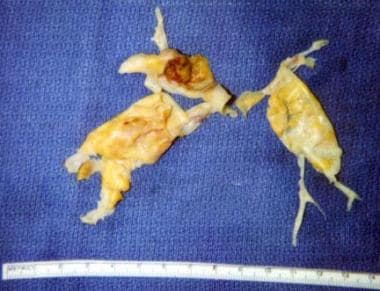
Thromboembolism encompasses two interrelated conditions that are part of the same spectrum, deep venous thrombosis (DVT) and pulmonary embolism (PE). PE is the obstruction of blood flow to one or more arteries of the lung by a thrombus lodged in a pulmonary vessel (see Image 1). PE and DVT can occur in the setting of disease processes, following hospitalization for serious illness, or following major surgery. In 1856, Virchow demonstrated that 90% of all clinically important PEs result from DVT occurring in the deep veins of the lower extremities, proximal to and including the popliteal veins. However, emboli also can originate from the pelvic veins, the inferior vena cava, and the upper extremities. Thromboembolic disease is the third most common acute cardiovascular disease, second to cardiac ischemic syndromes and stroke. Both DVT and PE frequently remain undiagnosed because they may be clinically unsuspected. The spectrum of disease ranges from clinically unsuspected, to clinically unimportant, to massive embolism causing death. Untreated acute proximal DVT causes clinical PE in 33-50% of patients. Untreated PE often is recurrent over days to weeks and can either improve spontaneously or cause death.
Pathophysiology
Hypercoagulability or obstruction leads to the formation of thrombus in the deep veins of the legs, pelvis, or arms. As the clot propagates, proximal extension occurs, which may dislodge or fragment and embolize to the pulmonary arteries. This causes pulmonary artery obstruction and the release of vasoactive agents (ie, serotonin) by platelets increases pulmonary vascular resistance. The arterial obstruction increases alveolar dead space and leads to redistribution of blood flow, thus impairing gas exchange due to the creation of low ventilation-perfusion areas within the lung.
Stimulation of irritant receptors causes alveolar hyperventilation. Reflex bronchoconstriction occurs and augments airway resistance. Lung edema decreases pulmonary compliance. The increased pulmonary vascular resistance causes an increase in right ventricular afterload, and tension rises in the right ventricular wall, which may lead to dilatation, dysfunction, and ischemia of the right ventricle. Right heart failure can occur and lead to cardiogenic shock and even death. In the presence of a patent foramen ovale or atrial septal defect, paradoxical embolism may occur, as well as right-to-left shunting of blood with severe hypoxemia.
Frequency
United States
Epidemiologic studies of thromboembolism in Massachusetts and Minnesota find the incidence of venous thromboembolism to be about 1 in 1000 per year. Approximately 5 million cases of DVT and about 600,000 cases of PE occur per year.
International
Thromboembolism has a significant impact on morbidity and mortality internationally. A large survey from Sweden documented confirmed DVT in 1.6 in 1000 per year. The Scandinavian literature also documents that 3-4% of patients who died within 3 months of a fractured neck of the femur died of fatal PE.
Mortality/Morbidity
- About one third of PE cases are fatal. Sixty-seven percent of these are not diagnosed premortem, and 34% occur rapidly. A high rate of clinically unsuspected DVT and PE leads to significant diagnostic and therapeutic delays, and this accounts for substantial morbidity and mortality.
- Thromboembolic disease accounts for approximately a quarter of a million hospitalizations in the United States yearly and for about 5-10% of all deaths.
Race
The incidence of thromboembolism is higher in African Americans than it is in whites. Asians have a lower incidence than both African Americans and whites.
Sex
PE occurs more frequently in men than in women.
Age
Age is a risk factor for thromboembolic disease. The risk of thromboembolic disease is greater in older patients than in younger patients. It doubles with each decade in persons older than 40 years.
History
With PE, the patient often experiences acute onset of shortness of breath; sometimes the patient even pinpoints the moment of distress. Complaints related to the signs of DVT, lower extremity swelling and warmth to touch or tenderness, may be present. Dyspnea is the most frequent symptom of PE. With a smaller PE near the pleura, the patient may complain of pleuritic chest pain, cough, or hemoptysis. Sometimes, massive PE can present with syncope. The patient may have a sense of impending doom with apprehension and anxiety. History may reveal presence of one or more causes or risk factors may be present (see Clinical, Causes, below).
Physical
Tachypnea, a respiratory rate of more than 18 breaths per minute, is the most common sign of PE. Tachycardia often is present. The second heart sound can be accentuated. Fever may be present. Lung examination findings frequently are normal. Cyanosis may be present. Some patients have signs of DVT, lower extremity swelling, and tenderness and warmth to touch.
Causes
- Risk factors for thromboembolic disease can be divided into a number of categories, including patient-related factors, disease states, surgical factors, and hematologic disorders. Risk is additive.
- Patient-related factors include obesity, varicose veins, use of oral contraceptives or estrogen, and immobility.
- Disease states such as malignancy, congestive heart failure, nephrotic syndrome, recent myocardial infarction, inflammatory bowel disease, spinal cord injury with paralysis, and pelvic, hip, or long-bone fracture confer increased risk of thromboembolic disease.
- Surgical factors are related to procedure type and procedure duration. Fifty percent of patients who have undergone hip surgery have a proximal DVT on the same side as the hip surgery. This is thought to be due to a twisting of the femoral vein during total hip replacement. The incidence of DVT is higher in patients who have undergone knee surgery. In a study of patients following pelvic surgery, 40-80% had calf DVT, and 10-20% had thigh vein thromboses. Fatal PE developed in 1-5% of patients. The risk for thromboembolic disease has been shown to be increased with coronary artery bypass grafting, urologic surgery, and neurosurgery.
- Hematologic disorders that increase thromboembolic risk include activated protein C-resistance (factor V Leiden), protein C or protein S deficiency, antithrombin III deficiency, lupus anticoagulant, polycythemia vera, paroxysmal nocturnal hemoglobinuria, and dysfibrinogenemia.
Other Problems to be Considered
Conditions that should be differentiated from DVT include ruptured Baker cyst, arterial insufficiency, hematoma, trauma, muscle strain, arthritis, tendonitis, iliac vein compression, lymphedema, and sciatic nerve compression.
Congestive heart failure, acute respiratory distress syndrome, pulmonary infection, acute pulmonary hypertension, myocardial infarction, cardiac tamponade, and right-sided heart failure should be included in the differential diagnoses of shortness of breath, and hypoxemia and should be differentiated from PE.
Lab Studies
- The arterial blood gas on room air demonstrates hypoxemia (PaO2 <80 mm Hg) and an elevated alveolar-arterial oxygen gradient. Acid-base status may demonstrate a respiratory alkalosis.
- Plasma D-dimer by the enzyme-linked immunoassay (ELISA) method quantifies the presence of D-dimer, which is a specific degradation product of cross-linked fibrin.
- This is an important marker of the activation of fibrinolysis. It can be elevated in pneumonia, cancer, sepsis, and surgery.
- A plasma D-dimer level higher than 500 ng/mL has been shown to have a sensitivity of 97% and a specificity of 45%. The plasma D-dimer level less than 500 ng/mL has a high negative predictive value. A value of less than 500 ng/mL excludes PE.
Imaging Studies
- Chest radiograph findings most often are normal.
- Radiographs may reveal an enlarged right descending pulmonary artery, decreased pulmonary vascularity (Westermark sign), a wedge-shaped infiltrate, or an elevation of the hemidiaphragm (Hampton hump).
- If infarction occurs, a pleural effusion may be present.
- Doppler ultrasonography can evidence the presence of thrombus within a vein.
- A normal vein is free of internal echoes and can be compressed. In acute DVT, internal echoes are present and the vessel is not compressible.
- Duplex scanning of the venous system uses Doppler flow assessment combined with B-mode ultrasound. The advantage of color flow Doppler is the ability to determine motion and the direction of flow.
- Pulmonary angiography long has been the diagnostic criterion standard.
- Angiography allows for the visualization of the pulmonary vasculature using contrast material, and in the event of PE, it evidences a cutoff of a vein and lack of flow to the affected area.
- It is an invasive procedure that requires the administration of intravenous contrast material, and it is more expensive than other procedures.
- Morbidity is increased in approximately 2-5% of patients. It is related to bleeding and to complications of intravenous contrast material. Mortality occurs in less than 1% of patients in whom this procedure is performed.
- Ventilation-perfusion scanning (see Image 2) is the most common screening technique.
- Ventilation-perfusion scanning is a probability estimate for PE that evaluates the size and the number of defects in the perfusion of the lung compared to the areas of ventilation.
- The diagnosis of PE is made easily with this modality when the probability estimate is high for PE. Likewise, with normal scan findings, the possibility of PE is excluded. However, the test results are nondiagnostic in about 66% of cases.
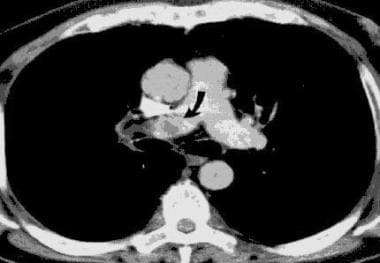
- Helical (spiral) CT scanning (see Image 3) allows for the imaging of the pulmonary vessels by way of intravenous contrast material as the patient moves through a gantry at a constant rate with rotation of the radiography source.
- PE is diagnosed by filling defects, which are either central or adherent to the wall.
- The advantage of helical CT scanning is that it is minimally invasive and allows concurrent visualization of the parenchyma, pleura, and mediastinum. When looking at the main, lobar, and segmental veins, the sensitivity of helical scanning is about 93%. Its positive predictive value is approximately 95%.
- Its limitations include the need for contrast and a comparatively higher dose of radiation than that of some of the other diagnostic modalities. Obliquely or horizontally oriented vessels like those of the segmental branches of the right middle lobe and lingula are poorly visualized. Lymph nodes may result in false-positive results. The scan is technically inadequate or inconclusive in approximately 1-10% of the cases.
- Contrast venography is an invasive technique that can provide direct proof of thrombus by demonstrating a filling defect with the aide of contrast medium through the deep venous system. It is the standard test for validating new diagnostic procedures. It can cause iatrogenic venous thrombosis, tissue sloughing from contrast extravasation, and allergic contrast reaction.
- Impedance plethysmography may detect impaired venous emptying of the leg by assessing the volume response to temporary occlusion of the venous system. Emptying is assessed by the rapidity of volume decrease. Slow emptying indicates obstruction.
- It is a noninvasive method of assessment. Sensitivity and specificity have been reported to be between 92% and 95%.
- It is of limited value when DVT is asymptomatic, distal, or findings are nonocclusive.
- Conditions leading to poor forward blood flow, hypotension, or vein compression can be responsible for false-positive results.
- Echocardiography can demonstrate signs of right heart strain.
- Right ventricular dilatation, right ventricular hypokinesis, or tricuspid regurgitation may be present.
- Interventricular septum bulging into the left ventricle may be present. The size of the left ventricle may be reduced.
- Echocardiography can be used to identify signs of impending heart failure.
Other Tests
- Electrocardiography is of greatest value in ruling out myocardial infarction.
- Sinus tachycardia often is present.
- Right axis deviation, right bundle branch block, and deeply inverted T waves in V1-V3 may be present.
- An S1Q3T3 pattern may be seen.
Histologic Findings
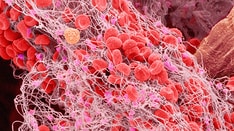
The thrombus is a solid mass composed of platelets and fibrin with a few trapped red and white blood cells that forms within the blood vessel.
Medical Care
Anticoagulant and thrombolytic therapy options are available. Anticoagulant therapy prevents further clot deposition. It allows the natural fibrinolytic mechanisms to lyse the existing clot.
- Anticoagulant therapy
- Heparin is the first line of therapy. It is administered by bolus dosing, followed by a continuous infusion. Adequacy of therapy is determined by an activated partial thromboplastin time (aPTT) of 1.5-2 times baseline. Progression or recurrence of thromboembolism is 15 times more likely when a therapeutic aPTT is not achieved within the first 48 hours.
- A weight-based nomogram has been used to determine adequate dosing, using heparin at 80 mg/kg for the bolus and 18 mg/kg/h for the infusion. A short course of heparin is followed by a longer course of oral anticoagulant, warfarin sodium. It should be started only after effective anticoagulation has been achieved, as there can be an increase in coagulability and thrombogenesis during the first few days of oral anticoagulant administration. The goal is to achieve an International Normalized Ratio (INR) of 2.0-3.0. The optimum duration of treatment still is controversial. A minimum of 3 months of oral therapy has been suggested following a first episode of DVT or PE.
- Several studies have shown that low molecular weight heparin (LMWH), which is a fractionated heparin, is as effective as unfractionated heparin in treating DVT. Minimal requirements for outpatient therapy with LMWH regimens include stable PE or DVT, low risk for bleeding, absence of severe renal insufficiency, availability of systems of administration and monitoring of LMWH and warfarin, and surveillance and treatment of recurrent thromboembolic disease.
- Thrombolytic therapy
- Thrombolytic therapy dissolves recent clots promptly by activating a plasma proenzyme, plasminogen, to its active form, plasmin. Plasmin degrades fibrin to soluble peptides. Thrombolytic therapy speeds pulmonary tissue reperfusion and rapidly reverses the right heart failure. It improves pulmonary capillary blood flow and more rapidly improves hemodynamic parameters. The Food and Drug Administration (FDA) has approved 3 thrombolytic regimens for PE. Streptokinase, urokinase, and recombinant tissue-type plasminogen activator (rt-PA) have been approved for thrombolytic use in PE. In head-to-head studies between rt-PA and heparin by Goldhaber and colleagues, there was a higher incidence of recurrent PE and death in the group receiving heparin. Patients in both groups had bleeding complications requiring transfusion therapy.
- The indication for thrombolytic treatment, as advanced by the American College of Chest Physicians in their fourth consensus conference on antithrombotic therapy, is acute massive PE with hemodynamic instability in patients who do not seem prone to bleeding. Absolute contraindications to thrombolysis include gastrointestinal bleeding within the last 6 months, active or recent internal bleeding, a history of hemorrhagic stroke, intracranial or intraspinal disease, recent cranial surgery or head trauma, and pregnancy. Relative contraindications include major surgery or trauma within the last 2 weeks, biopsy within 10 days, other invasive procedures in a location inaccessible to external compression, uncontrolled coagulation defects such as thrombocytopenia, and nonhemorrhagic stroke.
- The vena caval filter is designed to trap potentially lethal emboli while maintaining vena caval patency. It is indicated in cases where there is a contraindication to anticoagulation, when there has been a complication of anticoagulation, in the event of failure of anticoagulation, and in the case of pulmonary embolectomy.
- Catheter pulmonary embolectomy is performed by inserting a cup-tipped steerable catheter into the central venous system, accessing through the jugular vein or through the right common femoral vein. When the cup reaches the thrombus, suction is applied and the thrombus is extracted.
Surgical Care
Surgical interventions for venous thromboembolic disorders include thrombectomy and venous interruption.
- Thrombectomy for venous embolism is performed less frequently given the incidence of rethrombosis, unless heparin infusion is added to the therapeutic regimen.
- Pulmonary embolectomy remains a therapeutic option, but with an extremely high mortality rate. It is reserved for cases of massive PE in which an absolute contraindication to thrombolysis is present or when all other treatment modalities have failed. It is only effective when the clot is in the large central vessels.
- Ligation of venous tributaries is an option that is rarely practiced today. Its use has been limited by a high mortality rate and the need for continuous anticoagulation. It essentially has been replaced by the percutaneous insertion of the intracaval filter.
Consultations
- When PE is suspected, consultation with a pulmonologist may be useful to aid in the diagnosis or to guide therapy. When the intravascular filling defect is so severe that it causes cardiac dysfunction or hypotension, the patient can be best served by transfer to an intensive care setting.
- Consultation with an intensive care specialist or pulmonologist would be helpful in decision-making regarding thrombolysis and in following effectiveness of treatment.
- If cancer or a hematologic disorder is one of the contributing risk factors, consultation with a hematologist or oncologist may be appropriate.
Diet
No special dietary requirements or restrictions exist. Diet should be as tolerated. However, patients on oral warfarin therapy must avoid vitamin supplements that contain vitamin K and limit foods that are high in vitamin K (eg, broccoli, cabbage, red and green lettuce, onion, peppers, spinach, oils, mayonnaise, black and green leaf teas). The patient's diet should remain steady with no drastic changes in content to facilitate accurate regular monitoring of INR levels.
Activity
Activity should be limited until anticoagulation is achieved and the patient is on oral anticoagulant medication. Patients on oral warfarin therapy should avoid activities that could cause trauma.
The goals of pharmacotherapy are to reduce morbidity and prevent complications.
Drug Category: Anticoagulants
Anticoagulant medications prevent further clot deposition. They allow the natural fibrinolytic mechanisms to lyse the existing clot.
| Drug Name | Heparin (Hep-Lock, Liquaemin) |
| Description | Augments activity of antithrombin III and prevents conversion of fibrinogen to fibrin. Does not actively lyse but is able to inhibit further thrombogenesis. Heparin prevents re-accumulation of clot after spontaneous fibrinolysis. |
| Adult Dose | Initial dose: 40-170 U/kg IV Maintenance infusion: 18 U/kg/h IV Alternatively, 50 U/kg/h IV initially, followed by continuous infusion of 15-25 U/kg/h; increase dose by 5 U/kg/h q4h prn using aPTT results |
| Pediatric Dose | Initial dose: 50 U/kg IV Maintenance infusion: 15-25 U/kg/h IV Increase dose by 2-4 U/kg/h q6-8h prn using aPTT results |
| Contraindications | Documented hypersensitivity; subacute bacterial endocarditis, active bleeding, history of heparin-induced thrombocytopenia and thrombosis |
| Interactions | Digoxin, nicotine, tetracycline, and antihistamines may decrease effects; NSAIDs, aspirin, dextran, dipyridamole, and hydroxychloroquine may increase heparin toxicity |
| Pregnancy | C - Safety for use during pregnancy has not been established.
|
| Precautions | In neonates, preservative-free heparin is recommended to avoid possible toxicity (gasping syndrome) by benzyl alcohol, which is used as a preservative; caution in severe hypotension and shock |
| Drug Name | Warfarin (Coumadin) |
| Description | Interferes with hepatic synthesis of vitamin K–dependent coagulation factors. Used for prophylaxis and treatment of venous thrombosis, PE, and thromboembolic disorders. Tailor dose to maintain an INR in the range of 2-3. |
| Adult Dose | 5-15 mg/d PO qd for 2-5 d; adjust dose according to desired INR |
| Pediatric Dose | Weight-based dosing: 0.05-0.34 mg/kg/d PO; adjust dose according to desired INR |
| Contraindications | Documented hypersensitivity; severe liver or kidney disease; open wounds or GI ulcers |
| Interactions | Drugs that may decrease anticoagulant effects include griseofulvin, carbamazepine, glutethimide, estrogens, nafcillin, phenytoin, rifampin, barbiturates, cholestyramine, colestipol, vitamin K, spironolactone, oral contraceptives, and sucralfate Medications that may increase anticoagulant effects of warfarin include oral antibiotics, phenylbutazone, salicylates, sulfonamides, chloral hydrate, clofibrate, diazoxide, anabolic steroids, ketoconazole, ethacrynic acid, miconazole, nalidixic acid, sulfonylureas, allopurinol, chloramphenicol, cimetidine, disulfiram, metronidazole, phenylbutazone, phenytoin, propoxyphene, sulfonamides, gemfibrozil, acetaminophen and sulindac |
| Pregnancy | D - Unsafe in pregnancy
|
| Precautions | Do not switch brands after achieving therapeutic response; caution in active tuberculosis or diabetes; patients with protein C or S deficiency are at risk of developing skin necrosis |
| Drug Name | Enoxaparin (Lovenox) |
| Description | Prevents DVT, which may lead to PE in patients undergoing surgery who are at risk for thromboembolic complications. Average duration of treatment is 7-14 d. Enhances inhibition of factor Xa and thrombin by increasing antithrombin III activity. In addition, preferentially increases inhibition of factor Xa. Enoxaparin also has been approved for the treatment of DVT and PE. |
| Adult Dose | DVT prevention: 30 mg SC q12h Treatment of DVT and PE: Either 1 mg/kg SC q12h or 1.5 mg/kg SC daily; warfarin sodium is initiated usually within 72 h; continue enoxaparin treatment for a minimum of 5 d or until the INR is between 1.0 and 2.0 |
| Pediatric Dose | DVT prevention: Not established <2 months: 0.75 mg/kg/dose SC bid suggested dose >2 months: 0.5 mg/kg/dose SC bid suggested dose |
| Contraindications | Documented hypersensitivity; major bleeding, thrombocytopenia |
| Interactions | Platelet inhibitors or oral anticoagulants such as dipyridamole, salicylates, aspirin, NSAIDs, sulfinpyrazone, and ticlopidine may increase risk of bleeding |
| Pregnancy | B - Usually safe but benefits must outweigh the risks.
|
| Precautions | If thromboembolic event occurs despite LMWH prophylaxis, discontinue drug and initiate alternate therapy; elevation of hepatic transaminases may occur but is reversible; heparin-associated thrombocytopenia may occur with fractionated LMWH; 1 mg of protamine sulfate will reverse effect of approximately 1 mg of enoxaparin if significant bleeding complications develop |
| Drug Name | Dalteparin (Fragmin) |
| Description | Indicated for the prevention of DVT, which may lead to PE. Enhances inhibition of factor Xa and thrombin by increasing antithrombin III activity. In addition, preferentially increases inhibition of factor Xa. Average duration of treatment is 7-14 d. |
| Adult Dose | 2500-5000 U SC qd |
| Pediatric Dose | Not established |
| Contraindications | Documented hypersensitivity; major bleeding, thrombocytopenia |
| Interactions | Platelet inhibitors or oral anticoagulants such as dipyridamole, salicylates, aspirin, NSAIDs, sulfinpyrazone, and ticlopidine may increase risk of bleeding |
| Pregnancy | C - Safety for use during pregnancy has not been established.
|
| Precautions | If thromboembolic event occurs despite LMWH prophylaxis, discontinue drug and initiate alternate therapy; elevation of hepatic transaminases may occur but is reversible; heparin-associated thrombocytopenia may occur with fractionated LMWH; 1 mg of protamine sulfate will reverse effect of approximately 1 mg of enoxaparin if significant bleeding complications develop |
| Drug Name | Ardeparin (Normiflo) |
| Description | Indicated for the prevention of DVT, which may lead to PE following knee replacement surgery. Enhances inhibition of factor Xa and thrombin by increasing antithrombin III activity. In addition, preferentially increases inhibition of factor Xa. Average duration of treatment is 7-14 d. |
| Adult Dose | 50 anti-Xa U/kg SC q12h |
| Pediatric Dose | Not established |
| Contraindications | Documented hypersensitivity; major bleeding, thrombocytopenia |
| Interactions | Platelet inhibitors or oral anticoagulants such as dipyridamole, salicylates, aspirin, NSAIDs, sulfinpyrazone, and ticlopidine may increase risk of bleeding |
| Pregnancy | B - Usually safe but benefits must outweigh the risks.
|
| Precautions | If thromboembolic event occurs despite LMWH prophylaxis, discontinue drug and initiate alternate therapy; elevation of hepatic transaminases may occur but is reversible; heparin-associated thrombocytopenia may occur with fractionated LMWH; 1 mg of protamine sulfate will reverse effect of approximately 1 mg of enoxaparin if significant bleeding complications develop |
Drug Category: Thrombolytic agents
As advanced by the American College of Chest Physicians in their fourth consensus conference on antithrombotic therapy, thrombolytic treatment is indicated for acute, massive PE with hemodynamic instability in patients who do not seem prone to bleeding. These agents dissolve recent clots promptly by activating a plasma proenzyme, plasminogen, to its active form, plasmin. Plasmin degrades fibrin to soluble peptides. Thrombolytic therapy speeds pulmonary tissue reperfusion and rapidly reverses the right heart failure. It improves pulmonary capillary blood flow and more rapidly improves hemodynamic parameters.
| Drug Name | Streptokinase (Kabikinase, Streptase) |
| Description | Acts with plasminogen to convert plasminogen to plasmin. Plasmin degrades fibrin clots as well as fibrinogen and other plasma proteins. Increase in fibrinolytic activity that degrades fibrinogen levels for 24-36 h takes place with intravenous infusion of streptokinase. |
| Adult Dose | PE: Loading dose: 250,000 U IV over 30 min Maintenance: 100,000 U/h IV for 24 h (if concurrent DVT suspected, administer for 72 h) DVT: Loading dose: 250,000 U IV over 30 min Maintenance: 100,000 U/h IV for 72 h |
| Pediatric Dose | Administer as in adults |
| Contraindications | Documented hypersensitivity; active internal bleeding, intracranial neoplasm, aneurysm, diathesis, severe uncontrolled arterial hypertension |
| Interactions | Antifibrinolytic agents may decrease effects of streptokinase; heparin, warfarin, and aspirin may increase risk of bleeding |
| Pregnancy | B - Usually safe but benefits must outweigh the risks.
|
| Precautions | Caution in severe hypertension, intramuscular administration of medications, trauma or surgery in the previous 10 d; measure hematocrit, platelet count, aPTT, TT, PT or fibrinogen levels before therapy is implemented; either TT or aPTT should be less than twice the normal control value following infusion of streptokinase and before instituting or reinstituting heparin; do not take blood pressure in the lower extremities as it may dislodge a possible deep vein thrombi; PT, aPTT, TT or fibrinogen should be monitored 4 h after the initiation of therapy |
| Drug Name | Reteplase; tPA (Retavase) |
| Description | Used in the management of PE in hemodynamically unstable patients. Safety and efficacy with concomitant administration of heparin or aspirin during first 24 h after symptom onset have not been investigated. |
| Adult Dose | Infuse 0.9 mg/kg (do not exceed 90 mg) IV over 60 min (10% of total dose is administered as initial IV bolus over 1 min) |
| Pediatric Dose | Not established |
| Contraindications | Documented hypersensitivity; active internal bleeding, cerebrovascular accident or stroke within last 2 mo, intracranial or intraspinal surgery or trauma, intracranial hemorrhage on pretreatment evaluation, suspicion of subarachnoid hemorrhage, intracranial neoplasm, arteriovenous malformation or aneurysm, bleeding diathesis, or severe uncontrolled hypertension |
| Interactions | Drugs that alter platelet function, (aspirin, dipyridamole, and abciximab) may increase risk of bleeding prior to, during, or after alteplase therapy; may give heparin with and after alteplase infusions to reduce risk of rethrombosis; either heparin or alteplase may cause bleeding complications |
| Pregnancy | C - Safety for use during pregnancy has not been established.
|
| Precautions | Monitor for bleeding, especially at arterial puncture sites, with coadministration of vitamin K antagonists; control and monitor blood pressure frequently during and following alteplase administration; doses >0.9 mg/kg may cause ICH |
| Drug Name | Urokinase (Abbokinase) |
| Description | Direct plasminogen activator that acts on endogenous fibrinolytic system and converts plasminogen to enzyme plasmin, which in turn degrades fibrin clots, fibrinogen, and other plasma proteins. Most often used for local fibrinolysis of thrombosed catheters and superficial vessels. Advantage is that agent is nonantigenic. However, more expensive than streptokinase and thus limits use. When used for local fibrinolysis, urokinase is given as local infusion directly into area of thrombus and with no bolus given. Dose of medication should be adjusted to achieve clot lysis or patency of affected vessel. |
| Adult Dose | Loading dose: 4400 U/kg IV over 10 min and increase to 6000 U/kg/h Maintenance dose: 4400-6000 U/kg/h IV |
| Pediatric Dose | Administer as in adults |
| Contraindications | Documented hypersensitivity; internal bleeding, recent trauma, history of intracranial or intraspinal surgery or trauma, cerebrovascular accident, intracranial neoplasm |
| Interactions | Thrombolytic enzymes, alone or in combination with anticoagulants and antiplatelets, may increase risk of bleeding complications |
| Pregnancy | B - Usually safe but benefits must outweigh the risks.
|
| Precautions | Caution in patients receiving intramuscular administration of medications, severe hypertension, trauma or surgery in previous 10 days; avoid dislodging a possible deep vein thrombi, do not measure blood pressure in lower extremities; monitor therapy by performing PT, aPTT, TT or fibrinogen approximately 4 h after initiation of therapy; monitor therapy by performing PT, aPTT, TT or fibrinogen approximately 4 h after initiation of therapy |
Further Inpatient Care
- In general, inpatient care requires the administration and continuation of IV or SC anticoagulants, with an oral anticoagulant (warfarin sodium) started within 72 hours of SC or, when using IV heparin, once the aPTT is therapeutic (1.5-2 times baseline). An oral coumarin derivative (ie, warfarin sodium) is started after anticoagulation with SC or IV anticoagulants has been achieved because warfarin can have an initial procoagulant effect, particularly in patients with protein C or protein S deficiencies, potentially causing fat necrosis. For patients who required thrombolysis for acute massive PE causing hemodynamic instability, heparin infusion should be started once the thrombin time or aPTT is less than 2 times baseline. Treatment with an oral coumarin derivative should begin after 24-48 hours of consistent anticoagulation.
- Appropriate anticoagulation with the oral medication has been accomplished when the INR is between 2.0 and 3.0.
- Once the INR is consistently within the desired range, treatment can continue in the outpatient setting as long as no other concomitant conditions are present that require continued inpatient treatment.
Further Outpatient Care
- Prolongation of the prothrombin time should be monitored in the outpatient setting by the routine measurement of the INR and its adjustment to maintain its level between 2.0 and 3.0. Oral anticoagulant treatment should be continued for at least 3 months.
- In those with recurrent venous thrombosis or with a continuing risk factor, such as a hematologic factor or a malignancy, prolonged and even indefinite anticoagulant treatment should be considered.
In/Out Patient Meds
- Inpatient medications should include heparin or a LMWH followed by the initiation of an oral coumarin derivative. The predominant coumarin derivative in clinical use in North America is warfarin sodium. Patients with acute massive PE causing hemodynamic instability may be treated initially with a thrombolytic agent (ie, streptokinase, TPA, urokinase).
- Unfractionated heparin, LMWH, and warfarin sodium each are ordered for their anticoagulant properties through their effects on the factors and cofactors of the coagulation cascade as described earlier in the article.
- Tissue plasminogen activator has been used increasingly as the first choice thrombolytic agent. Antibodies to streptokinase may be developed, limiting the use of streptokinase, and urokinase is of limited availability.
- In the outpatient setting, the oral anticoagulant, warfarin sodium, is continued.
Deterrence/Prevention
- Thromboprophylaxis has been reported to reduce the incidence of DVT and fatal PE. Prophylaxis may be achieved with medication or with mechanical devices. Medical prophylaxis should begin either 12 hours before surgery or immediately after surgery and should be continued for 7-10 days.
- Unfractionated heparin, given SC, can reduce the incidence of thromboembolism. It must be administered 2 or 3 times daily, and bleeding can be a complication.
- LMWHs have a longer half-life and greater bioavailability than does unfractionated heparin. The requirement for monitoring is less.
- Danaparoid, a low molecular weight glycosaminoglycan, has been shown to be effective in preventing DVT and PE. It also has been used in patients whose treatment course has been complicated by heparin-induced thrombocytopenia (HIT).
- Warfarin is effective for thromboprophylaxis. It causes the depletion of vitamin K–dependent elements in the coagulation cascade. Warfarin requires close monitoring, and bleeding can be a complication. Dose-adjusted therapy should be monitored, keeping the INR in the range of 2.0-3.0.
- External pneumatic compression has been shown to temporarily prevent the reduction in fibrinolytic activity that normally follows surgical operations. Studies have found compression devices to be effective only in patients with head trauma or spinal fracture. In total hip replacement, studies have shown them to be efficacious in preventing distal DVT but not in preventing proximal DVT.
- Another method of nonpharmacologic prophylaxis is early ambulation, unless the patient has an absolute contraindication. Studies have demonstrated that both symptomatic and ultrasound-diagnosed DVT are significantly less common with early ambulation following hip arthroplasty.
Complications
- Fifty percent of patients treated with full anticoagulation for DVT still can have complications of postphlebitic syndrome characterized by chronic deep venous insufficiency, chronic pain, venous stasis, recurrent cellulitis, and lower extremity ulceration.
- The most feared complication of the treatment of PE is severe and fatal bleeding. Major risk factors for bleeding include intensity and duration of therapy, increased age, and significant hepatic or renal dysfunction. Comparison studies of the incidence of severe and fatal bleeding complications between heparin and rt-PA demonstrate no significant differences.
- HIT and thrombosis may develop in 3-4% of patients receiving heparin. It is an immune-mediated process that typically presents within 5-10 days of therapy. It can result in bleeding or thrombosis and should be suspected when the platelet count falls precipitously to less than 50% below its baseline or to less than 100,000/µL. Heparin therapy should be stopped immediately. LMWH cross-reacts with the antibody in vitro in 90% of cases. Therefore, it should not be substituted in the acute setting. Danaparoid, a heparinoid, has less than 10% cross-reactivity with the antibody. Recombinant hirudin recently has been approved for HIT and thrombosis. Plasmapheresis and immunoglobulin G (IgG) infusion may be effective in cases with thrombosis.
- Heparin-induced osteopenia has been reported following treatment with unfractionated heparin of more than 1-month duration.
- Coumarin derivatives can cause skin necrosis, which is due to widespread subcutaneous microthrombosis. This can occur in individuals who are protein C-deficient, either genetically or due to large loading doses of a coumarin derivative. Areas usually affected include the breasts, the abdominal wall, and the lower extremities.
- Recurrence of thromboembolism had been documented following discontinuation of therapy. After a 3- to 6-month course of anticoagulant therapy, the risk of recurrent thromboembolism is lower in patients who have reversible risk factors. The recurrence rate is greater in patients with previous proximal vein thrombosis compared to calf vein thrombosis.
- Following a 3-month course of anticoagulant therapy, secondary thrombosis risk is 2-4% in the first year. In subsequent years, the risk falls to less than 2%. In idiopathic proximal vein thrombosis, the risk of recurrence is 9-27%. It is lower in the second and subsequent years. However, there is an increased risk for at least 6 years.
Prognosis
- Studies demonstrate a 95% risk reduction with treatment of thromboembolic disease. There is a risk of recurrence following the discontinuation of treatment that is related to the type and number of risk factors and whether they persist following completion of treatment. Five to seven percent of all recurrences are fatal recurrences.
- Sequelae of treated DVT includes a postthrombotic syndrome, which is a chronic complication of venous thromboembolism characterized by pain and swelling. Chronic deep venous insufficiency, recurrent cellulitis, venous stasis, and ulceration of the skin can develop in up to 50% of patients treated with full anticoagulation.
Patient Education
- For the success and ease of outpatient treatment, patients on oral warfarin anticoagulation should be educated on the impact of dietary choices on treatment goals and the need for frequent monitoring.
- Education on the avoidance of reversible risk factors would be helpful in preventing disease recurrence.
- For excellent patient education resources, visit eMedicine's Lung and Airway Center and Circulatory Problems Center. Also, see eMedicine's patient education articles Pulmonary Embolism and Blood Clot in the Legs.
Medical/Legal Pitfalls
- Medicolegal problems can arise from both treatment and lack of treatment.
- In the appropriate clinical setting, when shortness of breath, hypoxemia, and tachycardia are present, clinical suspicion of PE should be present until it is ruled out. Timely anticoagulation is important, as 5-7% of recurrences are fatal.
- When treatment, whether anticoagulation or thrombolysis, is complicated by serious bleeding, the most devastating is intracranial bleeding, which can leave the patient with the sequelae of a debilitating stroke. These sequelae often are more feared than death. Patients and families have difficulty understanding how treatment can have such a disastrous outcome. This situation sometimes can enter the legal arena in a malpractice action. Potential jurors, as most people, are terrified of becoming the victim of a stroke and therefore are very empathetic.
- The best approach is one that starts with open communication with the patient and family, reviewing not only the procedure or planned surgical intervention, but also potential complications. Prompt recognition of concerning symptoms, appropriate clinical suspicion, rapid diagnosis, and institution of treatment in addition to open communications will help to reduce the possibility of legal problems should a bad outcome occur. Also, following evidence-based guidelines and consensus statements helps ensure a defendable standard of care.
Special Concerns
- In pregnancy, establishing a clear guideline for the treatment of thromboembolic disease is difficult from an evidence-based perspective. Heparin is the anticoagulant of choice given its relative safety for the fetus.
- Heparin therapy should be discontinued immediately before delivery, and then both heparin and warfarin therapy can be started postpartum.
- Pregnant women with a history of previous thromboembolic disease probably should receive some prophylaxis, as the estimated range of recurrence is 0-15%.
The authors and editors of eMedicine gratefully acknowledge the contributions of previous coauthor Dr Michael Belanger to the development and writing of this article.
| Media file 1:
Pulmonary embolism within the pulmonary artery. |
 | View Full Size Image | |
Media type: Image
|
| Media file 2:
Ventilation-perfusion scan. Left image: Posterior view of normal findings on ventilation scan. Right image: Posterior view of a perfusion scan that reveals a perfusion defect in the left upper quadrant. The defect in the middle of the image is due to the position of the heart. |
 | View Full Size Image | |
Media type: Image
|
| Media file 3:
Helical CT scan of the pulmonary arteries. A filling defect in the right pulmonary artery is present, consistent with a pulmonary embolism. |
 | View Full Size Image | |
Media type: CT
|
- Clagett GP, Anderson FA Jr, Heit J. Prevention of venous thromboembolism. Chest. Oct 1995;108(4 Suppl):312S-334S. [Medline].
- Goldhaber SZ, Haire WD, Feldstein ML, et al. Alteplase versus heparin in acute pulmonary embolism: randomised trial assessing right-ventricular function and pulmonary perfusion. Lancet. Feb 27 1993;341(8844):507-11. [Medline].
- Hirsh J, Dalen J, Guyatt G. The sixth (2000) ACCP guidelines for antithrombotic therapy for prevention and treatment of thrombosis. American College of Chest Physicians. Chest. Jan 2001;119(1 Suppl):[Medline].
- Hyers TM. Venous thromboembolism. Am J Respir Crit Care Med. Jan 1999;159(1):1-14. [Medline].
- Proctor MC, Greenfield LJ. Pulmonary embolism: diagnosis, incidence and implications. Cardiovasc Surg. Feb 1997;5(1):77-81. [Medline].
- Wille-Jorgensen P. New therapeutic options in DVT prophylaxis. Orthopedics. Jun 2000;23(6 Suppl):s639-42. [Medline].
Thromboembolism excerpt Article Last Updated: Apr 7, 2005
|