Continually Updated Clinical Reference
 
 
  All Sources     eMedicine     Medscape     Drug Reference     MEDLINE
 
eMedicine - Dystrophy, Fuchs Endothelial : Article by

Quick Find
Authors & Editors
Introduction
Clinical
Differentials
Workup
Treatment
Medication
Follow-up
Miscellaneous
Multimedia
References

Related Articles
Corneal Edema, Postoperative

Corneal Erosion, Recurrent

Keratopathy, Pseudophakic Bullous


Patient Education
Click here for patient education.


Author: Daljit Singh, MBBS, MS, DSc, Professor Emeritis, Department of Ophthalmology, Guru Nanak Dev University, Amritsar, India; Director, Daljit Singh Eye Hospital

Daljit Singh is a member of the following medical societies: All India Ophthalmological Society, American Society of Cataract and Refractive Surgery, Indian Medical Association, International Intraocular Implant Club, and Intraocular Implant and Refractive Society, India

Coauthor(s): Ravijit Singh, MD, Consulting Staff, Department of Ophthalmology, Daljit Singh Eye Hospital

Editors: Fernando H Murillo-Lopez, MD, Senior Surgeon, Unidad Privada de Oftalmologia CEMES; Simon K Law, MD, PharmD, Assistant Professor of Ophthalmology, Jules Stein Eye Institute; Chief of Section of Ophthalmology Surgical Services, Department of Veterans Affairs Healthcare Center, West Los Angeles; Christopher J Rapuano, MD, Professor, Department of Ophthalmology, Jefferson Medical College; Co-Chairman of the Cornea Service, Co-Chairman of Refractive Surgery Department, Wills Eye Hospital; Lance L Brown, OD, MD, Ophthalmologist, Affiliated With Freeman Hospital and St John's Hospital, Regional Eye Center, Joplin, Missouri; Hampton Roy Sr, MD, Associate Clinical Professor, Department of Ophthalmology, University of Arkansas for Medical Sciences

Author and Editor Disclosure

Synonyms and related keywords: Fuchs endothelial dystrophy, Fuchs endothelial dystrophy of the cornea, combined dystrophy of Fuchs, endothelial dystrophy of the cornea, epithelial dystrophy of Fuchs, Fuchs epithelial endothelial dystrophy, late hereditary endothelial dystrophy

Background

Fuchs endothelial dystrophy is characterized by an asymmetrical, bilateral, slowly progressive edema of the cornea in elderly patients. When inherited, the transmission is autosomal dominant. The root cause of the condition is a slowly progressive formation of guttate lesions between the corneal endothelium and the Descemet membrane. These wartlike, anvil- or mushroom-shaped excrescences are said to be abnormal elaborations of basement membrane and fibrillar collagen by distressed or dystrophic endothelial cells. As the lesions enlarge, the covering endothelial cells initially become stretched, and they eventually fall off.

Growth of cornea guttata progresses from the center of the cornea to the periphery. As the endothelial cells fall, the remaining cells enlarge to cover the gap. With the reduced number of endothelial cells, the pump function suffers. Endothelial cell attrition rises with increasing number and size of the guttate lesions. Cornea guttata may be discovered accidentally or when specular endothelial microscopy is performed to find out the cause of the visual disturbance. Fuchs endothelial dystrophy passes through 3 clinical stages. These stages evolve over a period of 2 or 3 decades. The changes are bilateral but usually asymmetric.

Stage 1

This stage is cornea guttata. It occurs in the fourth or fifth decade of life. Slit lamp examination by specular reflection may show cornea guttata in the central part of the corneal endothelium. Some pigment dusting also may be seen. The excrescences of corneal guttata increase in number and may become confluent, resulting in a beaten metal appearance of the endothelial surface. The condition spreads from the center toward the periphery.

The patient usually has no complaints at this stage. Some very observant patients notice that the quality of their 20/20 vision is not the same as before. A slit lamp examination of the endothelium leads to the diagnosis.

Stage 2

This stage is characterized by increasing visual and other problems, caused by incipient edema of the corneal stroma initially and later the epithelium. The patient sees halos around lights and also experiences blurred vision and glare. Tiny droplets of corneal epithelial edema (bedewing) are best seen using retroillumination. The epithelial microcysts later coalesce and form bullae; hence, the name bullous keratopathy. The bullae rupture and expose the cornea to the danger of infectious keratitis. The patient experiences foreign body sensation and pain. Corneal sensitivity is reduced by the destruction of the epithelial nerve endings.

Slit lamp examination shows typical changes quite early. The posterior corneal lamellae are first to become edematous. They cause wrinkling in the Descemet membrane, termed striae. Epithelial edema is seen later.

Stage 3

In this stage, subepithelial connective tissue and pannus formation along the epithelial basement membrane are present. The periphery of the cornea becomes vascularized. A reduction of bullae formation occurs. The epithelial edema is reduced, so that the patient is more comfortable. However, the stromal edema remains. The epithelial layer is strengthened by the underlying pannus and fibrous tissue.

No medical treatment is known to prevent or stop the formation of cornea guttata. Hyperosmotic drops and ointment and bandage contact lenses may help for a time. Once the vision becomes adversely affected, a penetrating graft is advised at the convenience and the need of the patient. A deep lamellar endothelial graft is new, potentially effective alternate technique. The results of surgery in Fuchs endothelial dystrophy are excellent in a vast majority of cases.

Pathophysiology

The cornea is a highly specialized tissue with unique physiological functions of the various constituents that help to keep it transparent. The endothelium plays a major role in maintaining corneal transparency. Oxygen from the anterior chamber serves the needs of the endothelium and the posterior layers of the cornea. The essential nutrients (eg, glucose, amino acids) pass through it to provide for the cellular elements of all the layers of the cornea. The endothelial monolayer is responsible for relative deturgescence. This is completed in 2 ways: (1) by acting as a barrier to the movement of salt and metabolites into the stroma, and (2) by actively pumping bicarbonate ions out of the stroma and back to the aqueous humor.

In Fuchs dystrophy, the basic lesion appears to be cornea guttata. On ultrastructural examination, this newly deposited abnormal portion of Descemet membrane consists of bundles and sheets of widely spaced, banded collagen and multiple laminations of basement membrane material. Endothelial cells may produce these wartlike, mushroom- or anvil-shaped excrescences. Guttate excrescences in the peripheral cornea are of no consequence. However, their strong presence in the center of the cornea foreshadows trouble in the coming years. The increasing cornea guttata thins and progressively destroys the endothelial cells. The remaining cells enlarge and cover the gaps.

A stage comes, when because of the reduced number of functioning endothelial cells, the barrier and pump functions fail to maintain the delicate balance, and excessive hydration of the cornea starts (decompensation). The edema fluid separates the corneal lamellae and forms "fluid lakes." The separation of collagen fibrils leads to clouding of the cornea. As the disease progresses, the edema fluid enters the epithelium, resulting in an irregular epithelial surface. The retinal image becomes increasingly blurred. The edema varies from slight bedewing to frank bullae formation. Mild-to-moderate cornea guttata can remain as such for years without affecting vision. It is only when stromal, and especially epithelial, edema manifest that the condition may be called Fuchs endothelial dystrophy. As the disease advances, vascular connective tissue is formed under and in the epithelium. This condition is followed by secondary complications (eg, epithelial erosions, microbial ulceration, corneal vascularization).

Frequency

United States

Exact incidence of Fuchs endothelial dystrophy is not known. It begins with the formation of guttate excrescences. Cornea guttata is seen quite often. Frequency of cornea guttata increases with age. After age 40, 70% of patients have cornea guttata. Only 0.1% of these patients have epithelial edema and bullae formation.

Mortality/Morbidity

Once corneal decompensation starts, the course is relentless. In a matter of months or years, the vision is progressively disturbed. Finally, the patient is crippled visually. In addition, problems caused by repeated bullae formation, ulceration, scarring, and vascularization occur. If left untreated, the condition ends in near blindness, which may be painful.

Race

No race is immune from this condition.

Sex

Females are affected more than males (3:1).

Age

The disease manifests usually in the sixth and seventh decades. However, the root of the condition is evident 1 or 2 decades earlier in the form of profuse cornea guttata in the central part of the cornea.


History

  • The condition is a bilateral, slowly progressive degeneration of the cornea. It affects women 2-4 times more often than men. Patients often volunteer information about affected sisters and brothers.
  • The condition may be detected by chance, on slit lamp examination, or during a routine checkup.
  • A patient may complain of less than satisfactory 20/20 vision.
    • Early morning vision may be reported as misty. As the day progresses, the mist clears. An observant patient may make this complaint.
    • Mistiness may remain much longer than merely in the morning. It may persist the whole day. In the early stages, it is improved by use of hypertonic drops and ointment.
  • Patients may have difficulty performing visual tasks, which require attention to fine letters or figures.
  • Patients may see halos around the sources of light.
  • Patients may feel a gritty or foreign body sensation during part of or during the whole day.
  • Progressive fall in the corrected visual acuity occurs over previous months or years.
  • Attacks of redness, pain, and watering, lasting for hours or days occurs.
  • Constant redness, pain, watering, and poor vision may be present.
  • Rapid onset of symptoms of fading vision and irritation after an intraocular operation, especially for cataract, may occur.
  • A slow and poor recovery of vision may occur after a cataract operation.
  • Increasing visual deterioration may develop, sometimes weeks or months after a successful Nd:YAG laser surgery for secondary cataract.

Physical

  • Lids
    • Lids are normal in early cases.
    • They may appear red and congested in advanced cases.
  • Conjunctiva
    • Conjunctiva is normal in early cases.
    • It may be highly congested, especially around the limbus, when epithelial erosion, bullae formation, or infected ulceration is present.
  • Corneal epithelium
    • The corneal epithelium is normal and transparent in early cases.
    • Bedewing of the epithelium occurs because of epithelial edema.
    • Epithelial bullae may be present.
    • Pannus formation occurs.
    • Ulceration with or without infection may be present.
    • The corneal epithelium may be thick and opaque.
  • Corneal stroma
    • The corneal stroma has a normal transparency in early cases.
    • Appearance of striae in the deeper layers is observed due to folds in the Descemet membrane.
    • Edema of the corneal stroma occurs, first posteriorly and later anteriorly.
    • Thickening of the corneal stroma develops.
    • Vascularization is present.
  • Corneal endothelium
    • Presence of cornea guttata in the central area occurs, as seen on slit lamp examination under high magnification or on specular reflection.
    • Beaten metal appearance may be seen in specular reflection. A similar appearance may be visible at the edge of the central corneal on retroillumination.
  • Anterior chamber is normal unless it is involved in some complication of the cornea.
  • Iris, lens, vitreous, and retina are not involved in the process.
  • Intraocular pressure
    • Intraocular pressure (IOP) is within the reference range.
    • IOP may be raised independently of the disease.
  • Vision
    • Vision is normal.
    • Vision may be reduced to a varying degree because of a corneal irregularity or opacification or corneal complication.

Causes

  • The inherited form is autosomal dominant and affects females 2-4 times more than males.
  • Isolated idiopathic cases are seen quite often.
    • Advanced cornea guttata may be discovered by chance, when a long-standing case of aphakia or pseudophakia is subjected to specular endothelial microscopy to gauge the health of the cornea.
    • Association with glaucoma, including acute angle closure form
    • Association with keratoconus
    • Cardiovascular disease
    • Axial hypermetropia
    • Female hormones
    • Trauma
    • Inflammation (pseudo-Fuchs)
    • Viruses (possibly)


Corneal Edema, Postoperative
Corneal Erosion, Recurrent
Keratopathy, Pseudophakic Bullous

Other Problems to be Considered

Aphakic bullous keratopathy
Hassall-Henle warts
Pseudoguttae (secondary to trauma, infection, or toxins)
Disciform keratitis
Chandler syndrome
Congenital hereditary endothelial dystrophy


Other Tests

  • Perform specular endothelial microscopy examinations of the affected and the unaffected siblings. The photographs of the affected corneas may be kept for future reference. Endothelial cell density, hexagonality, and polymegethism may be recorded. The following 5 stages may be seen, as described by Laing et al:
    • Stage 1: The guttate excrescences are in the form of dark structures with sharply defined single bright spots at their center. The structures are considerably smaller in size than a single endothelial cell. Such an excrescence does not lie near the boundary wall of the cell.
    • Stage 2: The excrescence is almost the size of the endothelial cell. The surrounding cells have a stretched appearance.
    • Stage 3: The excrescence is considerably larger, and many cells are involved in one lesion. The dark structure is 5-10 times the size of an endothelial cell. The adjacent cells are abnormal and have missing boundaries. Many lesions are seen close to each other, but they do not coalesce. The excrescences are of 2 types, a smooth round shape or a rough excrescence.
    • Stage 4: The individual excrescences have coalesced. The net result is multilobed, rather than a round outline. The dark areas have many bright spots. The multilobulated structures cover considerable area. The cells between the excrescence masses tend to become abnormal. Coalesced areas contain both the smooth and the rough variety of excrescences.
    • Stage 5: An organized mosaic of endothelial cells is difficult to see. Many stages may be observed in the different areas of the same eye.
  • Pachymetry is a good way of gauging the increase in corneal edema. The thickness can be compared with the new readings on subsequent visits. Increasing thickness of the cornea means increasing corneal endothelial decompensation. Presence of Descemet folds, epithelial bedewing, and corneal thickness of greater than 0.62 mm indicates potential decompensation.

Histologic Findings

In the early stages, the focal thickening of the Descemet membrane is similar to those seen in the Hassall-Henle warts of the peripheral cornea. The corneal endothelium appears stretched and thinned over the dome of the excrescences.

In advanced cases, a generalized thickening of the Descemet membrane is observed. This thickening appears to bury the cornea guttata that formed in the earlier stages.

In normal corneas, histologic preparations show lamellar separation as an artifact. In the cases of corneal edema, the artifactitious lamellar separation of the lamellae is reduced. Subepithelial bullae formation is seen at the anterior corneal surface. In the periphery of the cornea, subepithelial fibrous tissue is usually seen. Intraepithelial cysts filled with cellular debris are also seen. Intraepithelial basement membrane formation may occur due to the misdirection of the epithelial cells. The Bowman membrane is normal, unless it has been involved in ulcer formation and keratitis, after the rupture of a bulla.


Medical Care

  • Patients with clear corneas need no treatment. It is only when the corneal decompensation starts that medical treatment becomes necessary. This treatment is necessary until it is not possible to preserve good vision; at that point, keratoplasty is necessary.
  • Dehydrating agents
    • Sodium chloride 5% eye drops are instilled 4-6 times during the day, especially in the early hours of the day and less frequently in the evening. Sodium chloride ointment is used at bedtime.
    • Glycerine can be used for diagnostic purposes. It causes rapid dehydration of the cornea and clears the vision. Certain patients are able to use it for therapeutic purposes, but it is rather uncomfortable. It is instilled many times a day, as needed.
  • Use of warm dry air (evaporation): A hair dryer, kept at arm's distance, can be used to blow warm air over the cornea for 5-10 minutes upon awakening. Drying of the cornea may improve the vision of the patient for some time.
  • Lowering the IOP is useful when it is even mildly raised. It occasionally helps even when the pressure is normal, especially in borderline cases of corneal decompensation.
  • Topical nonsteroidal anti-inflammatory drug (NSAID): Diclofenac 0.1% and ketorolac 0.5% drops may help to alleviate symptoms (eg, itching, burning, gritty sensation) but may increase the risk of poor epithelial healing and subsequent corneal melting.
  • Supportive treatment for ruptured bullae
    • Soft contact lenses can be useful in cases of bullae formation.
    • Cycloplegics, local antibiotics, and pad and bandage treat the eye for a couple of days.
    • Retrobulbar injection of absolute alcohol is useful to patients with painful, totally blind eyes.

Surgical Care

Failing vision in the presence of epithelial edema and stromal haze, which cannot be treated by the instillation of 5% sodium chloride drops and ointment, necessitates recourse to surgery. A selection has to be made between the following 2 options: (1) keratoplasty alone, when no cataract formation is present, or (2) if cataract is present and adds significantly to visual disability and specular endothelial microscopy results suggest the need for a corneal graft, then a combined corneal transplant, cataract extraction, and lens implant procedure should be performed.

If precautions are taken to protect the endothelium during surgery, most cases of confluent guttata, without corneal symptoms, do well with cataract and lens implant surgery.

In eyes with pain, but little or no visual potential, anterior stromal micropuncture, excimer laser phototherapeutic keratectomy, amniotic membrane graft, or a conjunctival flap can be considered.

  • Preoperative management for a corneal transplant
    • Phakic patients: Contract the pupil with 3 instillations of 1-2% pilocarpine drops every 5 minutes.
    • Triple procedure: 3 drops each of 1% cyclopentolate, 2.5% oxymetazoline, and flurbiprofen sodium, preoperatively.
    • For high-risk vascularized cornea, oral prednisolone 1 mg/kg/d, is started 4 days preoperatively and tapered over 2 weeks postoperatively.
  • Anesthesia
    • Local anesthesia with 50/50 mixture of 0.75% bupivacaine and 2% lidocaine and 150 U of hyaluronidase.
    • Anesthesia may be retrobulbar or peribulbar. Good hypotony should be obtained with a mechanical pressure device (eg, Honan balloon, Super Pinky ball, mercury bag).
    • After thoroughly ascertaining cardiovascular status, general anesthesia may be used in selected cases.
  • Preparation of the recipient
    • Position the head to obtain good red reflex and optical centration. Ocular compression and lateral canthotomy may minimize external pressure on the eyeball. Jaffe wire lid speculum is used to open the eye.
    • Flieringa ring of appropriate size is fixed 2 mm from the limbus with 4-6 interrupted 6-0 black silk sutures. Four 4-0 silk sutures are used to fix the ring to the drape. Determine donor size. A size between 7.75 and 8.25 mm typically is selected. The donor button should be 0.25-0.50 mm larger.
  • Preparation of the donor eye
    • Allow the donor eye to come to room temperature, about 30 minutes prior to use.
    • Use a posterior punch trephine to cut the button from the endothelial side.
    • Transfer the button, endothelial side up, to a Petri dish containing a few drops of balanced salt solution or corneal preservation medium. Cover the disc.
  • Preparing the recipient bed
    • The cornea is dried with the cellulose sponge.
    • The center of the cornea is marked with an angled Sinskey hook.
    • Use the cross-wires to center the trephine. The centration is evaluated by lightly touching the cornea with the trephine.
    • A partial thickness incision is made by turning the trephine 8 quarter turns in a clockwise direction. This procedure creates a 0.5 mm deep incision.
    • For later use, make a stab incision at the limbus to form the anterior chamber.
    • To mark the entry of sutures on the recipient cornea, use 8 or 12 blade radial incision marker.
    • Enter the anterior chamber along the wound margin. Use a delicate scissors to cut the rest of the cornea, cutting perpendicular to the iris plane.
    • Ensure that the Descemet membrane is removed.
    • Remove any tags along the edge.
    • Place viscoelastic material over the iris-lens diaphragm.
    • Transfer the donor button to the prepared site, using a 0.12-mm forceps.
  • Graft suturing
    • During the procedure, use the paracentesis incision to deepen the anterior chamber with saline. Place the first suture at the 12-o'clock position to stabilize the corneal button. Place sutures (in this order) at the 6-, 3-, and 9-o'clock positions. Alignment should be completed most carefully, especially at the 6-o'clock position.
    • Take bites at 1.5 mm, on both sides of the incision line. The depth should be 50-90% of the corneal thickness. Bury the knots.
    • Use a 12-bite running suture of 10-0 nylon in an antitorque manner. Adjust tension to equalize apposition throughout the wound. Sixteen interrupted sutures also may be used.
    • Intraoperative keratometry may be performed. Deepen the anterior chamber with saline. Remove viscoelastic. Test the wound for tightness. Then, bury the knot.
    • Remove the Flieringa ring.
    • Give a subconjunctival injection of vancomycin (1 mg), dexamethasone (1 mg), and gentamicin (20 mg).
    • Patch the eye after applying dexamethasone, polymyxin B, and bacitracin ointment. Apply a plastic shield.
  • Postoperative management
    • On the first postoperative day, check IOP and examine the epithelium integrity and wound anatomy. If the pressure is higher than 30 mm Hg, start oral or topical carbonic anhydrase inhibitors and local beta-blockers. Prescribe local broad-spectrum antibiotic eye ointment once a day for 1 week; longer for complicated cases. Topical prednisolone acetate 1%, 6 times per day for 10 days, 5 times per day for the next 10 days, and 4 times per day for the next 2 months. Then, the dose is tapered by 1 drop per day every 2 months. Thereafter, the dose is 1 drop/day for about 1 year.
    • Examine the patient every 15 days to look for a sign of graft rejection. Interrupted sutures are removed, starting 2-3 months postoperatively. Remove running sutures after 12 months. Selectively remove interrupted sutures until the astigmatism is less than 3 diopters. Suture removal occurs later in eyes with only interrupted sutures.
  • Technical alternatives
    • Posterior lamellar keratoplasty: Most of the early cornea-decompensated Fuchs endothelial dystrophy cases are candidates for this kind of surgery. In this technique, a stromal pocket is created through a 9-mm scleral incision. The pocket is made at about 80% of the stromal depth. A 7.5-mm posterior lamellar disc is excised. This disc removes the disease endothelium, Descemet membrane, and posterior stroma. A same size donor disc replaces this disc. No suture is applied to position this disc. However, the scleral incision is sutured. This technique has many advantages, to include the following: less surgical time, reduced intraoperative complications, less risk of high astigmatism, faster visual recovery, fewer visits for suture management, elimination of suture-induced vascularization and graft reaction, and fewer side effects of steroid therapy.
    • Cataract surgery: The presence of cornea guttata in a clear cornea, with normal thickness, is not a reason to avoid standard cataract surgery. However, extra care is needed to protect the corneal endothelium during surgery. Viscoelastic coating of the endothelium should be maintained throughout the procedure. If the cataract is brunescent, it may be prudent to perform a quick extracapsular surgery through a large incision. Phacoemulsification may be risky if the endothelial reserve is reduced. Rather than Nd:YAG laser capsulotomy, manual capsulotomy by pars plana route is safer for the corneal endothelium.

Diet

No dietary restrictions exist.

Activity

Advise the patient to avoid any kind of trauma to the eye. The eye may be cleaned with boiled and cooled wet cotton swabs. After a period of 2 weeks, the patient can take a brisk walk, watch television, and resume any visual task that the eye is capable of with or without refractive correction.


Patients undergoing keratoplasty may require carbonic anhydrase inhibitors before and after the surgery. They are highly effective in reducing the IOP to desired levels.

Drug Category: Carbonic anhydrase inhibitors

Carbonic anhydrase (CA) is an enzyme found in many tissues of the body, including the eye. Catalyzes a reversible reaction where carbon dioxide becomes hydrated and carbonic acid dehydrated. By slowing the formation of bicarbonate ions with subsequent reduction in sodium and fluid transport, it may inhibit CA in the ciliary processes of the eye. This effect decreases aqueous humor secretion, reducing IOP.

Drug NameAcetazolamide (Diamox)
DescriptionBecause of highly predictable effect on IOP. Reduces rate of aqueous humor formation by inhibiting enzyme carbonic anhydrase, which results in decreased IOP. Available in oral and parenteral forms.
Adult Dose125-500 mg PO bid or 125-250 mg PO qid; 500 mg IV bid
Pediatric Dose5 mg/kg/d or 150 mg/m2 qd
5-10 mg/kg/dose IV/IM q6h
10-15 mg/kg/d PO divided q6-8h
ContraindicationsDocumented hypersensitivity; hepatic disease, severe renal disease, adrenocortical insufficiency, or severe pulmonary obstruction; idiopathic renal hyperchloremic acidosis; disposition to renal lithiasis; severe impairment of hepatic or renal functions
InteractionsCan decrease therapeutic levels of lithium and alter excretion of drugs (amphetamines, quinidine, phenobarbital, salicylates) by alkalinizing urine
PregnancyC - Safety for use during pregnancy has not been established.
PrecautionsPatients with impaired hepatic function may go into coma; may cause substantial increase in blood glucose in some diabetic patients; ask patients about any history of allergy to sulfa drugs and about liver and kidney ailments

Drug Category: Corticosteroids

Are most effective in treating inflammations and preventing and treating graft reactions, following keratoplasty operation.

Drug NamePrednisolone (AK-Pred, Econopred, Prelone)
DescriptionActing on the nucleus of the cell, the steroids produce certain proteins that are immunosuppressive and prevent the production of inflammatory mediators. By their action on the cell wall, they decrease the release of PG. The net result is suppression of inflammation and immune reaction. These effects are obtained through such diverse mechanisms of action as anti-inflammatory, antiallergenic, antiexudative, antiangiogenic, and antiproliferative. Although they have systemic effects, their main action is exerted at the site of inflammation. Therefore, topical application is useful to prevent immune reaction and inflammation.
Has a short biological life of 12-36 h, therefore, interferes less with physiological processes.
Adult Dose50-150 mg PO at 9 am qd
Pediatric Dose1 mg/kg at 9 am qd
ContraindicationsDocumented hypersensitivity; viral, fungal or tubercular skin lesions
InteractionsDecreases effects of salicylates and toxoids (for immunizations); phenytoin, carbamazepine, barbiturates, and rifampin decrease effects of corticosteroids
PregnancyD - Unsafe in pregnancy
PrecautionsOral steroids should be used only when absolutely necessary; local use in the form of drops and periocular injections can help avoid systemic adverse effects; with prolonged local use, keep a careful watch on IOP and the development of posterior subcapsular lens opacities
Prolonged steroid treatment can produce acute adrenal deficiency, hypokalemic alkalosis, increased susceptibility to infections (eg, tuberculosis, fungal infections); can cause myopathy, osteoporosis, peptic ulceration, insomnia, psychosis, hyperglycemia, ketoacidosis, and weight gain; steroids might exacerbate diabetes mellitus significantly
Keeping these adverse effects in view prolonged use of steroids should be considered in all pros and cons; the assistance of a pediatrician or a medical specialist may be necessary in many cases, especially in the preexisting problems

Drug Category: Ocular lubricants

Hypertonicity of sodium chloride is used to treat corneal edema.

Drug NameSodium chloride 5% (Muro 128, Muroptic-5)
DescriptionSterile ophthalmic solution and ointment used to draw water out of cornea of the eye.
Adult Dose1-2 gtt in affected eye q3-4h
Ointment used at night
Pediatric DoseAdminister as in adults
ContraindicationsDocumented hypersensitivity
InteractionsNone reported
PregnancyA - Safe in pregnancy
PrecautionsMay cause temporary burning and irritation upon use; if pain, change in vision, continued redness or irritation of the eye(s) occur, or if initial condition/problem worsens or persists, reevaluate therapy; do not use product if it changes color or becomes cloudy

Drug Category: Nonsteroidal anti-inflammatory agents

The inhibition of prostaglandin synthesis, results in vasoconstriction, a decrease in vascular permeability, leukocytosis, and a decrease on IOP. However, these agents have no significant effect on IOP.

Drug NameDiclofenac sodium (Voltaren)
DescriptionDiclofenac sodium is designated chemically as 2-[(2,6-dichlorophenyl) amino] benzeneacetic acid, monosodium salt, with an empirical formula of C14 H10 Cl2 NO2 NA. One of a series of phenylacetic acids that has demonstrated anti-inflammatory and analgesic properties in pharmacological studies. Believed to inhibit the enzyme cyclooxygenase, which is essential in the biosynthesis of prostaglandins.
Adult Dose1 gtt qid to affected eye; continue for a maximum 2 wk
Pediatric DoseNot established
ContraindicationsDocumented hypersensitivity; patients should not use if they are concurrently wearing soft contact lenses
InteractionsPotential for cross-sensitivity to acetylsalicylic acid, phenylacetic acid derivatives, and other NSAIDs; potential for increased bleeding time due to interference with thrombocyte aggregation, which includes subconjunctival hemorrhage and hyphema; additive effect with systemic NSAIDs may occur
PregnancyC - Safety for use during pregnancy has not been established.
PrecautionsShould not be used in patients with known bleeding tendencies; may slow or delay healing; corneal thinning may occur

Drug NameKetorolac tromethamine 0.5% (Acular)
DescriptionMember of the pyrrolo-pyrrole group of NSAIDs. When administered systemically, has demonstrated analgesic, anti-inflammatory, and antipyretic activity. Mechanism of action is believed to be due, in part, to its ability to inhibit prostaglandin biosynthesis.
Adult Dose1 gtt qid to affected eye for up to 2 wk
Pediatric DoseNot established
ContraindicationsDocumented hypersensitivity; should not be used in patients wearing soft contact lenses
InteractionsPotential for cross-sensitivity to acetylsalicylic acid, phenylacetic acid derivatives, and other NSAIDs; potential for increased bleeding time due to interference with thrombocyte aggregation has been established
PregnancyC - Safety for use during pregnancy has not been established.
PrecautionsShould not be used in patients with known bleeding tendencies; may slow or delay healing; corneal thinning may occur

Drug Category: Cycloplegics/mydriatics

Instillation of a long-acting cycloplegic agent can relax any ciliary muscle spasm that can cause a deep aching pain and photophobia.

Drug NameCyclopentolate hydrochloride 1% (AK-Pentolate, Cyclogyl)
DescriptionAn anticholinergic prepared as a sterile, borate buffered solution for topical ocular use. Prevents muscle of ciliary body, and sphincter muscle of iris, from responding to cholinergic stimulation. Induces mydriasis in 30-60 min and cycloplegia in 25-75 min.
Use has been associated with psychotic reactions and behavior disturbances in pediatric patients.
Adult Dose1 gtt prn; complete recovery usually occurs in 24 h
Pediatric DoseNot recommended
ContraindicationsDocumented hypersensitivity; narrow-angle glaucoma
InteractionsMay interfere with ocular antihypertensive action of carbachol, pilocarpine, or ophthalmic cholinesterase inhibitors
PregnancyC - Safety for use during pregnancy has not been established.
PrecautionsCompress the lacrimal sac by digital pressure for 2-3 min after instillation to reduce excessive systemic absorption; caution in patients with Down syndrome and others predisposed to angle-closure glaucoma


Further Inpatient Care

  • If additional surgery is needed to treat various complications that can arise, further inpatient care may be required.

Further Outpatient Care

  • Perform routine checkups to assess vision, fundus, and intraocular tension.
  • Examine the condition of the graft every 15 days to look for a sign of graft rejection.
  • Remove sutures at the following postoperative visits: interrupted sutures (starting 2-3 mo), running sutures (after 12 mo), and interrupted sutures (selectively remove until the astigmatism is less than 3 diopters).

In/Out Patient Meds

  • Administer oral acetazolamide as needed to control IOP.
  • Prednisolone acetate 1% drops instilled 8 times per day, tapering gradually to bid for 4-8 weeks and qd for several months. After this time, fluorometholone drops 0.25% are given for 1-2 years.
  • If an epithelial defect is present, topical antibiotic drops or ointment are used 4-6 times per day.
  • For patients with deficient tear secretion, use artificial tears 6-8 times per day.

Transfer

  • Since the surgery is performed on elderly patients who are sometimes frail and who may have multiple health problems (eg, cardiovascular, respiratory, renal, cerebral systems), it is important to be prepared at all times to transfer the patient to an appropriate institution, as and when the need arises.

Deterrence/Prevention

  • Protecting the eye
    • Patients should avoid rubbing and bumping the eye.
    • Patients should use a protective shield at night and protective glasses during the day for at least 3 months, and ideally longer, after surgery.
    • Patients should avoid splashing the eye with tap water when taking a bath.
  • Patients should observe the following cleanliness guidelines:
  • Avoid cleaning the eye with nonsterile products.
  • Avoid applying cosmetics on the lid margin.
  • Avoid smoke and dusty environment.
  • Avoid putting any drops, other than prescribed drops, in the eye.
  • Do not touch the nozzle of the eye drop bottle during use. Store the medicine bottle in a cool place, preferably inside a refrigerator.
  • Patients should beware of warning signs; seek urgent consultation if any of the following warning signs occur:
    • Feeling of heaviness and pain
    • Redness of the eye, especially around the cornea
    • Diminution of eyesight
    • Light sensitivity

Complications

  • Expulsive hemorrhage
  • Wound separation and aqueous leakage
  • Glaucoma
  • Endophthalmitis
  • Loose sutures, suture track infection
  • Cataract formation
  • Infective keratitis
  • Epithelial healing problems and ulceration
  • Graft rejection and failure
  • Vitreoretinal problems - Cystoid macular edema, choroidal detachment, and retinal detachment

Prognosis

  • As a result of a successful corneal graft, patients experience complete freedom from bullae formation, pain, and irritation.
  • A high percentage of patients will have excellent transparency of the graft.
  • If the host cornea is not vascularized, the chances of graft rejection are minimized.
  • If the crystalline lens is transparent and the macular function is good, the chance of the patient regaining excellent vision is great.
  • Secondary procedures may be necessary to minimize astigmatism and any gross refractive error.
  • If the cornea has been vascularized as a result of repeated erosions and ulcer formation, the long-term results are less predictable.

Patient Education

  • As long as the vision is good for practical purposes, with or without local medication, surgery is not needed.
  • If a patient develops a cataract, that patient will need cataract surgery with or without keratoplasty. The surgeon in consultation with the patient will make the final decision.
  • This corneal condition needs a long-term, close interaction between the patient and the ophthalmologist.
  • The less affected eye needs as much attention as the affected eye.
  • Since the condition can be familial, other members of the family should have an eye examination.
  • A regular balanced diet and exercise are as useful to the body as they are to the eye.


Medical/Legal Pitfalls

  • Glaucoma diagnosed as Fuchs dystrophy, leaving glaucoma untreated
  • Fuchs diagnosed as glaucoma, and unnecessary medication given or surgery performed
  • Failure to diagnose and treat anterior segment inflammation causing corneal edema in a timely fashion
  • Failure to perform a slit lamp examination/specular endothelial cell count prior to intraocular surgery (eg, cataract), especially in the presence of a history of corneal decompensation after surgery in the other eye
  • Failure to take adequate precautions with viscoelastic materials, at the time of cataract surgery in a suspected case of Fuchs endothelial dystrophy
  • Failure to warn the patient of the risk of corneal infection, when a bandage contact lens is advised for treating bullous keratopathy
  • Failure to advise keratoplasty to treat corneal decompensation and other related problems

Special Concerns

  • When beginning a slit lamp examination, specular endothelial microscopy should be habitual. In this way, cases with moderate or advanced cornea guttata will not escape detection.
  • The age at which cataract surgery is required usually is when the patient already may have advanced cornea guttata. An undetected case may develop unforeseen severe endothelial damage during the course of cataract surgery. If the condition is diagnosed previously, special precautions may save the cornea.
  • In case of glaucoma, examine the endothelium during the course of periodic follow-up care or prior to surgery.
  • Any patient with unexplained corneal edema should get specular endothelial microscopy examination.
  • Patients with bedewing of the epithelium or bullae formation need to be protected from infection. Patients who are using bandage contact lens should be advised to have their contact lens cleaned or changed at regular intervals. If the eye becomes red and painful or if the presence of a discharge is detected that was not seen previously, they should seek immediate expert aid. They also should report if a fall in the vision along with pain and redness occur.
  • Patients of Fuchs endothelial dystrophy are usually older. General health care and cleanliness are important for the eye.


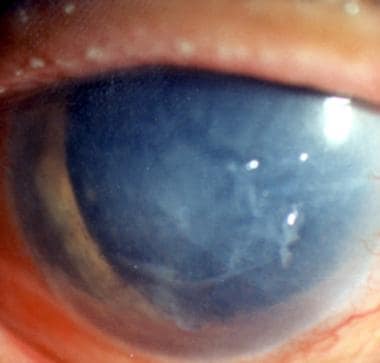
Media file 1:  Familial Fuchs endothelial dystrophy in a 65-year-old female. The other eye presented similarly. Her father and older brother were reported to have the same malady.
Click to see larger pictureClick to see detailView Full Size Image
Media type:  Photo

Media file 2:  The left eye of a 75-year-old man showing fully developedFuchs endothelial dystrophy. The optical section shows marked thickening of the central part of the cornea and lifting up of the epithelium. Bullae formation is seen on the nasal side. The epithelium is thickened.
Click to see larger pictureClick to see detailView Full Size Image
Media type:  Photo

Media file 3:  Close-up view of the limbal area of the same patient as in Image 2. It clearly shows thickening of the epithelium, bullae formation, and vascularization of the cornea.
Click to see larger pictureClick to see detailView Full Size Image
Media type:  Photo

Media file 4:  An optical section through the right cornea of the same patient as in Image 3. It shows edema of the cornea and severe endothelial changes. The endothelial cell count in this eye was 800 cells/mm2.
Click to see larger pictureClick to see detailView Full Size Image
Media type:  Photo

Media file 5:  Severe cornea guttata in a 61-year-old woman. The endothelium is speckled with pigment. This patient had complained of mistiness in her otherwise excellent vision.
Click to see larger pictureClick to see detailView Full Size Image
Media type:  Photo

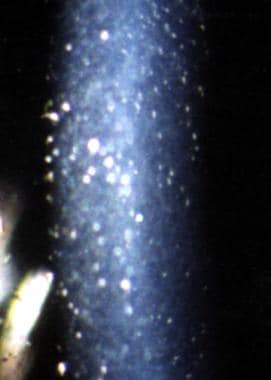
Media file 6:  Slit lamp examination under high magnification of a 54-year-old man, showing severe cornea guttata. The cornea illuminated by retroillumination from the edge of the slit light on the iris resembles dewdrops.
Click to see larger pictureClick to see detailView Full Size Image
Media type:  Photo

Media file 7:  Pseudoguttata produced by uveal inflammation. Corneal edema is also present. The other eye was normal. These "guttata" disappeared completely under treatment.
Click to see larger pictureClick to see detailView Full Size Image
Media type:  Photo

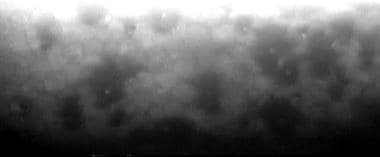
Media file 8:  Specular endothelial microscopy in a case of severe cornea guttata withtransparent cornea. The guttata lesions have affected many individual cellsand groups of cells.
Click to see larger pictureClick to see detailView Full Size Image
Media type:  Photo

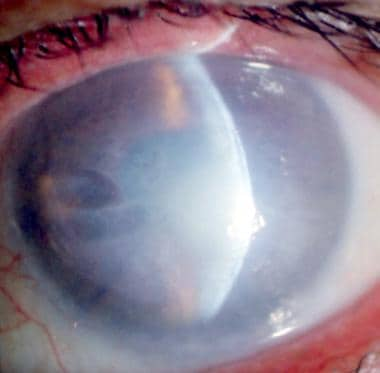
Media file 9:  Corneal edema in the eye of a 67-year-old woman.
Click to see larger pictureClick to see detailView Full Size Image
Media type:  Photo


  • Brady SE, Rapuano CJ, Arentsen JJ, et al. Clinical indications for and procedures associated with penetrating keratoplasty, 1983-1988. Am J Ophthalmol. Aug 15 1989;108(2):118-22. [Medline].
  • Laing RA, Leibowitz HM, Oak SS, et al. Endothelial mosaic in Fuchs'' dystrophy. A qualitative evaluation with the specular microscope. Arch Ophthalmol. Jan 1981;99(1):80-3. [Medline].
  • Lorenzetti DW, Uotila MH, Parikh N, Kaufman HE. Central cornea guttata. Incidence in the general population. Am J Ophthalmol. Dec 1967;64(6):1155-8. [Medline].
  • Melles GR, Remeijer L, Geerards AJ, Beekhuis WH. The future of lamellar keratoplasty. Curr Opin Ophthalmol. Aug 1999;10(4):253-9. [Medline].
  • Rodrigues MM, Krachmer JH, Hackett J, et al. Fuchs'' corneal dystrophy. A clinicopathologic study of the variation in corneal edema. Ophthalmology. Jun 1986;93(6):789-96. [Medline].

Dystrophy, Fuchs Endothelial excerpt

Article Last Updated: Feb 2, 2007