Continually Updated Clinical Reference
 
 
  All Sources     eMedicine     Medscape     Drug Reference     MEDLINE
 
eMedicine - Glaucoma, Complications and Management of Glaucoma Filtering : Article by

Quick Find
Authors & Editors
Introduction
Indications
Relevant Anatomy
Contraindications
Workup
Treatment
Complications
Outcome and Prognosis
Future and Controversies
Multimedia
References


Patient Education
Glaucoma Center

Eye and Vision Center

Ocular Hypertension Overview

Ocular Hypertension Causes

Ocular Hypertension Symptoms

Ocular Hypertension Treatment

Normal-Tension Glaucoma Overview

Glaucoma FAQs

Understanding Glaucoma Medications

Subconjunctival Hemorrhage Overview


Author: Antonio Pascotto, MD, Consulting Ophthalmologist, Istituto Diagnostico Varelli, Clinica Mediterranea, Napoli, Italy

Coauthor(s): Sergio Claudio Saccà, PhD, Professor of Ophthalmology, Department of Neurological and Visual Sciences, Ospedale San Martino, Italy; Mauro Fioretto, PhD, Professor and Program Director, Department of Ophthalmology, Ospedale Santo Spirito, Casale Monferrato (AL), Italy; Vincenzo Orfeo, MD, Head, Operating Unit, Clinica Mediterranea, Naples, Italy

Editors: Neil T Choplin, MD, Adjunct Clinical Professor, Department of Surgery, Section of Ophthalmology, Uniformed Services University of Health Sciences; Francisco Talavera, PharmD, PhD, Senior Pharmacy Editor, eMedicine; Martin B Wax, MD, Clinical Professor, Department of Ophthalmology, University of Texas Southwestern Medical School; Vice President, Ophthalmology Research and Development, Head, Ophthalmology Discovery Research, Alcon Labs, Inc; Lance L Brown, OD, MD, Ophthalmologist, Affiliated With Freeman Hospital and St John's Hospital, Regional Eye Center, Joplin, Missouri; Hampton Roy Sr, MD, Associate Clinical Professor, Department of Ophthalmology, University of Arkansas for Medical Sciences

Author and Editor Disclosure

Synonyms and related keywords: ocular hypertension, increased intraocular pressure, IOP, chronic simple glaucoma, POAG, COAG, chronic open-angle glaucoma, primary open-angle glaucoma, glaucomatous atrophy of the optic disc, cupping of the optic disc, low-tension glaucoma, normal tension glaucoma, normal-tension glaucoma, pigmentary glaucoma, pigment dispersion syndrome, acute glaucoma, narrow angle glaucoma, narrow-angle glaucoma, primary angle-closure glaucoma, borderline glaucoma, anatomical narrow angle, anatomic narrow angle, secondary glaucoma, congenital glaucoma, high pressure inside the eye, increased IOP, elevated IOP, high IOP, increased intraocular pressure, elevated intraocular pressure, high intraocular pressure, high eye pressure, elevated eye pressure, increased eye pressure, optic nerve damage, visual field defect, vision loss, blindness, surgical drainage, aqueous humor

Glaucoma is becoming an increasingly important cause of blindness as the world's population ages. New statistics gathered by the World Health Organization (WHO) in 2002 show that glaucoma is now the second leading cause of blindness worldwide, after cataracts. However, glaucoma presents perhaps an even greater public health challenge than cataracts because the blindness it causes is irreversible. Therefore, WHO officials are looking for ways to address the problems glaucoma causes.

In the United States alone, glaucoma has been diagnosed in more than 2 million people, who are at risk of becoming blind.

Glaucoma is statistically linked to elevated intraocular pressure (IOP), which is thought to be due to decreased flow of fluid (aqueous humor) from the eye. Treatments for decreasing IOP focus on either reducing the production of aqueous humor or on increasing the ability of the aqueous humor to drain from the eye. Treatments for reducing fluid production include the use of drugs to inhibit the production and the destruction of the ciliary processes that produce aqueous humor. These treatments are often ineffective at controlling IOP over many years.

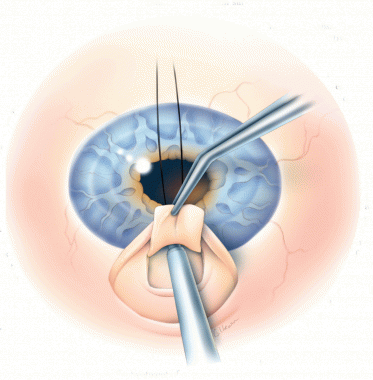
Surgical techniques may be used to increase drainage. These techniques include using lasers (laser trabeculectomy) to treat the trabecular meshwork (the main drainage passageway), implanting artificial drainage valves, and surgically cutting additional passageways to drain the fluid. Image 1 depicts the traditional filtering surgery. Risks associated with these surgical procedures include infection, cataracts, bleeding, and hypotony. Even if the surgery is initially successful, scarring may close the drainage channels at the surface layers in the course of months to years.

History of the Procedure

In 1857, von Graefe found that removing a large piece of the iris helped many patients with glaucoma. von Graefe's early work on this subject was translated into English and published by the New Sydenham Society in 1859. Eserine eye drops, made from the Calabar bean, were used before iridectomy to produce a miosis so that the iridectomy could be done peripherally in the iris. Occasionally, patients with glaucoma seemed better after using the eserine eye drops, so surgery was not needed. von Graefe also suggested that patients undergo a visual field examination in the office. Toward the end of the 19th century, glaucoma was considered to be identical to elevated IOP (and vice versa). Low-tension glaucoma, by definition, did not exist.

In 1909, Elliot, who was working at the Government Ophthalmic Hospital in Madras, India, used a trephine to make an anterior sclerectomy under a conjunctival flap, coupled with a peripheral iridectomy, in the attempt to improve on the operation of Lagrange (in Bordeaux). When Elliot reported 50 cases in 1909, he did not know that Fergus (in Glasgow) and Holth (in Christiania) had recently reported similar findings. Elliot's first book, Sclero-corneal Trephining in the Operative Treatment of Glaucoma, appeared in 1913 after he completed 900 cases, and the procedure received worldwide publicity.

Elliot participated in a discussion about glaucoma with Lagrange and Smith (the English-language glaucoma expert) at the International Congress of Medicine in London. Elliot then traveled to America, where he visited many ophthalmic centers and performed his operation 135 more times. Elliot's trephining procedure was more effective than iridectomy in treating patients with chronic glaucoma. For the next 40 years, his trephining procedure took its place beside Holth's iridencleisis as one of the most popular glaucoma operations.

Elliot followed up his first book with annual progress summaries on glaucoma in the Ophthalmic Yearbooks of 1913-1916 and a short book, Glaucoma: A Handbook for the General Practitioner, in 1917. In 1918, he published Glaucoma: A Textbook for the Student of Ophthalmology; in 1922, the enlarged second edition of this book, now called Treatise on Glaucoma, was a significant contribution to ophthalmology, as it improved the quality of teaching about glaucoma and posed questions about the mechanisms of the disease process.

Iridencleisis was eventually abandoned because of fear of sympathetic ophthalmia, and postoperative complications of cyclodialysis made it fall from favor. Variations of Elliot's trephining procedure are still in use; Scheie's thermal sclerectomy was popular for a while; and Cairns' trabeculectomy, developed in 1968, turned out to be another external filtering operation that worked well.

Problem

The definition of glaucoma has evolved to include more than just increased IOP. Glaucoma is defined as "the final common pathway of a group of diseases with decreased retinal ganglion cell sensitivity and function, retinal ganglion cell death, optic nerve axonal loss and concurrent cup enlargement, incremental reduction in visual fields, and blindness. Most of these diseases either result in or are associated with increased IOP in their mid to late stages." Although this definition is complicated, it highlights the fact that the understanding of the various clinical manifestations of glaucoma is expanding. The most clinically tangible aspect of this disease remains increased IOP.

Frequency

Glaucoma is typically associated with aging; its frequency increases as people reach their sixth decade of life. The disease is estimated to affect 1-2% of the US population and an estimated 67 million people worldwide. Glaucoma is the second leading cause of blindness in whites and the leading cause of blindness in blacks.

The frequency of glaucoma-filtering complications depends on the technique used, as follows: trabeculectomy without antimetabolites, 8.3-28%; trabeculectomy with 5-fluorouracil (5-FU), 2.6-18.7%; and trabeculectomy with mitomycin-C (MMC), 0-29%.

Etiology

Primary glaucoma is characterized by elevated IOP in the absence of signs of concurrent ocular disease. Some patients with primary glaucoma have narrow-angle glaucoma, in which the iridocorneal angle progressively closes over time, resulting in obstruction of aqueous humor outflow through the iridocorneal angle (see Image 2). Primary open-angle glaucoma, the most common form of glaucoma, is characterized by a chronic insidious onset.

Primary glaucoma (either narrow angle or primary open angle) is a bilateral disease, with the other eye being affected within 6-12 months of the initial diagnosis. Therefore, patient education regarding the eventual prognosis is a crucial part of the clinical management of primary glaucoma. Educating patients about the heritability of primary glaucoma is also important. Prophylactic therapy for the other eye increases the time to onset of glaucoma but does not prevent glaucoma.

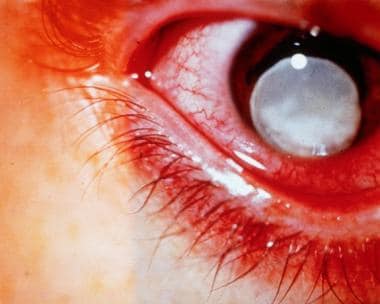
Secondary glaucoma is characterized by elevated IOP associated with concurrent ocular disease. The most commonly associated ocular diseases are uveitis, intraocular hemorrhage, neoplasia, and lens displacement (see Image 3).

Depending on its cause, uveitis can be unilateral or bilateral. In uveitis, inflammatory mediators are liberated into the eye, resulting in changes of the iridocorneal angle. Preiridial fibrovascular membranes and inflammatory cells cause obstruction of the angle, impeding aqueous humor egress. Peripheral anterior synechiae may block the angle. Treatment is directed toward controlling inflammation with topical steroids and atropine. Intraocular hemorrhage is similarly managed to uveitis.

Glaucoma secondary to intraocular neoplasia carries a grave prognosis for saving the eye because of the relatively limited options of successfully treating intraocular tumors.

Although classically considered a form of secondary glaucoma, lens luxation shares many of the characteristics of primary glaucoma. Although removing the lens provides the best opportunity to preserve vision and prevent glaucoma, glaucoma may still develop or persist after surgery.

Pathophysiology

Glaucoma is a group of ocular diseases characterized by progressive damage to the optic nerve. The disease is usually chronic and can lead to visual field loss and blindness. Cupping of the optic disc and loss of retinal nerve fibers signal damage to the optic nerve. The loss of nerve fibers results in a corresponding loss of visual field. High IOP is a major risk factor for glaucoma.

The rate of aqueous humor production, the resistance in outflow routes, and episcleral venous pressure regulate IOP. Aqueous humor, produced by the ciliary processes, flows into the anterior chamber and leaves the eye by 2 pathways: trabecular (conventional) outflow and uveoscleral outflow. Most aqueous humor exits the eye through the trabecular meshwork, the Schlemm canal, and the episcleral veins; the remaining 10-20% exits via the uveoscleral route, passing between the ciliary muscle bundles.

In a healthy eye, the production and outflow of aqueous humor maintain an IOP in the range of 10-21 mm Hg. Pressure is usually similar in both eyes and shows diurnal variations. In most patients with glaucoma, the resistance to aqueous humor outflow increases, resulting in elevated IOP.

Glaucoma is categorized as open angle or closed angle. Open-angle glaucoma, the most common type, includes primary glaucoma, capsular glaucoma, pigmentary glaucoma, normal-tension glaucoma, and some types of congenital glaucoma and secondary glaucoma. Closed-angle glaucoma results from partial or total obstruction of the anterior chamber angle, which blocks the trabecular network. Acute closed-angle glaucoma causes severe ocular and facial pain and requires immediate medical intervention.

In primary open-angle glaucoma, elevated IOP likely results from low-grade obstruction of aqueous humor outflow in the trabecular meshwork. Elevated IOP, in turn, can produce mechanical and/or ischemic damage to the optic nerve. The onset is usually insidious and asymptomatic, with changes in the visual field not generally affected until late in the disease, when cupping of the optic disc can be seen.

Patients with normal-tension glaucoma have pathologic optic disc cupping and visual field loss but normal IOP (<21 mm Hg). In these patients, reducing IOP significantly delays glaucomatous changes.

Patients with ocular hypertension have elevated IOP (>21 mm Hg) but a normal visual field and optic disc. The relationship between ocular hypertension and glaucoma is not clear, but patients with ocular hypertension should be regularly monitored for visual field loss or changes in the head of the optic nerve.

Clinical

The evaluation of patients with glaucoma is the single most important aspect of their initial care. Glaucoma specialists can perform more specialized examinations, such as Koeppe gonioscopy and tonography, as well as automated or manual perimetry, stereo disc photography, scanning laser imaging of the optic nerve (eg, optical coherence tomography [OCT], tests with a nerve fiber layer analyzer [NFLA]), and color Doppler imaging.

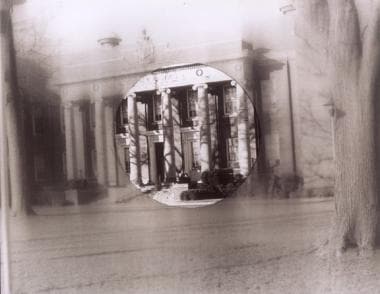
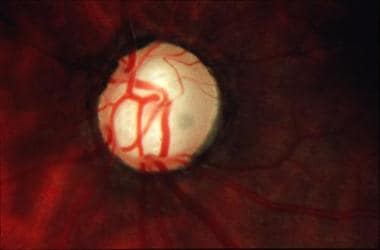
Glaucoma is a neuropathy associated with the following: optic nerve abnormalities, excavation of the optic disc, changes in the visual field (see Image 4), and elevated IOP. Because eyes with early glaucoma are often still visual or have the potential for vision, it is crucial to identify these cases early and to treat them aggressively. Clinical signs of late glaucoma include corneal striae, cupping of the optic disc (see Image 5), and retinal degeneration.


An oversimplification is to state that a trabeculectomy is indicated in a patient with uncontrolled IOP on maximum tolerated medical therapy in the presence of significant changes in the optic disc and/or visual field.

General indications are insufficient control of glaucoma with medical and laser therapies and rapid deterioration rate of visual function (enough to damage patient's quality of life).

Critical factors for decision are the amount of functional loss, the rapidity of visual deterioration, and the patient's life expectancy.

Objectives of trabeculectomy are to maintain useful vision and to avoid further glaucomatous damage by lowering IOP.

Success versus failure is judged in terms of the effect of surgery on the patient's visual function and quality of life, not just a numeric result.


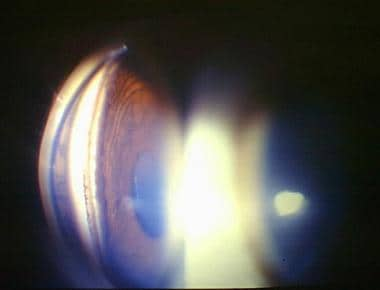
The 2 primary types of disease, open-angle glaucoma and angle-closure glaucoma, are classified according to the anatomy of the anterior chamber angle. This classification is determined on visual inspection of the angle by using a special lens, called a goniolens, on the slit lamp biomicroscope (see Image 6). Patients with open-angle glaucoma can be treated with glaucoma-filtering surgery.


Relative contraindications to glaucoma-filtering surgery are intraocular neoplasia, hyphema, anterior lens luxation, and elevated episcleral venous pressure.


Imaging Studies

  • Ultrasound biomicroscopy (UBM) is a method of imaging the eye at microscopic resolution.
    • UBM can be used to image any ocular disorder that falls within the penetration limits of sound at high frequencies. UBM achieves a high resolution of 50 mm by using high-frequency ultrasound transducers.
    • UBM is especially useful for assessing glaucoma entities with a structural component to their etiology, such as pupillary block, plateau iris syndrome direct iris rotation, anterior synechiae, supraciliary effusions, malignant glaucoma, cystic angle closure, and pigmentary glaucoma.
    • The procedure is similar to ultrasonographic procedures involving the heart (eg, echocardiography) or the examination of a baby before birth. The ultrasound probe is moved slowly over the surface of the eye, and images are recorded.
    • Structures that can be seen in a healthy eye are the cornea, the anterior chamber, the iris, the posterior chamber, the ciliary body, the sclera, the anterior lens capsule, the end of the Descemet membrane (Schwalbe line), and the scleral spur.
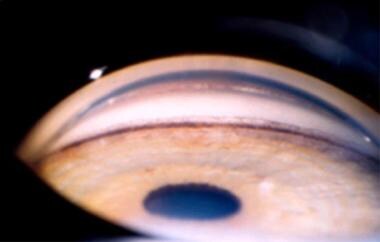
    • Angle-closure glaucoma (see Image 7) and pigment dispersion syndrome are the 2 forms of glaucoma that have primarily benefited from UBM research.
  • OCT is a noninvasive, noncontact technology. This exciting technology has revolutionized the early detection of glaucoma through its ability to evaluate the nerve cells damaged in glaucoma.
    • OCT was introduced to eye care on the heels of other technologies that assist in the diagnosis and management of glaucoma. Although previous technology to measure the thickness of the retinal nerve fiber layer was exceptional, they had limitations and did not readily provide access for assessing the rest of the posterior pole. OCT was designed for the diagnosis and intervention of glaucoma, but clinicians soon realized its utility in diagnosing and managing other conditions of the head of the optic nerve and in providing tremendous insight into retinal disorders affecting the posterior pole.
    • OCT represents a radically new method for diagnostic imaging, as it enables clinicopathologic tomographic imaging of the microstructure of the ocular tissue by measuring the echo time delay and intensity of back-scattered light. OCT allows for real-time evaluation of retinal and optic nerve structure, and the evolving technology is equally applicable to tissues of the anterior segment. The images have a resolution of 1-15 µm, which is better than that of other standard imaging techniques, such as magnetic resonance. OCT, which uses light, may be compared with ultrasonography, which uses reflection of sound waves.
    • The currently available Stratus OCT3 device allows for both optic nerve and retinal imaging with multiple acquisition modes, including rapid acquisition and more time-consuming algorithms. The rapid acquisition modes sacrifice resolution for speed, but often this tradeoff is desirable in uncooperative patients. In addition to multiple acquisition modes, this device also provides several image assessment methods.
  • The Heidelberg retina tomograph (HRT) is a confocal laser-scanning microscope for acquiring and analyzing 3-dimensional images of the posterior segment.
    • The HRT enables quantitative assessment of the retinal topography and precise follow-up of the topographic changes.
    • The most important routine clinical application of the HRT is the topographic description and the follow-up of the glaucomatous optic nerve head.
  • Scanning laser polarimetry (SLP) makes a quantitative measurement of the retinal nerve fiber layer, which cannot be easily assessed via other clinical methods.
    • SLP measures the retinal nerve fiber layer directly, regardless of the anatomy of the cup.
    • With a reproducibility of less than 8 µm, SLP is sensitive to detecting any changes.
    • Polarimetry and thickness measurements do not use a reference plane and are not affected by refractive error.
  • The GDx nerve fiber analyzer is a type of scanning laser polarimeter. The GDx device uses a diode laser in the near infrared region to measure 65,536 retinal points and the thickness of the nerve fiber layer. The axons in this layer have a birefringent property that causes the polarized light passing through it to undergo a phase shift. The amount of phase shift is directly proportional to the thickness of the nerve fiber layer.
    • The procedure is performed in an undilated pupil. Three images are obtained in each eye, and the images are then averaged for a baseline reading. The GDx device comes with computer software that allows the physician to interpret the results, comparing them with findings in normal eyes.
    • This test provides the physician with quantitative information and is a useful adjunct along with visual field testing (which is more user dependent). The GDx test also provides important information that is useful in monitoring the status of the optic nerve over years.
    • Alone, results of the GDx test do not confirm the diagnosis of glaucoma; therefore, the physician must use all of the baseline and follow-up data to make a decision regarding treatment for each patient.

Other Tests

  • IOP readings
  • Observation of the optic nerve
  • Visual field tests (to evaluate optic nerve function)

Diagnostic Procedures

  • Three common diagnostic procedures, tonometry, visual field tests, and ophthalmoscopy, enable ophthalmologists to screen patients for glaucoma.
    • To make a definitive diagnosis, ophthalmologists often used all 3 procedures as part of an overall eye examination.
    • The procedures are simple, relatively quick, and virtually painless.
  • Tonometry involves the use of a tonometer that measures eye pressure (ie, IOP).
    • During tonometry, the eye is anesthetized with drops, and while the patient is examined with a slit lamp, a plastic prism is lightly pushed against the eye to measure IOP.
    • During air tonometry, a puff of air is sent onto the cornea to measure the pressure. No anesthetic eye drops are needed.
  • The visual field test enables the ophthalmologist to determine any loss of peripheral vision.
    • The patient places his or her chin on a stand placed in front of a computer screen. When a flash of light appears, the patient is asked to press a button.
    • A computerized printout provides an accurate assessment of the patient's peripheral vision.
  • During ophthalmoscopy, an ophthalmoscope is used to look directly through the pupil at the optic nerve. Its color and appearance can indicate the presence of and the extent of damage from glaucoma.

Staging

Staging of glaucoma is important because it helps to establish target pressures and to determine the frequency of patient follow-up examinations.

The modified glaucoma staging system, as outlined below, follows the progression of glaucoma from before diagnosis to end-stage disease. This system allows ophthalmologists to stage patients' disease by using their historical chart data. These stages are as follows:

  • 0 - Normal
  • 1 - Early
  • 2 - Moderate
  • 3 - Advanced
  • 4 - Severe
  • 5 - End stage


Medical Therapy

No cure is available for glaucoma, but the disease can be controlled. Even with effective treatment, patients must have regular eye examinations. Treatment often continues for the patient's lifetime. Although burdensome, lifelong treatment is preferable to vision loss.

Lowering the IOP is the focus of treating patients with glaucoma. Lowering IOP is done to a level that is not likely to cause further optic nerve damage; this level is referred to as the target pressure and is determined by the ophthalmologist. High IOP may damage the optic nerve, which can lead to vision loss. The level differs for each patient, and a patient's target pressure may change during the course of a lifetime.

For open-angle glaucoma (the most common type), the ophthalmologist may prescribe medication to lower IOP. Topical or oral medications, inserts (waferlike strips of medication that are put in the corner of the eye), or eye ointments can be used.

Topical medications include the following:

  • Miotics - Increase the outflow of aqueous humor from the eye
  • Epinephrine compounds - Increase the outflow of aqueous humor from the eye
  • Beta-blockers - Reduce the amount of aqueous humor produced in the eye
  • Carbonic anhydrase inhibitors and alpha-adrenergic agonists - Reduce the amount of aqueous humor produced in the eye
  • Prostaglandin analogs - Work near the drainage area of the eye to increase the secondary route of aqueous humor outflow to lower IOP

Oral medication can control IOP. Carbonic anhydrase inhibitors, which slow the production of aqueous humor in the eye, are the most common.

Many of the same medications used to treat patients with open-angle glaucoma are used to treat patients with angle-closure glaucoma. Angle-closure glaucoma can cause IOP to rise quickly. To rapidly lower the pressure to prevent vision loss, the ophthalmologist may administer a sugar-based medication, called a hyperosmotic agent, by either mouth or injection. The effects of this drug last only 6-8 hours; therefore, it is not used for the long-term management of glaucoma.

Any medication, including eye drops, may have adverse effects. Most adverse effects are not serious and usually resolve, and not every patient experiences them. However, patients with glaucoma must carefully adhere to their prescribed treatments and discuss any adverse effects with their ophthalmologist. If an adverse effect is serious enough or intolerable, the patient and the ophthalmologist may decide to change the medication or the type of treatment.

Possible adverse effects associated with glaucoma medication include the following:

  • Stinging or redness of eyes
  • Blurred vision
  • Headache
  • Changes in pulse, heartbeat, or breathing
  • Changes in sexual desire
  • Mood changes
  • Tingling of fingers and toes
  • Drowsiness
  • Loss of appetite
  • Change of iris color (in patients with light-colored eyes taking prostaglandin analogs)

Surgical Therapy

For some patients, surgery might be the best option. Surgery may be performed first or after attempts to lower IOP with medication are tried. Several types of surgery are available to treat patients with glaucoma. The type and the severity of the glaucoma, the patient's other eye problems, and the patient's health condition are all considerations in selecting the type of operation. Surgery may be performed by using a laser or with more conventional approaches, such as incisional surgery, viscocanalostomy, or shunt placement.

Laser surgery

Trabeculoplasty is most often used for patients with open-angle glaucoma. A laser is applied to stimulate the trabecular endothelial cells to pump more efficiently to transport aqueous humor out of the eye. Furthermore, contraction of the burns induced by the laser increases the spaces in the adjacent (untreated) tissue, resulting in increased outflow in the drainage area of the eye (the trabecular meshwork).

Iridotomy is another laser surgery that is frequently used to treat patients with angle-closure glaucoma. The laser makes a small hole in the iris to allow the aqueous humor to flow more freely within the eye. The iris does not plug up the trabecular meshwork.

In cyclophotocoagulation (CPC), a laser is used to freeze selected areas of the ciliary body (the part of the eye that produces the aqueous humor) to reduce fluid production. This procedure may be used to treat more advanced or aggressive cases of glaucoma.

Most laser surgeries can be performed in the ophthalmologist's office or in an outpatient surgical facility. Because patients usually have little discomfort, eye drops are used to numb the eye and are often the only anesthetics needed for the duration of the procedure. Little recuperation is required. Patients may have local eye irritation, but they can usually resume their normal activities within 1-2 days.

Incisional surgery

When vision loss is rapid or when medication and/or laser surgery fails to sufficiently lower the IOP, incisional (conventional) surgery is the best option.

Filtering surgery is usually performed in a hospital or in an outpatient surgical center with local anesthesia and sometimes sedation. Using delicate instruments, the ophthalmic surgeon removes a tiny piece of the sclera, leaving a tiny hole. The aqueous humor can drain through this hole, thereby reducing IOP. The bloodstream then reabsorbs the aqueous humor.

Some patients require the placement of an aqueous shunt (eg, Ahmed, Molteno, Baerveldt) in the eye through a tiny incision in the sclera. It allows the fluid to flow out from the interior of the eye, where it can be reabsorbed. This procedure may be performed under local anesthesia in the ophthalmologist's office or in an outpatient surgical center.

Recuperation from incisional surgery is generally short. An eye patch is usually worn for a few days after surgery. Activities that expose the eye to water (eg, showering, swimming) should be avoided. To avoid complications, refraining from heavy exercise, straining, or driving for a short time may be recommended.

Viscocanalostomy

Viscocanalostomy was developed as an alternative to trabeculectomy. Although many viscocanalostomy techniques are available, the procedure basically involves production of superficial and deep scleral flaps, excision of the deep scleral flap to create a scleral reservoir, and unroofing of Schlemm canal. A high-viscosity viscoelastic, such as sodium hyaluronate, is used to open the canal and create a passage from a scleral reservoir to the canal. The superficial scleral flap is then sutured to become watertight, trapping the viscoelastic until healing takes place.

According to a recent study (O'Brart, 2004), in terms of complete success and number of antiglaucomatous medications required postoperatively, IOP control appears to be better with trabeculectomy than with this procedure. However, viscocanalostomy is associated with fewer early transient postoperative complications.

Shunt placement

The Ex-PRESS shunt is a 3-mm device that is inserted at the edge cornea. It is a microscopic conduit that drains excess fluid out of the eye and into the tissues that surround the eye, where it cannot do any harm.

Standard glaucoma surgeries can take from 30 minutes to 1.5 hours, but surgery with this new shunt takes 10 minutes.

According to 1 study (Wamsley, 2004), the incidence of complications after the implantation of an Ex-PRESS shunt directly under the conjunctiva was unacceptably high, despite a significant reduction in the IOP.

Preoperative Details

Glaucoma surgery is generally performed as an outpatient procedure with the patient under local anesthesia with sedation. Topical and oral medications (eg, anti-inflammatories, antibiotics) are started 2 days before surgery.

Before glaucoma surgery, the ophthalmic surgeon discusses the specific condition, the details of the procedure to be performed, and the risks and the benefits of the procedure with the patient. The patient is required to sign an informed consent agreement before glaucoma surgery is performed.

Intraoperative Details

Intraoperative application of MMC or 5-FU may be considered. Cases of encysted blebs have been observed by using MMC during glaucoma surgery.

Postoperative Details

Postoperative appointments are scheduled for the day after the surgery and for several weeks thereafter. Postoperative medications generally include an antibiotic drop, an anti-inflammatory drop, and a cycloplegic drop (which maintains pupil dilation and manages pain). Glaucoma drops may be continued at a level determined by the ophthalmologist.

Follow-up

The postoperative period generally lasts 2-3 months. Most patients do well after surgery and find that surgery controls their glaucoma without the use of medication.

For excellent patient education resources, visit eMedicine's Glaucoma Center and Eye and Vision Center. Also, see eMedicine's patient education articles Ocular Hypertension, Normal-Tension Glaucoma, Glaucoma FAQs, Understanding Glaucoma Medications, and Subconjunctival Hemorrhage (Bleeding in Eye).


Complications of glaucoma and its treatment include the following: (1) intraoperative and postoperative suprachoroidal hemorrhage; (2) hyphema; (3) hypotony; (4) a flat anterior chamber and elevated or normal IOP, which includes suprachoroidal hemorrhage, aqueous misdirection, and pupillary block; (5) visual loss; (6) intraoperative complications of filtration procedures, eg, conjunctival buttonholes and tears, scleral flap disinsertion, and vitreous loss; (7) postoperative complications of filtration procedures, eg, bleb leaks, early and late failure of filtering blebs, encapsulated blebs, symptomatic blebs, cataract formation, and bleb-related ocular infection; (8) complications of cyclodestructive procedures; and (9) complications of trabeculotomy and goniotomy.

Each of these complications is discussed below.

Intraoperative and Postoperative Suprachoroidal Hemorrhage

Suprachoroidal hemorrhage is a serious complication that can be seen during or after any intraocular surgery. If it occurs intraoperatively and cannot be controlled (ie, it is expulsive hemorrhage), and it can lead to loss of vision. The incidence of this complication in the general population after cataract extraction is approximately 0.2%. The incidence of a suprachoroidal hemorrhage in patients with glaucoma who undergo various types of intraocular surgery is reportedly 0.73%.

Ocular risk factors for a suprachoroidal hemorrhage are glaucoma, aphakia, pseudophakia, previous vitrectomy, vitrectomy at the time of glaucoma surgery, myopia, and postoperative hypotony. Systemic risk factors are arteriosclerosis, high blood pressure, tachycardia, and bleeding disorders. The source of the hemorrhage is usually 1 of the posterior ciliary arteries, particularly the point of entrance of the short posterior ciliary vessels into the suprachoroidal space. Vascular necrosis seems to be present with subsequent rupture of the vascular wall.

Intraoperative suprachoroidal hemorrhage can be associated with a sudden collapse of the anterior chamber. The patient may complain of sudden pain that breaks through local anesthesia. If the process is gradual, a dark mass that evolves slowly can be observed through the pupil; however, if the process is abrupt, the hemorrhage is more expulsive.

Postoperative suprachoroidal hemorrhage usually occurs within the first week after glaucoma surgery and is generally associated with postoperative hypotony. Typically, the development of a suprachoroidal hemorrhage is acute and associated with the sudden onset of severe pain.

Examination of the anterior segment frequently reveals a shallow anterior chamber and normal or high IOP. On the fundus examination, a detached and dark choroid is noted. The choroidal elevations have a dark, reddish brown color. Some patients present with bleeding into the vitreous cavity and, uncommonly, retinal detachment. Ultrasonography can be used to aid in the diagnosis of a suprachoroidal hemorrhage when a fundus examination is not possible.

Hyphema

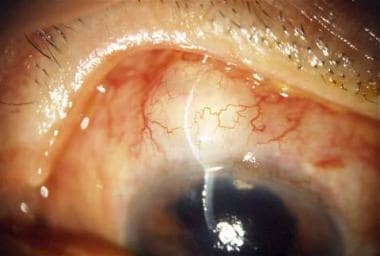
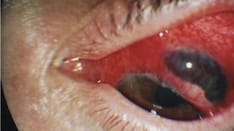
Hyphema is a common postoperative occurrence in glaucomatous eyes after filtration surgery, surgical peripheral iridectomy, and trabeculotomy (see Image 8). Bleeding commonly arises from the ciliary body or cut ends of the Schlemm canal, although it might arise from the corneoscleral incision or the iris.

Hyphema generally occurs during surgery or within the first 2-3 days after surgery. Intraoperatively, if a bleeding spot does not stop spontaneously, it must be identified and coagulated. During filtration surgery, performing the internal sclerostomy as far anteriorly as possible decreases bleeding.

In most cases, no treatment is necessary, and the blood is absorbed within a brief period of time. Cycloplegics, corticosteroids, restriction of activity, and elevation of the head of the bed 30-45° (to prevent blood from obstructing a superior sclerostomy) are recommended. Increased IOP can occur, particularly if the filtering site is obstructed by a blood clot; if necessary, it should be treated with aqueous suppressants. Injection of a tissue-plasminogen activator may be considered.

Surgical evacuation can be considered depending on the level of IOP, the size of hyphema, the severity of optic nerve damage, the likelihood of corneal blood staining, and the presence of sickle cell trait or sickle cell anemia (infarction of the optic nerve can occur at a relatively low IOP, and carbonic anhydrase inhibitors are contraindicated). Liquid blood can be easily removed with irrigation. If a clot has formed, it can be removed by expression with viscoelastic or with a vitrectomy instrument set at low vacuum.

Hypotony

Hypotony, or IOP <6 mm Hg, after glaucoma surgery can result from excessive aqueous humor outflow related to excessive filtration, wound leak, or cyclodialysis cleft or from reduced aqueous humor production related to ciliochoroidal detachment, inflammation, inadvertent use of aqueous suppressants, or extensive cyclodestruction. These conditions can coexist; for example, low IOP due to overfiltration can induce ciliochoroidal detachment and secondary decreased production of aqueous humor.

Possible complications include the following:

  • Flat anterior chamber
  • Gradual failure of the bleb
  • Visual loss
  • Cataract
  • Corneal edema
  • Descemet membrane folds
  • Choroidal hemorrhage
  • Macular and optic disc edema
  • Chorioretinal folds (predominantly in young patients with myopia)

According to Spaeth, the severity of a flat anterior chamber can be classified as follows: grade I, when peripheral-iris apposition is present; grade II, when pupillary border-corneal apposition is present; and grade III, when lens-corneal touch is present.

The depth of the central anterior chamber can be described relative to corneal thickness. Choroidal effusion occurs when fluid collects in the suprachoroidal space, resulting in forward movement of the lens-iris diaphragm with the anterior chamber becoming shallow. On fundus examination, moundlike elevations of the choroid, commonly in the periphery, are visible.

Flat Anterior Chamber and Elevated or Normal IOP

The following 3 conditions should be considered in patients with a postoperative flat anterior chamber and elevated or normal IOP: (1) suprachoroidal hemorrhage (see Intraoperative and postoperative suprachoroidal hemorrhage above), (2) aqueous misdirection, and (3) pupillary block.

Aqueous misdirection

Aqueous misdirection is also called malignant glaucoma or ciliary block glaucoma. It is characterized by a shallowing (flattening) of the anterior chamber without pupillary block (ie, in the presence of a patent iridectomy) or choroidal disease (eg, suprachoroidal hemorrhage) and commonly with an accompanying rise in IOP. Aqueous misdirection occurs in 2-4% of patients who have undergone surgery for angle-closure glaucoma, but it can occur after any type of incisional surgery. The chance of developing malignant glaucoma is greatest in phakic hyperopic (small) eyes with angle-closure glaucoma. In this condition, the aqueous humor is diverted posteriorly toward the vitreous cavity, increasing the vitreous volume and shallowing the anterior chamber.

Decompression and shallowing of the anterior chamber appear to be predisposing factors by inducing forward movement of the peripheral anterior hyaloid. Small choroidal effusions and a shallow anterior chamber sometimes occur before the episode of aqueous misdirection. The anterior hyaloid could be placed into direct apposition with portions of the secreting ciliary processes. Thus, the aqueous humor might move directly into the vitreous cavity. In hyperopic eyes (with a crowded middle segment), the peripheral anterior hyaloid in its normal position probably is close to the posterior ciliary body. In such eyes, cataract and filtration surgeries should be considered as high risk for aqueous misdirection. In aqueous misdirection, a relative resistance to the anterior movement of the aqueous humor in the anterior vitreous face or the anterior hyaloid membrane probably occurs.

The increased resistance can be related to either abnormal permeability or available hyaloid surface area for fluid transfer. In normal circumstances, the anterior hyaloid and the vitreous offer insignificant resistance to forward fluid flow. In some cases, pupillary block occurs first and is followed by aqueous misdirection. Perhaps, a sudden onset of pupillary block forces the aqueous humor into the vitreous and expands the vitreous volume, with forward displacement of the peripheral hyaloid into direct apposition with the ciliary body.

Aqueous misdirection usually occurs in the early postoperative period after either filtration surgery or cataract surgery. The anterior chamber is shallow, and the IOP is high. However, with a functioning filtration bleb, the IOP may not be high. The peripheral iridectomy is patent, and a dilated examination and a B-scan ultrasonography confirm the absence of choroidal effusion or hemorrhage. If the adequacy of the surgical iridectomy is in doubt and pupillary block is possible, a laser iridotomy should be performed.

Pupillary block

Pupillary block can be caused by adhesions between the iris and the lens, the pseudophakos, or the vitreous. The inability of the aqueous humor to pass from the posterior chamber to the anterior chamber results in the forward movement of the peripheral iris and closure of the drainage angle. Pupillary block typically occurs as a flat (shallow) anterior chamber with normal or elevated pressure. Distinguishing pupillary block from malignant glaucoma may be difficult. Although a peripheral iridectomy is intended at the time of filtration surgery, only the stroma of the iris is removed and the posterior pigment epithelium is left intact in a few patients. In these patients, blockage may develop. In other patients, the iris may become incarcerated in the wound or the iridectomy may be obstructed by intraocular tissue, such as the Descemet membrane, the anterior hyaloid surface, the vitreous (in aphakic eyes), or ciliary processes.

Therapy with cycloplegic-mydriatics may resolve pupillary block, but an Nd:YAG peripheral iridotomy should be performed. The anterior chamber readily deepens after an iridotomy is performed, although in the presence of localized compartments of blockage, multiple iridotomies are necessary. Usually, this deepening is associated with the sudden escape of aqueous humor through the iridectomy, confirming the diagnosis of pupillary block. If the laser iridotomy cannot be completed, a surgical iridectomy should be performed.

The development of a flat anterior chamber after glaucoma surgery is a relatively common complication. It is encountered less frequently following a trabeculectomy procedure than after conventional filtering procedures. However, a flat anterior chamber with or without ocular hypotonia may develop after a trabeculectomy procedure. Therefore, the ophthalmic surgeon who performs intraocular glaucoma surgery should anticipate and be prepared to manage a postoperative flat anterior chamber.

A prolonged flat anterior chamber with hypotonia may result in serious consequences. According to a recent study, most eyes in which a flat anterior chamber with hypotonia developed after glaucoma surgery eventually acquired late cataract. This finding confirms a previous clinical impression that hypotonia is a cause of late cataract. When the anterior chamber is flat, contact can occur between the cornea and the lens. Contact between the corneal endothelium and the anterior lens capsule usually results in damage to the cornea. Corneal damage can be further aggravated by the elevated IOP caused by the development of peripheral anterior synechiae.

Without proper medical and surgical interventions, the eye with a persistent flat anterior chamber with hypotonia can acquire superimposed secondary glaucoma that is difficult to control and can eventually develop absolute glaucoma with possible vascular occlusion. Fortunately, most flat anterior chambers with hypotonia and choroidal detachment after a filtering procedure may spontaneously reform. However, this reformation usually occurs at the expense of varying degrees of peripheral anterior synechiae, closure of the filtering fistula, and late cataract.

The flat anterior chamber with hypotonia can be with or without a detectable external wound leak. When the Seidel test result is positive, a wound leak can be easily ascertained. However, in many instances, the Seidel test result is negative with an undetectable wound leak, implying that a flat anterior chamber with hypotonia can occur in the absence of a detectable external wound leak.

Medical management of a postoperative flat anterior chamber

The first step in managing a postoperative flat anterior chamber with hypotonia is a trial of medical treatment.

Cycloplegic agents are known to decrease the vascular transudation by decreasing the vascular permeability. Cycloplegic agents also relax the ciliary muscle and, thus, the posterior movement of the lens-iris diaphragm. The mydriatic effect of cycloplegic agents is also beneficial in preventing posterior synechiae. The theoretic implication of an increase in the uveoscleral outflow of the aqueous humor by cycloplegic agents should be considered.

Hyperosmotic agents may increase the depth of the anterior chamber by decreasing vitreous volume and suprachoroidal fluid.

Carbonic anhydrase inhibitors decrease the aqueous humor production. Reduced aqueous humor formation diminishes flow through the filtering fistula, increasing the chance of closure of the fistula and reformation of the anterior chamber. However, the use of a carbonic anhydrase inhibitor may work against reformation of the anterior chamber by further decreasing the aqueous humor secretion that is already curtailed in an eye with a flat anterior chamber with hypotonia.

Topical and systemic steroids may be tried for their action of decreasing the transudation and of counteracting the portion of the aqueous humor hyposecretion that may be caused by inflammation. Steroids also reduce the incidence of posterior synechiae and peripheral anterior synechiae.

A firm application of an eye pad or a tamponade with contact lens or scleral shell may be beneficial. Conjunctival tamponade against the filtering corneoscleral fistula implements a decrease in filtration and a better chance of reformation of the anterior chamber.

Medical therapy is of little value in the presence of an external wound leak, necessitating surgical repair.

Many eyes reform on this regimen. However, with the exception of a wound leak closure, the practical value of each measure is not clear, aside from theoretic considerations. Medical therapy is considered a failure if the anterior chamber fails to form after 5-6 days. At this point, the ophthalmic surgeon is obligated to surgically reform the anterior chamber. Surgical reformation of a flat anterior chamber with hypotonia usually requires fluid drainage from the suprachoroidal space by posterior sclerotomy.

Surgical management of a postoperative flat anterior chamber

Posterior sclerotomy for drainage of ciliochoroidal detachment and reformation of the anterior chamber may be performed at a readily exposable scleral site over the ciliary body rather than over the choroid, 6-10 mm from the limbus.

Posterior sclerotomy and reformation of the anterior chamber may be performed either off site or on site. In the off-site technique, a partial-thickness incision is created through the peripheral cornea at a site off the previous trabeculectomy or other filtering surgery. An attempt is made to reform the anterior chamber with air, which usually fails unless the fluid from the supraciliary space and the suprachoroidal space is drained. A posterior sclerotomy is performed to drain fluid from the supraciliary space, which is continuous with the suprachoroidal space.

The area of the sclera, 3-5 mm from the limbus and a meridian away from a rectus muscle, is cauterized using a wet-field cautery. Then, a full-thickness radial incision of the sclera, about 2 mm in length, is created, entering into the supraciliary space to drain the accumulated fluid. Enough fluid is drained so that the anterior chamber can be fully reformed with air. Even when a choroidal detachment cannot be detected on ophthalmoscopy, enough transudate is usually present in the supraciliary space.

A balanced salt solution instead of air was previously used to reform the anterior chamber. The use of air is preferred because there is a better chance of maintaining a fully formed chamber and less chance of having to repeatedly reform the anterior chamber. The peripheral corneal incision may or may not be closed with a suture. The conjunctival wound overlying the scleral incision is closed by running 8-0 polyglactin or polyglycolic acid suturing.

After surgery, a strong topical cycloplegic agent and steroid-antibiotic combination eye drops are applied to the eye. Topical phenylephrine hydrochloride is also used to prevent posterior synechiae and the rare possibility of pupillary block of the air.

The success of surgical management supports the following 6 important observations:

1. Draining at the area of greatest choroidal detachment is not necessary.

2. Draining at the most dependent location, such as the inferior temporal quadrant, is not necessary. Any microscopic surgery at the inferior temporal quadrant is awkward, especially when posterior sclerotomy is performed 6-10 mm from the limbus.

3. Draining all the fluid from the suprachoroidal space is not necessary; drain only enough to fill the anterior chamber with air. Once the ciliary body is pushed up against the sclera, IOP is restored, any demonstrable wound leak or excessive filtering fistula is repaired, and the remaining fluid in the suprachoroidal space is readily absorbed spontaneously.

4. The ciliary body is more loosely in apposition against the sclera than the choroid, and ciliochoroidal detachment begins over the ciliary body. The ciliary detachment is present even when the choroidal detachment is not detectable on indirect ophthalmoscopy and B-scan ultrasonography.

5. Whether the detachment of the ciliary body rather than the detachment of the choroid is the cause of aqueous humor hyposecretion or of increased uveoscleral outflow of the aqueous humor, restoring the proper anatomical position of the ciliary body against the sclera seems to be an important consideration in the surgical management of a flat anterior chamber with hypotonia.

6. An inadvertent penetration into the vitreous during a posterior sclerotomy, although unlikely, is less consequential through the ciliary body than through the choroid and the retina. However, intentional vitreous aspiration can be readily performed (if necessary) through the posterior sclerotomy and the ciliary body.

Postsurgical preventive measures for a reformed flat anterior chamber

Even with the successful reformation of a flat anterior chamber after glaucoma surgery, the development of late cataract is often a problem. Precautionary measures (at least those of theoretic significance) appear important in the prevention of a flat anterior chamber after an intraocular procedure. One precautionary measure is to avoid both sudden and large magnitudes of globe decompression during intraocular surgery. Preoperatively, IOP is decreased to a low level by using carbonic anhydrase inhibitors and hyperosmotic agents, in addition to other glaucoma medications. Patients may not be able to tolerate carbonic anhydrase inhibitors on a long-term basis, but most patients can tolerate them for short preoperative periods. The globe is gradually decompressed by slowly letting out the aqueous humor. The ophthalmic surgeon should avoid external pressure and excessive trauma to the globe, especially after the eye is opened.

Preoperative recognition of eyes in which intraoperative ciliochoroidal detachment might develop, despite the usual preventive measures, is important. Eyes with elevated episcleral venous pressure are particularly predisposed to severe ciliochoroidal detachment. Elevated episcleral venous pressure may be idiopathic or familial, or it may be associated with Sturge-Weber syndrome, other causes of orbital and episcleral arteriovenous malformation or fistula, or superior vena cava syndrome. In these eyes, performing preventive posterior sclerotomy at the time of an intraocular procedure may be prudent.

Adequate closure of the wound in filtering surgery is important. Closure of the scleral wound must be just right; that is, it must be tight enough to retain the air in the anterior chamber according to the air test. The air test involves introduction of air into the anterior chamber with a 30-gauge cannula connected to a glass syringe filled with air, positioned under the lamellar scleral flap or through a paracentesis tract. If the air stays in the anterior chamber without tendency to extrude, the closure of the lamellar scleral flap in trabeculectomy or the size of the corneoscleral wound in other filtering procedures is considered optimal. If any air tends to extrude, then the closure is inadequate. In this case, 1 or more interrupted sutures are placed for tighter closure of the lamellar scleral flap or partial closure of the filtration wound. Then, the conjunctival wound is closed watertight.

Visual Loss

Unexplained loss of the central visual field (ie, wipeout) after glaucoma surgery is rare. Older patients with advanced visual field defects affecting the central field with split fixation are at an increased risk. Early, undiagnosed postoperative spikes in IOP and severe postoperative hypotony are possible causes for wipeout.

Intraoperative Complications of Filtration Procedures

Conjunctival buttonholes and tears

Conjunctival buttonholes and tears can lead to failure of bleb formation and a flat anterior chamber. The usual cause of conjunctival buttonholes is penetration of the tissue by the tip of a sharp instrument (eg, needle, scissors, blade) or the teeth of a forceps. Buttonholes and tears are more likely to occur in patients with extensive conjunctival scarring.

To diagnose a buttonhole intraoperatively, the conjunctiva should be carefully examined at the end of the procedure by filling the anterior chamber and raising the filtering bleb. If recognized, the buttonhole should be closed during surgery. If it is located in the center of the conjunctival flap, a purse string closure is attempted, either internally on the undersurface of the conjunctiva or externally if the flap has been reapproximated. Use of 10-0 or 11-0 nylon on a tapered (vascular) needle is recommended.

When the conjunctival buttonhole or tear occurs at the limbus, it can be sutured directly to the cornea, which should be deepithelialized. A mattress suture or, if large, a running suture with 10-0 nylon can be used. When the buttonhole or tear occurs near the incised edge of a limbal-based conjunctival flap, the sutures used to close the conjunctival incision can be placed anterior to the tear.

Scleral flap disinsertion

A thin scleral flap can be torn or amputated from its base during the surgical procedure. If sclerostomy has not been performed, a new scleral flap should be dissected in a different area. If sclerostomy has been performed, reapproximation of the scleral flap can be attempted with 10-0 or 11-0 nylon sutures. If unsuccessful, additional tissue is needed to cover the sclerostomy. This tissue can be obtained by transferring a piece of the Tenon capsule or a flap of partial-thickness sclera from the area adjacent to the defect. Alternatively, donor sclera, fascia lata, or pericardium can be used.

Vitreous loss

Vitreous loss during glaucoma surgery is an uncommon complication, especially in phakic eyes. Predisposing conditions to vitreous loss include high myopia, previous intraocular surgery, trauma, aphakia, and lens subluxation. Loss of vitreous can be associated with such complications as corneal edema, epithelial downgrowth, uveitis, retinal detachment, cystoid macular edema, and endophthalmitis.

The vitreous can mechanically plug the sclerostomy, leading to filtration failure. The vitreous should be removed from the surgical site and the anterior chamber with a vitrectomy instrument, avoiding damage to the lens in phakic eyes. In the aphakic eye where the vitreous fills the anterior chamber, an anterior vitrectomy can be planned as part of the primary procedure. In phakic or pseudophakic eyes where the vitreous is in the anterior chamber, pars plana vitrectomy may be considered to adequately remove the vitreous from the posterior segment and to avoid lens or intraocular lens subluxation and lens injury.

Postoperative Complications of Filtration Procedures

Bleb leaks

Bleb leaks can occur early in the postoperative period or months to years after filtration surgery. An inadvertent buttonhole in the conjunctiva during a filtering procedure or a wound leak through the conjunctival incision can be responsible for an early bleb leak. Spontaneous late bleb leaks are more frequent in thin avascular blebs, which occur more frequently when antimetabolites are used in the filtering procedure and after full-thickness procedures.

The incidence of early and late bleb leaks is probably higher in trabeculectomies supplemented with antimetabolites than in nonsupplemented surgeries. Leakage of the filtering bleb can be associated with hypotony, a flat (shallow) anterior chamber, and choroidal detachment, and it may increase the chance of bleb infection and subsequent endophthalmitis. Early leaking can flatten the bleb, leading to subconjunctival-episcleral fibrosis, which jeopardizes a satisfactory long-term filtration.

Bleb leaks are detected with the Seidel test. The tear film is stained with fluorescein. A fluorescein strip is applied to the inferior tarsal conjunctiva or directly, albeit gently, to the bleb. Without applying pressure, the eye is examined under cobalt blue illumination. If a leak is present, unstained aqueous humor flows into the tear film. If no spontaneous leakage is present, pressure may be gently applied to either the globe or the bleb while the suspicious area is examined.

Various nonsurgical and surgical modalities can be used in the treatment. In early and late bleb leaks, autologous fibrin tissue glue (AFTG) offers an alternative nonsurgical treatment and is at least as effective as and, in some ways, may be superior to other nonsurgical modalities of treatment (Asrani et al, 1996).

Early and late failure of filtering bleb

Failed blebs are associated with inadequate IOP control and impending or established obstruction of aqueous humor outflow. The causes of failed filtering operations are divided into intraocular, scleral, and extraocular factors. Extraocular changes account for most failures of external filtering operations. Early failure of filtering blebs is characterized by high IOP, a deep anterior chamber, and a low and hyperemic bleb. Failing blebs should be promptly recognized because if the obstruction is not relieved, permanent adhesions between the conjunctiva and the episclera can lead to closure of the fistula. A tight scleral flap and episcleral fibrosis are the most common causes of early bleb failure. Internal obstruction of the fistula by a blood clot, the vitreous, the iris, or an incompletely excised Descemet membrane is also possible.

To reduce postoperative subconjunctival fibrosis and to preserve bleb function, postoperative topical steroids are routinely used. The use of antifibrotic agents in filtering procedures is associated with a higher success rate but also with a higher complication rate (eg, wound leak and hypotony from overfiltration, hypotony maculopathy, ocular infection). Individualized consideration of the risk-benefit ratio is recommended.

During the first 2 weeks after surgery, 5-FU is usually administered in 5-mg aliquots. The dose is adjusted according to the tolerance of the corneal epithelium of each eye. Intraoperative application of 5-FU has been described. Complications associated with using postoperative 5-FU include corneal and conjunctival epithelial toxicity, corneal ulcers, conjunctival wound leaks, subconjunctival hemorrhage, and inadvertent intraocular spread of 5-FU. The frequency of complications is reduced with lower titrated doses of 15-50 mg administered in 3-10 injections according to individual response.

MMC is approximately 100 times more potent than 5-FU. Postoperative complications associated with overfiltration, hypotony maculopathy, bleb leak, and bleb-related ocular infections are more likely to occur when MMC is used.

Digital ocular compression and focal compression can be used to temporarily improve the function of a nonfunctioning filtering bleb. Digital ocular compression can be applied to the inferior sclera or the cornea through the inferior eyelid or to the sclera posterior to the scleral flap through the superior eyelid. Focal compression is applied with a moistened cotton tip at the edge of the scleral flap. Because of potential complications, digital ocular compression is suitable for patients who are physically capable of performing it and who have had a beneficial response to the initial massage by the ophthalmic surgeon.

In the early postoperative period, laser suture lysis can enhance the filtration. Gonioscopy performed before the laser can confirm an open sclerostomy with no tissue or clot occluding its entrance. Specially designed lenses or equipment can be used. Examples are the Hoskins, Ritch, or Mandelkorn lenses; the central button edge of the Zeis and Sussman lenses; the Goldmann lens; glass rods; or glass pipettes.

After the suture is cut, if the bleb and IOP are unchanged, ocular massage or focal pressure can be applied. Usually, only 1 suture is cut at a time to avoid the possible complications of overfiltration. A hole in the conjunctiva may occur because of trauma from the contact lens or the thermal burn of the laser. If a subconjunctival hemorrhage occurs, suture lysis can be difficult. In these cases, a krypton red laser or a diode laser should be used because its wavelengths are least absorbed by blood. Some sutures have more influence in restricting the aqueous humor runoff than other sutures. These key sutures should be identified during surgery, and caution should be exercised when cutting them.

The timing of suture release is critical. Suture lysis is effective within the first 2 weeks after surgery without antimetabolites; later, fibrosis of the scleral flap may negate any beneficial effect of this procedure. If antimetabolites have been used at the time of surgery, suture lysis can be effective months after surgery.

Releasable sutures are as effective as laser suture lysis. The use of releasable sutures allows the ophthalmic surgeon to tightly close the scleral flap, knowing that the flow can be increased postoperatively. The externalized sutures are easily removed and are effective in cases of hemorrhagic conjunctiva or thickened Tenon capsule tissue (which makes suture lysis difficult). Disadvantages of releasable sutures include additional intraoperative manipulation and postoperative discomfort from the externalized suture; corneal epithelial defects; and, possibly, increased risk of ocular infection.

In patients with an incarceration of iris or vitreous occluding the sclerostomy, an Nd:YAG laser internal revision can be tried. When the cause of filtration failure is a blood clot or a fibrinous clot occluding the sclerostomy, tissue plasminogen activator can be helpful. Recombinant tissue plasminogen activator is a serine protease with clot-specific fibrinolytic activity. It can be injected into the anterior chamber or subconjunctivally at a dose of 7-10 mg in 0.1 mL. It works rapidly; within 3 hours, the effect is usually apparent. Hyphema is the most frequent complication.

Encapsulated blebs

Encapsulated blebs are localized, elevated, and tense filtering blebs with vascular engorgement of the overlying conjunctiva and a thick connective tissue. This type of bleb commonly appears within 2-4 weeks after surgery. Encapsulation of the filtering bleb is associated with a rise in IOP after an initial period of pressure control after glaucoma surgery. They can interfere with upper lid movement and tear film distribution, leading to corneal complications, such as dellen and astigmatism. Often, it is seen through the eyelid, simulating a lid mass.

The frequency of bleb encapsulation after trabeculectomies without antimetabolites is 8.3-28%. In trabeculectomies with postoperative 5-FU, the reported incidence is frequently higher. The frequency of encapsulated blebs after guarded filtering procedures is lower with MMC that with 5-FU.

Predisposing factors may include male sex and the use of gloves with powder, as well as previous treatment with sympathomimetics, argon laser trabeculoplasty, and surgery involving the conjunctiva. The causes of encapsulation are not clearly identified, but inflammatory mediators are probably involved in their development. The long-term prognosis for IOP control in eyes that develop encapsulated bleb is relatively good.

Symptomatic blebs

Filtering blebs are usually asymptomatic. Some patients experience discomfort, which is most common with large nasal blebs extending onto the cornea. Tear film abnormalities with dellen formation and superficial punctate keratopathy may occur. Corneal astigmatism, visual field defects, and monocular diplopia have been described in patients in whom large filtering blebs migrated onto the cornea.

Artificial tears and ocular lubricants can be helpful, especially in patients with abnormal tear film. Several chemical and thermal methods have been used to shrink blebs. A temporary medial tarsorrhaphy can alleviate symptoms of a nasal bleb by shifting it superiorly. Large blebs that extend onto the cornea can be freed by blunt dissection. The corneal extension can be excised with a cut parallel to the limbus, usually with excellent results. Partial surgical excision and conjunctival flap reinforcement are usually helpful, though bleb failure is possible.

Ulrich and coworkers (1997) described 3 patients in whom full-thickness glaucoma filtering procedures were complicated by marked extension of the bleb over the cornea, with subsequent symptoms that required surgical intervention. The surgical management in each case involved blunt dissection of the bleb from the cornea, with revision of the remaining portion of the bleb differing in each case according to the intraoperative findings. Light microscopic examination of one surgical specimen revealed a markedly attenuated epithelium covering hydropic corneal stroma. The authors postulate that the mechanism of formation involves aqueous humor dissection between corneal epithelium and stroma, leading to abnormal hydration of the superficial lamellae.

Cataract formation

Cataract formation and progression of preexisting cataract can occur after filtration procedures. The reported incidence is 2-53%. Lens opacification is the main cause of early visual loss after filtration surgery. Intraoperative lenticular trauma is possible and can be recognized shortly after surgery.

A postoperative flat anterior chamber with lens-corneal touch rapidly precipitates cataract formation. Other probable risk factors include age, presence of exfoliation, use of air to reform the anterior chamber, profound hypotony, use of miotics and topical steroids, and inflammation.

Cataract extraction can be associated with an impairment of the function of the filtering bleb. Phacoemulsification of the lens with a corneal incision induces less conjunctival inflammation than large scleral incisions, and, theoretically, it may be the best method to preserve bleb function. Postoperative subconjunctival injections of 5-FU can be considered. If IOP control is borderline, a combined cataract extraction and filtration procedure may be the best choice.

Bleb-related ocular infection

Ocular infections related to filtration procedures can occur months to years after the initial surgery. The incidence of bleb-related ocular infections after filtration procedures not supplemented with antifibrotic agents is 0.2-1.5% after mid- and long-term follow-up. Inferior filtering blebs and the use of antifibrotic agents during filtration surgery increase the probability of bleb-related ocular infection. Thin bleb walls, frequently seen after full-thickness procedures and trabeculectomies with antimetabolites, and bleb leaks are probably associated with an increased risk of infection.

Bleb-related ocular infections can affect 3 compartments: the subconjunctival space, the anterior segment, and the vitreous cavity. The spread of infection usually proceeds in that order. Because the fluid within the bleb is continuous with the anterior chamber, the bleb may be considered an exteriorized portion of the anterior chamber. Therefore, an infection of the bleb affecting the subconjunctival space (blebitis) has the potential to rapidly spread posteriorly. The bacteria that cause bleb-related endophthalmitis certainly arise from the ocular flora. The most commonly involved organisms include Streptococcus species, Haemophilus influenzae, and Staphylococcus species.

Patients with bleb-related ocular infection usually present with ocular pain, blurred vision, tearing, redness, and discharge. Examination often reveals conjunctival and ciliary injection (most intense around the bleb edge); purulent discharge; variable intensity of periorbital chemosis; corneal edema; and anterior chamber reaction, including keratic precipitates and, in some cases, hypopyon. The bleb typically has a milky-white appearance with loss of clarity; a pseudohypopyon within the bleb can be observed. A positive result on the Seidel test is common. Some patients may have a substantial leak, hypotony, and even a flat anterior chamber. Alternatively, increased IOP is possible because of internal closure of the sclerostomy site with purulence and debris. Vitreous reaction is not evident in early cases of blebitis, but, if untreated, the infection spreads to the posterior segment.

Bleb-related ocular infections have been classified into 3 different stages. In grade I, only bleb involvement is present. Erythema around the bleb and the milky-white appearance of the bleb with loss of clarity is observed. In grade II, the infection has extended into the anterior chamber, and cells and flare are noted. Hypopyon may be seen. In grade III, the vitreous is involved. If the media is not clear (ie, dense cataract), B-scan ultrasonography can be helpful to detect involvement of the retrolental area.

Complications of Cyclodestructive Procedures

The use of cyclodestructive procedures in its various forms is typically restricted to eyes with recalcitrant and end-stage glaucoma because of the limited predictability. Some eyes require multiple treatments to achieve lower pressure, whereas other eyes become hypotonous or phthisical after a single session.

The cyclodestructive procedures that are currently used are cyclocryotherapy, noncontact Nd:YAG laser CPC, contact Nd:YAG laser CPC, contact diode CPC, and endophotocoagulation. The latter techniques offer the potential of a more controlled destruction of the ciliary body processes and a lower incidence of complications compared with cyclocryoablation. For example, the 810-nm semiconductor diode laser possesses the theoretic advantages of good penetration and selective absorption by the pigmented tissues of the ciliary body. Endophotocoagulation offers the possibility of selectively treating the ciliary body epithelium with relative sparing of surrounding tissues.

Possible complications of cyclocryotherapy include severe pain, elevated IOP, hyphema (common in eyes with neovascular glaucoma), visual loss (wipeout fixation in patients with advanced optic nerve damage), choroidal detachment, retinal detachment, chronic hypotony, cystoid macular edema, anterior segment necrosis, vitreous hemorrhage, aqueous misdirection, cataract, lens subluxation, and phthisis. Pain often occurs during the first 2 days after cyclocryotherapy, and strong analgesics (narcotics) should be used.

Laser cyclodestructive procedures do not usually require strong analgesia.

A major concern after cyclodestructive procedures is the possibility of phthisis bulbi (0-7%). Phthisis bulbi is more common in patients with neovascular glaucoma and in patients who underwent cyclocryotherapy in 4 quadrants; it is least common after diode laser CPC. The possibility of sympathetic ophthalmia after cyclodestructive procedures is also a concern. Sympathetic ophthalmia has been reported after noncontact Nd:YAG laser CPC and contact Nd:YAG laser CPC.

Complications of Cyclodialysis

Cyclodialysis is not a popular procedure because of its unpredictability. Some ophthalmologists still use it, especially in aphakic and pseudophakic glaucoma. After the procedure, miotics are used to maintain an open cleft; cycloplegics should be avoided. Cyclodialysis initially lowers the IOP by increasing uveoscleral outflow and then by decreasing the formation of aqueous humor.

Common complications of cyclodialysis are intraoperative bleeding and hyphema, which may limit its long-term success. Postoperative hypotony is associated with the accumulation of fluid between the ciliary body and the sclera. If the accumulation of fluid extends posteriorly, it may reach the macula, impairing visual acuity. The degree of hypotony is not related to the length of the cleft in the angle that is observed gonioscopically.

If visual function is compromised, cryotherapy can be used to partially close the cleft. Cryotherapy may be ineffective, or it may induce complete closure of the cleft and elevate IOP. Surgical closure of the cleft may be necessary. Spontaneous closure of the cleft may occur months after a successful surgery, producing an acute rise in IOP and pain resembling an attack of acute angle-closure glaucoma. In some cases, intensive miotic treatment associated with phenylephrine can reopen the cleft.

Other possible complications include corneal opacity, injury to the Descemet membrane, iridocyclitis, corectopia, lens subluxation, cataract, vitreous loss, vitreous hemorrhage, retinal detachment, and myopic refractive shift.

Complications of Trabeculotomy and Goniotomy

Trabeculotomy and goniotomy are the first surgical options in treating infants with glaucoma. Trabeculotomy is preferred when the cornea is so clouded that the angle cannot be properly visualized. UBM can be used to evaluate the anterior chamber angle before and after surgery in infants with glaucoma and corneal opacity. Trabeculotomy can be a useful option in treating some adults with glaucoma.

Intraoperative complications during trabeculotomy can be attributed to difficulty in identifying the Schlemm canal, which is more difficult to locate in infants than in adults. The initial goal is to open the outer wall of the Schlemm canal without perforating the inner wall into the anterior chamber. If penetration into the anterior chamber occurs, the iris may prolapse. In this case, iridectomy may be necessary.

If the subciliary space is incorrectly probed, forward rotation into the anterior chamber is not possible unless considerable force is exerted, causing cyclodialysis and iridodialysis. If the tip of the trabeculotomy probe is held toward the cornea during rotation, a tear in the Descemet membrane can occur, but it is usually small and does not cause corneal edema.

Severe complications after trabeculotomy and goniotomy are rare. Moderate bleeding into the anterior chamber is common. Blood clots are usually resorbed within a few days.


The goal of glaucoma-filtering surgery is to arrest the progression of the disease via a reduction in IOP. Glaucoma-filtering surgery is successful in maintaining normal IOP in approximately 80-85% of patients; the remaining patients require either medical therapy or reoperation for adequate control.

The Advanced Glaucoma Intervention Study (AGIS) was conducted to examine the relationship between IOP and progression of visual field damage over 6 or more years of follow-up. According to the investigators, "eyes with 100% of visits with IOP less than 18 mm Hg over 6 years had mean changes from baseline in visual field defect score close to zero during follow-up." Results of this study support evidence from earlier studies showing the protective role of low IOP in visual field deterioration (AGIS Investigators, 2000).

The outcome of surgery is improved if the operation is undertaken before the increased IOP causes serious damage to the optic nerve fibers. The prognosis is poor if the surgery is performed in the late stages of this disease.


The current practice of filtration surgery, especially with the use of antifibrotic agents (eg, MMC), creates eyes that can develop conjunctival leaks, infections, and problems due to filtration blebs. Nonpenetrating surgery may avoid these problems, but it is subject to long-term failures as the eye continues healing and wound remodeling occurs. Improvements in the surgical control of IOP are expected in the future.