Practice Essentials
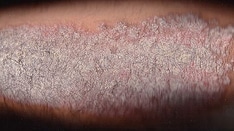
Psoriasis is a complex, chronic, multifactorial, inflammatory disease that involves hyperproliferation of the keratinocytes in the epidermis, with an increase in the epidermal cell turnover rate (see the image below). Environmental, genetic, and immunologic factors appear to play a role. The disease most commonly manifests on the skin of the elbows, knees, scalp, lumbosacral areas, intergluteal clefts, and glans penis. In up to 30% of patients, the joints are also affected.
Treatment is based on surface areas of involvement, body site(s) affected, the presence or absence of arthritis, and the thickness of the plaques and scale.
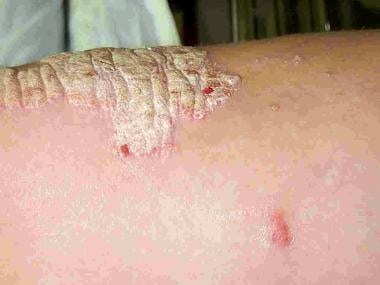 Plaque psoriasis is raised, roughened, and covered with white or silver scale with underlying erythema. Contributed by Randy Park, MD.
See Psoriasis: Manifestations, Management Options, and Mimics, a Critical Images slideshow, to help recognize the major psoriasis subtypes and distinguish them from other skin lesions.
Signs and symptoms
Signs and symptoms of psoriasis may include the following:
-
Worsening of a long-term erythematous scaly area
-
Sudden onset of many small areas of scaly redness
-
Recent streptococcal throat infection, viral infection, immunization, use of antimalarial drug, or trauma
-
Pain (especially in erythrodermic psoriasis and in some cases of traumatized plaques or in the joints affected by psoriatic arthritis)
-
Pruritus (especially in eruptive, guttate psoriasis)
-
Afebrile (except in pustular or erythrodermic psoriasis, in which the patient may have high fever)
-
Dystrophic nails, which may resemble onychomycosis
-
Long-term, steroid-responsive rash with recent presentation of joint pain
-
Joint pain (psoriatic arthritis) without any visible skin findings
-
Conjunctivitis or blepharitis
See Clinical Presentation for more detail.
Diagnosis
The diagnosis of psoriasis is clinical, and the type of psoriasis present affects the physical examination findings.
Types of psoriasis
Common types of psoriasis include the following:
-
Chronic stationary psoriasis (psoriasis vulgaris): Most common type of psoriasis; involves the scalp, extensor surfaces, genitals, umbilicus, and lumbosacral and retroauricular regions
-
Plaque psoriasis: Most commonly affects the extensor surfaces of the knees, elbows, scalp, and trunk
-
Guttate psoriasis: Presents predominantly on the trunk; frequently appears suddenly, 2-3 weeks after an upper respiratory tract infection with group A beta-hemolytic streptococci; this variant is more likely to itch, sometimes severely
-
Inverse psoriasis: Occurs on the flexural surfaces, armpit, and groin; under the breast; and in the skin folds; this is often misdiagnosed as a fungal infection
-
Pustular psoriasis: Presents on the palms and soles or diffusely over the body
-
Erythrodermic psoriasis: Typically encompasses nearly the entire body surface area with red skin and a diffuse, fine, peeling scale
-
Scalp psoriasis: Affects approximately 50% of patients
-
Nail psoriasis: May be indistinguishable from, and more prone to developing, onychomycosis
-
Psoriatic arthritis: Affects approximately 10-30% of those with skin symptoms; usually in the hands and feet and, occasionally, the large joints
-
Oral psoriasis: May present as severe cheilosis, with extension onto the surrounding skin, crossing the vermillion border
-
Eruptive psoriasis: Involves the upper trunk and upper extremities; most often seen in younger patients
-
Napkin psoriasis: Presence of psoriasis in children's diaper region
-
Linear psoriasis: Psoriasis that occurs within a dermatome
Examination in patients with psoriasis includes the following:
-
Dermatologic: Most commonly, scaling erythematous macules, papules, and plaques; area of skin involvement varies with the form of psoriasis
-
Ocular: Ectropion and trichiasis, conjunctivitis and conjunctival hyperemia, and corneal dryness with punctate keratitis and corneal melt [1] ; blepharitis
-
Musculoskeletal: Stiffness, pain, throbbing, swelling, or tenderness of the joints; distal joints most often affected (eg, fingers, toes, wrists, knees, ankles); may progress to a severe and mutilating arthritis of the hands, especially if treatment has been suboptimal
Testing
There is no specific or diagnostic blood test for psoriasis. Laboratory studies and findings for patients with psoriasis may include the following:
-
Rheumatoid factor level: Negative
-
Erythrocyte sedimentation rate: Usually normal, except in pustular and erythrodermic psoriasis, where it may be elevated along with the white blood cell count
-
Uric acid level: May be elevated in psoriasis (especially in pustular psoriasis)
-
Examination of fluid from pustules: Sterile bacterial culture with neutrophilic infiltrate
-
Fungal studies: Especially important in cases of hand and foot psoriasis that seem to be worsening with the use of topical steroids or to determine if psoriatic nails are also infected with fungus
-
Conjunctival impression cytology: Increased incidence of squamous metaplasia, neutrophil clumping, and snakelike chromatin
The differentiation of psoriatic arthritis from rheumatoid arthritis and gout can be facilitated by the absence of the typical laboratory findings of those conditions.
Consider obtaining the following baseline laboratory studies in patients being initiated on systemic therapies (eg, immunologic inhibitors):
-
CBC count
-
BUN and creatinine levels
-
Liver function tests
-
Hepatitis panel
-
TB screening
-
HIV testing
-
Pregnancy test
Other studies
-
Radiographs of affected joints: Can be helpful in differentiating types of arthritis
-
Joint radiographs: Can facilitate the diagnosis of psoriatic arthritis
-
Bone scans: Can identify joint involvement early
-
Dermatologic biopsy: Can be used to make the diagnosis when some cases of psoriasis are difficult to recognize (eg, pustular forms)
See Workup for more detail.
Management
Pharmacotherapy
Medications used in the management of psoriasis include the following:
-
Topical corticosteroids (eg, triamcinolone acetonide 0.025-0.1% cream, betamethasone 0.025-0.1% cream)
-
Topical aryl hydrocarbon receptor (AhR) agonists (eg, tapinarof)
-
Ophthalmic corticosteroids (eg, prednisolone acetate 1% ophthalmic, dexamethasone ophthalmic)
-
Intramuscular corticosteroids (eg, triamcinolone): Requires caution because the patient may have a significant flare as the medication wears off; 3 months should elapse between injections
-
Intralesional corticosteroids: May be useful for resistant plaques and for the treatment of psoriatic nails
-
Coal tar 0.5-33%
-
Keratolytic agents (eg, anthralin, urea): Use of these medications may facilitate more direct steroid contact with the skin
-
Vitamin D analogs (eg, calcitriol ointment, calcipotriene, calcipotriene and betamethasone topical ointment)
-
Topical retinoids (eg, tazarotene aqueous gel and cream 0.05% and 0.1%)
-
Antimetabolites (eg, methotrexate)
-
Immunomodulators (eg, tacrolimus topical 0.1%, cyclosporine, alefacept, ustekinumab)
-
TNF inhibitors (eg, infliximab, etanercept, adalimumab)
-
Phosphodiesterase-4 inhibitors (eg, apremilast, roflumilast topical)
-
Artificial tears
The American Academy of Dermatology (AAD) guidelines recommend treatment with methotrexate, cyclosporine, and acitretin, with consideration of contraindications and drug interactions. [6]
A 2013 international consensus report on treatment optimization and transitioning for moderate-to-severe plaque psoriasis include the following recommendations [7] :
-
Methotrexate, for as long as it remains effective and well-tolerated
-
Cyclosporine, generally used intermittently for inducing a clinical response with one or several courses over 3-6 months
-
Transition from conventional systemic therapy to a biologic agent, either directly or with an overlap if transitioning is needed due to lack of efficacy, or with a treatment-free interval if transitioning is needed for safety reasons
-
Combination therapy
-
Continuous therapy for patients receiving biologic agents
-
Switching biologic agents: If due to lack of efficacy, perform without a washout period; if for safety reasons, a treatment-free interval may be required
-
Combinations of multiple agents (eg, methotrexate and a biologic) are necessary in some patients but the long-term safety and optimal laboratory monitoring have yet to be defined
Other therapies
Management of psoriasis may also involve the following nondrug therapies:
-
Light therapy with solar or ultraviolet radiation
-
Stress reduction
-
Biofeedback
-
Climatotherapy
-
Adjuncts, such as sunshine, sea bathing, moisturizers, oatmeal baths
-
Punctal occlusion (and ocular lubricants): For keratoconjunctivitis sicca
-
Bandage contact lens: To retard corneal melting
Surgical option
Ocular manifestations such as trichiasis and cicatricial ectropion usually require surgical treatment. Progression of corneal melting, inflammation, and vascularization may require lamellar or penetrating keratoplasty.
See Treatment and Medication for more detail.

Background
Psoriasis is a chronic, noncontagious, multisystem, inflammatory disorder. Patients with psoriasis have a genetic predisposition for the illness, which most commonly manifests itself on the skin of the elbows, knees, scalp, lumbosacral areas, intergluteal clefts, and glans penis. The joints are also affected by psoriasis in up to 30% of patients with the disease. (See Pathophysiology and Etiology.)
Psoriasis has a tendency to wax and wane with flares related to systemic or environmental factors, including life stress events and infection. It impacts quality of life and potentially long-term survival. There should be a higher clinical suspicion for depression in the patient with psoriasis. (See Prognosis.)
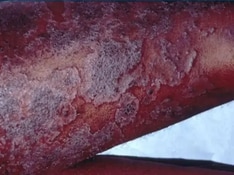
Multiple types of psoriasis are identified, with plaque-type psoriasis, also known as discoid psoriasis, being the most common type. Plaque psoriasis usually presents with plaques on the scalp, trunk, and limbs (see the image below). These plaques appear as focal, raised, inflamed, edematous lesions covered with silvery-white “micaceous” scales. (See Clinical Presentation.)
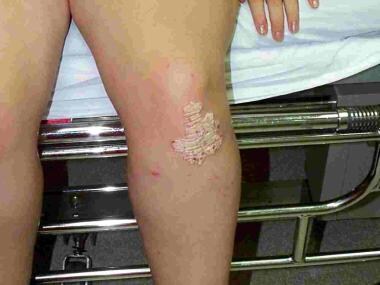 Plaque psoriasis is most common on the extensor surfaces of the knees and elbows. Contributed by Randy Park, MD.
Ocular signs occur in approximately 10% of psoriasis patients, and they are more common in men than in women. Patients with ocular findings almost always have psoriatic skin disease; however, it is rare for the eye to become involved before the skin. [8]
The diagnosis of psoriasis is clinical. (See Workup.) Management of psoriasis may involve topical or systemic medications, light therapy, stress reduction, climatotherapy, and various adjuncts such as sunshine, moisturizers, and salicylic acid. (See Treatment and Management.)
For more information, see the following:
Pathophysiology
Psoriasis is a complex, multifactorial disease that appears to be influenced by genetic and immune-mediated components. This is supported by the successful treatment of psoriasis with immune-mediating, biologic medications.
The pathogenesis of this disease is not completely understood. Multiple theories exist regarding triggers of the disease process including an infectious episode, traumatic insult, and stressful life event. In many patients, no obvious trigger exists at all. However, once triggered, there appears to be substantial leukocyte recruitment to the dermis and epidermis resulting in the characteristic psoriatic plaques.
Specifically, the epidermis is infiltrated by a large number of activated T cells, which appear to be capable of inducing keratinocyte proliferation. This is supported by histologic examination and immunohistochemical staining of psoriatic plaques revealing large populations of T cells within the psoriasis lesions. One report calculated that a patient with 20% body surface area affected with psoriasis lesions has around 8 billion blood circulating T cells compared with approximately 20 billion T cells located in the dermis and epidermis of psoriasis plaques. [9]
Ultimately, a ramped-up, deregulated inflammatory process ensues with a large production of various cytokines (eg, tumor necrosis factor-α [TNF-α], interferon-gamma, interleukin-12). Many of the clinical features of psoriasis are explained by the large production of such mediators. Interestingly, elevated levels of TNF-α specifically are found to correlate with flares of psoriasis.
One study adds further support that T-cell hyperactivity and the resulting proinflammatory mediators (in this case IL-17/23) play a major role in the pathogenesis of psoriasis. [10]
Key findings in the affected skin of patients with psoriasis include vascular engorgement due to superficial blood vessel dilation and altered epidermal cell cycle. Epidermal hyperplasia leads to an accelerated cell turnover rate (from 23 d to 3-5 d), leading to improper cell maturation.
Cells that normally lose their nuclei in the stratum granulosum retain their nuclei, a condition known as parakeratosis. In addition to parakeratosis, affected epidermal cells fail to release adequate levels of lipids, which normally cement adhesions of corneocytes. Subsequently, poorly adherent stratum corneum is formed leading to the flaking, scaly presentation of psoriasis lesions, the surface of which often resembles silver scales.
Conjunctival impression cytology demonstrated a higher incidence of squamous metaplasia, neutrophil clumping, and nuclear chromatin changes in patients with psoriasis. [11]
Etiology
Psoriasis involves hyperproliferation of the keratinocytes in the epidermis, with an increase in the epidermal cell turnover rate. (See Pathophysiology.) The cause of the loss of control of keratinocyte turnover is unknown. However, environmental, genetic, and immunologic factors appear to play a role.
Environmental factors
Many factors besides stress have also been observed to trigger exacerbations, including cold, trauma, infections (eg, streptococcal, staphylococcal, human immunodeficiency virus), alcohol, and drugs (eg, iodides, steroid withdrawal, aspirin, lithium, beta-blockers, botulinum A, antimalarials). One study showed an increased incidence of psoriasis in patients with chronic gingivitis. Satisfactory treatment of the gingivitis led to improved control of the psoriasis but did not influence longterm incidence, highlighting the multifactorial and genetic influences of this disease. [12]
Hot weather, sunlight, and pregnancy may be beneficial, although the latter is not universal. Perceived stress can exacerbate psoriasis. Some authors suggest that psoriasis is a stress-related disease and offer findings of increased concentrations of neurotransmitters in psoriatic plaques.
Genetic factors
Patients with psoriasis have a genetic predisposition for the disease. The gene locus is determined. The triggering event may be unknown in most cases, but it is likely immunologic. The first lesion commonly appears after an upper respiratory tract infection.
Psoriasis is associated with certain human leukocyte antigen (HLA) alleles, the strongest being human leukocyte antigen Cw6 (HLA-Cw6). In some families, psoriasis is an autosomal dominant trait. Additional HLA antigens that have shown associations with psoriasis and psoriatic subtypes include HLA-B27, HLA-B13, HLA-B17, and HLA-DR7. [13]
A multicenter meta-analysis confirmed that deletion of 2 late cornified envelope (LCE) genes, LCE3C and LCE3B, is a common genetic factor for susceptibility to psoriasis in different populations. [14]
Obesity is another factor associated with psoriasis. Whether it is related to weight alone, genetic predisposition to obesity, or a combination of the 2 is not certain. Onset or worsening of psoriasis with weight gain and/or improvement with weight loss is observed.
Immunologic factors
Evidence suggests that psoriasis is an autoimmune disease. Studies show high levels of dermal and circulating TNF-α. Treatment with TNF-α inhibitors is often successful. Psoriatic lesions are associated with increased activity of T cells in the underlying skin.
Psoriasis is related to excess T-cell activity. Experimental models can be induced by stimulation with streptococcal superantigen, which cross-reacts with dermal collagen. This small peptide has been shown to cause increased activity among T cells in patients with psoriasis but not in control groups. Some of the newer drugs used to treat severe psoriasis directly modify the function of lymphocytes.
Also of significance is that 2.5% of those with HIV develop worsening psoriasis with decreasing CD4 counts. This is paradoxical, in that the leading hypothesis on the pathogenesis of psoriasis supports T-cell hyperactivity and treatments geared to reduce T-cell counts help reduce psoriasis severity. This finding is possibly explained by a decrease in CD4 T cells, which leads to overactivity of CD8 T cells, which drives the worsening psoriasis. The HIV genome may drive keratinocyte proliferation directly.
HIV associated with opportunistic infections may see increased frequency of superantigen exposure leading to similar cascades as above mentioned.
Guttate psoriasis often appears following certain immunologically active events, such as streptococcal pharyngitis, cessation of steroid therapy, and use of antimalarial drugs.
Epidemiology
According to the National Institutes of Health (NIH), approximately 2.2% of the United States population has psoriasis. Internationally, the incidence of psoriasis varies dramatically. A study of 26,000 South American Indians did not reveal a single case of psoriasis, whereas in the Faeroe Islands, an incidence of 2.8% was observed. Overall, approximately 2-3% of people are affected by psoriasis worldwide. Psoriasis can begin at any age, yet there is a bimodal peak between age 20-30 years and 50-60 years. Approximately 10-15% of new cases begin in children younger than 10 years. The median age at onset is 28 years.
Psoriasis appears to be slightly more prevalent among women than among men; however, men are thought to be more likely to experience the ocular disease. Psoriasis is slightly more common in women than in men.
The incidence of psoriasis is dependent on the climate and genetic heritage of the population. It is less common in the tropics and in dark-skinned persons. Psoriasis prevalence in African Americans is 1.3% compared with 2.5% in whites. [15]
Psoriasis, even severe psoriasis, may occur in the pediatric age group, with a prevalence of 0.5-2% of children. Both biologic and immunomodulating therapies may be used safely and effectively. [16]
Prognosis
Although psoriasis is usually benign, it is a lifelong illness with remissions and exacerbations and is sometimes refractory to treatment. It progresses to arthritis in about 10% of cases. About 17-55% of patients experience remissions of varying lengths.
Mild psoriasis does not appear to increase risk of death. [17] However, men with severe psoriasis died 3.5 years earlier compared with men without the disease. Women with severe psoriasis died 4.4 years earlier compared with women without the disease. [17]
Psoriasis is associated with smoking, alcohol, metabolic syndrome, lymphoma, depression, suicide, potentially harmful drug and light therapies, and possibly melanoma and nonmelanoma skin cancers.
In a population-based cross-sectional study of 9035 psoriasis patients and 90,350 matched controls without psoriasis, those with more extensive psoriatic skin disease were at greater risk for major medical comorbidities, including heart and blood vessel disease, chronic lung disease, diabetes, kidney disease, joint problems, and other health conditions. [18, 19] Overall, the risk for any other type of serious illness was 11% higher for people with mild psoriasis, 15% higher for patients with moderate psoriasis, and 35% higher for those with severe psoriasis. [18, 19]
Heart disease
A systematic review of 90 studies confirmed that patients with psoriasis had a higher risk of ischemic heart disease, stroke, and peripheral arterial disease but also a greater prevalence of risk factors for cardiovascular disease, compared with controls. The authors concluded that large prospective studies with long-term followup are required to determine whether psoriasis is an independent risk factor for vascular disease or is merely associated with known risk factors. [20] Another study identified psoriasis as an independent risk factor for cardiovascular disease in women, especially if they had psoriatic arthritis and suffered from psoriasis for a longer time period (>9 y). [21]
Hypertension
In a population-based cross-sectional study of 1322 hypertensive patients with psoriasis and 11,977 controls without psoriasis, Takeshita et al found that patients with psoriasis were more likely to suffer from uncontrolled hypertension than those without psoriasis. [22, 23] Patients with moderate-to-severe psoriasis affecting more than 3% of their body surface area were at the greatest risk.
The dose-response relation between uncontrolled hypertension and psoriasis severity remained significant after adjustment for age, sex, body mass index, smoking status, alcohol use, comorbid conditions, and current use of antihypertensive medications and nonsteroidal anti-inflammatory drugs, with odds ratios of 1.20 (95% confidence interval [CI], 0.99-1.45) for moderate psoriasis and 1.48 (95% CI, 1.08-2.04) for severe psoriasis. [23]
Kidney disease
Severe psoriasis was associated with a greatly increased risk of chronic kidney disease (CKD) in a recent study of more than 800,000 patients, including 142,883 with psoriasis, 7354 with severe psoriasis, and 689,702 without psoriasis. After adjustment for age, sex, cardiovascular disease, diabetes mellitus, hyperlipidemia, hypertension, use of nonsteroidal anti-inflammatory drugs, and body mass index, the adjusted hazard ratio for CKD among patients with severe psoriasis was 1.93. [24, 25]
In a nested analysis of 8731 psoriasis patients and 87,310 controls, the odds ratio of CKD after adjustment for age, sex, cardiovascular disease, diabetes, hypertension, hyperlipidemia, body mass index, use of nonsteroidal anti-inflammatory drugs, and duration of observation was 1.36 in patients with moderate psoriasis and 1.58 in those with severe psoriasis. The relative risk for CKD was highest in younger patients. [24, 25]
Quality of life
Psoriasis can significantly influence a person’s quality of life. The physical and mental disability experienced with this disease can be comparable or in excess of that found in patients with other chronic illnesses such as cancer, arthritis, hypertension, heart disease, diabetes, and depression. A study by Kurd et al further supports the notion that psoriasis impacts quality of life and potentially long-term survival. [26] There should be a higher clinical suspicion for depression in the patient with psoriasis.
While the clinical presentation of psoriasis, and whatever improvements are made during therapy, is usually measured using the PASI (Psoriasis Area and Severity Index) score, measurement of the effect on the quality of life of the psoriasis patient may be better assessed by the DLQI (Dermatology Life Quality Index) or the CDLQI (Children’s Dermatology Life Quality Index). Measurements using these tools generally show improved quality of life with more aggressive treatment such as systemic agents. [27, 28]
Studies show that psoriasis of the palms and soles tend to have greater impact on the patient’s quality of life compared to those with more extensive psoriatic involvement not involving the palms and soles. [29, 30]
Patient Education
Dry eye and its manifestations may be present. Avoiding drying conditions and using lubricants can be effective. Patient recognition of these symptoms is vital for effective early treatment of this disease. Most cases of psoriasis can be controlled at a tolerable level with the regular application of care measures.
For patient education resources, see the Psoriasis Center, as well as Psoriasis, What Is Psoriasis?, Types of Psoriasis, Nail Psoriasis, and Understanding Psoriasis Medications.
-
Plaque psoriasis is raised, roughened, and covered with white or silver scale with underlying erythema. Contributed by Randy Park, MD.
-
Guttate psoriasis erupted in this patient after topical steroid therapy was withdrawn during a pregnancy. Contributed by Randy Park, MD.
-
Plaque psoriasis is most common on the extensor surfaces of the knees and elbows. Contributed by Randy Park, MD.
-
Nail psoriasis. Pits, distal onycholysis (nail separation), and brownish staining ("oil spots") are classic nail findings
-
Inverse psoriasis. Occurring in skin folds, this will often lack the scale seen in other locations.
-
Pustular psoriasis of the soles. This may be confined to the hands and feet (Acrodermatitis Continua of Hallepeau) or may be part of a generalized pustular psoriasis (Von Zumbusch disease)
Tables

What would you like to print?
- Overview
- Presentation
- DDx
- Workup
- Treatment
- Guidelines
- Medication
- Medication Summary
- Topical Corticosteroids
- AhR Agonists
- Ophthalmic Corticosteroids
- Coal Tar
- Keratolytic Agents
- Vitamin D Analogs
- Topical Retinoids
- Antimetabolites
- Immunomodulators
- Tumor Necrosis Factor Inhibitors
- Phosphodiesterase-4 Enzyme Inhibitors
- PDE-4 Inhibitors, Topical
- Interleukin Inhibitors
- Topical Combinations
- Injectable Corticosteroids
- Ophthalmic agents, Miscellaneous
- Show All
- Questions & Answers
- Media Gallery
- References