Continually Updated Clinical Reference
 
 
  All Sources     eMedicine     Medscape     Drug Reference     MEDLINE
 
eMedicine - Acute Multifocal Placoid Pigment Epitheliopathy : Article by

Quick Find
Authors & Editors
Introduction
Clinical
Differentials
Workup
Treatment
Medication
Follow-up
Miscellaneous
Acknowledgments
Multimedia
References

Related Articles
Multifocal Choroidopathy Syndromes

Neuroretinitis, Diffuse Unilateral Subacute

Sarcoidosis

Toxoplasmosis

Vogt-Koyanagi-Harada Disease

White Dot Syndromes


Patient Education
Click here for patient education.


Author: Lakshmana M Kooragayala, MD, Vitreo-retinal Surgeon, Marietta Eye Clinic

Lakshmana M Kooragayala is a member of the following medical societies: American Academy of Ophthalmology, American Society of Retina Specialists, and Medical Association of Georgia

Editors: Andrew A Dahl, MD, Director of Ophthalmology Teaching, Mid-Hudson Family Practice Institute; Assistant Professor of Surgery (Ophthalmology), New York College of Medicine; Francisco Talavera, PharmD, PhD, Senior Pharmacy Editor, eMedicine; R Christopher Walton, MD, Professor, Director of Uveitis and Ocular Inflammatory Diseases Service, Assistant Department of Ophthalmology, Assistant Dean for Graduate Medical Education and Continuing Education, University of Tennessee College of Medicine; Consulting Staff, Regional Medical Center, Memphis Veterans Affairs Medical Center, St Jude Children's Research Hospital; Lance L Brown, OD, MD, Ophthalmologist, Affiliated With Freeman Hospital and St John's Hospital, Regional Eye Center, Joplin, Missouri; Hampton Roy Sr, MD, Associate Clinical Professor, Department of Ophthalmology, University of Arkansas for Medical Sciences

Author and Editor Disclosure

Synonyms and related keywords: acute posterior multifocal placoid pigment epitheliopathy, APMPPE, acute multifocal posterior placoid pigment epitheliopathy, AMPPPE, AMPPE, acute placoid pigment epitheliopathy

Background

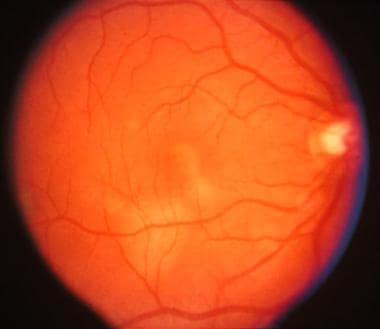
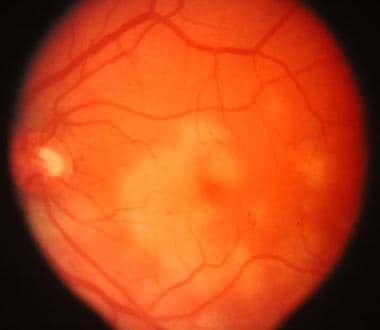
First described by Gass in 1968, acute posterior multifocal placoid pigment epitheliopathy (APMPPE) is an acquired inflammatory disorder affecting the retina, retinal pigment epithelium, and choroid of otherwise young healthy adults.1 The disease is self-limited and is characterized by multiple yellow-white placoid subretinal lesions of the posterior pole. The lesions are frequently bilateral and in various stages of evolution, typically resolving in weeks to months and leaving circumscribed areas of retinal pigment epithelial disturbance.
Visual acuity may be affected significantly if the macula is involved, but recovery is the rule with or without systemic therapy, with 80% of those eyes affected achieving a visual acuity of 20/40 or better. The cause is unknown but believed to be a hypersensitivity-induced vasculitis involving not only terminal choroidal lobules but also diffuse systemic large and small vessels.

Pathophysiology

The pathophysiology of APMPPE is somewhat speculative, but the basic underlying mechanism is believed to be an obstructive vasculitis, causing nonperfusion of the terminal choroidal lobules in the posterior pole of the eye and inducing secondary ischemic injury of the overlying retinal pigment epithelium and neuroreceptors, which may be partially transient in nature with variable recovery of function.

Other findings suggestive of vasculitis include episcleritis, erythema nodosum, microvascular nephropathy, thyroiditis, optic neuritis, labyrinthitis, hearing loss, and cerebral angiitis. Meningoencephalitis occasionally has been observed.

Frequency

United States

The incidence and prevalence of APMPPE is unknown. However, since the landmark description of Gass, APMPPE has been reported frequently and widely from ophthalmic centers, primarily in the United States and Western Europe. Most US patients reported in the literature reside in the northern and midwestern states.

International

Reports in the international literature have included patients from northwestern European countries, such as England, Scotland, France, Belgium, the Netherlands, and Denmark. Several reports have originated from Japan. Reports from other geographic areas have been sparse.

Mortality/Morbidity

APMPPE usually affects healthy adults, and, other than ocular involvement, systemic manifestations are relatively uncommon. When they do occur, many systemic manifestations are usually mild and transient in nature; however, the presence of cerebral vasculitis has been associated with permanent neurologic sequelae, such as hemiparesis and even death from intracerebral edema and brain herniation in rare instances.

Race

Almost 80% of the recorded cases include whites, with the remainder being Japanese, African American, Nepalese, and from the Indian subcontinent. Whether this racial distribution represents a predilection of APMPPE for whites or a reporting bias is unclear.

Sex

Earlier reports of APMPPE suggested a slight preponderance of women with this disease, but more recent publications suggest no sexual predilection, with equal frequency between both men and women.

Age

The mean age of onset is approximately 27 years. The documented age range of onset is 7-66 years. The most frequent age range of occurrence of APMPPE is in those patients aged 16-40 years, representing approximately 85% of cases. About 50% of patients present in the third decade of life.


History

  • Prodromal symptoms
    • Prior viral or flulike syndrome - Occurs in approximately one third of patients; symptoms include fever, cough, swollen lymph glands, nausea, vomiting, myalgia, malaise, muscle and joint tenderness
    • Moderate-to-severe headache
    • Neurologic symptoms (rare) - Transient aphasia, numbness and weakness of extremities, feelings of clumsiness
  • Early stage
    • Acute decrease in visual acuity
    • Blotchy scotomata
    • Photopsia
    • Metamorphopsia/micropsia
    • Photophobia
    • Conjunctival injection/episcleritis (rare)
  • Late stage
    • Mild visual impairment (20/25 to 20/40), common
    • Significant visual loss (20/200), rare

Physical

Patients should have a complete eye examination, including visual acuity, pupillary reactions, slit lamp examination, and dilated indirect ophthalmoscopy.

  • Early stage
    • Visual acuity may be normal; if the macula is involved, vision can decrease to 20/200 within days after onset.
    • Extraocular muscle function is normal unless cerebral vasculitis develops.
    • No relative afferent pupillary defect is present.
    • Conjunctivitis or episcleritis is rarely present.
    • If present, anterior chamber reaction usually is mild, although fibrinous inflammation has been noted.
    • Vitreous cells may be found in up to 50% of eyes that are affected, but it is usually mild if present.
  • Retinal findings are the main feature of the disease.
    • Multiple subretinal placoid yellow-white lesions are seen in both eyes. In some cases, the lesions are unilateral with involvement of the second eye either within a short period of time or after an extended period. New lesions may occur in the affected eye as old lesions begin their resolution.
    • Rarely, a well-demarcated serous retinal detachment may develop in the posterior retina and rarely located anterior to the equator.
  • Optic nerve involvement
    • Blurring of disc margins, hyperemia, edema, and superficial hemorrhages may be found.
    • Papillitis and optic neuritis are a less frequent occurrence.
    • Venous compression within the optic nerve may lead to retinal vein distension and, rarely, to central retinal vein occlusion.
  • Late stage
    • Individual placoid lesions resolve over several weeks as a natural course, along with other signs of inflammation.
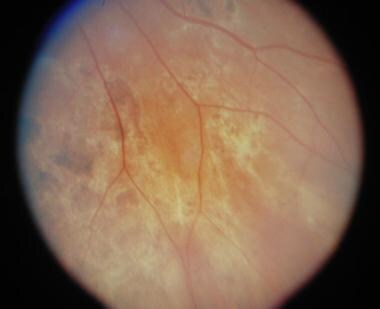
    • Resolution of the placoid lesions is characterized by well-demarcated areas of retinal pigment epithelial loss with presence of diffuse fine foci of hyperplasia, along with similar choroidal findings.
    • Long-term retinal pigment epithelium (RPE) changes may continue to develop long after recovery.
    • In most instances, the visual acuity returns to 20/30 or better; initial visual recovery is rapid, but final recovery may take up to 6 months.
  • Recurrences
    • APMPPE tends to occur bilaterally, although both eyes may not be affected at the same time.
    • Long-term follow-up studies suggest that recurrences may develop in up to 50% of patients.
  • Systemic manifestations (believed to result from diffuse multisystem vasculitis)
    • Erythema nodosum
    • Thyroiditis
    • Microvascular nephropathy
    • Neurologic manifestations include cerebral vasculitis, transient ischemic attacks, fixed neurologic deficits, transient or permanent low-tone hearing loss, vertigo, labyrinthitis, and meningoencephalitis.
  • Rare ocular manifestations
    • Perilimbal corneal stromal infiltrates
    • Serous retinal detachment
    • Retinal periphlebitis
    • Retinal venous dilation and tortuosity
    • Ciliary flush
    • Corneal edema
    • Limbal corneal neovascularization
    • Limbal corneal thinning
    • Anterior and posterior synechiae
    • Koeppe nodules
    • Relative afferent pupillary defect

Causes

  • APMPPE has been known to occur after different conditions or in conjunction with a broad variety of disorders, as follows:
    • Tuberculosis exposure
    • Sarcoidosis
    • Mumps
    • Lyme disease
    • Nephritis
    • Hepatitis B vaccination
    • Group A streptococcal infection
    • Swine flu vaccination
    • Tuberculin skin testing
    • Penicillin therapy
    • Thyroiditis
    • Erythromycin therapy
    • Toxoplasmosis
    • Adenovirus 5 infection
    • Use of oral contraceptives
    • Use of hormone replacements
    • Clear cell renal cell carcinoma
    • Systemic necrotizing vasculitis
    • Ulcerative colitis
    • Meningococcal C conjugate vaccine
    • Adenovirus infection
  • The actual cause of APMPPE is not known. Approximately one third of patients in some series have a history of recent viral illness with a flulike syndrome, upper respiratory infection, or other systemic illness several days to a few weeks before appearance of the ocular lesions. Fever, headache, malaise, gastrointestinal, or upper respiratory symptoms may be preceding symptoms.
  • Since APMPPE seems to occur after diverse infectious diseases and other stimuli, many investigators believe that it is likely an immune disorder. A higher frequency of human leukocyte antigen B7 (HLA-B7) and human leukocyte antigen DR2 (HLA-DR2) have been reported, suggesting an inherited tendency for the disorder, and that several infectious agents and or other triggers may be the stimulus of APMPPE in susceptible individuals. The general consensus is that the systemic and ocular causes of APMPPE may be a generalized vasculitis leading to choroidal lobular nonperfusion.


Multifocal Choroidopathy Syndromes
Neuroretinitis, Diffuse Unilateral Subacute
Sarcoidosis
Toxoplasmosis
Vogt-Koyanagi-Harada Disease
White Dot Syndromes

Other Problems to be Considered

Serpiginous choroidopathy
Vitiliginous choroidopathy
Acute retinal pigment epitheliitis
Disseminated embolic choroiditis
Focal exudative choroiditis
Hodgkin disease
Other causes of vasculitis (eg, giant cell arteritis, Takayasu disease)


Lab Studies

  • APMPPE is diagnosed from its typical clinical appearance and disease course. No test is pathognomonic or diagnostic for this disease.
  • The following tests may be ordered to help rule out other diseases that may have somewhat similar findings:
    • Antinuclear antibody (ANA)
    • Antineutrophil cytoplasmic antibodies (ANCA)
    • Rheumatoid factor
    • Angiotensin-converting enzyme (ACE)
    • Rapid plasma reagin (RPR)
    • Purified protein derivative (PPD) skin test
    • Anergy panel
    • Chest x-ray
    • Complete blood count (CBC)
    • Sedimentation rate
    • Lyme disease titers
    • Cytomegalovirus (CMV) antibodies
    • Anticardiolipin antibodies

Imaging Studies

  • A CT scan or MRI is indicated in those patients with severe headache or CNS symptoms.
  • A cerebral arteriogram may be indicated when cerebral vasculitis is suspected.

Other Tests

  • Studies that may assist in the diagnosis of APMPPE include the following:
    • Lumbar puncture: Lymphocytic pleocytosis and elevated protein frequently present in spinal fluid if headache is present.
    • Urinalysis: Transient proteinuria, casts, and lymphocytes may indicate a subclinical microvascular nephropathy.
  • Fluorescein angiography
    • Early lesions: Characteristic findings of early hypofluorescence of the lesions are followed by later hyperfluorescence with or without central staining.
    • Older lesions: Such lesions may show window defects in RPE.
  • Indocyanine green (ICG) angiography
    • Early lesions: Numerous round hypofluorescent choroidal defects frequently outnumber those seen on fluorescein angiography. Larger choroidal vessels can be visualized in the hypofluorescent areas, suggesting nonperfusion of choroidal lobules as the source of the typical APMPPE lesions.
    • Older lesions: Partial or complete resolution of the hypofluorescent choroidal areas occurs, and the choroidal findings observed with ICG angiography disappear or resolve earlier than fluorescein angiographic findings. In resolution, the lesions observed with ICG angiography may remain identical to those seen ophthalmoscopically and to the fluorescein angiographic changes.
  • Electroencephalography may show diffuse slowing of wave patterns.
  • Electroretinogram (ERG) findings may be minimally subnormal.
  • Electro-oculogram (EOG) findings may have substantial reduction of light-to-dark ratio studies, which show diffuse functional abnormality of the RPE. Functional recovery may be slow, and, in some instances, it may take up to a year for full recovery.
  • Visual fields may show paracentral scotomata early; some visual defects may be permanent.
  • Dark adaptation may show delayed in the acute phase, which can return to normal with time after recovery from the acute lesions.
  • Optical coherence tomography  
    • In the acute phases, optical coherence tomography (OCT) reveals a mild hyperreflective area above the RPE and, in the later phases, a nodular hyperreflective lesion on the plane of the RPE.
    • These hyperreflective lesions may indicate inflammatory tissue and inflammatory cells or the presence of ischemic edema in the outer retinal layers.
    • Ultra-high resolution OCT of the macula demonstrates early photoreceptor disruption, likely representing early degenerative changes of the photoreceptors. Healed cases continue to demonstrate areas of severe photoreceptor atrophy. Loss of the RPE is also evident during healing and after disease resolution.
  • The Stiles-Crawford effect shows early profound disorientation of the photoreceptors.

Histologic Findings

No histopathology of ocular tissue has been published. Cerebral pathology of a patient with cerebral vasculitis showed granulomatous changes in the vessel wall with giant cells.


Medical Care

The treatment of APMPPE is somewhat controversial; however, the consensus is that no treatment seems to alter the course of the ocular lesions. The fundus lesions appear to run a relatively short self-limited course, which probably results from a one-time insult to the capillaries comprising the choroidal lobules.

Surgical Care

In cases complicated by subretinal neovascularization, laser photocoagulation may be useful.

Consultations

Consultations may be indicated if the diagnosis is not clear or if a systemic manifestation indicates such a need (an infrequent occurrence).

  • Neurologist/neurosurgeon - CNS symptoms
  • Urologist - Urinalysis findings
  • Dermatologist - Skin findings
  • Rheumatologist - Serum immunologic abnormalities
  • Infectious disease specialist

Diet

No dietary restrictions are indicated.

Activity

No limitations of visual or physical activities are indicated unless systemic manifestations impose limitation of physical activities.


In most cases, the lesions resolve spontaneously, and no therapy is required. Some authors have used corticosteroids to treat the ocular disease and/or any severe systemic manifestations. However, there is no evidence that treatment with corticosteroids affects the visual outcome in patients with APMPPE. Various routes of administration (eg, topical, oral, pulse intravenous, sub-Tenon injection) and dosages of corticosteroids have been used. Cycloplegics may be useful for severe iritis, an infrequent finding.

Drug Category: Corticosteroids

Suppress ocular and systemic inflammation.

Drug NamePrednisone (Deltasone, Orasone, Meticorten)
DescriptionMay be indicated when signs of systemic vasculitis are present, given either orally or by pulse IV therapy. May decrease inflammation by reversing increased capillary permeability and suppressing PMN activity.
Adult DoseInitially, 40-60 mg/d PO in single or divided dose, taper as indicated; up to 1 g methylprednisolone infused in solution over half-hour period; topically, 1 gtt up to qh while awake
Pediatric DoseUp to 2 mg/kg/d PO, depending upon indication and severity
ContraindicationsDocumented hypersensitivity; microbial infection (particularly tuberculosis); peptic ulcer disease; hepatic dysfunction; use with caution in patients with diabetes, hypertension, congestive heart failure, and renal failure
InteractionsCoadministration with estrogens may decrease prednisone clearance; concurrent use with digoxin may cause digitalis toxicity secondary to hypokalemia; phenobarbital, phenytoin, and rifampin may increase metabolism of glucocorticoids (consider increasing maintenance dose); monitor for hypokalemia with coadministration of diuretics
PregnancyB - Fetal risk not confirmed in studies in humans but has been shown in some studies in animals
PrecautionsAbrupt discontinuation of glucocorticoids may cause adrenal crisis; hyperglycemia, edema, osteonecrosis, myopathy, peptic ulcer disease, hypokalemia, osteoporosis, euphoria, psychosis, myasthenia gravis, growth suppression, and infections may occur with glucocorticoid use


Further Outpatient Care

  • Monitor the clinical course every 1-2 weeks and for onset of systemic complications.

In/Out Patient Meds

  • Conservative management is recommended; treat ocular complications or systemic vasculitis as indicated.

Complications

  • Subretinal neovascularization
  • Retinal vein occlusion
  • Death or other permanent neurologic sequelae from cerebral vasculitis; may include muscle paralysis and permanent hearing loss

Prognosis

  • In many patients, visual acuity returns to the range of 20/20 to 20/40; however, a small number of patients have permanent visual loss due to subretinal neovascularization.
  • A few patients have long-term functional ocular symptoms (eg, scotomata).
  • An occasional death has been reported following an episode of cerebral vasculitis.
  • Other ocular and systemic manifestations of vasculitis usually are self-limited and non–life threatening.
  • Chorioretinal scarring usually is associated with few visual symptoms.

Patient Education

  • Reassure the patient that in spite of significant vision loss, the visual decrease is usually transient and many patients regain relatively good vision.


Medical/Legal Pitfalls

  • Failure to recognize cerebral vasculitis to prevent permanent neurologic complications


The authors and editors of eMedicine gratefully acknowledge the contributions of previous coauthor, James P Ganley, MD, PharmD, DrPH, to the development and writing of this article.


Media file 1:  Posterior pole of right eye. Early acute posterior multifocal placoid pigment epitheliopathy lesion shows yellowish-white placoid lesion involving the macula and an area just inferior temporal to the macula.
Click to see larger pictureClick to see detailView Full Size Image
Media type:  Photo

Media file 2:  Fluorescein angiography of same patient as in Media file 1 in the venous phase showing peripheral hypofluorescence and central leakage of the lesion inferior temporal to the macula.
Click to see larger pictureClick to see detailView Full Size Image
Media type:  Photo

Media file 3:  Posterior pole of left eye of same patient as in Media file 1, showing acute posterior pole placoid lesion.
Click to see larger pictureClick to see detailView Full Size Image
Media type:  Photo

Media file 4:  Fluorescein angiogram of same patient as in Media file 1 in late phase showing late staining of placoid areas.
Click to see larger pictureClick to see detailView Full Size Image
Media type:  Photo

Media file 5:  Inferior nasal of right eye of same patient as in Media file 1 approximately 2 months later, showing scattered areas of retinal pigment epithelium atrophy and hyperplasia.
Click to see larger pictureClick to see detailView Full Size Image
Media type:  Photo

Media file 6:  Fluorescein angiography of same patient as in Media file 1 in late phase showing areas of late staining.
Click to see larger pictureClick to see detailView Full Size Image
Media type:  Photo

Media file 7:  This image shows localized scleritis superiorly.
Click to see larger pictureClick to see detailView Full Size Image
Media type:  Photo


  1. Gass JD. Acute posterior multifocal placoid pigment epitheliopathy. Arch Ophthalmol. Aug 1968;80(2):177-85. [Medline].
  2. Bugnone AN, Hartker F, Shapiro M, Pineless HS, Velez G. Acute and chronic brain infarcts on MR imaging in a 20-year-old woman with acute posterior multifocal placoid pigment epitheliopathy. AJNR Am J Neuroradiol. Jan 2006;27(1):67-9. [Medline][Full Text].
  3. Di Crecchio L, Parodi MB, Saviano S, Ravalico G. Acute posterior multifocal placoid pigment epitheliopathy and ulcerative colitis: a possible association. Acta Ophthalmol Scand. Jun 2001;79(3):319-21. [Medline].
  4. Howe LJ, Woon H, Graham EM, Fitzke F, Bhandari A, Marshall J. Choroidal hypoperfusion in acute posterior multifocal placoid pigment epitheliopathy. An indocyanine green angiography study. Ophthalmology. May 1995;102(5):790-8. [Medline].
  5. Hsu CT, Harlan JB, Goldberg MF, Dunn JP. Acute posterior multifocal placoid pigment epitheliopathy associated with a systemic necrotizing vasculitis. Retina. Feb 2003;23(1):64-8. [Medline].
  6. Lim LL, Watzke RC, Lauer AK, Smith JR. Ocular coherence tomography in acute posterior multifocal placoid pigment epitheliopathy. Clin Experiment Ophthalmol. Nov 2006;34(8):810-2. [Medline].
  7. Lofoco G, Ciucci F, Bardocci A, Quercioli P, Steigerwalt RD Jr, De Gaetano C. Optical coherence tomography findings in a case of acute multifocal posterior placoid pigment epitheliopathy (AMPPPE). Eur J Ophthalmol. Jan-Feb 2005;15(1):143-7. [Medline].
  8. Lowder CY, Foster RE, Gordon SM, Gutman FA. Acute posterior multifocal placoid pigment epitheliopathy after acute group A streptococcal infection. Am J Ophthalmol. Jul 1996;122(1):115-7. [Medline].
  9. Mensah E, Vafidis GC. Acute posterior multifocal placoid pigment epitheliopathy in a 7-year-old girl. J Pediatr Ophthalmol Strabismus. Jul-Aug 2002;39(4):239-41. [Medline].
  10. O'Halloran HS, Berger JR, Lee WB, Robertson DM, Giovannini JA, Krohel GB, et al. Acute multifocal placoid pigment epitheliopathy and central nervous system involvement: nine new cases and a review of the literature. Ophthalmology. May 2001;108(5):861-8. [Medline].
  11. Parmeggiani F, Costagliola C, D'Angelo S, Incorvaia C, Perri P, Sebastiani A. Clear cell renal cell carcinoma associated with bilateral atypical acute posterior multifocal placoid pigment epitheliopathy. Oncology. 2004;66(6):502-9. [Medline].
  12. Ryan SJ, Maumenee AE. Acute posterior multifocal placoid pigment epitheliopathy. Am J Ophthalmol. Dec 1972;74(6):1066-74. [Medline].
  13. Scheufele TA, Witkin AJ, Schocket LS, Rogers AH, Schuman JS, Ko TH, et al. Photoreceptor atrophy in acute posterior multifocal placoid pigment epitheliopathy demonstrated by optical coherence tomography. Retina. Dec 2005;25(8):1109-12. [Medline][Full Text].
  14. Smith CH, Savino PJ, Beck RW, Schatz NJ, Sergott RC. Acute posterior multifocal placoid pigment epitheliopathy and cerebral vasculitis. Arch Neurol. Jan 1983;40(1):48-50. [Medline].
  15. Thomson SP, Roxburgh ST. Acute posterior multifocal placoid pigment epitheliopathy associated with adenovirus infection. Eye. May 2003;17(4):542-4. [Medline].
  16. Uthman I, Najjar DM, Kanj SS, Bashshur Z. Anticardiolipin antibodies in acute multifocal posterior placoid pigment epitheliopathy. Ann Rheum Dis. Jul 2003;62(7):687-8. [Medline].
  17. Wolf MD, Folk JC, Panknen CA, Goeken NE. HLA-B7 and HLA-DR2 antigens and acute posterior multifocal placoid pigment epitheliopathy. Arch Ophthalmol. May 1990;108(5):698-700. [Medline].
  18. Yang DS, Hilford DJ, Conrad D. Acute posterior multifocal placoid pigment epitheliopathy after meningococcal C conjugate vaccine. Clin Experiment Ophthalmol. Apr 2005;33(2):219-21. [Medline].

Acute Multifocal Placoid Pigment Epitheliopathy excerpt

Article Last Updated: Jun 17, 2008