Continually Updated Clinical Reference
 
 
  All Sources     eMedicine     Medscape     Drug Reference     MEDLINE
 
eMedicine - Conjunctivitis, Neonatal : Article by

Quick Find
Authors & Editors
Introduction
Clinical
Differentials
Workup
Treatment
Medication
Follow-up
Miscellaneous
Multimedia
References

Related Articles
Cellulitis, Orbital

Cellulitis, Preseptal

Dacryocystitis

Glaucoma, Primary Congenital

Glaucoma, Secondary Congenital

Keratitis, Bacterial

Keratitis, Fungal

Keratitis, Herpes Simplex

Nasolacrimal Duct, Obstruction


Patient Education
Eye and Vision Center

Pinkeye Overview

Pinkeye Causes

Pinkeye Symptoms

Pinkeye Treatment


Author: Kalpana K Jatla, MD, Fellow in Glaucoma, Department of Ophthalmology, Wills Eye Hospital

Kalpana K Jatla is a member of the following medical societies: American Academy of Ophthalmology

Coauthor(s): Feng Zhao, MD, PhD, Staff Physician, Department of Ophthalmology, Emory Cartersville Medical Center; Robert William Enzenauer, MD, MPH, Professor, Department of Ophthalmology, Hamilton Eye Institute, University of Tennessee Health Science Center

Editors: Gerhard W Cibis, MD, Clinical Professor, Director of Pediatric Ophthalmology Service, Department of Ophthalmology, University of Kansas, Kansas City; Simon K Law, MD, PharmD, Assistant Professor of Ophthalmology, Jules Stein Eye Institute; Chief of Section of Ophthalmology Surgical Services, Department of Veterans Affairs Healthcare Center, West Los Angeles; Christopher J Rapuano, MD, Professor, Department of Ophthalmology, Jefferson Medical College; Co-Chairman of the Cornea Service, Co-Chairman of Refractive Surgery Department, Wills Eye Hospital; Lance L Brown, OD, MD, Ophthalmologist, Affiliated With Freeman Hospital and St John's Hospital, Regional Eye Center, Joplin, Missouri; Hampton Roy Sr, MD, Associate Clinical Professor, Department of Ophthalmology, University of Arkansas for Medical Sciences

Author and Editor Disclosure

Synonyms and related keywords: ophthalmia neonatorum, neonatal conjunctivitis, infectious conjunctivitis, conjunctiva

Background

By definition, neonatal conjunctivitis presents during the first month of life and may be aseptic or septic. Aseptic neonatal conjunctivitis most often is a chemical conjunctivitis that is induced by silver nitrate solution, which is used for prophylaxis of infectious conjunctivitis. Chemical conjunctivitis is not as common anymore because of the use of erythromycin ointment in place of silver nitrate solution for the prophylaxis of infectious conjunctivitis. Bacterial, chlamydial, and viral infections are major causes of septic neonatal conjunctivitis, chlamydia being the most common infectious agent. Infants may acquire these infective agents as they pass through the birth canal during the birth process.
Pathophysiology

The conjunctiva (a thin translucent mucous membrane) can be divided into palpebral, bulbar, and fornical, based on the location. The conjunctiva contains nonkeratinizing, squamous epithelium and a thin, richly vascularized substantia propria (containing lymphatic vessels and cells, such as lymphocytes, plasma cells, mast cells, and macrophages). The conjunctiva also has accessory lacrimal glands and goblet cells.

The pathology of neonatal conjunctivitis is influenced by the anatomy of the conjunctival tissues in the newborn. The inflammation of conjunctiva may cause blood vessel dilation, chemosis, and excessive secretion. This reaction tends to be more serious due to the following: lack of immunity, absence of lymphoid tissue in the conjunctiva, and absence of tears at birth.

Frequency

United States

The incidence of infectious neonatal conjunctivitis ranges from 1-2%, depending on the socioeconomic character of the area.

The epidemiology of neonatal conjunctivitis has changed since silver nitrate solution was introduced to prevent gonococcal ophthalmia.

Chlamydia has been reported as the most common infectious agent that causes ophthalmia neonatorum in the United States (incidence is 6.2 per 1000 live births).

In contrast, the incidence of gonococcal ophthalmia neonatorum has been reduced dramatically, from 100 per 1000 live births to 3 per 1000 live births.

International

As in the United States, incidence of ophthalmia neonatorum in many other countries also decreased after silver nitrate solution was used.

In Europe, incidence fell from 10% of births to less than 1%.

The incidence was less than 7 per 1000 live births in 1943 in England.

A higher incidence of ophthalmia neonatorum exists in developing countries. In a Nairobi hospital, the incidences of gonococcal and chlamydial conjunctivitis were 40 per 1000 and 80 per 1000 (per live newborn), respectively. More than 50% of newborns in Nairobi had concurrent gonococcal conjunctivitis. Prophylaxis was not administered at birth in this area. The prevalence of gonorrhea also was high among antenatal attenders in African countries, ranging from 4-15%.

Mortality/Morbidity

Mortality is due to systemic involvement. No published information is available on mortality.

Antibiotics have significantly altered the prognosis of neonatal conjunctivitis, especially with Neisseria gonorrhoeae infection. A previous study showed that from 1906-1911, 24% of children who were admitted to American schools for the blind had a visual disability that resulted from ophthalmia neonatorum. In contrast, only 0.3% of these children were blind secondary to gonococcal conjunctivitis from 1958-1959.

Race

No published information is available on racial differences.

Sex

No published information is available on sex differences.

Age

This condition presents during the first month of life.


History

Although clinical presentations vary with etiology, it is difficult to determine the exact cause of neonatal conjunctivitis on clinical grounds alone. Significant overlap in clinic presentations may be present.

  • Incubation period
    • Chemical conjunctivitis secondary to silver nitrate solution application usually occurs in the first day of life, disappearing spontaneously within 2-4 days.
    • Gonococcal conjunctivitis tends to occur 3-5 days after birth but can present later.
    • Chlamydial conjunctivitis usually has a later onset than gonococcal conjunctivitis; the incubation period is 5-14 days.
    • The incubation period for other nongonococcal, nonchlamydial conjunctivitis is longer according to a previous report.
    • Herpetic conjunctivitis usually occurs within the first 2 weeks after birth.
  • Clinical presentation of gonococcal conjunctivitis
    • Gonococcal conjunctivitis tends to be more severe than other causes of ophthalmia neonatorum; there is a classic presentation of purulent conjunctivitis, which usually is bilateral.
    • Corneal involvement has been reported, including diffuse epithelial edema and ulceration that may progress to perforation of the cornea and endophthalmitis.
    • Patients also may have systemic manifestations (eg, rhinitis, stomatitis, arthritis, meningitis, anorectal infection, septicemia).
  • Clinical presentation of chlamydial conjunctivitis
    • The presentation of chlamydial conjunctivitis may range from mild hyperemia with scant mucoid discharge to eyelid swelling, chemosis, and pseudomembrane formation.
    • Blindness, although rare and much slower to develop than in gonococcal conjunctivitis, is not due to corneal involvement as in gonococcal conjunctivitis; eyelid scarring and pannus (as in trachoma) cause it.
    • A follicular reaction does not occur because newborns have no requisite lymphoid tissue present in the conjunctiva.
    • Like gonococcal conjunctivitis, chlamydial conjunctivitis also may be associated with extraocular involvement, including pneumonitis, otitis, and pharyngeal and rectal colonization.
  • Clinical presentation of neonatal conjunctivitis due to other agents
    • Neonatal conjunctivitis due to other microbial agents usually is milder.
    • Herpes simplex keratoconjunctivitis usually presents in infants with generalized herpes simplex with corneal epithelial involvement or vesicles on the skin (which surround the eye). Serious systemic complications, such as encephalitis, may occur in these neonates due to their poor immunologic response.

Physical

Presentations for different organisms may vary. Typical findings may include erythema and edema of the eyelids and palpebral conjunctiva and/or purulent eye discharge during the external eye exam. Perform a Gram stain conjunctival smear in all cases.

  • Chemical conjunctivitis
    • The clinical picture of chemical conjunctivitis is mild, transient tearing and conjunctival injection.
    • If the 1% silver nitrate used for neonatal conjunctivitis is provided in a large bottle, the solution can evaporate and become concentrated over time. More concentrated silver nitrate solution may result in more severe responses (eg, lid edema, chemosis, exudate, membranes or pseudomembranes, permanent damage to the conjunctiva or the cornea). This problem is obviated by using sealed, single-use ampules. Chemical conjunctivitis is becoming less common because of the substitution of erythromycin ointment in place of silver nitrate.
  • Chlamydial conjunctivitis
    • Patients typically present with unilateral or bilateral watery discharge, which may become more copious and purulent later.
    • Although most cases are mild and self-limited, it occasionally may be severe. Pseudomembranes, thickened palpebral conjunctiva, significant peripheral pannus, and/or corneal opacification may be present.
  • Gonococcal conjunctivitis
    • This type of conjunctivitis is the most serious, usually occurring 24-48 hours following birth. Typically, patients develop a hyperacute conjunctivitis, associated with marked lid edema, chemosis, and purulent discharge.
    • A conjunctival membrane may be present.
    • Corneal ulcer may occur and rapidly progress to perforation, if treatment is delayed.
  • Other bacterial conjunctivitis
    • Various organisms (eg, gram-positive and gram-negative bacteria) have been identified.
    • Classic clinical pictures are lid edema, conjunctival injection, chemosis, and discharge, which are variable and often indistinguishable from signs of other etiologies.
    • Although it rarely causes neonatal conjunctivitis, Pseudomonas can lead to devastating consequences, such as rapid progression to corneal ulceration and perforation; if left untreated, it even can lead to endophthalmitis and subsequent death.
  • Herpetic conjunctivitis
    • This type typically occurs within the first 2 weeks after birth.
    • Ocular involvement may follow systemic herpes infection or vesicular lesions on the skin or lid margins.
    • Patients may present with nonspecific lid edema, moderate conjunctival injection, and nonpurulent and often serosanguineous discharge, which may be unilateral or bilateral.
    • Microdendrites or geographic ulcers, rather than typical dendrites as seen in adults, are the most typical signs of herpetic keratitis in newborns.
    • Conjunctival membrane may be present.

Causes

The etiology can be chemical or microbial. Although several noninfectious and infectious agents can inflame the conjunctiva, the more common causes are silver nitrate chemical conjunctivitis and chlamydial, gonococcal, staphylococcal, and herpetic infections.

  • Silver nitrate solution
    • In 1881, Crede's method of instilling a drop of 2% silver nitrate into a newborn's eyes was a major advance in preventing neonatal conjunctivitis.
    • Silver nitrate is a surface-active chemical, facilitating agglutinate gonococci and inactivating them. Ironically, silver nitrate was later found to be toxic to the conjunctiva, potentially causing a sterile neonatal conjunctivitis.
  • Chlamydia trachomatis
    • This obligate intracellular parasite has been identified as the most common infectious cause of neonatal conjunctivitis.
    • The reservoir of the organism is the maternal cervix or urethra. Infants who are born to infected mothers are at high risk for developing an infection.
  • Neisseria gonorrhoeae
    • This gram-negative diplococcus is potentially the most dangerous and virulent infectious cause of neonatal conjunctivitis.
    • Gonococci have the ability to penetrate intact epithelial cells and to divide rapidly inside the epithelial cells.
    • Gonorrheal conjunctivitis must be absolutely excluded in every case of neonatal conjunctivitis to avoid serious consequences.
  • Other bacteria
    • The most commonly identified gram-positive organisms include Staphylococcus aureus, Streptococcus pneumoniae, Streptococcus viridans, and Staphylococcus epidermidis.
    • Gram-negative organisms, such as Escherichia coli, Klebsiella pneumoniae, Serratia marcescens, and Proteus, Enterobacter, and Pseudomonas species, also have been implicated.
  • Herpes simplex
    • Herpes simplex virus (HSV) can cause neonatal keratoconjunctivitis, but it is rare and is associated most often with a generalized herpes simplex infection.
    • Most infants with such infection acquire the disease during the birth process. Therefore, caesarean delivery usually is considered when active genital disease is recognized at term.


Cellulitis, Orbital
Cellulitis, Preseptal
Dacryocystitis
Glaucoma, Primary Congenital
Glaucoma, Secondary Congenital
Keratitis, Bacterial
Keratitis, Fungal
Keratitis, Herpes Simplex
Nasolacrimal Duct, Obstruction

Other Problems to be Considered

Congenital dacryostenosis


Lab Studies

  • Laboratory studies for neonatal conjunctivitis should include the following:
    • Conjunctival scraping Gram stain and either Giemsa or calcofluor white stains
    • Culture on chocolate agar and/or Thayer-Martin for N gonorrhoeae.
    • Culture on blood agar for other bacteria.
  • Rule out chlamydial infection with a conjunctival scraping Giemsa stain for intracytoplasmic inclusion bodies or, preferably, a direct immunofluorescent antibody assay.
  • A culture for HSV is indicated if a corneal epithelial defect is present or if vesicles are present on the eyelids or other parts of the body, and if the diagnosis cannot be made on ocular examination.

Histologic Findings

Chemical conjunctivitis - Neutrophils, occasional lymphocytes on Gram stain

Bacterial conjunctivitis - Bacteria, neutrophils on Gram stain

Chlamydial conjunctivitis - Neutrophils, lymphocytes, plasma cells on Gram stain; basophilic intracytoplasmic inclusions in epithelial cells on Giemsa stain

Herpetic conjunctivitis - Lymphocytes, plasma cells, multinucleate giant cells on Gram stain; eosinophilic intranuclear inclusions in epithelial cells on Papanicolaou smear


Medical Care

  • Prophylaxis
    • According to the 1997 Red Book, topical 1% silver nitrate, 0.5% erythromycin, and 1% tetracycline are considered equally effective for prophylaxis of ocular gonorrhea infection in newborn infants. Each is available in single-dose tubes.
    • Recent studies indicate that 2.5% povidone-iodine solution also may be useful in preventing neonatal ophthalmia, but a product for this purpose is not commercially available.
    • Silver nitrate appears to be the best agent in areas where the incidence of penicillinase-producing N gonorrhoeae (PPNG) is significant. Neonates born to mothers with active gonococcal infection should receive a single IM injection of aqueous penicillin G.
    • A study showed that topical tetracycline and silver nitrate reduced the incidence of chlamydial ophthalmia neonatorum but did not eradicate the nasopharyngeal colonization or pneumonia. Such treatments possess the potential for not treating disseminated disease, so systemic treatment is required for gonococcal, chlamydial, and herpetic ophthalmia neonatorum.
  • Medical treatment
    • Specific treatment is available for the various causes of neonatal conjunctivitis. Preliminary presumptive treatment pending culture confirmation should be based on the clinical picture and the findings on Gram, Giemsa, and Papanicolaou stains.
    • To confirm the presence of a sexually transmitted disease in the neonate, examine and treat the mother and her sexual partner(s). If necessary, therapy can be modified when the results of culture and sensitivity are known.
    • Bacterial conjunctivitis rarely fails to respond to treatment.
    • Emphasize that prompt treatment of gonococcal conjunctivitis is important, since this organism can penetrate an intact corneal epithelium and rapidly cause corneal ulceration. Because of the rapid progression of gonococcal conjunctivitis, patients with acute neonatal conjunctivitis should be treated for gonococcal conjunctivitis until culture results are available; the treatment is altered according to the laboratory results.
    • The treatment prior to laboratory results should include topical erythromycin ointment and IV or IM third-generation cephalosporin.
    • Pediatric consultation is indicated.
  • Chemical conjunctivitis: Treatment is not necessary. Lubrication with artificial tear preparations may ease mild discomfort.
  • Bacterial conjunctivitis
    • Erythromycin or bacitracin ointment for gram-positive organisms
    • Gentamicin or tobramycin drops for gram-negative organisms
    • Fortified topical antibiotics for Pseudomonas
    • IV penicillin G for N gonorrhoeae
    • Because of the prevalence of penicillin-resistant N gonorrhoeae, the treatment of choice for this organism is topical erythromycin ointment and systemic, third-generation cephalosporin (ceftriaxone 30-50 mg/kg/d in divided doses IV or IM, not to exceed 125 mg).
    • Infants with gonococcal ophthalmia should have their eyes irrigated with saline frequently until the discharge is eliminated. A single dose of cefotaxime (100 mg/kg IV or IM) is an alternative treatment.
  • Chlamydial conjunctivitis
    • This infection is treated with oral erythromycin (50 mg/kg/d divided qid).
    • Topical treatment alone is ineffective. Topical erythromycin ointment may be beneficial as an adjunctive therapy.
    • Since the efficacy of systemic erythromycin therapy is approximately 80%, a second course sometimes is required.
  • Herpetic conjunctivitis
    • Neonates with a suspected herpetic simplex infection should be treated with systemic acyclovir to reduce the chance of a systemic infection.
    • An effective dose is 30 mg/kg/day IV divided tid, but most experts recommend higher doses (45-60 mg/kg/d).
    • The recommended minimal duration is 14 days, but a course as long as 21 days may be required.
    • Infants with neonatal HSV keratitis should receive a topical ophthalmic drug, most commonly 1% trifluridine drops or 3% vidarabine ointment.

Consultations

Pediatrician or pediatric infectious specialist


The goal of pharmacotherapy is to reduce morbidity and to eliminate the infection.

Drug Category: Antimicrobial agents

Suppress the growth of other microorganisms and eventually may destroy them.

Drug NameErythromycin (E-Mycin, Eryc, Ery Tab)
DescriptionTreats C trachomatis infection. Systemic treatment is necessary. Topical antimicrobial therapy not necessary (but may help) if systemic therapy given.
Pediatric DoseSyrup: 50 mg/kg/d PO divided qid for 14 d
0.5% ophthalmic ointment: Apply 0.5-1 cm to each conjunctival sac tid/qid for 3 wk
ContraindicationsDocumented hypersensitivity
InteractionsPotentiates the effects of astemizole, carbamazepine, corticosteroids, cyclosporine, digoxin, ergot alkaloids, terfenadine, theophylline, triazolam, valproate, and warfarin, probably by interfering with cytochrome P450-mediated metabolism of these drugs
PregnancyB - Usually safe but benefits must outweigh the risks.
PrecautionsProlonged use may give rise to overgrowth of nonsusceptible organisms

Drug NameTetracycline, 1% ophthalmic ointment (Sumycin)
DescriptionA bacteriostatic derivative of polycyclic naphthacene carboxamide is an alternative for chlamydial infection.
Pediatric DoseApply 0.5-1 cm to each conjunctival sac qid for 3 wk
ContraindicationsDocumented hypersensitivity
InteractionsMay reduce effects of penicillins
PregnancyD - Unsafe in pregnancy
PrecautionsUse during tooth development (last one half of pregnancy through age 8 y) can cause permanent discoloration of teeth

Drug NamePenicillin G (Pfizerpen)
DescriptionThe choice for penicillin-susceptible N gonorrhoeae infection. Interferes with synthesis of cell wall mucopeptide during active multiplication, resulting in bactericidal activity against susceptible microorganisms.
Pediatric Dose100,000 U/kg/d IV divided qid for 7 d
Topical antibiotic agents are not required (but may be helpful) when systemic therapy given, although saline lavage of the eyes is optional
ContraindicationsDocumented hypersensitivity
InteractionsProbenecid can increase effects of penicillin; coadministration of tetracyclines can decrease effects of penicillin
PregnancyB - Usually safe but benefits must outweigh the risks.
PrecautionsHistory of significant allergies and/or asthma; caution in impaired renal function

Drug NameBacitracin (Baciguent, AK-Tracin)
DescriptionOintment for gram-positive cocci. Prevents transfer of mucopeptides into growing cell wall, inhibiting bacterial growth.
Pediatric DoseApply to each conjunctival sac q4h for 7 d
ContraindicationsDocumented hypersensitivity; vaccinia, varicella, epithelial herpes simplex keratitis, mycobacterial infections, fungal diseases of the eye; patients using steroid combinations after uncomplicated removal of a corneal foreign body
InteractionsNone reported
PregnancyC - Safety for use during pregnancy has not been established.
PrecautionsOphthalmic ointments may delay healing of corneal epithelia; in deep seated infections of the eye, supplement with systemic medications; prolonged use may result in overgrowth of nonsusceptible organisms

Drug NameCeftriaxone (Rocephin)
DescriptionFor penicillinase-producing N gonorrhoeae. Third-generation cephalosporin with broad-spectrum, gram-negative activity; lower efficacy against gram-positive organisms; higher efficacy against resistant organisms. Arrests bacterial growth by binding to one or more penicillin binding proteins.
Pediatric Dose25-50 mg/kg IV/IM qd for 7 d
ContraindicationsDocumented hypersensitivity
InteractionsProbenecid may increase ceftriaxone levels; coadministration with ethacrynic acid, furosemide, and aminoglycosides may increase nephrotoxicity
PregnancyB - Usually safe but benefits must outweigh the risks.
PrecautionsAdjust dose in renal impairment; caution in breast-feeding women and allergy to penicillin

Drug NameGentamicin (Garamycin, Gentacidin)
DescriptionSystemic gentamicin is another alternative for penicillinase-producing N gonorrhoeae. Topical gentamicin also is used for other gram-negative bacterial infections.
Pediatric DoseSystemic use: 5 mg/kg/d IM divided bid for 7 d
Topical use: Apply to each conjunctival sac q4h for 7 d
ContraindicationsDocumented hypersensitivity
InteractionsCoadministration with other aminoglycosides, cephalosporins, penicillins, and amphotericin B may increase nephrotoxicity; aminoglycosides enhance effects of neuromuscular blocking agents thus prolonged respiratory depression may occur
Coadministration with loop diuretics may increase auditory toxicity of aminoglycosides; possible irreversible hearing loss of varying degrees may occur (monitor regularly)
PregnancyC - Safety for use during pregnancy has not been established.
PrecautionsNarrow therapeutic index (not intended for long-term therapy); caution in renal failure (not on dialysis), myasthenia gravis, hypocalcemia, and conditions that depress neuromuscular transmission; adjust dose in renal impairment

Drug NameTobramycin (AKTob, Tobrex)
DescriptionOintment or drops for gram-negative bacilli. Interferes with bacterial protein synthesis by binding to 30S and 50S ribosomal subunits, which results in a defective bacterial cell membrane.
Available as a solution, ointment, and lotion.
Adult Dose1-2 gtt to the affected eye qid
Pediatric Dose<2 years: Not established
> 2 years: Administer as in adults
ContraindicationsDocumented hypersensitivity
InteractionsEffects of this drug are decreased when used concurrently with gentamicin
PregnancyC - Safety for use during pregnancy has not been established.
PrecautionsDo not use in deep-seated ocular infections or in those that may become systemic; prolonged use of antibiotics, may result in bacterial or fungal overgrowth of nonsusceptible organisms

Drug Category: Ophthalmic antiseptics

Drug NameSilver nitrate 1% solution
DescriptionHas been used to prevent gonorrheal ophthalmia neonatorum.
Pediatric DoseInstill 2 gtt 1% solution into conjunctival sac immediately after birth
ContraindicationsDocumented hypersensitivity
InteractionsSulfonamide preparations are incompatible with silver preparations
PregnancyC - Safety for use during pregnancy has not been established.
PrecautionsHandle solutions carefully because they tend to stain skin and utensils; a mild chemical conjunctivitis should result from a properly performed Crede prophylaxis using silver nitrate; a more severe chemical conjunctivitis occurs in less than or equal to 20% of cases

Drug NameCefotaxime (Claforan)
DescriptionAn alternative treatment for N gonorrhoeae. Arrests bacterial cell wall synthesis, which in turn inhibits bacterial growth.
Third-generation cephalosporin with gram-negative spectrum. Lower efficacy against gram-positive organisms.
Pediatric Dose100 mg/kg IV/IM single dose
ContraindicationsDocumented hypersensitivity
InteractionsProbenecid may increase cefotaxime levels; coadministration with furosemide and aminoglycosides may increase nephrotoxicity
PregnancyB - Usually safe but benefits must outweigh the risks.
PrecautionsCaution in history of GI disease, particularly colitis; reduce total daily doses in patients with renal insufficiency

Drug NamePovidone-iodine ophthalmic solution 2.5%
DescriptionAn antibacterial agent with broad antibacterial and antiviral activity. No bacteria are known to be resistant to povidone-iodine. Povidone-iodine is far less expensive and less toxic than agents currently used to prevent neonatal conjunctivitis.
Pediatric Dose1 gtt of 2.5% solution to both eyes within 20 min of birth
ContraindicationsDocumented hypersensitivity
InteractionsNone reported
PregnancyC - Safety for use during pregnancy has not been established.
PrecautionsConjunctival hyperemia may occur

Drug Category: Antiviral agents

Therapy of viral infections begins with mechanical debridement of the involved rim along with a rim of normal epithelium. This is followed by the topical instillation of antiviral medications such as vidarabine, trifluridine, and acyclovir.

Drug NameVidarabine ointment (Vira-A)
DescriptionTopical idoxuridine that interferes with early steps of viral DNA synthesis.
This ointment may stay in an infant's eye better than trifluridine drops, which tend to be rapidly cried out.
Pediatric Dose1/4 inch in conjunctival sac 5 times/d until reepithelialization or 7 d
ContraindicationsDocumented hypersensitivity
InteractionsNone reported
PregnancyC - Safety for use during pregnancy has not been established.
PrecautionsCorneal toxicity may occur; no viral resistance to vidarabine reported but possible

Drug NameAcyclovir (Zovirax)
DescriptionInhibits activity of both HSV-1 and HSV-2. Patients experience less pain and faster resolution of cutaneous lesions when used within 48 h from rash onset. May prevent recurrent outbreaks.
Pediatric Dose30 mg/kg/d PO for 10 d
ContraindicationsDocumented hypersensitivity or intolerance
InteractionsConcomitant use of probenecid or zidovudine prolongs half-life and increases CNS toxicity of acyclovir
PregnancyB - Usually safe but benefits must outweigh the risks.
PrecautionsCaution in renal failure or when using nephrotoxic drugs

Drug Name1% Trifluridine ophthalmic solution (Viroptic)
DescriptionA purine nucleoside, the DOC for herpes simplex keratitis, which is superior to either vidarabine or idoxuridine. Trifluridine has better penetration and is more effective. Inhibits viral replication by incorporating into viral DNA in place of thymidine. If no response in 7-14 d, consider other treatments.
Pediatric Dose1 gtt q2h or 9 times/d until reepithelialization or 7 d
ContraindicationsDocumented hypersensitivity
InteractionsConcomitant use of probenecid or zidovudine prolongs half-life and increases CNS toxicity of acyclovir
PregnancyB - Usually safe but benefits must outweigh the risks.
PrecautionsCorneal toxicity may occur; caution in renal failure or when using nephrotoxic drugs


Further Outpatient Care

  • Follow up in 1 day to ensure that the patient responds to treatment.

In/Out Patient Meds

  • Discharged patients should continue the treatment, according to clinical presentations and available culture results. Treatment may be modified later per culture results.
  • Avoid eye patching.

Deterrence/Prevention

  • Wearing gloves and frequent hand washing is necessary to reduce transmission.

Complications

  • If untreated, corneal ulceration may occur in N gonorrhoeae infection and rapidly progress to corneal perforation.
  • When unrecognized and not immediately treated, Pseudomonas infection may lead to endophthalmitis and subsequent death.
  • Pneumonia has been reported in 10-20% of infants with chlamydial conjunctivitis.

Prognosis

  • Neonatal conjunctivitis usually responds to appropriate treatment, and the prognosis generally is good.

Patient Education

  • Educate parents or care providers to wash their hands frequently to prevent transmission.
  • For excellent patient education resources, visit eMedicine's Eye and Vision Center. Also, see eMedicine's patient education article Pinkeye.


Medical/Legal Pitfalls

  • Failure to recognize or treat gonococcal conjunctivitis
  • Failure to provide preventive measures in newborns
  • Failure to exclude other potential causes of acute red eye (eg, preseptal cellulitis, orbital cellulitis)

Special Concerns

  • Consider the risk of transmission of chlamydia, gonococcus, herpes, and streptococcus to the fetus during the birth process. Obtain cervical cultures (if indicated), and manage appropriately.
  • Newborns with conjunctivitis are at risk for secondary infections, such as pneumonia, meningitis, and septicemia, which can lead to sepsis and death.
  • Infants with a potentially sexually transmitted disease, such as gonorrhea or chlamydia, should undergo evaluation for other sexually transmitted diseases, such as syphilis and HIV, as should the mother and her sexual partner(s).


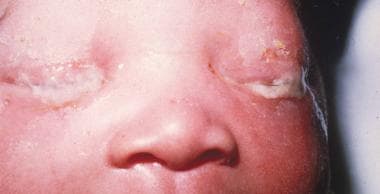
Media file 1:  Severe purulent discharge and eyelid edema in a newborn with gonococcal conjunctivitis (confirmed with Gram stain and culture).
Click to see larger pictureClick to see detailView Full Size Image
Media type:  Photo

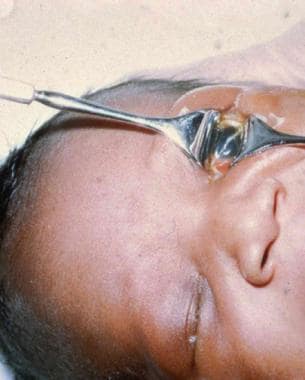
Media file 2:  Cloudy cornea without ulcer in neonatal gonococcal conjunctivitis.

Click to see larger pictureClick to see detailView Full Size Image
Media type:  Photo


  • Armstrong JH, Zacarias F, Rein MF. Ophthalmia neonatorum: a chart review. Pediatrics. Jun 1976;57(6):884-92. [Medline].
  • Barsam PC. Specific prophylaxis of gonorrheal ophthalmia neonatorum. A review. N Engl J Med. Mar 31 1966;274(13):731-4. [Medline].
  • Crede. Reports from the obstetrical clinic in Leipzig. Prevention of eye inflammation in the newborn. Am J Dis Child. Jan 1971;121(1):3-4. [Medline].
  • de Toledo AR, Chandler JW. Conjunctivitis of the newborn. Infect Dis Clin North Am. Dec 1992;6(4):807-13. [Medline].
  • Fransen L, Klauss V. Neonatal ophthalmia in the developing world. Epidemiology, etiology, management and control. Int Ophthalmol. Jan 1988;11(3):189-96. [Medline].
  • Fransen L, Nsanze H, Klauss V. Ophthalmia neonatorum in Nairobi, Kenya: the roles of Neisseria gonorrhoeae and Chlamydia trachomatis. J Infect Dis. May 1986;153(5):862-9. [Medline].
  • Fransen L, Van den Berghe P, Mertens A. Incidence and bacterial aetiology of neonatal conjunctivitis. Eur J Pediatr. Mar 1987;146(2):152-5. [Medline].
  • Friendly DS. Ophthalmia neonatorum. Pediatr Clin North Am. Dec 1983;30(6):1033-42. [Medline].
  • Hammerschlag MR. Neonatal conjunctivitis. Pediatr Ann. Jun 1993;22(6):346-51. [Medline].
  • Hammerschlag MR, Cummings C, Roblin PM. Efficacy of neonatal ocular prophylaxis for the prevention of chlamydial and gonococcal conjunctivitis. N Engl J Med. Mar 23 1989;320(12):769-72. [Medline].
  • Handsfield HH, Hodson WA, Holmes KK. Neonatal gonococcal infection. I. Orogastric contamination with Neisseria gonorrhoea. JAMA. Aug 13 1973;225(7):697-701. [Medline].
  • Isenberg SJ, Apt L, Yoshimori R. Source of the conjunctival bacterial flora at birth and implications for ophthalmia neonatorum prophylaxis. Am J Ophthalmol. Oct 15 1988;106(4):458-62. [Medline].
  • Laga M, Plummer FA, Nzanze H. Epidemiology of ophthalmia neonatorum in Kenya. Lancet. Nov 15 1986;2(8516):1145-9. [Medline].
  • Meheus A, Piot P. Provision of services for sexually transmitted diseases in developing countries. In: Oriel JD, Harris JRW, eds. Recent Advances in Sexually Transmitted Diseases. Churchill Livingstone;1986:261-271.
  • Moore BD. Inflammatory and traumatic eye disease in children. In: Eye Care for Infants and Young Children. Butterworth-Heinemann Medical;1997:246-261.
  • Nelson LB. Disorders of the conjunctiva. In: Harley's Pediatric Ophthalmology. WB Saunders Co;1998:202-214.
  • O''Hara MA. Ophthalmia neonatorum. Pediatr Clin North Am. Aug 1993;40(4):715-25. [Medline].
  • Oriel JD. Ophthalmia neonatorum: relative efficacy of current prophylactic practices and treatment. J Antimicrob Chemother. Sep 1984;14(3):209-19. [Medline].
  • Peter G, ed. Red Book: Report of the Committee on Infectious Diseases. 24th ed. Elk Grove Village, Ill:. American Academy of Pediatrics;1997:266-603.
  • Preece PM, Anderson JM, Thompson RG. Chlamydia trachomatis infection in infants: a prospective study. Arch Dis Child. Apr 1989;64(4):525-9. [Medline].
  • Rapoza PA, Chandler JW. Neonatal conjunctivitis: diagnosis and treatment. American Academy of Ophthalmology: Focal Points. Vol 1. 1988:1-11.
  • Rothenberg R. Ophthalmia neonatorum due to neisseria gonorrhoeae: prevention and treatment. Sex Transm Dis. Apr-Jun 1979;6(2 Suppl):187-91. [Medline].
  • Rowe DS, Aicardi EZ, Dawson CR. Purulent ocular discharge in neonates: significance of Chlamydia trachomatis. Pediatrics. Apr 1979;63(4):628-32. [Medline].
  • Sandstrom I. Etiology and diagnosis of neonatal conjunctivitis. Acta Paediatr Scand. Mar 1987;76(2):221-7. [Medline].
  • Sandstrom KI, Bell TA, Chandler JW. Microbial causes of neonatal conjunctivitis. J Pediatr. Nov 1984;105(5):706-11. [Medline].
  • Taylor DC. Ophthalmia neonatorum. Pediatric Ophthalmology. Blackwell Science;1990:103-106.
  • Whitley RJ, Nahmias AJ, Soong SJ. Vidarabine therapy of neonatal herpes simplex virus infection. Pediatrics. Oct 1980;66(4):495-501. [Medline].
  • Whitley RJ, Nahmias AJ, Visintine AM. The natural history of herpes simplex virus infection of mother and newborn. Pediatrics. Oct 1980;66(4):489-94. [Medline].
  • Wright KW. Conjunctivitis. In: Pediatric Ophthalmology and Strabismus. Mosby Inc;1995:279-292.

Conjunctivitis, Neonatal excerpt

Article Last Updated: Jun 18, 2006