|
Related Articles | Branch Retinal Artery Occlusion
Branch Retinal Vein Occlusion
Central Retinal Artery Occlusion
Central Retinal Vein Occlusion
Corneal Abrasion
Endophthalmitis, Bacterial
Endophthalmitis, Fungal
Episcleritis
Foreign Body, Intraocular
Giant Cell Arteritis
Headache, Migraine
Hyphema
Optic Neuritis, Adult
Optic Neuritis, Childhood
Optic Neuropathy, Anterior Ischemic
Optic Neuropathy, Compressive
Papilledema
Retinal Detachment, Exudative
Retinal Detachment, Rhegmatogenous
Scleritis
Sickle Cell Disease
Ulcer, Corneal
|
|
AUTHOR AND EDITOR INFORMATION
Section 1 of 10
Author: Gino A Farina, MD, Program Director, Associate Professor of Clinical Emergency Medicine, Department of Emergency Medicine, Long Island Jewish Medical Center, Albert Einstein College of Medicine
Gino A Farina is a member of the following medical societies: American Academy of Emergency Medicine, American College of Emergency Physicians, and Society for Academic Emergency Medicine
Coauthor(s):
Angel Feliciano, MD, Consulting Physician, EMS Medical Director, St Vincent and St Mary's Hospital, Infinity HealthCare Inc
Editors: Kilbourn Gordon III, MD, Scientific Director, Foresight Ventures; Francisco Talavera, PharmD, PhD, Senior Pharmacy Editor, eMedicine; J James Rowsey, MD, Medical Staff Appointment, Department of Surgery, Director of Corneal Services, Division of Ophthalmology, All Children's Hospital, St Petersburg, St Luke's Cataract and Intraocular Lens Institute; Lance L Brown, OD, MD, Ophthalmologist, Affiliated With Freeman Hospital and St John's Hospital, Regional Eye Center, Joplin, Missouri; Hampton Roy, Sr, MD, Department of Ophthalmology, Associate Clinical Professor, University of Arkansas for Medical Sciences
Author and Editor Disclosure
Synonyms and related keywords:
sudden vision loss, acute visual dysfunction, transient visual loss, eye ischemia, transient visual obscuration, TVO, amaurosis fugax, transient monocular visual loss, TMVL, transient monocular blindness, TMB, transient bilateral visual loss, TBVL, ocular infarction
Background
Visual loss is a common complaint among patients of different ages with variable presentations. Some patients describe it as a gray-black curtain that gradually descends or as blurring, fogging, or dimming of vision. It usually lasts a few minutes but can persist for hours. Frequency varies from a single episode to many episodes during a day; it may continue for years but more often lasts from seconds to hours. Ischemia is the most common mechanism of acute visual dysfunction, and it can affect any aspect of the visual system.
Pathophysiology
Ischemia reduces delivery of oxygen and other important nutrients to tissues, causing metabolic compromise of cells. Functional deficit may be temporary or permanent, depending on the degree of damage. Nomenclature of eye ischemia as given by Hedges and others includes the following:
- Transient visual obscuration (TVO) - Episodes lasting seconds that are associated with papilledema or increased intracranial pressure
- Amaurosis fugax - Brief, fleeting attack of monocular partial or total blindness that lasts seconds to minutes
- Transient monocular visual loss (TMVL) or transient monocular blindness (TMB) - A more persistent vision loss that lasts minutes or longer
- Transient bilateral visual loss (TBVL) - Episodes affecting one or both eyes or both cerebral hemispheres and causing visual loss
- Ocular infarction - Persistent ischemic damage to the eye, resulting in permanent vision loss
Frequency
United States
Uncommon
International
Uncommon
Mortality/Morbidity
- TMVL in a person younger than 45 years may be benign; many attacks are probably vasospastic.
-
- TBVL is almost always associated with severe occlusive disease of the internal carotid artery (ICA), aortic arch, or bilateral occipital lobe ischemia. Patients with ICA often have other systemic evidence of atherosclerosis, such as coronary and peripheral vascular disease. Smoking, hypercholesterolemia, and hypertension are also risk factors.
Race
- Whites, especially men, have a high incidence of ICA-origin atherosclerosis.
-
- Blacks and Chinese and Japanese persons have a higher incidence of intracranial occlusive disease.
Sex
A strong male predominance of 2:1 exists among patients with severe ICA disease.
History
For any patient with sudden visual loss, obtain the following information:
- Age
-
- Duration of visual loss or changes
-
- Bilateral or unilateral
-
- Trauma
-
- Photophobia
-
- Headache
-
- Pain
-
- Prior episodes/ophthalmologic history
-
- Comorbid conditions, such as hypertension, hypercholesterolemia, collagen vascular disease, hematologic disorders, cancer, or drug usage
-
Physical
- Inspect the extraocular area, visual acuity, light or movement perception, visual fields, extraocular movements, and pupil reactivity (including the presence or absence of an afferent pupillary defect).
-
- Perform a slit lamp examination with and without fluorescein of the conjunctiva and the cornea for inflammation, edema, or defect.
-
- Evaluate the anterior chamber for hyphema, cells, and floaters.
-
- Perform a careful fundus examination.
-
- As part of a good systematic approach, initially examine the external appearance of the eye. Normal examination findings eliminate extraocular causes. Another key point is the appearance of the eye itself.
-
- A noninjected eye may be painful due to optic neuritis, cluster headaches, sinusitis, or dental pain.
-
- Red and painful eyes are examined with fluorescein staining. Corneal etiologies, such as abrasions, keratopathy, ulcers, and infection, should become apparent with this examination.
-
- Intraocular pressure is measured in patients who have red, painful eyes with normal corneal staining. Elevated pressure suggests a diagnosis of acute glaucoma.
-
- In injected, painful eyes with normal fluorescein examination and normal intraocular pressure, presence of inflammatory cells in the anterior chamber suggests iritis or endophthalmitis, especially with any recent history of ocular surgery.
-
Causes
Multiple conditions are associated with transient visual loss. They can be classified according to origin or pathogenesis, but for the purpose of this article, they are outlined by source. - Wray has classified TMVL into 3 groups based mostly on pathogenesis; they include the following:
- Type 1 is characterized by loss of all or a portion of vision in one eye, lasting seconds to minutes, with full recovery. It is usually secondary to embolic phenomenon. Attacks have been correlated with vessels without critical narrowing but with ulceration.
- Type 2 includes visual loss due to hemodynamically significant, occlusive, low-flow lesions in the ICAs or the ophthalmic arteries. Symptoms are brief but frequent, less rapid in onset, and longer in duration with gradual recovery.
- Type 3 is believed to be due to vasoconstriction or vasospasm.
- Cardiovascular: Pathophysiology can be explained by atherosclerotic cerebrovascular disease. Visual disturbances usually appear as dark or gray; a descending shade may appear. Visual loss lasts for minutes (10-15 min) and painlessly returns to normal afterwards.
- Embolic: It is the most important and common ophthalmoscopic abnormality arising from the carotid artery, the aorta, cardiac valves, or the heart. Particles consist mostly of platelets or fibrin, calcified emboli, or cholesterol crystals.
- Cholesterol crystals are most frequently observed. Called Hollenhorst plaques, cholesterol crystals are found at the bifurcation of the retinal arterioles. Arising from plaques in the ICA in the carotid siphon or the aorta, they are usually bright, refractile, and small (10-20 µm in diameter). They lodge at bifurcations, often not impeding flow. They rapidly disappear but damage the vessel wall, producing a sheathing reaction.
- The crystals are difficult to see, but placing pressure on the eye may cause them to move and become visible through the ophthalmoscope. Platelet-containing types are gray and commonly extend to the small retinal arteries. Calcified crystals arise most commonly from calcified heart valves. They are white and usually remain in one position, blocking the blood flow.
- Stenotic vascular disease: Symptoms are caused by carotid or vertebral artery atherosclerotic disease, fibromuscular dysplasia, arteritis, or dissection.
- Cardiac causes include atrial myxomas, endocarditis, or dyskinetic wall segment. They predispose patients to the formation of platelet-containing emboli. Dissection usually involves the pharyngeal ICA and can be precipitated by trauma or can begin spontaneously. Frequent features include pain in the neck, the jaw, the face, or the head, as well as ipsilateral Horner syndrome, ipsilateral spells of TMVL, and transient hemispheric attack (THA).
- Hematologic: Symptoms are caused by formation of clots or platelet-containing emboli and include hypercoagulable states, antiphospholipid syndrome, and anemia.
- Local orbital or ocular disease
- Angle-closure glaucoma
- In open-angle glaucoma, aqueous humor can access the trabecular meshwork. In angle-closure glaucoma, this access is blocked by the peripheral iris. Three ways exist in which the iris may close the angle: (1) pupillary block, where the iris is forced forward by aqueous humor, which is unable to get through the pupil; (2) obstruction of the trabecular meshwork directly without pupillary block as a result of posterior pressure from the ciliary body, the vitreous, or the lens or because of anterior rotation and swelling of the ciliary body; and (3) peripheral anterior synechiae, which are adhesions formed between the peripheral iris and the angle structures.
- Diagnosis is not difficult when the presentation is typical, that is, a red, painful eye with increased intraocular pressure accompanied by diaphoresis, nausea, and vomiting. Atypical presentations include chronic angle closure or acute closure without pain. Presence of a midposition fixed pupil in an eye with reduced vision can suggest unrecognized angle-closure glaucoma. All presentations can be confirmed by tonometry or gonioscopy. Treatment consists of topical miotics and beta-blockers; systemic carbonic anhydrase inhibitors; hyperosmotic agents; and, perhaps, analgesics and antiemetics. Ophthalmologic consult is warranted; when pupillary block is suspected, iridectomy remains the primary surgical management.
- Papilledema/neoplasm causes visual loss by mechanically compressing or physiologically destroying the optic nerve. If confined to the orbits, vision is affected unilaterally with a decline in central acuity, dyschromatopsia, and an afferent pupillary defect in most instances. Visual field defects involve central/paracentral and arcuate scotomas, nasal steps, or temporal wedges. Funduscopy shows a swollen, pale, or normal retina.
- Intraocular foreign bodies are small particles that have penetrated the cornea or the sclera. This condition commonly occurs in the workplace; signs can be subtle, causing only light erythema and local discomfort. Visual acuity is often decreased markedly, but normal visual acuity is possible and does not rule out an intraocular foreign body. Smaller objects may produce few, if any, signs or symptoms and may be difficult to discover without a high index of suspicion. With large objects, obvious disruption of the anterior segment, a visible penetration site, hyphema, or cataract may be seen.
- Ocular ischemic syndromes: Persistent eye ischemia can be classified into central retinal artery occlusion (CRAO), branch retinal artery occlusion (BRAO), or ischemia of the optic nerve, which is caused by involvement of the posterior choroidal blood supply of the nerve (anterior ischemic optic neuropathy [AION]).
- Origin of the central retinal artery (CRA) from the ophthalmic artery is variable. The vessel has intraorbital, intravaginal, and intraneural segments before it pierces the dural sheath to supply the retina. To reach the fundus, the CRA penetrates the lamina cribrosa. At this point, it narrows; the tissue around the vessel is a mechanical barrier to dilatation. This area is not visible with an ophthalmoscope and is most often the site of embolic or inflammatory diseases (eg, giant cell arteritis).
- The major symptom is sudden painless blindness with persistent visual loss. Perception of hand movement or light can be preserved in parts of the visual field. Diagnosis is made by ophthalmoscopy, which reveals partial or complete arrest of the retinal circulation. Cardinal signs include a pale disc, attenuated arteries and veins, a cloudy retina, and a cherry red spot in the macula in a patient who has lost vision in one eye. Shortly after occlusion, segmentation of the blood column with slow streaming of veins is seen without recovery of vision. If the occlusion lasts more than 1 hour, the retina becomes irreversibly infarcted.
- In BRAO, visual defect and retinal ischemia are more focal and have an altitudinal, lateral, or scotomatous quality. Incidence of carotid artery and valvular disease is not very different than in CRAO, but temporal arteritis is less often the cause.
- In AION, the patient usually develops painless visual loss in the eye, which is noted on awakening in the morning and not worsening thereafter. Degree of loss is variable but most often not complete. Funduscopy shows edema of the optic disc and splinter hemorrhages at the disc margins. When the ischemia is posterior to the disc, the optic disc may look normal. Subsequent involvement of the other eye is common.
- Retinal vein occlusions are retinal vascular disorders that are classified clinically as branch retinal vein occlusion (BRVO), hemispheric vein occlusion, and central retinal vein occlusion (CRVO). BRVO involves one of the branch retinal veins. Most involve the superior or inferior temporal arcades and occur at an arteriovenous crossing where the vein is compressed by a sclerotic artery. Superior or inferior temporal arcades cause macular vein occlusion with profound visual deficit. Hemispheric vein occlusion involves the venous drainage of either the superior retina or the inferior retina.
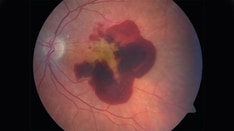
- BRVO affects males and females equally, occurring most frequently in persons aged 60-70 years. Regardless of the primary pathogenic processes, disease of the arterial wall and the presence of common adventitia between the artery and the vein at arteriovenous crossings clearly play a role in the pathogenesis. Common symptoms of BRVO are blurring and distortion of vision. During the acute stage, multiple superficial and deep retinal hemorrhages are seen in a pie configuration in the distribution of the affected vein. Veins in the occluded segment are usually dilated and tortuous.
- Fluorescein angiography is helpful to delineate the hemodynamic changes that occur in the retinal vasculature. Angiography usually shows that the vein is not completely occluded, but the venous return is slow. Approximately 50% of patients recover good visual acuity; however, 2 complications may lead to reduced visual acuity, macular edema, which develops in more than 50% of patients, and retinal neovascularization. Management of both involves photocoagulation to ablate the ischemic peripheral retina.
- CRVO involves occlusion of the main central vein, which usually occurs at the level of the lamina cribrosa. This occlusion interferes with the drainage of the whole retina. Mechanism is unknown, but the most important local factor is chronic open-angle glaucoma, which is present in more than 20% of patients. CRVO is primarily a disease of elderly persons, but reports of CRVO in younger persons are well documented.
- Two types of CRVO exist, nonischemic and ischemic; nonischemic is the more common form. Visual complaints vary from mild to moderate blurring of vision, which may be transient. Visual fields are usually normal, except for occasional central scotomas. Ophthalmoscopic features include moderate dilatation and tortuosity of all retinal veins with multiple punctate hemorrhages in the peripheral retina and few scattered retinal hemorrhages in the posterior pole. Most hemorrhagic activity resolves over several months. Some patients may be left with some permanent visual loss from the nonresolving cystoid macular edema, macular cystic degeneration, macular retinal pigment epithelial changes, and preretinal fibrosis.
- Ischemic CRVO occurs in older individuals who have a higher incidence of systemic vascular disease, preexisting glaucoma, and ocular hypertension. These patients have sudden, painless vision loss. Vision is usually decreased markedly. Most patients can count fingers or see hand movement. Peripheral visual fields are almost always normal with a dense central or centrocecal scotoma. Ophthalmoscopic features include marked tortuosity and dilatation of all the retinal branch veins, diffuse retinal hemorrhages extending from the optic disc to the periphery of the fundus, and multiple cotton-wool patches. Prognosis is poor; central vision seldom recovers because of ischemic maculopathy or cystic macular degeneration, macular holes and cysts, and macular epithelial fibrosis. No effective treatment exists, but photocoagulation (panretinal) causes regression of iris neovascularization and even prevents its development.
- Ruptured globe
- A ruptured globe results from a full-thickness traumatic disruption of the sclera or the cornea as a result of blunt or penetrating trauma to the eye. Open globe should be suspected in any patient who has a history of trauma to the eye, especially with a laceration or puncture wound that extends through the eyelid, followed by pain and decreased visual acuity.
- On examination, visual acuity is often decreased. Flattening of the anterior chamber or hyphema may be present. Note alteration of the pupil size, shape, or location and conjunctival edema or hemorrhage. Extrusion of ocular contents may be seen, and the eye may have a deflated appearance. Leakage of aqueous humor from the anterior chamber may become apparent during examination with fluorescein staining (Seidel test). Intraocular pressure is frequently decreased, although it should not be measured if an open globe is suspected.
- Miscellaneous
- Hysteria/malingering
- Patients with hysterical blindness or loss of vision, despite alleged loss of vision, are still capable of maneuvering in a room. Pupillary reactions are normal. Loss of vision is a subconscious conversion symptom. A purely functional loss of vision can be assumed when the visual field is constricted markedly, orientation when walking is intact, and pupillary reactions to light are normal.
- A fluid transition exists between a hysterical and malingering patient and aggravated loss of vision. If the patient indicates a unilateral loss of vision, examination should be conducted in such a way that the patient does not know which eye is being tested or the actual size of the optotypes.
- Drugs, such as quinidine, sildenafil (Viagra), vardenafil (Levitra), and tadalafil (Cialis)
- Sudden monocular visual loss due to nonarteric anterior ischemic optic neuropathy (NAION) has been reported in a small number of patients taking sildenafil (Viagra), vardenafil (Levitra), and tadalafil (Cialis) for erectile dysfunction. The US Food and Drug Administration (FDA) advised health care professionals of the potential risk of sudden visual loss that may be attributed to the use of phosphodiesterase-5 (PDE-5) inhibitors.
- As of May 2005, the FDA had received a total of 43 postmarketing reports of ischemic optic neuropathy in patients using these drugs. Vascular risk factors for NAION overlap with those of erectile dysfunction, such as age older than 50 years and a history of heart disease, high blood pressure, high cholesterol, and/or smoking; hence, the causal role of PDE-5 inhibitors remains unclear.
- Patients should be advised to discontinue the use of these medications and seek immediate medical attention if they experience a sudden decrease in or loss of vision in one or both eyes. For more information, see US Food and Drug Administration Center for Drug Evaluation and Research.
- Idiopathic
- Migraine or scintillating scotoma may occur on a persistent basis or may recur after an absence of decades. Physiologic and anatomical bases have not been fully explained but are believed to involve vasospasm. Shimmering scotomas, with or without color or perception of movement, are commonly reported, usually lasting less than 30 minutes.
Branch Retinal Artery Occlusion
Branch Retinal Vein Occlusion
Central Retinal Artery Occlusion
Central Retinal Vein Occlusion
Corneal Abrasion
Endophthalmitis, Bacterial
Endophthalmitis, Fungal
Episcleritis
Foreign Body, Intraocular
Giant Cell Arteritis
Headache, Migraine
Hyphema
Optic Neuritis, Adult
Optic Neuritis, Childhood
Optic Neuropathy, Anterior Ischemic
Optic Neuropathy, Compressive
Papilledema
Retinal Detachment, Exudative
Retinal Detachment, Rhegmatogenous
Scleritis
Sickle Cell Disease
Ulcer, Corneal
Other Problems to be Considered
Basilar artery occlusive disease
Brainstem ischemia
Cerebellar ischemia
Hemispheric ischemia
Lab Studies
- Individualize the evaluation of patients with TMVL.
-
- Perform blood counts and coagulation studies.
-
- Obtain a sedimentation rate in patients older than 55 years to screen for giant cell arteritis.
-
Imaging Studies
- Managing patients with TMB and atherosclerosis is important because of the higher risk of stroke.
-
- Noninvasive evaluation of the carotid artery and the heart is useful in patients older than 40 years; it provides information on the degree of stenosis.
-
- Ulceration is more difficult to detect noninvasively, so angiography remains the criterion standard for detecting carotid atherosclerotic disease.
-
- Fluorescein angiography is helpful for detecting embolic particles. The most common embolic particle consists of cholesterol crystals, which are often small; they rapidly disappear but not without damage to the vessel wall.
-
- Fluorescein angiography may show hyperfluorescent crystals or areas of fluorescein leakage that are caused by crystal-related endothelial damage.
-
Other Tests
- Noninvasive study of the heart can detect abnormal valves, dyskinetic wall segments, and arrhythmias, all of which predispose to the formation of emboli.
-
- Holter monitoring is the preferred method to screen for intermittent cardiac arrhythmias.
-
- Temporal artery biopsy is often performed to rule out giant cell arteritis.
-
Medical Care
- Aspirin is believed to be beneficial in patients with no hemodynamically significant disease of the carotid artery (>1 mm residual lumen) or those who are poor surgical candidates. In general, aspirin together with modification of risk factors (eg, decreasing serum cholesterol level, controlling systemic hypertension) reduces the likelihood of myocardial infarction. It might also be effective in reducing the risk of stroke.
-
- Patients with frequent or severe headaches should be advised to stop smoking. Female patients who are smoking and taking birth control pills are at an increased risk for stroke.
-
Surgical Care
- Carotid artery stenosis of 90% that corresponds to a 1 mm or less residual lumen increases the risk of hemispheric stroke.
-
- Carotid endarterectomy subsequent to episodes of transient cerebral ischemia is known to reduce the risk of cerebral infarction.
-
- Recommendations for this procedure must be individualized.
-
- This procedure is to be considered for patients with TMB or amaurosis fugax only if the surgical complication rate is less than 2%.
-
- For patients with cerebral transient ischemic attacks (TIAs), a complication rate of 3% or less is acceptable.
-
Consultations
- Ophthalmic consultation is prudent in any case of sudden visual loss that cannot be easily and confidently explained and managed by emergency department physicians.
-
- Cardiac and neurologic consultation is recommended. A complete cardiac and neurologic examination, including murmurs and carotid bruits, should be performed.
-
The goals of pharmacotherapy are to reduce morbidity and to prevent complications.
Drug Category: Antiplatelet agents
Antiplatelet activity helps prevent cerebrovascular accidents (CVAs) in patients with significant disease of the carotid arteries.
| Drug Name | Aspirin (Anacin, Ascriptin, Bayer Aspirin) |
| Description | Irreversibly inhibits the formation of cyclooxygenase, thus preventing the formation of thromboxane A2, a platelet aggregator and vasoconstrictor. Platelet inhibition lasts for the life of the cell (approximately 10 d). |
| Adult Dose | 65-325 mg PO qd |
| Pediatric Dose | Not established |
| Contraindications | Documented hypersensitivity; liver damage; hypoprothrombinemia; vitamin K deficiency; bleeding disorders; asthma; because of association of aspirin with Reye syndrome, do not use in children (<16 y) with flu |
| Interactions | Effects may decrease with antacids and urinary alkalinizers; corticosteroids decrease salicylate serum levels; additive hypoprothrombinemic effects and increased bleeding time may occur with coadministration of anticoagulants; may antagonize uricosuric effects of probenecid and increase toxicity of phenytoin and valproic acid; doses >2 g/d may potentiate glucose-lowering effect of sulfonylurea drugs |
| Pregnancy | C - Safety for use during pregnancy has not been established.
|
| Precautions | May cause transient decrease in renal function and aggravate chronic kidney disease; avoid use in patients with severe anemia, with history of blood coagulation defects, or taking anticoagulants |
Further Outpatient Care
- Patients should receive follow-up care as needed.
-
Transfer
- Transfer is necessary when emergent ophthalmic consultation (if warranted) is unavailable at the initial treatment location.
-
Complications
Prognosis
Patient Education
Medical/Legal Pitfalls
- Failure to perform a complete ophthalmologic examination, especially an assessment of visual acuity, in any patient with ocular complaints
-
- Failure to obtain timely ophthalmologic consultation in patients with acute visual loss
-
- Failure to perform a dilated examination
-
- Failure to promptly treat a retinal detachment, which is a reversible condition and is time sensitive
-
- Bruno A, Corbett JJ, Briller J, et al. Transient monocular visual loss patterns and associated vascular abnormalities. Stroke. 1990;21:34. [Medline].
- Burde RM. Amaurosis fugax. An overview. J Clin Neuroophthalmol. Sep 1989;9(3):185-9. [Medline].
- Carter JE. Chronic ocular ischemia and carotid vascular disease. In: Bernstein EF, ed. Amaurosis Fugax. New York: Springer-Verlag; 1988:118-134.
- Fisher CM. Observations of the fundus oculi in transient monocular blindness. Neurology. May 1959;9(5):333-47. [Medline].
- Hedges TR. The terminology of transient visual loss due to vascular insufficiency. Stroke. 1984;15:907. [Medline].
- Pfaffenbach DD, Hollenhorst RW. Morbidity and survivorship of patients with embolic cholesterol crystals in the ocular fundus. Am J Ophthalmol. Jan 1973;75(1):66-72. [Medline].
- US FDA CDER home page. US Food and Drug Administration Center for Drug Evaluation and Research Web site. Available at http://www.fda.gov/cder/. Accessed September 16, 2005.
- Wray SH. Visual aspects of extracranial internal carotid artery disease. In: Bernstein EF, ed. Amaurosis Fugax. New York: Springer-Verlag; 1988:72-80.
Sudden Visual Loss excerpt Article Last Updated: Nov 17, 2006
|